The successful candidate will undertake econometric analysis to explore regional inequalities in health in the UK using detailed biomarker data available in a large national representative social science datasets. Contact: GLO Fellow Apostolos Davillas.
A new GLO Discussion Paperstudies both the physical and mental dimensions of health among European-born emigrants over 50, who originate from seven European countries and now live elsewhere in Europe.
The Global Labor Organization (GLO) is an independent, non-partisan and non-governmental organization that functions as an international network and virtual platform to stimulate global research, debate and collaboration.
Author Abstract: The Healthy Immigrant Paradox found in the literature by comparing the health of immigrants to that of natives in the host country, may suffer from serious cultural biases. Our study evades such biases by utilizing a destination-origin framework, in which we compare the health of emigrants to that of their compatriots who stay in the country of origin. Isolating cultural effects can best gauge self-selection and host country effects on the health of emigrants with longer time abroad. We study both the physical and mental dimensions of health among European-born emigrants over 50, who originate from seven European countries and now live elsewhere in Europe. We use the Survey of Health, Ageing and Retirement in Europe and apply multi-level modeling. Regarding the physical health we find positive self-selection, beneficial adaptation effects, and effects from other observables for some but not all countries. With the notable exception of the German émigrés, we cannot confirm selection in mental health, while additional years abroad have only weak effects. Overall, living abroad has some favorable effects on the health of older emigrants. The economic similarity of countries and the free intra-European mobility mitigate the need for initial self-selection in health and facilitate the migration experience abroad.
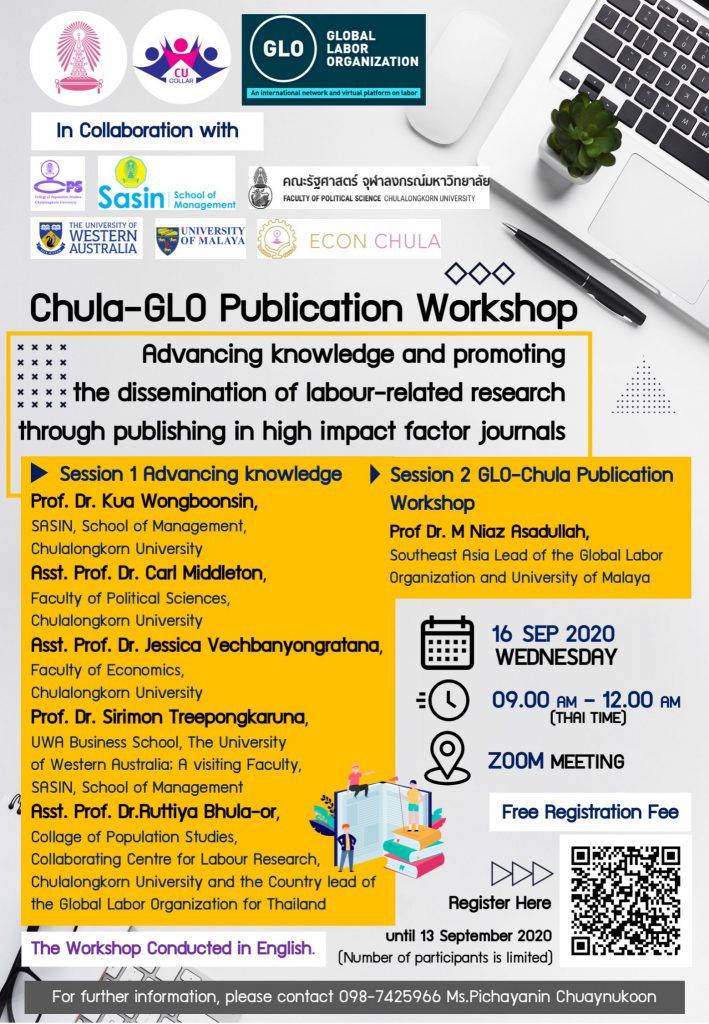
GLO Country Lead Thailand Ruttiya Bhula-or (Chulalongkorn University) and GLO Southeast Asia Lead M Niaz Asadullah (University of Malaya) are heading a Chula-GLO Publication Workshop on “Publishing in high impact factor journals”. The event takes place on 16 September 2020, 9-12 am (Bangkok time).
A new paper published in the Journal of Population Economics investigates for the Italian case how to identify the pandemic early in “dirty” data and how to measure the success of lockdowns.
Luca Bonacini, Giovanni Gallo & Fabrizio Patriarca
Journal of Population Economics (2020), published ONLINE FIRST. PDF free accessible. Based on GLO Discussion Paper No. 534, 2020
GLO Fellow Fabrizio Patriarca
Author Abstract: Identifying structural breaks in the dynamics of COVID-19 contagion is crucial to promptly assess policies and evaluate the effectiveness of lockdown measures. However, official data record infections after a critical and unpredictable delay. Moreover, people react to the health risks of the virus and also anticipate lockdowns. All of this makes it complex to quickly and accurately detect changing patterns in the virus’s infection dynamic. We propose a machine learning procedure to identify structural breaks in the time series of COVID-19 cases. We consider the case of Italy, an early-affected country that was unprepared for the situation, and detect the dates of structural breaks induced by three national lockdowns so as to evaluate their effects and identify some related policy issues. The strong but significantly delayed effect of the first lockdown suggests a relevant announcement effect. In contrast, the last lockdown had significantly less impact. The proposed methodology is robust as a real-time procedure for early detection of the structural breaks: the impact of the first two lockdowns could have been correctly identified just the day after they actually occurred.
LEAD ARTICLE OF ISSUE 4: Yun Qiu, Xi Chen & Wei Shi, Impacts of social and economic factors on the transmission of coronavirus disease 2019 (COVID-19) in China Journal of Population Economics33, 1127–1172 (2020). OPEN ACCESS
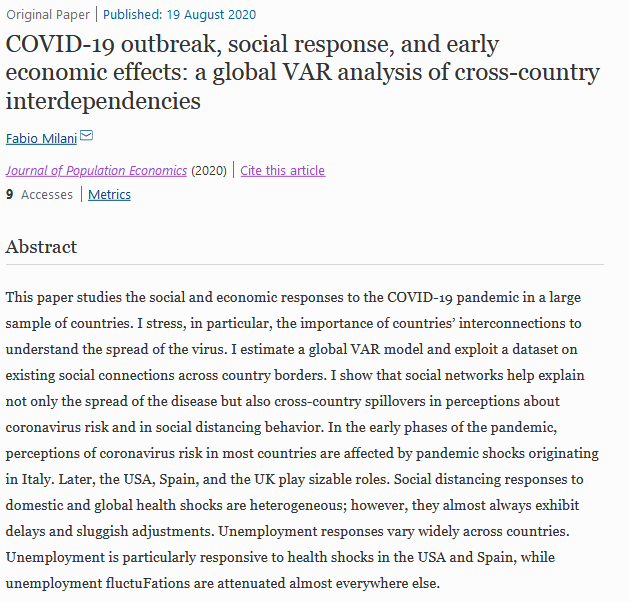
ANOTHER COVID-19 ARTICLE JUST PUBLISHED ONLINE FIRST. PDF free accessible. Fabio Milani: COVID-19 outbreak, social response, and early economic effects: A global VAR analysis of cross-country interdependencies. Journal of Population Economics, (2020). https://doi.org/10.1007/s00148-020-00792-4
TheGLO Virtual Seminar is a monthly internal GLO research event chaired by GLO Director Matloob Piracha and hosted by the GLO partner institution University of Kent. The results are available on the GLO website and the GLO News section, where also the video of the presentation is posted. All GLO related videos are also available in the GLO YouTube channel. (To subscribe go there.)
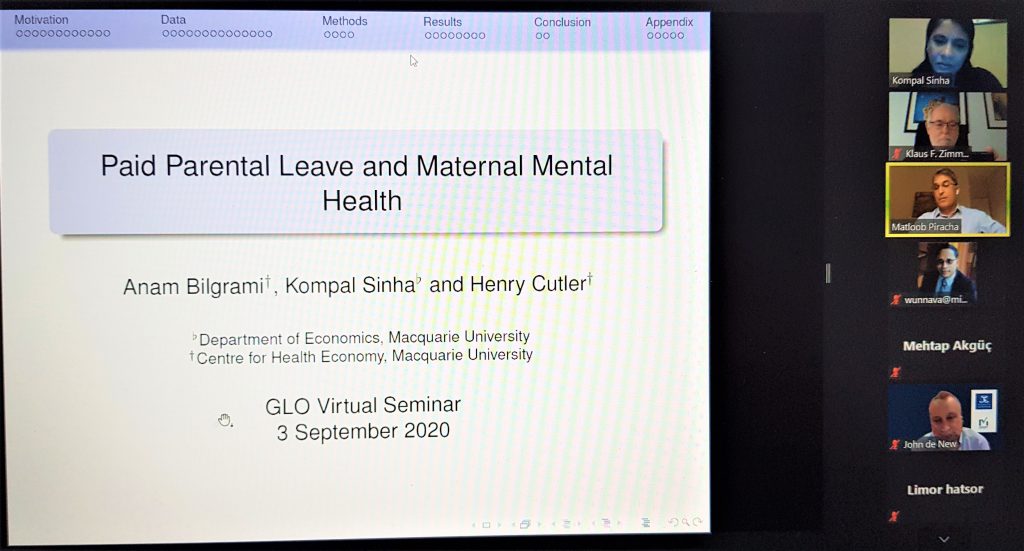
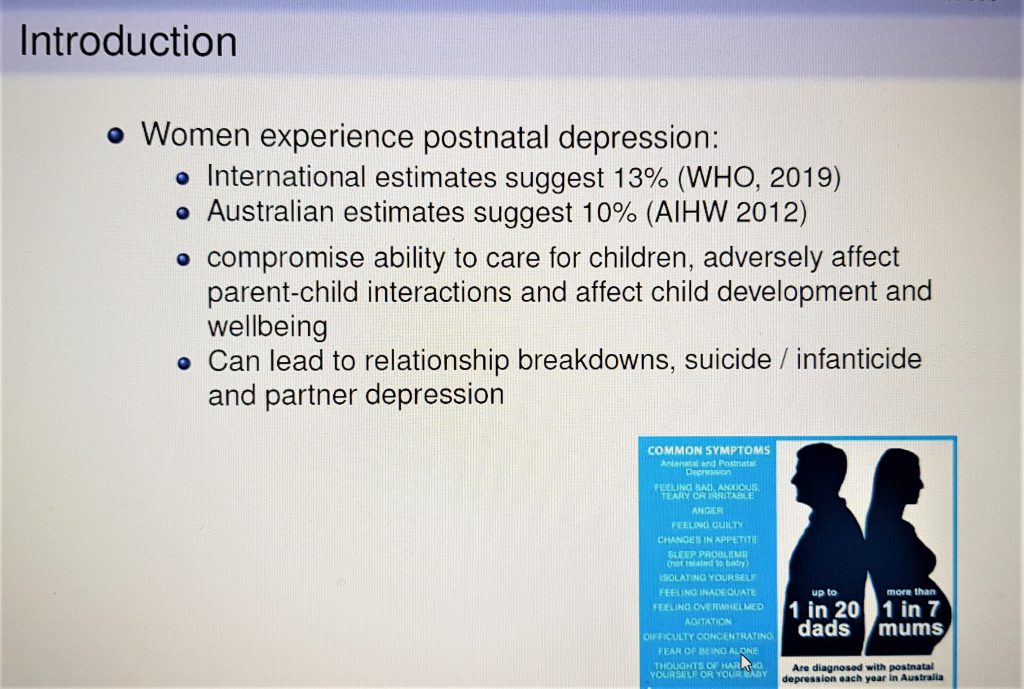
The last seminar was given by Kompal Sinha on Paid Parental Leave and Maternal Mental Health. Below find a report, the video of the seminar and the presentation slides.
Announcement/forthcoming seminar: October 1, 2020:London/UKat 1-2 pm —Alfonso Flores-Lagunes (Syracuse University and GLO) Topic: To be announced. Registration details will be provided in time.
Report
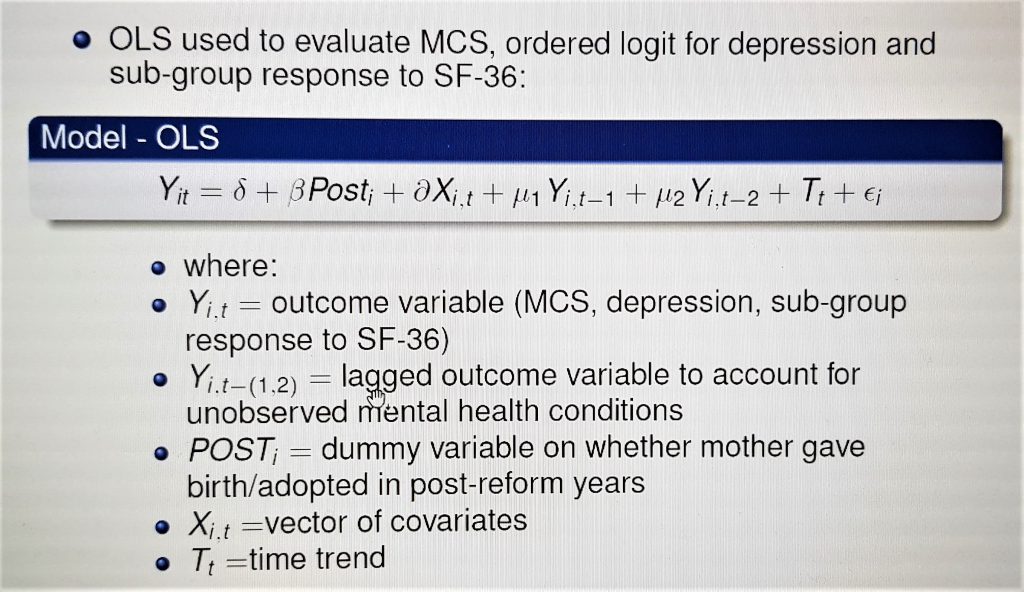
Paid Parental Leave and Maternal Mental Health
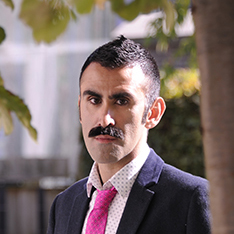
GLO Virtual Seminar on September 3, 2020: Kompal Sinha Macquarie University and GLO Associate Editor of the Journal of Population Economics GLO Cluster Lead “Development, Health, Inequality and Behavior” Presentation Slides. Video of Seminar.
Related paper: The presentation of Kompal Sinha is based on a joint paper with Anam Bilgrami and Henry Cutler of the Centre for the Health Economy, Macquarie University, on “The impact of introducing a national scheme for Paid Parental Leave on maternal mental health outcomes“, forthcoming Health Economics.
Abstract
Paid maternity leave is an essential component of a progressive society. It can enhance postnatal health, improve mother and child wellbeing, and deliver better labour market outcomes for mothers. We evaluate the impact of the introduction of Australia’s Paid Parental Leave (PPL) scheme in 2011 and complementary Dad and Partner Pay (DAPP) in 2013 on maternal mental health. Using a sample of 1,480 births to eligible, partnered women between 2004-2016 and a range of mental health outcomes from the Household, Income and Labour Dynamics in Australia survey, we find depression likelihood reduced significantly in post-reform years. When focusing on post-DAPP years and women whose partners had concurrent access to DAPP, significant mental health improvements were found across a wider range of measures including the Mental Component Summary (MCS) score and specific SF-36 items that have a high sensitivity for detecting major depression. Subgroup analysis suggests significant improvements applied specifically to first-time mothers and mothers with employer-paid maternity leave and unpaid leave entitlements. These results suggest that an increase in PPL and DAPP entitlements for mothers without access to employer-paid and unpaid leave entitlements, particularly those in less secure employment, may further reduce postnatal depression and improve health equity in Australia.
A new paper published in the Journal of Population Economics shows that social networks help explain not only the spread of the disease, but also cross-country spillovers in perceptions about Coronavirus risk and in social distancing behavior.
Journal of Population Economics (2020), published ONLINE FIRST. PDF free accessible. GLO Discussion Paper No. 626, 2020
Author Abstract: This paper studies the social and economic responses to the COVID-19 pandemic in a large sample of countries. I stress, in particular, the importance of countries’ interconnections to understand the spread of the virus. I estimate a global VAR model and exploit a dataset on existing social connections across country borders. I show that social networks help explain not only the spread of the disease but also cross-country spillovers in perceptions about coronavirus risk and in social distancing behavior. In the early phases of the pandemic, perceptions of coronavirus risk in most countries are affected by pandemic shocks originating in Italy. Later, the USA, Spain, and the UK play sizable roles. Social distancing responses to domestic and global health shocks are heterogeneous; however, they almost always exhibit delays and sluggish adjustments. Unemployment responses vary widely across countries. Unemployment is particularly responsive to health shocks in the USA and Spain, while unemployment fluctuations are attenuated almost everywhere else.
LEAD ARTICLE OF ISSUE 4: Yun Qiu, Xi Chen & Wei Shi, Impacts of social and economic factors on the transmission of coronavirus disease 2019 (COVID-19) in China Journal of Population Economics33, 1127–1172 (2020). OPEN ACCESS
A new GLO Discussion Paperstudies how a comprehensive teacher training program affects the delivery of a major entrepreneurship curriculum reform in Rwanda.
The Global Labor Organization (GLO) is an independent, non-partisan and non-governmental organization that functions as an international network and virtual platform to stimulate global research, debate and collaboration.
Author Abstract: We assess, via an experiment across 207 secondary schools, how a comprehensive teacher training program affects the delivery of a major entrepreneurship curriculum reform in Rwanda. The reform introduced interactive pedagogy and a focus on business skills in the country’s required upper secondary entrepreneurship course. In addition to the government’s standard training, a random sample of schools received intensive training organized by an NGO for two years. The training consisted of (i) six training sessions during school breaks, ii) exchange visits each term where teachers provided feedback to their peers, and (iii) outreach and support from NGO staff at least twice per year. The program increased teachers’ use of active instruction, consistent with the reform’s features. These effects on pedagogy did not translate into improvements in student academic outcomes or skills. Treated students increased their participation in businesses by 5 percentage points, or 17% of the control mean, with a commensurate decrease in wage employment, and no effect on overall income. These results suggest substitution between entrepreneurship and employment among students in treated schools.
A new GLO Discussion Paperstudies the consequences of forsaken schooling resulting from opportunities abroad taken byemigrants from Tajikistan.
The Global Labor Organization (GLO) is an independent, non-partisan and non-governmental organization that functions as an international network and virtual platform to stimulate global research, debate and collaboration.
Author Abstract: We examine the phenomenon of forsaken schooling resulting from opportunities abroad. The brain-drain/gain literature takes as its starting point the migration of educated/professional labor from poor origin countries to richer host countries. While high-skilled emigration is troubling, even more so is that many international migrants accept low-skilled positions in host countries. Their willingness to do so arises from very large host-home earnings differentials. At home this can lead to reduced educational investment as people forgo schooling because of opportunities to migrate to high paying low-skilled jobs. This suggests possible time-inconsistencies between short-run economic gains from migration and negative long-term effects from missing human-capital investment. We analyze data from Tajikistan, where approximately one-third of the labor force works outside of the country. Our empirical results establish circumstances under forsaken schooling occurs, leaving trade-offs that policymakers’ need consider.
Featured image: Photo-by-Element5-Digital-on-Unsplash
A new GLO Discussion Paperprovides an overview of the Happiness Economics approach and outlines the promises and pitfalls of subjective well-being measures.
The Global Labor Organization (GLO) is an independent, non-partisan and non-governmental organization that functions as an international network and virtual platform to stimulate global research, debate and collaboration.
Author Abstract: Welfare and well-being have traditionally been gauged by using income and employment statistics, life expectancy, and other objective measures. The Economics of Happiness, which is based on people’s reports of how their lives are going, provides a complementary yet radically different approach to studying human well-being. Typically, subjective well-being measures include positive and negative feelings (e.g., momentary experiences of happiness or stress), life evaluations (e.g., life satisfaction), and feelings of having a life purpose. Both businesses and policymakers now increasingly make decisions and craft policies based on such measures. This chapter provides an overview of the Happiness Economics approach and outlines the promises and pitfalls of subjective well-being measures.
A new GLO Discussion Paperdocuments not only the strict correlation between internationalization and innovative activities but also a positive change of attitude of Italian firms towards these strategies.
The Global Labor Organization (GLO) is an independent, non-partisan and non-governmental organization that functions as an international network and virtual platform to stimulate global research, debate and collaboration.
Author Abstract: This paper analyzes the main drivers of external competitiveness in times of crisis for small and medium enterprises (SMEs). We focus on the Italian experience in the midst of the financial and sovereign-debt crisis, and present robust evidence based on a comprehensive survey of Italian companies in the manufacturing and production service sectors (the MET dataset). Overall, our results confirm the high degree of heterogeneity of the Italian system and the differences between internationalized and domestic companies in terms of performance as well as structural and behavioral dimensions. In particular, data highlight not only the strict correlation between internationalization and innovative activities but also a positive change of attitude of Italian firms towards these strategies. Our analysis shows that, whilst structural factors play a key role for external competitiveness, other critical firm-level aspects trigger superior performances, especially strategic profiles, technological capabilities, and proactive behaviors such as innovativeness and R&D investment. Importantly, we document disproportionate effects of innovation for smaller and less productive companies. This points at dynamic strategies as a potential tool to fill the gap between larger/more productive companies and the set of less structured firms, a segment representing an ideal target for policy measures.
A new GLO Discussion Papershows that increasing import competition has kept more females in the Chinese workforce.
The Global Labor Organization (GLO) is an independent, non-partisan and non-governmental organization that functions as an international network and virtual platform to stimulate global research, debate and collaboration.
Author Abstract: This paper investigates the impact of import liberalization induced labor demand shocks on male and female employment in China. Combining data from population and firm censuses between 1990 and 2005, we relate prefecture-level employment by gender to the exposure to tariff reductions on locally imported products. Our empirical results show that increasing import competition has kept more females in the workforce, reducing an otherwise growing gender employment gap in the long run. These dynamics were present both in local economies as a whole and among formal private industrial firms. Examining channels through which tariff reductions differentially affect males and females, we find that trade-induced competitive pressures contributed to a general expansion of female-intensive industries, a shift in sectoral gender segregation, reductions in gender discrimination in the labor market, technological upgrading through computerization, and general income growth.
A new GLO Discussion Paperprovides a theoretical analysis to study the firms’ strategic choice of adopting an abatement technology in an environment with pollution externalities when the government levies an emission tax to incentivize firms undertaking emission-reducing actions.
The Global Labor Organization (GLO) is an independent, non-partisan and non-governmental organization that functions as an international network and virtual platform to stimulate global research, debate and collaboration.
Author Abstract: This research analyses the firms’ strategic choice of adopting an abatement technology in an environment with pollution externalities when the government levies an emission tax to incentivise firms undertaking emission-reducing actions. A set of different Nash equilibria – ranging from dirty to green production – arises in both quantity-setting (Cournot) and price-setting (Bertrand) duopolies depending on the societal awareness towards environmental quality and the relative importance of technological progress in abatement adopted by firms. A synthesis of the main results is the following: if the awareness of the society towards a clean environment is relatively low (resp. high) and the index measuring the relative cost of abatement is relatively high (resp. low), the strategic interaction between two independent, competing and selfish (profit maximizing) firms playing the abatement game leads to not to abate [NA] (resp. to abate [A]) as the Pareto efficient outcome: no conflict exists between self-interest and mutual benefit to do not undertake (resp. to undertake) emission-reducing actions. Multiple Nash equilibria or a “green” prisoner’s dilemma may also emerge in pure strategies. When the choice of adopting a green technology is a deadlock (anti-prisoner’s dilemma), the society is better off as social welfare under A is always larger than under NA because pollution and environmental damage are higher in the latter scenario. These findings suggest that living in a sustainable environment challenges the development of clean technologies through ad hoc R&D and the improvement of public education to achieve an eco-responsible attitude.
A new GLO Discussion Paperargues that big data can measure happiness and help making good policy decisions.
The Global Labor Organization (GLO) is an independent, non-partisan and non-governmental organization that functions as an international network and virtual platform to stimulate global research, debate and collaboration.
Author Abstract: The pursuit of happiness. What does that mean? Perhaps a more prominent question to ask is, ‘how does one know whether people have succeeded in their pursuit’? Survey data, thus far, has served us well in determining where people see themselves on their journey. However, in an everchanging world, one needs high-frequency data instead of data released with significant time-lags. High-frequency data, which stems from Big Data, allows policymakers access to virtually real-time information that can assist in effective decision-making to increase the quality of life for all. Additionally, Big Data collected from, for example, social media platforms give researchers unprecedented insight into human behavior, allowing significant future predictive powers.
A new GLO Discussion Paperusing randomizes data from Bangladesh suggests offering commitment and screening applicants on present bias to enhance agricultural technology adoption.
The Global Labor Organization (GLO) is an independent, non-partisan and non-governmental organization that functions as an international network and virtual platform to stimulate global research, debate and collaboration.
Author Abstract: Do constraints to technology adoption vary by behavioral traits? We randomize 150 villages in Bangladesh into being offered standard microcredit, loans with a grace period, the choice between those two contracts, and control. No discernible average effects are detected on the adoption of mechanized irrigation, hybrid seeds, and chemical fertilizers. However, credit access enhances technology adoption among present-biased farmers, whose output and profits increase. These effects are driven by the standard contract and choice villages, as present-biased farmers select out of the grace period contract. This suggests offering commitment and screening applicants on present bias to enhance agricultural technology adoption.
A new GLO Discussion Paperstudies the implications of Artificial Intelligence (AI) in anendogenous growth model. It can explain why advanced countries tend to experience, despite much AI hype, the simultaneous existence of rather high employment with stagnating wages, productivity, and GDP.
The Global Labor Organization (GLO) is an independent, non-partisan and non-governmental organization that functions as an international network and virtual platform to stimulate global research, debate and collaboration.
Author Abstract: The economic impact of Artificial Intelligence (AI) is studied using a (semi) endogenous growth model with two novel features. First, the task approach from labor economics is reformulated and integrated into a growth model. Second, the standard representative household assumption is rejected, so that aggregate demand restrictions can be introduced. With these novel features it is shown that (i) AI automation can decrease the share of labor income no matter the size of the elasticity of substitution between AI and labor, and (ii) when this elasticity is high, AI will unambiguously reduce aggregate demand and slow down GDP growth, even in the face of the positive technology shock that AI entails. If the elasticity of substitution is low, then GDP, productivity and wage growth may however still slow down, because the economy will then fail to benefit from the supply-side driven capacity expansion potential that AI can deliver. The model can thus explain why advanced countries tend to experience, despite much AI hype, the simultaneous existence of rather high employment with stagnating wages, productivity, and GDP.
A new GLO Discussion Paper finds that public sector employment is affected significantly.
The Global Labor Organization (GLO) is an independent, non-partisan and non-governmental organization that functions as an international network and virtual platform to stimulate global research, debate and collaboration.
Author Abstract: This paper examines whether the intensity of Non-Pharmaceutical Interventions (NPIs) during the COVID-19 pandemic has differentially impacted the public sector labor market outcomes. This extends the analysis of the already documented negative economic consequences from COVID-19 and their dissimilarities with a typical economic crisis. To capture the intensity of the NPIs, we build a novel index (COVINDEX) using daily information on NPIs merged with state level data on out of home mobility (Google data) to show that among individuals living in a typical state, the NPIs enforcement during the COVID-19 reduces the likelihood of being employed (at work) by 5% with respect to the pre-COVID period and the hours worked by 1.3% using data on labor market outcomes from the monthly Current Population Survey and difference-in-difference models. This is a sizable amount representing the sector with the higher job security during the pandemic. Public sector workers in a typical state are 4 percentage points more likely to be at work than salaried workers in the private sector and 7 percentage points more likely than self-employed workers (the worst so far). Our results are robust to endogeneity of the NPIs measures and present empirical evidence of heterogeneity in the response to the NPIs with those in the local employment being the hardest hit.
A new GLO Discussion Paper finds that the pandemic and the lockdown increased underemployment and job search efforts significantly. Immigrants and individuals with shorter job tenure or occupations unsuitable for remote work were hit the hardest in terms of unemployment.
The Global Labor Organization (GLO) is an independent, non-partisan and non-governmental organization that functions as an international network and virtual platform to stimulate global research, debate and collaboration.
Author Abstract: We examine the short-term labor market effects of COVID-19 and the associated national lockdown in Australia by estimating person-fixed-effects models using the Longitudinal Labour Force Survey. COVID-19 decreased labor force participation (LFP) by 2.1%, increased unemployment by 1.1% and reduced weekly working hours by 1.1. The national lockdown decreased LFP by 3.3%, increased unemployment by 1.7%, and decreased weekly working hours by 2.5. The probability of working on Fridays decreased by 10% while working fewer hours due to being on leave, work shifts, not having enough work and losing jobs all increased due to the lockdown. The pandemic and the lockdown increased underemployment and job search efforts significantly. In terms of heterogeneity of these effects, our analysis shows that those with up to high-school education experienced larger reductions in their LFP and working hours than others. However, immigrants and individuals with shorter job tenure or occupations unsuitable for remote work were hit the hardest in terms of unemployment.
A new GLO Discussion Paper argues that there is a strong possibility that the unintended damage of anti-COVID-19 measures to entrepreneurship, innovation and growth could be persistent.
The Global Labor Organization (GLO) is an independent, non-partisan and non-governmental organization that functions as an international network and virtual platform to stimulate global research, debate and collaboration.
Author Abstract: This paper studies the social and economic responses to the COVID-19 pandemic in a large sample of countries. I stress, in particular, the importance of countries’ interconnections to understand the spread of the virus. I estimate a Global VAR model and exploit a dataset on existing social connections across country borders. I show that social networks help explain not only the spread of the disease, but also cross-country spillovers in perceptions about coronavirus risk and in social distancing behavior. In the early phases of the pandemic, perceptions of coronavirus risk in most countries are affected by pandemic shocks originating in Italy. Later, the U.S., Spain, and the U.K. play sizable roles. Social distancing responses to domestic and global health shocks are heterogeneous; however, they almost always exhibit delays and sluggish adjustments. Unemployment responses vary widely across countries. Unemployment is particularly responsive to health shocks in the U.S. and Spain, while unemployment fluctuations are attenuated almost everywhere else.
A new GLO Discussion Paper demonstrates how to use administrative data to estimate the number of deaths, the number of infections, and mortality rates from Covid-19 in Lombardia, the hot spot of the disease in Italy and Europe.
The Global Labor Organization (GLO) is an independent, non-partisan and non-governmental organization that functions as an international network and virtual platform to stimulate global research, debate and collaboration.
Author Abstract: In this paper I use administrative data to estimate the number of deaths, the number of infections, and mortality rates from Covid-19 in Lombardia, the hot spot of the disease in Italy and Europe. The information is relevant for the policy maker, to make decisions, and for the public, to adopt appropriate behaviors. As the available data suffer from sample selection bias I use partial identification to derive these quantities. Partial identification combines assumptions with the data to deliver a set of admissible values, or bounds. Stronger assumptions yield stronger conclusions, but decrease the credibility of the inference. Therefore, I start with assumptions that are always satisfied, then I impose increasingly more restrictive assumptions. Using my preferred bounds, during March 2020 in Lombardia there were between 10,000 and 18,500 more deaths than before 2020. The narrowest bounds of mortality rates from Covid-19 are between 0.1% and 7.5%, much smaller than the 17.5% discussed for long time. This finding suggests that the case of Lombardia may not be as special as some argue.
A new GLO Discussion Paper shows in a theoretical model that firms have incentives to fight against infections and can do so very effectively by increasing teleworking and rotating employees between on-site work, teleworking, and leave.
The Global Labor Organization (GLO) is an independent, non-partisan and non-governmental organization that functions as an international network and virtual platform to stimulate global research, debate and collaboration.
Author Abstract: We derive a model in which firms operate in an epidemic environment and internalize infections among their employees in the workplace. The model is calibrated to fit the properties of the Covid-19 epidemic. We show that firms have incentives to fight against infections and can do so very effectively by increasing teleworking and rotating employees between on-site work, teleworking, and leave. Subsidies to sick leave reduce the cost of sick workers and raise workplace infections. Furlough policies are successful in reducing infections and saving lives. Firms delay and weaken the fight against infections during economic downturns.
A new GLO Discussion Paper finds that social networks help explain not only the spread of the disease, but also cross-country spillovers in perceptions about coronavirus risk and in social distancing behavior.
The Global Labor Organization (GLO) is an independent, non-partisan and non-governmental organization that functions as an international network and virtual platform to stimulate global research, debate and collaboration.
Author Abstract: This paper studies the social and economic responses to the COVID-19 pandemic in a large sample of countries. I stress, in particular, the importance of countries’ interconnections to understand the spread of the virus. I estimate a Global VAR model and exploit a dataset on existing social connections across country borders. I show that social networks help explain not only the spread of the disease, but also cross-country spillovers in perceptions about coronavirus risk and in social distancing behavior. In the early phases of the pandemic, perceptions of coronavirus risk in most countries are affected by pandemic shocks originating in Italy. Later, the U.S., Spain, and the U.K. play sizable roles. Social distancing responses to domestic and global health shocks are heterogeneous; however, they almost always exhibit delays and sluggish adjustments. Unemployment responses vary widely across countries. Unemployment is particularly responsive to health shocks in the U.S. and Spain, while unemployment fluctuations are attenuated almost everywhere else.
A new GLO Discussion Paperreviews new insights on the economics of sexual orientation, gender identity and their consequences at work.
The Global Labor Organization (GLO) is an independent, non-partisan and non-governmental organization that functions as an international network and virtual platform to stimulate global research, debate and collaboration.
Author Abstract: The paper initiates a research agenda to study new developments of the effects of sexual orientation and gender identity on the labor market performance of individuals. It presents a selection of the small previous literature to establish the important spectrum of topics and identify important challenges to compare them to the papers in the special issue of the International Journal of Manpower (Volume 41, Issue 6) dedicated to Sexual Orientation and the Labor Market. We rely on quantitative empirical studies and compare findings along a variety of topics such as, earnings patterns, occupational access constraints, relationships between subjective well-being indicators and marriage status, workplace experiences and family support all along the sexual orientation and gender identity issues. Contrary to the earlier literature, the most recent studies have found that gay men received either the same wages or higher wages compared to heterosexual men, while lesbian women have been found to receive lower wages in comparison to heterosexual women. We reveal the new evidence on this emerging puzzling pattern of sexual orientation and wages, but highlight also other innovations in the special issue: (i) the first ever meta-analysis of field experiments on occupational access discrimination based on sexual orientation, (ii) utilizing the moderating role of marital status and family support, (iii) studying occupational access discrimination based on gender identity, and (iv) evaluate how distastes, stereotypes, and positive workplace actions affect trans people’s labor market performance. The article attempts to provide a fast and insightful guidance to the major challenges, received wisdom and open issues in the field of sexual orientation and gender identity at work and in the labor market. We summarize the implications provided in all chapters to develop the best evidence-based policy making.
A new GLO Discussion Paperstudies conscription in the Republic of Cyprus and finds that an increase in the length of the army service has a positive effect on academic performance.
The Global Labor Organization (GLO) is an independent, non-partisan and non-governmental organization that functions as an international network and virtual platform to stimulate global research, debate and collaboration.
Author Abstract: Peacetime military service has both positive and negative effects on human capital. While it depreciates academic abilities it also enhances non-cognitive skills. The net effect of conscription is hard to identify due to issues of self-selection, endogenous timing and omitted variables bias. We exploit the compulsory service of men in the Republic of Cyprus prior to university enrollment, to deal with the first two problems. After controlling for prior academic performance, admission age, and other relevant controls, we find that the duration of service has a positive effect on university test scores. Two exogenous reforms on the duration of the service allow us to deal with omitted variables bias. We estimate difference-in-difference models, where female students act as a control group, and show that a reduction (increase) in the length of the army service has a negative (positive) effect on male academic performance.
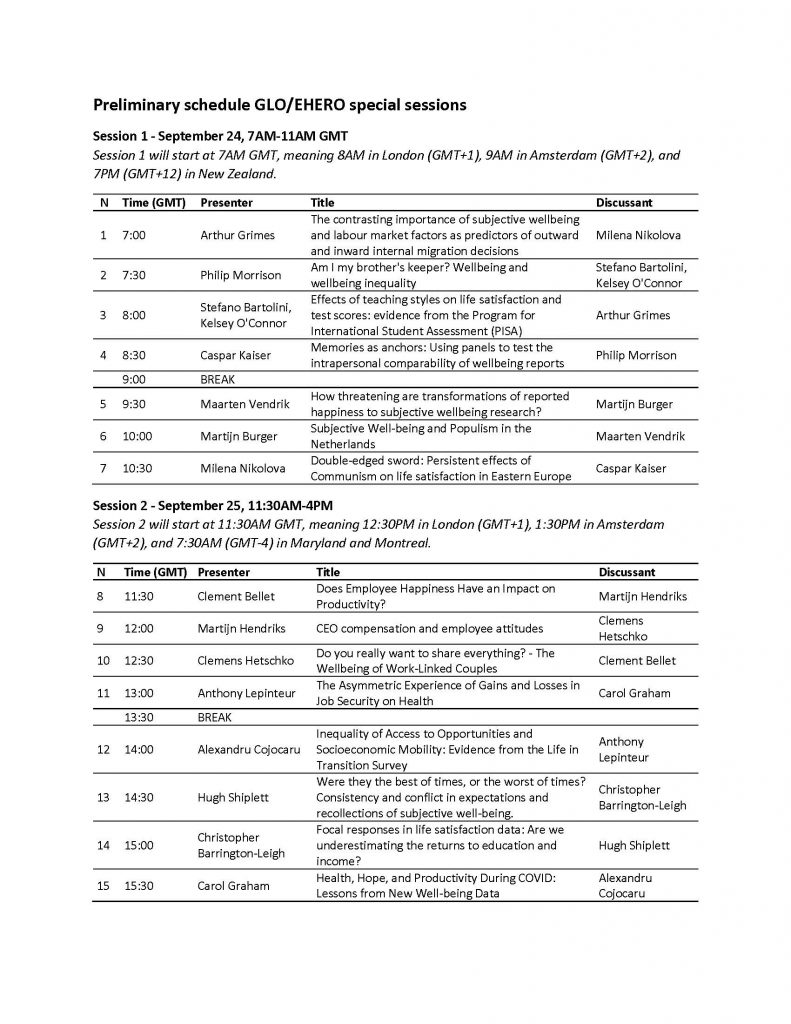
The Global Labor Organization (GLO) and the Erasmus Happiness Economics Research Organization (EHERO) have joined forces to organize a special event on “Well-being Economics” dealing with the two themes: “Labor, Development, and Well-being” and “Migration, Politics, and Well-being Research”.
TheGLO/EHERO special sessions on well-being, which were originally a part of the 18th International Society for Quality-of-Life Studies ISQOLS Annual Conference on August 25-28, 2020, have now been rescheduled as a separate online event that will take place on September 24-25, 2020.
Program
GLO – EHERO Organizers
Milena Nikolova (University of Groningen and GLO) GLO Cluster Lead “Economics of Happiness”; Email: m.v.nikolova@rug.nl
Martijn Hendriks (EHERO and GLO) and Martijn Burger (EHERO)
A new paper published in the Journal of Population Economics shows that the share of students in a class who are low achievers has a significant negative impact on the academic achievement of regular students.
Journal of Population Economics (2020) 33, Issue 4: 1343-1380 FREE READLINK
Author Abstract: This paper examines the causal effects of the proportion of low-ability students in the classroom on the academic performance of regular students, exploiting random assignment of students to classes within middle schools in China. We show that the share of students in a class who are low achievers has a significant negative impact on the academic achievement of regular students in the seventh grade. The peer effects are heterogeneous along their achievement distribution, with the strongest adverse impact at the bottom end but no discernable impact at the top end. In contrast, there is no evidence that low-ability students influence any part of the achievement distribution of regular students in the ninth grade. Therefore, peer effects in academic outcomes can vary with the length of regular students’ exposure to the same group of low-ability classmates. We further show that the differences in peer effects of low-ability students in seventh and ninth grades are driven by the adjustments of students’ friendship formation and learning environment when approaching the completion of middle school.
LEAD ARTICLE OF ISSUE 4: Yun Qiu, Xi Chen & Wei Shi, Impacts of social and economic factors on the transmission of coronavirus disease 2019 (COVID-19) in China Journal of Population Economics33, 1127–1172 (2020). OPEN ACCESS
A new paper published in the Journal of Population Economics finds for the USA thatethnic attrition biases conventional estimates of health disparities between Mexican Americans and non-Hispanic whites as well as those between Mexican Americans and recent Mexican immigrants.
Francisca M. Antman, Brian Duncan & Stephen J. Trejo
Journal of Population Economics (2020) 33, Issue 4: 1499-1522 FREE READLINK
GLO Fellow Francisca M. Antman
Author Abstract: The literature on immigrant assimilation and intergenerational progress has sometimes reached surprising conclusions, such as the puzzle of immigrant advantage which finds that Hispanic immigrants sometimes have better health than US-born Hispanics. While numerous studies have attempted to explain these patterns, almost all studies rely on subjective measures of ethnic self-identification to identify immigrants’ descendants. This can lead to bias due to “ethnic attrition,” which occurs whenever a US-born descendant of a Hispanic immigrant fails to self-identify as Hispanic. In this paper, we exploit information on parents’ and grandparents’ place of birth to show that Mexican ethnic attrition, operating through intermarriage, is sizable and positively selected on health, making subsequent generations of Mexican immigrants appear less healthy than they actually are. Consequently, conventional estimates of health disparities between Mexican Americans and non-Hispanic whites as well as those between Mexican Americans and recent Mexican immigrants have been significantly overstated.
LEAD ARTICLE OF ISSUE 4: Yun Qiu, Xi Chen & Wei Shi, Impacts of social and economic factors on the transmission of coronavirus disease 2019 (COVID-19) in China Journal of Population Economics33, 1127–1172 (2020). OPEN ACCESS
A new GLO Discussion Papersuggests that a society with high income inequality, in which a small proportion of the population earns a large proportion of society’s income, will have lower collective life satisfaction.
The Global Labor Organization (GLO) is an independent, non-partisan and non-governmental organization that functions as an international network and virtual platform to stimulate global research, debate and collaboration.
Author Abstract: This study investigates why the strong form of the spatial equilibrium is weakly supported in the literature. Using a discrete choice model, it shows that the strong form of the spatial equilibrium is rarely observed because workers are imperfectly mobile from the perspective of researchers. Incorporating the discrete choice model, a Markov chain is used to model the spatial dynamics of the population distribution. For a given location choice set, the population distribution is shown to converge to a unique spatial steady state. Microdata from the American Community Survey show that the model assumption is reasonable and support the model predictions.
A new paper just published in the Journal of Population Economics attributes the academic advantage of children of Asian immigrants mainly to their allocating more time to educational activities or their favorable initial cognitive abilities, not to socio-demographics or so-called “tiger parenting” styles.
Ha Trong Nguyen, Luke B. Connelly, Huong Thu Le, Francis Mitrou, Catherine L. Taylor & Stephen R. Zubrick
Journal of Population Economics (2020) 33, Issue 4: 1381–1418 FREE READLINK
GLO Fellows Ha Trong Nguyen & Luke B. Connelly
Ha Nguyen
Luke Connelly
Author Abstract: In most English-speaking countries, the children of Asian immigrants have better academic outcomes than other children, yet the underlying causes of their advantages are unclear. Using decade-long time use diaries on two cohorts of children, we present new evidence that children of Asian immigrants spend more time than their peers on educational activities beginning at school entry and that the ethnicity gap in the time allocated to educational activities increases as children age. We can attribute the academic advantage of children of Asian immigrants mainly to their allocating more time to educational activities or their favorable initial cognitive abilities, not to socio-demographics or so-called “tiger parenting” styles. Furthermore, our results show substantial heterogeneity in the contributions of initial cognitive abilities and time allocations by test subjects, children’s ages, and points of the test score distribution.
LEAD ARTICLE OF ISSUE 4: Yun Qiu, Xi Chen & Wei Shi, Impacts of social and economic factors on the transmission of coronavirus disease 2019 (COVID-19) in China Journal of Population Economics33, 1127–1172 (2020). OPEN ACCESS
A new GLO Discussion Paper finds for Portugal that public-sector appointments increase significantly over the months just after elections but only if the new government is of a different political color than its predecessor suggesting a misallocation of public resources.
The Global Labor Organization (GLO) is an independent, non-partisan and non-governmental organization that functions as an international network and virtual platform to stimulate global research, debate and collaboration.
Author Abstract: Politicians can use the public sector to give jobs to cronies, at the expense of the efficiency of those organizations and general welfare. In this paper, we regress monthly hires across all firms in Portugal with some degree of public ownership on the country’s 1980-2018 political cycle. We find that public-sector appointments increase significantly over the months just after elections but only if the new government is of a different political color than its predecessor. These results are consistent with a simple model of cronyism and hold in multiple robustness checks. Overall, we find our evidence to be consistent with politically-induced misallocation of public resources.
A new paper published in the Journal of Population Economics shows that social networks help explain not only the spread of the disease but also cross-country spillovers in perceptions about coronavirus risk and in social distancing behavior.
LEAD ARTICLE OF ISSUE 4: Yun Qiu, Xi Chen & Wei Shi, Impacts of social and economic factors on the transmission of coronavirus disease 2019 (COVID-19) in China Journal of Population Economics33, 1127–1172 (2020). OPEN ACCESS
A new paper published in the Journal of Population Economics finds that Filipinos are more likely to work abroad when they experience less-intense tropical cyclones and storm warnings but are more likely to stay when very intense storms occur or are forecasted.
Journal of Population Economics (2020) 33, Issue 4: 1419-1461 FREE READLINK
GLO Fellow Marjorie C. Pajaron & GLO Affiliate Glacer Niño A. Vasquez
Author Abstract: The environmental migration literature presents conflicting results: While some research finds that natural disasters induce international migration, other work discovers a dampening effect. We construct an innovative longitudinal provincial dataset for the Philippines, a country prone to natural disasters and a major exporter of labor. Using a comprehensive list of weather shocks, it is possible to identify major channels behind those conflicting findings. Filipinos are more likely to work abroad when they experience less-intense tropical cyclones and storm warnings but are more likely to stay when very intense storms occur or are forecasted.
LEAD ARTICLE OF ISSUE 4: Yun Qiu, Xi Chen & Wei Shi, Impacts of social and economic factors on the transmission of coronavirus disease 2019 (COVID-19) in China Journal of Population Economics33, 1127–1172 (2020). OPEN ACCESS
A new paper published in the Journal of Population Economics finds substantial heterogeneity in the effects of extreme temperature exposure on birth outcomes. In particular, prenatal exposure to heat waves has stronger negative effects than exposure to cold spells on surviving births.
Journal of Population Economics (2020) 33, Issue 4: 1263-1302 FREE READLINK
GLO FellowXi Chen
Author Abstract: This paper investigates the effects of prenatal exposure to extreme temperatures on birth outcomes—specifically, the log of birth weight and an indicator for low birth weight—using a nationally representative dataset on rural China. During the time period we examine (1991–2000), indoor air conditioning was not widely available and migration was limited, allowing us to address identification issues endemic in the climate change literature related to adaptation and location sorting. We find substantial heterogeneity in the effects of extreme temperature exposure on birth outcomes. In particular, prenatal exposure to heat waves has stronger negative effects than exposure to cold spells on surviving births.
LEAD ARTICLE OF ISSUE 4: Yun Qiu, Xi Chen & Wei Shi, Impacts of social and economic factors on the transmission of coronavirus disease 2019 (COVID-19) in China Journal of Population Economics33, 1127–1172 (2020). OPEN ACCESS
A new paper published in the Journal of Population Economics indicates that the decrease in public sector employment, which is particularly appealing to women, may have contributed to the recent rise in fertility in Egypt.
Journal of Population Economics (2020) 33, Issue 4: 1173-1218 FREE READLINK
GLO FellowCaroline Krafft
Author Abstract: Can declining employment opportunities for women reverse the fertility transition? This paper presents evidence that the demographic transition has not just stalled but in fact reversed in Egypt. After falling for decades, fertility rates increased. The paper examines the drivers of rising fertility rates, with a particular focus on the role of declining public sector employment opportunities for women. Estimates show the effect of public sector employment on the spacing and occurrence of births using discrete-time hazard models. The paper then uses the results to simulate total fertility rates. The models address the potential endogeneity of employment by incorporating woman-specific fixed effects, incorporating local employment opportunities rather than women’s own employment, and using local employment opportunities as an instrument. Results indicate that the decrease in public sector employment, which is particularly appealing to women, may have contributed to the rise in fertility but is unlikely to be its main cause.
LEAD ARTICLE OF ISSUE 4: Yun Qiu, Xi Chen & Wei Shi, Impacts of social and economic factors on the transmission of coronavirus disease 2019 (COVID-19) in China Journal of Population Economics33, 1127–1172 (2020). OPEN ACCESS
Journal of Population Economics (2020) 33, Issue 4: 1303-1341 FREE READLINK
GLO Fellow Weiguang Deng and GLO Affiliate Dayang Li
Author Abstract: This study uses a field experiment to resolve the difficulties of quantifying personal appearance and identify a direct causal relationship between appearance and employment in China. The experiment reveals that taste-based pure appearance discrimination exists at the pre-interview stage. There are significant gender-specific heterogeneous effects of education on appearance discrimination: having better educational credentials reduces appearance discrimination among men but not among women. Moreover, attributes of the labor market, companies, and vacancies matter. Beauty premiums are larger in big cities with higher concentrations of women and in male-focused research positions. Similarly, the beauty premium is larger for vacancies with higher remuneration.
The paper has beenGLO Discussion Paper No. 369, 2020.
LEAD ARTICLE OF ISSUE 4: Yun Qiu, Xi Chen & Wei Shi, Impacts of social and economic factors on the transmission of coronavirus disease 2019 (COVID-19) in China Journal of Population Economics33, 1127–1172 (2020). OPEN ACCESS
A new paper published in the Journal of Population Economics finds that raising the school leaving age can be effective in reducing the incidence of teenage pregnancy among socially excluded women, even if it does not affect the general population. An important policy implication is the potentially heterogeneous impact of educational interventions across different ethnic groups.
Journal of Population Economics (2020) 33, Issue 4: 1219-1261 OPEN ACCESS
Author Abstract: This paper examines the effects of an increase in the compulsory school leaving age on the teenage fertility of Roma women, a disadvantaged ethnic minority in Hungary. We use a regression discontinuity design identification strategy and show that the reform decreased the probability of teenage motherhood among Roma women by 13.4–26.0% and delayed motherhood by 2 years. We separate the incapacitation and human capital effects of education on fertility by exploiting a database that covers live births, miscarriages, abortions, and still births and contains information on the time of conception. We find that longer schooling decreases the probability of getting pregnant during the school year but not during summer and Christmas breaks, which suggests that the estimated effects are generated mostly through the incapacitation channel.
The paper has beenGLO Discussion Paper No. 474, 2020.
LEAD ARTICLE OF ISSUE 4: Yun Qiu, Xi Chen & Wei Shi, Impacts of social and economic factors on the transmission of coronavirus disease 2019 (COVID-19) in China Journal of Population Economics33, 1127–1172 (2020). OPEN ACCESS
Completing a very successfulfirst cohort 2019-20, Global Labor Organization (GLO) invites interested young scholars to apply for participation in the GLO VirtYS Program.
A new paper published in the Journal of Population Economics finds that risk aversion has a robust and statistically significant negative impact on willingness to migrate within countries as well as abroad.
Journal of Population Economics (2020) 33, Issue 4: 1463-1498 OPEN ACCESS
Author Abstract: This paper uses individual-level data covering 30 transition countries that account for over one-quarter of the worldwide immigrant stock to assess the impact of risk aversion on willingness to migrate. It extends the previous literature by allowing the effect of risk aversion to depend on the level of risk in the sending country. Consistent with theories of individual-level migration decisions, we find that risk aversion has a robust and statistically significant negative impact on willingness to migrate within countries as well as abroad. As predicted by theory, this impact is robustly less negative in riskier sending countries. Furthermore, this negative impact is significantly larger for willingness to migrate abroad than willingness to migrate internally. We also find that, even after controlling for an extensive set of control variables, willingness to migrate internally and abroad are highly correlated. This suggests that internal and international mobility decisions are closely linked.
LEAD ARTICLE OF ISSUE 4: Yun Qiu, Xi Chen & Wei Shi, Impacts of social and economic factors on the transmission of coronavirus disease 2019 (COVID-19) in China Journal of Population Economics33, 1127–1172 (2020). OPEN ACCESS
The GLO Discussion Paper of the Month of July finds that the inclusion of family workers more than triples the free female labor force participation rate in the 1860 Census of the USA, from 16 percent to 56 percent, which is comparable to today’s rate (57 percent in 2018).
Author Abstract:Rates of labor force participation in the US in the second half of the nineteenth century among free women were exceedingly (and implausibly) low, about 11 percent. This is due, in part, to social perceptions of working women, cultural and societal expectations of female’s role, and lack of accurate or thorough enumeration by Census officials. This paper develops an augmented free female labor force participation rate for 1860. It is calculated by identifying free women (age 16 and older) who were likely providing informal and unenumerated labor for market production in support of a family business, that is, unreported family workers. These individuals are identified as not having a reported occupation, but are likely to be working on the basis of the self-employment occupation of other relatives in their households. Family workers are classified into three categories: farm, merchant, and craft. The inclusion of this category of workers more than triples the free female labor force participation rate in the 1860 Census, from 16 percent to 56 percent, which is comparable to today’s rate (57 percent in 2018).
GLO DP Team Senior Editors: Matloob Piracha (University of Kent) & GLO; Klaus F. Zimmermann (UNU-MERIT, Maastricht University and Bonn University). Managing Editor: Magdalena Ulceluse, University of Groningen. DP@glabor.org
In GLO Discussion Paper No. 450, GLO FellowsStepan Jurajda and Dejan Kovač have recently provided research evidence revealing that given first names of leaders from World War II can predict behavior in the 1991-1995 Croatian war of independence and beyond in society including voting. It provides hard evidence for intergenerational transmission of nationalism. This research work has found already much interest in the scientific community and beyond. It is now published online first in the Journal of Population Economics (see details and access link below). Recently, the authors were interviewed by GLO about the background and context of this research.
Stepan Jurajda & Dejan Kovač: Names and Behavior in a War, GLO Discussion Paper 450, 2020. Online First: Journal of Population Economics. Click to read: READLINK!
Abstract
We implement a novel empirical strategy for measuring and studying a strong form of nationalism—the willingness to fight and die in a war for national independence—using name choices corresponding to a previous war leader. Based on data on almost half a million soldiers, we first show that having been given a first name that is synonymous with the leader(s) of the Croatian state during World War II predicts volunteering for service in the 1991–1995 Croatian war of independence and dying during the conflict. Next, we use the universe of Croatian birth certificates and the information about nationalism conveyed by first names to suggests that in ex-Yugoslav Croatia, nationalism rose continuously starting in the 1970s and that its rise was curbed in areas where concentration camps were located during WWII. Our evidence on intergenerational transmission of nationalism is consistent with nationalist fathers purposefully reflecting the trade-off between within-family and society-wide transmission channels of political values. We also link the nationalist values we proxy using first name choices to right-wing voting behavior in 2015, 20 years after the war.
A new GLO Discussion Paperuses a Markov chain to model the spatial dynamics of the population distribution for microdata from the American Community Survey.
The Global Labor Organization (GLO) is an independent, non-partisan and non-governmental organization that functions as an international network and virtual platform to stimulate global research, debate and collaboration.
Author Abstract: This study investigates why the strong form of the spatial equilibrium is weakly supported in the literature. Using a discrete choice model, it shows that the strong form of the spatial equilibrium is rarely observed because workers are imperfectly mobile from the perspective of researchers. Incorporating the discrete choice model, a Markov chain is used to model the spatial dynamics of the population distribution. For a given location choice set, the population distribution is shown to converge to a unique spatial steady state. Microdata from the American Community Survey show that the model assumption is reasonable and support the model predictions.
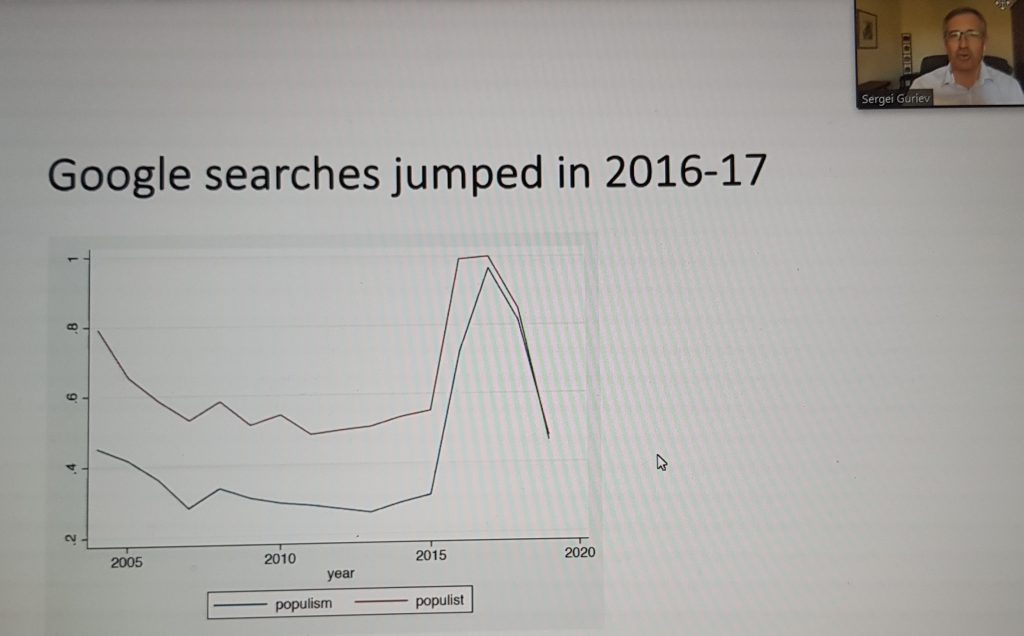
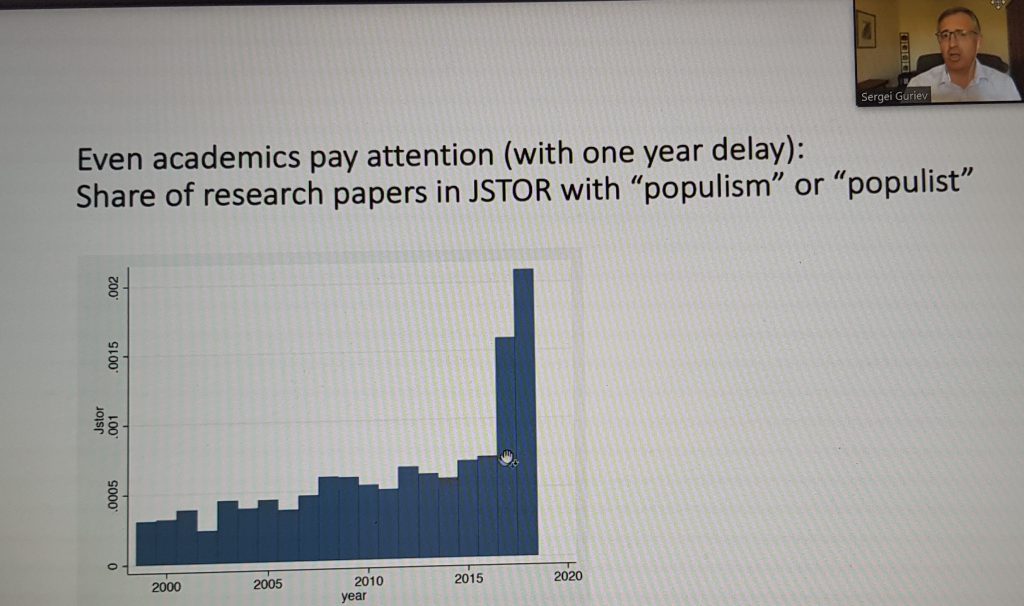
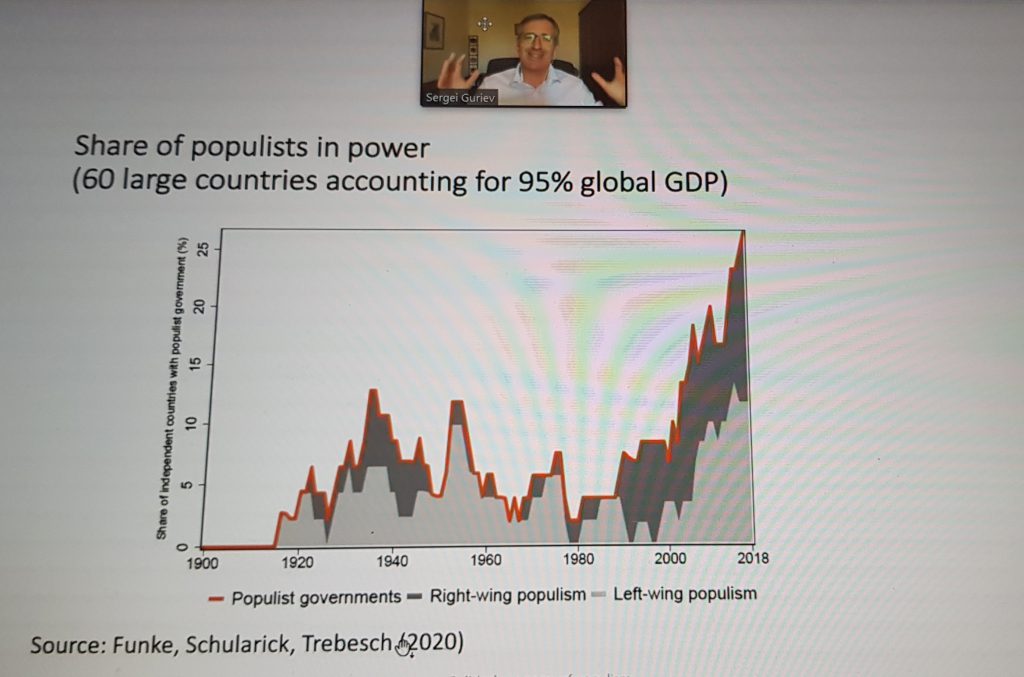
TheGLO Virtual Seminar is a monthly internal GLO research event chaired by GLO Director Matloob Piracha and hosted by the GLO partner institution University of Kent. The results are available on the GLO website and the GLO News section, where also the video of the presentation is posted. All GLO related videos are also available in the GLO YouTube channel. (To subscribe go there.)
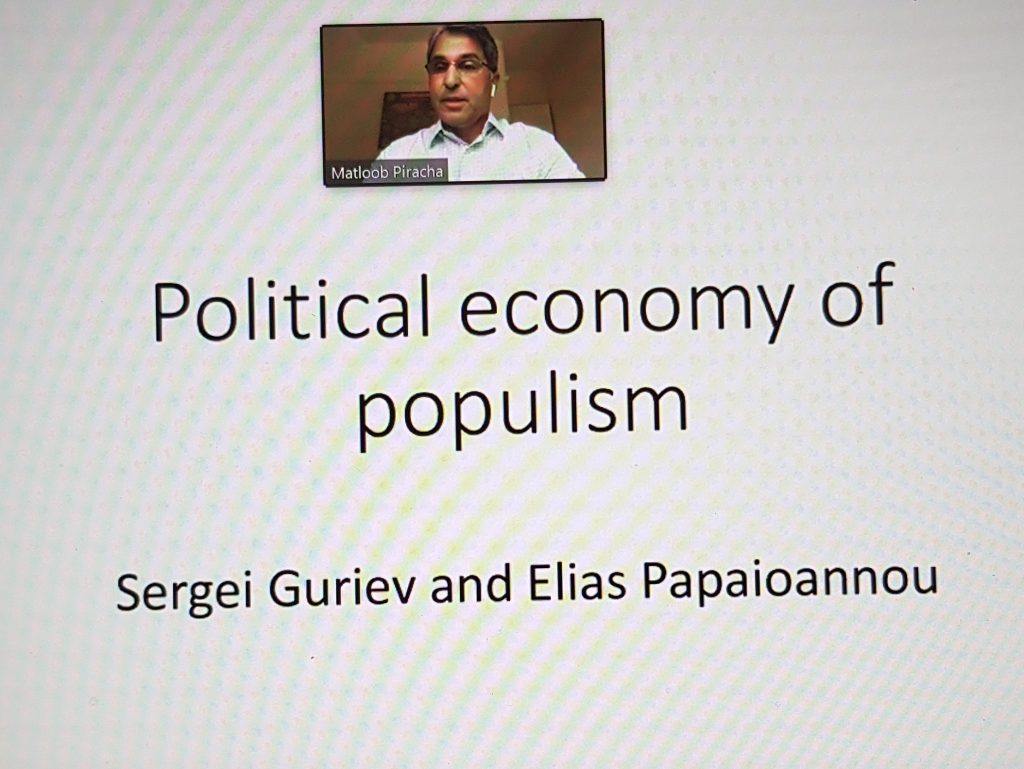
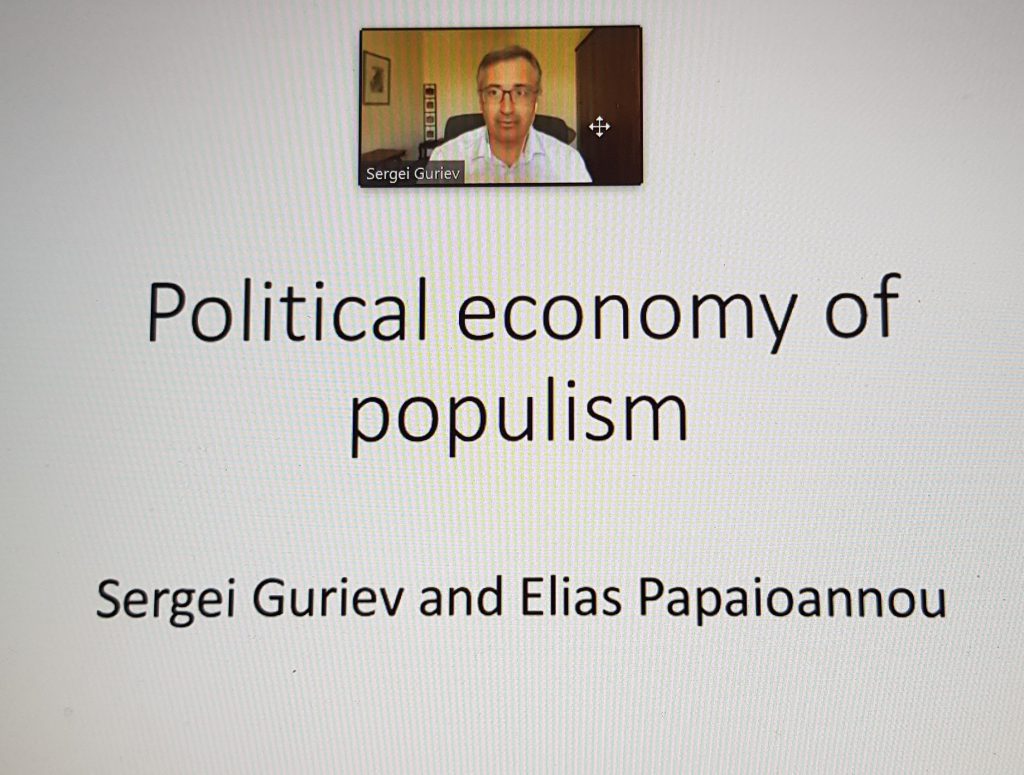
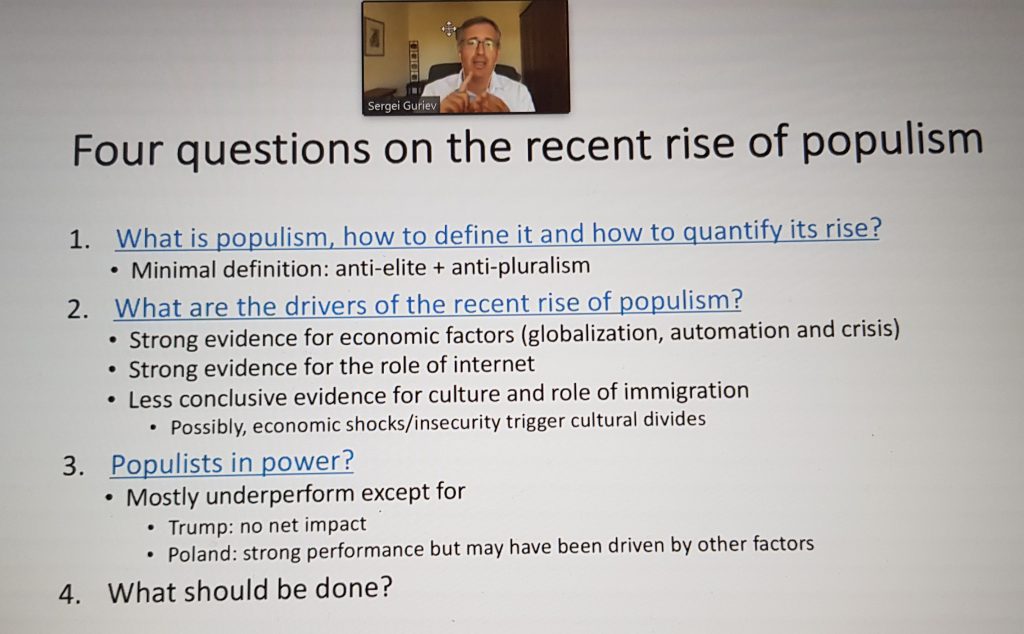
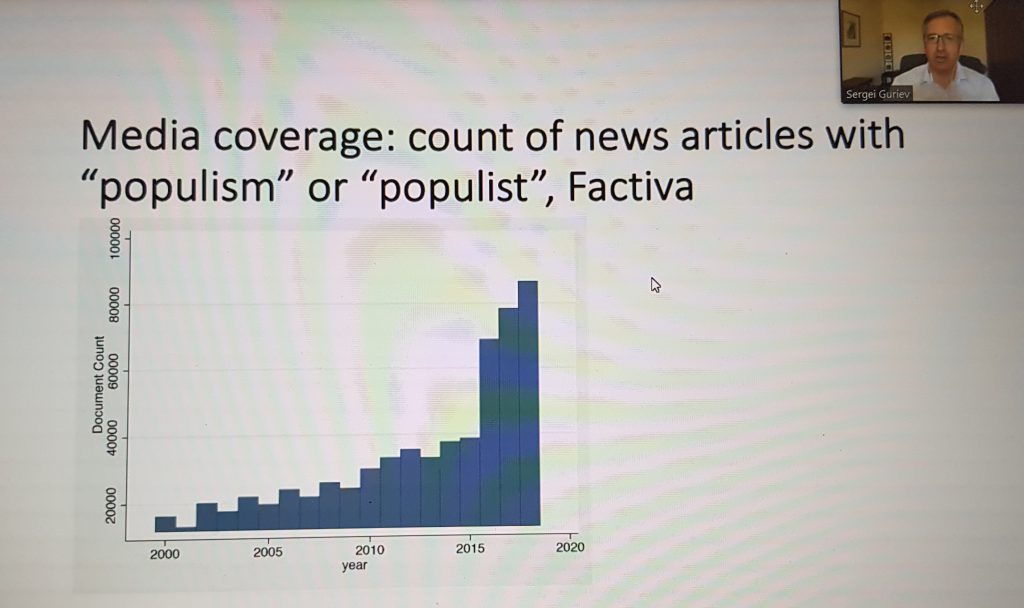
The last seminar was given by Sergei Guriev on The Political Economy of Populism. Below find a report, the video of the seminar and the background paper.
Announcement/forthcoming seminar: September 3, 2020:London/UKat 1-2 pm —Kompal Sinha, Macquarie University and GLO Topic: To be announced. Registration details will be provided in time.
Report
The Political Economy of Populism
GLO Virtual Seminar on August 6, 2020 with Sergei Guriev (Sciences Po & GLO). Video !!!
Related paper: Sergei Guriev and Elias Papaioannou, The Political Economy of Populism.PDF Draft prepared for the Journal of Economic Literature.
A new GLO Discussion Paperstudies the Australian labor market for native and foreign students and finds that acquiring education in the host country does not appear to eliminate uneven labor market outcomes between natives and foreigners.
The Global Labor Organization (GLO) is an independent, non-partisan and non-governmental organization that functions as an international network and virtual platform to stimulate global research, debate and collaboration.
Author Abstract: This paper studies the labor market outcomes of native and foreign PhD graduates staying as migrants in Australia, using data on career destinations over the period 1999-2015. Natives with an English-speaking background emerge as benefiting from positive employer discrimination, especially if graduating in Science, Technology, Engineering and Mathematics (STEM), for which they receive a premium that is unrelated to observed characteristics such as gender, age, and previous work experience. In contrast, foreign PhD graduates with a non-English speaking background experience worse labor market outcomes, especially if they work in the university sector. Acquiring education in the host country does not appear to eliminate uneven labor market outcomes between natives and foreigners.
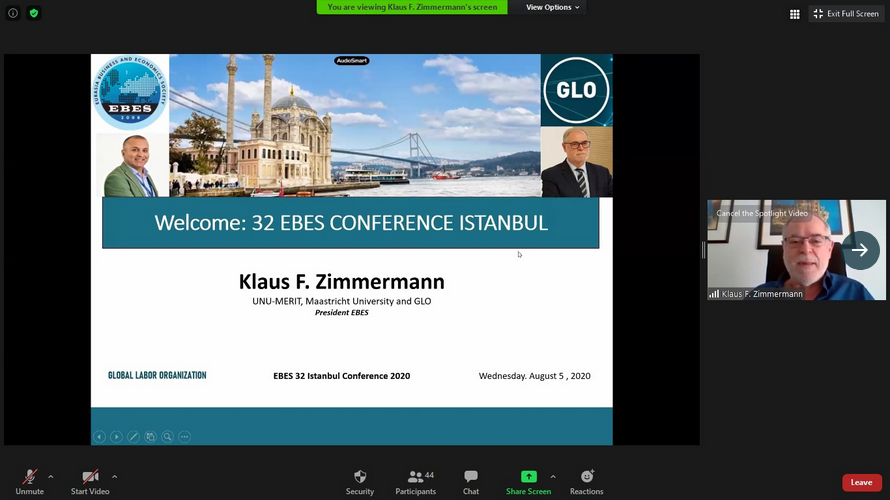
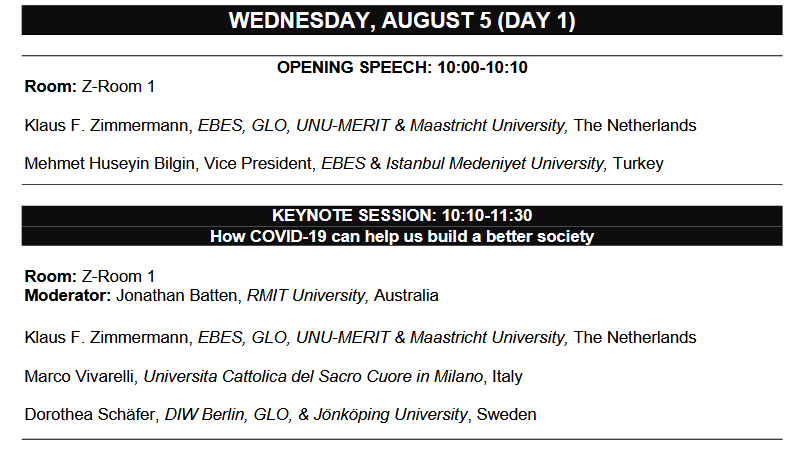
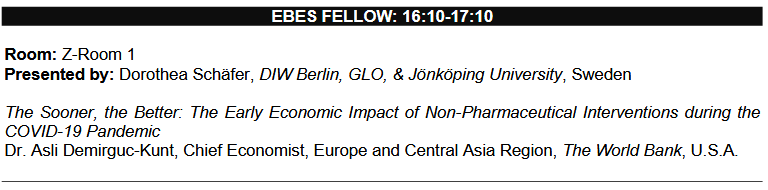
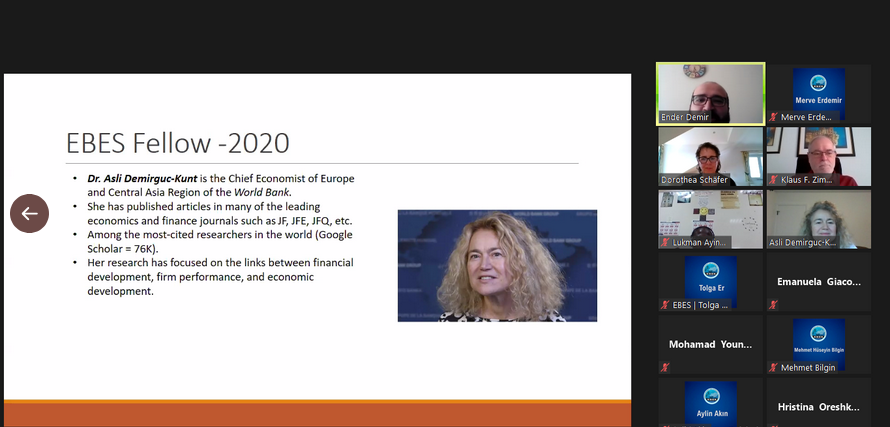
EBES and GLO are partner organizations. GLO President Klaus F. Zimmermann is also President of EBES. Among the highlights were the sessions below with GLO Fellows Mehmet Huseyin Bilgin, Jonathan Batten, Marco Vivarelli and Dorothea Schäfer. Asli Demirguc-Kunt (World Bank) spoke on the occasion of her appointment as EBES Fellow 2020. Klaus F. Zimmermann congratulated her to this honor and closed the appointment session.
From the left: Batten, Bilgin, Schäfer, Vivarelli, Zimmermann
In his opening speech, EBES President Klaus F. Zimmermann was using his recent joint paper in The World Economy with EBES colleagues to introduce the inter-country transmission challenge of the Covid-19 pandemic and outlined the consequences for academic networking and conferencing. He was calling for attempts to introduce social components into virtual conferences.
The Keynote Panel on How Covid-19 can help us build a better society?was chaired and guided by Jonathan Batten. Klaus F. Zimmermann spoke on human resources issues, Marco Vivarelli an the labor market and Dorothea Schäfer on financial markets.
****************************************** BACKGROUND PAPERmentioned by Zimmermann as an example in his panel contribution. UNU-MERIT Discussion Paper No. 2020-015 Taking the challenge: A joint European policy response to the corona crisis to strengthen the public sector and restart a more sustainable and social Europe by Jo Ritzen, Javi Lopez, André Knottnerus, Salvador Pérez-Moreno, George Papandreou & Klaus F. Zimmermann
• Strong & social Europe • Joint Euro area monetary funding • Joint Euro area borrowing conditional on strong commitments for sustainable development • Better public sector with joint taxation • Sound fiscal behavior • Full employment strategy with vocational training, retraining • Free internal mobility, open labor immigration policy; joint refugee policy. ********************************************
A new GLO Discussion Paperpresents a model which shows that wages, prices and real income should grow faster in countries with low increase in their labor force.
The Global Labor Organization (GLO) is an independent, non-partisan and non-governmental organization that functions as an international network and virtual platform to stimulate global research, debate and collaboration.
Author Abstract: We develop a model which shows that wages, prices and real income should grow faster in countries with low increase in their labor force. If not, other countries experience growing unemployment and/or trade deficit. This result is applied to the case of Germany, which has displayed a significantly lower increase in its labour force than its trade partners, except in the moment of the reunification. By assuming that goods are differentiated according to their country of origin (Armington’s hypothesis), a low growth of the working population constrains the production of German goods, which entails an increase in their prices and in German wages. This mechanism is magnified by the low price elasticity of the demand for German goods. Hence, the German policy of wage moderation could severely constrain other countries’ policy options. The simulations of an extended model which encompasses offshoring to emerging countries and labor market imperfections suggest that (i) the impact of differences in labor force growth upon unemployment in Eurozone countries has been significant and (ii) the German demographic shock following unification could explain a large part of the 1995-2005 German economic turmoil.
A new GLO Discussion Paperpresents a model where better-off individuals mate genetically close partners, and then use wealth to treat their children’s health problems.
The Global Labor Organization (GLO) is an independent, non-partisan and non-governmental organization that functions as an international network and virtual platform to stimulate global research, debate and collaboration.
Author Abstract: In this note, I address the trade-off between children’s health and parental preference toward similarity with children. In my model, better-off individuals mate genetically close partners and then use wealth to treat their children’s health problems, caused by inbreeding depression. As a result, the relationship between parental wealth and children’s health includes decreasing portions. Siblings health inequality is also nonmonotonically related to parental wealth, if parents discriminate in favor of more similar children.
A new GLO Discussion Paper finds that all caste groups lost jobs in the first month of the Covid-19 lockdown, the job losses for lowest-ranked caste are greater by factor of three.
The Global Labor Organization (GLO) is an independent, non-partisan and non-governmental organization that functions as an international network and virtual platform to stimulate global research, debate and collaboration.
Author Abstract: Using nationally representative panel data for 21,799 individuals between May 2018 and April 2020, this paper investigates whether the Covid-19 pandemic was indeed a “Great Leveler” in the sense that it imposed similar and equivalent labour market shocks on different caste groups. We find that while all caste groups lost jobs in the first month of the lockdown, the job losses for lowest-ranked caste are greater by factor of three. The data shows that the disproportionate effects stems from lower levels of human capital and over-representation in vulnerable jobs for the lowest ranked caste groups in the country.
A new GLO Discussion Paper using mortality data for Italy finds that the growth in total mortality rates can potentially be used as a statistically reliable predictor of mortality crises.
The Global Labor Organization (GLO) is an independent, non-partisan and non-governmental organization that functions as an international network and virtual platform to stimulate global research, debate and collaboration.
Author Abstract: The paper provides initial evidence that excess mortality rates by locality can be used as a statistically reliable predictor of looming mortality crises. Using recently published daily deaths figures for 7,357 Italian municipalities, we estimate the growth in daily mortality rates between the period 2015-2019 and 2020 by province. All provinces that experienced a major mortality shock in mid-March 2020 had increases in mortality rates of 100% or above already in mid-February 2020. This increase was particularly strong for males and older people, two recognizable features of COVID-19. Using panel data models, we find a strong positive and significant association between overall deaths and COVID-19 related deaths, and between early increases in mortality rates in February 2020 for any cause and the March 2020 outbreak in COVID-19 deaths. We conclude that the growth in mortality rates can potentially be used as a statistically reliable predictor of mortality crises, including COVID- 19 crises.
A new GLO Discussion Papersurveys the empirical literature to find that taste-based discriminationcanbetter explain ethnic discrimination in hiring than statistical discrimination.
The Global Labor Organization (GLO) is an independent, non-partisan and non-governmental organization that functions as an international network and virtual platform to stimulate global research, debate and collaboration.
Author Abstract: Scholars have gone to great lengths to chart the incidence of ethnic labour market discrimination. To effectively mitigate this discrimination, however, we need to understand its underlying mechanisms because different mechanisms lead to different counteracting measures. To this end, we reviewed the recent literature that confronts the seminal theories of taste-based and statistical discrimination against the empirical reality. First, we observed that the measurement operationalisation of the mechanisms varied greatly between studies, necessitating the development of a measurement standard. Second, we found that 20 out of 30 studies examining taste-based discrimination and 18 out of 34 studies assessing statistical discrimination produced supportive evidence for said mechanisms. However, (field) experimental research, which predominantly focuses on hiring outcomes, yielded more evidence in favour of taste-based vis-à-vis statistical discrimination, suggesting that the taste-based mechanism might better explain ethnic discrimination in hiring.
A new GLO Discussion Paperprovides anunderstanding of the mechanisms of hiring discrimination towards former burnout patients .
The Global Labor Organization (GLO) is an independent, non-partisan and non-governmental organization that functions as an international network and virtual platform to stimulate global research, debate and collaboration.
Author Abstract: Hiring discrimination towards (former) burnout patients has been extensively documented in the literature. To tackle this problem, it is important to understand the underlying mechanisms of such discrimination. Therefore, we conducted a vignette experiment with 425 genuine recruiters and jointly tested the potential stigma against job candidates with a history of burnout that were mentioned earlier in the literature. We found candidates revealing a history of burnout elicit perceptions of requiring work adaptations, likely having more unpleasant collaborations with others as well as diminished health, autonomy, ability to work under pressure, leadership capacity, manageability, and learning ability, when compared to candidates with a comparable gap in working history due to physical injury. Led by perceptions of a reduced ability to work under pressure, the tested perceptions jointly explained over 90% of the effect of revealing burnout on the probability of being invited to a job interview. In addition, the negative effect on interview probability of revealing burnout was stronger when the job vacancy required higher stress tolerance. In contrast, the negative impact of revealing burnout on interview probability appeared weaker when recruiters were women and when recruiters had previously had personal encounters with burnout.
A new GLO Discussion Paperfinds long-term evidence that the youngest cohort students participate less often in the Erasmus exchange program than older cohort members.
The Global Labor Organization (GLO) is an independent, non-partisan and non-governmental organization that functions as an international network and virtual platform to stimulate global research, debate and collaboration.
GLO Fellow Magnus Carlsson & GLO Affiliate Luca Fumarco
Magnus Carlsson
Luca Fumarco
Author Abstract: This study contributes to the literature on long-term effects of relative age (i.e. age differences between classmates in compulsory school) by examining tertiary education outcomes. We investigate whether there is evidence of relative age effects on university students enrolled in the Erasmus exchange program. We use administrative data on all exchange students who visited the Linnaeus University, in Sweden, in the four years since its founding. We find long-term evidence of RAEs—the youngest cohort students participate less often to the Erasmus exchange program than older cohort members.
























































 DP of the Month July