The 16 new GLO Discussion Papers deal with issues related to (i) deep roots of collaboration, (ii) gender-based crime & violence, (iii) female political leaders, (iv) wellbeing and mental health behind bars, (v) schooling and human capital, (vi) teleworking, (vii) migration and fertility, (viii) cancer screening and (ix) else. Papers, among others, by Journal of Population Economics editors Xi Chen, Oded Galor and Astghik Mavisakalyan.
The nine new GLO Discussion Papers deal with (i) China’s One-Child Policy, (ii) issues of inequality, (iii) education, (iv) working from home, (v) migration, trade and economic growth, and (vi) green investments and worker voice.
Abstract. China’s One-Child Policy (OCP) restricted most couples to a single birth, leading to a rapid increase in the prevalence of only children. Using longitudinal data and a regression discontinuity design around the policy’s start, we estimate the effects on grandchildren’s human capital. We find that children with only-child mothers perform significantly better in cognitive skills (0.71 SD) and noncognitive skills (0.50 SD) than comparable peers. The effects are larger for boys, consistent with son preference, and for those with less-educated grandparents, for whom quantity-quality trade-offs are more applicable. Additionally, we find that only-child parents have higher educational attainment and provide more favorable home environments, which may explain their children’s advantages in human capital outcomes. These findings suggest that, in the presence of quantity-quality trade-offs, fertility restrictions can improve human capital across multiple generations.
Abstract. This paper assesses the fiscal and distributional effects of personal income tax expenditures in Portugal using EUROMOD and 2022 EU-SILC microdata. We compare the 2023 tax-benefit system with a counterfactual scenario in which tax expenditures are removed to estimate first-round impacts. We find that tax expenditures account for almost 40% of personal income tax revenues and predominantly benefit middle- and higher-income households, with large variation in redistributive effectiveness across instruments. While the Net Minimum Income Guarantee is progressive and cost-efficient in reducing inequality, most work- and pensionrelated allowances deliver limited equity gains, suggesting scope for reform.
Abstract. What ignited humanity’s momentous ascent from millennia of stagnation to an era of sustained economic growth? And what are the roots of the vast disparities in the wealth of nations? These enduring mysteries, which have preoccupied scholars across generations, lie at the core of Unified Growth Theory. This encompassing framework captures the evolution of societies over the entire course of human history and identifies the universal wheels of change that governed humanity’s long journey, propelled the growth process, and shaped inequality across the globe. The theory uncovers the forces underlying the dramatic transformation in living standards over the past two centuries, emerging from an economic ice age of near stagnation, while highlighting the enduring historical roots of the immense divergence in the prosperity of nations. It suggests that forces set in motion in the distant past played a pivotal role in shaping development across the globe and remain essential for the design of effective policies that foster economic progress and mitigate inequality in the wealth of nations.
Abstract. This paper estimates the returns to education in Arkansas-one of the last states to extend compulsory schooling-using ACS 2023 data and the 1987 Compulsory Schooling Law (CSL) reform as an instrument. OLS estimates imply returns of 9.5-10.4 percent per year of schooling. The CSL reform increased schooling among compliers by 0.67-0.73 years and yields IV returns of 10.4-11.7 percent, exceeding OLS estimates. The results indicate that those compelled to remain in school benefited most, consistent with global evidence on higher causal returns for disadvantaged students.
Abstract. During and shortly after the height of the COVID-19 pandemic, concerns were expressed that working from home (WFH) was creating a ‘mental health crisis’. Australia experienced a three-phase ‘WFH experiment’, with widespread high-intensity WFH imposed by lockdowns in 2020, deepened restrictions in 2021, and a transition to flexible work arrangements and more autonomy in 2022 as vaccination rates increased. Using data from the Household, Income and Labour Dynamics in Australia survey, this study estimates the impact of WFH on worker mental health across these phases. Findings show that WFH led to a modest, statistically significant deterioration in average worker mental health outcomes during the lockdown years (2020-2021), particularly among women. Negative effects were present in workers across the social support and job control spectrum, suggesting limited buffering capacity to counter the stress of lockdown restrictions. However, by 2022, the negative effects of WFH dissipated with positive effects for those WFH 25-50% of time, indicating that pandemic-related lockdowns, rather than WFH itself, were primarily responsible for mental health declines. The exception was workers with low job control, and females with dependents, who continued to experience negative effects, highlighting that job autonomy and unequal caregiving responsibilities may shape longer-term wellbeing outcomes.
Abstract. I examine the impact of population growth and endogenous migration on renewable natural resources (NR) and welfare in a general equilibrium model with two sectors – a commodity and a manufacturing sector, and with two inputs – labor and NR. Under population growth and no migration, a country’s NR and welfare are unchanged (increase) (decline and eventually collapse) over time for constant (increasing) (decreasing) returns to scale in the manufacturing sector, i.e., for R = (>)(<)1. Migration’s impact is more complex. For instance, migration is nil under R = 1. It results in convergence (divergence) between home and host countries under R < (>)1, and benefits both countries only if R < (>) 1 in the home (host) country. Thus, ignoring how the level of the manufacturing sector’s returns to scale affects migration flows and their impact on NR and welfare is likely to lead to erroneous conclusions and policy implications.
Abstract. I examine whether trade can improve the impact of population growth on natural resources (NR) and welfare over time. Under autarky, population growth results in NR and welfare collapse over time for any value of the returns to scale in the manufacturing sector, R. Under trade, NR and welfare are unchanged (increase) (collapse) over time for R = (>)(<)1– though the decrease in welfare under R < 1 is dampened relative to autarky. Thus, countries experiencing rapid population growth may benefit from opening up to trade.
Abstract. The interaction between organised employee representation (ER) and firms’ engagement in the green transition remains insufficiently understood. Theoretically, two opposing mechanisms may operate. In the bargaining view, representation can slow green investments by increasing adjustment costs and exposing firms to rent-seeking pressures. In contrast, the employee voice perspective holds that ER enables sustainability by facilitating information exchange, eliciting workers’ environmental preferences, and supporting joint problem-solving when organisational adaptation is required. We test these predictions using survey and administrative data from nearly 2,000 firms in Emilia-Romagna. Firms with ER are systematically more likely to pursue green investments, especially in climate mitigation, water use, circularity, and pollution prevention. These results also hold when accounting for the endogeneity of ER via IV. Consistent with the voice mechanism, the association between ER and green investments is stronger in firms employing younger and more educated workers, who are more likely to hold proenvironmental preferences and contribute specialised knowledge relevant for organisational change. Taken together, our findings challenge the view that organised labour inhibits the green transition. Instead, ER emerges as a strategic policy lever that can foster decarbonisation pathways that are technologically feasible, socially negotiated, and democratically anchored at the workplace level.
*****
Anam BilgramiMichael ChristlShuaizhang FengOded GalorHarry PatrinosMaurice Schiff
Great GLO GLO Discussion Papers are on Sexual Satisfaction and Frequency of Sex, Women’s Financial Autonomy, Internet & Intimate Partner Violence, Inequality in the Sahel Region, Fertility responses to tropical cyclones, Effects of Artificial Intelligence on Jobs, Pope Francis & Violence Against Women, Women’s Financial Inclusion in India, Well-being Paradox in Sub-Saharan Africa, Does Performance Pay Add Anything?, Black-White Pay Gap in the United States, Internal Mobility in Italy, among other topics.
Using representative data from Germany, this study compares the role of the Big Five personality traits in the sex life of single and partnered individuals. While extraversion has a positive influence on the sex life of both single and partnered individuals, the influence is much stronger for singles. By contrast, the positive role of conscientiousness in sexual fulfillment is stronger for partnered than for single individuals. Openness to experience and agreeableness play a positive role only in the sex life of partnered individuals. Neuroticism has a detrimental impact on people’s sex life with the impact being stronger for singles than for partnered individuals. The empirical findings fit our theoretical considerations. Personality traits play different roles in the sex life of single and partnered individuals as the sexual relationships of these individuals are characterized by different time horizons.
In light of growing concerns over escalating natural disaster risks and persistently low fertility rates, this paper quantifies the causal impacts of tropical cyclones and identifies the pathways through which they influence childbearing decisions among Australians of reproductive age. Using an individual fixed effects model and exogenous variation in cyclone exposure, we find a robust and substantial decline in fertility, occurring only after the most severe category 5 cyclones, with the effect weakening as distance from the cyclone’s eye increases. We find no evidence of delayed cyclone effects, indicating that the fertility loss attributable to these most severe cyclones is permanent. Our findings are robust to extensive validity checks, including a falsification test and various randomization tests. The fertility decline is most pronounced among younger adults, individuals with lower educational attainment, those childless at baseline, and those lacking prior private health or residential insurance. While physical health, financial constraints, and migration appear unlikely to drive the effect, the evidence points to reduced family formation, increased marital breakdown, child mortality, cyclone-induced home damage, elevated psychological stress, and heightened risk perceptions as plausible mechanisms.
This study examines the influence of religious leaders on social attitudes by analysing Pope Francis’ impact on beliefs about the justification of violence against women (VAW). Using a content analysis of his speeches, we document sustained engagement with topics related to women’s rights. Exploiting variation in speech timing, religious affiliation, and proximity to the Vatican, we find that greater exposure to the Pope’s statements is associated with lower acceptance of VAW. The effect appears to operate through heightened salience of religious values, reinforcing moral norms, and immediate increases in online search activity and media coverage of VAW-related topics. These findings highlight the power of religious authority figures to shape social attitudes and public discourse on gender-based violence.
New GLO Discussion Papers of October 2025. Great Contributions to All Areas of Labor and Population Economics. Click Title to Access Abstract or Download PDF. 12 Articles Free to Access:
New GLO Discussion Papers of August 2025. Great Contributions to All Areas of Labor and Population Economics. Click Title to Access Abstract. 17 Articles Free to Access:
Twenty-two New GLO Discussion Papers of August 2025. Great Contributions to All Areas of Labor and Population Economics. Click Title to Access Abstract. Free to Access:
New GLO Discussion Papers of July 2025: Free to Access:
Ten discussion papers from July 2025 on economic education, natural disasters, Big Five personality traits, consumption & population, minimum wage & cognitive disabilities, housing affordability, nutrition, life expectancy, affirmative action policies, green jobs, and weather-related home damage.
Seven discussion papers from June 2025 on social origins, healthcare utilization of refugees, education and earnings, indirect taxation and in-kind benefits in the EU, life satisfaction in Eastern Europe, smog and suicidal ideation among kids in school, policy threats and gains for recipients.
Michael ChristlShobhit KulshreshthaElena NikolovaHarry PatrinosFrancesco ScerviniChunbei Wang
Eleven discussion papers from May 2025 on state dependence in social assistance, workweek reform, Mariel Boatlift and women, wellbeing and compliance, unlocking global markets, monetary roots of exploitation, abortion policies and fertility, community-living older persons, physician-patient gender match, work permits in Colombia, and nudging eyeglass use among children.
Corrado AndiniDaniela Andren Xi ChenArcangelo DimicoAndrés Garcia-SuazaTalita GreylingMartin KahanecCuong NguyenStepahnie RossouwYafei Si Waqar WadhoChunbei Wang
Twenty-four discussion papers from April 2025 on AI & the labor market, youth mental health in a developing country, Jewish occupational attainment, bankruptcies during Covid, gender-specific application, intimate partner violence, Chinese internal migration policies, spatial dependence in Okun’s law, assimilation in the US, arduous jobs & migrants, telecare & elderly mortality, working longer hours, fiscal policies in the eurozone, Ukrainian refugees, childhood maltreatment, regional disparities, compulsory schooling laws, fertility in India, business visits and R&D, endogenous depopulation, informality, interaction effects with panel data, trust & sexual behavior, immigration & partnership dynamics.
Nine discussion papers from March 2025 on the learning crisis in the United States, digital technologies, lasting effects of early-life adverse conditions, reproduction in Ming-Qing Chinese families, dental visits among eligible children, herding and the intention to vaccinate, geography of tourism firm spending, earnings trajectories of second-generation immigrants, and internet and immigrants’ well-being.
Luke ConnellyGil S. EpsteinOdelia HeizlerOsnat IsraeliHarry PatrinosStjepan SrhojMarco VivarelliAlexander Yarkin
Seventeen discussion papers from February 2025 on democracy in Africa, workplace democracy, assortative mating, violence and markets in the 14th century, math exposure and university performance, new technologies and employment, career break around childbirth, gender and household labor, immigrant labor, self-promotion, climate change and morbidity, health effects of nuclear tests, measuring climate risks, free trade and employment, learning about AI, and occupational skills and the gender wage gap in a developing economy.
Anna AdameczZubaria AndlibGraziella BertocchiGouranga Das Johanna Fajardo-GonzalezUwe JirjahnMajlinda JoxheMathilde MaurelAstghik MavisakalyanMarina MoralesMilena NikolovaZachary PorrecaCinzia RienzoSilvio TraversoAlina VerashchaginaMarco Vivarelli
Eight Discussion Papers from January 2025 on service market liberalization, retirement decisions, wage subsidies for low-paid workers, loneliness, unions in Sub-Saharan Africa, labor adjustment costs, family-owned business, and economic literacy.
Zuzana Brixiova Giovanni GalloUwe JirjahnMatija KovacicOleg PavlovStjepan SrhojSilvio TraversoVincent Vandenberghe
13 Discussion Papers from December 2024 on the learning crisis after Covid, sick leave, public higher education, business surveys, monitoring of the Sustainable Development Goals, the value of safety, the quality of primary care, inequality in the economics profession, motherhood and leadership, Venezuelan refugees, minimum wages, locus of control, adverse childhood experiences, among others.
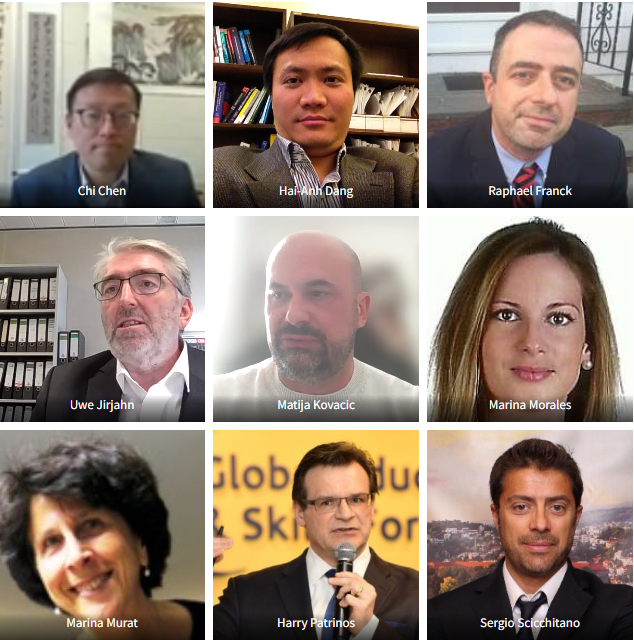
Michael ChristlHai-Anh DangÁngel L. Martín-RománHa Trong NguyenHarry PatrinosDavud Rostam-AfscharManu RaghavSergio ScicchitanoEva SierminskaPaolo VermeCristina Elisa OrsoMatija Kovacic
18 Discussion Papers from November 2024 on migration, gender issues, higher education, racial segregation, female employment and childbirth, environmental preferences, loneliness, labor market matching, income and fertility in USA, job market stars, teaching in mathematics, among others.
13 Discussion Papers from October 2024 on Immigrants in the Antebellum USA, family planning and ethnic heritage in Africa, mass shootings and mental health, Covid-19, inequality in Europe, intimate partner violence, student teamwork, Weberian sprit of capitalism, minimum wages in China, grandfathers and grandsons, land-redistribution, tourism, discrimination, among others.
14 Discussion Papers from September 2024 on employee representation, China, gender issues, COVID-19, social vulnerability, intergenerational transmission of cognitive skills, real-time happiness index, health workforce performance, North-South convergence, women in Afghanistan, subjective well-being, network abroad and culture, workplace injuries, intimate partner violence, among other issues.
20 Discussion Papers from August 2024 on global warming, overqualification, culture, happiness and emotions, working from home, religiosity, poverty, brain and ability drain, work meaningfulness, care burden, household finances, AI, returns to schooling, attitudes toward immigrants, wage cyclicality, sickness benefits and gender, depression among the elderly, among other issues.
GLO Discussion Paper No. 1400 now published Open Access:
Christopher F. Baum, Hans Lööf, Andreas Stephan & Klaus F. Zimmermann (2024), “Estimating the wage premia of refugee immigrants: Lessons from Sweden”. Industrial and Labor Relations Review. PDFof published version. https://journals.sagepub.com/doi/10.1177/00197939241261640
This article examines the wage earnings of refugee immigrants in Sweden. Using administrative employer–employee data from 1990 onward, approximately 100,000 refugee immigrants who arrived between 1980 and 1996 and were granted asylum are compared to a matched sample of native-born workers. Employing recentered influence function (RIF) quantile regressions to wage earnings for the period 2011–2015, the occupational-task-based Oaxaca–Blinder decomposition approach shows that refugees perform better than natives at the median wage, controlling for individual and firm characteristics. This overperformance is attributable to female refugee immigrants. Given their characteristics, refugee immigrant females perform better than native females across all occupational tasks studied, including non-routine cognitive tasks. A notable similarity of the wage premium exists among various refugee groups, suggesting that cultural differences and the length of time spent in the host country do not have a major impact.
New research from the GLO network free to access: 14 Discussion Papers from July 2024 on intimate partner violence, climate change, air pollution, inflation attention, wellbeing and migration, criminal activity, wage premia, poverty indicators, unions, overeducation, narcotics enforcement, spousal job loss, and #metoo, among other issues.
New research from the GLO network free to access: 13 Discussion Papers on unemployed youth, performance pay, minority stereotype, eroding locus of control, religion, eye of the cyclone, racial disparities, Covid-19 in Iran and poverty, among other issues.
New research from the GLO network free to access: 12 Discussion Papers on Russian migrants, dementia risks, domestic violence, new farming practices, natural disasters, morality of markets, health insurance, overeducation, mental health, work orientation, food security, and overeducation, among other issues.
New research from the GLO network free to access: 17 Discussion Papers on responses to cyclones, automation, teleworkable jobs, eating behaviors, female entrepreneurs, corporate social responsibility, migrants and the natives, migration and consumption, job satisfaction, life satisfaction, world inequality database, intimate partner abuse, and solar cycles, among other issues.
New research from the GLO network free to access: 11 Discussion Papers on artificial intelligence, migration, refugees, gender, inclusive labor markets, stoicism, elderly parents, dementia, hockey, China, among others.
New research from the GLO network free to access: 19 Discussion Papers on issues including Covid & wage polarization, vaccination hesitation, robots & employment, gender gaps, poverty data, feudal human capital, ethnic identity, Hukou status, climate emergency policies, working from home, mental illness, among others.
New research from the GLO network free to access: 14 Discussion Papers on issues including gender gap, loneliness, poverty dynamics, premarital migration, involuntary part-time employment, Great Chinese Famine, school closures under Covid, corporate globalization, math and gender, gender quotas, intergenerational mobility, urbanization and political elites, among others.
New research from the GLO network free to access: 15 Discussion Papers on issues including returns to schooling, digital platforms-military nexus, poverty in the Arab region, food insecurity, Ukraine, innovation and globalization, freedom of speech, healthy aging, high temperatures and work, inequality, and many more….. by experts from around the globe.
A new GLO Discussion Paperfinds that while robotization reduces physically demanding activities, the reduction in manual work does not coincide with a shift to more challenging and interesting tasks.
Author Abstract: Using survey data from 20 European countries, we construct novel worker-level indices of routine, abstract, social, and physical tasks across 20 European countries, which we combine with industry-level robotization exposure. Our conceptual framework builds on the insight that robotization simultaneously replaces, creates, and modifies workers’ tasks and studies how these forces impact workers’ job content. We rely on instrumental variable techniques and show that robotization reduces physically demanding activities. Yet, this reduction in manual work does not coincide with a shift to more challenging and interesting tasks. Instead, robotization makes workers’ tasks more routine, while diminishing the opportunities for cognitively challenging work and human contact. The adverse impact of robotization on social tasks is particularly pronounced for highly skilled and educated workers. Our study offers a unique worker-centric viewpoint on the interplay between technology and tasks, highlighting nuances that macro-level indicators overlook. As such, it sheds light on the mechanisms underpinning the impact of robotization on labor markets.
Featured image: Alex-Knight-on-Unsplash
Journal of Population Economics (JOPE) JOPE (2022): CiteScore9.2 (LINK) & Impact Factor6.1; 524 KDownloads
December 4-6:Global Online GLO-JOPE Conference 2023 on ‘Population Economics’ with highlights of the Journal of Population Economics (JOPE) issues 3 & 4 of 2023 including the presentation of the JOPE 2024 Kuznets Prize. More information forthcoming.
JUST PUBLISHED Volume 36, Issue 4, 2023. Covered issues: Historical demography; fertility and marriage; migration and refugee issues; health, vaccinations, risky behaviors; education; retirement; gender issues and preferences


CALL FOR PAPERS JOPE invites paper submissions for the following collections: – Abortions – Covid-19 and diseases – Lifecycle fertility models – Sexual and domestic violence – Sexuality including LGBT issues – Statistics & measurement of population economics For more details and for examples of already published papers in these collections see: https://glabor.org/collections-journal-of-population-economics-invites-paper-submissions-in-six-research-areas/ https://link.springer.com/journal/148/collections JOPE Collections are a set of published papers on issues of significant relevance for the journal. Authors are continuously invited to submit their related work for evaluation stating their specific interest to contribute in the submission cover letter. JOPE Editors will treat those submissions with particular interest and speedy handling. Articles will be immediately published after final acceptance.
The Global Labor Organization (GLO) is an independent, non-partisan and non-governmental organization that functions as an international network and virtual platform to stimulate global research, debate and collaboration.
A new GLO Discussion Paperfinds no support for the hypothesized positive effect of cultural similarity. However, religious similarity has a significant negative effect on migration.
Author Abstract: Theory suggests that cultural similarity increases migration flows between countries. This paper brings best practices from the trade gravity literature to migration to test this prediction. In my preferred specification, I use lags of time-varying similarity variables in a panel of international and domestic migration flows (>200 countries, 1990-2019, 5-year intervals) and estimate a theory-consistent structural gravity model with origin-year, destination-year, and corridor fixed effects. The results do not show the hypothesized positive effect of cultural similarity on migration. Instead, religious similarity has a significant negative effect on migration, while WVS-based attitudinal similarities regarding individualism, indulgence, and trust are insignificant. Additional results suggest that cultural selection and sorting can explain these findings, where migrants are attracted by destinations that are culturally similar to their personal cultural beliefs rather than the average cultural beliefs of their home country. Results of a two-stage fixed effects (TSFE) procedure and a gravity-specific matching estimator, which both allow the estimation of time-invariant similarity variables, confirm that the relationship between cultural similarity and migration is more nuanced than previously thought.
Featured image: joshua-hoehne-on-unsplash
Journal of Population Economics (JOPE) JOPE (2022): CiteScore9.2 (LINK) & Impact Factor6.1; 524 KDownloads
December 4-6:Global Online GLO-JOPE Conference 2023 on ‘Population Economics’ with highlights of the Journal of Population Economics (JOPE) issues 3 & 4 of 2023 including the presentation of the JOPE 2024 Kuznets Prize. More information forthcoming.
JUST PUBLISHED Volume 36, Issue 4, 2023. Covered issues: Historical demography; fertility and marriage; migration and refugee issues; health, vaccinations, risky behaviors; education; retirement; gender issues and preferences


CALL FOR PAPERS JOPE invites paper submissions for the following collections: – Abortions – Covid-19 and diseases – Lifecycle fertility models – Sexual and domestic violence – Sexuality including LGBT issues – Statistics & measurement of population economics For more details and for examples of already published papers in these collections see: https://glabor.org/collections-journal-of-population-economics-invites-paper-submissions-in-six-research-areas/ https://link.springer.com/journal/148/collections JOPE Collections are a set of published papers on issues of significant relevance for the journal. Authors are continuously invited to submit their related work for evaluation stating their specific interest to contribute in the submission cover letter. JOPE Editors will treat those submissions with particular interest and speedy handling. Articles will be immediately published after final acceptance.
The Global Labor Organization (GLO) is an independent, non-partisan and non-governmental organization that functions as an international network and virtual platform to stimulate global research, debate and collaboration.
A new GLO Discussion Paperfinds that the positive impact in the short term still makes short-time work desirable even without positive employment effects in the long term.
Author Abstract: Following massive take-up rates during the COVID-19 period, short-time work (STW) policies have attracted renewed interest. In this paper, we take stock of this policy instrument and provide a critical review of STW systems in Europe. We focus on the objectives of STW programs and their primary characteristics, as well as the inefficiencies associated with these policies, such as excessive use and slower worker reallocation. Additionally, we take a stroll through the main contributions of STW impact evaluations. Finally, we identify relevant directions for the refinement of the main design features of the scheme, key lessons, and avenues for future research.
Featured image: Jose-Antonio-Gallego-Vázquez-on-Unsplash
Journal of Population Economics (JOPE) JOPE (2022): CiteScore9.2 (LINK) & Impact Factor6.1; 524 KDownloads
December 4-6:Global Online GLO-JOPE Conference 2023 on ‘Population Economics’ with highlights of the Journal of Population Economics (JOPE) issues 3 & 4 of 2023 including the presentation of the JOPE 2024 Kuznets Prize. More information forthcoming.
JUST PUBLISHED Volume 36, Issue 4, 2023. Covered issues: Historical demography; fertility and marriage; migration and refugee issues; health, vaccinations, risky behaviors; education; retirement; gender issues and preferences
CALL FOR PAPERS JOPE invites paper submissions for the following collections: – Abortions – Covid-19 and diseases – Lifecycle fertility models – Sexual and domestic violence – Sexuality including LGBT issues – Statistics & measurement of population economics For more details and for examples of already published papers in these collections see: https://glabor.org/collections-journal-of-population-economics-invites-paper-submissions-in-six-research-areas/ https://link.springer.com/journal/148/collections JOPE Collections are a set of published papers on issues of significant relevance for the journal. Authors are continuously invited to submit their related work for evaluation stating their specific interest to contribute in the submission cover letter. JOPE Editors will treat those submissions with particular interest and speedy handling. Articles will be immediately published after final acceptance.
The Global Labor Organization (GLO) is an independent, non-partisan and non-governmental organization that functions as an international network and virtual platform to stimulate global research, debate and collaboration.
Author Abstract: We analyse how unemployment affects individuals’ social networks, leisure activities, and the related satisfaction measures. Using the LISS panel, a representative longitudinal survey of the Dutch population, we estimate the effects by inverse propensity score weighting in a difference-in-differences design in order to deal with unobserved heterogeneity and unbalanced covariate distribution between treated and control units potentially associated with the dynamics of the outcome variables. We find that, after job loss, individuals increase their network size by strengthening their closest contacts within the family, spending more time with neighbors, and making more use of social media. Although they devote their extra leisure time mostly to private activities, our results do not support the hypothesis of social exclusion following unemployment.
Featured image: Jose-Antonio-Gallego-Vázquez-on-Unsplash
Journal of Population Economics (JOPE) JOPE (2022): CiteScore9.2 (LINK) & Impact Factor6.1; 524 KDownloads
December 4-6:Global Online GLO-JOPE Conference 2023 on ‘Population Economics’ with highlights of JOPE issues 3 & 4 of 2023 including the presentation of the JOPE 2024 Kuznets Prize. More information forthcoming.
JUST PUBLISHED Volume 36, Issue 4, 2023. Covered issues: Historical demography; fertility and marriage; migration and refugee issues; health, vaccinations, risky behaviors; education; retirement; gender issues and preferences
CALL FOR PAPERS JOPE invites paper submissions for the following collections: – Abortions – Covid-19 and diseases – Lifecycle fertility models – Sexual and domestic violence – Sexuality including LGBT issues – Statistics & measurement of population economics For more details and for examples of already published papers in these collections see: https://glabor.org/collections-journal-of-population-economics-invites-paper-submissions-in-six-research-areas/ https://link.springer.com/journal/148/collections JOPE Collections are a set of published papers on issues of significant relevance for the journal. Authors are continuously invited to submit their related work for evaluation stating their specific interest to contribute in the submission cover letter. JOPE Editors will treat those submissions with particular interest and speedy handling. Articles will be immediately published after final acceptance.
The Global Labor Organization (GLO) is an independent, non-partisan and non-governmental organization that functions as an international network and virtual platform to stimulate global research, debate and collaboration.
Author Abstract: We use the short-lived, but high-profile, China Top Brand Award to examine the causal effects of nonmonetary awards on firm innovation. To do so, we create a panel dataset by matching official China Top Brand Award recipients to the innovation outputs of listed companies. Results from difference-in-differences estimates show that firms that received the China Top Brand Award have a higher number, and better quality, of filed patents. We find that the positive effects of winning the China Top Brand Award on innovation outputs operate through higher government subsidies to winning firms. We also find that the positive effects of award-winning are stronger among state-owned enterprises, larger enterprises, and better-performing enterprises, as well as in provinces with stronger intellectual property rights protection. Our results are robust to a series of sensitivity checks.
Featured image: aaron-greenwood-unsplash
Journal of Population Economics (JOPE) JOPE (2022): CiteScore9.2 (LINK) & Impact Factor6.1; 524 KDownloads
December 4-6: Global Online GLO-JOPE Conference 2023 on ‘Population Economics’ with highlights of JOPE issues 3 & 4 of 2023 including the presentation of the JOPE 2024 Kuznets Prize. More information forthcoming.
JUST PUBLISHED Volume 36, Issue 4, 2023. Covered issues: Historical demography; fertility and marriage; migration and refugee issues; health, vaccinations, risky behaviors; education; retirement; gender issues and preferences
CALL FOR PAPERS JOPE invites paper submissions for the following collections: – Abortions – Covid-19 and diseases – Lifecycle fertility models – Sexual and domestic violence – Sexuality including LGBT issues – Statistics & measurement of population economics For more details and for examples of already published papers in these collections see: https://glabor.org/collections-journal-of-population-economics-invites-paper-submissions-in-six-research-areas/ https://link.springer.com/journal/148/collections JOPE Collections are a set of published papers on issues of significant relevance for the journal. Authors are continuously invited to submit their related work for evaluation stating their specific interest to contribute in the submission cover letter. JOPE Editors will treat those submissions with particular interest and speedy handling. Articles will be immediately published after final acceptance.
The Global Labor Organization (GLO) is an independent, non-partisan and non-governmental organization that functions as an international network and virtual platform to stimulate global research, debate and collaboration.
Author Abstract: We offer an updated and comprehensive review of recent studies on the impact of climate change, particularly global warming, on poverty and inequality, paying special attention to data sources as well as empirical methods. While studies consistently find negative impacts of higher temperature on poverty across different geographical regions, with higher vulnerability especially in poorer Sub-Saharan Africa, there is inclusive evidence on climate change impacts on inequality. Further analyzing a recently constructed global database at the subnational unit level derived from official national household income and consumption surveys, we find that temperature change has larger impacts in the short term and more impacts on chronic poverty than transient poverty. The results are robust to different model specifications and measures of chronic poverty and are more pronounced for poorer countries. Our findings offer relevant inputs into current efforts to fight climate change.
Featured image: wesley-tingey-unsplash
Journal of Population Economics (JOPE) JOPE (2022): CiteScore9.2 (LINK) & Impact Factor6.1; 524 KDownloads
December 4-6:Global Online GLO-JOPE Conference 2023 on ‘Population Economics’ with highlights of JOPE issues 3 & 4 of 2023 including the presentation of the JOPE 2024 Kuznets Prize. More information forthcoming.
JUST PUBLISHED Volume 36, Issue 4, 2023. Covered issues: Historical demography; fertility and marriage; migration and refugee issues; health, vaccinations, risky behaviors; education; retirement; gender issues and preferences
CALL FOR PAPERS JOPE invites paper submissions for the following collections: – Abortions – Covid-19 and diseases – Lifecycle fertility models – Sexual and domestic violence – Sexuality including LGBT issues – Statistics & measurement of population economics For more details and for examples of already published papers in these collections see: https://glabor.org/collections-journal-of-population-economics-invites-paper-submissions-in-six-research-areas/ https://link.springer.com/journal/148/collections JOPE Collections are a set of published papers on issues of significant relevance for the journal. Authors are continuously invited to submit their related work for evaluation stating their specific interest to contribute in the submission cover letter. JOPE Editors will treat those submissions with particular interest and speedy handling. Articles will be immediately published after final acceptance.
The Global Labor Organization (GLO) is an independent, non-partisan and non-governmental organization that functions as an international network and virtual platform to stimulate global research, debate and collaboration.
A new GLO Discussion Paperfinds that acyclical and countercyclical wage establishments are key drivers for stronger labor market reactions in recessions than in booms.
Author Abstract: Although the quantitative relationship between employment cyclicality and wage cyclicality is central for the dynamics of macroeconomic models, there is little empirical evidence on this topic. We use the German AWFP dataset to document that wage cyclicalities are very heterogeneous across establishments. Based on this heterogeneity, we estimate the relationship between employment cyclicality and wage cyclicality at the establishment level. We use this micro-estimate as a calibration target for a macro labor market flow model with heterogeneous wage dynamics that nests the standard search and matching model. Based on this micro-macro linkage, we provide a new quantitative benchmark for the role of wage rigidity in search and matching models. Furthermore, we show that acyclical and countercyclical wage establishments are key drivers for stronger labor market reactions in recessions than in booms.
Featured image: volodymyr-hryshchenko-unsplash
Journal of Population Economics (JOPE) JOPE (2022): CiteScore9.2 (LINK) & Impact Factor6.1; 524 KDownloads
JUST PUBLISHED ONLINE FIRST: 32 articles forthcoming in Volume 36, Issue 4, 2023. Covered issues: Historical demography; fertility and marriage; migration and refugee issues; health, vaccinations, risky behaviors; education; retirement; gender issues and preferences
CALL FOR PAPERS JOPE invites paper submissions for the following collections: – Abortions – Covid-19 and diseases – Lifecycle fertility models – Sexual and domestic violence – Sexuality including LGBT issues – Statistics & measurement of population economics For more details and for examples of already published papers in these collections see: https://glabor.org/collections-journal-of-population-economics-invites-paper-submissions-in-six-research-areas/ https://link.springer.com/journal/148/collections JOPE Collections are a set of published papers on issues of significant relevance for the journal. Authors are continuously invited to submit their related work for evaluation stating their specific interest to contribute in the submission cover letter. JOPE Editors will treat those submissions with particular interest and speedy handling. Articles will be immediately published after final acceptance.
The Global Labor Organization (GLO) is an independent, non-partisan and non-governmental organization that functions as an international network and virtual platform to stimulate global research, debate and collaboration.
A new GLO Discussion Paperusing time-use data for India suggests that policies that aim to increase women’s education and promote gender-equal attitudes among men can enhance the daughter-in-law’s bargaining power and time allocation.
Author Abstract: The paper addresses the less-researched topic of intrahousehold dynamics of female in-laws in developing countries by focusing on the bargaining between mother-in-law and daughter-inlaw and its influence on the latter’s time allocation. Using the first nationally representative Time Use Survey of India, 2019, the paper answers two questions. First, how does the presence of the parents-in-law, particularly the mother-in-law, shape the daughter-in-law’s distribution of time between paid and unpaid activities? Second, how does the relative bargaining power among the female in-laws affect the daughter-in-law’s time allocation across different activities, where their education levels are used as indicators of bargaining power? The findings show that the daughter-in-law’s participation in paid work increases in the presence of her mother-in-law and she allocates more time to paid work and less time to household production. The effect is evident for the daughters-in-law who co-reside with mothers-in-law who have completed at least secondary education. The mother-in-law’s time allocated to household production and childcare increases when she co-resides with a daughter-in-law who has completed tertiary education. The father-in-law’s presence consistently diminishes the daughter-in-law’s engagement in paid work and increases both women’s time spent on household production. Heterogeneity in results is observed by socio-religious groups and by the extent of patriarchy in the state of residence. Overall, the results suggest that policies that aim to increase women’s education and promote gender-equal attitudes among men can enhance the daughter-in-law’s bargaining power and time allocation.
Featured image: Trevor-Cole-on-Unsplash
Journal of Population Economics (JOPE) JOPE (2022): CiteScore9.2 (LINK) & Impact Factor6.1; 524 KDownloads
JUST PUBLISHED ONLINE FIRST: 32 articles forthcoming in Volume 36, Issue 4, 2023. Covered issues: Historical demography; fertility and marriage; migration and refugee issues; health, vaccinations, risky behaviors; education; retirement; gender issues and preferences
CALL FOR PAPERS JOPE invites paper submissions for the following collections: – Abortions – Covid-19 and diseases – Lifecycle fertility models – Sexual and domestic violence – Sexuality including LGBT issues – Statistics & measurement of population economics For more details and for examples of already published papers in these collections see: https://glabor.org/collections-journal-of-population-economics-invites-paper-submissions-in-six-research-areas/ https://link.springer.com/journal/148/collections JOPE Collections are a set of published papers on issues of significant relevance for the journal. Authors are continuously invited to submit their related work for evaluation stating their specific interest to contribute in the submission cover letter. JOPE Editors will treat those submissions with particular interest and speedy handling. Articles will be immediately published after final acceptance.
The Global Labor Organization (GLO) is an independent, non-partisan and non-governmental organization that functions as an international network and virtual platform to stimulate global research, debate and collaboration.
A new GLO Discussion Papercompares two insurance devices reducing well-being volatility due to the risk of early death finding that a youth allowance leads to a higher lifetime well-being.
Author Abstract: Welfare States do not insure citizens against the risk of premature death, i.e., the risk of having a short life. Using a dynamic OLG model with risky lifetime, this paper compares two insurance devices reducing well-being volatility due to the risk of early death: (i) an ante-mortem age-based statistical discrimination policy that consists of an allowance given to all young adults (including the unidentified adults who will die early); (ii) a post-mortem subsidy on accidental bequests due to early death. Each policy is financed by taxing old-age consumption. Whereas each device can yield full insurance, the youth allowance is shown to imply a higher lifetime well-being at the stationary equilibrium. The marginal utility of consumption exceeding the marginal utility of giving when being dead, the youth allowances system is, despite imperfect targeting, a more efficient mechanism of insurance against the risk of early death.
Journal of Population Economics (JOPE) JOPE (2022): CiteScore9.2 (LINK) & Impact Factor6.1; 524 KDownloads
JUST PUBLISHED ONLINE FIRST: 32 articles forthcoming in Volume 36, Issue 4, 2023. Covered issues: Historical demography; fertility and marriage; migration and refugee issues; health, vaccinations, risky behaviors; education; retirement; gender issues and preferences
CALL FOR PAPERS JOPE invites paper submissions for the following collections: – Abortions – Covid-19 and diseases – Lifecycle fertility models – Sexual and domestic violence – Sexuality including LGBT issues – Statistics & measurement of population economics For more details and for examples of already published papers in these collections see: https://glabor.org/collections-journal-of-population-economics-invites-paper-submissions-in-six-research-areas/ https://link.springer.com/journal/148/collections JOPE Collections are a set of published papers on issues of significant relevance for the journal. Authors are continuously invited to submit their related work for evaluation stating their specific interest to contribute in the submission cover letter. JOPE Editors will treat those submissions with particular interest and speedy handling. Articles will be immediately published after final acceptance.
The Global Labor Organization (GLO) is an independent, non-partisan and non-governmental organization that functions as an international network and virtual platform to stimulate global research, debate and collaboration.
A new GLO Discussion Paperanalyzing a dataset of over 1.9 million individuals from 156 countries finds that both inflation and unemployment associates negatively with confidence in financial institutions.
Author Abstract: What are the broad societal implications of inflation and unemployment? Analyzing a dataset of over 1.9 million individuals from 156 countries via the Gallup World Poll spanning 2005 to 2021, alongside macroeconomic data at the national level, we find that both inflation and unemployment have a negative link with confidence in financial institutions. While inflation is generally unassociated with confidence in government and leadership approval, unemployment still has a strong negative association with these outcomes. While we find no gender differences in the consequences of inflation and unemployment for confidence in political and financial institutions, the associations we document are more substantial for the cohorts that are likely to bear a disproportionate burden from inflation and unemployment-the middle-aged, lower-educated, and unmarried individuals, and for those living in rural areas. Uncertainty about the country’s economic performance and one’s own economic situation are the primary channels behind the associations we identify. These findings hold significant implications for policymakers, Central Banks, and public discourse, necessitating targeted strategies to alleviate the social consequences of inflation and unemployment.
Featured image: paul-fiedler-unsplash
Journal of Population Economics (JOPE) JOPE (2022): CiteScore9.2 (LINK) & Impact Factor6.1; 524 KDownloads
JUST PUBLISHED ONLINE FIRST: 32 articles forthcoming in Volume 36, Issue 4, 2023. Covered issues: Historical demography; fertility and marriage; migration and refugee issues; health, vaccinations, risky behaviors; education; retirement; gender issues and preferences
CALL FOR PAPERS JOPE invites paper submissions for the following collections: – Abortions – Covid-19 and diseases – Lifecycle fertility models – Sexual and domestic violence – Sexuality including LGBT issues – Statistics & measurement of population economics For more details and for examples of already published papers in these collections see: https://glabor.org/collections-journal-of-population-economics-invites-paper-submissions-in-six-research-areas/ https://link.springer.com/journal/148/collections JOPE Collections are a set of published papers on issues of significant relevance for the journal. Authors are continuously invited to submit their related work for evaluation stating their specific interest to contribute in the submission cover letter. JOPE Editors will treat those submissions with particular interest and speedy handling. Articles will be immediately published after final acceptance.
The Global Labor Organization (GLO) is an independent, non-partisan and non-governmental organization that functions as an international network and virtual platform to stimulate global research, debate and collaboration.
A new GLO Discussion Paper using a cross-sectional sample of more than 21,000 European establishments finds that establishments with employee representation are more likely to utilize digital monitoring technologies than establishments without.
Author Abstract: Advances in artificial intelligence and data analytics have notably expanded employers’ monitoring and surveillance capabilities, facilitating the accurate observability of work effort. There is an ongoing debate among academics and policymakers about the productivity and broader welfare implications of digital monitoring (DM) technologies. In this context, many countries confer information, consultation and codetermination rights to (ER) bodies on matters related to workplace organization and the introduction of new technologies, which could potentially discourage employers from making DM investments. Using a cross-sectional sample of more than 21000 European establishments, we find instead that establishments with ER are more likely to utilize DM technologies than establishments without ER. We also document a positive effect of ER on DM utilization in the context of a local-randomization regression discontinuity analysis that exploits size-contingent policy rules governing the operation of ER bodies in Europe. We rationalize this unexpected finding through the lens of a theoretical framework in which shared governance via ER create organizational safeguards that mitigate workers’ negative responses to monitoring and undermines the disciplining effect of DM technologies.
Featured image: artificial-intelligence-Pixabay-e1612455547910
Journal of Population Economics (JOPE) JOPE (2022): CiteScore9.2 (LINK) & Impact Factor6.1; 524 KDownloads
JUST PUBLISHED ONLINE FIRST: 32 articles forthcoming in Volume 36, Issue 4, 2023. Covered issues: Historical demography; fertility and marriage; migration and refugee issues; health, vaccinations, risky behaviors; education; retirement; gender issues and preferences
CALL FOR PAPERS JOPE invites paper submissions for the following collections: – Abortions – Covid-19 and diseases – Lifecycle fertility models – Sexual and domestic violence – Sexuality including LGBT issues – Statistics & measurement of population economics For more details and for examples of already published papers in these collections see: https://glabor.org/collections-journal-of-population-economics-invites-paper-submissions-in-six-research-areas/ https://link.springer.com/journal/148/collections JOPE Collections are a set of published papers on issues of significant relevance for the journal. Authors are continuously invited to submit their related work for evaluation stating their specific interest to contribute in the submission cover letter. JOPE Editors will treat those submissions with particular interest and speedy handling. Articles will be immediately published after final acceptance.
The Global Labor Organization (GLO) is an independent, non-partisan and non-governmental organization that functions as an international network and virtual platform to stimulate global research, debate and collaboration.
A new GLO Discussion Paperdevelops a model to show how contraction in demand for IT-enabled works will determine how much of works to be completed in the US (home) and the remainder to be sourced out to say, India (abroad).
Author Abstract: The flourishing of IT-sector and IT-enabled services has led to emergence of different activities by leaps and bounds thanks to proliferation of Virtual plattorm-based transactions, and E-commerce. However, massive layoffs started in 2022, as all tech giants encountered revenue declines amidst supply chain issues, inflation, Ukraine war, leading to deflation and fears of recession squeezing consumer and business spending. This has happened across the globe. In the context of the countries supplying low- wage labor (skilled wage in Indian Silicon Valley at Bengaluru is lower than that in the Californian Silicon Valley), similar episodes unfolded but to a different extent. The evidence suggests that layoffs in developing economies like India is much less than that in the US with limited impact on Indian industry despite severe global downturn. Jobs and hiring will move out of the developed markets to these emerging markets with cost advantages owing to lower salaries, as with low demand, drive to cutdown costs will induce firms to outsource some operations outside while focusing on core functions provided the cost of outsourcing is not too high. In this paper, we build a model to show how contraction in demand for IT-enabled works will determine how much of works to be completed in the US (home) and the remainder to be sourced out to say, India (abroad). We identify the conditions under which switching from pure domestic production to outsourcing using hired foreign workers will happen. We show that in both cases of perfectly competitive homogeneous product as well as in case of differentiated goods oligopoly scenarios that the hiring ceases drastically in the home while the outsourced workers will not suffer to a large extent. Home bears the burden of adjustment due to the sheer cost disadvantages of the home.
Featured image: Alex-Knight-on-Unsplash
Journal of Population Economics (JOPE) JOPE (2022): CiteScore9.2 (LINK) & Impact Factor6.1; 524 KDownloads
JUST PUBLISHED ONLINE FIRST: 32 articles forthcoming in Volume 36, Issue 4, 2023. Covered issues: Historical demography; fertility and marriage; migration and refugee issues; health, vaccinations, risky behaviors; education; retirement; gender issues and preferences
CALL FOR PAPERS JOPE invites paper submissions for the following collections: – Abortions – Covid-19 and diseases – Lifecycle fertility models – Sexual and domestic violence – Sexuality including LGBT issues – Statistics & measurement of population economics For more details and for examples of already published papers in these collections see: https://glabor.org/collections-journal-of-population-economics-invites-paper-submissions-in-six-research-areas/ https://link.springer.com/journal/148/collections JOPE Collections are a set of published papers on issues of significant relevance for the journal. Authors are continuously invited to submit their related work for evaluation stating their specific interest to contribute in the submission cover letter. JOPE Editors will treat those submissions with particular interest and speedy handling. Articles will be immediately published after final acceptance.
The Global Labor Organization (GLO) is an independent, non-partisan and non-governmental organization that functions as an international network and virtual platform to stimulate global research, debate and collaboration.
Author Abstract: We employ a regression discontinuity design (RDD) to investigate the causal effect of China’s Energy Conservation Law (ECL) on the energy efficiency of Chinese firms. Using data from the 2018 China Employer-Employee Survey (CEES), we find that the energy regulation has a positive impact on enterprise energy efficiency. Furthermore, we observe that the effects of the regulation vary across industries, ownership types, and firm ages. We also find that energy management system (EnMS) and technological innovation are mechanisms through which the energy regulation helps improve enterprise energy efficiency. These findings underscore the importance of well-designed and effectively implemented energy regulations in fostering energy efficiency and reducing carbon emissions in the industrial sector. They also highlight the need to consider the heterogeneity of the regulatory impact when designing energy-saving policies.
Journal of Population Economics (JOPE) JOPE (2022): CiteScore9.2 (LINK) & Impact Factor6.1; 524 KDownloads
JUST PUBLISHED ONLINE FIRST: 32 articles forthcoming in Volume 36, Issue 4, 2023. Covered issues: Historical demography; fertility and marriage; migration and refugee issues; health, vaccinations, risky behaviors; education; retirement; gender issues and preferences
CALL FOR PAPERS JOPE invites paper submissions for the following collections: – Abortions – Covid-19 and diseases – Lifecycle fertility models – Sexual and domestic violence – Sexuality including LGBT issues – Statistics & measurement of population economics For more details and for examples of already published papers in these collections see: https://glabor.org/collections-journal-of-population-economics-invites-paper-submissions-in-six-research-areas/ https://link.springer.com/journal/148/collections JOPE Collections are a set of published papers on issues of significant relevance for the journal. Authors are continuously invited to submit their related work for evaluation stating their specific interest to contribute in the submission cover letter. JOPE Editors will treat those submissions with particular interest and speedy handling. Articles will be immediately published after final acceptance.
The Global Labor Organization (GLO) is an independent, non-partisan and non-governmental organization that functions as an international network and virtual platform to stimulate global research, debate and collaboration.
Author Abstract: The study aims to examine whether beggar children are victims of forced labor, as well as to identify the manifestations of forced labor in beggar children, and assess whether forced child begging relates to deteriorated health-related quality of life and mental health. The study focused on the capital city of Greece, Athens, where beggar children are not a hard-to-reach group. Cross-sectional data were collected in 2011, 2014, 2018 and 2022, with 127 beggar children taking part in the study. The study adopted the Anti-Slavery International research toolkit, which sets methodological guidelines on researching child begging. A scale was developed to quantify forced child begging based on the International Labour Organization’s definition of forced labor. The study found that most beggar children were forced by others to beg, experienced threats of violence, physical and verbal harassment aimed at forcing them to beg, and difficulty in terms of being allowed by others to stop begging. It was found that forced child begging was positively associated with living with unknown people, hunger due to food unavailability the previous week, and negatively associated with native beggar children. It was discovered that forced child begging was negatively associated with health-related quality of life and mental health for beggar children. Child begging encompasses elements of coercion and the deprivation of human freedom. These factors collectively amount to instances of forced labor and/or modern slavery. Policies should ensure that beggar children are removed from harm’s way, and that those forcing children to beg are brought to justice.
Featured image: Beth-Macdonald-unsplash
Journal of Population Economics (JOPE) JOPE (2022): CiteScore9.2 (LINK) & Impact Factor6.1; 524 KDownloads
JUST PUBLISHED ONLINE FIRST: 32 articles forthcoming in Volume 36, Issue 4, 2023. Covered issues: Historical demography; fertility and marriage; migration and refugee issues; health, vaccinations, risky behaviors; education; retirement; gender issues and preferences
CALL FOR PAPERS JOPE invites paper submissions for the following collections: – Abortions – Covid-19 and diseases – Lifecycle fertility models – Sexual and domestic violence – Sexuality including LGBT issues – Statistics & measurement of population economics For more details and for examples of already published papers in these collections see: https://glabor.org/collections-journal-of-population-economics-invites-paper-submissions-in-six-research-areas/ https://link.springer.com/journal/148/collections JOPE Collections are a set of published papers on issues of significant relevance for the journal. Authors are continuously invited to submit their related work for evaluation stating their specific interest to contribute in the submission cover letter. JOPE Editors will treat those submissions with particular interest and speedy handling. Articles will be immediately published after final acceptance.
The Global Labor Organization (GLO) is an independent, non-partisan and non-governmental organization that functions as an international network and virtual platform to stimulate global research, debate and collaboration.
A new GLO Discussion Paperfinds for India that if the decision to use contraceptives is solely taken by the woman, she is at a significantly higher risk of physical, sexual and emotional domestic violence.
Author Abstract: Contraception is a crucial tool that empowers women to control their bodily autonomy. Concurrently, violence against women remains a pressing public-health issue depleting women’s autonomy. We establish a causal link between the decision to use contraception and the occurrence of intimate partner violence. Utilizing newly available nationally representative data for India, we use an instrumental variable approach to estimate our causal effects. Using exogenous variation in the cluster average of women’s exposure to family planning messages via radio, we find that if the decision to use contraceptives is solely taken by the woman, she is at a significantly higher risk of physical, sexual and emotional domestic violence. We estimate bounds of our effects by assuming the IV to be plausibly exogenous where we relax the exogeneity condition. Our findings underscore the importance of reproductive health in initiatives that reduce domestic violence and targeted policies towards men’s understanding of family planning.
Journal of Population Economics (JOPE) JOPE (2022): CiteScore9.2 (LINK) & Impact Factor6.1; 524 KDownloads
JUST PUBLISHED ONLINE FIRST: 32 articles forthcoming in Volume 36, Issue 4, 2023. Covered issues: Historical demography; fertility and marriage; migration and refugee issues; health, vaccinations, risky behaviors; education; retirement; gender issues and preferences
CALL FOR PAPERS JOPE invites paper submissions for the following collections: – Abortions – Covid-19 and diseases – Lifecycle fertility models – Sexual and domestic violence – Sexuality including LGBT issues – Statistics & measurement of population economics For more details and for examples of already published papers in these collections see: https://glabor.org/collections-journal-of-population-economics-invites-paper-submissions-in-six-research-areas/ https://link.springer.com/journal/148/collections JOPE Collections are a set of published papers on issues of significant relevance for the journal. Authors are continuously invited to submit their related work for evaluation stating their specific interest to contribute in the submission cover letter. JOPE Editors will treat those submissions with particular interest and speedy handling. Articles will be immediately published after final acceptance.
The Global Labor Organization (GLO) is an independent, non-partisan and non-governmental organization that functions as an international network and virtual platform to stimulate global research, debate and collaboration.
Author Abstract: The Preston Curve – the increasing relation between income per capita and life expectancy – cannot be observed in countries where old-age dependency is widespread (that is, where long-term care (LTC) spending per capita is high). The absence of the Preston Curve in countries with high old-age dependency can be related to two other stylized facts: (1) the inverted-U relation between LTC spending and life expectancy; (2) the inverted-U relation between LTC spending and preventive health investments. This paper develops a two-period OLG model where survival to the old age depends on preventive health spending chosen by individuals while anticipating (fixed) old-age LTC costs. In that model, anticipated LTC costs are shown to have a non-monotonic effect on preventive health investment, thus rationalizing stylized facts (1) and (2). This framework is shown to provide an explanation for the absence of the Preston Curve in countries where old-age dependency is more acute.
Journal of Population Economics (JOPE) JOPE (2022): CiteScore9.2 (LINK) & Impact Factor6.1; 524 KDownloads
JUST PUBLISHED ONLINE FIRST: 32 articles forthcoming in Volume 36, Issue 4, 2023. Covered issues: Historical demography; fertility and marriage; migration and refugee issues; health, vaccinations, risky behaviors; education; retirement; gender issues and preferences
CALL FOR PAPERS JOPE invites paper submissions for the following collections: – Abortions – Covid-19 and diseases – Lifecycle fertility models – Sexual and domestic violence – Sexuality including LGBT issues – Statistics & measurement of population economics For more details and for examples of already published papers in these collections see: https://glabor.org/collections-journal-of-population-economics-invites-paper-submissions-in-six-research-areas/ https://link.springer.com/journal/148/collections JOPE Collections are a set of published papers on issues of significant relevance for the journal. Authors are continuously invited to submit their related work for evaluation stating their specific interest to contribute in the submission cover letter. JOPE Editors will treat those submissions with particular interest and speedy handling. Articles will be immediately published after final acceptance.
The Global Labor Organization (GLO) is an independent, non-partisan and non-governmental organization that functions as an international network and virtual platform to stimulate global research, debate and collaboration.
Author Abstract: This study explores the role of individual and local marriage market characteristics in whether recently wed U.S. residents “imported” a spouse instead of marrying someone already present in the country. Our findings indicate that U.S. natives and immigrants whose spouse is a “marriage migrant” (someone who arrived in the U.S. the same year as the marriage occurred) are positively selected along some dimensions but negatively along others. The results also suggest that U.S. immigration policy plays an important role in whether immigrants bring in a spouse. We further investigate the trade-offs in spouse characteristics associated with having a marriage-migrant spouse. There appear to be several advantages to marrying a migrant, including that marriage-migrant spouses tend to be relatively younger and less likely to have been previously married. Immigrants’ gains to marrying a migrant are bigger among naturalized citizens, showcasing the desirability of someone who can easily sponsor a spouse for permanent residence.
Journal of Population Economics (JOPE) JOPE (2022): CiteScore9.2 (LINK) & Impact Factor6.1; 524 KDownloads
JUST PUBLISHED ONLINE FIRST: 32 articles forthcoming in Volume 36, Issue 4, 2023. Covered issues: Historical demography; fertility and marriage; migration and refugee issues; health, vaccinations, risky behaviors; education; retirement; gender issues and preferences
CALL FOR PAPERS JOPE invites paper submissions for the following collections: – Abortions – Covid-19 and diseases – Lifecycle fertility models – Sexual and domestic violence – Sexuality including LGBT issues – Statistics & measurement of population economics For more details and for examples of already published papers in these collections see: https://glabor.org/collections-journal-of-population-economics-invites-paper-submissions-in-six-research-areas/ https://link.springer.com/journal/148/collections JOPE Collections are a set of published papers on issues of significant relevance for the journal. Authors are continuously invited to submit their related work for evaluation stating their specific interest to contribute in the submission cover letter. JOPE Editors will treat those submissions with particular interest and speedy handling. Articles will be immediately published after final acceptance.
The Global Labor Organization (GLO) is an independent, non-partisan and non-governmental organization that functions as an international network and virtual platform to stimulate global research, debate and collaboration.
Author Abstract: This study provides evidence of the employment impact of AI exposure in European regions, addressing one of the many gaps in the emerging literature on AI’s effects on employment in Europe. Building upon the occupation-based AI-exposure indicators proposed by Felten et al. (2018, 2019, 2021), which are mapped to the European occupational classification (ISCO), following Albanesi et al. (2023), we analyse the regional employment dynamics between 2011 and 2018. After controlling for a wide range of supply and demand factors, our findings indicate that, on average, AI exposure has a positive impact on regional employment. Put differently, European regions characterised by a relatively larger share of AI-exposed occupations display, all else being equal and once potential endogeneity concerns are mitigated, a more favourable employment tendency over the period 2011-2018. We also find evidence of a moderating effect of robot density on the AI-employment nexus, which however lacks a causal underpinning.
Featured image: Alex-Knight-on-Unsplash
Journal of Population Economics (JOPE) JOPE (2022): CiteScore9.2 (LINK) & Impact Factor6.1; 524 KDownloads
JUST PUBLISHED ONLINE FIRST: 32 articles forthcoming in Volume 36, Issue 4, 2023. Covered issues: Historical demography; fertility and marriage; migration and refugee issues; health, vaccinations, risky behaviors; education; retirement; gender issues and preferences
CALL FOR PAPERS JOPE invites paper submissions for the following collections: – Abortions – Covid-19 and diseases – Lifecycle fertility models – Sexual and domestic violence – Sexuality including LGBT issues – Statistics & measurement of population economics For more details and for examples of already published papers in these collections see: https://glabor.org/collections-journal-of-population-economics-invites-paper-submissions-in-six-research-areas/ https://link.springer.com/journal/148/collections JOPE Collections are a set of published papers on issues of significant relevance for the journal. Authors are continuously invited to submit their related work for evaluation stating their specific interest to contribute in the submission cover letter. JOPE Editors will treat those submissions with particular interest and speedy handling. Articles will be immediately published after final acceptance.
The Global Labor Organization (GLO) is an independent, non-partisan and non-governmental organization that functions as an international network and virtual platform to stimulate global research, debate and collaboration.
Author Abstract: The persistently high employment share of the informal sector makes entrepreneurship a necessity for youth in many developing countries. We exploit exogenous variation in the implementation of Rwanda’s entrepreneurship education reform in secondary schools to evaluate its effect on student economic outcomes up to three years after graduation. Using a randomized controlled trial, we evaluated a three-year intensive training for entrepreneurship teachers, finding pedagogical changes as intended and increased entrepreneurial activity among students. In this paper, we tracked students following graduation and found that increased entrepreneurship persisted one year later, in 2019. Students from treated schools were six percentage points more likely to be entrepreneurs, an increase of 19 percent over the control mean. However, gains in entrepreneurship faded after three years, in 2021. Employment was six percentage points lower in the treatment group. By some measures, income and profits were lower in the treatment group, with no robust differences in these outcomes overall. Lower incomes and profits were concentrated among marginal students induced into entrepreneurship by the program. Youth entrepreneurship programs may therefore steer some participants away from their comparative advantage. Nonetheless, the program increased university enrollment, suggesting the potential for higher long run returns.
Journal of Population Economics (JOPE) JOPE (2022): CiteScore9.2 (LINK) & Impact Factor6.1; 524 KDownloads
JUST PUBLISHED ONLINE FIRST: 32 articles forthcoming in Volume 36, Issue 4, 2023. Covered issues: Historical demography; fertility and marriage; migration and refugee issues; health, vaccinations, risky behaviors; education; retirement; gender issues and preferences
CALL FOR PAPERS JOPE invites paper submissions for the following collections: – Abortions – Covid-19 and diseases – Lifecycle fertility models – Sexual and domestic violence – Sexuality including LGBT issues – Statistics & measurement of population economics For more details and for examples of already published papers in these collections see: https://glabor.org/collections-journal-of-population-economics-invites-paper-submissions-in-six-research-areas/ https://link.springer.com/journal/148/collections JOPE Collections are a set of published papers on issues of significant relevance for the journal. Authors are continuously invited to submit their related work for evaluation stating their specific interest to contribute in the submission cover letter. JOPE Editors will treat those submissions with particular interest and speedy handling. Articles will be immediately published after final acceptance.
The Global Labor Organization (GLO) is an independent, non-partisan and non-governmental organization that functions as an international network and virtual platform to stimulate global research, debate and collaboration.
Author Abstract: Misallocation of human capital across sectors can have substantial negative implications for aggregate output. So far, the literature examining this type of labor misallocation has assumed a Cobb-Douglas production function. Our paper departs from this assumption and instead considers more exible CES production functions with different labor skill types as individual inputs. Our estimates from sectoral data of 39 countries suggest that physical and human capital are less substitutable than Cobb-Douglas assumes. Our counterfactual results indicate that human capital misallocation can explain approximately 15% of output per worker variation across countries, which is substantially less than under a Cobb-Douglas specification (21%).
Featured image: nikko-macaspac-unsplash
Journal of Population Economics (JOPE) JOPE (2022): CiteScore9.2 (LINK) & Impact Factor6.1; 524 KDownloads
JUST PUBLISHED ONLINE FIRST: 32 articles forthcoming in Volume 36, Issue 4, 2023. Covered issues: Historical demography; fertility and marriage; migration and refugee issues; health, vaccinations, risky behaviors; education; retirement; gender issues and preferences
CALL FOR PAPERS JOPE invites paper submissions for the following collections: – Abortions – Covid-19 and diseases – Lifecycle fertility models – Sexual and domestic violence – Sexuality including LGBT issues – Statistics & measurement of population economics For more details and for examples of already published papers in these collections see: https://glabor.org/collections-journal-of-population-economics-invites-paper-submissions-in-six-research-areas/ https://link.springer.com/journal/148/collections JOPE Collections are a set of published papers on issues of significant relevance for the journal. Authors are continuously invited to submit their related work for evaluation stating their specific interest to contribute in the submission cover letter. JOPE Editors will treat those submissions with particular interest and speedy handling. Articles will be immediately published after final acceptance.
The Global Labor Organization (GLO) is an independent, non-partisan and non-governmental organization that functions as an international network and virtual platform to stimulate global research, debate and collaboration.
Author Abstract: This work sheds new light on the Photovoltaic Supply Chain (PVSC), providing fresh evidence on strategic dependencies (SDs) and (asymmetrically distributed) technological capabilities. Bridging the perspectives of ‘technological sovereignty’ and ‘strategic autonomy’, a number of contributions are provided. First, we carry out a fine-grained mapping of the PVSC, combining trade and patent data. Second, we assess the long-term evolution of trade and technological hierarchies, documenting processes of polarization and growing SDs. Third, we zoom-in on critical PV areas (i.e. products and related technologies), providing a ‘strategic intelligence’ activity which may prove useful for tailoring trade, industrial and innovation policies. Fourth, we explore the relationship between technological specialization and productive capabilities showing that, in the upstream segment, reinforcing the former may help mitigating SDs.
Featured image: Pixabay-on-unsplash
Journal of Population Economics (JOPE) JOPE (2022): CiteScore9.2 (LINK) & Impact Factor6.1; 524 KDownloads
JUST PUBLISHED ONLINE FIRST: 32 articles forthcoming in Volume 36, Issue 4, 2023. Covered issues: Historical demography; fertility and marriage; migration and refugee issues; health, vaccinations, risky behaviors; education; retirement; gender issues and preferences
CALL FOR PAPERS JOPE invites paper submissions for the following collections: – Abortions – Covid-19 and diseases – Lifecycle fertility models – Sexual and domestic violence – Sexuality including LGBT issues – Statistics & measurement of population economics For more details and for examples of already published papers in these collections see: https://glabor.org/collections-journal-of-population-economics-invites-paper-submissions-in-six-research-areas/ https://link.springer.com/journal/148/collections JOPE Collections are a set of published papers on issues of significant relevance for the journal. Authors are continuously invited to submit their related work for evaluation stating their specific interest to contribute in the submission cover letter. JOPE Editors will treat those submissions with particular interest and speedy handling. Articles will be immediately published after final acceptance.
The Global Labor Organization (GLO) is an independent, non-partisan and non-governmental organization that functions as an international network and virtual platform to stimulate global research, debate and collaboration.
A new GLO Discussion Papershows that higher exposure to protests in 1968 leads to higher dissatisfaction toward national governments and raises the probability of voting for populist parties.
Author Abstract: In 1968, young people grew up in an atmosphere of strong dissatisfaction and distrust against the status quo. We show that higher exposure to protests in 1968 leads to higher dissatisfaction toward national governments and raises the probability of voting for populist parties. Consistently with the impressionable years hypothesis, we find these effects valid only for those aged between 18 and 25 during 1968. Our results are robust to a series of placebo tests and to alternative definitions of our treatment and control groups. We find that our results are driven by individuals with a middle or low level of education. We also find suggestive evidence that the mechanisms driving our results can depend on individuals’ level of education: within our treated cohort people with an elementary level of education appear more attracted by the populist rhetoric, while people with a middle level of education are more likely to care about traditional values.
Featured image: arnaud-jaegers-unsplash
Journal of Population Economics (JOPE) JOPE (2022): CiteScore9.2 (LINK) & Impact Factor6.1; 524 KDownloads
JUST PUBLISHED ONLINE FIRST: 32 articles forthcoming in Volume 36, Issue 4, 2023. Covered issues: Historical demography; fertility and marriage; migration and refugee issues; health, vaccinations, risky behaviors; education; retirement; gender issues and preferences
CALL FOR PAPERS JOPE invites paper submissions for the following collections: – Abortions – Covid-19 and diseases – Lifecycle fertility models – Sexual and domestic violence – Sexuality including LGBT issues – Statistics & measurement of population economics For more details and for examples of already published papers in these collections see: https://glabor.org/collections-journal-of-population-economics-invites-paper-submissions-in-six-research-areas/ https://link.springer.com/journal/148/collections JOPE Collections are a set of published papers on issues of significant relevance for the journal. Authors are continuously invited to submit their related work for evaluation stating their specific interest to contribute in the submission cover letter. JOPE Editors will treat those submissions with particular interest and speedy handling. Articles will be immediately published after final acceptance.
The Global Labor Organization (GLO) is an independent, non-partisan and non-governmental organization that functions as an international network and virtual platform to stimulate global research, debate and collaboration.
Author Abstract: The Earth’s climate is projected to warm significantly in the 21st century, and this will affect human societies in many ways. Since sleep is a basic human need and part of everyone’s life, the question of how temperature affects human sleep naturally arises. This paper examines the effect of daily mean temperature on sleep duration using nationally representative Hungarian time use surveys between 1976 and 2010. Compared to a mild temperature (5-10 °C), colder temperatures do not influence sleep duration. However, as daily mean temperatures rise, sleep duration starts to strongly decline. The effect of a hot (>25 °C) day is −12.4 minutes. The estimated sleep loss is especially large on weekends and public holidays, for older individuals, and for men. Combining the estimated effects with temperature projections of twenty-four climate models under four climate change scenarios shows that the warming climate will substantially decrease sleep duration. The projected impacts are especially large when taking into account of the effects of heatwave days. This study also shows that different groups in society are likely to be affected in significantly different ways by a warming climate.
Featured image: jordan-whitt-unsplash
Journal of Population Economics (JOPE) JOPE (2022): CiteScore9.2 (LINK) & Impact Factor6.1; 524 KDownloads
JUST PUBLISHED ONLINE FIRST: 32 articles forthcoming in Volume 36, Issue 4, 2023. Covered issues: Historical demography; fertility and marriage; migration and refugee issues; health, vaccinations, risky behaviors; education; retirement; gender issues and preferences
CALL FOR PAPERS JOPE invites paper submissions for the following collections: – Abortions – Covid-19 and diseases – Lifecycle fertility models – Sexual and domestic violence – Sexuality including LGBT issues – Statistics & measurement of population economics For more details and for examples of already published papers in these collections see: https://glabor.org/collections-journal-of-population-economics-invites-paper-submissions-in-six-research-areas/ https://link.springer.com/journal/148/collections JOPE Collections are a set of published papers on issues of significant relevance for the journal. Authors are continuously invited to submit their related work for evaluation stating their specific interest to contribute in the submission cover letter. JOPE Editors will treat those submissions with particular interest and speedy handling. Articles will be immediately published after final acceptance.
The Global Labor Organization (GLO) is an independent, non-partisan and non-governmental organization that functions as an international network and virtual platform to stimulate global research, debate and collaboration.