A new GLO Discussion Paper indicates that the negative COVID-19 labour market effects are felt the most by people in the lowest percentiles of the financial wellbeing distributionsuggesting significant increases in financial wellbeing disadvantage and inequality.
The Global Labor Organization (GLO) is an independent, non-partisan and non-governmental organization that functions as an international network and virtual platform to stimulate global research, debate and collaboration.
Author Abstract: Using an online survey of Australian residents, we elicit the potential impacts of COVID-19 related labour market shocks on a validated measure of financial wellbeing. Experiencing a reduction in hours and earnings, entering into unemployment or having to file for unemployment benefits during the pandemic are strongly and significantly associated with decreases in financial wellbeing of 29% or 18 points on the financial wellbeing scale of 0-100, despite various government measures to reduce such effects. Unconditional quantile regression analyses indicate that the negative COVID-19 labour market effects are felt the most by people in the lowest percentiles of the financial wellbeing distribution. Counterfactual distribution regressions indicate a shifting of the financial wellbeing distribution leftwards brought on by those suffering any of the above-mentioned labour market shocks, indicating potential significant increases in financial wellbeing disadvantage and inequality.
2021 Kuznets Prize Awarded to Yun Qiu, Xi Chen, & Wei Shias announced by the office of the Journal of Population Economics.
Yun Qiu (Jinan University), Xi Chen (Yale University), and Wei Shi (Jinan University) will receive the 2021 Kuznets Prize for their article (please click title below for OPEN ACCESS)
which was published in the Journal of Population Economics (2020), 33(4), pp. 1127–1172. The annual prize honors the best article published in the Journal of Population Economics in the previous year.
The award will be given to the authors during a special public journal event in the Fall of 2020.
Biographical Abstracts
Yun Qiu is an assistant professor at Institute for Economic and Social Research at Jinan University (Guangzhou, China). She obtained a Ph.D. in Agricultural, Environmental, and Development Economics from the Ohio State University. She is a Fellow of the Global Labor Organization (GLO). Yun uses applied econometric techniques to conduct research in areas focused on (1) understanding the health and productivity impacts of extreme weather and air pollution in China; (2) characterizing the influencing factors of the spread of COVID-19 and its socioeconomic impacts; (3) valuing coastal adaptation strategies and urban amenities.
Xi Chen is an associate professor of Health Policy and Economics at Yale University. He obtained a Ph.D. in Applied Economics from Cornell University. His research endeavors focus on improving public policies on population aging, life course health, and global health systems. Dr. Chen is a consultant at the United Nations Institutions, Fellow at the Global Labor Organization (GLO), former President of the China Health Policy and Management Society, and Butler-Williams Scholar at the U.S. National Institutes of Health. Dr. Chen’s work has been published in prestigious economics, science and medical journals, recognized through numerous awards, and widely covered in media.
Wei Shi is an associate professor at the Institute for Economic and Social Research, Jinan University (Guangzhou, China). His research interests include topics in econometrics, real estate economics, and applied microeconomics. His current research focuses on panel data models with spatial interactions and multidimensional heterogeneities, peer effects models, and applications of spatial econometric models. He is a Fellow of the Global Labor Organization (GLO) and obtained his Ph.D. in economics from the Ohio State University.
Yun Qiu
Xi Chen
Wei Shi
Abstract of the Winning Paper
“This study models local and cross-city transmissions of the novel coronavirus in China between January 19 and February 29, 2020. We examine the role of various socioeconomic mediating factors, including public health measures that encourage social distancing in local communities. Weather characteristics 2 weeks prior are used as instrumental variables for causal inference. Stringent quarantines, city lockdowns, and local public health measures imposed in late January significantly decreased the virus transmission rate. The virus spread was contained by the middle of February. Population outflow from the outbreak source region posed a higher risk to the destination regions than other factors, including geographic proximity and similarity in economic conditions. We quantify the effects of different public health measures in reducing the number of infections through counterfactual analyses. Over 1.4 million infections and 56,000 deaths may have been avoided as a result of the national and provincial public health measures imposed in late January in China.”
About the Kuznets Prize
The Journal of Population Economics awards the ‘Kuznets Prize’ for the best paper published in the Journal of Population Economicsin the previous year. Starting from 2014 the Prize has been awarded annually. Papers are judged by the Editors of the Journal.
Simon Kuznets, a pioneer in population economics, Professor Emeritus at Harvard University and the 1971 Nobel Prize laureate in economics, died on July 10, 1985. Professor Kuznets was born 1901 in Pinsk, Belarus, and came to the United States in 1922. He earned his Bachelor of Science in 1923, a Master of Arts degree in 1924 and his doctorate in 1926, all from Columbia University. During World War II he was Associate Director of the Bureau of Planning and Statistics on the War Production Board, and he served on the staff of the National Bureau of Economic Research from 1927 to 1960. Mr. Kuznets was a faculty member at the University of Pennsylvania for 24 years and Professor of Political Economy at Johns Hopkins University from 1954 until he joined Harvard University in 1960. He retired in 1971 and was given the title of George F. Baker Professor Emeritus of Economics. He was a former president of the American Economic Association and the American Statistical Association.
Previous Winners
The Kuznets Prize (please click titles for READ LINKS FOR FREE) has previously been awarded to:
2020: Gautam Hazarika (University of Texas Rio Grande Valley), Chandan Kumar Jha (Le Moyne College, Madden School of Business), and Sudipta Sarangi (Virginia Tech) for their article “Ancestral ecological endowments and missing women,“ Journal of Population Economics (2019), 32(4): pp. 1101-1123.
2016: Loren Brandt (University of Toronto), Aloysius Siow (University of Toronto), and Hui Wang (Peking University) for their article “Compensating for unequal parental investments in schooling,” Journal of Population Economics 28: 423-462.
Period 2010-2012: Richard W. Evans (Brigham Young University), Yingyao Hu (Johns Hopkins University) and Zhong Zhao (Renmin University) for their article “The fertility effect of catastrophe: US hurricane births“, Journal of Population Economics 23: 1-36.
A new paper published ONLINE FIRST in the Journal of Population Economics challenges the anecdotal view of additional paid vacation days as an adequate means to improve workers’ health.
Published ONLINE FIRST. Forthcoming: Journal of Population Economics (2021), volume 34. FREEREADLINK: https://rdcu.be/b7sJK
Author Abstract: This study estimates the causal effect of paid vacation on health. Using register data on the universe of central government employees in Sweden, I exploit an age-based rule stipulated in the collective agreement covering these employees. I achieve identification by combining a regression discontinuity with a difference-in-differences design to control for time-invariant differences between consecutive birth cohorts and isolate the true effect at two separate discontinuities at ages 30 and 40. The main results indicate that an increase of three paid vacation days at age 30 and four days at age 40 do not cause significant changes in health, as proxied by visits to specialized outpatient care, inpatient admissions, and long-term sick leaves. These findings challenge the anecdotal view of additional paid vacation days as an adequate means to improve workers’ health.
LEAD ARTICLE OF ISSUE 4: Yun Qiu, Xi Chen & Wei Shi, Impacts of social and economic factors on the transmission of coronavirus disease 2019 (COVID-19) in China Journal of Population Economics33, 1127–1172 (2020). OPEN ACCESS Over 21K journal downloads & over 60 Google Scholar cites as of September 10, 2020.
A new paper published in the Journal of Population Economics investigates for the Italian case the effects of working from home on income inequality at the time of COVID-19 and the implications for the future.
Luca Bonacini, Giovanni Gallo & Sergio Scicchitano
Journal of Population Economics (2020), published ONLINE FIRST. PDF free accessible. Based on GLO Discussion Paper No. 541, 2020
GLO Fellows Giovanni Gallo & Sergio Scicchitano and GLO Affiliate Luca Bonacini
Giovanni Gallo
Sergio Scicchitano
Luca Bonacini
Author Abstract: In the current context of the COVID-19 pandemic, working from home (WFH) became of great importance for a large share of employees since it represents the only option to both continue working and minimise the risk of virus exposure. Uncertainty about the duration of the pandemic and future contagion waves even led companies to view WFH as a ‘new normal’ way of working. Based on influence function regression methods, this paper explores the potential consequences in the labour income distribution related to a long-lasting increase in WFH feasibility among Italian employees. Results show that a positive shift in WFH feasibility would be associated with an increase in average labour income, but this potential benefit would not be equally distributed among employees. Specifically, an increase in the opportunity to WFH would favour male, older, high-educated, and high-paid employees. However, this ‘forced innovation’ would benefit more employees living in provinces have been more affected by the novel coronavirus. WFH thus risks exacerbating pre-existing inequalities in the labour market, especially if it will not be adequately regulated. As a consequence, this study suggests that policies aimed at alleviating inequality, like income support measures (in the short run) and human capital interventions (in the long run), should play a more important compensating role in the future.
LEAD ARTICLE OF ISSUE 4: Yun Qiu, Xi Chen & Wei Shi, Impacts of social and economic factors on the transmission of coronavirus disease 2019 (COVID-19) in China Journal of Population Economics33, 1127–1172 (2020). OPEN ACCESS
OTHER COVID-19 ARTICLES JUST PUBLISHED ONLINE FIRST.
Fabio Milani: COVID-19 outbreak, social response, and early economic effects: A global VAR analysis of cross-country interdependencies. Journal of Population Economics, (2020). https://doi.org/10.1007/s00148-020-00792-4. PDF free accessible.
Luca Bonacini, Giovanni Gallo & Fabrizio Patriarca: Identifying policy challenges of COVID-19 in hardly reliable data and judging the success of lockdown measures. Journal of Population Economics, (2020). https://doi.org/10.1007/s00148-020-00799-x PDF free accessible.
All the presentation in this series are based on the projects that GLO-VirtYS program scholars completed as part of their program participation.
September 17th Program
Sydney (10pm), Beijing (8pm), Istanbul (3pm), Berlin (2pm), London (1pm), Cape Town (2pm), Washington DC (8am), Santiago de Chile (8am)
Satyendra Kumar Gupta, Jindal School of Government and Public Policy and GLO Affiliate Irrigation and Culture: Gender Roles and Women’s Rights (GLO VirtYS program advisor Professor Almas Heshmati)
Kelly Hyde, University of Pittsburgh and GLO Affiliate The Regressive Costs of Drinking Water Contaminant Avoidance (GLO VirtYS program advisor Professor Anurag Sharma)
Chaired by GLO VirtYS Program Director Olena Nizalova. Full video of the event. For more information about both speakers and their paper abstracts.
Watch also his related GLO Virtual Seminar presentation on Despair, Unhappiness and Age. Video of seminar.
GLO Fellow David G. Blanchflower & Research Director GLO
Author Abstract: A large empirical literature has debated the existence of a U-shaped happiness-age curve. This paper re-examines the relationship between various measures of well-being and age in 145 countries, including 109 developing countries, controlling for education and marital and labor force status, among others, on samples of individuals under the age of 70. The U-shape of the curve is forcefully confirmed, with an age minimum, or nadir, in midlife around age 50 in separate analyses for developing and advanced countries as well as for the continent of Africa. The happiness curve seems to be everywhere. While panel data are largely unavailable for this issue, and the findings using such data largely confirm the cross-section results, the paper discusses insights on why cohort effects do not drive the findings. I find the age of the minima has risen over time in Europe and the USA.
LEAD ARTICLE OF ISSUE 4: Yun Qiu, Xi Chen & Wei Shi, Impacts of social and economic factors on the transmission of coronavirus disease 2019 (COVID-19) in China Journal of Population Economics33, 1127–1172 (2020). OPEN ACCESS Over 21K journal downloads & over 60 Google Scholar cites as of September 10, 2020.
A new GLO Discussion Paper studies the wage gap between formal and informal sector workers in Turkey confirming that an informal wage penalty is persistent even after unobserved heterogeneity is taken into account.
The Global Labor Organization (GLO) is an independent, non-partisan and non-governmental organization that functions as an international network and virtual platform to stimulate global research, debate and collaboration.
Author Abstract: Many empirical studies found wage gaps between formal and informal sector workers even after controlling for a number of individual and firm level characteristics. While there is limited amount of research considering the same question in the Turkish labor market, wage gap between formal and informal employees generally do not take unobserved characteristics into account. In our paper, we carry this analysis for Turkey and estimate the wage gap between formal and informal sector workers utilizing panel data from Survey of Income and Living Conditions (SILC) for the period of 2014 and 2017. Mincer wage equations across quantiles are estimated considering observable and unobservable characteristics with a fixed effect model, and for sensitivity tests we regard the possibility of nonlinearity in covariate effects and estimate a variant of matching models. Our results show that informal wage penalty is persistent even after unobserved heterogeneity is taken into account, however, the penalty is not statistically significant at the upper end of the wage distribution. Moreover, we show that there are important differences between informal workers who have permanent contracts versus informal workers that have relatively more irregular work arrangements. Not only the latter is subject to earnings reductions, but they also have slightly lower probability of moving out of informal employment. We also demonstrate that the mobility of lower and upper tier informal workers is affected by different variables.
A new GLO Discussion Paper studies the role of long-term vacancies in a Diamond-Mortensen-Pissarides style search and matching model calibrated to the US economy and identifies a vacancy depletion channel.
The Global Labor Organization (GLO) is an independent, non-partisan and non-governmental organization that functions as an international network and virtual platform to stimulate global research, debate and collaboration.
Author Abstract: We reassess the role of vacancies in a Diamond-Mortensen-Pissarides style search and matching model. In the absence of free entry long lived vacancies and endogenous separations give rise to a vacancy depletion channel which we identify via joint unemployment and vacancy dynamics. We show conditions for constrained efficiency and discuss important implications of vacancy longevity for modeling and calibration, in particular regarding match cyclicality and wages. When calibrated to the postwar US economy, the model explains not only standard deviations and autocorrelations of labor market variables, but also their dynamic correlations with only one shock.
Featured image: Photo-by-Mika-Baumeister-on-Unsplash
A new GLO Discussion Paper studies the effects of unemployment and unauthorized immigration on attitudes related to populism and populist voting in the 2016 U.S. Presidential Election.
The Global Labor Organization (GLO) is an independent, non-partisan and non-governmental organization that functions as an international network and virtual platform to stimulate global research, debate and collaboration.
Author Abstract: This paper examines how economic insecurity and cultural anxiety have triggered different dimensions of the current populism in the United States. Specifically, I exploit two quasi-natural experiments, the Great Recession and the 2014 Northern Triangle immigrant influx, to investigate the effects of unemployment and unauthorized immigration on attitudes related to populism and populist voting in the 2016 U.S. Presidential Election. I discover that recent unemployment during the Great Recession, rather than existing unemployment from before the recession, increased the probability of attitudes forming against wealthy elites by 15 percentage points. Such attitudes are connected with left-wing populism. I identify perceived economic unfairness as a mechanism through which recent unemployment drove left-wing populism. However, cultural anxiety rather than economic insecurity more likely led to the over 10 percentage points rise in the probability of anti-immigration attitudes developing. These attitudes are related to right-wing populism. Furthermore, I obtain evidence that cohorts economically suffering the aftermath of the Great Recession were associated with 40 percentage points higher likelihood of supporting left-wing populist Bernie Sanders, while cohorts residing in regions most intensely impacted by the immigrant in ux were associated with 10 percentage points higher possibility to vote for right-wing populist Donald Trump. This study attempts to link distinct economic and cultural driving forces to different types of populism and to contribute to the understanding on the potential interactions of the economic and cultural triggers of the currently surging populism.
A new GLO Discussion Paper quantifies the overall and differential impacts of COVID-19 on household food security, labor market participation and local food prices in Nigeria.
The Global Labor Organization (GLO) is an independent, non-partisan and non-governmental organization that functions as an international network and virtual platform to stimulate global research, debate and collaboration.
Author Abstract: This paper combines pre-pandemic face-to-face survey data with follow up phone surveys collected in April-May 2020 to quantify the overall and differential impacts of COVID-19 on household food security, labor market participation and local food prices in Nigeria. We exploit spatial variation in exposure to COVID-19 related infections and lockdown measures along with temporal differences in our outcomes of interest using a difference-in-difference approach. We find that those households exposed to higher COVID-19 cases or mobility lockdowns experience a significant increase in measures of food insecurity. Examining possible transmission channels for this effect, we find that COVID-19 significantly reduces labor market participation and increases food prices. We find that impacts differ by economic activities and households. For instance, lockdown measures increased households’ experience of food insecurity by 13 percentage points and reduced the probability of participation in non-farm business activities by 11 percentage points. These lockdown measures have smaller impacts on wage-related activities and farming activities. In terms of food security, households relying on non-farm businesses, poorer households, those with school-aged children, and those living in remote and conflicted-affected zones have experienced relatively larger deteriorations in food security. These findings can help inform immediate and medium-term policy responses, including social protection policies aiming at ameliorating the impacts of the pandemic, as well as guide targeting strategies of governments and international donor agencies by identifying the most impacted sub-populations.
Sydney (10pm), Beijing (8pm), Istanbul (3pm), Berlin (2pm), London (1pm), Cape Town (2pm), Washington DC (8am), Santiago de Chile (8am)
Satyendra Kumar Gupta, Jindal School of Government and Public Policy and GLO affiliate Irrigation and Culture: Gender Roles and Women’s Rights (GLO VirtYS program advisor Professor Almas Heshmati)
Kelly Hyde, University of Pittsburgh and GLO affiliate The Regressive Costs of Drinking Water Contaminant Avoidance (GLO VirtYS program advisor Professor Anurag Sharma)
Chaired by GLO VirtYS Program Director Olena Nizalova.
Satyendra Kumar Gupta
Satyendra Kumar Gupta is working as assistant professor at Jindal School of Government and Public Policy. He received PhD in economics from NTU Singapore in 2017. His research interest are in long-run economic growth and development economics. His research interplays between the natural endowment, natural experiments and contemporary economic development. His work is published at JEEM, Land Econ, and Econ Letters.
GLO VirtYS Project
Irrigation and Culture: Gender Roles and Women’s Rights
This paper proposes the hypothesis that the historical use of irrigation reduces contemporary female labor force participation and female property rights. We test the hypothesis using an exogenous measure of irrigation and data from pre-industrial societies (Ethnographic Atlas; Standard Cross-Cultural Sample), the Afrobarometer, cross-country data, the European Social Survey, the American Community Survey, and the India Demographic and Household Survey. Our hypothesis receives considerable empirical support. First, in pre-industrial societies, irrigation was associated with reduced female relative participation in agriculture and subsistence activities. Second, we find negative associations between ancestral irrigation and female labor force participation and related attitudes in the contemporary African and Indian populations, 2nd generation European immigrants, 1.5 and 2nd generation US immigrants, and in cross-country data. Third, in Africa and across countries, ancestral irrigation is negatively associated with female property rights. Our estimates are robust to a host of control variables and alternative specifications. We find some support for four potential partial mechanisms. First, due to the common pool nature of irrigation water, pre-industrial societies had more frequent conflicts and warfare. This raised the social status of males and restricted women’s movements away from home. Second, in premodern societies irrigation activities favored males, which caused females to gravitate toward the home. Over time, these two mechanisms have produced a cultural preference against female participation in the formal labor market. Third, irrigation historically produced autocracy, which tends to weaken property rights. Fourth, historical irrigation has yielded collectivism, which is associated with weaker female property rights.
Kelly Hyde
Kelly Hyde is a PhD candidate in economics at University of Pittsburgh, with concentrations in health, environmental, and behavioral economics. His research broadly focuses on the environmental and behavioral determinants of health disparities in both developed and developing economic contexts. Kelly’s recent work studies the relationship between drinking water contamination, extreme temperatures, and dimensions of poverty in the United States, including food security and risks of adverse health outcomes. He contributes to the existing literature on adaptation to and avoidance of environmental shocks by considering their distributional implications, since the cost of avoidance looms larger for budget-constrained households. This research agenda is supported by a Doctoral Dissertation Research Improvement Grant from the National Science Foundation.
GLO VirtYS Project
The Regressive Costs of Drinking Water Contaminant Avoidance
Up to 45 million Americans in a given year are potentially exposed to contaminated drinking water, increasing their risk of a wide range of adverse health outcomes. Existing literature has demonstrated that individuals respond to drinking water quality violations by increasing their purchases of bottled water and filtration avoidance, thereby avoiding exposure to contaminants. This paper demonstrates that poorer households, for whom the costs of avoidance comprise a greater share of disposable income, bear disproportionate costs of water quality violations in the United States. Following a health-based water quality violation reported to the Environmental Protection Agency, poor households’ expenditure on nutritious grocery products in a nationally representative panel differentially decreases by approximately $7 per month. This is associated with a decrease of about 1,500 calories per household member per day, placing these individuals at a higher risk of food insecurity. This finding suggests that the indirect costs of drinking water contamination through economic channels exacerbate health disparities associated with poverty.
Samuel Mann, Wales Institute of Social & Economic Research, Data & Methods and GLO affiliate Gender Identity, Employment, Self-Employment and Trans Legislation (GLO VirtYS program advisor Professor Nick Drydakis). VIDEO of this presentation.
Chaired by GLO VirtYS Program Director Olena Nizalova. Full video of the event. For more information about both speakers and their paper abstract.
A new paper published ONLINE FIRST in the Journal of Population Economics finds that the extra schooling induced by the compulsory schooling reform from the 1986 Compulsory Education Law in China leads to more egalitarian gender role attitudes.
Published ONLINE FIRST. Forthcoming: Journal of Population Economics (2021) 34, Issue 1 FREEREADLINK: https://rdcu.be/b68hg
GLO Fellow Liqiu Zhao
Author Abstract: This paper examines whether education plays an important role in shaping individuals’ gender role attitudes. We exploit exogenous variation in temporal and geographical impacts of the 1986 Compulsory Education Law in China, which reduced inequality in compulsory school attendance across regions. Using the data from the China General Social Survey, we find that the extra schooling induced by the compulsory schooling reform leads to more egalitarian gender role attitudes. Education’s liberalizing effect is concentrated among females and urban residents. However, education’s impacts on gender-equal behavior are much weaker than impacts on attitudes. Finally, we discuss the potential channels through which education shapes individuals’ gender-role attitudes.
LEAD ARTICLE OF ISSUE 4: Yun Qiu, Xi Chen & Wei Shi, Impacts of social and economic factors on the transmission of coronavirus disease 2019 (COVID-19) in China Journal of Population Economics33, 1127–1172 (2020). OPEN ACCESS Over 22K journal downloads & over 60 Google Scholar cites as of September 13, 2020.
A new paper published ONLINE FIRST in the Journal of Population Economics finds for Norway evidence of high excess churn rates in firms with many workers from the new EU member states.This leads to a reallocation of labor within firms that simultaneously involves a flow of (typically native) employees to unemployment benefits and the hiring of similar migrant workers.
Published ONLINE FIRST. Forthcoming: Journal of Population Economics (2021), volume 34. FREEREADLINK: https://rdcu.be/b62qv
Author Abstract: The common European labor market enhances allocative efficiency, but certain institutional features may also trigger inefficient migration. As a job in a high-income country entails generous welfare and social insurance entitlements, migrants’ reservation wages may lie below their opportunity cost of labor. We show that this gives rise to an externality when employers and migrant workers can pass some of their remuneration costs onto taxpayers. Once welfare benefit entitlement is secured, the reservation wage of the migrant rises, giving the firm an incentive to replace the worker with a similar migrant willing to accept lower pay. This leads to excess churn—a reallocation of labor within firms that simultaneously involves a flow of employees to unemployment benefits and the hiring of similar workers. Based on Norwegian data, we present evidence of high excess churn rates in firms with many workers from the new EU member states.
LEAD ARTICLE OF ISSUE 4: Yun Qiu, Xi Chen & Wei Shi, Impacts of social and economic factors on the transmission of coronavirus disease 2019 (COVID-19) in China Journal of Population Economics33, 1127–1172 (2020). OPEN ACCESS Over 21K journal downloads & over 60 Google Scholar cites as of September 10, 2020.
A new paper published ONLINE FIRST in the Journal of Population Economics finds for China that children whose mothers are younger, more educated, and from regions with a lower sex ratio are more likely to be named after their mother.
Published ONLINE FIRST. Forthcoming: Journal of Population Economics (2021) 34, Issue 1 FREEREADLINK: https://rdcu.be/b62py
GLO Fellows Xiaoyu Wu & Yi Zhou
Xiaoyu Wu
Yi Zhou
Author Abstract: This research sheds light on the link between social norms and economic development. It explores the determinants of inheriting the mother’s surname in China and its implications for children’s health status and education outcomes. It establishes that children whose mothers are younger, more educated, and from regions with a lower sex ratio are more likely to be named after their mother. Moreover, these children have superior health and education outcomes, reflecting predominantly the impact of women’s higher bargaining power on children’s human capital accumulation.
LEAD ARTICLE OF ISSUE 4: Yun Qiu, Xi Chen & Wei Shi, Impacts of social and economic factors on the transmission of coronavirus disease 2019 (COVID-19) in China Journal of Population Economics33, 1127–1172 (2020). OPEN ACCESS Over 21K journal downloads & over 60 Google Scholar cites as of September 10, 2020.
A new paper published ONLINE FIRST & OPEN ACCESS in the Journal of Population Economics using data from the Israeli-Palestinian conflict in the West Bank during the Second Intifada shows that an increase in family experience of conflict has large negative long-term effects on the educational attainment of children.
Hendrik Jürges, Luca Stella, Sameh Hallaq & Alexandra Schwarz
Published ONLINE FIRST. Forthcoming: Journal of Population Economics (2021) 34 PDF OPEN ACCESS
Author Abstract: We investigate the long-term effects of households’ exposure to violent conflict on children’s educational attainment in primary school, studying cognitive and non-cognitive skills as possible causal channels. Our identification strategy exploits the locality-level variation in the intensity of the Israeli-Palestinian conflict in the West Bank during the Second Intifada (2000–2005). We show that an increase in family experience of conflict has large negative long-term effects on the educational attainment of children as measured by grade point averages. We find that non-cognitive rather than cognitive skills are the channels through which exposure affects children’s educational achievement.
LEAD ARTICLE OF ISSUE 4: Yun Qiu, Xi Chen & Wei Shi, Impacts of social and economic factors on the transmission of coronavirus disease 2019 (COVID-19) in China Journal of Population Economics33, 1127–1172 (2020). OPEN ACCESS Over 21K journal downloads & over 60 Google Scholar cites as of September 10, 2020.
A new paper published ONLINE FIRST in the Journal of Population Economics examines whether female breadwinning makes partnerships less healthy or less stable using more recent US and Australian data. The study finds a much more modest association in both countries between female breadwinning and measures of relationship health or stability than has been found in prior studies.
Published ONLINE FIRST. Forthcoming: Journal of Population Economics (2021) 34, Issue 1 FREE READLINK
GLO Fellows Gigi Foster & Leslie S. Stratton
Gigi Foster
Leslie S. Stratton
Author Abstract: Social norms can have a persistent influence on outcomes. Since the end of World War II, men have been the primary breadwinner in most households in the developed world, and US data from the late twentieth century suggests violation of this norm stresses partnerships. Is this still true? We examine whether female breadwinning makes partnerships less healthy or less stable using more recent US and Australian data. We find a much more modest association in both countries between female breadwinning and measures of relationship health or stability in OLS models for mixed-gender couples than has been found in prior studies. Transitions into female breadwinning are problematic mainly for cohabiting couples and especially so for younger people and less-educated men. These results suggest that social norms may be weakening, but mating market dynamics may also play a role. We find some evidence that cohabiting women in Australia who out-earn their partners subsequently re-partner with men who have higher earnings relative to themselves.
LEAD ARTICLE OF ISSUE 4: Yun Qiu, Xi Chen & Wei Shi, Impacts of social and economic factors on the transmission of coronavirus disease 2019 (COVID-19) in China Journal of Population Economics33, 1127–1172 (2020). OPEN ACCESS Over 21K journal downloads & over 60 Google Scholar cites as of September 10, 2020.
A new GLO Discussion Paper finds for Canada large decreases in the number of small business owners, the number of employed, and in hours worked, from February to July 2020.
The Global Labor Organization (GLO) is an independent, non-partisan and non-governmental organization that functions as an international network and virtual platform to stimulate global research, debate and collaboration.
Author Abstract: Canadian employers are largely small businesses. Their relevance for job creation and labor demand is integral for policymakers concerned with adverse labor market outcomes resulting from the COVID-19 pandemic. Using the Canadian Labor Force Survey (LFS) we document how the self-employed, which we interpret as small business owners, and employees of small businesses are being affected by COVID-19. We find large decreases in the number of small business owners, the number of employed, and in hours worked, from February to July 2020. We also find large labor market impact on small business employees. Our research confirms increasing employment, hours worked, and small business ownership as provinces began reopening their economies in May to July 2020. Still, these improvements are often below pre-March 2020 trends with some demographic groups, such as female and immigrant small business owners, having considerably worse outcomes than their respective counterparts.
A new GLO Discussion Paper reviews the literature that investigates the effects of innovation on firm survival and firm productivity, the two main channels through which innovation drives growth.
The Global Labor Organization (GLO) is an independent, non-partisan and non-governmental organization that functions as an international network and virtual platform to stimulate global research, debate and collaboration.
Author Abstract: We review the theoretical underpinnings and the empirical findings of the literature that investigates the effects of innovation on firm survival and firm productivity, which constitute the two main channels through which innovation drives growth. We aim to contribute to the ongoing debate along three paths. First, we discuss the extent to which the theoretical perspectives that inform the empirical models allow for heterogeneity in the effects of R&D/innovation on firm survival and productivity. Secondly, we draw attention to recent modeling and estimation effort that reveals novel sources of heterogeneity, non-linearity and volatility in the gains from R&D/innovation, particularly in terms of its effects on firm survival and productivity. Our third contribution is to link our findings with those from prior reviews to demonstrate how the state of the art is evolving and with what implications for future research.
A new GLO Discussion Paper studies mismatch of workers in the Indian labor market: overeducated workers suffer a wage penalty and undereducated workers do not receive a wage reward as compared to their adequately educated counterparts.
The Global Labor Organization (GLO) is an independent, non-partisan and non-governmental organization that functions as an international network and virtual platform to stimulate global research, debate and collaboration.
Author Abstract: Using a national level sample survey on the labor market in India, we analyze the role of education-occupation (mis-)match (EOM) in explaining within-group dispersion in returns to education. Applying a double sample selection bias correction and Mincerian quantile wage regression estimation, the analysis reveals interesting findings. First, on average, overeducated workers suffer a wage penalty of seven percent and undereducated workers do not receive a wage reward as compared to their adequately educated counterparts. Second, the inclusion of match status reduces within-education group dispersion in returns. The finding highlights that ignoring EOM and thus, adopting a restrictive view of similarity across workers may lead to overestimation of the within-education group dispersion in returns. This study argues for focusing on EOM to increase both pecuniary and social benefits of education in terms of productivity gains and wages as well as to reduce wage dispersion.
A new GLO Discussion Paper document stronger shocks for truly innovative companies and effects on long-run growth operating through the disruption of preexisting R&D plans.
The Global Labor Organization (GLO) is an independent, non-partisan and non-governmental organization that functions as an international network and virtual platform to stimulate global research, debate and collaboration.
Author Abstract: This paper contributes to the policy discussion on Covid-19 by presenting real-time evidence on the magnitude of the shock for Italian firms. We take advantage of unique panel data on 7,800 companies between January 2020 (right before the pandemic) and March of the same year (in the midst of lockdown policies). We then exploit the revision in expectation within this short time window to capture the impact of firms’ idiosyncratic shock. Our analysis shows disproportionate effects for internationalized companies and provide some evidence on supply chain contagion. We also document stronger shocks for truly innovative companies and effects on long-run growth operating through the disruption of preexisting R&D plans.
A new GLO Discussion Paper finds that lockdowns improve air quality, but the effects appear to dissipate after ten weeks.
The Global Labor Organization (GLO) is an independent, non-partisan and non-governmental organization that functions as an international network and virtual platform to stimulate global research, debate and collaboration.
Author Abstract: Little evidence currently exists on the effects of COVID-19 on air quality in poorer countries, where most air pollution-linked deaths occur. We offer the first study that examines the pandemic’s impacts on improving air quality in Vietnam, a lower-middle income country with worsening air pollution. Employing the Regression Discontinuity Design method to analyze a rich database that we compile from satellite air pollution data and data from various other sources, we find the concentration of NO2 to decrease by 24 to 32 percent two weeks after the COVID-19 lockdown. While this finding is robust to different measures of air quality and model specifications, the positive effects of the lockdown appear to dissipate after ten weeks. We also find that mobility restrictions are a potential channel for improved air quality. Finally, our back-of-the-envelope calculations suggest that two weeks after the lockdown, the economic gains from better air quality are roughly $0.6 billion US dollars.
A new GLO Discussion Paper finds large negative effects on welfare receipts for an Australian reform that imposed job search requirements as a condition of unemployment benefit receipt with expected large labor supply consequences.
The Global Labor Organization (GLO) is an independent, non-partisan and non-governmental organization that functions as an international network and virtual platform to stimulate global research, debate and collaboration.
Author Abstract: Many countries impose job search requirements as a condition of unemployment benefit receipt, but there is relatively little evidence on the efficacy of these requirements. Australian reforms in 1995 and 2003 saw groups of welfare recipients newly subjected to job search requirements, providing an opportunity to identify their effects on welfare receipt. Using this quasi-experimental design and administrative data, we find negative effects on welfare receipt for the mature-age partnered women targeted by the reforms. We also find large negative effects on welfare receipt of their partners, suggesting family labor supply decisions were considerably affected.
The GLO Discussion Paper of the Month of August demonstrates how to use administrative data to estimate the number of deaths, the number of infections, and mortality rates from Covid-19 in Lombardia, the hot spot of the disease in Italy and Europe.
Author Abstract: In this paper I use administrative data to estimate the number of deaths, the number of infections, and mortality rates from Covid-19 in Lombardia, the hot spot of the disease in Italy and Europe. The information is relevant for the policy maker, to make decisions, and for the public, to adopt appropriate behaviors. As the available data suffer from sample selection bias I use partial identification to derive these quantities. Partial identification combines assumptions with the data to deliver a set of admissible values, or bounds. Stronger assumptions yield stronger conclusions, but decrease the credibility of the inference. Therefore, I start with assumptions that are always satisfied, then I impose increasingly more restrictive assumptions. Using my preferred bounds, during March 2020 in Lombardia there were between 10,000 and 18,500 more deaths than before 2020. The narrowest bounds of mortality rates from Covid-19 are between 0.1% and 7.5%, much smaller than the 17.5% discussed for long time. This finding suggests that the case of Lombardia may not be as special as some argue.
GLO DP Team Senior Editors: Matloob Piracha (University of Kent) & GLO; Klaus F. Zimmermann (UNU-MERIT, Maastricht University and Bonn University). Managing Editor: Magdalena Ulceluse, University of Groningen. DP@glabor.org
A new GLO Discussion Paperusing data for Germany finds that negative emotions are statistically and significantly associated with the respondent’s immigration concerns.
The Global Labor Organization (GLO) is an independent, non-partisan and non-governmental organization that functions as an international network and virtual platform to stimulate global research, debate and collaboration.
Author Abstract: Despite being a regular suspect, a causal role of residents’ emotions in predicting their opposition to international immigration has not been investigated. Using the individual-level panel data from Germany, we study the impact of the individual’s experience of negative emotions (sadness, fear, and anger) on immigration concerns and bridge this gap in the literature. After controlling for person fixed effects and a battery of individual-level and macroeconomic controls, we find that negative emotions are statistically and significantly associated with the respondent’s immigration concerns. The association holds for male as well as female respondents. To estimate the causal effects of negative emotions, we exploit the exogenous variation in negative emotions induced by the death of a parent or the change in averages of daily temperature and employ IV fixed effects regressions. Our findings suggest that, while within-person changes in the respondent’s feelings of anger affect immigration concerns among all respondents, the feelings of sadness and fear affect immigration concerns only among females. The impact of sadness and fear is more forceful among females who are not always-working during the sample period, older in age, and rarely use online social media.
A new GLO Discussion Paperfinds for Portugal that workers’ earnings and employment are significantly negatively affected by China’s competition, but only through the indirect ’market-stealing’ channel. In contrast to earlier evidence, the direct effects of Chinese imports are mostly non-significant.
The Global Labor Organization (GLO) is an independent, non-partisan and non-governmental organization that functions as an international network and virtual platform to stimulate global research, debate and collaboration.
Author Abstract: The increasing range and quality of China’s exports is a major development internationally with potentially far-reaching effects. In this paper, on top of the direct labor market effects of imports from China studied in previous research, we also measure the indirect effects stemming from increased export competition in third markets. Our findings, based on matched employer-employee data of Portugal covering the 1991-2008 period, indicate that workers’ earnings and employment are significantly negatively affected by China’s competition, but only through the indirect ’market-stealing’ channel. In contrast to earlier evidence, the direct effects of Chinese imports are mostly non-significant. The results are robust to a number of checks and also highlight particular groups more affected by indirect competition, including women, older and less educated workers, and workers in larger, older and domestic firms.
The successful candidate will undertake econometric analysis to explore regional inequalities in health in the UK using detailed biomarker data available in a large national representative social science datasets. Contact: GLO Fellow Apostolos Davillas.
A new GLO Discussion Paperstudies both the physical and mental dimensions of health among European-born emigrants over 50, who originate from seven European countries and now live elsewhere in Europe.
The Global Labor Organization (GLO) is an independent, non-partisan and non-governmental organization that functions as an international network and virtual platform to stimulate global research, debate and collaboration.
Author Abstract: The Healthy Immigrant Paradox found in the literature by comparing the health of immigrants to that of natives in the host country, may suffer from serious cultural biases. Our study evades such biases by utilizing a destination-origin framework, in which we compare the health of emigrants to that of their compatriots who stay in the country of origin. Isolating cultural effects can best gauge self-selection and host country effects on the health of emigrants with longer time abroad. We study both the physical and mental dimensions of health among European-born emigrants over 50, who originate from seven European countries and now live elsewhere in Europe. We use the Survey of Health, Ageing and Retirement in Europe and apply multi-level modeling. Regarding the physical health we find positive self-selection, beneficial adaptation effects, and effects from other observables for some but not all countries. With the notable exception of the German émigrés, we cannot confirm selection in mental health, while additional years abroad have only weak effects. Overall, living abroad has some favorable effects on the health of older emigrants. The economic similarity of countries and the free intra-European mobility mitigate the need for initial self-selection in health and facilitate the migration experience abroad.
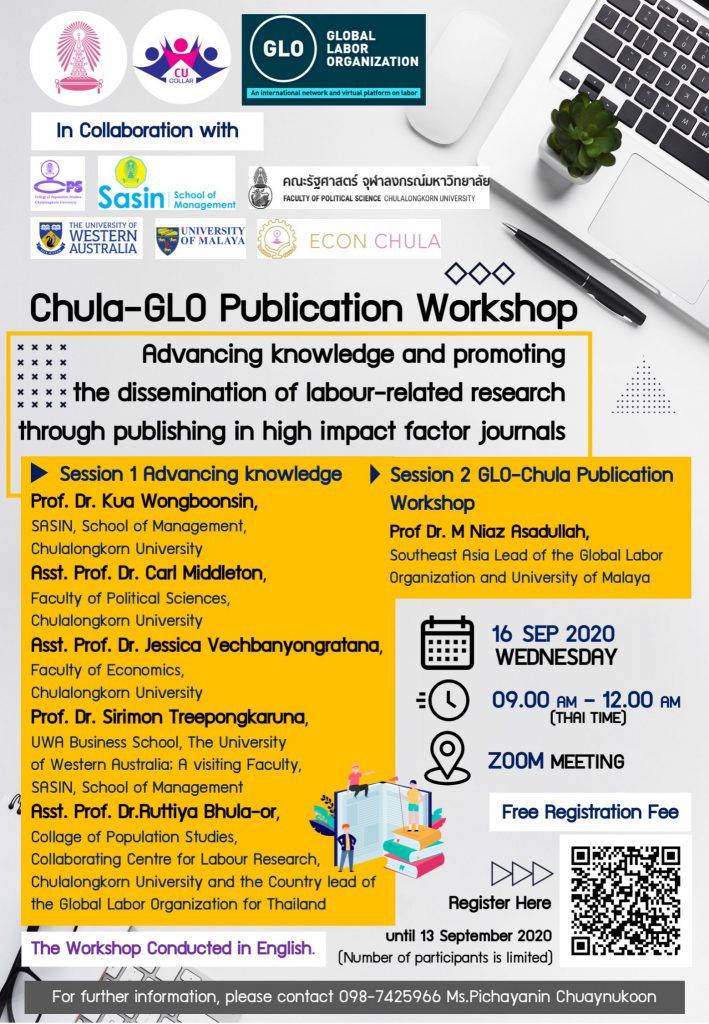
GLO Country Lead Thailand Ruttiya Bhula-or (Chulalongkorn University) and GLO Southeast Asia Lead M Niaz Asadullah (University of Malaya) are heading a Chula-GLO Publication Workshop on “Publishing in high impact factor journals”. The event takes place on 16 September 2020, 9-12 am (Bangkok time).
A new paper published in the Journal of Population Economics investigates for the Italian case how to identify the pandemic early in “dirty” data and how to measure the success of lockdowns.
Luca Bonacini, Giovanni Gallo & Fabrizio Patriarca
Journal of Population Economics (2020), published ONLINE FIRST. PDF free accessible. Based on GLO Discussion Paper No. 534, 2020
GLO Fellow Fabrizio Patriarca
Author Abstract: Identifying structural breaks in the dynamics of COVID-19 contagion is crucial to promptly assess policies and evaluate the effectiveness of lockdown measures. However, official data record infections after a critical and unpredictable delay. Moreover, people react to the health risks of the virus and also anticipate lockdowns. All of this makes it complex to quickly and accurately detect changing patterns in the virus’s infection dynamic. We propose a machine learning procedure to identify structural breaks in the time series of COVID-19 cases. We consider the case of Italy, an early-affected country that was unprepared for the situation, and detect the dates of structural breaks induced by three national lockdowns so as to evaluate their effects and identify some related policy issues. The strong but significantly delayed effect of the first lockdown suggests a relevant announcement effect. In contrast, the last lockdown had significantly less impact. The proposed methodology is robust as a real-time procedure for early detection of the structural breaks: the impact of the first two lockdowns could have been correctly identified just the day after they actually occurred.
LEAD ARTICLE OF ISSUE 4: Yun Qiu, Xi Chen & Wei Shi, Impacts of social and economic factors on the transmission of coronavirus disease 2019 (COVID-19) in China Journal of Population Economics33, 1127–1172 (2020). OPEN ACCESS
ANOTHER COVID-19 ARTICLE JUST PUBLISHED ONLINE FIRST. PDF free accessible. Fabio Milani: COVID-19 outbreak, social response, and early economic effects: A global VAR analysis of cross-country interdependencies. Journal of Population Economics, (2020). https://doi.org/10.1007/s00148-020-00792-4
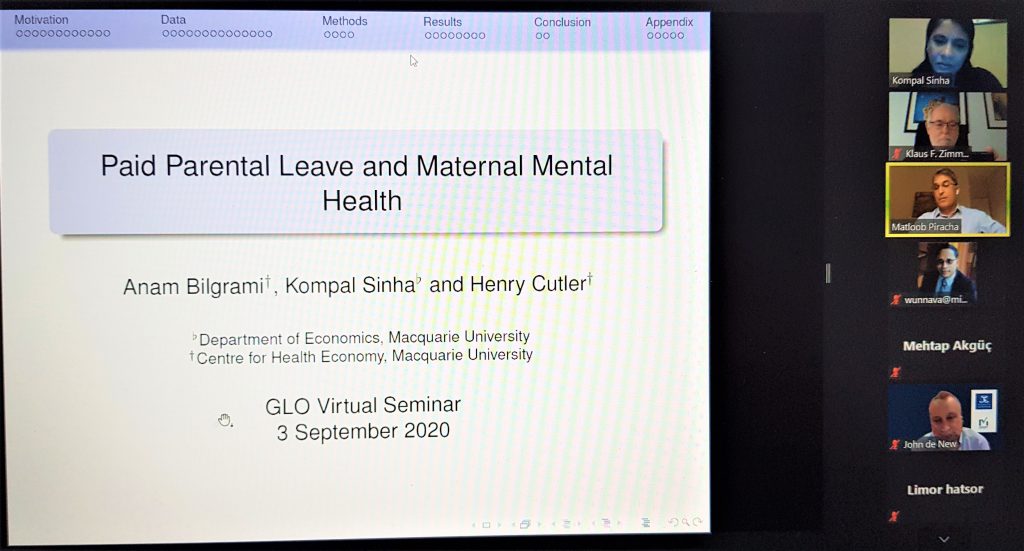
TheGLO Virtual Seminar is a monthly internal GLO research event chaired by GLO Director Matloob Piracha and hosted by the GLO partner institution University of Kent. The results are available on the GLO website and the GLO News section, where also the video of the presentation is posted. All GLO related videos are also available in the GLO YouTube channel. (To subscribe go there.)
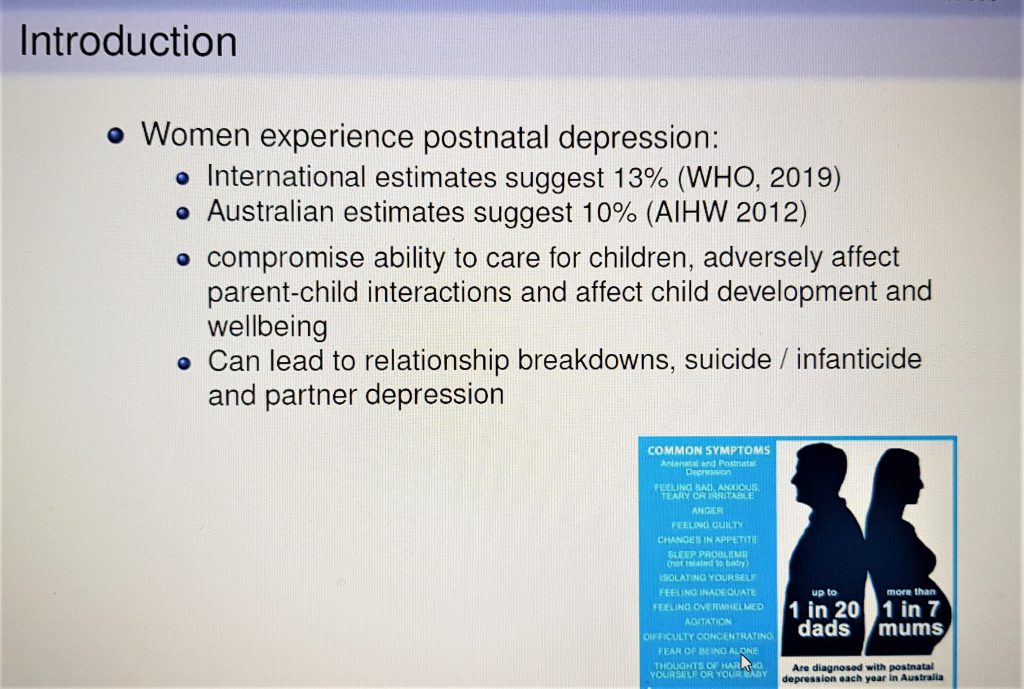
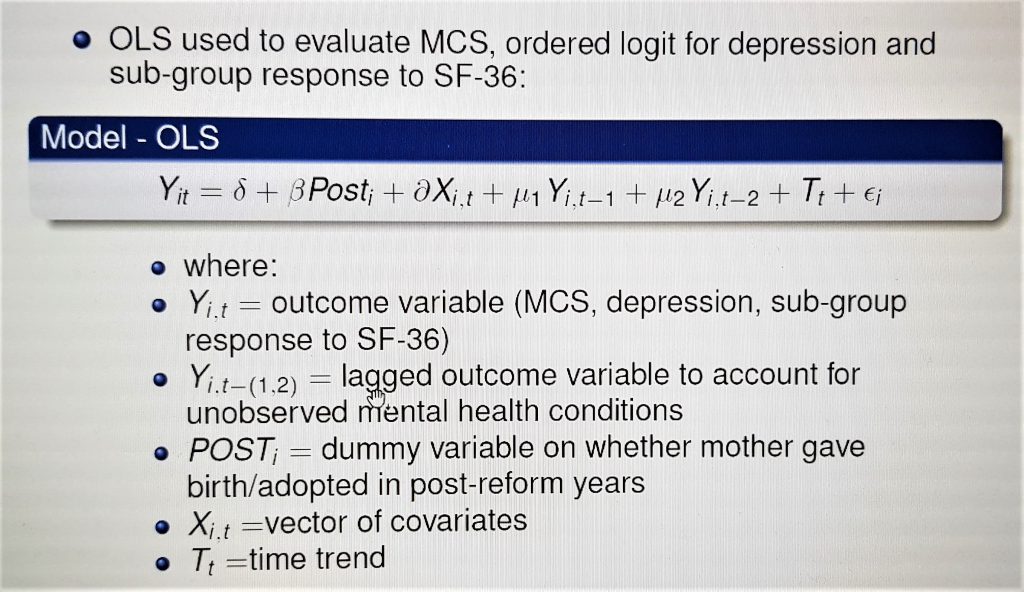
The last seminar was given by Kompal Sinha on Paid Parental Leave and Maternal Mental Health. Below find a report, the video of the seminar and the presentation slides.
Announcement/forthcoming seminar: October 1, 2020:London/UKat 1-2 pm —Alfonso Flores-Lagunes (Syracuse University and GLO) Topic: To be announced. Registration details will be provided in time.
Report
Paid Parental Leave and Maternal Mental Health
GLO Virtual Seminar on September 3, 2020: Kompal Sinha Macquarie University and GLO Associate Editor of the Journal of Population Economics GLO Cluster Lead “Development, Health, Inequality and Behavior” Presentation Slides. Video of Seminar.
Related paper: The presentation of Kompal Sinha is based on a joint paper with Anam Bilgrami and Henry Cutler of the Centre for the Health Economy, Macquarie University, on “The impact of introducing a national scheme for Paid Parental Leave on maternal mental health outcomes“, forthcoming Health Economics.
Abstract
Paid maternity leave is an essential component of a progressive society. It can enhance postnatal health, improve mother and child wellbeing, and deliver better labour market outcomes for mothers. We evaluate the impact of the introduction of Australia’s Paid Parental Leave (PPL) scheme in 2011 and complementary Dad and Partner Pay (DAPP) in 2013 on maternal mental health. Using a sample of 1,480 births to eligible, partnered women between 2004-2016 and a range of mental health outcomes from the Household, Income and Labour Dynamics in Australia survey, we find depression likelihood reduced significantly in post-reform years. When focusing on post-DAPP years and women whose partners had concurrent access to DAPP, significant mental health improvements were found across a wider range of measures including the Mental Component Summary (MCS) score and specific SF-36 items that have a high sensitivity for detecting major depression. Subgroup analysis suggests significant improvements applied specifically to first-time mothers and mothers with employer-paid maternity leave and unpaid leave entitlements. These results suggest that an increase in PPL and DAPP entitlements for mothers without access to employer-paid and unpaid leave entitlements, particularly those in less secure employment, may further reduce postnatal depression and improve health equity in Australia.
A new paper published in the Journal of Population Economics shows that social networks help explain not only the spread of the disease, but also cross-country spillovers in perceptions about Coronavirus risk and in social distancing behavior.
Journal of Population Economics (2020), published ONLINE FIRST. PDF free accessible. GLO Discussion Paper No. 626, 2020
Author Abstract: This paper studies the social and economic responses to the COVID-19 pandemic in a large sample of countries. I stress, in particular, the importance of countries’ interconnections to understand the spread of the virus. I estimate a global VAR model and exploit a dataset on existing social connections across country borders. I show that social networks help explain not only the spread of the disease but also cross-country spillovers in perceptions about coronavirus risk and in social distancing behavior. In the early phases of the pandemic, perceptions of coronavirus risk in most countries are affected by pandemic shocks originating in Italy. Later, the USA, Spain, and the UK play sizable roles. Social distancing responses to domestic and global health shocks are heterogeneous; however, they almost always exhibit delays and sluggish adjustments. Unemployment responses vary widely across countries. Unemployment is particularly responsive to health shocks in the USA and Spain, while unemployment fluctuations are attenuated almost everywhere else.
LEAD ARTICLE OF ISSUE 4: Yun Qiu, Xi Chen & Wei Shi, Impacts of social and economic factors on the transmission of coronavirus disease 2019 (COVID-19) in China Journal of Population Economics33, 1127–1172 (2020). OPEN ACCESS
A new GLO Discussion Paperstudies how a comprehensive teacher training program affects the delivery of a major entrepreneurship curriculum reform in Rwanda.
The Global Labor Organization (GLO) is an independent, non-partisan and non-governmental organization that functions as an international network and virtual platform to stimulate global research, debate and collaboration.
Author Abstract: We assess, via an experiment across 207 secondary schools, how a comprehensive teacher training program affects the delivery of a major entrepreneurship curriculum reform in Rwanda. The reform introduced interactive pedagogy and a focus on business skills in the country’s required upper secondary entrepreneurship course. In addition to the government’s standard training, a random sample of schools received intensive training organized by an NGO for two years. The training consisted of (i) six training sessions during school breaks, ii) exchange visits each term where teachers provided feedback to their peers, and (iii) outreach and support from NGO staff at least twice per year. The program increased teachers’ use of active instruction, consistent with the reform’s features. These effects on pedagogy did not translate into improvements in student academic outcomes or skills. Treated students increased their participation in businesses by 5 percentage points, or 17% of the control mean, with a commensurate decrease in wage employment, and no effect on overall income. These results suggest substitution between entrepreneurship and employment among students in treated schools.
A new GLO Discussion Paperstudies the consequences of forsaken schooling resulting from opportunities abroad taken byemigrants from Tajikistan.
The Global Labor Organization (GLO) is an independent, non-partisan and non-governmental organization that functions as an international network and virtual platform to stimulate global research, debate and collaboration.
Author Abstract: We examine the phenomenon of forsaken schooling resulting from opportunities abroad. The brain-drain/gain literature takes as its starting point the migration of educated/professional labor from poor origin countries to richer host countries. While high-skilled emigration is troubling, even more so is that many international migrants accept low-skilled positions in host countries. Their willingness to do so arises from very large host-home earnings differentials. At home this can lead to reduced educational investment as people forgo schooling because of opportunities to migrate to high paying low-skilled jobs. This suggests possible time-inconsistencies between short-run economic gains from migration and negative long-term effects from missing human-capital investment. We analyze data from Tajikistan, where approximately one-third of the labor force works outside of the country. Our empirical results establish circumstances under forsaken schooling occurs, leaving trade-offs that policymakers’ need consider.
Featured image: Photo-by-Element5-Digital-on-Unsplash
A new GLO Discussion Paperprovides an overview of the Happiness Economics approach and outlines the promises and pitfalls of subjective well-being measures.
The Global Labor Organization (GLO) is an independent, non-partisan and non-governmental organization that functions as an international network and virtual platform to stimulate global research, debate and collaboration.
Author Abstract: Welfare and well-being have traditionally been gauged by using income and employment statistics, life expectancy, and other objective measures. The Economics of Happiness, which is based on people’s reports of how their lives are going, provides a complementary yet radically different approach to studying human well-being. Typically, subjective well-being measures include positive and negative feelings (e.g., momentary experiences of happiness or stress), life evaluations (e.g., life satisfaction), and feelings of having a life purpose. Both businesses and policymakers now increasingly make decisions and craft policies based on such measures. This chapter provides an overview of the Happiness Economics approach and outlines the promises and pitfalls of subjective well-being measures.
A new GLO Discussion Paperdocuments not only the strict correlation between internationalization and innovative activities but also a positive change of attitude of Italian firms towards these strategies.
The Global Labor Organization (GLO) is an independent, non-partisan and non-governmental organization that functions as an international network and virtual platform to stimulate global research, debate and collaboration.
Author Abstract: This paper analyzes the main drivers of external competitiveness in times of crisis for small and medium enterprises (SMEs). We focus on the Italian experience in the midst of the financial and sovereign-debt crisis, and present robust evidence based on a comprehensive survey of Italian companies in the manufacturing and production service sectors (the MET dataset). Overall, our results confirm the high degree of heterogeneity of the Italian system and the differences between internationalized and domestic companies in terms of performance as well as structural and behavioral dimensions. In particular, data highlight not only the strict correlation between internationalization and innovative activities but also a positive change of attitude of Italian firms towards these strategies. Our analysis shows that, whilst structural factors play a key role for external competitiveness, other critical firm-level aspects trigger superior performances, especially strategic profiles, technological capabilities, and proactive behaviors such as innovativeness and R&D investment. Importantly, we document disproportionate effects of innovation for smaller and less productive companies. This points at dynamic strategies as a potential tool to fill the gap between larger/more productive companies and the set of less structured firms, a segment representing an ideal target for policy measures.
A new GLO Discussion Papershows that increasing import competition has kept more females in the Chinese workforce.
The Global Labor Organization (GLO) is an independent, non-partisan and non-governmental organization that functions as an international network and virtual platform to stimulate global research, debate and collaboration.
Author Abstract: This paper investigates the impact of import liberalization induced labor demand shocks on male and female employment in China. Combining data from population and firm censuses between 1990 and 2005, we relate prefecture-level employment by gender to the exposure to tariff reductions on locally imported products. Our empirical results show that increasing import competition has kept more females in the workforce, reducing an otherwise growing gender employment gap in the long run. These dynamics were present both in local economies as a whole and among formal private industrial firms. Examining channels through which tariff reductions differentially affect males and females, we find that trade-induced competitive pressures contributed to a general expansion of female-intensive industries, a shift in sectoral gender segregation, reductions in gender discrimination in the labor market, technological upgrading through computerization, and general income growth.
A new GLO Discussion Paperprovides a theoretical analysis to study the firms’ strategic choice of adopting an abatement technology in an environment with pollution externalities when the government levies an emission tax to incentivize firms undertaking emission-reducing actions.
The Global Labor Organization (GLO) is an independent, non-partisan and non-governmental organization that functions as an international network and virtual platform to stimulate global research, debate and collaboration.
Author Abstract: This research analyses the firms’ strategic choice of adopting an abatement technology in an environment with pollution externalities when the government levies an emission tax to incentivise firms undertaking emission-reducing actions. A set of different Nash equilibria – ranging from dirty to green production – arises in both quantity-setting (Cournot) and price-setting (Bertrand) duopolies depending on the societal awareness towards environmental quality and the relative importance of technological progress in abatement adopted by firms. A synthesis of the main results is the following: if the awareness of the society towards a clean environment is relatively low (resp. high) and the index measuring the relative cost of abatement is relatively high (resp. low), the strategic interaction between two independent, competing and selfish (profit maximizing) firms playing the abatement game leads to not to abate [NA] (resp. to abate [A]) as the Pareto efficient outcome: no conflict exists between self-interest and mutual benefit to do not undertake (resp. to undertake) emission-reducing actions. Multiple Nash equilibria or a “green” prisoner’s dilemma may also emerge in pure strategies. When the choice of adopting a green technology is a deadlock (anti-prisoner’s dilemma), the society is better off as social welfare under A is always larger than under NA because pollution and environmental damage are higher in the latter scenario. These findings suggest that living in a sustainable environment challenges the development of clean technologies through ad hoc R&D and the improvement of public education to achieve an eco-responsible attitude.
A new GLO Discussion Paperargues that big data can measure happiness and help making good policy decisions.
The Global Labor Organization (GLO) is an independent, non-partisan and non-governmental organization that functions as an international network and virtual platform to stimulate global research, debate and collaboration.
Author Abstract: The pursuit of happiness. What does that mean? Perhaps a more prominent question to ask is, ‘how does one know whether people have succeeded in their pursuit’? Survey data, thus far, has served us well in determining where people see themselves on their journey. However, in an everchanging world, one needs high-frequency data instead of data released with significant time-lags. High-frequency data, which stems from Big Data, allows policymakers access to virtually real-time information that can assist in effective decision-making to increase the quality of life for all. Additionally, Big Data collected from, for example, social media platforms give researchers unprecedented insight into human behavior, allowing significant future predictive powers.
A new GLO Discussion Paperusing randomizes data from Bangladesh suggests offering commitment and screening applicants on present bias to enhance agricultural technology adoption.
The Global Labor Organization (GLO) is an independent, non-partisan and non-governmental organization that functions as an international network and virtual platform to stimulate global research, debate and collaboration.
Author Abstract: Do constraints to technology adoption vary by behavioral traits? We randomize 150 villages in Bangladesh into being offered standard microcredit, loans with a grace period, the choice between those two contracts, and control. No discernible average effects are detected on the adoption of mechanized irrigation, hybrid seeds, and chemical fertilizers. However, credit access enhances technology adoption among present-biased farmers, whose output and profits increase. These effects are driven by the standard contract and choice villages, as present-biased farmers select out of the grace period contract. This suggests offering commitment and screening applicants on present bias to enhance agricultural technology adoption.
A new GLO Discussion Paperstudies the implications of Artificial Intelligence (AI) in anendogenous growth model. It can explain why advanced countries tend to experience, despite much AI hype, the simultaneous existence of rather high employment with stagnating wages, productivity, and GDP.
The Global Labor Organization (GLO) is an independent, non-partisan and non-governmental organization that functions as an international network and virtual platform to stimulate global research, debate and collaboration.
Author Abstract: The economic impact of Artificial Intelligence (AI) is studied using a (semi) endogenous growth model with two novel features. First, the task approach from labor economics is reformulated and integrated into a growth model. Second, the standard representative household assumption is rejected, so that aggregate demand restrictions can be introduced. With these novel features it is shown that (i) AI automation can decrease the share of labor income no matter the size of the elasticity of substitution between AI and labor, and (ii) when this elasticity is high, AI will unambiguously reduce aggregate demand and slow down GDP growth, even in the face of the positive technology shock that AI entails. If the elasticity of substitution is low, then GDP, productivity and wage growth may however still slow down, because the economy will then fail to benefit from the supply-side driven capacity expansion potential that AI can deliver. The model can thus explain why advanced countries tend to experience, despite much AI hype, the simultaneous existence of rather high employment with stagnating wages, productivity, and GDP.
A new GLO Discussion Paper finds that public sector employment is affected significantly.
The Global Labor Organization (GLO) is an independent, non-partisan and non-governmental organization that functions as an international network and virtual platform to stimulate global research, debate and collaboration.
Author Abstract: This paper examines whether the intensity of Non-Pharmaceutical Interventions (NPIs) during the COVID-19 pandemic has differentially impacted the public sector labor market outcomes. This extends the analysis of the already documented negative economic consequences from COVID-19 and their dissimilarities with a typical economic crisis. To capture the intensity of the NPIs, we build a novel index (COVINDEX) using daily information on NPIs merged with state level data on out of home mobility (Google data) to show that among individuals living in a typical state, the NPIs enforcement during the COVID-19 reduces the likelihood of being employed (at work) by 5% with respect to the pre-COVID period and the hours worked by 1.3% using data on labor market outcomes from the monthly Current Population Survey and difference-in-difference models. This is a sizable amount representing the sector with the higher job security during the pandemic. Public sector workers in a typical state are 4 percentage points more likely to be at work than salaried workers in the private sector and 7 percentage points more likely than self-employed workers (the worst so far). Our results are robust to endogeneity of the NPIs measures and present empirical evidence of heterogeneity in the response to the NPIs with those in the local employment being the hardest hit.
A new GLO Discussion Paper finds that the pandemic and the lockdown increased underemployment and job search efforts significantly. Immigrants and individuals with shorter job tenure or occupations unsuitable for remote work were hit the hardest in terms of unemployment.
The Global Labor Organization (GLO) is an independent, non-partisan and non-governmental organization that functions as an international network and virtual platform to stimulate global research, debate and collaboration.
Author Abstract: We examine the short-term labor market effects of COVID-19 and the associated national lockdown in Australia by estimating person-fixed-effects models using the Longitudinal Labour Force Survey. COVID-19 decreased labor force participation (LFP) by 2.1%, increased unemployment by 1.1% and reduced weekly working hours by 1.1. The national lockdown decreased LFP by 3.3%, increased unemployment by 1.7%, and decreased weekly working hours by 2.5. The probability of working on Fridays decreased by 10% while working fewer hours due to being on leave, work shifts, not having enough work and losing jobs all increased due to the lockdown. The pandemic and the lockdown increased underemployment and job search efforts significantly. In terms of heterogeneity of these effects, our analysis shows that those with up to high-school education experienced larger reductions in their LFP and working hours than others. However, immigrants and individuals with shorter job tenure or occupations unsuitable for remote work were hit the hardest in terms of unemployment.
A new GLO Discussion Paper argues that there is a strong possibility that the unintended damage of anti-COVID-19 measures to entrepreneurship, innovation and growth could be persistent.
The Global Labor Organization (GLO) is an independent, non-partisan and non-governmental organization that functions as an international network and virtual platform to stimulate global research, debate and collaboration.
Author Abstract: This paper studies the social and economic responses to the COVID-19 pandemic in a large sample of countries. I stress, in particular, the importance of countries’ interconnections to understand the spread of the virus. I estimate a Global VAR model and exploit a dataset on existing social connections across country borders. I show that social networks help explain not only the spread of the disease, but also cross-country spillovers in perceptions about coronavirus risk and in social distancing behavior. In the early phases of the pandemic, perceptions of coronavirus risk in most countries are affected by pandemic shocks originating in Italy. Later, the U.S., Spain, and the U.K. play sizable roles. Social distancing responses to domestic and global health shocks are heterogeneous; however, they almost always exhibit delays and sluggish adjustments. Unemployment responses vary widely across countries. Unemployment is particularly responsive to health shocks in the U.S. and Spain, while unemployment fluctuations are attenuated almost everywhere else.
A new GLO Discussion Paper demonstrates how to use administrative data to estimate the number of deaths, the number of infections, and mortality rates from Covid-19 in Lombardia, the hot spot of the disease in Italy and Europe.
The Global Labor Organization (GLO) is an independent, non-partisan and non-governmental organization that functions as an international network and virtual platform to stimulate global research, debate and collaboration.
Author Abstract: In this paper I use administrative data to estimate the number of deaths, the number of infections, and mortality rates from Covid-19 in Lombardia, the hot spot of the disease in Italy and Europe. The information is relevant for the policy maker, to make decisions, and for the public, to adopt appropriate behaviors. As the available data suffer from sample selection bias I use partial identification to derive these quantities. Partial identification combines assumptions with the data to deliver a set of admissible values, or bounds. Stronger assumptions yield stronger conclusions, but decrease the credibility of the inference. Therefore, I start with assumptions that are always satisfied, then I impose increasingly more restrictive assumptions. Using my preferred bounds, during March 2020 in Lombardia there were between 10,000 and 18,500 more deaths than before 2020. The narrowest bounds of mortality rates from Covid-19 are between 0.1% and 7.5%, much smaller than the 17.5% discussed for long time. This finding suggests that the case of Lombardia may not be as special as some argue.
A new GLO Discussion Paper shows in a theoretical model that firms have incentives to fight against infections and can do so very effectively by increasing teleworking and rotating employees between on-site work, teleworking, and leave.
The Global Labor Organization (GLO) is an independent, non-partisan and non-governmental organization that functions as an international network and virtual platform to stimulate global research, debate and collaboration.
Author Abstract: We derive a model in which firms operate in an epidemic environment and internalize infections among their employees in the workplace. The model is calibrated to fit the properties of the Covid-19 epidemic. We show that firms have incentives to fight against infections and can do so very effectively by increasing teleworking and rotating employees between on-site work, teleworking, and leave. Subsidies to sick leave reduce the cost of sick workers and raise workplace infections. Furlough policies are successful in reducing infections and saving lives. Firms delay and weaken the fight against infections during economic downturns.
A new GLO Discussion Paper finds that social networks help explain not only the spread of the disease, but also cross-country spillovers in perceptions about coronavirus risk and in social distancing behavior.
The Global Labor Organization (GLO) is an independent, non-partisan and non-governmental organization that functions as an international network and virtual platform to stimulate global research, debate and collaboration.
Author Abstract: This paper studies the social and economic responses to the COVID-19 pandemic in a large sample of countries. I stress, in particular, the importance of countries’ interconnections to understand the spread of the virus. I estimate a Global VAR model and exploit a dataset on existing social connections across country borders. I show that social networks help explain not only the spread of the disease, but also cross-country spillovers in perceptions about coronavirus risk and in social distancing behavior. In the early phases of the pandemic, perceptions of coronavirus risk in most countries are affected by pandemic shocks originating in Italy. Later, the U.S., Spain, and the U.K. play sizable roles. Social distancing responses to domestic and global health shocks are heterogeneous; however, they almost always exhibit delays and sluggish adjustments. Unemployment responses vary widely across countries. Unemployment is particularly responsive to health shocks in the U.S. and Spain, while unemployment fluctuations are attenuated almost everywhere else.
A new GLO Discussion Paperreviews new insights on the economics of sexual orientation, gender identity and their consequences at work.
The Global Labor Organization (GLO) is an independent, non-partisan and non-governmental organization that functions as an international network and virtual platform to stimulate global research, debate and collaboration.
Author Abstract: The paper initiates a research agenda to study new developments of the effects of sexual orientation and gender identity on the labor market performance of individuals. It presents a selection of the small previous literature to establish the important spectrum of topics and identify important challenges to compare them to the papers in the special issue of the International Journal of Manpower (Volume 41, Issue 6) dedicated to Sexual Orientation and the Labor Market. We rely on quantitative empirical studies and compare findings along a variety of topics such as, earnings patterns, occupational access constraints, relationships between subjective well-being indicators and marriage status, workplace experiences and family support all along the sexual orientation and gender identity issues. Contrary to the earlier literature, the most recent studies have found that gay men received either the same wages or higher wages compared to heterosexual men, while lesbian women have been found to receive lower wages in comparison to heterosexual women. We reveal the new evidence on this emerging puzzling pattern of sexual orientation and wages, but highlight also other innovations in the special issue: (i) the first ever meta-analysis of field experiments on occupational access discrimination based on sexual orientation, (ii) utilizing the moderating role of marital status and family support, (iii) studying occupational access discrimination based on gender identity, and (iv) evaluate how distastes, stereotypes, and positive workplace actions affect trans people’s labor market performance. The article attempts to provide a fast and insightful guidance to the major challenges, received wisdom and open issues in the field of sexual orientation and gender identity at work and in the labor market. We summarize the implications provided in all chapters to develop the best evidence-based policy making.
A new GLO Discussion Paperstudies conscription in the Republic of Cyprus and finds that an increase in the length of the army service has a positive effect on academic performance.
The Global Labor Organization (GLO) is an independent, non-partisan and non-governmental organization that functions as an international network and virtual platform to stimulate global research, debate and collaboration.
Author Abstract: Peacetime military service has both positive and negative effects on human capital. While it depreciates academic abilities it also enhances non-cognitive skills. The net effect of conscription is hard to identify due to issues of self-selection, endogenous timing and omitted variables bias. We exploit the compulsory service of men in the Republic of Cyprus prior to university enrollment, to deal with the first two problems. After controlling for prior academic performance, admission age, and other relevant controls, we find that the duration of service has a positive effect on university test scores. Two exogenous reforms on the duration of the service allow us to deal with omitted variables bias. We estimate difference-in-difference models, where female students act as a control group, and show that a reduction (increase) in the length of the army service has a negative (positive) effect on male academic performance.
The Global Labor Organization (GLO) and the Erasmus Happiness Economics Research Organization (EHERO) have joined forces to organize a special event on “Well-being Economics” dealing with the two themes: “Labor, Development, and Well-being” and “Migration, Politics, and Well-being Research”.
TheGLO/EHERO special sessions on well-being, which were originally a part of the 18th International Society for Quality-of-Life Studies ISQOLS Annual Conference on August 25-28, 2020, have now been rescheduled as a separate online event that will take place on September 24-25, 2020.
Program
GLO – EHERO Organizers
Milena Nikolova (University of Groningen and GLO) GLO Cluster Lead “Economics of Happiness”; Email: m.v.nikolova@rug.nl
Martijn Hendriks (EHERO and GLO) and Martijn Burger (EHERO)












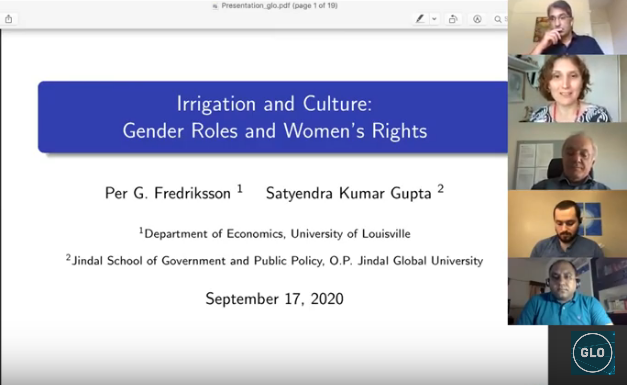
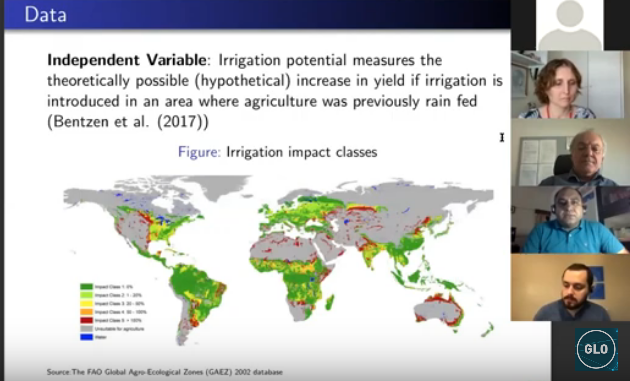
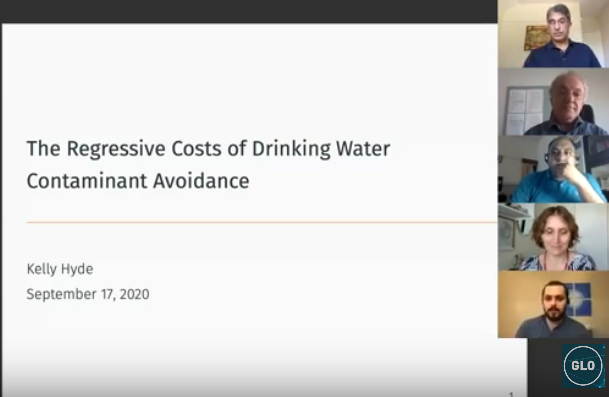
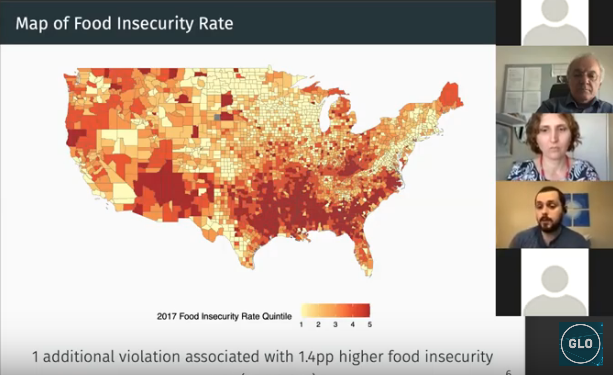










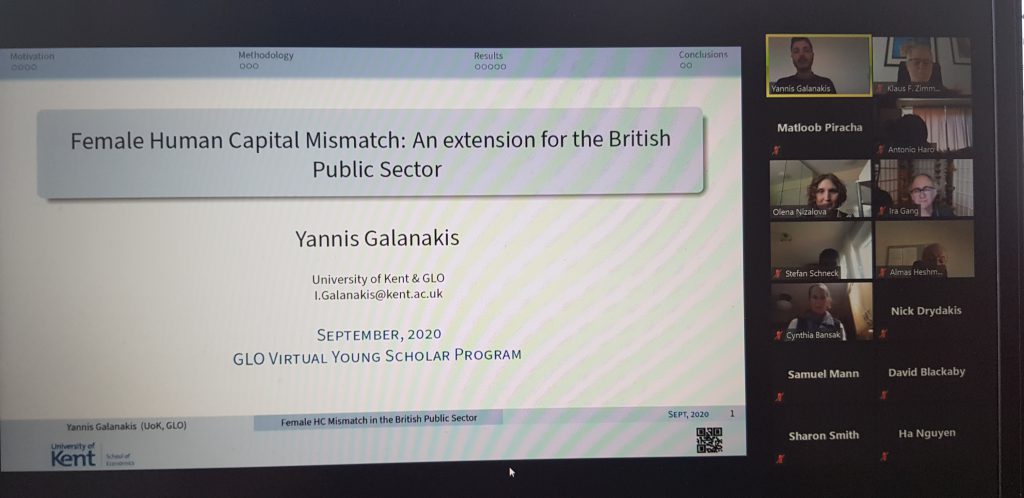
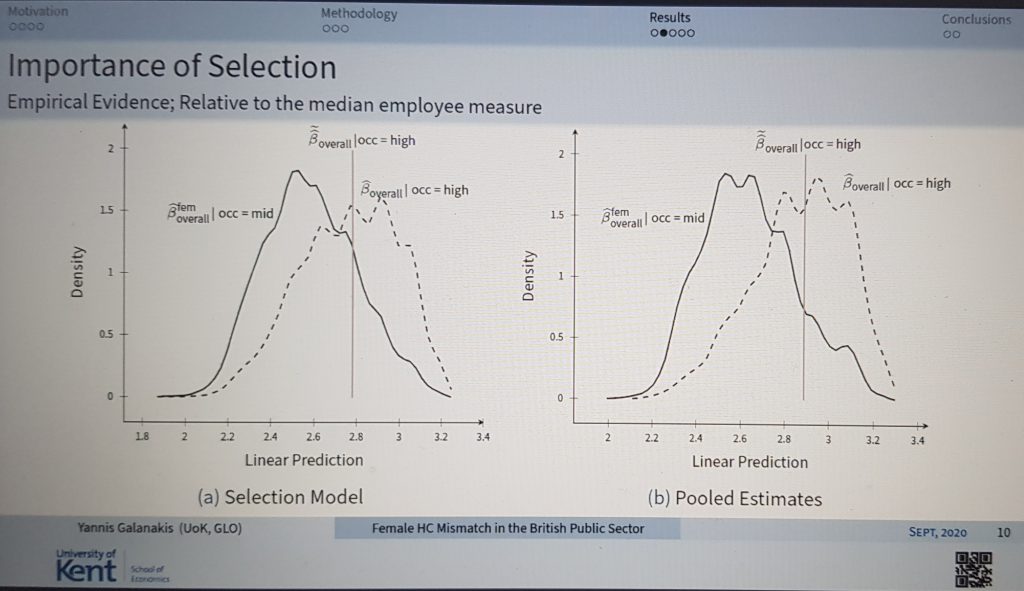
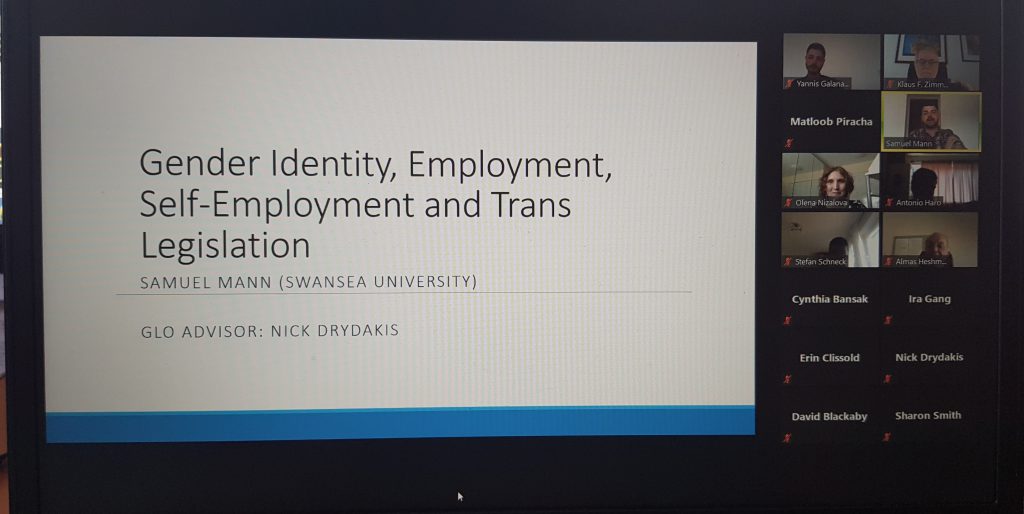
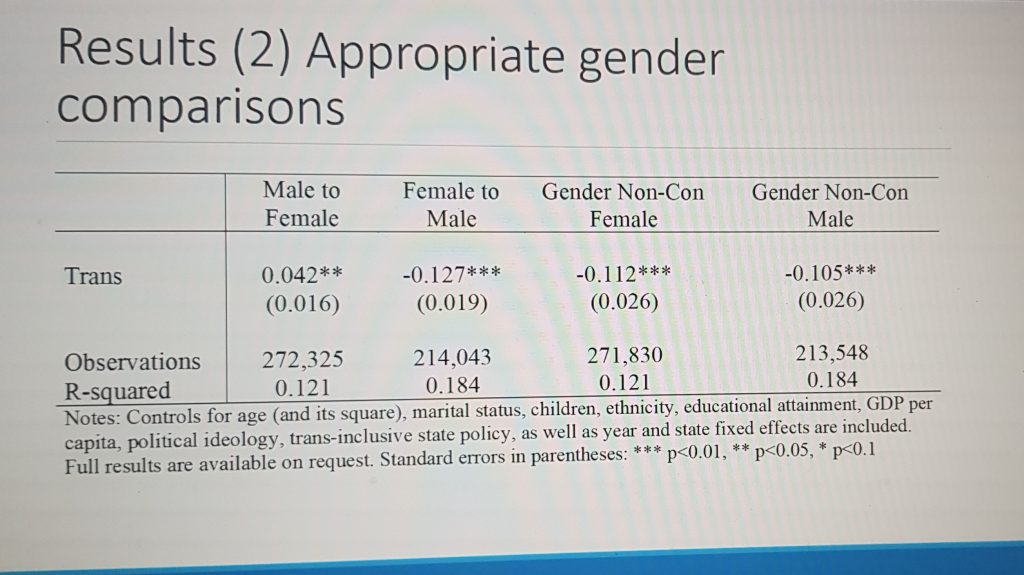
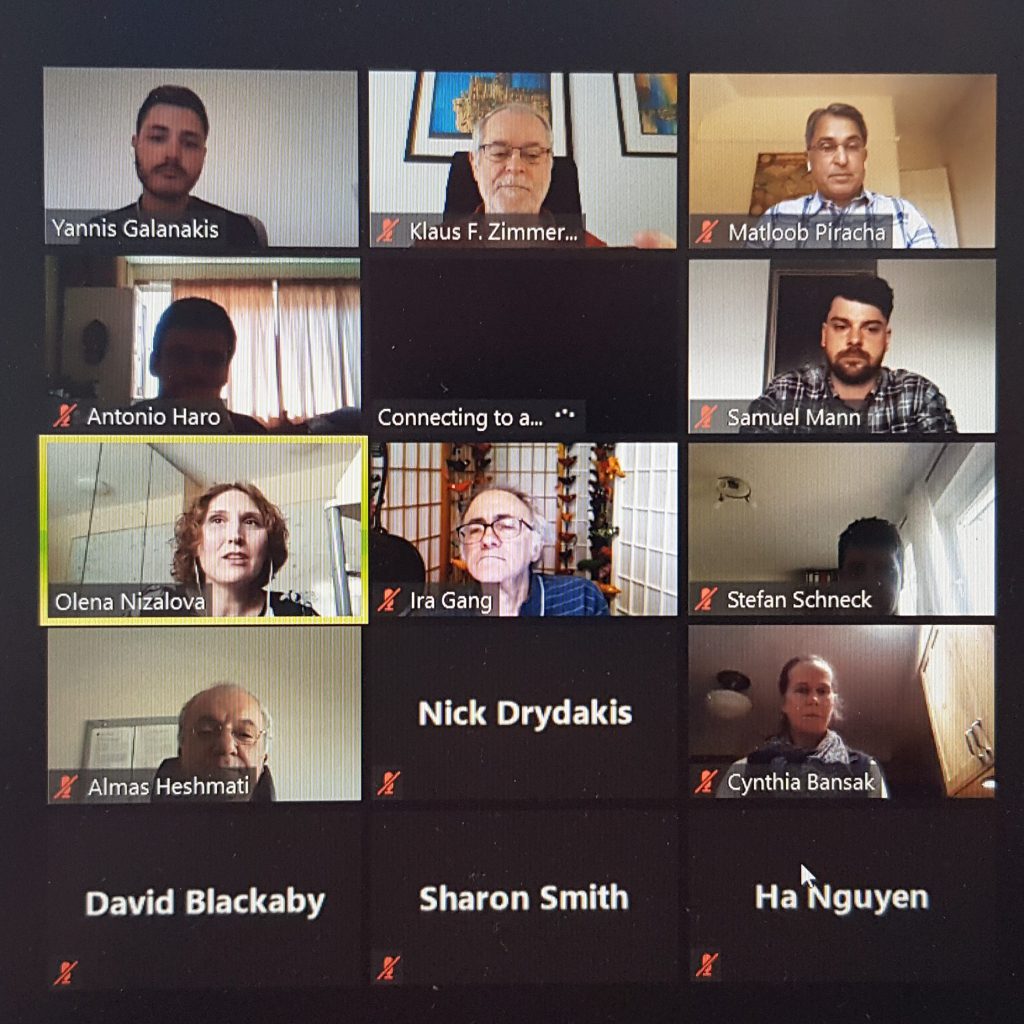


















 DP of the Month August