A new paper published online in the Journal of Population Economics finds that Northern Italy around 1650–1799 was a more “Malthusian” society than England at that time.
The Global Labor Organization (GLO) is an independent, non-partisan and non-governmental organization that functions as an international network and virtual platform to stimulate global research, debate and collaboration.
Malthus in preindustrial Northern Italy?
by Maja Pedersen, Claudia Riani & Paul Sharp
Published ONLINE 2020: Journal of Population Economics, scheduled for 2021. Free Readlink: https://rdcu.be/cdgq1
Author Abstract: The Malthusian model, which implies a long-run interaction between demography and living standards, forms a cornerstone of our understanding of comparative economic development, as postulated by unified growth theory. Its empirical validity has been supported by a number of studies, most of which examine England. In Northern Italy, however, there might have been a reversed “preventive check.” We employ a cointegrated VAR model on Italian data from ca. 1650–1799 and find some evidence for this, but also for diminishing returns and thus a more “Malthusian” society than in, for example, England at that time.
A new GLO Discussion Paper debates the famous Easterlin Paradox that states that at a point in time happiness varies directly with income, both among and within nations, but over time the long-term growth rates of happiness and income are not significantly related.
The Global Labor Organization (GLO) is an independent, non-partisan and non-governmental organization that functions as an international network and virtual platform to stimulate global research, debate and collaboration.
Author Abstract: The Easterlin Paradox states that at a point in time happiness varies directly with income, both among and within nations, but over time the long-term growth rates of happiness and income are not significantly related. The principal reason for the contradiction is social comparison. At a point in time those with higher income are happier because they are comparing their income to that of others who are less fortunate, and conversely for those with lower income. Over time, however, as incomes rise throughout the population, the incomes of one’s comparison group rise along with one’s own income and vitiates the otherwise positive effect of own-income growth on happiness. Critics of the Paradox mistakenly present the positive relation of happiness to income in cross-section data or in short-term time fluctuations as contradicting the nil relation of long-term trends.
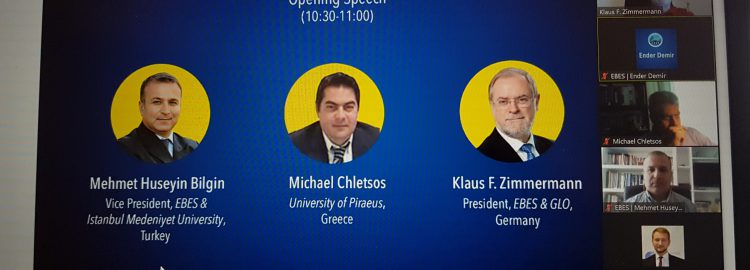
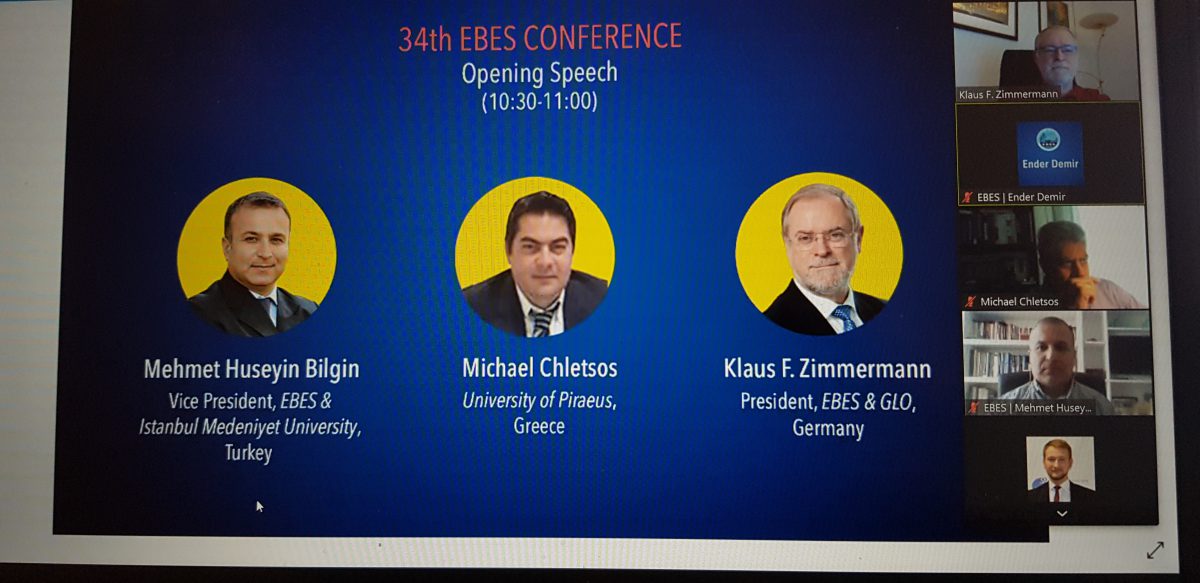
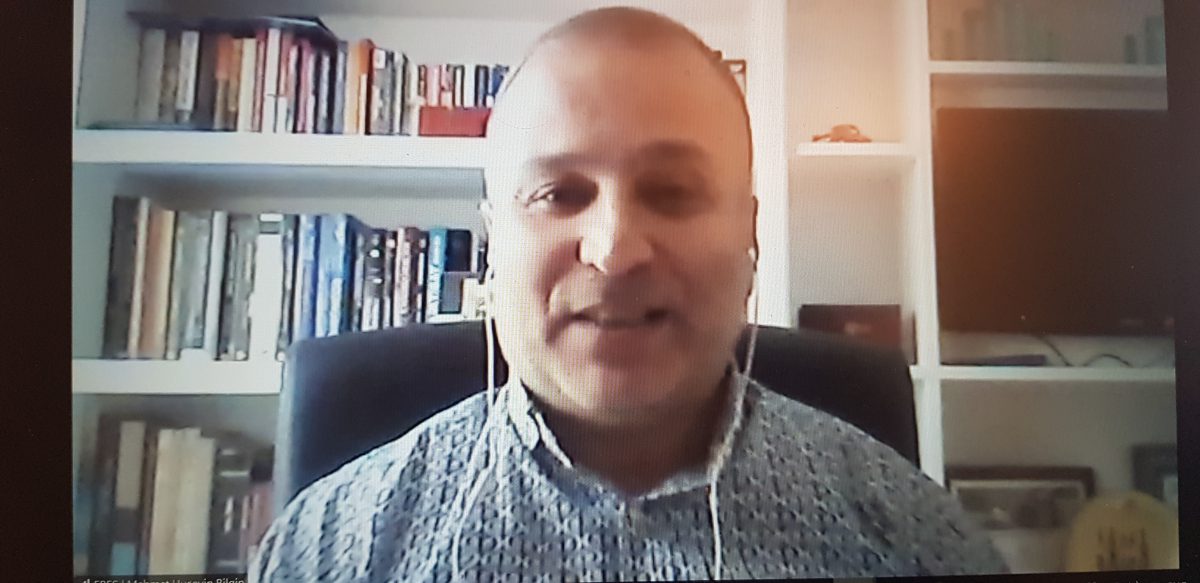
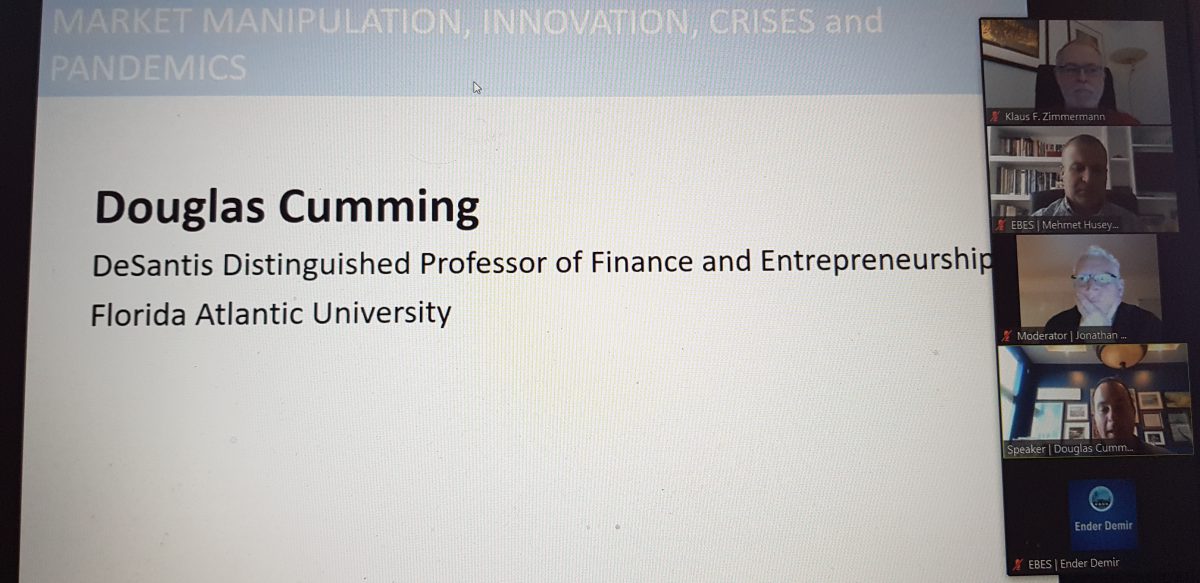
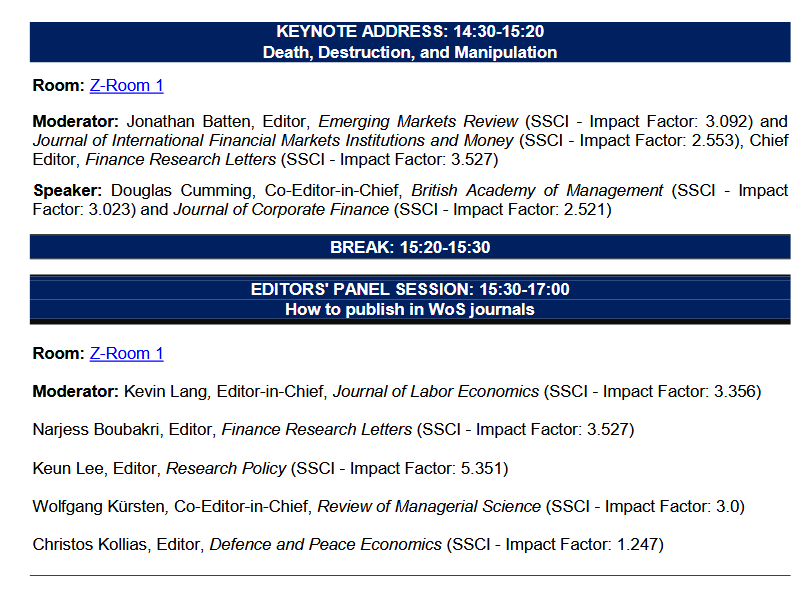
Athens, Greece; January 6-8, 2021. The 34th EBES conference takes place virtually. GLO & EBES President Klaus F. Zimmermann has opened the conference on January 6 together with Mehmet Huseyin Bilgin, Vice President, EBES & Istanbul Medeniyet University, Turkey, and Michael Chletsos, University of Piraeus, Greece. Conference program.
A new GLO Discussion Paper documents a harming effect of the Fox News Channel in the United States on physical distancing during the COVID-19 pandemic.
The Global Labor Organization (GLO) is an independent, non-partisan and non-governmental organization that functions as an international network and virtual platform to stimulate global research, debate and collaboration.
Author Abstract: We document a causal effect of conservative Fox News Channel in the United States on physical distancing during COVID-19 pandemic. We measure county-level mobility covering all U.S. states and District of Columbia produced by GPS pings to 15-17 million smartphones and zip-code-level mobility using Facebook location data. Then, using the historical position of Fox News Channel in the cable lineup as the source of exogenous variation, we show that increased exposure to Fox News led to a smaller reduction in distance traveled and smaller increase in the probability to stay home after the national emergency declaration in the United States. Our results show that slanted media can have a harmful effect on containment efforts during a pandemic by affecting people’s behaviour.
A new GLO Discussion Paper finds that the successful lockdown in Vietnam kept mortality amazingly low, but had negative effects on unemployment, the temporary layoff rate, and the quality of employment. It also reduced workers’ numbers of working hours and their monthly incomes and wages.
The Global Labor Organization (GLO) is an independent, non-partisan and non-governmental organization that functions as an international network and virtual platform to stimulate global research, debate and collaboration.
Author Abstract: Vietnam is widely praised for its successful fight against the COVID-19 pandemic. The country has had an extremely low mortality rate of 35 deaths to date (out of a population of approximately 100 million) and currently has no community transmission. We offer the first study that examines the effects of the COVID-19-induced lockdown on various employment outcomes for Vietnam. We employ difference-in-differences econometric models to estimate the causal effects of the lockdown, using rich individual-level data from the quarterly Labor Force Surveys. We find that the lockdown increases the unemployment rate, the temporary layoff rate, and decreases the quality of employment. It also reduces workers’ numbers of working hours and their monthly incomes and wages. Our estimation results remain robust to different model specifications and estimation samples. Further heterogeneity analysis suggests that the effects vary across education levels and occupation sectors but are similar across regions or provinces with different lockdown durations.
Azita Berar is Director Policy of the Global Labor Organization (GLO), and Senior Fellow, Graduate Institute of International and Development Studies, Geneva.
GLO Policy Brief No. 4 – Theme 3. Future of Work – Covid-19
From “Future of Work” to “Building Better”: 2021, the year of a Global Policy Rethink ?
by Azita Berar
A year ago, 2019 ended with a pick in analyses, forecasts and policy debates on what the “Future of Work” would or should look like. Hopes and fears were expressed about the implications of the latest technological innovations , labelled “Industry 4.0”, for labour markets and more fundamentally for society and humanity. It is bewildering to see how, in less than 10 months, since the onset of the COVID-19 pandemic as a global threat, the center of focus of both analysis and policy has radically shifted to entrenched inequalities and vulnerabilities and the deep running fault lines in our political and economic systems.
As 2020 closed down, we submit that the COVID-19 crisis has done more in generating a new momentum for paradigm shift and for indicating the avenues for a social reconstruct than all the preceding years of analysis, forecasts and policy negotiations around the Future of Work. ____________________
What we should know
2019 ended with a flurry of publications, national and international policy discussion on the “Future of Work” engaging multiple stakeholders. These discussions had started mid-decade, triggered by the rapid acceleration in a new and – some argued, radically different- generation of technological innovations. [1] Hopes were raised by limitless opportunities that these frontier innovations could bring to all sectors of economy, work and life. Fears concerned “externalities”, in particular regarding the potential job destruction and displacement effects of these technologies as well as the slow pace with which, new norms of governance, including cross-border rules, were developed. The new social construct was lagging far behind the pace of technological innovations and their adoption in advanced and emerging economies.
A year later, as 2020 has closed, it is astounding to see the tremendous shift in perspective and policy debate. The COVID-19 pandemic humbled the humanity by exposing its fragility on a planetary scale. It left no aspect of life and no sector of the economy unaffected. The pandemic is still raging, forcing continuous reevaluation of human losses and multi-faceted political, social, economic and emotional fallouts. In this Brief, we are not focusing on the sobering and evolving socio-economic impact [2], but on what is certain: the powerful revelatory impact that the COVID-19 pandemic has already had in 2020.
The pandemic shed light- like no other crisis before- on the deep running inequalities and vulnerabilities within societies and across countries and continents. By accelerating pre-existing trends and exposing the fault lines on a scale and in such a compelling manner that left no room for denial, the crisis brought to the fore, the inadequacy of policy paradigms, the need for alternative policy approaches and the quest for a better and fairer world.
The unfulfilled promises of globalization, the environmental exhaustion, the rising inequalities in distribution of wealth and income, the crisis of full and decent employment in all of its facets, as much as the persisting structural discriminations based on gender, race, refugee or migrant status, were not a revelation per se. These trends have been well documented and discussed in policy and experts’ circles, over the years. In 2020, since and as the result of the global spread of COVID-19, the statistics and data buried in numerous analytic and policy reports came to life and wore human faces, making it an everyday visible reality for everyone across the globe.
The pandemic showed the insecure work and life patterns of those women and men who work in the informal economy, 62 percent of the global workforce, who cannot exercise social distancing, apply basic hygiene preventive rules, access health services, or stop work under conditions of lockdown, with no access to alternative income support and safety nets. School closures vividly exposed, the deep divides in access to quality education and to digital technology for millions of children and students enrolled at all levels of education.
It was sobering to observe that in 2020, the year that marks the 25th anniversary of the first World Conference on Women and the launch of a most comprehensive platform of action for promoting gender equality, women in advanced and developing economies alike, remained the default unpaid care takers at home, and occupied most of “essential” frontline occupations in underpaid sectors with part time and insecure contracts.
Youth who have not fully recovered from the employment crisis in the wake of 2008/09 global crisis, have been once more, massively impacted, this time with a twin challenge of completing their education under conditions of lockdown, and facing the prospect of another protracted transition and stalled mobility into work, adulthood and autonomy.
Positive trends recorded in some of global indicators of the 2030 SDG agenda, such as reduction in poverty, hunger and malnutrition have reversed course, with a huge humanitarian crisis looming in the horizon.
But the pandemic also brought the “Future of Work” faster and closer to home. The expansion of remote and online work, pointed to a new dualism in the labour markets, jobs that can be performed remotely and online and those renamed- essential services and critical jobs – that could not. The expansion of online teleworking , beyond the flexibility and resilience it enables, is forcing managers and employees alike to re-consider the value of inter-personal and social interactions and to re-think the nature of future workplace arrangements.
As demand expanded exponentially for the digital delivery sector and other on-demand services, the pandemic exposed the ambiguity in the prevailing business models and employment relationships in these sectors. In some instances, this increased visibility of these types of new non-standard forms of employment accelerated the adoption and implementation of new legal and social protection norms including rise in minimum wages.
More significantly, the COVID-19 crisis, by laying bare inequalities and socio-economic divides of various types, questioned the fundamental underpinnings of policies and policy paradigms enacted over last decades, that allowed and deepened such uneven and unfair outcomes. In short, the pandemic diffused across societies, a new sense of urgency and a moral imperative for a rethink of policy.
Will 2021 be the inflection point to unleash and accelerate such a paradigm shift?
2020 was an exceptional year of reflection and soul-searching on what is essential and critical to humans? On the relationship between humans, nature and science? What determines resilience to future shocks and what scope should there be for national sovereignty, and for inter-dependence, solidarity and cooperation?
Exceptional measures and massive stimulus packages, were announced and partially deployed in major economies, to deal with the most immediate impact of the pandemic and to prevent a catastrophic socio-economic collapse. These measures were exceptional not only in size, surpassing tens of Trillion dollars already in June 2020, but also in the range and types of policy levers used. There was not much hesitation to push aside stringent prudential rules introduced by the same economies and institutions with respect to the debt to GDP ratio, or the time limit for the debt payments, for example. [3]
Beyond immediate relief and recovery packages, calls to “Reset Capitalism”, “Renew the social contract”, reinvent solidarity, rethink public- private cooperation…. are emanating from diverse stakeholders with often diverging interests. More significantly, the importance of interventionist role of the state in sustaining the economy and jobs and in leading environmental transitions, is rehabilitated and valued. The demand for a stronger role of public policy and public investment in health, education, universal social protection, basic income have resurfaced to the top of mainstream policy debate and agenda.
The serious consideration in policy circles and political campaigns, of New Green Deal proposals, Public Job Guarantee schemes , local community development strategies in the United States alone, is a testimony of the extent to which, the pendulum has swung away from orthodox market fundamentalism. Although these ideas are not new, they have come out of background, gained in vigor and adherence in a short period of time.
It is yet early to judge, how far and how bold will the recovery plans go and what will be the scope of this “rethink”, beyond remedial and recovery responses. Will recovery plans, as announced and promised, become accelerators of digitalization and transition to low carbon economy and embed fiscal policies that promote greater equality and “just transitions”?
Are these circumstantial crisis-induced responses that will deflate once the health hazard and the ensuing economic recession are seen to have been brought under control? Will once again, reform be stalled and austerity replace stimuli, as in the aftermath of 2008/9 crisis. Or will it be really different this time, as more and more parties think that a return to status quo ante is not an option, and the future cannot be about building back but building better and different!
Will 2021 be seen as an inflection point as much as 1945 ushered a new era of social innovation and reconstruct, following the devastation of the second World War?
In the current global political context of divided societies, weakened democracies, growing mistrust in institutions and fragmented multilateralism, the odds for a collective political will to emerge and to lead a new wave of reform, may not seem very high. However the pandemic and its consequences have also awakened and re-mobilized forces of citizenship, advocates of participatory and solidary development and democracy and re-invigorated labour and social movements. These factors combined have generated such high demands and societal expectations that cannot be left unanswered and are not ready to recede.
Paradigm shifts do not occur overnight, however the COVID-19 crisis by sweeping away with such speed a few more myths associated with market fundamentalism and unleashed globalization, has brought us so much closer to the imperative and possibility of building a new social trust.
The year 2020 has closed with the pandemic still ravaging lives, economies and societies across the globe. Humanity is entering 2021 with the renewed hope in science and in new vaccines- which signal that the end of this pandemic might be in sight- but uncertain about how far away and at what cost. More significantly, the COVID-19 crisis has re-ordered our value system and reshaped the policy debate by pointing out that the problem is not technology but the deep political, economic and social divides. The shock and response have created a new momentum for a fundamental policy rethink and action in a way that all the preceding discussions on the Future of Work had not succeeded. Will the momentum be seized? What is certain is that 2021 will be looked at as the inflection year, where a new course seemed possible through a broad understanding of human agency, embracing multi-layered social mobilizations and political leaderships. __________________
[1] The Policy Brief No. 1 on Automation, inequality and jobs, in this Policy Forum, included references to major reports on Future of Work published since 2013. It also highlighted that most analyses overlooked the specific dynamics of technological adoption and labour markets in low income countries with large swaths of rural and informal economy workers. [2] For regular updates and estimates see the following websites: COVID-19 Worldwide Dashboard – WHO Live World Statistics: Socio-economic impact of COVID-19 | UNDP; ILO Monitor: COVID-19 and the world of work. 6th edition. [3] It should be noted however that this flexibility, sits in sharp contrast to the lack of solidarity and international financial support to fiscal policies in particular, in middle-income developing countries. Coordinated stimuli response and use of multilateral institutional mechanisms have been disappointing. In particular the combined response of G20, World Bank and IMF are falling short of providing the financial and fiscal space needed for an adequate COVID-19 response in much of mid-income developing countries.
NOTE: The opinions expressed here are those of the author and not of the GLO, which has no institutional position.
Reflected by the GLO Website glabor.org, 2020 has been another very active year of the network. This was based on the hard work of our activists on all levels and on the constructive support of our various partners around the globe.
Thanks to all GLO Fellows, Affiliates and partners! And the wider audience in the profession and the society for your interest!
While the coronavirus is a challenge to globalization, global collaboration is also the best response. Hence, we went on and started a number of initiatives for which the world has become more open and more flexible. Our experience is that the willingness to communicate and interact has increased.
Below I present a short overview on GLO’s major achievements in the past year 2020.
Klaus F. Zimmermann, GLO – President
Overview: GLO Activities 2020
More than daily News(Please register on the GLO cover page to receive email notifications.)
Volume 34, issue 1, 2021 of the Journal of Population Economics is published. See below the list of articles and access links to read or download the contributions.
A Journal of Population Economics Online Workshop hosted by UNU-MERIT, Maastricht took place on November 19, 2020 (2-5 pm CET). The detailed agenda is below presenting highlights on “Covid-19” and “societal conflict” from the new issue.
Journal of Population Economics: Report Klaus F. Zimmermann (Editor-in-Chief; UNU-MERIT & Maastricht University)
Michaella Vanore
Klaus F. Zimmermann
2.15 – 2.45 pm CET Maastricht
Lead paper Issue 1/2021: Session Chair Terra McKinnish (Editor; University of Colorado Boulder)
Terra McKinnish, Editor, Journal of Population Economics
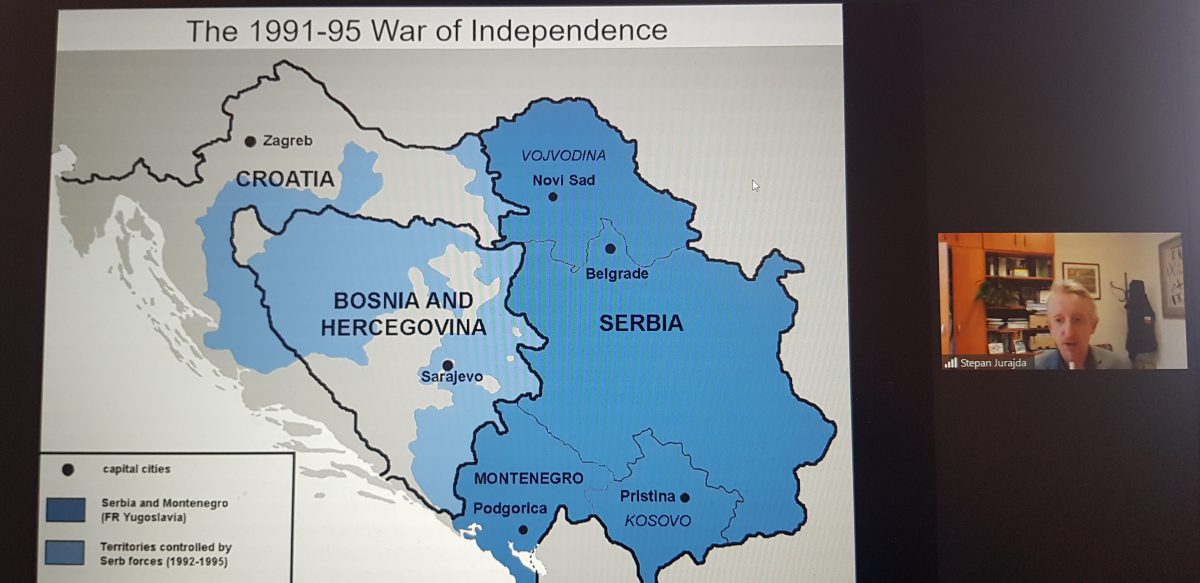
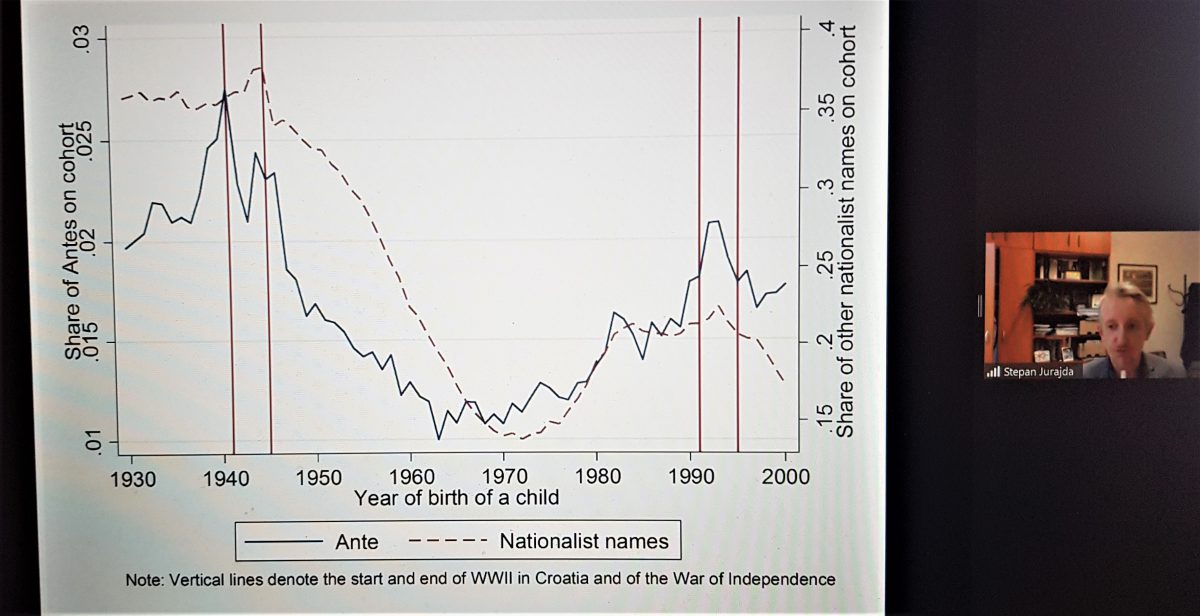
“Names and behavior in a war” presented by Štěpán Jurajda (CERGE-EI, Prague) Co-author: Dejan Kovač (Princeton University and Zagreb)
Discussion
Michaella Vanore
Klaus F. Zimmermann
Terra McKinnish
Štěpán Jurajda
Dejan Kovač
2.45 – 3.15 pm CET Maastricht
Kuznets Prize 2021: “Impacts of social and economic factors on the transmission of coronavirus disease 2019 (COVID-19) in China”, published in the Journal of Population Economics (2020), 33(4), pp. 1127–1172. OPEN ACCESS.
Bartel Van de Walle (Director, UNU-MERIT) presented UNU-MERIT & delivered the prize laudation.
Panel with the authors chaired by Klaus F. Zimmermann (Editor-in-Chief; UNU-MERIT & Maastricht University): Yun Qiu (Jinan University), Xi Chen (Yale University), and Wei Shi (Jinan University)
Yun Qiu
From the left: Xi Chen, Wei Shi and Klaus F. Zimmermann
Bartel Van de Walle
Klaus F. Zimmermann
Yun Qiu
Xi Chen
Wei Shi
3.15 – 4.00 pm CET Maastricht
Panel: Publishing in Population Economics Alessandro Cigno (Editor; University of Florence), Shuaizhang Feng (Editor; Jinan University), Oded Galor (Editor; Brown University), Pierre Pestieau (Editor; Université de Liège), Erdal Tekin (Editor; American University), Katharina Wetzel-Vandai (Springer Nature), Junsen Zhang (Editor; Chinese University of Hong Kong), Klaus F. Zimmermann (Editor-in-Chief; UNU-MERIT & Maastricht University)
The Panel debate was organized to honor the contributions of Sandro Cigno to Population Economics and to the success of the Journal of Population Economics. Cigno celebrated his 80th birthday on December 24, 2020 and retired on December 31, 2020 from his position as Editor of the Journal. MORE DETAILS from the Panel see separate post in his honor.
Sandro Cigno, Klaus F. Zimmermann, Katharina Wetzel-Vandai, Erdal Tekin
Shuaizhang Feng
Oded Galor
Pierre Pestieau
Junsen Zhang
Alessandro Cigno (Editor, Journal of Population Economics, 1988 – 2020)
Shuaizhang Feng (Editor; Journal of Population Economics, 2020 – )
Oded Galor (Editor; Journal of Population Economics, 2019 – ; Editor-in-Chief, Journal of Economic Growth)
Pierre Pestieau (Editor; Journal of Population Economics, 1988 – 1995; previously: Co-Editor Journal of Public Economics)
Erdal Tekin (Editor; Journal of Population Economics, 2010 – 2018; Editor-in-Chief Journal of Policy Analysis and Management)
Junsen Zhang (Editor; Journal of Population Economics, 2001 – 2019; Coeditor, Journal of Human Resources)
Klaus F. Zimmermann (Editor-in-Chief; Managing Editor; Journal of Population Economics, 1988 – ; previously: Managing Editor, Economic Policy)
4.00 – 5.00 pm CET Maastricht
Madeline Zavodny, Managing Editor of the Journal of Population Economics
Covid-19 in Issue 1/2021: Session Chair Madeline Zavodny (Managing Editor; University of North Florida)
Fabio Milani (University of California, Irvine): “COVID-19 outbreak, social response, and early economic effects: a global VAR analysis of cross-country interdependencies” Discussion
Domenico Depalo (Bank of Italy): “True COVID-19 mortality rates from administrative data” Discussion
Fabio Milani
Domenico Depalo (
Fabrizio Patriarca (University of Modena and Reggio Emilia): “Identifying policy challenges of COVID-19 in hardly reliable data and judging the success of lockdown measures” Co-authors: Luca Bonacini (University of Modena and Reggio Emilia); Giovanni Gallo (National Institute for Public Policies Analysis) Discussion
Sergio Scicchitano (National Institute for Public Policies Analysis): “Working from home and income inequality: risks of a ‘new normal’ with COVID-19” Co-authors: Luca Bonacini (University of Modena and Reggio Emilia); Giovanni Gallo (National Institute for Public Policies Analysis) Discussion
Fabrizio Patriarca
Sergio Scicchitano
Madeline Zavodny
Domenico Depalo
Fabrizio Patriarca
Sergio Scicchitano
Luca Bonacini
Giovanni Gallo
END of the event
Michaella Vanore, Managing Editor of the Journal of Population Economics