Category Archives: News

GLO Project: Fostering Research on School to Work Transitions

Call for papers for a special issue of the International Journal of Manpower on:

“The School to work transition: Cross-country differences, evolution and reforms“

Edited by Francesco Pastore (University of Campania “Luigi Vanvitelli” and GLO) and Klaus F. Zimmermann (UNU-MERIT, Maastricht University and GLO)

An initiative of the Global Labor Organization (GLO). This project is related to the GLO Thematic Cluster on “School-to-Work Transitions” headed by Francesco Pastore. Interested network members are invited to contribute to both ventures.

A school-to-work transition (SWT) regime denotes the set of institutions and rules that govern and supervise the passage of young people from school to adulthood. They include the degree of regulation and flexibility of the labour market, but also of the educational and training systems and the provision of employment services (placement and training) to help young people finding a job more easily. The household is also part of the regime, by providing, for instance, financial support during the entire transition and a cushion against the risk of unemployment. The role assigned to each institution within a regime is different from one country to another, so that different SWT regimes can be identified in the world.

A rising interest for the issue of the optimal design and organization of a SWT regime is emerging together with soaring unemployment, especially in Europe and in many developing countries. In some countries, the slowness of the transition is a factor of concern because it persists also during periods of economic boom constraining the ability of the economic system to create all the possible jobs for young people.

A SWT has as its main aim that of filling the gap of work experience of young people with respect to adults. This can be done by resorting to the labor market and by making it more flexible, with the risk that young people fall in the so-called work experience trap (they have education and also general work experience, but firms want job-specific work experience and competences). Alternatively, the education system can give an important contributions by following the dual principle and namely providing at the same time education and training already at school or by developing closer links to the labor market through establishing direct links to the labor market like in the Japanese Jisseki Kankei or by providing efficient and dynamic job placement services and information on vacancies like in Anglo-Saxon systems.

After posing a strong and long-lasting emphasis on labor market flexibility since the mid-1980s, reforms of the SWT regime are focusing on the education system. In Italy, the Buona Scuola reform has changed the mission of an education system which still remains sequential, but providing high secondary school students with compulsory work related learning, based on the Scandinavian model. However, there is still widespread concern that a deeper integration of the education system with the labor market is necessary to increase the chances of young people to find suitable jobs. The European Youth Guarantee is a programme of active labor market policy that the EU Parliament has exported to all of Europe with ups and downs. Recent reforms have regarded also public and private employment services, foreseeing the introduction of a quasi-market organization to make them more efficient.

This special issue aims to inspire the debate on these issues by stimulating the submission of high quality papers on different aspects of the SWT, also not considered in this short abstract. Preference will be given to papers implementing advanced econometric methods and addressing causality issues. We wish for theoretical or empirical papers that include, but are meant not to be restricted in any possible way to such issues as, among others:

  • Cross-country differences in the performance of different SWT regimes;
  • Experience of developing countries;
  • Effectiveness of the German dual system;
  • Effectiveness of the Japanese Jisseki Kankei;
  • Regional differences in the SWT and youth unemployment rate;
  • Impact of the economic and financial crisis on youth labor markets;
  • Definition of new regimes of SWT to accumulate job specific skills;
  • Impact evaluation of recent policy programs for promoting the employment opportunities of young people, such as:
    • recent labor market reforms, e.g. the Jobs Act;
    • apprenticeship legislation;
    • the European Youth Guarantee;
    • the programs of work-related learning;
    • “3+2 reform” of the university system;
    • Implementation of New Public Management principles to universities;
  • Role of public and private employment services;
  • Role of job placement services at high secondary schools and universities;
  • Technical and vocational education and training;
  • Experiences of study and work;
  • Role of the household as a shock absorber and as a disincentive to more active job search.

Submissions will be accepted up until the 15th of February 2018. They should be made using ScholarOne Manuscripts, the online submission and peer review system: http://mc.manuscriptcentral.com/ijm. Before submission, please verify that you have carefully read the Author guidelines of the Journal. While making your submission, please specify the title of the current call for papers. See also the Call on the journal website.

Francesco Pastore (University of Campania “Luigi Vanvitelli” and GLO)

Francesco Pastore

Klaus F. Zimmermann (UNU-MERIT, Maastricht University and GLO)
Ends;
GLO Fellow Grossbard creates Society for Household Economics

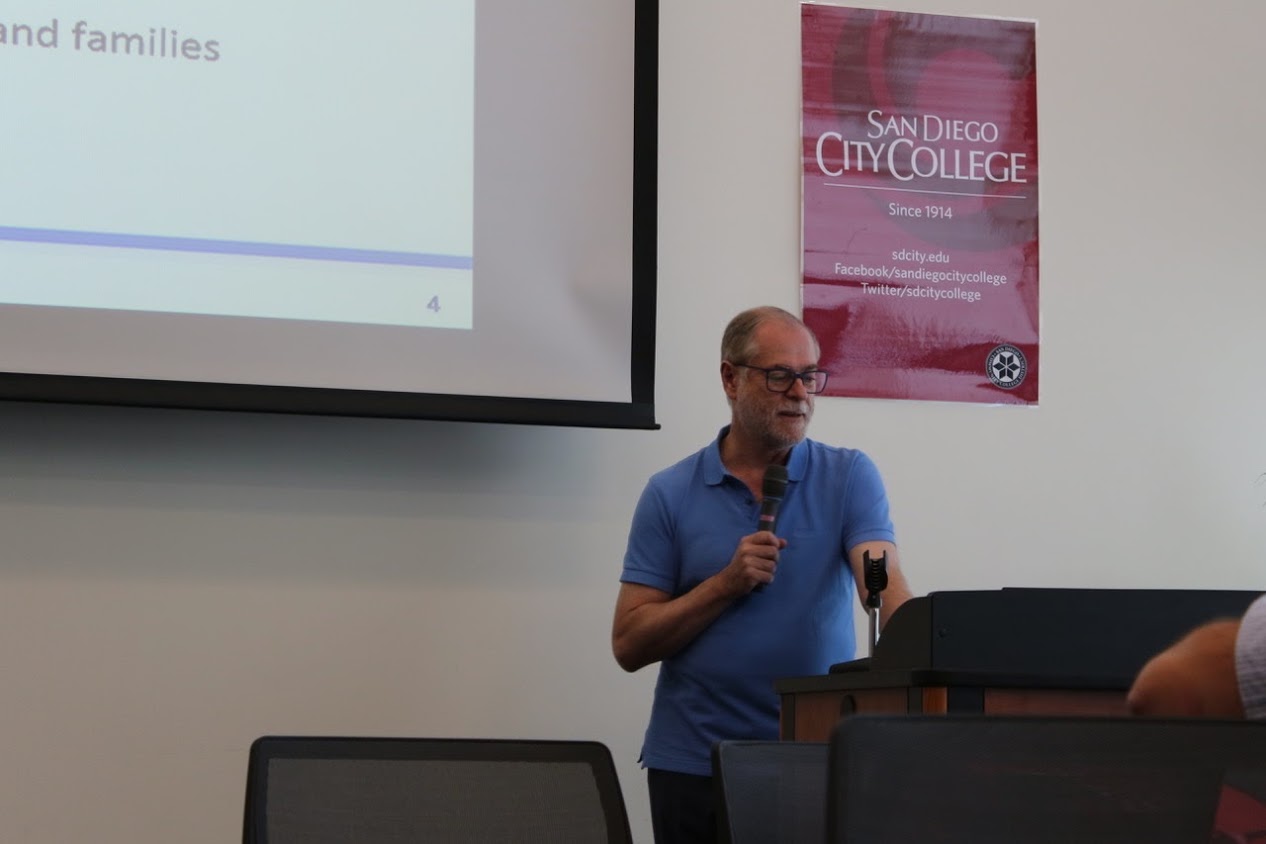
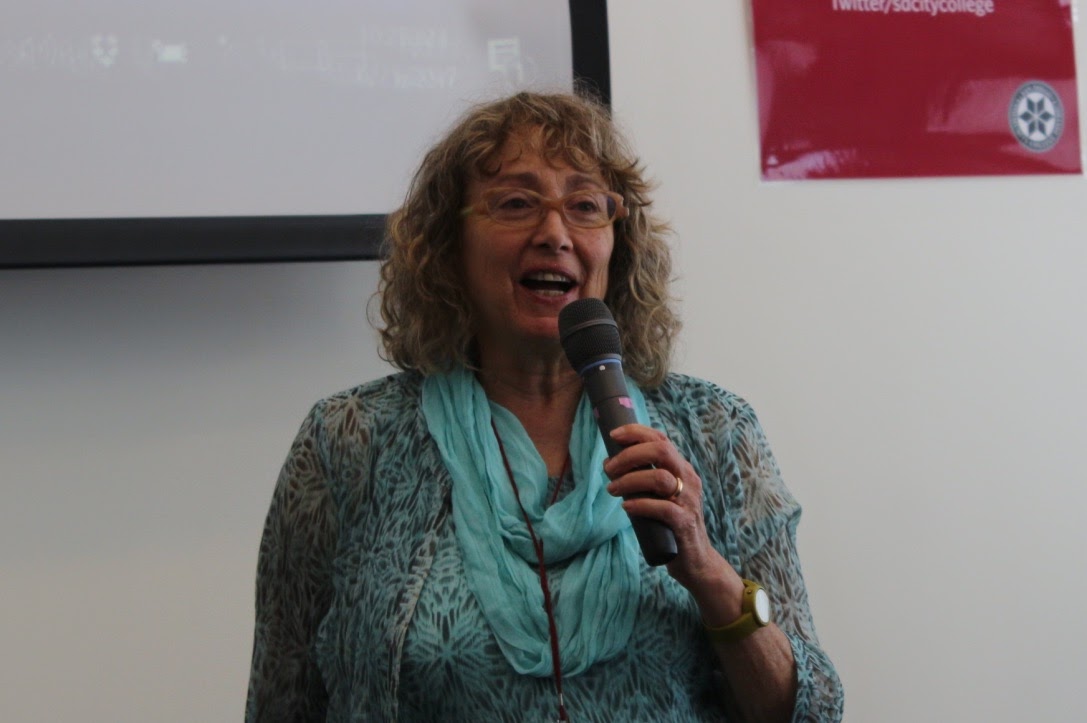
GLO Fellow Shoshana Grossbard creates Society for Household Economics.  A new scientific society has been created on June 25 and 26, 2017 during the first annual meetings of the Society of Economics of the Household (SEHO) in San Diego, California, USA. The event took place at the San Diego City College. SEHO was organized by Shoshana Grossbard, San Diego State University and GLO Fellow (Global Labor Organization, GLO), who is also the Editor of the Review of Economics of the Household (REHO).

Klaus F. Zimmermann, Princeton University, UNU-MERIT and President of the Global Labor Organization (GLO), had provided to the conference a keynote speech on “Well-being and Health Shocks in Rural Households”. GLO President Klaus F. Zimmermann is also the Editor-in-Chief of the Journal of Population Economics and the founder of the European Society for Population Economics (ESPE) more than 30 years ago.

Many more than 120 participants (among them a larger number of GLO Fellows) enjoyed a high-quality, lively and exciting conference program with a larger number of contributed sessions and further keynote speeches by Daniela Del Boca (University of Turin, Collegio Carlo Alberto, and New York University), Charles Horioka (Asian Growth Research Institute, Kitakyushu City, Japan, and Osaka University) and Gigi Foster (University of New South Wales).

GLO President on SEHO Head Shoshana Grossbard and the congress: “A timely and brilliant idea, and an event packed with excellent research, fresh ideas and full of charm. Thanks, Shoshana for the hard work behind the scene to make this possible.”

GLO Fellow Shoshana Grossbard (San Diego State University) at the conference opening…..

http://www.klausfzimmermann.de/wp/wp-content/uploads/2017/07/Shoshana-Grossbard-opening-SEHO-2017.jpg


GLO President Zimmermann (Princeton University, UNU-MERIT and Maastricht University) during his keynote to the SEHO 2017.

http://www.klausfzimmermann.de/wp/wp-content/uploads/2017/07/Klaus-F.-Zimmermann-giving-keynote-at-SEHO-2017.jpeg
Ends;

GLO Fellow Alexander Kritikos on open economies, welfare and redistribution policies

Die Wohlstands-Gefährder (in German)

Autor und GLO Fellow Alexander Kritikos, 52, ist Forschungsdirektor im Bereich Unternehmertum beim Deutschen Institut für Wirtschaftsforschung (DIW) in Berlin und Professor für Volkswirtschaftslehre an der Universität Potsdam.

Populisten setzen auf Abschottung – das verhindert eine Verteilungspolitik, von der alle profitieren.

Von Alexander Kritikos


Seit Trumps Wahlsieg wurde es oft wiederholt: Seine Wählerschaft setze sich mehrheitlich aus den “Verlierern der Globalisierung” zusammen, Menschen also, deren Löhne seit Jahren stagnierten und die kaum mehr von ihrer Hände Arbeit leben könnten. Auch in Deutschland und anderen europäischen Ländern wird über die Stagnation der Löhne in der unteren Hälfte der Verteilung diskutiert. Denn seit zwei Jahrzehnten sind die Lohnzuwächse ungleich verteilt – das belegen Studien.

Angelockt wurden die Wähler in den USA mit Aussagen, wonach Einwanderung, Globalisierung und Klimaschutz der Ursprung allen Übels sei. Auch in Europa gehen populistische Bewegungen mit solchen Behauptungen auf Stimmenfang. Die Populisten kommen aus allen politischen Richtungen. Es geht nicht mehr um “rechts” gegen “links”, sondern um “offen” versus “geschlossen”: offene Grenzen, Offenheit für Innovation und für Freihandel, offene Arbeits- und Kapitalströme. Oder eben geschlossen.

Die US-Regierung hat sich für “Schließen” entschieden und will die amerikanische Schifffahrts-, Stahl- und sogar die Kohleindustrie wiederbeleben. Wie teuer und wenig wirkungsvoll solche rückwärtsgewandten und über staatliche Subventionen finanzierten Politikmaßnahmen sind, wissen wir in Deutschland zur Genüge. Im Ruhrgebiet hat man vor 30 Jahren vergeblich versucht, mittels Subventionen das Rad des Strukturwandels aufzuhalten und die Montanindustrie künstlich am Leben zu erhalten. Produktionsprozesse, die in kostengünstigere Länder verlagert wurden, wird man nur verbunden mit geringerer Produktqualität, höheren Preisen und ausufernden Staatsausgaben zurückholen können. Länder, die eine solche Politik verfolgen, werden erhebliche Wohlstandsverluste erleiden. Ob Regierende ihre Versprechen an die “Verlierer der Globalisierung” so halten können, ist mehr als fraglich.

Aus dem Silicon Valley kommt ein anderer Vorschlag: Roboter zu besteuern, die Menschen Arbeitsplätze “wegnehmen”. Die Steuereinnahmen sollen ein bedingungsloses Grundeinkommen für diejenigen finanzieren, die aufgrund der Roboter ohne Arbeit sind. Klingt wie ein Perpetuum Mobile. Eine ähnliche “Maschinensteuer” wurde vor Jahrzehnten diskutiert; aber so werden lediglich Kapitalkosten erhöht und der technologische Fortschritt verlangsamt, mit negativen Folgen für die Produktivität, die Reallöhne, die Investitionstätigkeit und auch für die Beschäftigung.

Wissen muss sich noch besser über Grenzen hinweg verbreiten können

Für den sozialen Frieden und die Stabilität in einem Land ist es entscheidend, dass alle am zunehmenden Wohlstand teilhaben. Die zentrale Frage ist also, warum nicht jeder von den Chancen der Globalisierung profitiert. Es fällt auf, dass trotz vieler grundlegender Innovationen das Wirtschaftswachstum in den vergangenen 20 Jahren überraschend schwach verlaufen ist. Der Grund: Während global agierende Firmen auf der Basis der Innovationen ein robustes Produktivitätswachstum verzeichnen, hat sich die Kluft zwischen den Weltmarktführern und anderen Firmen erhöht. Das liegt daran, dass der Wissenstransfer von diesen Weltmarktführern zu anderen kleinen und mittelständischen Unternehmen (KMUs) nur noch schlecht funktioniert. Gleichzeitig investieren diese KMUs immer weniger in Forschung und Entwicklung, um eigenes Wissen zu generieren.

Es sind also nicht Innovationen per se, die das gegenwärtige Wirtschaftswachstum so schwach und das Einkommenswachstum so ungleich machen. Es ist der ungleich verteilte Zugang zu Innovationen und der verlangsamte Prozess der Verbreitung von Innovationen von Innovationsführern zu anderen Firmen. Folgt man den Populisten und schließt seine Grenzen, so wird sich die Verbreitung von Innovationen zusätzlich verlangsamen, mit negativen Folgen für Wachstum und Löhne.

Offenheit ist also essenziell für ein höheres Wirtschaftswachstum. Wissen, die Grundvoraussetzung für Innovationen, muss sich besser über Grenzen hinweg und zwischen Innovationsführern und kleineren Firmen verbreiten, sodass mehr Menschen an einer dann stärker wachsenden Wirtschaft teilnehmen können. Was heißt das für die Politik? In Deutschland wollen nahezu alle demokratischen Parteien mit Innovation punkten. Für einen besser funktionierenden “Markt der Ideen” müssen sie also die Verbreitung von Wissen und Innovation mehr fördern, und nicht nur Innovationen per se. Auf Unternehmensseite etwa, indem KMUs besseren Zugang als bisher zu den Ergebnissen staatlich geförderter Forschung und Entwicklung (F&E) bekommen. Auch benötigen Mittelständler stärkere Anreize für private Investitionen in F&E, sie fallen dort seit Jahren gegenüber Großunternehmen zurück. Ebenso muss man über Reformen zum Schutz des geistigen Eigentums nachdenken, aber in die Richtung, dass der Wissenstransfer eher gewährleistet wird.

Es müssen auch mehr Netzwerke zwischen Universitäten, Forschungsinstituten und Start-ups ausgebaut werden, sodass aus Forschungsergebnissen neue, schnell wachsende Unternehmen und damit zusätzliche Arbeitsplätze entstehen können, ein Schwachpunkt in Deutschland und Europa. Dafür brauchen kleinere Unternehmen nach wie vor auch einen besseren Zugang zu Risikokapital.

Auf Seite der Beschäftigten stehen drei Maßnahmen an: Zum einen mehr Gewinnbeteiligung, gerade für Beschäftigte, deren Löhne im unteren Bereich der Einkommensverteilung liegen, um diese Menschen an positiver wirtschaftlicher Entwicklung teilhaben zu lassen. Zum anderen muss der Zugang zu Wissen verbessert werden. Die derzeit Beschäftigten benötigen Zugang zu neuen Formen der Weiterbildung, die auf ihren Bedarf zugeschnitten sind und ihnen bessere Jobperspektiven eröffnen. Für die zukünftig Beschäftigten muss Deutschland daran arbeiten, die Quote von mehr als zehn Prozent aller Arbeitskräfte ohne Berufsabschluss im Arbeitsmarkt zu senken. Berufsrelevantes praktisches Wissen wird immer nötiger werden. Dafür bedarf es einer Ausbildungsstrategie, die bereits in der Schule ansetzt.

Gelingt es mit diesem Politikmix, die Produktivität eben nicht nur bei den globalen Weltmarktführern zu erhöhen, so resultieren daraus eine verbesserte Spezialisierung, ein stärkeres Wirtschaftswachstum, aber auch mehr und besser bezahlte Jobs, auch für Menschen, die sich derzeit abgehängt fühlen.

Der Wohlstand muss in Zukunft besser aufgeteilt werden. Hierfür lohnt es, nicht erst bei einer nachträglichen Umverteilung anzusetzen, sondern viel früher, nämlich bei einem besseren Zugang zu Wissen und Innovationen.”

Süddeutsche Zeitung vom 3. 7. 2017.  Mit Zustimmung des Autors.

Ends;

IEA World Congress in Mexico City with many GLO Fellows presenting their research work

After one week of intense work, the World Congress 2017 of the International Economic Association (IEA) in Mexico City ended on June 23, 2017. The IEA brings together scientific societies, individual researchers, and the policy community of the world. The congress was directed by the former Chief Economist of the World Bank, Kaushik Basu (Cornell University), who had prepared with his team a large program that was executed on 19-23 June, 2017. With the presence of Nobel Prize Winners George Akerlof, Roger Myerson, Jo Stiglitz and a large number of key economists from a representative variety of countries from around the globe the exchange was inspiring and productive.

Klaus F. Zimmermann (Princeton University, UNU-MERIT and GLO) presented his invited paper on Tuesday, June 20, on “The Challenges of Refugee Migration”.

Zimmermann is President of the Global Labor organization (GLO). His presentation was in the session on “The Challenges of Illegal Migration and Refugees”. The other speakers were Catalina Amuedo-Dorantes (San Diego State University and GLO) and Pia Orrenius (Federal Reserve Bank of Dallas and GLO). The session was chaired by Corrado Giulietti (University of Southampton and GLO).

Other GLO Fellows present at the meeting included Kaushik Basu, Alessandro Cigno, Giovanni Facchini, Jan Fidrmuc, Martin Kahanec, Alexander Kritikos, Patrick Puhani, Rodrigo Soares and Jackie Wahba, among many others.

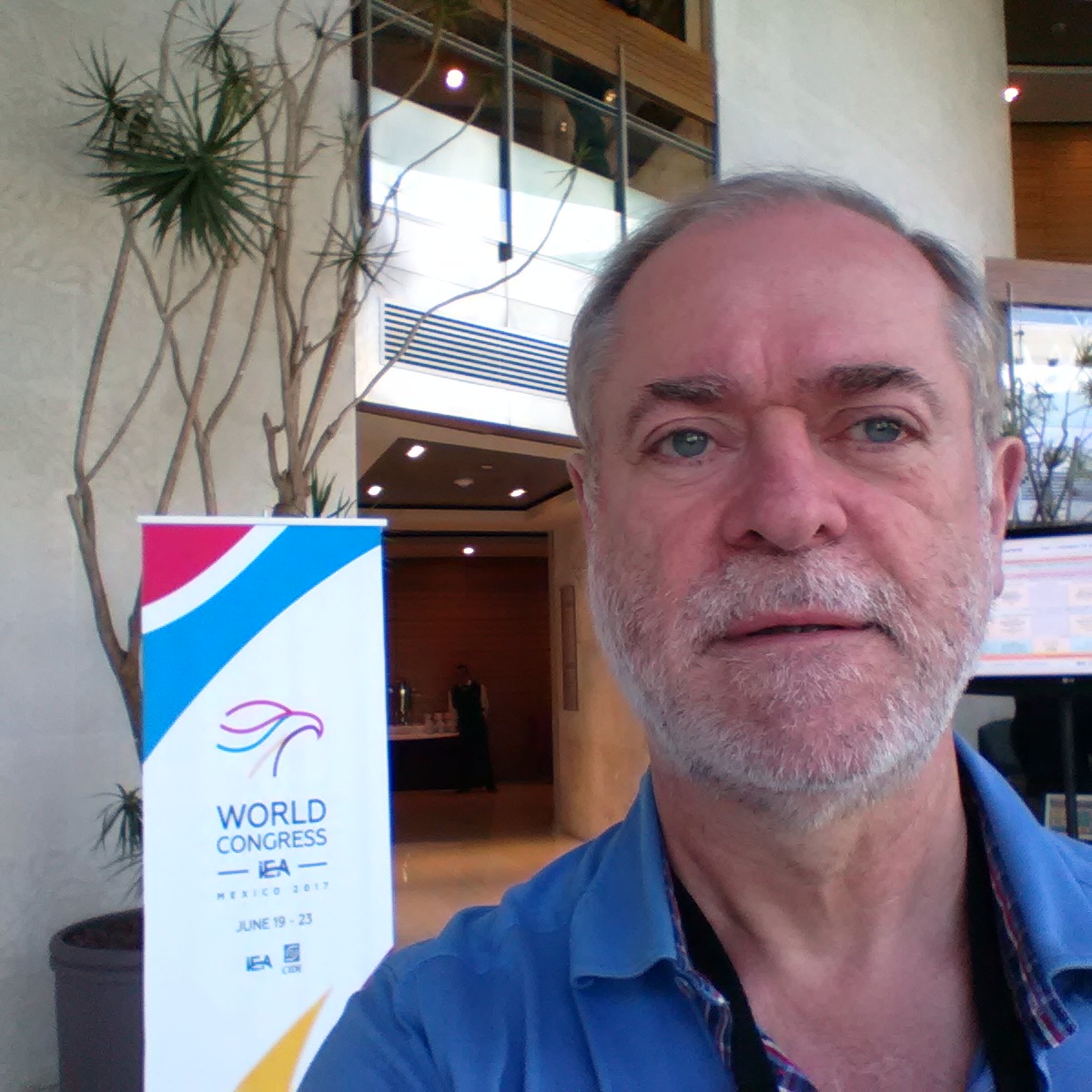
GLO President Klaus F. Zimmermann, also linked to Princeton, Bonn & Maastricht Universities, in the conference hotel Camino Real.

Zimmermann in the old city.

Ends;

Call for Papers: 23rd EBES Conference – Madrid, September 27-29, 2017

You are cordially invited to submit your abstracts or papers for presentation consideration at the 23rd EBES Conference that will take place on September 27-29, 2017 at the Faculty of Economics and Business at Universidad Complutense de Madrid in Spain.

The conference aims to bring together many distinguished researchers from all over the world. Participants will find opportunities for presenting new research, exchanging information, and discussing current issues. Although we focus on Europe and Asia, all papers from major economics, finance, and business fields – theoretical or empirical – are highly encouraged.

Submission deadline: June 30, 2017

Keynote Speakers
Prof. John Rust, Georgetown University, U.S.A., and GLO
Prof. Jonathan Batten, Monash University, Australia
Prof. Giuseppe Ciccarone, Sapienza University of Rome, Italy, and GLO

Board
Prof. Jonathan Batten, Monash University, Australia
Prof. Iftekhar Hasan, Fordham University, U.S.A.
Prof. Peter Rangazas, Indiana University-Purdue University Indianapolis, U.S.A.
Prof. Euston Quah, Nanyang Technological University, Singapore
Prof. John Rust, Georgetown University, U.S.A. , and GLO
Prof. Marco Vivarelli, Università Cattolica Del Sacro Cuore, Italy, and GLO
Prof. Klaus F. Zimmermann, UNU-MERIT, Maastricht University, The Netherlands, and GLO

Abstract/Paper Submission
Authors are invited to submit their abstracts or papers no later than June 30, 2017. For submission, please visit our website at: https://www.ebesweb.org/Conferences/23rd-EBES-Conference-Madrid/Abstract-Submission.aspx no submission fee is required. General inquiries regarding the call for papers should be directed to ebes@ebesweb.org.

Publication Opportunities
Qualified papers will be published in the EBES journals (Eurasian Business Review and Eurasian Economic Review). EBES journals are published by Springer and indexed in the Scopus, Emerging Sources Citation Index (Thomson Reuters), EconLit, EBSCO Discovery Service, ProQuest, ABI/INFORM, Business Source, International Bibliography of the Social Sciences (IBSS), OCLC, Research Papers in Economics (RePEc), Summon by ProQuest, TOC Premier, Cabell’s Directory, Ulrich’s Periodicals Directory, and Google Scholar. There is no submission and publication fee for EBES journals. All accepted abstracts will be published electronically in the Conference Program and the Abstract Book (with an ISBN number). It will be distributed to all conference participants at the conference via USB. Although submitting full papers are not required, all the submitted full papers will also be included in the conference proceedings in the USB. After the conference, participants will also have the opportunity to send their paper to be published in the Springer’s series Eurasian Studies in Business and Economics (no submission fee and publication fee). This will also be sent to Thomson Reuters in order to be reviewed for coverage in its Conference Proceedings Citation Index. Please note that the 10th, 11th, 12th, 13th, 14th, and 15th EBES Conference Proceedings are accepted for inclusion in the Conference Proceedings Citation Index. 16th and subsequent conference proceedings are in progress.

Important Dates
Submission deadline: June 30, 2017
Reply-by: July 4, 2017
Registration deadline: August 5, 2017
Announcement of the Program: August 12, 2017

Contact Ugur Can (ebes@ebesweb.org) Dr. Ender Demir (demir@ebesweb.org)

Check out the GLO Events

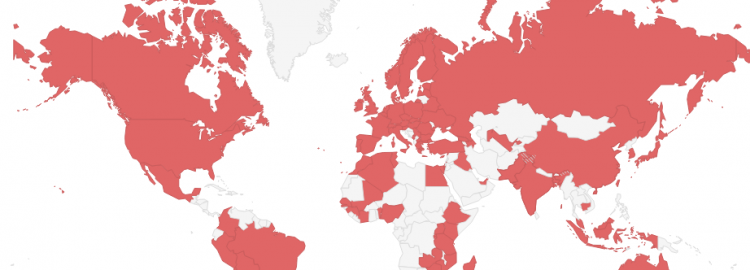
Now 600 Individual Members From 88 Countries!

The GLO and  its Network are continuously pursuing their mission and aim: being global and establishing itself as the world’s leading and global research and policy network on labor, demographics and human resources.

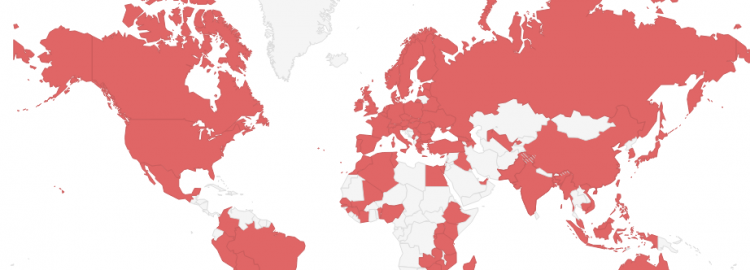
The GLO Network reached over 600 individual members from 88 countries!

The GLO Network currently consists of 602 individuals and 28 organizations covering 88 countries.

We wish to thank the GLO Fellows and GLO Affiliates as well as our GLO Member Organizations for their support and contributions to the GLO and ist Network.

The Global Labor Organization (GLO) is supported by individuals (fellows and affiliates) as well as organizations with a thematic interest and a strong ambition to contribute to an effective global network and to benefit from it.

The GLO lives and thrives with its network’s active involvement and contributions. Recent examples include the GLO Clusters -read more.

Any individual with an explicit thematic interest can join as GLO Affiliate. Please help us to spread the word about the Global Labor Organization – anybody can register: Join the GLO.

The Global Labor Organization (GLO) is an international, independent, non-partisan and non-governmental organization that has no institutional position. The GLO functions as an global network and virtual platform for researchers, policy makers, practitioners and the general public interested in scientific research and its policy and societal implications on global labor markets, demographic challenges and human resources.

Subscribe to the GLO News at the bottom of the page.

“A Second Chance for Europe” is badly needed!

New Book:

A Second Chance for Europe

Economic, Political and Legal Perspectives of the European Union

Jo Ritzen (UNU – MERIT, Maastricht University & GLO)

Springer 2017.
Jo Ritzen is a professorial fellow in the International Economics of Science, Technology and Higher Education at UNU-MERIT and the Maastricht Graduate School of Governance. He is a former Minister of Education, Culture, and Science of the Netherlands, served in the Dutch Cabinet at the Maastricht Treaty, a former Vice President of the World Bank and former President of Maastricht University.
Ritzen is also a Fellow of the Global Labor Organization (GLO). His book draws on collaborations with various joint chapters co-authored by GLO President Klaus F. Zimmermann (Princeton University, UNU – MERIT & Maastricht University), and GLO Fellows Martin Kahanec (CELSI and Central European University, Budapest) and Pedro Teixeira (University of Porto and CIPES).
ISBN: 978-3-319-57722-7 (Print) 978-3-319-57723-4 (Online)


This book calls upon us to rethink and reboot the European Union. The authors dissect the EU’s many vulnerabilities: how some Member States are backsliding on the rule of law, freedom of the press, and control of corruption – and how globalization’s ‘discontents’ are threatening the liberal international order. It examines the need for a common immigration policy; the need to rethink the unsustainable debt overhang of some Eurozone countries; and the need to use education to foster a European identity.

Given the sum total of these vulnerabilities, the book argues, the EU may not survive beyond 2025 in its present form – that is, unless decisive action is taken. In turn, the book puts forward a number of workable solutions: a European economic model to secure full employment; a stronger European Court of Human Rights to counter systemic violations; a points-based immigration policy; clear exit options for the Eurozone; and an Open Education Area with a common second language. These solutions may reduce the number of EU countries, but would increase cohesion and overall survivability.

Table of Content

These are the co-authored chapters:

Chapter 2: Halting Support for the EU by Jo Ritzen and Klaus F. Zimmermann

The stark reality is that the EU, in its present form, is unlikely to survive the next 10–25 years. The EU of today, which provides for long-term peace and prosperity, faces an existential threat linked to recent voting in elections and referendums. Euroscepticism appears to have almost doubled in the period 2006–2016, from roughly 12% to 30% of the population (although Eurobarometer’s measure of Euroscepticism, at around 16%, has been more or less constant since 2011). These are EU citizens who do not believe that the EU has been good for them or their country. Many among them are likely to be the “losers of globalisation”. They are people who are uncertain of the future, for themselves or their children. A statistical analysis of Eurosceptic data highlights future uncertainty as a likely source of resistance to the EU. Euroscepticism has become visible in referendums on Europe; most notably with Brexit. There is therefore a need to realign the direct democracy of referendums with the indirect democracy of parliamentary representation; that is, if the EU is to serve its purpose as a “machine” for peace, security and welfare. The bottom line is that without further action Euroscepticism as a major “centrifugal” force is likely to increase in the years ahead, potentially giving rise to more exits or a complete and chaotic end to the EU.

Chapter 3: A Vibrant European Model by Jo Ritzen and Klaus F. Zimmermann

We sketch a visionary strategy for Europe in which full employment is quickly regained, where income inequality is reduced and the economies are more sustainable. We name this scenario “vibrant.” It is contrasted with what would happen if present policies continue within the European Union (EU) and its member states. In the vibrant scenario, full employment is regained by more policy attention toward innovation and its underlying research and development (R&D), accompanied by more labor mobility within and between EU countries, in combination with a selective immigration policy based on labor market shortages. The road to full employment is embedded in a landscape with less income inequality and more “greening” of EU member states’ economies. More trade can be compatible with this scenario. We translate the vibrant scenario into policy proposals distinguishing between the role for the EU and that of the member states.

Chapter 5: EU Mobility by Jo Ritzen and Martin Kahanec

The free movement of people and workers is one of the cornerstones of the EU. Intra-EU mobility has overwhelmingly benefited the citizens of EU member states, both in countries of work and countries of origin. Early concerns in destination countries about welfare migration and the crowding out of less-educated workers have been broadly refuted. However, EU mobility policies still need a significant deepening and upgrading to deal with special cases of fraudulent contracts and crowding out in sub-sectors. What remains difficult is the full integration of some groups of mobile EU workers because of linguistic and cultural barriers. There is also a new challenge to EU policy: the integration of circular migrants. Here EU countries should be encouraged to harmonise administration and cut red tape.

Chapter 6: A Sustainable Immigration Policy for the EU by Jo Ritzen and Martin Kahanec

A sustainable EU Immigration Policy aims to contribute to a vibrant European society through more effectively and selectively managed immigration from outside the EU, more attention to integration of immigrants, more rooting out of discrimination, more asylum centres close to areas of conflict, and more attention to education and training in areas where refugees have settled. Immigration from outside the EU is often opposed, mainly because of sluggish integration combined with tensions in actual and perceived values between immigrants and native populations. These divisions affect not only the first generation of immigrants, but also those that follow. We propose a sustainable, win-win policy fostering the benefits of immigration and in line with the preferences of EU citizens holding not only positive but also more sceptical views on immigration while relying on adherence to human rights. The proposed policy is directed towards more effectively and selectively managed immigration based on the employability potential of the immigrant, combined with more attention to integration and stricter measures to fight discrimination. We also acknowledge the need for a robust policy framework to cope with asylum and abrupt large-scale waves of refugees wanting to enter the EU, resulting from conflicts, natural catastrophes, and other sudden or violent events. We propose screening schemes for refugee camps surrounding countries they have fled to determine migrants’ refugee status, channelling them either as economic migrants, selected on their employability, or through a humanitarian scheme that respects the EU’s multilateral and bilateral commitments. Such a humanitarian scheme would be embedded into education-cooperation policies, to provide better opportunities to qualify for admission and substantially greater support for refugees.

Chapter 8: European Identity and the Learning Union by Jo Ritzen, Annemarie Neeleman, and Pedro Teixeira

Europe and the European Union are close in values, in culture and in attitudes. Yet the EU has made little attempt to jointly reinforce the emotional attachment to Europe. Member States stress their differences in national identity through education and language. When the EU made the borderlines between European countries less visible, the language boundary remained, standing in the way of easy communication between citizens of different EU countries. We advance the “Learning Union” as a necessary complement to the EU. The Learning Union has three components: contributing to a sense of European belonging, the “communication EU” as well as the “competency EU”. Belonging should be reinforced by aiming the content of education at underlining the common heritage, history and the common future. In communication every EU citizen should learn in school to be competent in one common European language (English is the likely candidate), next to one’s own language. Competency is essential for competitiveness. Competency is bred by learning in settings decided by pedagogics, not by (the whims of) well-meaning politicians. The Learning Union is at “arm’s length” distance from Governments with autonomy and funding designed to incentivize learning goals as well as equality of opportunity.


A Second Chance for Europe


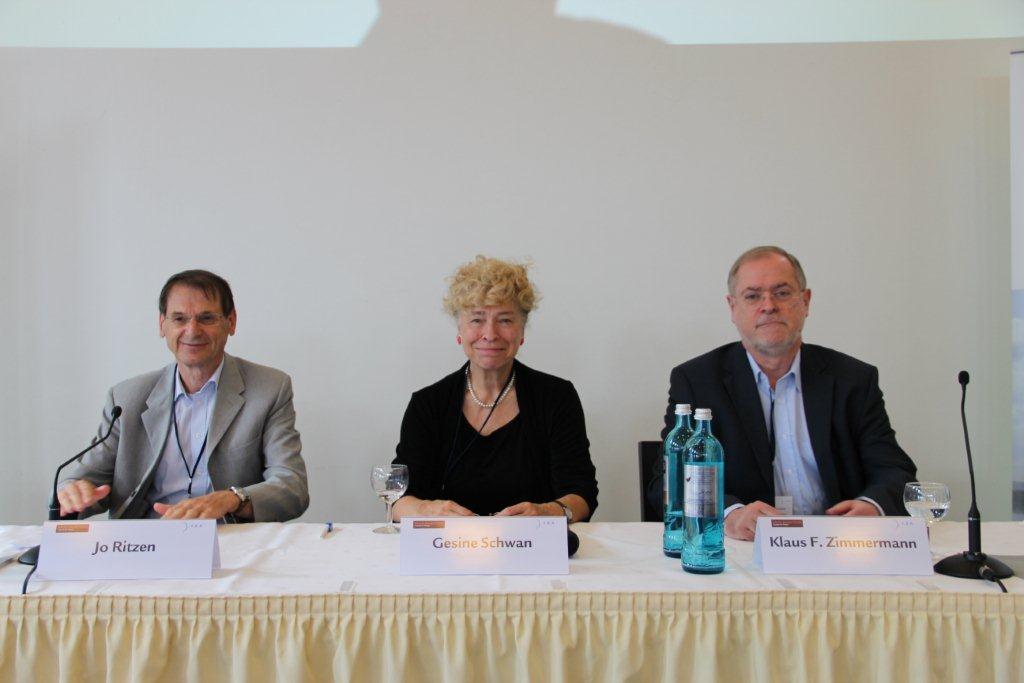
Picture below: Gesine Schwan, Jo Ritzen and Klaus F. Zimmermann debating the future of Europe and its labor markets at a conference in Bonn on July 17, 2013. One of the many joint activities preparing the book. It was Jo Ritzen who early on anticipated the upcoming crisis of Europe and its institutions. Gesine Schwan is a German political science professor, former President of the Viadrina European University, and member of the Social Democratic Party. Her party had nominated her twice as candidate for the German federal presidential elections.


http://www.klausfzimmermann.de/wp/wp-content/uploads/2017/05/img_20130717180520.jpg

Ends;

Hamermesh on the “Demand for Labor”

Oxford University Press (OUP) has just published the (2017) book “Daniel S. Hamermesh. Demand for Labor. The Neglected Side of the Market” edited by Corrado Giulietti and Klaus F. Zimmermann.
As the OUP website writes:
“The book collects articles published by Daniel Hamermesh between 1969 and 2013 dealing with the general topic of the demand for labor. The first section presents empirical studies of basic issues in labor demand, including the extent to which different types of labor are substitutes, how firms’ and workers’ investments affect labor turnover, and how costs of adjusting employment affect the dynamics of employment and patterns of labor turnover. The second section examines the impacts of various labor-market policies, including minimum wages, penalty pay for using overtime hours or hours worked on weekends or nights, severance pay for displaced workers, and payroll taxes to finance unemployment insurance benefits. The final section deals with general questions of discrimination by employers along various dimensions, including looks, gender and ethnicity, in all cases focusing on the process of discrimination and the behavior that results.”


GLO Fellow Giulietti and GLO President Zimmermann had edited the book in their past roles as IZA Research Director and IZA Director, respectively. The book is connected to the 2013 IZA Prize in Labor Economics given to Hamermesh by a prize committee consisting of George A. Akerlof, Corrado Giulietti, Richard Portes, Jan Svejnar and Klaus F. Zimmermann, which was chaired by the former IZA Director.


Ends;

GLO launches the GLO Clusters

The GLO and its GLO Network launch the GLO Research and Policy Clusters and the GLO Country Leads.

In line with the GLO’s philosophy the GLO clusters live through the initiative, active involvement and collaborative contributions of the GLO Network. The GLO has thematic research and policy cluster and geographical country leads.

GLO Research and Policy Clusters

GLO Research and Policy Clusters are thematic areas of research, research collaboration, evidence-based policy advice and dissemination of the GLO global network and virtual platform. The GLO Research and Policy Clusters address specific topics in research and challenges for policy, businesses and society within the GLO focus on global labor markets, demographic challenges and human resources.

The first 11 GLO Research and Policy Clusters are:

Cluster Cluster Lead
Economics of Brexit Jonathan Portes
Economics of Happiness Alpaslan Akay
Employment Structural Transitions      John Haisken-Denew
EU Mobility Martin Kahanec 
Gender, Gender Identity, Sexual Orientation and Labor Market Outcomes Nick Drydakis
Labor in Conflict, Fragile and Emergency Areas Tilman Brück 
Labor Markets and Redistributive Policies Olivier Bargain
Labor Reform Policies Marco Leonardi
School-to-Work Transitions Francesco Pastore
Southeast Asia Lead Niaz Asadullah
Technological Change and the Labor Market: Employment, Skills, and Wages Marco Vivarelli


GLO Country Lead

The GLO Country Lead is appointed for countries with GLO Activities or a large GLO Network. The GLO Country Lead is the national representative of the GLO, initiates GLO Activities in the respective country and acts as the national anchor and contact person for the GLO Network.

Country Lead
Italy Francesco Pastore
Malaysia Niaz Asadullah
Portugal Pedro Nuno Teixeira

EBES conference in Rome: GLO President Zimmermann delivers keynote on migration

The Global Labor Organization (GLO) and the Eurasia Business and Economics Society (EBES) are collaborating organizations. The keynote of the 22. EBES Conference on 24 May 2017 at Sapienza University in Rome will be delivered by  Klaus F. Zimmermann. The session will be chaired by Giuseppe Ciccarone, the Dean of the Faculty of Economics of Sapienza University. Zimmermann will speak about

“Migration for Development: From Challenges to Opportunities”.

Klaus F. Zimmermann, Princeton University and UNU-MERIT, Maastricht University, is also the President of the Global Labor Organization (GLO). The background paper to the keynote has been made available as GLO Discussion Paper No. 70.

Eurasia Business and Economics Society (EBES) was founded in early 2008 as a truly global organization. EBES brings together worldwide researchers and professionals in the areas of business and economics, encourages scholars, provides network opportunities for conference attendees to foster long-lasting academic co-operations and offers publication opportunities. In its successful work, EBES benefits from its high-ranked advisory board which consists of well-known academicians from all over the world. EBES has two academic journals which are both published by Springer: Eurasian Economic Review (EAER) and Eurasian Business Review (EABR)EAER focuses on economics and finance, while EABR deals with industry and business issues. Both journals are also supporting organizations of the GLO.

Ends;

Prestigious Rockefeller Foundation Fellowship for GLO President Zimmermann

Zimmermann is a 2017 Rockefeller Foundation Policy Fellow.

The Rockefeller Foundation Bellagio Residency Program offers distinguished academics, artists, thought leaders, policymakers, and practitioners a serene setting conducive to focused, goal-oriented work, and the unparalleled opportunity to establish new connections with fellow residents from a wide array of backgrounds, disciplines, and geographies. The hospitality and impact of The Bellagio Center in Italy has been legendary.

Klaus F. Zimmermann, Princeton University and UNU-MERIT, Maastricht University, has been granted Rockefeller Foundation Policy Fellow to visit the Bellagio Center in October 2017 to execute his research and discuss it with his fellow residents. Zimmermann, who is also the President of the Global Labor Organization (GLO), will work on migration and global labor economics.

Ends;

GLO DP: April Top Downloads – 2,500

In April the GLO Discussion Paper Series experienced nearly 2500 Downloads totalling to 4000 Downloads since its launch in March 2017.

Read the GLO Discussion Papers!

The Top 10 downloaded GLO Discussion Papers for April 2017 are – provided by EconStor:

GLO DP 32 Smog in Our Brains: Gender Differences in the Impact of Exposure to Air Pollution on Cognitive Performance  – Download PDF
by Chen, Xi & Zhang, Xiaobo & Zhang, Xin

2 GLO DP 44 Returns to Postgraduate Education in Portugal: Holding on to a Higher Ground? – Download PDF
by Almeida, André & Figueiredo, Hugo & Cerejeira, João & Portela, Miguel & Sá, Carla & Teixeira, Pedro

3 GLO DP 46  Challenged by Migration: Europe’s OptionsDownload PDF
by Constant, Amelie F. & Zimmermann, Klaus F

4 GLO DP 30 Novelty, Knowledge Spillovers and Innovation: Evidence from Nobel Laureates  – Download PDF
by Ham, John C. & Weinberg, Bruce A.

5 GLO DP 53 The Impact of Social Pensions on Intergenerational Relationships: Comparative Evidence from China Download the PDF
by Chen, Xi & Eggleston, Karen & Ang, Sun

6 GLO DP 57 The evolution of inequality in Latin America in the 21st century: What are the patterns, drivers and causes?  Download the PDF
by Bogliacino, Francesco & Rojas Lozano, Daniel

7 GLO DP 33 How Immigrants Helped EU Labor Markets to Adjust during the Great Recession  – Download PDF
by Kahanec, Martin & Guzi, Martin

8 GLO DP 52 Back to Bentham, Should We? Large-Scale Comparison of Experienced versus Decision Utility Download the PDF
by Akay, Alpaslan & Bargain, Olivier B. & Jara, H. Xavier

9 GLO DP 56 Happiness in the Air: How Does a Dirty Sky Affect Mental Health and Subjective Well-being? – Download the PDF
by Zhang, Xin & Zhang, Xiaobo & Chen, Xi

10 GLO DP 51 The Effects of Productivity and Benefits on Unemployment: Breaking the Link – Download the PDF
by Brown, Alessio J. G. & Kohlbrecher, Britta & Merkl, Christian & Snower, Dennis J.

We wish to thank the GLO Fellows for their support and submissions as well as our Network members ZBW – Leibniz Information Centre for Economics and RePEc for their Support.

GLO Discussion Papers are research and policy papers from the GLO Network and are provided in cooperation with EconStor, a service of the ZBW – Leibniz Information Centre for Economics, and RePEc.
GLO Discussion Papers are among others listed in RePEc – see IDEAS and EconPapers.
Any opinions expressed in the GLO Discussion Paper Series are those of the author(s) and not those of the GLO and while they may contain specific views on policy, the GLO itself does not take any institutional policy positions.

Free Access to PanelWhiz for the GLO Network

The Global Labor Organization (GLO) collaborates with PanelWhiz to provide special access for the GLO Network (see below GLO Special Offer) to the data extraction tool written in Stata for use with stata panel datasets. Thereby, the GLO is expanding its activities in providing data resources for its network. In addition to the  existing collaboration with WageIndicator  – promoting the collection of data in all countries and access – the collaboration with PanelWhiz offers a Special data tool.

PanelWhiz is written by John Haisken-DeNew and Markus Hahn (University of Melbourne, Australia). See http://www.panelwhiz.com for more information.

More than 10 years in operation, PanelWhiz simplifies selecting and extracting data using a common graphical user interface and it is used by more than 400 researchers internationally. PanelWhiz supports datasets such as the German SOEP, the American HRS, CPS, SIPP, the British BHPS, the Australian HILDA, LSAC, LSIC, BNLA, SIH and the Russian RLMS to name a few.

PanelWhiz is “charity-ware”, in which researchers donate $20 US directly to UNICEF to use PanelWhiz for a supported dataset. The donation is valid for a distribution of the data, typically one or two years, depending on the dataset.

PanelWhiz GLO SPECIAL OFFER:

GLO Network members are not required to make a UNICEF donation for the first 3 datasets EACH CALENDAR YEAR. (Most users do not use more than 3 datasets in PanelWhiz.) It is sufficient to mention upon ordering that one is a member of  the GLO network and provide the link to your GLO Profile. Year to year updates are made automatically over the internet. This offer is available on a trial basis until Dec 31, 2017.

Economics Conference in Croatia: Deadline for Abstracts is May 15, 2017

GLO supports a conference organized by GLO Fellow Dejan Kovač and the Experimental Economic Lab (excel). GLO Fellows Francisco Gallego and Stepan Jurajda as well as GLO President Klaus F. Zimmermann are members of the Scientific Board of excel.

Note that the first step is a submission of an abstract by May 15, 2017.

Agenda 2030: Economics in a Changing World, Umag, Croatia, August 27-28 2017

The Experimental Economics Lab presents the 1st International Scientific Conference on Economics in a Changing World. In the past decade, we have witnessed how different sets of events can trigger global economic changes. From the aftermath of the 2008 financial crisis to today’s increasing number of political and conflict-related shocks, no nation’s economy has proven resistant to these changes. The complexity of interactions between economic and political factors has increased and these elements ought to be incorporated into future policies. A new development agenda should carry forward the spirit of active response to changes, seeking an answer to the questions of what should and can be done to anticipate changes and transform economies for the better. Practical focus of the Conference is highlighting the agenda of challenges, topics of migrations, national security, poverty, education, economic growth and healthcare to fulfil our vision of promoting sustainable development worldwide.


The deadline for abstracts is 15th of May. Please send in your abstracts and present on out prestigious conference. Topics of this years’s conference are:

  • Financial Economics
  • Health, Education and Welfare
  • Industrial Organization
  • International Economics
  • International Political Economy
  • Labor and Demographic Economics
  • Macroeconomics and Monetary Economics
  • Network science
  • Public Economics

Please send your abstracts to: abstracts@exelconference.eu

CALL FOR PAPERS

Important info

Due to high tourist demand during our conference we advise both presenting authors and participants to register and book early. Upon paying the registration fee, you will receive a discount coupon for accommodation in one of our three luxury hotels. Please use the coupon and book your accommodation through our website to utilize our up to 30% discounts. For late bookings we cannot vouch discounts or accommodations in our sponsored hotels.

Present a Paper | Deadline for complete papers is 1st of July, 2017.

Confirmation/acceptance e-mails will go out till 20th of July.

Ends;

GLO Fellow Phani Wunnava directs Symposium on Remittances

Remittances provide developing economies with the means to grow. Therefore, migration contributes to development. And migration policy is development policy.

The 2017 David K Smith Symposium at Middlebury College deals with the “Economics of Remittances”. GLO Fellow Phanindra V. Wunnava of Middlebury College is the local organizer.  The keynote speech is given by GLO Fellow Dilip Ratha of the World Bank. The set of prominent researchers speaking (see program below) includes also Klaus F. Zimmermann, Princeton University, UNU-MERIT and Bonn University, who is the President of the Global Labor Organization (GLO).

Conference program

Tentative_Middlebury_Remittances_April_29th_2017_Symposium

David K Smith ‘42 Economics Symposium at Middlebury College
“Economics of Remittances”

Saturday, April 29th, 2017 [Robert A. Jones ’59 House Conference Room]
Welcome Remarks: 9:00 to 9:15 AM President Laurie L. Patton [Middlebury College]

I. AM Session 9:20 AM to 11:20 AM Remittances, Crime, and Racial Wealth Gap
Stephen Brito [International Monetary Fund]
“Remittances and the Impact on Crime in Mexico”
Darrick Hamilton [New School of Social Research]
“The Racial Wealth Gap: the roles of Remittance, Inheritance, Incarceration and Education”

Coffee Break 11:25 AM to 11:40 AM

II. Keynote Address: 11:45 AM to 12:55 PM Dilip Ratha [World Bank and GLO]
“The Global Agenda on Remittances”
Lunch 1:00 PM to 1:55 PM

III. PM Session: 2:00 PM to 4:00 PM Remittances, Income Inequality, and Well-being
James Bang [St. Ambrose University], Aniruddha Mitra [Bard College], and Phanindra V.
Wunnava [Middlebury College and GLO]
“Hollowing out the Middle? Remittances and Income Inequality in Nigeria”
Klaus F. Zimmermann [Princeton University, Bonn University, UNU-MERIT and GLO]
“Remittances and Well-being”

Closing Remarks: Phanindra V. Wunnava [Middlebury College]

Ends;

GLO Fellow James F. Hollifield debates Migration Policy in Trump’s America

In a Policy Roundtable of The International Security Studies Forum (ISSF) published on 22 April 2017, experts were debating “Immigration and Refugee Policy in Donald Trump’s America“.

GLO Fellow James F. Hollifield, Professor of Political Science at the Southern Methodist University and Director of its Tower Center for Political Studies, contributed an essay to this panel on “Back to the Future: Trump’s Executive Orders on Migration and Refugees“.

Ends;

The US-Mexican Wall: “Adam Ruins Everything” supported by GLO Fellow Doug Massey

GLO Fellow Douglas S. Massey is Henry G. Bryant Professor of Sociology and Public Affairs and Director, Office of Population Research, at Princeton University. He has published a large number of research papers on Mexican-US migration suggesting that the border protection activities in the past have increased illegal migration from Mexico  to the US because it stopped circular migration flows.

The new US government has now promised to build a wall to protect the US-Mexican border. This project was recently examined in the US TV show “Adam Ruins Everything“, explaining why the wall would increase migration.

Doug Massey recently made a cameo appearance on Adam Ruins Everything in a segment about the proposed border wall.

Doug Massey

See the IZA World of Labor article on “Circular Migration written by GLO President Klaus F. Zimmermann (and IZA’s Founding Director) for a broader analysis of the circular migration issues with a global perspective.

Ends;

Top 10 Downloads – GLO Discussion Papers

Within a month since its Launch the GLO Discussion Papers already experienced nearly 1500 Downloads.

Read the GLO Discussion Papers!

The Top 10 downloaded GLO Discussion Papers so far are – provided by EconStor:

1 GLO DP 44 Returns to Postgraduate Education in Portugal: Holding on to a Higher Ground? – Download PDF
by Almeida, André & Figueiredo, Hugo & Cerejeira, João & Portela, Miguel & Sá, Carla & Teixeira, Pedro

2 GLO DP 32 Smog in Our Brains: Gender Differences in the Impact of Exposure to Air Pollution on Cognitive Performance  – Download PDF
by Chen, Xi & Zhang, Xiaobo & Zhang, Xin

3 GLO DP 13 New regional identities in a global world  – Download PDF
by Bailly, Antoine

4 GLO DP 14 The Productivity Impact of Business Mobility: International Evidence  – Download PDF
by Piva, Mariacristina & Tani, Massimiliano & Vivarelli, Marco

5 GLO DP 16 Globalization, Technological Change and Skills: Evidence from Ethiopia  – Download PDF
by Haile, Getinet & Srour, Ilina & Vivarelli, Marco

6 GLO DP 18 R&D Expenditures and Employment: Evidence from Europe  – Download PDF
by Piva, Mariacristina & Vivarelli, Marco

7 GLO DP 12 Much ado about nothing? The wage penalty of holding a Ph.D. degree but not a Ph.D. job position   Download PDF
by Gaeta, Giuseppe Lucio & Lavadera, Giuseppe Lubrano & Pastore, Francesco

8 GLO DP 4 On Asymmetric Migration Patterns from Developing Countries – Download PDF
by Acharyya, Rajat & Kar, Saibal

9 GLO DP 3 Economic Shocks and Crime: Evidence from the Brazilian Trade LiberalizationDownload PDF
by Dix-Carneiro, Rafael & Soares, Rodrigo R. & Ulysse, Gabriel

10 GLO DP 26 Americans’ Responses to Terrorism and Mass-Shooting: Evidence from the American Time Use Survey and Well-Being Module  – Download PDF
by Clark, Andrew & Stancanelli, Elena


We wish to thank the GLO Fellows for their support and submissions as well as our Network members ZBW – Leibniz Information Centre for Economics and RePEc for their Support.

GLO Discussion Papers are research and policy papers from GLO Fellows and are provided in cooperation with EconStor, a service of the ZBW – Leibniz Information Centre for Economics, and RePEc.
GLO Discussion Papers are among others listed in RePEc – see IDEAS and EconPapers.
Any opinions expressed in the GLO Discussion Paper Series are those of the author(s) and not those of the GLO and while they may contain specific views on policy, the GLO itself does not take any institutional policy positions.

GLO Supports Events in Romania & Paper Call

GLO activists are involved in two important scientific events in Romania in Bucharest (May 11-12, 2017) and Brasov (October 19-21, 2017). There is a GLO focus to support and foster research in and about Romania. See also the new engagement of the GLO President.

Recent Advances in Economic and Social Research, Institute for Economic Foresting Bucharest, May 11 and 12, 2017

The 3rd International Conference Recent Advances in Economic and Social Research will take place on May 11-12, 2017 in the Institute for Economic Foresting in Bucharest organized by members of the Institute. GLO President Klaus F. Zimmermann and GLO Fellow Lucian Liviu Albu are members of the Honorary Board of the event; GLO Fellow Adrian Cantemir Călin is the Program Chair of the event.

ISEG 2017: Inclusive and Sustainable Economic Growth. Challenges, Measures and Solutions,  Transilvania University of Brasov, October 19-21, 2017

The Faculty of Economic Sciences and Business Administration within Transilvania University of Brasov, in collaboration with the Institute for Economic Forecasting within the National Institute for Economic Research “Costin C. Kiritescu” of the Romanian Academy cordially invites you to submit research papers for presentation and discussions at the third edition of the International Conference „Inclusive and sustainable economic growth. Challenges, measures and solutions” (ISEG 2017). GLO Fellows Monica Raileanu Szeles and Lucian Liviu Albu of the Institute for Economic Forecasting are involved in organizing the conference.
The conference will be hosted by Transilvania University of Brasov and will be held 19-21 October 2017 in the Transilvania University Hall, Street Iuliu Maniu no. 47A, Brasov.
The meeting will be an excellent opportunity for academics, researchers and doctoral students to present new research results and to discuss challenging issues on the topics of conference. The aim of this new series of conferences is to gather research interests and to stimulate collaborative research around actual macro- and microeconomic topics.
Deadline for abstract submission is May 15, 2017, and for full paper submission is September 1, 2017. See also the Call for Papers.

The GLO also intends to organize a special session on human resources issues. GLO members who may wish to be considered for such a session should contact klaus.f.zimmermann@gmail.com with a title and abstract as soon as possible.

Ends;

Call for Papers: GLO Special Sessions in Malaysia on Labor, Human Capital and Migration Issues

The Global Labor Organization (GLO) is organizing a special GLO sessions at the following events in Malaysia:

Inaugural International Conference on Applied Economics and Policy (ICAEP) 2017, Kuala Lumpur, August 21-22, 2017

The Global Labor Organization (GLO) is organizing a special session on labor market and human capital related issues in South and South-East Asia as part of the inaugural International Conference on Applied Economics and Policy (ICAEP) 2017. It’ll be organized by the Faculty of Economics and Administration (FEA) at the University of Malaya, the oldest economics faculty in Malaysia. The conference is expected to attract a large number of academics, researchers and policy makers from ASEAN countries. The conference venue, the University of Malaya, is located at the heart of Kuala Lumpur. The special session will be chaired by GLO Fellow, Professor Niaz Asadullah of the University of Malaya (contact email: m.niaz@um.edu.my). Interested contributors are requested to submit the title and abstract (400 words) of their paper with full contact details of all authors. Full paper is also welcome, if available. The submission deadline is 30th April 2017. Please select “GLO session” if submitting proposals directly through the conference site. In total, 4 papers will be selected for the GLO session. In case of a large number of high quality submissions, an additional session may be planned. For further details on the conference, please visit http://umconference.um.edu.my/icaep2017

3rd International Conference on Social Protection – Migration, Development and Social Welfare: Implications and New Insights, Kuala Lumpur, October 10-11, 2017

The Global Labor Organization (GLO) is organizing a special session on labor and migration issues in South and South-East Asia as part of the “3rd International Conference on Social Protection – Migration, Development and Social Welfare: Implications and New Insights“. The conference is scheduled to take place from 10th – 11th October 2017 in Kuala Lumpur and will be organised by the Social Security Research Centre (SSRC), Faculty of Economics and Administration, University of Malaya. The special session will be chaired by GLO Fellow, Professor Niaz Asadullah of the University of Malaya (contact email: m.niaz@um.edu.my). Interested contributors are requested to email the title and abstract (400 words) of their paper with full contact details of all authors to Professor Asadullah. Full paper is also welcome, if available. In total, 4 papers will be selected for the GLO session. In case of a large number of high quality submissions, an additional session may be planned. For further details on the conference, please visit http://ssrc.um.edu.my/conference/#sthash.nQYYbUtX.dpuf


Milestone: 500 Individual GLO Network Members

Within less than a month of the launch of the GLO and  its Network we have reached another significant  milestone:

The GLO Network reached over 500 individual members!

The GLO Network currently consists of 505 individuals and 24 organizations covering 84 countries.

We wish to thank the GLO Fellows and GLO Affiliates as well as our GLO Member Organizations for their support and contributions to the GLO and ist Network.

The Global Labor Organization (GLO) is supported by individuals (fellows and affiliates) as well as organizations with a thematic interest and a strong ambition to contribute to an effective global network and to benefit from it.

The GLO lives and thrives with its network’s active involvement and contributions.

Any individual with an explicit thematic interest can join as GLO Affiliate. Please help us to spread the word about the Global Labor Organization – anybody can register: Join the GLO.

The GLO aims to establish itself as the world’s leading and global research and policy network on labor, demographics and human resources.

The Global Labor Organization (GLO) is an international, independent, non-partisan and non-governmental organization that has no institutional position. The GLO functions as an global network and virtual platform for researchers, policy makers, practitioners and the general public interested in scientific research and its policy and societal implications on global labor markets, demographic challenges and human resources.

Daily Mail Coverage of GLO Fellow Xi Chen’s GLO DP “Smog in our Brains”

The Daily Mail covered the findings of GLO Fellow Xi Chen‘s GLO Discussion Paper No. 32 “Smog in Our Brains: Gender Differences in the Impact of Exposure to Air Pollution on Cognitive Performance“:

Read the article: Pollution in cities SHRINKS the brains of older men and damages their reasoning and language skills

Chen, Xi; Zhang, Xiaobo; Zhang, Xin (2017) : Smog in Our Brains: Gender Differences in the Impact of Exposure to Air Pollution on Cognitive Performance, GLO Discussion Paper, No. 32.

While there is a large body of literature on the negative health effects of air pollution, there is much less written about its effects on cognitive performance for the whole population. This paper studies the effects of contemporaneous and cumulative exposure to air pollution on cognitive performance based on a nationally representative survey in China. Bymerging a longitudinal sample at the individual level with local air-quality data according to the exact dates and counties of interviews, we find that contemporaneous and cumulative exposure to air pollution impedes both verbal and math scores of survey subjects. Interestingly, the negative effect is stronger for men than for women. Specifically, the gender difference is more salient among the old and less educated in both verbal and math tests.

GLO Discussion Papers are provided in cooperation with EconStor, a service of the ZBW – Leibniz Information Centre for Economics.


The Future of Latinos in the US: GLO Fellows Constant & Massey in Yale

GLO Fellows Constant and Massey give keynotes at Yale University

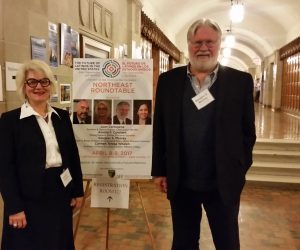
GLO Fellows Amelie F. Constant (Princeton University and UNU-MERIT) and Douglas S. Massey (Princeton University) will  give keynotes at Yale University on April 8-9, 2017 at the Northeast Roundtable for the Future of Latinos conference – a project of the American Bar Association. The other keynote speakers are Juan Cartagena (President and General Counsel of LatinoJustice) and Carmen Teresa Whalen (Williams College).

Constant and Massey have co-authored the White PaperLatinos in the Northeastern United States: Trends and Patterns.” It is now available as GLO Discussion Paper No. 60.

Based on U.S. census data, Latinos in the Northeast grew from 1.9 million in 1975 to 7.7 million in 2015, constituting 10.5% of the regional population in 2015. They are predominantly documented and the majority is U.S. citizens.


Ends;

Milestone: 50th GLO Discussion Paper Published – Top 10 Downloads

Within less than a month of the launch of the GLO, its Network and the GLO Discussion Paper Series we have reached an important Milestone:

50 GLO Discussion Papers have been published – and many more to come!

So far the GLO Discussion Papers have experienced over 700 Downloads.

We wish to thank the GLO Fellows for their support and submissions as well as our Network members ZBW – Leibniz Information Centre for Economics and RePEc for their support.

Read the GLO Discussion Papers!

The Top 10 downloaded GLO Discussion Papers are – provided by RePEc for 03/2017:

1 GLO DP 32 Smog in Our Brains: Gender Differences in the Impact of Exposure to Air Pollution on Cognitive Performance  – Download PDF
by Chen, Xi & Zhang, Xiaobo & Zhang, Xin

2 GLO DP 24 Changes in Bargaining Status and Intra-Plant Wage Dispersion in Germany. Much Ado about Nothing?  – Download PDF
by Addison, John T. & Teixeira, Paulino & Evers, Katalin & Kölling, Arnd

3 GLO DP 11 Vulnerability to Poverty: Tajikistan during and after the Global Financial Crisis – Download PDF
by Gang, Ira N. & Gatskova, Kseniia & Landon-Lane, John & Yun, Myeong-Su

4 GLO DP 3 Economic Shocks and Crime: Evidence from the Brazilian Trade Liberalization Download PDF
by Dix-Carneiro, Rafael & Soares, Rodrigo R. & Ulysse, Gabriel

5 GLO DP 5 Sources of the Union Wage Gap: Results from High-Dimensional Fixed Effects Regression Models Download PDF
by Addison, John T. & Portugal, Pedro & Vilares, Hugo

6 GLO DP 4 On Asymmetric Migration Patterns from Developing Countries – Download PDF
by Acharyya, Rajat & Kar, Saibal

6 GLO DP 19 The chips are down: The influence of family on children’s trust formation  – Download PDF
by Giulietti, Corrado & Rettore, Enrico & Tonini, Sara

8 GLO DP 14 The Productivity Impact of Business Mobility: International Evidence  – Download PDF
by Piva, Mariacristina & Tani, Massimiliano & Vivarelli, Marco

8 GLO DP 40 Is the gender pay gap in the US just the result of gender segregation at work?  – Download PDF
by Meara, Katie & Pastore, Francesco & Webster, Allan

8 GLO DP 13 New regional identities in a global world  – Download PDF
by Bailly, Antoine

GLO Discussion Papers are research and policy papers from GLO Fellows and are provided in cooperation with EconStor, a service of the ZBW – Leibniz Information Centre for Economics, and RePEc.
GLO Discussion Papers are among others listed in RePEc – see IDEAS and EconPapers.
Any opinions expressed in the GLO Discussion Paper Series are those of the author(s) and not those of the GLO and while they may contain specific views on policy, the GLO itself does not take any institutional policy positions.

Central European University (CEU) under threat

Budapest, Hungary: The Central European University (CEU) fights for survival.

“Concerned citizens in Hungary, Europe, and around the world, express their solidarity with Central European University (CEU) and express concern at proposed legislative changes to CEU’s status in Hungary. These changes would endanger the academic freedom vital for CEU’s continued operation in Budapest and would strike a blow against the academic freedom that enables all universities, including those in Hungary, to flourish.

In twenty-five years, Central European University has established itself as a private international university with a global reputation for teaching and research in the social sciences and humanities. It attracts students from 117 countries and faculty from 40. The University as a whole is accredited by the US Middle States Commission on Higher Education (MSCHE), and its masters and doctoral programs are registered by the New York State Education Department (NYSED). Its programs are also certified by appropriate Hungarian authorities and it has complied in full with all Hungarian laws.

In international rankings, some of CEU’s departments are rated among the top 50 in the world. CEU also makes Hungary a regional leader in winning highly competitive European Research Council grants. Several of its faculty, in fields as various as medieval studies, network and cognitive science, have won the most prestigious awards in their disciplines.

CEU is a valued member of the international academic community and its presence in Hungary has added to the reputation of Hungarian academic life on the international stage. The government’s proposed legislation to alter its statute of operation in Hungary would compromise its academic freedom and set a dangerous precedent for academic life in other countries.

Those who share those concerns should urge the government to withdraw the proposed legislation and enter consultation with CEU, bearing in mind the damage such legislation might do to Hungary’s well-founded international academic reputation, to its relationships with its European partners and with the United States.”

Adapted text following the proposed letter in https://www.ceu.edu/node/17842 , where you also find the addresses where to send statements of solidarity.

Supporting the struggle for survival of CEU is at the core of the vision of the Global Labor Organization (GLO), although the GLO has no institutional position. The President of the GLO, Klaus F. Zimmermann, as its Director, Alessio Brown, and many members of the GLO, which assembles about 500 distinguished scientists in more than 80 countries around the world, do support this struggle.

What can individuals do?

Write a letter as suggested in https://www.ceu.edu/node/17842

Show your support for academic freedom on: #IStandWithCEU

Ends;

GLO supporting Journals JOPE and REHO articles strongly represented in Springer’s Economic Stars 2017

The Ecomomics Stars present the top cited, highly downloaded, and most shared journal articles published 2016 in Springer economics journals.

GLO Supporter the Journal of Population Economics has 2 articles in the top 15 articles most shared in the Social Web, 2 articles among the 15 top cited articles and 3 in the 15 highly dowloaded articles.

GLO supporter the Society of Economics of the Household‘s (SEHO) Review of Economics of the Household has 3 articles in the top 15 articles most shared in the Social Web.

Enjoy free access to these articles!

Among the top 15 articles most shared in the Social Web:

Unconditional government social cash transfer in Africa does not increase fertility, by Tia Palermo, Sudhanshu Handa, Amber Peterman, Leah Prencipe, David Seidenfeld, on behalf of the Zambia CGP Evaluation Team, Journal of Population Economics October 2016, Volume 29, Issue 4,  pp 1083–1111.

Immigration and crime: evidence from victimization data, by Luca Nunziata, Journal of Population Economics July 2015, Volume 28, Issue 3,  pp 697–736.

Why has the prevalence of obesity doubled?, by Charles L. Baum, Shin-Yi Chou, Review of Economics of the Household , Volume 14, Issue 2, pp 251–267.

The increasing happiness of US parents, by Chris M. Herbst, John Ifcher, Review of Economics of the Household September 2016, Volume 14, Issue 3, pp 529–551.

Family structure and young adult health outcomes, by Alexander N. Slade, Andrea H. Beller, Elizabeth T. Powers, Review of Economics of the Household , Volume 15, Issue 1, pp 175–197


Among the 15 top cited articles:

Migration and young child nutrition: evidence from rural China, by Ren Mu, Alan de Brauw, Journal of Population Economics July 2015, Volume 28, Issue 3,  pp 631–657.

Can’t buy mommy’s love? Universal childcare and children’s long-term cognitive development, by Christina Felfe, Natalia Nollenberger, Núria Rodríguez-Planas, Journal of Population Economics April 2015, Volume 28, Issue 2,  pp 393–422.


Among the 15 highly downloaded articles

Parental choice, neighbourhood segregation or cream skimming? An analysis of school segregation after a generalized choice reform, Anders Böhlmark, Helena Holmlund, Mikael Lindahl, Journal of Population Economics October 2016, Volume 29, Issue 4,  pp 1155–1190.

The importance of family background and neighborhood effects as determinants of crime, Karin Hederos Eriksson, Randi Hjalmarsson, Matthew J. Lindquist, Anna Sandberg, Journal of Population Economics January 2016, Volume 29, Issue 1,  pp 219–262.

Immigration and prices: quasi-experimental evidence from Syrian refugees in Turkey, by Binnur Balkan, Semih Tumen, Journal of Population Economics July 2016, Volume 29, Issue 3,  pp 657–686.


The Global Labor Organization (GLO) is affiliated with organizations and institutions with a thematic interest and a strong ambition to contribute to an effective global network and to benefit from it.