Category Archives: News

REMINDER: Call for Papers on “Sexual Orientation and the Labor Market”. Deadline for Research Journal is 31 August 2018

REMINDER: Call for papers for a special issue of the International Journal of Manpower  on: “Sexual Orientation and the Labor Market

Submissions will be accepted until August 31, 2018.

Edited by

Nick Drydakis (Anglia Ruskin University, University of Cambridge, IZA, and GLO) and Klaus F. Zimmermann (UNU-MERIT, Maastricht University, CEPR and GLO)

An initiative of the Global Labor Organization (GLO), this project is related to the GLO Thematic Cluster on “Gender, Gender Identity, Sexual Orientation and Labor Market Outcomes” headed by Nick Drydakis.

Despite the enactment, in English speaking countries and the EU, of labor legislation against discrimination in the labor market based on sexual orientation, LGBTI (lesbian, gay, bisexual, trans and intersex) people continue to experience occupational access constraints, lower job satisfaction, wage discrimination (especially gay men), and more bullying and harassment than their heterosexual counterparts (Drydakis, 2014; Valfort, 2017).

Studies for the period 1989–2014 suggest that gay men receive lower wages than heterosexual men of comparable education, skills, and experience. For instance, studies find that gay men earn from 4–5% less than heterosexual men in the Netherlands, France, Greece, and the UK and up to 12–16% less in Canada, Sweden, and the US (Drydakis, 2014). Whether wage discrimination against gay men exists in other regions is of great interest and ascertaining this is of importance for policy interventions. In addition, whether wage discrimination lessens over time in response to policy interventions and legislation is hard to determine in the absence of relevant studies. It is not yet clear whether prejudice-based and/or statistical discrimination is the more appropriate framework for the study of labor discrimination against LGBTI people.

The available studies on sexual orientation and job satisfaction highlight that in Australia, Canada, and Greece, both gay men and lesbians experience lower job satisfaction than do their otherwise similar heterosexual counterparts (Drydakis, 2014). Because gay and lesbian employees face severe workplace harassment and bullying, these conditions may affect their workplace experience evaluations (Drydakis, 2014). Whether factors other than workplace harassment cause gay and lesbian employees’ dissatisfaction requires examination. Also, for instituting appropriate policy actions, it is important to determine whether these job satisfaction differences suffered by sexual orientation minorities exist in other countries.

In general, the dearth of studies makes it difficult to examine how education, occupation, industrial relations, region, core socio-economic characteristics, personality and mental health traits moderate the relationship between sexual orientation and labor market outcomes (Drydakis, 2014). Indeed, although studies suggest that lesbians face prejudice in the labor market, some studies estimate that lesbians earn more than comparable heterosexual women. Lesbians have been found to earn 3% more in the Netherlands, 8% more in the UK, 11% more in Germany, 15% more in Canada, and 20% more in the US. Whether personality characteristics, coping strategies, occupational choices, family structures and/or region positively affect lesbians’ wages is still an open question.

In addition, quantitative research on employment outcomes is scarce for trans people (Drydakis, 2017). A representative study suggests that trans people tend to suffer higher unemployment rates than those reported, in other studies, for the general U.S. population (Leppel, 2016). In addition, the interaction between trans identity, and sexual orientation, and the effects of this on employment outcomes is under-examined (Drydakis, 2017). Whether explicit, legislative employment protection against discrimination on the ground of a trans identity has an effect on employment outcomes has also received little attention (Drydakis, 2017).

Given the aforementioned lack of sufficient literature, the editors welcome empirical papers on labor economics which have a clear and highlighted added value, and solid policy implications, on the following general areas:

  • Testing, in under-examined geographical regions, for wage discrimination based on sexual orientation.
  • Empirically testing and disentangling the forms of employment discrimination (i.e. prejudice-based, and/or statistical discrimination) against LGBTI people.
  • Examining the relationship between sexual orientation, personality characteristics, mental health and employment outcomes.
  • Assessing how moderators (i.e. human capital, educational choices, occupations, family structure, industrial relations etc.) affect the relationship between sexual orientation and labor market outcomes.
  • Testing the relationship between sexual orientation, past/present victimization and labor market outcomes.
  • Quantifying the relationship between sexual orientation and job satisfaction.
  • Evaluating the impact of the legal recognition of same-sex couples on labor market outcomes.
  • Evaluating the impact of employment legislation against sexual orientation and trans identity discrimination on labor market outcomes.
  • Quantifying employment bias against trans people.
  • Examining the interaction between trans identities, sexual orientation and labor market outcomes.

Submissions will be accepted until the 31th of August 2018. They should be made using ScholarOne Manuscripts, the online submission and peer review system: http://mc.manuscriptcentral.com/ijm. Before submission, please verify that you have carefully read the Author guidelines of the Journal. While making your submission, please specify the title of the current call for papers. See also the forthcoming call on the journal website.

Nick Drydakis (Anglia Ruskin University, University of Cambridge, IZA and GLO)
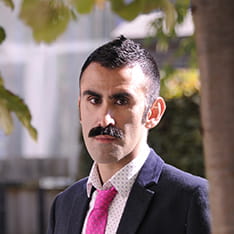
Image result for Nick Drydakis pictures

and Klaus F. Zimmermann (UNU-MERIT, Maastricht University, CEPR and GLO)
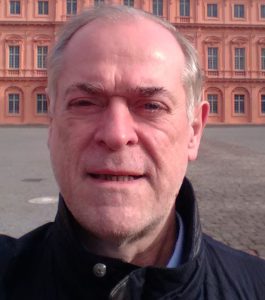
References:

Drydakis N. (2014). Sexual orientation and labor market outcomes. IZA World of Labor: 111. DOI: 10.15185/izawol.111

Drydakis N. (2017). Trans people, well-being, and labor market outcomes. IZA World of Labor: 386. DOI: 10.15185/izawol.386

Leppel, K. (2016). The labor force status of transgender men and women. International Journal of Transgenderism,  Vol. 17, No. (3−4), pp. 155−164.

Valfort, M. (2017). LGBTI in OECD countries: A review. OECD Social, Employment and Migration Working Papers, No. 198, OECD Publishing, Paris. DOI: 10.1787/d5d49711-en

Ends;

Germany, Europe at the Crossroads: German Social Democrats vote for further negotiations about a Grand Coalition

Bonn – Germany. Sunday, 21 January 2018: (An analysis in German.) A narrow majority of 56% of the delegates of the center-left Social Democratic Party (SPD) has agreed to start negotiations about the continuation of the currently ruling “grand coalition” with Merkel’s center-right Christian Democratic Union (CDU) party. After those negotiations all SPD party members will have to vote on a potential government contract. It therefore will take still substantial time until Germany may return to a stable government. While doing economically very well and being the respected leader of Europe, the continent’s largest economy will  probably be without a formal government for at least half a year since the last elections.

As GLO – President Klaus F. Zimmermann has stated: “Over the last decade, the SPD as a party had failed to identify with the successes of their members in government and to communicate well the value of their achievements to their voters. It remains to be seen how the party leaders will manage this challenge in the future. An unstable and potentially collapsing Europe badly needs a stable Germany.”

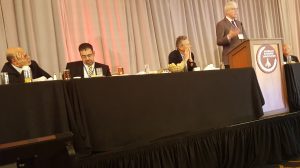
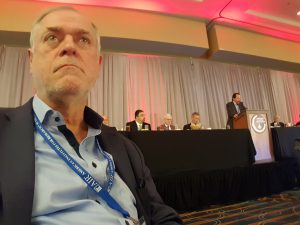
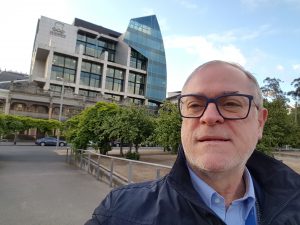
GLO President Zimmermann in front of the conference center in Bonn close to river Rhine observing the event.

Ends;

ASSA Meeting Celebrates Nobel Prize Winners in Economics

The American Economic Association (AEA), in conjunction with 58 associations in related disciplines known as the Allied Social Sciences Associations (ASSA), holds a three-day meeting each January to present papers on general economics topics. The event which is the largest meeting of academic economists in the world typically brings together more than 13,000 individuals from all parts of the world.  ASSA 2018 took place in Philadelphia on January 5 -7.

Many GLO Fellows were at ASSA 2018 to present their work and engage in academic exchange and informal meetings. GLO President Klaus F. Zimmermann (UNU-MERIT, Maastricht and Bonn University) was also present to discuss and develop GLO issues in many informal meetings and gatherings. One prominent issue of the conference dealt with: Should Economists Make More Use of Direct Data on Subjective Wellbeing?”

The Nobel Laureate Luncheon on Saturday, January 6, was organized in the honor of Oliver Hart and Bengt Holmström. See Bengt Holmström speaking, Oliver Hart right; and from the left: Ben Bernanke, Daron Acemoglu and Olivier Blanchard.

And from the left: GLO President Klaus F. Zimmermann, Daron Acemoglu, Bengt Holmström, Olivier Blanchard, Luigi Zingales (speaking) and Oliver Hart.


Ends;

Berlin Conference: EBES-25 is jointly organized with FOM Berlin and the GLO

The 25th Conference of the Eurasia Business and Economics Society (EBES) will take place on May 23-25, 2018 in Berlin/Germany. It is jointly organized with the Global Labor Organization (GLO) and hosted by the FOM University in their Berlin study center. A previous announcement.

Call for Papers

25th EBES Conference – Berlin/Germany

May 23-25, 2018

Jointly organized with the GLO and hosted by the FOM University, Berlin
Submission Deadline: February 28, 2018
www.ebesweb.org

Researchers are cordially invited to submit abstracts or papers for consideration for presentation at the 25th EBES Conference. The event will take place on May 23-25, 2018 at the FOM University of Applied Sciences in Berlin, Germany. It is jointly organized with the GLO (Global Labor Organization) and hosted by the FOM University of Applied Sciences with the support of the Istanbul Economic Research Association.

The conference aims to bring together many distinguished researchers from all over the world. Participants will find opportunities for presenting new research, exchanging information, and discussing current issues. Although a focus is on Europe and Asia, all papers from major economics, finance, and business fields – theoretical or empirical – are highly welcome.

Keynote Speakers:  Klaus F. Zimmermann and Marco Vivarelli

Board

Prof. Jonathan Batten, Monash University, Australia; Prof. Iftekhar Hasan, Fordham University, U.S.A.; Prof. Peter Rangazas, Indiana University-Purdue University Indianapolis, U.S.A.; Prof. Euston Quah, Nanyang Technological University, Singapore; Prof. John Rust, Georgetown University, U.S.A.; Prof. Marco Vivarelli, Università Cattolica Del Sacro Cuore, Italy; Prof. Klaus F. Zimmermann, UNU-MERIT, Maastricht University, The Netherlands, and Bonn University, Germany.

Abstract/Paper Submission

Authors are invited to submit abstracts or papers no later than February 28, 2018. For submission, please visit this website: http://www.ebesweb.org/Conferences/25th-EBES-Conference-Berlin/Abstract-Submission.aspx No submission fee is required. General inquiries regarding the Call for Papers should be directed to ebes@ebesweb.org.

Publication Opportunities

Qualified papers are offered to be published in the EBES journals (no submission or publication fees). EBES journals (Eurasian Business Review and Eurasian Economic Review) are published by Springer and indexed in the Scopus, Emerging Sources Citation Index (Web of Science), EconLit, EBSCO Discovery Service, ProQuest, ABI/INFORM, Business Source,  International Bibliography of the Social Sciences (IBSS), OCLC, Research Papers in Economics (RePEc), Summon by ProQuest, TOC Premier, Cabell’s Directory, Ulrich’s Periodicals Directory, and Google Scholar.

Also all accepted abstracts will be published electronically in the Conference Program and the Abstract Book (with an ISBN number). It will be distributed to all conference participants at the conference via USB. Although the submission of full papers is not required, all the submitted full papers will also be included in the conference proceedings in the USB. After the conference, participants will also have the opportunity to send their paper to be published in the Springer’s series Eurasian Studies in Business and Economics (no submission or publication fees).

The conference proceedings will also be sent to Thomson Reuters in order to be reviewed for coverage in its Conference Proceedings Citation Index. Please note that the 10th, 11th, 12th, 13th, 14th, 15th and 17th EBES Conference Proceedings were all accepted for inclusion in the Conference Proceedings Citation Index. 16th, 18th and subsequent conference proceedings are in progress.

Important Dates

Submission deadline: February 28, 2018
Reply-by: March 8, 2018
Registration deadline: April 20, 2018
Announcement of the Program: April 30, 2018

Contact
Ugur Can (
ebes@ebesweb.org)
Dr. Ender Demir (
demir@ebesweb.org)

Ends;

GLO at the ASSA Conference in Philadelphia, January 5 – 7, 2018. Meet GLO President Zimmermann.

The American Economic Association (AEA), in conjunction with 58 associations in related disciplines known as the Allied Social Sciences Associations (ASSA), holds a three-day meeting each January to present papers on general economics topics. The event which is the largest meeting of academic economists in the world typically brings together more than 13,000 individuals from all parts of the world.

ASSA 2018 takes place in Philadelphia on January 5 -7.

The Global Labor Organization (GLO) is an international, independent, non-partisan and non-governmental organization that has no institutional position. The GLO functions as global network and virtual platform for researchers, policy makers, practitioners and the general public interested in scientific research and its policy and societal implications on global labor markets, demographic challenges and human resources.

Many GLO Fellows are at ASSA to present their work and engage in academic exchange and informal meetings. GLO President Klaus F. Zimmermann (UNU-MERIT, Maastricht and Bonn University) is also present to discuss and develop GLO issues. Those interested to talk can investigate his availability by contacting: klaus.f.zimmermann@gmail.com


Ends;

GLO Season’s Greetings!

Dear Friends of GLO:

We are enjoying an exciting and successful first year.

Best wishes for the holidays and the New Year!

Klaus F. Zimmermann, GLO President  & Staff

Sydney/Australia Near-by the Waterfront; 12 December 2017. GLO Training Camp — Globalists at Work.

Melbourne/Australia; 17 December 2017.

Frankfurt/Main Airport, Germany; 19 December 2017.

Ends;


GLO in Buenos Aires: Kahanec speaks to Migration and Trade Conference

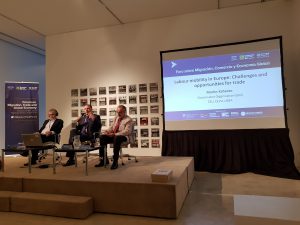
The Global Labor Organization (GLO) was represented at the Forum on Migration, Trade and the Global Economy on December 14, 2017, in Buenos Aires by Martin Kahanec, CEU professor and member of GLO’s Advisory Board and leader of its “EU Mobility” and “Hungary” thematic and geographic clusters, respectively.  Also present was GLO’s Slovak cluster leader and Managing Director at the Bratislava-based Central European Labor Studies Institute (CELSI), Marta Kahancová.

The Forum was organized by the International Organization for Migration (IOM), Fundación Foro del Sur (FFS), and the International Centre for Trade and Sustainable Development (ICTSD) as a side event of the 11th WTO Ministerial Conference taking place in Buenos Aires during the same week. See IOM reporting.

The opening panel stressed the importance of the nexus between migration and trade, and highlighted the relevance of the event for this under-researched topic. It is obvious that migrants contribute to trade and investment through their work, small businesses, knowledge and technology; however, we are aware that more research on the link between migration and trade is required,” underscored Diego Beltrand, IOM’s Regional Director for South America.

In the ensuing panels leading experts, policymakers and researches explored key migration questions such as policies and frameworks governing international migrations; their relation to international flows of goods, services, investment and knowledge; and the impact of digital technologies, innovation networks, diaspora communities, as well as regional integration processes and bilateral and multi-lateral mobility agreements.

In his contribution, Martin Kahanec advanced three arguments. First, demographic transitions in most advanced economies feature aging, lack of dynamic, entrepreneurial, and innovative labor, and risks for public budgets. Mobile workers may help to alleviate the economic vulnerabilities associated with these demographic trends by bringing in young and dynamic workers where they are needed.

Second, Europe’s experience shows that labor mobility comes with a policy challenge: In spite of prevailing evidence of generally positive impacts of migration on host countries, natives tend to look upon immigration with aversion and fear. A negative policy spiral may start spinning: negative attitudes of voters result in ill-chosen policies, which in turn drive negative labor market and social outcomes and these, completing the circle, fuel further negative attitudes.

Third, research conducted in cooperation within the GLO network shows that the notions that immigrants crowd natives out of their jobs, lower their wages, steal their welfare, or target countries with generous welfare provision are unfounded. To the contrary, this research shows that immigration fosters trade, creates jobs in the long run, and immigrants are more responsive to labor shortages than the natives. This last finding is important, as it implies that immigrants go precisely to those sectors, occupations and countries which need them most.

The bottom line is that free mobility of labor has a definite potential to benefit the receiving countries, but to enable such benefits politicians must engage in a dialogue with their voters to explain the benefits and opportunities free mobility entails, as well as effective strategies of coping with any actual or perceived risks of immigration”, concluded Kahanec.

GLO Fellow Martin Kahanec in Buenos Aires

Kahanec making his presentation to the conference

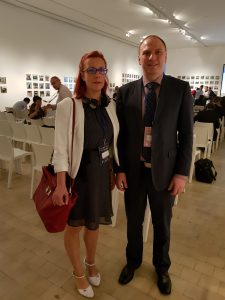
GLO Fellows Marta Kahancová and Kahanec in Buenos Aires

Ends;

Call for papers: Conference on “Globalisation and Labour Markets”, London June 14-15, 2018.

On the suggestion of GLO Fellow Cevat Giray Aksoy (European Bank for Reconstruction and Development), we post the following Call for Papers for a Conference on “Globalisation and Labour Markets”:

CEPR, EBRD and The Economics of Transition

Conference Call for Papers
Submission deadline – 30th January 20182nd CEPR/EBRD/Economics of Transition Symposium: Globalisation and Labour Markets;  London, June 14-15, 2018

You are invited to submit a paper to the 2nd CEPR/EBRD/Economics of Transition Economics Symposium on globalisation and labour markets in advanced and emerging markets. The symposium will provide a platform for researchers and policy makers to discuss new research findings and to identify areas where further academic and policy-oriented work is needed. Papers are invited on the following – non-exhaustive – list of topics:

  • International trade and labour market outcomes
  • The political, economic and social consequences of globalisation
  • Migration and social mobility within and across countries
  • Educational attainment and skill development in a globalised world
  • The changing nature of work in the digital economy
  • Inequality, inclusion and gender in the global economy
  • Institutional quality and governance in a comparative perspective
  • Globalisation and its impact on the environment
  • The role of automation and robots in shaping labour markets
  • Globalisation and labour regulation

The symposium features keynote talks by Paola Conconi (Université Libre de Bruxelles and CEPR) and David Dorn (University of Zurich and CEPR).

Authors of accepted papers will be invited (without obligation) to submit their papers for a special issue of the Economics of Transition. Accommodation expenses will be covered for speakers and discussants. Travel expenses will be reimbursed in accordance with CEPR’s expense guidelines.

To submit a paper (full papers accepted only), please send an email to Lucie Newman at NewmanL@ebrd.com. In the subject header please add “Submission: Globalisation and Labour Markets Symposium” and nothing else. In the case of multiple-authored papers, indicate who will present and whether or not the presenter would also be willing to act as a discussant. The submission deadline is 30 January 2018 and authors will be notified about the acceptance of papers by 16 March 2018.

The conference will be held at the EBRD, One Exchange Square, London. The conference programme starts on Thursday morning (June 14) and ends on Friday afternoon (June 15). An invitation-only conference dinner will be held on Thursday evening. Details about the sponsors: www.ebrd.com,  www.cepr.org and http://services.bepress.com/eot/.

ORGANISING AND PROGRAMME COMMITTEE

Cevat Giray Aksoy (EBRD, LSE and WEF)
Cagatay Bircan (EBRD)
Michelle J. Brock (EBRD and CEPR)
Ralph De Haas (EBRD and Tilburg University)
Guido Friebel (Goethe University Frankfurt and CEPR)
Sergei Guriev (EBRD, Sciences Po and CEPR)
Guy Michaels (LSE, CEP and CEPR)
Barbara Petrongolo (Queen Mary University of London, LSE and CEPR)

GLO Fellow Cevat Giray Aksoy (European Bank for Reconstruction and Development)

Giray


Ends;


GLO Representative Martin Kahanec at IOM event in Buenos Aires on Migration, Trade & the Global Economy

The International Organization for Migration (IOM) together with partners ICTSD and Fundancion Foro del Sur will host on December 14, 2017 in Buenos Aires a

Forum on Migration, Trade & the Global Economy.

The Forum will discuss the active role of international trade in achieving safe and regular migration between representatives from government, private sector, civil society and other relevant actors. The event also seeks to strengthen networks in the South America region and beyond. It will consist of five plenary sessions, as well as two parallel and one special session, dealing with innovation and technology, regional economic integration and policy coherence on migration and trade, among other topics.

The invited GLO – representative of the Global Labor Organization will be Martin Kahanec. GLO-Fellow Kahanec is Professor and Acting Head of the School of Public Policy at the Central European University (CEU) in Budapest. He will speak at the Forum about

“Labor Mobility in Europe: Challenges and Opportunities for Trade”.

Also speaking is GLO-Fellow Sonia Plaza of the World Bank on:

“Regional integration and labor mobility: Specific linkages with trade policy”

Martin Kahanec

Ends;

GLO President Zimmermann meets MP Andrew Leigh in Canberra to discuss the merits of openness.

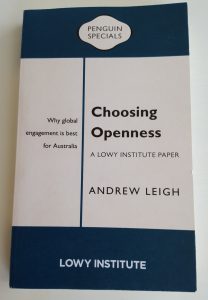
Discussion with MP Andrew Leigh on Globalism and his new book “Choosing Openness. Why global engagement is best for Australia” Penguin Books, Lowy Institute for International Policy 2017 (183 pages).

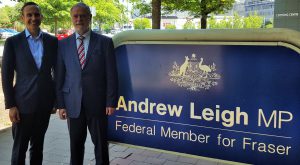
On December 8, 2017, GLO President Klaus F. Zimmermann met Andrew Leigh in his office in Canberra to discuss the merits of openness for Australia and the World, and the mission of the Global Labor Organization (GLO).

GLO Fellow Andrew Leigh is the Shadow Assistant Treasurer and Federal Member for Fenner. Prior to entering the Australian Parliament in 2010, he was a Professor of Economics at the Australian National University (ANU) in Canberra. Andrew Leigh holds a PhD from Harvard University and is a Fellow of the Australian Academy of Social Sciences.

As Leigh and Zimmermann agree, global engagement has become a major political fault line around the world, where some argue that trade, investment and migration are threats rather than opportunities. The challenges to an open world are generated by global uncertainty, rising inequality and populism. In his book, Andrew Leigh argues that Australia’s past prosperity has been the result of engaging with the world, a view that complements the evaluation of global economic progress by the GLO President, and is in line with the GLO mission. Not less, but more openness is required in the future for capital, goods, and people to stabilize and foster prosperity.

The Book:

The two men after the discussion in front of the office of Andrew Leigh (left).

Ends;

The Economics of Population Aging

Now the key resource of the field!

Handbook of the Economics of Population Aging, Volumes 1A and 1B

Edited by GLO – Fellows John Piggott and Alan Woodland. Both are at the Australian School of Business, University of New South Wales,  Australia.

  • Dissolves the barriers between policymakers and scholars by presenting comprehensive portraits of social and theoretical issues
  • Synthesizes valuable data on the topic from a variety of journals dating back to the late 1970s in a convenient, comprehensive resource
  • Presents diverse perspectives on subjects that can be closely associated with national and regional concerns
  • Offers comprehensive, critical reviews and expositions of the essential aspects of the economics of population aging

Handbook of the Economics of Population Aging synthesizes the economic literature on aging and the subjects associated with it, including social insurance and healthcare costs, both of which are of interest to policymakers and academics. These volumes, the first of a new subseries in the Handbooks in Economics, describe and analyze information from general economics journals, from various field journals in economics, especially, but not exclusively, those covering labor markets and human resource issues, from interdisciplinary social science and life science journals, and from papers by economists published in journals associated with gerontology, history, sociology, political science, and demography, among others.

Table of Contents

Volume A

  1. The Global Demography of Ageing: Facts, Explanations, Future: David E. Bloom and Dara Lee Luca
  2. Macroeconomics, Aging and Growth: Ronald Lee
  3. Migration and Demographic Shift:  Anzelika Zaiceva and Klaus F. Zimmermann
  4. Global Demographic Trends: Consumption, Saving and International Capital Flows: Orazio Attanasio, Andrea Bonfatti, Sagiri Kitao and Guglielmo Weber
  5. Insurance Markets for the Elderly: Hanming Fang
  6. Intergenerational Risk Sharing: Roel Beetsma and Ward Romp
  7. The Political Economy of Population Ageing: Georges Casamatta and Loïc Batté

Volume B

  1. Retirement Incentives and Labor Supply: Richard Blundell, Eric French and Gemma Tetlow
  2. Investing and Portfolio Allocation for Retirement: Barbara Kaschützke and Raimond Maurer
  3. Conflict and Cooperation within the Family, and between the State and the Family, in the Provision of Old-Age Security: Alessandro Cigno
  4. Complex Decision Making: The Roles of Cognitive Limitations, Cognitive Decline and Ageing: Michael Keane and Susan Thorp
  5. Taxation, Pensions and Demographic Change: Alan Woodland
  6. Social Security and Public Insurance: Axel Börsch-Supan, Klaus Härtl and Nuno Leite
  7. Workplace-Linked Pensions for an Aging Demographic: Olivia S. Mitchell and John Piggott
  8. Poverty and Aging: Joseph Marchand and Timothy Smeeding
  9. Health and Long-Term Care: Edward C. Norton
  10. The HRS around the World Surveys: Loretti Isabella Dobrescu and James P. Smith

 For more information, see:

https://www.elsevier.com/books/handbook-of-the-economics-of-population-aging/piggott/978-0-444-63405-4

Handbook of the Economics of Population Aging - 1st Edition - ISBN: 9780444634054, 9780444634047

Ends;

Important GLO-supported journal projects: Published issues & Call for papers for special issues

The Global Labor Organization (GLO) is collaborating with various journals like the International Journal of Manpower  and the Journal of Population Economics, among others. Here are recent products or new ventures:

Journal of Population Economics

  • Volume 31, Issue 1, January 2018 is PUBLISHED. Here is the access to the TABLE OF CONTENT of the ten top articles freshly published. (Editors are Alessandro Cigno, Erdal Tekin, Junsen Zhang and Klaus F. Zimmermann.)

International Journal of Manpower

  • Volume 38, Issue 7, 2017 is PUBLISHED. Special Issue: Labor adjustment in the European economic area during the Great Recession. Here is the access to the TABLE OF CONTENT of the eight top articles freshly published. (Special Issue Editors are Martin Kahanec, Martin Suster and Klaus F. Zimmermann.)
  • Call for Papers for a Special Issue on: “Sexual Orientation and the Labor Market”. Submissions will be accepted up until the 31th of August 2018.  Please study details of the CALL HERE. (Special Issue Editors are Nick Drydakis and Klaus F. Zimmermann.)
  • Call for Papers for a Special Issue on: “The School to Work Transition: Cross-Country Differences, Evolution and Reforms”. Submissions will be accepted until the 15th of February 2018.  Please study details of the CALL HERE. (Special Issue Editors are Francesco Pastore and Klaus F. Zimmermann.)

Ends;

Health Policy and Healthcare Event at Yale University supported by GLO

Important health research and policy event at Yale University organized by the China Health Policy and Management Society and GLO Fellow Xi Chen of Yale University, and supported, among others, by the Global Labor Organization (GLO). GLO is organizing one session at the event.


 Advances in Health Policy and Healthcare: The Road Ahead

China Health Policy and Management Society 2nd Biennial Conference & a Celebration of the 10th Anniversary of China Health Policy and Management Society (2008-2018)

http://blog.betsygrauerrealty.com/wp-content/uploads/2016/05/yale-university.jpg

Yale University: May 11-13, 2018

Purpose: This is the 2nd biennial meeting of China Health Policy and Management Society (CHPAMS) and its official journal China Health Review. The meeting’s theme is Advances in Health Policy and Healthcare: The Road Ahead, with a special focus on Healthy China 2030 national blueprint. Since October 2016, Healthy China 2030 (HC 2030), a national program of action to promote the health of 1.3 billion Chinese population, has been central to the Chinese Government’s agenda for health and development, and has the potential to benefit the rest of the world. This conference aims to bridge our minds and draw upon global wisdom in the advances of health policy and health care in China. Participants will include national health officials from China, U.S. public health NGO representatives, world-class scholars from the U.S., China, and other regions in the world, entrepreneurs in the health sector, and so on. Through this platform, participants will have the opportunity to establish professional networks with leaders in the field and enhance their professional career development. The Board of Directors of CHPAMS and Editorial Board of CHR will host business meetings and communicate with engaged members to further promote the organization and the journal to a new stage.

Co-sponsors: China Medical Board, Yale School of Public Health, Yale Macmillan Center, Yale-China Association,Chinese Economists Society, Global Labor Organization

Opening Addresses: Consulate General of the People’s Republic of China in New York, China Medical Board, China Health Policy and Management Society, Yale School of Public Health

Keynote Speakers

https://chinamedicalboard.org/sites/default/files/lincoln-chen.jpg

Lincoln Chen, M.D., President, China Medical Board

https://az736297.vo.msecnd.net/Profile/images/2cebd447-08b5-4a2b-ba4c-59879153f8ba_w0

Paul Cleary, Ph.D., Anna M.R. Lauder Professor of Public Health, Former Dean, Yale School of Public Health

MG2 (2)

Michael Grossman, Ph.D., Professor and Director of Health Economics Program, National Bureau of Economic Research (NBER), Advisory Board Member, CHPAMS

http://emeritus.yale.edu/system/files/schultz_paul.jpg

T Paul Schultz, Ph.D., Malcolm K. Brachman Professor Emeritus in Economics, Former Director of Economic Growth Center, Yale University and GLO

https://az736297.vo.msecnd.net/Profile/images/cdacd946-1a11-49c1-9f87-9cb6f888ba36_w0

Sten H. Vermund, M.D., Ph.D., Anna M.R. Lauder Professor of Public Health, Dean, Yale School of Public Health

Yang

Gonghuan Yang, M.D., Professor and Former Vice Director, China National CDC

Image result for Winnie Yip

Winnie Yip, Ph.D.; Professor of Global Health Policy and Economics, Harvard T.H. Chan School of Public Health, Advisory Board Member, CHPAMS

Invited Sessions and Panels

Special Session(s): Environment, Health, Health Care and Human Capital  (Joint with Global Labor Organization)

Special Session: “Mining Gold” from Big Data in Healthcare

Hongyu Zhao, Department Chair and Ira V. Hiscock Professor of Biostatistics, Professor of Genetics, Statistics and Data Science, Yale University

Shuangge Steven Ma, Professor of Biostatistics, Yale School of Public Health

Roundtable: Healthy China 2030 (TBC)

Paul Cleary, Anna M.R. Lauder Professor of Public Health; Former Dean, Yale School of Public Health

Harlan M Krumholz, Harold H. Hines, Jr. Professor of Medicine; Director, Center for Outcomes Research and Evaluation, Yale-New Haven Hospital

Special Session: Behavioral Health Innovations

Jody L. Sindelar, Professor of Public Health (Health Policy) and Economics, Yale University and Entrepreneurs from Health Tech Companies

Roundtable: Environment, Climate Change and Health (Joint with Yale Climate Change and Health Initiative)

Michelle L. Bell, Mary E. Pinchot Professor of Forestry and Environmental Studies and Professor of Environmental Health, Yale University

Robert Dubrow, Faculty Director of the Climate Change and Health Initiative, Yale University

Yawei Zhang, Section Chief Surgical Outcomes and Epidemiology, Yale Department of Surgery; Associate Professor, Yale School of Public Health

Special Reception: Celebrating 10th Anniversary of CHPAMS

Call for abstracts and organized sessions: The call for abstracts and proposed sessions for CHPAMS Biennial Meetings to be held at Yale University May 11-13, 2018 is now open! We welcome abstracts and sessions on any public health issues in the fields of health economics, system science, global health, health policy, health care management, and/or epidemiology, preferably related to China. Methodological or theoretical innovations related to health policy and management are also encouraged. Organized sessions and individual abstracts will be accepted for consideration by the Scientific Committee. If an organized session is not accepted, the papers included in that session will be considered as individual abstract submissions; abstracts not accepted for oral presentation will be considered for poster presentation. Notification of acceptance will be made no later than January 15, 2018.

Please use our co-sponsor Chinese Economists Society’s online submission page to submit individual abstracts now through December 31, 2017. https://www.china-ces.org/Conferences/ConferenceDefault.aspx?ID=48 No CES membership fee is required in order to submit your session or abstract. Each abstract submission should include authors’ names, affiliation, and the corresponding author’s contact information. A 250-word structured abstract (introduction, method, results, and discussion) is expected.

Each organized session should consist of 3-4 individual papers. Each proposal should contain a tentative name of the session, titles of papers along with their abstracts, as well as names and e-mails of session presenters. If you would like to organize one or more sessions on a specific topic and have speakers/presenters lined up, please submit your proposal to Dr. Zhuo (Adam) CHEN for approval at zchen1@uga.edu by December 15th, 2017.

At least one of the coauthors need to be a registered member of CHPAMS. When submitting the abstract, please indicate which coauthor(s) is a CHPAMS member. CHPAMS membership is open to all with no membership fee. To register, please visit http://www.chpams.org/member-registration/.

The Best Abstract Award: All authors, whether submitting through individual abstracts or organized sessions, have the option to indicate whether this abstract will compete for “Best Abstract Award.” The winner will receive $200 plus a certificate, and the full article will be invited to be published in the fall 2018 issue of China Health Review.

Conference Registration and Travel Support

  1. Registration fee is $100 (by April 15, 2018) and $150 (starting from April 16, 2018), which covers conference materials, food, and other services.
  2. For all CHPAMS registered members who are current students and pay the conference registration fee by March 31, 2018, CHPAMS will provide $100 travel subsidy to the attendees.
  3. Limited number of travel fellowships ($250) will be provided for students who pay the conference registration fee and whose abstract is accepted for oral presentation. To apply, email member@chpams.org with an updated CV.
  4. To receive any of the incentives, participants must be registered as a CHPAMS member on www.chpams.org and pay the conference registration fee.

Job Placement Service:

We call for participation of Chinese universities or other entities to recruit talents during the CHPAMS Biennial Conference. CHPAMS will provide the platform of job matching, including organized introduction and Q&A sessions, interview tables and rooms.  Participating institutions will also be invited to become CHPAMS institutional members. For questions, email Dr. Xi CHEN at Yale University (xi.chen@yale.edu).

Meeting Facilities

Yale School of Public Health (May 11) & Yale Macmillan Center (May 12)

Team building activities:

May 2018 marks the 10th anniversary of China Health Policy and Management Society. We will have team building events, and attendants are welcome to participate and arrange their departures from New Haven, CT.

May 12, 2018: Yale campus tour to the historical sites of China’s Grand Cross-cultural Educational Experiment (大清留美幼童运动) and Yale-China Association (雅礼中国协会)

May 13, 2018: hiking in the East Rock Park, New Haven, CT.

Important Dates

Date
December 15, 2017 Deadline for submitting organized sessions
December 31, 2017 Deadline for submitting abstracts
January 15, 2018 Notification of acceptance
March 31, 2018 Deadline for students to pay the conference registration fee in order to receive travel subsidy and be considered travel fellowships
May 11-13, 2018 Conference Dates


Xi Chen, Yale University and GLO.

Ends;

GLO President Klaus F. Zimmermann is Eminent Research Scholar & Visiting Professor at Melbourne University in Australia. Seminars in Perth and Melbourne

Since November 4, 2017, GLO President Klaus F. Zimmermann (Co-Director of POP at UNU-MERIT & Maastricht University) is visiting Australia for research and seminar presentations. On November 10, he spoke on a well – attended seminar at the University of Western Australia (UWA) in Perth about the role of migrant status at host country entry for economic performance; he also exchanged views with a number of GLO Fellows in the staff of UWA. On November 16, he will give a seminar on European migration policy at Melbourne University.

GLO President Zimmermann has been granted the prestigious Australian Eminent Research Scholar Award. He is resident in November and December 2017 at The Melbourne Institute of Applied Economic and Social Research of the University of Melbourne, Australia. The Melbourne Institute is Australia’s pre-eminent economic and social policy research institution. Renowned for developing longitudinal research tools and using data to build an evidence base for reform, the institute has been powering effective change for more than 50 years.

During his Australian visit, Zimmermann will give further public lectures and research seminars including at the Inaugural Conference of the Asian and Australasian Society of Labour Economics (AASLE) and the Australian Labour Market Research Conference (ALMR) in Canberra at the premises of the Australian National University in December 2017; he will also speak in Wollongong, Sydney, Adelaide and Brisbane.

View on Perth from the Kings Park, one of the largest inner city parks of the world:

Near Melbourne University: Klaus F. Zimmermann after arrival close to his office:

Ends;

Understanding Latin America: GLO Fellow Alfredo Toro Hardy provides the decoding guide.

NEW THIS WEEK: Venezuelan Diplomat and Scholar Alfredo Toro Hardy, Fellow of the Global Labor Organization (GLO), explains Latin America in his new book (Understanding Latin America. A Decoding Guide, World Scientific, 2017).

From afar, Latin America looks like a blurry tableau: devoid of defining lines, particularities and nuances. Little is understood about the idiosyncrasies of Latin-Americans, their cultural identity and social values. Differences between Brazilians and Spanish Americans, or amid the diverse Spanish American countries, are not sufficiently understood. Even less is known about the amplitude of the Iberian heritage of such countries, or about the miscegenation and acculturation processes that took place among their different constitutive races. There is no clarity regarding the Western nature of Latin America or about its cultural affinities with Latin Europe. Nor is there sufficient understanding of the links between the Latin population of the United States and the inhabitants of Latin America.

This book’s aims to fill the gap by focusing on Latin America’s history, culture, identity and
idiosyncrasies. It serves as a guide to understand regional attitudes, meanings and behavioral differences of the region. It also analyses the present economic situation of the region, while trying to predict the future of the region. Written in a simple and accessible manner, this book will be of interest to readers keen on exploring the region for potential opportunities in trade, investment or any other kind of business and cultural endeavor.


Leaflet

Understanding Latin America: More information & How to order the book

Leaflet Understanding Latin America.

GLO Fellow Alfredo Toro Hardy is a Venezuelan diplomat and scholar. Graduated in Law from the Central University of Venezuela with several master and postgraduate degrees from ENA, University of Paris II, Central University, the University of Pennsylvania and Harvard University. Career diplomat who has served, among other posts, as Director of the Diplomatic Academy of the Venezuelan Ministry of Foreign Affairs, and Ambassador to Brazil, Chile, the United States, the United Kingdom, Ireland, Spain, and Singapore. Director of the Center for North American Studies and Coordinator of the Institute for Higher Latin American Studies of the Simón Bolívar University (1989-1992). Elected “Simon Bolívar Chair Professor for Latin American Studies” by the Council of Faculties of the University of Cambridge for the academic year 2006-2007. Member of the Advising Committee of the Diplomatic Academy of London (2003-2008). Fulbright Scholar and Visiting Professor at Princeton University (1986-1987). Author or coauthor of 30 books and more than 30 academic papers on international affairs.

Image result for Alfredo Toro Hardy

Ends;

CEU in Budapest still struggles for independence: Letter of Rector Michael Ignatieff

The Global Labor Organization (GLO) has supported the Central European University (CEU) in its struggle for scientific independence. See the GLO – CEU event recently in Budapest, among others. Now the Rector of CEU, Michael Ignatieff, has provided a further briefing:

Dear Friends:

What a week this has been!  On Tuesday the Hungarian Parliament voted a year’s extension of the deadline to comply with ‘lex CEU’.  This means that CEU can admit a new class of master’s and doctoral students beginning in September 2018 and those who are admitted will be able to complete their studies here.  This is good news!

What’s less encouraging is that the government appears to have stepped back, at least for the time being, from an agreement with New York State that would guarantee CEU’s existence in Hungary in return for us establishing educational activities with our long-time partner in New York State, Bard College.  We’re still hopeful that this agreement will be signed eventually and bring the ‘CEU affair’ to a conclusion.  We’ll be implementing the Bard agreement in full.  The next steps are now up to the government.

In the meantime, CEU keeps forging ahead.  Our classes are full.  Our faculty are teaching, doing research, attending conferences, and building our reputation for academic excellence.  Applications to admit our next class will open in the coming days.  Our strategic plan for the next five years is being discussed right across the university.  Next stop in the process: the Trustees’ meeting on October 28-29.  The Trustees will suggest improvements and revisions, and then we will bring the plan back to the university for implementation.

We’ve been through quite an experience in the past year, and we haven’t reached safe harbor yet, but we’ve stood up for what we believe, we’ve done our jobs, and we’re planning for a bright future.

Thanks once again to all our supporters here in Hungary, and right around the world, for the marvelous support you’ve shown.  We can’t do this without you!

Michael Ignatieff
Rector and President

Kedves Barátaink!

Micsoda hét volt ez! Kedden az Országgyűlés megszavazta, hogy a lex CEU megfelelési határidejét egy évvel meghosszabbítsák. Ez azt jelenti, hogy a CEU vehet fel diákokat a 2018 szeptemberében induló mester- és doktori képzésekre, és hogy a felvett hallgatóink be is tudják fejezni a tanulmányaikat. Ez mind jó hír.

Kevésbé biztató, hogy úgy tűnik, egyelőre a kormányzat elállt attól, hogy aláírja a New York állammal kötendő megállapodást, amely biztosítaná a CEU magyarországi működését cserébe azért, hogy a CEU régi partnerével, a Bard College-dzsal közösen oktatási tevékenységbe kezd New York államban. Továbbra is bízunk abban, hogy a megállapodást végül aláírják, és pontot tehetünk a “CEU ügy” végére. A Barddal kötött megállapodásban foglaltakat végre fogjuk hajtani. A következő lépést a kormányzatnak kell megtennie.

Eközben a CEU egy percre sem áll meg. Tantermeink tele vannak. A tanáraink tanítanak, kutatnak, konferenciákra járnak, és építik a CEU tudományos hírnevét. A következő évfolyamunk felvételi határidejét a napokban fogjuk kihirdetni. Az öt évre szóló stratégiai tervünket most vitatjuk meg közösségünk tagjaival. A következő lépés a kuratóriumi ülés október 28-29-én. A stratégiai tervet a kuratóriumi tagok javaslatai alapján fejlesztjük tovább, és hajtjuk majd végre.

Az elmúlt évben sok mindenen mentünk keresztül, és bár még nem értünk révbe, kiálltunk amellett, amiben hiszünk, elvégeztük a feladatunkat, és derűs jövőre készülünk.

Köszönöm még egyszer mindenkinek, aki kiállt mellettünk Magyarországon és világszerte. A fantasztikus támogatás nélkül nem lennénk képesek minderre.

Michael Ignatieff, elnök-rektor

http://www.klausfzimmermann.de/wp/wp-content/uploads/2017/04/170402-ceuval.png

Ends;

Transilvania University of Brasov: Conference Program on “Inclusive and Sustainable Economic Growth” is Up

Conference program available: The Faculty of Economic Sciences and Business Administration within the Transilvania University of Brasov, in collaboration with the Bucharest-based Institute for Economic Forecasting within the National Institute for Economic Research “Costin C. Kiritescu” of the Romanian Academy organizes the International Conference

„Inclusive and sustainable economic growth. Challenges, measures and solutions” (ISEG 2017).

The conference will be held on 20-21 October 2017 in the Transilvania University Hall, Street Iuliu Maniu no. 47A, Brasov.

Conference Program can be accessed here.

GLO Fellows Monica Raileanu Szeles (Transilvania University of Brasov), Lucian Liviu Albu (Institute for Economic Forecasting), Francesco Pastore (University of Campania Luigi Vanvitelli) and GLO President Klaus F. Zimmermann (UNU-MERIT & Rockefeller Policy Fellow) are members of the Scientific Committee of the conference.

On October 20, 11:00 am, GLO President Klaus F. Zimmermann will provide a keynote on “Migration and Well-Being”. There will be further a GLO session:

GLO Session: Issues in Global Labor: Chair: Klaus F. Zimmermann (UNU-MERIT Maastricht and GLO). On October 20, 14:00 pm.

“Overeducation wage penalty among Ph.D. holders: Does the field of study make the difference? An unconditional quantile regression analysis on Italian data”: Giuseppe Lucio Gaeta (University of Naples L’Orientale), Giuseppe Lubrano Lavadera (University of Salerno) and Francesco Pastore (University of Campania Luigi Vanvitelli and GLO)

“Remittances and Income Inequality in Nigeria: A Quantile Regression Analysis”: James T. Bang (St. Ambrose University and GLO), Aniruddha Mitra (Bard College and GLO) and Phanindra V. Wunnava (Middlebury College and GLO)

“Protection and Abuse of Property Rights: Political Culture Heritage in the Eastern European Post-Communist Society”: Camelia Florela Voinea (University of Bucharest and GLO)


Ends;

Bellagio & Milan/Italy: GLO President Zimmermann spoke on Migration Policy Issues

Zimmermann is a 2017 Rockefeller Foundation Policy Fellow. He is currently visiting their Bellagio Center to execute research, engage in discussions and provide seminars and lectures.

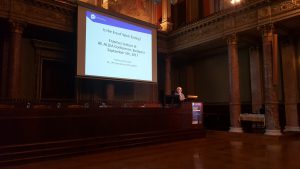
On 4 October 2017, Zimmermann gave a paper at the Rockefeller Foundation Bellagio Center on “Challenges of Migration Policy Advice“.

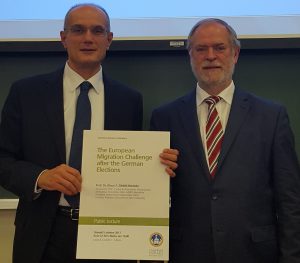
On 5 October 2017, he provided a public lecture on “The European Migration Challenge after the German Elections” at the Università Cazzolica del Sacro Cuore, Milano.

The Rockefeller Foundation Bellagio Residency Program offers distinguished academics, artists, thought leaders, policymakers, and practitioners a serene setting conducive to focused, goal-oriented work, and the unparalleled opportunity to establish new connections with fellow residents from a wide array of backgrounds, disciplines, and geographies. The hospitality and impact of The Bellagio Center in Italy has been legendary.

Klaus F. Zimmermann, UNU-MERIT, Maastricht University and Bonn University, Founding Director of IZA/Bonn, has been granted Rockefeller Foundation Policy Fellow to visit the Bellagio Center in September/October 2017 to execute his research and discuss it with his fellow residents. Zimmermann, who is also the President of the Global Labor Organization (GLO), works on migration and global labor economics.

******************************************************

Zimmermann at the Università Cazzolica del Sacro Cuore, Milano, with GLO Fellow Marco Vivarelli, Professor and Director of the Institute of Economic Policy of the Università Cattolica del Sacro Cuore, Milano. On 5 October 2017, after he provided a public lecture on “The European Migration Challenge after the German Elections“.

*****************************************

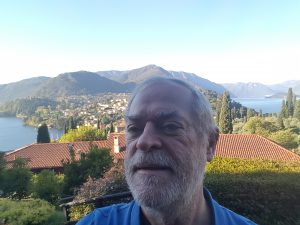
Zimmermann  with view from the Bellagio Center of the Rockfeller Foundation. There, he gave a presentation on October 4, 2017 on “Challenges of Migration Policy Advice“. See for further pictures.

Ends;


GLO Call for papers for special issue on “Sexual Orientation and the Labor Market”

Call for papers for a special issue of the International Journal of Manpower  on: “Sexual Orientation and the Labor Market

Edited by

Nick Drydakis (Anglia Ruskin University, University of Cambridge, IZA, and GLO) and Klaus F. Zimmermann (UNU-MERIT, Maastricht University, CEPR and GLO)

An initiative of the Global Labor Organization (GLO), this project is related to the GLO Thematic Cluster on “Gender, Gender Identity, Sexual Orientation and Labor Market Outcomes” headed by Nick Drydakis.

Despite the enactment, in English speaking countries and the EU, of labor legislation against discrimination in the labor market based on sexual orientation, LGBTI (lesbian, gay, bisexual, trans and intersex) people continue to experience occupational access constraints, lower job satisfaction, wage discrimination (especially gay men), and more bullying and harassment than their heterosexual counterparts (Drydakis, 2014; Valfort, 2017).

Studies for the period 1989–2014 suggest that gay men receive lower wages than heterosexual men of comparable education, skills, and experience. For instance, studies find that gay men earn from 4–5% less than heterosexual men in the Netherlands, France, Greece, and the UK and up to 12–16% less in Canada, Sweden, and the US (Drydakis, 2014). Whether wage discrimination against gay men exists in other regions is of great interest and ascertaining this is of importance for policy interventions. In addition, whether wage discrimination lessens over time in response to policy interventions and legislation is hard to determine in the absence of relevant studies. It is not yet clear whether prejudice-based and/or statistical discrimination is the more appropriate framework for the study of labor discrimination against LGBTI people.

The available studies on sexual orientation and job satisfaction highlight that in Australia, Canada, and Greece, both gay men and lesbians experience lower job satisfaction than do their otherwise similar heterosexual counterparts (Drydakis, 2014). Because gay and lesbian employees face severe workplace harassment and bullying, these conditions may affect their workplace experience evaluations (Drydakis, 2014). Whether factors other than workplace harassment cause gay and lesbian employees’ dissatisfaction requires examination. Also, for instituting appropriate policy actions, it is important to determine whether these job satisfaction differences suffered by sexual orientation minorities exist in other countries.

In general, the dearth of studies makes it difficult to examine how education, occupation, industrial relations, region, core socio-economic characteristics, personality and mental health traits moderate the relationship between sexual orientation and labor market outcomes (Drydakis, 2014). Indeed, although studies suggest that lesbians face prejudice in the labor market, some studies estimate that lesbians earn more than comparable heterosexual women. Lesbians have been found to earn 3% more in the Netherlands, 8% more in the UK, 11% more in Germany, 15% more in Canada, and 20% more in the US. Whether personality characteristics, coping strategies, occupational choices, family structures and/or region positively affect lesbians’ wages is still an open question.

In addition, quantitative research on employment outcomes is scarce for trans people (Drydakis, 2017). A representative study suggests that trans people tend to suffer higher unemployment rates than those reported, in other studies, for the general U.S. population (Leppel, 2016). In addition, the interaction between trans identity, and sexual orientation, and the effects of this on employment outcomes is under-examined (Drydakis, 2017). Whether explicit, legislative employment protection against discrimination on the ground of a trans identity has an effect on employment outcomes has also received little attention (Drydakis, 2017).

Given the aforementioned lack of sufficient literature, the editors welcome empirical papers on labor economics which have a clear and highlighted added value, and solid policy implications, on the following general areas:

  • Testing, in under-examined geographical regions, for wage discrimination based on sexual orientation.
  • Empirically testing and disentangling the forms of employment discrimination (i.e. prejudice-based, and/or statistical discrimination) against LGBTI people.
  • Examining the relationship between sexual orientation, personality characteristics, mental health and employment outcomes.
  • Assessing how moderators (i.e. human capital, educational choices, occupations, family structure, industrial relations etc.) affect the relationship between sexual orientation and labor market outcomes.
  • Testing the relationship between sexual orientation, past/present victimization and labor market outcomes.
  • Quantifying the relationship between sexual orientation and job satisfaction.
  • Evaluating the impact of the legal recognition of same-sex couples on labor market outcomes.
  • Evaluating the impact of employment legislation against sexual orientation and trans identity discrimination on labor market outcomes.
  • Quantifying employment bias against trans people.
  • Examining the interaction between trans identities, sexual orientation and labor market outcomes.

Submissions will be accepted up until the 31th of August 2018. They should be made using ScholarOne Manuscripts, the online submission and peer review system: http://mc.manuscriptcentral.com/ijm. Before submission, please verify that you have carefully read the Author guidelines of the Journal. While making your submission, please specify the title of the current call for papers. See also the forthcoming call on the journal website.

Nick Drydakis (Anglia Ruskin University, University of Cambridge, IZA and GLO)

Image result for Nick Drydakis pictures

and Klaus F. Zimmermann (UNU-MERIT, Maastricht University, CEPR and GLO)

References:

Drydakis N. (2014). Sexual orientation and labor market outcomes. IZA World of Labor: 111. DOI: 10.15185/izawol.111

Drydakis N. (2017). Trans people, well-being, and labor market outcomes. IZA World of Labor: 386. DOI: 10.15185/izawol.386

Leppel, K. (2016). The labor force status of transgender men and women. International Journal of Transgenderism,  Vol. 17, No. (3−4), pp. 155−164.

Valfort, M. (2017). LGBTI in OECD countries: A review. OECD Social, Employment and Migration Working Papers, No. 198, OECD Publishing, Paris. DOI: 10.1787/d5d49711-en

Ends;

Transilvania University of Brasov Conference with GLO session on “Issues in Global Labor”

The Faculty of Economic Sciences and Business Administration within Transilvania University of Brasov, in collaboration with the Institute for Economic Forecasting within the National Institute for Economic Research “Costin C. Kiritescu” of the Romanian Academy organizes the International Conference

„Inclusive and sustainable economic growth. Challenges, measures and solutions” (ISEG 2017).

GLO Fellows Monica Raileanu Szeles and Lucian Liviu Albu of the Institute for Economic Forecasting are involved in organizing the conference. The conference will be hosted by Transilvania University of Brasov and will be held 20-21 October 2017 in the Transilvania University Hall, Street Iuliu Maniu no. 47A, Brasov.

GLO President Klaus F. Zimmermann will provide a keynote on “Migration and Well-Being”. There will be further a GLO session:

GLO Session: Issues in Global Labor: Chair: Klaus F. Zimmermann (UNU-MERIT Maastricht and GLO)

“Overeducation wage penalty among Ph.D. holders: Does the field of study make the difference? An unconditional quantile regression analysis on Italian data”: Giuseppe Lucio Gaeta (University of Naples L’Orientale), Giuseppe Lubrano Lavadera (University of Salerno) and Francesco Pastore (University of Campania Luigi Vanvitelli and GLO)

“Remittances and Income Inequality in Nigeria: A Quantile Regression Analysis”: James T. Bang (St. Ambrose University and GLO), Aniruddha Mitra (Bard College and GLO) and Phanindra V. Wunnava (Middlebury College and GLO)

“Protection and Abuse of Property Rights: Political Culture Heritage in the Eastern European Post-Communist Society”: Camelia Florela Voinea (University of Bucharest and GLO)

From left to right …..

Francesco Pastore (University of Campania Luigi Vanvitelli and GLO)
Aniruddha Mitra (Bard College and GLO)
Camelia Florela Voinea (University of Bucharest and GLO)
Klaus F. Zimmermann (UNU-MERIT Maastricht and GLO)
Image result for Francesco Pastore PicturesImage result for Aniruddha Mitra PicturesImage result for Camelia Florela Voinea PicturesImage result for Klaus F. Zimmermann Pictures

Ends;

2018 meeting of Society of the Economics of the HOusehold (SEHO) will be held on May 23 and 24 at the Paris School of Economics

This advertises t​he​  Call for Papers ​of the 2018 meetings of the Society of Economics of the HOusehold (SEHO) to be  held at the Paris School of Economics on 23-24 May 2018.

In 2017, the Global Labor Organization (GLO) had supported the creation of SEHO by GLO Fellow Shoshana Grossbard. GLO President Klaus F. Zimmermann has been one of the keynote speakers at the first SEHO congress. In the Paris organizing and scientific committees a number of GLO Fellows are involved, including Francois Bourguignon, Elena Stancanelli, Arie Kapteyn, Daniele Paserman, and Arthur Van Soest.
                   

CALL FOR PAPERS

The Society of Economics of the HOusehold (SEHO) was founded in 2017 by Shoshana Grossbard to promote the economic analysis of all outcomes of decision-making by household members, including child outcomes, consumption, savings, labor supply, and healthy and risky behaviors. The 2018 meetings of Society of the Economics of the HOusehold (SEHO) will be held on May 23 and 24 at the Paris School of Economics. The organizing committee includes Francois Bourguignon, Andrew Clark, Hippolyte d’Albis, Claudia Senik, and Elena Stancanelli.

The scientific committee includes Viola Angelini (Groningen University), Daniela del Boca (Collegio Carlo Alberto, Turin), Orla Doyle (University College Dublin), Arie Kapteyn (University of Southern California), Raphael Lalive (University of Lausanne), Daniele Paserman (Boston University), Valerie Ramey (University of California San Diego), Catherine Sofer (University Paris 1, Panthéon Sorbonne), and Arthur Van Soest (Tilburg University).

The keynote speakers are Lee Badgett (University of Massachussets, Amherst), Pierre-Andre Chiappori (Columbia University), Raquel Fernandez (New York University) and Shoshana Grossbard (San Diego State University).

Full papers submitted for presentation will be due by January 8th 2018. Each author can submit at most one paper. To submit a paper to the conference, send a mail to:

sehoconf2018@gmail.com

Please indicate your position and affiliation in the email’s subject. Emails that do not show the sender’s position and affiliation in the email’s heading will not be open.

Please attach your paper to the email and also report in the email:

The title of the paper;

A short summary (max 100 words);

Your affiliation, postal address, telephone and email;

At least 4 keywords, of which one chosen from the list below.

Keywords: marriage and divorce; children outcomes; labor supply; household production; savings and consumption; ageing; happiness and well-being; health economics; cultural economics; migration; domestic violence and crime.

 Incomplete emails not complying with these instructions will not be considered!

Authors will be notified whether the paper is accepted for presentation by January 30th 2018.

Ends;

Mexico needs help: Relief efforts after the terrible earthquakes

The very successful last World Congress of the International Economic Association (IEA) took place June 19-23, 2017 in Mexico city with a large number of GLO Fellows attending. Among them were IEA President Kaushik Basu, Jackie Wahba, Corrado Giulietti, Martin Kahanec and GLO President Klaus F. Zimmermann.

In the meanwhile, a terrible earthquake has hit Mexico again and has also affected Mexico city. The research community is deeply concerned about this. On this occasion, IEA President and GLO Fellow  Kaushik Basu has written the following letter (together with IEA Past-President Tim Besley), which has the full GLO backing:

“Dear World Congress Participant,

I am sure like us you have been watching in horror at the events unfolding in Mexico as a result of the tragic earthquake.  It is all the more salient to those of us who only recently spent such a wonderful time in Mexico City at the IEA World Congress.  We thought, therefore, that you might wish to show solidarity with the victims by contributing to the relief effort.  Should you choose to do so, we include a list of web links below.

1. Los Topos Mexico: reputed and well-known NGO which specializes in rescuing people from the rubble.
You can donate to their PayPal account through their website:
www.topos.mx
Brigada de Rescate Topos Tlaltelolco a.C.

2. Cruz Roja: Mexico´s Red Cross.
You can donate to their PayPal account through their website:
www.cruzrojamexicana.org.mx
Cruz Roja Mexicana

 3. Amazon Wishlist: Look for the “Cruz Roja Mexico” wish list on Amazon.com or enter the following address into your web browser: https://www.amazon.com.mx/b?ie=UTF8&node=17290014011

Cruz Roja Mexicana en Amazon
www.amazon.com.mx
Dona a la Cruz Roja Mexicana

Yours sincerely,

Kaushik Basu (IEA President)

Tim Besley (IEA, Past President)”

Ends;

27th academic year begins: Central European University (CEU) at times of challenge

The Central European University (CEU) in Budapest has been under threat recently. The Global Labor Organization (GLO) and Klaus F. Zimmermann as the President of the GLO have supported the CEU with declarations and eventsAt the occasion of the Opening Ceremony 2017,  Michael Ignatieff, President and Rector of the CEU, has now announced:

“Dear Friends and Supporters,

We begin our 27th academic year at Central European University this week. At our 2017 Opening Ceremony, we welcomed 769 incoming students from 93 countries and recognized the extraordinary teaching and research taking place at CEU and elsewhere in Europe. Our community continues to inspire as we carry forward our mission to search for truth and add to the world’s precious stock of knowledge.

Your support enables this exciting work, and we thank you for your dedication to CEU even as we await the outcome of negotiations between the Hungarian government and the State of New York. I share my opening address below …. and welcome you to watch the video and read the full story here.”


“To the ambassadors and representatives of their countries
To the rectors and representatives of Hungarian universities.
To our hard-working faculty
To our dedicated staff
To our returning students
Welcome!

To the incoming CEU class of Masters and Doctoral students—all 769 of you from 93 countries—we hope CEU will be a transformative experience and we welcome you warmly to this community.

For we are a community, brought together as never before by our defense of academic freedom. Let me thank the entire CEU community for standing together, during what I like to call, with British understatement, ‘our little local difficulty.’

As many of you know, New York State, where we are accredited, and the Government of Hungary are negotiating an agreement that would enable us to stay in Budapest. Negotiations continue, but we remain hopeful that an agreement can be reached and ratified by the Hungarian Parliament.

This experience—still ongoing, still unresolved, but hopefully soon behind us—has changed us all. We have rediscovered why free institutions matter and why our open society mission is so important.

We are the only university with such a mission. What does it mean? Let’s be clear, first of all, what it doesn’t mean. It’s worth saying, once again, we’re not a political organization, we’re not an opposition movement, not an NGO. Though we encourage our students, staff, faculty, and alumni to be active citizens and to express their political convictions freely.

We ARE a university: a free, self-governing institution, independent of government, independent of those who finance us, a community of scholars and students whose task is to search for truth and to add to the world’s precious stock of knowledge.

And what is knowledge? The unbroken strand of understanding that human beings have woven together through experimentation, research and experience and that they have passed on from generation to generation.

Our mission as a university is to weave our tiny thread of knowledge into this strand of understanding and to pass it on unbroken to our children.

There is no single vision for an open society—that would violate the principle of openness itself—but all visions of an open society share a critical component: the belief in an epistemology of freedom: that the ideas we need most arise from critical debate and the courage to discard them when they fail the test of reality.

A university lives by this epistemology, but its goals are ethical. We are the institutions whose very essence is to create free people: responsible, prudent, moral human beings who do their best to care for their families, care for their country, care for each other.

An open society is a society of such men and women. Such people are skeptical but passionate citizens. They know the distinction between knowledge and opinion, between a fact and a rumor, between a tweet or a post and a research finding, between passion and sound judgment. Grasping the core of knowledge is hard. It is the work of a university every day, in every class: to teach men and women to make these distinctions, to do so fiercely, to subject all ideological claims—liberal and conservative alike—to the critical scrutiny that only knowledge of real life allows.

This is our mission. We hope you will feel it at work in our classrooms, in our lectures and seminars. We are an institution under constant scrutiny and external pressure. But that must not prevent us from being critical of ourselves. We re-examine our mission every day. We question whether we are measuring up. You will see that we are running a presidential lecture series entitled, Rethinking Open Society. Join us for these talks, form your own opinion about what open society means. The first one is on Monday, and guess who is starting it off: yours truly. So come, be critical. Join the debate.

In a moment you will hear a poem read, by one of the greatest spirits of our region and of our world, Czeslaw Milosz, the Polish Nobel Laureate in Literature. In it you will hear him say, “human reason guides our hand so we write Truth and Justice with capital letters, lie and oppression with small.” You will also hear a Kodaly song sung by a Hungarian artist. Their inclusion in this program is our way of saying: poetry, art, literature, music teach us our mission every day.

We will have a good year, together. I know it. We will argue, we will debate. The library will be full. Your heads will feel full with the pressure of new ideas. You will be changed.

So let us begin the year, proud of who we are: a community of men and women who love knowledge, learning, literature, art and who believe that when we work together, we can help each other on the arduous journey that is never over, the journey to become free men and women.”

Ends;

Population Wellbeing in Post-Transition Economies: Conference Program for Kyiv Online

International Conference “People Matter: Quality of Life and Population Wellbeing in Post-Transition Economies organized by the Kyiv School of Economics and VoxUkraine on September 14-15, 2017 in Kyiv in Ukraine. It is supported by the Global Labor Organization (GLO). Available: full program of the conference.

This is the first conference in the region which will bring together researchers from around the world who have been studying population well-being and its various aspects in post-socialist countries during the transition period and beyond. It will provide an opportunity for extended dialogue among academic and policy researchers, government officials and policy makers to promote use of evidence and analytics in the decision making at all levels.

The organizing committee of the conference includes GLO Fellow Olena Nizalova (University of Kent), Yuri Gorodnichenko (University of California, Berkley), Tymofiy Mylovanov (Kyiv School of Economics and University of Pittsburgh), Mariya Aleksynska (ILO), and Olga Kupets (Kyiv School of Economics).

Klaus F. Zimmermann (UNU-MERIT, Maastricht University and President of GLO) will provide a keynote lecture on “Migration and Well-being” on September 14. He will also chair a policy panel on “Migration caused by conflicts: Wellbeing of refugees and internally displaced people”.

Ends;

Submission deadline for GLO supported Labour Conference in Kerela/India is 30 September 2017

SUBMISSION DEADLINE EXTENDED TO September 30, 2017!


The 59th Annual Conference of the Indian Society of Labour Economics (ISLE) will be held during 16-18 December 2017 in the premises of Gulati Institute of Finance and Taxation (GIFT), Thiruvananthapuram, Kerala. The conference is organized for ISLE by  GIFT in collaboration with the Department of Economics, Kerala University, and the Centre for Development Studies, Thiruvananthapuram.

The Global Labor Organization (GLO) supports the annual conference of the Indian Society of Labour Economics (ISLE) and the associated Indian Journal of Labour Economics. Both are partner institutions of the GLO.

Submission of Papers:  Papers along with a summary of about 500 to 750 words should be submitted online at www.isleijle.org/59isleconference or emailed to conference.isle@gmail.com. Selected papers are considered for publication in the Indian Journal of Labour Economics after peer reviewing. Submission deadline is 30 September 2017.

The GLO will organize a special GLO session at this conference. Those GLO members interested to contribute to such a session are invited to contact GLO President Klaus F. Zimmermann (klaus.f.zimmermann@gmail.com).


INDIAN SOCIETY OF LABOUR ECONOMICS (ISLE)   

NOTE: Submission deadline extended to 30 September 2017.

Ends;
GLO Fellows Andreu Mas-Colell and Rick van der Ploeg delivered speeches in Budapest

The Academia Europaea (AE), The Academy of Europe, has awarded its prestigious Erasmus Medal in 2017 to Andreu Mas-Colell.  Andreu is a Member of Academia Europaea (MAE) and its section “Economics, Business and Management Sciences”, a Fellow of the Global Labor Organization (GLO), and one of the most prominent European economists of our time. For more details on the medal and the award winner.

In response to this honor, Andreu Mas-Colell had delivered an insightful and optimistic lecture on

“Is the era of work ending?”

during the Academia Europaea 29th Annual Conference 2017 in the Hungarian Academy of Sciences, Budapest, on Tuesday September 5, 2017.

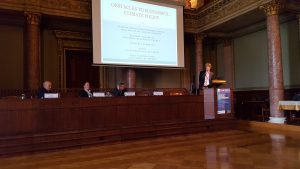
Before, Rick van der Ploeg (Oxford University), had given his impressive and alarming lecture on

Obstacles to successful climate policy“.

Also,  Rick van der Ploeg is a Member of Academia Europaea (MAE) and its section “Economics, Business and Management Sciences” and a Fellow of the Global Labor Organization (GLO).

Andreu Mas-Colell delivering the Erasmus Medal speech.

Rick van der Ploeg presenting his lecture on climate policy

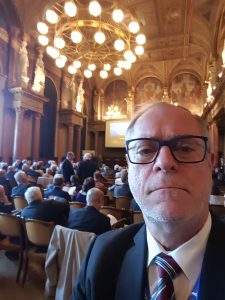
Klaus F. Zimmermann in the most impressive Ceremonial Hall of the Hungarian Academy of Sciences

Ends;

# I stand with CEU! GLO Fellows and Academicians expressed their solidarity at CEU in Budapest

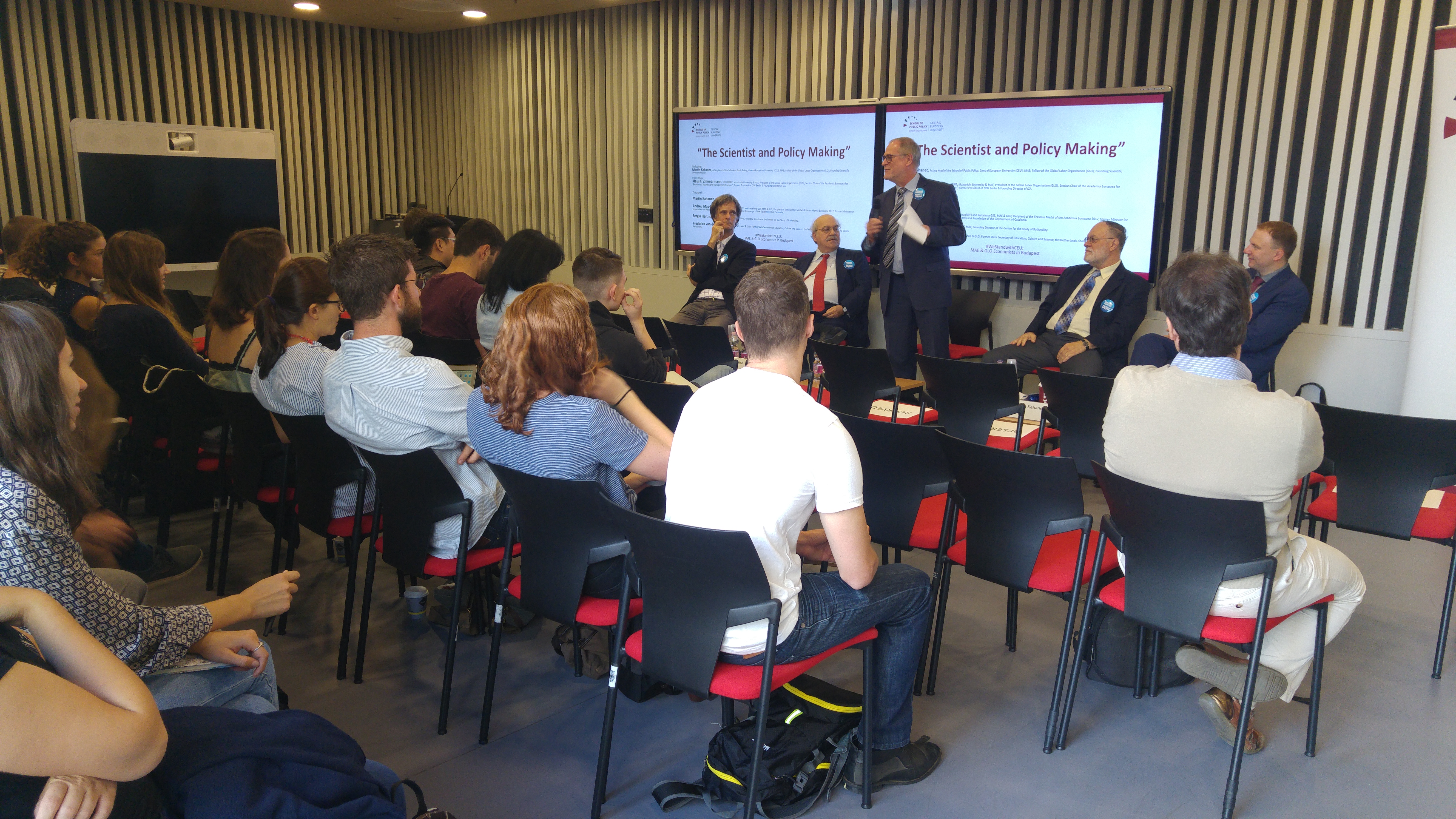
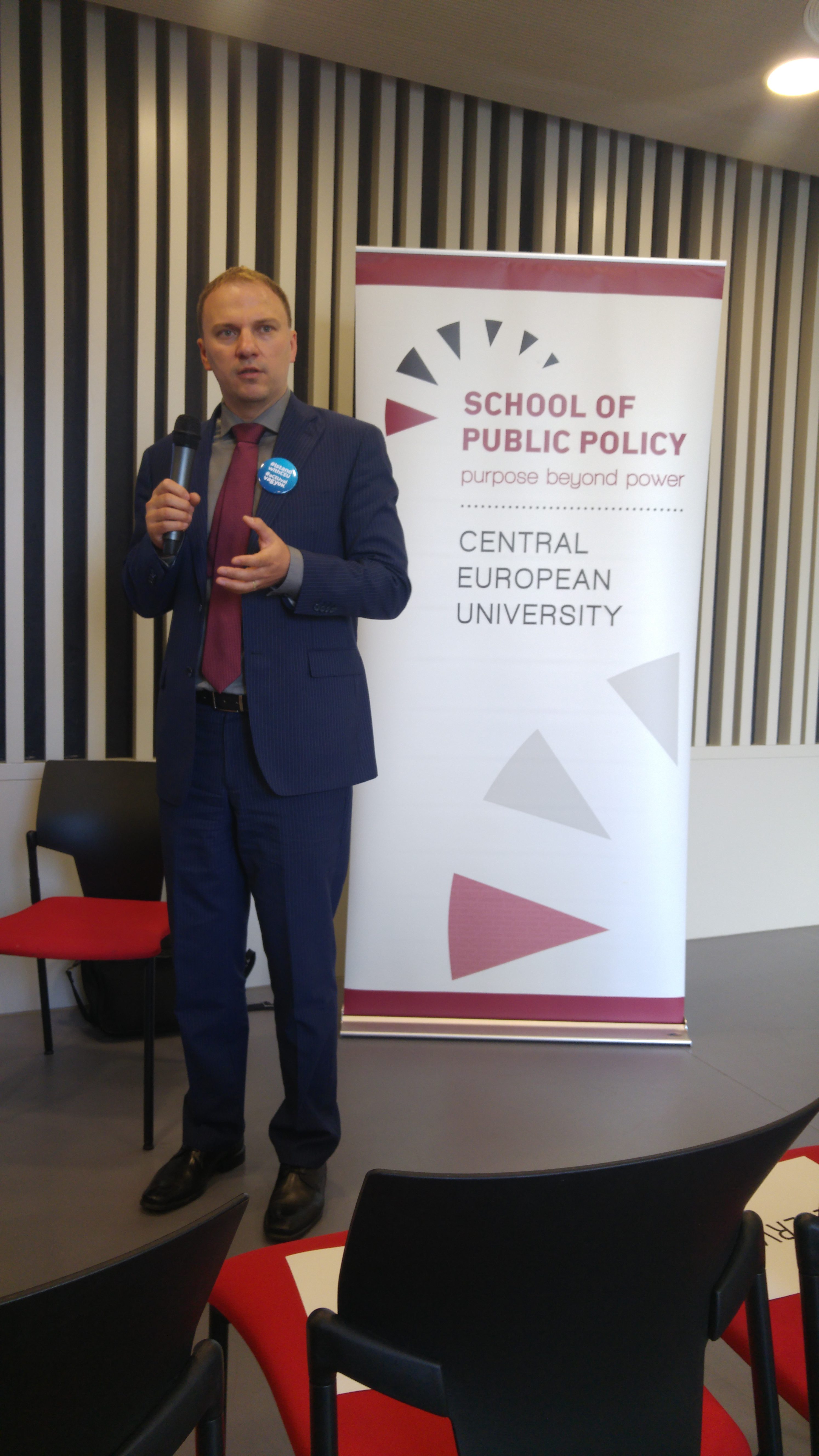
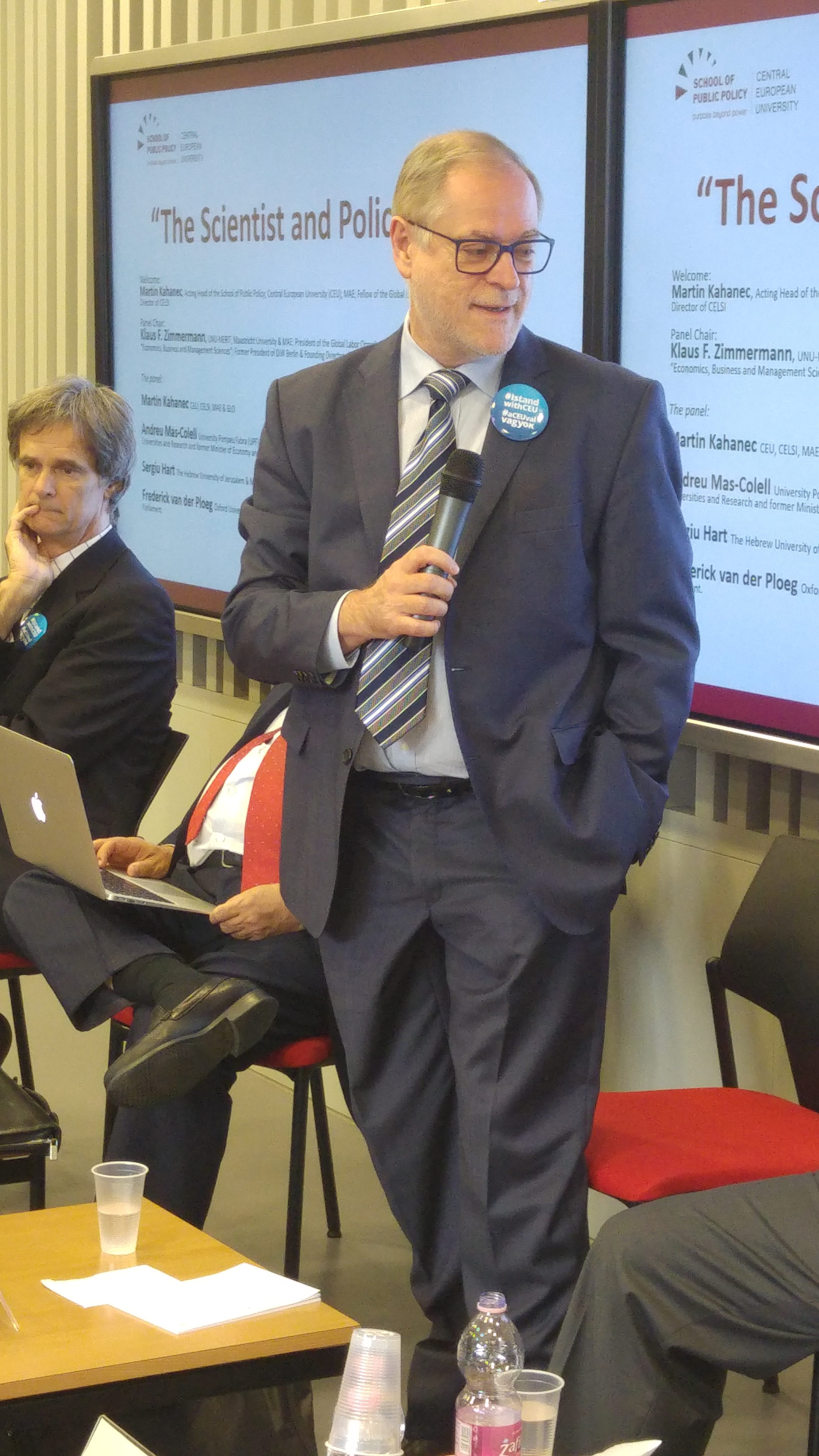
Budapest, September 6, 2017.  At the Central European University (CEU), an outstanding institution of higher education under national political threat, the Global Labor Organization (GLO), the CEU School of Public Policy and the Section “Economics, Business and Management Sciences” of the Academia Europea (AE), had jointly organized a discussion panel meeting on the relationship between science and policymaking.

Evidence-free policy making is on the move. This is a particular challenge for the relationship between scientists and policymakers. A workshop with a high-ranked panel of scientists in Budapest engaged in policy advice and policy-making was debating this in the face of the ongoing discussion about the future of the Central European University (CEU). The open event took place on September 6, 2017 on the premises of CEU hosted by the CEU School of Public Policy. The distinguished panel of the event consisted of prominent members of the Academia Europaea (MAE) and the Global Labor Organization (GLO).

The issue was also debated during the  Academia Europaea 29th Annual Conference 2017 in the Hungarian Academy of Sciences, Budapest, September 4-6, 2017. Academia Europaea (AE) is the Academy of Europe.

EVENT ACTORS:

Panel Chair: Klaus F. Zimmermann, UNU-MERIT, Maastricht University & MAE; President of the Global Labor Organization (GLO), Section Chair of the Academia Europaea for “Economics, Business and Management Sciences”; Former President of DIW Berlin & Founding Director of IZA.

Martin Kahanec, Central European University (CEU), CELSI, MAE; Acting Head of the School of Public Policy; Fellow of the Global Labor Organization (GLO); Founding Scientific Director of CELSI.

Andreu Mas-Colell, University Pompeu Fabra (UPF) and Barcelona GSE, MAE & GLO; Recipient of the Erasmus Medal of the Academia Europaea 2017; former Minister for Universities and Research and former Minister of Economy and Knowledge of the Government of Catalonia.

Sergiu Hart, The Hebrew University of Jerusalem & MAE;   Founding Director of the Center for the Study of Rationality.

Frederick van der Ploeg, Oxford University, MAE  & GLO ; Former State Secretary of Education, Culture and Science, the Netherlands, former Member of the Dutch Parliament.

THE DEBATE: van der Ploeg; Mas-Colell; Zimmermann; Hart & Kahanec

http://www.klausfzimmermann.de/wp/wp-content/uploads/2017/09/20170906_094745.jpg

HOST AND ACTING HEAD: Kahanec

http://www.klausfzimmermann.de/wp/wp-content/uploads/2017/09/20170906_093926-e1504698590435.jpg

PANEL CHAIR: Zimmermann (left: van der Ploeg)

http://www.klausfzimmermann.de/wp/wp-content/uploads/2017/09/20170906_094031-e1504698697779.jpg

Kahanec (left) & Zimmermann in front of CEU

WE ALL STAND WITH CEU

http://www.klausfzimmermann.de/wp/wp-content/uploads/2017/04/170402-ceuval.png

Ends;

GLO President Zimmermann re-elected as Section Chair “Economics, Business and Management Sciences” of the Council of Academia Europaea

The Academia Europaea 29th Annual Conference 2017 takes place from September 3 – 6, 2017 in the Hungarian Academy of Sciences, Budapest. During this meeting on September 4, 2017, Zimmermann has been confirmed as Section Chair of “Economics, Business and Management Sciences” by the AE Council for another period of three years until the end of 2020. See also a related note on GLO Fellow Andreu Mas-Colell.

The Academia Europaea (AE) is The Academy of Europe, Klaus F. Zimmermann (UNU-MERIT Maastricht, Bonn University, and Rockefeller Foundation Policy Fellow) is the President of the Global Labor Organization (GLO) and Section Chair of “Economics, Business and Management Sciences” of the AE.

Zimmermann in front of the Hungarian Academy of Science, Budapest

Ends;

Andreu Mas-Colell speaks on “Is the era of work ending?”

The Academia Europaea (AE), The Academy of Europe, has awarded its prestigious Erasmus Medal in 2017 to Andreu Mas-Colell.  Andreu is a Member of Academia Europaea (MAE) and its section “Economics, Business and Management Sciences”, a Fellow of the Global Labor Organization (GLO), and one of the most prominent European economists of our time. For more details on the medal and the award winner.

In response to this honor, Andreu Mas-Colell will deliver a lecture on

“Is the era of work ending?”

during the Academia Europaea 29th Annual Conference 2017 in the Hungarian Academy of Sciences, Budapest, on Tuesday September 5, 2017.

Andreu Mas-Colell delivers a speculative talk on the future of work – and jobs – in economies subject to the scientific and technological advances associated with mechanization. Three propositions are defended: (i) that if it is made an overwhelming priority of public policy, the minimization of work is a possibility in the long-run, (ii) that the natural development of our managed economies will not necessarily lead to this outcome, and (iii) that this minimization of the role of work is an undesirable outcome that should not be fostered.

Andreu Mas-Colell

Andreu Mas-Colell, University Pompeu Fabra (UPF) and Barcelona GSE, MAE & GLO; Recipient of the Erasmus Medal of the Academia Europaea 2017; former Minister for Universities and Research and former Minister of Economy and Knowledge of the Government of Catalonia.


ae_budapest.jpg

Hungarian Academy of Science

Ends;


Impressive WageIndicator Foundation Conference Honored Innovator Kea Tijdens

On September 1, the Amsterdam Institute for Advanced Labour Studies (AIAS) & the WageIndicator Foundation organized the 2017 Annual Conference on “Wages in Global Perspective: Monitoring Wages Worldwide through WageIndicator“. The conference took place at KIT Royal Tropical Institute, Mauritskade 63, 1092 AD Amsterdam. The conference program can be found HERE.

The event was lead by WageIndicator Foundation Director Paulien Osse and has honored AIAS Research Professsor Kea Tijdens, who just retired formally from her university obligations. Kea will continue to work for WageIndicator and AIAS, however.

The very successful WageIndicator movement had been initiated by Osse and Tijdens in 1999, and has now websites in more than 92 countries around the world and presents detailed information on all kinds of self-reported wages and salaries. The WageIndicator project is strongly supported by the GLOAIAS and the WageIndicator Foundation are partner institutions of the Global Labor Organization (GLO).

Osse and Tijdens are both GLO Fellows, while WageIndicator Foundation Director Paulien Osse also serves as a member of the GLO Founding Council and the GLO Advisory Board. Among the conference speakers were also GLO Fellow Martin Guzi (Masaryk Uni Brno and CELSI, Bratislava) and GLO Fellow Martin Kahanec (Central European University, Budapest, and CELSI, Bratislava) as well as GLO President Klaus F. Zimmermann (GLO & UNU-MERIT, Maastricht University), among others.

 Image result for kea tijdens picture

AIAS Research Professor Kea Tijdens & GLO Fellow

The event was an impressive documentation of the broad contributions for research and policy making the project has made since its start. It has enabled an entire generation of researchers to generate their work and  build careers.

The conference also discussed the future of the project. It is the intention to substantially increase the country coverage, to strengthen the methodological basis and to push for important new program areas including inequality, migration and the future of Africa.

Paulien Osse, WageIndicator Foundation & GLO Fellow, will continue leading and managing the important venture. GLO President Zimmermann announced the strong interest of his organization, to support the WageIndicator movement.

Paulien Osse and Klaus F. Zimmermann after the successful event.

Klaus F. Zimmermann in front of the conference venue, the KIT Royal Tropical Institute.

Ends;

GLO Fellow John Haisken-DeNew of Melbourne University will speak at UNU-MERIT

On a forthcoming trip through Europe, GLO Fellow John P. Haisken-DeNew of Melbourne University will also visit POP at UNU-MERIT on September 18, 2017. He will exchange his recent research and present a paper in the UNU-MERIT seminar at noon on:

Unawareness and Selective Disclosure: The Effect of School Quality Information on Property Prices

The seminar will be chaired by Hugo Confraria (Joint UNU-MERIT/MGSoG Seminar Series). Klaus F. Zimmermann, Co-Director of POP at UNU-MERIT and President of the Global Labor Organization (GLO) will be present.

Further information on John P. Haisken – DeNew.

GLO Fellow John P. Haisken-DeNew

Ends;

ALMR Workshop with GLO Fellow Boyd Hunter and Klaus F. Zimmermann in Canberra/Australia

The 28th Australian Labour Market Research (ALMR) Workshop showcases high-quality labour economic research that engages actively with policy makers. The workshop will be held on 6-7 December 2017 at The Realm Hotel, 18 National Circuit Barton, Canberra, Australia.

The event takes place under the leadership of GLO Fellow Boyd Hunter (Centre for Aboriginal Economic Policy Research, Australian National University). GLO President Klaus F. Zimmermann will provide a keynote on “The European Migration Challenge”.

The timing of the 2017 ALMR Workshop is designed to dovetail with the Asian and Australasian Society of Labour Economics (AASLE) Inaugural Conference to be held in Canberra on 7-9 December 2017 Please note that the AASLE Conference is a SEPARATE event from the 2017 ALMR Workshop and people wanting to attend both will need to register separately for each event. One can register for the 2017 ALMR Workshop at Eventbrite.


GLO Fellow Boyd Hunter

Ends;

Major Breakthrough: FOM – University of Applied Sciences and GLO collaborate

In a major breakthrough, FOM – University of Applied Sciences and GLO  have decided to collaborate and have already started a few joint initiatives!

FOM – University of Applied Sciences, Germany’s biggest private institute of higher education and engaged in the education of professionals, and the Global Labor Organization (GLO), an organization providing global networking in science, will intensify their collaboration. Activities will include joint research activities on education, inequality, conferences and societal activities on a national and global level.

A university for professionals which is providing the opportunity to obtain a state-recognized university degree without having to give up work or restrict the professional activity – this has been the objective of FOM University of Applied Sciences (Hochschule für Ökonomie and Management) since its foundation in 1993. With more than 42,500 students, FOM is Germany’s biggest private institute of higher education. It has been accredited by the German Council of Science and Humanities, Germany’s most important advisory body for science policy. FOM is supported by the non-profit Stiftung BildungsCentrum der Wirtschaft. Experienced speakers from the academic world and industry give on-site lectures at 29 study centers throughout Germany.

FOM – Affiliates Franz-Peter Lang (Braunschweig University and FOM), Andreas Oberheitmann (FOM German-Sino School of Business & Technology) and Manuela Zipperling (FOM Berlin) are all GLO Fellows supporting the collaboration. Franz-Peter Lang also just became a member of the GLO Advisory Board.

Zimmermann had recently visited the FOM Headquarter in Düsseldorf/Germany to discuss the joint ventures. Harald Beschorner, Chancellor of the FOM, stated: “We are looking forward to interact with such a prominent global network, which is part of our mission.” And Klaus F. Zimmermann, President of the GLO, expects “a larger number of fruitful and significant joint projects in research and education. We are proud to partner with FOM, which is a strong player on the market for higher education.”

GLO Fellows Franz Peter Lang (TU Braunschweig and FOM, left) and Christian Leßmann (Director of the Institute of Economics, TU Braunschweig) after a public lecture of Zimmermann (middle) at Braunschweig University in May 2017.

Ends;

GLO Fellows Niaz Asadullah & Maliki Achmad in Jakarta “Fighting Inequality”

GLO South-East Asia Cluster Head and Malaysia Lead Niaz Asadullah was participating in the Indonesia Development Forum (IDF) on “Fighting Inequality for Better Growth”, which took place in Jakarta on 9 and 10 August 2017. He spoke about the role of education in reducing inequality in Malaysia and participated in a panel discussion on multidimensional inequality.  GLO Fellow Dr Maliki had invited papers for presentation.
The Indonesia Development Forum (IDF), initiated by the Ministry of National Planning Agency/ BAPPENAS, is a platform for government, private sector, academia, and other members of society to collaborate for shaping development agendas.

At the conference: GLO Fellows Niaz Asadullah and Maliki Achmad next to Martin Ravallion (Georgetown University)

Again: GLO Fellows Niaz Asadullah and Maliki Achmad

Ends;

New GLO Research Groups on “Green Jobs” & “African Labor Markets”

The GLO network will engage in fostering research on “green jobs” and “African labor markets”. For this purpose, research clusters have been established on Green Employment Creation and Labor Markets in Africa. Green and circular economies are increasingly used in transition to sustainable development. Although growing fast, the African continent faces a larger number structural challenges. For further details see the GLO cluster page.

The GLO Cluster Lead for both initiatives is GLO Fellow Almas Heshmati.  He is Professor of Economics at Jönköping University (Sweden) and Sogang University (Korea) and can be contacted under heshmati@sogang.ac.kr.

Heshmati has held  positions at the Korea University, Seoul National University, University of Kurdistan Hawler, and the MTT Agrifood Research (Finland). He was Research Fellow at the World Institute for Development Economics Research (WIDER), The United Nations University during 2001-2004. From 1998 until 2001, he was an Associate Professor of Economics at the Stockholm School of Economics. He has a Ph.D. degree from the University of Gothenburg (Sweden, 1994), where he held a Senior Researcher position until 1998. His research interests include applied microeconomics, globalization, development strategy, efficiency, productivity and growth with application to manufacturing and services. In addition to a large number of scientific journal articles he has published books on EU Lisbon Process, Global Inequality, East Asian Manufacturing, Chinese Economy, Technology Transfer, Information Technology, Water Resources, Landmines, Power Generation, Renewable Energy, Development Economics, World Values, Economic Growth, Development and Growth in Africa.


Almas Heshmati’s research interests include applied microeconomics. In recent years his research is on development economics and growth in Africa.

“The Scientist and Policy Making”: MAE & GLO Economists in Budapest

# We Stand with CEU!

Hosted by the School of Public Policy (CEU) and organized by the Section “Economics, Business and Management Sciences” of the Academia Europaea with the support of the Global Labor Organization (GLO):

All interested are invited  to participate at an event on

“The Scientist and Policy Making”

on Wednesday, September 6, 2017, 9:30 – 11:00 am, at the Central European University (CEU) in Budapest. The address is CEU, Nador u. 15, H1051 Budapest.

Evidence-free policy making is on the move. This is a particular challenge for the relationship between scientists and policymakers. A workshop with a high-ranked panel of scientists in Budapest engaged in policy advice and policy-making will debate this in the face of the ongoing debate about the future of the Central European University (CEU).

The GLO had early on supported the CEU in this challenge. The same has Academia Europaea (AE) and its President as so many of the members of AE (MAE’s).

Welcome: Martin Kahanec, Central European University (CEU), CELSI, MAE; Acting Head of the School of Public Policy; Fellow of the Global Labor Organization (GLO); Founding Scientific Director of CELSI.

Panel Chair: Klaus F. Zimmermann, UNU-MERIT, Maastricht University & MAE; President of the Global Labor Organization (GLO), Section Chair of the Academia Europaea for “Economics, Business and Management Sciences”; Former President of DIW Berlin & Founding Director of IZA.

Participants on the panel:

Martin Kahanec, CEU, CELSI, MAE & GLO

Andreu Mas-Colell, University Pompeu Fabra (UPF) and Barcelona GSE, MAE & GLO; Recipient of the Erasmus Medal of the Academia Europaea 2017; former Minister for Universities and Research and former Minister of Economy and Knowledge of the Government of Catalonia

Andreu Mas-Colell

Sergiu Hart, The Hebrew University of Jerusalem & MAE;   Founding Director of the Center for the Study of Rationality

Sergiu Hart

Frederick van der Ploeg, Oxford University, MAE  & GLO ; Former State Secretary of Education, Culture and Science, the Netherlands, former Member of the Dutch Parliament

Frederick van der Ploeg


Martin Kahanec and Klaus F. Zimmermann (promoting their recent jointly edited book on the benefits of EU enlargement)

http://www.klausfzimmermann.de/wp/wp-content/uploads/2017/08/45e84428-9688-4b66-8c11-4c1bac7853ff-original.jpeg

# We all stand with CEU!

http://www.klausfzimmermann.de/wp/wp-content/uploads/2017/04/170402-ceuval.png


Ends;

EBES Conference in Bangkok in January 2018: Submission Deadline 31 October 2017

The GLO – affiliated Eurasia Business and Economics Society (EBES) invites researchers to present their work at the 24th EBES Conference in Bangkok/Thailand on January 10-12, 2018. The event is jointly organized with the Faculty of Business Administration of Kasetsart University. The Submission Deadline is October 31, 2017. The GLO is the Global Labor Organization.

Call for Contributions
You are cordially invited to submit your abstracts or papers for presentation consideration at the 24th EBES Conference that will take place on January 10-12, 2018 at the Novotel Bangkok on Siam Square in Bangkok, Thailand, jointly organized with the Faculty of Business Administration, Kasetsart University.

The conference aims to bring together many distinguished researchers from all over the world. Participants will find opportunities for presenting new research, exchanging information, and discussing current issues. Although we focus on Europe and Asia, all papers from major economics, finance, and business fields – theoretical or empirical – are highly encouraged.

Keynote Speakers
Prof. Jonathan Batten, Monash University, Australia
Prof. Euston Quah, Nanyang Technological University, Singapore

Board
Prof. Jonathan Batten, Monash University, Australia
Prof. Iftekhar Hasan, Fordham University, U.S.A.
Prof. Peter Rangazas, Indiana University-Purdue University Indianapolis, U.S.A.
Prof. Euston Quah, Nanyang Technological University, Singapore
Prof. John Rust, Georgetown University, U.S.A., and GLO
Prof. Marco Vivarelli, Università Cattolica Del Sacro Cuore, Italy, and GLO
Prof. Klaus F. Zimmermann, UNU-MERIT, Maastricht University, The Netherlands, and GLO

Abstract/Paper Submission
Authors are invited to submit their abstracts or papers no later than October 31, 2017. For submission, please visit the website. No submission fee is required. General inquiries regarding the call for papers should be directed to ebes@ebesweb.org.

Publication Opportunities
Qualified papers will be published in the EBES journals (no submission and publication fees). EBES journals (Eurasian Business Review and Eurasian Economic Review) are published by Springer and indexed in the Scopus, Emerging Sources Citation Index (Web of Science), EconLit, EBSCO Discovery Service, ProQuest, ABI/INFORM, Business Source,  International Bibliography of the Social Sciences (IBSS), OCLC, Research Papers in Economics (RePEc), Summon by ProQuest, TOC Premier, Cabell’s Directory, Ulrich’s Periodicals Directory, and Google Scholar.

Also all accepted abstracts will be published electronically in the Conference Program and the Abstract Book (with an ISBN number). It will be distributed to all conference participants at the conference via USB. Although submitting full papers are not required, all the submitted full papers will also be included in the conference proceedings in the USB. After the conference, participants will also have the opportunity to send their paper to be published in the Springer’s series Eurasian Studies in Business and Economics (no submission and publication fees).

This will also be sent to Thomson Reuters in order to be reviewed for coverage in its Conference Proceedings Citation Index. Please note that the 10th, 11th, 12th, 13th, 14th, 15th and 17th EBES Conference Proceedings are accepted for inclusion in the Conference Proceedings Citation Index. 16th, 18th and subsequent conference proceedings are in progress.

Important Dates

Submission deadline: October 31, 2017
Reply-by: November 8, 2017
Registration deadline: December 4, 2017
Announcement of the Program: December 7, 2017

Contact
Ugur Can (ebes@ebesweb.org)
Dr. Ender Demir (demir@ebesweb.org) and GLO

21st-EBES-Conference-Budapest

Ends;

GLO President receives prestigious Australian Eminent Research Scholar Award

GLO President Klaus F. Zimmermann (Co-Director of POP at UNU-MERIT & Maastricht University), has been granted the prestigious Australian Eminent Research Scholar Award. He will be resident in November and December 2017 at The Melbourne Institute of Applied Economic and Social Research of the University of Melbourne, Australia.

  • The Melbourne Institute is Australia’s pre-eminent economic and social policy research institution. Renowned for developing longitudinal research tools and using data to build an evidence base for reform, the Institute has been powering effective change for more than 50 years.
  • Zimmermann is President of the Global Labor Organization (GLO), an organization engaging for evidence-based policy making and Honorary Professor of the Free University of Berlin, Maastricht University, and Renmin University, Beijing. He is Past-President of the German Institute for Economic Research (DIW Berlin) and Founding Director of the Institute for the Study of Labor (IZA). Previous academic positions at Princeton University, Harvard University, Bonn University, University of Pennsylvania, Munich University, Kyoto University, Dartmouth College and Mannheim University, among others.

During his Australian visit, Zimmermann will give public lectures and research seminars at the University of Melbourne and various other places, including seminars at the Inaugural Conference of the Asian and Australasian Society of Labour Economics (AASLE) in Canberra at the premises of the Australian National University in December 2017.


http://www.klausfzimmermann.de/wp/wp-content/uploads/2017/05/IMG_20170219_113647.jpg


GLO Session at ICAEP Conference in Kuala Lumpur now up

Full conference program and GLO session now up!

Inaugural International Conference on Applied Economics and Policy (ICAEP) 2017, Kuala Lumpur, August 21-22, 2017

GLO is organizing a special session in the Inaugural International Conference on Applied Economics and Policy (ICAEP) 2017 , to be held at the University of Malaya, Kuala Lumpur on August 21-22, 2017. Four papers will be presented on topics related to women’s labor market participation and performance in three Asian countries (China, Bangladesh, and Malaysia) as well as the impact of demographic change on labour supply and economic growth in APEC region. The session will be chaired by GLO Fellow M Niaz Asadullah.

Here is the GLO session on August 21, 2017:

M Niaz Asadullah & Fahema Talukder
The Paradox of the Contented Female Worker: Evidence from Bangladesh’s RMG Sector
Saizi Xiao & M Niaz Asadullah
Leftover Women? Gender Norms and Male-Female Difference in Paid Work Participation in China
Sharifah Nabilah Syed Salleh, M Niaz Asadullah & Norma Mansor
Women’s Market Work and Unpaid Care Responsibilities: Who Exits the Labor Market in Malaysia?
Rafal Chomik, John Piggott & Peter McDonald
The Impact of Demographic Change on Labour Supply and Economic Growth in APEC


Image result for Niaz Asadullah Pictures


GLO Fellow Niaz Asadullah is Professor at the University of Malaya and GLO South-East Asia Cluster Head and GLO Malaysia Lead.

Ends;

Umag/Croatia-Excel Conference Program is up!

The Experimental Economics Lab presents the 1st International Scientific Conference on Economics in a Changing World. The event takes place on August 27-28 2017 in Umag/Croatia in one of the best holiday resorts of the country.

The impressive conference program with keynote speakers Joshua Angrist (MIT), Alan B. Krueger (Princeton University) and Henry Farber (Princeton University) together with a larger number of contributed papers is now online.

The conference is jointly organized with the Adriatic Economic Association and supported by the Global Labor Organization (GLO) and the World Academy of Art and Science. The organizational team of the event is lead by Dejan Kovac (Princeton University and GLO).

Among the speakers are GLO Fellows Joshua Angrist (MIT), Stepan Jurajda (CERGE-EI) and Dejan Kovac (Princeton University), GLO Affiliate Patrick Nüß (Kiel University), GLO Managing Director Matloob Piracha (University of Kent) and GLO President Klaus F. Zimmermann (UNU-MERIT). Stepan Jurajda and Klaus F. Zimmermann are also chairing sessions on Financial Economics and Econometrics,  (Jurajda) and Political Economy (Zimmermann).

“In the past decade, we have witnessed how different sets of events can trigger global economic changes. From the aftermath of the 2008 financial crisis to today’s increasing number of political and conflict-related shocks, no nation’s economy has proven resistant to these changes. The complexity of interactions between economic and political factors has increased and these elements ought to be incorporated into future policies. A new development agenda should carry forward the spirit of active response to changes, seeking an answer to the questions of what should and can be done to anticipate changes and transform economies for the better. Practical focus of the Conference is highlighting the agenda of challenges, topics of migrations, national security, poverty, education, economic growth and healthcare to fulfill our vision of promoting sustainable development worldwide.”

Image result for Dejan Kovač picture    Dejan Kovac (Princeton University and GLO)

profile image for Dr Matloob Piracha   Matloob Piracha (University of Kent and GLO)

http://www.klausfzimmermann.de/wp/wp-content/uploads/2017/05/IMG_20170219_113647.jpg     Klaus F. Zimmermann (UNU-MERIT and GLO)

Ends;

Enlarged GLO Management Board. Matloob Piracha follows Alessio Brown

The GLO Management Board now consists out of Corrado Giulietti, Matloob Piracha, Victoria Vernon and Klaus F. Zimmermann. Alessio J. G. Brown joins the GLO Advisory Board together with Martin Kahanec, Paulien Osse, John P. Haisken-DeNew and Franz Peter Lang.

Since the start in March 2017, the activities of the GLO were exploding. GLO Director Alessio J. G. Brown had taken a large share of the responsibilities. A number of his tasks were now divided and allocated to different people, also to allow Alessio to take up a new personal career opportunity. Dr. Brown, GLO Founding Director, will remain Honorary Chair in Macroeconomics and Labour at Maastricht University and Co-Director of POP at UNU-MERIT, a cornerstone of the GLO movement, and become a member of the newly created GLO Advisory Board.

GLO President Klaus F. Zimmermann, Co-Director of POP at UNU-MERIT: “Alessio J.G. Brown has co-founded together with me the GLO, was intimately and deeply involved in the strategic development of the vision and mission of the GLO, its network and its platform. He steered all operations including among many others the truly global network, the discussion paper series and communications. We wish to thank Alessio for his strategic perspective and entrepreneurial drive in establishing and growing the GLO.”

GLO Founding Director Alessio J. G. Brown: “The future of research and its dissemination into policy and society lies within open, global and collaborative networks as the GLO. It has been an exciting endeavor realizing our vision of the GLO and reaching so many milestones in a short period of time. I am grateful to the network for the immense support the GLO has received. I wish the GLO and its network great success, that it will thrive and relentlessly pursue its truly global mission. Leaving the GLO operational management after this intense time is not easy, but the new leadership team with Klaus, Matloob, Corrado and Victoria promises a steep and successful further development of the network and its activities. I am delighted that I will be able to continue to serve the GLO and its network in the GLO Advisory Board.”

The new GLO Managing Director is Matloob Piracha (University of Kent). The new GLO Research Director is Corrado Giulietti (University of Southampton). The GLO Director Social Media is Victoria Vernon (State University of New York). More appointments will follow.

Dr Matloob Piracha is a Senior Lecturer (Associate Professor) in the School of Economics at the University of Kent. He has had extensive experience of working on migration and related issues and has published a number of papers on the impact of migration on sending countries as well as on migrants and their left-behind families. Matloob has acted as a consultant or a collaborator for a number of international organisations including the OECD, UK Department for International Development (DfID) and the World Bank.

GLO Managing Director Matloob Piracha: “This is an exciting task in challenging times. I am eager to continue the path Alessio has set, and to explore new dimensions. I am looking forward to collaborate with Klaus, Alessio, Corrado, and all the many others who are already so crucial for what GLO has become already.”

Corrado Giulietti is Associate Professor at the Department of Economics, University of Southampton. Previously, he was Director of Research at the Institute for the Study of Labor (IZA) in Bonn. He also collaborates with the ESRC Centre for Population Change (CPC). His research interests are on labor and development economics, with a focus on migration and its determinants, the impact on receiving countries, the labor market performance of immigrants and the role of their social networks.

GLO Research Director Corrado Giulietti: “We discussed this new venture since years, already for long during my time at IZA. I am quite impressed how fast we have moved, and how much support we have already obtained. I look forward to strengthen the already existing research networks and  support new ones.”

Victoria Vernon is Associate Professor at the Empire State College of the State University of New York. She has lectured for many years at Princeton University after completing her MA at Indiana University and her PhD at the University of Texas at Austin. Her research interest covers labor and family economics. She has published in outlets such as the Journal of Political Economics, the Review of Economics of the Household and the Journal of Family and Economic Issues.

GLO Director Social Media is Victoria Vernon: “The GLO is a fast growing, fascinating new venture that is clearly needed to bridge activities between continents, the research community and practice. I am looking forward to making knowledge and insights visible and influential through the channels of social media.”

The newly created GLO Advisory Board currently consists of:

Alessio J. G. Brown, POP at UNU-MERIT and Maastricht University

Martin Kahanec, Central European University and CELSI

Paulien Osse, Wage Indicator Foundation

John P. Haisken-DeNew, Melbourne Institute of Applied Economic and Social Research

Franz Peter Lang, Technical University of Braunschweig and FOM


This staff complements the 15 GLO Thematic Cluster Leads and the 7 GLO Geographical Cluster Leads.


GLO Director Social Media Victoria Vernon

http://www.klausfzimmermann.de/wp/wp-content/uploads/2017/07/Vernon-Victoria-Picture.jpg


GLO Founding Director Alessio Brown

http://www.klausfzimmermann.de/wp/wp-content/uploads/2017/07/Alessio-Brown-Picture.jpg

GLO Managing Director Matloob Piracha

profile image for Dr Matloob Piracha


GLO Research Director Corrado Giulietti

Image result for Corrado Giulietti

GLO President Klaus F. Zimmermann
  http://www.klausfzimmermann.de/wp/wp-content/uploads/2017/05/Zimmermann_03.jpg

cid:image001.png@01D2FF14.08AE5FC0

ENDS;

Monitoring Wages Worldwide through “WageIndicator”: Forthcoming Amsterdam Conference with GLO support

On September 1, the Amsterdam Institute for Advanced Labour Studies (AIAS) & the WageIndicator Foundation will organize their 2017 Annual Conference on “Wages in Global Perspective: Monitoring Wages Worldwide through WageIndicator“. AIAS and the WageIndicator Foundation are partner institutions of the Global Labor Organization (GLO).

The event is lead by WageIndicator Foundation Director Paulien Osse and AIAS Research Coordinator Kea Tijdens. The WageIndicator movement had been initiated by Osse and Tijdens in 1999, and has now websites in more than 92 countries around the world and presents detailed information on all kinds of self-reported wages and salaries. The WageIndicator project is strongly supported by the GLO.

Osse and Tijdens are both GLO Fellows, while WageIndicator Foundation Director Paulien Osse also serves as a member of the GLO Founding Council and the GLO Advisory Board. Among the conference speakers are also GLO Fellow Martin Guzi (Masaryk Uni Brno and CELSI, Bratislava) and GLO Fellow Martin Kahanec (Central European University, Budapest, and CELSI, Bratislava) as well as GLO President Klaus F. Zimmermann (GLO & UNU-MERIT, Maastricht University), among others.

The conference will take place at KIT Royal Tropical Institute, Mauritskade 63, 1092 AD Amsterdam.

 The Amsterdam Institute for Advanced labour Studies (AIAS) is an institute for multidisciplinary research and teaching at the University of Amsterdam.
Share and Compare Wages, Labor Laws and Career

ENDS;

GLO supports 59th ISLE Labour Conference in Kerela/India

The Global Labor Organization (GLO) supports the annual conference of the Indian Society of Labour Economics (ISLE) and the associated Indian Journal of Labour Economics. Both are partner institutions of the GLO.

CALL FOR PAPERS

59th ISLE Annual Conference, 16-18 December 2017, Thiruvananthapuram, Kerala, India

The 59th Annual Conference of the Indian Society of Labour Economics (ISLE) will be held during 16-18 December 2017 in the premises of Gulati Institute of Finance and Taxation (GIFT), Thiruvananthapuram, Kerala. The conference is organized for ISLE by  GIFT in collaboration with the Department of Economics, Kerala University, and the Centre for Development Studies, Thiruvananthapuram.

Submission of Papers:  Papers along with a summary of about 500 to 750 words should be submitted online at www.isleijle.org/59isleconference or emailed to conference.isle@gmail.com. Selected papers are considered for publication in the Indian Journal of Labour Economics after peer reviewing.

The GLO will organize a special GLO session at this conference. Those GLO members interested to contribute to such a session are invited to contact GLO President Klaus F. Zimmermann (klaus.f.zimmermann@gmail.com).

INDIAN SOCIETY OF LABOUR ECONOMICS (ISLE)   

Ends;

GLO Fellow John P. Haisken-DeNew on Challenges to the Australian Auto Industry

How to keep high skilled manufacturing jobs to stay in Melbourne and Adelaide?

Prof. Dr. John P. Haisken-DeNew (Melbourne Institute and GLO Cluster Leader “Employment Structural Transitions”) presented at the Melbourne Institute/The Australian’s “Economic and Social Outlook” Conference “New Directions in an Uncertain World” (http://melbourneinstitute.unimelb.edu.au/outlook), July 20, 2017. Haisken-DeNew is also a Fellow of the Global Labor Organization (GLO) and its Country Lead for Australia.

As Haisken-DeNew reports, “The Australian auto assembly industry will be closing by October 2017. That means some 7000 workers not only in the primary assembly plants, but tens of thousands also in the entire supply chain and further ripple-on effects. This impacts negatively on Melbourne and Adelaide greatly where the industry was concentrated. In order to keep employment in these cities, we need to focus on developments that will provide incentives for high skilled manufacturing jobs to stay in these cities.”

“‘Smarter Energy’ offers these opportunities. Smarter Energy uses (only now very cheap) Lithium-Ion batteries to store electricity in the evenings when there is excess production of electricity, which can then the next morning be reintroduced into the grid to provide additional capacity and stabilise the grid. This will also help us reach our clean energy targets and reduce our reliance on fossil fuels. This “Smarter Energy” idea is currently being implemented in Toronto, in part by former auto industry workers and engineers! This is happening NOW in Canada. Australia needs to learn from Canada and implement this in Australia to keep employment in the former industrialised cities of Melbourne and Adelaide, and launch them into the next century of growth, jobs, and environmental protection. This is a win-win for all. The latest South Australia announcement of the Tesla super battery being installed demonstrates proof of concept. We need a consortium of auto companies, coal companies, universities/research organisations and government, to come together to ensure that this happens!”

YouTube Streaming Video:  https://youtu.be/PoamEpgL5Eo

Conference Slides: https://www.dropbox.com/s/al9i1acmimsep3r/Outlook_JPHD_FINAL.pdf?dl=0

GLO Fellow John P. Haisken-DeNew

Haisken-DeNew during his speech in Melbourne

Ends;

INBAM supports the GLO network

The International Network of Business & Management Journal Editors (INBAM) brings together experienced journal editors and world class researchers. The Global Labor Organization (GLO) deals with the challenges related to human resources in a global context. Both organizations decided to collaborate.

The Global Labor Organization (GLO) is an international, independent, non-partisan and non-governmental organization that has no institutional position. The GLO functions as an global network and virtual platform for researchers, policy makers, practitioners and the general public interested in scientific research and its policy and societal implications on global labor markets, demographic challenges and human resources.

The International Network of Business & Management Journal Editors (INBAM) is a UK registered charity dedicated to two central objectives:

First, of advancing the knowledge of the academic community (and particularly of junior researchers), practitioners and the general public on the subject of research promotion and publishing  in journals of business, management and associated social sciences.

Second, of supporting  and encouraging the education of young researchers, early and later career academics wherever they may live or work, in the development, composition and publishing of their research papers in reputable journals.

INBAM brings together its experienced journal editor members and academics researchers in a mutually supportive system of workshops, conferences and training sessions in different countries, especially where the supportive educational framework is in a development phase.

Ends;

May 2018: Joint GLO – EBES Conference in Berlin

Note the dates: The 25th Conference of the Eurasia Business and Economics Society (EBES) will take place on May 23-25, 2018 in Berlin/Germany. It is jointly organized with the Global Labor Organization (GLO) and hosted by the FOM University in their Berlin study center. The conference with further information including the Call for Papers can be found here.

Abstract submission for the 25th EBES Conference will start on November 3, 2017 with a deadline on February 28, 2018. The decision regarding the acceptance/rejection of each abstract/paper will be communicated with the corresponding author within a week after submission.

Klaus F. Zimmermann (GLO President & POP at UNU-MERIT, Maastricht) will be given the EBES Fellow Award 2018  after Giovanni Dosi (2017) and M. Hashem Pesaran (2016). Further details.

EBES recently announced updated executive and advisory boards and the editorial board of the Eurasian Economic Review (EAER):

  • GLO President Klaus F. Zimmermann, from the UNU-MERIT, Maastricht University, the Netherlands, joined the EBES Executive Board and EAER Editorial Board.
  • GLO Fellow Giuseppe Ciccarone, from the Sapienza University of Rome, Italy, joined the EAER Editorial Board.
  • Steven Ongena, from the University of Zurich, Switzerland, joined the EBES Advisory Board.
  • Russ Vince, from the University of Bath, United Kingdom, joined the EBES Advisory Board.

Ends;

Call for Papers on Comparative Wealth and Income Research

Comparative Wealth and Income Research

Call for papers: Special Issue of the Journal of Income Distribution

LIS has been providing data on income and wealth for comparative research since 1983. Over the years, Luxembourg Income Study (LIS) or Luxembourg Wealth Study (LWS) databases have made possible hundreds of publications, including many articles in top journals. In this special of the Journal of Income Distribution scholars are offered the opportunity to publish their LIS/LWS research in one volume in a swift manner in order to broaden the discussion and enhance our knowledge from inequality and poverty to labor market participation, from saving patterns to class composition. Papers with cross-comparative perspective or an overview over time are particularly welcomed. All submissions will undergo the standard -refereeing procedure. Priority will be given to papers presented at the 2017 LIS/LWS Users Conference.

Submissions on the following and related topics will be considered:

A. The distributions of living standards, inequality, poverty, and mobility
B. Micro and macro models on the (causal) relationships between inequality and economic development / crisis and empirical tests of such models
C. Policy lessons: the role of public policies for economic growth and inequality
D. Cross-country comparisons, e.g. between rich and poor countries, and comparisons across different societal groups

Submission Deadline: July 31, 2017

Please submit your paper online with the subject line “LIS” to http://www.jid-online.org/

Guest editors of the Special Issue:
Daniele Checchi
Janet Gornick

Managing Editors:
Christos Koulovatianos
Carsten Schroeder
Eva Sierminska

Proposed by GLO Fellow Eva Sierminska. She is also the GLO Cluster Lead on Labor and Wealth.

Ends;

GLO Fellow Eva Sierminska leads new research cluster on Labor and Wealth

Inequality has become again a prominent topic of global debate. A largely understudied area is the distribution of wealth. A new GLO Cluster “Labor and Wealth” deals with the human resources challenges. The GLO Cluster Lead is GLO Fellow Eva Sierminska (LISER, the Luxembourg Institute of Socio-Economic Research) currently visiting the University of Arizona.

Labor and Wealth — GLO Cluster Abstract

The Great Recession and the retrenchment of welfare states have increased the role of private assets for the economy and the household.  In addition, inheritance and gifts are shown to affect labor market decisions. At the same time, labor market outcomes and decisions play a dominant role in wealth accumulation for a majority of the population. The role of institutions, policies and tax structures in this context is also substantial. The recent advances in data collection have spurred and enabled a new interest in these themes.

The GLO cluster Labor and Wealth focuses on unraveling these themes into systematic findings while focusing on intra-household decision making, financial education and labor market outcomes. Identifying the role of institution in this respect can help identify policies needed to reduce vulnerabilities among households (throughout the wealth distribution).

GLO Fellow Eva Sierminska is also a Managing Editor of the Journal of Income Distribution that currently has a Call for Papers for a Special Issue on “Comparative Wealth and Income Research” (deadline July 31, 2017).

Ends;

GLO Heads Brown & Zimmermann on the Hounds of Globalization

Companies need to actively and positively account for the hounds of globalization – migration and digitization, issues which are core to the research efforts of the Global Labor Organization (GLO)GLO Director Alessio J.G. Brown and GLO President Klaus F. Zimmermann have just published a joint article in Germany’s leading Human Resources Magazine Personalführung (in German). 

Brown and Zimmermann both serve also as Co-Directors of POP at UNU-MERIT in Maastricht and as Honorary Professors of Maastricht University.

Abstract

Die Planung und Entwicklung der Humankapitalressourcen in den Unternehmen steht vor gewaltigen Zukunftsaufgaben. Die Globalisierung, wenn auch zunehmend bekämpft, setzt weltweite Standards und erzwingt Wettbewerb. Der Beitrag analysiert die Themenfelder Demographie, Europa, Migration und Digitalisierung. Mitarbeiterrekrutierung wird für die Unternehmung zur Herausforderung. Arbeit wird flexibler und an die Bedürfnisse der Beschäftigten angepasst. Aber ihre sozialen und wirtschaftlichen Risiken nehmen zu. Mitarbeiterführung und Mitarbeitermotivation stehen vor neuen Fragen.

A copy of the article can be found here.

Zimmermann and Brown in front of UNU-MERIT in Maastricht.

http://www.klausfzimmermann.de/wp/wp-content/uploads/2016/11/IMG_20161125_055838-e1480089811841.jpg

Ends;

GLO led Session at the APPAM International Conference in Brussels, 13-14 July 2017

The international conference of the Association for Public Policy Analysis and Management (APPAM) will take place in Brussels on 13-14 July 2017,under the theme ‘Public Policy & Governance Beyond Borders’. The event is co-hosted by MGSoG/UNU-MERIT (Maastricht University, NL) and the Maxwell School of Citizenship and Public Affairs (Syracuse University, USA).

GLO Director Alessio J.G. Brown organized and will chair a session “Labor Market and Health Impacts of Refugees and Asylum Seekers ” on Friday, July 14 at the international conference of the Association for Public Policy Analysis and Management (APPAM).

The Panel Session will consist of the following presentations:

Amelie F. Constant, Princeton University; Global Labor Organization (GLO)

Immigrant Health Assimilation in Europe

Veronika Fajth, Maastricht University

The Effects of Refugees on Social Cohesion in Local Communities: The Case of Congolese Refugees in Rwanda

Jessica Hagen-Zanker, Overseas Development Institute

Cash Transfers for Refugees: The Economic and Social Effects of a Programme in Jordan