Category Archives: Research

GLO members visited the Swedish Collegium for Advanced Study in Uppsala

GLO Fellow Maria Paradiso and Klaus F. Zimmermann, President of the Global Labor Organization (GLO) both visited the Swedish Collegium for Advanced Study in Uppsala to participate at the annual Class Meeting of the section chairs of Social and Related Sciences (Class A2) of the Academia Europea (AE), the European Academy. The Class Meeting discussed nominations for membership and the future academic work of the class.

GLO Fellow Professor Maria Paradiso is Section Chair of the Section Social Sciences of the Academia Europea (AE) and also affiliated with the University of Sannio, Italy.

GLO President Professor Klaus F. Zimmermann is Section Chair of the Section Economics, Business and Management Sciences of the Academia Europea (AE) and also affiliated with UNU-MERIT & Maastricht University, The Netherlands.

After the Uppsala meeting: Maria Paradiso and Klaus F. Zimmermann at Frankfurt airport changing flights. Both had discussed ways to intensify collaborations between their AE Sections and about research related to their joint research area, migration, including GLO business.

The AE is the Academy of Europe, and the sections of Class A2 are (i) Behavioural Sciences, (ii) Social Sciences, (iii) Economics, Business and Management Sciences and (iv) Law with the respective chairs Ulrich Teichler (University of Kassel, representing Peter Scott), Maria Paradiso, Klaus F. Zimmermann and Dagmar Coester-Waltjen (University of Göttingen). The event was led by Class Chair Björn Wittrock  of the Swedish Collegium for Advanced Study in Uppsala, who also acted as the local host. The Class Meeting discussed nominations for membership and the future academic work of the class.

From the left: Ulrich Teichler, Björn Wittrock, Maria Paradiso, Klaus F. Zimmermann and Dagmar Coester-Waltjen.

From the right: Ulrich Teichler, Dagmar Coester-Waltjen, Maria Paradiso and Klaus F. Zimmermann  in front of the Swedish Collegium for Advanced Study in Uppsala.

Many prominent GLO Fellows are elected distinguished members of the Acedemia Europaea.

Examples are: Lucian Liviu Albu, Torben Andersen, Graziella Bertocchi, Amelie Constant, Partha Dasgupta, Manfred Deistler, Peter Dolton, Gustav Feichtinger, Stepan Jurajda, Martin Kahanec, Kai Konrad, Andreu Mas-Colell, Peter Nijkamp, Karine Nyborg, Jacques Poot, Mirjana Radovic-Markovic, Nina Smith, Rick van der Ploeg, Thierry Verdier, Reinhilde Veugelers, Marie Claire Villeval, Rainer Winkelmann, and Yves Zenou.

GLO and AE have collaborated in various ways, e.g. supporting Central European University (CEU) in Budapest in 2017.

# I stand with CEU! GLO Fellows and Academicians expressed their solidarity at CEU in Budapest

“The Scientist and Policy Making”: MAE & GLO Economists in Budapest

Central European University (CEU) under threat


Over 2015 – 2017, GLO President Klaus F. Zimmermann had hosted the Social and Related Sciences (Class A2) of the Academia Europea (AE) annual Class Meeting in Bonn, twice at his private home, and 2015 at the Institute for the Study of Labor (IZA).

The Section Chairs of Class 2 of the Academia Europaea (AE) met on July 13 – 14, 2015, at the Institute for the Study of Labor (IZA) in Bonn to discuss joint initiatives including the nominations of new AE members.

Zimmermann_Group_2015_small.jpg

The picture has (from the left) Peter Scott, Antoine Bailly, Anne Buttimer (+), Joseph Straus, Aleksandra Nowak, and Klaus F. Zimmermann representing the sections (i) Behavioural Sciences, (ii) Social Sciences, (iii) Economics, Business and Management Sciences, and (iv) Law.

Ends;

GLO Discussion Papers June 2018 & Discussion Paper of the Month

Titles and free access/links to GLO Discussion Papers

GLO Discussion Papers are research and policy papers of the GLO Network which are widely circulated to encourage discussion. Provided in cooperation with EconStor, a service of the ZBW – Leibniz Information Centre for Economics, GLO Discussion Papers are among others listed in RePEc (see IDEAS, EconPapers). Complete list of all GLO DPs downloadable for free.

GLO Discussion Paper of the Month: June

Giuntella, Osea & Mazzonna, Fabrizio & Nicodemo, Catia & Vargas-Silva, Carlos, 2018. “Immigration and the Reallocation of Work Health Risks,” GLO Discussion Paper No. 215, Global Labor Organization (GLO). PDF Free Download. Forthcoming: Journal of Population Economics

Abstract: This paper studies the effects of immigration on the allocation of occupational physical burden and work injury risks. Using data for England and Wales from the Labour Force Survey (2003-2013), we find that, on average, immigration leads to a reallocation of UK-born workers towards jobs characterized by lower physical burden and injury risk. The results also show important differences across skill groups. Immigration reduces the average physical burden of UK-born workers with medium levels of education, but has no significant effect on those with low levels. We also find that that immigration led to an improvement of self-reported measures of native workers’ health. These findings, together with the evidence that immigrants report lower injury rates than natives, suggest that the reallocation of tasks could reduce overall health care costs and the human and financial costs typically associated with workplace injuries.

GLO Discussion Papers of June 2018

222 Ageing, the socioeconomic burden, labour market and migration. The Chinese case in an international perspectiveDownload PDF
by Bruni, Michele

221 Gender and climate change: Do female parliamentarians make a difference?Download PDF
by Mavisakalyan, Astghik & Tarverdi, Yashar

220 Unemployment and Marital Breakdown: The Spanish Case – Download PDF
by González-Val, Rafael & Marcén, Miriam

219 Self-employment as a stepping stone to better labour market matching: a comparison between immigrants and natives – Download PDF
by Ulceluse, Magdalena

218 The Role of Human Capital Resources in East African Economies – Download PDF
by Urgaia, Worku R

217 The role of conflict in sex discrimination: The case of missing girls – Download PDF
by Mavisakalyan, Astghik & Minasyan, Anna

216 A parsimonious model of longevity, fertility, HIV transmission and development – Download PDF
by Gori, Luca & Manfredi, Piero & Sodini, Mauro

215 Immigration and the Reallocation of Work Health Risks – Download PDF
by Giuntella, Osea & Mazzonna, Fabrizio & Nicodemo, Catia & Vargas-Silva, Carlos

214 R&D, Embodied Technological Change and Employment: Evidence from Spain – Download PDF
by Pellegrino, Gabriele & Piva, Mariacristina & Vivarelli, Marco

M.M. (Magdalena) Ulceluse, PhD

GLO DP Team
Senior Editors:
Matloob Piracha (University of Kent) & GLO Klaus F. Zimmermann (UNU-MERIT, Maastricht University and Bonn University).
Managing Editor: Magdalena Ulceluse, University of Groningen. DP@glabor.org

Ends;


International Conference in Berlin: Highlights of EBES25 with GLO & FOM in Berlin

The 25th Conference of the Eurasia Business and Economics Society (EBES) took place on May 23-25, 2018 in Berlin/Germany. It was jointly organized with the Global Labor Organization (GLO) and hosted by the FOM University of Applied Sciences in their Berlin study center. During the conference, 316 papers by 525 researchers from 60 countries were presented. The event is part of a long-term partnership of GLO & EBES and GLO & FOM.

THE FULL CONFERENCE PROGRAM CAN BE ACCESSED HERE.

Further information can be found here: Conference call; EBES Fellow Award; GLO Activities.

This post reports some highlights by presenting a few selected pictures.

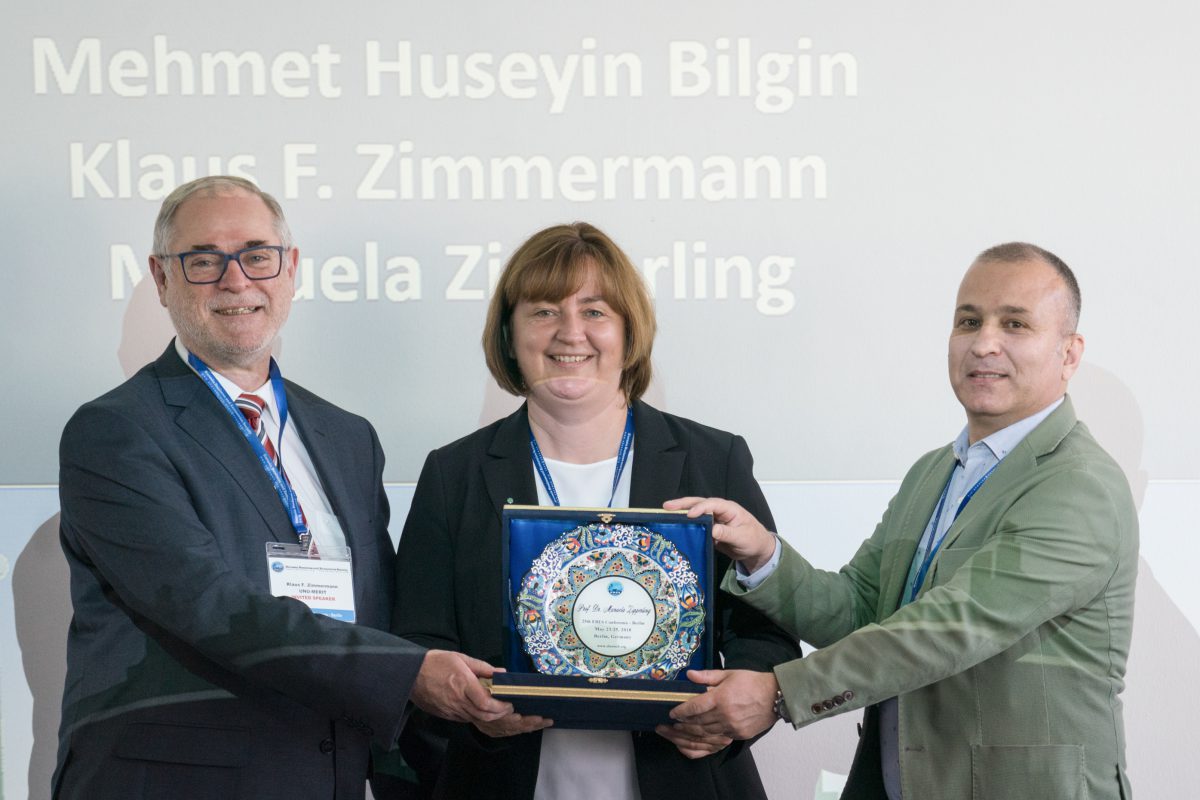
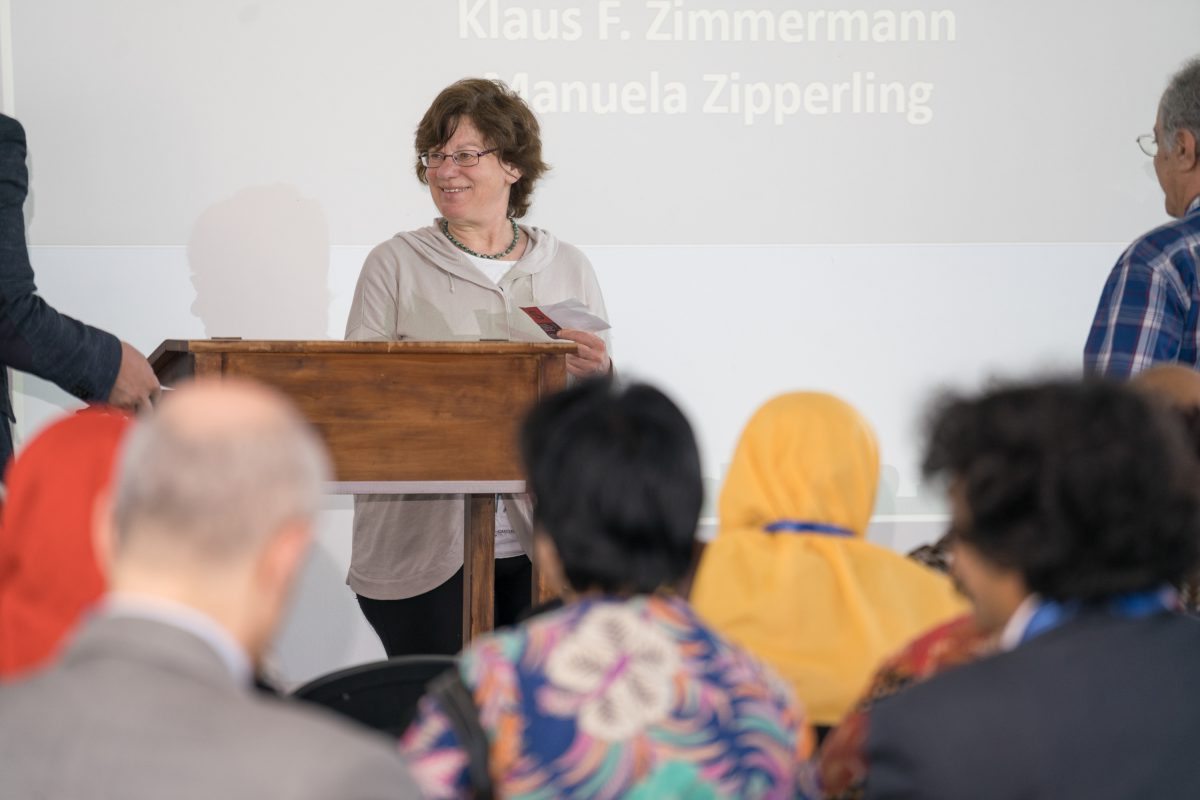
Welcome! And “Thank You!” for a perfect local organization: Professor and GLO Fellow Manuela Zipperling (Head of FOM Berlin) receives the “EBES thank you plate” presented by Professor and GLO Fellow Mehmet Huseyin Bilgin (Vice President of EBES and Istanbul Medeniyet University, Istanbul) (right) and assisted by GLO President Klaus F. Zimmermann (left).

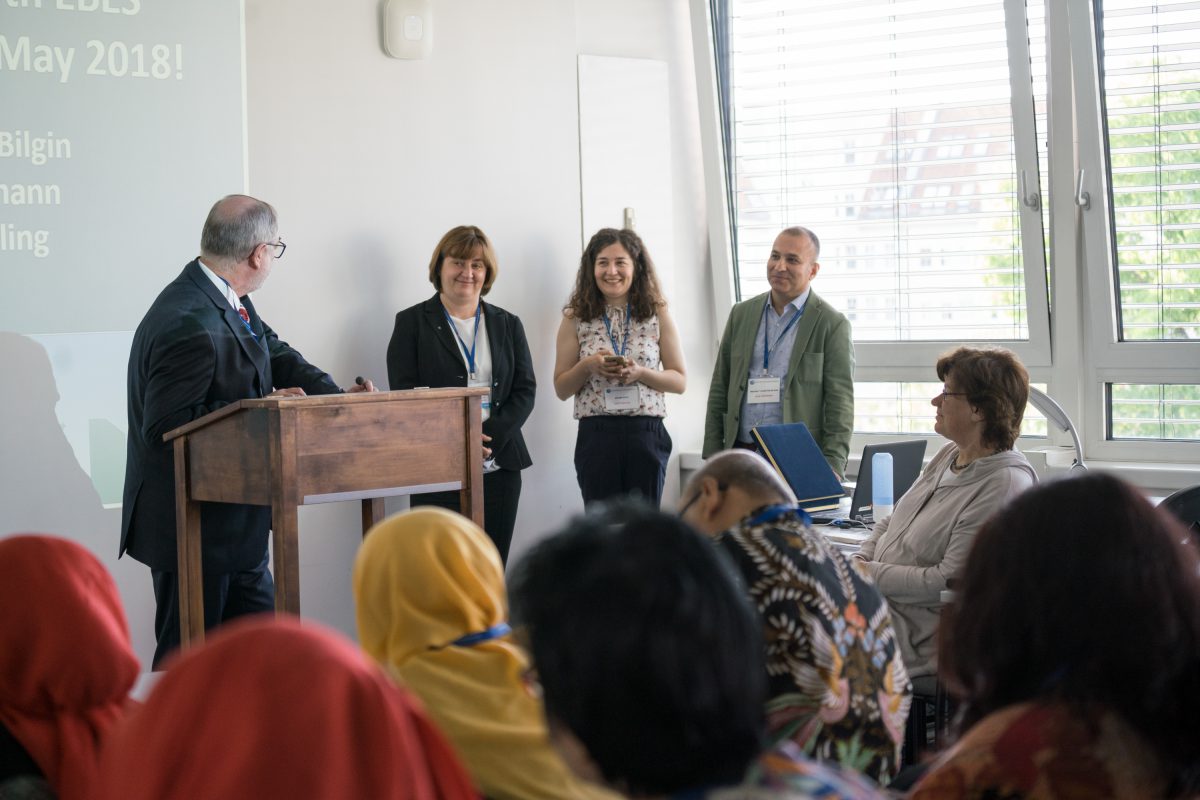
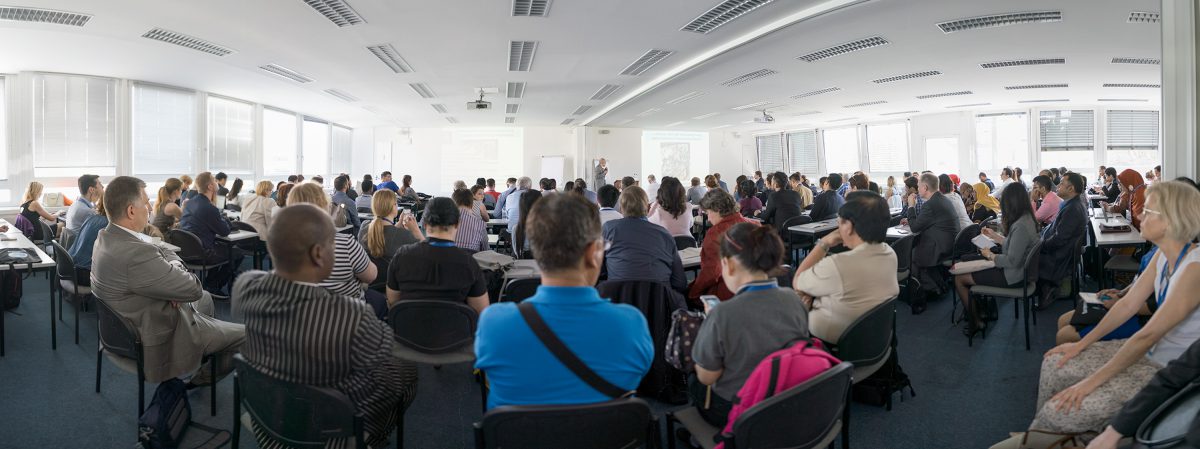
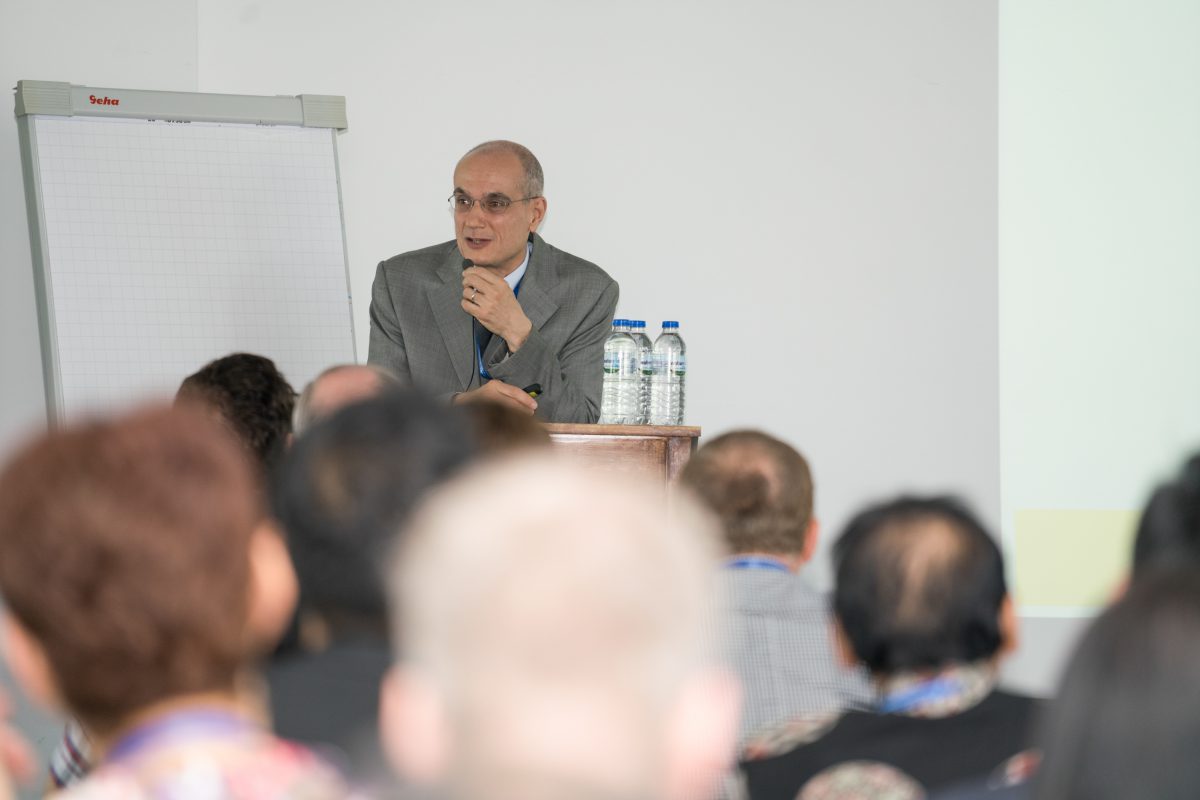
GLO President Professor Klaus F. Zimmermann (UNU-MERIT, Maastricht, from the left) addressed the large audience, and Manuela Zipperling (Head of FOM Berlin),  Aylin Akin (Assistant Editor of the EBES Journals), Mehmet Huseyin Bilgin (Vice President of EBES and Istanbul Medeniyet University, Istanbul) and Professor and GLO Fellow Kea Tijdens (University of Amsterdam and WageIndicator Foundation).

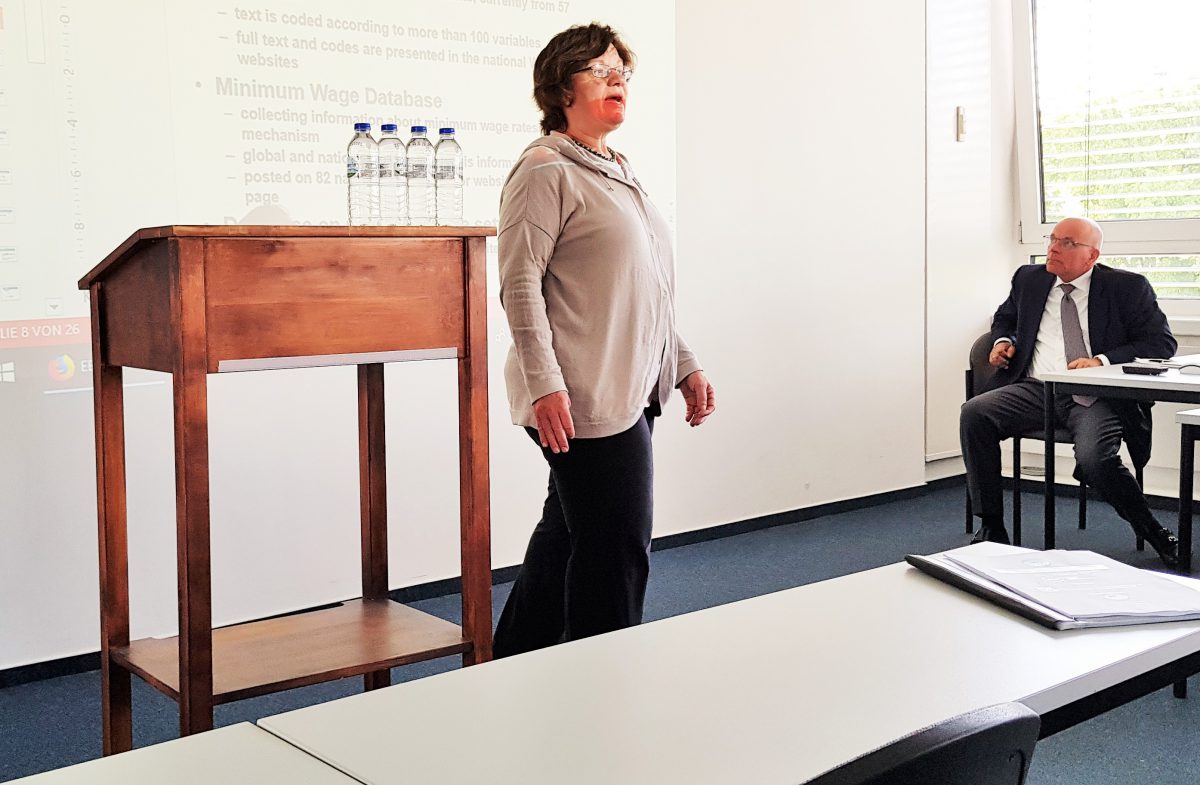
GLO Fellows Kea Tijdens and Christoph Kannengießer (CEO, German African Business Association), both chairing and speaking at the GLO Policy Panel on: “Mobilizing Human Resources in Africa”.

GLO Fellow Marco Vivarelli (Catholic University of Milan) during his keynote lecture in the keynote session “The Economics of Technology and Employment”).

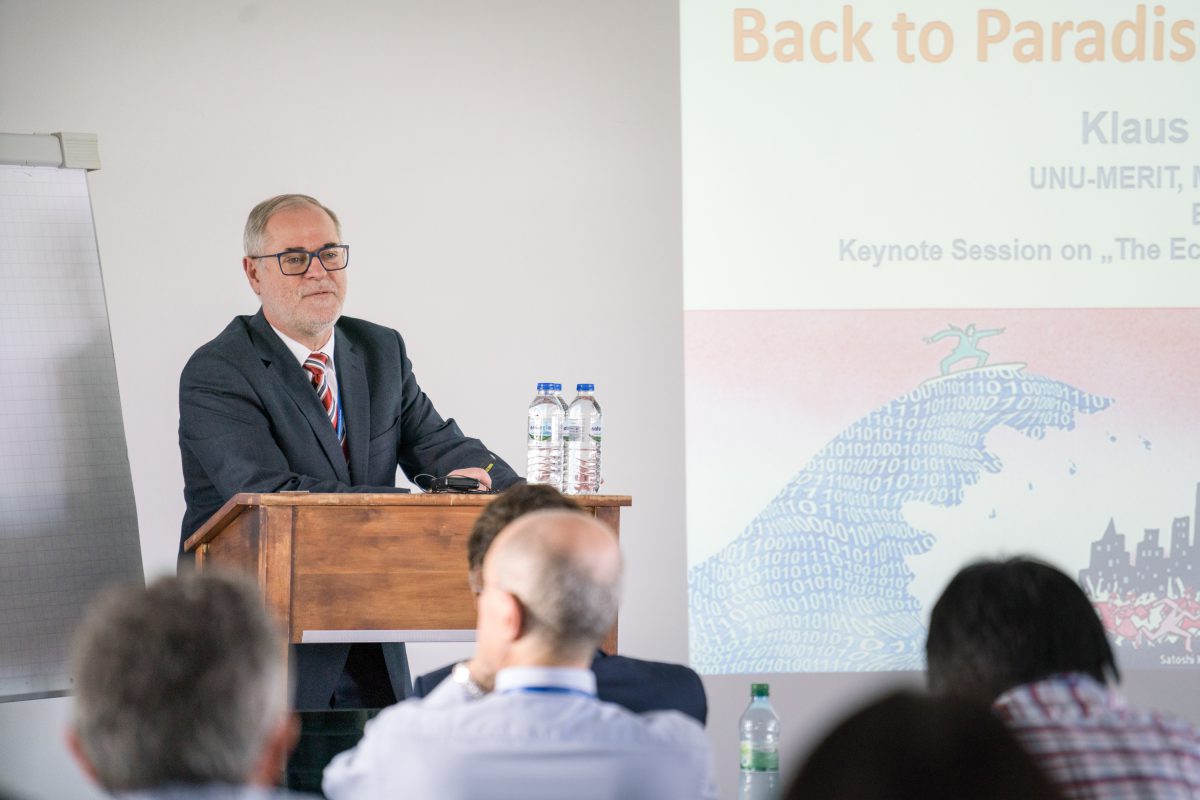
Klaus F. Zimmermann during his keynote lecture about “Back to Paradise? Technology and Jobs” in the keynote session on “The Economics of Technology and Employment”.

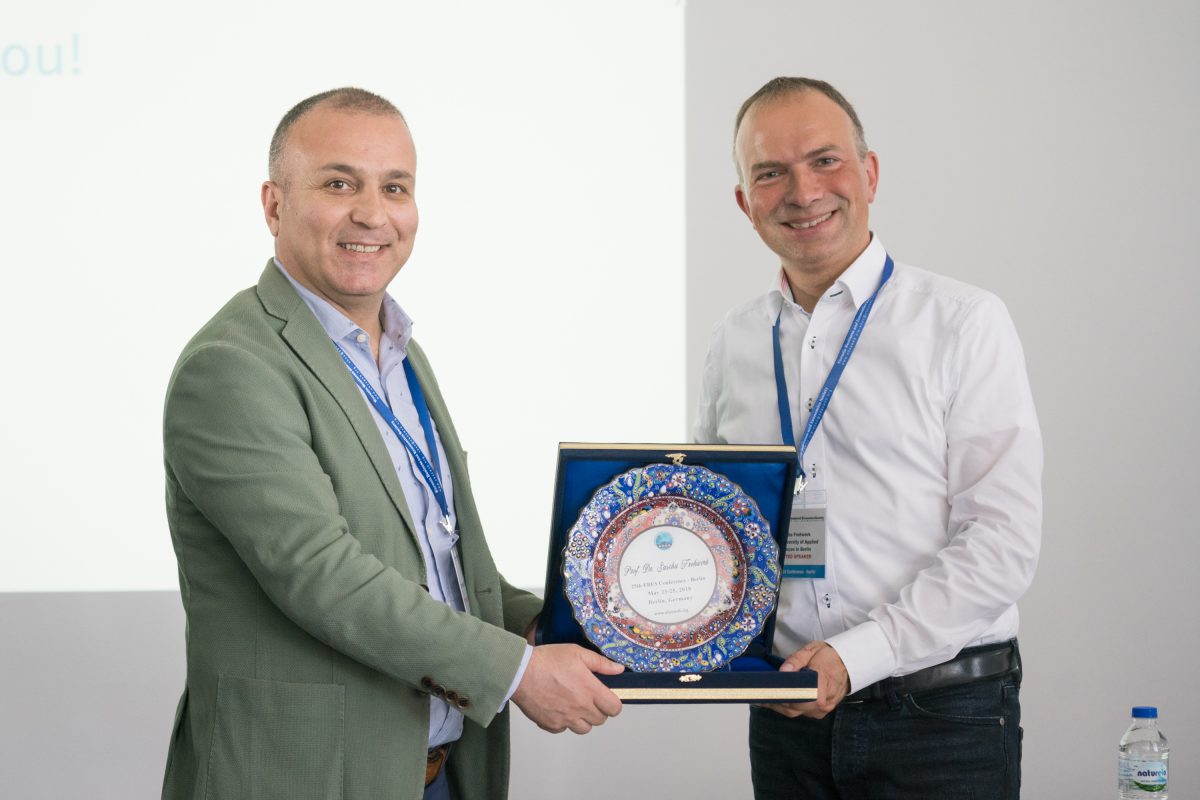
Mehmet Huseyin Bilgin and Professor and GLO Fellow Sascha Frohwerk (FOM University, Berlin, right) after Frohwerk’s keynote lecture in the keynote session on “The Economics of Technology and Employment” receiving a thank you plate.

On Wednesday May 23, the EBES Fellow Award 2018 was given to Klaus F. Zimmermann, Professor Emeritus of Bonn University and Honorary Professor of the Free University of Berlin. He is also Co-Director of POP at UNU-MERIT and Honorary Professor at Maastricht University and Honorary Professor at Renmin University of China. The award was given to Zimmermann by Marco Vivarelli and Mehmet Huseyin Bilgin.

Wonderful emotions at the Wasserwerk Berlin. GLO Reception for all conference participants.

After the hour…. sightseeing tour of conference participants through Berlin by night. Friends Mehmet Huseyin Bilgin (right) and Klaus F. Zimmermann (left) at the Brandenburg Gate.

Aylin Akin (Assistant Editor of the EBES Journals) and Klaus F. Zimmermann as part of the effective EBES team in front of the Brandenburg Gate. Zimmermann is also a member of the Executive Board of EBES and a member of the Editorial Board of the Eurasian Economic Review.

Managing Editor Ender Demir (Istanbul Medeniyet University) of the Eurasian Business Review with Klaus F. Zimmermann in front of the Brandenburg Gate.

The old West Berlin, view on the Kaiser Wilhelm Memorial Church from a prominent event place near-by enjoying free time and drinks after the very successful EBES25 Berlin conference and a great dinner at Gendarmenmarkt.

Ends;

Oded Galor of Brown University becomes Editor of the Journal of Population Economics. Interview with Galor about Unified Growth Theory and journal editing.

On 1 July 2018, Oded Galor becomes Editor of the Journal of Population Economics following Erdal Tekin, who has taken the position of Editor-in-Chief of the Journal of Policy Analysis and Management (JPAM) (see for further details). For an interview with Oded Galor see below.

Oded Galor (Herbert H. Goldberger Professor of Economics at Brown University) is the founder of Unified Growth Theory. He has contributed to the understanding of process of development over the entire course of human history and the role of deep-rooted factors in the transition from stagnation to growth and in the emergence of the vast inequality across the globe. He has pioneered the exploration of the impact of human evolution, population diversity, and inequality on the process of development and his interdisciplinary research has redirected research in the field of economic growth to the exploration of the long shadow of history and to the role of biogeographical and demographic forces in comparative economic development.

The Journal of Population of Economics is the top journal in the field of population economics. It is an international research journal that publishes original theoretical and applied contributions on the economics of population, household, and human resources. It is owned by Springer Nature and operates from POP at UNU-MERIT, Maastricht, The Netherlands. It is published in collaboration with the Global Labor Organization (GLO) and the European Society for Population Economics (ESPE).

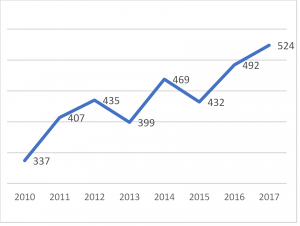
The Journal of Population Economics is one of the top ranked Springer Nature journals in economics. In 2017 it has published 40 research papers out of 524 submissions, which implies a 92.4% final rejection rate. Submissions have significantly increased, eg. doubled in the last decade from below 300 to nearly 600 this year. The impact factor has increased from 0.5 in 2007 to an expected 1.3 in 2017. For more details of the actual performance of the journal  see this post and the just published Report of the Editor-in-Chief 2018.

Journal of Population Economics

Number of Submissions to the Journal of Population Economics:

Journal of Economic Growth

Oded Galor is the Founding Editor of the Journal of Economic Growth also owned by Springer Nature and will remain in the position of Editor of this outlet. The Journal of Policy Analysis and Management (JPAM) is the top field journal in public policy and published on behalf of the Association for Public Policy and Management (APPAM). It has been ranked number 21 for 2016 among economics journals by the impact factor (IF: 3.415) with Journal of Economic Growth rank 20 (IF: 3.440) and Econometrica rank 22 (IF: 3.379). Oded Galor and Klaus F. Zimmermann see a large strategic benefit for both the Journal of Economic Growth and the Journal of Population Economics in a close collaboration.

As Editor-in-Chief Klaus F. Zimmermann, who is also the GLO President, stated:

“Oded is a legendary figure, both as top researcher and an admired journal editor. He has already served for decades as Associate Editor of the Journal of Population Economics and understands the relevance and context of our work. Sandro Cigno, Junsen Zhang, Michaella Vanore and I are very excited to work with him. We all share the same ambitions and the expectations to make the Journal of Population Economics an even more influential academic outlet of the field.”

Interview with Oded Galor

  1. What makes population economics an exciting field of analysis for a leading researcher in the field of economic growth?

Oded Galor: The transition from an epoch of stagnation to an era of sustained economic growth has marked the onset of one of the most remarkable transformations in the course of human history. While living standards in the world economy stagnated during the millennia preceding the Industrial Revolution, income per capita has undergone an unprecedented tenfold increase over the past two centuries, profoundly altering the level and distribution of education, health, and wealth across the globe. The rise in the standard of living has not been universally shared among individuals and societies. Variation in the timing of the take-off from stagnation to growth has led to a vast worldwide divergence in income per capita. Inequality, which had been modest until the nineteenth century, has widened considerably, and the ratio of income per capita between the richest and the poorest regions of the world has been magnified.

Throughout most of human existence, the process of development was marked by Malthusian stagnation. Resources generated by technological progress and land expansion were channeled primarily toward an increase in the size of the population, providing only a glacial contribution to the level of income per capita in the long run. Cross-country technological differences were reflected in variations population densities, and their effect on variation in living standards was merely transitory. In contrast, over the past two centuries, various regions of the world have departed from the Malthusian trap and have witnessed a considerable increase in growth rates of income per capita. The decline in population growth over the course of the demographic transition has liberated productivity gains from the counterbalancing effect of population growth and enabled technological progress and human capital formation to pave the way for the emergence of an era of sustained economic growth.

Thus, the pivotal role of population dynamics in the transition from Malthusian stagnation to sustained economic growth and the emergence of vast inequality across nations, makes the study of population economics central for the understanding of the growth process.

  1. What attracted a leading scholar in the field of economic growth to the Journal of Population Economics?

Oded Galor: In light of the importance of demographic forces in the understanding of the process of development and the vast inequality across the globe, the Journal of Population Economics is in a unique position to make a significant contribution in the understanding of this important relationship.

  1. What kind of research do you wish to attract to the Journal of Population Economics?

Oded Galor: I would like to encourage the submission of research papers that are centered around:

  • The causes and the consequences of the demographic transition
  • Population diversity and economic development
  • Human evolution and the process of development
  • The interaction between population and economic growth
  • Population dynamism in the Malthusian epoch


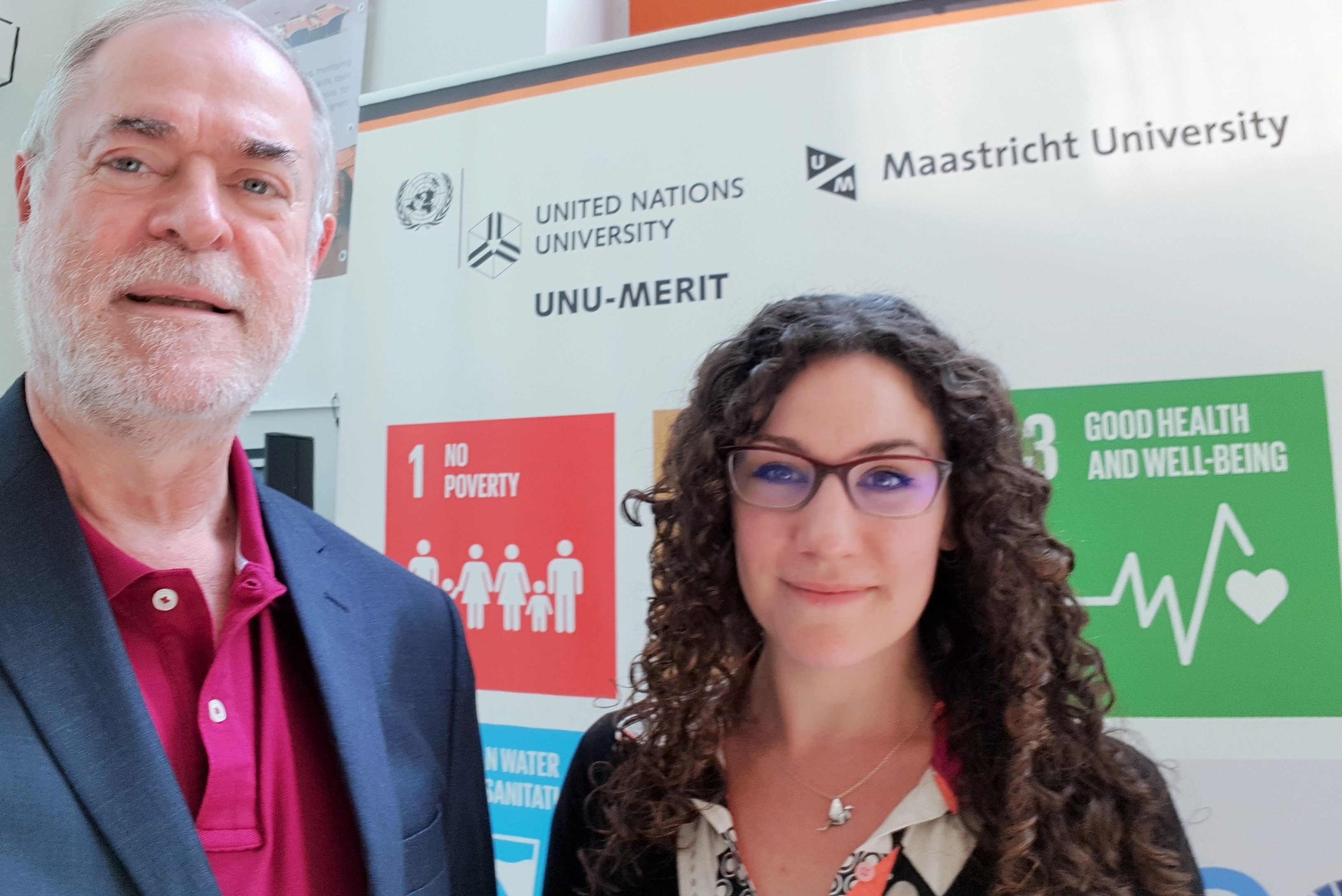
Picture below: Managing Editor Michaella Vanore and Klaus F. Zimmermann working intensively together at UNU-MERIT, Maastricht.

Ends;

Publishing frontier research – the Journal of Population Economics. 2018 Report of the Editor-in-Chief available!

Continuing the strong performance of the top journal in population economics. Annual reporting provides details of the success. The journal is global and invites top and innovative submissions of research papers from all over the world.

The Journal of Population of Economics is an international quarterly research journal that publishes original theoretical and applied contributions on the economics of population, household, and human resources. It is owned by Springer Nature and operates from POP at UNU-MERIT, Maastricht, The Netherlands. It is published in collaboration with the Global Labor Organization (GLO) and the European Society for Population Economics (ESPE).

The Journal of Population of Economics is considered to be the top journal in the field of population economics. Editor-in-Chief is Klaus F. Zimmermann (UNU-MERIT, The Netherlands), who is also the President of GLO. He had initiated the creation of ESPE, and was its first Secretary and later ESPE President.

Editors are Alessandro Cigno (University of Florence, Italy), Erdal Tekin (American University, USA) and Junsen Zhang (Chinese University of Hong Kong, Hong Kong). Managing Editor is Michaella Vanore (‎Maastricht University, The Netherlands). For the complete Editorial Board see the website. Cigno, Tekin, Zhang and Vanore are also GLO Fellows.

After the Journal of Economic Growth, the Journal of Population Economics is the highest ranked Springer Nature journal in economics. It publishes 40 research papers out of 524 (2017) submissions, which implies a 92.4% final rejection rate. Submissions have significantly increased also in 2018, so that the number of submissions obtained in this year is expected to be close to 600. The 2-Year Impact Factor of Clarivate Analytics (previously Thomson Reuters) for 2016 has been 1.136 (5-Year Impact Factor: 1.846); it is expected to be around 1.3 for 2017.

Number of Submissions to the Journal of Population Economics.


Among the submissions in 2017, 47% were from Europe, 22% from North America and 21% from Asia and the Middle East. In terms of online access to articles in 2017, 34% of the visits were from North America, 29% from Europe and 25% from Asia and the Middle East. This documents well the global reach of the Journal of Population Economics.

FOR MORE DETAILS see the new Report of the Editor-in-Chief 2018.

Report Editor-in-Chief 2018

Managing Editor Michaella Vanore and Klaus F. Zimmermann working intensively together at UNU-MERIT, Maastricht.


Ends;

First Renmin University & GLO Conference on the Chinese labor market in Beijing on 20-21 October 2018. Submission deadline is August 15!

The School of Labor and Human Resources at Renmin University of China (Beijing) and the Global Labor Organization (GLO) announce the creation of a new conference series on issues related to the Chinese labor market. The first event will take place on 20 and 21 October 2018 at Renmin University of China, Beijing. Papers or long abstracts should be submitted by 15 August 2018. CONFERENCE FLYER

First Renmin University / GLO Conference
Call for Papers
Renmin University of China, Beijing
20 and 21 October 2018

The Renmin University / GLO Conference aims to provide a platform for researchers working on topics related to the Chinese labor market, including migration, discrimination, health and well-being, education, environment, labor market policies.

The event is organized by the School of Labor and Human Resources at Renmin
University of China and the Global Labor Organization (GLO). It is part of the Chinese Labor Market Cluster of GLO headed by Cluster Lead Corrado Giulietti (University of Southampton).
————————
Keynote speakers
Shi Li (Beijing Normal University)
Xin Meng (Australian National University)
Junsen Zhang (Chinese University of Hong Kong)
Klaus F. Zimmermann (UNU-MERIT and Maastricht University)
————————
Submissions
Papers or long abstracts should be submitted by August 15 2018 at renmin-glo@ruc.edu.cn

Program Committee
Sylvie Démurger (French National Centre for Scientific Research), Shuaizhang
Feng (Jinan University), Corrado Giulietti (University of Southampton), Jun
Han (Renmin University of China)

Ends;

International Summer School on Migration and Asylum joins GLO as institutional supporter. Deadline for next Summer School is June 15, 2018!

The Global Labor Organization (GLO) supports the International Summer School on Migration and Asylum (migrationschool.eu) in Bologna. migrationschool.eu has joined GLO as an institutional supporter.

The International Summer School on Migration and Asylum is a high-level training organized every year in Bologna. The School is organized by the Italian NGO Africa e Mediterraneo with the support of a number of international partners and sponsors.

Starting from 2018, the Summer School focuses on labor market integration of migrants and asylum seekers, exploring this vast topic from several perspectives, such as: analysis and comparisons of current labor integration policies for migrants and refugees in Europe, certifications and recognition of qualifications, migrants’ self-employment and self-enterprise, and more. Lectures and seminars are integrated with field visits and meetings with experts and professionals working in the field, offering contributions and training on how labour integration of migrants and asylum seekers can be translated into practice in different social and economic contexts.

The next International Summer School on Migration and Asylum will be held in Bologna from 9 -14 July 2018.

The deadline for applications is June 15, 2018!                              LINK for Registration

After two successful events, to which around 300 people from more than 40 countries have applied and more than 100 participants were selected, the main focus of this year edition will be the labor integration of migrants and refugees. Participants will be social workers, researchers, students, journalists, members of international organizations and NGOs, national and European public officials, who will have the chance to be involved in moments of training and sharing of experiences, best practices and knowledge on the topic of labor integration of migrants and refugees under the direction of international experts, academics and professionals in the field.

Flyer Summer School 2018 – Labour Integration

Program 2018 of the Summer School.

Faculty

GLO Founding Director Alessio J. G. Brown, Co‐Director of the Centre for Population, Development and Labour Economics (POP) at UNU-MERIT and Maastricht University, is a member of the Scientific Committee of the School. He is also a Speaker on this years program on “Labor Market Integration of Migrants in the European Union”.

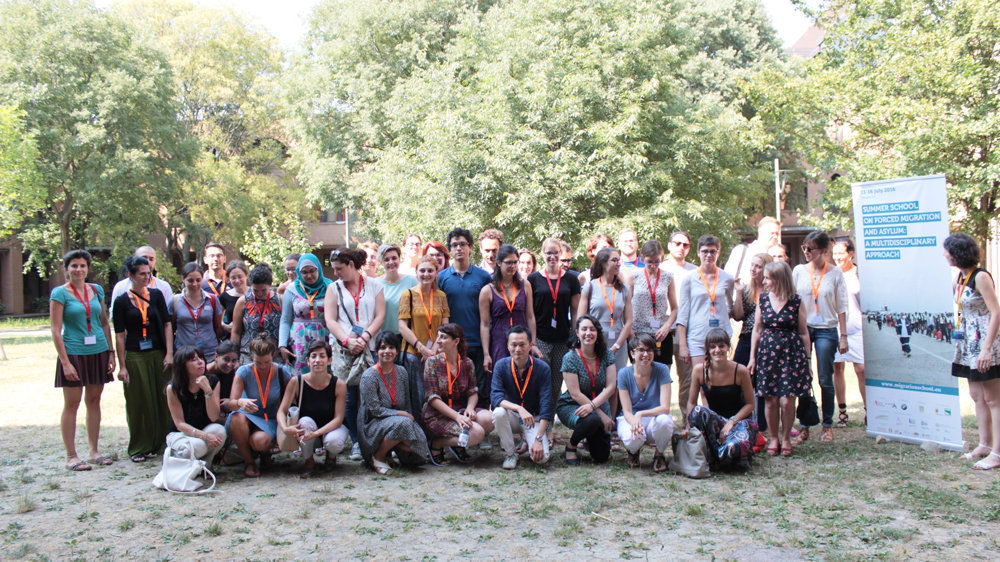
From previous event:

Ends;

Second Conference of the Asian and Australasian Society of Labour Economics (AASLE) in Seoul on 13-15 December 2018

The Asian and Australasian Society of Labour Economics (AASLE) was founded in 2017 to promote research and cooperation in Labour and Applied Economics across Asia and Australasia.

The second conference will take place on

13 – 15 December 2018 at Seoul National University, Seoul, South Korea.

Keynote speakers are Richard Blundell (University College London) and Henry Farber (Princeton University), who is also a Fellow of the Global Labor Organization (GLO).

For details see also the conference flyer: Flyer AASLE-Conference-2018

The inaugural conference 2017:

The inaugural conference of the AASLE brought together over 400 researchers and over 120 papers from around the world and was hosted by the Australian National University Research School of Economics in Canberra, Australia, from 7-9 December 2017. The event had been impressive and was a huge success.

The event was organized by Christian Dustmann, University College London; Bob Gregory, Australian National University and GLO; Xin Meng, Australian National University and GLO; John Tang, Australian National University; and Matthew Gray, Australian National University.

See here for the conference program.

The Global Labor Organization (GLO) had early on welcomed this initiative and has supported it through a special GLO session. A large number of GLO Fellows were participating in the event and were presenting papers in other sessions.  The session was chaired by GLO Country Lead Australia, John Haisken-DeNew (Melbourne University).

Ends;

CALL FOR PAPERS: 60th ISLE Annual Labour Conference on 19-21 December 2018 in Mumbai, India

The Global Labor Organization (GLO) supports the annual conference of the Indian Society of Labour Economics (ISLE) and the associated Indian Journal of Labour Economics. Both are partner institutions of the GLO.

CALL FOR PAPERS

60th ISLE Annual Conference, 19-21 December 2018, Mumbai, India
Conference Flyer ISLE 2018

The 60th Annual Conference of the Indian Society of Labour Economics (ISLE) will be held during 19-21 December 2018 in Mumbai, India, organized by the Indira Gandhi Institute of Development Research (IGIDR). The conference commemorates with the Diamond Jubilee year of the formation of ISLE.  Congratulations from GLO!

Conference Themes
– Emerging Labor Markets and Employment Challenges
– Inequality in Labor Markets and Wellbeing
– World of Work and Women

Submission of Papers:
– Submission deadline:  31 August 2018: EXTENDED TO OCTOBER 1, 2018.
– Submission details: Call for papers

GLO  intends to organize a special GLO session at this conference. Those GLO members interested to contribute to such a session are invited to contact GLO President Klaus F. Zimmermann (klaus.f.zimmermann@gmail.com) with ideas or preliminary paper titles.

INDIAN SOCIETY OF LABOUR ECONOMICS (ISLE)   

Ends;

GLO Discussion Papers May 2018 & Discussion Paper of the Month

Titles and free access/links to GLO Discussion Papers

GLO Discussion Papers are research and policy papers of the GLO Network which are widely circulated to encourage discussion. Provided in cooperation with EconStor, a service of the ZBW – Leibniz Information Centre for Economics, GLO Discussion Papers are among others listed in RePEc (see IDEAS, EconPapers). Complete list of all GLO DPs downloadable for free.

GLO Discussion Paper of the Month: May

Nikolova, Milena; Nikolaev, Boris N., Family matters: involuntary parental unemployment during childhood and subjective well-being later in life, GLO Discussion Paper No. 212, May 2018. Free download.

Abstract: We are the first to examine how parental unemployment experienced during early-, mid- and late-childhood affects adult life satisfaction. Using German household panel data, we find that parental unemployment induced by plant closures and experienced during early (0-5 years) and late (11-15 years) childhood leads to lower life satisfaction at ages 18-31. Nevertheless, parental unemployment can also have a positive effect depending on the age and gender of the child. Our results are robust even after controlling for local unemployment, individual and family characteristics, parental job loss expectations, financial resources, and parents’ working time when growing up. These findings imply that the adverse effects associated with parental unemployment experienced at a young age tend to last well into young adulthood and are more nuanced than previously thought.

GLO Discussion Papers of May 2018

213 Microsimulation Analysis of Optimal Income Tax Reforms. An Application to New Zealand – Download PDF
by Creedy, John & Gemmell, Norman & Hérault, Nicolas & Mok, Penny

212 Family matters: involuntary parental unemployment during childhood and subjective well-being later in life – Download PDF
by Nikolova, Milena & Nikolaev, Boris N.

211 Just Like A Woman? New Comparative Evidence on the Gender Income Gap across Eastern Europe and Central Asia – Download PDF
by Blunch, Niels-Hugo

210 National Identity under Economic Integration – Download PDF
by Chiang, Chun-Fang & Liu, Jin-Tan & Wen, Tsai-Wei

209 A nudge to quit? The effect of a change in pension information on annuitization, labor supply and retirement choices among older workers – Download PDF
by Hagen, Johannes & Hallberg, Daniel & Sjögren Lindquist, Gabriella

208 The Last of the Lost Generations? Formal and Non-Formal Education in Ghana during Times of Economic Decline and Recovery – Download PDF
by Blunch, Niels-Hugo & Hammer, Jeffrey S.

Successful GLO team:
GLO Managing Director Matloob Piracha (University of Kent, right) and GLO President Klaus F. Zimmermann (UNU-MERIT, Maastricht University and Bonn University, left).

Ends;

GLO at AIEL 2018: Submission Deadline is June 10, 2018.

The Global Labor Organization (GLO) collaborates with many institutions worldwide including joint sessions at conferences.  As in 2017, the GLO seeks to be present at the 2018 Italian Association of Labor Economists (AIEL) conference in Italy. This initiative is headed by the GLO Country Lead of Italy, Francesco Pastore (Seconda Università di Napoli). GLO Italy is one of the largest country groups and among the most active.

Message

Francesco Pastore and Klaus F. Zimmermann (GLO President and UNU-MERIT, Maastricht) encourage all GLO members to submit a paper to the forthcoming XXXIII AIEL  Conference to be held on the 20-21st of September 2018 at the University Politecnica of Marche, in Ancona.

The conference will host one or more AIEL-GLO joint sessions. Those who are interested in submitting their paper should specify that the paper is meant to be presented in the AIEL-GLO joint session.

The deadline for the submission of papers is the 10th of June!

There will be a discounted rate for early bird registrations (before the 1st of August) of accepted papers.

The theme of the AIEL 2018 plenary sessions is the analysis of population ageing and of the role of families in fertility decisions, labor market participation, and children’s education.

Keynote lectures will be delivered by GLO Fellow Jan van Ours (Erasmus University Rotterdam),  Andrea Ichino (European University Institute), and Rafael Lalive (University of Lausanne).

For further information regarding the conference, see the home page of the Association: http://www.aiel.it/page/news.php

The call for papers can be downloaded from here:
http://www.aiel.it/cms/cms-files/eventi/lavoratori_eventi_consiglio_20180319175932_CBACDADC.pdf

Francesco and Klaus:
“We hope you can make it to Ancona at the XXXIII AIEL Conference!”


Left Francesco Pastore (GLO Country Lead Italy) and Klaus F. Zimmermann (GLO President)


Ends;

New study in the Journal of Population Economics reveals: Informal job search comes with a significant wage penalty!

Informal search for jobs is typically for migrants around the world. Rural migrants in urban China also use largely informal methods. A new study in the Journal of Population Economics, the leading academic outlet in the field of population economics, is now establishing a significant wage penalty for those migrant workers who have conducted their search through informal channels, despite their popularity.

The authors are Yuanyuan Chen (Shanghai University of Finance and Economics), Le Wang (University of Oklahoma) & Min Zhang (East China Normal University).

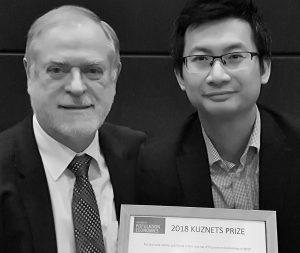
Wang is also a Fellow of the Global Labor Organization (GLO), an international organization that supports academic international exchange and the work of the Journal of Population Economics. Wang had been recently awarded the prestigious Kuznets Prize 2018 of the Journal of Population Economics for his 2017 article in the Journal with Chunbei Wang on the economic effects of marriage delays. See also the interview on the prize paper.

The article was just published in the new issue of the Journal of Population Economics, , Volume 31, Issue 3, pp. 836-876:

Informal search, bad search? The effects of job search method on wages among rural migrants in urban China

Yuanyuan Chen, Le Wang & Min Zhang

» Abstract   » Full text HTML   » Full text PDF

https://doi.org/10.1007/s00148-017-0672-x

Abstract
The use of informal job search method is prevalent in many countries. There is, however, no consensus in the literature on whether it actually matters for wages, and if it does, what are the underlying mechanisms. We empirically examine these issues specifically for rural migrants in urban China, a country where one of the largest domestic migration in human history has occurred over the past decades. We find that there exists a significant wage penalty for those migrant workers who have conducted their search through informal channels, despite their popularity. Our further analysis suggests two potential reasons for the wage penalty: (1) the informal job search sends a negative signal (of workers’ inability to successfully find a job in a competitive market) to potential employers, resulting in lower wages, and (2) there exists a trade-off between wages and search efficiency for quicker entry into local labor market. We also find some evidence that the informal job search may lead to low-skilled jobs with lower wages. We do not find strong evidence supporting alternative explanations.

Journal of Population Economics

GLO Fellow Le Wang of the University of Oklahoma (right) and Klaus F. Zimmermann (GLO President and Editor-in-Chief of the Journal of Population Economics.)
 

Ends;

GLO joined with global scholars to convene at Yale for the advances of the world’s largest health system

Over 200 researchers and health leaders gathered at Yale University on May 11-13, 2018 for the second biennial conference of the China Health Policy and Management Society (CHPAMS), focusing on advances in health policy and health care in China and the United States. The event was co-sponsored by the Yale School of Public Health, Yale Macmillan Center, China Medical Board, Global Labor Organization (GLO), among others.

The three-day conference featured 7 keynote speeches, 3 roundtables, and 140 talks by health experts from China and the US on a wide range of topics. In addition, CHPAMS also celebrated its 10th birthday and vowed to continue its mission of promoting public health research and practice on China, the largest health system in the world, in the next 10 years.


Health and labor economics studies have emphasized health as a fundamental object of choice and together with schooling as two most important components of the stock of human capital. Revolving around this consensus, leading authorities in health economics and labor economics delivered keynote talks.

Michael Grossman, Director of Health Economics Program at the U.S. National Bureau of Economic Research (NBER), summarized health economics research at the Bureau and its implications for China. Grossman advised Chinese policymakers that policies to regulate e-cigs and reduce use may increase smoking and increase weight gain by successful quitters and that crackdowns on use of marijuana may exacerbate the opioid epidemic.


GLO Fellow Paul Schultz, the Malcolm K. Brachman Professor Emeritus in Economics and former Director of Economic Growth Center at Yale University, spoke on the challenges both high- and low-income countries face in achieving health equity, even with national health systems in place.


Two GLO special sessions were organized by GLO Fellow Dr.  Xi Chen of Yale University in his capacity as the GLO Cluster Lead of the “Environment and Human Capital in Developing Countries” program.


GLO Special Session I: Environment, Smoking and Population Health (Chair: Ce Shang, University of Illinois at Chicago)
Something in the Pipe: Flint Water Crisis and Health at Birth
Rui Wang                 Tulane University
Smoking and cigarette pack size: evidence from 75 countries from 2007 to 2014
Kai-Wen Cheng       University of Illinois at Chicago
What affects pregnant women expose to secondhand smoke: a cross-sectional study in the border and minority urban areas of northwest China
Jiangyun Chen         Huazhong  University of Science and Technology
R24 proposal to build a consortium on trans-disciplinary public health law research (PHLR), education, prevention of substance use disorders in Colorado
Qing Li                      University of Colorado Denver, San Diego State University

GLO Special Session II: Air Pollution (Chair: Zheng Li, US CDC/ATSDR)
Air Pollution and Lung Cancer Mortality: Evidence from a Natural Experiment
Qing Han                  The University of Kansas
What Happens in the Womb under the Dome: The Impact of Air Pollution on Birth Outcomes
Xiaoying Liu           University of Pennsylvania
Maternal Exposure to Ambient Air Pollution and Childhood Overweight and Obesity: A Prospective Birth Cohort Study in Wuhan, China
Shaoping Yang       Huazhong University of Science and Technology
Maternal Exposure to Air Pollution and Risk of Neural Tube Defects
Jinzhu Zhao             Huazhong University of Science and Technology


NEWS ARTICLE

The link below leads to the Yale News article on the conference.
Improving the World’s Largest Health System—Scholars Convene at YSPH to Plan for Future

FULL PROGRAM

CHPAMS Yale Conference Program Book

THE ORGANIZER


Xi Chen, Yale University and GLO. He is the GLO Cluster Lead of “Environment and Human Capital in Developing Countries” and the incoming President of CHPAMS.


Ends;

GLO NEWS: Journal of Population Economics, Volume 31 Number 3, now available online!

The Global Labor Organization (GLO) supports the Journal of Population Economics.

We are pleased to distribute the new table of contents alert for Journal of Population Economics, Volume 31 Number 3 in 2018, which is now available online.

Important news

Free Access to the Lead Article

Enjoy 6 weeks free access to first paper in current issue
» Learn more

In this issue

Original Paper

The intergenerational education spillovers of pension reform in China

Cheng Yuan, Chengjian Li & Lauren A. Johnston

FREE ACCESS FOR  SIX WEEKS!

» Abstract   » Full text HTML   » Full text PDF
Original Paper

Private versus public old-age security

Richard C. Barnett, Joydeep Bhattacharya & Mikko Puhakka

» Abstract   » Full text HTML   » Full text PDF
Original Paper

Parental retirement timing: the role of unanticipated events in the lives of adult children

Marina Miller, Christopher R. Tamborini & Gayle L. Reznik

» Abstract   » Full text HTML   » Full text PDF
Original Paper

Why are fewer married women joining the work force in rural India? A decomposition analysis over two decades

Farzana Afridi, Taryn Dinkelman & Kanika Mahajan

» Abstract   » Full text HTML   » Full text PDF
Original Paper

Does it pay to care? Volunteering and employment opportunities

Stijn Baert & Sunčica Vujić

» Abstract   » Full text HTML   » Full text PDF
Original Paper

Informal search, bad search?: the effects of job search method on wages among rural migrants in urban China

Yuanyuan Chen, Le Wang & Min Zhang

» Abstract   » Full text HTML   » Full text PDF
Original Paper

Social networks and the labour market mismatch

Eleni Kalfa & Matloob Piracha

» Abstract   » Full text HTML   » Full text PDF
Original Paper

The effect of female education on marital matches and child health in Bangladesh

Youjin Hahn, Kanti Nuzhat & Hee-Seung Yang

» Abstract   » Full text HTML   » Full text PDF
Original Paper

The long-term effects of mistimed pregnancy on children’s education and employment

Cuong Viet Nguyen

» Abstract   » Full text HTML   » Full text PDF
Original Paper

The long-term effect of childhood poverty

Rune V. Lesner

» Abstract   » Full text HTML   » Full text PDF

Journal of Population Economics


Ends;

GLO Discussion Papers April 2018 & Discussion Paper of the Month

Titles and free access/links to GLO Discussion Papers

GLO Discussion Papers are research and policy papers of the GLO Network which are widely circulated to encourage discussion. Provided in cooperation with EconStor, a service of the ZBW – Leibniz Information Centre for Economics, GLO Discussion Papers are among others listed in RePEc (see IDEAS, EconPapers). Complete list of all GLO DPs downloadable for free.

Discussion Paper of the Month: April

Djankov, Simeon & Nikolova, Elena, Communism as the Unhappy Coming, GLO Discussion Paper No. 192, April 2018. Free download.

Abstract:  We show that Eastern Orthodox believers are less happy compared to those of Catholic and Protestant faith using data covering more than 100 countries around the world. Consistent with the happiness results, we also find that relative to Catholics, Protestants and non-believers, those of Eastern Orthodox religion have less social capital and prefer old ideas and safe jobs. In addition, Orthodoxy is associated with left-leaning political preferences and stronger support for government involvement in the economy. Compared to non-believers and Orthodox adherents, Catholics and Protestants are less likely to agree that government ownership is a good thing, and Protestants are less likely to agree that getting rich can only happen at the expense of others. These differences in life satisfaction and other attitudes and values persisted despite the fact that communist elites sought to eradicate church-going in Eastern Europe, since communists maintained many aspects of Orthodox theology which were useful for the advancement of the communist doctrine. The findings are consistent with Berdyaev’s (1933, 1937) hypothesis of communism as a successor of Orthodoxy.

GLO Discussion Papers of April 2018

207 How valid are synthetic panel estimates of poverty dynamics? – Download PDF
by Hérault, Nicolas & Jenkins, Stephen P.

206 Selective immigration policies, occupational licensing, and the quality of migrants’ education-occupation match – Download PDF
by Tani, Massimiliano

205 Long-Term Relatedness between Countries and International Migrant Selection – Download PDF
by Krieger, Tim & Renner, Laura & Ruhose, Jens

204 The Power of the Government: China’s Family Planning Leading. Group and the Fertility Decline since 1970 – Download PDF
by Chen, Yi & Huang, Yingfei

203 Impact of delivering iron-fortified salt through a school feeding program on child health, education and cognition: Evidence from a randomized controlled trial in rural India – Download PDF
by Krämer, Marion & Kumar, Santosh & Vollmer, Sebastian

202 And Thou Shalt Honor: children’s caregiving, work and religion – Download PDF
by Mazzotta, Fernanda & Bettio, Francesca & Zigante, Valentina

201 To Impute or Not to Impute? A Review of Alternative Poverty Estimation Methods in the Context of Unavailable Consumption Data – Download PDF
by Dang, Hai-Anh H.

200 From Elitist to Sustainable Earnings: Is there a group legitimacy in financial flows? – Download PDF
by Charles, Aurelie & Vujić, Sunčica

199 Hours Worked of the Self-Employed and Agglomeration – Download PDF
by Cai, Zhengyu

198 A Tale of Two Tracks – Download PDF
by Asali, Muhammad

197 Growth Dynamics of Young Small Firms: Evidence from Tunisia – Download PDF
by Arouri, Hassan & Ben Youssef, Adel & Quatraro, Francesco & Vivarelli, Marco

196 Immigrant Category of Admission and the Earnings of Adults and Children: How far does the Apple Fall? – Download PDF
by Warman, Casey & Webb, Matthew D. & Worswick, Christopher

195 The Effects of Foreign Aid on Refugee Flows – Download PDF
by Dreher, Axel & Fuchs, Andreas & Langlotz, Sarah

194 Will Urban Migrants Formally Insure their Rural Relatives? Family Networks and Rainfall Index Insurance in Burkina Faso – Download PDF
by Kazianga, Harounan & Wahhaj, Zaki

193 The Impact of Compulsory Education on Employment and Earnings in a Transition Economy – Download PDF
by Liwiński, Jacek

192 Communism as the Unhappy Coming – Download PDF
by Djankov, Simeon & Nikolova, Elena

191 Towards a European Full Employment Policy – Download PDF
by Ritzen, Jo & Zimmermann, Klaus F.


Successful GLO team:

GLO Managing Director Matloob Piracha (University of Kent, right) and GLO President Klaus F. Zimmermann (UNU-MERIT, Maastricht University and Bonn University, left).

Ends;

New Research Shows: Small, Young Companies are Driving Job Creation – Also in Tunisia

Due to its huge relevance, the relationship between firm size, firm growth and firm job creation is heavily debated in the industrial organization literature. A core theorem in this context has been Gibrat’s law suggesting that the proportional rate of growth of a firm is independent of its absolute size (Gibrat, 1931). However,  the existing studies (mostly for developed countries) are rejecting Gibrat’s law by finding that smaller and younger firms grow more than larger and older ones.

In a new Discussion Paper of the Global Labor Organization (GLO), Hassan Arouri, Adel Ben Youssef, Francesco Quatraro and Marco Vivarelli show that this result is also found in the development context using data for Tunisia. The implication again is that small and young companies drive job creation, suggesting priority for those firms for receiving  public  support.

Hassan Arouri is associated  with the National Institute of Statistics, Tunisia.
Adel Ben Youssef is associated  with the University of Nice Sophia, Antipolis and GREDEG-CNRS, France.
Francesco Quatraro is associated  with the University of Torino and Collegio Carlo Alberto, Torino, Italy.
GLO Fellow Marco Vivarelli is associated  with the Universita’ Cattolica del Sacro Cuore, Milano, Italy.

Hassan Arouri, Adel Ben Youssef, Francesco Quatraro & Marco Vivarelli, Growth Dynamics of Young Small Firms: Evidence from Tunisia, GLO Discussion Paper No. 197.  FREE DOWNLOAD: Download PDF

ABSTRACT

The aim of this paper is to investigate the growth dynamics of young small firms (in contrast with  larger  and  older  incumbents)  in  a  developing  country  context,  using  a  unique  and comprehensive  dataset  of  non-agricultural  Tunisian  companies.  Our  results  suggest  that significant differences between  young and mature firms can be found as far as the drivers of their growth  are  concerned.  The  key  finding  being  that -while  consistently  with  the  extant literature  Gibrat’s  law  is  overall  rejected -the  negative  impact  of  the  initial  size  is significantly   larger   for   young   than   mature   firms.   This   result   has   interesting   policy implications: since smaller young firms are particularly conducive to employment generation, they  can  be  considered  good  candidate  for  targeted  accompanying  policies  addressed  to sustain their post-entry growth.

Titles and free access to all GLO Discussion Papers

GLO Discussion Papers are research and policy papers of the GLO Network which are widely circulated to encourage discussion. Provided in cooperation with EconStor, a service of the ZBW – Leibniz Information Centre for Economics, GLO Discussion Papers are among others listed in RePEc (see IDEAS, EconPapers).

Complete list of all GLO DPs downloadable for free.

Ends;

Reminder: Four GLO Supported Scientific Events in May

The Global Labor Organization (GLO) supports events and international collaborations. In May a few interesting conferences will take place involving a larger number of GLO Fellows. Here are some links as a reminder:

  • Bucharest on May 10-11, 2018. 4th International Conference on “Recent Advances in Economic and Social Research organized by the Institute for Economic Forecasting and the Romanian Academy. (Paper submission still possible until May 2.)
  • Yale University on May 11-13, 2018. This is the 2nd biennial meeting of the China Health Policy and Management Society (CHPAMS). The topic is Advances in Health Policy and Healthcare: The Road Ahead, with a special focus on Healthy China 2030 national blueprint and two special GLO sessions.
  • Paris on May 23-24, 2018. The Second Meeting of the Society of the Economics of the HOusehold (SEHO) is held at the Paris School of Economics.
  • Berlin on May 23-25, 2018. 25th Conference of the Eurasia Business  and Economics Society (EBES) is jointly organized with GLO and hosted by the FOM University in their Berlin study center.


Ends;

New GLO Discussion Paper: Selective Labor Immigration Policies Matter in Canada

Europe is discussing how to improve the labor market performance of economic migrants and their integration chances. The Canadian immigration system is often seen as a model case. Is there an earnings benefit depending on the selection channel under the economic classe? In a new Discussion Paper of the Global Labor Organization (GLO), Casey Warman, Matthew D. Webb and Christopher Worswick provide strong empirical evidence that selection matters. Using Canadian data sources they find that relative to the Family Class, the Adult Arrivals in the Skilled Worker category have earnings that are 29% higher for men and 38% higher for women.  Child Arrival immigrants landing in the Skilled Worker Class have similar earnings advantages.

GLO Fellow Casey Warman is associated with the Department of Economics, Dalhousie University and NBER.

GLO Fellow Matthew D. Webb is associated with the Department of Economics, Carleton University

GLO Fellow Christopher Worswick is associated  with the Department of Economics, Carleton University and CReAM

Casey Warman, Matthew D. Webb & Christopher Worswick: Immigrant Category of Admission and the Earnings of Adults and Children: How far does the Apple Fall? GLO Discussion Paper No. 196.  FREE DOWNLOAD: Download PDF

ABSTRACT

Immigrants  in  many  Western  countries  have  experienced  poor  economic  outcomes. This has led to a lack of integration of child immigrants (the 1.5 generation) and the second generation in some countries.  However, in Canada, child immigrants and the second generation have on average integrated very well economically.  The study examines the importance of Canada’s admission classes to determine if there is an earnings benefit of the selection under the Economic Classes to:  (i) the Adult Arrival immigrants and (ii) the Child Arrival immigrants (1.5 generation) once old enough to enter the labor market.  The study employs unique administrative data on landing records matched with subsequent  income  tax  records  that  also  allows  for  the  linking  of  the  records  of  Adult Arrival parents and their Child Arrival children.  It is found that relative to the Family Class, the Adult Arrivals in the Skilled Worker category have earnings that are 29% higher for men and 38% higher for women.  These differences persist even after controlling for  detailed  personal  characteristics  such  as  education  and  language  fluency  at  21% for men and 27% for women. Child Arrival immigrants landing in the Skilled Worker Class have earnings advantages (as adults) over their Family Class counterparts of 17% for men and 21% for women.  These Child Arrival Skilled Worker advantages remain at 9% for men and 14% for women after controlling for child characteristics, the Principal Applicant parent’s characteristics and the parent’s subsequent income in Canada. (Abstract marginally adapted from the DP.)

The paper is forthcoming in the Journal of Population Economics. The responsible Editor has been Klaus F. Zimmermann.

The study is in line with earlier research on entry category effects of migrant’s labor market performance. For an analysis see a recent review paper:

Zimmermann, Klaus F., Refugee and Migrant Labor Market Integration: Europe in Need of a New Policy Agenda. Mimeo. Presented at the EUI Conference on the Integration of Migrants and Refugees, 29-30 September 2016 in Florence. Published in: Bauböck, R. and Tripkovic, M.,  The Integration of Migrants and Refugees.  An EUI Forum on Migration, Citizenship and Demography, European University Institute, Robert Schuman Centre for Advanced Studies, Florence 2017, pp. 88 – 100.

Titles and free access to all GLO Discussion Papers

GLO Discussion Papers are research and policy papers of the GLO Network which are widely circulated to encourage discussion. Provided in cooperation with EconStor, a service of the ZBW – Leibniz Information Centre for Economics, GLO Discussion Papers are among others listed in RePEc (see IDEAS, EconPapers).

Complete list of all GLO DPs downloadable for free.

Journal of Population Economics

Ends;


Does Foreign Aid Stop Refugee Flows? New Evidence for the Policy Debate From a New GLO Paper

In the recent heated public debates in Europe about how to control refugee flows to Europe, it is often argued that foreign aid should be helpful to moderate such migration. In a new Discussion Paper of the Global Labor Organization (GLO), Axel Dreher, Andreas Fuchs and Sarah Langlotz provide strong empirical evidence using global data sources to suggest that while exogenous aid encourages recipient governments to support the return of citizens, we find no evidence that aid reduces worldwide refugee outflows in the short term; however, the authors find effects in the very long run.

GLO Fellow Axel Dreher  is associated  with the Alfred-Weber-Institute for Economics, Heidelberg University; KOF Swiss Economic Institute; CEPR; Georg-August University Goettingen; and CESifo.

GLO Fellow Andreas Fuchs is associated with the Research Center for Distributional Conflict and Globalization & Alfred-Weber-Institute for Economics, Heidelberg University.

GLO Fellow Sarah Langlotz is associated  with the Alfred-Weber-Institute for Economics, Heidelberg University.

Axel Dreher, Andreas Fuchs & Sarah Langlotz: The Effects of Foreign Aid on Refugee Flows, GLO Discussion Paper No. 195.  FREE DOWNLOAD: Download PDF

ABSTRACT

This article is the first to systematically study whether foreign aid affects the net flows of refugees from recipient countries. Combining refugee data on 141 origin countries over the 1976-2013 period with bilateral Official Development Assistance data, we estimate the causal effects of a country’s aid receipts on both total refugee flows to the world and flows to donor countries. The interaction of donor-government fractionalization and a recipient country’s probability of receiving aid provides a powerful and excludable instrumental variable,when we control for country – and time-fixed effects that capture the levels of the interacted variables. Although our results suggest that exogenous aid induces recipient governments to encourage the return of their citizens, we find no evidence that aid reduces worldwide refugee outflows or flows to donor countries in the short term. However, we observe long-run effects after four three-year periods, which appear to be driven by lagged positive effects of aid on growth. (Abstract marginally adapted from the DP.)

The study is in line with earlier research on South-North refugee migration. As Rotte, Vogler and Zimmermann (1997) have shown in their econometric analysis using refugee migration data to Germany, the issue had been discussed before. Short-term measures would not work, a long-term perspective would be needed.

Ralph Rotte, Michael Vogler & Klaus F. Zimmermann (1997), South-North Refugee Migration: Lessons for Development Cooperation, Review of Development Economics, 1 (1), pp. 99-115. Access.

Abstract: Migration has become a major concern of European development policies. By improving socio-economic and political conditions through development cooperation, a reduction of South-North migration flows is envisaged. This new approach is examined by analyzing the causes of asylum migration from developing countries to Germany. The econometric findings suggest that support of democracy, economic development and trade will not reduce migration, at least not in the medium-run. However, restrictive legal measures work. Migration control by international development cooperation therefore seems to need a long-term perspective.

Titles and free access to all GLO Discussion Papers

GLO Discussion Papers are research and policy papers of the GLO Network which are widely circulated to encourage discussion. Provided in cooperation with EconStor, a service of the ZBW – Leibniz Information Centre for Economics, GLO Discussion Papers are among others listed in RePEc (see IDEAS, EconPapers).

Complete list of all GLO DPs downloadable for free.

Ends;

GLO Present at Important Health Policy and Healthcare Event at Yale University on May 11-13, 2018

Important health research and policy event at Yale University organized by the China Health Policy and Management Society and GLO Fellow Xi Chen of Yale University, and supported, among others, by the Global Labor Organization (GLO). GLO is contributing two sessions at the event (see below). (See also here for a first GLO announcement in 2017.)


 Advances in Health Policy and Healthcare: The Road Ahead

China Health Policy and Management Society 2nd Biennial Conference & a Celebration of the 10th Anniversary of China Health Policy and Management Society (2008-2018)

http://blog.betsygrauerrealty.com/wp-content/uploads/2016/05/yale-university.jpg

Yale University: May 11-13, 2018

Purpose: This is the 2nd biennial meeting of China Health Policy and Management Society (CHPAMS) and its official journal China Health Review. The meeting’s theme is Advances in Health Policy and Healthcare: The Road Ahead, with a special focus on Healthy China 2030 national blueprint.

A draft of the impressive complete program of the event can be found here.

The event will also see two GLO Special Sessions which have been organized by Professor and GLO Fellow Xi Chen in his capacity as the GLO Cluster Lead of the “Environment and Human Capital in Developing Countries” program. The two sessions are listed here:

C3: GLO Special Session I: Environment, Natural Disasters and Health
Something in the Pipe: Flint Water Crisis and Health at Birth
Rui Wang Tulane University
Major disease burden and all-cause mortality among the China largest multiple metal exposure cohort: Jinchang cohort
Zhiyuan Cheng Lanzhou University & Yale University
Long Term Health Consequences among Wenchuan Earthquake Affected Adult Survivors: Evidence from Literature and Empirical Data
Mingqi Fu Huazhong University of Science and Techonology
Smog in Aging Brains: The Impact of Exposure to Air Pollution on Cognitive Performance
Xi Chen Yale University
D2: GLO Special Session II: Air Pollution
Air Pollution and Lung Cancer Mortality: Evidence from a Natural Experiment
Qing Han The University of Kansas
What Happens in the Womb under the Dome: The Impact of Air Pollution on Birth Outcomes
Xiaoying Liu University of Pennsylvania
Maternal Exposure to Ambient Air Pollution and Childhood Overweight and Obesity: A Prospective Birth Cohort Study in Wuhan, China
Shaoping Yang Huazhong University of Science and Technology
Maternal Exposure to Air Pollution and Risk of Neural Tube Defects
Jinzhu Zhao Huazhong University of Science and Technology

Xi Chen, Yale University and GLO. He is the GLO Cluster Lead of “Environment and Human Capital in Developing Countries” and the incoming President of CHPAMS.


Ends;


May 10-11, 2018 Bucharest Conference on Economic and Social Research: Paper Submissions Possible Until May 2!

The Institute for Economic Forecasting and the Romanian Academy in Bucharest invite paper submissions and participants to the 4th International Conference on “Recent Advances in Economic and Social Research“, in Bucharest on May 10-11, 2018.

SECTIONS
Section I – Economic Modeling and Forecasting
Section II – Financial Markets
Section III – Macroeconomics and Monetary Economics
Section IV – Economic Development, Innovation, Growth
Section V – Young Talent

WORKSHOPS
SPOS 2017 – Impactul aderării României la Uniunea Europeană asupra economiei românești. Analiză sectorială (industrie, agricultură, servicii etc.)
Romania – Korea Productivity Workshop

IMPORTANT DATES
May 2nd 2017 – Deadline for abstract submission
May 6th 2017 – Notification of acceptance
May 8th 2017 – Deadline for paper submission

PUBLICATION
Romanian Journal of Economic Forecasting
Financial Studies
Hyperion Economic Journal
Institute for Economic Forecasting Conference Proceedings

LOCATION
Casa Academiei, Calea 13 Septembrie no. 13, Bucharest Romania

EXPENSES
The conference participation is free of charge.

PAPER SUBMISSION
Please submit your contributions to raesr@ipe.ro

HONORARY BOARD
Lucian Liviu Albu, Institute for Economic Forecasting and GLO
Tsangyao Chang, Feng Chia University
Lili Ding, Ocean University of China
Don Lien, The University of Texas at San Antonio
Xin Zhao, Ocean University of China
Klaus F. Zimmermann, UNU-MERIT, Maastricht University and GLO

PROGRAM CHAIR
Adrian Cantemir Călin, Institute for Economic Forecasting and GLO

SCIENTIFIC BOARD
Bogdan Albu, XTB România
Mariana Bălan, Institute for Economic Forecasting
Petre Caraiani, Institute for Economic Forecasting
Adrian Cantemir Călin, Institute for Economic Forecasting
Ion Ghizdeanu, Institute for Economic Forecasting
Alexandra Lavinia Horobeţ, Bucharest University of Economic Studies
Gheorghe Hurduzeu, Bucharest University of Economic Studies
Marioara Iordan, Institute for Economic Forecasting
Yin Kedong, Ocean University of China
Tienwei Lou, Chinese Culture University Department of Banking & Finance
Radu Lupu, Institute for Economic Forecasting
Radu Muşetescu, Bucharest University of Economic Studies
Dorel Mihai Paraschiv, Bucharest University of Economic Studies
Cătălin Păuna, World Bank
Elena Pelinescu, Institute for Economic Forecasting
Oana Cristina Popovici, Institute for Economic Forecasting
Meng Zhaosu, Ocean University of China

ORGANIZING COMMITTEE
Tiberiu Diaconescu, Institute for Economic Forecasting
Adnan Khurshid, Abbottabad University of Science and Technology
Oana Cristina Popovici, Institute for Economic Forecasting
Sorana Vătavu, West University of Timisoara

ORGANIZING INSTITUTIONS
Institute for Economic Forecasting, Romanian Academy & XTB România

GLO – GLOBAL LABOR ORGANIZATION
The Institute for Economic Forecasting supports the GLO. GLO President
Klaus F. Zimmermann is a member of the Honorary Board.

Ends;

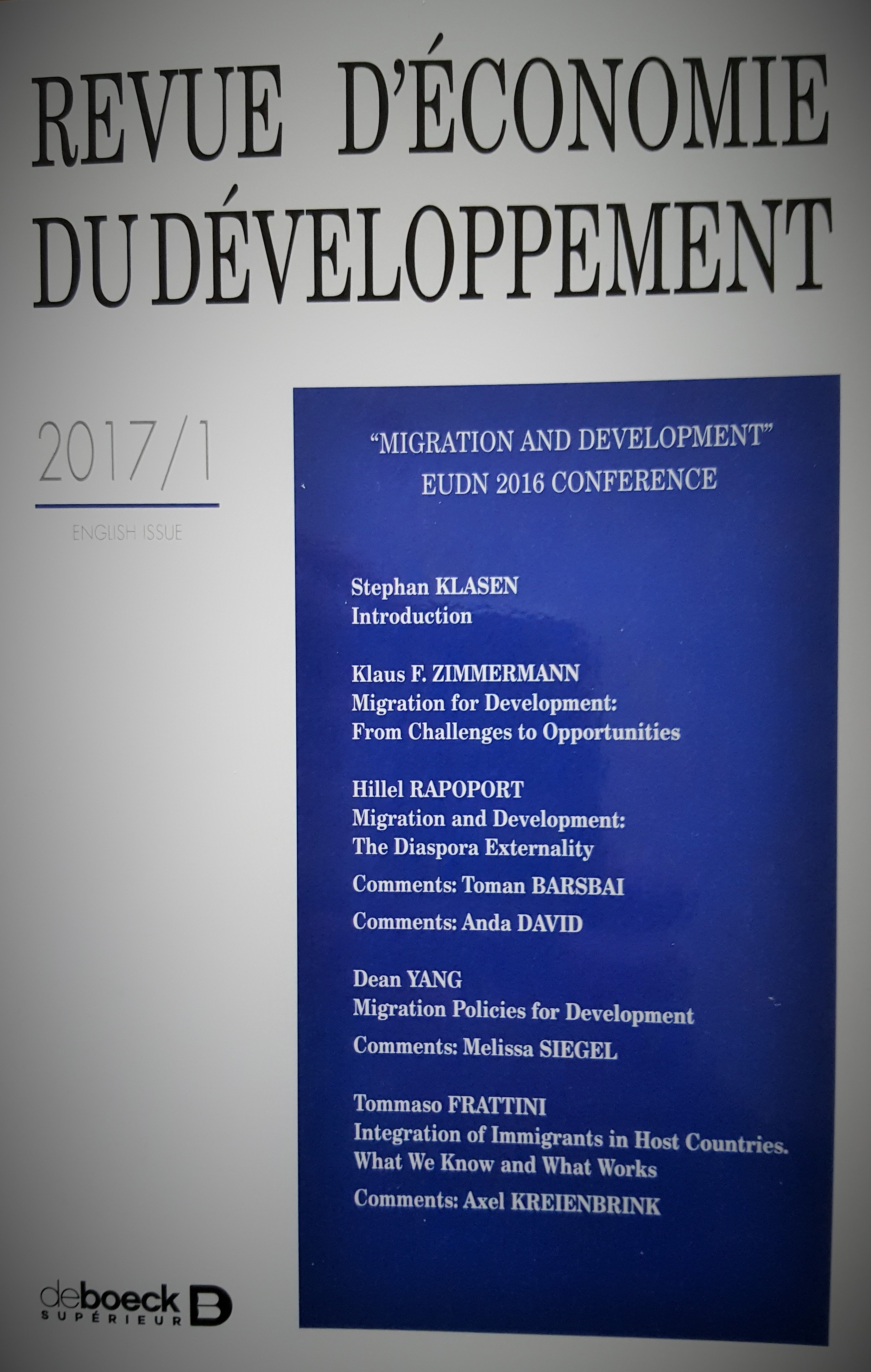
European Development Research Network publish special issue on Migration & Development: Research & Policy

A high-profile workshop organized by the European Development Research Network focused on how migration and migration policies can affect economic development and studied the policies that strengthen the benefits of migration for both sending and receiving countries. The event took place at Bonn University on December 5, 2016 under the leadership of Stephan Klasen (University of Goettingen), the President of the European Development Research Network.

The keynote speaker of the event had been Klaus F. Zimmermann (UNU-MERIT, Maastricht University and ZEF, Bonn University), who is also the President of the Global Labor Organization (GLO).

GLO Discussion Paper No. 70 Migration for Development: From Challenges to Opportunities – Download PDF

by Klaus F. Zimmermann

Background paper to the keynote presentations to the European Development Conference 2016 on “Migration and Development” at Bonn University, December 5, 2016, and to the 22. Eurasia Business and Economics Society (EBES) Conference, May 24-26, 2017 at Sapienza University of Rome.

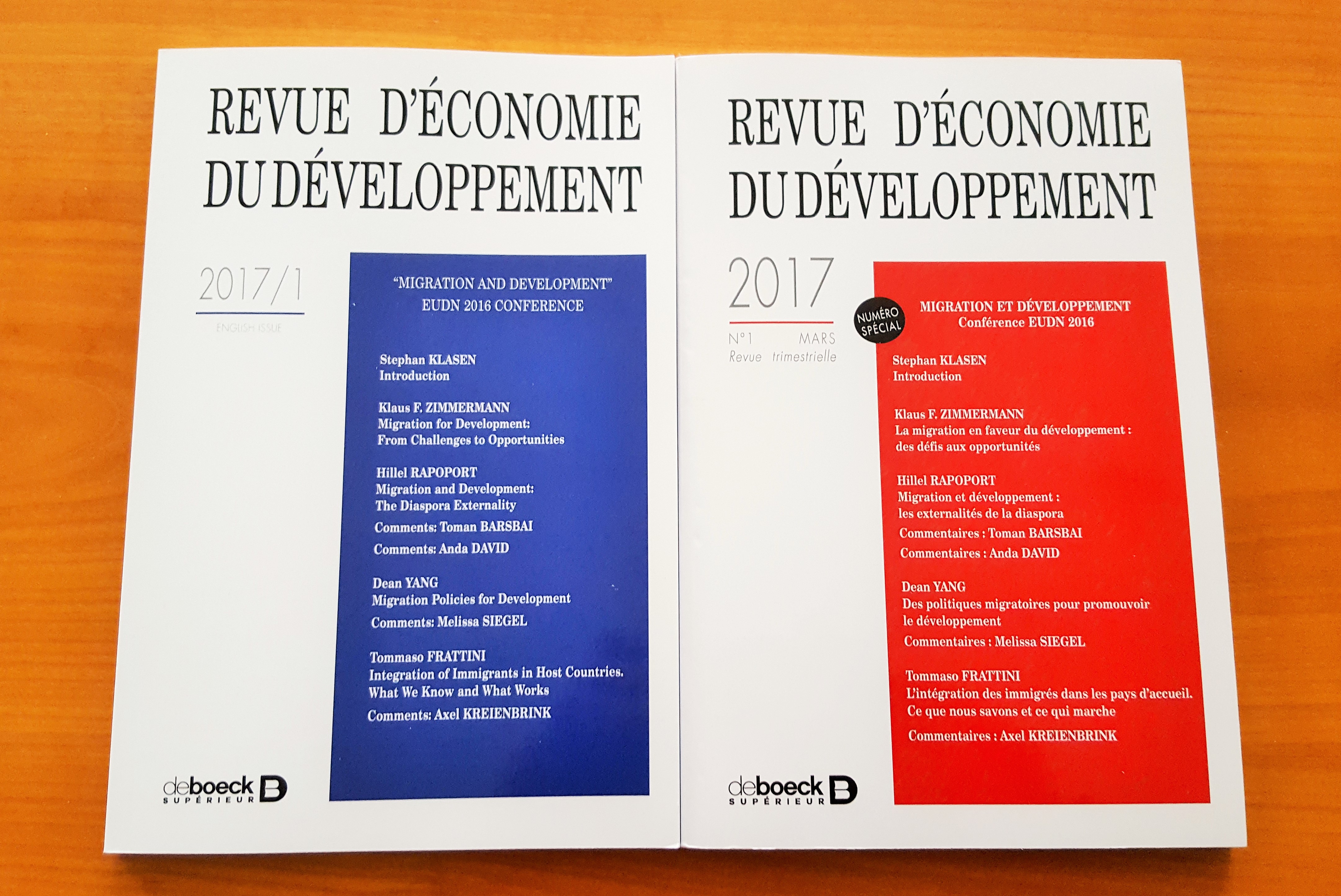
The papers of this event have now been published in French and English in the Revue D’Économie Du Développement collecting also articles of GLO Fellows Hillel Rapoport (Paris School of Economics), Dean Yang (University of Michigan) and Tommaso Frattini (Milan University) and were discussed, among others, by GLO Fellows Toman Barsbai (Kiel Institute for the World Economy) and Melissa Siegel (Maastricht Graduate School of Governance and UNU-Merit). (See for more details below.)


Ends;

Romanian evidence on fertility preferences: How the 1966 abortion ban has affected next-generation demand for children

How do fertility preferences transfer between generations within families? In a new Discussion Paper of the Global Labor Organization (GLO), GLO Fellow Federico H. Gutierrez (Vanderbilt University) provides evidence using a historical event, the 1966 abortion ban in Romania. Current fertility preferences of individuals are negatively affected by parental experiences with the ban.

Federico H. Gutierrez: The Inter-generational Fertility Effect of an Abortion Ban: Understanding the Role of Inherited Wealth and Preferences, GLO Discussion Paper No. 167FREE DOWNLOAD.

ABSTRACT

This paper studies to what extent banning first-generation women from aborting affected the fertility of second-generation individuals who did not face such legal constraint. Using multiple censuses from Romania, the paper follows men and women born around the 1966 Romanian abortion ban to study the demand for children over their life cycle. The empirical approach combines elements of the regressions discontinuity design and the Heckman’s selection model. Results indicate that second-generation individuals whose mothers were affected by the ban had a significantly lower demand for children. One-third of such decline is explained by inherited socio-economic status and two-thirds presumably by preferences. (Abstract marginally adapted from the DP.)


Titles and free access to all GLO Discussion Paper


GLO Discussion Papers are research and policy papers of the GLO Network which are widely circulated to encourage discussion. Provided in cooperation with EconStor, a service of the ZBW – Leibniz Information Centre for Economics, GLO Discussion Papers are among others listed in RePEc (see IDEAS, EconPapers).

Complete list of all GLO DPs downloadable for free.

Ends;

“Inter-generational cultural assimilation is hindered by immigration restrictions”

This is the conclusion of a new scientific study forthcoming in the Journal of Population Economics, the leading academic outlet in population economics. The Journal is supported by the Global Labor Organization (GLO).

Message: Inter-generational cultural assimilation is hindered by immigration restrictions.

Background

As migration research has shown, restricting free labor mobility leads to more migrants in the host country. People stay longer or forever and bring family. The 2014 article on Circular Migration by Klaus F. Zimmermann has reviewed this point providing evidence for Mexico and Germany. In the German context, the 1973 migration labor recruitment stop has lead to more migrants when the restrictions were binding.

In this tradition, a new scientific study forthcoming in the Journal of Population Economics investigates the impact of restrictions on cultural assimilation. If those migrants with a stronger affection to the culture of origin are more temporary, more of them stay even permanently, and restrictions may lead to a slower cultural assimilation into the host country, among them or even in the next generation. The new paper studies the impact on second-generation cultural assimilation in this context.

THE PAPER:

Immigration restrictions and second-generation cultural assimilation: theory and quasi-experimental evidence

by Fausto Galli & Giuseppe Russo

Fausto Galli is at the Dipartimento di Scienze Economiche e Statistiche, Universita’ di Salerno, Fisciano, Italy

GLO Fellow Giuseppe Russo is at the Dipartimento di Scienze Economiche e Statistiche, Universita’ di Salerno, Fisciano, Italy and at the Centre for Studies in Economics and Finance (CSEF), Napoli, Italy

Website Link. Accepted for publication, forthcoming in the Journal of Population Economics. Available online. https://doi.org/10.1007/s00148-018-0694-z

ABSTRACT

We study the effects of immigration restrictions on the cultural assimilation of second-generation migrants. In our theoretical model, when mobility is free, individuals with a stronger taste for their native culture migrate temporarily. When immigration is restricted, however, these individuals are incentivized to relocate permanently. Permanent emigrants procreate in the destination country and convey their cultural traits to the second generation, who will therefore find assimilation harder. We test this prediction by using the 1973 immigration ban in Germany (Anwerbestopp) as a quasi-experiment. Since the ban only concerned immigrants from countries outside the European Economic Community, they act as a treatment group. According to our estimates, the Anwerbestopp has reduced the cultural assimilation of the second generation. This result demonstrated robustness to several checks. We conclude that restrictive immigration policies may have the unintended consequence of delaying the intergenerational process of cultural assimilation.

The responsible editor has been Klaus F. Zimmermann.

Journal of Population Economics

Ends;

Eastern Orthodox believers are less happy and have less social capital, a new GLO study shows.

Relative to Catholics, Protestants and non-believers, those individuals of Eastern Orthodox religion seem to be less happy, have less social capital and prefer old ideas and safe jobs. In a new Discussion Paper of the Global Labor Organization (GLO), Simeon Djankov and Elena Nikolova provide strong empirical evidence using global data sources to suggest that this is support for the received Berdyaev hypothesis of communism as a successor of orthodoxy.

Simeon Djankov  is associated  with the London School of Economics and Political Science, UK and the Peter G. Peterson Institute for International Economics, USA.

GLO Fellow Elena Nikolova is associated with the Central European Labor Studies Institute, Slovakia, the Leibniz Institute for East and Southeast European Studies, Regensburg, Germany, and University College London.

Simeon Djankov & Elena Nikolova: Communism as the Unhappy Coming, GLO Discussion Paper No. 192FREE DOWNLOAD.

ABSTRACT

Eastern Orthodox believers are less happy compared to those of Catholic and Protestant faith using data covering more than 100 countries around the world. Consistent with the happiness results, the study also finds that relative to Catholics, Protestants and non-believers, those of Eastern Orthodox religion have less social capital and prefer old ideas and safe jobs. In addition, Orthodoxy is associated with left-leaning political preferences and stronger support for government involvement in the economy. Compared to non-believers and Orthodox adherents, Catholics and Protestants are less likely to agree that government ownership is a good, and Protestants are less likely to agree that getting rich can only happen at the expense of others. These differences in life satisfaction and other attitudes and values persisted despite the fact that communist elites sought to eradicate church-going in Eastern Europe, since communists maintained many aspects of Orthodox theology which were useful for the advancement of the communist doctrine. The findings are consistent with Berdyaev’s (1933, 1937) hypothesis of communism as a successor of Orthodoxy. (Abstract marginally adapted from the DP.)

Titles and free access to all GLO Discussion Papers

GLO Discussion Papers are research and policy papers of the GLO Network which are widely circulated to encourage discussion. Provided in cooperation with EconStor, a service of the ZBW – Leibniz Information Centre for Economics, GLO Discussion Papers are among others listed in RePEc (see IDEAS, EconPapers).

Complete list of all GLO DPs downloadable for free.

Ends;


A Full Employment Strategy for Europe: New GLO Discussion Paper of Ritzen & Zimmermann

Why not be more ambitious? Ritzen and Zimmermann suggest coordinated labor policies for a European full employment strategy.

Jo Ritzen is Professor of International Economics of Science, Technology and Higher Education, Maastricht University, UNU‐MERIT, Graduate School of Governance. Klaus F. Zimmermann is Professor, UNU‐MERIT, Maastricht University and Bonn University; President, Global Labor Organization (GLO) and Research Fellow, CEPR.

Since years, Ritzen and Zimmermann have discussed the development of the European labor markets as a core factor behind Euroscepticism, which has been seen as posing an existential threat to the European Union. Therefore, European labor policies need to become more ambitious to fight unemployment. In their new discussion paper, Ritzen and Zimmermann outline the challenges and perspectives of a full employment policy across Europe: “We need a full employment strategy for Europe!”

Jo Ritzen & Klaus F. Zimmermann: Towards a European Full Employment Policy, GLO Discussion Paper No. 191 FREE DOWNLOAD.

ABSTRACT

Full employment in the European Union member states is a challenge but feasible, also in downswings of the business cycle and during stages of increased robotization. It requires labor legislation that ensures flexibility and retraining, responsive labor sharing during the business cycle and to individual life cycle needs, government interventions to supply supplemental employment and revamping dual education. The future of work is better ensured with coordinated European full employment labor policies establishing fair work conditions based on long-run business strategies as well as a fair distribution of national income between labor and capital.

http://www.klausfzimmermann.de/wp/wp-content/uploads/2018/03/20180328_115952-2.jpg

Jo Ritzen (right) and Klaus F. Zimmermann at UNU-MERIT, Maastricht.

In 2017, Jo Ritzen has published a related book on: A Second Chance for Europe. Economic, Political and Legal Perspectives of the European Union, Springer Verlag Heidelberg.

Titles and free access to all GLO Discussion Papers

GLO Discussion Papers are research and policy papers of the GLO Network which are widely circulated to encourage discussion. Provided in cooperation with EconStor, a service of the ZBW – Leibniz Information Centre for Economics, GLO Discussion Papers are among others listed in RePEc (see IDEAS, EconPapers).

Complete list of all GLO DPs downloadable for free.

Ends;

GLO Discussion Paper of the month: How Adult Wellbeing is Affected by Family and Childhood & ALL MARCH GLO DP’s OPEN ACCESS

Titles and free access/links to GLO Discussion Papers

GLO Discussion Papers are research and policy papers of the GLO Network which are widely circulated to encourage discussion. Provided in cooperation with EconStor, a service of the ZBW – Leibniz Information Centre for Economics, GLO Discussion Papers are among others listed in RePEc (see IDEAS, EconPapers). Complete list of all GLO DPs downloadable for free.

Discussion Paper of the Month: March

Flèche, Sarah & Lekfuangfu, Warn N. & Clark, Andrew E. , The Long-Lasting Effects of Family and Childhood on Adult Wellbeing: Evidence from British Cohort Data, GLO Discussion Paper, No. 184, March 2018. Free download.

Abstract: To what extent do childhood experiences continue to affect adult wellbeing over the life course? Previous work on this link has been carried out either at one particular adult age or for some average over adulthood. We here use two British birth-cohort datasets (the 1958 NCDS and the 1970 BCS) to map out the time profile of the effect of childhood experiences on adult outcomes, including life satisfaction. We find that the effects of many aspects of childhood do not fade away over time but are rather remarkably stable. In both birth-cohorts, child non-cognitive skills are the strongest predictors of adult life satisfaction at all ages. Of these, emotional health is the strongest. Childhood cognitive performance is more important than good conduct in explaining adult life satisfaction in the earlier NCDS cohort, whereas this ranking is inverted in the more recent BCS.

GLO Discussion Papers of March 2018

190 Residential Satisfaction for a Continuum of Households: Evidence from European Countries – Download PDF
by Borgoni, Riccardo & Michelangeli, Alessandra & Pirola, Federica

189 The economics of university dropouts and delayed graduation: a survey – Download PDF
by Aina, Carmen & Baici, Eliana & Casalone, Giorgia & Pastore, Francesco

188 The Optimal Graduated Minimum Wage and Social Welfare – Download PDF
by Danziger, Eliav & Danziger, Leif

187 Minority Groups and Success in Election Primaries – Download PDF
by Epstein, Gil S. & Heizler, Odelia

186 Two and a half million Syrian refugees, skill mix and capital intensity – Download PDF
by Akgündüz, Yusuf Emre & Torun, Huzeyfe

185 Voting in Hiring Committees: Which “Almost” Rule Is Optimal? – Download PDF
by Baharad, Eyal & Danziger, Leif

184 The Long-Lasting Effects of Family and Childhood on Adult Wellbeing: Evidence from British Cohort Data – Download PDF
by Flèche, Sarah & Lekfuangfu, Warn N.s & Clark, Andrew E.


Successful GLO team:

GLO Managing Director Matloob Piracha (University of Kent, right) and GLO President Klaus F. Zimmermann (UNU-MERIT, Maastricht University and Bonn University, left).

Ends;

GLO Sessions at the forthcoming 25th EBES conference at FOM University in Berlin on May 23, 2018

The 25th Conference of the Eurasia Business and Economics Society (EBES) will take place on May 23-25, 2018 in Berlin/Germany. It is jointly organized with the Global Labor Organization (GLO) and hosted by the FOM University in their Berlin study center. A previous announcement.  See also for: Further information.

On May 23, 2018 three GLO sessions will contribute to the success of the 25th EBES conference in Berlin:

GLO Policy Panel on: “Mobilizing Human Resources in Africa”

GLO Research Paper Session  on: “Wellbeing”

GLO “Thematic Research Cluster” Session

!! At the 25th EBES/GLO Conference – Berlin, Germany, May 23, 2018!!

Policy Panel on: “Mobilizing Human Resources in Africa”

Ernest Ngeh Tingum (University of Cape Town, South Africa): A research agenda for trade developments in Africa

Martin Kahanec (Central European University, Budapest, Hungary) with Martin Guzi (Masaryk University, Brno, Czech Republic): A research agenda concerning subjective and objective evaluations of living wages in Africa

Kea Tijdens (University of Amsterdam, Netherlands, and WageIndicator Foundation): A research agenda focussing on informal labour markets in Africa

Tilman Brück (International Security and Development Center, Berlin, Germany and London School of Economics, UK): Employment Creation and Peace Building

Almas Heshmati (Jönköping International Business School, Sweden, and Sogang University, South Korea; GLO Cluster Lead Africa): GLO Thematic Cluster on Labor Markets in Africa

SESSION CHAIR: Kea Tijdens (University of Amsterdam, Netherlands, and WageIndicator Foundation) and Christoph Kannengießer (CEO, German African Business Association)

 !! At the 25th EBES/GLO Conference – Berlin, Germany, May 23, 2018!!

GLO Research Paper Session  on: “Wellbeing”

Almas Heshmati (Jönköping International Business School, Sweden, and Sogang University, South Korea) with Masoomeh Rashidghalam and Pia Nilsson: Measurement and Analysis of Multidimensional Well-being in Rwanda

Olena Nizalova (University of Kent, UK) with Olga Nikolaieva, Jonas Voßemer, Michael Gebel and Katerina Gousia: Youths’ experiences of labor market shocks and late life well-being and health

Milena Nikolova (University of Groningen) with Boris Nikolaev: Family Matters: Involuntary Parental Unemployment During Childhood and Subjective Well-being Later in Life

Corrado Giulietti (University of Southampton): Migration and Wellbeing in the UK

Klaus F. Zimmermann (UNU-MERIT) with John Haisken-DeNew: The New Australian Work Life After the Refugee Camp

Francesco Pastore (University of Napoli): Working But Watching Every Penny? Working Poverty and School Dropout in Mongolia

SESSION CHAIR: Milena Nikolova (University of Groningen) and Matloob Piracha (University of Kent)

!! At the 25th EBES/GLO Conference – Berlin, Germany, May 23, 2018 !!

GLO Thematic Research Cluster Session

Marco Leonardi (Economic Advisor to the Prime Minister of Italy and University of Milan): Labor Reform Policies and Italy After the Elections

Martin Kahanec (Central European University): Labor Mobility in the EU

Nick Drydakis (Anglia Ruskin University, Cambridge, UK): Gender, Gender Identity, Sexual Orientation and Labor Market Outcomes

Corrado Giulietti (University of Southampton): The Chinese Labor Market

Francesco Pastore (University of Napoli): School-to-Work Transition

Marco Vivarelli (Catholic University of Milan): Technological Change and the Labor Market: Employment, Skills, and Wages

Almas Heshmati (Jönköping International Business School, Sweden, and Sogang University, South Korea): Green Employment Creation

Tilman Brück (International Security and Development Center, Berlin, Germany and London School of Economics, UK):  Labor in Conflict, Fragile and Emergency Areas

SESSION CHAIR: Corrado Giulietti (University of Southampton) and Matloob Piracha (University of Kent)

FOR DETAILED ABSTRACTS OF ALL PAPERS CLICK HERE.

GLO President Klaus F. Zimmermann

Ends;

Can rising inequality be a cause of fading hope? Evidence for the United States.

A large literature has discussed whether the increase in inequality over the last decade in Western industrial countries such as the United States (US) would lead to increasing tensions between socio-economic groups, social uprising and political change which might in turn hamper economic growth. The French economist Thomas Piketty had popularized the inequality issue. Now we know that inequality perceptions of population groups are behind major changes in the world, e.g. Brexit, Trump, the rise of popular movements in Europe and else.

A newly published paper by GLO Fellow Jo Ritzen and GLO President Klaus F. Zimmermann studies this issue with long-term data for the United States. They document fading hopes of the wider population about the long-term future as a decisive indicator of change:

Jo Ritzen and Klaus F. Zimmermann: Fading Hope and the Rise in Inequality in the United StatesEurasian Business Review, (2018) 8:1–12. LEAD ARTICLE. DOI: 10.1007/s40821-016-0071-3. UNU-MERIT Working Paper 2016-025  Prepublication. A very preliminary version of this paper was a DP already in 2012.

Both authors are Professors of Economics and are affiliated with UNU-MERIT and Maastricht University. Jo Ritzen was previously Dutch Minister for Education and Science and President of Maastricht University. Klaus F. Zimmermann was President of the German Institute for Economic Research (DIW Berlin), Founding Director of the Institute for the Study of Labor (IZA) and was recently affiliated with Harvard University and Princeton University.

The paper uses survey data for the US collected by the Pew Research Center for the People covering 1999–2014 documenting a long-run decline in hope. Over the first decade, the decline in hope cannot be traced back to the rising inequality. However, recent data from 2014 suggest that inequality is now a major driver of a lower than ever level of hope. Therefore, inequality is a recent factor, but was not the long-run driver of the decline in hope.

Jo Ritzen

Klaus F. Zimmermann

Ends;

Joint IESR – GLO Labor Workshop at Jinan University, China, on March 13, 2018

On the invitation of Professor and Dean Shuaizhang Feng, Head of the Institute for Economic and Social Research (IESR), a joint IESR – GLO Labor Workshop takes place at Jinan University, China, on March 13, 2018.  GLO stands for Global Labor Organization, and its President, Klaus F. Zimmermann (UNU-MERIT, Maastricht), will provide the opening paper presentation. As a GLO Fellow, Professor Feng is also a prominent member of this network. Several other GLO Fellows are present at the event, including M Niaz Asadullah (University of Malaysia), who is also the Southeast Asia Lead of the GLO research program.

The IESR-GLO Joint Labor Workshop Program

Venue: Room 106, Zhonghui Building, Jinan University, Guangzhou China

9:00am: Welcome

Shyamal Chowdhury, Annabelle Krause and Klaus F. Zimmermann (GLO and UNU-MERIT): Arsenic Contamination of Drinking Water and Wellbeing

Yang, Zhe (Jinan University): Cohabitation or Marriage? Relationship Bargaining with an Endogenously Determined Balance of Power

Cai, Shu (Jinan University), Albert Park and Winnie Yip: Migration and Subjective Well-Being of Left-behind Parents in Rural China: Evidence from Time Use Data

12:00-1:30pm Lunch

1:30pm:

Amrit Amirapu, M Niaz Asadullah (University of Malaysia) and Zaki Wahhaj: Marriage, Work, and Migration: The Role of Infrastructure Development and Gender Norms

Shuaizhang Feng (Jinan University) and Gaojie Tang: Accounting for China’s Income Inequality: 1992-2009

Chen Yi (Jinan University) and Yingfei Huang: The Power of the Government: China’s Family Planning Leading Group and the Fertility Decline since 1970

Ends;

INBAM Publishing Workshop for Emerging Scholars – 23-25 May 2018 at Kingston University: Invitation to participate

INBAM, the International Network of Business & Management Journal Editors, is an organization affiliated with the Global Labor Organization (GLO). The INBAM Website can be accessed here: https://www.inbam-editors.org/

Those interested are invited to join the forthcoming

Publishing Workshop for Emerging Scholars – 23-25 May 2018 at Kingston University

This hands-on practical workshop is managed by ISI journal editors who will help participants to publish their papers in top business and management journals. There are only limited slots available!

https://www.inbam-editors.org/s/misc/logo.jpg?t=1518473551

For more information see the Flyer INBAM Workshop.

The initiative is coordinated by GLO Fellow Adrian Ziderman, who has also suggested to post it on the GLO Website.

Professor Adrian Ziderman

Professor Emeritus, Formerly Sir Isaac Wolfson Chair in Economics and Business Administration at Bar-Ilan University, Israel, Department of Economics, Editor-in-Chief of The International Journal of Manpower (published by Emerald), Research Chair, COPE, the Committee on Publication Ethics, President and Trustee of INBAM

https://www.inbam-editors.org/s/cc_images/teaserbox_53256013.JPG?t=1517741162

Ends;


GLO Discussion Papers February 2018. With GLO Discussion Paper of the Month on Labor Mobility in the US and Europe!!

Titles and free access/links to GLO Discussion Papers: February 2018

GLO Discussion Papers are research and policy papers of the GLO Network which are widely circulated to encourage discussion. Provided in cooperation with EconStor, a service of the ZBW – Leibniz Information Centre for Economics, GLO Discussion Papers are among others listed in RePEc (see IDEAS, EconPapers). Complete list of all GLO DPs downloadable for free.

Discussion Paper of the Month: February

Jauer, Julia & Liebig, Thomas & Martin, John P. & Puhani, Patrick A., Migration as an adjustment mechanism in the crisis? A comparison of Europe and the United States 2006-2016,  GLO Discussion Paper 178, February 2018. Free download.

Abstract: We estimate whether migration can be an equilibrating force in the labor market by comparing pre-and post-crisis migration movements at the regional level in both Europe and the United States, and their association with symmetric labor market shocks. Based on fixed-effects regressions using regional panel data, we find that Europe’s migratory response to unemployment shocks was almost identical to that recorded in the United States after the crisis. Our estimates suggest that, if all measured population changes in Europe were due to migration for employment purposes – i.e. an upper-bound estimate – up to about a quarter of the asymmetric labor market shock would be absorbed by migration within a year. However, in Europe and especially in the Eurozone, the reaction to a very large extent stems from migration of recent EU accession country citizens as well as of third – country nationals.

See also a recent debate about internal labor mobility in Europe and Austria.

GLO Discussion Papers of February 2018

183 Evaluating intergenerational persistence of economic preferences: A large scale experiment with families in Bangladesh – Download PDF
by Chowdhury, Shyamal & Sutter, Matthias & Zimmermann, Klaus F.

182 Equilibrium Real Interest Rates, Secular Stagnation, and the Financial Cycle: Empirical Evidence for Euro-Area Member Countries – Download PDF
by Belke, Ansgar & Klose, Jens

181 Successful Transition to a Market Economy in Vietnam: An Interpretation from Organizational Ecology Theory – Download PDF
by Tran, Hien Thu & Santarelli, Enrico

180 Overeducation wage penalty among Ph.D. holders. An unconditional quantile regression analysis on Italian data – Download PDF
by Gaeta, Giuseppe Lucio & Lubrano Lavadera, Giuseppe & Pastore, Francesco

179 Data Gaps, Data Incomparability, and Data Imputation: A Review of Poverty Measurement Methods for Data-Scarce Environments – Download PDF
by Dang, Hai-Anh & Jolliffe, Dean & Carletto, Calogero

178 Migration as an adjustment mechanism in the crisis? A comparison of Europe and the United States 2006-2016 – Download PDF
by Jauer, Julia & Liebig, Thomas & Martin, John P. & Puhani, Patrick A.

177 Technological catching-up, sales dynamics and employment growth: evidence from China’s manufacturing firms – Download PDF
by Dosi, Giovanni & Yu, Xiaodan

176 Economic Pluralism in the Study of Wage Discrimination: A Note – Download PDF
by Drydakis, Nick


Successful GLO team:

GLO Managing Director Matloob Piracha (University of Kent, right) and GLO President Klaus F. Zimmermann (UNU-MERIT, Maastricht University and Bonn University, left).

Ends;

How marriage delays cause earnings increases and what it means for society: Interview with author Le Wang of the University of Oklahoma

The prestigious 2018 Kuznets Prize of the Journal of Population Economics has been awarded to Chunbei Wang and Le Wang of the University of Oklahoma. The prize has been presented at a recent event of the Global Labor Organization (GLO) in Washington DC.
Le Wang, your paper in the Journal of Population Economics (with Chunbin Wang) got the Kuznets Prize 2018. Your research suggests that there is an earnings premium of marriage delays which is larger for females than for males. This causal effect seems to work almost exclusively through more education for both men and women. 
 
GLO: Marrying later generates higher incomes: You say it is “causal”, what does this mean in your context and why is it important?
 
Le Wang: We often observe that people who marry later also earn higher earnings. This positive association, however, may not necessarily imply that delaying marriages would necessarily lead to higher productivity or higher earnings. It may be simply due to the fact that people who delay their marriages may be different from those who do not. For example, people who delay marriages may be more career oriented or motivated, and thus these people are more likely to have higher earnings, whether they delay marriage or not. By “causal”, we mean that we are actually able to isolate the productivity-enhancing effects of marriage delay. This result has important policy implications because if we can somehow “cause” or induce people to delay their marriages, we could increase their earnings.
GLO: What are the policy implications, who can “cause” marriage delays and make couples richer?
 

Le Wang: Government can, for example, institute minimum marriage age laws (the differences in such laws across states were also the reason why we can identify the causal impacts of marriage delay). There are also other examples in which rather than regulating the minimum marriage age, governments can provide incentives for people to marry late. For example, Chinese government implemented the “late marriage leave” that allowed workers who get married at age 25 or older to take a 30-day paid leave when getting married.

GLO: Research in the gender-equality literature argues that the more females work full-time, the lower the gender wage gap. What implications do your findings have for this debate?
 

Le Wang: Much of the gender gap literature has been focused on whether and how human capital characteristics and discrimination can explain the gap. Our results highlight the potential role of family in explaining it. Over the past decades, there have been similar changes in the median age of first marriage between men and women. In light of our findings, such demographic trends could have much greater impacts on women’s earnings, thereby leading to the narrowing gender gap.

GLO Fellow Le Wang of the University of Oklahoma (right) and Klaus F. Zimmermann (GLO President and Editor-in-Chief of the Journal of Population Economics.)
 

Ends;

2018 Kuznets Prize Awarded to Chunbei Wang and Le Wang of the University of Oklahoma: How marriage delays cause earnings increases

There is a causal effect of marriage delays on earnings, with a stronger impact for females than for males. This works almost exclusively through more education for both men and women.

2018 Kuznets Prize Awarded to Chunbei Wang and Le Wang of the University of Oklahoma

Chunbei Wang and Le Wang of the University of Oklahoma receive the 2018 Kuznets Prize for their article “Knot yet: Minimum marriage age law, marriage delay, and earnings,” which was published in the Journal of Population Economics (2017), 30(3), pp. 771-804. The annual prize honors the best article published in the Journal of Population Economics in the previous year. The article editor of the paper has been Junsen Zhang (Hongkong University) supported by his team of anonymous referees.

The prize will be given at a dinner event of the Global Labor Organization (GLO) in Washington DC on February 8, 2018. GLO supports the Journal of Population Economics, and the Editor-in-Chief of the Journal, Klaus F. Zimmermann (UNU-MERIT, Maastricht), who is also the President of GLO, is presenting the prize.

1  Biographical Abstracts

Chunbei Wang is an Assistant Professor of Economics at the University of Oklahoma and a Fellow at the Global Labor Organization (GLO). Before that, she was an Assistant Professor at Birmingham-Southern College and the University of Massachusetts Dartmouth. She obtained her Ph.D. degree from the University of Texas at Dallas in 2008 and her bachelor’s degree from Jinan University in Guangzhou, China in 2001.

Her research focuses on immigration, entrepreneurship, gender, minorities, and family. Her work has been published in the Journal of Population Economics, Journal of Environmental Economics and Management, Research in Labor Economics, and Industrial Relations, among others.

Le Wang is Chong K. Liew Chair and Associate Professor of Economics at the University of Oklahoma, as well as a Fellow at Global Labor Organization and IZA. He also serves as an Associate Editor of Econometric Reviews and Journal of Labor Research. He also holds a special term professorship at Jinan University. Prior to joining OU, he has held positions at the University of Alabama, the University of New Hampshire, and University of Minnesota. He was also a Women and Public Policy Fellow at Harvard Kennedy School. He received his Ph.D in Economics from Southern Methodist University in 2006 and his B.A. in International Finance from Jinan University, Guangzhou, China in 2001.

His research focuses on questions in the subfields of microeconomics—labor and demographic economics, development economics and public economics—with a particular emphasis on the development and use of distributional/nonparametric and program evaluation methods to address issues in these areas. His work has been published in journals such as Journal of Political Economy, Journal of Econometrics, Journal of Applied Econometrics, Journal of Population Economics, Journal of Environmental Economics and Management Econometrics Journal, Economic Development and Cultural Change, Health Economics, and Industrial Relations.
GLO Fellows Chunbei Wang and Le Wang of the University of Oklahoma

 2  Abstract of the Winning Paper

“Despite the historical highs for age at first marriage, little is known about the causal relationship between marriage delay and wages, and more importantly, the mechanisms driving such relationship. We attempt to fill the void. Building on an identification strategy proposed in Dahl (Demography 47:689–718, 2010), we first establish the causal wage effects of marriage delay. We then propose ways to distinguish among competing theories and hypotheses, as well as the channels through which marriage delay affects wages. Specifically, we take advantage of their different implications for causal relationship, across gender and sub-populations. We reach two conclusions. First, we find a positive causal impact of marriage delay on wages, with a larger effect for women. Comparison of IV and OLS estimates suggests that the observed relationship between marriage delay and wages is attributed to both selection in late marriages and true causal effects. Second, we find strong evidence that the positive, causal effects are almost exclusively through increased education for both men and women.”

3  About the Kuznets Prize

The Journal of Population Economics awards the ‘Kuznets Prize’ for the best paper published in the Journal of Population Economics in the previous year. Starting from 2014 the Prize has been awarded annually. Papers are judged by the Editors of the Journal.

Simon Kuznets, a pioneer in population economics, Professor Emeritus at Harvard University and the 1971 Nobel Prize laureate in economics, died on July 10, 1985. Professor Kuznets was born 1901 in Pinsk, Belarus, and came to the United States in 1922. He earned his Bachelor of Science in 1923, a Master of Arts degree in 1924 and his doctorate in 1926, all from Columbia University. During World War II he was Associate Director of the Bureau of Planning and Statistics on the War Production Board, and he served on the staff of the National Bureau of Economic Research from 1927 to 1960. Mr. Kuznets was a faculty member at the University of Pennsylvania for 24 years and Professor of Political Economy at Johns Hopkins University from 1954 until he joined Harvard University in 1960. He retired in 1971 and was given the title of George F. Baker Professor Emeritus of Economics. He was a former president of the American Economic Association and the American Statistical Association.

 4  Previous Winners

 The Kuznets Prize has previously been awarded to:

2017: Binnur Balkan (Stockholm School of Economics) and Semih Tumen (Central Bank of the Republic of Turkey) for their article “Immigration and prices: quasi-experimental evidence from Syrian refugees in Turkey,” Journal of Population Economics 29(3): pp. 657-686.

2016: Loren Brandt (University of Toronto), Aloysius Siow (University of Toronto), and Hui Wang (Peking University) for their article “Compensating for unequal parental investments in schooling,” Journal of Population Economics 28: 423-462.

2015: Haoming Liu (National University of Singapore) for his article “The quality–quantity trade-off: evidence from the relaxation of China’s one-child policy”, Journal of Population Economics 27: 565-602.

2014: Paolo Masella (University of Essex) for his article “National Identity and Ethnic Diversity”, Journal of Population Economics 26: 437-454.

Period 2010-2012: Richard W. Evans (Brigham Young University), Yingyao Hu (Johns Hopkins University) and Zhong Zhao (Renmin University) for their article “The fertility effect of catastrophe: US hurricane births”, Journal of Population Economics 23: 1-36.

Period 2007-2009: Makoto Hirazawa (Nagoya University) and Akira Yakita (Nagoya University) for their article ” Fertility, child care outside the home, and pay-as-you-go social security “, Journal of Population Economics 22: 565-583.

Period 2004-2006: Jinyoung Kim (Korea University) received the Kuznets Prize for his article “Sex selection and fertility in a dynamic model of conception and abortion,” Journal of Population Economics 18: 041-067.

Period 2001–2003: Olympia Bover (Bank of Spain) and Manuel Arellano (CEMFI), for their article “Learning about migration decisions from the migrants: Using complementary datasets to model intra-regional migrations in Spain”, Journal of Population Economics 15:357–380.

Period 1998–2000: David C. Ribar (George Washington University), for his article “The socioeconomic consequences of young women’s childbearing: Reconciling disparate evidence”, Journal of Population Economics 12: 547–565.

Period 1995–1997: James R. Walker (University of Wisconsin-Madison), for his article “The effect of public policies on recent Swedish fertility behavior”, Journal of Population Economics, 8: 223–251.

Ends;


The marital satisfaction of differently aged couples: Read a fresh & innovative research paper

How do differently aged couples experience marital satisfaction?  Remarkable findings are derived in the just available and freely accessible lead article in the Journal of Population Economics:

Authors: Wang-Sheng Lee and Terra McKinnish

Deakin University, Australia & University of Colorado, USA, respectively

The marital satisfaction of differently aged couples

Journal of Population Economics (2018), Vol. 31:2, pp 337-362

PDF downloadable for free

GLO Fellow Wang-Sheng Lee is an Associate Professor in the Department of Economics at Deakin University. Wang received his B.A. from Colby, his M.A. from Michigan and his Ph.D. from Melbourne.

GLO Fellow Terra McKinnisch is a Professor in the Department of Economics at University of Colorado Boulder. McKinnisch received her B.A. from University of Richmond, and her MS and her Ph.D. from Carnegie Mellon University.

The Journal of Population Economics is the leading academic journal in economic demography, the Global Labor Organization (GLO) is one of the organizations supporting the Journal. GLO President Klaus F. Zimmermann is the Editor-in-Chief of the Journal:  “We thank the brilliant authors for an excellent analysis of a very timely question with thought-provoking insights and the article Editor,  Alessandro Cigno, University of Florence, with his anonymous academic referees, for their important work. The study uses the famous and reliable Australian Hilda panel data set administered at The Melbourne Institute, University of Melbourne.”

Here are the core findings:

Both women and men likewise are more satisfied with younger marital partners and less satisfied with older ones. Marital satisfaction for a younger partner which is initially higher than for similar aged couples declines relatively with marital duration and converges within six to ten years of marriage. This is explained by the hypothesis that differently aged couples are less resilient to negative shocks compared to similarly aged couples.

Controversial in the literature – important and open for further debate!

  • The finding that, in the cross-section, both men and women are the most satisfied with younger partners and least satisfied with older partners contradicts much of the existing theoretical and empirical literature on marital sorting and marital age gaps.
  • The results also call into question the preference estimates generated using data from online data and speed-dating events. The fact that both men and women tend to seek dates with similarly aged partners had previously been interpreted as evidence that both men and women prefer similarly aged partner.  Both may actually prefer to seek dates with younger partners but avoid doing so because they know that they would only be successful with low-quality younger partners.


GLO Fellow and Editor Cigno (left) and Zimmermann (right)

Access the complete new journal issue:

For the complete new issue of the Journal of Population Economics see the outline and the link to the single articles below:

Journal of Population Economics. Volume 31 Number 2 is now available! Access the articles through the link.

The Global Labor Organization (GLO) is pleased to present the table of contents alert for a new issue of the Journal of Population Economics. Volume 31 Number 2 is now available online.

Wang-Sheng Lee & Terra McKinnish: The marital satisfaction of differently aged couples

Anne Ardila Brenøe & Ramona Molitor: Birth order and health of newborns

Neeraj Kaushal & Felix M. Muchomba: Missing time with parents: Disease risk and fertility: evidence from the HIV/AIDS pandemic

Yoo-Mi Chin & Nicholas Wilson: Disease risk and fertility: evidence from the HIV/AIDS pandemic

Jacobus de Hoop, Patrick Premand, Furio Rosati & Renos Vakis: Women’s economic capacity and children’s human capital accumulation

Gigi Foster & Leslie S. Stratton: Do significant labor market events change who does the chores? Paid work, housework, and power in mixed-gender Australian households

Ildefonso Mendez & Gema Zamarro: The intergenerational transmission of noncognitive skills and their effect on education and employment outcomes

Nora Gordon & Sarah Reber: The effects of school desegregation on mixed-race births

Catalina Amuedo-Dorantes & Thitima Puttitanun: Undocumented youth in limbo: the impact of America’s immigration enforcement policy on juvenile deportations

Louis-Philippe Beland & Bulent Unel: The impact of party affiliation of US governors on immigrants’ labor market outcomes

Journal of Population Economics. Volume 31 Number 2 is now available! Access the articles through the link.

Ends;

GLO Papers January 2018; GLO has published 175 Discussion Papers Since March 2017

Titles and free access/links to GLO Discussion Papers: January 2018

GLO Discussion Papers are research and policy papers of the GLO Network which are widely circulated to encourage discussion. Provided in cooperation with EconStor, a service of the ZBW – Leibniz Information Centre for Economics, GLO Discussion Papers are among others listed in RePEc (see IDEAS, EconPapers). Complete list of all GLO DPs downloadable for free.

175 Public Opinion and Immigration: Who Favors Employment Discrimination against Immigrants? – Download PDF
by Cooray, Arusha & Marfouk, Abdeslam & Nazir, Maliha

174 I’m Neither Racist nor Xenophobic, but: Dissecting European Attitudes towards a Ban on Muslims’ Immigration – Download PDF
by Marfouk, Abdeslam

173 The Signal of Applying for a Job Under a Vacancy Referral Scheme – Download PDF
by Van Belle, Eva & Caers, Ralf & De Couck, Marijke & Di Stasio, Valentina & Baert, Stijn

172 Alternatives to Polynomial Trend-Corrected Differences-In-Differences Models – Download PDF
by Vandenberghe, Vincent

171 A fuzzy approach to measuring violence against women and its severity – Download PDF
by Bettio, Francesca & Ticci, Elisa & Betti, Gianni

170 A contribution to the theory of fertility and economic development – Download PDF
by Gori, Luca & Sodini, Mauro

169 Heterogeneous Effects of Credit Constraints on SMEs’ Employment: Evidence from the Great Recession – Download PDF
by Cornille, David & Rycx, François & Tojerow, Ilan

168 What if supply-side policies are not enough? The perverse interaction of exibility and austerity – Download PDF
by Dosi, Giovanni & Pereira, Marcelo C. & Roventini, Andrea & Virgillito, Maria Enrica

167 The Inter-generational Fertility Effect of an Abortion Ban: Understanding the Role of Inherited Wealth and Preferences – Download PDF
by Gutierrezy, Federico H.

166 A Sharing Model of the Household: Explaining the Deaton-Paxson Paradox and Computing Household Indifference Scales – Download PDF
by Gutierrezy, Federico H.

165 If not now, when? The timing of childbirth and labour market outcomes – Download PDF
by Picchio, Matteo & Pigini, Claudia & Staffolani, Stefano & Verashchagina, Alina

164 Financial stress and Indigenous Australians – Download PDF
by Breunig, Robert & Hasan, Syed & Hunter, Boyd

163 Fertility and Population Policy – Download PDF
by Ouedraogo, Abdoulaye & Tosun, Mehmet S. & Yang, Jingjing

162 Returns to Education and Female Work Force Participation Nexus: Evidence from India – Download PDF
by Kanjilal-Bhaduri, Sanghamitra & Pastore, Francesco

Successful GLO team:

GLO Managing Director Matloob Piracha (University of Kent, right) and GLO President Klaus F. Zimmermann (UNU-MERIT, Maastricht University and Bonn University, left).

Ends;