A new GLO Discussion Paperprovidesevidence that Employer Associations affiliated firms in Portugal exhibit better outcomes concerning sales, employment, productivity, and wages.
The Global Labor Organization (GLO) is an independent, non-partisan and non-governmental organization that functions as an international network and virtual platform to stimulate global research, debate and collaboration.
Author Abstract: While trade unions have been studied in detail, there is virtually no economics research on employer associations (EAs), trade unions’ counterparts in many countries. However, besides conducting collective bargaining, EAs perform several other activities that can influence economic outcomes, including training and coordination. This paper studies the contributions of EAs by comparing affiliated and non-affiliated firms in terms of sales, employment, productivity, and wages. Using matched employer-employee panel data for Portugal, we find that affiliated firms exhibit better outcomes along most of these dimensions, even when drawing on changes in affiliation status over time; and that this affiliation premium tends to increase with EA coverage (defined as the percentage of workers in the relevant industry/region domain that are employed by affiliated firms). Sectors as a whole also appear to benefit from EA coverage, even if non-affiliated firms do worse.
A new GLO Discussion Paper finds that vocational education in China provides a wage premium vis-à-vis academic education of over 30%, but this holds only for individuals at the middle of the conditional wage distribution.
The Global Labor Organization (GLO) is an independent, non-partisan and non-governmental organization that functions as an international network and virtual platform to stimulate global research, debate and collaboration.
Abstract: As China’s firms upgrade their position in the quality ladder, vocational education may become more important. In this paper, we study returns to secondary vocational education in China paying attention to individual heterogeneity. We use instrumental variables based on geographical and longitudinal changes in enrollment to address the selection between the two types of education. We find that vocational education provides a wage premium vis-à-vis academic education of over 30% but which applies only for individuals at the middle of the conditional wage distribution.
In recent years, work time in many industries has become increasingly flexible. A new GLO Discussion Paper studies the resulting consequences for intertemporal substitution in individual households.
The Global Labor Organization (GLO) is an independent, non-partisan and non-governmental organization that functions as an international network and virtual platform to stimulate global research, debate and collaboration.
Abstract: In the past years, work time in many industries has become increasingly flexible opening up a new channel for intertemporal substitution. To study this, we set up a two-period model with wage uncertainty. This extends the standard savings model by allowing a worker to allocate a fixed time budget between two work-shifts or to save. To test the existence of these channels, we conduct laboratory consumption/saving experiments. A novel feature of our experiments is that we tie them to a real-effort style task. In four treatments, we turn on and off the two channels for consumption smoothing: saving and time allocation. Our four main findings are: (i) subjects exercise more effort under certainty than under risk; (ii) savings are strictly positive for at least 85 percent of subjects (iii) a majority of subjects uses time allocation to smooth consumption; (iv) saving and time shifting are substitutes, though not perfect substitutes.
A new GLO Discussion Paperprovides the first study on vulnerability adaptation to subjective well-being using panel data for Russia for the past two decades.
The Global Labor Organization (GLO) is an independent, non-partisan and non-governmental organization that functions as an international network and virtual platform to stimulate global research, debate and collaboration.
Abstract: We offer the first study on vulnerability adaptation to subjective well-being, using rich panel data over the past two decades for Russia. We found no adaption to vulnerability for life satisfaction and subjective wealth, with longer vulnerability spells being associated with more negative subjective welfare. Similar results hold for other outcomes including satisfaction with own economic conditions, work contract, job, pay, and career. Some evidence indicates that despite little differences between urban and rural areas with life satisfaction, rural areas exhibit a stronger lack of adaptation for subjective wealth, particularly for longer durations of vulnerability. Higher education levels generally exhibit a stronger lack of adaptation. The lack of adaptation to vulnerability is, however, similar at different education levels for subjective wealth. We also find a U-shaped relationship between age and durations of vulnerability and disability to have the most negative impacts on life satisfaction and subjective wealth.
A new GLO Discussion Paper finds that unobserved worker quality accounts for approximately two thirds of the inter-industry wage differentials.
The Global Labor Organization (GLO) is an independent, non-partisan and non-governmental organization that functions as an international network and virtual platform to stimulate global research, debate and collaboration.
Abstract: This study quantitatively assesses two alternative explanations for inter-industry wage differentials: worker heterogeneity in the form of unobserved quality and firm heterogeneity in the form of a firm’s willingness to pay (WTP) for workers’ productive attributes. We develop an empirical hedonic model of labor demand and apply a two-stage nonparametric procedure to recover worker and firm heterogeneities. In the first stage we recover unmeasured worker quality by estimating market-specific hedonic wage functions nonparametrically. In the second stage we infer each firm’s WTP parameters for worker attributes by using first-order conditions from the demand model. We apply our approach to quantify inter-industry wage differentials on the basis of individual data from the NLSY79 and find that worker quality accounts for approximately two thirds of the inter-industry wage differentials.
In communities highly dependent on rainfed agriculture for their livelihoods, the common occurrence of climatic shocks can lower the marginal cost of a child and raise fertility. A new GLO Discussion Paper studies this issue using data for Madagascar.
The Global Labor Organization (GLO) is an independent, non-partisan and non-governmental organization that functions as an international network and virtual platform to stimulate global research, debate and collaboration.
Abstract: In communities highly dependent on rainfed agriculture for their livelihoods, the common occurrence of climatic shocks can lower the marginal cost of a child and raise fertility. We test this hypothesis using longitudinal data from Madagascar. Exploiting exogenous within-district year-to-year variation in rainfall deficits in combination with individual fixed effects, we find that drought occurring in the agricultural season increases the fertility of young women living in agricultural households. This effect is long-lasting, as it is not reversed within four years after the drought occurrence. Analyzing mechanisms, we find that drought does not affect common factors of high fertility such as marriage timing. It operates mainly through a reduction of female agricultural income. Indeed, agricultural drought reduces the number of hours worked by women in agriculture but not men. It has no effect on the fertility of young women living in non-agricultural households, or in non-agrarian communities. Moreover, it does not affect fertility if it occurs during the non-agricultural season. These findings validate the marginal cost hypothesis whereby drought, by reducing the value of women’s agricultural labor, lowers the marginal cost of a child, thus raising fertility.
A new GLO Discussion Paperprovides evidence thatin Latin American countries intergenerational occupational transmissions mainly relate to low skilled jobs, confirming a low degree of social mobility.
The Global Labor Organization (GLO) is an independent, non-partisan and non-governmental organization that functions as an international network and virtual platform to stimulate global research, debate and collaboration.
GLO Fellows Francesco Pastore & Hasan Bilgehan Yavuz; GLO Affiliate Ömer Tuğsal Doruk
Francesco Pastore
Hasan Bilgehan Yavuz
Ömer Tuğsal Doruk
Author Abstract: Identifying the determinants of intergenerational mobility is an important aim in the development literature. In this article, intergenerational transmission is examined for 6 neglected Latin American Economies (Brazil, Costa Rica, Ecuador, Mexico, Panama and Puerto Rico). We use a multinomial logit model of the determinants of choosing a white-collar job for a child of a father working in farming as compared to a child whose father had a blue- or a white-collar job. Our findings show that, in the studied countries, intergenerational occupation transmission is mainly linked to low skilled jobs. Our analysis confirms the low degree of social mobility typical of Latin America, contributing, in turn, to explain their low growth rate. Our findings help identifying specific target groups – talented young women coming from the agricultural sector – to develop in them soft skills while at primary or low secondary school and work-related skills while at the high secondary school or at the university.
A new GLO Discussion Paperprovides causal evidence thatfirm-provided training in Portugal leads to increased sales, value added, employment, productivity, and exports.
The Global Labor Organization (GLO) is an independent, non-partisan and non-governmental organization that functions as an international network and virtual platform to stimulate global research, debate and collaboration.
Author Abstract: As work changes, firm-provided training may become more relevant for good economic and social outcomes. However, so far there is little or no causal evidence about the effects of training on firms. This paper studies a large training grants programme in Portugal, contrasting successful firms that received the grants and unsuccessful firms that did not. Combining several rich data sets, we compare a large number of potential outcomes of these firms, while following them over long periods of time before and after the grant decision. Our difference-in-differences models estimate significant positive effects on take up (training hours and expenditure), with limited deadweight; and that such additional training led to increased sales, value added, employment, productivity, and exports. These effects tend to be of at least 5% and, in some cases, 10% or more.
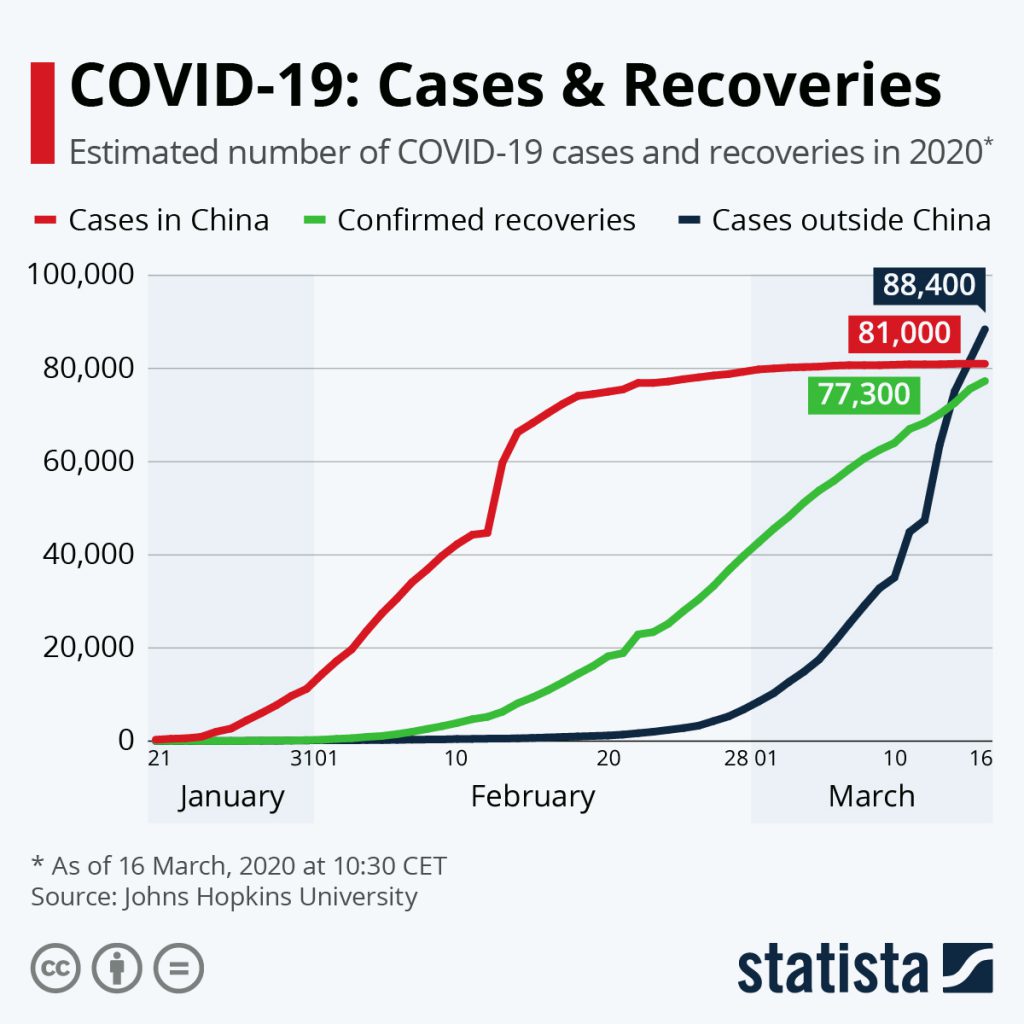
A new GLO Discussion Papersuggests that the public health measures adopted in China have effectively contained the virus outbreak there around February 15.
The Global Labor Organization (GLO) is an independent, non-partisan and non-governmental organization that functions as an international network and virtual platform to stimulate global research, debate and collaboration.
GLO Discussion Paper No. 494, 2020
Impacts of Social and Economic Factors on the Transmission of Coronavirus Disease 2019 (COVID-19) in China by Qiu, Yun & Chen, Xi & Shi, Wei PDF of the GLO Discussion Paper
Yun Qiu & Wei Shi are Professors at the Institute for Economic and Social Research (IESR), Jinan University, China
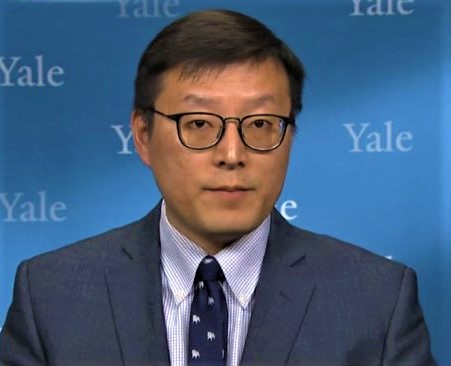
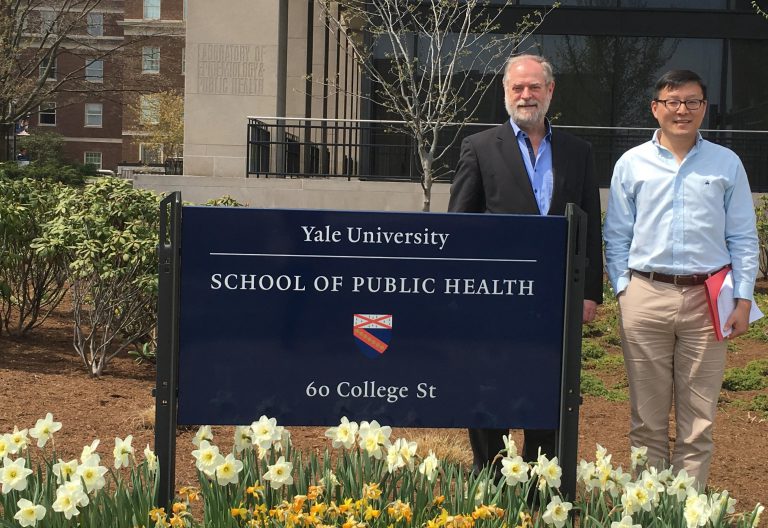
Xi Chen is a Professor at Yale University & President of the China Health Policy and Management Society
Yun Qiu
Xi Chen
Wei Shi
Author Abstract: This paper examines the role of various socioeconomic factors in mediating the local and cross-city transmissions of the novel coronavirus 2019 (COVID-19) in China. We implement a machine learning approach to select instrumental variables that strongly predict virus transmission among the rich exogenous weather characteristics. Our 2SLS estimates show that the stringent quarantine, massive lockdown and other public health measures imposed in late January significantly reduced the transmission rate of COVID-19. By early February, the virus spread had been contained. While many socioeconomic factors mediate the virus spread, a robust government response since late January played a determinant role in the containment of the virus. We also demonstrate that the actual population flow from the outbreak source poses a higher risk to the destination than other factors such as geographic proximity and similarity in economic conditions. The results have rich implications for ongoing global efforts in containment of COVID-19.
The world is shaken by the #coronavirus crisis. Top health economist Xi Chen, who has done new and original research on the virus, explains his conclusions on the management of the crisis based on the Chinese experiences and the challenges for research.
In the past decade, many nations in the world de-invested in their disease control and prevention.
Now it is better to overreact than to underreact.
The Chinese experience shows that only after ten days the harsh measures already altered the infection growth trajectory.
The UK’s strategy of obtaining “herd immunity” is very risky given the little knowledge about this new virus.
Social distancing can saliently reduce the risk of contracting virus via avoiding inhaling droplets or touching through handshake.
This very likely to be a long pandemic.
GLO Fellow Xi Chenis a Professor of Global Health Policy and Economics at Yale University, the GLO Cluster Lead of “Environment and Human Capital in Developing Countries”, and the President of the China Health Policy and Management Society(CHPAMS).
Xi Chen
Interview
GLO:Your research is on health issues and their societal and economic consequences, how did you come to this research focus?
Xi Chen: The pursuit of health and longevity for mankind has no limits. As health spending has accounted for the largest share of GDP across many countries, it becomes very important to assess if our spending is cost-effective and affordable. A health and labor economist by training, I’m very passionate about using research findings to inform health resources allocation and improve actions at the individual, community, and societal levels.
GLO:You are currently the President of the China Health Policy and Management Society. What is the purpose of this society and what is your role as its head?
Xi Chen: China Health Policy and Management Society (CHPAMS) is a global professional organization with over 2,200 members around the world. Our mission is to improve health and health equity and contribute to the advancement of health research, practice, and education of areas including but not limited to, health policy and management, health economics, epidemiology, and global health. As president of CHPAMS, my Board of Directors and I have been striving to accomplish our mission by fostering and promoting scholarly exchanges among its members and with Chinese public health community, and by building health research capacities of China institutions.
GLO: As a frequent observer and researcher of the health conditions in China: How could the coronavirus outbreak happen and what is to learn?
Xi Chen: The heavily invested infectious disease surveillance system did not sound alarm for this novel virus. Part of the reasons include that the system did not allow medical workers to report new diseases, and that most medical professionals were not well trained to appropriately report cases. This important issue is not unique to China. In the past decade, many nations in the world de-invested in their disease control and prevention. In the meantime, they did not invest appropriately in building a primary care system to initial diagnosis of patients before they all flooded to overstretched hospitals. All these investments should be made ahead before the next pandemic.
GLO:Patient but careful responses or early harsh measures: Is the strict reaction of the Chinese government the right one as a model for the world?
Xi Chen: For infectious diseases, especially COVID-19 that is new to the world, it is better to overreacting than underreacting. The exponential growth trajectory of virus determines that the time it takes to double the number of cases keeps shrinking. Governments, social entities and individuals should intervene early and strong enough to flatten the curve for sustained medical resources to treat severely ill patients, rather than squandering the window of opportunity until reaching healthcare capacity. Overburdened health infrastructure leads to more infections and high fatality rate, like we are observing in Italy. China set a good example after it decided to lock down Hubei province with a number of stringent public health measures. Our latest study forthcoming as a GLO Discussion Paper shows that only after ten days the harsh measures already altered the infection growth trajectory.
GLO:Is re-infection with the virus possible? If the immune system is strengthened during an infection, harsh lock downs of the countries do not remove the need to adjust to the new threat at some time.
Xi Chen: Normally, people once contracted a virus will obtain at least temporary immunity for at least weeks or months. However, this time this is a novel coronavirus, we still know little about this. Some news and published clinical evidence already show cases people (in China’s Guangdong province and other areas) re-infected after being discharged from hospitals. Therefore, I thought the UK’s strategy of obtaining “herd immunity” is very risky given our little knowledge about this new virus. The “herd immunity” needs a threshold of at least 60% of population being infected, many of them are older adults, especially with multiple chronic conditions. A massive number of them will die. From a public policy perspective, we should try the best to protect these vulnerable groups, not leaving them behind as they were during pandemic in history. It is good to see that today the British government seems to change the strategy by offering protection to those above 70 and those living in nursing homes. In America, I was among the 15 Yale and Harvard colleagues to write an open letter to Vice President Mike Pence and the US government for an equitable response to this pandemic, and not unfairly operate at the cost of those most vulnerable.
GLO:What are the most effective single measures so far we understand this today to tame the speed of transitions?
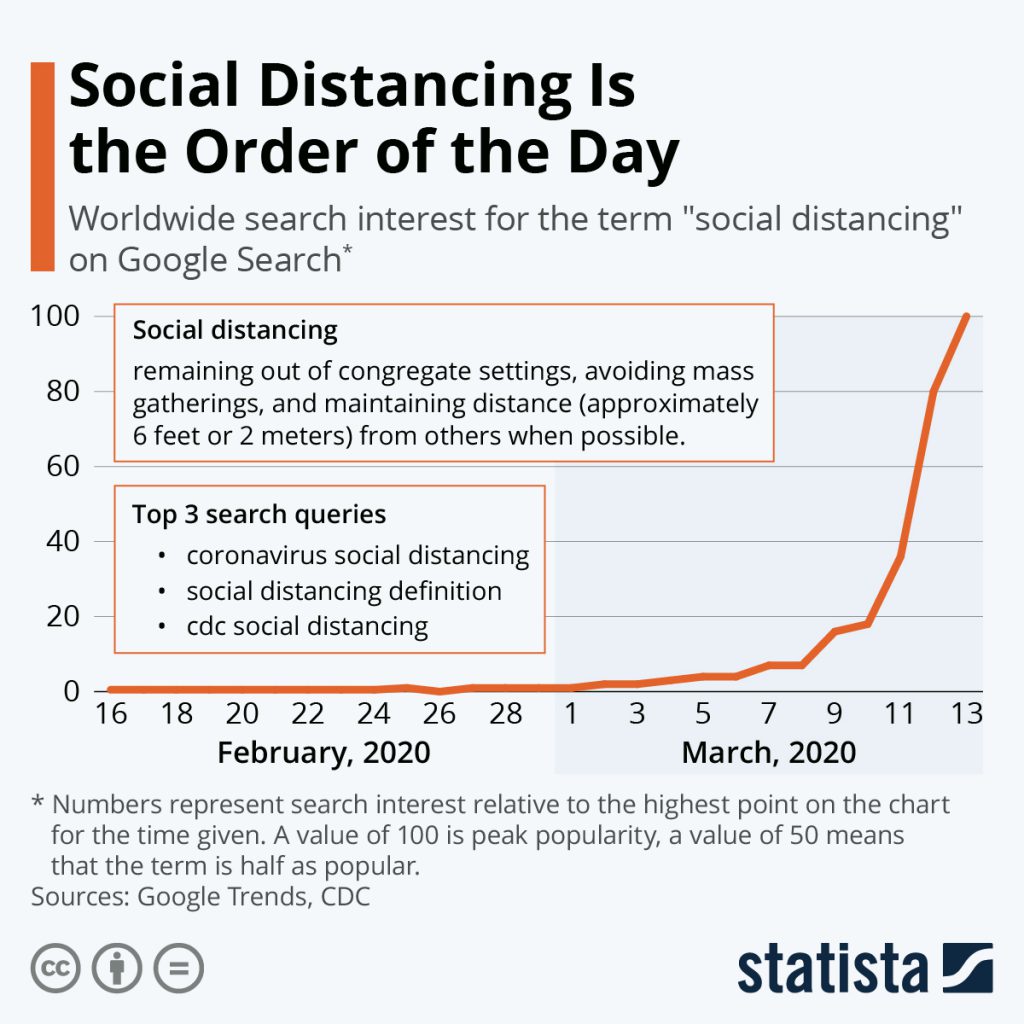
Xi Chen: In my view it is social distancing, such as cancelling large social gathering, allowing flexible work schedule and working from home, leave more person-to-person space in public facilities. Social distancing can saliently reduce the risk of contracting virus via avoiding inhaling droplets or touching through handshake.
GLO:For the world-wide level: Can the disease be contained soon or do we have to accept a longer pandemic?
Xi Chen: I’m afraid it is very likely to be a long pandemic. Part of the reason is the lack of global coordination that delayed the joined efforts to contain the virus or avoid long scale community transmissions. While different countries are at different stages of this pandemic, we already see that most countries already abandoned the strategy of containment. Instead, the mitigating strategy has been widely adopted. Given the stronger infectiousness but weaker virulence of this novel coronavirus compared to other types of coronavirus like SARS and MERS, it is more likely we will see the recurring of this virus outbreak. In other words, we will have to adapt to the world where this virus will coexist with us. My hope is that this outbreak may not last too long to further disrupt the global supply chain.
GLO:Given the large economic and social impacts we observe, where are the larger challenges for research, on the medical or the psychological side?
Xi Chen: On the medical side, it is challenging so far to find the origin of the virus, and intermediate host. We are questing the answer to these questions in order to stop its transmissions to human society and to know the roots of the pandemic. Other challenges are more relevant to our economists. For example, what are the real social costs of this pandemic. We know that patients with other diseases were not able to be treated due to the crowding-out of medical resources. Many residents under lockdown suffer from mental illnesses which can be very costly to treat after the crisis. Finally, we know little about the potential benefits of stringent public health measures, which depends on our understanding of the counterfactual for this new virus outbreak.
A new GLO Discussion Papersuggests that containment measures may pay off in slowing down proliferation of the Corona virus.
The Global Labor Organization (GLO) is an independent, non-partisan and non-governmental organization that functions as an international network and virtual platform to stimulate global research, debate and collaboration.
Author Abstract: Measures to contain the Corona virus (COVID-19) may pay off in terms of slowing down proliferation. The proliferation trend in France and Germany now exceeds the one in Italy, South Korea and Japan. At the same time, the containment measures seem more intense in Italy, South Korea and Japan than in France and Germany. Nevertheless, decision makers in France and Germany as in other countries need to compare the costs of containment (such as various forms of shut downs, cancellations of events, school closures, isolation, quarantine) with the costs of a faster proliferation of the virus. This is a “quick and dirty Sunday morning” analysis of confirmed Corona cases as published in CSSEGISandData by the Johns Hopkins Whiting School of Engineering.
A new GLO Discussion Paperconfirms the key role of business visits as a productivity enhancing channel of technology transfer.
The Global Labor Organization (GLO) is an independent, non-partisan and non-governmental organization that functions as an international network and virtual platform to stimulate global research, debate and collaboration.
Author Abstract: This paper builds on and considerably extends Piva, Tani and Vivarelli (2018), confirming the key role of Business Visits as a productivity enhancing channel of technology transfer. Our analysis is based on a unique database on business visits sourced from the U.S. National Business Travel Association, merged with OECD and World Bank data and resulting in an unbalanced panel covering 33 sectors and 14 countries over the period 1998-2013 (3,574 longitudinal observations). We find evidence that BVs contribute to fostering labour productivity in a significant way. While this is consistent with what found by the previous (scant) empirical literature on the subject, we also find that short-term mobility exhibits decreasing returns, being more crucial in those sectors characterized by less mobility and by lower productivity performances.
A new GLO Discussion Paperusing data for Belgium finds not only that first-generation immigrants face a substantial employment penalty in comparison to their native counterparts, but also that their descendants continue to face serious difficulties in accessing the labor market.
The Global Labor Organization (GLO) is an independent, non-partisan and non-governmental organization that functions as an international network and virtual platform to stimulate global research, debate and collaboration.
Author Abstract: This paper provides a comprehensive quantitative assessment of the employment performance of first- and second-generation immigrants in Belgium compared to that of natives. Using detailed quarterly data for the period 2008-2014, we find not only that first-generation immigrants face a substantial employment penalty (up to -36% points) vis-à-vis their native counterparts, but also that their descendants continue to face serious difficulties in accessing the labour market. The social elevator appears to be broken for descendants of two non-EU-born immigrants. Immigrant women are also found to be particularly affected. Among the key drivers of access to employment, we find: i) education for the descendants of non-EU-born immigrants, and ii) proficiency in the host country language, citizenship acquisition, and (to a lesser extent) duration of residence for first-generation immigrants. Finally, estimates suggest that around a decade is needed for the employment gap between refugees and other foreign-born workers to be (largely) suppressed.
A new GLO Discussion Paper innovates in being one of the first to explore the relative empirical importance of dominant (theoretical) explanations for hiring discrimination against transgender men.
The Global Labor Organization (GLO) is an independent, non-partisan and non-governmental organization that functions as an international network and virtual platform to stimulate global research, debate and collaboration.
Author Abstract: Purpose – The purpose of this paper is to explore the mechanisms underlying hiring discrimination against transgender men. Design/methodology/approach – The authors conduct a scenario experiment with final-year business students in which fictitious hiring decisions are made about transgender or cisgender male job candidates. More importantly, these candidates are scored on statements related to theoretical reasons for hiring discrimination given in the literature. The resulting data are analysed using a bivariate analysis. Additionally, a multiple mediation model is run. Findings – Suggestive evidence is found for co-worker and customer taste-based discrimination, but not for employer taste-based discrimination. In addition, results show that transgender men are perceived as being in worse health, being more autonomous and assertive, and have a lower probability to go on parental leave, compared with cisgender men, revealing evidence for (positive and negative) statistical discrimination. Social implications – Targeted policy measures are needed given the substantial labour market discrimination against transgender individuals measured in former studies. However, to combat this discrimination effectively, one needs to understand its underlying mechanisms. This study provides the first comprehensive exploration of these mechanisms. Originality/value – This study innovates in being one of the first to explore the relative empirical importance of dominant (theoretical) explanations for hiring discrimination against transgender men. Thereby, the authors take the logical next step in the literature on labour market discrimination against transgender individuals.
You may wish to publish a book in “Population Economics”. The editors of the Journal of Population Economicssupport the “Population Economics” book series of Springer.
A new GLO Discussion Paper is the first to estimate automation risk rates for developing countries. It finds that occupations containing relatively more routine tasks are more likely to be automated, while workers with a higher level of education reduce their risks.
The Global Labor Organization (GLO) is an independent, non-partisan and non-governmental organization that functions as an international network and virtual platform to stimulate global research, debate and collaboration.
Author Abstract: In recent years, there has been an escalation of concern revolving around the effect that automation will have on the future of work. This anxiety has fueled the public and academic debate, fearing that soon this technology will displace jobs at a large scale. Numerous studies have begun to investigate automation’s impact on labor markets, although all have focused on industrialized nations, which consist of more service and skilled occupations. Utilizing the World Bank’s STEP Skills Measurement Program Database, we examine automation’s effect on 10 developing countries throughout Latin America, Africa, and Asia. To address the heterogeneity of occupations across the country, we apply a task-based approach and re-calibrate the effect of automation on labor market while analyzing the task structure across countries. Modeling off previous studies, we created an expectation-maximization algorithm to predict the percentage of tasks that are likely to be automated. Jobs whose task automation output was 70% or higher were then considered to be highly automatable. Our results suggest that these developing countries have higher levels of predicted automation risk. Countries range in their level of highly automatable jobs from the lowest being Yunnan -a Chinese province- with 7.7% to the highest of Ghana with 42.4%. We find that occupations containing relatively more routine tasks are more likely to be automated, while workers with a higher level of education reduce their risks. This is the first paper to estimate automation risk rates for developing nations.
What is the impact of performance feedback provision and peer effects on individuals’ performance?A new GLO Discussion Paperreviews the mechanisms behind peer effects which include conformism, social pressure, rivalry, social learning and distributional preferences, depending on the presence of payoff externalities or technological and organizational externalities.
The Global Labor Organization (GLO) is an independent, non-partisan and non-governmental organization that functions as an international network and virtual platform to stimulate global research, debate and collaboration.
Author Abstract: This paper reviews studies conducted in naturally-occurring work environments or in the laboratory on the impact of performance feedback provision and peer effects on individuals’ performance. First, it discusses to which extent feedback on absolute performance affects individuals’ effort for cognitive or motivational reasons, and how evaluations can be distorted strategically. Second, this paper highlights the positive and negative effects of feedback on relative performance and rank on individuals’ productivity and persistence, but also on the occurrence of anti-social behavior. Relative feedback stimulates effort by informing on the marginal return or the marginal cost of effort, and by activating behavioral forces even in the absence of monetary incentives. These behavioral mechanisms relate to self-esteem, status concerns, competitive preferences and social learning. Relative feedback sometimes discourages or distorts effort, notably if people collude or are disappointment averse. In addition to incentive schemes and social preferences, the management of self-confidence affects the way relative feedback impacts productivity. Third, the paper addresses the question of the identification of peer effects on employees’ performance, their size, their direction and their heterogeneity along the hierarchy. The mechanisms behind peer effects include conformism, social pressure, rivalry, social learning and distributional preferences, depending on the presence of payoff externalities or technological and organizational externalities.
GLO FellowFerdinand Dudenhöffer (St. Gallen University & University Duisburg-Essen) is the Founder and Director of the CAR – Center Automotive Research in Duisburg. A media star on issues dealing with the challenges and perspectives of cars and the industry, he operates at the interface between research, business and society. He regularly debates the future of electromobility, autonomous driving, artificial intelligence and their employment impacts, as well as the rise of China and the consequences of the coronavirus crisis. Dudenhöffer has been an early supporter of GLO as a member of the GLO Founding Council in 2017.
Prof. Dr. Ferdinand Dudenhöffer
Interview
GLO: Electromobility and autonomous driving: How fast will these issues dominate the automotive world?
Ferdinand Dudenhöffer: Electromobility willreach Europe, China and California fast. The rest of US is combustion engines with Donald Trump. Probably about 50% of all new cars sold in Europe & China around 2030 will be electric vehicles. Autonomous driving will take more time for passenger cars. I guess only after 2030 we will see progress in that field.
GLO: What are the employment perspectives in the car industry facing the rise of artificial intelligence?
Ferdinand Dudenhöffer: Innovation is the big thing and innovation means AI, 5G and very powerful chips. Thus, the car industry will convert from mechanical engineering to software engineering and computer science. Labor demand will shift in that direction in engineering departments. In car manufacturing, industry 4.0 will possibly lead to one third less blue collar workers by 2030 or so.
GLO: Will China dominate also the future of the automotive industry?
Ferdinand Dudenhöffer: Absolutely. China will become technology leader on a worldwide basis, and not just in the car industry. The USA had been the world innovation leader for the last 50 years. The next 50 years (and possibly forever) China will define the technology development in the world. Companies like Alibaba, Huawei, Geely, Great Wall, CATL will make the pace.
GLO: Facing the coronavirus crisis, how to you evaluate the damage for the industry and the expected role of China in the world?
Ferdinand Dudenhöffer: At the moment, we see the world passenger car market shrinking below the level of 2015, creating an overcapacity of about 10 million cars in 2020. Thus, big red ink will dominate business reports in the car industry in 2020. However, this is based on the assumption that the epidemic will becurtailed at the latest in about two or three months. If not, it will get worse. For the car industry the downturn in 2020 will be stronger than in 2008, when Lehman Brothers shocked the world.
GLO:How is the virus affecting your activities in China?
Ferdinand Dudenhöffer: We organize each year a larger conference in China. It was scheduled for April in line with the Beijing motor show, which is postponed to July or September. No more information is available currently. So, if the motor show will be cancelled for 2020, it would hurt our China program significantly. We could lose a very important year in our development.
With Ferdinand Dudenhöffer spoke Klaus F. Zimmermann, GLO President.
A new paper published in the Journal of Population Economics shows thatpapal visits lead to increased church attendance and a decline in abortions that is greater when the Pope mentions abortion in his speeches.
Author Abstract: We investigate the impact of papal visits to Italian provinces on abortions from 1979 to 2012. Using administrative data, we find a 10–20% decrease in the number of abortions that commences in the 3rd month and persists until the 14th month after the visits. However, we find no significant change in the number of live births. A decline in unintended pregnancies best explains our results. Papal visits generate intense local media coverage, and likely make salient the Catholic Church’s stance against abortions. We show that papal visits lead to increased church attendance, and that the decline in abortions is greater when the Pope mentions abortion in his speeches.
A new GLO Discussion Paperfinds that the academic advantage of children of Asian immigrants is mainly attributable to more time investments in educational activities or favorable initial cognitive abilities and not to socio-demographics or parenting styles.
The Global Labor Organization (GLO) is an independent, non-partisan and non-governmental organization that functions as an international network and virtual platform to stimulate global research, debate and collaboration.
Author Abstract: This paper evaluates the impact on the transition to work of a policy reform in Belgium that restricted the access to a specific unemployment insurance scheme for young labor market entrants. This scheme entitles youths with no or little labor market experience to unemployment benefits after a waiting period of one year. As of 2015, the Belgian government unexpectedly scrapped benefit eligibility for youths who start the waiting period at the age of 24 or older. The reform implied a change from an inclining to a flat rate (zero-level) benefit profile. We use a difference-in-differences approach to identify the causal impact of this reform on fresh university graduates. Our main finding is that this reform only increases the transition to very short-lived jobs.
A new GLO Discussion Paperfinds no significant relationship between Protestant missions and the development of democracy.
The Global Labor Organization (GLO) is an independent, non-partisan and non-governmental organization that functions as an international network and virtual platform to stimulate global research, debate and collaboration.
Author Abstract: In “The Missionary Roots of Liberal Democracy”, Robert D. Woodberry (2012) claims that the emergence of stable democracies around the world was influenced by conversionary Protestantism. While Woodberry’s historical analysis is exhaustive, the accompanying empirical evidence suffers from severe inconsistencies. We replicate Woodberry’s analysis using 26 alternative democracy measures and extend the time period over which the democracy measures are averaged. These two simple modifications lead to the breakdown of Woodberry’s results. We find no significant relationship between Protestant missions and the development of democracy, which raises concerns about the robustness and broader applicability of Woodberry’s findings. We discuss some alternative explanations for Woodberry’s results which we hope can inform future research on this topic.
A new GLO Discussion Paper for China finds that labor scarcity encourages firms to adopt more incentive pay which leads to higher firm productivity and reduces misallocation of labor.
The Global Labor Organization (GLO) is an independent, non-partisan and non-governmental organization that functions as an international network and virtual platform to stimulate global research, debate and collaboration.
Author Abstract: This study examines the causes and consequences of incentive pay adoption among Chinese manufacturing firms. First, we find that a higher degree of labor scarcity encourages firms to adopt more incentive pay. Second, using an instrumental variables approach, we find that a 10 percentage point increase in the intensity of incentive pay results in 38% higher firm productivity. Third, the average productivity differences between SOEs and non-SOEs decrease by about 65% after controlling differences in incentive pay adoption. Therefore, facilitating incentive pay adoption among firms with better labor endowments (e.g. SOEs) increases productivity while reduces resource misallocation in developing countries.
The GLO Discussion Paper of the Month of February finds that raising the school leaving age can be effective in reducing the incidence of teenage pregnancy among socially excluded women, even if it does not affect the general population. An important policy implication is the potentially heterogeneous impact of educational interventions across different ethnic groups.
Author Abstract:This
paper examines the effects of an increase in the compulsory school
leaving age on the teenage fertility of Roma women, a disadvantaged
ethnic minority in Hungary. We use a regression discontinuity design
identification strategy and show that the reform decreased the
probability of teenage motherhood among Roma women by 13.4-26.0% and
delayed motherhood by two years. We separate the incapacitation and
human capital effects of education on fertility by exploiting a database
that covers live births, miscarriages, abortions and still births, and
contains information on the time of conception precise to the week. We
find that longer schooling decreases the probability of getting pregnant
during the school year but not during summer and Christmas breaks,
which suggests that the estimated effects are generated mostly through
the incapacitation channel.
GLO DP Team Senior
Editors: Matloob Piracha (University of Kent) & GLO; Klaus F.
Zimmermann (UNU-MERIT, Maastricht University and Bonn University). Managing Editor: Magdalena Ulceluse, University of Groningen. DP@glabor.org
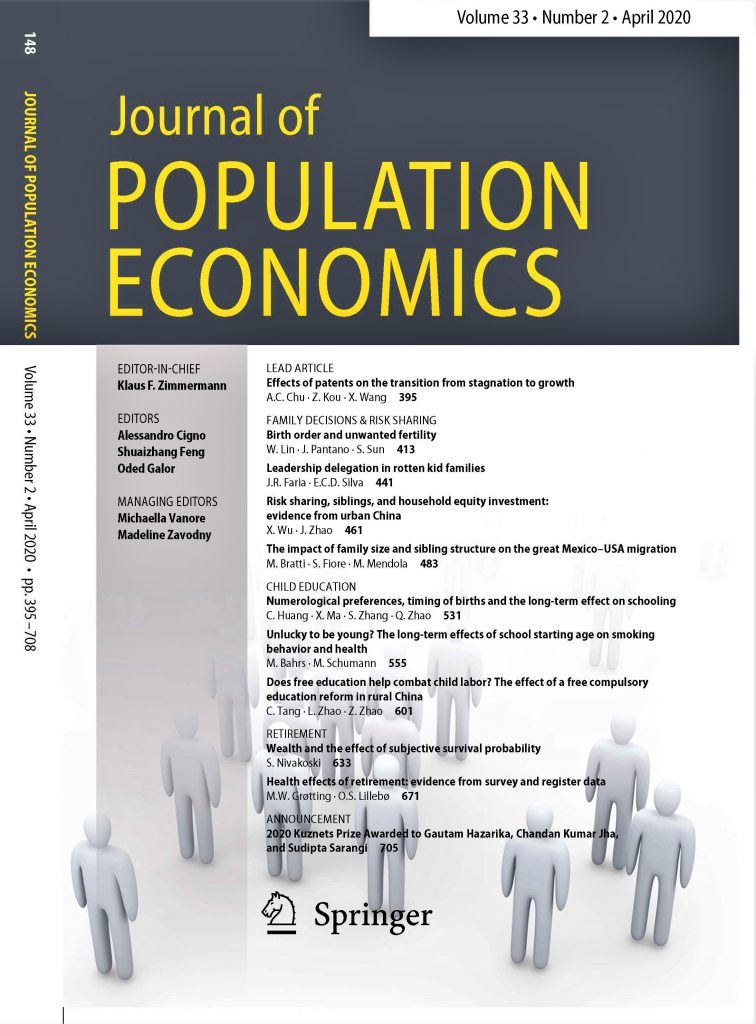
Journal of Population Economics (2020) 33: 461–482. In China, social networks play an important role in risk sharing. The paper shows that the main channel through which siblings affect household investment is risk sharing.
Journal of Population Economics (2020) 33: 441-460.The paper shows that the optimality of authority (leadership) delegation for the sequential-action game played by rotten kids and a parent depends crucially on the degree of heterogeneity in the kids’ preferences. The findings contribute to the debate about the social desirability of the authoritative parenting style.
Journal of Population Economics (2020) 33: 413-440.The paper documents that children higher in the birth order are much more likely to be unwanted, and this is associated with negative life cycle outcomes.
Journal of Population Economics (2020) 33: 395–411. The paper provides a growth-theoretic analysis of the effects of intellectual property rights on the take-off of an economy from an era of stagnation to a state of sustained economic growth. Strengthening patent protection leads to an earlier take-off but also reduces economic growth in the long run.
A new GLO Discussion Paper evaluates the impact of a policy reform in Belgium on the transition to work of young labor market entrants with little experiences: Only short-term effects.
The Global Labor Organization (GLO) is an independent, non-partisan and non-governmental organization that functions as an international network and virtual platform to stimulate global research, debate and collaboration.
Author Abstract: This paper evaluates the impact on the transition to work of a policy reform in Belgium that restricted the access to a specific unemployment insurance scheme for young labor market entrants. This scheme entitles youths with no or little labor market experience to unemployment benefits after a waiting period of one year. As of 2015, the Belgian government unexpectedly scrapped benefit eligibility for youths who start the waiting period at the age of 24 or older. The reform implied a change from an inclining to a flat rate (zero-level) benefit profile. We use a difference-in-differences approach to identify the causal impact of this reform on fresh university graduates. Our main finding is that this reform only increases the transition to very short-lived jobs.
A new GLO Discussion Paper attempts to identify and discuss the on-the-job resilience strategies of mismatched workers in Egypt.
The Global Labor Organization (GLO) is an independent, non-partisan and non-governmental organization that functions as an international network and virtual platform to stimulate global research, debate and collaboration.
Author Abstract:Purpose – The purpose of this paper is to identify and discuss the on-the-job resilience strategies of mismatched workers. We empirically focus on Egyptian workers. Design/Methodology/Approach – This study relies on a primary micro-data collection based on design and implementation of a self-administered questionnaire survey and on the conduction of a series of semi-structured interviews. Findings – The results are fourfold: first, the combination of over-qualification and under-skilling is the most frequent in our sample; second, resilience strategies adopted by over-skilled workers mainly depend on mobility and entry to entrepreneurship; third, under-skilled workers do not enter entrepreneurship, but tend to rely on informal on-the-job learning and training opportunities. Fourth, religion and spirituality play a transversal role to cope with adversity for all of our interviewed workers. Originality/value – This study is unique as it draws our attention on factors of resilience for mismatched workers in a developing country, Egypt.
A new GLO Discussion Paper studiesthe role of the population sex ratio, the ratio of men to women, in global sodomy law reform in the post-WWII era. A high sex ratio makes sodomy law less likely to be repealed.
The Global Labor Organization (GLO) is an independent, non-partisan and non-governmental organization that functions as an international network and virtual platform to stimulate global research, debate and collaboration.
Author Abstract: This paper studies the role of population sex ratio, i.e. ratio of men to women, in the global wave of sodomy law reform in the post-WWII era. Using a global survey, this paper first finds that men are more homophobic than women and such pattern has persisted across countries and time. With a newly constructed panel data of 183 countries, this paper then finds that high sex ratio causally makes sodomy law less likely to be repealed. The result is robust to numerous checks, including using temperature as an instrumental variable for sex ratio.
In GLO Discussion Paper No. 450, GLO FellowsStepan Jurajda and Dejan Kovač have recently provided research evidence revealing that given first names of leaders from World War II can predict behavior in the 1991-1995 Croatian war of independence and beyond in society including voting. It provides hard evidence for intergenerational transmission of nationalism. This research work has found already much interest in the scientific community and beyond. It was reviewed by anonymous referees of the Journal of Population Economics and finally accepted for a forthcoming publication in a 2020 journal issue. Below, the authors are interviewed about the background and context of this research.
Stepan Jurajda & Dejan Kovač: Names and Behavior in a War, GLO Discussion Paper 450, 2020. Forthcoming Journal of Population Economics.
Interview
GLO: Scientists across various disciplines have found in recent studies that names of individuals reflect important information about norms, preferences and behavior. What is your innovative approach?
Stepan Jurajda: Our analysis implies that having a ‘nationalist’ first name, one that is synonymous with previous war leader(s), predicts costly patriotic behavior in a current war, presumably due to values transmitted from parents. In our analysis, name choices thus act as an indirect proxy for a strong form of nationalism — the willingness to fight and die in a war for national independence.
Dejan Kovač: Such values are in principle difficult to elicit in surveys, which, together with the war context, sets our analysis apart from other research based on names.
GLO: Other researchers show that history, culture and personal experiences long time ago have a strong impact on current behavior. How does this contribute to our understanding of challenging issues of our time?
Dejan Kovač: Our study of the active engagement in the delivery of an extremely costly public good suggests that the living memory of a previous war allows nations to deal with the collective action problem of participation in a current war.
Stepan Jurajda: We also provide evidence on the nature of inter-generational transmission of political values, an issue that is receiving more and more attention in recent research.
GLO: How did you come to this topic of research, names and behavior in a war?
Dejan Kovač: We were aware of previous research on how names affect individual outcomes on the labor market and in many other settings, and we were wondering whether this strategy can help us understand the massive volunteering for the 1991-1995 Croatian War of Independence. After realizing that indeed it can, we also studied how the values we approximate using name choices relate to current political values in the country.
GLO: What can the world learn from your study?
Stepan Jurajda: Our measurement approach for values that are difficult to elicit in surveys and for values that affected historical events is applicable in other countries that feature a sharply divided ethnic mix and in settings where leaders’ names are notoriously associated with their political beliefs. Given the widespread availability of birth certificate records, the approach is available in many historical settings and it naturally lends itself to the study of inter-generational transmission of values within families, which can help us understand why the effects that wars have on political values and on in-group cooperative behavior are so long-lived.
GLO: Dejan, the paper raised a lot of controversy during your recent campaign for President, why?
Dejan Kovač: Unfortunately, in Croatia we have not yet dealt with many important historical debates and there is still a great division today in the society related to the WWII Croatian history. In fact, one of the reasons of my candidacy was to promote not only civic freedoms, but also scientific freedoms to explore “untested” hypotheses. I would say the paper was used to misinform the general public in order to discredit my political candidacy. The paper does not claim that the values related to the names we study are the same as the values of the WWII leadership of Croatia; we simply have a proxy for nationalistic/patriotic values as of 1991-1995 that allows us to study several important questions. The attacks did not relate to the methodology and made little scientific sense; they were purely political and came from individuals who are politically active, either on the far right or the far left part of the political spectrum. Since some of my other research is on political networks and corruption, I guess I should not be surprised to be attacked through misrepresentation of my work. My agenda is purely scientific and I am a firm believer in a well functioning democracy, where we have institutions, which battle corruption. That being said – the research as well as my political activism mission goes on! (Note: See also the recent GLO interview with Dejan Kovač about his Presidential Race in Croatia.)
*** With Stepan Jurajda & Dejan Kovač spoke Klaus F. Zimmermann, GLO President.
About the authors
Stepan Jurajda: CERGE-EI; Professor at Charles University Prague and Academy of Sciences of the Czech Republic. Dejan Kovač: Postdoctoral Research Associate at the Woodrow Wilson School of Public & International Affairs and Economics Department at Princeton University.
A new GLO Discussion Paper finds that air pollution accounts for substantial morbidity and economic burden of mental disorders in China.
The Global Labor Organization (GLO) is an independent, non-partisan and non-governmental organization that functions as an international network and virtual platform to stimulate global research, debate and collaboration.
Author Abstract: This study aims to fill the gap in our understanding about exposure to particulate matters with diameter less than 2.5 μm (PM2.5) and attributable risks and economic costs of mental disorders (MDs). We identify the relationship between PM2.5 and risk of hospital admissions (HAs) for MDs in Beijing and measure the attributable risk and economic cost. We apply a generalized additive model (GAM) with controls for time trend, meteorological conditions, holidays and day of the week. Stratified analyses are performed by age, gender and season. We further estimate health and economic burden of HAs for MDs attributable to PM2.5. A total of 17,252 HAs for MDs are collected. We show that PM2.5 accounts for substantial morbidity and economic burden of MDs. Specifically, a 10 μg/m3 daily increase in PM2.5 is associated with a 3.55% increase in the risk of HAs for MDs, and the effect is more pronounced for older males in colder weather. According to the WHO’s air quality guidelines, 15.12 percent of HAs and 16.19 percent of related medical expenses for MDs are respectively attributable to PM2.5.
Interested researchers are cordially invited to submit their abstracts or papers for presentation consideration. The 32. EBES Conference – Istanbul will take place on July 1-3, 2020 hosted by the Kadir Has University, Istanbul/Turkey, with the support of the Istanbul Economic Research Association.
This is aGLO supported conference.EBESis theEurasia Business and Economics Society, a strategic partner and institutional supporter of GLO. GLO President Klaus F. Zimmermann is also President of EBES.
Invited Speakers
Dr. Asli Demirguc-Kunt is the Chief Economist of Europe and Central Asia Region of the World
Bank. Over her 30-year career in the World Bank, she has also served as the Director
of Research, Director of Development Policy, and the Chief Economist of the
Finance and Private Sector Development Network, conducting research and
advising on financial and private sector development issues. She has published
articles in many of the leading economics and finance journals such as Journal
of Finance, Journal of Financial Economics, Journal of Financial and
Quantitative Analysis, The Review of Financial Studies, Journal of Banking and
Finance, Journal of Monetary Economics, Journal of Money, Credit and Banking,
Journal of Economic Perspectives etc. and is among the most-cited researchers
in the world (Google Scholar = 76K). Her research has focused on the links
between financial development, firm performance, and economic development. Banking
and financial crises, financial regulation, access to financial services and
inclusion, as well as SME finance and entrepreneurship are among her areas of
research. She has also created the Global Financial Development Report series
and the Global Findex financial inclusion database. She was the President of
the International Atlantic Economic Society (2013-14) and Director of the
Western Economic Association (2015-18) and serves on the editorial boards of
professional journals. Prior to her position in the World Bank, she was an
Economist at the Federal Reserve Bank of Cleveland. She holds a Ph.D. and M.A.
in economics from Ohio State University.
Klaus
F. Zimmermann is President of the Global Labor Organization (GLO);
Co-Director of POP at UNU-MERIT; Full Professor of Economics at Bonn University
(em.); Honorary Professor, Maastricht University, Free University of Berlin and
Renmin University of China; Member, German Academy of Sciences Leopoldina,
Regional Science Academy, and Academia Europaea (Chair of its Section for
Economics, Business and Management Sciences). Among others, he has worked at
Macquarie University, the Universities of Melbourne, Princeton, Harvard,
Munich, Kyoto, Mannheim, Dartmouth College and the University of Pennsylvania.
Research Fellow of the Centre for Economic Policy Research (CEPR) and Fellow of
the European Economic Association (EEA). Editor-in-Chief of the Journal of
Population Economics. Editorial Board of International Journal of Manpower,
Research in Labor Economics and Comparative Economic Studies, among others.
Founding Director, Institute for the Study of Labor (IZA); Past-President,
German Institute for Economic Research (DIW). Distinguished John G. Diefenbaker
Award 1998 of the Canada Council for the Arts; Outstanding Contribution Award
2013 of the European Investment Bank. Rockefeller Foundation Policy Fellow
2017; Eminent Research Scholar Award 2017, Australia; EBES Fellow Award 2018.
He has published in many top journals including Journal of Economic Perspectives,
American Economic Review, Econometrica, Journal of the European Economic
Association, Journal of Human Resources, Journal of Applied Econometrics,
Public Choice, Review of Economics and Statistics, Journal of Population
Economics and Journal of Public Economics. His research fields are population,
labor, development, and migration.
Marco
Vivarelli is a full professor at the Catholic University of
Milano, where he is also Director of the Institute of Economic Policy. He is
Professorial Fellow at UNU-MERIT, Maastricht; Research Fellow at IZA, Bonn;
Fellow of the Global Labor Organization (GLO). He is member of the Scientific
Executive Board of the Eurasia Business and Economics Society (EBES); member of
the Scientific Advisory Board of the Austrian Institute of Economic Research
(WIFO, Vienna) and has been scientific consultant for the International Labour
Office (ILO), World Bank (WB), the Inter-American Development Bank (IDB), the
United Nations Industrial Development Organization (UNIDO) and the European Commission.
He is Editor-in-Chief of the Eurasian Business Review, Editor of Small Business
Economics, Associate Editor of Industrial and Corporate Change, Associate
Editor of Economics E-Journal, member of the Editorial Board of Sustainability
and he has served as a referee for more than 70 international journals. He is
author/editor of various books and his papers have been published in journals
such as Cambridge Journal of Economics, Canadian Journal of Economics,
Economics Letters, Industrial and Corporate Change, International Journal of
Industrial Organization, Journal of Economics, Journal of Evolutionary
Economics, Journal of Productivity Analysis, Labour Economics, Oxford Bulletin
of Economics and Statistics, Regional Studies, Research Policy, Small Business
Economics, Southern Economic Journal, World Bank Research Observer, and World
Development. His current research interests include the relationship between
innovation, employment, and skills; the labor market and income distribution
impacts of globalization; the entry and post-entry performance of newborn
firms.
Dorothea
Schäfer is the Research Director of Financial Markets at the
German Institute for Economic Research (DIW Berlin) and Adjunct Professor of
Jönköping International Business School, Jönköping University. She has also
worked as an evaluator for the European Commission, the Federal Ministry of
Education and Research and Chairwoman of Evaluation Committee for LOEWE
(Landes-Offensive zur Entwicklung Wissenschaftlich-ökonomischer Exzellenz des
Bundeslandes Hessen). She managed various research projects supported by the
Deutsche Forschungsgemeinschaft (DFG), the EU Commission, the Fritz Thyssen
Foundation and the Stiftung Geld und Währung. Her researches were published in
various journals such as Journal of Financial Stability; German Economic
Review; International Journal of Money and Finance; Small Business Economics;
and Economic Modelling. She is regularly invited as an expert in parliamentary
committees, including the Finance Committee of the Bundestag and gives lectures
on financial market issues in Germany and abroad. She is also a member of the
Editorial Board and Editor-in-Chief of the policy-oriented journal
“Vierteljahrshefte zur Wirtschaftsforschung” (Quarterly Journal for
Economic Research) and Editor-in-Chief of Eurasian Economic Review. Her
research topics include financial crisis, financial market regulation,
financing constraints, gender, and financial markets, financial transaction
tax.
Board Prof. Klaus F. Zimmermann, UNU-MERIT, Maastricht University, The Netherlands, & GLO. Prof. Jonathan Batten, University Utara Malaysia, Malaysia & GLO Prof. Iftekhar Hasan, Fordham University, U.S.A. Prof. Euston Quah, Nanyang Technological University, Singapore Prof. John Rust, Georgetown University, U.S.A., & GLO Prof. Dorothea Schäfer, German Institute for Economic Research (DIW Berlin), Germany, and GLO Prof. Marco Vivarelli, Università Cattolica Del Sacro Cuore, Italy, & GLO
Abstract/Paper Submission
Authors are invited to submit their abstracts or papers no later than April 12, 2020.
Qualified papers can be published in EBES journals
(Eurasian Business Review and Eurasian Economic Review) or EBES Proceedings
books after a peer-review process without any submission or publication fees.
In this regard, qualified papers from the 32nd EBES Conference will be
published in the special issues of EABR and EAER. However, if there are not
enough qualified papers submitted for the special issues, there will be no
special issues and qualified papers will be published in the regular issues of
the journals.
EBES journals (EABR and EAER) are published by
Springer and both are indexed in the SCOPUS, EBSCO EconLit with Full Text,
Google Scholar, ABS Academic Journal Quality Guide, CNKI, EBSCO Business
Source, EBSCO Discovery Service, EBSCO TOC Premier, International Bibliography
of the Social Sciences (IBSS), OCLC WorldCat Discovery Service, ProQuest
ABI/INFORM, ProQuest Business Premium Collection, ProQuest Central, ProQuest
Turkey Database, ProQuest-ExLibris Primo, ProQuest-ExLibris Summon, Research
Papers in Economics (RePEc), Cabell’s Directory, and Ulrich’s Periodicals
Directory. In addition, while EAER is indexed in the Emerging Sources Citation
Index (Clarivate Analytics), EABR is indexed in the Social Science Citation
Index (SSCI) and Current Contents / Social & Behavioral Sciences.
Also, all accepted abstracts will be published
electronically in the Conference Program and the Abstract Book (with an ISBN
number). It will be distributed to all conference participants at the
conference via USB. Although submitting full papers are not required, all the
submitted full papers will also be included in the conference proceedings in a
USB. After the conference, participants will also have the opportunity to send
their paper to be published (after a refereeing process managed by EBES) in the
Springer’s series Eurasian Studies in Business and Economics (no submission and
publication fees).
This will also be sent to Clarivate Analytics in order
to be reviewed for coverage in the Conference Proceedings Citation Index –
Social Science & Humanities (CPCI-SSH). Please note that the 10th, 11th,
12th, 13th, 14th, 15th, 16th, 17th, 18th, 19th, 20th (Vol. 2), and 24th EBES
Conference Proceedings are accepted for inclusion in the Conference Proceedings
Citation Index – Social Science & Humanities (CPCI-SSH). Other conference
proceedings are in progress.
Important Dates
Abstract Submission Start Date: January 15, 2020 Abstract Submission Deadline: April 12, 2020 Reply-by: April 17 , 2020* Registration Deadline: May 29, 2020 Announcement of the Program: March 17, 2020 Paper Submission Deadline (Optional): June 4, 2020** Paper Submission for the EBES journals: September 15, 2020
* The decision regarding the acceptance/rejection of each abstract/paper will be communicated with the corresponding author within a week of submission. ** Completed paper submission is optional. If you want to be considered for the Best Paper Award or your full paper to be included in the conference proceedings in the USB, after submitting your abstract before April 12, 2020, you must also submit your completed (full) paper by May 29, 2020.
Contact Ugur Can, Director of EBES (ebes@ebesweb.org); EBES & GLO Dr. Ender Demir, Conferene Coordinator of EBES (demir@ebesweb.org); EBES & GLO
A new GLO Discussion Paper studies the effects of an increase in the compulsory school leaving age on teenage fertility of Roma women in Hungary. Schooling decreases fertility, but not in summer and Christmas breaks suggesting incapacitation and not the education channel is dominant.
The Global Labor Organization (GLO) is an independent, non-partisan and non-governmental organization that functions as an international network and virtual platform to stimulate global research, debate and collaboration.
Author Abstract: This paper examines the effects of an increase in the compulsory school leaving age on the teenage fertility of Roma women, a disadvantaged ethnic minority in Hungary. We use a regression discontinuity design identification strategy and show that the reform decreased the probability of teenage motherhood among Roma women by 13.4-26.0% and delayed motherhood by two years. We separate the incapacitation and human capital effects of education on fertility by exploiting a database that covers live births, miscarriages, abortions and still births, and contains information on the time of conception precise to the week. We find that longer schooling decreases the probability of getting pregnant during the school year but not during summer and Christmas breaks, which suggests that the estimated effects are generated mostly through the incapacitation channel.
A new GLO Discussion Paper studies how markets and non-market institutions determine the quantity, wages, skills, and spatial distribution of teachers in developing countries.
The Global Labor Organization (GLO) is an independent, non-partisan and non-governmental organization that functions as an international network and virtual platform to stimulate global research, debate and collaboration.
Author Abstract: The types of workers recruited into teaching and their allocation across classrooms can greatly influence a country’s stock of human capital. This paper considers how markets and non-market institutions determine the quantity, wages, skills, and spatial distribution of teachers in developing countries. Schools are a major source of employment in developing countries, particularly for women and professionals. Teacher compensation is also a large share of public budgets. Teacher labor markets in developing countries are likely to grow further as teacher quality becomes a greater focus of education policy, including under the United Nations Sustainable Development Goals. Theoretical approaches to teacher labor markets have emphasized the role of non-market institutions, such as government and unions, and other frictions in teacher employment and wages. The evidence supports the existence and importance of such frictions in how teacher labor markets function. In many countries, large gaps in pay and quality exist between teachers and other professionals; teachers in public and private schools; teachers on permanent and temporary contracts; and teachers in urban and rural areas. Teacher supply increases with wages, though teacher quality does not necessarily increase. However, most evidence comes from studies of short-term effects among existing teachers. Evidence on effects in the long-term, on the supply of new teachers, or on changes in non-pecuniary compensation is scarcer.
A new GLO Discussion Paper findswellbeing gender gaps in South Africa are explained mainly by gender differences in endowments.
The Global Labor Organization (GLO) is an independent, non-partisan and non-governmental organization that functions as an international network and virtual platform to stimulate global research, debate and collaboration.
Author Abstract: This paper investigates whether there is co-movement in subjective wellbeing (swb) gender gaps and objective wellbeing (owb) gender gaps over time and whether swb gender gaps are caused by gender differences in endowments or by the different ways men and women value the pre-mentioned. This is important, as global goals and national policy focus on the improvement of owb gender equality, ignoring the importance of swb gender equality. We use the NIDS dataset, comparing 2008 and 2017 data, and employ the Blinder-Oaxaca decomposition method in the analysis. We find i) the trends in owband swb gender gaps are unrelated and ii) the swb gender gaps are explained mainly by gender differences in endowments, but in 2017, due to women’s “optimism”, notwithstanding their lower levels of endowments, the swb between genders was equalised. These results indicate the need for a swb gender equality policy.
A new GLO Discussion Papershows that labour-saving innovations challenge manual activities (e.g. in the logistics sector), activities entailing social intelligence (e.g. in the healthcare sector) and cognitive skills (e.g. learning and predicting).
The Global Labor Organization (GLO) is an independent, non-partisan and non-governmental organization that functions as an international network and virtual platform to stimulate global research, debate and collaboration.
GLO Fellows Fabio Montobbio, Maria Enrica Virgillito & Marco Vivarelli
Author Abstract: This paper investigates the presence of explicit labour-saving heuristics within robotic patents. It analyses innovative actors engaged in robotic technology and their economic environment (identity, location, industry), and identifies the technological fields particularly exposed to labour-saving innovations. It exploits advanced natural language processing and probabilistic topic modelling techniques on the universe of patent applications at the USPTO between 2009 and 2018, matched with ORBIS (Bureau van Dijk) firm-level dataset. The results show that labour-saving patent holders comprise not only robots producers, but also adopters. Consequently, labour-saving robotic patents appear along the entire supply chain. The paper shows that labour-saving innovations challenge manual activities (e.g. in the logistics sector), activities entailing social intelligence (e.g. in the healthcare sector) and cognitive skills (e.g. learning and predicting).
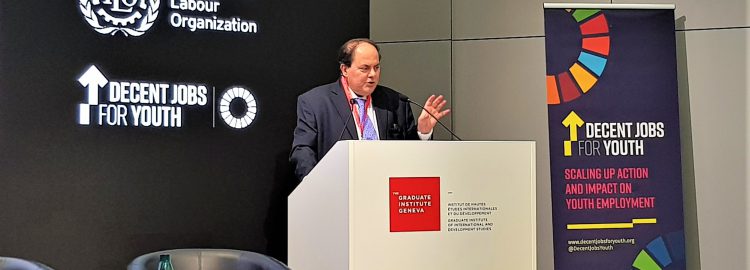
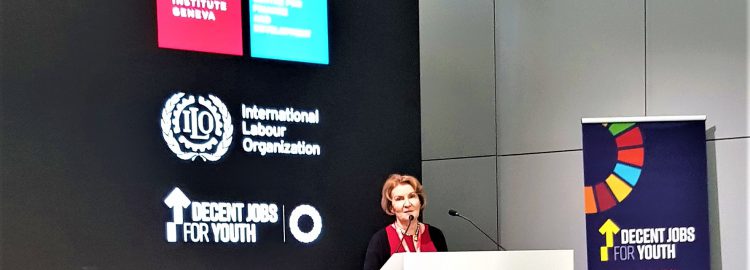
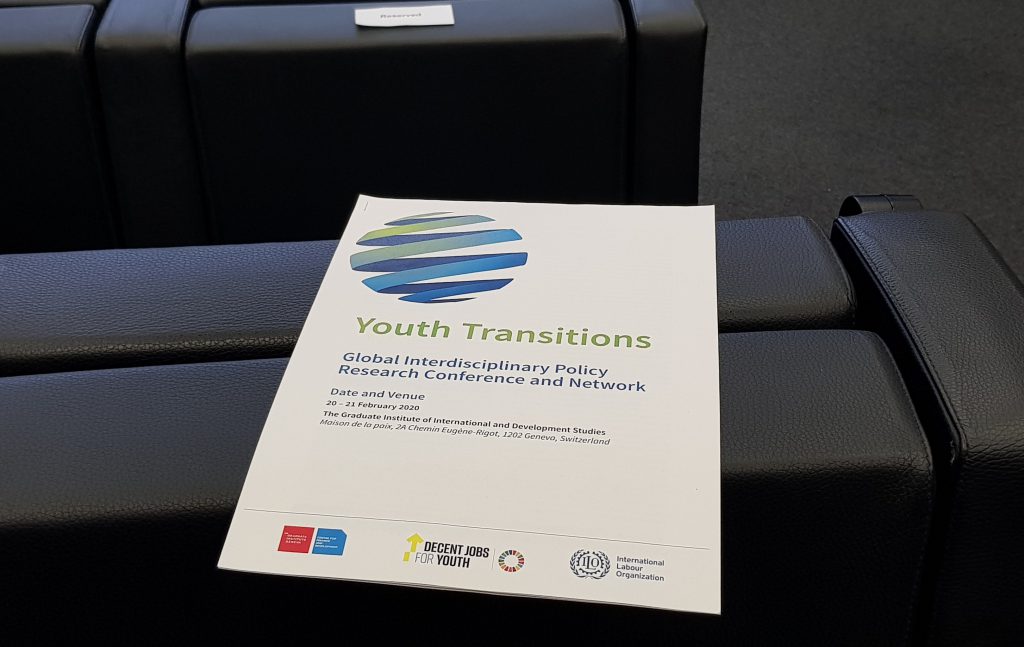
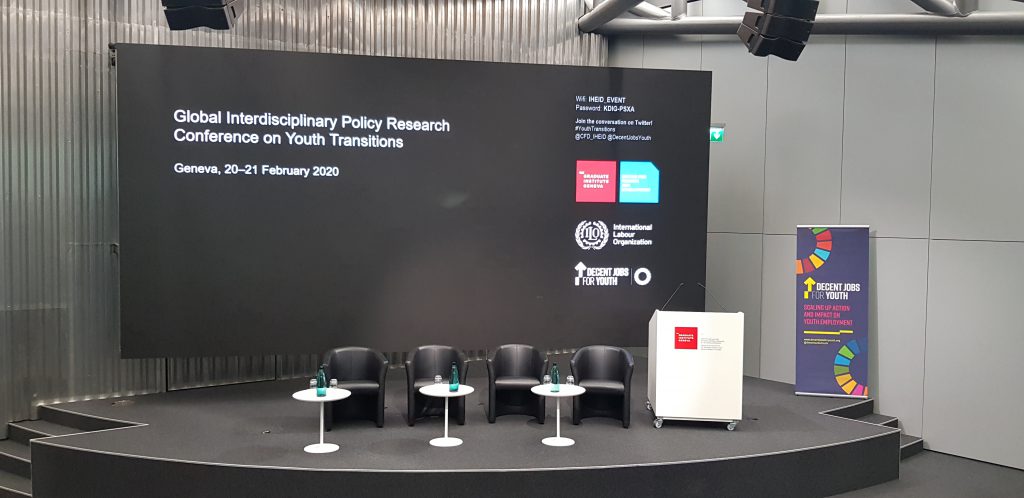
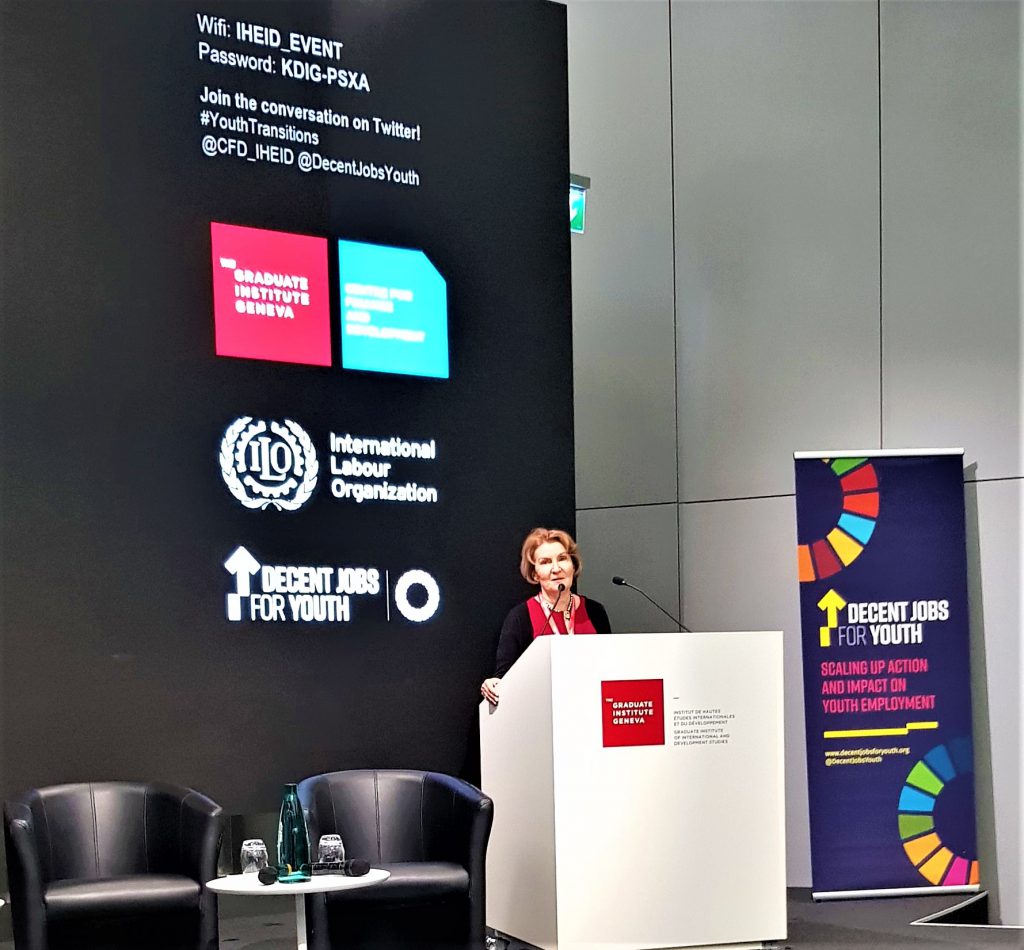
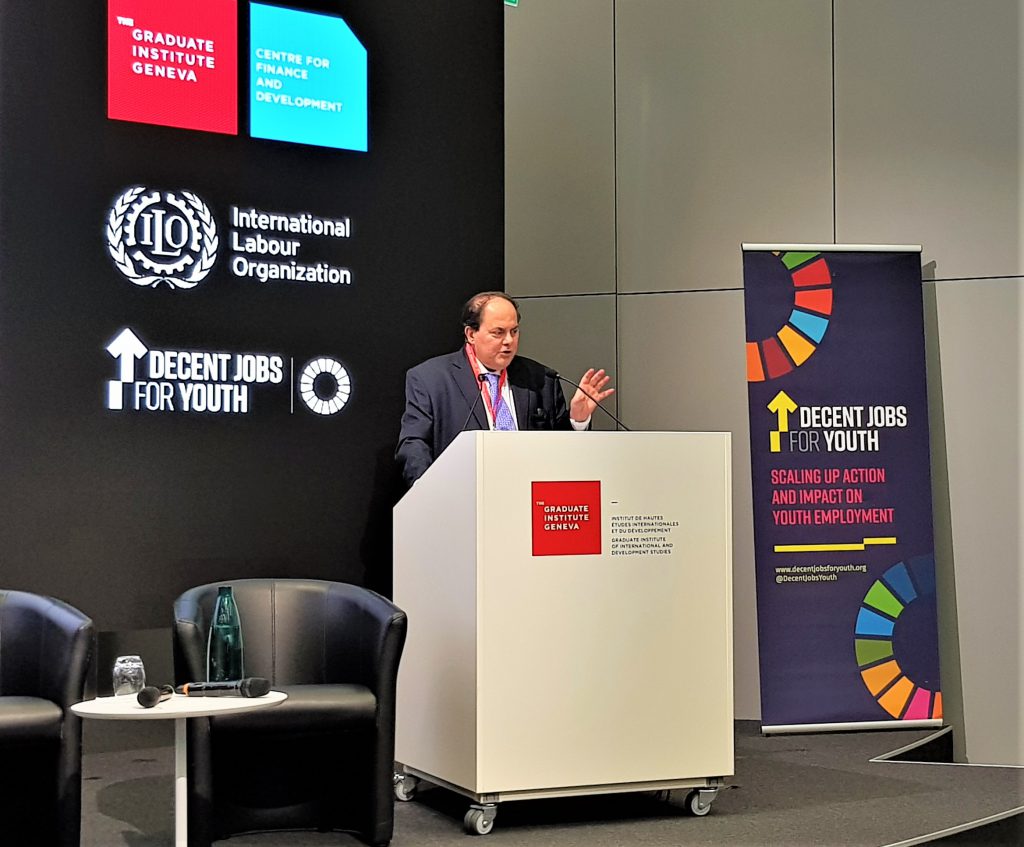
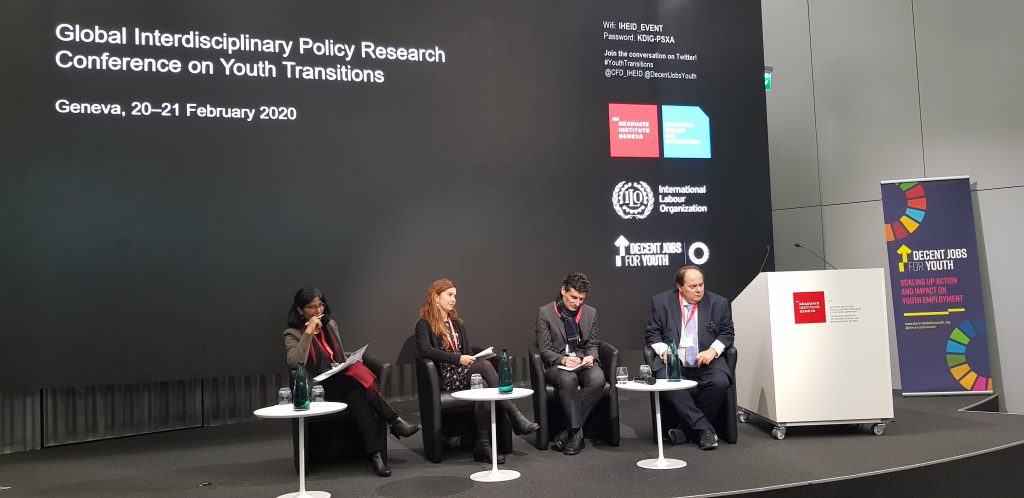
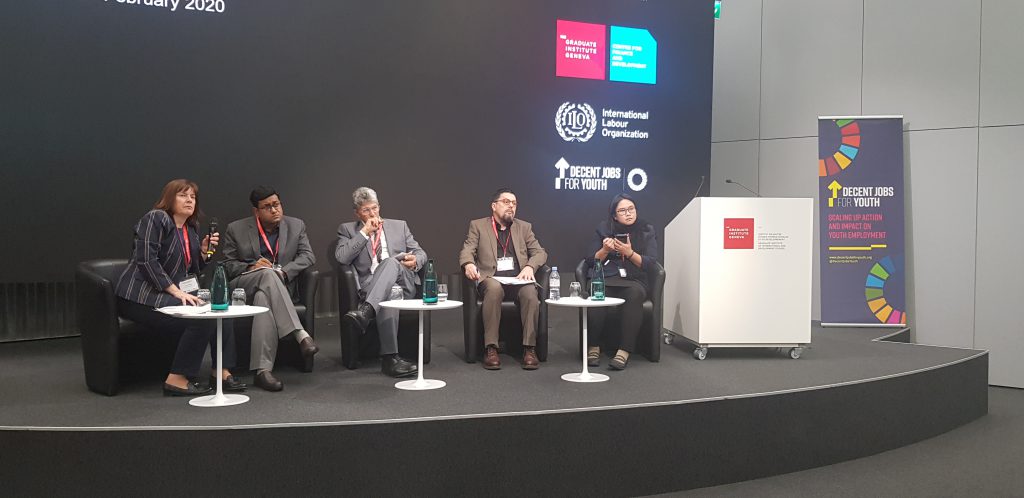
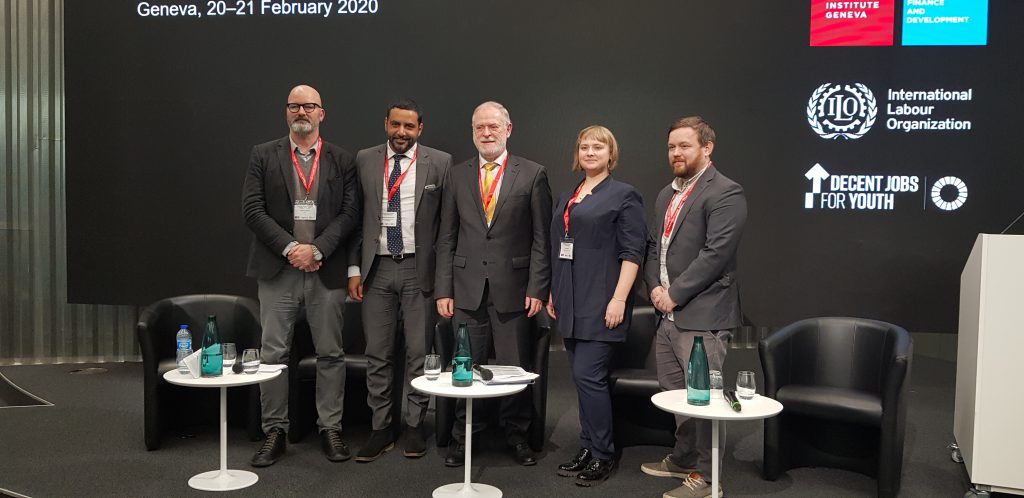
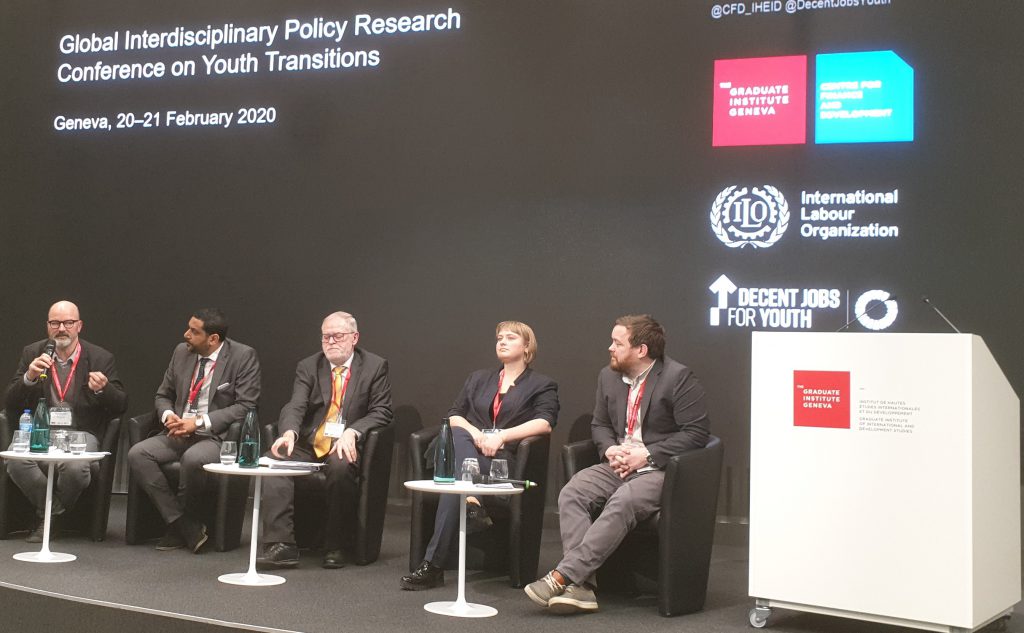
Youth Transitions to the labor market and society: A Global Interdisciplinary Policy Research Conference discussed the challenges in Geneva/Switzerland on February 20-21, 2020 under the leadership of GLO Policy Director Azita Berar. A number of GLO Fellows were participating, including Mohamed Ali Marouani, Ruttiya Bhulaor, Francesco Pastore and GLO President Klaus F. Zimmermann.
The initiative correspondence to the GLO Research Cluster on School-to-Work-Transitionslead by Francesco Pastore, which had recently organized and published two 2019 special issues in the International Journal of Manpower (details).
GLO was supporting the Global Interdisciplinary Policy Research Conference on Youth Transitions, which was organized at the Center for Finance and Development of the Graduate Institute of International and Development Studies. The event brought together researchers from academia across disciplines with policy practitioners across public and private stakeholders, to review the state of policy research and debate on youth transitions.
Multiple dimensions of youth transitions were discussed: the crises in school to work transition and future of work prospects for young people; youth transitions in situations of conflict and peace-building; and youth participation in civic and political spheres. Detailed program of the event.
The Conference also launched the Global Network of Policy Research on Youth Transitions that will promote and partner for expanded policy and research interface on priority issues. For partnerships and contributions to the debate and to the Global Network, please contact GLO Policy Director Azita Berar.
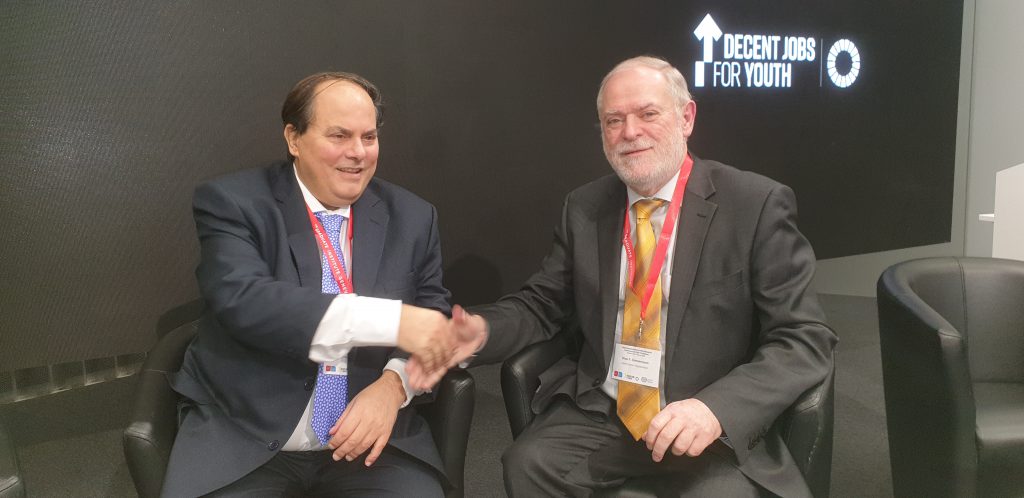
Some selective pictures from the first conference day below.
Azita Berar
Francesco Pastore
Sukti Dasgupta (ILO), Paula Herrera-Idarraga (Columbia), Diego Sanchez Ancochea (Oxford University) & Francesco Pastore (GLO)
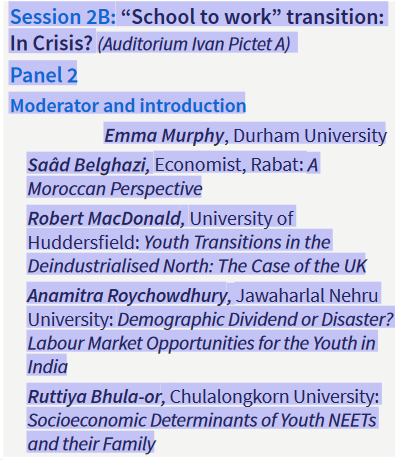
Emma Murphy (Durham University), Anamitra Roychowdhury (India), Robert MacDonald (UK) & Ruttiya Bhulaor (Thailand & GLO)
Anthony Mann (OECD), Mohamed Ali Marouani (IRD & GLO), Klaus F. Zimmermann (GLO), Irina Burak (Moscow) & Dominic Richardson (UNICEF INNOCENTI)
A new GLO Discussion Paper finds for the USA thatethnic attrition biases conventional estimates of health disparities between Mexican Americans and non-Hispanic whites as well as those between Mexican Americans and recent Mexican immigrants.
The Global Labor Organization (GLO) is an independent, non-partisan and non-governmental organization that functions as an international network and virtual platform to stimulate global research, debate and collaboration.
Author Abstract: The literature on immigrant assimilation and intergenerational progress has sometimes reached surprising conclusions, such as the puzzle of immigrant advantage which finds that Hispanic immigrants sometimes have better health than U.S.-born Hispanics. While numerous studies have attempted to explain these patterns, almost all studies rely on subjective measures of ethnic selfidentification to identify immigrants’ descendants. This can lead to bias due to “ethnic attrition,” which occurs whenever a U.S.-born descendant of a Hispanic immigrant fails to self-identify as Hispanic. In this paper, we exploit information on parents’ and grandparents’ place of birth to show that Mexican ethnic attrition, operating through intermarriage, is sizable and selective on health, making subsequent generations of Mexican immigrants appear less healthy than they actually are. Consequently, conventional estimates of health disparities between Mexican Americans and non-Hispanic whites as well as those between Mexican Americans and recent Mexican immigrants have been significantly overstated.
A new GLO Discussion Paper documents that an oil price boom may trigger dissatisfaction with one’s income, and that this dissatisfaction is independent of the effect of the boom on real economic conditions. Using data from Kazakhstan, it seems that the oil price boom creates a gap between people’s expectations of the benefits from the boom and the observed economic conditions.
The Global Labor Organization (GLO) is an independent, non-partisan and non-governmental organization that functions as an international network and virtual platform to stimulate global research, debate and collaboration.
Author Abstract: We document that an oil price boom triggers dissatisfaction with one’s income, and that this dissatisfaction is independent of the effect of the boom on real economic conditions. Unique data from Kazakhstan allows us to exploit time, sectoral and spatial variation to identify the impact of the recent oil boom on reported satisfaction with income. Oil related households { whose heads are employed in the private sector of the oil rich districts { report a decrease in satisfaction with their income during the boom compared to other households (whose heads work in other sectors and/or districts). The estimated drop in satisfaction is statistically and economically significant: a 20% increase in the price of oil decreases satisfaction with income by 1/3 of a standard deviation. We discuss different interpretations of this drop in satisfaction. The only interpretation consistent with our results is that an oil price boom creates a gap between people’s expectations of the benefits from the boom and the observed economic conditions. Our results call for devoting more attention to the dynamic of satisfaction, not only during resource busts, but also during resource booms.
The Association of African Young Economists (AAYE), established in 2013, is a public not-for-profit organization. It aims to facilitate scientific collaboration to generate and disseminate knowledge for the development of the African continent.
A new GLO Discussion Paper compares the performance of econometric and machine learning models in predicting poverty.
The Global Labor Organization (GLO) is an independent, non-partisan and non-governmental organization that functions as an international network and virtual platform to stimulate global research, debate and collaboration.
Author Abstract: OLS models are the predominant choice for poverty predictions in a variety of contexts such as proxy-means tests, poverty mapping or cross-survey imputations. This paper compares the performance of econometric and machine learning models in predicting poverty using alternative objective functions and stochastic dominance analysis based on coverage curves. It finds that the choice of an optimal model largely depends on the distribution of incomes and the poverty line. Comparing the performance of different econometric and machine learning models is therefore an important step in the process of optimizing poverty predictions and targeting ratios.
Do gender-based board quotas lead to a higher share of women in top management positions? A new GLO Discussion Paperfinds supporting evidence that affirmative action has induced sizable increases in South Africa.
The Global Labor Organization (GLO) is an independent, non-partisan and non-governmental organization that functions as an international network and virtual platform to stimulate global research, debate and collaboration.
Author Abstract: Gender-based board quotas do not always lead to higher share of women in top management positions. We study the consequences of an affirmative action policy that stipulates gender- and race-based targets in top management positions, beyond boards. We focus on the representation of intersectional group identities, such as race and gender, at the top. We find sizable increase in the likelihood of Black women employment in top positions in the post-policy period relative to Black men, White women and White men in South Africa. We extend our analysis and estimate policy spillovers for years of schooling, earnings gaps and self-employment.
A new GLO Discussion Paperstudies the effects of product, process, and organizational innovations on firm labor productivity in Pakistan.
The Global Labor Organization (GLO) is an independent, non-partisan and non-governmental organization that functions as an international network and virtual platform to stimulate global research, debate and collaboration.
Author Abstract: We examine the determinants of product, process, and organizational innovation, and their impact on firm labor productivity using data from a unique innovation survey of firms in Pakistan. We find significant heterogeneity in the impact of different innovations on labor productivity: Organizational innovation has the largest effect followed by process innovation. But unlike much of the literature, we found a negative impact of product innovation suggesting a disruption effect of new products; however, this is mitigated if new products are paired with process or organizational innovations. We find a strong impact of engaging in knowledge creation on product and process innovation. We found that external knowledge networks and innovation cooperation play no significant role in firms’ decision to perform R&D and its intensity, though vertical linkages with suppliers (clients) promote product (process) innovations. Foreign competition has a negative effect on product innovation and a positive effect on organizational innovation.
A new GLO Discussion Paperfinds for Italian data that mismatched workers are at risk of long-term unemployment.
The Global Labor Organization (GLO) is an independent, non-partisan and non-governmental organization that functions as an international network and virtual platform to stimulate global research, debate and collaboration.
Author Abstract: In this article, we investigate the role of several types of educational mismatch in explaining labour market transitions of workers with secondary and higher education. We focus on transitions from employment to unemployment and on job changes, to assess whether mismatch is a temporary or a permanent phenomenon. In the first case, as suggested by matching models, mismatch will be eliminated through job-to-job transitions. In the second case, it might be permanent and caused by employment discontinuity and deskilling processes. By using information from the Italian Survey of Professions (ICP) and the Survey on Labour Participation and Unemployment (PLUS), we calculate three measures of vertical mismatch. This allows comparing the outcomes from self-reported and revealed match measures in order to assess the robustness of the results. In addition, we use a measure of horizontal mismatch and evaluated the effect of Routine Bias Technical change (RBTC) in terms of unemployment risk, through a Routine Task Index (RTI) calculated on Italian data. Results indicate that mismatched workers are at risk of long-term unemployment. More specifically, among workers with higher education, the risk is due to mismatches in the field of studies whereas for secondary educated workers, over-education is the main cause of unemployment risk. The effect of the RTI is often not significant. This adds evidence to the problem of skill gap in Italy, as educational choices are not aligned to market needs. In this respect, both demand side and supply side policies are needed to allow firms to better use this human capital.
Professor Niaz Asadullah gave a talk at the Department of Economics of East West University in Dhaka, Bangladesh, on “Labor Economics for Southeast Asia“. He is the Lead of the GLO Southeast Asia Cluster. The session was moderated by Assistant Professor Dr. Iftekharul Huq. The session is part of GLO supported activities in the region to promote the study and practice of labor economics. Topics discussed included the low participation of women in Southeast Asian labor markets, the linkages between labor and marriage market, the dynamics of wage returns to education and the risk of job automation and technological unemployment. A large number of students attended the event and actively took part in the Q&A session.
The World Bank and HSE University welcome applications for the upcoming Annual International Summer School“Education and Development”, July 6–10, 2020, in Moscow. The topic for 2020 is “Exploring innovative ways to tackle poverty and inequity through education”. GLO Fellow Harry Patrinos, Practice Manager at the World Bank, is one of the invited speakers.
The Call of World Bank and HSE University
Annual International Summer School“Education and Development”, July 6–10, 2020, in Moscow, Russia. The topic for 2020:
“Exploring innovative ways to tackle poverty and inequity through education”
We encourage applications from students and early-career researchers from Russia, the CIS, Eastern Europe, Asia and other regions, who pursue various perspectives in the Economics, and Economic Sociology of Education, as well as Education Policy, and seek to understand how to contribute to social and economic development through education.
The main goal of Summer School, organized jointly by the World Bank and HSE Institute of Education, is to increase the knowledge
and skills of students and early-career researchers from various parts of the world
about the most urgent issues in education research and practice. The
Summer School will demonstrate recent advances in research and policy
expertise concerning the possible
role of education in dealing with major issues of global and national
socio-economic development such as economic stagnation, poverty,
inequity, increasing social tensions, etc.
During the Summer School, students and young researchers will also have the opportunity to discuss their individual research and
applied projects with leading experts in the field and during special sessions of group work.
The School Agenda will focus on:
The core challenges for education policy in the 21st century
Innovative tools in responding to challenges of social and economic development through education
New trends in the labor market and the key challenges for the education system
How to design, conduct and present research and applied research projects
The Summer School includes the following major
types of activities:
Keynote speeches by leading experts followed by discussion
Presentations by participants of their work followed by discussion
Group work, including brainstorming on various issues connected with research and practice in the areas related to participants’
projects
A new GLO Discussion Paperfinds that the child tax credit reform in Austria reduces inequality, lowers the poverty rate in general, but by definition only for households with children.
The Global Labor Organization (GLO) is an independent, non-partisan and non-governmental organization that functions as an international network and virtual platform to stimulate global research, debate and collaboration.
Author Abstract: This paper analyses the impact of the implementation of a child tax credit in Austria in 2019, not only on micro, but also on macro level by using a dynamic scoring methodology. First, we assess the fiscal and distributional impact of this reform using the microsimulation model EUROMOD. Second, we estimate labour supply impacts of the reform based on a structural discrete choice framework. Third, we evaluate the macroeconomic impacts of the reform, by calibrating and shocking QUEST, the DSGE model of the European Commission, with the micro-based results for the implicit tax rate, the non-participation and the labour supply elasticities. We show that the child tax credit reform in Austria reduces inequality, lowers the poverty rate in general, but by definition only for households with children. Overall the reform has a positive impact on labour supply, both on the extensive and on the intensive margin, especially for women. On the macro-level (and in the long-run), our model suggests a positive impact on employment. Additionally, we find that parts of the tax decrease can be potentially captured by the employer, meaning that gross wages would fall slightly. However, we find small but positive effects on GDP, investment and consumption, although the long-run macroeconomic effects depend crucially on how the government compensates the missing tax revenues after the reform. Accounting for these feedback effects at the micro level with a new methodology, we show that the second round effects are important to take into account, because they provide insights into the medium-term distributional impact of the reform.
The GLO Discussion Paper of the Month of January shows that promoting access to credit and improving the property rights framework are vital for removing barriers to productive female entrepreneurship at a larger scale in countries such as Eswatini, Lesotho, and Zimbabwe. The paper makes a significant contribution to policy debates, suggesting that policy interventions aimed at removing obstacles to female land tenure and ownership could greatly benefit Southern African countries.
Author Abstract:Limited access to finance is one of the major barriers for women entrepreneurs in Africa. This
paper presents a model of start-ups in which firms’ sales and profits depend on their productivity
and access to credit. However, due to the lack of collateral assets such as land, female
entrepreneurs have more constrained access to credit than do men. Testing the model on data
from the World Bank Enterprise Surveys in Eswatini, Lesotho, and Zimbabwe, we find land
ownership to be important for female entrepreneurial performance in terms of sales levels. This
finding suggests that the small Southern African economies would benefit from removing
obstacles to women’s land tenure and enabling financial institutions to lend against movable
collateral. While land ownership is linked with higher sales levels, it seems less critical for sales
growth and innovation where access to short term loans for working capital seems to be key.
GLO DP Team Senior
Editors: Matloob Piracha (University of Kent) & GLO; Klaus F.
Zimmermann (UNU-MERIT, Maastricht University and Bonn University). Managing Editor: Magdalena Ulceluse, University of Groningen. DP@glabor.org