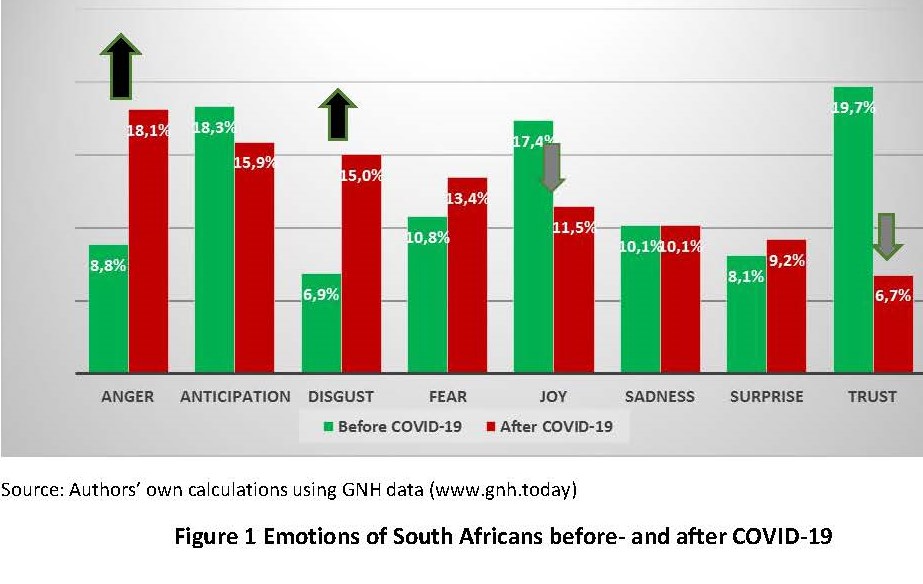
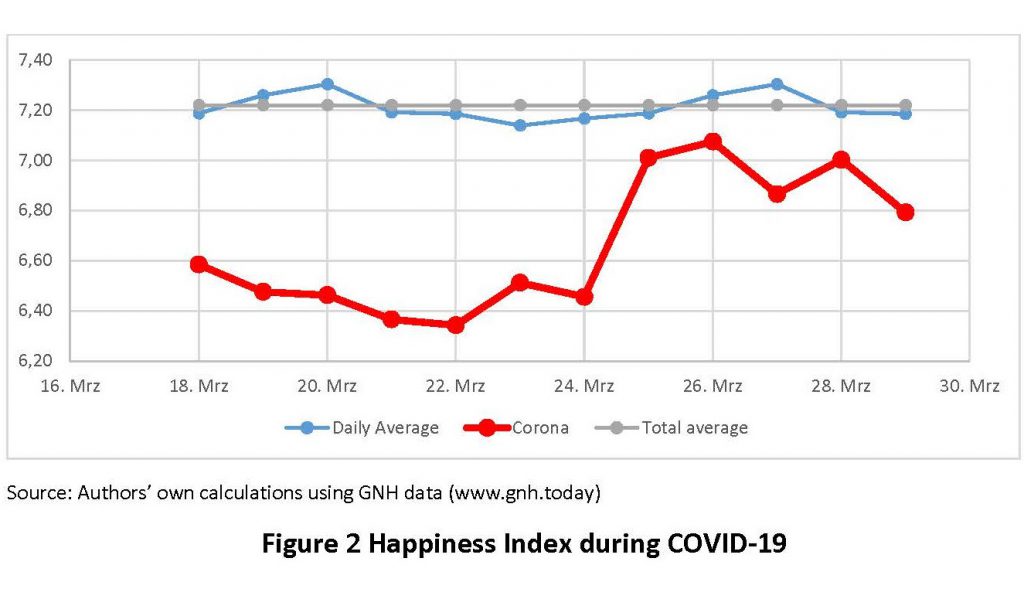
The GLO Discussion Paper finds that measures of globalization are positively related to the spread of the virus, both in speed and size. However, the study also confirms that globalized countries are better equipped to keep fatality rates low.
The Global Labor Organization (GLO) is an independent, non-partisan and non-governmental organization that functions as an international network and virtual platform to stimulate global research, debate and collaboration.
GLO Fellows Klaus F. Zimmermann, Gökhan Karabulut, Mehmet Huseyin Bilgin & Asli Cansin Doker
Author Abstract: Originating in China, the Coronavirus has reached the world at different speeds and levels of strength. This paper provides some initial understanding of some driving factors and their consequences. Since transmission requires people, the human factor behind globalization is essential. Globalization, a major force behind global wellbeing and equality, is highly associated with this factor. The analysis investigates the impact globalization has on the speed of initial transmission to a country and on the size of initial infections in the context of other driving factors. Our cross-country analysis finds that measures of globalization are positively related to the spread of the virus, both in speed and size. However, the study also finds that globalized countries are better equipped to keep fatality rates low. The conclusion is not to reduce globalization to avoid pandemics, but to better monitor the human factor at the outbreak and to mobilize collaboration forces to curtail diseases.
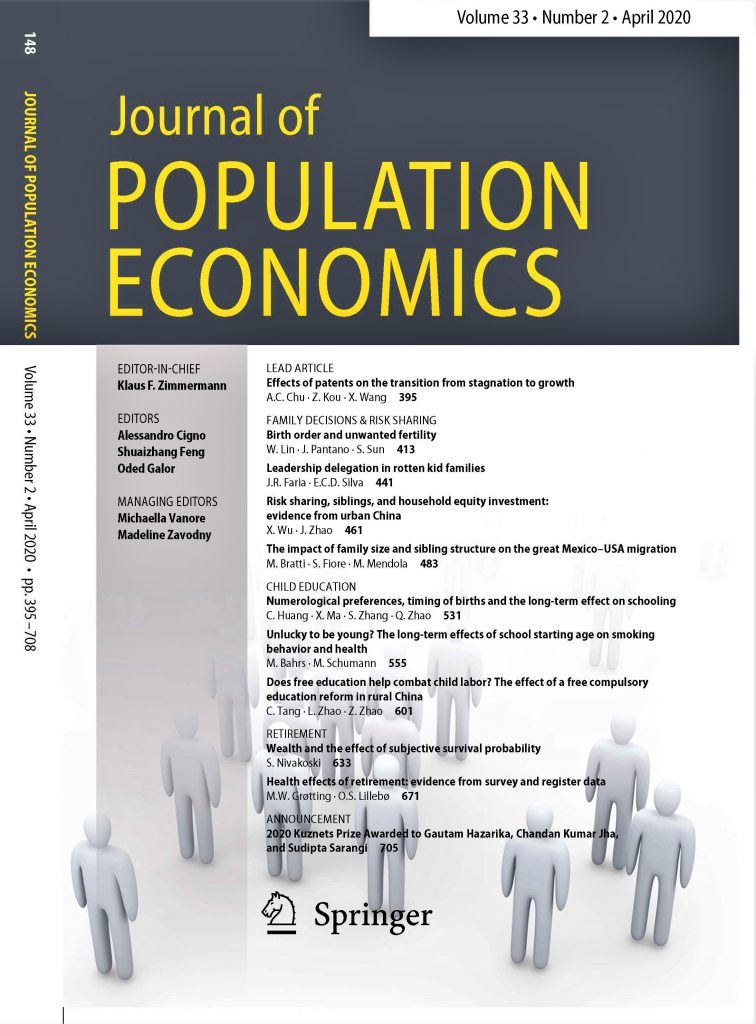
The Journal of Population Economics welcomes submissions dealing with the demographic aspects of the Coronavirus Crisis.After fast refereeing, successful papers are published in the next available issue. An example:
A new GLO Discussion Papershows that school reform in Chile improving childcare increased the quality of parents’ jobs. Less educated mothers benefited most.
The Global Labor Organization (GLO) is an independent, non-partisan and non-governmental organization that functions as an international network and virtual platform to stimulate global research, debate and collaboration.
Author Abstract: Ample empirical evidence has found that access to childcare for preschool children increases mothers’ labor force participation and employment. In this paper, we investigate whether increased childcare for primary school children improves the quality of jobs mothers find by estimating the causal effect of a school schedule reform in Chile. Combining plausibly exogenous temporal and spatial variations in school schedules with a panel of individual mothers’ employment between 2002 and 2015, we estimated a fixed-effects model that controlled for unobserved heterogeneity. We found a positive effect of access to full-day schools on several measures of ’the quality of mothers’ jobs, which were correlated to working full-time. We also found small, positive effects on quality of fathers’ jobs. Our evidence suggests that the mechanism driving the effect was the effect of the reform’s implicit subsidy to the cost of childcare on the opportunity cost of mothers’ time. We also found that less educated mothers benefited most from the reform. Thus, childcare can increase household welfare by improving parents’ jobs and can play a role in reducing inequality.
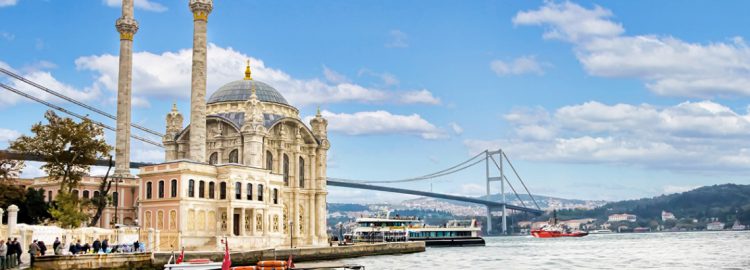
32nd EBES Conference – Istanbul, August 5-7, 2020, Istanbul, Turkey Hosted byKadir Has University
Invited Speakers
We are pleased to announce that distinguished colleagues Asli Demirguc-Kunt, Klaus F. Zimmermann, Marco Vivarelli and Dorothea Schäfer will join the conference as keynote speakers:
Dr. Asli Demirguc-Kunt is the Chief Economist of Europe and Central Asia Region of the World Bank. Over her 30-year career in the World Bank, she has also served as the Director of Research, Director of Development Policy, and the Chief Economist of the Finance and Private Sector Development Network, conducting research and advising on financial and private sector development issues. She has published articles in many of the leading economics and finance journals such as Journal of Finance, Journal of Financial Economics, Journal of Financial and Quantitative Analysis, The Review of Financial Studies, Journal of Banking and Finance, Journal of Monetary Economics, Journal of Money, Credit and Banking, Journal of Economic Perspectives etc. and is among the most-cited researchers in the world (Google Scholar = 76K). Her research has focused on the links between financial development, firm performance, and economic development. Banking and financial crises, financial regulation, access to financial services and inclusion, as well as SME finance and entrepreneurship are among her areas of research. She has also created the Global Financial Development Report series and the Global Findex financial inclusion database. She was the President of the International Atlantic Economic Society (2013-14) and Director of the Western Economic Association (2015-18) and serves on the editorial boards of professional journals. Prior to her position in the World Bank, she was an Economist at the Federal Reserve Bank of Cleveland. She holds a Ph.D. and M.A. in economics from Ohio State University.
Klaus F. Zimmermann is President of the Global Labor Organization (GLO); Co-Director of POP at UNU-MERIT; Full Professor of Economics at Bonn University (em.); Honorary Professor, Maastricht University, Free University of Berlin and Renmin University of China; Member, German Academy of Sciences Leopoldina, Regional Science Academy, and Academia Europaea (Chair of its Section for Economics, Business and Management Sciences). Among others, he has worked at Macquarie University, the Universities of Melbourne, Princeton, Harvard, Munich, Kyoto, Mannheim, Dartmouth College and the University of Pennsylvania. Research Fellow of the Centre for Economic Policy Research (CEPR) and Fellow of the European Economic Association (EEA). Editor-in-Chief of the Journal of Population Economics. Editorial Board of International Journal of Manpower, Research in Labor Economics and Comparative Economic Studies, among others. Founding Director, Institute for the Study of Labor (IZA); Past-President, German Institute for Economic Research (DIW). Distinguished John G. Diefenbaker Award 1998 of the Canada Council for the Arts; Outstanding Contribution Award 2013 of the European Investment Bank. Rockefeller Foundation Policy Fellow 2017; Eminent Research Scholar Award 2017, Australia; EBES Fellow Award 2018. He has published in many top journals including Journal of Economic Perspectives, American Economic Review, Econometrica, Journal of the European Economic Association, Journal of Human Resources, Journal of Applied Econometrics, Public Choice, Review of Economics and Statistics, Journal of Population Economics and Journal of Public Economics. His research fields are population, labor, development, and migration.
Marco Vivarelli is a full professor at the Catholic University of Milano, where he is also Director of the Institute of Economic Policy. He is Professorial Fellow at UNU-MERIT, Maastricht; Research Fellow at IZA, Bonn; Fellow of the Global Labor Organization (GLO). He is member of the Scientific Executive Board of the Eurasia Business and Economics Society (EBES); member of the Scientific Advisory Board of the Austrian Institute of Economic Research (WIFO, Vienna) and has been scientific consultant for the International Labour Office (ILO), World Bank (WB), the Inter-American Development Bank (IDB), the United Nations Industrial Development Organization (UNIDO) and the European Commission. He is Editor-in-Chief of the Eurasian Business Review, Editor of Small Business Economics, Associate Editor of Industrial and Corporate Change, Associate Editor of Economics E-Journal, member of the Editorial Board of Sustainability and he has served as a referee for more than 70 international journals. He is author/editor of various books and his papers have been published in journals such as Cambridge Journal of Economics, Canadian Journal of Economics, Economics Letters, Industrial and Corporate Change, International Journal of Industrial Organization, Journal of Economics, Journal of Evolutionary Economics, Journal of Productivity Analysis, Labour Economics, Oxford Bulletin of Economics and Statistics, Regional Studies, Research Policy, Small Business Economics, Southern Economic Journal, World Bank Research Observer, and World Development. His current research interests include the relationship between innovation, employment, and skills; the labor market and income distribution impacts of globalization; the entry and post-entry performance of newborn firms.
Dorothea Schäfer is the Research Director of Financial Markets at the German Institute for Economic Research (DIW Berlin) and Adjunct Professor of Jönköping International Business School, Jönköping University. She has also worked as an evaluator for the European Commission, the Federal Ministry of Education and Research and Chairwoman of Evaluation Committee for LOEWE (Landes-Offensive zur Entwicklung Wissenschaftlich-ökonomischer Exzellenz des Bundeslandes Hessen). She managed various research projects supported by the Deutsche Forschungsgemeinschaft (DFG), the EU Commission, the Fritz Thyssen Foundation and the Stiftung Geld und Währung. Her researches were published in various journals such as Journal of Financial Stability; German Economic Review; International Journal of Money and Finance; Small Business Economics; and Economic Modelling. She is regularly invited as an expert in parliamentary committees, including the Finance Committee of the Bundestag and gives lectures on financial market issues in Germany and abroad. She is also a member of the Editorial Board and Editor-in-Chief of the policy-oriented journal “Vierteljahrshefte zur Wirtschaftsforschung” (Quarterly Journal for Economic Research) and Editor-in-Chief of Eurasian Economic Review. Her research topics include financial crisis, financial market regulation, financing constraints, gender, and financial markets, financial transaction tax.
Board
Prof. Klaus F. Zimmermann, UNU-MERIT and Maatricht University, The NetherlandsProf. Jonathan Batten, University Utara Malaysia, Malaysia Prof. Iftekhar Hasan, Fordham University, U.S.A. Prof. Euston Quah, Nanyang Technological University, Singapore Prof. John Rust, Georgetown University, U.S.A. Prof. Dorothea Schäfer, German Institute for Economic Research DIW Berlin, Germany Prof. Marco Vivarelli, Università Cattolica Del Sacro Cuore, Italy
Qualified papers can be published in EBES journals (Eurasian Business Review and Eurasian Economic Review) or EBES Proceedings books after a peer-review process without any submission or publication fees. In this regard, qualified papers from the 32nd EBES Conference will be published in the special issues of EABR and EAER. However, if there are not enough qualified papers submitted for the special issues, there will be no special issues and qualified papers will be published in the regular issues of the journals.
EBES journals (EABR and EAER) are published by Springer and both are indexed in the SCOPUS, EBSCO EconLit with Full Text, Google Scholar, ABS Academic Journal Quality Guide, CNKI, EBSCO Business Source, EBSCO Discovery Service, EBSCO TOC Premier, International Bibliography of the Social Sciences (IBSS), OCLC WorldCat Discovery Service, ProQuest ABI/INFORM, ProQuest Business Premium Collection, ProQuest Central, ProQuest Turkey Database, ProQuest-ExLibris Primo, ProQuest-ExLibris Summon, Research Papers in Economics (RePEc), Cabell’s Directory, and Ulrich’s Periodicals Directory. In addition, while EAER is indexed in the Emerging Sources Citation Index (Clarivate Analytics), EABR is indexed in the Social Science Citation Index (SSCI) and Current Contents / Social & Behavioral Sciences.
Also, all accepted abstracts will be published electronically in the Conference Program and the Abstract Book (with an ISBN number). It will be distributed to all conference participants at the conference via USB. Although submitting full papers are not required, all the submitted full papers will also be included in the conference proceedings in a USB. After the conference, participants will also have the opportunity to send their paper to be published (after a refereeing process managed by EBES) in the Springer’s series Eurasian Studies in Business and Economics (no submission and publication fees).
This will also be sent to Clarivate Analytics in order to be reviewed for coverage in the Conference Proceedings Citation Index – Social Science & Humanities (CPCI-SSH). Please note that the 10th, 11th, 12th, 13th, 14th, 15th, 16th, 17th, 18th, 19th, 20th (Vol. 2), and 24th EBES Conference Proceedings are accepted for inclusion in the Conference Proceedings Citation Index – Social Science & Humanities (CPCI-SSH). Other conference proceedings are in progress.
Important Dates
Abstract Submission Start Date: January 15, 2020 Abstract Submission Deadline: July 3, 2020 Reply-by: July 6, 2020* Registration Deadline: July 17, 2020 Announcement of the Program: July 20, 2020 Paper Submission Deadline (Optional): July 17, 2020** Paper Submission for the EBES journals: September 15, 2020
* The decision regarding the acceptance/rejection of each abstract/paper will be communicated with the corresponding author within a week of submission.
** Completed paper submission is optional. If you want to be considered for the Best Paper Award or your full paper to be included in the conference proceedings in the USB, after submitting your abstract before July 3, 2020, you must also submit your completed (full) paper by July 17, 2020.
Contact
Ugur Can, Director of EBES (ebes@ebesweb.org) Dr. Ender Demir, Conferene Coordinator of EBES (demir@ebesweb.org)
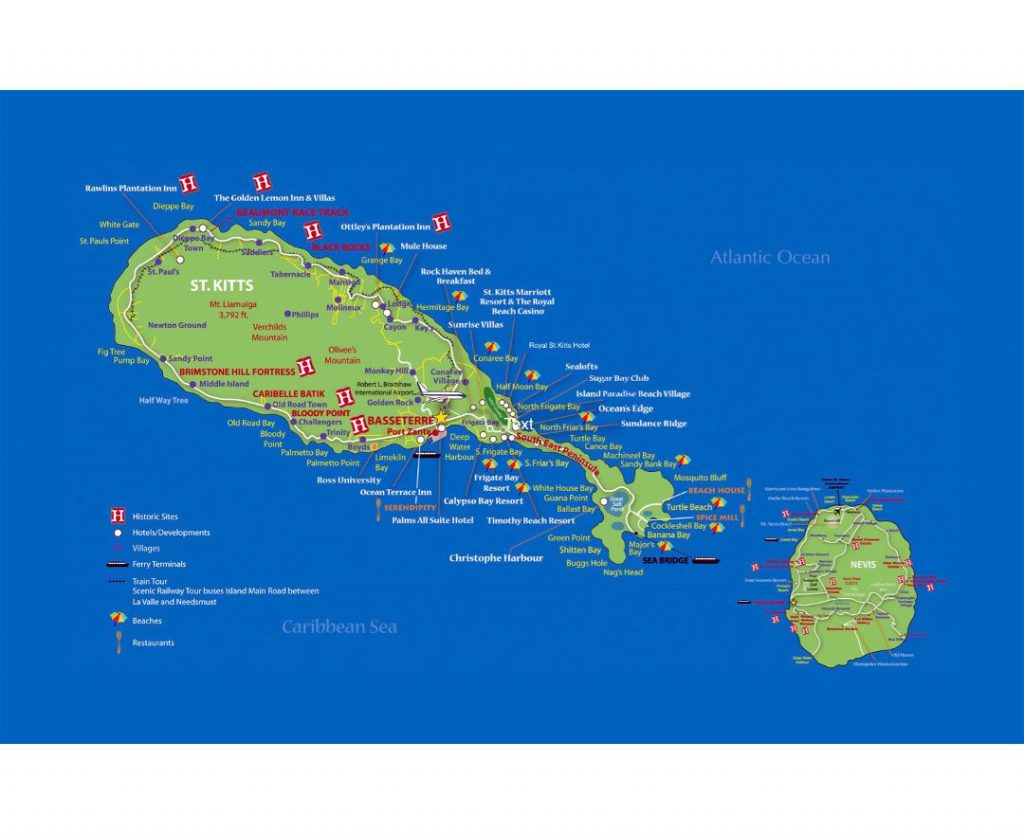
GLO Fellow Colin Cannonier, Associate Professor at Belmont University, has been appointed GLO Country Lead for St. Kitts and Nevis (a dual-island nation between the Atlantic Ocean and Caribbean Sea), where he is a frequent advisor to the government. In 2019, he had delivered a prestigious lecture as the featured speaker at the Annual Prime Minister’s Independence Lecture Series.
His research focus is in applied economics with emphasis in health, labor, education, and how they intersect with public policy and economic development.
He has authored several peer-reviewed articles in scholarly journals such as Economics of Education Review, Journal of Labor Research, Review of Economics of the Household, and Journal of Demographic Economics.
A new GLO Discussion Paperdocuments the short-term effects of COVID-19 in the United States: The negative impacts are larger for men, younger workers, Hispanics and less-educated workers, increasing labor market inequalities. Individuals in occupations working in proximity to others are also more affected.
The Global Labor Organization (GLO) is an independent, non-partisan and non-governmental organization that functions as an international network and virtual platform to stimulate global research, debate and collaboration.
Author Abstract: In this ongoing project, we examine the short-term consequences of COVID- 19 on employment and wages in the United States. Guided by a pre-analysis plan, we document the impact of COVID-19 at the national-level using a simple difference and test whether states with relatively more confirmed cases/deaths were more affected. Our findings suggest that COVID-19 in- creased the unemployment rate, decreased hours of work and labor force participation and had no significant impacts on wages. The negative impacts on labor market outcomes are larger for men, younger workers, Hispanics and less-educated workers. This suggest that COVID-19 increases labor market inequalities. We also investigate whether the economic consequences of this pandemic were larger for certain occupations. We built three indexes using ACS and O*NET data: workers relatively more exposed to disease, workers that work with proximity to coworkers and workers who can easily work remotely. Our estimates suggest that individuals in occupations working in proximity to others are more affected while occupations able to work remotely are less affected. We also find that occupations classified as more exposed to disease are less affected, possibly due to the large number of essential workers in these occupations.
A new GLO Discussion Paper proposes a novel misclassification-error-adjusted Sahm recession indicator that offers earlier identification of economic recessions.
Photo by Jose Antonio Gallego Vázquez on Unsplash
The Global Labor Organization (GLO) is an independent, non-partisan and non-governmental organization that functions as an international network and virtual platform to stimulate global research, debate and collaboration.
GLO FellowShuaizhang Feng & Editor of the Journal of Population Economics
Shuaizhang Feng
Author Abstract: Accurate identification of economic recessions in a timely fashion is a major macroeconomic challenge. The most successful early detector of recessions, the Sahm rule, relies on changes in unemployment rates, and is thus subject to measurement errors in the U.S. labor force statuses based on survey data. We propose a novel misclassification-error-adjusted Sahm recession indicator and provide empirically-based optimal threshold values. Using historical data, we show that the adjusted Sahm rule offers earlier identification of economic recessions. Based on the newly released U.S. unemployment rate in March 2020, our adjusted Sahm rule diagnoses the U.S. economy is already in recession, while the original Sahm rule does not.
A new GLO Discussion Paper investigates the spatial spillover effect of inward FDI on the rural-urban wage inequality. It finds that inward FDI should not be blamed for the exacerbation of rural-urban wage inequality.
The Global Labor Organization (GLO) is an independent, non-partisan and non-governmental organization that functions as an international network and virtual platform to stimulate global research, debate and collaboration.
Author Abstract: When investigating the relationship between inward FDI and rural-urban inequality, previous studies overlook the inter-regional interactions. Building on the literature that highlights the significant role of rural-urban migration in inequality, this article investigates spatial spillover effect of inward FDI on the rural-urban wage inequality by utilizing the Spatial Durbin Model (SDM) both in the short run and long run. In particular, we carefully consider the heterogeneity of inward FDI and categorize it with respect to entry modes and sectoral distribution. On the basis of a panel dataset covering 30 provinces in China from 2000 to 2016, our results show that overall the inward FDI should not be blamed for the exacerbation of rural-urban wage inequality. We do not find significant relationship between inward FDI in secondary and tertiary sector while the FDI in primary sector has a slight negative effect. When we separate the FDI according to entry modes, we find that WFE is shown to have a negative effect on the rural-urban wage inequality and this effect is more pronounced in the long run when we conduct a period average estimation. This change also similarly applies to the equity joint ventures.
A new GLO Discussion Paper examines the proclaimed competition for the world’s leadership in science, technology and innovation between China and the USA.
The Global Labor Organization (GLO) is an independent, non-partisan and non-governmental organization that functions as an international network and virtual platform to stimulate global research, debate and collaboration.
Author Abstract: China’s proclaimed aim of becoming the world’s leader in science, technology and innovation by the mid twenty first century has triggered an intense competition with the United States. The latter, feeling threatened in its supremacy in this field, has reacted forcefully. This GLO Discussion Paper examines the nature of this contest, the comparative technological standing of both countries, the pros and cons in this area derived from their respective development models and the plausible outcomes of this competition.
A new GLO Discussion Paperdocuments the pessimistic career expectations people currently have due to the corinavirus crisis on the basis of a new survey for Belgium.
The Global Labor Organization (GLO) is an independent, non-partisan and non-governmental organization that functions as an international network and virtual platform to stimulate global research, debate and collaboration.
Author Abstract: This study is the first in the world to investigate the expected impact of the COVID-19 crisis on career outcomes and career aspirations. To this end, highquality survey research with a relevant panel of Belgian employees was conducted. About 21% of them fear losing their jobs due to the crisis—14% are concerned that they will even lose their jobs in the near future. In addition, 26% expect to miss out on promotions that they would have received had the COVID-19 crisis not occurred. This fear of a negative impact is higher in vulnerable groups, such migrants. In addition, we observe that many panel members believe they will look at the labour market differently and will have different work-related priorities in the future. In this respect, more than half of the panel members indicate that they have attached more importance to working conditions and work-life balance since the COVID-19 crisis.
Incomes in surveys suffer from various measurement problems.A new GLO Discussion Paperfinds that the main source of negative disposable incomes is negative self-employment income.
The Global Labor Organization (GLO) is an independent, non-partisan and non-governmental organization that functions as an international network and virtual platform to stimulate global research, debate and collaboration.
Author Abstract: Incomes in surveys suffer from various measurement problems, most notably in the tails of their distributions. We study the prevalence of negative and zero incomes, and their implications for inequality and poverty measurement relying on 57 harmonized surveys covering 12 countries over the period 1995-2016. The paper explains the composition and sources of negative and zero incomes and assesses the distributional impacts of alternative correction methods on poverty and inequality measures. It finds that the main source of negative disposable incomes is negative self-employment income, and that high tax, social security withholdings and high self-paid social-security contributions account for negative incomes in some countries. Using detailed information on expenditure, we conclude that households with negative incomes are typically as well off as, or even better, than other households in terms of material wellbeing. By contrast, zero-income households are found to be materially deprived. Adjusting poverty and inequality measures for these findings can alter these measures significantly.
A new GLO Discussion Paperreveals that countries with lower population growth introduce automation technologies faster.
The Global Labor Organization (GLO) is an independent, non-partisan and non-governmental organization that functions as an international network and virtual platform to stimulate global research, debate and collaboration.
Author Abstract: We analyze the effects of declining population growth on automation. Theoretical considerations imply that countries with lower population growth introduce automation technologies faster. We test the theoretical implication on panel data for 60 countries over the time span 1993-2013. Regression estimates support the theoretical implication, suggesting that a 1% increase in population growth is associated with an approximately 2% reduction in the growth rate of robot density. Our results are robust to the inclusion of standard control variables, different estimation methods, dynamic specifications, and changes with respect to the measurement of the stock of robots.
A new GLO Discussion Paperreveals that observed income inequality in the access to health care is driven by the fact that higher-income people tend to make greater use of healthcare treatment, for any given health and disability status.
The Global Labor Organization (GLO) is an independent, non-partisan and non-governmental organization that functions as an international network and virtual platform to stimulate global research, debate and collaboration.
Author Abstract: Using longitudinal data from a representative UK panel, we focus on a group of apparently healthy individuals with no history of disability or major chronic health condition at baseline. A latent variable structural equation model is used to analyse the predictive role of latent baseline biological health, indicated by a rich set of biomarkers, and other personal characteristics, in determining the individual’s disability state and health service utilisation five years later. We find that baseline health affects future health service utilisation very strongly, via functional disability as a mediating outcome. Our model reveals that observed income inequality in the access to health care, is driven by the fact that higher-income people tend to make greater use of healthcare treatment, for any given health and disability status. This leads to a slight rise in utilisation with income, despite the lower average need for treatment shown by the negative income gradients for both baseline health and disability outcomes. Factor loadings for latent baseline health show that a broader set of blood-based biomarkers, rather than the current focus mainly on blood pressure, cholesterol and adiposity, may need to be considered for public health screening programs.
There is little doubt that –whatever countries do to fight the virus- the economies of many EU countries will be in serious disarray. It is likely that Governments and the EU in the struggle to regain employment and income will fall back into the “old normal” and put aside their agreed strategies to achieve sustainability and to further a social Europe with a strong public sector.
A vision is presented for an emergence of EU countries out of the crisis with sustainability and with an improvement of the public sector. EU cooperation is a must for that vision, with a commitment of EU countries to the conditionality’s for joint Euro area monetary funding (ECB) and joint Euro area borrowing (though ESM) or joint European borrowing through the EIB or otherwise. These conditionality’s are in terms of a commitment to sustainable development, to improvement of the public sector (health and education), to joint taxation as well as to sound fiscal behavior.
A memorandum by Jo Ritzen (together with Javi Lopez, André Knottnerus, Salvador Perez Moreno, George Papandreou and Klaus F. Zimmermann) has just elaborated this in a new UNU-MERIT Working Paper (see online access below).
Jo Ritzen has presented the memorandum in a UNU-MERIT seminar in Maastricht on April 23, 2020. His presentation was followed by a discussion prepared by Luc Soete and Bart Verspagen.
Some insights to begin with:
The lockdown measures will cause a tremendous recession, much stronger than the global (2007-8) financial crisis with substantial long-term negative consequences for government debt and the flexibility of government activities.
The burden for the next generations has therefore substantially increased above the huge challenges already present through climate change, demographic imbalances, global refugee pressures and digitization.
The state is back in a dominant role for society and economy, while the end of Schengen and of free labor mobility seem possible (if not even likely).
Europe has been largely absent in the initial response to the Corona-crisis leaving the message: the European Union is superfluous.
This is a dangerous development since a strong European collaboration is essential to deal with the challenges and to ensure a healthy and prosperous social and economic development of Europe.
The challenge has to be used to foster structural reforms to invest in the future to strengthen education, digital and transportation infrastructure, the healthcare industry, and to handle the challenges of climate change, demography, open labor markets and refugees.
GLO Fellow Jo Ritzen is a Professorial Fellow of UNU-MERIT and its School of Governance.UNU-MERIT is a joint institute of the United Nations University (UNU) and Maastricht University. Ritzen is a former Minister of Education, Culture, and Science of the Netherlands, served in the Dutch Cabinet at the Maastricht Treaty. He is a former Vice President of the World Bank and a former President of Maastricht University.
A new GLO Discussion Paperdefends the quality of key available coronavirus data: The cross-country correlation between log of tests and log of reported cases (per capita) and the correlation between log of reported cases and log of reported deaths (per capita) are high. It suggests that currently the infection rate in no country is higher than 10% and the fatality rate is at least 0.4%.
The Global Labor Organization (GLO) is an independent, non-partisan and non-governmental organization that functions as an international network and virtual platform to stimulate global research, debate and collaboration.
Author Abstract: COVID-19 mystery feeds the belief that the reported morbidity rates are not related to the true ones and that large parts of the population are already infected, the virus is not very dangerous, and the lockdown is unnecessary. Yet one observes two very strong correlations that disprove this belief. The cross-country correlation between log of tests and log of reported cases (per capita) is 0.87 and the correlation between log of reported cases and log of reported deaths (per capita) is 0.89. Using these correlations, I suggest that the infection rate in no country is higher than 10%. Furthermore, I suggest that the mortality from COVID-19 is at least 0.4%.
A new GLO Discussion Paperpresents a theoretical conceptualization of the data economy: Knowledge extraction from large, inter-connected data sets displays natural monopoly characteristics that generate and disclose the amount of knowledge that maximizes their profit. Provided that monopoly theory holds, this level of knowledge is below the socially desirable amount.
The Global Labor Organization (GLO) is an independent, non-partisan and non-governmental organization that functions as an international network and virtual platform to stimulate global research, debate and collaboration.
Featured image: Photo by Mika Baumeister on Unsplash
Author Abstract: This paper presents a theoretical conceptualization of the data economy that motivates more access to data for scientific research. It defines the semicircular flow of the data economy as analogous to the traditional circular flow of the economy. Knowledge extraction from large, inter-connected data sets displays natural monopoly characteristics, which favors the emergence of oligopolistic data holders that generate and disclose the amount of knowledge that maximizes their profit. If monopoly theory holds, this level of knowledge is below the socially desirable amount because data holders have incentives to maintain their market power. The analogy is further developed to include data leakages, data sharing policies, merit and demerit knowledge, and knowledge injections. It draws a data sharing Laffer curve that defines optimal data sharing as the point where the production of merit knowledge is maximized. The theoretical framework seems to describe many features of the data-intensive economy of today, in which large-scale data holders specialize in extraction of knowledge from the data they hold. Conclusions support the use of policies to enhance data sharing and, or, enhanced user-centric data property rights to facilitate data flows in a manner that would increase merit knowledge generation up to the socially desirable amount.
A new GLO Discussion Paperfinds that in Italy groups at risk of COVID-19 work in sectors that are little exposed to physical proximity, they are currently under lockdown or can work remotely. The sectoral lockdowns put in place by the Italian Government in March 2020 seem to have targeted sectors who operate in physical proximity, but not those directly exposed to infections.
The Global Labor Organization (GLO) is an independent, non-partisan and non-governmental organization that functions as an international network and virtual platform to stimulate global research, debate and collaboration.
Author Abstract: We analyse the content of Italian occupations operating in about 600 sectors with a focus on the dimensions that expose workers to contagion risks during the COVID-19 epidemics. To do so we leverage extremely detailed and granular information from ICP, the Italian equivalent of O*Net. We find that several sectors need physical proximity to operate: the workers employed in Italy in sectors whose physical proximity index is above the national average are more than 6.5 million (most of them in retail trade). Groups at risk of contagion and complications from COVID-19 (mainly male above the age of 50) work in sectors that are little exposed to physical proximity, currently under lockdown or can work remotely. The sectoral lockdowns put in place by the Italian Government in March 2020 seem to have targeted sectors who operate in physical proximity, but not those directly exposed to infections (the health industry is not subject to lockdown). Most workers who can operate from home have not been put under lockdown and are currently working. Therefore, the number of workers who are not in workplaces could be up to 3 million higher than those whose sector has been shutdown.
The world still struggles about a convincing strategy to handle the #coronavirus crisis. What is the right strategy with social distancing. Were the huge lockdowns in many states necessary? How to move out of the lockdowns? Read the insights of one of the leading experts on epidemics world-wide.
Some core messages of theinterview:
Our research showed that those cities that acted early in the big influenza epidemic of 1918, for long periods of time, and used several non-pharmaceutical interventions saw far lower rates of influenza cases and deaths compared to the cities that failed to take such measures or took them too late.
I do not believe letting the virus run wild to achieve herd immunity and leaving things wide open, as in Sweden, is a good idea.
In the fog of war it is always hard to gather good data.
We are all flying by the seat of our pants and making best guesstimates.
At least in the US, we are not there yet to terminate the widespread lockdowns.
I fear that CoVID-19 will be much worse than the influenza epidemic of 1918.
He is the pre-eminent social and cultural historian of medicine, public health, and epidemics in the world. Author of 11 books and has contributed over 500 articles, reviews, essays and book chapters to a wide range of scholarly publications and popular periodicals. He has made hundreds of contributions for the media and is a prominent policy advisor.
More details about his expertise on epidemics below the interview. Full Bio.
Howard Markel: In 2007, my colleagues and I at the University of Michigan Center for the History of Medicine and the U.S. Centers for Disease Control and Prevention studied the use of non-pharmaceutical interventions (NPIs) taken in the U.S. during the 1918-1919 influenza pandemic, which killed, at least, 40 million people around the globe and 500,000 to 750,000 Americans. We evaluated the public health efforts of 43 large cities that implemented some combination of commonly used NPIs:
1) isolating the ill or suspected cases in hospitals or at home; 2) banning public gatherings and in some cases, shutting down roads and railways; and 3) closing schools.
What we discovered was quite remarkable. Many cities acted early, meaning they pulled the levers to shut the gates of their city before the virus reached what is called an inflection point and spread widely causing hundreds if not more cases per day. We estimated that rate to be twice the normally expected number of cases of influenza in that city at that time, based on the previous year’s statistics.
Those cities that acted early, for long periods of time, and used more than one NPIs saw far lower rates of influenza cases and deaths compared to the cities that failed to take such measures or took them too late —after the virus had a chance to spread through the community.
GLO:Social distancing as a concept is applied to some extent in most countries, but was the complete lockdown of societies and economies really necessary? Why are e.g. the policies applied in South Korea and Sweden wrong?
Howard Markel: Early action is the key, of course, because these measures do not cure or prevent the spread of a virus. They only buy time, so that hospitals are not overrun with sick people and, perhaps, modern medicine can manufacture effective anti-viral drugs, treatments, or a vaccine. And because these measures are extremely disruptive to society, they should be employed only as a last resort and only for highly lethal and easily transmissible infections. When is meant by the phrase “last resort,” is that all other measures leading up to such socially disruptive NPIs do not seem to work elsewhere and we are dealing with an epidemics that has an especially high case fatality rate (number of deaths divided by total number of cases).
In 1918, the case fatality rate (CFR) was 2.5% (and in some countries such as India, over 10%), which is staggering compared to seasonal flu case fatality rates of about 0.1%. The 1918 pandemic that merited the most draconian of measures and it is important to note, they had no other tools to use, no antibiotics or antivirals, no vaccines, not even IV fluids. Right now, we are estimating relatively high CFR’s for CoVID-19, but are unsure of the precise number because while deaths are easy to quantify, the total number of cases is unclear—especially those with mild cases that do not see their doctor. We need better testing to be sure but given how sick CoVID-19 makes people and the number of deaths we are seeing, I believe it is better to be safe than sorry.
I do not believe letting the virus run wild to achieve herd immunity and leaving things wide open, as in Sweden, is a good idea given how many people with co-morbid diseases are at risk to get very sick and die. In 2020, there are many people living with cancer, AIDS, heart disease and other serious illnesses who would never be alive in 1918. These people are at serious risk of dying of CoVID-19 herd immunity, meaning 90% or more of a community is immune to a virus to prevent further spread of an epidemic disease, is best achieved by universal vaccination.
And a huge problem with CoVID-19 is that we have never experienced an epidemic with this particular virus and we do not yet have a stable case fatality rate to make good judgments. Hence, the policies we do develop are likely to be influenced by the adage, better safe than sorry. As such, we should not grouse about calls made “too early,” in the cause of fighting what may be a deadly epidemic.
GLO:Now we are in the middle of the fog, and it is difficult to know when to move back to some normal. Why are the statistics we have to rely on world-wide of so low quality?
Howard Markel: Precisely because we are in the fog of war and it is always hard to gather good data on the epidemic disease in question.
GLO:How long does it take to see the effects of public measures in the statistics?
Howard Markel: We should have better data in the coming weeks, late in the epidemic curve of each city, state or province, and country. But we are all flying by the seat of our pants and making best guesstimates based on a great deal of epidemiological data, modeling data and clinical information.
GLO:What could be the statistical indicator to decide on the termination of the widespread lockdowns?
Howard Markel: That’s the million dollar question. We don’t have a precise time to do this even though we know it needs to be late in the epidemic curve, not when cases are doubling every day, but instead are only popping up on a much more slow basis. We also need far more test kits to be able to contact trace the new cases and implement quarantine and isolation procedures for them. Simply put, at least in the US, we’re not there yet.
GLO:Why is New York the center of the epidemic in the US?
Howard Markel: Well, it’s the largest city in the world; it was late to implement social distancing measures, compared to other American cities and states; people live in crowded conditions—especially the poor—and then there is the mass transit system where people travel cheek by jowl on subways. These are just a few speculations but it has been sad to see how seriously my beloved New York City has been affected.
GLO:Moving outside of your territory as a historian, what do you speculate: Will we consider in some decades the coronavirus comparable to the influenza epidemic of 1918?
Howard Markel: To be honest, I fear it will be much worse. Let me put it this way, it will certainly keep historians of epidemics busy for many, many years!
GLO: Thank you very much for these insights!
************* With Howard Markel spoke Klaus F. Zimmermann, GLO President on April 18, 2020. Both have been Rockefeller Foundation Bellagio Fellows in 2017. Further activities and reports of the GLO Research Cluster on the coronavirus.
Review of epidemics-related work of Howard Markel
Dr. Markel is the author, co-author, or co-editor of eleven books including the award-winning Quarantine! East European Jewish Immigrants and the New York City Epidemics of 1892 (Johns Hopkins University Press, 1997; paperback, Johns Hopkins University Press, 1999) and When Germs Travel: Six Major Epidemics That Have Invaded America Since 1900 and the Fears They Have Unleashed (Pantheon Books/Alfred A. Knopf, 2004; paperback Vintage/Random House, 2005).
From 2005 to 2006, Professor Markel served as a historical consultant on pandemic influenza preparedness planning for the United States Department of Defense. From 2006 to 2015, he served as the principal historical consultant on pandemic preparedness for the Division of Global Migration and Quarantine of the U.S. Centers for Disease Control and Prevention. From late April 2009 to February 2011, he served as a member of the CDC Director’s “Novel A/H1N1 Influenza Team B”, a real-time think tank of experts charged with evaluating the federal government’s and President Barack Obama’s influenza policies on a daily basis during and after the outbreak. His historical research has played a pivotal role in developing the evidence base for many community mitigation strategies employed by the World Health Organization, the CDC, the Mexican Ministry of Health, and numerous state, provincial and municipal health departments around the globe during the 2009 influenza pandemic.
In collaboration with colleagues at the University of Michigan and the U.S. Centers for Disease Control and Prevention, Dr. Markel is Co-Editor-in-Chief of The 1918-1919 American Influenza Pandemic: A Digital Encyclopedia and Archive, which was first published in 2012 by the University of Michigan Center for the History of Medicine and the University of Michigan Scholarly Publications Office. Funded by grants and contracts from the CDC, the Robert Wood Johnson Foundation, and the National Endowment for the Humanities, the digital encyclopedia represents one of the largest collections of historical documents ever assembled on a single epidemic and is accessible on the Internet at: www.influenzaarchive.org. The second edition of the 1918-1919 Influenza Pandemic: A Digital Encyclopedia and Archive 2.0 was released in 2016 and a third edition is now in preparation.
During the Ebola epidemic of 2014, he was a much sought-after expert on the history of epidemics and quarantines. Aside from wide press coverage, in the form of interviews, and his contributing several influential op-eds for the New Republic and Reuters Opinion, Professor Markel was the lead interview on NPR’s All Things Considered, BBC World Service, CNN/Sanjay Gupta MD, and PBS NewsHour. Dr. Markel’s landmark scholarship on the tangled history of stigma, politics and contagion was also lauded on the front page of The New Yorker, (Talk of the Town/Comment, November 10, 2014). In the aftermath of the Ebola crisis, in February of 2015, the Presidential (Barack Obama) Commission on Bioethical Issues invited him to consult on the ethical issues surrounding the stigma of epidemic and infectious diseases.
More recently, Dr. Markel played a prominent role in evaluating public health and social distancing policies as they played out in China and around the world during the CoVID-19, or coronavirus, epidemic of 2019-2020. His pioneering 2007-2009 research on the use of community mitigation strategies for influence pandemics was the driving and life-saving force behind the entire global policy to CoVID-19.
On March 11, 2020, Nicholas Kristof, the eminent columnist for the New York Times cited Dr. Markel and his research team’s work as one of the “12 Steps to Tackle the Coronavirus.” On April 1, 2020, he was the subject of a New Yorker magazine profile, “A Medical Historian on Why We Must Stay the Course in Fighting the Coronavirus.” At the National Academy of Medicine CoVid-19 briefing on March 25, 2020, he was “widely credited with coining the term flattening the curve.” On April 6, 2020, Google honored the concept of “flattening the curve,” which he helped coin and scientifically demonstrate, by making it the first in a series of @GoogleDoodles for CoVid-19, on its masthead, dedicated “to public health workers and to researchers in the scientific community” during the crisis. On April 16, in response to those wanting a lifting of the state’s CoVid-19 lockdown, Governor Gretchen Whitmer cited Dr. Markel’s non-pharmaceutical intervention research as the evidence base for her social distancing policies for the State of Michigan.
Markel’s two prominently run “Op-Ed” essays on the Chinese quarantine and containment strategies in Wuhan ran back-to-back in the Washington Post (January 26, 2020) and the New York Times (January 27, 2020) and were translated into multiple languages overseas, for the Chinese, Spanish, Portuguese, Russian, and Polish press. He discussed the impact of modern technology and connectivity on pandemics in an opinion essay for WIRED on March 4, 2020. A highly influential Op-Ed essay on the importance of early school closures as a community mitigation strategy for CoVid-19 appeared online in the New York Times on March 6, 2020 and in print on March 9, 2020. Within a few days of its publication, school districts across the nation shut their doors. He also wrote important op-eds on the use of face masks, for NBC Think (April 3, 2020) and lessons from the 1918 influenza pandemic for The Washington Post (April 8, 2020). Professor Markel was also extensively interviewed about CoVID-19 for hundreds of stories and updates.
The world still struggles about a convincing strategy to handle the #coronavirus crisis. The developed world was affected first, but the forthcoming consequences for the developing countries may be much worse. Some insights from an interview with development economist Asad Islam of Monash University, Australia.
Some core messages of the interview:
The impact of COVID-19 is likely to be more severe in developing countries than in developed countries.
A temporary lockdown makes it possible to alert people that this is a serious health issue and everybody needs to protect themselves as much as possible.
Most developing countries have the capacity to provide three meals a day for its poorest population.
Developing countries need to allow their people to leave the lockdown earlier.
Our proposal for India suggested a broad-based transfer system, targeting more on poor people and increase the global fiscal stimulus substantially.
The pandemic is of more serious concern than initially thought.
Issues previously considered to be local ones are now recognized to be of global relevance and have to be addressed by global collaborations.
GLO Fellow Asad Islam is a Professor at the Department of Economics, and Director of the Centre for Development Economics and Sustainability (CDES) at the Faculty of Business and Economics at Monash University, Australia.
Interview
GLO: What is different with COVID-19 in a developing country than in a developed country?
Asad Islam: In developing countries, we see poorer health infrastructure such as a severe lack of hospital beds, intensive care units are not equipped with proper facilities for COVID-19 patients, missing trained nurses and doctors, lack of awareness among masses of people. Thus, the impact of COVID-19 is likely to be more severe in developing countries than in developed countries.
GLO:Is there no alternative to a complete lockdown of society and economy?
Asad Islam: The temporary lockdown in a developing country is a necessary evil to raise awareness about COVID-19. Social distancing won’t work without it. People have now almost stopped going to temple, mosque, church or social gatherings. This won’t happen without a lockdown! Lockdown needs to be temporary with gradual withdrawal (because of concerns for the poor) while making sure that the people try to maintain social distance (1.5 meter), and wear masks. A temporary lockdown makes it possible to alert people that this is a serious health issue and everybody needs to protect themselves as much as possible.
GLO:But unlike in developed countries, it seems very difficult for the government to financially support people. How can they survive?
Asad Islam: Most developing countries have the capacity to provide safety nets (e.g., providing three meals a day) for its poorest segments of the population. The problem is not lack of resources, but absence of mechanisms to reach the food to these poor people. The food distribution system could be made fairer even within this short period of time and most poor people can be brought under a direct transfer system. Of course, the pressure on the government is huge for maintaining this over a longer period. However, supporting its needy 30-40 percent of the population for 3-6 months using a public food distribution system is not an impossible job. International organizations such as the World Bank and the Asian Development Bank can also play a supportive role in ensuring this, particularly in countries where we see a serious lack of resources.
GLO:Lockdowns need to end at some time and one needs good statistics. What to do?
Asad Islam: We need to flatten the curve in developing countries, which means one needs to wait when the number of cases is rising rapidly. While the developed country can wait till there is no new case, in developing countries that would be very hard to achieve considering the economic hardship of poor people. One option is to allow the people to start working (for temporary period) who test negative, and younger people (age 20-50) if they do not have any major pre-existing condition.
GLO:With some colleagues you have recently proposed a strategy for India (see for a media report and the full memorandum). What is the message?
Asad Islam: Our main point was to have a broad-based transfer system, targeting more on poor people to enable them to cope with hardship during the lockdown, and increase the fiscal stimulus in manifold to address the economic woes of people.
GLO:Have economists underestimated the dangers of this pandemic?
Asad Islam: I think there were not enough data to begin with, and as it now stands both the number of infection cases and deaths were not reported accurately. As economists rely mostly on numbers there was more support for herd immunity in the beginning as the death rate was very low. However, as more accurate data are coming and we observe higher rate of deaths/infections we have now started to realize that the pandemic is of more serious concern on both health and economic grounds than initially thought.
GLO:How will the coronavirus change development economics?
Asad Islam: The world should now realize more that there are many issues we should not ignore, issues which sometimes we perceive to be the problem of a country or region only. Many problems including poverty and climate change need to be tackled globally and developed countries have more obligations to address them. The global public health issue will remain a serious concern in the coming years, and the problems of developing countries need to be better understood to address these challenges.
************* With Asad Islam spoke Klaus F. Zimmermann, GLO President on April 18, 2020. Further activities and reports of the GLO Research Cluster on the coronavirus.
A new GLO Discussion Paperfinds that male and female self-employed workers in Western Europe devote 14% and 20% less time to commuting than their employee counterparts.
The Global Labor Organization (GLO) is an independent, non-partisan and non-governmental organization that functions as an international network and virtual platform to stimulate global research, debate and collaboration.
Author Abstract: This paper explores the commuting behavior of workers in Western European countries, with a focus on the differences in commuting time between employees and the self-employed in these countries. Using data from the last wave of the European Working Conditions Survey (2015), we analyze the commuting behavior of workers, finding that male and female self-employed workers devote 14% and 20% less time to commuting than their employee counterparts, respectively. Furthermore, differences in commuting time between employees and self-employed females depend on the degree of urbanization of the worker’s residential location, as the difference in commuting time between the two groups of female workers is greater in rural areas, in comparison to workers living in urban areas. By analyzing differences in commuting time between groups of European workers, our analysis may serve to guide future planning programs.
The world still struggles about a convincing strategy to handle the #coronavirus crisis. The taken measures may have helped to contain the development, but generate also very serious challenges for the longer future of the planet and global solidarity. The award-winning Jordanian author Hisham Bustani has been interviewed to provide his insights, requests and visions.
Some core messages of the interview:
The panic of the emergency situation eliminates any possibility to conduct the necessary discussions about the major failures, witnessed so far, of a “system” that has been taken for granted, unquestioned, for too long.
The measures taken in Jordan have succeeded so far to keep the spread of COVID-19 slow and manageable.
As a remedy to the future, a rapid detachment from the global economy should get underway initiating modes of production aimed at local needs, food security and sufficiency, in place of export-oriented “growth” strategies that serve banks and financial elites, not people.
The main challenge is to reconsider the “system” that governs human existence on this planet, and put forward, and struggle for, a more just alternative.
The current experience will be part of my future writing: The destructive presence of humans on Earth is one of the main areas of my literary exploration.
A sense of doom is very present now, along with eye-opening experiences of solidarity, collectiveness, and modesty in front of nature’s might and immensity.
Hisham Bustani is an award-winning Jordanian author of five collections of short fiction and poetry. His fiction and poetry have been translated into several languages, with English-language translations appearing in prestigious journals including The Kenyon Review, Black Warrior Review, The Poetry Review, Modern Poetry in Translation, World Literature Today, and The Los Angeles Review of Books Quarterly. His fiction has been collected in The Best Asian Short Stories, The Ordinary Chaos of Being Human: Tales from Many Muslim Worlds, The Radiance of the Short Story: Fiction From Around the Globe among other anthologies. His book The Perception of Meaning (Syracuse University Press, 2015) won the University of Arkansas Arabic Translation Award. Hisham is the Arabic fiction editor of the Amherst College-based literary review The Common and was the recipient of the Rockefeller Foundation’s Bellagio Fellowship for Artists and Writers in 2017.
Interview
GLO: The corona crisis has reached Jordan late on March 15 and the intensity of the disease is still low. How much is public life in your country nevertheless affected by the coronavirus debate and how do you judge the situation?
Hisham Bustani: Like everywhere else around the world, nothing is in the discussion and in the news except COVID-19, mainly in the crude form of statistics, more statistics, and even more statistics – the number of infected people, the number of those who died, and to a lesser extent, the number of those cured.
Although this might be a good way to raise awareness about the seriousness of the disease, and the calamity of the situation (thus stressing the importance of personal preventive measures and social distancing), the fever of numbers and the panic of the emergency situation eliminates any possibility to conduct the necessary discussions about the major failures, witnessed so far, of a “system” that has been taken for granted, unquestioned, for too long.
One can observe that the “free market”, “capitalist globalization”, and the reign of corporations and financial institutions was not just ineffective in dealing with the pandemic (among many other things), but costs tremendous human lives and suffering. This “system” is incapable of functioning in emergencies and is continuously in need of being bailed out with taxpayer’s money instead of bailing out the people themselves. As matters get worse, they get contained with intensive “socialist” remedies, imposed through government-led measures, and intensive government intervention, the exact opposite of the neoliberal doctrines vigorously promoted around the world since the 1980s.
One can observe that the most important people around the world today are not the CEOs of transnational corporations and their incompetent politicians, but the massive army of underpaid public health professionals and other low-paid laborers who are maintaining the necessities of life and survival.
One can observe that what really matters are not useless, valueless, glamor commodities but food essentials, ventilators, and a universal health system for all.
One can observe that the reversal of catastrophic pollution levels is attainable, and desirable results can be achieved in extremely short periods.
One can observe that “collaborative” institutions (like the European Union) have failed their “internal” test as each member state scrambled to contain its own situation, leaving other deeply-affected countries (like Spain and Italy) without help; the only efficiency they can claim is mediating and concentrating power, while during a pandemic: allies are no longer allies but cutthroat competitors for the acquisition of medical supplies and test kits.
While a curfew situation is being imposed in Jordan, as well as in many countries around the world, and while health carers are on the frontlines of confronting the pandemic, doing whatever they can to save lives in haphazard field hospitals erected in boulevards and piazzas; these are the observations that should provide food for thought, the material for a deep public discussion, possibly contributing to initiating another future for us humans, our ways and governing systems, after the disease.
GLO:How did your country initially reacted to the new threat, beyond the many others you already have: development, conflict and peace, and refugees?
Hisham Bustani: In Jordan, the governmental response was rapid and radical. A strict lockdown was imposed for a number of days starting March 21, eased later to a 6pm-10am curfew period while allowing people to go out during the day to purchase necessary items. Cars and not allowed to move except with special permits. The twelve governorates that comprise Jordan are isolated from each other and movement between them is banned. Flights in and out of the country were stopped, all borders closed down, and the last group of people who entered the country (more than 5000) were quarantined in hotels for two weeks.
These measures have succeeded so far at keeping the spread of COVID-19 slow and manageable. The country’s resources, and its political and societal composition cannot bear the consequences of the sort of health sector collapses witnessed in countries like Italy. The majority of Jordanians have been cooperative and collaborative. Except for a massive wave of shopping craze on March 20, just before the lockdown, things quickly returned to a quasi-normal state: grocery shops, bakeries and pharmacies reopened, shortly followed by banks, but all under strict conditions of social distancing and infection control. There are investigation teams that promptly identify and test people who were in contact with any infected person. The only missing element is wide scale testing, simply because test kits are not available, and the limited global supply is snatched by bigger, more powerful countries, sometimes through crooked ways.
There has been an upside to this lockdown situation: in addition to the extended calm and quite, the slowed-down pace of life, the cleaner air, and the reintroduction of walking as a daily routine, a rapid reorientation towards producing for local needs and necessities got under way, signalling that models of need-based self-sufficiency are more important than export-oriented models of massive consumption.
I am not sure what the future holds since many of the more-vulnerable segments of the population received a direct blow: daily workers ended up with no income at all, many employees were, or will be, laid off, and as the lockdown continues, people will become short of money needed to buy food and necessities as they spend their meagre savings.
However, the economic collapse and its effects will be global rather than local, it will happen either way, and I am happy that Jordanian decision makers (so far, and in a rare occurrence) have chosen people over the economy. As a remedy to the future situation, a rapid detachment from the global economy should get underway (there is an excellent window of opportunity to do this), initiating modes of production aimed at local needs, food security and sufficiency, in place of export-oriented “growth” strategies that serve banks and financial elites, not people.
GLO:It seems that the virus has crowded out currently most other major challenges in the world. Rightly or wrongly, there is debate about how large the virus threat really is; but the substantial lockdowns of the economies in most countries will reduce the possibilities to deal with the old challenges when they come back to the table soon. How will your society perceive this challenge?
Hisham Bustani: The main challenge in my society, and probably all other societies around the world, is to reconsider the “system” that governs human existence on this planet, and put forward, and struggle for, a more just alternative.
The COVID-19 experience illuminated for us what is necessary for life, and how destructive those unnecessary elements can be.
The COVID-19 experience showed us how economic concepts based on profit are unable to deal with global human emergencies.
The COVID-19 experience taught us that economic considerations should never come before people-nature nexus, and that the former can be easily compelled to serve the well-being of the latter.
The challenge is to maintain and develop those insights after everything goes back to “normal”.
GLO:War refugees in particular will receive in the future even lower support of the world to fight sources and misery. Countries like Jordan will have to expect further challenges. What do you think is our role as scientists, writers and poets in the corona crisis?
Hisham Bustani: The main role is to expose the hypocrisy and double standards of what goes on in the world today. Example: colonialist Europe has plundered the wealth of the global south, leaving their societies crippled and poor, and then unleashed upon them interventionist wars, interventionist politics and interventionist economics, burying them further into debt, corruption and tyranny, and once people started fleeing this doomed fate to that same Europe, now self-designated as “the bastion of human rights”, they were faced (in most, but not all instances) with barbwires, teargas, truncheons, and racism, left to drown in the Mediterranean.
It is quite revealing that a country like Jordan, with an area of 89,000 square kilometres, of which 75% is a desert, and a population of 9 million, has taken in what is estimated to be 1.3 million Syrian refugees as from 2011 alone, and that is not taking into consideration previous waves of Iraqi, Syrian and Palestinian refugees from 1948 onwards, mostly caused by Euro-US-supported settler-colonialism (in Palestine) and Euro-US invasion and/or interventionism (in Iraq and Syria).
On top of that, Europe offers pennies as “assistance packages” for countries like Jordan to “keep the refugees put”, not allow them to move. What kind of “free world” is that? I will tell you: one that sells aggressive regimes fighter planes for billions of dollars, then sends in their “international aid agency” to finance prosthetic limbs for the victims of its raids for a fraction of a fraction of the profit.
The corona crisis has moved this “divide”, that blockade, that hypocrisy, further up north towards US-Europe itself, in the same sense that (as Sven Lindqvist explains in his book A History of Bombing) massive bombings of native communities in the colonies finally found its way into Europe in WWI and WWII.
Is it not eye opening how the US blocked the export of facemasks to Europe, or how the US, UK and many EU countries failed to take sever measures in the favour of people’s health for the sake of “maintaining the economy” and “business as usual” which basically pours profit in the pockets of the few who flew their private jets to special disaster bunkers? All this happened after neoliberalism has robbed the public sector (in the previous rampage of privatization) of its capacity act efficiently in favour of the public, leaving doctors and nurses struggling with an ever-increasing number of sick people who can’t find a hospital bed, making tough decisions on who lives and who dies because of the lack of social resources created by neoliberalism.
In response to the corona crisis, scientists, writers and poets should think about all this, think about its opposite: an egalitarian future, and the means to achieve it.
GLO:Your work as a poet and a fiction writer has been inspired by the many realities you observe. Will you soon write about the bad and good sides of humans revealed by the crisis?
Hisham Bustani: Two weeks ago, I was invited to contribute to “The Quarantine Chronicles” series, curated by Carol Sansour for The Sultan’s Seal literary e-zine, I obliged by writing “Eyes Without a Face”, a literary text that explores the manifestations created by, and the consequences left behind, the compulsory quarantine: its tragedies, catastrophes, farces, and hopes. The title is inspired by a Billy Idol song with the same name that was playing in the background, the singer making a special appearance in the piece, telling me (from yet another of his songs): “There is nothin’ fair in this world, nothin’ safe, nothin’ sure, nothin’ pure. Look for something left in this world.” “I think about those long held in an indefinite quarantine in refugee camps, prisons and shantytowns,” I wrote in response.
I am sure this experience will be part of my future writing, especially that the destructive presence of humans on Earth is one of the main areas of my literary exploration; examples of this can be found, for example, in my book: The Perception of Meaning.
I’ve written about war and its deeper effect on sanity (as in the short stories: “One Moment Before the End” and “Skybar”), about human’s violence against nature, his selfishness and lack of consideration (as in the poem: “Mirror, Mirror”), the effect of urban enclosures and their continuity within an internal isolation of individuals (as in the prose/poem hybrid piece: “Voices Within”), the reproduction of enslavement in societies that uphold selfish individualism, competitiveness, and consumption as key principal values (as in: “Starddust”), all of this leading to a general sense of doom (as represented in the poem: “Apocalypse Now”, after Francis Ford Coppola’s film of the same name, which is based on Joseph Conrad’s Heart of Darkness).
This sense of doom is very present now, along with eye-opening experiences of solidarity, collectiveness, and modesty in front of nature’s might and immensity. This makes my literary work more relevant than any other time before. It makes art (as juxtaposed to “entertainment”) more relevant than before, since art is all about diving deep, contemplating, and opening up questions: the unleashing of creative possibilities within the recipient, things that entertainment has killed and replaced with passivity and idleness, undermining the “human condition” even more.
************* With Hisham Bustani spoke Klaus F. Zimmermann, GLO President on April 9, 2020. Both have been Rockefeller Foundation Bellagio Fellows in 2017. Further activities and reports of the GLO Research Cluster on the coronavirus.
A new GLO Discussion Paperfinds for wellbeing in China in the coronacrisisthat credibility of real-time updates and confidence in the epidemic control are associated with a decline in depression and an increase in happiness.
The Global Labor Organization (GLO) is an independent, non-partisan and non-governmental organization that functions as an international network and virtual platform to stimulate global research, debate and collaboration.
Author Abstract: While quarantine has become a widely used control measure during the outbreak of the 2019 novel coronavirus disease (COVID-19), empirical research on whether and to what extent quarantine and attitudes towards COVID-19 influence psychological outcomes is scant. Using a cross-sectional online survey, this paper is the first to investigate the heterogeneous impact of quarantine experiences and attitudes towards COVID-19 on the whole distribution of psychological well-being in China. We find that credibility of real-time updates and confidence in the epidemic control are associated with a decline in depression and an increase in happiness. Such effects are stronger in the upper distribution of depression and the median of happiness. We also discern that individuals with severe depressive symptoms (or lower levels of happiness) are more susceptible to the severity of the pandemic. Moreover, home self-quarantine is associated with a decrease in depression but an increase in happiness, by contrast, community-level quarantine discourages happiness, especially in the lower distribution of happiness.
A substantially revised version of a recent GLO Discussion Paper (also the GLO Discussion Paper of the Month March) on the Coronacrisis in China has been accepted after rigorous peer review for publication in the Journal of Population Economics.The responsible Editor (and Editor-in-Chief, E-i-C) of the Journal, GLO President Klaus F. Zimmermann, has given an interview to IESR, the Institute for Economic and Social Research of Jinan University, which has been published online today. It is documented below. Authors Yun Qiu & Wei Shi are Professors at IESR, Xi Chen is Professor at Yale University.
“Impacts of Social and Economic Factors on the Transmission of Coronavirus Disease 2019 (COVID-19) in China”byQiu, Yun & Chen, Xi & Shi, Wei Forthcoming: Journal of Population Economics, Issue 4, 2020. PDF of the prepublication revised draft.
Major Findings
Stringent quarantine, city lockdown, and local public health measures imposed since late January significantly decreased the virus transmission rate.
Population outflow from the outbreak source region posed a higher risk to the destination regions than other factors including geographic proximity and similarity in economic conditions.
Over 1.4 million infections and 56,000 deaths could have been avoided according to the estimates based on the analysis.
Most effective was found to be “city lockdown” first followed by “closed management of communities” and “family outdoor restrictions”.
IESR: From your perspective, what is the most important contribution of this paper? And what kind of impact would you like to see this paper to have?
E-i-C: To my knowledge this is the first published paper in an economics journal dealing with the coronavirus challenge. We learn a lot about how it happened and what the reactions of public authorities and Chinese people were. It is indeed the objective of this rigorous study to separate the epidemiological process from those responses and to quantify them in the face of a difficult data situation. On this way, the paper defines methodological standards and provides conclusions that will serve as a reference for may studies to come for China and all parts of the world.
IESR: Why do you think this paper is a good fit with the Journal of Population Economics? How does this paper distinguish itself from other related work appeared on scientific and medical journals?
E-i-C: The virus crucially affects human risky behavior, wellbeing and mortality, which is at the core of population economics. The specific economic focus is the weight the paper gives to the analysis of individual and government behavior and counterfactual investigations.
IESR: The editorial process was exceptionally fast for this paper. Why do you think it is very important to have a fast track for this research? And how did the Journal make this expedited process possible?
E-i-C: It typically takes years to get a paper accepted in a top economics journal as a matter of principle. The standard is slow refereeing and substantial revisions of submitted papers and a tough process to access the highest-ranked possible outlet. The Journal of Population Economics is the leader in its field. Authors and Journal have seen the perfect match for this article early on, but the paper nevertheless went through the standard, high-quality anonymous peer refereeing. Three referees provided detailed reports with substantial requests for revision within a week, while a normal response time would be about six weeks. The authors responded within two weeks convincingly and very detailed to all suggestions to reach the best possible output at this time. We kept all administrative procedures at the minimum. All parties were very supportive due to the particular importance of this research for the current global debate.
IESR: Different countries have been taking different actions toward fighting COVID-19. We would like to hear your thoughts on the effectiveness of China’s strategies and actions, and if there are lessons can be learned by other countries.
E-i-C: It is well-known from previous pandemics that social distancing and the tracing of networks of infections are crucial for containing the disease. The lockdown measure of the Chinese strategy has been shown as very important. It has been followed by very many countries, although sometimes with some delay. However, since the challenge without proper medicine and with missing herd immunity is long-term, one should be cautious to pretend that the best detailed strategy is already obvious. The fear about a second wave of infections is present world-wide. We indeed hope to learn also from the differentiated strategies across countries to handle the crisis and to search and test for hard empirical evidence.
IESR: Do you have any other thoughts related to this research that you’d like to share with us?
E-i-C: The core of the best policy advice is good data to understand, follow and influence the process of the disease. The data which is world-wide in use has many difficulties, e.g. even when it comes to understand the basis issues who is infected or recovered, and to separate who died with or because of the virus. We need better statistics and instruments for ad hoc-surveys. We further need to study the global institutional flexibility to better react to pandemics.
********* IESR is the Institute for Economic and Social Research of Jinan University; E-i-C is the Editor-in-Chief of the Journal of Population Economics and GLO President Klaus F. Zimmermann, who was the acting responsible Editor of the paper.
A new GLO Discussion Paperexamines the effects of individual teacher characteristics and school context on of out-of-field teaching in STEM subjects.It finds that school autonomy and staff shortage have a strong association with out-of-field teaching in Australia.
The Global Labor Organization (GLO) is an independent, non-partisan and non-governmental organization that functions as an international network and virtual platform to stimulate global research, debate and collaboration.
Author Abstract: Science, technology, engineering and mathematics (STEM) education is a critical part of a modern education system. Motivating students to learn STEM subjects is however a challenge. Teachers have a critical role in motivating students but to do this effectively they need to have appropriate subject matter knowledge. Data from PISA 2015 show a substantial proportion of teachers in Australian schools are teaching STEM subjects ‘out-of-field’, which is that they do not have the qualifications to teach these subjects. This paper examines the effects of individual teacher characteristics and school context on of out-of-field teaching in STEM subjects. In particular, it examines the role of school autonomy and staff shortage in this. The results show these two variables have a strong association with out-of-field teaching, however, other factors either mediate or confound their effects. A full understanding of the results requires knowing the role of school funding and school budgets in out-of-field teaching. While we do not have direct measures of these in the data, we can infer their likely roles through the effects of other factors, such as school sector and education level of parents of students in the school, in the model.
A new GLO Discussion Paperfinds that the wage premium to supervision defined as the extra wage that supervisors earn relative to their subordinates increases wage inequality across most of the European economies studied.
The Global Labor Organization (GLO) is an independent, non-partisan and non-governmental organization that functions as an international network and virtual platform to stimulate global research, debate and collaboration.
Author Abstract: We define the wage premium to supervision (WPS) as the extra wage that supervisors earn relative to their subordinates, and estimate it at different quantiles of wage distribution for 26 European economies, comparatively focusing on the UK. We find that, by compensating supervisory positions according to the wage, the WPS increases wage inequality across most of the economies studied. Further, over 10% of the WPS depends upon the economic context. Our results suggest that, regarding the WPS, the UK is more rewarding than the other economies. We discuss implications for immigration and policymakers in relation to the post-Brexit process.
A new GLO Discussion Paperis the first to explore the determinants of work meaningfulness. It shows that autonomy, competence, and relatedness explain about 60 percent of the variation in work meaningfulness perceptions.
The Global Labor Organization (GLO) is an independent, non-partisan and non-governmental organization that functions as an international network and virtual platform to stimulate global research, debate and collaboration.
GLO FellowMilena Nikolova, Associate Editor of the Journal of Population Economics
Author Abstract: We demonstrate why meaningful work, i.e. job-related activities that individuals view as purposeful and worthwhile, matters to labour economists. Building on self-determination theory, which specifies the roles of autonomy, competence, and relatedness as preconditions for motivation, we are the first to explore the determinants of work meaningfulness. Specifically, using three waves of the European Working Conditions Survey, we show that autonomy, competence, and relatedness explain about 60 percent of the variation in work meaningfulness perceptions. Meanwhile, extrinsic factors, such as income, benefits, and performance pay, are relatively unimportant. Meaningful work also predicts absenteeism, skills training, and retirement intentions, which highlights the concept’s economic significance. We provide new insights that could help organise the future of work in a meaningful and dignifying way and propose concrete avenues for future research on meaningful work in economics.
A new GLO Discussion Paperfinds an overall positive impact of parental migration on education, work, and temper of left-behind children in the Philippines.
The Global Labor Organization (GLO) is an independent, non-partisan and non-governmental organization that functions as an international network and virtual platform to stimulate global research, debate and collaboration.
Author Abstract: The Philippine government has focused most of its migration policy initiatives to encouraging international labour migration and protecting the rights of Filipino migrant workers. However, government interventions and aids to left-behind families and children left much to be desired. This paper aims to provide a better understanding of the impact of parental migration on the welfare of left-behind children in the Philippines so that policies can be devised to support them. This study’s analytical methods (instrumental variable analysis and propensity score matching) enable it to address several issues in migration research including endogeneity, migrant selectivity and community (regional) context, using previously unexamined nationally representative data from the Philippines. Our results suggest an overall positive impact on education, work, and temper of left-behind children. However, they tend to be more physically sickly. This warrants government attention to preclude any long-term negative health effects.
Governments around the world employ short-term re-election strategies.A new GLO Discussion Papertests whether longer program exposure has a causal effect on election outcomes in the context of a large anti-poverty program in India.It finds that length of program exposure lowers electoral support for the government.
The Global Labor Organization (GLO) is an independent, non-partisan and non-governmental organization that functions as an international network and virtual platform to stimulate global research, debate and collaboration.
Author Abstract: Short-term re-election strategies are widely used by governments around the world. This is problematic if governments can maximize their re-election chances by prioritizing short-term spending before an election over long-term reforms. This paper tests whether longer program exposure has a causal effect on election outcomes in the context of a large anti-poverty program in India. Using a regression-discontinuity framework, the results show that length of program exposure lowers electoral support for the government. The paper discusses a couple of potential explanations, finding that the most plausible mechanism is that voters hold the government accountable for the program’s implementation quality.
A new paper published online in the Journal of Population Economics updates research on son preferences in the United States. In contrast to previous research, any apparent son preference in fertility decisions have disappeared among natively born Americans, while some evidence for son preference in fertility persists among immigrants.
Read more in:
Francine D. Blau, Lawrence M. Kahn, Peter Brummund, Jason Cook & Miriam Larson-Koester Is there still son preference in the United States? See READLINK. Forthcoming: Journal of Population Economics (2020), Vol. 33, Issue 3. LEAD ARTICLE. https://doi.org/10.1007/s00148-019-00760-7
Author Abstract: In this paper, we use 2008–2013 American Community Survey data to update and further probe evidence on son preference in the USA. In light of the substantial increase in immigration, we examine this question separately for natives and immigrants. Dahl and Moretti (Review of Economic Studies 75, 1085-1120, 2008) found earlier evidence consistent with son preference in that having a female first child raised fertility and increased the probability that the family was living without a father. We find that for our more recent period, having a female first child still raises the likelihood of living without a father, but is instead associated with lower fertility, particularly for natives. Thus, by the 2008–2013 period, any apparent son preference in fertility decisions appears to have been outweighed by factors such as cost concerns in raising girls or increased female bargaining power. In contrast, some evidence for son preference in fertility persists among immigrants. Immigrant families that have a female first child have significantly higher fertility and are more likely to be living without a father (though not significantly so). Further, gender inequity in source countries is associated with son preference in fertility among immigrants. For both first- and second-generation immigrants, the impact of a female first-born child on fertility is more pronounced for immigrants from source countries with less gender equity. Finally, we find no evidence of sex selection for the general population of natives and immigrants, suggesting that it does not provide an alternative mechanism to account for the disappearance of a positive fertility effect for natives.
Related recent papers from the GLO network on son preferences:
A recent GLO Discussion Paper (also the GLO Discussion Paper of the Month March) had documented that the public health measures adopted in China have effectively contained the virus outbreak there already around February 15. Now a substantially revised version of the paper based on rigorous peer review has been accepted for publication in the Journal of Population Economics.
Stringent quarantine, city lockdown, and local public health measures imposed since late January significantly decreased the virus transmission rate.
Population outflow from the outbreak source region posed a higher risk to the destination regions than other factors including geographic proximity and similarity in economic conditions.
Over 1.4 million infections and 56,000 deaths could have been avoided according to the estimates based on the analysis.
Most effective was found to be “city lockdown” first followed by “closed management of communities” and “family outdoor restrictions”.
GLO Discussion Paper of the Month: March
GLO Discussion Paper No. 494, 2020: GLO Discussion Paper of the Month: March
Impacts of Social and Economic Factors on the Transmission of Coronavirus Disease 2019 (COVID-19) in China by Qiu, Yun & Chen, Xi & Shi, Wei PDF of the GLO Discussion Paper
Yun Qiu & Wei Shi are Professors at the Institute for Economic and Social Research (IESR), Jinan University, China
Xi Chen is a Professor at Yale University & President of the China Health Policy and Management Society
Yun Qiu
Xi Chen
Wei Shi
Revised Abstract: This paper models the local and cross-city transmissions of the novel coronavirus in China between January 19 and February 29 in 2020. We examine the role of various socioeconomic mediating factors, including public health measures that encourage social distancing in local communities. Weather characteristics two weeks ago are used as instrumental variables for causal inference. Stringent quarantine, city lockdown, and local public health measures imposed since late January significantly decreased the virus transmission rate. The virus spread was contained by the middle of February. Population outflow from the outbreak source region posed a higher risk to the destination regions than other factors including geographic proximity and similarity in economic conditions. We quantify the effects of different public health measures in reducing the number of infections through counterfactual analyses. Over 1.4 million infections and 56,000 deaths could have been avoided as a result of the national and provincial public health measures imposed in late January in China.
A new GLO Discussion Paper reviews recent literature on public program benefits to conclude that there may well be net social gains.
The Global Labor Organization (GLO) is an independent, non-partisan and non-governmental organization that functions as an international network and virtual platform to stimulate global research, debate and collaboration.
Author Abstract: Precipitated by rapid globalization, rising inequality, population growth, and longevity gains, social protection programs have been on the rise in low- and middle-income countries (LMICs) in the last three decades. However, the introduction of public benefits could displace informal mechanisms for riskprotection, which are especially prevalent in LMICs. If the displacement of private transfers is considerably large, the expansion of social protection programs could even lead to social welfare loss. In this paper, we critically survey the recent empirical literature on crowd-out effects in response to public policies, specifically in the context of LMICs. We review and synthesize patterns from the behavioral response to various types of social protection programs. Furthermore, we specifically examine for heterogeneous treatment effects by important socioeconomic characteristics. We conclude by drawing on lessons from our synthesis of studies. If poverty reduction objectives are considered, along with careful program targeting that accounts for potential crowd-out effects, there may well be a net social gain.
A new GLO Discussion Paperreveals the positive effects of a large Indian public works program showing thatthere is little evidence of a crowding out of private-sector jobs and that it functions as a safety net and encourages risk-taking.
The Global Labor Organization (GLO) is an independent, non-partisan and non-governmental organization that functions as an international network and virtual platform to stimulate global research, debate and collaboration.
Author Abstract: Most countries around the world implement some form of a safety net program for poor households. A widespread concern is that such programs crowd out private-sector jobs. But they could also improve workers’ welfare by allowing them to take on more risk, for example through self-employment. This paper analyzes the employment impacts of the world’s largest public-works program using a novel regression-discontinuity design. The analysis exploits detailed institutional information to describe the allocation formula of the program and to construct a benefit calculator that predicts early and late treatment of districts. The results show that there is little evidence of a crowding out of private-sector jobs. Instead, the scheme functions as a safety net after a bad rainfall shock. Male workers also take on more risk by moving into family employment. This self-revealed preference for a different type of job suggests other potential benefits of safety net programs which so far have received little attention in the literature.
Will happiness levels return to normal before the end of 2020? Talita Greyling and Stephanié Rossouw of GLO analyze the situation, as it happens – real-time happiness levels and emotions (www.gnh.today) during the evolution of the Coronavirus Crisis. The Gross National Happiness data set used (a real-time Happiness Index) is an ongoing project, the two researchers launched in April 2019 in South-Africa, New-Zealand and Australia.
The project is presented below and documents the development of real-time happiness in Australia, New Zealand and South Africa in the periods of the outbreak of the Coronacrisis in those countries.
The authors
Talita Greyling:School of Economics, University of Johannesburg, South Africa, and GLO; email: talitag@uj.ac.za Stephanié Rossouw:Faculty of Business, Economics and Law, Auckland University of Technology, Auckland, New Zealand,and GLO; email: stephanie.rossouw@aut.ac.nz
Stephanie Rossouw
Talita Greyling
The analysis
Traditionally, economists measured the well-being of people or a nation by using objective economic indicators such as gross domestic product (GDP). We know that these indicators do not measure well-being per se, but merely specific conditions, which is believed to lead to a good life. What we should be measuring is whether people’s lives are getting better? In general, when people are happy and satisfied with their life, it signals that they have a higher level of well-being.
Gross National Happiness (GNH) refers to the level of happiness for a group of citizens or nations and the best-known surveys that captures cross country data are the Gallup World Poll Survey data and World Value Survey data. In these surveys we find measures of subjective-wellbeing, thus evaluative happiness, which if averaged across a country gives the mean subjective well-being of a specific country. Although these measures of subjective well-being are very useful and informative there are significant time-lags between real-time events and the reporting of this evaluative happiness levels. What is needed is a real-time measure of happiness.
Using social media and the voluntary information sharing structure of Twitter, Greyling and Rossouw (in collaboration with AFSTEREO) have been determining the happiness in real-time (mood) of citizens in Australia, New Zealand and South Africa since April 2019 (http://gnh.today/), and lately also been analyzing the specific emotions of Tweets, distinguishing between eight emotions, anger, anticipation, disgust, fear, joy, sadness, trust and surprise.
They analyze extracted Tweets using sophisticated software to determine the sentiment and the emotions of the Tweets. Sentiment analysis is used to label a ‘live’ stream of tweets of these countries as having either a positive, neutral or negative sentiment after which a sentiment balance algorithm is applied to derive a happiness score. The scale of the happiness scores is between 0 (not happy) and 10 (very happy), with 5 being neutral, thus neither happy nor unhappy. In this manner, they have been tracking the ‘mood’ of these nations and analyzed the impact of various economic (industrial actions), political (national elections), social (death of Kobe Bryant and COVID-19, xenophobia, music concerts) and sport events on happiness levels, as early as one hour after it happened. See Figures 1-3 for a peek into what the happiness index can ascertain.
As can be seen from Figure 1, on 25 January when Australia confirmed its first COVID-19 case, there was very little reaction. Happiness even increased somewhat after the announcement, though the higher levels of happiness were related to sport events. The dip in the happiness on 27 January was due to the death of the American basketball player, Kobe Bryant. On 17 March when Prime Minister Scott Morrison banned gatherings larger than 100 people, we for the first time saw a significant decrease in the happiness levels. The Australians are not on complete lockdown, but it seems that their happiness levels continue to stay below pre-Corona times. We will be tracking these changes in the coming weeks, to see if the happiness levels return to pre-Corona levels as time goes by.
Coincidentally, until the outbreak of COVID-19, the lowest happiness level in New Zealand was on 27 January (6.43), also signalling New Zealanders’ empathy with Kobe Bryant’s death. As can be seen from the Figure 2, on 28 February when New Zealand confirmed its first COVID-19 case, there was very little reaction. On 4 March, New Zealand experienced the ‘Toilet paper apocalypse’, but it wasn’t until 13 March that the lowest level of happiness (6.37) was recorded. People were devastated by all the concert and festival cancellations, because of COVID-19. The first day of complete lockdown was on 26 March. We will be monitoring whether New Zealanders adjust to their new normal over the coming weeks.
As can be seen from Figure 3, on 6 March when South Africa confirmed its first COVID-19 case, the happiness level was above the average for the period preceding the outbreak, as well as the total average. It wasn’t until 16 March when reality set in for most South Africans after President Cyril Ramaphosa declared a national state of disaster, that we saw a decrease in happiness levels. When the announcement came on 23 March, that a complete lockdown of South Africa will commence on 27 March, the index fell to its lowest level yet (5.35). We will be monitoring whether South Africans adjust to their new normal over the coming weeks.
Technical Support by AFSTEREO
Reference Greyling T. & Rossouw S. 2020. Gross National Happiness Project. Afstereo (IT partner). University of Johannesburg (funding agency). Pretoria, South Africa. www.gnh.today.
The world still struggles about a convincing strategy to handle the #coronavirus crisis. Radical alternatives focus around (i) herd immunity and selective social distancing and (ii) a total lockdown of the economy and the entire society. In previous posts the GLO website was reporting about the strategy of lockdown, the societal consequences and the arguments against it, and the alternative Swedish strategy. Today we listen to a feedback from Italy, the country hit hardest first after China.
Some core messages of the interview:
The course of the contagion is the same everywhere.
Italy is on its way out of the crisis.
It started in the most populated North with global connections, affecting the most vulnerable.
Italy has an efficient public health system which managed the crisis.
The radical lockdown had no alternative and saved very many lives.
The missing European solidarity may result in the end of European unification.
GLO Fellow Alessandro Cigno is a Professor of Economics at the University of Florence, and Editor of the Journal of Population Economics.
Interview
GLO: The coronacrisis in Italy has become a terrible catastrophe, and there is no end in sight…..
Alessandro Cigno: ….not quite true that there is no end in sight in Italy. The number of contagions has stabilized, and the number of intensive care cases is decreasing , the number cured or dead is larger than the number of new cases…..
GLO: But what can the other countries learn from the Italian experiences? Why was the coronavirus affecting Italy suddenly like a tsunami?
Alessandro Cigno: The course of the contagion is the same everywhere. It just started earlier in Italy.
GLO: Why has the disease largely affected first the North and so much the Old?
Alessandro Cigno: The North is more densely populated and has more intense relations with the rest of the world. The old are more likely to have other pathologies.
GLO: What role played the openness of the country, the strength of the healthcare system and the strong family relationships in the Italian culture? What role played missing data and slow government response?
Alessandro Cigno: Openness facilitated the contagion. Fortunately we have an efficient public health system. But the number of intensive care beds per 1000 inhabitants, while double that of the UK, was initially half of that of France and one third that of Germany. That number has been raised very quickly. Strong family relationships helped the contagion, especially from the young to the old. As Italy was the first to start, the government response was unavoidably tentative (that of other countries who started later had no excuse).
GLO: Italy is strongly related to China through the Belt & Road initiative. Has this played any role?
Alessandro Cigno: The Belt & Road initiative may have played a role.
GLO: Were the radical lockdown measures effective?
Alessandro Cigno: Radical lockdown is estimated to have saved 30 000 lives.
GLO: Did Italy discuss alternatives?
Alessandro Cigno: Alternatives to lockdown were and are discussed, but the scientific and medical consensus is that they are inferior.
GLO: How do Italians react to the missing European solidarity in this crisis?
Alessandro Cigno: Italians are offended by the missing European solidarity and fear that it will be the end of European unification.
************* With Alessandro Cigno spoke Klaus F. Zimmermann, GLO President.
A new GLO Discussion Paperfinds a weak trade-off between aggregated national-level wage inflation and unemployment.
The Global Labor Organization (GLO) is an independent, non-partisan and non-governmental organization that functions as an international network and virtual platform to stimulate global research, debate and collaboration.
Author Abstract: This paper examines the relationship between labour market conditions and wage dynamics by exploiting a unique dataset of 0.8 million online job vacancies. We find a weak trade-off between aggregated national-level wage inflation and unemployment. This link becomes more evident when wage inflation is disaggregated at sectoral and occupational levels. Using exogenous variations in local market unemployment as the main identification strategy, a negative correlation between vacancy-level wage and unemployment is also established. The correlation magnitude, however, is different across regions and skill segments. Our findings suggest the importance of micro data’s unique dimensions in examining wage setting – unemployment relationship.
The GLO Discussion Paperof the Month Marchsuggests that the public health measures adopted in China have effectively contained the virus outbreak there already around February 15.
Impacts of Social and Economic Factors on the Transmission of Coronavirus Disease 2019 (COVID-19) in China by Qiu, Yun & Chen, Xi & Shi, Wei PDF of the GLO Discussion Paper
Yun Qiu & Wei Shi are Professors at the Institute for Economic and Social Research (IESR), Jinan University, China
Xi Chen is a Professor at Yale University & President of the China Health Policy and Management Society
Yun Qiu
Xi Chen
Wei Shi
Author Abstract: This paper examines the role of various socioeconomic factors in mediating the local and cross-city transmissions of the novel coronavirus 2019 (COVID-19) in China. We implement a machine learning approach to select instrumental variables that strongly predict virus transmission among the rich exogenous weather characteristics. Our 2SLS estimates show that the stringent quarantine, massive lockdown and other public health measures imposed in late January significantly reduced the transmission rate of COVID-19. By early February, the virus spread had been contained. While many socioeconomic factors mediate the virus spread, a robust government response since late January played a determinant role in the containment of the virus. We also demonstrate that the actual population flow from the outbreak source poses a higher risk to the destination than other factors such as geographic proximity and similarity in economic conditions. The results have rich implications for ongoing global efforts in containment of COVID-19.
The world still struggles about a convincing strategy to handle the #coronavirus crisis. Radical alternatives focus around (i) herd immunity and selective social distancing and (ii) a total lockdown of the economy and the entire society. In previous posts the GLO website was reporting about the strategy of lockdown, the societal consequences and the arguments against it. Today we investigate a constructive alternative, the Swedish strategy.
Some core messages of the interview:
Sweden has clearly focused less on forcing people to increase social distance and more on encouraging people to act responsibly.
There’s clearly social pressure to comply with recommendations from the government.
Government agencies are more independent from political influence in Sweden.
The stated objective has been to “flatten the curve” to avoid overburdening the health care system.
A feared “crisis-fatigue” is one major reason why the Swedish Public Health Authority has been reluctant to push social distancing further.
Sweden’s great registry data will only in the long-run help to understand the viruscrisis better.
Covid-19 will not change the Swedish very positive outlook on globalization.
GLO Fellow Erik Lindqvist is a Professor of Economics at the Swedish Institute for Social Research (SOFI), Stockholm University, and Editor of the Scandinavian Journal of Economics.
Interview
GLO: While most of the European governments have applied very restrictive measures to fight the Coronacrisis, Sweden’s reaction remains more relaxed: What are the key elements of the Swedish strategy?
Erik Lindqvist: The Swedish government has implemented a number of measures similar (though less comprehensive) to those in other countries. Public gatherings larger than 50 people are no longer allowed; almost all education in upper secondary-school and universities is now online; visits to nursery homes are no longer allowed, etc. These sharp measures are combined with pleas to the public to reduce travel; to work from home in case it’s feasible; to avoid public transport during rush hour, etc. High-risk groups (especially people above age 70) are strongly encouraged to self-isolate to the extent possible. Yet unlike most other countries, restaurants, schools, gyms and similar facilities are still open. So, Sweden has clearly focused less on forcing people to increase social distance and more on encouraging people to act responsibly.
GLO:Has the Swedish population more “social discipline” than other nations that allow for such a strategy?
Erik Lindqvist: There’s clearly social pressure to comply with recommendations from the government and my impression is many (though not all) do. But whether this pressure is stronger in Sweden than in other countries I really don’t know.
GLO:While the decisive actors in most countries are policymakers, who use the moment to strengthen their profile as conflict managers which ends in what has been called “availability cascades”, Sweden’s policy seems to be more designed by the Swedish Public Health Authority than by the government.
Erik Lindqvist: Compared to most other countries, government agencies are more independent from political influence in Sweden. But I also think the Swedish government has deliberately chosen to rely on advice of the Swedish Public Health Authority regarding the public health-side of the crisis.
GLO:Are there outlined objectives of the Swedish policy, and how do the Swedish authorities measure success?
Erik Lindqvist: The stated objective has been to “flatten the curve” to avoid overburdening the health care system. My impression is that this is the key factor guiding policy. I am unaware of any explicit quantitative targets beyond that.
GLO:How important is it that an initial response is in line with a long-term consistent policy?
Erik Lindqvist: From what I gather, I think a fear “crisis-fatigue” is one major reason for why the Swedish Public Health Authority has been reluctant to push as far ahead with social distancing as other countries have done. My personal hope is that Sweden (and other countries) might be able to implement somewhat less restrictive measures in the long-term by ramping up testing for Covid-19. This also seems to be underway, though perhaps not yet quite as forcefully as I personally would have hoped for.
GLO:What is the data situation in Sweden, which typically has excellent individual-level data. Can those data be used to handle the situation effectively, by connecting them with good measures of infections, deaths and those recovered?
Erik Lindqvist: Sweden indeed has great registry data which in time will allow researchers to learn a lot about Covid-19. Yet because there is a lag of, say, 3-6 months before the relevant registries are updated, such analyses are not yet possible. I think this is unfortunate – analyses using real-time data could help inform policy as the crisis unfolds – but I also understand and respect the fact that updating the data is non-trivial and that the people responsible for it have many other pressing matters to attend to at this moment.
GLO:Will Swedes consider globalization as a burden after this crisis?
Erik Lindqvist: The effect of Covid-19 on globalization is, I think, one of the major issues for the years to come after the crisis. Swedes in general have a very positive outlook on globalization – we are, after all, a small, export-dependent country. My guess is Covid-19 will not change this. But a somewhat soberer view on the extent to which we can rely on global supply chains in times of crisis is inevitable, I think. There seems to be general agreement in Swedish policy circles that we need to increase our storage of basic medical supplies, for instance.
************* With Erik Lindqvist spoke Klaus F. Zimmermann, GLO President.
A new GLO Discussion Paperprovidesevidence that investor sentiments and emotions derived from stock market-related Twitter tweets are significant predictors of stock market movements in developed and emerging markets.
The Global Labor Organization (GLO) is an independent, non-partisan and non-governmental organization that functions as an international network and virtual platform to stimulate global research, debate and collaboration.
Author Abstract: This paper investigates the predictability of stock market movements using text data extracted from the social media platform, Twitter. We analyze text data to determine the sentiment and the emotion embedded in the tweets and use them as explanatory variables to predict stock market movements. The study contributes to the literature by analyzing high-frequency data and comparing the results obtained from analyzing emerging and developed markets, respectively. To this end, the study uses three different Machine Learning Classification Algorithms, the Naïve Bayes, K-Nearest Neighbors and the Support Vector Machine algorithm. Furthermore, we use several evaluation metrics such as the Precision, Recall, Specificity and the F-1 score to test and compare the performance of these algorithms. Lastly, we use the K-Fold Cross-Validation technique to validate the results of our machine learning models and the Variable Importance Analysis to show which variables play an important role in the prediction of our models. The predictability of the market movements is estimated by first including sentiment only and then sentiment with emotions. Our results indicate that investor sentiment and emotions derived from stock market-related Tweets are significant predictors of stock market movements, not only in developed markets but also in emerging markets.
“COVID-19 Lockdown plays havoc with emotions and our “Happiness Index” stays under pressure“, GLO Fellows Talita Greyling and Stephanié Rossouw find in a new study. The lockdown strategy shows immediate negative consequences for wellbeing in South Africa. The Gross National Happiness data set used (a real-time Happiness Index) is an ongoing project, the two researchers launched in April 2019 in South- Africa, New-Zealand and Australia. See the detailed analysis below.
The authors
Talita Greyling:School of Economics, University of Johannesburg, South Africa, and GLO; email: talitag@uj.ac.za Stephanié Rossouw:Faculty of Business, Economics and Law, Auckland University of Technology, Auckland, New Zealand,and GLO; email: stephanie.rossouw@aut.ac.nz
Stephanie Rossouw
Talita Greyling
The analysis
South Africans are “angry” after their first weekend under lockdown. COVID-19 has been playing havoc with South African’s emotions over the last month. We have made 180 degrees turn in our emotional state; from being joyful, anticipating good things to happen and showing trust, to being angry, anticipating the worst and showing disgust and fear. Over the period, the most significant gainers, among the emotions, were anger, up with almost 10%, followed by disgust (+8%) (see figure 1, indicated by the black arrows). In contrast, the biggest losers were trust (-13%) and joy (-6%) (see figure 1 indicated by grey arrows) (Greyling & Rossouw 2020).
These are the results of Prof Talita Greyling (University of Johannesburg) and Dr Stephanie Rossouw (Auckland University of Technology) who in collaboration with Afstereo launched South Africa’s Happiness Index in April 2019 and recently expanded their study to include the analysis of the emotions of South Africans.
Why are South Africans
so angry? From the analyses of the
Tweets (see www.gnh.today)
the team (Greyling & Rossouw, 2020) found the following:
Mad at police and military, because of the aggressive and violent manner the COVID – regulations are enforced.
Angry about people being greedy and making money out of COVID-19, when the country is suffering.
Angry at government playing politics in a time of fear, and uncertainty about the future.
Mad about Moody’s downgrade to junk status, “kicking the country when it is already down”.
Angry about being isolated, cut-off and no way to release stress or alleviate depression and anxiety.
Concerned about the increase in domestic violence, interesting not only men towards women, but among all members of the household.
Mad at not being able to buy alcohol (previously also cigarettes).
Being stuck at home and then also having to endure loadshedding
Lack of groceries after the rich has bought everything
God is mad, this is a sign of His wrath
Is there anything that South Africans are positive about at the moment? Well, it seems that in true South African spirit we cling to the silver lining in this storm that threatens to swallow us. “Family time” seems to be one of the few positives. In this never-ending rat race, being able to spend quality time with our loved ones seems to be our saving grace. Other positives mentioned are “time for self-reflection” and “time to turn to God”.
If we turn to the Happiness Index itself, which measures the sentiment levels of South Africans on a scale from zero to 10 J, with 5 being neutral (neither happy or unhappy) (see www.gnh.today), we note that the index stays under pressure. After the significant lows on the days before-, on- and after the announcement of the lockdown (23 March 2020), there was a short lived increase in happiness levels, as people rushed to shops and their home towns/steads (migrating out of the cities), in anticipation of the lockdown. However, the happiness levels soon returned to the “new lows” we have been experiencing since the announcement of the first COVID-19 patient in South Africa (see figure 2).
As reality sinks in
and the health and livelihoods of South Africans’ come under threat, it becomes
clear that “Twenty Plenty” has made a 180-degree turnaround to “Twenty
Catastrophe”.
Reference Greyling T. & Rossouw S. 2020. Gross National Happiness Project. Afstereo (IT partner). University of Johannesburg (funding agency). Pretoria, South Africa. www.gnh.today.
The world still struggles about a convincing strategy to handle the #coronavirus crisis. Radical alternatives focus around (i) herd immunity and selective social distancing and (ii) a total lockdown of the economy and the entire society. Heavily debated is a recent article in the “Jerusalem Post” on Corona and Lockdown on
by Robert M. Sauer, Professor at Royal Holloway, University of London, and Donald S. Siegel, Professor at Arizona State University.
Some core messages of the article:
The current experiment that is being conducted by supposedly democratic governments throughout the world follows not the standard ethical principles of social experiments.
There is no appropriate cost/benefit analysis of the consequences of the proposed actions.
Media have sensationalized the spread of the virus and pressured policymakers to lockdown entire economies with huge economic and social costs.
Social distancing and strong and focused reactions can be achieved differently.
One needs now to discuss the recovery.
In previous posts the GLO website was reporting about the strategy of lockdown; we now complete the picture by listening to the Sauer & Siegel arguments who also deserve attention. The topic is too important, globalization so much endangered so that we need to have this debate. The link to the article is above, below follows an interview with Robert M. Sauer about his position.
GLO Fellow Robert Sauer is a Professor of Economics, Royal Holloway, University of London, and the Editor-in-Chief of the European Economic Review, European Economic Review Plus and the Journal of Economics, Management and Religion.
Interview
GLO: China seems to have managed the Corona Crisis well at the end; what is wrong with the harsh lockdown strategy now implemented in most affected countries, in particular in Israel, following the Chinese model?
Robert Sauer: I believe it is hard to know whether China managed the crisis well. It is well known that all news and data coming out of China is highly suspect. It is also not surprising that a lockdown strategy was implemented in an authoritarian society. What is surprising is that a Chinese authoritarian model would be adopted in the liberal West. The West should rather follow the model of South Korea which is an open society. South Korea did not adopt a policy of indiscriminate lockdown and it seems to have, until now, verifiably handled the crisis with great success. The harsh lockdown policies being implemented in the West, including Israel, will have horrendous unintended consequences. These include massive increases in unemployment, increases in domestic violence and deaths of despair, just to name a few. It is not improbable that the cure will turn out to be worse than the disease. Lockdown is also a terrible precedent for future “crises” in public health and is, in my view, a violation of human rights. Anyone who cares about individual liberty should be very frightened.
GLO:Social distancing is crucial to keep the healthcare systems operational is the argument; and it cannot be sufficiently implemented without legal restrictions. Why do you think that this is wrong?
Robert Sauer: The argument that social distancing is a necessary condition for avoiding an inundation of healthcare systems is a spurious one. Instead of spending billions for unemployment insurance and corporate bailouts, governments can increase expenditures (by much less) by immediately producing more hospital space (e.g., building field hospitals and renting rooms in hotels) and ordering the production of more ventilators. A good example is Richard Branson’s recent offer to produce thousands of ventilators for the state of California. The health system may already be, and would certainly be in a very short time after these policies, able to handle the caseload while society remains mostly open for business as usual.
GLO:Some governments started hesitantly, but now policy actions are dramatic everywhere, why this “availability cascade”?
Robert Sauer: Certainly the government of Israel didn’t start hesitantly. It implemented lockdown when there were no deaths yet in the country. In fact, it would be interesting to see the number of deaths at the time that lockdown was implemented elsewhere. I’m guessing it would show that lockdown occurred very early in the “crisis” in most cases. This is because the international press made us believe that the Italian case was heading our way in a very short time. The data clearly show that Italy is an outlier in many health dimensions and the Italian case is hardly generalisable to other countries.
GLO: Do we have sufficient data to judge the situation well enough to develop a convincing strategy at all?
Robert Sauer: In my view, the best guesses at the death rate that we have now (they are guesses because the problem of selection bias is a huge one, however, it is most likely severely biased upwards) comes nowhere near justifying the affront on individual and economic liberty that the lockdown strategy constitutes. The default strategy should be to not violate freedom. If we do, we are setting a precedent that may lead to the West falling back into authoritarianism, this time through fear-mongering in the name of public health. The government may play a useful role in promoting voluntary social distancing and other recommendations for a healthy lifestyle. This should almost never be imposed by fiat.
GLO:Policymakers typically like to concentrate on short-term issues, while scientists focus on the long-run effects. Are policymakers too short-sighted?
Robert Sauer: They are absolutely short-sighted. In this case, as in many others, I believe politicians have a very strong incentive to over-insure against the number of deaths under their watch. As Dr. Peter Gotzsche MD of the Cochrane Collaboration has said, “Should it turn out that the epidemic wanes before long, there will be a queue of people wanting to take credit for this. And we can be damned sure draconian measures will be applied again next time. But remember the joke about tigers. ‘Why do you blow the horn?’ ‘To keep the tigers away.’ ‘But there are no tigers here.’ ‘There you see!’. I think he’s right. Our short-sighted politicians and our failed public health officials will indeed take the credit. And there seems to be little downside to imposing authoritarian lockdowns. There is little pushback by the public who are scared. It will be interesting to see if that may soon change.
GLO: What are the most important steps for a fast exit strategy?
Robert Sauer: The most important steps are increased production of hospital space, ventilators, test kits, massive testing, fast approval of drugs that are working in the field, and last but not least, immediately ending mandatory lockdown.
GLO: If this is not handled better, is this the end of globalism?
Robert Sauer: This is an extremely dangerous opening shot at the end of globalism and a resurgence of authoritarian government policies in the liberal West.
************* With Robert Sauer spoke Klaus F. Zimmermann, GLO President.
A new GLO Discussion Paper provides the first evidence on the determinants of uptake of two recent public dental benefit programs for Australian children and adolescents from disadvantaged families to find that only a third of all eligible families actually claim their benefits.
The Global Labor Organization (GLO) is an independent, non-partisan and non-governmental organization that functions as an international network and virtual platform to stimulate global research, debate and collaboration.
Author Abstract: Recent economic literature has advanced the notion that cognitive biases and behavioral barriers may be important influencers of uptake decisions in respect of public programs that are designed to help disadvantaged people. This paper provides the first evidence on the determinants of uptake of two recent public dental benefit programs for Australian children and adolescents from disadvantaged families. Using longitudinal data from a nationally representative survey linked to administrative data with accurate information on eligibility and uptake, we find that only a third of all eligible families actually claim their benefits. These actual uptake rates are about half of the targeted access rates that were announced for them. We provide new and robust evidence consistent with the idea that cognitive biases and behavioral factors are barriers to uptake. For instance, mothers with worse mental health or riskier lifestyles are much less likely to claim the available benefits for their children. These barriers to uptake are particularly large in magnitude: together they reduce the uptake rate by up to 10 percentage points (or 36%). We also find some indicative evidence about the presence of the lack of information barrier to uptake. The results are robust to a wide range of sensitivity checks, including controlling for possible endogenous sample selection.
A new GLO Discussion Paperprovidesevidencethat speakers of future-tensed languages are less likely to be religious.
The Global Labor Organization (GLO) is an independent, non-partisan and non-governmental organization that functions as an international network and virtual platform to stimulate global research, debate and collaboration.
Author Abstract: This paper identifies a new source of differences in religiosity: the presence of future tense marking in language. We argue that the rewards and punishments that incentivize religious behavior are less effective for speakers of languages that contain future tense marking. Consistent with this prediction, we show that speakers of future-tensed languages are less likely to be religious and to take up the short-term costs associated with religiosity. What is likely to drive this behavior, according to our results, is the relatively lower appeal of the religious rewards for these individuals. Our analysis is based on within country regressions comparing individuals with identical observable characteristics who speak a different language.
Does life satisfaction affect your career? The results of a new study demonstrate it does. The study, published in Kyklos by GLO Fellow Kelsey J. O’Connor, finds more satisfied people are less likely to lose their jobs and if unemployed, more likely to become reemployed within a year. These benefits can be explained in part through noncognitive skills. For instance, more satisfied people are also more optimistic, conscientious, extraverted, and emotionally stable, factors that are, unsurprisingly, useful in the labor force.
You may have suspected that happy people perform better at
work. Indeed, happier people are healthier and earn higher incomes, based on observational
and experimental
evidence. Happiness also contributes positively to countries’ production.
These represent just a few of the findings. For more evidence, see the chapter dedicated
to the benefits of happiness in the United Nations World Happiness Report 2013.
O’Connor (2020) differs by demonstrating greater life satisfaction today reduces the likelihood of being unemployed a year from now. The reverse, that unemployment brings unhappiness, is well known, see in particular the study of GLO Fellows Winkelmann and Winkelmann (1998) with over 2000 Google Scholarcites. Analyses are based on the German Socio-Economic Panel and include separate dynamic and fixed-effects regressions, and two instrumental variable approaches. Regressions include a rich set of controls, especially relevant are unemployment history, and perceptions of both job security and reemployment opportunities.
The impact of life satisfaction on unemployment is not negligible.
Increasing life satisfaction from approximately a 7 to an 8 on a scale from 0
to 10, reduces the likelihood of unemployment by approximately five percent.
To be precise, the focus of O’Connor (2020) is self-reported
life satisfaction, which is distinct but closely related to happiness. See the OECD
Guidelines on Measuring Subjective Well-Being for further details.
For responses to recent criticisms of subjective well-being measures like
happiness and life satisfaction, see Kaiser and Vendrik or
Chen
et al. (2019).
As suggested, noncognitive skills help to explain how life satisfaction affects unemployment. O’Connor (2020) offers evidence that noncognitive skills and life satisfaction are positively correlated in fixed effects regressions with complete socio-economic controls. A significant portion of life satisfaction is derived from noncognitive skills, and there are now quite a few studies that show noncognitive skills are important for workplace outcomes. In formal economic theory, they represent capabilities that are important for different outcomes, just like physical ability or intelligence. Similarly, in other work authored by O’Connor and GLO Fellow Carol Graham, the authors demonstrate that optimistic people live longer, based on nearly 50 years of longitudinal data. Indeed, they find an optimistic belief structure is more important for life expectancy than income or cognitive ability.
Happiness is important. Philosophers throughout time and
around the world have stated it. Yet many policy makers are reluctant to invest
explicitly in happiness. The findings of O’Connor (2020) give them
another reason. Policies that target noncognitive skills and life satisfaction,
in schools for example, should not only improve life satisfaction, but also labor
market performance.
The world struggles about a convincing strategy to handle the #coronavirus crisis and reflects the consequences thereafter: What are the recommendations from Beijing’s top policy advisor Henry Wang?
The most important thing is taking decisive and comprehensive action as soon as the virus starts to spread.
New formats of internet business, including online medical services, online education, and working at home through online apps, have grown significantly.
The virus may rebound if we relax our vigilance.
The pandemic reveals not the failure of globalization, but the need to innovate global governance systems and boost international cooperation.
In the long run, the movement of labor and talent has created more benefits than problems.
GLO Fellow Huiyao (“Henry”) Wang is a Professor and President of the Center for China and Globalization (CCG), the largest non-government think tank in China. CCG and GLO are collaborating institutions.
Henry Wang
Interview
GLO: China seems to have managed the Corona Crisis. What are the major lessons?
Huiyao Wang: I think the most important thing is taking decisive and comprehensive action as soon as the virus starts to spread. The non-pharmaceutical measures China took might seem economically damaging at first, but it is that the sacrifice gave us a better chance to control the pandemic as quickly as possible. If we had underestimated the coronavirus, the potential losses could have been far greater.
And another thing is the well-equipped internet infrastructure and the thriving internet industries that played a big role in distributing medical resources and basic supplies for people in quarantine during the coronavirus outbreak. Additionally, new formats of internet business, including online medical services, online education, and working at home through online apps, have grown significantly. These businesses helped to allow society to continue operating and lowered the economic pressure so that we could keep the economy going while employing social distancing.
GLO:Will the virus come back?
Huiyao Wang: I think there’s a chance that the virus rebounds if we relax our vigilance. Although China has made it to contain the coronavirus overall, it is too early to relax now due to the global outbreak. We can see that there are dozens of new cases appearing every day, mostly coming from other countries. The Chinese central government and local governments as well as every citizen are staying cautious and alert.
In this special time, all countries should work together and spare no effort against the virus, in line with the joint statement achieved at the G20 summit several days ago. Like President Xi Jinping said, we should build a community with shared future for mankind, since globalization has tied countries together. Discrimination and hatred will not do any good when facing the challenges brought by the virus, and other transnational challenges like climate change.
GLO:Some say the pandemic is the curse of globalism, did it go too far?
Huiyao Wang: The coronavirus indeed has caused a global crisis, however, if we believe globalization will go reverse or countries should decouple to protect themselves, then we are wrong. Coronavirus is just one of the global challenges that we are facing. Climate change, environmental degradation, WTO reforms – these challenges are all awaiting us and none of them can be overcome without international cooperation, bilaterally and multilaterally. The pandemic reveals not the failure of globalization, but the need to innovate global governance systems and boost international cooperation.
I think the G20 meeting was a good start. On the 27th, President Xi and President Trump had a phone call the day after the G20 meeting. This sent a good signal that China and the US are going to set aside the disputes and work together. Despite the talk about competition between China and the US, I believe the two countries have enough reasons to collaborate. Being rivals will do no good to either country.
GLO: How can global solidarity look like in this crisis?
Huiyao Wang: I think it failed to meet our expectations somehow at the beginning, but now after the G20, I hope countries can unite and fight against the virus together.
When the outbreak started in China, many countries donated and helped, which was significant for China to control the coronavirus domestically. However, after the coronavirus began to spread globally, global solidarity appeared vulnerable.
After the G20, the countries have presented a joint statement announcing a fund of 500 million US$ to combat the disease and other key messages about reviving the global economy. If these are carried out, I think we will walk out of the shadow cast by the pandemic.
GLO:The Coronavirus is a strike of nature against globalism: What is its future, in particular for labor migration?
Huiyao Wang: I think it is short-sighted if we blame the outbreak on labor migration, since the cause is more complex than that and we could have taken better precautions to avoid it. In the long run, the movement of labor and talent has created more benefits than problems.
I think we should improve and innovate the global governance of migration rather than go against it. Especially, we should establish an emergency mechanism to regulate transnational movement of people when an outbreak occurs like this time to minimize the impact.
************* With Huiyao Wang spoke Klaus F. Zimmermann, GLO President.
The Coronavirus (SARS-CoV-2) and the COVID-19 disease continue to spread across the world. A new Life with Corona study will provide valuable information for researchers studying the social and economic implications of the Coronavirus pandemic. LINK to the survey website.
The project is led by GLO Fellow Tilman Brück and his International Security and Development Center (ISDC) in Berlin. ISDC and its Director Tilman Brück are long-term partners of the GLO. GLO congratulates ISDC and Director Brück for this important new initiative at difficult times.
It is an innovative citizen science project that will help us understand how the Corona crisis is changing our lives. The findings will deliver important insights for policy-makers and researchers into how to better manage and mitigate the crisis.
Based on cutting-edge methodologies, the survey captures the voices and sentiments of citizens around the world.
Be part of the survey now! Just fill in the questionnaire and please forward this call in your networks. The more people participate, the more we know!
Amsterdam, 29 March, 2020. The WageIndicator Foundation announces the Continuous Global Online Survey ‘Living and Working in Corona Times’! Press Release.
The WageIndicator Foundation led by GLO Fellow Paulien Osse as the Director, is a long-term partner of the GLO. GLO congratulates the WageIndicator Foundation for this important new initiative at difficult times.
Continuous Global Online Survey ‘Living and Working in Corona Times’
WageIndicator shows coronavirus-induced changes in living and working conditions in 110 countries. The changes are visualized in maps and graphs. These infographics show, from day to day, the consequences the large majority of the working population of the world experiences, on the basis of answers on the following questions in the Corona survey:
– Is your work affected by the corona crisis? – Are precautionary measures taken at the workplace? – Do you have to work from home? – Has your workload increased/decreased? – Have you lost your job/work/assignments?
First results show an enormous impact of the coronavirus on work in general. In the Netherlands for instance, a country severely hit, 95 percent of participants in the survey state that their work is impacted by the corona-crisis.
The survey contains questions about the home situation of respondents as well as about the possible manifestation of the corona disease in members of the household. Also the effect of having a pet in the house in corona-crisis times is included.
WageIndicator – a respected partner of GLO – is a non-profit foundation, which aims to share and compare wages and labour law on a global scale through its national websites in 140 countries with millions of web visitors. WageIndicator’s web visitors are invited to complete the survey on Living and Working in Corona Times. The survey reaches out to all people in working age, contracted, self-employed and unemployed alike.
WageIndicator’s online infrastructure is built up over the past two decades and consists of online and offline surveys and data collection. For this particular survey, the international WageIndicator team cooperates with academic research institutes from half a dozen countries. The survey asks the same questions across countries. Therefore WageIndicator is able to closely monitor the development of the corona crisis and its impact on the world of work.
WageIndicator has rolled out its survey on March 26, 2020. From March 31 onwards WageIndicator maps changes in 110 countries, shown permanently online and updated each day.
Background interview with Diego Viana, reporter of the Brazilian daily Valor Econômico, who publishes a story on the relationship between the #Coronavirus Crisis and the future of work.Valor Econômico is the largest financial newspaper in Brazil.
A Federal Reserve official estimated a hike in unemployment of up to 30% in the second quarter for the United States. Is this the kind of figures we should be expecting worldwide? How calamitous is this? If the economy recovers quickly, does it leave long-term scars?
Klaus F. Zimmermann: The impression currently is that the damage will be much larger than during the Great Recession in the financial market crisis where the effects were substantially smaller and much more selective to economies and societies. There cannot be a fast recovery, and society will have to carry a long-term burden.
Can the incentive measures announced so far in the US, Europa, Asia, aimed at reducing the dimension of the economic slump, avoid a depression-like scenario of mass unemployment?
Klaus F. Zimmermann: A focus is on compensation (“whatever it takes for everybody”) and to stabilize jobs; but at the same time public life and large parts of production and consumption have been stopped on command. This is not the setting to avoid mass unemployment, just to make it more acceptable. The pressing question, however, is how long the available financial reserves of countries will allow governments to keep such a policy going.
With many people around the world working from home, some analysts see the epidemic as precipitating a trend towards an increase in remote working. Is this the case? Once the coronavirus crisis is over, will home office have become much stronger, maybe to the point where half of the time spent working is outside the office?
Klaus F. Zimmermann: Remote working will get some push, since the available technology now meets the forced increased demand with some persistence. But I nevertheless expect the adjustments to be small. Since two decades people speculate about the rise of the home office and the end of the traditional firm, with only slow practical changes. For instance, digital communication is no substitute for personal social interactions. Also the recent financial market crisis did not sufficiently change the constraints of the banking sector.
As autonomous workers are particularly exposed to a halt in activities, some analysts see the crisis as demanding – or rather precipitating a preexistence demand for – improved forms of social protection for these workers. What could be done for them in the short term, i.e. the acute moment of this crisis? And in the long term, is there anything in view that would correspond to unemployment insurances?
Klaus F. Zimmermann: Social protection for freelancers as the rising work model including health and unemployment is since long recognized as a challenge issue for the future of work. In the current acute crisis, many governments have already decided to offer self-employed individuals and all types of companies generous credit lines or even fixed amounts of non-repayable transfers.
Hong Kong, and now probably the US as well, are adopting a strategy of depositing a lump sum for everyone, which sounds like an emergency basic income. I reckon you are not in favor of a universal basic income, but how do you evaluate an emergency mechanism such as this one?
Klaus F. Zimmermann: All kinds of helicopter money and government transfers to everybody may help to stabilize consumer demand. But such measures are not helpful at this very moment where most government commands aim at social distancing and lower consumption. Such measures could be useful, however, to jump-start the economy after the end of the Corona pandemic.
Maybe I should wrap up the themes of all the previous questions into a more general one: for some, this pandemic will usher in a new “great transformation” in Polanyian terms, with a new form of welfare state, adapted to the 21st century. Could this be the case? Is it possible to give the outlines of what such a welfare state would be like?
Klaus F. Zimmermann: The much I am a believer of the old saying, “Never let a good crisis go to waste”, I am afraid that the Corona Crisis will not initiate the new welfare state needed for the 21st century. What we see will strengthen anti-globalism, nationalism and populism. One can only hope that the global threat of this disease reminds us of the benefits of collaborations and solidarity.
Another attempted response is the reduction of working hours and pay, but many economists consider that this is not a regular crisis and the effect of reduced hours would not be as expected (and may even backfire). Do you see this as a sound possibility?
Klaus F. Zimmermann: Creating jobs for all and re-distributing income through the current reduction of working hours and pay is a bad strategy in the middle and longer perspective, since it can only backfire to keep the most productive underemployed.
Labor conditions in the developing world are already much worse than in the developed world. Do you envisage an even more dire scenario in these countries?
Klaus F. Zimmermann: Core in this crisis is the strength of the health care system of the countries. Given the large differences between the developing and the developed world in health care, I am afraid, global inequality will rise with the Corona Crisis.
Another vulnerable category is that of immigrants, as they often occupy the worst positions in the labor market and also frequently lack any rights at all. How hard can we expect them to be hit?
Klaus F. Zimmermann: Refugees and labor migrants will both be affected strongly, since the short-term effects will be followed by even more powerful long-term consequences. Migrant workers, in general, have to fear a higher risk of unemployment and a stronger wage depression if at work. Further: It was now demonstrated that it is (at least seemingly) possible to close country borders, or even the European Union in general. Labor migration has to be expected to further decline with the end of the Carona Crisis.
A new GLO Discussion Paperprovidesevidence based on field experiments for the Roma community in Europe that when the cost of taste-based discrimination is made sufficiently high, such behavior disappears.
The Global Labor Organization (GLO) is an independent, non-partisan and non-governmental organization that functions as an international network and virtual platform to stimulate global research, debate and collaboration.
Author Abstract: In an unique lab-in-the-field experiment we design a novel labor market environment, the Game of Prejudice, to elicit preferences for discrimination towards the largest minority group in Europe (the Roma) at the intensive margins as well as at the extensive margins. Our unique experiment design allows us to separate taste-based discrimination from statistical discrimination and examine the impacts of raising the costs of discrimination in such situations. We find discrimination to be commonplace at both margins, with stronger incidence at the extensive margin. We also find higher incidence of taste-based discrimination compared to statistical discrimination. Importantly, we find that when the cost of taste-based discrimination is made sufficiently high, such behaviour disappears at the intensive and extensive margins, providing support for labor market policies that make discrimination very costly for the employer.
A new GLO Discussion Paperdecomposes gender bias in China and India.
The Global Labor Organization (GLO) is an independent, non-partisan and non-governmental organization that functions as an international network and virtual platform to stimulate global research, debate and collaboration.
Author Abstract: We incorporate gender bias against girls in the family, the school and the labor market in a model of intergenerational persistence in schooling where parents self-finance children’s education because of credit market imperfections. Parents may underestimate a girl’s ability, expect lower returns, and assign lower weights to their welfare (“pure son preference”). The model delivers the widely-used linear conditional expectation function (CEF) under constant returns and separability, but generates an irrelevance theorem: parental bias does not affect relative mobility. With diminishing returns and complementarity, the CEF can be concave or convex, and gender bias affects both relative and absolute mobility. We test these predictions in India and China using data not subject to coresidency bias. The evidence rejects the linear CEF, both in rural and urban India, in favor of a concave relation. The girls face lower mobility irrespective of location in India when born to fathers with low schooling, but the gender gap closes when the fathers are college educated. In China, the CEF is convex for sons in urban areas, but linear in all other cases. The convexity for urban sons supports the complementarity hypothesis of Becker et al. (2018), and leads to gender divergence in relative mobility for the children of highly educated fathers. In urban China, and urban and rural India, the mechanisms are underestimation of ability of girls and unfavorable school environment. There is some evidence of pure son preference in rural India. The girls in rural China do not face bias in financial investment by parents, but they still face lower mobility when born to uneducated parents. Gender barriers in rural schools seem to be the primary mechanism, with no convincing evidence of parental bias.
A new GLO Discussion Paperprovidesevidence thatimproved welfare benefits substantially increase internal migration in China.
The Global Labor Organization (GLO) is an independent, non-partisan and non-governmental organization that functions as an international network and virtual platform to stimulate global research, debate and collaboration.
Author Abstract: This study examines the causal effects of welfare benefits on internal migration decisions. Using a quasi-experimental migration reform across 283 Chinese cities from 2002 to 2015, combined with a difference-in-differences setup, I show that improved welfare benefits substantially increase migration. The observed impact is more pronounced for individuals such as the young, women and medium-low-skilled workers. It is relatively smaller in destinations exposed to larger positive demand shocks, suggesting that improved welfare benefits reduce migration costs. And it persists over the long term. All these findings confirm the existence of sizable welfare magnet effects.