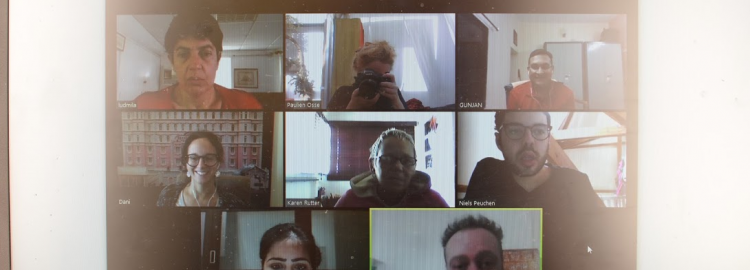
Special COVID-19 webinar by GLO Southeast Asia LeadNiaz Asadullah on the human capital crisis caused by the pandemic in Bangladesh. Professor Asadullah will share his preliminary findings from a nationwide survey conducted in collaboration with the Brac Institute of Governance and Development.
COVID-19, Schooling and Learning in Bangladesh to be held on Thursday, June 25, 2020, from 3:00-4:30 pm (Bangladesh Standard Time). Please register in advance for this webinar: https://us02web.zoom.us/webinar/register/WN_ME2TqSIxRaah-ptfgHtFQg Please register early, participation slots are limited! You can also participate through our Facebook page
We would like to invite you to join the webinar where we will share the findings from our rapid research on
“COVID-19, Schooling and Learning: Study on Older Primary & Secondary Students in Bangladesh”
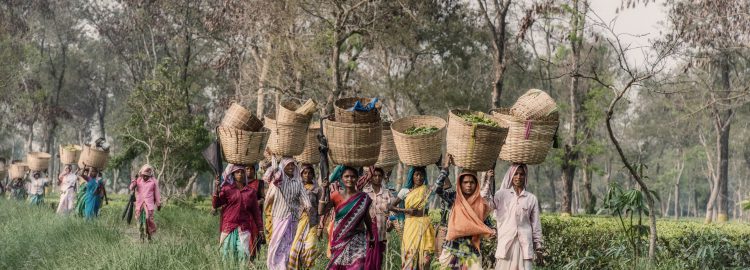
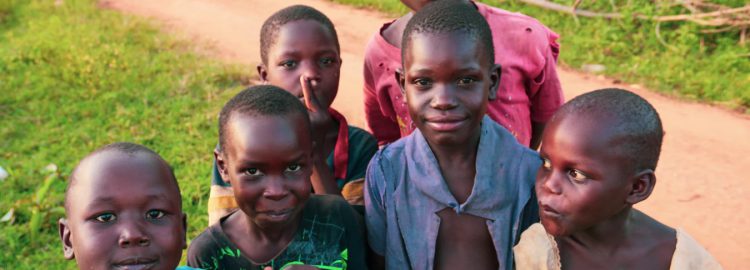
The education system in Bangladesh has always struggled to provide quality education to nearly 40 million children enrolled in schools. The ongoing COVID-19 pandemic has exacerbated this learning crisis as all educational institutions across the country have been closed for over two months with no immediate plans for reopening. Yet this pressing concern has received little national attention.
In our attempt to shed light on the issue of our future generation during the pandemic, we have conducted a nationwide phone survey of about 4,700 households using existing survey frame to document the disruption to learning activities and time allocation caused by the pandemic and to inform policy-makers on the effectiveness of their technology-driven initiatives.
In the webinar, our researcher Dr Niaz Asadullah, Professor of Economics, University of Malaya, will present the key findings of the study. Followed by the presentation, there will be a panel discussion and a Q&A session open to the participants.
A new GLO Discussion Paper determines the factors that could increase happiness in New Zealand during the pandemic to ensure rapid restoration of levels before the Covid-19 shock. Results show that the country is in an unhappy state which is lasting longer than predicted.
The Global Labor Organization (GLO) is an independent, non-partisan and non-governmental organization that functions as an international network and virtual platform to stimulate global research, debate and collaboration.
Author Abstract: This paper estimates Markov switching models with daily happiness (GNH) data from New Zealand for a period inclusive of the Covid-19 global health pandemic. This helps us understand the dynamics of happiness due to an external shock and provides valuable information about its future evolution. Furthermore, we determine the probabilities to transition between states of happiness and estimate the duration in these states. In addition, as maximizing happiness is a policy priority, we determine the factors that increase happiness, especially during the pandemic to ensure rapid restoration of happiness levels post the Covid-19 shock. The results show New Zealand is currently in an unhappy state which is lasting longer than predicted. To increase the happiness levels to pre-pandemic levels, policymakers could allow free mobility, create economic stimuli, and allow international travel between New Zealand and low-risk Covid-19 countries.
A new GLO Discussion Paper reveals that in the Greek economic crisis the relative position of households with unemployed members deteriorated sharply, while their contribution to aggregate poverty skyrocketed.
The Global Labor Organization (GLO) is an independent, non-partisan and non-governmental organization that functions as an international network and virtual platform to stimulate global research, debate and collaboration.
Author Abstract: The Greek economic crisis resulted in a decline in household disposable income by more than 40%. Even though all population groups lost income in absolute terms, some were substantially more severely hit by the crisis. The paper examines the effect of the crisis on the population shares, the mean incomes and the level of poverty of various population groups using SILC data for the period 2007-2016. The population is partitioned according to four criteria: socioeconomic group of the household head, presence of unemployed individuals in the household, age of the population member and household type. When “anchored” poverty lines and distribution-sensitive poverty indices are employed the level of poverty rises to incredibly high levels. When the poverty lines used are “relative”, the poverty rate does not change substantially but when distribution-sensitive indices are used the increase in poverty is very substantial. The most interesting results are related to the changes in the structure of poverty. The crisis was associated with a very substantial increase in unemployment. Unemployment protection in Greece was inadequate while there was no “benefit of last resort”. As a result, the relative position of households with unemployed members (and, especially, with unemployed heads) deteriorated sharply, while their contribution to aggregate poverty skyrocketed. Unlike what is often claimed in the Greek public discourse, the relative position of pensioner-headed households improved, although they also experienced a considerable decline in their living standards.
Completing a very successfulfirst cohort 2019-20, Global Labor Organization (GLO) invites interested young scholars to apply for participation in the
2020-21 GLO Virtual Young Scholars Program (GLO VirtYS)
Application deadline: August 20, 2020, 5 pm GMT PDF of this call
About
GLO: The Global Labor Organization
(GLO) is a global, independent, non-partisan and
non-governmental organization that has no institutional position. The GLO
functions as an international network and
virtual platform for researchers, policy makers, practitioners
and the general public interested in scientific research and its
policy and societal implications on global labor markets,
demographic challenges and human resources. These topics are defined broadly in
line with its Mission to embrace the global diversity of labor markets,
institutions, and policy challenges, covering advanced economies as well as
transition and less developed countries.
Program’s
Goal: In the spirit of
the GLO Mission, the GLO VirtYS program’s goal is to contribute to the
development of the future generation of researchers, who are committed to the creation
of policy-relevant research, are well equipped to work in collaboration with
policy makers and other stakeholders, and adhere to the highest standards of
academic integrity. This goal is achieved through the process of working on a
specific research paper within the duration of the program, which is 9 months.
Program’s
Advisory Board:
Jan van Ours, Professor of Applied Economics, Erasmus School of Economics Rotterdam, Netherlands, & Professorial Fellow, University of Melbourne, Australia
Marco Vivarelli, Professor at the Università Cattolica del Sacro Cuore in Milano and Director of the Department of Economic Policy
Le Wang, Chong K. Liew Chair and Professor & President’s Associates Presidential Professor, University of Oklahoma, USA
Klaus F. Zimmermann, Professor Emeritus, Bonn University, UNU-MERIT & President of GLO
GLO VirtYS Program Director:
Dr Olena Nizalova, Senior Research Fellow (Associate Professor) in Health Economics at the University of Kent and Director of the Q-StepProgram.
Program’s
Activities:
Virtual kick-off meeting of all the participants and Thematic Cluster advisors, who will be appointed by the participating Cluster leads to match closely participants’ research interests.
One-to-one activities with the Thematic Cluster Advisor will be agreed upon at the beginning of the scholarship period in an Individual Research Plan. These activities at a minimum shall include 2-3 virtual consultations, 1 review round of the completed research work and a discussion of the amendments (if needed) to follow up.
Provide a virtual platform for the GLO VirtYS program participants to present their findings and receive feedback from their peers and the GLO wider community.
The scholarship will conclude in June 2021, when the GLO Management Board will make a decision on whether to extend an invitation to the graduate of the GLO Virtual Scholar Program to join the organization as a GLO Fellow, based on the recommendation from their Thematic Cluster Advisors and evaluation of the GLO VirtYS Advisory Board.
Research
proposals are invited within one of the following GLO thematic clusters:
Involved: GLO Cluster Leads& the GLO VirtYS Program Director
Nick Drydakis
Almas Heshmati
Milena Nikolova
Olena Nizalova
Francesco Pastore
Kompal Sinha
Marco Vivarelli
Klaus F. Zimmermann
Benefits
to the GLO VYSP Scholars:
All GLO VirtYS program participants will be appointed GLO Affiliates, if they are not already, and receive a GLO Bio page.
GLO VirtYS program participants will be listed with pictures on the glabor.org website of the program.
Feedback on their research from leading researchers in the area of their interest.
Networking opportunities with researchers from other countries within the same area and beyond.
(Priority) access to GLO activities.
Interactions with the scholars of the cohort, program’s alumni, and the future cohorts.
Opportunity to promote own research via GLO channels.
Completed research paper ready for submission to the GLO Discussion Paper series.
Possibility of promotion to GLO Fellow after exceptional performance.
Eligibility
criteria:
Applicant must be either currently enrolled in a doctoral program or be within 2 years after graduation as evidenced by the letter from the degree awarding institution or a degree certificate.
Applicant must be at an advanced stage of the analysis of a specific research question within the corresponding GLO Thematic Cluster to which he/she is applying as evidenced by the submitted draft.
Applicant must be supported by a letter of endorsement from either one of the GLO Fellows or from the administration of one of the GLO supporting institutions.
The GLO Virtual Young Scholars will be selected by a Scientific Selection Committee consisting of the GLO VirtYS Program Director, GLO thematic cluster leads participating in the current year, and a member of the GLO Management Board.
The results of selection of the GLO VirtYS program will be posted on the GLO site www.glabor.org by September 20, 2020. Scholars will be notified via email. In the 2020-21 academic year we expect to select 5-7 scholars.
The final research paper should be submitted by June 30th, by 5 pm GMT.
Upon completion of the program and based on the quality of the produced research paper, some of the GLO VirtYS program graduates may be invited to become GLO Fellows and their paper accepted as a GLO Discussion Paper.
Evaluation
criteria for applications:
Research excellence (50 points)
Policy relevance of the research question in a local and/or global context (25 points).
Potential for capacity development (25 points; preference will be given to the applicants for which the GLO Young Scholars Program can bring the highest capacity development, compared to what the applicant would have achieved without being a GLO Young Scholar)
Application procedure:
Many
applicants apply in the last days before the submission deadline. To avoid last
minute problems, we ask applicants to
apply in advance. Applications received after the deadline or applications that
do not meet the requirements set out below will not be accepted.
To apply
please complete the online application form with three attachments:
1. Research proposal (maximum 2 pages including references, single-spaced, font size 12) should include the following information:
Formulation of the problem/ research question.
Research methodology (data and empirical approach).
(Potential) Practical/Policy implications.
Reference list.
2. 2-page CV
3. Transcript from the doctoral program or doctoral degree certificate
4. Letter of endorsement for the candidate and the research proposal from either one of the GLO fellows or from the administration of one of the GLO supporting institutions reflecting on the potential of the candidate to benefit from the Program and the merits of the research proposal.
A new GLO Discussion Paper finds for Canada that remote work on a large scale does not lead to family violence.
The Global Labor Organization (GLO) is an independent, non-partisan and non-governmental organization that functions as an international network and virtual platform to stimulate global research, debate and collaboration.
Author Abstract: We study the impacts of COVID-19 on domestic violence and family stress. Our empirical analysis relies on a unique online survey, the Canadian Perspective Survey Series, which allows us to investigate the mechanisms through which COVID-19 may affect family stress and domestic violence. We find no evidence that changes in work arrangements are related to self-reported levels of family stress and violence in the home due to confinement, suggesting that remote work on a large scale does not lead to family violence. In contrast, we find that the inability to meet financial obligations and maintaining social ties significantly increase reported family stress and domestic violence. These findings are consistent with two alternative mechanisms: social isolation and decreased bargaining power for women. Last, we provide suggestive evidence that receiving financial relief does not mitigate the effect of financial worries on domestic violence and family stress. We conclude that targeted programs supporting victims of domestic violence may be more effective.
A new GLO Discussion Paper reviews key contributions to econometric analysis of human fertility in the last 20 years.
The Global Labor Organization (GLO) is an independent, non-partisan and non-governmental organization that functions as an international network and virtual platform to stimulate global research, debate and collaboration.
Author Abstract: This paper reviews some key contributions to econometric analysis of human fertility in the last 20 years, with special focus on discussion of prevailing econometric modeling strategies. We focus on the literature that highlights the role of the key drivers of the birth outcomes, including age at entry into motherhood, the number of children, and the time between births. Our overall approach is to highlight the use of single equation reduced form modelling, which has important advantages but has the limitation of typically being unable to shed light on detailed causal mechanisms through which exogenous factors such as birth control and infant mortality, and policy variables such as child allowances and tax incentives, impact fertility. Structural models that embed causal mechanisms explicitly are better suited for this objective. We start with a description of the subject matter, including a brief review of existing theories of fertility behavior and a detailed discussion of the sources of data that are available to the analyst. At this point we stress the intrinsic dynamic nature of fertility decisions and how such dynamics create data with empirical features that pose important challenges for modelling. Once the nature of the problem and the characteristics of the data are spelled out, we proceed to review the different econometric approaches that have been used for modelling fertility outcomes with cross-section and panel data.
On June 20 is World Refugee Day declared by the United Nations to raise awareness COVID-19 has replaced the refugee topic from the top ranks of the World’s challenges, but it is still there. UNHCR has published last Thursday its Global Report 2019 on the world-wide refugee situation. UNHCR Figures at a Glance:
This was all before COVID-19. The pandemic has made the situation much more dramatic, in many ways. Researchers can contribute in the long-run through studies on the sources of conflict, on the way to successfully integrate refugees into host and new home countries, and helping to develop proper policy responses.
Refugee workers start low and adjust slowly to the wages of comparable natives. The innovative approach in this study using unique Swedish employer-employee data shows that the observed wage gap between established refugees and comparable natives is mainly caused by occupational sorting into cognitive and manual tasks. Within occupations, it can be largely explained by differences in work experience. The identification strategy relies on a control group of matched natives with the same characteristics as the refugees,using panel data for 2003–2013 to capture unobserved heterogeneity.
Household consumption surveys do not typically cover refugee populations, and poverty estimates for refugees are rare. This paper tests the performance of cross-survey imputation methods to estimate poverty for a sample of refugees in Chad, by combining United Nations High Commissioner for Refugees survey and administrative data. The proposed method offers poverty estimates based on administrative data that fall within a 95 percent margin of poverty estimates based on survey consumption data. This result is robust to different poverty lines, sets of regressors, and modeling assumptions of the error term. The method outperforms common targeting methods, such as proxy means tests and the targeting method currently used by humanitarian organizations in Chad.
A new GLO Discussion Paper finds that existing cross-language variations among migrants from the same countries of originaffected human capital accumulation of second generation migrantsin the US.
The Global Labor Organization (GLO) is an independent, non-partisan and non-governmental organization that functions as an international network and virtual platform to stimulate global research, debate and collaboration.
Author Abstract: This research establishes empirically that existing cross-language variations in the structure of the future tense and the presence of grammatical gender affected human capital accumulation. Exploiting variations in the dominant languages among migrants from the same countries of origin, the study explores the impact of these traits on the educational attainment of second generation migrants in the US. The results suggest that college attendance among individuals with identical ancestry is (i) higher if the dominating language at home has a periphrastic future tense, and (ii) lower for women exposed predominantly to sex-based grammatical gender.
A new GLO Discussion Paper finds for the US that firms statistically discriminate workers based on race when employer learning is asymmetric.
The Global Labor Organization (GLO) is an independent, non-partisan and non-governmental organization that functions as an international network and virtual platform to stimulate global research, debate and collaboration.
Author Abstract: We test if firms statistically discriminate workers based on race when employer learning is asymmetric. Using data from the NLSY79, we find evidence of asymmetric employer learning. In addition, employers statistically discriminate against non-college educated black workers at time of hiring. We also find that employers directly observe most of the productivity of college graduates at hiring and learn very little over time about these workers.
A new GLO Discussion Paper for Russia suggests that the measured equivalence scale elasticity is sensitive to household demographic composition. Adjustments result in lower estimates of poverty lines.
The Global Labor Organization (GLO) is an independent, non-partisan and non-governmental organization that functions as an international network and virtual platform to stimulate global research, debate and collaboration.
Author Abstract: Hardly any literature exists on the relationship between equivalence scales and poverty dynamics for transitional countries. We offer a new study on the impacts of equivalence scale adjustments on poverty dynamics in the Russian Federation, using equivalence scales constructed from subjective wealth and more than 20 waves of household panel survey data from the Russia Longitudinal Monitoring Survey. The analysis suggests that the equivalence scale elasticity is sensitive to household demographic composition. The adjustments for the equivalence of scales result in lower estimates of poverty lines. We decompose poverty into chronic and transient components and find that chronic poverty is positively related to the adult scale parameter. However, chronic poverty is less sensitive to the child scale factor compared with the adult scale factor. Interestingly, the direction of income mobility might change depending on the specific scale parameters that are employed. The results are robust to different measures of chronic poverty, income expectations, reference groups, functional forms, and various other specifications.
Greece has performed very well in the management of the COVID-19 crisis but faces now a huge economic downturn. What are the elements of success, the challenges ahead and the role of scientific experts? Some insights from an interview with top policy advisor Panos Tsakloglou.
Some core messages of the interview:
Greece has done well since the government followed the advice of epidemiologists and the population respected the requested rules.
Non-essential traveling to the Greek islands was forbidden and hence very few cases of COVID-19 infections were reported.
Trust in was a crucial factor of success.
There were few infections recorded in refugee camps and settlements : They were dealt with swiftly and the authorities tried to create a sanitary zone.
Greece will experience the strongest negative economic impact from the pandemic among all EU countries since it relies excessively on activities that particular sensitive in the current crisis.
The country soon expects expert proposals for a new growth plan of the economy and the reforms necessary for its implementation.
Greece lacks behind in Europe in the development of the digital economy, but has made progress in the crisis.
The Greek lesson for the government: (i) listening to the experts, (ii) taking swift and early action, and (iii) convincing the population about the necessity of the actions taken.
The Greek government is prepared to listen to expert opinion.
GLO Fellow Panos Tsakloglou is Professor at the Athens University of Economics and Business. He is a Research Fellow of IZA and the Hellenic Observatory of LSE. During the period 2012-2014 he was Chairman of the Greek Government’s Council of Economic Advisers.
Middle photo by Mika Baumeister on Unsplash
Interview
GLO: How has Greece outperformed most of Europe in the handling of the coronavirus pandemic?
Panos Tsakloglou: It seems that this can be attributed to the combination of two factors. First, the government followed the advice of medical experts (epidemiologists) and imposed lockdown and social distancing measures quite early. Second, unlike the stereotype image of unruly Mediterraneans, the population respected the rules. As a result, in the middle of June Greece has just 18 deaths due to COVID-19 per million of population.
GLO: Are there natural advantages, like the many islands Greece has?
Panos Tsakloglou: Not really. Apart from the largest of these islands, most of them do not have the appropriate hospital facilities to deal with serious COVID-19 cases. However, in the framework of lockdown measures, non-essential traveling to the islands was forbidden and, therefore, very few cases of COVID-19 infections were reported.
GLO: Trust in the activities of the government is often seen as a crucial factor. What role did this play?
Panos Tsakloglou: This was a crucial factor, indeed. Several opinion polls taken since the outbreak of the pandemic record levels of trust to the government handling of the crisis that we have not seen in Greece for a very long period of time.
GLO: Migrants and refugee camps are sensitive elements of the challenge in many countries. What is the Greek strategy?
Panos Tsakloglou: With one major exception that, fortunately, did not result to loss of life, there were few infections recorded in refugee camps and settlements and they were dealt with swiftly. Early on, the authorities tried to create a sanitary zone to such facilities since an outbreak there could have had devastating consequences. On the contrary, the rate of infections of other vulnerable groups, such as Roma, was higher than the population average, although nowhere near the rates recorded in other European countries.
GLO: What role can Europe play for the Greek recovery?
Panos Tsakloglou: The timing of the pandemic was quite unfortunate for Greece, since it happened just when the economy was taking off after years of recession. Although so far Greece has handled the pandemic successfully, the OECD, the IMF and the European Commission predict that this year Greece will experience the strongest impact from the pandemic among all EU countries, since it relies excessively on activities that are likely to be severely hit in the current crisis (such as tourism and shipping) and, further, due to the high public debt the fiscal space of the country is limited. The inclusion of Greece in the Pandemic Emergency Purchase Programme of the ECB allowed Greece to access international capital markets in favorable terms, while if the Recovery Fund proposal of the European Commission is accepted, Greece will be one of the largest beneficiaries with plenty of resources available for investments that can facilitate a speedy recovery in the coming years.
GLO:How does Greece prepare for the economic revival of the country?
Panos Tsakloglou: Even before the eruption of the pandemic, the government had asked a group of economists led by Nobel laureate Sir Christopher Pissaridis to make proposals for a new growth plan of the economy and the reforms necessary for its implementation. Naturally, after the pandemic and in anticipation of the inflow of resources available through the Recovery Fund, the work of this committee had to be adjusted accordingly. Their proposals are expected in the coming weeks.
GLO:What role will the digital economy play for the future of Greece?
Panos Tsakloglou: According to the latest report of the European Commission only Bulgaria ranks below Greece in the EU in terms of digital skills of the population and progress in digital economy. However, during the pandemic there was rapid and substantial progress in several aspects of digital government – an area that Greece’s record is abysmal. The government has stated on many occasions that digital economy is among its priorities. If there is, indeed, a rapid digitization of the economy in the coming years we are likely to experience both an outburst of growth and an improvement in the citizens’ daily lives.
GLO:What can Europe learn from Greece?
Panos Tsakloglou: I think that Greece’s handling of the pandemic was one of the few nice surprises of the current crisis. Greece’s success was due to a combination of government’s (a) listening to the experts, (b) taking swift and early action, and, (c) convincing the population about the necessity of the actions taken. This is, probably, the lesson that Europe can learn from Greece.
GLO: Is the Greek government listening to scientists these days?
Panos Tsakloglou: The examples cited above about decisions on lockdown and social distancing measures based the advice of medical experts and the formation of the Pissaridis committee to draft a growth plan for the economy probably demonstrate that the Greek government is, indeed, prepared to listen to expert opinion. Nevertheless, we should not forget that in democracies decisions are taken by elected politician; not unelected experts.
************* With Panos Tsakloglou spoke Klaus F. Zimmermann, GLO President.
A new GLO Discussion Paper for the Vietnam finds that having a job is strongly and positively associated with better finance and more income and savings, as well as more optimism about the resilience of the economy in the COVID-19 crisis.
The Global Labor Organization (GLO) is an independent, non-partisan and non-governmental organization that functions as an international network and virtual platform to stimulate global research, debate and collaboration.
Author Abstract: The COVID-19 pandemic has resulted in income and employment loss in many countries around the world. Yet, hardly any formal study exists on household finance and future economic expectations in poorer countries. To fill in this gap, we implemented and analyzed a web-based rapid assessment survey immediately after the removal of lockdown measures in Vietnam, a lower-middle-income country that has received widespread recognition for its successful fight against the pandemic. We find that having a job is strongly and positively associated with better finance and more income and savings, as well as more optimism about the resilience of the economy. Further disaggregating employment into different types of jobs such as self-employment and jobs with permanent and short-term contracts, we find those with permanent job contracts to be more strongly associated with better assessments and fewer job worries. Individuals with good health and higher educational levels also have more positive evaluations for their current and future finance. These findings are relevant for post-outbreak economic policies, especially regarding the labor market in a developing country context.
A new GLO Discussion Paper for the UK finds that psychological distress and inequality of opportunity for it has substantially increased during the COVID-19 crisis.
The Global Labor Organization (GLO) is an independent, non-partisan and non-governmental organization that functions as an international network and virtual platform to stimulate global research, debate and collaboration.
Author Abstract: We use data from Wave 9 of UK Household Longitudinal Study (UKHLS) and the April 2020 Wave of the UKHLS COVID-19 survey to compare measures of ex ante inequality of opportunity (IOp) in psychological distress, as measured by the General Health Questionnaire (GHQ), before (Wave 9) and at the initial peak (April 2020) of the pandemic. Based on a Caseness measure, the prevalence of psychological distress increases from 18.3% to 28.3% between Wave 9 and April 2020. Also, there is a systematic increase in total inequality in the Likert GHQ-12 score. However, measures of IOp have not increased. Specifically, the proportion of total inequality attributed to circumstances has declined, consistent with the notion that the pandemic is, to some extent, a leveller as far as psychological distress is considered. A Shapley-Shorrocks decomposition analysis shows that in the pre-COVID-19 period the largest contributors to IOp were financial strain, employment status and housing conditions. In contrast, in April 2020, these factors decline in their shares and age and gender now account for a larger share. The contribution of working in an industry related to the COVID-19 response plays a small role at Wave 9, but more than triples its share in April 2020. Household composition and parental occupation also increase their shares during the pandemic.
A new GLO Discussion Paper documents that immigrant inflow has reduced workplace accidents of Spanish workers.
The Global Labor Organization (GLO) is an independent, non-partisan and non-governmental organization that functions as an international network and virtual platform to stimulate global research, debate and collaboration.
Author Abstract: This paper examines the effect of immigration on workplace safety, a new and previously unexplored outcome in the literature. We use a novel administrative dataset of the universe of workplace accidents reported in Spain from 2003 to 2015 and follow an IV strategy based on the distribution of early migrants settlements across provinces. Our results show that the massive inflow of immigrants between 2003 and 2009 reduced the number of workplace accidents by 10,980 for native workers (7% of the overall reduction during that period). This is driven by Spanish-born workers shifting away from manual occupations to those involving more interpersonal interactions. Immigrant flows during the economic crisis (2010-2015) had no impact on natives’ workplace safety. The scarcity of jobs during that period could have prevented shifts between occupations. Finally, we find no effects of immigration on the workplace safety of immigrants. These results add a previously unexplored dimension to the immigration debate that should be taken into account when evaluating the costs and benefits of migration flows.
Featured image: Photo by Dawid Zawila on Unsplash.
A new GLO Discussion Paper studies the effect of historical slavery on the African American family structure. It reveals that female single headship among blacks is more likely to emerge in association not with slavery per se, but with slavery in sugar plantations, since the extreme demographic and social conditions prevailing in the latter have persistently affected family formation patterns.
The Global Labor Organization (GLO) is an independent, non-partisan and non-governmental organization that functions as an international network and virtual platform to stimulate global research, debate and collaboration.
Author Abstract: We empirically assess the effect of historical slavery on the African American family structure. Our hypothesis is that female single headship among blacks is more likely to emerge in association not with slavery per se, but with slavery in sugar plantations, since the extreme demographic and social conditions prevailing in the latter have persistently affected family formation patterns. By exploiting the exogenous variation in sugar suitability, we establish the following. In 1850, sugar suitability is indeed associated with extreme demographic outcomes within the slave population. Over the period 1880-1940, higher sugar suitability determines a higher likelihood of single female headship. The effect is driven by blacks and starts fading in 1920 in connection with the Great Migration. OLS estimates are complemented with a matching estimator and a fuzzy RDD. Over a linked sample between 1880 and 1930, we identify an even stronger intergenerational legacy of sugar planting for migrants. By 1990, the effect of sugar is replaced by that of slavery and the black share, consistent with the spread of its in uence through migration and intermarriage, and black incarceration emerges as a powerful mediator. By matching slaves’ ethnic origins with ethnographic data we rule out any in uence of African cultural traditions.
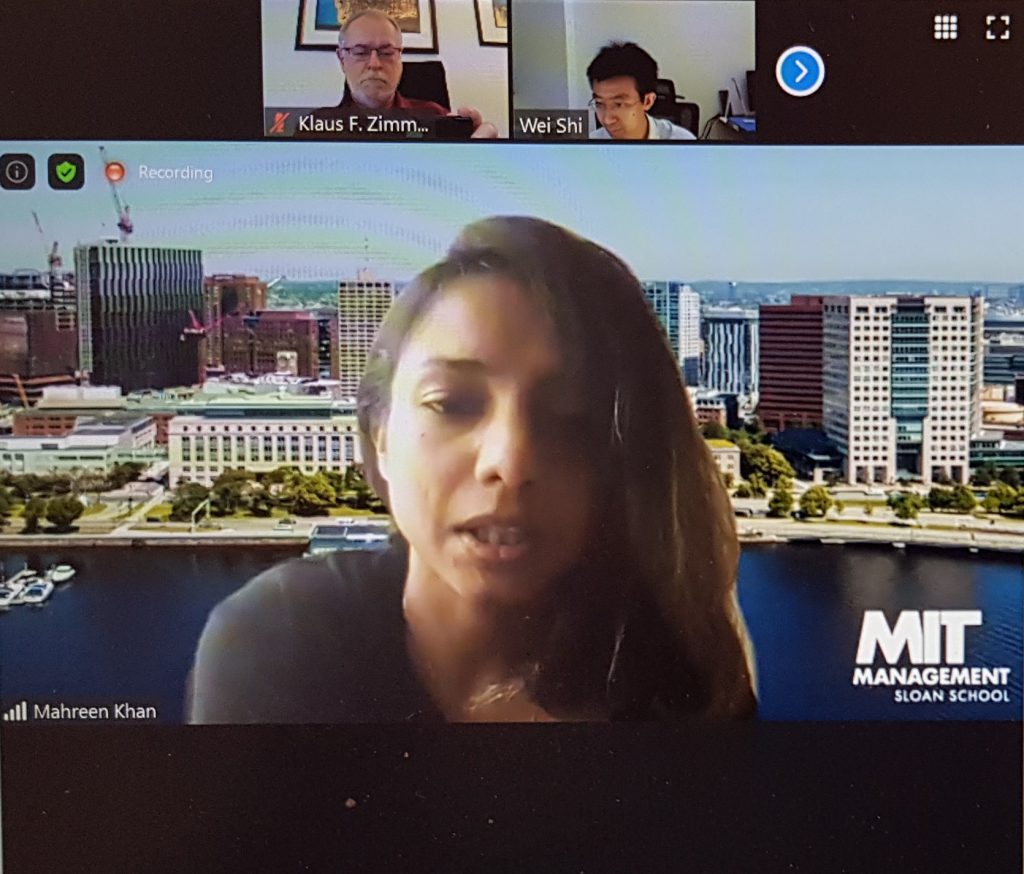
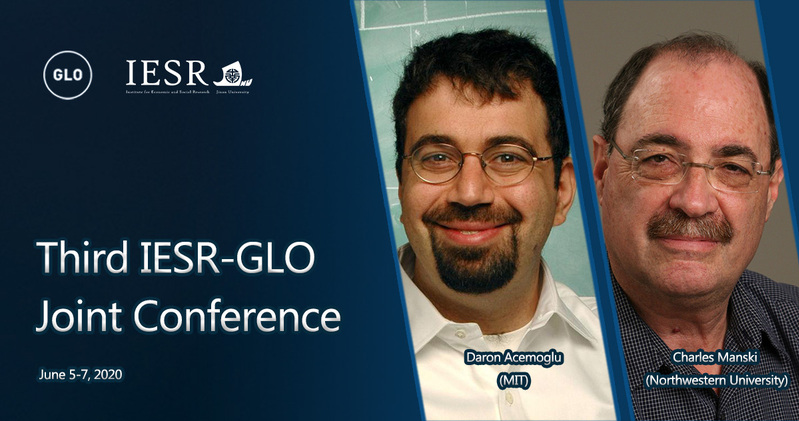
Third IESR-GLO Joint Conference. The Institute for Economic and Social Research (IESR) at Jinan University and the Global Labor Organization (GLO) were jointly organizing a virtual conference on economic issues related to the coronavirus (Covid-19) pandemic.
The conference was held from June 5 (Friday) to June 7 (Sunday) through Zoom Webinar. Full Program.Over 300 participants worldwide.
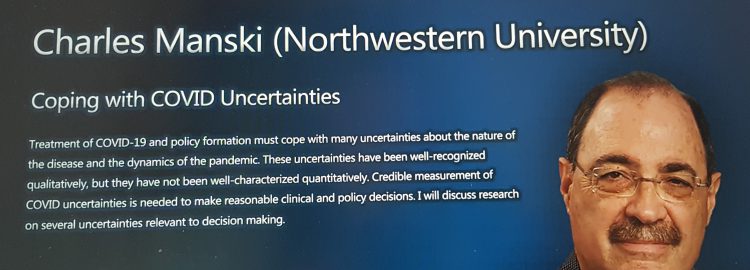
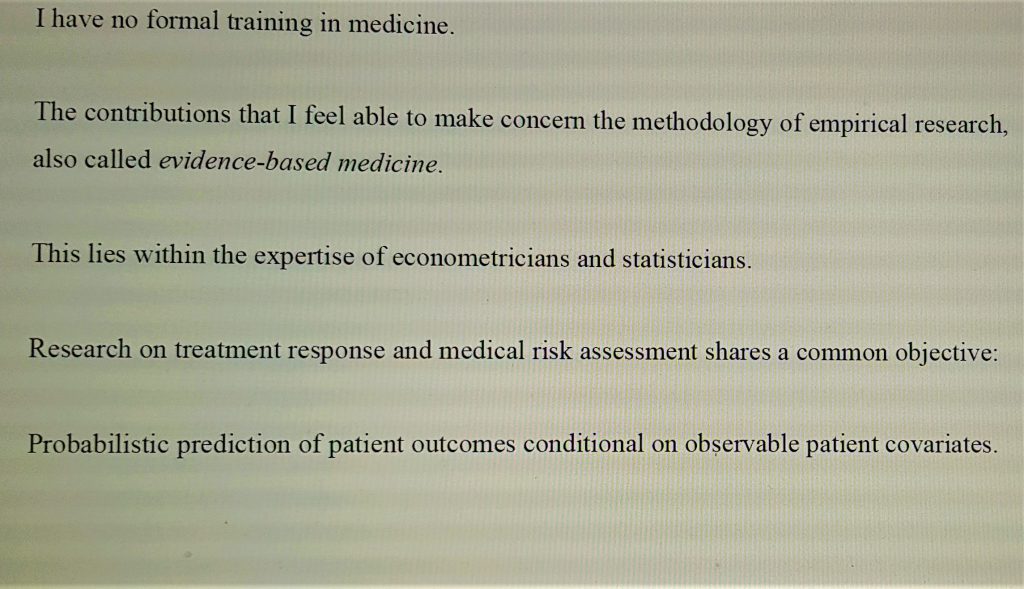
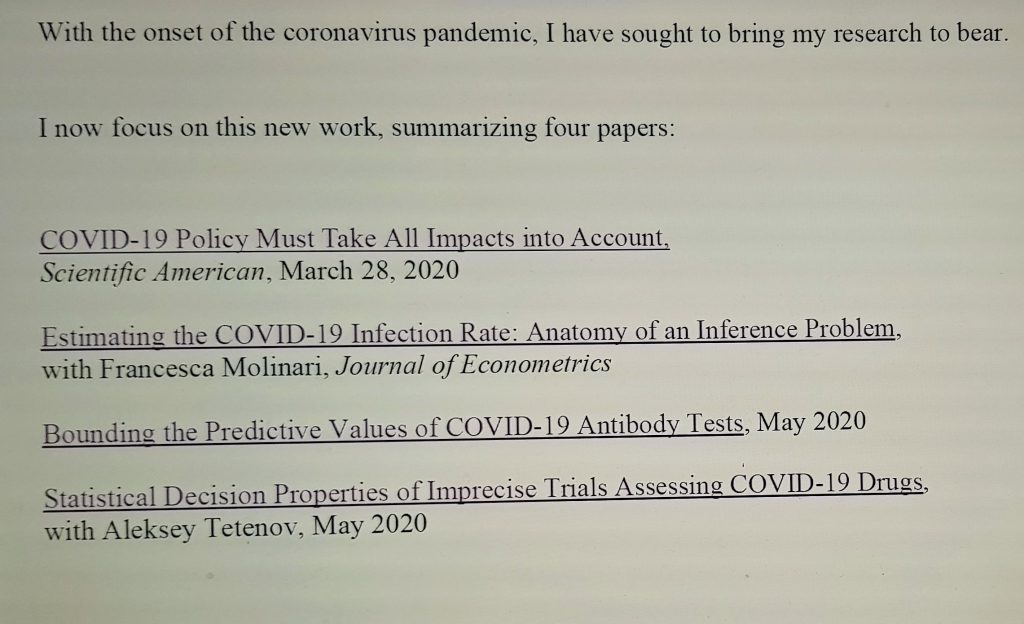
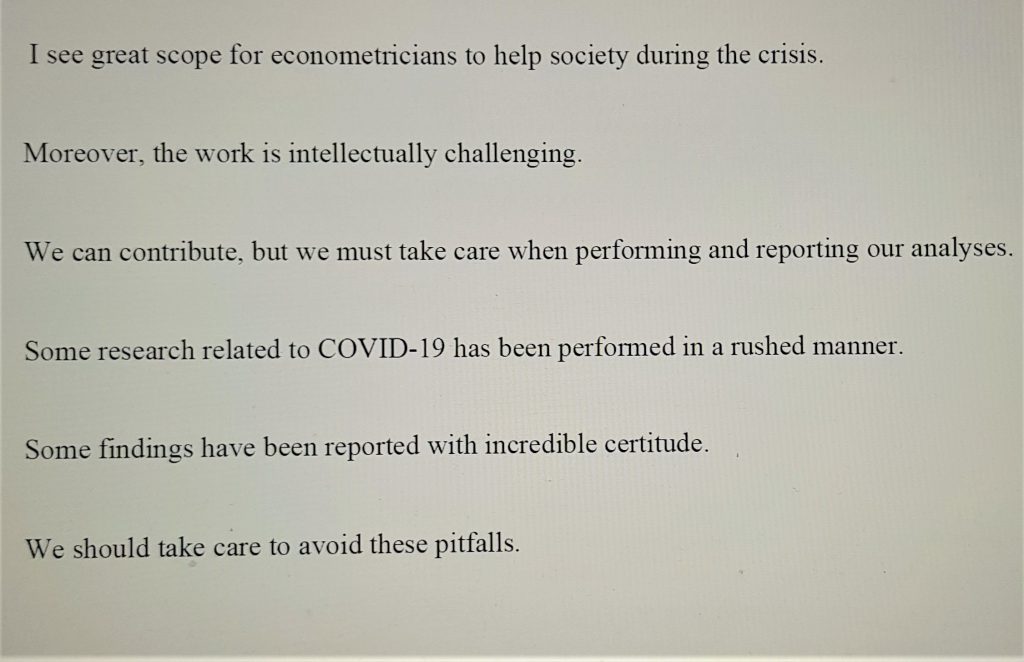
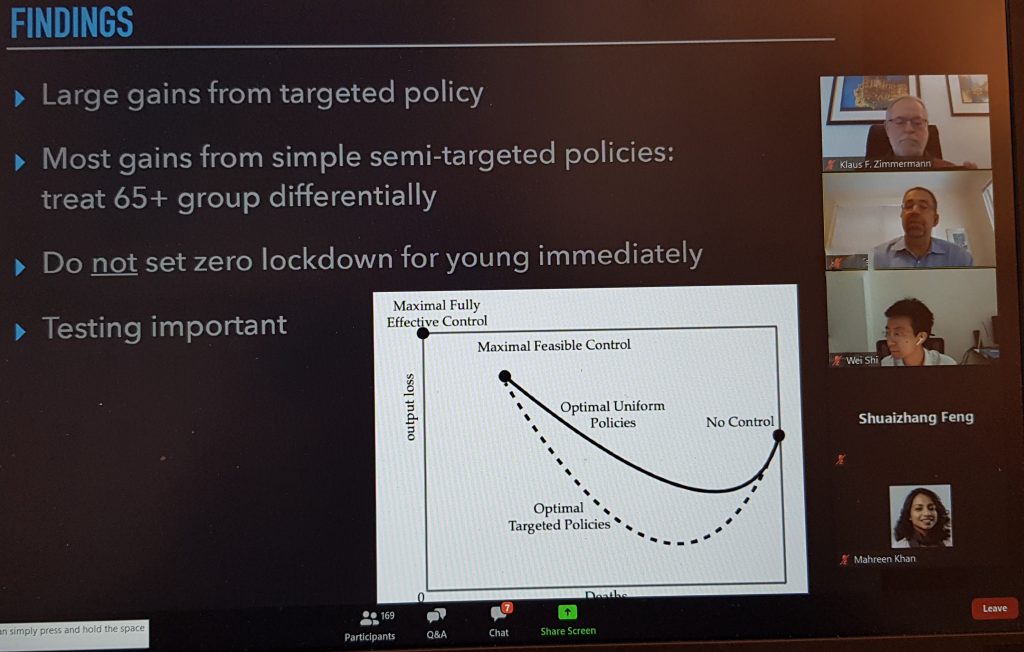
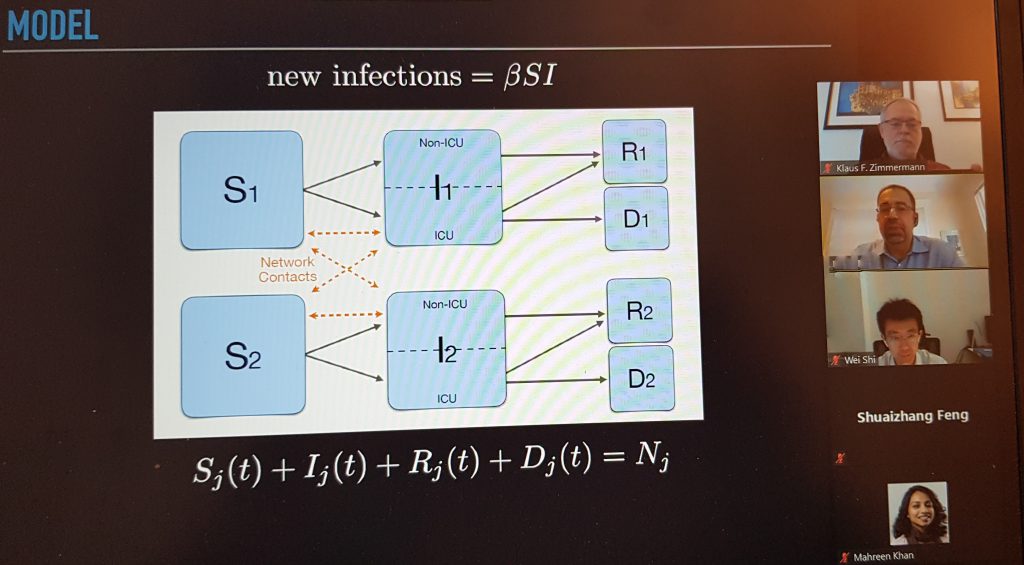
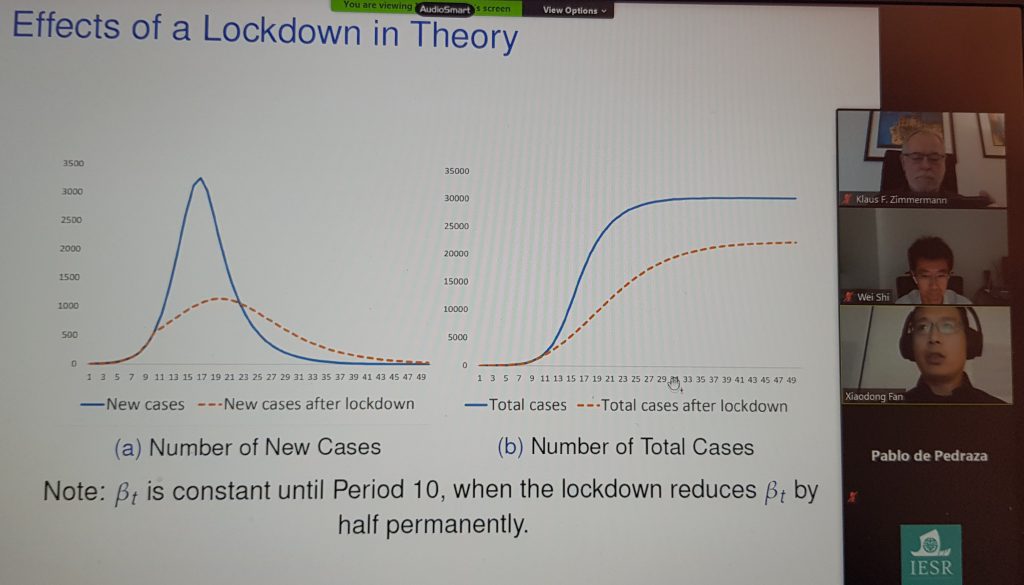
Keynote addresses by Daron Acemoglu (MIT) and Charles Manski (Northwestern University). Links lead to the videos of the keynote lectures. – June 5, 2020. Daron Acemoglu (MIT): A Multi-risk SIR Model with Optimally Targeted Lockdown Large gains from targeted policy! – June 6, 2020. Charles Manski (Northwestern University): Coping with COVID Uncertainties We must take care when performing!
The conference is supported by theJournal of Population Economics. The Journal welcomes submissions dealing with the demographic aspects of the coronavirus crisis.
A new GLO Discussion Paper using Italian data finds that workers employed in occupations entailing a large proportion of routine cognitive tasks (such as workers employed in service occupations as cashiers or call-center operators) are exposed to a relatively higher risk of becoming unemployed.
The Global Labor Organization (GLO) is an independent, non-partisan and non-governmental organization that functions as an international network and virtual platform to stimulate global research, debate and collaboration.
Featured image: Photo by Jose Antonio Gallego Vázquez on Unsplash
Author Abstract: Relying on a unique longitudinal integrated database supplying micro-level information on labor market transitions (concerning the 2011-2017 period) and occupation task characteristics (e.g. routine-task intensity), this paper provides fresh evidence of the determinants of unemployment risk in Italy. We find that workers employed in routine-intensive occupations (measured with the RTI proposed by Acemoglu and Autor, 2011) do not display – on average – higher unemployment risks than the rest of the workforce. However, on distinguishing between cognitive and manual tasks, it turns out that workers employed in occupations entailing a large proportion of routine cognitive tasks (such as workers employed in service occupations as cashiers or call-center operators) are in fact exposed to a relatively higher risk of becoming unemployed. By contrast, a rather lower risk seems to be faced by workers employed in occupations entailing a large proportion of routine-manual tasks. Finally, the distribution of unemployment risk and its relation with routine-task intensity varies significantly across sectors – with higher risk in manufacturing and construction – confirming the importance of industry-level economic, technological and institutional heterogeneities.
A new GLO Discussion Paper using unique Swedish employer-employee data shows that the observed wage gap between established refugees and comparable natives is mainly caused by occupational sorting into cognitive and manual tasks. Within occupations, it can be largely explained by differences in work experience.
The Global Labor Organization (GLO) is an independent, non-partisan and non-governmental organization that functions as an international network and virtual platform to stimulate global research, debate and collaboration.
GLO FellowsChristopher F. Baum, Hans Lööf & GLO President Klaus F. Zimmermann
Hans Lööf
Featured image: Photo by James Beheshti on Unsplash
Author Abstract: Refugee workers start low and adjust slowly to the wages of comparable natives. The innovative approach in this study using unique Swedish employer – employee data shows that the observed wage gap between established refugees and comparable natives is mainly caused by occupational sorting into cognitive and manual tasks. Within occupations, it can be largely explained by differences in work experience. The identification strategy relies on a control group of matched natives with the same characteristics as the refugees, using panel data for 2003–2013 to capture unobserved heterogeneity.
A new GLO Discussion Paper confirms that children cause unhappiness because of challenging family finances.
The Global Labor Organization (GLO) is an independent, non-partisan and non-governmental organization that functions as an international network and virtual platform to stimulate global research, debate and collaboration.
Author Abstract: The common finding of a zero or negative correlation between the presence of children and parental well-being continues to generate research interest. We here consider international data, including well over one million observations on Europeans from eleven years of Eurobarometer surveys, and in the first instance replicate this negative finding, both in the overall data and then for most different marital statuses. Children are expensive: controlling for financial difficulties turns our estimated child coefficients positive. We argue that difficulties paying the bills explains the pattern of existing results by parental education and income, and country income and social support. Last, we underline that not all children are the same, with stepchildren commonly having a more negative correlation than children from the current relationship.
A new GLO Discussion Paper confirms that cooking fuel choice has a statistically significant impact on under-five and neonatal mortality.
The Global Labor Organization (GLO) is an independent, non-partisan and non-governmental organization that functions as an international network and virtual platform to stimulate global research, debate and collaboration.
Author Abstract: Indoor air pollution (IAP)–predominantly from the use of solid fuel for cooking– is a global health threat, particularly for women and young children, and one of the leading causes of infant deaths worldwide in developing countries. We estimate the causal effect of cooking fuel choice on infant mortality in India, focusing on children under five years of age using pooled cross-sectional data from the National Family Health Survey (NFHS) over the period 1992–2016. To address the potential endogeneity in the relationship between fuel choice and mortality, we instrument for cooking fuel choice using a speed of change in forest cover and ownership status of agricultural land, which induce significant variations in fuel type. We find that cooking fuel choice has a statistically significant impact on under-five and neonatal mortality, raising the mortality risk by 4.9 percent. We also find that the past literature has overestimated the association between under-five mortality and polluting fuel use by about 0.6 percentage points or equivalently, 152,000 deaths per year nationally. Our result is robust to a set of alternative specifications with the inclusion of various controls and different estimation strategies.
A new GLO Discussion Paperfinds a positive effect of preschool on the cognitive development of children in Algeria.
The Global Labor Organization (GLO) is an independent, non-partisan and non-governmental organization that functions as an international network and virtual platform to stimulate global research, debate and collaboration.
Author Abstract: This paper investigates the impact of attending early childcare on the quality of parent–child interactions and children’s cognitive outcomes. My identification strategy exploits geographical differences in terms of exposure to the program, controlling for the period when the program is implemented across Algerian municipalities as an instrument for individual early childcare attendance. I estimate 2SLS regression analysis and employ a difference-in-difference strategy. I use two Multiple Indicator Cluster Surveys conducted in 2006 and 2012. I find a positive effect of preschool on the cognitive development of children. In turn, the effect is only significant for mother with negative effect on the interaction between mother and children, which means that there is a substitution effect, mother use this time to do something else. These findings call for future research on parents’, especially mother’s, time use when their children attend early childcare.
A new GLO Discussion Paper studies COVID-19 stay-at-home orders in the United States and their consequences for infections, deaths, employment, wages, tax revenues and hospital costs.
The Global Labor Organization (GLO) is an independent, non-partisan and non-governmental organization that functions as an international network and virtual platform to stimulate global research, debate and collaboration.
Author Abstract: In this paper, we examine the short-term consequences of COVID-19 and evaluate the impacts of stay-at-home orders on employment and wages in the United States. Guided by a pre-analysis plan, we document that COVID-19 increased the unemployment rate, decreased hours of work and labor force participation, especially for younger workers, non-white, not married and less-educated workers. We built four indexes (exposure to disease, proximity to coworkers, work remotely and critical workers) to study the impact of COVID-19. We find that workers that can work remotely are significantly less likely to have their labor market outcomes affected, while workers working in proximity to coworkers are more affected. The unemployment effects are significantly larger for states that implemented stay-at-home orders. Our estimates suggest that, as of early May, these policies increased unemployment by nearly 4 percentage points, but reduced COVID-19 cases by 186,600-311,000, and deaths by 17,851-23,325. We apply our estimates to compute lost income ($18.6-$21.4 billion), reduced government income tax revenues ($3.4-$5.5 billion), increased unemployment insurance benefit payments ($5-$5.8 billion) and reduced hospital costs ($0.7-$1.2 billion). Despite the jobs lost, age adjusted value of statistical life suggests that stay-at-home orders are cost effective.
Featured image: Photo-by-Charles-Deluvio-on-Unsplash
Third IESR-GLO Joint Conference. The Institute for Economic and Social Research (IESR) at Jinan University and the Global Labor Organization (GLO) are jointly organizing a virtual conference on economic issues related to the coronavirus (Covid-19) pandemic.
Keynote addresses by Daron Acemoglu (MIT) and Charles Manski (Northwestern University).
The conference is held from June 5 (Friday) to June 7 (Sunday) through Zoom Webinar.Examine the full program with all speakers and detailed time schedule under https://iesr.jnu.edu.cn/Program_23221/list.htm
Day 2; Saturday. June 6, 2020. Keynote: Charles Manski (Northwestern University) Introduced by Session Chair Yingyao Hu (Johns Hopkins University)
A selection of panelists: Bruce A. Weinberg, Sen Ma, Osea Giuntella, Jubo Jan, and Yubo Yan
The conference is supported by theJournal of Population Economics. The Journal welcomes submissions dealing with the demographic aspects of the coronavirus crisis.
A new GLO Discussion Paper analyzes the impact of both Covid-19 and the lockdown on happiness in South Africa which is significant.
The Global Labor Organization (GLO) is an independent, non-partisan and non-governmental organization that functions as an international network and virtual platform to stimulate global research, debate and collaboration.
Author Abstract: Amidst the rapid global spread of Covid-19, many governments enforced country-wide lockdowns, with likely severe well-being consequences. The actions by governments triggered a debate on whether the well-being and economic costs of a lockdown surpass the benefits perceived from a lower infection rate. In this regard, South Africa is an extreme case: enforcing very stringent lockdown regulations, while amid an economic crisis. We analyze the impact of both Covid-19 and the lockdown on happiness. We use the Gross National Happiness Index to compare the determinants of happiness before and after the Covid-19 lockdown regulations. Further, we estimate the likelihood of happiness levels in 2020, reaching the average levels in 2019 using two models; one predicting the likelihood after the lockdown was enforced and the other if no lockdown regulations were in place. The results shed light on happiness outcomes in a scenario of lockdown versus no lockdown.
Featured image: fusion-medical-animation-rnr8D3FNUNY-unsplash
A new GLO Discussion Paper finds that in China institutional trust has been an important factor influencing adequate preventive behavior and seeking formal medical care during the COVID-19 outbreak.
The Global Labor Organization (GLO) is an independent, non-partisan and non-governmental organization that functions as an international network and virtual platform to stimulate global research, debate and collaboration.
Author Abstract: This paper investigates the associations between institution trust and public response to the COVID-19 outbreak. An Internet-based, cross-sectional survey was administered on January 29, 2020 to the epicenter Hubei province, China. A total of 4,393 adults who ≥18 years of age and residing or working in the province of Hubei were included in the study. The majority of the participants expressed a higher level of trust in the information and preventive instructions provided by the central government than by the local government. Being under quarantine (adjusted odds ratio (OR) = 2.35, 95% confidence interval (CI) 1.80–3.08) and having a high institutional trust score (OR = 2.23, 95% CI 1.96–2.53) were both strong and significant determinants of higher preventive behavior scores. The majority of study participants (85.7%, n = 3,640) reported that they would seek hospital treatment if they suspected themselves to have been infected with COVID-19. Few of the participants from Wuhan (16.6%, n = 475) and those participants who were under quarantine (13.8%, n = 550) expressed an unwillingness to seek hospital treatment. Institutional trust is an important factor influencing adequate preventive behavior and seeking formal medical care during an outbreak.
A new GLO Discussion Paperfinds a U-shaped relationship between recession and financial developmentusing panel data of 129 countries for 1990-2010.
The Global Labor Organization (GLO) is an independent, non-partisan and non-governmental organization that functions as an international network and virtual platform to stimulate global research, debate and collaboration.
Author Abstract: This paper mainly examines the effect of financial development on the recession, while controlling for potential recession factors. Using panel data of 129 countries spanning 1990-2010, we implemented “Locally Weighted Scatterplot Smoothing”, “Local Linear” and “Iteratively Reweighted Least Squares” regression methods along with a Sasabuchi test to verify the inverse U-shape to estimate the extreme point for the non-linear specification. We mainly found a nonlinear and thus U-shaped relationship between recession and financial development with a threshold effect of 1.1528, which validate financial development recessive and expansionary real impacts. The financial development process presents an expansionary impact for countries with financial performance less than 1.1528, and countries with financial performance above the threshold of 1.1528 present a recessionary impact of financial development. Moreover, we found that trade openness contributes to increasing recession independently to the estimation method. Thus during economic crises of recession, policymakers should hold-on regional integration along with globalization doctrines. On the contrary, fuels for South Asia (SASIA) and Latin America and Caribbean (LAC) countries and financial openness for sub-Saharan Africa (SSA) countries impact negatively recessions; countries who manage their oil production in a good manner will also reduce the probability and impact of recessions, and appear to have an expansionary real impact only. Thus, to fight against recession, SASIA and LAC countries should well manage oil production and usage while SSA countries may manage their financial openness. Verifying the robustness permit us to confirm the baseline and extended model specification findings in terms of coefficients sign and significance; furthermore, to highlight SSA, SASIA and LAC as the order of continental/regional importance in increasing magnitude. Finally, the semiparametric regression shows that the results of the parametric part converge with the previous results in general, and bear out with illustration the functional form of the nonlinear relation between recession and financial development.
Third IESR-GLO Joint Conference. The Institute for Economic and Social Research (IESR) at Jinan University and the Global Labor Organization (GLO) are jointly organizing a virtual conference on economic issues related to the coronavirus (Covid-19) pandemic.
Keynote addresses by Daron Acemoglu (MIT) and Charles Manski (Northwestern University).
The conference is held from June 5 (Friday) to June 7 (Sunday) through Zoom Webinar.Examine the full program with all speakers and detailed time schedule under https://iesr.jnu.edu.cn/Program_23221/list.htm
The conference is supported by theJournal of Population Economics. The Journal welcomes submissions dealing with the demographic aspects of the coronavirus crisis.
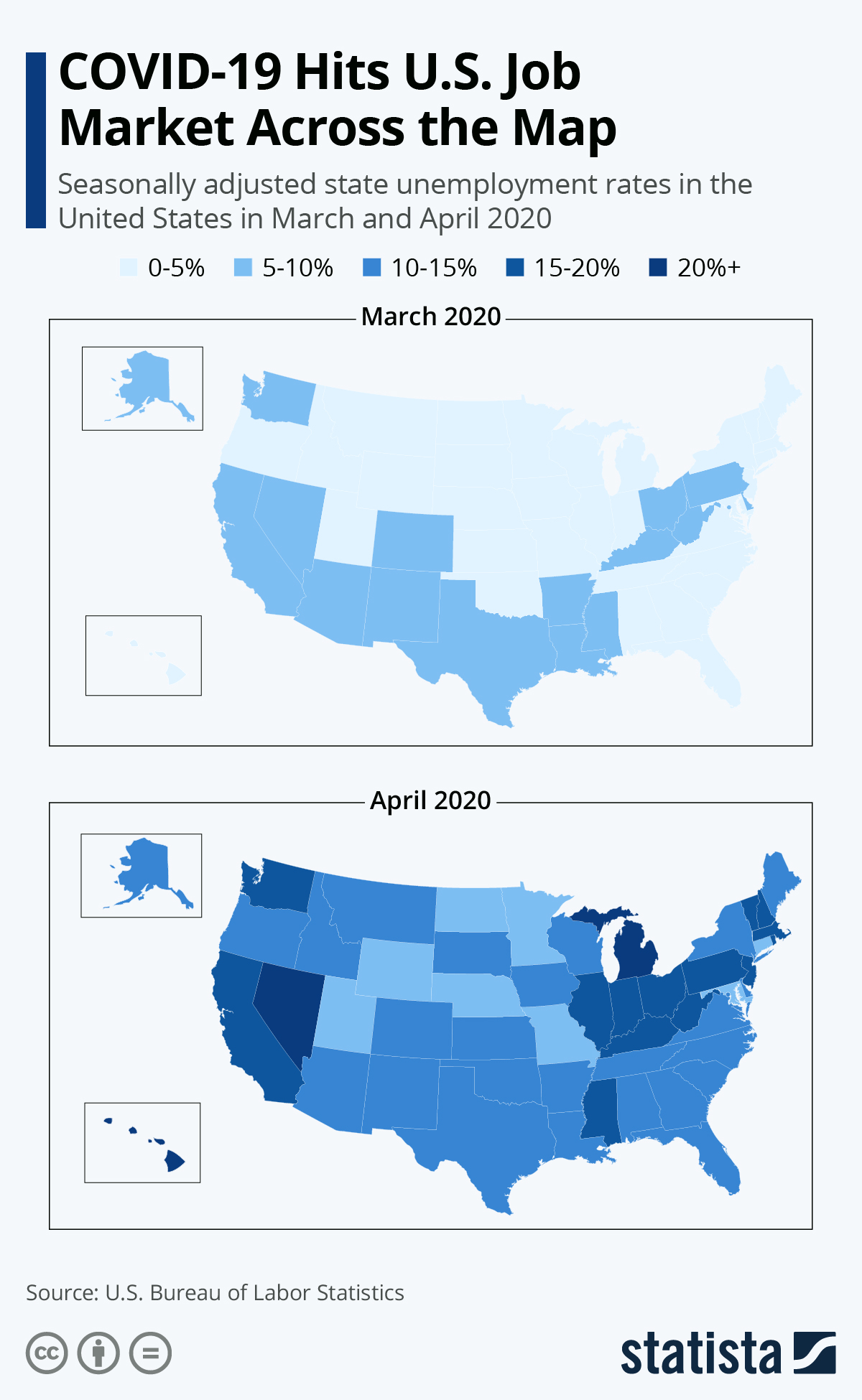
A new GLO Discussion Paper documents the employment losses in April 2020 across various groups using the U.S. Current Population Survey.Individuals with less education and lower family income experienced much larger employment losses than their more educated and higher income counterparts. Hispanics and blacks were more adversely affected than whites.
The Global Labor Organization (GLO) is an independent, non-partisan and non-governmental organization that functions as an international network and virtual platform to stimulate global research, debate and collaboration.
Author Abstract: COVID-19 substantially decreased employment, but the effects vary among demographic and socioeconomic groups. We document the employment losses in April 2020 across various groups using the U.S. Current Population Survey. The unemployment rate understates employment losses. We focus on the percentage of the civilian population that is employed and at work. Young persons experienced the largest employment losses. Individuals with less education and lower family income experienced much larger employment losses than their more educated and higher income counterparts. Hispanics and blacks were more adversely affected than whites.
Featured image: Photo-by-Jose-Antonio-Gallego-Vázquez-on-Unsplash.
The Journal of Population Economics welcomes submissions dealing with the demographic aspects of the Coronavirus Crisis.After fast refereeing, successful papers are published in the next available issue. An example:
A new GLO Discussion Paper documents the socioeconomic determinants of COVID-19 stay-at-home orders’ compliance in the U.S. using cell phone data.Stay-at-home orders reduce mobility by about 8-10 percentage points; high-trust counties decrease their mobility significantly more than low-trust counties post-lockdown.
The Global Labor Organization (GLO) is an independent, non-partisan and non-governmental organization that functions as an international network and virtual platform to stimulate global research, debate and collaboration.
Author Abstract: Better understanding whether and how communities respond to government decisions is crucial for policy makers and health officials in response to the COVID-19 pandemic. In this study, we document the socioeconomic determinants of COVID-19 stay-at-home orders’ compliance in the U.S. Using cell phone data measuring changes in average distance traveled and non- essential visitation, we find that: stay-at-home orders reduce mobility by about 8-10 percentage points; high-trust counties decrease their mobility significantly more than low-trust counties post-lockdown; and counties with relatively more self-declared democrats decrease significantly more their mobility. We also provide evidence that the estimated effect on compliance post-lockdown is especially large for trust in the press, and relatively smaller for trust in science, medicine or government.
Featured image: Photo-by-The-Coherent-Team-on-Unsplash
The Journal of Population Economics welcomes submissions dealing with the demographic aspects of the Coronavirus Crisis.After fast refereeing, successful papers are published in the next available issue. An example:
A new GLO Discussion Paper suggests that people’s mental health may have been severely affected by the lockdowns executed during the COVID-19 crisis.
The Global Labor Organization (GLO) is an independent, non-partisan and non-governmental organization that functions as an international network and virtual platform to stimulate global research, debate and collaboration.
Author Abstract: The COVID-19 pandemic has led many governments to implement lockdowns. While lockdowns may help to contain the spread of the virus, they may result in substantial damage to population well-being. We use Google Trends data to test whether the lockdowns implemented in Europe and America led to changes in well-being related topic search terms. Using differences-in-differences and a regression discontinuity design to evaluate the causal effects of lockdown, we find a substantial increase in the search intensity for boredom in Europe and the US. We also found a significant increase in searches for loneliness, worry and sadness, while searches for stress, suicide and divorce on the contrary fell. Our results suggest that people’s mental health may have been severely affected by the lockdown.
A related paper using Google Trends has studied the health and wellbeing consequences of the Great Recession:
The Journal of Population Economics welcomes submissions dealing with the demographic aspects of the Coronavirus Crisis.After fast refereeing, successful papers are published in the next available issue. An example:
A new GLO Discussion Paper studies the causal impact of maternal domestic violence on the nutritional status of young children.
The Global Labor Organization (GLO) is an independent, non-partisan and non-governmental organization that functions as an international network and virtual platform to stimulate global research, debate and collaboration.
Author Abstract: In this paper, we empirically estimate the causal impact of maternal domestic violence on the nutritional status of her children aged below five years. Using detailed dataset from the current and fourth round of the National Family Health Survey, we find robust evidence that violence experienced by mothers at the hands of her husband significantly increases the likelihood of her children being malnourished. When we focus on identifying the pathways through which domestic violence affect child health outcomes, we find that while domestic violence primarily affects child health via deterioration in maternal health, neglect of children in terms of inadequate provision of essential child care also seem to matter. The results from the heterogeneity analysis finally suggest that the detrimental effect of such violence is significantly less pronounced for children born to mothers who are currently working and are thus empowered.
Third IESR-GLO Joint Conference. The Institute for Economic and Social Research (IESR) at Jinan University and the Global Labor Organization (GLO) are jointly organizing a virtual conference on economic issues related to the coronavirus (Covid-19) pandemic. We provide a platform for economists to exchange ideas on improving responses to Covid-19 through a series of presentations of high-quality academic papers.
We are pleased to announce that the conference will feature keynote addresses by Daron Acemoglu (MIT) and Charles Manski (Northwestern University).
The conference will be held from June 5 (Friday) to June 7 (Sunday) through Zoom Webinar.Examine the full program with all speakers and detailed time schedule under https://iesr.jnu.edu.cn/Program_23221/list.htm
The conference is supported by theJournal of Population Economics. The Journal welcomes submissions dealing with the demographic aspects of the coronavirus crisis.
GLO Policy Brief No. 3 – Special theme: COVID-19 and policy implications
COVID-19 and the Consequences for Free Trade
by Ewa Björling, Andreas Hatzigeorgiou, Magnus Lodefalk & Fredrik Sjöholm
The response to the COVID-19 pandemic has disrupted global trade, investment and value chains. There is a risk that newly imposed barriers to international trade and mobility will become permanent. Research shows that veiled protectionism in the wake of the COVID-19 pandemic would be associated with greater risks and impede the economic recovery needed to avoid a new economic depression. We argue that failing to reboot free trade and to restore global value chains could aggravate an already difficult and delicate situation in regard to global economic development and poverty reduction. In order to reboot globalization, however, there needs to be a new approach. Simply going over old ground would be insufficient. ____________________
Ewa Björling
Andreas Hatzigeorgiou
Magnus Lodefalk
Fredrik Sjöholm
Ewa Björling, MD, Associate Professor of Virology, Sweden’s Minister for Trade 2007-2014.
Andreas Hatzigeorgiou, PhD, CEO of the Stockholm Chamber of Commerce.
Magnus Lodefalk, PhD, Associate Professor of Economics, Örebro University; Ratio Institute, Sweden; and Fellow of the Global Labor Organization.
Fredrik Sjöholm, PhD, Professor of International Economics, Lund University, and the Research Institute of Industrial Economics, Sweden.
What we should know
Restrictions and lockdowns to address the COVID-19 pandemic have disrupted international markets and global value chains. The travel and trade restrictions imposed by many countries are extreme and unusual both in nature and their implementation, wreaking havoc on global trade and investment flows. These restrictions have been adopted despite lack of evidence of their effectiveness. Some measures go against the guidance by the World Health Organization (WHO) and the World Trade Organization (WTO).
Protectionism and anti-globalization tides have been rising already before the COVID-19 pandemic, with Brexit and the China-U.S. trade war, as two examples. The policy response to the pandemic now risks to make the situation worse and constitutes a major disruption to global trade, investment and value chains. Early economic indicators suggest that this disruption is severely hurting growth and employment (Gopinath 2020).
Global poverty and inequality are grounds for justifiable concerns. Research suggests that failing to ensure free and predictable markets would be associated with significant risks to poverty and inequality.
Many policies to combat the coronavirus pandemic are actually causing both short-term problems for fighting the pandemic, as well as risks in regard to economic recovery, employment, development and poverty reduction over the medium and long term (Evenett 2020, Hoekman et al 2020, Zimmermann et al. 2020).
Difficulties in getting supplies of medical equipment have triggered an increased interest in de-globalizing value chains (Miroudot 2020). Already before the pandemic, companies and countries were considering a regionalization or even a nationalization of global value chains. This due to a more adverse trade policy environment, rising wages in manufacturing strongholds and technological advances, e.g., in automation.
The state of free trade in the wake of COVID-19
Unilaterally imposing high travel and trade barriers creates uncertainty for exporters and importers of goods and services, as well as for foreign investors. Research indicates that uncertainty about the stability of the rules of the game has a major negative impact on trade and investment, beyond the barriers imposed by the rules themselves (see, e.g., Handley and Limao 2013).
Temporary policies risk becoming permanent. They could become precedents for trade barriers and unilateralism in the future.
Asymmetric timing for when countries reopen and assymetric epidemiological strategies, pose real risks of triggering protectionism (Bown 2020). For example, when one country is back to full production and shipping, countries that still have not reopened their economies will likely face rising pressure to ‘protect’ domestic businesses.
Less-developed countries are more exposed to the risks associated with a failure to reboot and revitalize international trade, investment and value chains. They often face additional difficulties in handling the pandemic itself because of their relatively weaker health care systems. Existing and new trade barriers, such as export restrictions on medical products and food, will exacerbate this situation (Hoekman et al. 2020). Moreover, capital is now fleeing from poor to richer countries. The poorest and most debt-ridden countries can thus be hit twice in the form of the pandemic, and globalization in reverse.
A reboot and a new approach to globalization is needed
In the short term, a coordinated approach among the major economies on measures to address both the pandemic and its economic consequences are needed. A first step should be to tear down the border and trade barriers put up in the wake of the pandemic (Stellinger et al 2020).
In the short to medium term, it is necessary to formulate a strategy to reduce the risks from asymmetric timing in reopening and from differences in the fight against the pandemic.
A head-on measure would be to introduce a new free trade and investment agreement that abolish all tariffs and other barriers to trade and investment in pharmaceuticals, medical devices, and other equipment used to prevent or combat pandemics (Bown 2020b, Stellinger et al 2020).
Business leaders should act to encourage more resilient and sustainable global value chains, for example by having more suppliers, warehouses and using modern technology to monitor the chains and their resilience in real time (Miroudot 2020). This would be a win-win for the climate and for economic growth.
Governments must refrain from top-down attempts to address current and future difficulties of getting supplies by reshoring production of various goods and services (Stellinger et al. 2020). There is ample research on the harmfulness of import-substitution policies.
In the longer term, countries need to safeguard both global health and prosperity through common strategies and commitments, concrete measures for future crises and mechanisms for consultations. New and even more serious pandemics cannot be excluded. Countries will have to be able to act quickly, in a coordinated fashion and in a transparent way.
A new approach is needed to reboot and revitalize globalization, with the aim to design a system which reduces the risk of both pandemics and protectionism.
Mechanisms for applying and enforcing stringent requirements on countries to live up to standards and obligations put in place to minimize the risk of pandemics should be evaluated.
The concept of sustainability within the global trading system could be extended to encompass not only environmental and social aspects, but also aspects that more clearly impact public health and epidemiological risks. Increased cross-institutional links between bodies such as the WHO and the WTO should also be created to promote knowledge exchange and technical assistance.
The policy response to the COVID-19 pandemic has disrupted international markets. However, simply restoring free trade would mean ignoring massive human suffering caused by the COVID-19 pandemic. A new approach is needed to reboot and revitalize globalization, with the aim to design a system which reduces the risk of both pandemics and protectionism. Leaders and policymakers must make concerted efforts to: carefully lift restrictions on travel and trade while protecting health; commit to liberalize essential trade for fighting pandemics; address how to deal with calls for protecting domestic industries in the presence of asymmetric economic reopening; and sustain international yet resilient value chains. The aim should be to develop the international trading system to both reduce the risks of pandemics and protectionism. __________________
References
Bown, C. (2020a). “COVID-19 could bring down the trading system: How to stop protectionism from running amok.”, Foreign Affairs, May/June 2020.
Hoekman, B.M., Fiorini, M. and A. Yildirim (2020). “Export restrictions: a negative-sum policy response to the COVID-19 crisis.”, EUI RSCAS Working Paper 2020/23.
A new GLO Discussion Paper finds that individuals who sleep for at least 6 hours have improved mental health and are less likely to have suicidal thoughts.
The Global Labor Organization (GLO) is an independent, non-partisan and non-governmental organization that functions as an international network and virtual platform to stimulate global research, debate and collaboration.
Author Abstract: One in every six U.S. adults suffers from mental health problems. Mental illnesses, as measured in disability-adjusted life years, account for nearly 6.2% of the total disease burden worldwide and are considered to be one of the leading causes of death by injury, second only to road accidents. For the year 2010 alone, the estimated global direct and indirect economic cost of mental illnesses was reported to be US$2.5 trillion and this is expected to double by 2030. With a “20% increase in service coverage for severe mental disorder”, suggested by the World Health Assembly by the year 2020 for the WHO Member states, examining alternative behavioral changes to reduce mental health problems are worth examining. Using the detailed National Longitudinal Study of Adolescent Health dataset and applying a wide range of econometric techniques we study the causal impact of sleeping pattern on various subjective wellbeing indicators among young U.S. adults. We find robust evidence that individuals who sleep for at least 6 hours have improved mental health and are less likely to have suicidal thoughts. Additionally, our estimates highlight that those who sleep early have better mental health and reduced probability of having suicidal thoughts or going to a counselor. Waking up early is also found to result in better physical health and lower probability of having suicidal thoughts.
A new GLO Discussion Paper finds that intergroup contact reduces the prejudice of both Hindu and Muslim participants toward members of the other religion, but most of the effects disappear after six months.
The Global Labor Organization (GLO) is an independent, non-partisan and non-governmental organization that functions as an international network and virtual platform to stimulate global research, debate and collaboration.
Author Abstract: We study the potential for pleasant and cooperative contact to reduce preconceived prejudice between religious groups in the context of India. We randomly assign Hindus and Muslims into groups, in which they interact over the course of a week-long vocational training program. We find that intergroup contact reduces the prejudice of both Hindu and Muslim participants toward members of the other religion one week after the training program finished. While we find that most of the positive effect of intergroup contact on reducing prejudice dissipates after six months, the baseline results for Hindu attitudes toward Muslims are persistent.
Social distancing requirements associated with COVID-19 have led to school closures affecting more than 90 percent of the world’s learners: 1.5 billion children and young people. A new GLO Discussion Paper finds that the expected earnings loss resulting from this is equivalent to 15 percent of future gross domestic product.
The Global Labor Organization (GLO) is an independent, non-partisan and non-governmental organization that functions as an international network and virtual platform to stimulate global research, debate and collaboration.
Author Abstract: Social distancing requirements associated with COVID-19 (coronavirus) have led to school closures. In mid-April, the United Nations Educational, Scientific and Cultural Organization reported that 192 countries had closed all schools and universities, affecting more than 90 percent of the world’s learners: 1.5 billion children and young people. The closures are expected to reduce learning and will lead to future losses in earnings and labor productivity. Schooling attainment leads to increased earnings. What is not known is how much earnings will decline due to the school closures. Starting with the fact that every year of schooling equates to 8-9 percent in additional future earnings, this paper uses the number of months of education closures to estimate the loss in marginal future earnings. The findings show that the school closures reduce future earnings, and this loss is equivalent to 15 percent of future gross domestic product. The school closures will have a large and long-lasting impact on the earnings of future workers. It is also likely that students from low-income countries will be affected most. These estimates are conservative, assuming that the closures will end after four months and school quality will not suffer.
The Journal of Population Economics welcomes submissions dealing with the demographic aspects of the Coronavirus Crisis.After fast refereeing, successful papers are published in the next available issue. An example:
Why has Slovakia, a small open economy, done so well with low mortality rates in response to the crisis? And what to do now in face of an expected huge recession? Some insights from an interview with top policy advisor Martin Kahanec.
Some core messages of the interview:
Slovakia has done a tremendous job stopping the spreading of the virus, for instance the low mortality rate put the country at the very last place in the ranking in Europe.
The success can be traced back not so much to a rigorous, but to a fast and effective response.
But the Slovak economy is paying a huge price for the shutdowns in the country and among the trade partners.
Income maintenance schemes to strengthen the demand side and measures to preserve liquidity to grease the wheels of the economy are essential for a fast recovery.
My role in the advisory body of the Slovak government is to evaluate crisis management procedures and risks and assess possible measures and their effects.
GLO Fellow and GLO Cluster Lead “Labor Mobility” Martin Kahanec (Central European University and Bruegel) is also the Director of the Slovak Think Tank CELSI. He was just appointed by his government to the Slovak COVID-19 Economic Crisis Council. He reports on the Slovak experiences and the way to recovery.
Middle photo by Mika Baumeister on Unsplash
Interview
GLO:How well did Slovakia get through the COVID-19 crisis in terms of infections and death cases?
Martin Kahanec: Slovakia has done a tremendous job stopping the spreading of the virus. After more than 11 weeks since its first case of COVID-19, recorded on March 6, 2020, as of 25 May 2020 Slovakia had only 1,513 cases (of which only 163 active). Its 5 deaths per million inhabitants (28 in total) put Slovakia at the distant last place in the ranking of European countries by this mortality measure. For comparison, during the same period (eleven weeks into the pandemic) similarly-sized Ireland recorded more than 16 times as many cases and more than 55 times as many deaths and Denmark more than 7 times as many cases and nearly 20 times as many deaths. In spite of local outbursts in care homes and marginalized Roma settlements, the “first wave” of the pandemic in Slovakia was only a wavelet, as the country has to date recorded only 6 days with more than 50 new cases.
For the record, this result is not an issue of (the lack of) testing or isolation of the country: per million of inhabitants Slovakia has done fewer tests than Denmark, but more than Sweden, France, or the Netherlands, and just about as many as Finland. Slovakia is a small open economy with a very busy international transportation system, and the share of cross-border workers is the highest in Europe, at about 5.2% of its labor force – many of whom work in care homes and touristic resorts in Austria and northern Italy. Slovaks spend on average more nights abroad than Czechs, Italians, or Spaniards. Bratislava and Vienna are among the closest national capitals in the world, just about 65 km apart, Czechia is about the same distance from Bratislava, and Hungary, just like Austria, share borders with Bratislava city.
GLO: Is this success the result of a more rigorous Slovak response strategy?
Martin Kahanec: Perhaps not as much rigorous as enacted early on. Within ten days since the first case, Slovakia had shut down schools (in Bratislava within less than a week), introduced mandatory face masks in public transportation (first in Europe), closed non-essential shops, introduced border controls and mandatory quarantine for people returning from abroad (within a week), and shut down international air as well as bus and train passenger services. An important factor has been the impressive compliance of the general public, with face masks becoming the norm immediately, with politicians and television celebrities as well as news anchors leading by example and wearing facemasks on all occasions. Several mistakes have been made, but overall the system of measures has worked effectively.
GLO: What were the consequences in terms of GDP losses?
Martin Kahanec: Slovakia is paying a hefty price for the shutdowns in the country and among our trade partners. Primarily due to weakened foreign demand, in Q1 2020 Slovak GDP shrank by 3.9% y-o-y, which was one of the largest drops in Europe. Fitch has downgraded Slovakia from A+ to A on May 8. In April 2020 the unemployment rate increased by 1.38 percentage points y-o-y. On the other hand, the government is now gradually removing the restrictions, and the automotive sector, one of the backbones of the Slovak economy, is rebounding, with the four large car making plants in Slovakia (VW, PSA, Kia, Land Rover) gradually returning to their capacity.
GLO: What can be done to foster a fast recovery?
Martin Kahanec: During the trough of the crisis the government should help those who have been hit the hardest and lost their livelihoods. This moral obligation is strengthened by the fact that keeping especially the workers with the highest risks of spreading the virus at home reduces the negative externality their continued activity would inflict on the rest of the society and that, for this reason, some sectors were shut down directly by the government. For a swift recovery, as soon as the epidemiological situation permits, workers should be allowed to return to jobs and children to schools. Effective testing, tracing, and isolating of the cases is needed to avoid a possible second wave.
Income maintenance schemes to strengthen the demand side and measures to preserve liquidity to grease the wheels of the economy are essential. For Slovakia, as a small open economy, coordination with its key trading partners and, especially, at the European level is of key importance.
But it is important to understand that the crisis will make some products, services, or even sectors obsolete, and it will open new opportunities and avenues for innovative economic activities at the same time. Therefore, what will matter in the long run is how the measures adopted will facilitate the reallocation of resources to the most promising economic endeavors, rather than cementing them in those, which have no economic future.
GLO: You have been just appointed to the Slovak COVID-19 Economic Crisis Council; what is the role of this council?
Martin Kahanec: The Economic Crisis Council is a temporary advisory and coordinating body at the Ministry of Finance during the COVID-19 crisis. Its purpose is to evaluate crisis management procedures and risks for the development of the Slovak economy and assess possible measures and their effects. We elaborate on specific proposals in response to the economic crisis caused by the global COVID-19 pandemic in Slovakia.
************* With Martin Kahanec spoke Klaus F. Zimmermann, GLO President.
The Journal of Population Economics welcomes submissions dealing with the demographic aspects of the Coronavirus Crisis.After fast refereeing, successful papers are published in the next available issue. An example:
A new GLO Discussion Paper finds that the stronger the employment protection for regular contracts, the smaller is earnings mobility, although the effect is stronger among women of high reproductive age.
The Global Labor Organization (GLO) is an independent, non-partisan and non-governmental organization that functions as an international network and virtual platform to stimulate global research, debate and collaboration.
GLO Fellows Elena Bárcena-Martín & Salvador Pérez-Moreno
Author Abstract: This paper explores potential gendered effects of employment protection on earnings mobility, differentiating between upward and downward movements. We conduct a micro-macro mobility analysis for 23 European countries over the economic downturn period 2008–2014. The results confirm that, overall, the higher the protection for regular contracts, the lower the earnings mobility (either upwards or downwards) although the effect is stronger among women of high reproductive age. Nevertheless, protection for temporary employment seems to be only associated with reduced downward earnings mobility when considering transitions into and out of employment, with no gender differential effect.
A new GLO Discussion Paper finds that some teleworkers earn a wage premium; they also spend less time on commuting and grooming activities but more time on leisure and household production activities and more time with family on work-at-home days.
The Global Labor Organization (GLO) is an independent, non-partisan and non-governmental organization that functions as an international network and virtual platform to stimulate global research, debate and collaboration.
Author Abstract: Remote work is rapidly increasing in the United States. Using data on full-time wage and salary workers from the 2017–2018 American Time Use Survey Leave and Job Flexibilities Module, this paper examines the characteristics of teleworkers, the effects of teleworking on wages, and differences in time-use patterns between office and work-at-home workdays. We find that some teleworkers earn a wage premium, but it varies by occupation, gender, parental status, and teleworking intensity. Teleworkers also spend less time on commuting and grooming activities but more time on leisure and household production activities and more time with family on work-at-home days.
May 28, 2020: Don DeVoretz (*May 28, 1942; + March 14, 2020), a prominent migration researcher, GLO Fellow and long-term collaborator of the GLO President, Klaus F. Zimmermann, would have been 78 today. We bemoan and remember a great scientist and friend.
Don DeVoretz obtained his doctorate in Economics from the University of Wisconsin (Madison) in 1968. He was the co-director of the Centre of Excellence for the Study of Immigration (1996-2007) and Professor of Economics at Simon Fraser University (since 1968) and Professor Emeritus (since 2010).
Don DeVoretz has held visiting positions at Duke University, University of Ibadan (Nigeria), University of the Philippines, University of Wisconsin, and the Norwegian School of Economics.
Don DeVoretz was named the Willy Brandt Professor in 2004 at IMER, Malmö University.
Don DeVoretz, a friend of the late Julian Simon, gave the first Julian Simon Lecture at IZA in 2004.
Selective Publications
Don DeVoretz, Nahikari Irastorza. Economic Theories of Citizenship Ascension. In: Ayelet Shachar, Rainer Bauböck, Irene Bloemraad, Maarten Vink (Eds.), The Oxford Handbook of Citizenship. Oxford 2017.
Don J. DeVoretz. The Economics of Immigrant Citizenship Ascension. In: Amelie Constant, Klaus F. Zimmermann, International Handbook on the Economics of Migration, Edward Elgar 2013.
Klaus F. Zimmermann, Martin Kahanec, Amelie F. Constant, Don J. DeVoretz, Liliya Gataullina, Anzelika Zaiceva. Study on the Social and Labour Market Integration of Ethnic Minorities. Report for the High Level Advisory Group on Social and Labour Market Integration of Ethnic Minorities and the European Commission, Bonn 2008, IZA Research Report No. 16.
Don J. DeVoretz. Immigration Policy: Methods of Economic Assessment. International Migration Review, 2006, 40 (2), 390-418. (Based on the Julian Simon Lecture 2004.)
Don J. DeVoretz, Samuel A. Laryea. Canadian Immigration Experience: Any Lessons for Europe? In: : K.F. Zimmermann (ed.), European Migration – What Do We Know? Oxford University Press, 2005.
Don J. DeVoretz (Ed.). Diminishing Returns: The Economics of Canada’s Recent Immigration Policy. C. D. Howe Institute 1995.
Ather Akbari, Don J. DeVoretz. The Substitutability of Foreign Born Labour in Canadian Production: Circa 1980. Canadian Journal of Economics, 25(3): 604-614. 1992.
Interviews with Associates
Below are two interviews with close associates of Don DeVoretz:
GLO Fellow Ather Akbari is Professor of Economics at Saint Mary’s University in Canada and Chair of the Atlantic Research Group on Economics of Immigration, Aging and Diversity. He is a former PhD student of Devoretz.
GLO Fellow Pieter Bevelander is a Professor at Malmö University and Director of the Malmö Institute for Studies of Migration, Diversity and Welfare. He is a former research partner of Devoretz.
Ather Akbari
Pieter Bevelander
Interview with Ather Akbari
GLO: How was Don as a teacher and PhD supervisor?
Ather Akbari: I wrote my doctoral thesis, entitled “Some Economic Impacts of Immigrant Population in Canada” under Don’s supervision. At that time (1980s), there was a paucity of empirical research on Canadian immigration, but interest in impact of immigration was growing in public policy circles, as well as in general public. Under Don’s supervision, I really learned to communicate results of an academic research for both academic and nonacademic audience. Results of my thesis attracted a lot of attention in news media and in public policy circles and I owe it a lot to my training under Don.
GLO: What was your joint prominent paper in the Canadian Journal of Economics about?
Ather Akbari: This paper entitled “Substitutability of Immigrants in Canadian Production Circa 1980” (not a part of my thesis) was the first in Canada to assess if immigrants displaced Canadian born workers in Canadian industries. Using data from Canadian census, we estimated a translog production function and found that although there was displacement in some industrial sectors, overall there was no displacement effect.
GLO: Migration research was his focus, can you outline an example from his work?
Ather Akbari: I think Don’s most important contribution to migration research are his many contributions to the economics of citizenship. He has published conceptual and empirical research in this area. He also co-edited a book on the issue with Pieter Bevelander (Malmö University) with a preface written by Irene Bloemraad (Berkley University). This volume had contributions from Europe and North America. Main focus of the book was to present evidence on the impact of citizenship status on economic performance and contributions of immigrants in the host country. Very important policy implications as rights for citizenship ascension vary much across countries.
GLO: What was his contribution to policy advice, in particular to Canadian migration policy?
Ather Akbari: In the late 1980s, the Canadian government undertook a demographic review of Canadian population. All forecasts based on the demographics of the time indicated that Canada was moving towards a population distribution which will be more heavily skewed towards the elderly. This could could cause economic and labor market challenges. Don was very passionate in recommending to the Canadian government that it should liberalize its immigration policy as one important tool to meet these challenges. He was also in favor of attracting international students and for liberalizing rules for their permanent residency. Over time, Canadian immigration policy became more liberal. He was also very much in favor of immigration policy based on evidence-based research. He promoted an increased availability of data for researchers and was among the proponents of the use of administrative data in connection with survey data (especially the Longitudinal Immigration Database, IMDB).
GLO: Don was increasingly worried about the future of migration, what do you think are the major challenges ahead?
Ather Akbari: Globalization has resulted in greater movement of goods and people around the world and has resulted in great benefits. However, many have also been hurt, economically and politically, by unequal distribution of these benefits. In the West, this has led to the current wave of nationalism which threatens free movements of goods and of people. World leaders, academic researchers and news media need to address this seriously.
Interview with Pieter Bevelander
GLO: How did you get connected with Don?
Pieter Bevelander: I met Don DeVoretz in Spring 2004. He had just taken up the Willy Brandt Guest Professorshipat the Department of International Migration and Ethnic Relations at Malmö University. He felt a bit lost among all non-economists that were working there. I was myself just on a post doc visit at the Erasmus University in Rotterdam, and met him when I was on a visit. During his first weeks in Malmö he had read my dissertation on the employment integration of immigrants in Sweden and showed especially large interest into the citizenship analysis. Further that Spring, he organized in Malmö a multidisciplinary workshop on the consequences of citizenship ascension in different countries and from different disciplinary angles.
GLO: You published together the edited volume The Economics of Citizenship. How did this project evolve?
Pieter Bevelander: Since the workshop in 2004 and his time in Malmö we slowly started to have conversations on a volume on the economic effects of citizenship in different countries. Don was a Research Fellow at IZA and met often its Director in Bonn. Through this network it was possible to meet either in Bonn or on his way into Europe in Malmö. We presented our ideas and papers at conferences and started to screen possible researchers for being part of the volume. We published then the book in 2008.
GLO: How has this project affected your both careers and the profession?
Pieter Bevelander: For us both, Don and me, this volume has been very valuable. It was followed by subsequent articles, handbook chapters, policy papers for think tanks and government institutions, all analyzing why immigrants take up the citizenship of another country and whether this leads to increased economic integration in new environment. Don, for instance, was involved in policy recommendations through the think tank Center for American Progress in 2014 about how to find a way for allowing undocumented migrants to become full citizens in the US. Today, I am an advisor for the Swedish government’s investigation about changing citizenship regulations.
NOTE *********** With Ather Akbari & Pieter Bevelander spoke Klaus F. Zimmermann, GLO President.
Klaus F. Zimmermann: Don DeVoretz has been a academic companion for most parts of my life as a migration researcher.
We met 1992 when we both participated at the famous migration workshop, Herbert Giersch organized in Vancouver for the Egon-Sohmen-Foundation. (Herbert Giersch, Ed., Economic Aspects of International Migration, Springer Berlin. Heidelberg, 1994.)
He visited me during my tenure as Professor of Economics at the University of Munich and was part of the migration network I had created at the time as Programme Director Migration for the Centre of Economic Policy Research (CEPR) in London. A CEPR conference on “European Migration – What Do We Know?”, which I organized 1997 at the University of Munich mobilized the network which enabled the publication of K.F. Zimmermann (ed.), European Migration – What Do We Know? Oxford University Press, 2005.
After I created IZA, the Institute for the Study of Labor, as the Founding Director in 1998 in Bonn, Don DeVoretz and the migration network moved with me, and I appreciated his experienced support for two decades. Within this period, he was instrumental in large research projects for the Volkswagen Foundation (“The Economics and Persistence of Migrant Ethnicity”, 2005 – 2008) and the European Commission (“Study on Social and Labour Market Integration of Ethnic Minorities”, 2006 – 2007). He helped building up and developing the IZA migration network together with Amelie Constant and Barry Chiswick. He started the prominent IZA Julian Simon Lecture series in 2004, and was a regular visitor throughout the period.
Don DeVoretz stayed in contact with email exchange and ambitious research projects until earlier this year. We all miss his friendship, sharp thinking and helpful advice.
2007 Washington DC Don DeVoretz next to Sol Polachek (right) Upper part above left: Pieter Bevelander
2005 Ethnicity Meeting Bonn Don DeVoretz with Klaus F. Zimmermann
Recently, the WageIndicator Foundation had announced the Continuous Global Online Survey ‘Living and Working in Corona Times’. (See also the report in the GLO NEWS on March 29.) Two months later, the team has already collected 14,000 valid observations from 72 countries, with much more to come. The WageIndicator Foundation is led by GLO Fellow Paulien Osse as the Director, is a long-term partner of the GLO. (For more information about Director Osse, see our 2019 interview.) The right moment to interview Paulien Osse about the new venture, to give a progress report, and outline difficulties, challenges and the huge potentials.
The Continuous Global Online Survey ‘Living and Working in Corona Times’
GLO: Any global crisis needs short-term data for nowcasting. How can WageIndicator help?
Paulien Osse:WageIndicator tries to help in two ways. First, we started a special Corona – Work Life Survey on March 23. Two months later it already collected 14,000 valid observations from 72 countries. Each day the state of affairs as covered by this living & working survey in corona-times is updated and shown in refreshed infographics, global, regional and country-specific. The survey is ongoing, 24/7, and will last as long as the pandemic is raging. Results show increased anxiety and dissatisfaction across the board, also in countries which remained almost untouched by the coronavirus, but with lockdowns in force.
Asecond global survey (which we run since 2014), mapping cost of living-levels, may become more and more relevant. Face-to-face data collection on streets and market places is not everywhere possible, but we do as we always do online and now also include web-based food shops. We understand that during the pandemic there are more online food shops, and people get more digitalised, EVERYWHERE. We want to show price levels as per July first world-wide in an attempt to picture the corona-impact on the cost of living and living wage-levels. As far as we can see now we will cover 120 countries with prices and living wages. 12 interns from FLAME University help us out!
These are our nowcasting contributions.
GLO: You execute a special Covid work life survey for “everybody” and one for HR. What do you want to achieve, what is the focus? Paulien Osse: Generally speaking, we want to provide insight into the impact of the coronacrisis on the work/life balance of working individuals and their families. We assume there will be a long lasting aftermath, with less jobs, increased job insecurity, and a great variety in the consequences for different occupational groups, male/female, formal/informal employment etc. How will this work out for each of us? To be precise: in the survey you can select different contract types (for employees, workers, informals, and employers). You may choose from 1,700 occupations.
Our HR-survey is directed at (big) companies that have already participated in earlier compliance research, in Indonesia, Ethiopia and Uganda, both in the garment and flower industry. We now combine it with questions regarding health & safety and company policies to survive the coronacrisis. This data is shared each fortnight with trade union partners in these countries, as input for bipartite and tripartite negotiations and consultations. Highly in demand, since precise.
GLO: You have many country teams, how do they work and what problems do they face?
Paulien Osse: Like everybody else, our team members have to comply with lockdown regulations. Practically this has meant that, to varying degrees, all stayed at home much of the time, starting at the end of March beginning of April. For some this was a slight inconvenience. I personally work from home already for many years, so my routine did not change much. Others, like in India, lost help in the household or food delivery that they were used to. Now they shop and cook and clean and work and look after the kids all at once Some are not even allowed to leave the house (45 degrees), or get medication for their ailing mother in an emergency. Another colleague saw her boy friend confined to the oil rig where he works. Forever it seems. There are many stories like these and worse, like in Mozambique where corona is for Rogerio, our Portuguese content manager, just another nuisance on top of terrorist acts and civil war. Very unnerving, all this.
But as teams used to working and communicating online, we thrive. We are not beginners online, like many others have become just now. We have meetings more frequently, shorter, more efficient. And we Zoom-socialize on Fridays at a fixed time, sharing fun, frustrations and small victories, and the Italians serve Prosecco.
But, as already mentioned, the face-to-face data collection unfortunately has to be shelved for another few weeks, like in Bangladesh. This blocks progress, where we were about to embark on a nationwide wage and cost of living survey.
GLO: How do you judge the productivity of your teams in comparison to normal times?
Paulien Osse: Team members travel less – I mean NOT. So there are many more hours for productive work. Also, we see each other more frequently for online consultations. Thanks to the growing quality of Zoom, I must say. Because of all this practice we have faster, shorter meetings, more to the point. So, result: a nice set of new projects! After 2 months however, I notice that this higher gear holds the risk of exhaustion. But when WageIndicator offers an escape from depressing living conditions under severe restrictions of movement, ‘take a rest’ is easier said than done. Some of us haven’t seen sunshine for many weeks.
GLO: Can the surveys identify losers and winners of the crisis, and what can we learn?
Paulien Osse: Our first scientific report from Pablo Pedraza, Martin Guzi and Kea Tijdens (see GLO DP # 544) covers the data collected in the first 6 weeks since the launch of the corona-survey. We must be very cautious given the paucity of data. Yet, on the most general level of outcomes we can say that there are no winners of the crisis, just losers. Working people do not feel less, but more anxious as a result of state-imposed emergency measures. Having to stay home and wear protective gear when going out, makes people not just more anxious but also more dissatisfied.
Not surprisingly, reduced income or prospects also increases anxiousness and dissatisfaction. Changes in the workload and/or routine have the same effect: an increase of tasks, but a decrease of the workload too, makes people more anxious and dissatisfied.
Our researchers conclude that their findings are relevant for policy-makers who design paths to recovery. They endorse the pursued maintenance of employment for as many people as possible: ‘protecting jobs implies the protection of citizen’s well-being’. They say this applies to the lockdown period studied, but also to the much needed recovery.
GLO: Covid-19 has affected first the developed world, but now reaches the developing economies: can you trace differences in the major challenges?
Paulien Osse: The global lockdown was initiated to protect the infected, more developed parts of the world, first and fast. Several months into the pandemic it now becomes clear that the less developed and least-infected countries are paying a heavy economic price just the same. In Mozambique for instance, with very low corona-infection and zero death rates – but people report that they have lost their job last month. In Madagascar, also almost corona-free and no corona deaths reported, even 1 in 5 respondents say they lost their job already. A similar situation can be seen in Vietnam, where close to 1 in 10 respondents report to have lost their job as a consequence of the corona lockdown. Yet, corona-related death rates are zero in Vietnam. The figures are from the first week of May.
Keep in mind that working from home is an option for the higher educated. Working from home might be cool, but no fun with bad connections, and/or small children around. So in general for developing countries, hardly any corona, yet; but they suffer just the same, if not more.
GLO: Is working from home different between the sexes, e.g. is the burden on females larger and rising?
Paulien Osse: Women report anxiety more often than men, living with a partner makes people more satisfied and less anxious, but having children in the household makes no difference in this respect. But if prevailing gender pay gaps, prejudice and role divisions in the household are anything to go by, one may assume that women are hit harder than men. Also, they usually earn less and have smaller or less protected jobs. Therefore, prospects are not bright and single mothers in particular will need additional support in the recovery period.
By the end of April most respondents in our survey had reported to believe that they will still have their job next month, however 1 in 3 was afraid to lose income in May. There might be a relation with the fact that more respondents around the world report that they got less, instead of more work. But it is too early to measure the real and lasting gender-specific impact, or for female dominated occupations.
GLO: Are older people more lonely and unhappy?
Paulien Osse: More lonely, we cannot say. But surprisingly, 50 plus respondents, though more vulnerable, report lower dissatisfaction and anxiety than the average from our survey.
GLO:How do you provide access for researchers to use country level and individual data?
Paulien Osse: The normal channels may be used, they are open to researchers. Daily update of data, check the project page. Daily fresh maps. Daily fresh graphs.
GLO:How satisfying is it for you to see the project prospering?
Paulien Osse: Fun! So far, we are there to stay. However: The reason for our corona-survey does not make one happy. Neither do the economic prospects for the near future, also and maybe more so in the developing world. Now the return of massive poverty threatens.
Our WageIndicator teams, also and especially from developing countries, are not so easily shocked. We are an experienced lot. For us the joy is to show how fast, lean and precise we can be, working remote. Believing also helps: our data may contribute! We try and keep our spirits high. As one out of 25 recently recruited interns from FLAME university noticed: “WageIndiators are hard working people from all around the world, very inspiring”.
Does the the forced removal of undocumented immigrants from the United States increases violent crime in Mexican municipalities?A new GLO Discussion Paper finds that municipalities with greater geographic exposure to deportation flows have indeed higher violent crime.
The Global Labor Organization (GLO) is an independent, non-partisan and non-governmental organization that functions as an international network and virtual platform to stimulate global research, debate and collaboration.
Author Abstract: We study whether the forced removal of undocumented immigrants from the United States increases violent crime in Mexican municipalities. Using municipal panel data on homicide rates matched with annual deportation flows from the United States to Mexico, we assess whether municipalities with repatriation points experience higher violent crime with surges in deportation flows. We consistently find that municipalities with greater geographic exposure to deportation flows have higher violent crime. The effects are mostly driven by increments in homicide rates of young males and minors.
A new GLO Discussion Papershows that restrictions on mobility and requirements to wear protective gear in public in response to the coronavirus crisis increases dissatisfaction and that the state-imposed emergency increases feelings of anxiety.
The Global Labor Organization (GLO) is an independent, non-partisan and non-governmental organization that functions as an international network and virtual platform to stimulate global research, debate and collaboration.
GLO Fellows Pablo de Pedraza, Martin Guzi & Kea Tijdens
Pablo de Pedraza
Martin Guzi
Kea Tijdens
Author Abstract: The rising numbers of COVID-19 cases and deaths, prolonged lockdowns, substantial restrictions on public life and an economic downturn negatively affect personal well-being. In this paper, we explore COVID- 19-related determinants of life dissatisfaction and feelings of anxiety using data collected from March 23 to April 30 2020 in 25 advanced and developing countries from four continents. We find that persons with better general health, with a paid job, living with a partner, daily exercising and those avoiding loneliness report less dissatisfaction and less anxiety. The presence of children and a pet in the household has no effect. Women report anxiety feelings more often than men. Older people report lower dissatisfaction and anxiety, remarkable given that the older population is among the most vulnerable in the current pandemic. Jobrelated changes due to COVID-19 such as income reduction and increase or decrease of workload are associated with more dissatisfaction and more anxiety. In reaction to the pandemic governments have adopted a range of measures. We show that restrictions on mobility and requirements to wear protective gear in public increase dissatisfaction and that the state-imposed emergency increase feelings of anxiety. We find that a growing number of confirmed COVID-19 cases increases dissatisfaction and anxiety but that this effect levels off with a higher number of cases. Our findings support targeted government policies to preserve economic security, and increase stability of employment.
The Journal of Population Economics welcomes submissions dealing with the demographic aspects of the Coronavirus Crisis.After fast refereeing, successful papers are published in the next available issue. An example:
A new GLO Discussion Paper documents that the rising trend in female labor force participation in Australia largely depends on changes in real wages, population composition changes, and changes in labor supply preference parameters.
The Global Labor Organization (GLO) is an independent, non-partisan and non-governmental organization that functions as an international network and virtual platform to stimulate global research, debate and collaboration.
Author Abstract: Female labor force participation has increased tremendously since World War II in developed countries. Prior research provides piecemeal evidence identifying some drivers of change but largely fails to present a consistent story. Using a rare combination of data and modelling capacity available in Australia, we develop a new decomposition approach to explain rising female labor force participation since the mid-1990s. The approach allows us to identify, for the first time, the role of tax and transfer policy reforms as well as three other factors that have been shown to matter by earlier studies. These are (i) changes in real wages, (ii) population composition changes, and (iii) changes in labor supply preference parameters. A key result is that –despite the ongoing emphasis of public policy on improved work incentives for women in Australia and elsewhere– changes in financial incentives due to tax and transfer policy reforms have contributed relatively little to achieve these large increases in participation. Instead, the other three factors drive the increased female labor force participation.
A new GLO Discussion Paper finds that COVID-19 had drastic negative effects on labour market outcomes in Canada, with the largest effects for younger, not married, and less educated workers. Reported mental health is significantly lower among the most affected workers.
The Global Labor Organization (GLO) is an independent, non-partisan and non-governmental organization that functions as an international network and virtual platform to stimulate global research, debate and collaboration.
Author Abstract: In this paper, we document the short-term impact of COVID-19 on labour mar- ket outcomes in Canada. Following a pre-analysis plan, we investigate the negative impact of the pandemic on unemployment, labour force participation, hours and wages in Canada. We find that COVID-19 had drastic negative effects on labour market outcomes, with the largest effects for younger, not married, and less educated workers. We investigate whether the economic consequences of this pandemic were larger for certain occupations. We then built indices for whether (1) workers are relatively more exposed to disease, (2) work with proximity to coworkers, (3) are essential workers, and (4) can easily work remotely. Our estimates suggest that the impact of the pandemic was significantly more severe for workers more exposed to disease and workers that work in proximity to coworkers, while the effects are significantly less severe for essential workers and workers that can work remotely. Last, we rely on a unique survey, the Canadian Perspective Survey, and show that reported mental health is significantly lower among the most affected workers during the pandemic. We also find that those who were absent form work because of COVID-19 are more concerned with meeting their financial obligations and with losing their job than those who remain working outside of home, while those who transition from working outside the home to from home are not as concerned with job loss.
The Journal of Population Economics welcomes submissions dealing with the demographic aspects of the Coronavirus Crisis.After fast refereeing, successful papers are published in the next available issue. An example:
T. Paul Schultz is the Malcolm K Brachman Professor Emeritus of Economics at Yale University. With a BA (1961) from Swarthmore College and a PhD (1966) from the Massachusetts Institute of Technology (MIT), he spent most of his academic life at Yale University (since 1974).
He is one of the most outstanding population and development economists of our time. His empirical work has had a huge impact on the profession, in particular he helped to establish economic demography. His research has covered fertility and family planning in developing countries and the fertility transition, household models dealing with health and mortality issues, inequality, migration and gender.
At Yale University, he directed the Economic Growth Center from 1983 – 1996.
T. Paul Schultz is a GLO Fellow since the beginning.
He was a keynote speaker at Yale University on May 11-13, 2018 for the second biennial conference of the China Health Policy and Management Society (CHPAMS), focusing on advances in health policy and health care in China and the United States, an event which was supported by the GLO and organized by GLO Cluster Lead Xi Chen.
For a decade (1991 – 2001), he acted as an Editor of the Journal of Population Economics, and (since 2002) still provides his advice and support as an Associate Editor of this journal.
On May 24, 2020, T. Paul Schultz is celebrating his 80th birthday; the GLO and the Journal of Population Economics express their respect for his immense lifelong achievements and their huge gratitude for the tremendous support received.
Congratulations and best wishes for a healthy, enjoyable and productive future!
A new GLO Discussion Paperinvestigates the impact of Covid-19 on working from home and the consequences in Italy: working from home tends to benefit male, older and high-paid employees, as well as those living in provinces more affected by the novel coronavirus.
The Global Labor Organization (GLO) is an independent, non-partisan and non-governmental organization that functions as an international network and virtual platform to stimulate global research, debate and collaboration.
Author Abstract: The recent global COVID-19 pandemic forced most of governments in developed countries to introduce severe measures limiting people mobility freedom in order to contain the infection spread. Consequently, working from home (WFH) procedures became of great importance for a large part of employees, since they represent the only option to both continue working and keep staying home. Based on influence function regression methods, our paper explores the role of WFH attitude across labour income distribution in Italy. Results show that increasing WFH attitudes of occupations would lead to a rise of wage inequality among Italian employees. The opportunity of WFH tends to benefit male, older and high-paid employees, as well as those living in provinces more affected by the novel coronavirus.
The Journal of Population Economics welcomes submissions dealing with the demographic aspects of the Coronavirus Crisis.After fast refereeing, successful papers are published in the next available issue. An example:
A new GLO Discussion Paper documents that immigration indeed decreases far-right votes in Finland and provides an explanation.
The Global Labor Organization (GLO) is an independent, non-partisan and non-governmental organization that functions as an international network and virtual platform to stimulate global research, debate and collaboration.
Author Abstract: Across Europe, far-right parties have made significant electoral gains in recent years. Their anti-immigration stance is considered one of the main factors behind their success. Using data from Finland, this paper studies the effect of immigration on voting for the far-right Finns Party on a local level. Exploiting a convenient setup for a shift-share instrument, I find that one percentage point increase in the share of foreign citizens in municipality decreases Finns Party’s vote share by 3.4 percentage points. Placebo tests using pre-period data confirm this effect is not driven by persistent trends at the municipality level. The far-right votes lost to immigration are captured by the two pro-immigration parties. Turning to potential mechanisms, immigration is found to increase voter turnout, potentially activating local pro-immigration voters. Moreover, the negative effect is only present in municipalities with high initial exposure to immigrants, consistent with the intergroup contact theory. Finally, I also provide some evidence for welfarestate channel as a plausible mechanism behind the main result.
A new GLO Discussion Paper documents that entrepreneurship in advanced economies is in decline. It argues that negative scale effects from rising complexity, as well as long-run changes in aggregate demand due to inequality and rising energy costs, contribute to this.
The Global Labor Organization (GLO) is an independent, non-partisan and non-governmental organization that functions as an international network and virtual platform to stimulate global research, debate and collaboration.
Author Abstract: Entrepreneurship in advanced economies is in decline. This comes as a surprise: many scholars have anticipated an upsurge in entrepreneurship, and expected an “entrepreneurial economy” to replace the post-WW2 “managed” economy. Instead of the “entrepreneurial economy” what has come into being may perhaps better be labelled the “ossified economy.” This paper starts by document the decline. It then critically presents the current explanations offered in the literature. While having merit, these explanations are proximate and supply-side oriented. Given these shortcomings, this paper contributes a new perspective: it argues that negative scale effects from rising complexity, as well as long-run changes in aggregate demand due to inequality and rising energy costs, are also responsible. Implications for entrepreneurship scholarship are drawn.
A new GLO Discussion Paper tests the performance of cross-survey imputation methods to estimate poverty for a sample of refugees in Chad.
The Global Labor Organization (GLO) is an independent, non-partisan and non-governmental organization that functions as an international network and virtual platform to stimulate global research, debate and collaboration.
Author Abstract: Household consumption surveys do not typically cover refugee populations, and poverty estimates for refugees are rare. This paper tests the performance of cross-survey imputation methods to estimate poverty for a sample of refugees in Chad, by combining United Nations High Commissioner for Refugees survey and administrative data. The proposed method offers poverty estimates based on administrative data that fall within a 95 percent margin of poverty estimates based on survey consumption data. This result is robust to different poverty lines, sets of regressors, and modeling assumptions of the error term. The method outperforms common targeting methods, such as proxy means tests and the targeting method currently used by humanitarian organizations in Chad.










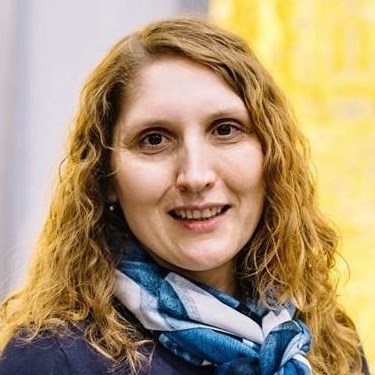
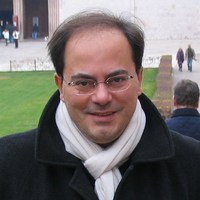

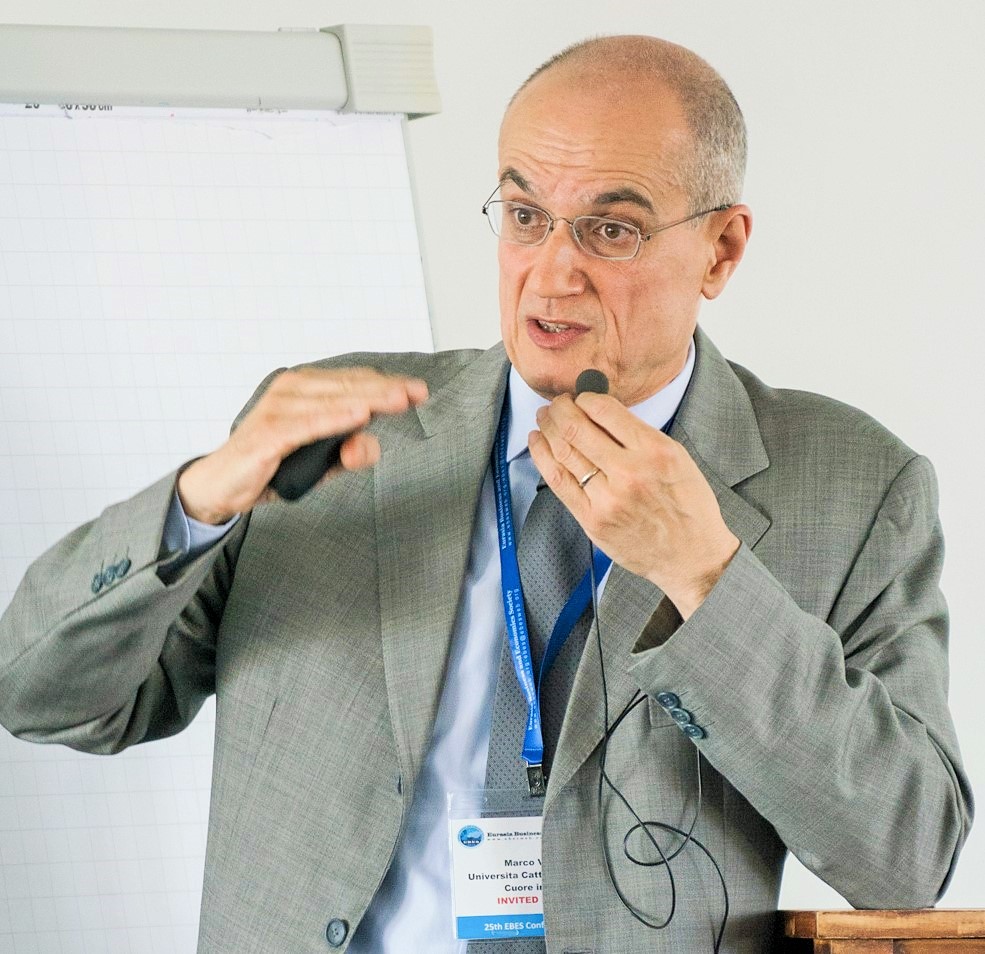
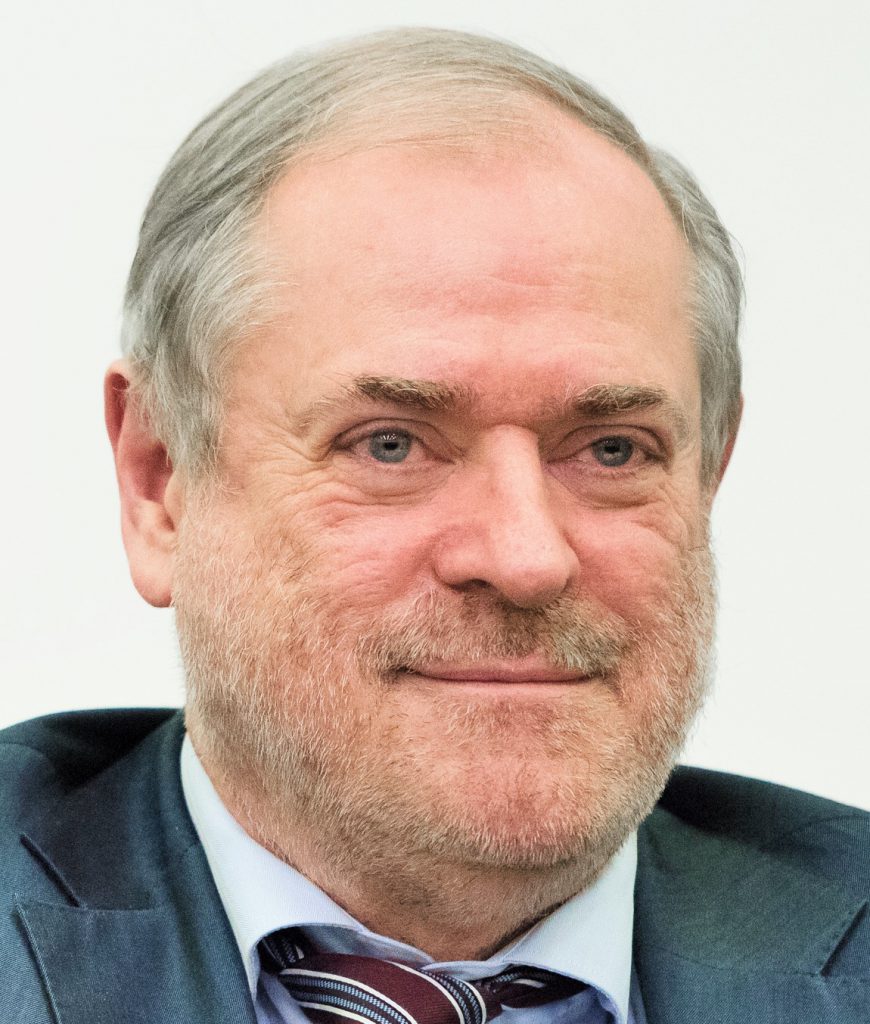


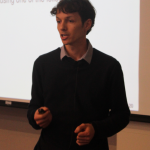


_FiguresAtAGlance_Infographic(18JUN2020).png)