Category Archives: Discussion Paper

Robots and Labor Regulation: A Cross-Country/Cross-Industry Analysis. A new GLO Discussion Paper by GLO Fellow Silvio Traverso & colleagues.

A new GLO Discussion Paper finds that high levels of statutory employment protection is negatively associated with robot adoption, but firms also use industrial robots as potential substitutes for workers to reduce employees’ bargaining power.

GLO Discussion Paper No. 928, 2021

Robots and Labor Regulation: A Cross-Country/Cross-Industry Analysis Download PDF
by Traverso, Silvio & Vatiero, Massimiliano & Zaninotto, Enrico

GLO Fellow Silvio Traverso

Silvio Traverso

Author Abstract: This work discusses and empirically investigates the relationship between labor regulation and robotization. In particular, the empirical analysis focuses on the relationship between the discipline of workers’ dismissal and the adoption of indus- trial robots in nineteen Western countries over the 2006{2016 period. We find that high levels of statutory employment protection have been negatively associated with robot adoption, suggesting that labor-friendly national legislations, by increasing adjustment costs (such as firing costs), and thus making investment riskier, provide less favorable environments for firms to invest in industrial robots. We also find, however, that the correlation is positively mediated by the sectoral levels of capital intensity, a hint that firms do resort to industrial robots as potential substitutes for workers to reduce employees’ bargaining power and to limit their hold-up opportunities, which tend to be larger in sectors characterized by high levels of operating leverage.

Photo-by-Alex-Knight-on-Unsplash

GLO Discussion Papers are research and policy papers of the GLO Network which are widely circulated to encourage discussion. Provided in cooperation with EconStor, a service of the ZBW – Leibniz Information Centre for Economics, GLO Discussion Papers are among others listed in RePEc (see IDEAS,  EconPapers)Complete list of all GLO DPs – downloadable for free.

The Global Labor Organization (GLO) is an independent, non-partisan and non-governmental organization that functions as an international network and virtual platform to stimulate global research, debate and collaboration.

Ends;

The Economics of Walking About and Predicting Unemployment. A new GLO Discussion Paper by GLO Fellow David G. Blanchflower & Alex Bryson.

A new GLO Discussion Paper suggests that fear of unemployment predicts subsequent changes in unemployment.

GLO Discussion Paper No. 922, 2021

The Economics of Walking About and Predicting Unemployment Download PDF
by Blanchflower, David G. & Bryson, Alex

GLO Fellow David G. Blanchflower

Background paper to the keynote address of Danny Blanchflower to the EBES 37 & GLO Berlin conference. More information: LINK.

Danny Blanchflower

Author Abstract: Unemployment is notoriously difficult to predict. In previous studies, once country fixed effects are added to panel estimates, few variables predict changes in unemployment rates. Using panel data for 29 European countries – Austria; Belgium; Bulgaria; Croatia; Cyprus; Czechia; Denmark; Estonia; Finland; France; Germany; Greece; Hungary; Ireland; Italy; Latvia; Lithuania; Luxembourg; Malta; Netherlands; Poland; Portugal; Romania; Slovakia; Slovenia; Spain; Sweden; Turkey and the UK – over 439 months between January 1985 and July 2021 in an unbalanced country*month panel of just over 10000 observations, we predict changes in the unemployment rate 12 months in advance based on individuals’ fears of unemployment, their perceptions of the economic situation and their own household financial situation. Fear of unemployment predicts subsequent changes in unemployment 12 months later in the presence of country fixed effects and lagged unemployment. Individuals’ perceptions of the economic situation in the country and their own household finances also predict unemployment 12 months later. Business sentiment (industry fear of unemployment) is also predictive of unemployment 12 months later. The findings underscore the importance of the “economics of walking about”. The implication is that these social survey data are informative in predicting economic downturns and should be used more extensively in forecasting. We also generate a 29 country-level annual panel on life satisfaction from 1985-2020 from the World Database of Happiness and show that the consumer level fear of unemployment variable lowers wellbeing over and above the negative impact of the unemployment rate itself. Qualitative survey metrics were able to predict the Great Recession and the economic slowdown in Europe just prior to the COVID pandemic.

Photo-by-Jose-Antonio-Gallego-Vázquez-on-Unsplash

GLO Discussion Papers are research and policy papers of the GLO Network which are widely circulated to encourage discussion. Provided in cooperation with EconStor, a service of the ZBW – Leibniz Information Centre for Economics, GLO Discussion Papers are among others listed in RePEc (see IDEAS,  EconPapers)Complete list of all GLO DPs – downloadable for free.

The Global Labor Organization (GLO) is an independent, non-partisan and non-governmental organization that functions as an international network and virtual platform to stimulate global research, debate and collaboration.

Ends;

Double-edged sword: Persistent effects of Communism on life satisfaction. A new GLO Discussion Paper by Vladimir Otrachshenko and GLO Fellows Milena Nikolova & Olga Popova.

A new GLO Discussion Paper finds that past communist regime connections have a persistent but differential effect on life satisfaction.

GLO Discussion Paper No. 927, 2021

Double-edged sword: Persistent effects of Communism on life satisfaction Download PDF
by Otrachshenko, Vladimir & Nikolova, Milena & Popova, Olga

GLO Fellows Milena Nikolova & Olga Popova

Author Abstract: Communism was a two-edged sword for the trustees of the former regime. Communist party members and their relatives enjoyed status and privileges, while secret police informants were often coerced to work clandestinely and gather compromising materials about friends, colleagues, and neighbors. We examine the long-term consequences of such connections to the communist regime for life satisfaction in Central and Eastern Europe and the former Soviet Union. We also calculate a monetary equivalent of those effects and empirically test mechanisms. The findings underscore that past communist regime connections have a persistent but differential effect on life satisfaction.

GLO Discussion Papers are research and policy papers of the GLO Network which are widely circulated to encourage discussion. Provided in cooperation with EconStor, a service of the ZBW – Leibniz Information Centre for Economics, GLO Discussion Papers are among others listed in RePEc (see IDEAS,  EconPapers)Complete list of all GLO DPs – downloadable for free.

The Global Labor Organization (GLO) is an independent, non-partisan and non-governmental organization that functions as an international network and virtual platform to stimulate global research, debate and collaboration.

Ends;

Perceived income inequality and subjective social status in Europe. A new GLO Discussion Paper by GLO Fellow Gábor Hajdu.

A new GLO Discussion Paper finds that the higher the level of perceived income inequality is, the lower is the individual’s perception of social standing.

GLO Discussion Paper No. 926, 2021

Perceived income inequality and subjective social status in Europe Download PDF
by Hajdu, Gábor

GLO Fellow Gábor Hajdu

Gábor Hajdu

Author Abstract: This paper analyzes how perceived income inequality is associated with subjective well-being. Using four waves of the “Social Inequality” module of the International Social Survey Programme, I show that the higher the level of perceived income inequality is, the lower the individual’s perception of her social standing, even if objective income inequality and preferences for the legitimate level of income inequality are controlled for. The results are robust to the measure of perceived inequality and the choice of the outcome variable. The analysis also provides evidence that the estimated association is weaker for individuals with higher income, higher education, and countries without postcommunist history. Overall, the results suggest that not only do objective inequality and perception of fairness have consequences regarding subjective well-being but also the perceived level of income inequality itself.

GLO Discussion Papers are research and policy papers of the GLO Network which are widely circulated to encourage discussion. Provided in cooperation with EconStor, a service of the ZBW – Leibniz Information Centre for Economics, GLO Discussion Papers are among others listed in RePEc (see IDEAS,  EconPapers)Complete list of all GLO DPs – downloadable for free.

The Global Labor Organization (GLO) is an independent, non-partisan and non-governmental organization that functions as an international network and virtual platform to stimulate global research, debate and collaboration.

Ends;

The well-being age U-shape effect in Germany is not flat. A new GLO Discussion Paper by GLO Fellow David G. Blanchflower & Alan Piper.

A new GLO Discussion Paper shows that the wellbeing-age curve for Germany for 1994-2006 is U-shaped.

GLO Discussion Paper No. 921, 2021

The well-being age U-shape effect in Germany is not flat Download PDF
by Blanchflower, David G. & Piper, Alan

GLO Fellow David G. Blanchflower

Danny Blanchflower

Author Abstract: Kassenboehmer and DeNew (2012) claim that there is no well-being age U-shape effect for Germany, when controlling for fixed effects and respondent experience and interviewer characteristics in the German Socio-Economic Panel, 1994-2006. We re-estimate with a longer run of years and restrict the age of respondents to those under seventy and find the well-being age U-shape effect is neither flat nor trivial.

GLO Discussion Papers are research and policy papers of the GLO Network which are widely circulated to encourage discussion. Provided in cooperation with EconStor, a service of the ZBW – Leibniz Information Centre for Economics, GLO Discussion Papers are among others listed in RePEc (see IDEAS,  EconPapers)Complete list of all GLO DPs – downloadable for free.

The Global Labor Organization (GLO) is an independent, non-partisan and non-governmental organization that functions as an international network and virtual platform to stimulate global research, debate and collaboration.

Ends;

Adverse Working Conditions and Immigrants’ Physical Health and Depression Outcomes. A Longitudinal Study in Greece by GLO Fellow Nick Drydakis.

A new GLO Discussion Paper finds that workers with no written contract of employment, receiving hourly wages lower than the national hourly minimum wages, and experiencing insults and/or threats in their present job experience worse physical health and increased levels of depression.

GLO Discussion Paper No. 925, 2021

Adverse Working Conditions and Immigrants’ Physical Health and Depression Outcomes. A Longitudinal Study in Greece Download PDF
by Drydakis, Nick

GLO Fellow Nick Drydakis

Nick Drydakis

Author Abstract: Τhe study examines whether adverse working conditions for immigrants in Greece bear an association with deteriorated physical health and increased levels of depression during 2018 and 2019. Findings indicate that workers with no written contract of employment, receiving hourly wages lower than the national hourly minimum wages, and experiencing insults and/or threats in their present job experience worse physical health and increased levels of depression. The study found that the inexistence of workplace contracts, underpayment, and verbal abuse in the workplace may coexist. An increased risk of underpayment and verbal abuse reveals itself when workers do not have a contract of employment and vice versa. Immigrant workers without a job contract might experience a high degree of workplace precariousness and exclusion from health benefits and insurance. Immigrant workers receiving a wage lower than the corresponding minimum potentially do not secure a living income, resulting in unmet needs and low investments in health. Workplace abuse might correspond with vulnerability related to humiliating treatment. These conditions can negatively impact workers’ physical health and foster depression. Policies should promote written employment contracts and ensure a mechanism for workers to register violations of fair practices.

GLO Discussion Papers are research and policy papers of the GLO Network which are widely circulated to encourage discussion. Provided in cooperation with EconStor, a service of the ZBW – Leibniz Information Centre for Economics, GLO Discussion Papers are among others listed in RePEc (see IDEAS,  EconPapers)Complete list of all GLO DPs – downloadable for free.

The Global Labor Organization (GLO) is an independent, non-partisan and non-governmental organization that functions as an international network and virtual platform to stimulate global research, debate and collaboration.

Ends;

The Role of the Workplace in Ethnic Wage Differentials. A new GLO Discussion Paper by GLO Fellow Nikolaos Theodoropoulos and colleagues.

A new GLO Discussion Paper finds substantial ethnic segregation across workplaces in the UK, but most of the ethnic wage gap exists between observationally equivalent co-workers.

GLO Discussion Paper No. 920, 2021

The Role of the Workplace in Ethnic Wage Differentials Download PDF
by Forth, John & Theodoropoulos, Nikolaos & Bryson, Alex

GLO Fellow Nikolaos Theodoropoulos

Author Abstract: Using matched employer-employee data for Britain, we examine ethnic wage differentials among full-time employees. We find substantial ethnic segregation across workplaces: around three-fifths of workplaces in Britain employ no ethnic minority workers. However, this workplace segregation does not contribute to the aggregate wage gap between ethnic minorities and white employees. Instead, most of the ethnic wage gap exists between observationally equivalent co-workers. Lower pay satisfaction and higher levels of skill mismatch among ethnic minority workers are consistent with discrimination in wage-setting on the part of employers. The use of job evaluation schemes within the workplace is shown to be associated with a smaller ethnic wage gap.

GLO Discussion Papers are research and policy papers of the GLO Network which are widely circulated to encourage discussion. Provided in cooperation with EconStor, a service of the ZBW – Leibniz Information Centre for Economics, GLO Discussion Papers are among others listed in RePEc (see IDEAS,  EconPapers)Complete list of all GLO DPs – downloadable for free.

The Global Labor Organization (GLO) is an independent, non-partisan and non-governmental organization that functions as an international network and virtual platform to stimulate global research, debate and collaboration.

Ends;

The implications of self-reported body weight and height for measurement error in BMI. A new GLO Discussion Paper by GLO Fellows Apostolos Davillas & Andrew Jones.

A new GLO Discussion Paper reports that there is a systematic age gradient in the reporting error in BMI suggesting potential bias in the use of such data and the need to collect objective measures.

GLO Discussion Paper No. 919, 2021

The implications of self-reported body weight and height for measurement error in BMI Download PDF
by Davillas, Apostolos & Jones, Andrew M.

GLO Fellows Apostolos Davillas & Andrew Jones

Author Abstract: We designed an experiment to explore the extent of measurement error in body mass index (BMI), when based on self-reported body weight and height. We find that there is a systematic age gradient in the reporting error in BMI, while there is limited evidence of systematic associations with gender, education and income. This is reassuring evidence for the use of self-reported BMI in studies that use it as an outcome, for example, to analyse socioeconomic gradients in obesity. However, our results suggest a complex structure of non-classical measurement error in BMI, depending on both individuals’ and within-household peers’ true BMI. This may bias studies that use BMI based on self-reported data as a regressor. Common methods to mitigate reporting error in BMI using predictions from corrective equations do not fully eliminate reporting heterogeneity associated with individual and withinhousehold true BMI. Overall, the presence of non-classical error in BMI highlights the importance of collecting measured body weight and height data in large social science datasets.

GLO Discussion Papers are research and policy papers of the GLO Network which are widely circulated to encourage discussion. Provided in cooperation with EconStor, a service of the ZBW – Leibniz Information Centre for Economics, GLO Discussion Papers are among others listed in RePEc (see IDEAS,  EconPapers)Complete list of all GLO DPs – downloadable for free.

The Global Labor Organization (GLO) is an independent, non-partisan and non-governmental organization that functions as an international network and virtual platform to stimulate global research, debate and collaboration.

Ends;

The Workforce of Clientelism: The Case of Local Officials in the Party Machine. A new GLO Discussion Paper by Ajay Shenoy and GLO Fellow Laura V. Zimmermann.

A new GLO Discussion Paper find that local politicians in India systematically misallocate resources based on party loyalty and successfully deliver votes to their national co-partisans.

GLO Discussion Paper No. 916, 2021

916 The Workforce of Clientelism: The Case of Local Officials in the Party Machine Download PDF
by Shenoy, Ajay & Zimmermann, Laura V.

GLO Fellow Laura V. Zimmermann

Laura V. Zimmermann, University of Georgia

Author Abstract: Local politicians can function as crucial intermediaries between voters and party bosses in a clientelistic network. We study their role by matching data on 300 million welfare payments in the Indian state of West Bengal to village-level election returns. Local politicians systematically misallocate resources based on party loyalty and successfully deliver votes to their national co-partisans. Politicians are compensated for successful mobilization through a performance bonus immediately after the national election. The (promise of) increased compensation from government funds induces opposition candidates to switch to the ruling party in strategically important local councils, bringing them under its control.

Laura V. Zimmermann has a joint appointment as Associate Professor in the Department of Economics and in the Department of International Affairs at the University of Georgia. She recently presented her research on gender bias and policy in India summarized in GLO Discussion Paper No. 888 at the Fourth IESR-GLO Conference. Video of presentation: LINK

GLO Discussion Papers are research and policy papers of the GLO Network which are widely circulated to encourage discussion. Provided in cooperation with EconStor, a service of the ZBW – Leibniz Information Centre for Economics, GLO Discussion Papers are among others listed in RePEc (see IDEAS,  EconPapers)Complete list of all GLO DPs – downloadable for free.

The Global Labor Organization (GLO) is an independent, non-partisan and non-governmental organization that functions as an international network and virtual platform to stimulate global research, debate and collaboration.

Ends;

Wage Differences According to Workers’ Origin: The Role of Working More Upstream in GVCs. A new GLO Discussion Paper by GLO Fellow François Rycx and colleagues.

A new GLO Discussion Paper shows that firms that are further up in the value chain pay significantly higher wages.

GLO Discussion Paper No. 918, 2021

Wage Differences According to Workers’ Origin: The Role of Working More Upstream in GVCs Download PDF
by Fays, Valentine & Mahy, Benoît & Rycx, François

GLO Fellow François Rycx

Author Abstract:This paper is the first to investigate the role of firm-level upstreamness (i.e. the number of steps before the production of a firm meets final demand) in explaining wage differences according to workers’ origin. Using unique linked employer-employee data relative to the Belgian manufacturing industry for the period 2002-2010, our estimates show that firms that are further up in the value chain pay significantly higher wages. However, the wage premium associated with upstreamness is also found to vary substantially depending on the origin of the workers. Unconditional quantile estimates suggest that those who benefit the most from being employed in more upstream firms are high-wage workers born in developed countries. In contrast, workers born in developing countries, irrespective of their earnings, appear to be unfairly rewarded. Quantile decompositions further show that, while differences in average values of upstreamness according to workers’ origin play a limited role, differences in wage premia associated with upstreamness account for a substantial part of the wage gap between workers born in developed and developing countries, especially at the top of the earnings distribution. These results are shown to be robust to a number of sensitivity tests, including broader or narrower definitions of workers’ wages and different firm environments in terms of technological and knowledge intensity.

GLO Discussion Papers are research and policy papers of the GLO Network which are widely circulated to encourage discussion. Provided in cooperation with EconStor, a service of the ZBW – Leibniz Information Centre for Economics, GLO Discussion Papers are among others listed in RePEc (see IDEAS,  EconPapers)Complete list of all GLO DPs – downloadable for free.

The Global Labor Organization (GLO) is an independent, non-partisan and non-governmental organization that functions as an international network and virtual platform to stimulate global research, debate and collaboration.

Ends;

The Mid-Life Dip in Well-Being: A Critique. A new GLO Discussion Paper by GLO Fellows David G. Blanchflower & Carol Graham.

A new GLO Discussion Paper shows that studies cited by psychologists claiming there are no U-shapes are in error. The effects of the mid-life dip are comparable to major life events such as losing a spouse or becoming unemployed.

GLO Discussion Paper No. 923, 2021

The Mid-Life Dip in Well-Being: A Critique Download PDF
by Blanchflower, David G. & Graham, Carol L.

GLO Fellows David G. Blanchflower & Carol Graham

Author Abstract: A number of studies – including our own – find a mid-life dip in well-being. Yet several papers in the psychology literature claim that the evidence of a U-shape is “overblown” and if there is such a thing that any such decline is “trivial”. Others have claimed that the evidence of a U-shape “is not as robust and generalizable as is often assumed,” or simply “wrong.” We identify 424 studies, mostly published in peer reviewed journals that find U-shapes that these researchers apparently were unaware of. We use data for Europe from the Eurobarometer Surveys (EB), 1980-2019; the Gallup World Poll (GWP), 2005-2019 and the UK’s Annual Population Survey, 2016-2019 and the Census Bureau’s Household Pulse Survey of August 2021, to examine U-shapes in age in well-being. We find remarkably strong and consistent evidence across countries of statistically significant and non-trivial U-shapes in age with and without socio-economic controls. We show that studies cited by psychologists claiming there are no U-shapes are in error; we reexamine their data and find differently. The effects of the mid-life dip we find are comparable to major life events such as losing a spouse or becoming unemployed. This decline is comparable to half of the unprecedented fall in well-being observed in the UK in 2020 and 2021, during the Covid19 pandemic and lockdown, which is hardly “inconsequential” as claimed.

Featured image by-Elijah-Hail-on-Unsplash

GLO Discussion Papers are research and policy papers of the GLO Network which are widely circulated to encourage discussion. Provided in cooperation with EconStor, a service of the ZBW – Leibniz Information Centre for Economics, GLO Discussion Papers are among others listed in RePEc (see IDEAS,  EconPapers)Complete list of all GLO DPs – downloadable for free.

The Global Labor Organization (GLO) is an independent, non-partisan and non-governmental organization that functions as an international network and virtual platform to stimulate global research, debate and collaboration.

Ends;

Sex workers’ self-reported physical and mental health in Greece. A repeated cross-sectional study in 2009, 2013 and 2019. A new GLO Discussion Paper by GLO Fellow Nick Drydakis.

A new GLO Discussion Paper finds that self-reported physical and mental health decreased in 2013 and in 2019 compared to 2009 indicating the need for more inclusive health strategies.

GLO Discussion Paper No. 924, 2021

Sex workers’ self-reported physical and mental health in Greece. A repeated cross-sectional study in 2009, 2013 and 2019 Download PDF
by Drydakis, Nick

GLO Fellow Nick Drydakis

Nick Drydakis

Author Abstract: In Greece, given the precarious nature of the sex work industry, sex workers health and wellbeing is of concern. However, relevant research remains limited. This study examined whether sex workers’ self-reported physical and mental health deteriorated across time points during the economic recession in Athens, Greece. The study focused on 13 areas where off-street and street-based sex work occured. Cross-sectional data was collected from the same areas in 2009 (i.e. before the economic recession began) and in 2013 and 2019 (i.e. at time points during the recession). Self-reported physical and mental health decreased in 2013 and in 2019 compared to 2009. A positive association was found between the country’s gross domestic product and sex workers’ self-reported physical and mental health. The opposite was found for annual aggregate unemployment. The determinants of better self-reported physical and mental health were sex workers’ economic condition, Greek nationality, off-street sex work, and registered sex work status. The opposite was found for more years’ involvement in sex work and drug consumption. Findings indicate the need for more inclusive health strategies, especially during periods of economic downturn when sex workers’ physical/mental health is likely to decline. This is the first study to investigate the association between economic recession and sex workers’ self-reported physical and mental health.

GLO Discussion Papers are research and policy papers of the GLO Network which are widely circulated to encourage discussion. Provided in cooperation with EconStor, a service of the ZBW – Leibniz Information Centre for Economics, GLO Discussion Papers are among others listed in RePEc (see IDEAS,  EconPapers)Complete list of all GLO DPs – downloadable for free.

The Global Labor Organization (GLO) is an independent, non-partisan and non-governmental organization that functions as an international network and virtual platform to stimulate global research, debate and collaboration.

Ends;
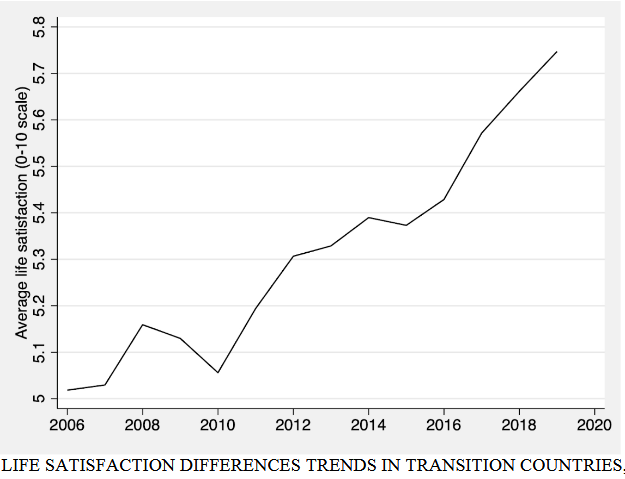
COVID-19 and (gender) inequality in income: the impact of discretionary policy measures in Austria. A new GLO Discussion Paper by GLO Fellow Michael Christl and colleagues.

A new GLO Discussion Paper finds that discretionary fiscal policy measures in Austria are key to counteracting the inequality- and poverty-enhancing effect of COVID-19.

GLO Discussion Paper No. 917, 2021

COVID-19 and (gender) inequality in income: the impact of discretionary policy measures in Austria Download PDF
by Christl, Michael & De Poli, Silvia & Kucsera, Dénes & Lorenz, Hanno

GLO Fellow Michael Christl

Michael Christl

Author Abstract: This paper analyzes the impact of the COVID-19 crisis on household income in Austria, using detailed administrative labor market data, in combination with micro-simulation techniques, that enable specific labor market transitions to be modeled. We find that discretionary fiscal policy measures in Austria are key to counteracting the inequality- and poverty-enhancing effect of COVID-19. Additionally, we find that females tend to experience a greater loss in terms of market income. The Austrian tax-benefit system, however, reduces this gender differences. Disposable income has dropped by around 1% for both males and females. By comparison, males profit mainly from short-time work scheme, while females profit especially from other discretionary policy measures, such as the one-off payment for children.

Featured image: fusion-medical–unsplash

More from the GLO COVID-19 Cluster.

GLO Discussion Papers are research and policy papers of the GLO Network which are widely circulated to encourage discussion. Provided in cooperation with EconStor, a service of the ZBW – Leibniz Information Centre for Economics, GLO Discussion Papers are among others listed in RePEc (see IDEAS,  EconPapers)Complete list of all GLO DPs – downloadable for free.

The Global Labor Organization (GLO) is an independent, non-partisan and non-governmental organization that functions as an international network and virtual platform to stimulate global research, debate and collaboration.

Ends;

Sexual orientation discrimination in the labor market against gay men. A new GLO Discussion Paper by GLO Fellow Nick Drydakis.

A new GLO Discussion Paper finds that sexual orientation discrimination still matters in Greece and even has increased.

GLO Discussion Paper No. 915, 2021

Sexual orientation discrimination in the labor market against gay men Download PDF
by Drydakis, Nick

GLO Fellow Nick Drydakis

Nick Drydakis

Author Abstract: The study replicates the first European field experiment on gay men’s labor market prospects in Greece. Utilizing the same protocol as the original study in 2006-2007, two follow-up field experiments took place in 2013-2014 and 2018-2019. The study estimated that gay men experienced occupational access constraints and wage sorting in vacancies offering lower remuneration. It was found that in 2013-2014 and 2018-2019, gay men experienced increasingly biased treatment compared to 2006-2007. Moreover, the results suggested that unemployment bore an association with occupational access constraints and wage sorting in vacancies offering lower remuneration for gay men. In each of the three experiments, this study captured recruiters’ attitudes toward gay men. A one standard deviation increase in taste-discrimination attitudes against gay men decreased their access to occupations by 9.6%. Furthermore, a one standard deviation increase in statistical-discrimination attitudes against gay men decreased their access to occupations by 8.1%. According to the findings, in 2013-2014 and 2018-2019, firms excluding gay applicants expressed a higher level of taste- and statistical-discrimination attitudes compared to 2006-2007. A gay rights backlash due to the LGBTIQ+ group’s attempt to advance its agenda, rising far-right rhetoric, and prejudice associated with economic downturns experienced in Greece might correspond with increasing biases against gay men.

GLO Discussion Papers are research and policy papers of the GLO Network which are widely circulated to encourage discussion. Provided in cooperation with EconStor, a service of the ZBW – Leibniz Information Centre for Economics, GLO Discussion Papers are among others listed in RePEc (see IDEAS,  EconPapers)Complete list of all GLO DPs – downloadable for free.

The Global Labor Organization (GLO) is an independent, non-partisan and non-governmental organization that functions as an international network and virtual platform to stimulate global research, debate and collaboration.

Ends;

Bottom Incomes and the Measurement of Poverty: A Brief Assessment of the Literature. A new GLO Discussion Paper of GLO Fellow Paolo Verme and colleagues.

A new GLO Discussion Paper argues that negative and zero incomes cannot be treated equally in terms of household well-being and that standard methods used by practitioners fail to recognize this fact likely resulting in overestimations of poverty.

GLO Discussion Paper No. 914, 2021

Bottom Incomes and the Measurement of Poverty: A Brief Assessment of the Literature Download PDF
by Ceriani, Lidia & Hlasny, Vladimir & Verme, Paolo

GLO Fellow Paolo Verme

Paolo Verme

Author Abstract: The paper discusses the main issues related to negative and zero incomes that are relevant for the measurement of poverty. It shows the prevalence of non-positive incomes in high- and middle-income countries, provides an analysis of the sources and structure of these incomes, outlines the various approaches proposed by scholars and statistical agencies to treat non-positive incomes, and explains how non-positive incomes and alternative correction methods impact the measurement of standard poverty indexes. It is argued that negative and zero incomes cannot be treated equally in terms of household well-being and that standard methods used by practitioners fail to recognize this fact likely resulting in overestimations of poverty.

GLO Discussion Papers are research and policy papers of the GLO Network which are widely circulated to encourage discussion. Provided in cooperation with EconStor, a service of the ZBW – Leibniz Information Centre for Economics, GLO Discussion Papers are among others listed in RePEc (see IDEAS,  EconPapers)Complete list of all GLO DPs – downloadable for free.

The Global Labor Organization (GLO) is an independent, non-partisan and non-governmental organization that functions as an international network and virtual platform to stimulate global research, debate and collaboration.

Ends;

The Impact of Delay: Evidence from Formal Out-of-Court Restructuring. A new GLO Discussion Paper by Stjepan Srhoj and GLO Fellows Dejan Kovac & Randall Filer.

A new GLO Discussion Paper highlights the impact of delay and the importance of structuring bankruptcy procedures to rapidly resolve uncertainty about firms’ future prospects.

Dejan Kovac
Dejan Kovac

GLO Discussion Paper No. 912, 2021

The Impact of Delay: Evidence from Formal Out-of-Court Restructuring Download PDF
by Srhoj, Stjepan & Kovač, Dejan & Shapiro, Jacob N. & Filer, Randall K.

GLO Fellows Dejan Kovac & Randall Filer

Author Abstract: Bankruptcy restructuring procedures are used in most legal systems to decide the fate of businesses facing financial hardship. We study how bargaining failures in such procedures impact the economic performance of participating firms in the context of Croatia, which introduced a “pre-bankruptcy settlement” (PBS) process in the wake of the Great Recession of 2007 – 2009. Local institutions left over from the communist era provide annual financial statements for both sides of more than 180,000 debtor- creditor pairs, enabling us to address selection into failed negotiations by matching a rich set of creditor and debtor characteristics. Failures to settle at the PBS stage due to idiosyncratic bargaining problems, which effectively delays entry into the standard bankruptcy procedure, leads to a lower rate of survival among debtors as well as re- duced employment, revenue, and profits. We also track how bargaining failures diffuse through the network of creditors, finding a significant negative effect on small creditors, but not others. Our results highlight the impact of delay and the importance of structuring bankruptcy procedures to rapidly resolve uncertainty about firms’ future prospects.

GLO Discussion Papers are research and policy papers of the GLO Network which are widely circulated to encourage discussion. Provided in cooperation with EconStor, a service of the ZBW – Leibniz Information Centre for Economics, GLO Discussion Papers are among others listed in RePEc (see IDEAS,  EconPapers)Complete list of all GLO DPs – downloadable for free.

The Global Labor Organization (GLO) is an independent, non-partisan and non-governmental organization that functions as an international network and virtual platform to stimulate global research, debate and collaboration.

Ends;

How the Past of Outsourcing and Offshoring is the Future of Post-Pandemic Remote Work: A Typology, a Model, and a Review. A new GLO Discussion Paper by Christopher Erickson & GLO Fellow Peter Norlander.

A new GLO Discussion Paper reviews how the outsourcing and offshoring literature helps to understand the future of post-pandemic remote work.

GLO Discussion Paper No. 913, 2021

How the Past of Outsourcing and Offshoring is the Future of Post-Pandemic Remote Work: A Typology, a Model, and a Review Download PDF
by Erickson, Christopher & Norlander, Peter

GLO Fellow Peter Norlander

Author Abstract: Information and communication technology (ICT) challenges traditional assumptions about the capacity to manage workers beyond organizational and physical boundaries. A typology connects a variety of non-traditional work organizations made possible by ICT, including offshoring, outsourcing, remote work, virtual companies, and platforms. A model illustrates how new technology serves as a proximate cause for a revision of social contracts between capital, labor and government reached through bargaining, and how external shocks such as the COVID-19 pandemic, the institutional environment, and limitations in practice influence how technology changes the organization of work. An historical case illustrates the general features of the model, and a review of the outsourcing and offshoring literature provides instructive examples of how features of the model will potentially influence the future of post-pandemic remote work

GLO Discussion Papers are research and policy papers of the GLO Network which are widely circulated to encourage discussion. Provided in cooperation with EconStor, a service of the ZBW – Leibniz Information Centre for Economics, GLO Discussion Papers are among others listed in RePEc (see IDEAS,  EconPapers)Complete list of all GLO DPs – downloadable for free.

The Global Labor Organization (GLO) is an independent, non-partisan and non-governmental organization that functions as an international network and virtual platform to stimulate global research, debate and collaboration.

Ends;
Monopolistic Competition, Optimum Product Diversity, and International Trade – The Role of Factor Endowment and Factor Intensities. A new GLO Discussion Paper by Sugata Marjit and GLO Fellow Biswajit Mandal.

A new GLO Discussion Paper revisits the influential theory of monopolistic competition and optimum product variety. Differences in factor endowments across countries determine the pattern of trade between varieties and output per variety, which is indeterminate the standard model.

Biswajit Mandal

GLO Discussion Paper No. 911, 2021

Monopolistic Competition, Optimum Product Diversity, and International Trade – The Role of Factor Endowment and Factor Intensities Download PDF
by Marjit, Sugata & Mandal, Biswajit

GLO Fellow Biswajit Mandal

Author Abstract: In this paper we revisit the influential theory of monopolistic competition and optimum product variety as developed by Dixit and Stiglitz (1977) with applications in international trade by Krugman (1979,1980), by modeling fixed and variable costs of production in terms of underlying use of skilled and unskilled labor in a single good model. This is different from earlier work on multi sector variant of Krugman cum Heckscher-Ohlin-Samuelson model such as Helpman (1981) and others. In our structure factor endowment and factor intensities determine both number of varieties and output per variety in a closed economy mimicking the features of Heckscher-Ohlin-Samuelson model. Differences in factor endowments across countries determine the pattern of trade between varieties and output per variety, which is indeterminate in a standard single good Dixit-Stiglitz-Krugman model. Later we reflect on wage inequality and unemployment providing some interesting results.

GLO Discussion Papers are research and policy papers of the GLO Network which are widely circulated to encourage discussion. Provided in cooperation with EconStor, a service of the ZBW – Leibniz Information Centre for Economics, GLO Discussion Papers are among others listed in RePEc (see IDEAS,  EconPapers)Complete list of all GLO DPs – downloadable for free.

The Global Labor Organization (GLO) is an independent, non-partisan and non-governmental organization that functions as an international network and virtual platform to stimulate global research, debate and collaboration.

Ends;

The Slippery Slope from Pluralistic to Plural Societies. A new GLO Discussion Paper by GLO Fellow Chiara Rapallini and colleagues.

A new GLO Discussion Paper examines integration issues studying school friendship networks in five European countries with recent immigration.

Chiara Rapallini

GLO Discussion Paper No. 910, 2021

The Slippery Slope from Pluralistic to Plural Societies Download PDF
by Campigotto, Nicola & Rapallini, Chiara & Rustichini, Aldo

GLO Fellow Chiara Rapallini

Author Abstract: Academic consensus about normative prescriptions on the ethnic and cultural composition of societies has been shifting in recent decades. It has evolved from what seemed desirable but was acknowledged to be unrealistic (the noble idea of a melting pot), to what is realistic because it has already happened, but might be undesirable in the long run: the multicultural diaspora. Plural societies, an unintended consequence of multiculturalism, lurk in the background. Thus scholars of social and economic questions, as well as societies, face a threehorned dilemma. We throw some light on the dilemma by examining school friendship networks in five European countries with recent immigration. Our results highlight the force of elective affinities in overcoming differences, but they also point to the countervailing forces of elective discordance that are currently driving increasing division.

GLO Discussion Papers are research and policy papers of the GLO Network which are widely circulated to encourage discussion. Provided in cooperation with EconStor, a service of the ZBW – Leibniz Information Centre for Economics, GLO Discussion Papers are among others listed in RePEc (see IDEAS,  EconPapers)Complete list of all GLO DPs – downloadable for free.

The Global Labor Organization (GLO) is an independent, non-partisan and non-governmental organization that functions as an international network and virtual platform to stimulate global research, debate and collaboration.

Ends;

How do women allocate their available time in Europe? Differences with men. A new GLO Discussion Paper by Jose Ignacio Gimenez-Nadal & GLO Fellow José Alberto Molina.

A new GLO Discussion Paper provides a comprehensive analysis of gender gaps in Europe.

José Alberto Molina

GLO Discussion Paper No. 908, 2021

How do women allocate their available time in Europe? Differences with men Download PDF
by
Gimenez-Nadal, Jose Ignacio & Molina, José Alberto

GLO Fellow José Alberto Molina

Author Abstract: This article explores the gender gap in time allocation in Europe, offering up-to-date statistics and information on several factors that may help to explain these differences. Prior research has identified several factors affecting the time individuals devote to paid work, unpaid work, and child care, and the gender gaps in these activities, but most research refers to single countries, and general patterns are rarely explored. Cross-country evidence on gender gaps in paid work, unpaid work, and child care is offered, and explanations based on education, earnings, and household structure are presented, using data from the EUROSTAT and the Multinational Time Use Surveys. There are large cross-country differences in the gender gaps in paid work, unpaid work, and child care, which remain after controlling for socio-demographic characteristics, although the gender gap in paid work dissipates when the differential gendered relationship between socio-demographic characteristics and paid work is taken into account. This paper provides a comprehensive analysis of gender gaps in Europe, helping to focus recent debates on how to tackle inequality in Europe, and clarifying the factors that contribute to gender inequalities in the uses of time.

GLO Discussion Papers are research and policy papers of the GLO Network which are widely circulated to encourage discussion. Provided in cooperation with EconStor, a service of the ZBW – Leibniz Information Centre for Economics, GLO Discussion Papers are among others listed in RePEc (see IDEAS,  EconPapers)Complete list of all GLO DPs – downloadable for free.

The Global Labor Organization (GLO) is an independent, non-partisan and non-governmental organization that functions as an international network and virtual platform to stimulate global research, debate and collaboration.

Ends;

Cultural Norms and Women’s Health: Implications of the Practice of Menstrual Restrictions in Nepal. A new GLO Discussion Paper by Rahul Kumar and GLO Fellow Bipasha Maity.

A new GLO Discussion Paper finds that menstrual restriction related rituals can have persistent negative implications on women’s physical and mental health that is not just limited to the time of menstruation.

GLO Discussion Paper No. 907, 2021

Cultural Norms and Women’s Health: Implications of the Practice of Menstrual Restrictions in Nepal Download PDF
by
Kumar, Rahul & Maity, Bipasha

GLO Fellow Bipasha Maity

Author Abstract: We study the association between the ritual of menstrual restrictions and maternal health- care access as well as women’s subjective well-being. Similar restrictions, also practised around the time of childbirth, are based on the assumption that women are ritually impure during these phases of their lives. Although menstrual taboos and restrictions are common across many developing countries, we use micro-data from Nepal where these rituals are widely prevalent. We use a rich set of controls as well as assess the sensitivity of our results to alternative estimation methods. We find that women who face any menstrual restriction are also more likely to give birth at home and receive assistance only from untrained individuals during childbirth, which increases the risk of maternal mortality. We find that only the strictest menstrual restrictions are associated with a decline in subjective well-being. These findings indicate that menstrual restriction related rituals can have persistent negative implications on women’s physical and mental health that is not just limited to the time of menstruation.

GLO Discussion Papers are research and policy papers of the GLO Network which are widely circulated to encourage discussion. Provided in cooperation with EconStor, a service of the ZBW – Leibniz Information Centre for Economics, GLO Discussion Papers are among others listed in RePEc (see IDEAS,  EconPapers)Complete list of all GLO DPs – downloadable for free.

The Global Labor Organization (GLO) is an independent, non-partisan and non-governmental organization that functions as an international network and virtual platform to stimulate global research, debate and collaboration.

Ends;

Impact of COVID-19 Crisis on Rural Youth: Evidence from a Panel Survey and an Experiment. A new GLO Discussion Paper on India by GLO Fellows Bhaskar Chakravorty & Roland Rathelot and colleagues.

A new GLO Discussion Paper reports a stark difference in rural India between men and women: while many male workers took up informal employment, most female workers dropped out of the labor force.

GLO Discussion Paper No. 909, 2021

Impact of COVID-19 Crisis on Rural Youth: Evidence from a Panel Survey and an Experiment Download PDF
by Chakravorty, Bhaskar & Bhatiya, Apurav Yash & Imbert, Clément & Lohnert, Maximilian & Panda, Poonam & Rathelot, Roland

GLO Fellows Bhaskar Chakravorty & Roland Rathelot

Bhaskar Chakravorty

Author Abstract: This paper presents evidence on the short and long-term impact of the first COVID-19 wave on India’s rural youth. We interviewed about 2,000 vocational trainees from Bihar and Jharkhand between March 2020 and March 2021. We report a stark difference between men and women: while many male workers took up informal employment, most female workers dropped out of the labour force. Using a randomised experiment, we find that a government supported digital job platform does not increase job search or employment. Our findings suggest that bridging the gap between rural youths and urban formal labour markets requires much more active and targeted policy interventions, especially for female workers.

Featured image: fusion-medical–unsplash

GLO Discussion Papers are research and policy papers of the GLO Network which are widely circulated to encourage discussion. Provided in cooperation with EconStor, a service of the ZBW – Leibniz Information Centre for Economics, GLO Discussion Papers are among others listed in RePEc (see IDEAS,  EconPapers)Complete list of all GLO DPs – downloadable for free.

The Global Labor Organization (GLO) is an independent, non-partisan and non-governmental organization that functions as an international network and virtual platform to stimulate global research, debate and collaboration.

Ends;

Does it pay to say “I do”? Marriage bonuses and penalties across the EU. A new GLO Discussion Paper by GLO Fellow Michael Christl and colleagues.

A new GLO Discussion Paper finds that marriage bonuses/penalties differ substantially across household types and income.

Michael Christl

GLO Discussion Paper No. 906, 2021

Does it pay to say “I do”? Marriage bonuses and penalties across the EU Download PDF
by
Christl, Michael & De Poli, Silvia & Ivaškaitė-Tamošiūnė, Viginta

GLO Fellow Michael Christl

Author Abstract:

We analyse the different fiscal treatment of married and cohabiting couples across all EU Member States using microsimulation methods. Our paper highlights important differences across EU countries’ tax-benefit systems, where seven countries show substantial bonuses for married couples and four exhibit marriage penalties. On a micro level, we find that these marriage bonuses/penalties differ substantially across household types and income. From a policy point of view, our results suggest that the abolishment of marriage-related tax-benefit components in countries with marriage bonuses would leave some households financially worse off but would increase governments revenues that could be spent to targeted support of specific groups. From both an equity and a gender equality point of view, this abolishment would be desirable.

GLO Discussion Papers are research and policy papers of the GLO Network which are widely circulated to encourage discussion. Provided in cooperation with EconStor, a service of the ZBW – Leibniz Information Centre for Economics, GLO Discussion Papers are among others listed in RePEc (see IDEAS,  EconPapers)Complete list of all GLO DPs – downloadable for free.

The Global Labor Organization (GLO) is an independent, non-partisan and non-governmental organization that functions as an international network and virtual platform to stimulate global research, debate and collaboration.

Ends;

Data Scarcity and Poverty Measurement. A new GLO Discussion Paper by GLO Fellow Hai-Anh Dang and Peter F. Lanjouw.

A new GLO Discussion Paper provides a broad overview of the pros and cons of poverty imputation in data-scarce environments.

Hai-Anh Dang

GLO Discussion Paper No. 904, 2021

Data Scarcity and Poverty Measurement Download PDF
by
Dang, Hai-Anh H. & Lanjouw, Peter F.

GLO Fellow Hai-Anh Dang

Author Abstract:

Measuring poverty trends and dynamics is an important undertaking for poverty reduction policies, which is further highlighted by the SDG goal 1 on eradicating poverty by 2030. We provide a broad overview of the pros and cons of poverty imputation in data-scarce environments, update recent review papers, and point to the latest research on the topics. We briefly review two common uses of poverty imputation methods that aim at tracking poverty over time and estimating poverty dynamics. We also discuss new areas for imputation.

Featured image: Mika-Baumeister-on-Unsplash

GLO Discussion Papers are research and policy papers of the GLO Network which are widely circulated to encourage discussion. Provided in cooperation with EconStor, a service of the ZBW – Leibniz Information Centre for Economics, GLO Discussion Papers are among others listed in RePEc (see IDEAS,  EconPapers)Complete list of all GLO DPs – downloadable for free.

The Global Labor Organization (GLO) is an independent, non-partisan and non-governmental organization that functions as an international network and virtual platform to stimulate global research, debate and collaboration.

Ends;

Choose the school, choose the performance. New evidence on the determinants of student performance in eight European countries. A new GLO Discussion Paper by Irene Brunetti and GLO Fellows Luca Bonacini & Giovanni Gallo.

A new GLO Discussion Paper shows that the differences in test scores between big and small cities depend on school characteristics, while the differences between general and vocational schools are mainly explained by family social status.

GLO Discussion Paper No. 905, 2021

Choose the school, choose the performance. New evidence on the determinants of student performance in eight European countries Download PDF
by
Bonacini, Luca & Brunetti, Irene & Gallo, Giovanni

GLO Fellows Luca Bonacini & Giovanni Gallo

Author Abstract:

This study aims to identify the main determinants of student performance in reading and maths across eight European Union countries (Austria, Croatia, Germany, Hungary, Italy, Portugal, Slovakia, and Slovenia). Based on student-level data from the OECD’s PISA 2018 survey and by means of the application of efficient algorithms, we highlight that the number of books at home and a variable combining the type and location of their school represent the most important predictors of student performance in all of the analysed countries, while other school characteristics are rarely relevant. Econometric results show that students attending vocational schools perform significantly worse than those in general schools, except in Portugal. Considering only general school students, the differences between big and small cities are not statistically significant, while among students in vocational schools, those in a small city tend to perform better than those in a big city. Through the Gelbach decomposition method, which allows measuring the relative importance of observable characteristics in explaining a gap, we show that the differences in test scores between big and small cities depend on school characteristics, while the differences between general and vocational schools are mainly explained by family social status.

Featured image: Element5-Digital-on-Unsplash

GLO Discussion Papers are research and policy papers of the GLO Network which are widely circulated to encourage discussion. Provided in cooperation with EconStor, a service of the ZBW – Leibniz Information Centre for Economics, GLO Discussion Papers are among others listed in RePEc (see IDEAS,  EconPapers)Complete list of all GLO DPs – downloadable for free.

The Global Labor Organization (GLO) is an independent, non-partisan and non-governmental organization that functions as an international network and virtual platform to stimulate global research, debate and collaboration.

Ends;

Employment Mobility of FDI Workers in Vietnam: New Evidence from Recent Surveys. A new GLO Discussion Paper by GLO Fellow Cuong Nguyen.

A new GLO Discussion Paper highlights social identity as an important determinant of STEM-related education with potential long-term implications for the economic welfare of disadvantaged groups.

GLO Discussion Paper No. 901, 2021

Employment Mobility of FDI Workers in Vietnam: New Evidence from Recent Surveys Download PDF
by
Nguyen, Cuong Viet

GLO Fellow Cuong Nguyen

Author Abstract:

In this study, we examine characteristics of employment in FDI in Vietnam. Workers from FDI account for 5.6% of working people. Female and younger people are more likely to work the FDI sector. Compared with private and public sectors, the FDI sector has a lower share of workers who have tertiary education. The FDI sector has a high proportion of workers with social insurance, at 95%. However, there is a relatively large proportion of the FDI workers receiving daily wages and piece payment. The FDI workers have a high number of working hours and more likely to have overtime working hours. The FDI workers have lower wages per hour than those in the private and public sector. However, once observed characteristics of workers are controlled for, the FDI workers have higher hourly and monthly wages than the private as well as public workers. The proportion of FDI workers who moved out of the FDI sector was 11% over a three-month period and 31% over a two-year period. Older workers are more likely to move out of the FDI sector than young ones. There is no evidence that workers move out of the FDI sector after age 35.

GLO Discussion Papers are research and policy papers of the GLO Network which are widely circulated to encourage discussion. Provided in cooperation with EconStor, a service of the ZBW – Leibniz Information Centre for Economics, GLO Discussion Papers are among others listed in RePEc (see IDEAS,  EconPapers)Complete list of all GLO DPs – downloadable for free.

The Global Labor Organization (GLO) is an independent, non-partisan and non-governmental organization that functions as an international network and virtual platform to stimulate global research, debate and collaboration.

Ends;

Social Identity and STEM Choice: Evidence from Higher Secondary Schooling in India. A new GLO Discussion Paper by Anand Kumar and GLO Fellow Soham Sahoo.

A new GLO Discussion Paper highlights social identity as an important determinant of STEM-related education with potential long-term implications for the economic welfare of disadvantaged groups.

GLO Discussion Paper No. 900, 2021

Social Identity and STEM Choice: Evidence from Higher Secondary Schooling in India Download PDF
by
Kumar, Anand & Sahoo, Soham

GLO Fellow Soham Sahoo

Author Abstract:
This paper investigates the role of social identity, namely gender and caste of individuals, in stream choice at the higher secondary level of schooling in India. We analyze the choice of science stream that is a crucial determinant of subsequent science, technology, engineering, and mathematics (STEM) related education and labour market outcomes. Using three rounds of nationally representative surveys between 2007 and 2018, we estimate regression models including household characteristics and fixed effects to control for region-specific unobserved heterogeneity. We find that females and individuals belonging to historically disadvantaged social groups (castes) are significantly less likely to study science. On average, female students enrolled in higher secondary education have 9 percentage points lower probability than male students to study science during the period considered for the analysis. For students belonging to the socially disadvantaged groups – Scheduled Tribes (ST), Scheduled Caste (SC), and Other Backward Classes (OBC), the likelihood of studying science is significantly lower by 6.9, 4.4, and 2.7 percentage points, respectively, than students from the less-disadvantaged groups. Using decomposition analysis, we show that the differences in the observable characteristics such as economic affluence and household head’s education significantly explain some portion of the caste-based gaps, but they do not explain the gender gap that persists even in an intra-household comparison. We also test for the intersectionality of the overlapping identities of gender and caste in this context. We find evidence of cumulative disadvantages for females of SC and OBC groups, but lower gender disparity among ST students indicating the presence of intersectionality for this group. Thus, our paper highlights social identity as an important determinant of STEM-related education that may have long-term implications for the economic welfare of disadvantaged groups.

Featured image: Mika-Baumeister-on-Unsplash

GLO Discussion Papers are research and policy papers of the GLO Network which are widely circulated to encourage discussion. Provided in cooperation with EconStor, a service of the ZBW – Leibniz Information Centre for Economics, GLO Discussion Papers are among others listed in RePEc (see IDEAS,  EconPapers)Complete list of all GLO DPs – downloadable for free.

The Global Labor Organization (GLO) is an independent, non-partisan and non-governmental organization that functions as an international network and virtual platform to stimulate global research, debate and collaboration.

Ends;

Getting warmer: fuel poverty, objective and subjective health and well-being. A new GLO Discussion Paper by GLO Fellow Apostolos Davillas and collaegues.

A new GLO Discussion Paper suggests that composite fuel deprivation indicators may be useful energy policy instruments for uncovering the underlining mechanism via which fuel poverty may get “under the skin”.

Apostolos Davillas

GLO Discussion Paper No. 903, 2021

Getting warmer: fuel poverty, objective and subjective health and well-being Download PDF
by
Davillas, Apostolos & Burlinson, Andrew & Liu, Hui-Hsuan

GLO Fellow Apostolos Davillas


Author Abstract: This paper uses data from Understanding Society: the UK Household Longitudinal Study to explore the association between fuel poverty and a set of well-being outcomes: life-satisfaction, self-reported health measures and more objectively measured biomarker data. Over and above the conventional income–fuel cost indicators, we also use more proximal heating deprivation indicators. We create and draw upon a set of composite indicators that concomitantly capture (the lack of) affordability and thermal comfort. Depending on which fuel deprivation indicator is used, we find heterogeneous associations between fuel poverty and our well-being outcomes. Employing combined fuel deprivation indicators, which takes into account the income–fuel cost balance and more proximal perceptions of heating adequacy, reveals the presence of more pronounced associations with life satisfaction and fibrinogen, one of our biological health measures. The presence of these strong associations would have been less pronounced or masked when using separately each of the components of our composite fuel deprivation indicators as well as in the case of self-reported generic measures of physical health. Lifestyle and chronic health conditions plays a limited role in attenuating our results, while material deprivation partially, but not fully, attenuates our associations between fuel deprivation and well-being. These results remain robust when bounding analysis is employed to test the potential confounding role of unobservables. Our analysis suggests that composite fuel deprivation indicators may be useful energy policy instruments for uncovering the underlining mechanism via which fuel poverty may get “under the skin”.

Featured image: Elijah-Hail-on-Unsplash

GLO Discussion Papers are research and policy papers of the GLO Network which are widely circulated to encourage discussion. Provided in cooperation with EconStor, a service of the ZBW – Leibniz Information Centre for Economics, GLO Discussion Papers are among others listed in RePEc (see IDEAS,  EconPapers)Complete list of all GLO DPs – downloadable for free.

The Global Labor Organization (GLO) is an independent, non-partisan and non-governmental organization that functions as an international network and virtual platform to stimulate global research, debate and collaboration.

Ends;

The Big Five Personality Traits and Earnings: A Meta-Analysis. A new GLO Discussion Paper by Giammarco Alderotti and GLO Fellows Chiara Rapallini & Silvio Traverso.

A new GLO Discussion Paper using meta-regression estimates suggest that the results of the primary literature are not stable across cultures and gender, and that ranking and academic field of the journal matter.

GLO Discussion Paper No. 902 [rev.], 2021

The Big Five Personality Traits and Earnings: A Meta-Analysis Download PDF
by
Alderotti, Giammarco & Rapallini, Chiara & Traverso, Silvio

GLO Fellows Chiara Rapallini & Silvio Traverso

Author Abstract: The past two decades have witnessed an increasing interest in the relationship between personality and labor market outcomes, as well as the emergence of the Five-Factor Model as the reference framework for the study of personality. In this paper, we provide the first meta-analytical review of the empirical literature on the association between personal earnings and the Big Five personality traits. The analysis combines the results of 63 peer-reviewed articles published between 2001-2020, from which we retrieved 896 partial effect sizes. Overall, the primary literature provides robust support for a positive association between personal earnings and the traits of Openness, Conscientiousness, and Extraversion, while simultaneously revealing a negative and significant association between earnings and the traits of Agreeableness and Neuroticism. We find no evidence of a substantial publication bias. Meta-regression estimates suggest that Openness and Conscientiousness are positively associated with earnings even when primary researchers control for individual cognitive abilities and educational attainments. Similarly, the studies that includes labor market control variables exhibit weaker associations between earnings and Extraversion and Agreeableness. The results of the primary studies seem unaffected by the time at which the Big Five are measured, as well as by the scale and number of inventory items. Meta-regression estimates suggest that the results of the primary literature are not stable across cultures and gender, and that the ranking and academic field of the journal matter.

GLO Discussion Papers are research and policy papers of the GLO Network which are widely circulated to encourage discussion. Provided in cooperation with EconStor, a service of the ZBW – Leibniz Information Centre for Economics, GLO Discussion Papers are among others listed in RePEc (see IDEAS,  EconPapers)Complete list of all GLO DPs – downloadable for free.

The Global Labor Organization (GLO) is an independent, non-partisan and non-governmental organization that functions as an international network and virtual platform to stimulate global research, debate and collaboration.

Ends;

Costly Mistakes: Why and When Spelling Errors in Resumes Jeopardise Interview Chances. A new GLO Discussion Paper by GLO Fellow Stijn Baert and colleagues.

A new GLO Discussion Paper finds that they do and half of the penalty can be explained by the perception that those applicants who make spelling errors have lower interpersonal skills, conscientiousness and mental abilities.

GLO Discussion Paper No. 899, 2021

Costly Mistakes: Why and When Spelling Errors in Resumes Jeopardise Interview Chances Download PDF
by
Sterkens, Philippe & Caers, Ralf & De Couck, Marijke & Geamanu, Michael & Van Driessche, Victor & Baert, Stijn

GLO Fellow Stijn Baert

Stijn Baert

Author Abstract:
Earlier research has associated spelling errors in resumes with reduced hiring chances. However, the analysis of hiring penalties due to spelling errors has thus far been restricted to white-collar occupations and relatively high numbers of errors per resume. Moreover, the mechanisms underlying the spelling error penalty have remained unclear. To fill these gaps in the peerreviewed literature, we conducted a scenario experiment with 445 genuine recruiters. Results show that, compared to error-free resumes, hiring penalties are being inflicted for both error-laden resumes (18.5 percent points lower interview probability) and resumes with fewer errors (7.3 percent points lower interview probability). Furthermore, we find substantial heterogeneity in penalties inflicted based on various applicant, job and participant characteristics. About half of the spelling error penalty can be explained by the perception that applicants who make spelling errors have lower interpersonal skills (9.0%), conscientiousness (12.1%) and mental abilities (32.2%).

GLO Discussion Papers are research and policy papers of the GLO Network which are widely circulated to encourage discussion. Provided in cooperation with EconStor, a service of the ZBW – Leibniz Information Centre for Economics, GLO Discussion Papers are among others listed in RePEc (see IDEAS,  EconPapers)Complete list of all GLO DPs – downloadable for free.

The Global Labor Organization (GLO) is an independent, non-partisan and non-governmental organization that functions as an international network and virtual platform to stimulate global research, debate and collaboration.

Ends;

Subjective Well-being, Income, and Ethnicity in Slovakia. A new GLO Discussion Paper by GLO Fellow Tomáš Želinský.

A new GLO Discussion Paper finds that the correlation between income and satisfaction is greater for the lower-income group (the Roma) than for the higher-income group (majority population).

GLO Discussion Paper No. 898, 2021

Subjective Well-being, Income, and Ethnicity in Slovakia Download PDF
by
Želinský, Tomáš

GLO Fellow Tomas Zelinsky

Tomáš Želinský

Author Abstract:
This paper utilizes two measures of subjective well-being to test a hypothesis that a marginal increase in subjective well-being associated with a marginal increase in income is larger for poorer than for richer populations. This hypothesis is examined in the setting of Slovak Roma, who are poor in comparison to the non-Roma population. The results suggest that the correlation between income and satisfaction is greater for the lower-income group (the Roma) than for the higher-income group (majority population). Further, the correlation between income and emotional well-being does not differ between the two groups.

GLO Discussion Papers are research and policy papers of the GLO Network which are widely circulated to encourage discussion. Provided in cooperation with EconStor, a service of the ZBW – Leibniz Information Centre for Economics, GLO Discussion Papers are among others listed in RePEc (see IDEAS,  EconPapers)Complete list of all GLO DPs – downloadable for free.

The Global Labor Organization (GLO) is an independent, non-partisan and non-governmental organization that functions as an international network and virtual platform to stimulate global research, debate and collaboration.

Ends;

Rules, preferences and evolution from the family angle. A new GLO Discussion Paper by GLO Fellow Alessandro Cigno.

A new GLO Discussion Paper reviews the literature concerning the evolution of cultural traits in general and preferences in particular.

GLO Discussion Paper No. 894, 2021

Rules, preferences and evolution from the family angle Download PDF
by
Cigno, Alessandro

GLO Fellow Alessandro Cigno

Author Abstract: This paper reviews the literature concerning the evolution of cultural traits in general and preferences in particular, and the emergence and persistence of rules or norms, from a family perspective. In models where each person is effectively the clone of an existing one (either a parent or anyone else), there may be evolution only in the demographic sense that the share of the population who hold a certain trait increases or decreases. Evolution in the strict sense of new traits making their appearance occurs in models where the trait characterizing any given member of any given generation is a combination of traits drawn at random from those represented in the previous generation. Preferences may be altruistic or non-altruistic, but individuals may behave as if they were altruistic even if they are not, because a rule or norm may make it in their interest to do so. Evolutionary stability and renegotiation proofness play analogous roles, the former by selecting altruistic preferences, and the latter by selecting cooperation-inducing rules. The existence of population groups recognizable by outward characteristics like ethnicity or religious practice may convey useful information regarding imperfectly observable traits of direct interest to individuals, but it may also lead individuals to judge others by their group membership rather than by their unobservable individual qualities, and thus to see them as possible foes.

georg-arthur-pflueger-on-unsplash

GLO Discussion Papers are research and policy papers of the GLO Network which are widely circulated to encourage discussion. Provided in cooperation with EconStor, a service of the ZBW – Leibniz Information Centre for Economics, GLO Discussion Papers are among others listed in RePEc (see IDEAS,  EconPapers)Complete list of all GLO DPs – downloadable for free.

The Global Labor Organization (GLO) is an independent, non-partisan and non-governmental organization that functions as an international network and virtual platform to stimulate global research, debate and collaboration.

Ends;

The Power of Lakshmi: Monetary Incentives for Raising a Girl. A new GLO Discussion Paper by Nabaneeta Biswas, Christopher Cornwell and GLO Fellow Laura V. Zimmermann.

A new GLO Discussion Paper examines an Indian conditional cash transfer program to find an improved sex ratio at birth and better post-birth outcomes like immunization and education.

GLO Discussion Paper No. 888, 2021

The Power of Lakshmi: Monetary Incentives for Raising a Girl Download PDF
by
Biswas, Nabaneeta & Cornwell, Christopher & Zimmermann, Laura V.
Forthcoming: Journal of Human Resources

GLO Fellow Laura V. Zimmermann

Laura V. Zimmermann, University of Georgia

Author Abstract: Worldwide, 1.6 million girls are “missing” at birth every year. One policy tool to improve the sex ratio is a conditional cash transfer that pays parents to invest in daughters, but existing evidence on their effectiveness is sparse. Using a difference-in-differences framework, we evaluate the Dhanlakshmi scheme, an Indian CCT program that strongly encouraged girl births without restricting fertility. Dhanlakshmi improved the sex ratio at birth, with only a small fertility increase. The girl-birth effect was concentrated among the first two parities and partially persisted after the program was discontinued. Post-birth outcomes like immunization and education also improved.

Laura V. Zimmermann has a joint appointment as Associate Professor in the Department of Economics and in the Department of International Affairs at the University of Georgia. She recently presented the research summarized in GLO Discussion Paper No. 888 at the Fourth IESR-GLO Conference. Video of presentation: LINK

GLO Discussion Papers are research and policy papers of the GLO Network which are widely circulated to encourage discussion. Provided in cooperation with EconStor, a service of the ZBW – Leibniz Information Centre for Economics, GLO Discussion Papers are among others listed in RePEc (see IDEAS,  EconPapers)Complete list of all GLO DPs – downloadable for free.

The Global Labor Organization (GLO) is an independent, non-partisan and non-governmental organization that functions as an international network and virtual platform to stimulate global research, debate and collaboration.

Ends;

Retirement and health outcomes in a meta-analytical framework. A new GLO Discussion Paper by Mattia Filomena & GLO Fellow Matteo Picchio.

A new GLO Discussion Paper finds based on 85 articles in the literature that retirement affects health positively in 28% of the studies, 13% negatively while the rest are inconclusive.

GLO Discussion Paper No. 897, 2021

Retirement and health outcomes in a meta-analytical framework Download PDF
by
Filomena, Mattia & Picchio, Matteo

GLO Fellow Matteo Picchio

Matteo Picchio

Author Abstract: This paper presents a meta-analysis on the effects of retirement on health. We select academic papers published between 2000 and 2021 studying the impact of retirement on physical and mental health, self-assessed general health, healthcare utilization and mortality. Among 275 observations from 85 articles, 28% (13%) find positive (negative) effects of retirement on health outcomes. Almost 60% of the observations do not provide statistically significant findings. Using meta-regression analysis, we checked for the presence of publication bias after distinguishing among different journal subject areas and, once correcting for it, we find that the average effect of retirement on health outcomes is small and barely significant. We apply model averaging techniques to explore possible sources of heterogeneity and our results suggest that the different estimated effects can be explained by the differences in both health measurements and retirement schemes.

GLO Discussion Papers are research and policy papers of the GLO Network which are widely circulated to encourage discussion. Provided in cooperation with EconStor, a service of the ZBW – Leibniz Information Centre for Economics, GLO Discussion Papers are among others listed in RePEc (see IDEAS,  EconPapers)Complete list of all GLO DPs – downloadable for free.

The Global Labor Organization (GLO) is an independent, non-partisan and non-governmental organization that functions as an international network and virtual platform to stimulate global research, debate and collaboration.

Ends;

Temperature, climate change, and fertility. A new GLO Discussion Paper by GLO Fellows Gábor Hajdu & Tamás Hajdu.

A new GLO Discussion Paper finds that heat in the pre-conception period has detrimental impacts on fertility.

GLO Discussion Paper No. 896, 2021

Temperature, climate change, and fertility Download PDF
by
Hajdu, Tamás & Hajdu, Gábor

GLO Fellows Gábor Hajdu & Tamás Hajdu

Author Abstract: This chapter reviews the empirical literature on the impacts of temperature and climate change on human pregnancies. The focus is on the quasi-experimental studies that use panel data, apply a fixed effect approach, and exploit the random year-to-year fluctuation in temperature. The insights that emerge from the review highlight that exposure to heat in the pre-conception period has detrimental impacts on fertility. In addition, heat during pregnancy increases pregnancy losses, leads to a reduction in gestational length, and lowers birth weight. Despite the growing empirical evidence on the subject, understanding the relationship between temperature and pregnancy-related outcomes is far from perfect. Importantly, the potential impacts of climate change are rarely quantified. The chapter outlines directions for future research.

GLO Discussion Papers are research and policy papers of the GLO Network which are widely circulated to encourage discussion. Provided in cooperation with EconStor, a service of the ZBW – Leibniz Information Centre for Economics, GLO Discussion Papers are among others listed in RePEc (see IDEAS,  EconPapers)Complete list of all GLO DPs – downloadable for free.

The Global Labor Organization (GLO) is an independent, non-partisan and non-governmental organization that functions as an international network and virtual platform to stimulate global research, debate and collaboration.

Ends;

Reconciling the opposing economic effects of works councils across databases. A new GLO Discussion Paper by GLO Fellow Jens Mohrenweiser.

A new GLO Discussion Paper highlights the relevance of the definition of the dependent variable for inferences and interpretation of studies about the effectiveness of industrial relations institutions and raises questions about the validity of the studied performance measures.

GLO Discussion Paper No. 895, 2021

Reconciling the opposing economic effects of works councils across databases Download PDF
by
Mohrenweiser, Jens

GLO Fellow Jens Mohrenweiser

Author Abstract: Recent studies on the economic effects of works councils in Germany using the European Company Survey estimate a significant negative effect of works councils on establishment productivity and profitability. These results are in stark contrast to studies using the IAB Establishment Panel estimating a significant positive effect of works councils on establishment productivity and profitability. This article scrutinises these empirical approaches. While sample selection and control variables have a substantial impact on the magnitude of marginal effects, the definition of the dependent variable as an objective or subjective measure causes the opposing signs. Beyond that, similar measures in both datasets lead to comparable marginal effects highlighting the relevance of the definition of the dependent variable for inferences and interpretation of studies about the effectiveness of industrial relations institutions and raising questions about the validity of the performance measures.

GLO Discussion Papers are research and policy papers of the GLO Network which are widely circulated to encourage discussion. Provided in cooperation with EconStor, a service of the ZBW – Leibniz Information Centre for Economics, GLO Discussion Papers are among others listed in RePEc (see IDEAS,  EconPapers)Complete list of all GLO DPs – downloadable for free.

The Global Labor Organization (GLO) is an independent, non-partisan and non-governmental organization that functions as an international network and virtual platform to stimulate global research, debate and collaboration.

Ends;

The Long-Term Effect of FIFA World Cup on Gender Gap in Education and Employment: Evidence from Vietnam. A new GLO Discussion Paper by GLO Fellow Cuong Nguyen and Anh Ngoc Tran.

A new GLO Discussion Paper shows that exposure to the FIFA Soccer World Cups had had a negative impact on male Vietnamese student performance and subsequent labor market success.

GLO Discussion Paper No. 893, 2021

The Long-Term Effect of FIFA World Cup on Gender Gap in Education and Employment: Evidence from Vietnam Download PDF
by
Nguyen, Cuong Viet & Tran, Anh Ngoc

GLO Fellow Cuong Nguyen

Cuong Nguyen

Author Abstract: The FIFA Soccer World Cups often happen within one month just before the national entrance exam to universities and colleges in Vietnam. Watching soccer matches can distract male students from their studies and reduce their probability to pass the exam. We find that Vietnamese men who had the university entrance exam during the FIFA Soccer World Cups tend to have a lower proportion of having a bachelor’s degree. Exposure to World Cups also reduces the probability of having a formal job, a high-skilled job and management position for men. Using the exposure to World Cups as a natural shock for tertiary education, we find a large and positive effect of tertiary education on employment. It confirms the important role of education in reducing gender gap in employment.

Featured image: daniel-norin-on-unsplash

GLO Discussion Papers are research and policy papers of the GLO Network which are widely circulated to encourage discussion. Provided in cooperation with EconStor, a service of the ZBW – Leibniz Information Centre for Economics, GLO Discussion Papers are among others listed in RePEc (see IDEAS,  EconPapers)Complete list of all GLO DPs – downloadable for free.

The Global Labor Organization (GLO) is an independent, non-partisan and non-governmental organization that functions as an international network and virtual platform to stimulate global research, debate and collaboration.

Ends;

Trends in subjective income poverty rates in the European Union. A new GLO Discussion Paper by GLO Fellow Tomáš Želinský and colleagues.

A new GLO Discussion Paper finds a decreasing trend in subjective poverty in 16 of 28 countries. Conversely, the official relative income poverty indicator exhibits increasing trends in eleven countries, with decreasing trends in only four countries.

GLO Discussion Paper No. 892, 2021

Trends in subjective income poverty rates in the European Union Download PDF
by
Želinský, Tomáš & Mysíková, Martina & Garner, Thesia I.

GLO Fellow Tomas Zelinsky

Tomáš Želinský

Author Abstract: When developing anti-poverty policies, policy makers need accurate data on the prevalence of poverty. In this paper, we focus on subjective poverty, a concept which has been largely neglected in literature, yet remains a conceptually appealing way to define poverty. The primary goal of this study is to re-examine the concept of subjective poverty measurement and to estimate trends in subjective poverty rates in the European Union. Our estimations are based on a minimum income question using data from a representative survey, EU-SILC, and we find a decreasing trend in subjective poverty in 16 of 28 countries. Conversely, the official relative income poverty indicator exhibits increasing trends in eleven countries, with decreasing trends in only four countries. We believe that these trends may reflect changes in societies which have not been previously captured, and our results thus enrich the existing data on general poverty trends in the EU.

GLO Discussion Papers are research and policy papers of the GLO Network which are widely circulated to encourage discussion. Provided in cooperation with EconStor, a service of the ZBW – Leibniz Information Centre for Economics, GLO Discussion Papers are among others listed in RePEc (see IDEAS,  EconPapers)Complete list of all GLO DPs – downloadable for free.

The Global Labor Organization (GLO) is an independent, non-partisan and non-governmental organization that functions as an international network and virtual platform to stimulate global research, debate and collaboration.

Ends;

Social Mobility and Political Regimes: Intergenerational Mobility in Hungary, 1949-2017. A new GLO Discussion Paper by GLO Fellow Rita Pető and colleagues.

A new GLO Discussion Paper finds that social mobility rates were low during the Communist regime, and did not change measurably during the transition; however, the composition of the political elite changed fast and sharply.

GLO Discussion Paper No. 889, 2021

Social Mobility and Political Regimes: Intergenerational Mobility in Hungary, 1949-2017 Download PDF
by
Bukowski, Paweł & Clark, Gregory & Gáspár, Attila & Pető, Rita

GLO Fellow Rita Pető

Rita Pető

Author Abstract: This paper measures social mobility rates in Hungary 1949-2017, for upper class and underclass families, using surnames to measure social status. In these years there were two very different social regimes. The first was the Hungarian People’s Republic, 1949-1989, a Communist regime with an avowed aim of favouring the working class. Then the modern liberal democracy, 1989-2020, a free-market economy. We find five surprising things. First, social mobility rates were low for both upper- and lower-class families 1949- 2017, with an underlying intergenerational status correlation of 0.6-0.8. Second, social mobility rates under communism were the same as in the subsequent capitalist regime. Third, the Romani minority throughout both periods showed even lower social mobility rates. Fourth, the descendants of the noble class in Hungary in the eighteenth century were still significantly privileged in 1949 and later. And fifth, while social mobility rates did not change measurably during the transition, the composition of the political elite changed fast and sharply.

GLO Discussion Papers are research and policy papers of the GLO Network which are widely circulated to encourage discussion. Provided in cooperation with EconStor, a service of the ZBW – Leibniz Information Centre for Economics, GLO Discussion Papers are among others listed in RePEc (see IDEAS,  EconPapers)Complete list of all GLO DPs – downloadable for free.

The Global Labor Organization (GLO) is an independent, non-partisan and non-governmental organization that functions as an international network and virtual platform to stimulate global research, debate and collaboration.

Ends;

Poor vs Non-Poor Households in Uruguay: Welfare Differences from Food Price Changes. A new GLO Discussion paper by Lucía Echeverría and GLO Fellow José Alberto Molina.

A new GLO Discussion Paper evaluate the differential responses of poor households vs. non-poor households to changes in food expenditures and prices and simulate the welfare losses from food price changes across poverty definitions.

GLO Discussion Paper No. 890, 2021

Poor vs Non-Poor Households in Uruguay: Welfare Differences from Food Price Changes Download PDF
by
Echeverría, Lucía & Molina, José Alberto

GLO Fellow José Alberto Molina

José Alberto Molina

Author Abstract: Evidence suggests that household responses to price and income changes are significantly sensitive across income levels and rural-urban location. In this paper, we focus on poor households vs. non-poor households using two definitions of poverty, objective and subjective. We evaluate the differential responses of poor households vs. non-poor households to changes in food expenditures and prices and simulate the welfare losses from food price changes across poverty definitions. We use the QUAIDS model to estimate food elasticities with data from the National Expenditure and Household Income Survey, 2016-2017, from Uruguay. Expenditure elasticities at the food level reveal that bread and dairy products are a necessity-food category, regardless of the poverty status and across poverty definitions, while beverages are a luxury good. The demand sensitivity for the rest of the food categories differs by poverty status and poverty definitions. Uncompensated own-price elasticities indicate that when poverty is defined objectively, then changes in demand due to changes in price are greater for poor households (except for meat products). However, poor households, under the subjective definition, are more sensitive than non-poor households only to changes in beverage prices. Additionally, changes in household economic welfare due to price increases vary according to poverty status. On average, the percentage of total income needed to avoid a loss in economic welfare of poor households, defined by the objective method, is double that required by the non-poor households, for all price changes. However, differences are much smaller when using the subjective approach to measure poverty.

GLO Discussion Papers are research and policy papers of the GLO Network which are widely circulated to encourage discussion. Provided in cooperation with EconStor, a service of the ZBW – Leibniz Information Centre for Economics, GLO Discussion Papers are among others listed in RePEc (see IDEAS,  EconPapers)Complete list of all GLO DPs – downloadable for free.

The Global Labor Organization (GLO) is an independent, non-partisan and non-governmental organization that functions as an international network and virtual platform to stimulate global research, debate and collaboration.

Ends;

Something in the Pipe: Flint Water Crisis and Health at Birth. A new GLO Discussion Paper by GLO Fellow Xi Chen and colleagues.

A new GLO Discussion Paper studies a natural experiment in the US to find that there are relevant effects of in utero exposure to polluted water on health at birth.

GLO Discussion Paper No. 887, 2021

Something in the Pipe: Flint Water Crisis and Health at Birth Download PDF
by
Wang, Rui & Chen, Xi & Li, Xun

GLO Fellow Xi Chen

Xi Chen

Author Abstract: In 2014, the city of Flint, MI in the U.S. changed its public water source, resulting in severe water contamination and a public health crisis. Using the Flint Water Crisis as a natural experiment, we estimate the effect of in utero exposure to polluted water on health at birth. Matching vital statistics birth records with various sources of data, we use a Synthetic Control Method (SCM) to identify the causal impact of water pollution on key birth outcomes. Our results suggest that the crisis modestly increased the rate of low birth weight (LBW) by 1.8 percentage points (or 15.5 percent) but had little effect on the length of gestation or rate of prematurity. However, these effects are larger among children born to black mothers, as indicated by an increase in the rate of LBW by 2.5 percentage points (or 19 percent). Children born to white mothers exhibit, on average, a 30.1-gram decrease in birth weight. We find little evidence that the male-to-female sex ratio declines in the overall population, suggesting that the inutero scarring effect of the Flint Water Crisis may dominate the channel of mortality selection. However, we observe a slight decline in the sex ratio among children born to black mothers. Finally, we find no notable change in the fertility rates of either black women or white women in Flint. These results are robust to a rich set of placebo and falsification tests. Our findings highlight the importance and urgency of upgrading U.S. aging, lead-laced water systems in promoting racial and ethnic health equity.

GLO Discussion Papers are research and policy papers of the GLO Network which are widely circulated to encourage discussion. Provided in cooperation with EconStor, a service of the ZBW – Leibniz Information Centre for Economics, GLO Discussion Papers are among others listed in RePEc (see IDEAS,  EconPapers)Complete list of all GLO DPs – downloadable for free.

The Global Labor Organization (GLO) is an independent, non-partisan and non-governmental organization that functions as an international network and virtual platform to stimulate global research, debate and collaboration.

Ends;

The impact of weather on time allocation to physical activity and sleep of child-parent dyads. A new GLO Discussion Paper by GLO Fellows Ha Nguyen, Huong Le, & Luke Connelly and colleagues.

A new GLO Discussion Paper suggests that extreme weather conditions, including those associated with climate change, could make children vulnerable to reduced physical activity.

GLO Discussion Paper No. 886, 2021

The impact of weather on time allocation to physical activity and sleep of child-parent dyads Download PDF
by
Nguyen, Ha Trong & Christian, Hayley & Le, Huong Thu & Connelly, Luke & Zubrick, Stephen R. & Mitrou, Francis

GLO Fellows Ha Nguyen, Huong Le, & Luke Connelly

Author Abstract: This study explores the differential impact of weather on time allocation to physical activity and sleep by children and their parents. We use nationally representative data with time use indicators objectively measured on multiple occasions for more than 1,100 child-parent pairs, coupled with daily meteorological data. Employing an individual fixed effects regression model to estimate the causal impact of weather, we find that unfavourable weather conditions, as measured by cold or hot temperatures or rain, cause children to reduce physical activity time and increase sedentary time. However, such weather conditions have little impact on children’s sleep time or the time allocation of their parents. We also find substantial differential weather impact, especially on children’s time allocation, by weekdays/weekends and parental employment status, suggesting that these factors may contribute to explaining the differential weather impact that we observed. Our results additionally provide evidence of adaptation, as temperature appears to have a more pronounced impact on time allocation in colder months and colder regions. The results suggest that extreme weather conditions, including those associated with climate change, could make children vulnerable to reduced physical activity.

GLO Discussion Papers are research and policy papers of the GLO Network which are widely circulated to encourage discussion. Provided in cooperation with EconStor, a service of the ZBW – Leibniz Information Centre for Economics, GLO Discussion Papers are among others listed in RePEc (see IDEAS,  EconPapers)Complete list of all GLO DPs – downloadable for free.

The Global Labor Organization (GLO) is an independent, non-partisan and non-governmental organization that functions as an international network and virtual platform to stimulate global research, debate and collaboration.

Ends;

Bye, bye, Hotel Mama, bye, bye good grades? Living in a student room and exam results in tertiary education. A new GLO Discussion Paper by Simon Amez and GLO Fellow Stijn Baert.

A new GLO Discussion Paper finds that living in a student room as a tertiary education student in Belgium (instead of commuting between one’s parental residence and college or university) does not affect exam results.

GLO Discussion Paper No. 885, 2021

Bye, bye, Hotel Mama, bye, bye good grades? Living in a student room and exam results in tertiary education Download PDF
by
Amez, Simon & Baert, Stijn

GLO Fellow Stijn Baert

Stijn Baert

Author Abstract: We study whether living in a student room as a tertiary education student (instead of commuting between one’s parental residence and college or university) affects exam results. To the best of our knowledge, we are the first to study this relationship beyond cross-sectional analysis. That is, we exploit rich longitudinal data on 1,653 Belgian freshmen students’ residential status and exam scores to control for observed heterogeneity as well as for individual fixed (or random) effects. We find that after correcting for unobserved heterogeneity, the association found in earlier contributions disappears. This finding of no significant impact of living in a student room on exam results is robust for other methods used for causal inference including instrumental variable techniques.

Featured image: j-zamora-on-Unsplash

GLO Discussion Papers are research and policy papers of the GLO Network which are widely circulated to encourage discussion. Provided in cooperation with EconStor, a service of the ZBW – Leibniz Information Centre for Economics, GLO Discussion Papers are among others listed in RePEc (see IDEAS,  EconPapers)Complete list of all GLO DPs – downloadable for free.

The Global Labor Organization (GLO) is an independent, non-partisan and non-governmental organization that functions as an international network and virtual platform to stimulate global research, debate and collaboration.

Ends;
The Labor Market Integration of Refugees and other Migrants in Germany. A new GLO Discussion Paper by GLO Affiliate Fenet Jima Bedaso.

A new GLO Discussion Paper confirms that refugees and other migrants are less likely to be employed than natives and the employment gap is much higher for refugees.

GLO Discussion Paper No. 884, 2021

The Labor Market Integration of Refugees and other Migrants in Germany Download PDF
by
Bedaso, Fenet

GLO Affiliate Fenet Jima Bedaso

Author Abstract: Using the panel data from 1995 to 2019, this paper investigates the labor market integration of non-EU immigrants in Germany. The existing evidence shows that the economic outcomes of migrants are far behind natives. However, immigrants are a heterogeneous group in terms of their motives for migration and skills composition. In this paper, I disentangle immigrants into refugees and other migrants and compare the employment probability gap between refugees, other migrants, and natives. I also examine whether refugees have a lower employment outcome than other migrants and to what extent the level of education, language proficiency, health status, years since migration, and cohort effects explain the employment gap between the refugees and other migrants. The result confirms that refugees and other migrants are less likely to be employed than natives and the employment gap is much higher for refugees. I also find evidence of heterogeneity across gender. Other migrant men do not significantly differ from native men in the probability of being employed. In contrast, refugee women have an economic disadvantage than other migrant women and native women. I find no evidence that health status differences attribute to the employment gap between refugees, other migrants, and natives. Finally, this paper highlights the importance of the migration category when assessing the integration of immigrants into the labor market.

Featured image: Ra-Dragon-on-Unsplash

GLO Discussion Papers are research and policy papers of the GLO Network which are widely circulated to encourage discussion. Provided in cooperation with EconStor, a service of the ZBW – Leibniz Information Centre for Economics, GLO Discussion Papers are among others listed in RePEc (see IDEAS,  EconPapers)Complete list of all GLO DPs – downloadable for free.

The Global Labor Organization (GLO) is an independent, non-partisan and non-governmental organization that functions as an international network and virtual platform to stimulate global research, debate and collaboration.

Ends;

The ugly truth about social welfare payments and households’ subjective well-being. A new GLO Discussion Paper by GLO Fellows Tamanna Adhikari, Talita Greyling and Stephanie Rossouw.

A new GLO Discussion Paper finds for South Africa that the highest household income quintiles claim social welfare payments meant for the poor, most likely leading to increased inequality.

GLO Discussion Paper No. 883, 2021

The ugly truth about social welfare payments and households’ subjective well-being Download PDF
by
Adhikari, Tamanna & Greyling, Talita & Rossouw, Stephanie

GLO Fellows Tamanna Adhikari, Talita Greyling and Stephanie Rossouw

Author Abstract: Social welfare payments (SWP) were designed with policy priority to transfer revenue to vulnerable groups, thereby addressing poverty and inequality. Previous studies have shown that SWPs alleviate poverty, but investigating their effect on well-being is sparse. We investigate the relationship between SWPs and the mean subjective well-being (SWB) of a household and analyse it across household income quintiles. We use the National Income Dynamics Study dataset, which is representative of South Africa. South Africa is an example of extremes, as it suffers from poverty, inequality, and low levels of SWB; yet, paradoxically, it has an exemplary social welfare system. We use a range of analytical methods, including ordered probit regressions and a quasi-experimental technique. We find that the highest household income quintiles claim SWPs meant for the poor, most likely leading to increased inequality. Additionally, SWPs are positively related to SWB for quintiles one to four, but the relationship is negative in the highest quintile.

GLO Discussion Papers are research and policy papers of the GLO Network which are widely circulated to encourage discussion. Provided in cooperation with EconStor, a service of the ZBW – Leibniz Information Centre for Economics, GLO Discussion Papers are among others listed in RePEc (see IDEAS,  EconPapers)Complete list of all GLO DPs – downloadable for free.

The Global Labor Organization (GLO) is an independent, non-partisan and non-governmental organization that functions as an international network and virtual platform to stimulate global research, debate and collaboration.

Ends;

Retirement, housing mobility, downsizing and neighbourhood quality – A causal investigation. A new GLO Discussion Paper by GLO Fellow Ha Nguyen and colleagues.

A new GLO Discussion Paper shows that retirement leads to a statistically significant and sizable increase in the probability of making a residential move or the likelihood of becoming outright homeowners.

GLO Discussion Paper No. 882, 2021

Retirement, housing mobility, downsizing and neighbourhood quality – A causal investigation Download PDF
by
Nguyen, Ha Trong & Mitrou, Francis & Zubrick, Stephen R.

GLO Fellow Ha Nguyen

Ha Nguyen

Author Abstract: This paper provides the first causal evidence on the impact of retirement on housing choices. Our empirical strategy exploits the discontinuity in the eligibility ages for state pension as an instrument for the endogenous retirement decision and controls for time-invariant individual characteristics. The results show that retirement leads to a statistically significant and sizable increase in the probability of making a residential move or the likelihood of becoming outright homeowners. We also find that individuals downsize both physically and financially and tend to move to better neighbourhoods or closer to the coast upon retirement. We additionally discover that some housing adjustments take place up to 6 years before retirement. Moreover, our results reveal significant heterogeneity in the retirement impact by gender, marital status, education, housing tenue, income and wealth. Within couple households, housing mobility choices are primarily influenced by the wife’s retirement while housing downsizing decisions are only affected by the husband’s retirement. The results suggest that failing to address the endogeneity of retirement often under-states the retirement impact on such housing arrangements.

GLO Discussion Papers are research and policy papers of the GLO Network which are widely circulated to encourage discussion. Provided in cooperation with EconStor, a service of the ZBW – Leibniz Information Centre for Economics, GLO Discussion Papers are among others listed in RePEc (see IDEAS,  EconPapers)Complete list of all GLO DPs – downloadable for free.

The Global Labor Organization (GLO) is an independent, non-partisan and non-governmental organization that functions as an international network and virtual platform to stimulate global research, debate and collaboration.

Ends;

Financial education for youth: A randomized evaluation in Uruguay. A new GLO Discussion Paper by GLO Fellow Fernando Borraz and colleagues.

A new GLO Discussion Paper evaluates the impact of an economic and financial education program targeted to senior high-school students and finds positive effects.

GLO Discussion Paper No. 881, 2021

Financial education for youth: A randomized evaluation in Uruguay Download PDF
by
Borraz, Fernando & Caro, Ana & Caño-Guiral, Maira & Roa, María José

GLO Fellow Fernando Borraz

Fernando Borraz

Author Abstract: Using data from a randomized control trial in Uruguay, we evaluate the impact of an economic and financial education program targeted to senior high-school students. The program is based on an innovative playful approach workshop about monetary policy and financial supervision. We find that the workshop has a positive and significant impact on student knowledge. Our results shed light on the importance of economic and financial education for the youth in developing countries.

GLO Discussion Papers are research and policy papers of the GLO Network which are widely circulated to encourage discussion. Provided in cooperation with EconStor, a service of the ZBW – Leibniz Information Centre for Economics, GLO Discussion Papers are among others listed in RePEc (see IDEAS,  EconPapers)Complete list of all GLO DPs – downloadable for free.

The Global Labor Organization (GLO) is an independent, non-partisan and non-governmental organization that functions as an international network and virtual platform to stimulate global research, debate and collaboration.

Ends;

Poverty in Russia: A Bird’s-Eye View of Trends and Dynamics in the Past Quarter of Century. A new GLO Discussion Paper by Kseniya Abanokova and GLO Fellow Hai-Anh Dang.

A new GLO Discussion Paper finds that poverty in Russia has been steadily decreasing, with most of the poor having a transient rather than a chronic nature.

GLO Discussion Paper No. 880, 2021

Poverty in Russia: A Bird’s-Eye View of Trends and Dynamics in the Past Quarter of Century Download PDF
by
Abanokova, Kseniya & Dang, Hai-Anh H.

GLO Fellow Hai-Anh Dang

Hai-Anh Dang

Author Abstract: Hardly any recent study exists that broadly reviews poverty trends over time for Russia. Analyzing the Russian Longitudinal Monitoring Surveys between 1994 and 2019, we offer an updated review of poverty trends and dynamics for the country over the past quarter of century. We find that poverty has been steadily decreasing, with most of the poor having a transient rather than a chronic nature. The bottom 20 percent of the income distribution averages an annual growth rate of 5 percent, which compares favorably with that of 3.3 percent for the whole population. Income growth, particularly the shares that are attributed to labor incomes and public transfers, have important roles in reducing poverty. Our findings are relevant to poverty and social protection policies.

GLO Discussion Papers are research and policy papers of the GLO Network which are widely circulated to encourage discussion. Provided in cooperation with EconStor, a service of the ZBW – Leibniz Information Centre for Economics, GLO Discussion Papers are among others listed in RePEc (see IDEAS,  EconPapers)Complete list of all GLO DPs – downloadable for free.

The Global Labor Organization (GLO) is an independent, non-partisan and non-governmental organization that functions as an international network and virtual platform to stimulate global research, debate and collaboration.

Ends;

Deteriorated sleep quality does not explain the negative impact of smartphone use on academic performance. A new GLO Discussion Paper by GLO Fellows Suncica Vujic & Stijn Baert and colleagues.

A new GLO Discussion Paper using data of Belgian students finds no statistically significant mediating effect of sleep quality in the relationship between smartphone use and academic performance.

GLO Discussion Paper No. 879, 2021

Deteriorated sleep quality does not explain the negative impact of smartphone use on academic performance Download PDF
by
Amez, Simon & Vujić, Sunčica & Abrath, Margo & Baert, Stijn

GLO Fellows Suncica Vujic & Stijn Baert

Stijn Baert

Author Abstract: University students’ smartphone use has recently been shown to negatively affect their academic performance. Surprisingly, research testing the empirical validity of potential mechanisms underlying this relationship is very limited. In particular, indirect effects of negative health consequences due to heavy smartphone use have never been investigated. To fill this gap, we investigate, for the first time, whether deteriorated sleep quality drives the negative impact on academic performance. To this end, we examine longitudinal data on 1,635 students at two major Belgian universities. Based on a combination of a random effects approach and seemingly unrelated regression, we find no statistically significant mediating effect of sleep quality in the relationship between smartphone use and academic performance.

GLO Discussion Papers are research and policy papers of the GLO Network which are widely circulated to encourage discussion. Provided in cooperation with EconStor, a service of the ZBW – Leibniz Information Centre for Economics, GLO Discussion Papers are among others listed in RePEc (see IDEAS,  EconPapers)Complete list of all GLO DPs – downloadable for free.

The Global Labor Organization (GLO) is an independent, non-partisan and non-governmental organization that functions as an international network and virtual platform to stimulate global research, debate and collaboration.

Ends;

Can a supranational medicines agency restore trust after vaccine suspensions? The case of Vaxzevria. A new GLO Discussion Paper by GLO Fellow Andrea Albanese & colleagues.

A new GLO Discussion Paper studies the impact of the European Medicines Agency’s 2021 March 18th statement assuring the public of the safety of Vaxzevria and the immediate reinstatement of the vaccine by most countries to find that survey respondents’ intention to get vaccinated substantially restored.

Andrea Albanese

GLO Discussion Paper No. 878, 2021

Can a supranational medicines agency restore trust after vaccine suspensions? The case of Vaxzevria Download PDF
by
Albanese, Andrea & Fallucchi, Francesco & Verheyden, Bertrand

GLO Fellow Andrea Albanese

More from the GLO Coronavirus Cluster

Author Abstract: Over the first half of March 2021, the majority of European governments suspended Astrazeneca’s Vaxzevria vaccine as a precaution following media reports of rare blood clots. We analyse the impact of the European Medicines Agency’s (EMA) March 18th statement assuring the public of the safety of Vaxzevria and the immediate reinstatement of the vaccine by most countries on respondents’ intention to get vaccinated. By relying on survey data collected in Luxembourg and neighbouring areas between early March and mid-April, we observe that the willingness to be vaccinated was severely declining in the days preceding the EMA statement. We implement a regression discontinuity design exploiting the time at which respondents completed the survey and find that the vaccine reinstatement substantially restored vaccination intentions.

GLO Discussion Papers are research and policy papers of the GLO Network which are widely circulated to encourage discussion. Provided in cooperation with EconStor, a service of the ZBW – Leibniz Information Centre for Economics, GLO Discussion Papers are among others listed in RePEc (see IDEAS,  EconPapers)Complete list of all GLO DPs – downloadable for free.

The Global Labor Organization (GLO) is an independent, non-partisan and non-governmental organization that functions as an international network and virtual platform to stimulate global research, debate and collaboration.

Ends;