Author Abstract: In this paper we investigate the impact of non-cognitive skills on the quality of task-specific outcomes by conducting a quasi-experiment on a well-known online crowdsourcing platform. We show that a worker’s performance varies with personality traits, gender, human capital, crowdsourcing experience and work effort. Regarding the effects of non-cognitive skills, we find that workers’ performance in online microtasks is positively related to extraversion and agreeableness. The positive impact of extroverts is also revealed when performance is adjusted for task completion time. These findings provide implications regarding the integration of selection mechanisms in online labour matching platforms aiming in uncovering microworkers soft skills to improve performance and consequently the allocation of resources in online microtasks.
A new GLO Discussion Paper develops a microeconomic model to decompose the effects of offshore regulations on employment: reductions from operations that are terminated because of the new regulation, increases because of additional labor needed to meet the new requirements, and increases in equipment manufacturing when the regulation calls for the expanded use of certain equipment.
Author Abstract: The estimation of the employment effects of offshore safety and environmental regulation is often highly speculative and based on questionable assumptions. Nevertheless, it is still highly publicized and used as a basis for policy statements in support or, or in opposition to, proposed regulations. Much more reliable estimates of such employment effects can be made, however, based on fundamental principles of microeconomic analysis. This paper demonstrates this by developing a microeconomic model explaining the effects of offshore regulations on employment, assuming the standard profit-maximization behavior of firms. The paper finds that the most relevant and reliable measures of employment effects are: reductions in employment from operations that are terminated because of the new regulation, increases in employment because of additional labor needed to meet the new requirements, and increases in employment in equipment manufacturing when the regulation calls for the expanded use of certain equipment. The costs related to these contractions or expansions of employment can often be gleaned from information in the benefit-cost analysis that was required to accompany the proposed regulation by the regulatory agency involved. For example, the daily costs of offshore rigs and the costs of equipment can be translated to increases in employment.
Evidence in a recent GLO Discussion Paper suggests thatworks councils associate with family-friendly practices and equal opportunities of men and women within German companies.
Author Abstract: While education and labor force participation of women have been increased, there is still a substantial gender gap in labor market opportunities. This gives rise to the question of what factors lead employers to promote work-family balance and gender equality. We address this question by examining the influence of works councils on the gender policies of establishments in Germany. Using data of the IAB Establishment Panel, we find that the incidence of a works council is associated with an increased likelihood that an establishment provides family-friendly practices and promotes equal opportunities of men and women. This finding also holds in a recursive multivariate probit model that accounts for potential endogeneity of works council incidence.
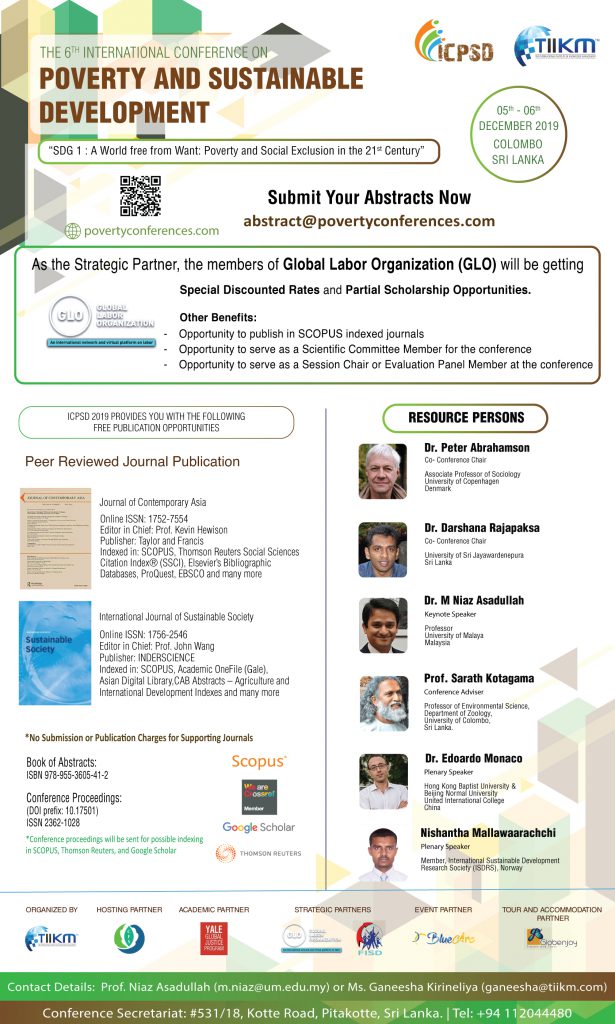
As the Strategic Partner, members of the Global Labor Organization (GLO) will receive special discount rates and partial scholarship opportunities.
Up to 25% discounted rates for the registration fee for the participants of the Global Labor Organization, 15% – Delegate Presenters, 20% – poster presenters, co-authors and Attendees. Also the Global Labor Organization representatives will receive the following benefits: (i) Opportunity to publish in SCOPUS indexed journals, (ii) Opportunity to serve as a Scientific Committee Member for the conference, and (iii) Opportunity to serve as a Session Chair or Evaluation Panel Member at the conference.
If you have any inquires or questions regarding the conference please contact GLO Lead South-East Asia, Prof. Niaz Asadullah (m.niaz@um.edu.my), or TIIKM representative Ms. Ganeesha Kirineliya (ganeesha@tiikm.com).
Author Abstract: Several papers have attempted to estimate and document the impact of conflict on numerous education, health and socioeconomic outcomes. One lesson from this research is the heterogeneity in the effect of violent conflict across and within countries. In this paper we attempt to estimate the casual impact of conflict in Nigeria on welfare related outcomes. The 2009 insurgence of Boko Haram and the Fulani herdsmen versus farmers conflicts have led to a significant increase in violent conflict in the North Eastern and Central parts of Nigeria. However, bouts of violent conflict has existed in different communities across Nigeria since independence. We estimate the general effect of conflict exposure on welfare, across Nigeria using the three waves of the Nigeria General Household Survey (GHS) combined with ACLED conflict data. Employing a fixed effect approach, our results suggest that recent and long term exposure to conflict increased poverty incidence, poverty gap and poverty severity in Nigeria.
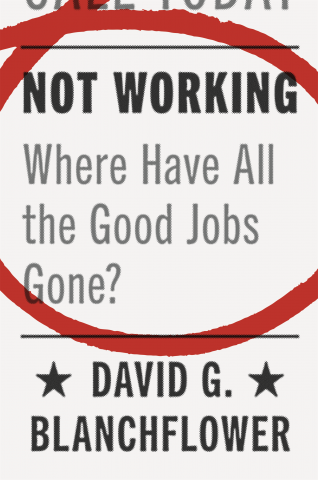
GLO Research Director Danny Blanchflower has just published his challenging and much acclaimed new book: “Don’t trust low unemployment numbers as proof that the labor market is doing fine—it isn’t. Not Working is about those who can’t find full-time work at a decent wage—the underemployed—and how their plight is contributing to widespread despair, a worsening drug epidemic, and the unchecked rise of right-wing populism.”
GLO President Klaus F. Zimmermann: “The book to read this summer. Original, full of evidence based on micro data analysis. Provocative in its conclusions. Entertaining, even if you do not agree. Important to debate for our future.”
David G. Blanchflower is the Bruce V. Rauner Professor of Economics at Dartmouth College, Professor of Economics at the University of Stirling, and a Research Associate at the National Bureau of Economic Research. He is the coauthor of The Wage Curve. Twitter @D_Blanchflower
Danny Blanchflower
A man fishing for solutions
INTERVIEW
GLO: Many people think that the
post-crisis recession is over and employment levels are high again. What is
wrong with this observation?
David G. Blanchflower: Working age employment rates, which calculates employment divided by population – have recovered their pre-recession levels in many countries including the UK, Germany, Japan Canada and France. The main exception is the United States where the employment rate is still below starting levels. That is also true in Denmark, Greece, Norway and Spain. The problem with many of the jobs that have been created over the last decade is that they have been low paid and insecure.
GLO: What do you mean by underemployment,
how is it measured and why do you think it is so challenging?
David G. Blanchflower: Even though the unemployment rate in many countries has fallen a lot and is below 4% in the UK, the US and Germany, wage growth is still benign. That seems to be because of underemployment which has replaced unemployment as the main measure of labor market slack in advanced countries. Underemployment occurs when workers are employed for less hours than they would like at the going wage. The Governor of the Central bank of Australia Philip Lowe in a speech has recently emphasised the importance of underemployment there. It is challenging because underemployment remains above pre-recession levels and seems to be used by firms to keep wages down.
GLO: How to avoid the threatening epidemic of unhappiness and self-destruction?
David G. Blanchflower: Now more than a decade since the onset of recession in advanced countries in 2008 wage growth remains benign. In the UK for example real wages are still 5% below starting levels and have grown more slowly than in any recovery in more than 150 years. Insecurity and the lack of decent paying jobs seems to have a major impact and appease central to the rise of right-wing populist movements, including in the US, France, Italy and Brexit in the UK. Hopelessness, isolation and unhappiness have been on the rise around the world. In the US the rise in deaths of despair – from drug overdoses, heavy drinking and suicide – is of particular concern. Putting the pedal to the metal and running advanced at full-employment, – which still seems a long way off – seems an obvious fix. Stimulative fiscal and monetary policy can lower the unemployment rate a lot more without a big pick-up in wage growth or inflation: then the balance of power will swing back to workers for the first time in decades.
Author Abstract: Guest workers on visas in the United States may be unable to quit bad employers due to barriers to mobility and a lack of labor market competition. Using H-1B, H-2A, and H-2B program data, we calculate the concentration of employers in geographically defined labor markets within occupations. We find that many guest workers face moderately or highly concentrated labor markets, based on federal merger scrutiny guidelines, and that concentration generally decreases wages. For example, moving from a market with an HHI of zero to a market comprised of two employers lowers H-1B worker wages approximately 10 percent, and a pure monopsony (one employer) reduces wages by 13 percent. A simulation shows that wages under pure monopsony could be 47 percent lower, suggesting that employers do not use the extent of their monopsony power. Enforcing wage regulations and decreasing barriers to mobility may better address issues of exploitation than antitrust scrutiny.
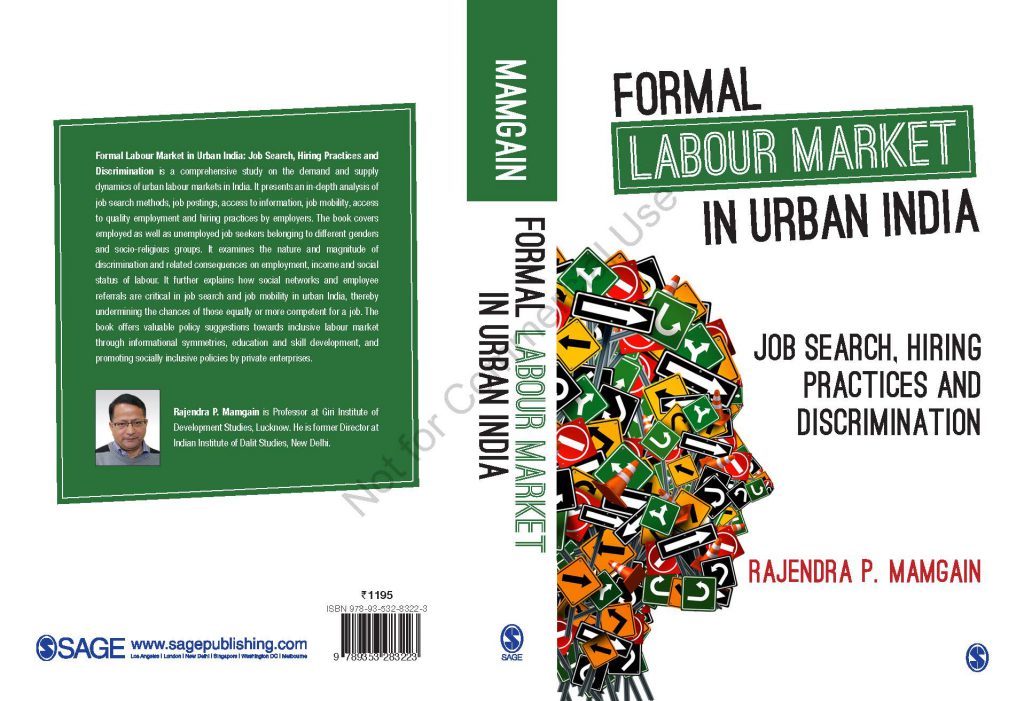
This is a highly insightful book examining the way in which generations old inequalities by caste, ethnicity and religion interact with modern labour markets to reshape the opportunity structures in contemporary India. Its primary strength lies in its careful examination of job search strategies and the processes through which employers choose to interview and hire some candidates while excluding others.
Rajendra P. Mamgainis Professor of Economics, Giri Institute of Development Studies, Lucknow, India. He is a former Managing Editor of the Indian Journal of Labour Economics and former Director, Indian Institute of Dalit Studies, New Delhi.
Table of Content Foreword by Sukhadeo Thorat Preface Introduction: Labour Market Employment and Unemployment Situation in Urban India City-Level Features of Employment and Unemployment Job Search Methods and Access to Jobs Job Mobility in Urban Labour Market Wage Earnings and Inequality Hiring Practices in Urban Labour Market Discrimination and Promoting Inclusive Employment Opportunities References Index
Summary
This book is a comprehensive study on the demand and supply dynamics of urban labour markets in India. It presents an in-depth analysis of job search methods, job postings, access to information, job mobility, access to quality employment and hiring practices by employers. The book covers employed as well as unemployed job seekers belonging to different genders and socio-religious groups. It examines the nature and magnitude of discrimination and related consequences on employment, income and social status of labour. It further explains how social networks and employee referrals are critical in job search and job mobility in urban India, thereby undermining the chances of those equally or more competent for a job. The book offers valuable policy suggestions towards inclusive labour market through informational symmetries, education and skill development, and promoting socially inclusive policies by private enterprises.
Author Abstract: Little literature currently exists on the effects of childcare use on maternal labor market outcomes in a developing country context, and recent studies offer mixed results. We attempt to fill these gaps by analyzing several of the latest rounds of the Vietnam Household Living Standards Survey spanning the early to mid-2010s. Addressing endogeneity issues with a regression discontinuity estimator based on children’s birth months, we find a sizable effect of childcare attendance on women’s labor market outcomes, including their total annual wages, household income, and poverty status. The effects of childcare attendance differ by women’s characteristics and are particularly strong for younger, more educated women. Furthermore, childcare has a medium-term effect and positively impacts men’s labor market outcomes as well.
A new GLO Discussion Paper provides evidence that student employment in line with a job candidate’s field of study impress employers decisions positively.
Author Abstract: Due to the prevalence and important consequences of student work, the topic has seen an increased interest in the literature. However, to date the focus has been solely on measuring the effect of student employment on later labor market outcomes, relying on signalling theory to explain the observed effects. In the current study, we go beyond measuring the effect of student work and we examine for the first time what exactly is being signaled by student employment. We do this by means of a vignette experiment in which we ask 242 human resource professionals to evaluate a set of five fictitious profiles. Whereas all types of student work signal a better work attitude, a larger social network, a greater sense of responsibility, an increased motivation, and more maturity, only student employment in line with a job candidate’s field of study is a signal of increased human capital and increased trainability.
“What is the use of research in public debates and policy-making on immigration and integration? Why are there such large gaps between migration debates and migration realities, and how can they be reduced?”
“Bridging the Gaps: Linking Research to Public Debates and Policy Making on Migration and Integration provides a unique set of studies written by researchers and policy experts who were significantly involved in linking social science research to public policies.”
“Bridging the Gaps argues that we must go beyond the prevailing focus on the research-policy nexus by considering how the media, public opinion, and other dimensions of public debates can interact with research and policy-processes.”
1.
Introduction: Making Linkages Between Research, Public Debates, and Policies on International Migration and Integration –
Martin
Ruhs, Kristof Tamas and Joakim Palme
Part I: Linking Research, Public Debates, and Policy-Making
2.
Research, ‘Experts’, and the Politics of Migration –
Christina Boswell
3.
Research-Policy Dialogues on Migrant Integration in Europe: The Impact of Politicization –
Han
Entzinger, Peter Scholten
4. Informing Realities: Research, Public Opinion, and Media Reports on Migration and Integration – Will Allen, Scott Blinder, Rob McNeil
Part II: National Experiences
5. Independent Experts and Immigration Policies in the UK: Lessons from the Migration Advisory Committee (MAC) and the Migration Observatory (MigObs) –
Martin
Ruhs
6.
The Changing Relationships Between Research, Society and Policy in the Netherlands: Reflections on the
WRR ‘Maxima Report’ –
Monique Kremer
7.
Investigating Immigration and the Sustainability of the Norwegian Welfare State: The Role of Government Commissions –
Grete
Brochmann
8. Gaps and Challenges of Migration Policy Advice: The German Experience – Klaus F. Zimmermann
9.
The Politicization of Evidence-Based Policies: The Case of Swedish Committees –
Kristof
Tamas
10.
Migration Research and Policy in the United States: Between
Admissionists and Restrictionists –
Philip Martin
Part III: International Experiences
11.
Understanding the Role of Evidence in EU Policy Development: A Case Study of the ‘Migration Crisis’ –
Elizabeth
Collett
12.
A Knowledge-Base for the EU External Migration Policy: The Case of the
CARIM Observatories –
Agnieszka
Weinar
13.
Metropolis and Post-Truth Politics: ‘Enhancing Policy Through Research’ –
Howard Duncan
14.
More Research and Fewer Experts: Global Governance and International Migration –
Katy Long
Part IV: Conclusions, Lessons Learnt and the Way Forward
15. Bridging Research, Public Debates, and Policies on Migration and Integration: Lessons Learnt and Ways Forward – Joakim Palme, Martin Ruhs, and Kristof Tamas
In its Winter 2019 issue of “The International Economy”, the Washington DC based magazine of international economic policy, has featured a prominent symposium of views on “Why is Populism on the Rise and What Do the Populists Want?”. Klaus F. Zimmermann contributed to the debate. The link to the full text of the symposium is here. Please find the contribution of Zimmermann also HERE.
Author Abstract: In this paper, we test the conventional wisdom in developing countries of ‘more children, more happiness’ by exploiting the cohort and provincial variations of elderly parents exposed to the one-child policy in China. Using nationally representative survey data from the 2015 China Health and Retirement Longitude Survey, the results from both the ordinary least square and two-stage least square methods find that more children can enhance elderly parents’ subjective well-being (SWB) measured with either life satisfaction or depression mood. The effect is channelled by raising their satisfaction with children and receiving in-kind transfers from children. The heterogeneity analysis also shows that the effect of children on parents’ life satisfaction is heterogenous to sex composition, first-birth gender, and parents’ age. Our study provides new causal evidence of the impact of fertility on elderly parents’ SWB from a developing economy.
Author Abstract: This study provides new evidence on the levels of economic integration experienced by foreigners and naturalized immigrants relative to native Germans from 1994 to 2015. We decompose the wage gap using the method for unconditional quantile regression models by employing a regression of the (recentered) influence function (RIF) of the gross hourly wage on a rich set of explanatory variables. This approach enables us to estimate contributions made across the whole wage distribution. To allow for a detailed characterization of labor market conditions, we consider a comprehensive set of socio-economic and labor-related aspects capturing influences of, e.g., human capital quality, cultural background, and the personalities of immigrants. The decomposition results clearly indicate a significant growing gap with higher wages for both foreigners (13.6 to 17.6 %) and naturalized immigrants (10.0 to 16.4 %). The findings further display a low explanation for the wage gap in low wage deciles that is even more pronounced within immigrant subgroups. Cultural and economic distances each have a significant influence on wages. A different appreciation of foreign educational qualifications, however, widens the wage gap substantially by 4.5 ppts on average. Moreover, we observe an indication of deterioration of immigrants’ human capital endowments over time relative to those of native Germans.
The book positions itself within the discussion on high-skilled self-initiated expatriation (SIE): Taking cross-disciplinary approaches; connecting to theories about international migration and mobility; and moving away from the restrictive human resource management discipline, where the concept of SIE was developed.
Habti, Driss and Maria Elo (2019) Global Mobility of Highly Skilled People: Multidisciplinary Perspectives on Self-initiated Expatriation. Cham, Switzerland: Springer. Details and Table of Contents.
Driss Habti is postdoctoral researcher in sociology of migration at the Karelian Institute, University of Eastern Finland Maria Elo is doctor of economics and lecturer in international business and marketing at the University of Southern Denmark, Odense, Denmark.
Summary:
This volume examines self-initiated expatriates (SIEs), the category of
highly skilled people whose movement from one country to another is by
choice. Although they are not forced
to relocate due to work, conflict or natural disaster, their migration
pattern is every bit as complex. The book challenges previous
theoretical approaches that take for granted a more simplistic view of
this population, and advances that mobility of SIEs
relates to the expatriates themselves, their conditions and the
different structures intervening in their career life course. With their
visible increase worldwide, this book positions itself as a nexus for
this on-going discussion, while linking self-initiated
expatriation to the theoretical landscape of international skilled
migration and mobility. Major interests that catch attention are
transnational practices, work-related experiences and personal life
course, including forms of inequalities in their migration
experiences. The book identifies forms and drivers of migratory
behaviour and provides an argument concerning the broader processes of
mobility and integration. As such, this book constitutes a departure
point for future research in terms of theoretical underpinnings
and empirical rigor on global highly skilled mobility of SIEs. The
collection of empirical case studies offers an insightful analysis for
policy makers, concerned stakeholders and organizations to better cope
with this form of migration.
3 of the 13 chapters:
Habti, D. and Elo, M. (2019) Rethinking Self-Initiated Expatriation in International Highly Skilled Migration. In Driss Habti and Maria Elo (eds.), Global Mobility of Highly Skilled People: Multidisciplinary Perspectives on Self-Initiated Expatriation (1–37). Cham, Switzerland: Springer.
Habti, D. (2019). Mapping drivers of Arab highly skilled self-initiated expatriation to Finland: Personal-professional life pendulum. In Driss Habti & Maria Elo (Eds.), Global mobility of highly skilled people-Multidisciplinary perspectives on self-initiated expatriation (pp. 107–145). Cham, Switzerland: Springer.
Elo,
M. and Habti, D. (2019) Self-Initiated Expatriation Rebooted: A
Puzzling Reality – A Challenge to Migration Research and its Future
Direction. In Driss Habti & Maria Elo (Eds.),
Global mobility of highly skilled people-Multidisciplinary perspectives on self-initiated expatriation
(pp. 293–304). Cham, Switzerland: Springer.
A new GLO Discussion Paper reveals that multiple cultural identities improve the employment outcomes of migrants and enable better post-immigration policies in France.
Author Abstract: The objective of this paper is twofold: first, to determine the immigrants’ ethnic identity, i.e. the degree of identification to the culture and society of the country of origin and the host country and second, to investigate the impact of ethnic identity on the immigrants’ employment outcomes. Using rich survey data from France and relying on a polychoric principal component analysis, this paper proposes two richer measures of ethnic identity than the ones used in the literature, namely: i) the degree of commitment to the origin country culture and ii) the extent to which the individual holds multiple identities. The paper investigates the impact of the ethnic identity measures on the employment outcomes of immigrants in France. The results show that having multiple identities improves the employment outcomes of the migrants and contribute to help design effective post-immigration policies.
Children of low-educated parents benefit significantly from the presence of high-educated parental peers of the same ethnicity.GLO Discussion Paper No. 322 just published in JEBO.
Chakraborty, Tanika & Schüller, Simone & Zimmermann, Klaus F.: Beyond the Average: Ethnic Capital Heterogeneity and Intergenerational Transmission of Education, in: Journal of Economic Behavior and Organization (JEBO), Vol. 163 (2019), pp. 551-569. Published PDF.
GLO Fellows Tanika Chakraborty, Simone Schüller & GLO President Klaus F. Zimmermann
Author Abstract: Estimating the effect of ethnic capital on human capital investment decisions is complicated by the endogeneity of immigrants’ location choice, unobserved local correlates and the reflection problem. We exploit the institutional setting of a rare immigrant settlement policy in Germany, that generates quasi-random assignment across regions, and identify the causal impact of heterogeneous ethnic capital on educational outcomes of children. Correcting for endogenous location choice and correlated unobservables, we find that children of low-educated parents benefit significantly from the presence of high-educated parental peers of the same ethnicity. High educated parental peers from other ethnicities do not influence children’s learning achievements. Our estimates are unlikely to be confounded by the reflection problem since we study the effects of parental peers’ human capital which is pre-determined with respect to children’s outcomes. Our findings further suggest an increase in parental aspirations as a possible mechanism driving the heterogeneous ethnic capital effects, implying that profiling peers or ethnic role models could be important for migrant integration policies.
Author Abstract: Immigration is one of the most debated topics in Europe today, yet little is known about the overall effect of its multiple impacts. The analysis suggests natives need not worry. Increasing immigrant population shares have no statistically significant effects on natives’ well-being in 28 European Union countries over the years 1990- 2017 (EU12) and 2005-2017 (new member states) using macro data aggregated from Eurobarometer surveys. Immigration does not statistically affect natives’ well-being across all scenarios, such as: when observing the raw data or accounting for reverse causality and omitted variables using instrumental variable methods; accounting for whether or not immigrants are from the EU; and for population subgroups, notably the poorly educated and elderly. Refugees also do not statistically affect the well-being of natives. Any negative relations that are observed are not statistically significant and exhibit small magnitudes.
A new GLO Discussion Paper provides evidence that pension benefits lower the propensity of adult children to transfer income to elderly parents in China, and also finds a small crowding-out effect.
Author Abstract: Aging populations in developing countries have spurred the introduction of public pension programs to preserve the standard of living for the elderly. The often-overlooked mechanism of intergenerational transfers, however, can dampen these intended policy effects, as adult children who make income contributions to their parents could adjust their behavior in response to changes in their parents’ income. Exploiting a unique policy intervention in China, we examine using a difference-in-difference-in-differences (DDD) approach how a new pension program impacts inter vivos transfers. We show that pension benefits lower the propensity of adult children to transfer income to elderly parents in the context of a large middle-income country, and we also estimate a small crowd-out effect. Taken together, these estimates fit the pattern of previous research in high-income countries, although our estimates of the crowd-out effect are significantly smaller than previous studies in both middle- and high-income countries.
Author Abstract: An issue of interest in the literature that explores the drivers of inequality is the distributional bearing of tax and transfer policy, where an important theme concerns changes in the relative treatment of alternative population subgroups. We develop an empirical approach for quantifying the value judgements implicit in the relative treatment of demographic subgroups by a tax and transfer system. We apply this approach to UK data reported at annual intervals between 1968 and 2015, documenting remarkable improvements in tax and transfer treatment enjoyed by some population subgroups – particularly families with children and age pensioners – relative to the wider population. We show that accounting for the changing value judgements implicit in tax and transfer policy provides a fresh perspective on the evolution of income inequality and redistribution; one that departs from the prevailing view that UK inequality stopped rising from the early 1990s.
On the joint initiative of the Global Labor Organization (GLO) and the International Journal of Manpower, Francesco Pastore (University of Campania “Luigi Vanvitelli” and GLO) and Klaus F. Zimmermann (UNU-MERIT, Maastricht University and GLO) have edited two special issues of the journal on Advances on School-To-Work Transitions. The project is related to the GLO Thematic Cluster on “School-to-Work Transitions” headed by Francesco Pastore. Part I is now published.
Francesco Pastore and Klaus F. Zimmermann (2019), “Understanding school-to-work transitions”, International Journal of Manpower, Vol. 40, No. 3, pp. 374-378. Pre-publication draft.
Corinna Ghirelli, Enkelejda Havari, Giulia Santangelo and Marta Scettri (2019), “Does on-the-job training help graduates find a job? Evidence from an Italian region”, International Journal of Manpower, Vol. 40, No. 3, pp. 500-524.
Simona Demel, Petr Mariel and Jürgen Meyerhoff (2019), “Job preferences of business and economics students”, International Journal of Manpower, Vol. 40, No. 3, pp. 473-499.
Irene Selwaness and Rania Roushdy (2019), “Young people school-to-work transition in the aftermath of the Arab Spring”, International Journal of Manpower, Vol. 40, No. 3, pp. 398-432.
Paula Rodriguez-Modroño (2019), “Youth unemployment, NEETs and structural inequality in Spain”, International Journal of Manpower, Vol. 40, No. 3, pp. 433-448.
Emanuela Ghignoni, Giuseppe Croce and Alessandro d’Ambrosio (2019), “University dropouts vs high school graduates in the school-to-work transition”, International Journal of Manpower, Vol. 40, No. 3, pp. 449-472.
Jacek Liwiński (2019), “Does it pay to study abroad? Evidence from Poland”, International Journal of Manpower, Vol. 40, No. 3, pp. 525-555.
Gabriella Berloffa, Eleonora Matteazzi, Alina Şandor and Paola Villa (2019), “Gender inequalities in the initial labour market experience of young Europeans”, International Journal of Manpower, Vol. 40, No. 3, pp. 379-397.
Author Abstract: Health at birth is an important indicator of human capital development over the life course. This paper uses longitudinal data from the Young Lives survey and employs instrumental variable regression models to estimate the effect of birth weight on cognitive development during childhood in India. We find that a 10 percent increase in birth weight increases cognitive test score by 8.1 percent or 0.11 standard deviations at ages 5-8 years. Low birth weight infants experienced a lower test score compared with normal birth weight infants. The positive effect of birth weight on a cognitive test score is larger for boys, children from rural or poor households, and those with less-educated mothers. Our findings suggest that health policies designed to improve birth weight could improve human capital in resource-poor settings.
A new GLO Discussion Paper deals with technological change and its impacts on labor markets caused by task demand shifts potentially foster horizontal skill mismatches. The study identifies a wage penalty of roughly 12% for horizontally mismatched individuals.
Author Abstract: Technological change and its impacts on labour markets are a much-discussed topic in economics. Economists generally assume that new technology penetrating the labour market shifts firms’ task demand. Given individuals’ acquired and supplied skills, these task demand shifts potentially foster horizontal skill mismatches, e.g. individuals not working in their learned occupations. In this paper, I first analyse the relation between task shifting technological change and individuals’ horizontal mismatch incidence. Second, I estimate individuals’ mismatch wage penalties triggered by this relation. The present paper proposes an instrumental variable (IV) approach to map this mechanism and to obtain causal estimates on mismatch wage penalties. Applying this empirical strategy yields a wage penalty of roughly 12% for horizontally mismatched individuals.
The Department of Economics at Macquarie University in collaboration with Macquarie University Centre for Health Economy (MUCHE) and Global Labor Organization (GLO) are organizing an international conference entitled the Economics of Health, Inequality and Behavior (WEHIB), to be held in Sydney, Australia over 11-13 November 2019. This multidisciplinary conference aims to foster a series of dialogue among social scientists on the nexus between health, behavior, and inequality across developed and developing societies.
The event is chaired by Kompal Sinha, a Senior Lecturer and HDR Director at the Department of Economics of Macquarie University. Sinha is also an Associate Editor of the Journal of Population Economics and the GLO Research Cluster Lead for Development, Health Inequality and Behavior. Keynote speakers are Lisa Cameron (University of Melbourne), Andrew Jones (University of York), and Klaus F. Zimmermann (UNU-MERIT and Maastricht University).
A new GLO Discussion Paper studies the sectoral patterns of job creation and job destruction in order to distinguish the alternative effects of embodied vs disembodied technological change.
GLO Fellows Giovanni Dosi, Mariacristina Piva, Maria Enrica Virgillito & Marco Vivarelli
Author Abstract: This paper addresses, both theoretically and empirically, the sectoral patterns of job creation and job destruction in order to distinguish the alternative effects of embodied vs disembodied technological change operating into a vertically connected economy. Disembodied technological change turns out to positively affect employment dynamics in the “upstream’’ sectors, while expansionary investment does so in the “downstream’’ industries. Conversely, the replacement of obsolete capital vintages tends to exert a negative impact on labour demand, although this effect turns out to be statistically less robust.
Migrants work and broaden the tax burden and help to adjust in the face of population aging. But they may threaten local social norms and culture when they maintain the culture of their country of origin. The new GLO Discussion Paper debates the balance for aging societies.
Author Abstract: Population ageing affects most countries, especially developed ones. The elderly have increased in number as a result of increased longevity and a parallel decline in fertility. This phenomenon is placing an increasing burden on the young to finance intergenerational transfers to the old, which is creating a threat to the stability of the pension system and the long-run viability of society as a whole. One possible solution is to permit more immigration, which will both increase the labor force and broaden the tax base. Increasing immigration has a variety of effects on the local population, which vary according to age and wealth. One of these is the threat to local social norms and culture since immigrants tend to maintain the culture of their country of origin. This effect increases with the number of immigrants and reduces the attractiveness of immigration as a solution to population ageing. This paper examines immigration as a solution to the problem of ageing population, while considering the implication of immigration on social norms.
Does child health affects the stability of families? A new GLO Discussion Paper shows that family structure variables, such as marriage duration, age when last married, the probability of getting divorced, the probability of getting married and the presence of a spouse/partners in the household, experience a notorious trend break over the life cycle when women have babies in their early forties. It hypothesizes that the observed facts are driven by a significant increase in the risk of having a child with health problems when women enter the last decade of their reproductive life.
Author Abstract: Family structure is usually believed to affect children’s human capital. Is it possible that causality goes in the opposite direction? This paper shows that the behavior of family structure variables over the life cycle dramatically changes when women have babies in their forties. These data regularities align with a significant increase in the risk of having a child with health problems when women enter the last decade of their reproductive life. I present a simple theoretical model that provides a common underlying explanation for the data patterns and generates additional testable implications and apply it to data.
The GLO Discussion Paper proposes a new term, “HATEGOATISM,” for the simultaneous existence of scapegoatism and dehumanization, and a new Economics of Hategoatism. Currently only one subfield of economics regularly embraces hategoatism, which is Libertarianism.
Author Abstract: The word “scapegoat” is defined as “a person made to bear the blame for others,” and similarly, “scapegoatism” refers to “the act or practice of assigning blame or failure to another, as to deflect attention or responsibility away from oneself” (Collins English Dictionary and Dictionary.com, respectively.) While these definitions do not mention economics specifically, in most cases the blame on the scapegoat is economic in nature. Scapegoatism also provides a convenient, though extremely inferior, substitute for valid analyses of economic problems. Scapegoatism, however, has a partner, dehumanization, which is the process of demonizing certain people as less than human and unworthy of humane treatment. Scapegoatism is not only accompanied by dehumanization, but it is often motivated by it. Thus, “scapegoatism” is a euphemism and it is understudied as a result, because there is no single term of art that combines scapegoatism and dehumanization. This paper offers a solution to this semantic dilemma by proposing the new term, “HATEGOATISM,” for the simultaneous existence of scapegoatism and dehumanization. Only one subfield of economics regularly embraces hategoatism, which is Libertarianism (where the “HATEGOAT” is government workers). Economists must lead by example by combating hategoatism, and that requires cleaning their own house first.
Author Abstract: In this paper, we conduct an empirical study of the effect of uncertainty on fertility. The precautionary motive for saving predicts that an increase in uncertainty increases saving by reducing both consumption and fertility. We use a new measure of uncertainty, the World Uncertainty Index, and focus on data from 126 countries for the period from 1996 to 2017. The empirical findings indicate that uncertainty shocks decrease the fertility rate. This evidence is robust to different model specifications and econometric techniques as well as to the inclusion of various controls.
Author Abstract: In this paper, we test the hypothesis that the causal effect of immigrant presence on anti-immigrant votes is a short-run effect. For this purpose, we consider a distributed lag model and adapt the standard instrumental variable approach proposed by Altonji and Card (1991) to a dynamic framework. The evidence from our case study, votes for the UK Independent Party (Ukip) in recent European elections, supports our hypothesis. Furthermore, we find that this effect is robust to differences across areas in terms of population density and socioeconomic characteristics, and it is only partly explained by integration issues.
Gender wage differences are still of much concern, in particular in the United States. A new GLO Discussion Papers adds to our understanding how the gender gap is shaped by multiple different forces such as parenthood, gender segregation, part-time work and unionization.
Author Abstract: This study examines the gender wage gap in the US using two separate cross-sections from the Current Population Survey (CPS). The extensive literature on this subject includes papers which use wage decompositions to divide gender wag gaps into “explained” and “unexplained” components. Problems with this approach include the heterogeneity of the sample data. In order to address the difficulties of comparing like with like this study uses a number of different matching techniques to obtain estimates of the gap. By controlling for a wide range of other influences, in effect, we estimate the direct effect of simply being female on wages. However, to form a complete picture, one should consider that gender wages are affected by a number of other factors such as parenthood, gender segregation, part-time working and unionization. This means that it is not just the core “like for like” comparison between male and female wages that matters but also how gender wage differences interact with other relevant risk factors which are more common for women. That these interactions exist has already been discussed in the literature but evidence that precisely or systematically estimates such effects remains scarce. The most innovative contribution of this study is to do that. Our findings imply that the idea of a single uniform gender pay gap is perhaps less useful than an understanding of how gender wages are shaped by multiple different forces.
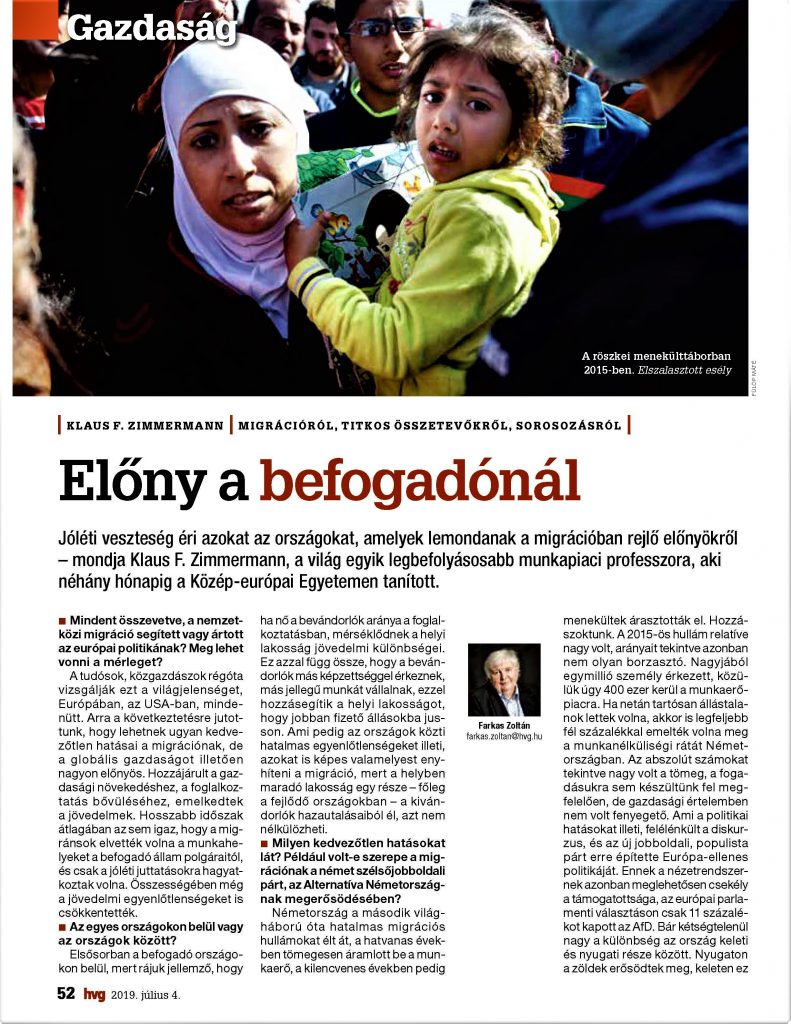
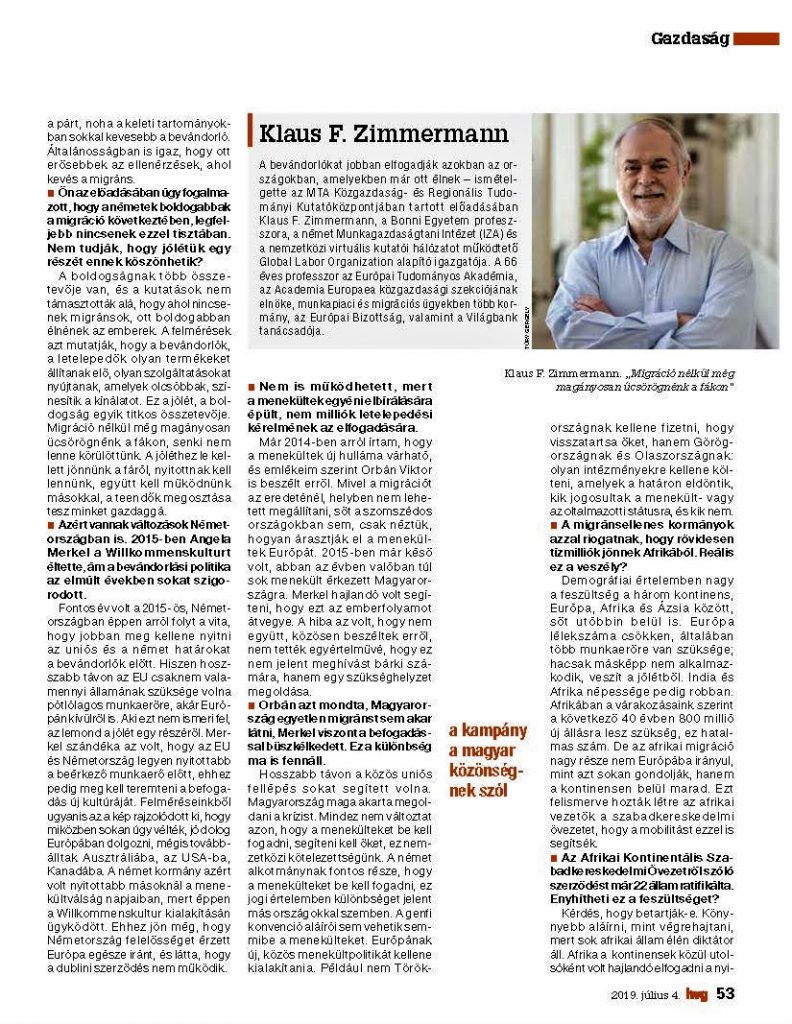
Published on July 4, 2019: hvg. pp. 52-54. Prominent Hungarian News Magazine. MIGRÁCIÓRÓL: Előny a befogadónál (Migration: Advantages for the Natives), in Hungarian. Interviewed by Zoltan Farkas. PDF of text.
Using data for Morocco, the paper provides further evidence that international migration fosters the transfer of political and social norms.
Read more in:
Michele Tuccio, Jackline Wahba and Bachir Hamdouch: “International migration as a driver of political and social change: evidence from Morocco” Journal of Population Economics, online, issue forthcoming.
GLO Fellows Michele Tuccio, Jackline Wahba and Bachir Hamdouch
Author Abstract: This paper focuses on the impact of international migration on the transfer of political and social norms. Exploiting recent and unique data on Morocco, this paper explores whether households with return and current migrants bear different political preferences and behaviors than non-migrant families. Once controlling for the double selection into emigration and return migration, the findings suggest that having a returnee in the household increases the demand for political and social change. This result is driven by returnees mostly from Western European countries, who were exposed to more democratic norms in the destination. However, we find a negative impact of having a current migrant on the willingness of the left-behind households to change. This result is driven by migrants to non-Western countries, where the quality of political and social institutions is lower. Our results are robust to also controlling for destination selectivity.
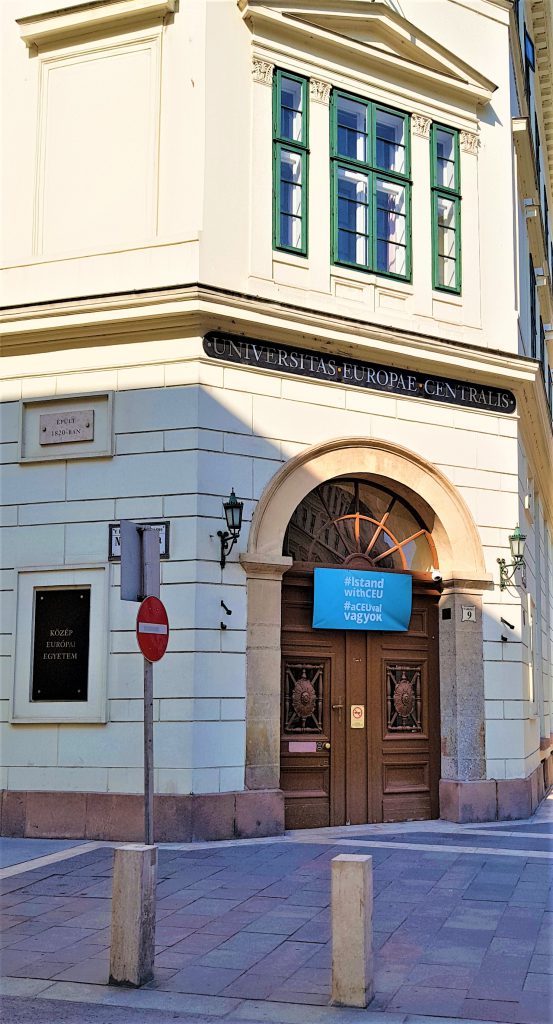
In the Spring 2019 term, GLO PresidentKlaus F. Zimmermann has been the George Soros Visiting Chair Professor at the School of Public Policy of the Central European University (CEU) in Budapest. On June 28, he terminated this engagement and returned to the headquarters of the Global Labor Organization (GLO) in Bonn, Germany. See for a REPORT. Threatened by the Hungarian government, CEU has now moved its teaching to Budapest. Other Hungarian academic institutions are under monitoring by the Hungarian government.
On July 11, 2019, SSP published an interview with Zimmermann about his time in Budapest and views about the situation. LINK to the SPP website. See also text below.
KFZ
SPP: You have been GSVC at SPP. Why SPP/CEU? What does your stay at SPP/CEU offer to you in terms of research, interaction with SPP faculty and students?
KFZ: I am working on European integration and global migration issues, and have published substantially on the European Union East enlargement and its consequences for the wellbeing of European nations. I have visited Budapest a number of times in my life to interact with Hungarian academic institutions. The CEU has over time become a lighthouse institution for the academic transformation of Eastern Europe. CEU’s academic staff and students are so professional, international, multi-ethnic and multidisciplinary; it is a pleasure to interact and learn. My research benefits from the various discussions I had during the visit – with long-term effects. It therefore has been both a pleasure and a great honor the have been the GSVC.
SPP: You have authored a vast body of academic articles, books, edited volumes. Which finding was the most intriguing one, perhaps changing the way we see some policy problems?
KFZ: Unlike what the public and policymakers often think, labor migration is a coming and going. Scientist have called this circular migration. While the inflow is properly noticed, the outflow is often overlooked. If policymakers wish to stop the inflow through regulations or walls, the outcome may be the opposite of what they intended: Workers stay longer, temporary migrants become even permanent, they bring family, and those unwilling to integrate pass these attitudes to their kids who remain disintegrated in the country. At the end there are more than less migrants and their composition is more troublesome. The better solution is free (and legal) labor mobility, where societies, companies and workers are adjusting according to general rules.
SPP: What policy issues are you working on now, and how do they relate to the European project?
Europe sees a rise in nationalism, avoids necessary reform policies and is afraid about foreigners and migration. People think that the world gets better if they ignore the consequences of demographic shifts, climate change and global conflict. This is a global trend, but Europe risks its well-build institutions which brought wealth, wellbeing and peace. Hence, I am writing about the benefits and conditions of well-designed reform policies, world-wide open labor mobility and a proper refugee policy. Europe will collapse if it fails to deal with those challenges.
SPP: You are one of the most prominent advocates of evidence based policy making. What are the necessary conditions for this to work? What is the role of universities in this?
KFZ: For such a policy to work, it needs that policymakers are collaborating with scientists. Researchers have to be willing to address pressing societal issues, execute state-of-the-art research and communicate it properly. They have to provide where possible alternative options, so that politicians can optimize with respect to the opinions of their voters. Policymakers need to listen and be willing to give larger weight to long-term efficiency issues over short-term muddling-through concepts focusing primarily on redistribution policies. Universities and research centers are core in this process, and they can only function with academic freedom. If society attempts to control and command research, the price is loss in welfare and wellbeing.
SPP: You know that Lex-CEU effectively expelling CEU from Hungary. HAS is under pressure, and several other universities. Is this a broader trend, and how should societies and academics respond to this?
KFZ: Although in line with many developments in the world suggesting a decline in the acceptance of science in society, these Hungarian experiences are dramatic. They will have huge damaging long-term effects for the Hungarian economy and society, and possibly push the country out of the European Union. This is a divide between the intellectuals and the ordinary person, a divide between brain and heart. Scientists have to go out to convey their findings, but they also need to activate and motivate the hearts. It is important to work on a European identity, not only to show that Europe creates a better economy.
SPP: You have held several professorial positions, the founding director of a prominent research institute, the Institute for the Study of Labor, the president of Germany’s largest think tank DIW, having significant academic and policy impact. From that experience, can you generalize some key lessons for young researchers, but also students, who aspire to have such an impact?
KFZ: Start as an academic, not as a policy advisor. Publish articles in established respected research journals to create an academic reputation. This is your capital as a policy advisor afterwards. Do not become partisan, or you become a politician and not the independent thinker needed. Wait for the time when the problems become so pressing so that your advice is need. This implies patience and the willingness to execute stand-by research. To be effective, seek the traditional and the social media, to achieve a global standing, and be ready to advise key policymakers at the local or national levels. Be willing to accept the huge administrative and psychological burden of directing large research institutions.
Despite a measured strong cross-sectional relationship between income and health, the study finds no necessary connection between changes in income inequality and changes in health inequality.
Read more in:
Janet Currie,Hannes Schwandt & Josselin Thuilliez: “Pauvreté, Egalité, Mortalité: mortality (in)equality in France and the United States” Journal of Population Economics, online, in print.
Author Abstract: We develop a method for comparing levels and trends in inequality in mortality in the United States and France between 1990 and 2010 in a similar framework. The comparison shows that while income inequality has increased in both the United States and France, inequality in mortality in France remained remarkably low and stable. In the United States, inequality in mortality increased for older groups (especially women) while it decreased for children and young adults. These patterns highlight the fact that despite the strong cross-sectional relationship between income and health, there is no necessary connection between changes in income inequality and changes in health inequality.
The paper studies the migrant-native differences in wealth among older households in Europe which is significant and to the advantage of the natives. The importance of origin country, age at migration, and citizenship status in reducing the gap is shown.
Read more in:
Irene Ferrari: “The nativity wealth gap in Europe: a matching approach “ Journal of Population Economics, online, issue forthcoming.
Author Abstract: This study uses a matching method to provide an estimate of the nativity wealth gap among older households in Europe. This approach does not require imposing any functional form on wealth and avoids validity-out-of-the-support assumptions; furthermore, it allows estimation not only of the mean of the wealth gap but also of its distribution for the common-support sub-population. The results show that on average there is a positive and significant wealth gap between natives and migrants. However, the average gap may be misleading as the distribution of the gap reveals that immigrant households in the upper part of the wealth distribution are better off, and those in the lower part of the wealth distribution are worse off, than comparable native households. A heterogeneity analysis shows the importance of origin, age at migration, and citizenship status in reducing the gap. Indeed, households who migrated within Europe, those who moved at younger ages rather than as adults, and those who are citizens of the destination country display a wealth gap that is consistently smaller over the entire distribution.
The article provides evidence that countries with stronger beliefs that hard work leads to a higher social status (the ‘American Dream’) attract a higher proportion of high-skilled immigrants.
Read more in:
Claudia Lumpe: “Public beliefs in social mobility and high-skilled migration” Journal of Population Economics, Vol. 32 (2019), Issue 3, pp. 981–1008.
Author Abstract: This paper investigates how beliefs of the destination country’s population in social mobility may influence the location choice of high-skilled migrants. We pool macro data from the IAB brain-drain dataset with population survey data from the ISSP for the period 1987–2010 to identify the effect of public beliefs in social mobility on the share of high-skilled immigrants (stocks) in the main OECD immigration countries. The empirical results suggest that countries with higher “American Dream” beliefs, i.e., with stronger beliefs that climbing the social ladder can be realized by own hard work, attracted a higher proportion of high-skilled immigrants over time. This pattern even holds against the fact that existing social mobility in these countries is relatively lower.
Dowry is a common custom in South Asia with rising use and increasing amounts. The paper shows that a higher dowry amount, especially in terms of furniture, electronics, and kitchenware, is positively associated with women’s status in the marital household.
Read more in: Momoe Makino: “Marriage, dowry, and women’s status in rural Punjab, Pakistan” Journal of Population Economics, Vol. 32 (2019), Issue 3, pp. 769-797.
Author Abstract: Dowry is a common custom observed in South Asian countries. Despite alleged negative consequences caused by dowry and the legal ban or restrictions on its practice, the custom has been extended, and recently, dowry amounts seem to be increasing. Compared with public interest in and theoretical studies on dowry, empirical studies are relatively scarce mainly due to data unavailability and inadequacy. We conducted a household survey specifically designed to empirically investigate how dowry is associated with women’s status in the marital household in rural Punjab, Pakistan. The dataset is unique because it gathers information on disaggregated marriage expenses, which enables us to examine the relation between each itemized component of dowry and women’s status. Results show that a higher dowry amount, especially in terms of furniture, electronics, and kitchenware, is positively associated with women’s status in the marital household. The positive association of these illiquid items adds suggestive evidence that in rural Punjab, Pakistan, dowry serves as a trousseau that the bride’s parents voluntarily offer to their daughter.
Does schooling attenuates the genetic predisposition to poor mental health.The GLO Discussion Paper of the Month of June 2019 provides some empirical support, but the findings are not robust.
GLO Fellows Jere Behrman, Carlos Flores and Alfonso Flores – Lagunes
Author Abstract: It is well-established that (1) there is a large genetic component to mental health, and (2) higher schooling attainment is associated with better mental health. Given these two observations, we test the hypothesis that schooling may attenuate the genetic predisposition to poor mental health. Specifically, we estimate associations between a polygenic score (PGS) for depressive symptoms, schooling attainment and gene-environment (GxE) interactions with mental health (depressive symptoms and depression), in two distinct United States datasets at different adult ages- 29 years old in the National Longitudinal Study of Adolescent Health (Add Health) and 54 years old in the Wisconsin Longitudinal Study (WLS). OLS results indicate that the association of the PGS with mental health is similar in Add Health and the WLS, but the association of schooling attainment is much larger in Add Health than in the WLS. There is some suggestive evidence that the association of the PGS with mental health is lower for more-schooled older individuals in the WLS, but there is no evidence of any significant GxE associations in Add Health. Quantile regression estimates also show that in the WLS the GxE associations are statistically significant only in the upper parts of the conditional depressive symptoms score distribution. We assess the robustness of the OLS results to omitted variable bias by using the siblings samples in both datasets to estimate sibling fixed-effect regressions. The sibling fixed-effect results must be qualified, in part due to low statistical power. However, the sibling fixed-effect estimates show that college education is associated with fewer depressive symptoms in both datasets.
GLO DP Team Senior
Editors: Matloob Piracha (University of Kent) & GLO; Klaus F.
Zimmermann (UNU-MERIT, Maastricht University and Bonn University). Managing Editor: Magdalena Ulceluse, University of Groningen. DP@glabor.org
A new study examines how migration of an adult child affects the emotional health of elderly parents left-behind in China. It finds that migration reduces happiness and leads to more loneliness among the elderly.
Read more in:
Juliane Scheffel & Yiwei Zhang:How does internal migration affect the emotional health of elderly parents left-behind? Journal of Population Economics, Vol. 32 (2019), Issue 3, pp. 953-980.
Author Abstract: The ageing population resulting from the one-child policy and massive flows of internal migration in China pose major challenges to elderly care in rural areas where elderly support is based on a traditional inter-generational family support mechanism. We use data from the China Health and Retirement Longitudinal Study to examine how migration of an adult child affects the emotional health of elderly parents left-behind. We identify the effects using fixed effects and IV approaches which rely on different sources of variation. We find that migration reduces happiness by 6.6 percentage points and leads to a 3.3 percentage points higher probability of loneliness. CES-D scores of elderly parents are severely increased pushing average scores close to the cut-off indicating clinical levels of depressive symptoms. As emotional health is a key determinant of the overall health status, our findings have significant impacts on economic development in China.
Unemployment reduces the life satisfaction of the partner! However, while wives’ life satisfaction does not recover even two years after their partners becoming unemployed, husbands only react to their wives’ joblessness during the first year of unemployment.
Read more in: Milena Nikolova & Sinem H. Ayhan:Your spouse is fired! How much do you care? Journal of Population Economics, Vol. 32 (2019), Issue 3, pp. 799-844.
Author Abstract: This study is the first to provide a causal estimate of the cross-spouse subjective well-being consequences of unemployment. Using German panel data on married and cohabiting partners for 1991–2015 and information on exogenous unemployment entry due to workplace closure, we show that one spouse’s unemployment experience reduces the life satisfaction of the other partner. The estimated spillover is at least one quarter of the effect of own unemployment and is equally pronounced among female and male partners. In addition, while wives’ life satisfaction does not recover even two years after their partners becoming unemployed, husbands only react to their wives’ joblessness during the first year of unemployment. Our results are insensitive to income controls and the couple’s position in the income distribution, thus reflecting the non-pecuniary costs of unemployment. Although the income loss hardly explains the negative spillover effects of unemployment on spousal life satisfaction, we document large declines in spousal satisfaction with household income and living standards. This finding supports the argument that the costs of unemployment borne by indirectly affected spouses extend beyond the loss of consumption opportunities and might be rather related to social values attached to market work. Being robust to a battery of sensitivity checks, our findings imply that public policy programs aimed at mitigating unemployment’s negative consequences need to target not only those directly affected but also cohabiting spouses.
The value of immigrants for the UK has played an important role in the Brexit debate. A recent GLO Discussion Paper explores the effects of immigration on the allocation of occupational physical burden and work injury risk using data for England and Wales. Migrants seem to reduce the risks for UK-born workers and they report report lower injury rates than natives. The paper is now published in the Journal of Population Economics and available online. See also below.
GLO Discussion Paper now published in the Journal of Population Economics, July 2019, Volume 32, Issue 3, pp 1009–1042; already 2.4k downloads on July 5, 2019! OPEN ACCESS….
GLO FellowsOsea Giuntella, Fabrizio Mazzonna, Catia Nicodemo & Carlos Vargas-Silva
Author Abstract:This paper studies the effects of immigration on the allocation of occupational physical burden and work injury risks. Using data for England and Wales from the Labour Force Survey (2003–2013), we find that, on average, immigration leads to a reallocation of UK-born workers towards jobs characterized by lower physical burden and injury risk. The results also show important differences across skill groups. Immigration reduces the average physical burden of UK-born workers with medium levels of education, but has no significant effect on those with low levels. We also find that that immigration led to an improvement self-reported measures of native workers’ health. These findings, together with the evidence that immigrants report lower injury rates than natives, suggest that the reallocation of tasks could reduce overall health care costs and the human and financial costs typically associated with workplace injuries.
A recent GLO Discussion Paper explores the vote on the Swiss minaret initiative in 2009 as a natural experiment to identify the effect of newly revealed reservations towards immigrants on their location choices. The research finds that the probability of immigrants to relocate to a municipality that unexpectedly revealed stronger negative attitudes towards them is significantly reduced in the time after the vote. The effect seems to apply to all immigrant groups – Muslim, non-European and European -, and to be stronger for high-skilled immigrants. The paper is now published in the Journal of Population Economics and available online. See also below.
GLO Discussion Paper of the Month of January 2019 published in the Journal of Population Economics, July 2019, Volume 32, Issue 3, pp 1043–1095!
Abstract:In a national ballot in 2009, Swiss citizens surprisingly approved an amendment to the Swiss constitution to ban the further construction of minarets. The ballot outcome manifested reservations and anti-immigrant attitudes in regions of Switzerland which had previously been hidden. We exploit this fact as a natural experiment to identify the causal effect of negative attitudes towards immigrants on foreigners’ location choices and thus indirectly on their utility. Based on a regression discontinuity design with unknown discontinuity points and administrative data on the population of foreigners, we find that the probability of their moving to a municipality which unexpectedly expressed stronger reservations decreases initially by about 40 percent. The effect is accompanied by a drop of housing prices in these municipalities and levels off over a period of about 5 months. Moreover, foreigners in high-skill occupations react relatively more strongly highlighting a tension when countries try to attract well-educated professionals from abroad.
Intergenerational altruism explains between 24 and 42% of the Northward migration!
Read more in:
John Gardner:Intergenerational altruism in the migration decision calculus: evidence from the African American Great Migration, forthcoming in the Journal of Population Economics.
Author Abstract: It is widely believed that many migrations are undertaken at least in part for the benefit of future generations. To provide evidence on the effect of intergenerational altruism on migration, I estimate a dynamic residential location choice model of the African American Great Migration in which individuals take the welfare of future generations into account when deciding to remain in the Southern USA or migrate to the North. I measure the influence of altruism on the migration decision as the implied difference between the migration probabilities of altruistic individuals and myopic ones who consider only current-generation utility when making their location decisions. My preferred estimates suggest that intergenerational altruism explains between 24 and 42% of the Northward migration that took place during the period that I study, depending on the generation.
A recent GLO Discussion Paper found that girls living in localities with return migrants in Mali are less likely to be circumcised. This effect is driven mainly by the returnees from Côte d’Ivoire, suggesting that, in addition to punitive action against those who practice Female Genital Mutilation (FGM) or information campaigns, having lived in an African country where FGM practice is not customary is equally influential. This is evidence for the relevance of social remittances through return migration here by improving social norms. The paper is now accepted for publication in the Journal of Population Economics and already available online. See the detailed discussion (in French) in a newsletter.
See also below.
GLO Discussion Paper of the Month of March 2019 now forthcoming in the Journal of Population Economics!
Abstract:In this paper, we investigate the power of migration as a mechanism in the transmission of
social norms, taking Mali and Female Genital Mutilation (FGM) as a case study. Mali has a strong
FGM culture and a long-standing history of migration. We use an original household-level
database coupled with census data to analyze the extent to which girls living in localities with
high rates of return migrants are less prone to FGM. Malians migrate predominantly to other
African countries where female circumcision is uncommon (e.g. Côte d’Ivoire) and to countries
where FGM is totally banned (France and other developed countries) and where anti-FGM
information campaigns frequently target African migrants. Taking a two-step instrumental
variable approach to control for the endogeneity of migration and return decisions, we show
that return migrants have a negative and significant influence on FGM practices. More precisely,
we show that this result is primarily driven by the flow of returnees from Cote d’Ivoire. We also
show that adults living in localities with return migrants are more informed about FGM and in
favor of legislation. The impact of returnees may occur through several channels, including
compositional effects, changes in return migrants’ attitudes toward FGM, and return migrants
convincing stayers to change their FGM practices.
In April – June 2019, Klaus F. Zimmermann has been the George Soros Visiting Chair Professor at the School of Public Policy of the Central European University (CEU) in Budapest. On June 28, he terminated this engagement and returned to the headquarters of the Global Labor Organization (GLO) in Bonn, Germany, which he leads as the President. Major activities in Budapest were:
June 20: Budapest, Hungarian Academy of Sciences. Research Seminar provided on Global Labor Economics. Report.
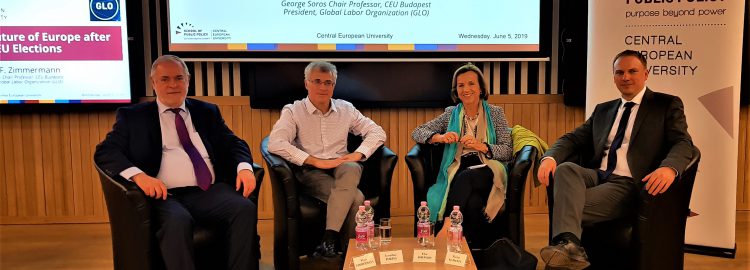
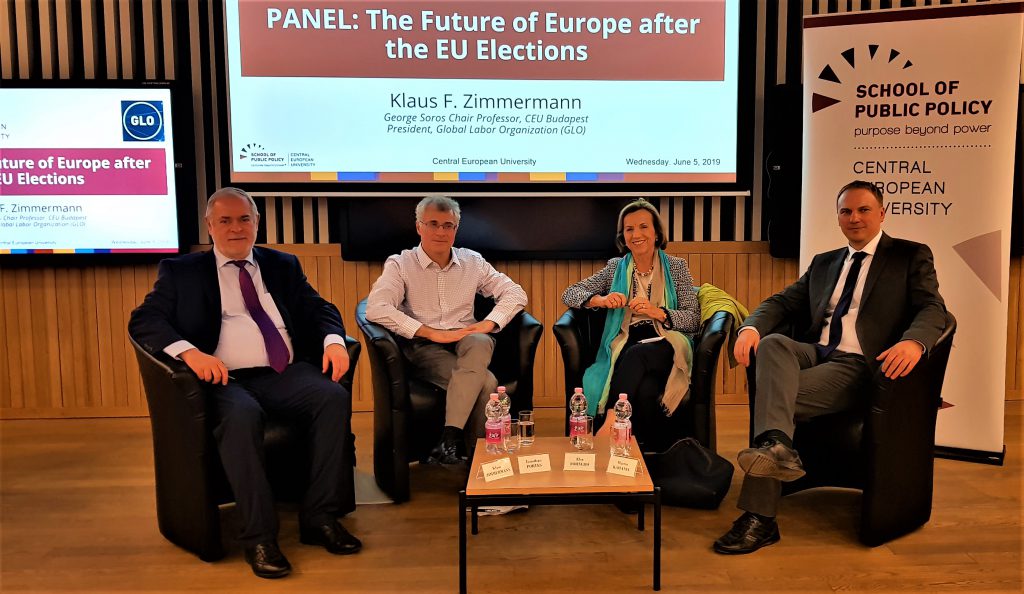
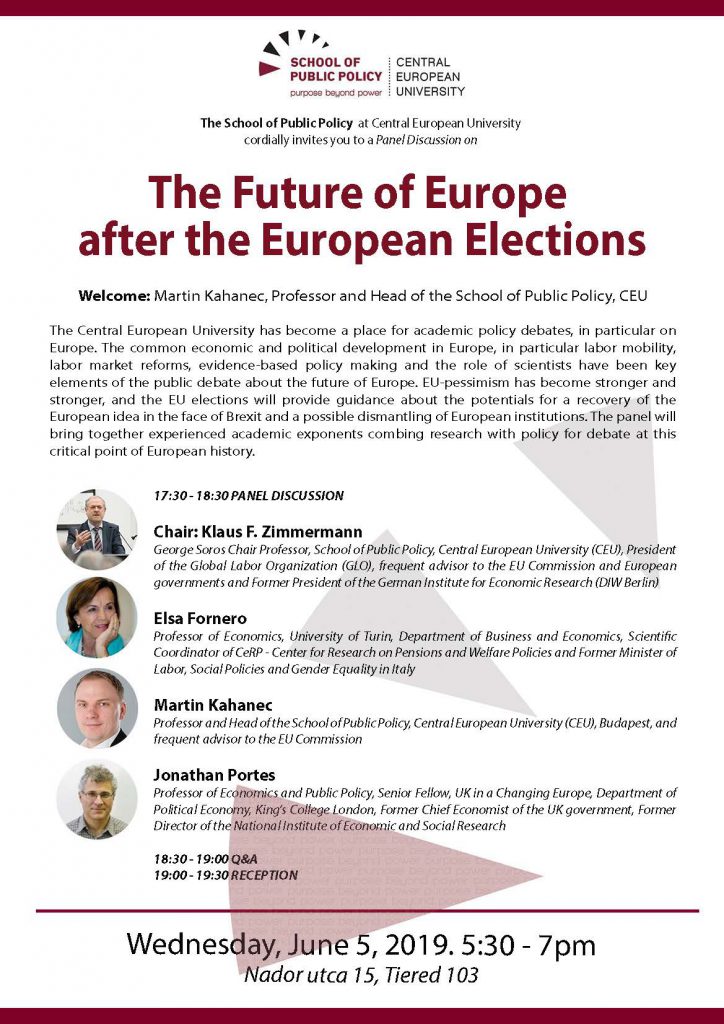
June 5: Budapest, Hungary. Central European University (CEU), The Future of Europe after the European Elections, Chair of the Panel with Martin Kahanec (Budapest), Elsa Fornero (Turin) and Jonathan Portes (London). Report.
May 8: Budapest. George Soros Public Lecture, Central European University (CEU), School of Public Policy. Report.
May – June: Budapest. Central European University (CEU), School of Public Policy. Lecture on Global Labor Economics for the CEU students. Report.
Forced by the Hungarian government, CEU is moving to Vienna. The Hungarian Academy of Sciences experiences a strict supervision of the Hungarian government. This is a sad development in a country, which was once the window to freedom.
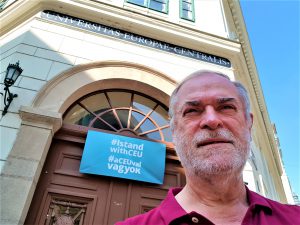
In front of the CEU major building in Budapest:
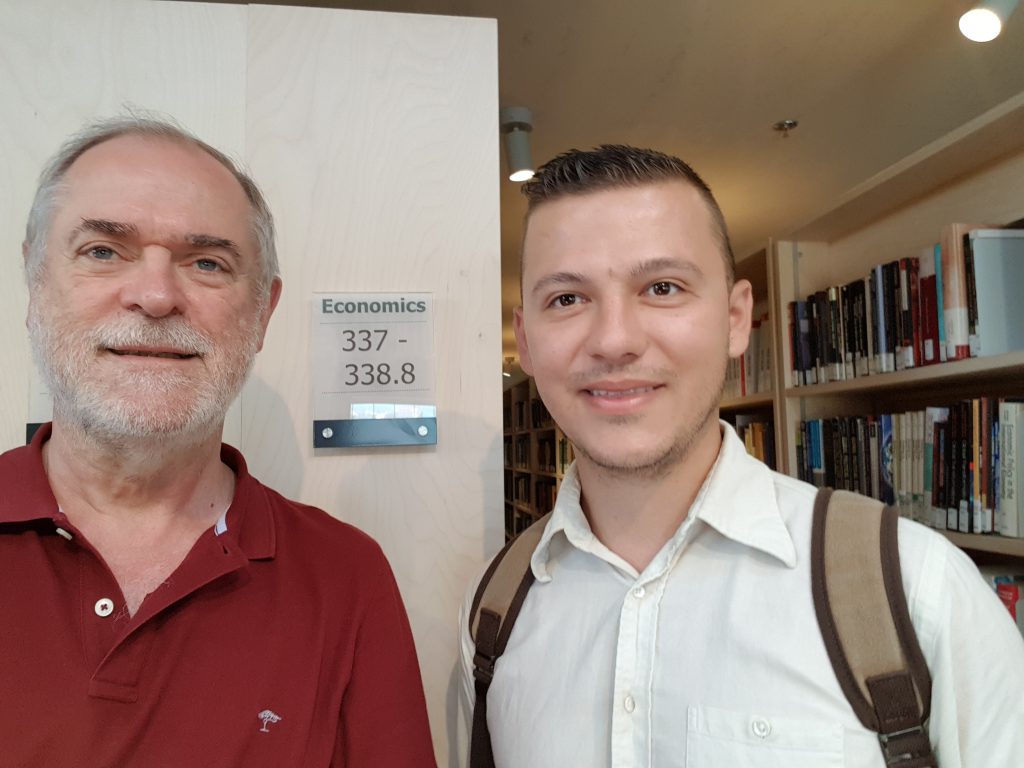
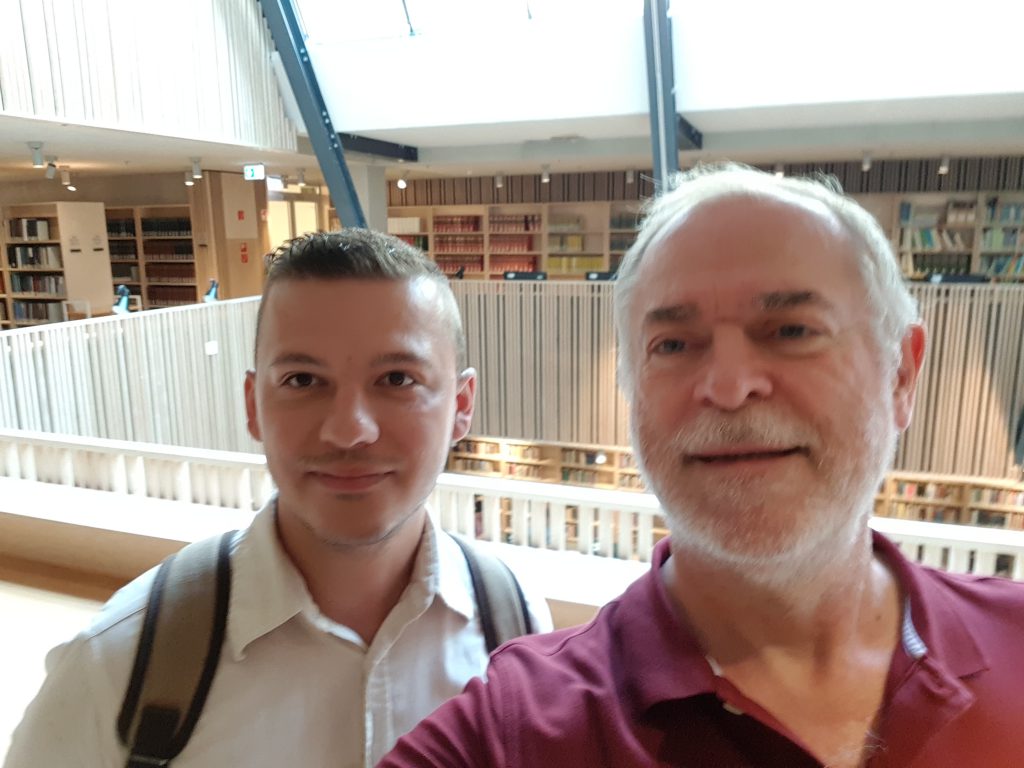
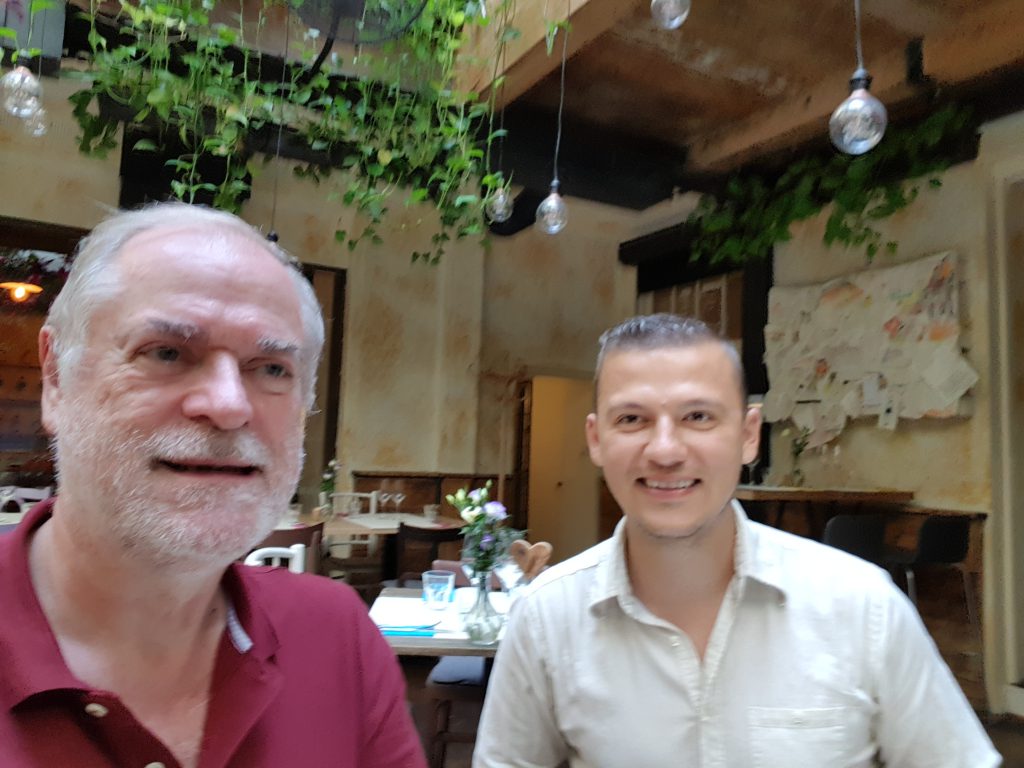
With Research Assistant Svetlin Iliev at the CEU library (both left) and after the farewell lunch on June 27.
Thanks to a lovely city and its people for a wonderful visit at challenging times.
Theme: “Inclusive Growth and Sustainable Socio-Economic Transformation” June 12-14, 2019, College of Business and Economics, University of Rwanda, Kigali , and at Hotel NOBLEZA, Kigali
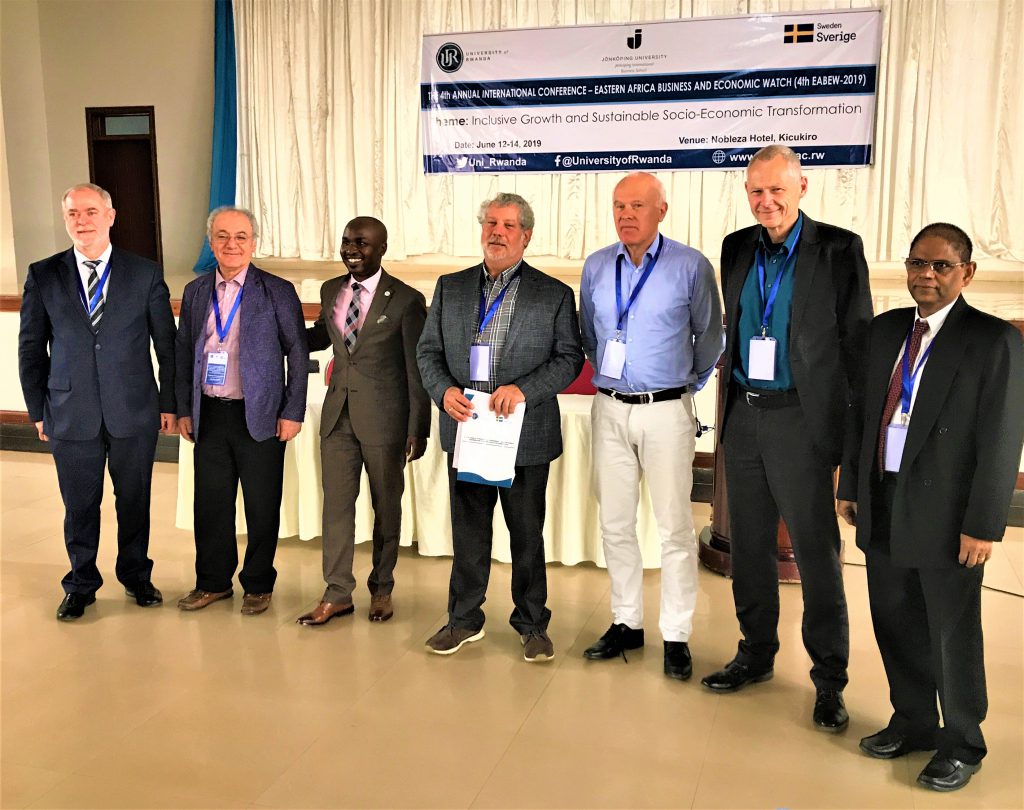
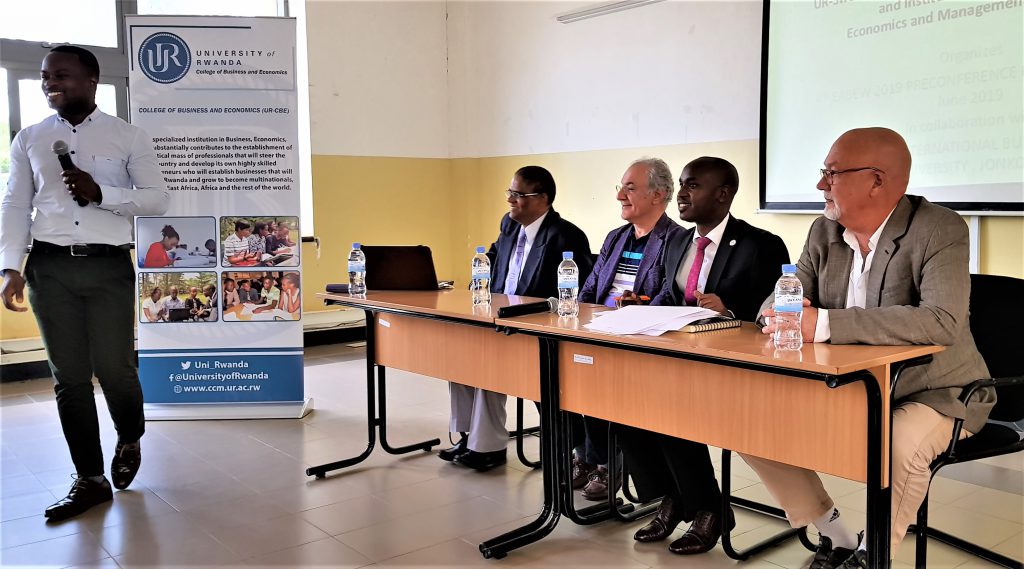
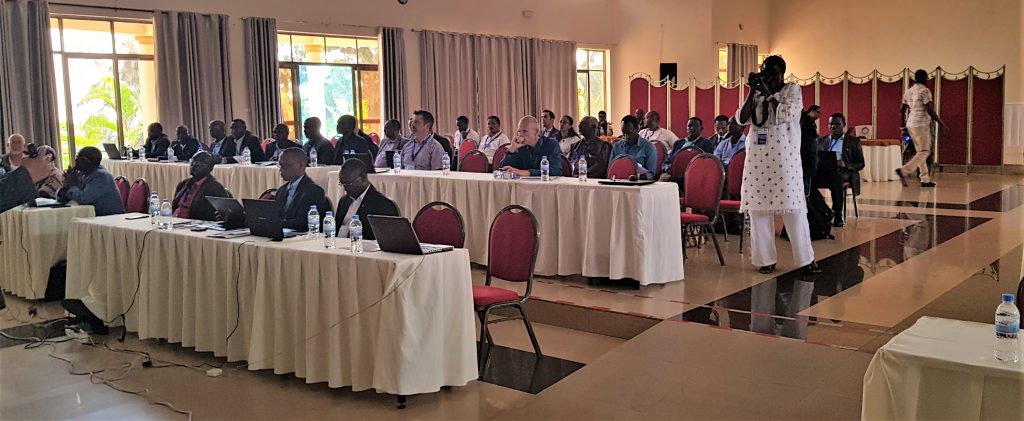
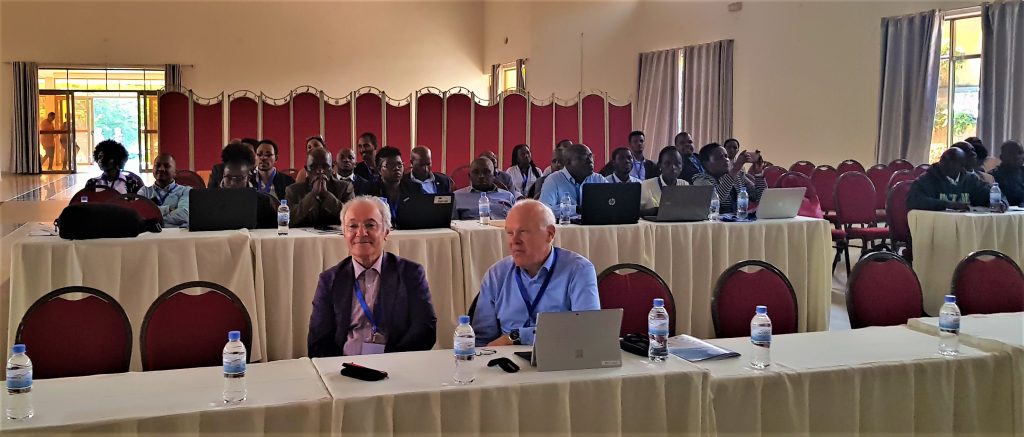
June 12-14, 2019: Kigali, Rwanda.College of Business and Economics, University of Rwanda and Hotel Nobleza hosted the 4th EABEW Conference (International Conference of Eastern Africa Business and Economic Watch) on “Inclusive Growth and Sustainable Socio-Economic Transformation” with GLO support. GLO Fellows Manfred Fischedick, Almas Heshmati, Hans Lööf and GLO PresidentKlaus F. Zimmermann were among the invited speakers. Almas Heshmati is the academic Lead of the GLO Research Cluster on “Labor Markets in Africa”. GLO Fellow Rama B. Rao , University of Rwanda, was the Chair of the Organizing Committee of the conference.
High quality invited and contributed papers in plenary and parallel sessions. Original evidence based theoretical, methodological, empirical research, policy or practice oriented research papers on the theme were presented by researchers, academicians, and industry practitioners in the areas of economics and business management and other interdisciplinary fields.
Keynote speakers and key organizers (from the right): Rama B. Rao (University of Rwanda and GLO), Manfred Fischedick (Wuppertal Institute for Climate, Environment & Energy, Germany, and GLO), Hans Lööf (Royal Institute of Technology, Sweden, and GLO), Benson Honig (McMaster University), Faustin Gasheja (Principal, College of Business and Economics, University of Rwanda ), Almas Heshmati (Jönköping International Business School, Sweden, and GLO), and Klaus F. Zimmermann (Central European University, Budapest, Hungary, and President, GLO, Bonn, Germany).
Keynote speeches were:
Klaus F. Zimmermann: The Value of Global Labor Mobility
Manfred Fischedick: Climate Change and Sustainable Socio-Economic Transformation
Hans Lööf: Knowledge Spillover, Innovation and Exporting
Almas Heshmati: Sustainable Development in Rwanda
Benson Honig: Researching the “other”: Successful Approaches and Ongoing Challenges Toward Generalizability
Scenes from the conference at the University of Rwanda (first row on June 12) and in the conference facilities of Hotel Nobleza (second row on June 13 – 14). Second and third picture, person from the right: GLO Fellow Lars Hartvigson (Jönköping University, Sweden).
GLO President Klaus F. Zimmermann (i) in front of the Nobleza conference center, (ii) after his keynote speech with university representative, (iii) discussing on the right and (iv) with the speakers and some participants of the sessions he chaired.
Since 2013, GLO Fellow Friederike Welter is head of the Institut für Mittelstandsforschung (IfM) Bonn, a policy-oriented independent research institute on small business and entrepreneurship issues (www.ifm-bonn.org). She also holds a professorship at the University of Siegen. Friederike Welter has broad experiences in applied and policy-related research on entrepreneurship and small business, much of it in an international context. She is a member of several policy-related advisory boards for federal and state ministries and for international bodies. She was President of the European Council for Small Business and Entrepreneurship (2007-2009). For her work on small business and entrepreneurship, she has been honored as ECSB Fellow (2011), as Wilford L. White Fellow of the International Council of Small Business (ICSB, 2014) and she recently received the Greif Research Impact Award (2017). The Frankfurter Allgemeine Zeitung regularly lists her among the most influential economists in Germany.
André Pahnke has studied economics at the Leibnitz University Hannover. First, he worked as a research fellow at the Institut für Arbeitsmarkt- und Berufsforschung, Nuremberg. Since 2011, Dr. Pahnke is a researcher at the Institut für Mittelstandsforschung (IfM), Bonn. His main research fields are International Comparative SME Research, Finance and Apprenticeship Training.
GLO Research for Policy Note No. 2 – Theme 3. Future of work
The German Mittelstand: an antithesis to Silicon Valley entrepreneurship?
by Friederike Welter & André Pahnke
At the international level, many policy makers, academics and business observers are interested in understanding Germany’s “secret economic weapon”, its Mittelstand. It is therefore not at all surprising that foreign officials and business people are making pilgrimages to Germany to learn from the Mittelständler. At the same time, German politicians, journalists, and entrepreneurs travel to the Silicon Valley, to learn from what they perceive to be a vibrant start-up ecosystem, fostering the seemingly endless creation of highly innovative, technology-orientated, venture capital-backed gazelles and unicorns. In meetings with policy makers, one of us is regularly asked why Germany could not have its own Microsoft, Google, Amazon or Facebook. Such statements reflect a current debate in Germany: some perceive the German Mittelstand as a low growth, low-tech and non-innovative approach while in contrast the Silicon Valley entrepreneurship is regarded as the salvation for a doomed German economy. In our recent paper (Pahnke and Welter, 2019), we therefore set out to critically review the assumption of the Mittelstand as an antithesis to Silicon Valley entrepreneurship. We suggest that future research and policies should stand back from dichotomies such as “Mittelstand versus Silicon Valley entrepreneurship” and instead acknowledge the vibrant diversity and heterogeneity of entrepreneurship. ____________________
What we should know
Mittelstand is not just about size. There is some confusion about the
meaning of the term “Mittelstand”,
not only in the media but also among academia. It is often used as a synonym to Small Medium
Entreprises (SMEs). However, the small
size of Mittelstand businesses is rather
a by-product of other key characteristics. Mittelstand entrepreneurs should be first characterized by their independent
ownership. They are typically owned by an individual or a family, who is actively
involved in the strategic development and management decision-making of their
companies and bears the entrepreneurial risks and liabilities of these
decisions. The identity of ownership and management should therefore be seen as
a key feature when studying Mittelstand
ventures.
Mittelstand is
a mindset. The ideal business
model of the Mittelstand combines ownership,
leadership and organizational characteristics with individual value systems and
attitudes. Due to a number of positive connotations with the term “Mittelstand” in Germany, even large
companies – in which the identity
feature of the ownership and management is not present – still perceive themselves as Mittelstand. Therefore, emotions, passion and feelings of belonging,
play an important role for understanding the Mittelstand.
Mittelstand is
important for the economy and the society. The Mittelstand
is generally considered to be the backbone of the German economy because of its
economic contribution in terms of annual sales, export turnover, net value
added, employment generation and apprenticeship training. Many studies illustrate, in addition, its substantial contribution
to both the economy and the society. Beyond the provision of employment, goods
and services, the specific ownership-management structure of the Mittelstand is associated with high
levels of social, inter-generational, and regional responsibilities.
Mittelstand is
as innovative but often in a different way. Regarding the perceived lack of “innovativeness” in Mittelstand firms in comparison to
Silicon Valley entrepreneurship, we argue that this is related to a narrow view
of innovation. As soon as we apply a wider understanding of what constitutes
innovation, the Mittelstand is by no
means less innovative. Mittelstand
and Silicon Valley entrepreneurship differ with respect to innovations because
of different industry structures and target groups. While Silicon Valley
innovations are very consumer-oriented and visible to all of us, Germany’s
digital and disruptive technologies are first and foremost “deep tech” hidden
in products and processes of other companies.
Mittelstand has
different patterns of employment growth. Silicon Valley entrepreneurship is generally seen as
creating many jobs in a relatively short period of time. In contrast,
employment growth in Mittelstand
ventures has been slower and happening over a longer period of time; although
there are also gazelles in Germany. Such comparisons between the Silicon Valley
and the Mittelstand are however
problematic: they compare apples (a single high-growth company) to oranges (a
whole segment of the German economy).
We need more, not less attention to the Mittelstand!
For obvious reasons, the Mittelstand is often seen as an
exclusively German phenomenon: it has deep roots in the German history; it
stands for a specific German variety of capitalism; and it is strongly
influenced by previous and current institutional arrangements in Germany. In
our view, however, the Mittelstand is an excellent example of every day
entrepreneurship, demonstrating how entrepreneurship that builds on a deep sense
of responsibility and solidarity can shape an economy and society and
contribute to its world standing. In this regard, the core characteristics of
the Mittelstand stand in stark
contrast to Silicon Valley entrepreneurship; although one should not overlook important
similarities, too. Overall, the Mittelstand
is a vibrant segment of the economy. It is competitive, innovative as well as growth
oriented; sometimes by other means that are less visible than the well-known
uni- or decacorns from the Silicon Valley.
References
Berghoff, H. (2006). The End of Family Business? The Mittelstand and German Capitalism in Transition, 1949-2000. The Business History Review, https://doi.org/10.2307 /25097190
Fear, J. (2014). The secret behind Germany’s thriving ‘Mittelstand’ businesses is all in the mindset. The Conversation. http://theconversation.com/the-secret-behind-germanys-thriving-mittelstand-businesses-is-all-in-the-mindset-25452.Accessed 28 November 2017.
Gantzel, K.-J. (1962). Wesen und Begriff der mittelständischen Unternehmung. Abhandlungen zur Mittelstandsforschung, 4. Wiesbaden: Springer.
Pahnke, A.; Welter, F. (2019): The German Mittelstand: antithesis to Silicon Valley entrepreneurship?, Small Business Economics, 52 (2), 345-358.
Ross Range, P. (2012). The German Model. Report. Handelsblatt. http://www.handelsblatt.com/politik/konjunktur/report-the-german-model /6966662.html. Accessed 28 November 2017.
Logue, D. M., Jarvis, W. P., Clegg, S., & Hermens, A. (2015). Translating models of organization: Can the Mittelstand move from Bavaria to Geelong? Journal of Management & Organization, 21(01), 17-36.
The Economist (2014). German lessons: Many countries want a Mittelstand like Germany’s. It is not so easy to copy. http://www.economist.com/news/business/21606834-many-countries-want-mittelstand-germanys-it-not-so-easy-copy-german-lessons. Accessed 28 November 2017.
NOTE: Opinions expressed here are those of the authors and not of the GLO, which has no institutional position.
Accessible childcare services enhance women’s labor market performances and reduce gender gaps, now supported by research for Vietnam. The GLO Discussion Paper of the Month of May 2019 explores the relationship between the use and availability of childcare and maternal employment in the context of this emerging Asian country.
Abstract:Little literature currently exists on the effects of childcare use on maternal labor market outcomes in a developing country context, and recent studies offer mixed results. We attempt to fill this gap by analyzing several of the latest rounds of the Vietnam Household Living Standards Survey spanning the early to mid-2010s. Addressing endogeneity issues with a regression discontinuity estimator based on children’s birth months, we find a sizable effect of childcare attendance on women’s labor market outcomes, including their total annual wages, household income, and poverty status. The effects of childcare attendance differ by women’s characteristics and are particularly strong for younger, more educated women. Furthermore, childcare has a medium-term effect and positively impacts men’s labor market outcomes as well.
GLO DP Team Senior
Editors: Matloob Piracha (University of Kent) & GLO; Klaus F.
Zimmermann (UNU-MERIT, Maastricht University and Bonn University). Managing Editor: Magdalena Ulceluse, University of Groningen. DP@glabor.org
May 29-31: Coventry, UK. 28thEBES conference. The Eurasia Business and Economics Society(EBES) met with support of the Global Labor Organization (GLO) at the Coventry Business School. For the full program see here. EBES President Klaus F. Zimmermann, who is also the President of GLO, had opened the EBES event.
Opening of the conference (from the left): Heather McLaughlin, Academic Dean, Faculty of Business and Law, Coventry University, United Kingdom Panagiotis Andrikopoulos, Executive Director and Professor of Finance, Centre for Financial and Corporate Integrity (CFCI), Coventry University, Coventry, United Kingdom Uchenna Tony-Okeke, Director of the Coventry Business School Trading Floor, Faculty of Business and Law, Coventry University, United Kingdom Mehmet Huseyin Bilgin, EBES Vice-President, GLO, & Istanbul Medeniyet University, Turkey
EBES Fellowship to David Audretsch(left), Indiana University, USA, introduced by Marco Vivarelli (right):
GLO members were involved in two important conference panel sessions:
EBES & GLO Panel on “The Future of Europe and Brexit after the EU Election”:
09:30-10:30 Chair & Introduction: Klaus F. Zimmermann, President, EBES & GLO & Central European University, Budapest, Hungary Mehmet Huseyin Bilgin, EBES, GLO, & Istanbul Medeniyet University, Turkey Matloob Piracha, Director GLO & University of Kent, United Kingdom Dorothea Schäfer, DIW Berlin, GLO, & Jönköping University, Sweden Marco Vivarelli, GLO& Universita Cattolica del Sacro Cuore in Milano, Italy
GLO Director Matloob Piracha
JOURNAL EDITORS SPECIAL SESSION:How to Publish in WOS Journals?
14:30-15:50 Klaus F. Zimmermann, Editor-in-Chief, Journal of Population Economics (SSCI) David B. Audretsch, Editor-in-Chief, Small Business Economics (SSCI) Marco Vivarelli, Editor-in-Chief, Eurasian Business Review (SSCI) Dorothea Schäfer, Editor-in-Chief, Eurasian Economic Review (Scopus & ESCI)
Editor-in-Chiefs (from the right): David Audretsch (Small
Business Economics), Marco Vivarelli (Eurasia Business Review) &
Klaus F. Zimmermann (Journal of Population Economics) — all present in
Coventry
Quo Vadis Europe after the European elections? Martin Kahanec and Klaus F. Zimmermann (both Budapest) debated on June 5, 2019 with Elsa Fornero (Turin) and Jonathan Portes (London) the consequences and perspectives for Europe in front of a larger audience assembled at the Central European University in Budapest. Zimmermann, President of the Global Labor Organization (GLO), was chairing and moderating the event; Fornero, Kahanec and Portes are GLO Fellows.
The common economic and political development in Europe, in particular labor mobility, labor market reforms, evidence-based policy making and the role of scientists have been key elements of the public debate about the future of Europe. EU-pessimism has become stronger and stronger, and the recent EU elections provide guidance about the potentials for a recovery of the European idea in the face of Brexit and a possible dismantling of European institutions. The panel brought together experienced academic exponents combing research with policy for debate at this critical point of European history.
Klaus F. Zimmermann, George Soros Chair Professor, School of Public Policy, Central
European University (CEU), President of the Global Labor Organization (GLO), frequent
advisor to the EU Commission and European governments and Former President of
the German Institute for Economic Research (DIW Berlin); Chair & Panelist
Populism and anti-globalism is on the rise.
Evidence-based policymaking is losing weight.
The value of migration and international institutions is questioned.
The freedom of academic institutions gets under threat.
Scientist are challenged to analyze and to respond to this development when also their insights are ignored.
Voters move away from centrist parties, who lose majority.
Pro-European liberals and greens become stronger and are now a third force.
Anti-parties (anti-Europe, anti-migration) are stronger, but not dramatically.
This is all a vote for a revival of the European idea.
Facing strong global challenges from Asia, Africa and the USA, Europe needs to stick together and develop from its strength.
More Europe not less is needed in the interest of the European nations and its people.
This implies re-inventing the European idea and export some of its great institutions: social institutions, education and training and labor mobility.
Elsa Fornero, Professor of Economics, University of Turin, Department of
Business and Economics, Scientific Coordinator of CeRP – Center for Research on
Pensions and Welfare Policies and Former Minister of Labor, Social Policies and
Gender Equality in Italy; Panelist
Reforms must live in society with the people – workers, politicians, pensioners, etc. It is not a purely technical problem.
We, technocrats, believed in reforms but the society did not accept them. The society misunderstood the policies as austerity measures.
Economic models are dealing with prosperity, but real policymaking is about elections, which are always around the corner.
The populists saw the weak points of reformists and the discontent of people and exploited them.
Labor mobility and work in Europe should be reestablished as a right of the individuals and this should be in the center of the new Europe.
We should strengthen the civil society –politicians and the elites should go out and talk to the people.
Martin Kahanec, Professor and Dean of the School of Public Policy, Central European University (CEU), Budapest, and frequent advisor to the EU Commission; Panelist
These elections showed the discontent between East and West, South and North, globalists and localists
In the 90s the region had a dream – get rid of the Soviets, which unified the societies. And move back to Europe – Schengen, EU, Eurozone, etc. However, after they joined the EU there is a vacuum of dreams. What is our next mission?
Although the lowest election participation was in Slovakia, it is a EU positive country.
Elites and workers feared migration from outside of Europe. But not internal labor mobility.
Internal mobility helps build bridges over the old cleavages, but is also beneficial economically.
Europe should have a policy for external migration which tackles the aging population challenge. The EU needs a migration framework, which is economically profitable, but also needs to have control and be predictable.
Jonathan Portes, Professor of Economics and Public Policy, Senior Fellow, UK in a
Changing Europe, Department of Political Economy, King’s College London, Former
Chief Economist of the UK government, Former Director of the National Institute
of Economic and Social Research; Panelist
The long term forces behind Brexit were not migration, but that the EU is not only an economic but also a political project. And the British felt that their positions in the world were threatened. Sentiments in this direction grew after the world economic crisis.
The Britishattitude towards migration has changed after the referendum, becoming more positive. It has to do with a drop in the migration from the EU, and an increase from the outside. The gaps created were filled with workers from outside of the EU, and the need was better understood.
The lack of control scared people because they wanted the “right” immigration
If one provides a sense of control and of the existing trade-offs, the situation will approve.
Thanks to the failure of May we are likely to have a hard Brexit or to reverse the results and stay in the EU. There is no middle ground anymore. Even if in a second vote the result would be “remain” – the issue would not be settled.
People thought that Brexit would be easy and not painful; they now realize how wrong they were.
If Germany turns into success its refugee immigration, then Germans would send to Europe a tremendously positive example.
From the left during the panel:Klaus F. Zimmermann, Chair, Budapest and Bonn; Jonathan Portes, London; Elsa Fornero, Turin; and Martin Kahanec, Budapest and Vienna.
After the panel during a joint dinner from the left: The Honorable Tanya Cook, USA; CEU Professor Anil Duman and GLO Fellow; Turin Professor and Former Labor Minister Elsa Fornero; CEU Dean and Professor Martin Kahanec; and Klaus F. Zimmermann, George Soros Chair, CEU, and GLO President.