A new GLO Discussion Paperfinds that the effect of early childcare attendance differs between native and immigrant children. Early childcare seems to be particularly relevant for immigrant children from a disadvantaged background.
The Global Labor Organization (GLO)
is an independent, non-partisan and non-governmental organization that
functions as an international network and virtual platform to stimulate
global research, debate and collaboration.
Author Abstract: This paper investigates the impact of attending early childcare on second generation immigrant children’s cognitive outcomes. Our analysis draws on administrative data on the entire population of students in fifth grade collected by the Italian Institute for the Evaluation of the Educational System (INVALSI) for school years 2014/2015 to 2016/2017 matched to unique administrative records on the early childcare public available slots at the municipal level. Our identification strategy exploits cross-sectional and time series variation in the provision of early childcare service across Italian municipalities as an instrument for individual early childcare attendance. Our results point out that the effect of early childcare attendance differs between native and immigrant children. Although we find no effects for Italian children, our estimates show a positive and significant effect on literacy test scores for immigrant children of low educated mothers, which suggests that early childcare may be particularly relevant for immigrant children from a disadvantaged background.
Gender pay gaps are still of much concern, in particular in the United States. A new GLO Discussion Paper adds to our understanding how the gender gap is shaped by multiple different forces such as parenthood, gender segregation, part-time work and unionization.
GLO Fellows Francesco Pastore & Allan Webster The paper is also GLO Discussion Paper No. 363, 2019.
Author Abstract: This study examines the gender wage gap in the USA using two separate cross-sections from the Current Population Survey (CPS). The extensive literature on this subject includes wage decompositions that divide the gender wage gap into “explained” and “unexplained” components. One of the problems with this approach is the heterogeneity of the sample data. In order to address the difficulties of comparing like with like, this study uses a number of different matching techniques to obtain estimates of the gap. By controlling for a wide range of other influences, in effect, we estimate the direct effect of simply being female on wages. However, a number of other factors, such as parenthood, gender segregation, part-time working, and unionization, contribute to the gender wage gap. This means that it is not just the core “like for like” comparison between male and female wages that matters but also how gender wage differences interact with other influences. The literature has noted the existence of these interactions, but precise or systematic estimates of such effects remain scarce. The most innovative contribution of this study is to do that. Our findings imply that the idea of a single uniform gender pay gap is perhaps less useful than an understanding of how gender wages are shaped by multiple different forces.
Read also the Lead Article of issue 4 (2019): Gautam Hazarika, Chandan Kumar & Sudipta Sarangi: “Ancestral ecological endowments and missing women“ Journal of Population Economics, Vol. 32 (2019), Issue 4 (October), pp. 1101-1123 Journal Website, complete issue 4. Paper PDF – OPEN ACCESS. GLO Fellows Gautam Hazarika, Chandan Kumar Jha & Sudipta Sarangi
A new GLO Discussion Paperfinds for Italy a gender gap of 5% to 8% in hourly wages among PhD holders with sizeable differences by sector of employment and field of specialization.
The Global Labor Organization (GLO)
is an independent, non-partisan and non-governmental organization that
functions as an international network and virtual platform to stimulate
global research, debate and collaboration.
GLO Fellows Lorenzo Cicatiello, Giuseppe Lucio Gaeta & Sergio Pinto
Author Abstract: A growing number of academic studies are devoting their attention to the study of the gender wage gap. This paper contributes to the literature by analyzing the existence of this gap specifically among those who hold the highest possible educational qualification, i.e. a PhD. The analysis relies on Italian cross-sectional data collected through a highly representative survey of the employment conditions of PhD holders. The econometric analysis is carried out by means of OLS regression, Oaxaca-Blinder decomposition analysis and quantile decomposition. Findings suggest that a gender gap in hourly wages exists among PhD holders, that it lies approximately between 5% and 8%, with sizeable differences by sector of employment and field of specialization, and that such a gap is largely unexplained.
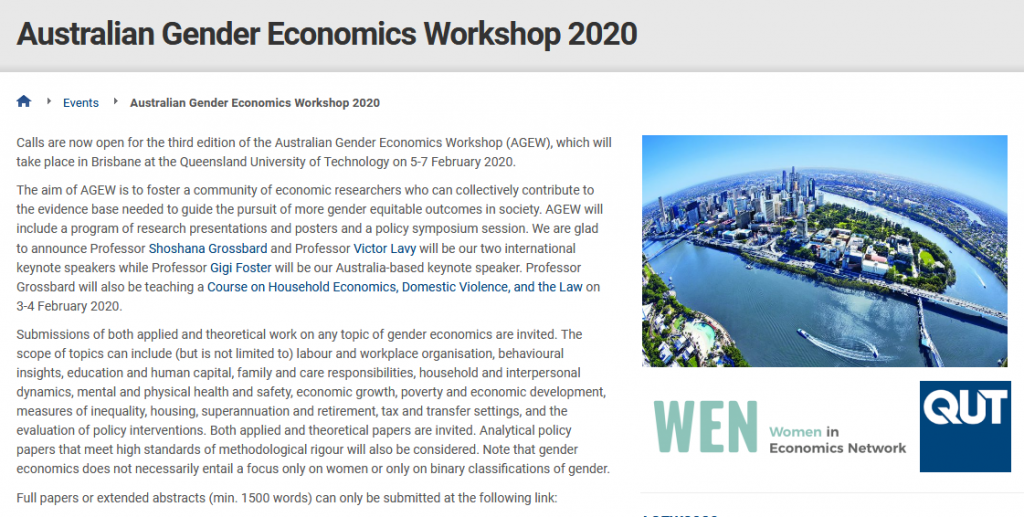
The third edition of the Australian Gender Economics Workshop (AGEW) will take place in Brisbane at the Queensland University of Technology on 5-7 February 2020.
The aim of AGEW is to foster a community of economic researchers who can collectively contribute to the evidence base needed to guide the pursuit of more gender equitable outcomes in society.
Submissions of both applied and theoretical work on any topic of gender economics are invited.
Victor Lavy and GLO Fellows Shoshana Grossbard & Gigi Foster are the keynote speakers.
GLO Fellows Tina Rampino (Chair) & Rigissa Megalokonomou are among the members of the AGEW2020 Organizing Committee.
Full papers or extended abstracts (min. 1500 words)
A new GLO Discussion Paperon the Great Mexico-US migration finds that large families per se do not boost offspring out-migration. The likelihood of migrating is higher for sons and decreases sharply with birth order.
The Global Labor Organization (GLO)
is an independent, non-partisan and non-governmental organization that
functions as an international network and virtual platform to stimulate
global research, debate and collaboration.
Author Abstract: We investigate how fertility and demographic factors affect migration at the household level by assessing the causal effects of sibship size and structure on offspring’s international migration. We use a rich demographic survey on the population of Mexico and exploit presumably exogenous variation in family size induced by biological fertility and infertility shocks. We further exploit cross-sibling differences to identify birth order, sibling-sex, and sibling-age composition effects on migration. We find that large families per se do not boost offspring out-migration. Yet, the likelihood of migrating is not equally distributed within a household, but is higher for sons and decreases sharply with birth order. The female migration disadvantage also varies with sibling composition by age and gender.
Most of the studies on how electoral outcomes in Western Europe and in the US are influenced by the presence of immigrants in the neighborhood provide evidence that living in an area with a greater number of immigrants increases the probability of voting for anti-immigrant parties. The immediate policy implication would be that people want to restrict immigration tout court. But is this so?
In a recent GLO Discussion Paper and forthcoming in the Journal of Population Economics, we contribute to the debate on this topic by analyzing the dynamic aspects related to this effect. This is to investigate if policies should be concerned with the time and geographical concentration of new arrivals more than on their number and focus on integration as well as coping ability of local populations. In particular, we formulate the hypothesis that hostility toward immigration is temporary: there is “hate at first sight” only.
We focus on the 2004, 2009 and 2014 European elections in the United Kingdom, a country in which the immigration issue has been central to all of the latest electoral outcomes. The UK Independent Party (Ukip), a party founded in 1993 by Conservatives who were cross with the EU, became a strongly anti-immigration party under the leadership of Nigel Farage. It boosted its votes from 15.6% in 2004 to 26.8% in 2014 in correspondence with an increase in the number of immigrants from 8% to 11% of the total population. ____________________
What we do.
We first
test for a short-run effect of the presence of immigrants on votes for Ukip. In our statistical model we add to
the share of immigrants the 2-year migration flows, as this is the time lag suggested
by time series tests. After having verified that the appropriate statistical
conditions for time consistency are satisfied, we proceed to our main analysis.
Our models control for unemployment,
demographic variables, and population and include specifications with fixed
effects for each area and with an instrumental variable approach.
Previous
studies on Denmark and Italy find that hostility is stronger in rural areas. Immigration
to larger urban centers has generally started before immigration to more rural
areas, which can explain why previous studies have found a different effect in
these two different contexts. Therefore, we test if this difference is
completely explained by the time path of immigration or if there is something
more, maybe related to political and cultural factors.
We explore
potential issues related to integration. Do changes in unemployment, welfare
expenditures per capita or in the number of crimes explain the short-run effect
of the presence of immigrants? These are very common explanations, as
individuals may feel that immigrants are to be blamed for increased unemployment,
for reduced access to welfare or for an increasing number of crimes.
What we find.
The effect of
immigration on anti-immigrant votes is indeed a short-run effect. Areas where there
has been an acceleration of new arrivals by 1 percentage point see an increase
in votes for Ukip by 1.1-1.2 p.p.. In other words, immigration flows boost Ukip
votes. In contrast, an increase of 1 p.p. in the share of immigrants
corresponds to 1.7-1.9 p.p. fewer votes for Ukip.
There is something more to hostility in rural areas than
just the time path of immigration. First, we replicate previous evidence that
the long-run effect of immigration is declining by population density. Second,
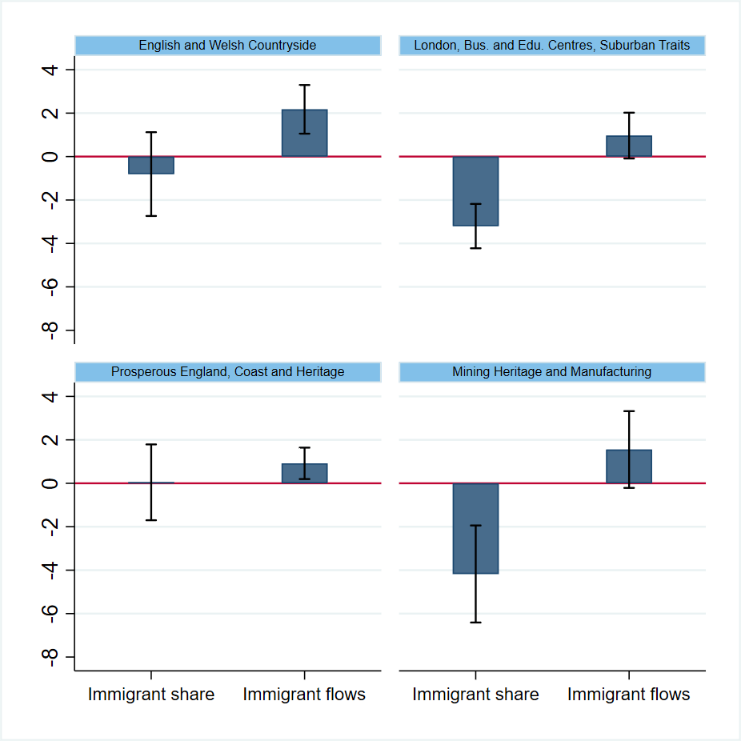
if we look at heterogeneity by socioeconomic characteristics, we find that the effect of immigration flows, although positive and
significant in all UK, is different in magnitude across areas and reaches a
peak of 2.1 p.p. in the “English and Welsh Countryside” (see Figure 1). Only in
“London cosmopolitan, Suburban traits and Business and Education centres” and
“Mining Heritage and Manufacturing” the share of immigrants has a negative
significant effect. This further suggests that political and cultural factors may be more relevant
in explaining the difference in votes across areas than the difference between
urban and rural areas.
Looking more closely at
integration issues, in areas that have diminishing welfare benefits per capita
immigration flows have a stronger effect on votes for Ukip. Increase in
unemployment and in crimes do not seem to matter in relation to hostility to
immigration. It is to note that the coefficient of immigration flows always
stays significant, suggesting that there is substantially more that is left
unexplained.
Figure 1
– UKIP votes by supergroups of area: estimated coefficients and confidence
intervals for immigrant share and flows.
————————–
Our findings clearly substantiate that the “hate at first sight” effect , e.g the impact of immigration on the ascent of anti-immigrant parties as the result of the short-term material consequences and/or identity reactions induced by migration flows, is indeed a temporary phenomenon. Two main policy implications follow. First, there is a need to pay closer attention to how flows are distributed over time and space: it is probably better to allow immigrants to arrive in small waves and distribute recent arrivals in a homogeneous manner and based on local political and cultural factors, rather than in large ones and concentrated in certain areas. Second, policies should focus more on integration across its cultural, social and economic dimensions. Clearly, in the long run, social forces can drive toward integration; however, policies can expedite this process. In fact, we find that the electoral impact of immigration is weaker and shortly reverted when more welfare resources become available. Therefore, policies and resources should aim both at facilitating the integration process of migrants as well as the local population’s ability to cope with the changes.
References
Barone G, D’Ignazio A, De Blasio G, Naticchioni P (2016). Mr. Rossi, Mr. Hu and politics. The role of immigration in shaping natives’ voting behavior. J Public Econ 136: 1–13.
Brunner B, Kuhn A (2018). Immigration, cultural distance and natives’ attitudes Towards immigrants: Evidence from Swiss voting results. Kyklos 71(1): 28-58.
Dustmann C, Vasiljeva K, Damm AP (2018). Refugee migration and electoral outcomes. Rev Econ Stud online.
Halla M, Wagner AF, Zweimüller J (2017). Immigration and voting for the far right. J Eur Econ Assoc 15(6): 1341-1385.
Harmon NA (2018). Immigration, ethnic diversity, and political outcomes: Evidence from Denmark. Scand J Econ 120(4): 1043-1074.
A new GLO Discussion Paperfinds that almost 85 percent of “engineering” and “economics and administrative science” faculty students describe health and elderly care as the two major concerns they have for their old ages.
The Global Labor Organization (GLO)
is an independent, non-partisan and non-governmental organization that
functions as an international network and virtual platform to stimulate
global research, debate and collaboration.
Author Abstract: University students represent nearly more than half of the youth population (age group of 15-24) in Turkey. Meanwhile, the latest demographic data shows that they will constitute a majority of the elder generation in the context of the recent rapid aging trend in the near future. That said, and although the number of studies related to the students’ perceptions of old ages are increasing in recent years, there is still room to extend our understanding of the influence of demographics, social and economic patterns on students’ self perceptions of old age. To investigate the Turkish students’ views towards their own 65+ ages, a questionnaire is applied to 450 students from two different universities located in different regions in Turkey. Survey analysis shows that, almost 85 percent of “engineering” and “economics and administrative science” faculty students describe health and elderly care as the two major concerns in their old ages. On the contrary, answers of the two faculties differentiated clearly in terms of happiness, ability to save more and living with someone else in their old ages. Also, students accept retirement period as a reflection of aging and most of the students claim they had never thought about the aging process before. Yet, female and male students describe the meaning of retirement as the most comfortable period and a period that makes no sense, respectively.
A new GLO Discussion Paperindicate that male and female immigrants from countries with a higher concentration of Protestant missionaries tend to exhibit higher levels of English language proficiency and earnings, and those from countries with a greater concentration of Catholic missionaries exhibit lower levels of both, compared to countries with lower concentrations of missionaries.
The Global Labor Organization (GLO)
is an independent, non-partisan and non-governmental organization that
functions as an international network and virtual platform to stimulate
global research, debate and collaboration.
Author Abstract: Purpose: The purpose of this paper is to explore how potential exposure to missionary activity impacts both English language proficiency and labor market earnings of male and female immigrants to the United States. Design/Methodology/Approach: This study uses the pooled files of the American Community Survey (2005-09). To estimate the relationship between the missionary activity of both Protestants and Catholics on an immigrant’s English language proficiency using a linear probability model and their labor market earnings using the human capital earnings function that is estimated with an ordinary least squares model. Among other relevant variables, the analysis controls for the colonial heritage of the immigrant’s country of origin. Findings: Overall, and within colonial heritages, our results indicate that male and female immigrants from countries with a higher concentration of Protestant missionaries tend to exhibit higher levels of English language proficiency and earnings, and those from countries with a greater concentration of Catholic missionaries exhibit lower levels of both, compared to countries with lower concentrations of missionaries. Furthermore, a greater proficiency in English enhances earnings. One of the important implications of the findings in this paper is that a “missionary variable” often used in other studies is too aggregate and may mask important findings because of strikingly different effects of Protestant and Catholic activities and characteristics of the missionaries. Originality/value: This study explores for the first time how, through a missionary concentration variable, potential exposure to missionary activity impacts the English language proficiency and earnings of immigrants.
A new GLO Discussion Paperfinds evidence that immigrants are more likely to engage in informal education and, conditionally on participation, they allocate more time to these activities.
The Global Labor Organization (GLO)
is an independent, non-partisan and non-governmental organization that
functions as an international network and virtual platform to stimulate
global research, debate and collaboration.
Author Abstract: In this paper we study the allocation of time devoted to informal learning and education, i.e. those activities carried out during leisure time and outside formal education courses which boost individuals’ human and social capital. For immigrants the private investment in these activities is likely to have relevant external effects as informal learning and education enhances the likelihood of greater socio-economic integration in the host society. We first develop a simple theoretical framework, which allows us to highlight the different constrains/opportunity costs faced by immigrants as compared with natives. Then, we empirically investigate the determinants of participation in informal education using the American Time Use Data (ATUS; period 2003-2015) which contains detailed information on daily time budgets of a large sample of immigrants and natives in the US. Consistently with a theoretical model of time allocation we find evidence that immigrants are more likely to engage in informal education and, conditionally on participation, they allocate more time to these activities. Over time, immigrants show a higher degree of assimilation into the host society. Our results also highlight heterogeneous patterns across gender.
A new GLO Discussion Paper proposes a simple solution to the independence of irrelevant alternatives (IIA) problem in the Choo and Siow (2006) model. The original marriage matching function gets modified by an adjustment factor that improves its empirical properties.
The Global Labor Organization (GLO)
is an independent, non-partisan and non-governmental organization that
functions as an international network and virtual platform to stimulate
global research, debate and collaboration.
Author Abstract: This paper proposes a simple solution to the independence of irrelevant alternatives (IIA) problem in Choo and Siow (2006) model, overcoming what is probably the main limitation of this approach. The solution consists of assuming match-specific rather than choice-specific random preferences. The original marriage matching function gets modified by an adjustment factor that improves its empirical properties. Using the American Community Survey, I show that the new approach yields significantly different results affecting the qualitative conclusions of the analysis. The proposed solution to the IIA problem applies to other settings in which the relative “supply” of choices is observable.
A new GLO Discussion Paperfinds that those who married prior to migration, who first married at an older age, who are better positioned in the labor market and are less closely connected to their ethnic origins are less likely to be divorced in the United States.
The Global Labor Organization (GLO)
is an independent, non-partisan and non-governmental organization that
functions as an international network and virtual platform to stimulate
global research, debate and collaboration.
Author Abstract: This paper analyzes the status of being currently divorced among European and Mexican immigrants in the U.S., among themselves and in comparison to the native born of the same ancestries. The data are for males and females age 18 to 55, who married only once, in the 2010-2014 American Community Surveys. Among immigrants, better job opportunities, measured by educational attainment, English proficiency and a longer duration in the U.S. are associated with a higher probability of being divorced. Those who married prior to migration and who first married at an older age are less likely to be divorced. Those who live in states with a higher divorce rate are more likely to be divorced. Thus, currently being divorced among immigrants is more likely for those who are better positioned in the labor market, less closely connected to their ethnic origins, and among Mexican immigrants who live in an environment in which divorce is more prevalent.
A new GLO Discussion Paperfinds that asset diversity increased between 2007 and 2009, in particular with age, education and income. It is lower at the bottom of the wealth distribution.
The Global Labor Organization (GLO)
is an independent, non-partisan and non-governmental organization that
functions as an international network and virtual platform to stimulate
global research, debate and collaboration.
Author Abstract: We apply diversity indices, such as the Gini-Simpson index and entropy related indices, to the study of the distribution of individual asset holdings in the United States in 2007 and 2009. We examine the impact of the 2008 recession on asset diversity and the way individual socio-economic characteristics as well as important life events affect this measure. The focus of our analysis is on financial assets. We use a unique panel data set that provides us with comprehensive household level data for 2007 and 2009 in the United States– the Survey of Consumer Finances. We find that asset diversity increases between 2007 and 2009. In addition, it increases with age, education and income and it is lower at the bottom of the wealth distribution. Life changing situations such as getting divorced or losing one’s job have a statistically significant negative effect on a change in diversity, while getting married or having deteriorating health have a positive effect. Active money management also affects asset diversity positively.
A new GLO Discussion Paperfinds that IV estimates indicate that there is no statistically significant relationship between BMI and mental health for young adults, whereas there is a positive and statistically significant relationship for the elderly.
The Global Labor Organization (GLO)
is an independent, non-partisan and non-governmental organization that
functions as an international network and virtual platform to stimulate
global research, debate and collaboration.
GLO Fellows Carlos Flores & Alfonso Flores-Lagunes
Author Abstract: We examine the relationship between BMI and mental health for young adults and elderly individuals using data from the National Longitudinal Study of Adolescent Health and the Health & Retirement Study. While OLS estimates show that BMI is significantly associated with worse mental health in both young adulthood and old age, they are likely to be confounded by (i) unobserved factors that affect both BMI and mental health and (ii) reverse causality. To tackle confounding, we take two complementary approaches. First, we use a polygenic score for BMI as an IV and adjust for polygenic scores for other factors that may invalidate this IV. The IV estimates indicate that there is no statistically significant relationship between BMI and mental health for young adults, whereas there is a positive and statistically significant relationship for the elderly. Moreover, we show that IV estimates likely have to be interpreted as identifying a weighted average of effects of BMI on mental health mostly for individuals on the upper quantiles of the BMI distribution. Given potential remaining concerns about the validity of the IV, our second approach is to consider it an “imperfect” IV and estimate an upper bound on the average treatment effect for the corresponding population following Nevo & Rosen (2012). The estimated upper bounds reinforce the conclusions from the IV estimates: they show little evidence of a detrimental effect of BMI on mental health for young adults while being consistent with an economically meaningful effect for elderly individuals. Lastly, we explore some of the potential channels through which BMI may affect mental health for the elderly.
Author Abstract: Many family planning programs are based on the idea that small families lead to improved development outcomes, such as more schooling for children. Because of endogeneity issues, this idea is however difficult to verify. A handful of studies have made use of twin birth to deal with the endogeneity of family size. We do so for sub-Saharan African countries. In a compilation of 86 survey rounds from 34 countries, we exploit the birth of twins to study the effect of a quasi-exogenous increase in family size on the schooling of children at the first, second and third birth order. Our findings do not support the generally assumed negative effect of family size on schooling.
Read also the Lead Article of issue 4 (2019): Gautam Hazarika, Chandan Kumar & Sudipta Sarangi: “Ancestral ecological endowments and missing women“ Journal of Population Economics, Vol. 32 (2019), Issue 4 (October), pp. 1101-1123 Journal Website, complete issue 4. Paper PDF – OPEN ACCESS. GLO Fellows Gautam Hazarika, Chandan Kumar Jha & Sudipta Sarangi
A new GLO Discussion Papersuggests that smartphone use has a causal negative effect on academic performance.
The Global Labor Organization (GLO)
is an independent, non-partisan and non-governmental organization that
functions as an international network and virtual platform to stimulate
global research, debate and collaboration.
Author Abstract: After a decade of correlational research, this study attempts to measure the causal impact of (general) smartphone use on educational performance. To this end, we merge survey data on general smartphone use, exogenous predictors of this use, and other drivers of academic success with the exam scores of first-year students at two Belgian universities. The resulting data are analysed with instrumental variable estimation techniques. A one-standard-deviation increase in daily smartphone use yields a decrease in average exam scores of about one point (out of 20). When relying on ordinary least squares estimations, the magnitude of this effect is substantially underestimated. The negative association between smartphone use and exam results is more outspoken for students (i) with highly educated fathers, (ii) with divorced parents and (iii) who are in good health. Policy-makers should at least invest in information and awareness campaigns of teachers and parents to highlight this trade-off between smartphone use and academic performance.
The article is testing bequest motives by using a population-wide administrative dataset from Sweden to find that children who likely provided services and daughters with children receive more. However, while adopted stepchildren receive less (Cinderella effect), there is no support for altruism motives.
Author Abstract: This study contributes to the empirical literature testing bequest motives by using a population-wide administrative dataset, covering data on inherited amounts for complete families matched with an extensive set of economic and demographic variables, to estimate the influence of child characteristics on differences in inherited amounts among siblings. Our main findings are, first, children who are more likely to have provided services to the parent receive more than their siblings, as predicted by the exchange model. Second, daughters with children receive more than sons with children. This is consistent with the prediction of the evolutionary model that larger investments should go to offspring who are certain to be genetically related. There are also Cinderella effects—that is, adopted stepchildren receive less than siblings who are biological or children who are adopted by both parents. Third, we do not find support for the prediction of the altruism model that bequests are compensatory.
Read also the Lead Article of issue 4 (2019): Gautam Hazarika, Chandan Kumar & Sudipta Sarangi: “Ancestral ecological endowments and missing women“ Journal of Population Economics, Vol. 32 (2019), Issue 4 (October), pp. 1101-1123 Journal Website, complete issue 4. Paper PDF – OPEN ACCESS. GLO Fellows Gautam Hazarika, Chandan Kumar Jha & Sudipta Sarangi
A new GLO Discussion Papersuggests that migration has fostered development across European Union member states but has not necessarily decreased economic inequalities between them.
The Global Labor Organization (GLO)
is an independent, non-partisan and non-governmental organization that
functions as an international network and virtual platform to stimulate
global research, debate and collaboration.
Author Abstract: This paper explores the long-term effect of migration on economic inequality between the 28 EU member states, covering the period 1995-2017. The cross-national, longitudinal analysis demonstrates that migration has had a positive and significant effect on development and economic growth in 28 member states. However, the findings also indicate that some countries have benefitted from migration more than others. Specifically, for countries experiencing positive net migration the effect is disproportionately larger than for countries experiencing negative net migration. This seems to indicate that, while migration has indeed contributed to economic development in all member states over the period analysed, it has not necessarily contributed to decreasing economic inequalities between them.
Author Abstract: We analyze the economic growth effects of rising longevity in a framework of endogenous growth driven by quality-improving innovations. A rise in longevity increases savings and thereby places downward pressure on the market interest rate. Since the monopoly profits generated by a successful innovation are discounted by the endogenous market interest rate, this raises the net present value of innovations, which, in turn, fosters R&D investments. The associated increase in the employment of scientists leads to faster technological progress and a higher long-run economic growth rate. From a welfare perspective, the direct effect of an increase in life expectancy tends to be larger than the indirect effect of the induced higher consumption due to faster economic growth. Consequently, the debate on rising health care expenditures should not be predominantly based on the growth effects of health care.
Read also the Lead Article of issue 4 (2019): Gautam Hazarika, Chandan Kumar & Sudipta Sarangi: “Ancestral ecological endowments and missing women“ Journal of Population Economics, Vol. 32 (2019), Issue 4 (October), pp. 1101-1123 Journal Website, complete issue 4. Paper PDF – OPEN ACCESS. GLO Fellows Gautam Hazarika, Chandan Kumar Jha & Sudipta Sarangi
A new GLO Discussion Paperfinds thatextreme temperatures increased violent mortality in Russia with unequal impact across gender and age groups.
The Global Labor Organization (GLO)
is an independent, non-partisan and non-governmental organization that
functions as an international network and virtual platform to stimulate
global research, debate and collaboration.
Author Abstract: We examine the relationship between extreme temperatures and violent mortality across Russian regions, with implications for the social costs of climate change. We assess the unequal impact of temperature shocks across gender and age groups by exploring a dataset on temperature and violence in Russia, between the years 1989 and 2015. Hot days lead to an increase in both female and male victims, one hot day resulting in the loss of 1,579 person-years of life for men, and 642 for women. However, the likelihood of victimization during weekends rises noticeably for women, with women between 25 and 59 more victimized on weekends. Our results suggest that female victimization on hot days would be mitigated by increases in regional income and job opportunities, and on cold days, by decreasing the consumption of spirits.
Author Abstract: This paper examines the impacts of a large and anticipated government transfer, the Russian old-age pension, on labor supply, home production, and subjective wellbeing. The discontinuity in eligibility at pension age is exploited for inference. The 2006–2011 Russian Longitudinal Monitoring Survey is employed. At pension age, women reduce market work and appear to increase home production. They report increased wellbeing. Men reduce labor supply without any apparent increase in wellbeing. Pension receipt does not impact household composition.
Read also the Lead Article of issue 4 (2019): Gautam Hazarika, Chandan Kumar & Sudipta Sarangi: “Ancestral ecological endowments and missing women“ Journal of Population Economics, Vol. 32 (2019), Issue 4 (October), pp. 1101-1123 Journal Website, complete issue 4. Paper PDF – OPEN ACCESS. GLO Fellows Gautam Hazarika, Chandan Kumar Jha & Sudipta Sarangi
A new GLO Discussion Papersuggests that government size reduced inequality in European countries over the period 2004-2015.
The Global Labor Organization (GLO)
is an independent, non-partisan and non-governmental organization that
functions as an international network and virtual platform to stimulate
global research, debate and collaboration.
Author Abstract: Expansion of the public sector and redistributive policies may reduce income inequality, but formal tests suffer from the problem of endogeneity of government size with respect to the distribution of income. Studying 30 European countries over the period 2004-2015, we apply instrumental variable estimation techniques to identify a causal relationship between income inequality and government size, measured as the government expenditure share in GDP. Using a novel instrument – the number of political parties in the ruling coalition – we find that accounting for the possible endogeneity of government size increases the magnitude of the estimated negative effects. Our findings thus suggest that much of the literature underestimates the true role of the government in attenuating income inequality. The estimated relationship between income inequality and government size persists in a series of robustness checks.
Using data for Morocco, the paper provides further evidence that international migration fosters the transfer of political and social norms (social remittances).
Author Abstract: This paper focuses on the impact of international migration on the transfer of political and social norms. Exploiting recent and unique data on Morocco, this paper explores whether households with return and current migrants bear different political preferences and behaviours than non-migrant families. Once controlling for the double selection into emigration and return migration, the findings suggest that having a returnee in the household increases the demand for political and social change. This result is driven by returnees mostly from Western European countries, who were exposed to more democratic norms in the destination. However, we find a negative impact of having a current migrant on the willingness of the left-behind households to change. This result is driven by migrants to non-Western countries, where the quality of political and social institutions is lower. Our results are robust to also controlling for destination selectivity.
Read also the Lead Article of issue 4 (2019): Gautam Hazarika, Chandan Kumar & Sudipta Sarangi: “Ancestral ecological endowments and missing women“ Journal of Population Economics, Vol. 32 (2019), Issue 4 (October), pp. 1101-1123 Journal Website, complete issue 4. Paper PDF – OPEN ACCESS. GLO Fellows Gautam Hazarika, Chandan Kumar Jha & Sudipta Sarangi
A new GLO Discussion Papersuggests that the periods of yen appreciation over the last decades had more than just transitory negative effects on Japanese manufacturing.
The Global Labor Organization (GLO)
is an independent, non-partisan and non-governmental organization that
functions as an international network and virtual platform to stimulate
global research, debate and collaboration.
Author Abstract: Since the demise of the Bretton Woods system, the yen has seen several episodes of strong appreciation, including in the late 1970s, after the 1985 Plaza Agreement, the early and late 1990s and after 2008. These appreciations have not only been associated with “expensive yen recessions” resulting from negative effects on exports; since the late 1980s, the strong yen has also raised concerns about a de-industrialisation of the Japanese economy. Against this backdrop, the paper investigates the effects of changes to the yen exchange rate on the hollowing out of the Japanese industrial sector. To this end, the paper uses both aggregate and industry-specific data to gauge the effects of yen fluctuations on the output and exports of different Japanese industries, exploiting new data for industry-specific real effective exchange rates. Our findings support the view that the periods of yen appreciation had more than just transitory effects on Japanese manufacturing. The results also provide indication of hysteresis effects on manufacturing. While there are certainly also other factors that have contributed to a hollowing out of Japanese industry, a strong yen played a role, too.
The article finds that girls living in localities with return migrants in Mali are less likely to be circumcised. This effect is driven mainly by the returnees from Côte d’Ivoire, suggesting that, in addition to punitive action against those who practice Female Genital Mutilation (FGM) or information campaigns, having lived in an African country where FGM practice is not customary is equally influential. This is evidence for the relevance of social remittances through return migration here by improving social norms.
Author Abstract: In this paper, we investigate the power of migration as a mechanism in the transmission of social norms, taking Mali and Female Genital Mutilation (FGM) as a case study. Mali has a strong FGM culture and a long-standing history of migration. We use an original household-level database coupled with census data to analyze the extent to which girls living in localities with high rates of return migrants are less prone to FGM. Malians migrate predominantly to other African countries where female circumcision is uncommon (e.g., Côte d’Ivoire) and to countries where FGM is totally banned (France and other developed countries) and where anti-FGM information campaigns frequently target African migrants. Taking a two-step instrumental variable approach to control for the endogeneity of migration and return decisions, we show that return migrants have a negative and significant influence on FGM practices. More precisely, we show that this result is primarily driven by the flow of returnees from Cote d’Ivoire. We also show that adults living in localities with return migrants are more informed about FGM and in favor of legislation. The impact of returnees may occur through several channels, including compositional effects, changes in return migrants’ attitudes toward FGM, and return migrants convincing stayers to change their FGM practices.
Read also the Lead Article of issue 4 (2019): Gautam Hazarika, Chandan Kumar & Sudipta Sarangi: “Ancestral ecological endowments and missing women“ Journal of Population Economics, Vol. 32 (2019), Issue 4 (October), pp. 1101-1123 Journal Website, complete issue 4. Paper PDF – OPEN ACCESS. GLO Fellows Gautam Hazarika, Chandan Kumar Jha & Sudipta Sarangi
Global Labor Organization (GLO) invites
interested young scholars to apply for participation in the
2019-20 GLO Virtual Young
Scholars Program (GLO VirtYS)
Application deadline: September 20, 2019, 5 pm GMT
About
GLO: The Global Labor Organization
(GLO) is a global, independent, non-partisan and
non-governmental organization that has no institutional position. The GLO
functions as an international network and
virtual platform for researchers, policy makers, practitioners
and the general public interested in scientific research and its
policy and societal implications on global labor markets,
demographic challenges and human resources. These topics are defined broadly in
line with its Mission to embrace the global diversity of labor markets,
institutions, and policy challenges, covering advanced economies as well as
transition and less developed countries.
Program’s
Goal: In the spirit of
the GLO Mission, the GLO VirtYS program’s goal is to contribute to the
development of the future generation of researchers, who are committed to the creation
of policy-relevant research, are well equipped to work in collaboration with
policy makers and other stakeholders, and adhere to the highest standards of
academic integrity. This goal is achieved through the process of working on a
specific research paper within the duration of the program, which is 9 months.
Program’s
Advisory Board:
Jan van Ours, Professor of Applied Economics, Erasmus School of Economics Rotterdam, Netherlands, & Professorial Fellow, University of Melbourne, Australia
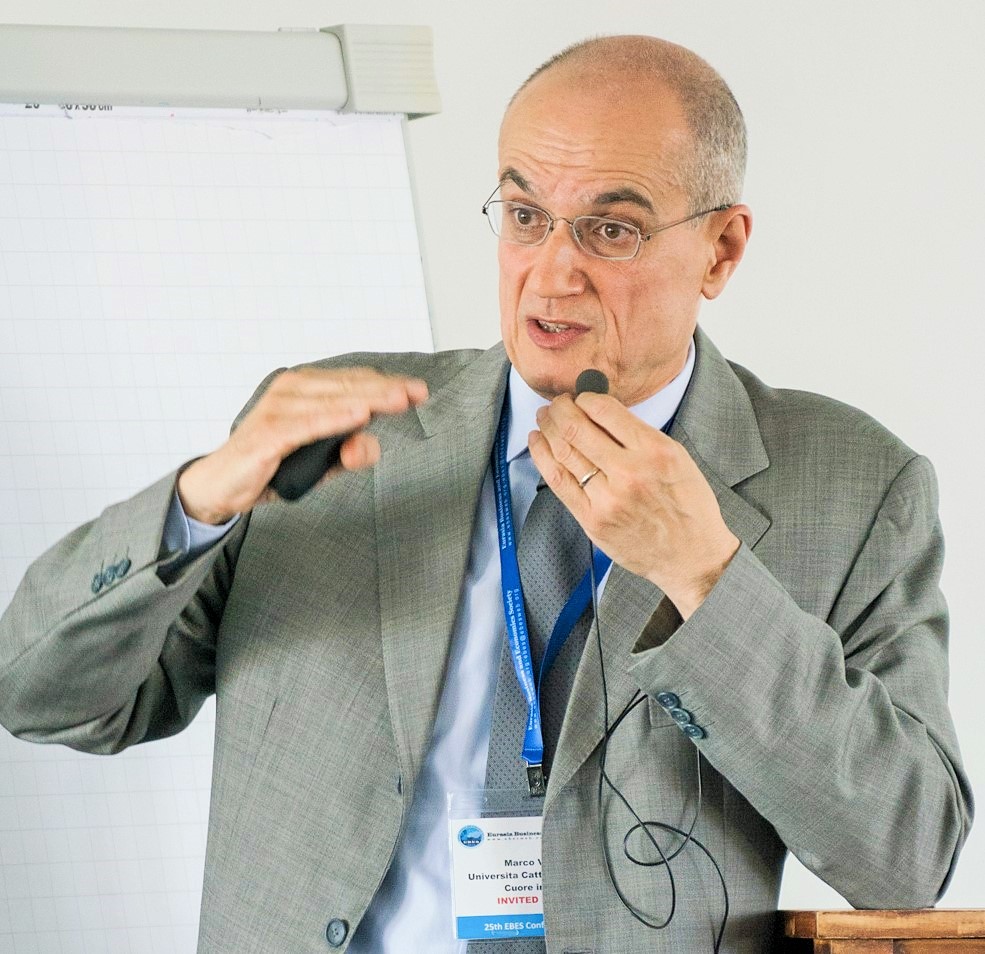
Marco Vivarelli, Professor at the Università Cattolica del Sacro Cuore in Milano and Director of the Department of Economic Policy
Le Wang, Chong K. Liew Chair and Professor & President’s Associates Presidential Professor, University of Oklahoma, USA
Klaus F. Zimmermann, Professor Emeritus, Bonn University, UNU-MERIT & President of GLO
GLO VirtYS Program Director:
Dr Olena Nizalova, Senior Research Fellow (Associate Professor) in Health Economics at the University of Kent and Director of the Q-StepProgram.
Program’s
Activities:
Virtual kick-off meeting of all
the participants and Thematic Cluster advisors, who will be appointed by the participating
Cluster leads to match closely participants’ research interests.
One-to-one activities with the
Thematic Cluster Advisor will be agreed upon at the beginning of the
scholarship period in an Individual Research Plan. These activities at a
minimum shall include 2-3 virtual consultations, 1 review round of the
completed research work and a discussion of the amendments (if needed) to
follow up.
Provide
a virtual platform for the GLO VirtYS program participants to present their findings and receive feedback
from their peers and the GLO wider community.
The scholarship will conclude in
June 2020,
when the GLO Management Board will make a decision on whether to extend an
invitation to the graduate of the GLO Virtual Scholar Program to join the
organization
as a GLO Fellow,
based on the recommendation from their Thematic Cluster Advisors and evaluation of the GLO VirtYS
Advisory Board.
Research
proposals are invited within one of the following GLO thematic clusters:
All GLO VirtYS program participants will be appointed GLO Affiliates, if they are not already, and receive a GLO Bio page.
GLO VirtYS program participants will be listed with pictures on the glabor.org website of the program.
Feedback on their research from leading researchers in the area of their interest.
Networking opportunities with researchers from other countries within the same area and beyond.
(Priority) access to GLO activities.
Interactions with the scholars of the cohort, program’s alumni, and the future cohorts.
Opportunity to promote own research via GLO channels.
Completed research paper ready for submission to the GLO Discussion Paper series.
Possibility of promotion to GLO Fellow after exceptional performance.
Eligibility
criteria:
Applicant must be either currently enrolled in a doctoral program or be within 3 years after graduation as evidenced by the letter from the degree awarding institution or a degree certificate.
Applicant must be at an advanced stage of the analysis of a specific research question within the corresponding GLO Thematic Cluster to which he/she is applying as evidenced by the submitted draft.
Applicant must be supported by a letter of endorsement from either one of the GLO Fellows or from the administration of one of the GLO supporting institutions.
Selection procedure:
The GLO Virtual Young Scholars will be selected by a Scientific Selection Committee consisting of the GLO VirtYS Program Director, GLO thematic cluster leads participating in the current year, and a member of the GLO Management Board.
The results of selection of the GLO VirtYS program will be posted on the GLO site www.glabor.org by October 1, 2019. Scholars will be notified via email. In the 2019-20 academic year we expect to select 3-5 scholars.
The final research paper should be submitted by May 31st, by 5 pm GMT.
Upon completion of the program and based on the quality of the produced research paper, some of the GLO VirtYS programme graduates may be invited to become GLO Fellows and their paper accepted as a GLO Discussion Paper.
Evaluation
criteria for applications:
Policy relevance of the research question in a local and/or global context.
Research excellence
Potential for capacity development (preference will be given to the applicants for which the GLO Young Scholars Program can bring the highest capacity development, compared to what the applicant would have achieved without being a GLO Young Scholar)
Many
applicants apply in the last days before the submission deadline. To avoid last
minute problems, we ask applicants to
apply in advance. Applications received after the deadline or applications that
do not meet the requirements set out below will not be accepted.
To apply
please complete the online application form with three attachments:
1. Research proposal (maximum 2 pages including references, single-spaced , font size 12) should include the following information:
Formulation of the problem/ research question.
Research methodology (data and empirical approach).
(Potential) Practical/Policy implications.
Reference list.
2. 2-page CV
3. Transcript from the doctoral program or doctoral degree certificate
4. Letter of endorsement for the candidate and the research proposal from either one of the GLO fellows or from the administration of one of the GLO supporting institutions reflecting on the potential of the candidate to benefit from the Program and the merits of the research proposal.
A new GLO Discussion Paperstudying the experiences from the last European Union enlargement rounds suggests that immigration restrictions just lead to the use of alternative channels of entry.
The Global Labor Organization (GLO)
is an independent, non-partisan and non-governmental organization that
functions as an international network and virtual platform to stimulate
global research, debate and collaboration.
Author Abstract: The paper contributes to the on-going debates concerning the effectiveness of immigration policies, by investigating the case of the transitional arrangements implemented during the European Union enlargement rounds of 2004 and 2007. It has been argued that instead of deterring immigration, the arrangements rather altered the channels of entry. The hypothesis is that, as self-employed workers were not subjected to the transitional arrangements, these migrants used self-employment as a strategy to circumvent restrictions. Our results suggest that this might indeed have been the case post-2007, but not post-2004. We argue that in the latter case, migrants did not need to use self-employment as a strategy, because of alternative, restrictions-free destinations like Ireland and the UK. Our results point to the importance of immigration policies in shaping destination choices and have implications for future EU enlargement rounds.
Author Abstract: Existing studies have established a positive correlation between a married woman’s work behavior and her mother-in-law’s. Such linkage is attributable to the profound influence of maternal employment on son’s gender role preferences or household productivity. This paper systematically investigates the relative importance of the two potential mechanisms using the Chinese survey data. We show that a substantive part of the intergenerational correlation is left unexplained even if we control for the husband’s gender role attitudes. Instead, we find that the husband’s household productivity is more crucial in the wife’s work decision, suggesting the dominance of the endowment channel over the preference channel.
Read also the Lead Article of issue 4 (2019): Gautam Hazarika, Chandan Kumar & Sudipta Sarangi: “Ancestral ecological endowments and missing women“ Journal of Population Economics, Vol. 32 (2019), Issue 4 (October), pp. 1101-1123 Journal Website, complete issue 4. Paper PDF – OPEN ACCESS. GLO Fellows Gautam Hazarika, Chandan Kumar Jha & Sudipta Sarangi
A new GLO Discussion Papersuggests that foreign aid may reduce asylum inflows from poor countries in the short run, but inflows from less poor economies show a positive but weak relation with aid.
The Global Labor Organization (GLO)
is an independent, non-partisan and non-governmental organization that
functions as an international network and virtual platform to stimulate
global research, debate and collaboration.
Author Abstract: This paper measures the links between aid from 14 rich to 113 developing economies and bilateral asylum applications during years 1993 to 2013. Dynamic panel models and Sys-GMM are used. Results show that asylum applications are related to aid nonlinearly in the level of development of origin countries, in a U-shaped fashion, where only the downward segment proves to be robust to all specifications. Asylum inflows from poor countries are negatively, significantly and robustly associated with aid in the short run, with mixed evidence of more lasting effects, while inflows from less poor economies show a positive but weak relation with aid. Moreover, aid leads to negative cross-donor spillovers. Applications linearly decrease with humanitarian aid. Voluntary immigration is not linked to aid. Overall, the reduction in asylum inflows is stronger when aid disbursements are conditional on economic, institutional and political improvements in the recipient economy.
The study using Canadian experiencesfinds that properly structured pro-natal policies can successfully increase fertility among different segments of the population.
Author Abstract: We examine the impact of the Allowance for Newborn Children, a universal baby bonus offered by the Canadian province of Quebec, on birth order, sibship sex composition, income, and education. We find a large response for third- and higher-order births for which the bonus was more generous. Interestingly, though, we find stronger response if there were two previous sons or a previous son and daughter rather than two previous daughters. We also find, in addition to a transitory effect, a permanent effect, with the greatest increase in one daughter-two son families among three-child households. Moreover, we find a hump shape response by income group, with the greatest response from middle-income families. Also, women with at least some post-secondary education respond more to the policy than those with less. These findings suggest that properly structured pro-natal policies can successfully increase fertility among different segments of the population while simultaneously diminishing the effect of gender preferences and fertility disparity related to women’s education.
Read also the Lead Article of issue 4 (2019): Gautam Hazarika, Chandan Kumar & Sudipta Sarangi: “Ancestral ecological endowments and missing women“ Journal of Population Economics, Vol. 32 (2019), Issue 4 (October), pp. 1101-1123 Journal Website, complete issue 4. Paper PDF – OPEN ACCESS. GLO Fellows Gautam Hazarika, Chandan Kumar Jha & Sudipta Sarangi
A new GLO Discussion Paperderives the exact shape of the “hysteretic” impact of changes in the interest rate on macroeconomic investment under scenarios of both certainty and uncertainty. Conclusions deal with the efficacy of central bank’s interest rate policy.
The Global Labor Organization (GLO)
is an independent, non-partisan and non-governmental organization that
functions as an international network and virtual platform to stimulate
global research, debate and collaboration.
Author Abstract: The interest rate is generally considered as an important driver of macroeconomic investment. As an innovation, this paper derives the exact shape of the “hysteretic” impact of changes in the interest rate on macroeconomic investment under the scenarios of both certainty and uncertainty. We capture the direct interest rate-hysteresis on the investments and the capital stock and, explicitly, of stochastic changes on the interest rate-investment hysteresis. Starting with hysteresis effects on a microeconomic level of a single firm, we apply an explicit aggregation procedure to derive the interest rate hysteresis effects on a macroeconomic level. Based on our simple model we are able to obtain some conclusions about the efficacy of a central bank’s interest rate policy, e.g. in times of low or even zero interest rates and high uncertainty, in terms of stimulating macroeconomic investment.
A new GLO Discussion Paperdisentangle the complex relationships between skill needs and the productivity of Italian companies. Those firms satisfying their skill needs through successful hiring show higher productivity.
The Global Labor Organization (GLO)
is an independent, non-partisan and non-governmental organization that
functions as an international network and virtual platform to stimulate
global research, debate and collaboration.
Author Abstract: Relying on a unique integrated database, this work explores the relationship between labour productivity, on one side; intensity and characteristics of companies’ skills need and degree of skill mismatch, on the other. The analysis focuses on a representative sample of Italian limited liability companies observed during the years 2012, 2014 and 2017. First, companies acknowledging the need to update their knowledge base display a higher productivity vis-à-vis other firms. Second, when it comes to the skill need distinguished by competence/knowledge domains (management, STEM, social and soft skills, technical operatives and humanities) it emerges that companies looking for technical operative and social skills show lower labour productivity as compared to other firms. On the contrary, companies characterized by a need in managerial, STEM or humanities-related skills show higher productivity. Third, the ability to match the skill need via new hiring is always positively correlated with firms’ productivity. This result is confirmed across all the adopted specifications.
A new GLO Discussion Papersuggests that structural shortages of labor in developed countries and effectively unlimited supply of labor in the least developed countries generate unavoidable and indispensable international migrations of increasing size.
The Global Labor Organization (GLO)
is an independent, non-partisan and non-governmental organization that
functions as an international network and virtual platform to stimulate
global research, debate and collaboration.
Author Abstract: Different interpretations of migration confront themselves in the political arena. Considering two factors, necessity and acceptability, the paper identifies four stereotyped visions: the society of the walls, the society of mercy, the society of ghettos, and the society of reason. The first three share the ideological assumption that migration flows are supply determined, that they are pushed by poverty, lack of jobs, and desperation due to the lack of perspectives of a better future. The fourth vision states, based on robust empirical evidence, that migration is determined by a structural shortage of labor that, characterizes an increasing number of developed countries, in the presence of an unlimited supply of labor in the least developed countries. The implication of this idea is that international migrations flows of increasing size are unavoidable and indispensable to both groups of countries. They should reach a political agreement to jointly manage them with mutual advantage. An Annex summarizes previous work of one of the authors updated with recent data and estimates released by UN DESA. It provides a short, critical introduction to the concept of the demographic transition and presents the statistical implications of its most relevant consequence: the demographic polarization of the planet.
A new GLO Discussion Paperinvestigates whether uncertainty over future interest rates in the Euro area hampers the monetary policy transmission. It finds hysteretic effects of interest rate changes on investment in most European countries.
The Global Labor Organization (GLO)
is an independent, non-partisan and non-governmental organization that
functions as an international network and virtual platform to stimulate
global research, debate and collaboration.
Author Abstract: The interest rate represents an important monetary policy tool to steer investment in order to reach price stability. Therefore, implications of the exact form and magnitude of the interest rate-investment nexus for the European Central Bank’s effectiveness in a low interest rate environment gain center stage. We first present a theoretical framework of the hysteretic impact of changes in the interest rate on macroeconomic investment under certainty and under uncertainty to investigate whether uncertainty over future interest rates in the Euro area hampers monetary policy transmission. In this non-linear model, strong reactions in investment activity occur as soon as changes of the interest rate exceed a zone of inaction, that we call ‘play’ area. Second, we apply an algorithm describing path-dependent play-hysteresis to estimate investment hysteresis using data on domestic investment and interest rates on corporate loans for 5 countries of the Euro area in the period ranging from 2001Q1 to 2018Q1. We find hysteretic effects of interest rate changes on investment in most countries. However, their shape and magnitude differ widely across countries which poses a challenge for a unified monetary policy. By introducing uncertainty into the regressions, the results do not change much which may be due to the interest rate implicitly incorporating uncertainty effects in investment decisions, e.g. by risk premia.
Date, time, location: 6 September 9:00-10:30, Room 12 Chair: Martijn Burger
Kelsey J. O’Connor: The effect of immigration on natives’ well-being in Europe Discussant: Dimitris Ballas
Martijn Hendriks: The impact of refugee resettlement on native well-being Discussant: Kelsey O’Connor
Dimitris Ballas: The Spatial Economics of Happiness Discussant: Martijn Hendriks
GLO/EHERO Well-being Symposium II Date, time, location: 7 September, 11:00-12:30, Room 15 Chair: Milena Nikolova
Carol Graham: Does Hope Lead to Better Futures? Evidence from a Survey of the Aspirations and Life Choices of Young Adults in Peru Discussant: Spyridon Stavropoulos
Spyridon Stavropoulos: The impact of industrial change on subjective well-being: evidence from European regions Discussant: Milena Nikolova
Milena Nikolova: What makes work meaningful and why economists should care about it Discussant: Carol Graham
“Croatia is in a very bad situation: politically, economically and morally. Basic human rights and democratic values are long gone. For the past several years through my public speeches I tried to highlight the main problems in our democracy but with no success. Politicians do not listen, so I decided to engage in a more active social role.”
“Once you see this level of injustice, anyone with any level of dignity cannot remain indifferent to people’s suffering. I have time, but Croatia does not. We are on a turning point. Either we are going to make strong changes in our set of values or we will perish.”
“In 10 years time, when my kids will ask me: “Dad, where were you when all of this was happening?” I want to be able to look them in their eyes and say that I gave my best.”
“During the course of my life I was always the underdog, this time it will be the same, but what is most importantly – I never ran from a fight. “
GLO President Klaus F. Zimmermann and Dejan Kovač were colleagues during Zimmermann’s appointment at Princeton University 2016/2017, and GLO supported the Croatia conference organized by him in 2017. See REPORT 1 and Report 2.
Klaus F. Zimmermann said: “Dejan Kovač is man with vision, passion and energy. At this time, we badly need the political engagement of people with strong academic routes. I wish him all the best for his ambitions!”
A new GLO Discussion Paper helps to understand how culture works in the family life of couples. A stronger culture of gender equality is associated with more joint home production of the partners.
The Global Labor Organization (GLO)
is an independent, non-partisan and non-governmental organization that
functions as an international network and virtual platform to stimulate
global research, debate and collaboration.
Author Abstract: In this paper, we examine whether culture plays a role in the gender division of household labor. To explore this issue, we use data on early-arrival first and second generation immigrants living in the United States. Since all these individuals have grown up under the same laws, institutions, and economic conditions, then the differences between them in the gender division of housework may be due to cultural differences. We find that the higher the culture of gender equality in the country of ancestry, the greater the equality in the division of housework. This is maintained when we consider both housework and childcare as household labor. Our work is extended by examining how culture operates and is transmitted. We study whether culture may influence by and with whom housework activities are performed and the timing of the day when this happens, which can help us to understand how culture operates in the family life of couples. Results indicate that the more culture of gender equality is associated with greater probability that individuals report performing housework when they are with their partner in the evening, which may improve family live by making housework a non-individual task. The cultural impact is also observed in the case of working days, but it is not so clear during public holidays, which can be explained by the fact that those individuals originating from less egalitarian countries work longer work hours than those from egalitarian countries.
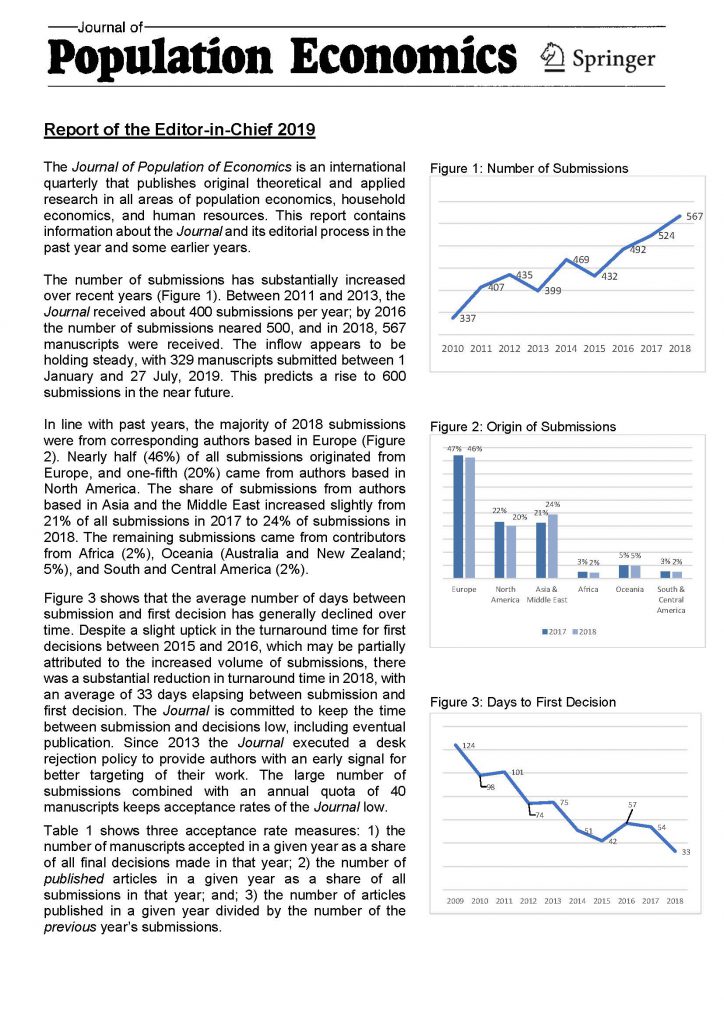
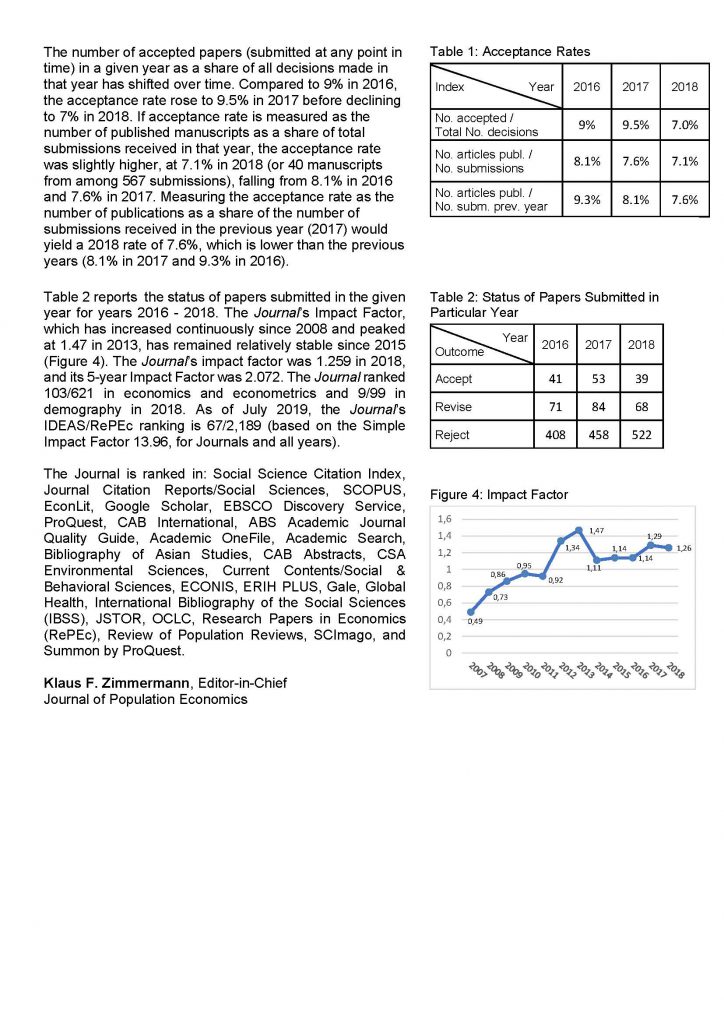
The Editor-in-Chief (Klaus F. Zimmermann) and the Managing Editor (Michaella Vanore) of the Journal of Population Economics met on August 13, 2019 at UNU-MERIT in Maastricht/The Netherlands to discuss the newly available 2019 Editor-in-Chief Report (EiC), celebrated the just published October Issue 4/2019, and made plans for the forthcoming issues 1 + 2, 2020. The EiC report (see also below) indicates that the Journal approaches 600 submissions per year, with Impact Factor of 1.26 and an acceptance rate of 7%. It ranks 68 of 2,253 journals listed in RePEc (August 2019). The Journal has its Headquarter at UNU-MERIT and is supported by the GLO network.
The newest issue 4 of October 2019 exhibits an impressive collection of 10 articles in areas (i) Social Remittances, (ii) Demography & Policy and (iii) Development in Family Contexts. The Lead Article Ancestral ecological endowments and missing women by GLO Fellows Gautam Hazarika, Chandan Kumar & Sudipta Sarangi deserves broad attention. It is open access for free over the next few weeks.
The article provides global evidence that there are proportionately more missing women in countries whose ancestral ecological endowments were poorer.
Author Abstract: This paper examines the relationship between ecological endowments in antiquity and contemporary female to male sex ratios in the population. It is found that there are proportionately more missing women in countries whose ancestral ecological endowments were poorer. This relationship is shown to be strong even after ancestral plough use, the timing of the Neolithic Transition, and many other potentially confounding factors are controlled for. Similar results are also obtained using district-level data from India.
EiC Report 2019: The 2019 Editor-in-Chief report is available here:
A new GLO Discussion Paper suggests that labor market policies affected wellbeing during the Great Recessionin Europe.While generous unemployment support mitigated the negative effects for most of the population, stricter employment protection legislation exacerbated the negative effects.
Author Abstract: Average subjective well-being decreased in Europe during the Great Recession, primarily among people with less than a college education and people younger than retirement age. However, some countries fared better than others depending on their labor market policies. More generous unemployment support, which provided income replacement or programs to assist unemployed workers find jobs, mitigated the negative effects for most of the population, although not youth. In contrast, stricter employment protection legislation exacerbated the negative effects. We present further evidence that suggests the exacerbating effects of employment protection legislation are due to greater rigidities in the labor market, which in turn affect perceived future job prospects. Our analysis is based on two-stage least squares regressions using individual subjective wellbeing data obtained from Eurobarometer surveys and variation in labor market policy across 23 European countries.
The article explicitly considers the role of parenting style in child rearing relating it to socioeconomic disadvantage. It finds that effective parenting styles are negatively correlated with disadvantage.
Read more in:
Deborah A. Cobb-Clark, Nicolás Salamanca & Anna Zhu: ‘Parenting style as an investment in human development’. Journal of Population Economics, Vol. 32 (2019), Issue 4 (October), pp. 1315-1352.
Author Abstract: We propose a household production function approach to human development that explicitly considers the role of parenting style in child rearing. Specifically, parenting style is modeled as an investment that depends not only on inputs of time and market goods, but also on attention. Our model relates socioeconomic disadvantage to parenting style and human development through the constraints that disadvantage places on cognitive capacity. We find empirical support for key features of our model. Parenting style is a construct that is distinctive to standard parental investments and is important for young-adult outcomes. Effective parenting styles are negatively correlated with disadvantage.
Read also the Lead Article of issue 4 (2019): Gautam Hazarika, Chandan Kumar & Sudipta Sarangi: “Ancestral ecological endowments and missing women“ Journal of Population Economics, Vol. 32 (2019), Issue 4 (October), pp. 1101-1123 Journal Website, complete issue 4. Paper PDF – OPEN ACCESS. GLO Fellows Gautam Hazarika, Chandan Kumar Jha & Sudipta Sarangi
Author Abstract: This paper examines the relationship between ecological endowments in antiquity and contemporary female to male sex ratios in the population. It is found that there are proportionately more missing women in countries whose ancestral ecological endowments were poorer. This relationship is shown to be strong even after ancestral plough use, the timing of the Neolithic Transition, and many other potentially confounding factors are controlled for. Similar results are also obtained using district-level data from India.
GLO supported development conference in Kuala Lumpur, Malaysia. 30th EBES conference; January 8-10, 2020 . Call for Contributions with Deadline October 31, 2019. EBESis theEurasia Business and Economics Society,further information.
December; 7-8: Beijing, China.Renmin University of China. Second Renmin University – GLO conference. Special call forthcoming soon.
October; 10-12: Lisbon, Portugal. 29th EBESconference. Abstract submission by August 8.
October; 10-11: Geneva/Switzerland. Graduate Institute. Conference on Policy Research on Youth Transitions. Chair: GLO Policy Director Azita Berar Awad. Special call forthcoming soon.
October; 4-7: Granada/Spain.17th International Society for Quality-of-Life Studies (ISQOLS) Annual Conference. Joint GLO/EHERO Session chaired by Milena Nikolova.
August 9, 2019: Call for contributions to the 30th EBES Conference – Kuala Lumpur; January 8-10, 2020inKuala Lumpur, Malaysia. Hosted by the Faculty of Economics and Administration, University of Malaya. GLO supported conference.EBESis theEurasia Business and Economics Society, a strategic partner and institutional supporter of GLO. GLO President Klaus F. Zimmermann is also President of EBES.
You are cordially invited to submit your abstracts or papers for presentation consideration at the 30th EBES Conference – Kuala Lumpur will take place on January 8th, 9th, and 10th, 2020 hosted by the Faculty of Economics and Administration, University of Malaya, Kuala Lumpur with the support of the Istanbul Economic Research Association.
Invited Speakers
We are pleased to announce that
distinguished colleagues Jonathan Batten, Euston Quah,
and Ahmed Khalid will join the conference as keynote speakers:
Jonathan Batten is professor of finance and CIMB-UUM Chair in Banking and Finance at the School of Economics, Finance and Banking at the University Utara Malaysia (Malaysia). Prior to this position, he worked at the Monash University (Australia), Hong Kong University of Science and Technology (Hong Kong), and Seoul National University (Korea). He is a well-known academician who has published articles in many of the leading economics and finance journals and currently serves as the Editor of Emerging Markets Review (SSCI), Journal of International Financial Markets, Institutions & Money (SSCI), and Finance Research Letters (SSCI). He was also the President of EBES from July 2014 till December 2018. His current research interests include: financial market development and risk management; spread modelling arbitrage and market integration; and the investigation of the non-linear dynamics of financial prices. Batten is also a GLO Fellow.
Euston Quah is professor of economics and head of the
Department of Economics at the Nanyang Technological
University (Singapore). He is a prolific writer with publications in
well-known international journals such as World Development, Applied
Economics, Environment and Planning, Journal of Environmental Management,
International Review of Law and Economics, Journal of Economics, Journal of
Public Economic Theory, American Journal of Economics and Sociology, among
others, and 6 books. He is the editor of the Singapore Economic
Review(SSCI). He is also the President of Economic Society of
Singapore and Adjunct Principal Research Fellow at IPS (National
University of Singapore). His areas of expertise are environmental economics,
resource allocation and cost-benefit analysis, law and economics and household
economics.
Ahmed Khalid is professor of economics at Universiti
Brunei Darussalam (UBD) and the Dean of UBD School of Business and
Economics (Brunei). Prior to this position he worked at the Bond
Business School (Australia), the National University of
Singapore (Singapore), World Bank(visiting Consultant), Asian
Development Bank (visiting Consultant), the Planning Ministry of
Pakistan (Advisor to the Minister) and Washington and Lee
University (visiting Scholar) (USA). His visiting academic appointments
include Nanyang Technology University (Singapore), Lahore
University of Management Sciences (Pakistan), and Pakistan Institute
of Development Economics (Pakistan). Professor Khalid’s research interests
include applied macroeconomics and monetary economics, applied econometrics,
financial crisis and financial sector reforms with particular reference to
emerging economies in East- and South-Asia and globalization and financial
market integration. He is Associate Editor of Singapore Economic Review.
His publications include four books, many internationally refereed articles and
chapters in books.
Board
Prof. Klaus F. Zimmermann, UNU-MERIT, Maastricht University, The Netherlands, & GLO. Prof. Jonathan Batten, Monash University, Australia, & GLO Prof. Iftekhar Hasan, Fordham University, U.S.A. Prof. Peter Rangazas, Indiana University-Purdue University Indianapolis, U.S.A., & GLO. Prof. Euston Quah, Nanyang Technological University, Singapore Prof. John Rust, Georgetown University, U.S.A., & GLO Prof. Marco Vivarelli, Università Cattolica Del Sacro Cuore, Italy, & GLO
Abstract/Paper Submission
Authors are invited to submit their abstracts or papers no later than October 31, 2019.
Qualified papers can be published
in EBES journals (Eurasian Business Review and Eurasian Economic Review) or
EBES Proceedings books after a peer review process without any submission or
publication fees. EBES journals (EABR and EAER) are published by Springer and
both are indexed in the SCOPUS, EBSCO EconLit with Full Text, Google Scholar,
ABS Academic Journal Quality Guide, CNKI, EBSCO Business Source, EBSCO
Discovery Service, EBSCO TOC Premier, International Bibliography of the Social
Sciences (IBSS), OCLC WorldCat Discovery Service, ProQuest ABI/INFORM, ProQuest
Business Premium Collection, ProQuest Central, ProQuest Turkey Database,
ProQuest-ExLibris Primo, ProQuest-ExLibris Summon, Research Papers in Economics
(RePEc), Cabell’s Directory, and Ulrich’s Periodicals Directory. In addition,
while EAER is indexed in the Emerging Sources Citation Index (Clarivate
Analytics), EABR is indexed in the Social Science Citation Index (SSCI) and
Current Contents / Social & Behavioral Sciences.
Also, all accepted abstracts will
be published electronically in the Conference Program and the Abstract Book
(with an ISBN number). It will be distributed to all conference participants at
the conference via USB. Although submitting full papers are not required, all
the submitted full papers will also be included in the conference proceedings
in a USB. After the conference, participants will also have the opportunity to
send their paper to be published (after a refereeing process managed by EBES)
in the Springer’s series Eurasian Studies in Business and Economics (no
submission and publication fees).
This will also be sent to
Clarivate Analytics in order to be reviewed for coverage in the Conference
Proceedings Citation Index – Social Science & Humanities (CPCI-SSH). Please
note that the 10th, 11th, 12th, 13th, 14th, 15th, 16th, 17th, 18th, 19th and
20th (Vol. 2) EBES Conference Proceedings are accepted for inclusion in the
Conference Proceedings Citation Index – Social Science & Humanities
(CPCI-SSH). 20th (Vol. 1), 21st and subsequent conference proceedings are in
progress.
Important Dates Abstract Submission Start Date: August 1, 2019 Abstract Submission Deadline: October 31, 2019 Reply-by: November 7, 2019* Registration Deadline: December 6, 2019 Announcement of the Program: December 9, 2019 Paper Submission Deadline (Optional): December 6, 2019** Paper Submission for the EBES journals and EBES Proceedings: March 15, 2020
* The decision regarding the acceptance/rejection of each abstract/paper will be communicated with the corresponding author within a week of submission. ** Completed paper submission is optional. If you want to be considered for the Best Paper Award or your full paper to be included in the conference proceedings in the USB, after submitting your abstract before December 6, 2019, you must also submit your completed (full) paper by December 6, 2019.
Contact Ugur Can (ebes@ebesweb.org); EBES & GLO Dr. Ender Demir (demir@ebesweb.org); EBES & GLO
Author Abstract: Recent studies have proposed causal machine learning (CML) methods to estimate conditional average treatment effects (CATEs). In this study, I investigate whether CML methods add value compared to conventional CATE estimators by re-evaluating Connecticut’s Jobs First welfare experiment. This experiment entails a mix of positive and negative work incentives. Previous studies show that it is hard to tackle the effect heterogeneity of Jobs First by means of CATEs. I report evidence that CML methods can provide support for the theoretical labor supply predictions. Furthermore, I document reasons why some conventional CATE estimators fail and discuss the limitations of CML methods.
Author Abstract: The role of non-cognitive skills in socio-economic behavior is a burgeoning research area in economics. Much interest is focused on the personality trait, locus of control, a measure of the extent to which individuals believe their fate is self-determined. The existing empirical literature generally estimates the role of locus of control via OLS. The legitimacy of the approach relies upon stability of locus of control as well as the correct specification of the model, i.e. no omitted variable bias. Recent evidence is supportive of treating locus of control as predetermined, particularly for working age individuals. However, the behavioral genetics consensus is that personality traits including locus of control have a significant heritability component. This suggests the potential for omitted variable problems associated with the prior literature’s attempt to identify the impact of locus of control using cross-sectional methods. We address the issue of omitted shared family background and genetic factors using data on both monozygotic and dizygotic twins to examine the role of locus of control. Comparison of results across OLS and twins fixed effect estimators is consistent with substantial upward bias in previous estimates of the locus of the control due to omitted variable problems.
The GLO Discussion Paper of the Month of July finds that, in China, children contribute significantly to elderly parents’ life satisfaction, to enhancing their mental health and to reducing their likelihood of depression.
Author Abstract:In this paper, we test the conventional wisdom in developing countries
of ‘more children, more happiness’ by exploiting the cohort and provincial
variations of elderly parents exposed to the one-child policy in China. Using
nationally representative survey data from the 2015 China Health and
Retirement Longitude Survey, the results from both the ordinary least square and
two-stage least square methods find that more children can enhance elderly
parents’ subjective well-being (SWB) measured with either life satisfaction or
depression mood. The effect is channelled by raising their satisfaction with
children and receiving in-kind transfers from children. The heterogeneity analysis
also shows that the effect of children on parents’ life satisfaction is heterogenous
to sex composition, first-birth gender, and parents’ age. Our study provides new
causal evidence of the impact of fertility on elderly parents’ SWB from a developing
economy.
GLO DP Team Senior Editors: Matloob Piracha (University of Kent) & GLO; Klaus F. Zimmermann (UNU-MERIT, Maastricht University and Bonn University). Managing Editor: Magdalena Ulceluse, University of Groningen. DP@glabor.org
A new GLO Discussion Paper provides evidence thatmigrant social networks in host cities mitigate adverse mental health challenges of Chinese rural-urban migrantworkers.
Author Abstract: Over the past two decades, more than 160 million Chinese rural workers have migrated to cities to work. They are separated from their familiar rural networks to work in an unfamiliar, and often hostile environment. Many of them thus face significant mental health challenges. This paper is the first to investigate the extent to which migrant social networks in host cities can mitigate these adverse mental health effects. Using a unique longitudinal survey data of Rural-to-Urban Migration in China (RUMiC), we find that network size matters significantly for migrant workers. Our preferred IV estimates suggest that one standard deviation increase in migrant city networks, on average, reduces the measure of mental health problem by 0.47 to 0.66 of a standard deviation. Similar effects are found among less educated, those working longer hours, and those without access to social insurance. The main channel of the network effect is through boosting confidence and reducing anxiety of migrants.
A new GLO Discussion Paper provides causal evidence that beauty affects labor market performance significantly and decomposes the relevant diversifying factors.
Author Abstract: This study uses a field experiment to resolve the difficulties of quantifying personal appearance and identify a direct causal relationship between appearance and employment in China. The experiment reveals that taste-based pure appearance discrimination exists at the pre-interview stage. There are significant gender-specific heterogeneous effects of education on appearance discrimination: having better educational credentials reduces appearance discrimination among men but not among women. Moreover, attributes of the labor market, companies, and vacancies matter. Beauty premiums are larger in big cities with higher concentrations of women and in male-focused research positions. Similarly, the beauty premium is larger for vacancies with higher remuneration.
A new GLO Discussion Paper provides evidence that the 2012 Italian labor market reforms reducing firing restrictions substantially increased firm training of workers.
The reform is known as Fornero Law after the then Italian Labor minister, GLO Fellow Elsa Fornero. See for a recent debate with Fornero about the future of Europe after the EU elections in Budapest.
Author Abstract: In 2012 a labour market reform, known as Fornero Law, substantially reduced firing restrictions for firms with more than 15 employees in Italy. The results from a difference in regression discontinuities design that compares firms below versus those above the cut-off before and after the reform demonstrate that, after the Fornero Law, the number of trained workers increased in firms just above the threshold, with an order of magnitude of approximately 1.5 additional workers in our preferred empirical specification. We show that this effect might be partly explained by the reduction in worker turnover and a lower use of temporary contracts at the threshold after the reform. Our study highlights the counter-intuitive and potentially adverse effects of employment protection legislation (EPL) on training in dual labour markets due to larger firms seeking to avoid the higher costs of EPL by means of temporary contracts.
A new book in the Springer series “Population Economics” offers the first comprehensive study on rural-urban migration in Vietnam and analyzes the challenges for policy making. It uses extensive qualitative and quantitative data to explore the impact of rural-urban migration on migrants and their families. The book provides useful experiences for other developing countries.
Dr. Amy Y.C. Liu is Honorary Senior Lecturer, Graduate Studies in International and Development Economics, Crawford School of Public Policy, Australian National University, Canberra. Her key research interests to date have been wage structure, gender inequality and labor outcomes, human capital investment, and poverty. Her work on Vietnam’s transition to a market economy has been published in peer-reviewed international economics journals and was widely recognized by media.
Prof. Xin Meng works at the Research School of Economics, College of Business and Economics, Australian National University. Her main research interests to date have been the themes of China’s labor market, poverty, income inequality, human capital development, the economic implications of rural-urban migration, and the influence of institutions and culture on human behavior and on gender discrimination. Prof. Meng has published papers in numerous leading peer-reviewed international journals.
Abstract: This edited volume is the first publication using a new data set, Rural-Urban Migration in China and Vietnam (VRUMS2013). The questionnaire was particularly designed to collect information on rural-urban migrants and their families in Vietnam and was also linked to the national representative Vietnam Household Living Standards Survey 2012. Using this data and other data sources, this edited volume provides a comprehensive overview of rural-urban migration in Vietnam. It addresses a wide range of important topics, including Vietnam’s household registration system (ho khau), migration trends, remittance behavior and social networking. In addition, it examines migrants’ earnings, their children’s schooling, housing issues and their families’ consumption behavior in the cities they migrated to.
Author Abstract: Effects of different reformatory policies have always been a pulsating concern for the researchers and policy makers. Considering this concern, this paper attempts to check various effects of reformatory policies such as labor market reform, tariff cut, change in subsidy, bureaucratic reform in a typical small open economy comprising of both formal and informal sectors. It has been found that the implications of labor market reform and tariff liberalization for factor prices and wage disparity are distinctly opposite. However, skilled labor of the economy benefits from both labor market reform and export subsidy. Next we extend the basic model to bring in related corruption in the informal sector for its illegal nature. This calls for the existence of a sector which helps hassle free informal production. There we find that unskilled workers lose owing to both bureaucratic reform and labor market reform. Nevertheless, though traditionally labor market reform is supposed to harm workers, wage disparity gets ameliorated whereas tariff reform leads to worsening of it.