Category Archives: Discussion Paper

Gender differences in time allocation contribute to differences in developmental outcomes in children and adolescents. A new GLO Discussion Paper by GLO Fellow Ha Nguyen and colleagues.

A new GLO Discussion Paper finds that females spend more time on personal care, chores and educational activities and less time on physical and media related activities. These gaps appear at very young ages and widen over time. 

GLO Discussion Paper No. 1029, 2022

Gender differences in time allocation contribute to differences in developmental outcomes in children and adolescents  Download PDF
by Nguyen, Ha Trong & Brinkman, Sally & Le, Huong Thu & Zubrick, Stephen R. & Mitrou, Francis

GLO Fellow Ha Nguyen

Ha Nguyen

Author Abstract: Using over 50 thousand time-use diaries from two cohorts of children, we document significant gender differences in time allocation in the first 16 years in life. Relative to males, females spend more time on personal care, chores and educational activities and less time on physical and media related activities. These gender gaps in time allocation appear at very young ages and widen overtime. We provide novel evidence that gender differentials in time investment are quantitatively important in explaining a female advantage in most cognitive and non-cognitive skills. Moreover, gender disparity in educational time outside of school is the most important factor contributing to gender test score gaps and its contribution is more pronounced for higher performing students. By contrast, gender differences in media time are the main factor explaining gender gaps in non-cognitive skills. As children age, gender differences in time allocation play an increasing role in explaining gender gaps in both cognitive and non-cognitive skills.

Featured image: dainis-graveris-lpyHSTHO7LM-unsplash

GLO Discussion Papers are research and policy papers of the GLO Network which are widely circulated to encourage discussion. Provided in cooperation with EconStor, a service of the ZBW – Leibniz Information Centre for Economics, GLO Discussion Papers are among others listed in RePEc (see IDEAS,  EconPapers)Complete list of all GLO DPs – downloadable for free.

The Global Labor Organization (GLO) is an independent, non-partisan and non-governmental organization that functions as an international network and virtual platform to stimulate global research, debate and collaboration.

Ends;

Economic geography of contagion: A study on Covid-19 outbreak in India. A new GLO Discussion Paper by GLO Fellows Tanika Chakraborty and Anirban Mukherjee.

A new GLO Discussion Paper finds for India a positive relationship between regional inequality and Covid-19 infection which is driven by mobility. 

GLO Discussion Paper No. 1028, 2022

Economic geography of contagion: A study on Covid-19 outbreak in India  Download PDF
by Chakraborty, Tanika & Mukherjee, Anirban

GLO Fellows Tanika Chakraborty and Anirban Mukherjee

Author Abstract: We propose a regional inequality-based mechanism to explain the heterogeneity in the spread of Covid-19 and test it using data from India. We argue that an area characterized by coreperiphery economic structure creates regional inequality in which the periphery remains dependent on the core for the supply of jobs, goods and services. Hence, areas arranged in coreperiphery structure induce greater degree of mobility which in turn ends up at a higher infection rate than the more homogeneously developed areas at the time of pandemic. Using nightlights data to measure regional inequality in the degree of economic activity, we find evidence in support of our hypothesis. Further, we find that regions with higher nightlight inequality also experience higher spread of Covid-19 only when lockdown measures have been relaxed and movement of goods and services are near normal. Using mobility data, we provide direct evidence in support of our proposed mechanism; that the positive relationship between regional inequality and Covid-19 infection is driven by mobility. Our findings imply that policy responses to contain Covid-19 contagion needs to be heterogeneous across India where the priority areas can be chosen ex-ante based on inequality in economic activity.

GLO Discussion Papers are research and policy papers of the GLO Network which are widely circulated to encourage discussion. Provided in cooperation with EconStor, a service of the ZBW – Leibniz Information Centre for Economics, GLO Discussion Papers are among others listed in RePEc (see IDEAS,  EconPapers)Complete list of all GLO DPs – downloadable for free.

The Global Labor Organization (GLO) is an independent, non-partisan and non-governmental organization that functions as an international network and virtual platform to stimulate global research, debate and collaboration.

Ends;

Management centrality in sequential bargaining: Implications for strategic delegation, welfare, and stakeholder conflict. A new GLO Discussion Paper by Domenico Buccella and GLO Fellow Nicola Meccheri.

A new GLO Discussion Paper models the choice of being an entrepreneurial or a managerial firm.

GLO Discussion Paper No. 1025, 2022

Management centrality in sequential bargaining: Implications for strategic delegation, welfare, and stakeholder conflict  Download PDF
by Buccella, Domenico & Meccheri, Nicola

GLO Fellow Nicola Meccheri

Author Abstract: This paper investigates the issue of strategic delegation by considering the role of management centrality in contracting with different stakeholders. Specifically, a sequential negotiation unionized duopoly model is analysed, in which the management relative bargaining power visà-vis shareholders and vis-à-vis unions can differ. In such a framework, differences in the relative bargaining power among involved stakeholders play a key role in determining the endogenous choice by firms’ owners to delegate strategic decisions to the management, or, in other words, the choice of being an entrepreneurial or a managerial firm. Moreover, the distribution of stakeholders’ relative bargaining power affects firms’ profitability and overall welfare, also leading to novel results with regard to the received literature. In particular, to minimize potential conflict of interests between firms’ owners and the overall society, regulation directed to soften the managers’ bargaining strength vis-à-vis shareholders must be designed and implemented.

GLO Discussion Papers are research and policy papers of the GLO Network which are widely circulated to encourage discussion. Provided in cooperation with EconStor, a service of the ZBW – Leibniz Information Centre for Economics, GLO Discussion Papers are among others listed in RePEc (see IDEAS,  EconPapers)Complete list of all GLO DPs – downloadable for free.

The Global Labor Organization (GLO) is an independent, non-partisan and non-governmental organization that functions as an international network and virtual platform to stimulate global research, debate and collaboration.

Ends;

The Old-Age Pension Household Replacement Rate in Belgium. A new GLO Discussion Paper of GLO Fellow Alessio J.G. Brown and GLO Affiliate Anne-Lore Fraikin.

A new GLO Discussion Paper finds evidence to support a reform proposal of removing the household replacement rate.

GLO Discussion Paper No. 1026, 2022

The Old-Age Pension Household Replacement Rate in Belgium  Download PDF
by Brown, Alessio J.G. & Fraikin, Anne-Lore

GLO Fellow Alessio J.G. Brown and GLO Affiliate Anne-Lore Fraikin

Alessio J. G. Brown

Author Abstract: The objective of the paper is to examine the retirement behaviour of Belgian workers in one-earner households who are automatically granted a more generous old-age pension benefits replacement rate, called the household replacement rate. Following a recommendation of the Belgian Pension Reform Committee, this policy is to be suppressed for new pensioners, except for those receiving the minimum pension. We provide an ex-ante impact evaluation of such reform on both pension sustainability and adequacy measures. Specifically, we test whether the household replacement rate entails a work (dis)incentive mechanism promoting (harming) pension sustainability and furthermore, we analyse the role of the household replacement rate in old-age poverty and inequality measures. To do so, we use the survey dataset SHARE and a discrete time logistic duration model to study the link between retirement and financial retirement incentives created by the social security system. We find that the household replacement rate generates slightly higher retirement incentives through an income effect and we find that the household replacement rate plays an important role in decreasing the elderly poverty rate. Since households with asymmetrical working arrangements are often at the lowest part of the equivalized income distribution, the substantial effect of the household replacement rate on poverty measures is a motive to use such mechanism as a poverty alleviation tool. Nevertheless, we advocate that income redistribution measures should not be tied to a specific household composition and policies such as pensionable earning minima, minimum pension benefits and the inclusion of replacement income periods in the pension benefits calculation effectively serve the income redistribution goal without favouring a certain type of household over another. Overall, despite the positive poverty and distributional aspects of this policy, our analysis supports the reform proposal of removing the household replacement rate.

GLO Discussion Papers are research and policy papers of the GLO Network which are widely circulated to encourage discussion. Provided in cooperation with EconStor, a service of the ZBW – Leibniz Information Centre for Economics, GLO Discussion Papers are among others listed in RePEc (see IDEAS,  EconPapers)Complete list of all GLO DPs – downloadable for free.

The Global Labor Organization (GLO) is an independent, non-partisan and non-governmental organization that functions as an international network and virtual platform to stimulate global research, debate and collaboration.

Ends;

Women, Violence and Work: Threat of Sexual Violence and Women’s Decision to Work. A new GLO Discussion Paper by GLO Fellow Tanika Chakraborty and Nafisa Lohawala.

A new GLO Discussion Paper suggests that sexual crimes induce a decline of female employment in India.

GLO Discussion Paper No. 1023, 2022

Women, Violence and Work: Threat of Sexual Violence and Women’s Decision to Work  Download PDF
by Chakraborty, Tanika & Lohawala, Nafisa

GLO Fellow Tanika Chakraborty

Tanika Chakraborty

Author Abstract: The stagnancy of women’s workforce participation in urban India is alarming and puzzling, considering the pace of economic development experienced in the previous decade. We investigate the extent to which the low workforce participation of women can be explained by growing instances of officially reported crimes against women. We employ a fixed-effects strategy using district-level panel data between 2004-2012. To address additional concerns of endogeneity, we exploit state-level regulations in alcohol sale and consumption and provide estimates from two different strategies – an instrumental variable approach and a border analysis. Our findings indicate that an additional sexual crime per 1000 women in a district reduces the probability that a woman is employed outside her home by roughly 1%. While we find some evidence of heterogeneity across regions and religions, overall, the deterrent effect seems to affect women equally across all economic, demographic, and social groups.

Featured image: JR-Korpa-on-unsplash

GLO Discussion Papers are research and policy papers of the GLO Network which are widely circulated to encourage discussion. Provided in cooperation with EconStor, a service of the ZBW – Leibniz Information Centre for Economics, GLO Discussion Papers are among others listed in RePEc (see IDEAS,  EconPapers)Complete list of all GLO DPs – downloadable for free.

The Global Labor Organization (GLO) is an independent, non-partisan and non-governmental organization that functions as an international network and virtual platform to stimulate global research, debate and collaboration.

Ends;

Why do Parents Underinvest in their Children’s Education? Evidence from China. A new GLO Discussion Paper of GLO Fellow Viola Angelini and colleagues.

A new GLO Discussion Paper finds that fixed costs play an important role in explaining human capital underinvestments of parents.

GLO Discussion Paper No. 1027, 2022

Why do Parents Underinvest in their Children’s Education? Evidence from China  Download PDF
by Wang, Jiyuan & Alessie, Rob & Angelini, Viola

GLO Fellow Viola Angelini

Viola Angelini

Author Abstract: In this paper we study whether the presence of binding liquidity constraints and the existence of fixed costs can explain the underinvestment of parents in their children’s human capital. We first incorporate these two potential mechanisms into the theoretical model of Raut & Tran (2005) and then we test their empirical relevance using data from the China Health and Retirement Longitudinal Study (CHARLS). Our results show that especially fixed costs play an important role in explaining human capital underinvestment.

GLO Discussion Papers are research and policy papers of the GLO Network which are widely circulated to encourage discussion. Provided in cooperation with EconStor, a service of the ZBW – Leibniz Information Centre for Economics, GLO Discussion Papers are among others listed in RePEc (see IDEAS,  EconPapers)Complete list of all GLO DPs – downloadable for free.

The Global Labor Organization (GLO) is an independent, non-partisan and non-governmental organization that functions as an international network and virtual platform to stimulate global research, debate and collaboration.

Ends;

Which former professional football players become successful professional head coaches? A new GLO Discussion Paper by GLO Fellow Stijn Baert and colleagues.

A new GLO Discussion Paper suggests that former professional players perform best as assistant or youth coach.

GLO Discussion Paper No. 1024, 2022

Which former professional football players become successful professional head coaches?  Download PDF
by Balliauw, Matteo & Verheuge, Marco & Baert, Stijn

GLO Fellow Stijn Baert

Author Abstract: One of the potential avenues for former professional football players to pursue their career is to become a head coach of a club’s first team. An important question is how to best prepare for such a reconversion. This letter is the first in the academic literature quantifying the association between success as a professional head coach and prior experience of former professional players as a youth coach, player-coach, head coach at a lower division, assistant coach, in other staff positions and in club management positions. Our regression analyses, based on unique coach career data, show a significant positive association for the jobs of assistant or youth coach.

Featured image: daniel-norin-on-unsplash

GLO Discussion Papers are research and policy papers of the GLO Network which are widely circulated to encourage discussion. Provided in cooperation with EconStor, a service of the ZBW – Leibniz Information Centre for Economics, GLO Discussion Papers are among others listed in RePEc (see IDEAS,  EconPapers)Complete list of all GLO DPs – downloadable for free.

The Global Labor Organization (GLO) is an independent, non-partisan and non-governmental organization that functions as an international network and virtual platform to stimulate global research, debate and collaboration.

Ends;

Widowhood and Consumption of Private Assignable Goods: The Role of Socio-Economic Status, Rainfall Shocks and Historical Institutions. A new GLO Discussion Paper by GLO Fellows Subhayu Bandyopadhyay & Bipasha Maity.

A new GLO Discussion Paper investigates how weather shocks interact with cultural norms biased against women to affect female poverty.

GLO Discussion Paper No. 1021, 2022

Widowhood and Consumption of Private Assignable Goods: The Role of Socio-Economic Status, Rainfall Shocks and Historical Institutions  Download PDF
by Bandyopadhyay, Sutirtha & Maity, Bipasha

GLO Fellows Subhayu Bandyopadhyay & Bipasha Maity

Author Abstract: We study how weather shocks interact with cultural norms biased against women to affect female poverty within the household. Using expenditure on female assignable clothing per adult woman as a measure of women’s intra-household access to consumption, we document that spending on female assignable goods is lower in households with at least one widowed woman relative to households with no widows in India. However, selection into widowhood appears to be plausibly random and economic hardship on account of death of a male member is unlikely to explain why households with a widow have lower spending on female assignable goods. We then study how rainfall shocks influence the spending on female assignable goods by the presence of a widow in the household. We find that although beneficial rainfall shocks increase overall spending on female assignable goods; this increase is lower in households with a widow. We obtain opposite findings for spending on male assignable goods. We find that regions where widow persecution was widespread historically are associated with poorer outcomes for widows at present. Our analysis shows that persistence in historical norms can potentially prevent women from realizing gains in access to consumption resources within the household even in the event of beneficial environmental shocks.

Featured image: bethany-laird-unsplash

GLO Discussion Papers are research and policy papers of the GLO Network which are widely circulated to encourage discussion. Provided in cooperation with EconStor, a service of the ZBW – Leibniz Information Centre for Economics, GLO Discussion Papers are among others listed in RePEc (see IDEAS,  EconPapers)Complete list of all GLO DPs – downloadable for free.

The Global Labor Organization (GLO) is an independent, non-partisan and non-governmental organization that functions as an international network and virtual platform to stimulate global research, debate and collaboration.

Ends;

Recall Bias Revisited: Measure Farm Labor Using Mixed-Mode Surveys and Multiple Imputation. A new GLO Discussion Paper by GLO Fellow Hai-Anh Dang and Calogero Carletto.

A new GLO Discussion Paper suggests that imputation-based methods of data collection results in reasonable  estimates of smallholder farm labor.

GLO Discussion Paper No. 1020, 2022

Recall Bias Revisited: Measure Farm Labor Using Mixed-Mode Surveys and Multiple Imputation  Download PDF
by Dang, Hai-Anh H. & Carletto, Calogero

GLO Fellow Hai-Anh Dang

Hai-Anh Dang

Author Abstract: Smallholder farming dominates agriculture in poorer countries. Yet, traditional recall-based surveys on smallholder farming in these countries face challenges with seasonal variations, high survey costs, poor record-keeping, and technical capacity constraints resulting in significant recall bias. We offer the first study that employs a less-costly, imputation-based alternative using mixed modes of data collection to obtain estimates on smallholder farm labor. Using data from Tanzania, we find that parsimonious imputation models based on small samples of a benchmark weekly in-person survey can offer reasonably accurate estimates. Furthermore, we also show how less accurate, but also less resource-intensive, imputation-based measures using a weekly phone survey may provide a viable alternative for the more costly weekly in-person survey. If replicated in other contexts, including for other types of variables that suffer from similar recall bias, these results could open up a new and cost-effective way to collect more accurate data at scale.

GLO Discussion Papers are research and policy papers of the GLO Network which are widely circulated to encourage discussion. Provided in cooperation with EconStor, a service of the ZBW – Leibniz Information Centre for Economics, GLO Discussion Papers are among others listed in RePEc (see IDEAS,  EconPapers)Complete list of all GLO DPs – downloadable for free.

The Global Labor Organization (GLO) is an independent, non-partisan and non-governmental organization that functions as an international network and virtual platform to stimulate global research, debate and collaboration.

Ends;

Automation and Related Technologies: A Mapping of the New Knowledge Base. A new GLO Discussion Paper by GLO Fellows Enrico Santarelli, Jacopo Staccioli & Marco Vivarelli.

A new GLO Discussion Paper suggests that robotics and AI are strictly related, jointly shaping a new knowledge base.

GLO Discussion Paper No. 1022, 2022

Automation and Related Technologies: A Mapping of the New Knowledge Base  Download PDF
by Santarelli, Enrico & Staccioli, Jacopo & Vivarelli, Marco

GLO Fellows Enrico Santarelli, Jacopo Staccioli & Marco Vivarelli

Author Abstract: Using the entire population of USPTO patent applications published between 2002 and 2019, and leveraging on both patent classification and semantic analysis, this paper aims to map the current knowledge base centred on robotics and AI technologies. These technologies are investigated both as a whole and distinguishing core and related innovations, along a 4-level core-periphery architecture. Merging patent applications with the Orbis IP firm-level database allows us to put forward a twofold analysis based on industry of activity and geographic location. In a nutshell, results show that: (i) rather than representing a technological revolution, the new knowledge base is strictly linked to the previous technological paradigm; (ii) the new knowledge base is characterised by a considerable – but not impressively widespread – degree of pervasiveness; (iii) robotics and AI are strictly related, converging (particularly among the related technologies and in more recent times) and jointly shaping a new knowledge base that should be considered as a whole, rather than consisting of two separate GPTs; (iv) the US technological leadership turns out to be confirmed (although declining in relative terms in favour of Asian countries such as South Korea, China and, more recently, India).

GLO Discussion Papers are research and policy papers of the GLO Network which are widely circulated to encourage discussion. Provided in cooperation with EconStor, a service of the ZBW – Leibniz Information Centre for Economics, GLO Discussion Papers are among others listed in RePEc (see IDEAS,  EconPapers)Complete list of all GLO DPs – downloadable for free.

The Global Labor Organization (GLO) is an independent, non-partisan and non-governmental organization that functions as an international network and virtual platform to stimulate global research, debate and collaboration.

Ends;

Targeting Household Deprivations for Multidimensional Poverty Alleviation: An Application to Tunisian Data. A new GLO Discussion Paper by GLO Affiliate Khaled Nasri & Adnen Weslati.

A new GLO Discussion Paper suggests strategies to alleviate multidimensional poverty in Tunisia.

GLO Discussion Paper No. 1019, 2022

Targeting Household Deprivations for Multidimensional Poverty Alleviation: An Application to Tunisian Data Download PDF
by Nasri, Khaled & Weslati, Adnen

GLO Affiliate Khaled Nasri

khaledNasri
Khaled Nasri

Author Abstract: This paper proposes a targeting methodology focused on household’s deprivations that helps the public decision-maker in Tunisia to alleviate multidimensional poverty. In the first part of this research, we intend to decipher the relationship between official poverty measurement and anti-poverty programs currently implemented in Tunisia, with special emphasis on their targeting performance and on the divergence observed between the beneficiary selection process at the regional level and the official identification of poor households. Next, we will outline the proposed targeting methodology using the counting identification approach and we estimate three groups of potential beneficiaries reflecting three degrees of poverty. Our empirical findings show that if a household becomes deprived in one dimension, then he will automatically be considered a potential beneficiary of the anti-poverty program. In terms of budget allocation, categorizing beneficiaries by group allows the public decision-maker to prioritize the most urgent situations in the country, even in the case of an austerity policy. On the other hand, to eradicate poverty in all its forms everywhere, it would be useful to strengthen the targeting of the poor population through a forward-looking policy targeting households living in vulnerability to poverty.

GLO Discussion Papers are research and policy papers of the GLO Network which are widely circulated to encourage discussion. Provided in cooperation with EconStor, a service of the ZBW – Leibniz Information Centre for Economics, GLO Discussion Papers are among others listed in RePEc (see IDEAS,  EconPapers)Complete list of all GLO DPs – downloadable for free.

The Global Labor Organization (GLO) is an independent, non-partisan and non-governmental organization that functions as an international network and virtual platform to stimulate global research, debate and collaboration.

Ends;

Getting stuck in the status quo ante: Evidence from the Egyptian Economy. A new GLO Discussion Paper by GLO Fellows Ömer Tuğsal Doruk & Francesco Pastore.

A new GLO Discussion Paper suggests that occupational mobility across generations is low in Egypt.

GLO Discussion Paper No. 1018, 2022

Getting stuck in the status quo ante: Evidence from the Egyptian Economy Download PDF
by Doruka, Ömer Tuğsal & Pastore, Francesco

GLO Fellows Ömer Tuğsal Doruk & Francesco Pastore

Author Abstract: In this study, for the first time, to our knowledge, we use the propensity score matching algorithm to estimate the probability to remain ‘stuck in the status-quo ante’ across generations in Egypt. We use repeated cross-sectional data relative to a 20-year period from 1998 to 2018 to build transition matrices of intergenerational occupational mobility. The findings of the econometric analysis hint at a low degree of occupational mobility, with children of fathers in the agricultural sector or holding a blue- or white-collar job remaining linked to the profession of their fathers in most cases and experiencing only rarely upward mobility from agricultural to blue- and white-collar jobs.

GLO Discussion Papers are research and policy papers of the GLO Network which are widely circulated to encourage discussion. Provided in cooperation with EconStor, a service of the ZBW – Leibniz Information Centre for Economics, GLO Discussion Papers are among others listed in RePEc (see IDEAS,  EconPapers)Complete list of all GLO DPs – downloadable for free.

The Global Labor Organization (GLO) is an independent, non-partisan and non-governmental organization that functions as an international network and virtual platform to stimulate global research, debate and collaboration.

Ends;

The Impact Evaluation of Vietnam’s Escuela Nueva (New School) Program on Students’ Cognitive and Non-cognitive Skills. A new GLO Discussion Paper by GLO Fellow Hai-Anh Dang & Colleagues.

A new GLO Discussion Paper suggests that the impacts of the educational reform for primary schools supported by the World Bank have been small and were not lasting in the long run.

GLO Discussion Paper No. 1017, 2022

The Impact Evaluation of Vietnam’s Escuela Nueva (New School) Program on Students’ Cognitive and Non-cognitive Skills Download PDF
by Dang, Hai-Anh H. & Glewwe, Paul & Lee, Jongwook & Vu, Khoa

GLO Fellow Hai-Anh Dang

Hai-Anh Dang

Author Abstract: This paper evaluates how Vietnam’s Escuela Nueva (VNEN) program, an educational reform for primary schools supported by the World Bank, affected the cognitive (mathematics and Vietnamese) and non-cognitive (socioemotional) skills of students in that country. We use propensity score matching to estimate both short-term (1-3 years) and long-term (5-7 years) average treatment effects on the treated (ATT). We find that the impacts of VNEN on students’ cognitive skills are relatively small in the short-term, and that they are larger for boys, ethnic minorities, and students in Northern Vietnam. The VNEN program modestly increased primary school students’ non-cognitive skills in the short-term; these impacts on non-cognitive skills are sizable and significant for ethnic minority students, although there seems to be little gender difference. The long-term impacts are less precisely estimated, but they appear to fade away, showing little or no impact of the VNEN program on cognitive skills. There is little variation of long-term impacts by gender or geographical region, although the imprecision of the estimates for ethnic minority students does not allow us to rule out large long-term impacts on cognitive skills for those students. The program’s impacts on non-cognitive skills also seem to have dissipated in the long-term.

GLO Discussion Papers are research and policy papers of the GLO Network which are widely circulated to encourage discussion. Provided in cooperation with EconStor, a service of the ZBW – Leibniz Information Centre for Economics, GLO Discussion Papers are among others listed in RePEc (see IDEAS,  EconPapers)Complete list of all GLO DPs – downloadable for free.

The Global Labor Organization (GLO) is an independent, non-partisan and non-governmental organization that functions as an international network and virtual platform to stimulate global research, debate and collaboration.

Ends;

Updates on Returns to Education in India: Analysis using PLFS 2018-19 Data. A new GLO Discussion Paper by GLO Fellows Jie Chen & Francesco Pastore and Sanghamitra Kanjilal-Bhaduri.

A new GLO Discussion Paper suggests that it is important to increase primary and secondary level of education in rural areas, and the tertiary level in urban areas to equalize the life chances of some social groups.

GLO Discussion Paper No. 1016, 2022

Updates on Returns to Education in India: Analysis using PLFS 2018-19 Data Download PDF
by Chen, Jie & Kanjilal-Bhaduri, Sanghamitra & Pastore, Francesco

GLO Fellows Jie Chen & Francesco Pastore

Author Abstract: In this paper, we report returns to education in India using unit level data from the nationwide Periodic Labour Force Survey for 2018-19. OLS estimates from the classical Mincerian equation are presented. Various econometric techniques (e.g., conventional IV and heteroskedasticity-based IV models) are used to address endogeneity and sample selection issue. For regular workers, compared to those with no formal education, an additional year of literacy education increases yearly return by 2.3%, primary education by 3.4%, middle school education by 3.7%, secondary school education by 4.5%, higher secondary education by 5.8%, graduate and diploma by 9.8%, and postgraduate and above level of education by 8.2%. We also find a widening of the wage distribution, with striking differences across social groups, sectors, locations. First, returns to middle-school and above level of education are higher for women than for men; second, returns to graduate and above level of education are higher for urban than for rural workers; third, returns to workers in the public sector are higher than returns in the private or third sectors; fourth, returns to the scheduled tribe are the highest across all the castes. Over the last decade, returns to education have reduced. We provide evidence showing that this may be because more people hold higher levels of education qualifications, while the demand for skills remains quite stable. Overall, our policy suggestion is that in India, as in other lowmiddle- income countries, especially in rural areas, it is important to increase primary and secondary level of education in rural areas, and the tertiary level in urban areas and to equalize the life chances of some social groups.

GLO Discussion Papers are research and policy papers of the GLO Network which are widely circulated to encourage discussion. Provided in cooperation with EconStor, a service of the ZBW – Leibniz Information Centre for Economics, GLO Discussion Papers are among others listed in RePEc (see IDEAS,  EconPapers)Complete list of all GLO DPs – downloadable for free.

The Global Labor Organization (GLO) is an independent, non-partisan and non-governmental organization that functions as an international network and virtual platform to stimulate global research, debate and collaboration.

Ends;

Children and Female Employment in Mongolia. A new GLO Discussion Paper by GLO Fellow Elena Nikolova and Jakub Polansky.

A new GLO Discussion Paper suggests that cultural biases against women may contribute to the observed low female employment.

GLO Discussion Paper No. 1015, 2022

Children and Female Employment in Mongolia Download PDF
by Nikolova, Elena & Polansky, Jakub

GLO Fellow Elena Nikolova

Author Abstract: Although a large body of literature has argued that motherhood has a profound and long-lasting negative effect on the employment and earnings of women, there is little evidence focusing on the post-communist region. This paper exploits the latest round of the EBRD-World Bank Life in Transition Survey (LiTS) and of the Mongolian National Statistics Office Household Socio- Economic Survey (HSES) to examine the correlation between the presence of children of different age categories in a family and female employment in Mongolia in 2016. We examine the availability of childcare, social norms and attitudes towards women, as well as household decision-making as potential explanations. We find that small children decrease the probability of female employment relative to women with no small children. In particular, women with two children aged one to six years are 21.5 percentage points less likely to be employed. Our results also suggest that cultural biases against women may be – at least partially – responsible for the low female employment levels which we uncovered. These results are unlikely to be driven by omitted variable bias.

GLO Discussion Papers are research and policy papers of the GLO Network which are widely circulated to encourage discussion. Provided in cooperation with EconStor, a service of the ZBW – Leibniz Information Centre for Economics, GLO Discussion Papers are among others listed in RePEc (see IDEAS,  EconPapers)Complete list of all GLO DPs – downloadable for free.

The Global Labor Organization (GLO) is an independent, non-partisan and non-governmental organization that functions as an international network and virtual platform to stimulate global research, debate and collaboration.

Ends;

Labor-Management Relations in Autocratic Regimes. A new GLO Discussion Paper by GLO Fellow Fang Lee Cooke and Geoffrey Wood.

A new GLO Discussion Paper studies labor-management relations in autocratic regimes for transitional peripheral economies in Central Asia (Uzbekistan and Turkmenistan) and hierarchical market economies in Latin America (Colombia and Honduras).

GLO Discussion Paper No. 1014, 2022

Labor-Management Relations in Autocratic Regimes Download PDF
by Cooke, Fang Lee & Wood, Geoffrey

GLO Fellow Fang Lee Cooke

Author Abstract: Purpose: This chapter examines contemporary labor-management relations in autocratic regimes, drawing on two sets of countries, namely transitional peripheral economies in Central Asia (Uzbekistan and Turkmenistan) and hierarchical market economies in Latin America (Colombia and Honduras), for analysis. We discuss the political economy, work, and labor relations of these countries, highlighting the role of the state, business, and international non-government organizations. We also take into account the impact of large-scale (often in millions) migration of workers both internally within the country and cross-border. It is important to note that, just as there are different types of democratic systems, there are also different types of autocratic regimes with distinct political, economic, and social policy orientations, and this directly impacts the nature of labor relations. Under Latin American right-wing authoritarianism, a primary focus is on supporting a relatively small property-owning elite, and any countervailing worker power is seen as a direct attack on the latter. Even if workers have employment rights under the law, this zero-sum game view frequently results in extra-legal attacks on worker activists and their representatives, making union organization an extremely dangerous business. In contrast, the Central Asian autocracies, business elites are tied up within extended clan networks. Especially within Uzbekistan, a much closer emphasis has been placed on the provision of a critical mass of jobs as a means of buying political stability. Unions have been afforded a place in the system both for historical reasons and as proof of an ability to create a critical mass of decent work; at the same time, there is little room for union autonomy.

GLO Discussion Papers are research and policy papers of the GLO Network which are widely circulated to encourage discussion. Provided in cooperation with EconStor, a service of the ZBW – Leibniz Information Centre for Economics, GLO Discussion Papers are among others listed in RePEc (see IDEAS,  EconPapers)Complete list of all GLO DPs – downloadable for free.

The Global Labor Organization (GLO) is an independent, non-partisan and non-governmental organization that functions as an international network and virtual platform to stimulate global research, debate and collaboration.

Ends;

Dead-end jobs or steppingstones? Precarious work in Albania. A new GLO Discussion Paper by GLO Affiliate Elvisa Drishti and Fiona Carmichael.

A new GLO Discussion Paper finds that the research is more supportive of the dead-end hypothesis than the idea that a lower quality job can be a steppingstone into a better job.

Elvisa Drishti

GLO Discussion Paper No. 1011, 2022

Dead-end jobs or steppingstones? Precarious work in Albania Download PDF
by Drishti, Elvisa & Carmichael, Fiona

GLO Affiliate Elvisa Drishti

Author Abstract: Purpose: This study asks whether lower quality forms of employment lead to career transitions into higher quality forms of employment acting as steppingstones, or bridges or, whether instead they lead to dead-ends, or traps, in which workers move between unstable jobs with low prospects for upward mobility and unemployment. Design/methodology/approach: This study uses a unique dataset recording retrospective monthly employment states over 3 years for 373 individuals in the Albanian city of Shkoder. The analysis uses sequence and regression analysis to investigate whether people employed in lower quality, more precarious jobs remain in these kinds of jobs or instead are able to transition into higher quality, permanent and füll-time employment. Findings: In line with previous evidence for the region and Europe, the analysis confirms the precarization of many working lives particularly for women, young people and those with lower educational attainment. This evidence is more supportive of the dead-end hypothesis than the idea that a lower quality job can be a steppingstone into a better job. Originality: This study contributes to the limited knowledge of labour market functioning in developing post-socialist Western Balkans countries. Recent flexicurity policies have generated an increased prevalence of more precarious employment arrangements in Albania. This investigation addresses previous research limitations regarding point-in-time transitions and unobserved heterogeneity using retrospective recall data and controlling for personality traits.

GLO Discussion Papers are research and policy papers of the GLO Network which are widely circulated to encourage discussion. Provided in cooperation with EconStor, a service of the ZBW – Leibniz Information Centre for Economics, GLO Discussion Papers are among others listed in RePEc (see IDEAS,  EconPapers)Complete list of all GLO DPs – downloadable for free.

The Global Labor Organization (GLO) is an independent, non-partisan and non-governmental organization that functions as an international network and virtual platform to stimulate global research, debate and collaboration.

Ends;

Does relative age affect speed and quality of transition from school to work? A new GLO Discussion Paper by GLO Fellows Luca Fumarco and Stijn Baert & colleagues.

A new GLO Discussion Paper finds that an increase in relative age increases the likelihood of being employed, having a permanent contract , and having full-time employment.

GLO Discussion Paper No. 1010, 2022

Does relative age affect speed and quality of transition from school to work? Download PDF
by Fumarco, Luca & Vandromme, Alessandro & Halewyck, Levi & Moens, Eline & Baert, Stijn

GLO Fellows Luca Fumarco and Stijn Baert

Author Abstract: We are the first to estimate the impact of relative age (i.e., the difference in classmates’ ages) on both speed and quality of individuals’ transition from education to the labour market. Moreover, we are the first to explore whether and how this impact passes through characteristics of students’ educational career. We use rich data pertaining to schooling and to labour market outcomes one year after graduation to conduct instrumental variables analyses. We find that a one-year increase in relative age increases the likelihood of (i) being employed then by 3.5 percentage points, (ii) having a permanent contract by 5.1 percentage points, and (iii) having full-time employment by 6.5 percentage points. These relative age effects are partly mediated by intermediate outcomes such as having had a schooling delay at the age of sixteen or taking on student jobs. The final mediator is particularly notable as no earlier studies examined relative age effects on student employment.We are the first to estimate the impact of relative age (i.e., the difference in classmates’ ages) on both speed and quality of individuals’ transition from education to the labour market. Moreover, we are the first to explore whether and how this impact passes through characteristics of students’ educational career. We use rich data pertaining to schooling and to labour market outcomes one year after graduation to conduct instrumental variables analyses. We find that a one-year increase in relative age increases the likelihood of (i) being employed then by 3.5 percentage points, (ii) having a permanent contract by 5.1 percentage points, and (iii) having full-time employment by 6.5 percentage points. These relative age effects are partly mediated by intermediate outcomes such as having had a schooling delay at the age of sixteen or taking on student jobs. The final mediator is particularly notable as no earlier studies examined relative age effects on student employment.

GLO Discussion Papers are research and policy papers of the GLO Network which are widely circulated to encourage discussion. Provided in cooperation with EconStor, a service of the ZBW – Leibniz Information Centre for Economics, GLO Discussion Papers are among others listed in RePEc (see IDEAS,  EconPapers)Complete list of all GLO DPs – downloadable for free.

The Global Labor Organization (GLO) is an independent, non-partisan and non-governmental organization that functions as an international network and virtual platform to stimulate global research, debate and collaboration.

Ends;
Effects of teaching practices on life satisfaction and test scores: evidence from the Program for International Student Assessment (PISA). A new GLO Discussion Paper by Stefano Bartolini & GLO Fellow Kelsey J. O’Connor.

A new GLO Discussion Paper finds that teaching practices (group discussion) can improve student life satisfaction.

Kelsey J. O’Connor

GLO Discussion Paper No. 1009, 2022

Effects of teaching practices on life satisfaction and test scores: evidence from the Program for International Student Assessment (PISA) Download PDF

by Bartolini, Stefano & O’Connor, Kelsey J.

GLO Fellow Kelsey J. O’Connor

Author Abstract: Schools are ripe for policy intervention. We demonstrate that implementing different teaching practices is effective, finding a greater prevalence of group discussion used in schools positively affects students’ life satisfaction and noncognitive skills but has no impact on test scores. The benefits do not apply to girls, however, unless they attend all-girl schools. These findings are based on a sample from the 2015 PISA which includes more than 35 thousand students from approximately 1500 schools in 14 countries or regions. We perform regressions of student life satisfaction on the prevalence of group discussion and lecturing used in their school, including a battery of individual, teacher, and school controls, as well as random intercepts by school. For robustness we use instrumental variables and methods to account for school-selection. The average impact of group discussion is not small – a one standard deviation leads to an increase in life satisfaction that is about one-half of the negative association with grade repetition. On the other hand, more or less lecturing does not affect life satisfaction, noncognitive skills, nor test scores. We conclude that teaching practices – group discussion – can be used to improve student life satisfaction, thereby likely positively affecting future economic outcomes and well-being.

GLO Discussion Papers are research and policy papers of the GLO Network which are widely circulated to encourage discussion. Provided in cooperation with EconStor, a service of the ZBW – Leibniz Information Centre for Economics, GLO Discussion Papers are among others listed in RePEc (see IDEAS,  EconPapers)Complete list of all GLO DPs – downloadable for free.

The Global Labor Organization (GLO) is an independent, non-partisan and non-governmental organization that functions as an international network and virtual platform to stimulate global research, debate and collaboration.

Ends;

COVID-19, Gender and Labor. A new GLO Discussion Paper by GLO Fellow Marcella Corsi & Ipek Ilkkaracan.

A new GLO Discussion Paper reviews the literature to find that Covid-19 may endanger progress in gender equality but has also contributed to increased awareness around the globe of the importance of caring labor and care workers.

GLO Discussion Paper No. 1012, 2022

COVID-19, Gender and Labour Download PDF
by Corsi, Marcella & Ilkkaracan, Ipek

GLO Fellow Marcella Corsi

Author Abstract: The Covid-19 pandemic has triggered simultaneously a global health crisis and a global economic crisis which have further deepened existing inequalities along several dimensions, including gender. Increasing gender inequalities in paid and unpaid work has been a primary outcome of the pandemic and the associated economic crisis. Given the disproportionate gender division of labor, women were foremost in bearing the brunt of the increased demands on unpaid care work under the lockdown conditions. At the same time, women were also overrepresented in informal employment and service sectors hard-hit by the pandemic resulting in more severe job loss for female workers overall. In many labor markets, women constituted the majority of so-called essential workers, who were protected from job loss yet exposed to increased health risks and prolonged work hours under distressed work conditions. The increasing demand for household production and the unpaid work burden contributed to weakening women’s labor market attachment resulting in higher declines in female labor force participation than male. The increased prevalence of teleworking under the pandemic has the potential to provide improved work-life balance conditions, yet at the risk of widening the gender inequalities in the labor market. While these outcomes point to the threat that Covid-19 poses at rolling back the gains achieved in gender equality, the experiences under the pandemic conditions have also contributed to increased awareness around the Globe of the importance of caring labor and care workers, establishing a solid basis for advocacy of gender equal care policies.

Featured image: dainis-graveris-on-unsplash

GLO Discussion Papers are research and policy papers of the GLO Network which are widely circulated to encourage discussion. Provided in cooperation with EconStor, a service of the ZBW – Leibniz Information Centre for Economics, GLO Discussion Papers are among others listed in RePEc (see IDEAS,  EconPapers)Complete list of all GLO DPs – downloadable for free.

The Global Labor Organization (GLO) is an independent, non-partisan and non-governmental organization that functions as an international network and virtual platform to stimulate global research, debate and collaboration.

Ends;

Covid-19 and Working from Home: toward a “new normal”? A new GLO Discussion Paper by GLO Fellow Sergio Scicchitano and colleagues.

A new GLO Discussion Paper discusses the potential of working from home as the “new normal”.

Sergio Scicchitano

GLO Discussion Paper No. 1013, 2022

Covid-19 and Working from Home: toward a “new normal”? Download PDF
by Kosteas, Vasilios D. & Renna, Francesco & Scicchitano, Sergio

GLO Fellow Sergio Scicchitano

Author Abstract: The COVID pandemic that took the world economy by surprise at the beginning of 2020 brought many drastic changes to the way individuals carry on their daily lives. One that will have long lasting effects, even after the spread of the virus is contained, is a shift towards flexible work arrangements, including remote work options. Initially implemented to comply with government imposed stay-at-home orders, many employers decided to allow remote work even after the orders were lifted. In this chapter we will review some of the metrics used in the literature to measure the potential that a specific occupation is suitable for telework. This is important because Working From Home was often the only option for businesses to remain open during the first part of the pandemic. We also review the results of the literature on two important dimensions of inequality: the gender wage gap and income inequality, Moreover, we review some evidence of the effect of WFH on worker’s productivity in general and during the pandemic and on physical and mental health. We conclude with a description of what WFH may look like after the pandemic, by describing the process towards a possible “new normal” in the labour market.

Featured image: Charles-Deluvio-on-Unsplash

GLO Discussion Papers are research and policy papers of the GLO Network which are widely circulated to encourage discussion. Provided in cooperation with EconStor, a service of the ZBW – Leibniz Information Centre for Economics, GLO Discussion Papers are among others listed in RePEc (see IDEAS,  EconPapers)Complete list of all GLO DPs – downloadable for free.

The Global Labor Organization (GLO) is an independent, non-partisan and non-governmental organization that functions as an international network and virtual platform to stimulate global research, debate and collaboration.

Ends;

COVID-19 and School Closures. A new GLO Discussion Paper by Helena Svaleryd & GLO Fellow Jonas Vlachos.

A new GLO Discussion Paper reviews the literature to find that initial school closures contributed to a reduction of virus transmission, but schools could reopen safely when substantial within-school preventive measures were implemented; students learned less and learning inequalities widened when school closed.

GLO Discussion Paper No. 1008, 2022

COVID-19 and School Closures Download PDF
by Svaleryd, Helena & Vlachos, Jonas

GLO Fellow Jonas Vlachos

Author Abstract: To reduce the spread of COVID-19, schools closed to an unprecedented degree in the spring of 2020. To varying extent, students have moved between in-person and remote learning up until the spring of 2021. This chapter surveys the literature on the implications of school closures of primary to upper-secondary schools for virus transmission, student learning, and mental health among children and adolescents in high-income countries. Subject to severe methodological challenges, most studies indicate that the initial school closures at least to some extent contributed to a reduction of virus transmission. However, several studies find that schools could reopen safely, especially when substantial within-school preventive measures were implemented and the general level of transmission was moderate. Student age also matters and keeping schools open for younger students contributes less to overall virus transmission. Most studies find that students learned less and that learning inequalities widened when school closed. These patterns are particularly pronounced for younger students who face more challenges adjusting to remote instruction. Essentially nothing can be said concerning the implications for vocational training. High-quality evidence on the impact on mental health is scarce and the results are mixed, but there are some indications that older students coped better with school closures also in this regard. On balance, closing schools for younger students is less well-motivated than for older students.

GLO Discussion Papers are research and policy papers of the GLO Network which are widely circulated to encourage discussion. Provided in cooperation with EconStor, a service of the ZBW – Leibniz Information Centre for Economics, GLO Discussion Papers are among others listed in RePEc (see IDEAS,  EconPapers)Complete list of all GLO DPs – downloadable for free.

The Global Labor Organization (GLO) is an independent, non-partisan and non-governmental organization that functions as an international network and virtual platform to stimulate global research, debate and collaboration.

Ends;

Do Economic Incentives Promote Physical Activity? Evidence from the London Congestion Charge. A new GLO Discussion Paper by GLO Fellow Andrea Albanese and colleagues.

A new GLO Discussion Paper reveals a statistically significant but small impact on active commuting (i.e. cycling and walking) around the border of the charging zone. The effect is larger for lower-income households and car owners. The findings are robust against multiple specifications and validation tests.

GLO Discussion Paper No. 1006, 2021

Do Economic Incentives Promote Physical Activity? Evidence from the London Congestion Charge Download PDF
by Nakamura, Ryota & Albanese, Andrea & Coombes, Emma & Suhrcke, Marc

GLO Fellow Andrea Albanese

Andrea Albanese

Author Abstract: This study investigates the impact of economic incentives on travel-related physical activity, leveraging the London Congestion Charge’s disincentivising of sedentary travel modes via increasing the cost of private car use within Central London. The scheme imposes charges on most types of cars entering, exiting and operating within the Central London area, while individuals living inside the charging zone are eligible for a 90% reduction in congestion charges. Geographical location information provides the full-digit postcode data necessary to precisely identify the eligibility for the discount of participants in the London Travel Demand Survey for the period 2005-2011. Using a boundary regression-discontinuity design reveals a statistically significant but small impact on active commuting (i.e. cycling and walking) around the border of the charging zone. The effect is larger for lower-income households and car owners. The findings are robust against multiple specifications and validation tests.

GLO Discussion Papers are research and policy papers of the GLO Network which are widely circulated to encourage discussion. Provided in cooperation with EconStor, a service of the ZBW – Leibniz Information Centre for Economics, GLO Discussion Papers are among others listed in RePEc (see IDEAS,  EconPapers)Complete list of all GLO DPs – downloadable for free.

The Global Labor Organization (GLO) is an independent, non-partisan and non-governmental organization that functions as an international network and virtual platform to stimulate global research, debate and collaboration.

Ends;

Birth Order Effects, Parenting Style, and Son Preference. A new GLO Discussion Paper by GLO Fellow Jun Hyung Kim & Shaoda Wang.

A new GLO Discussion Paper finds a weakened role of son preference within families in contemporary China.

GLO Discussion Paper No. 1007, 2021

Birth Order Effects, Parenting Style, and Son Preference Download PDF
by Kim, Jun Hyung & Wang, Shaoda

GLO Fellow Jun Hyung Kim

Jun Hyung Kim

Author Abstract: While it is well known that there are systematic birth order effects on life cycle outcomes, there is less consensus about underlying channels and mechanisms of birth order effects. We find negative birth order effects among Chinese adolescents, favoring earlier-born children within household in academic achievement and cognitive skill measures. We highlight harsh parenting as a novel channel of birth order effects, in which earlier-born children are less likely to be physically punished by their parents. Focusing on son preference as a potential mechanism generating birth order effects, our tests show limited support for the existence of son preference among Chinese siblings. These findings are in contrast to positive birth order effects and strong evidence of son preference among earlier generations of Chinese siblings reported in the literature, suggesting weakened role of son preference within families in contemporary China.

Featured image: Derek-Owens-on-Unsplash

GLO Discussion Papers are research and policy papers of the GLO Network which are widely circulated to encourage discussion. Provided in cooperation with EconStor, a service of the ZBW – Leibniz Information Centre for Economics, GLO Discussion Papers are among others listed in RePEc (see IDEAS,  EconPapers)Complete list of all GLO DPs – downloadable for free.

The Global Labor Organization (GLO) is an independent, non-partisan and non-governmental organization that functions as an international network and virtual platform to stimulate global research, debate and collaboration.

Related recent GLO Discussion Papers:

1005 Changing Patterns of Son Preference and Fertility in Pakistan Download PDF
by Javed, Rashid & Mughal, Mazhar

888 The Power of Lakshmi: Monetary Incentives for Raising a Girl Download PDF
by
Biswas, Nabaneeta & Cornwell, Christopher & Zimmermann, Laura V.

Ends;

Changing Patterns of Son Preference and Fertility in Pakistan. A new GLO Discussion Paper by GLO Fellow Rashid Javed and Mazhar Mughal.

A new GLO Discussion Paper studies gender preferences in Pakistan across three decades to reveal that preference for boys is visible in a increasing desired sex ratio and a worsening sex ratio at last birth.

GLO Discussion Paper No. 1005, 2021

Changing Patterns of Son Preference and Fertility in Pakistan Download PDF
by Javed, Rashid & Mughal, Mazhar

GLO Fellow Rashid Javed

Author Abstract: Using data from two representative Demographic and Health Surveys, we examine the change in son preference over the past three decades and its effects on Pakistani women’s fertility. We analyse a number of indicators and employ different empirical methods to come up with strong and persistent evidence for both the revealed and stated preference for sons. This disproportionate preference for boys is visible in increasing desired sex ratio and worsening sex ratio at last birth. Reliance over differential birth-stopping has significantly increased over time as couples are more likely to stop childbearing once the desired number of boys is achieved.

GLO Discussion Papers are research and policy papers of the GLO Network which are widely circulated to encourage discussion. Provided in cooperation with EconStor, a service of the ZBW – Leibniz Information Centre for Economics, GLO Discussion Papers are among others listed in RePEc (see IDEAS,  EconPapers)Complete list of all GLO DPs – downloadable for free.

The Global Labor Organization (GLO) is an independent, non-partisan and non-governmental organization that functions as an international network and virtual platform to stimulate global research, debate and collaboration.

Related recent GLO Discussion Paper No. 888:

888 The Power of Lakshmi: Monetary Incentives for Raising a Girl Download PDF
by
Biswas, Nabaneeta & Cornwell, Christopher & Zimmermann, Laura V.

Ends;

Effects of Childhood Peers on Personality Skills. A new GLO Discussion Paper by GLO Fellows Shuaizhang Feng, Jun Hyung Kim and Zhe Yang.

A new GLO Discussion Paper finds for China that having disadvantaged peers significantly lowers conscientiousness, agreeableness, emotional stability, and social skills.

GLO Discussion Paper No. 1004, 2021

Effects of Childhood Peers on Personality Skills Download PDF
by Feng, Shuaizhang & Kim, Jun Hyung & Yang, Zhe

GLO Fellows Shuaizhang Feng, Jun Hyung Kim & Zhe Yang

Author Abstract: Despite extensive literature on peer effects, the role of peers on personality skill development remains poorly understood. We fill this gap by investigating the effects of having disadvantaged primary school peers, generated by random classroom assignment and parental migration for employment. We find that having disadvantaged peers significantly lowers conscientiousness, agreeableness, emotional stability, and social skill. The implied effects of a 10-15 percentage point change in the classroom proportion of disadvantaged peers are comparable to the effects of popular early childhood interventions. Furthermore, we find suggestive evidence that these effects are driven by the peers’ personality skills.

GLO Discussion Papers are research and policy papers of the GLO Network which are widely circulated to encourage discussion. Provided in cooperation with EconStor, a service of the ZBW – Leibniz Information Centre for Economics, GLO Discussion Papers are among others listed in RePEc (see IDEAS,  EconPapers)Complete list of all GLO DPs – downloadable for free.

The Global Labor Organization (GLO) is an independent, non-partisan and non-governmental organization that functions as an international network and virtual platform to stimulate global research, debate and collaboration.

Further on peer effects for children:

Chakraborty, Tanika & Schüller, Simone & Zimmermann, Klaus F. (2019), Beyond the Average: Ethnic Capital Heterogeneity and Intergenerational Transmission of Education, GLO Discussion Paper No. 322. Published in: Journal of Economic Behavior and Organization (JEBO), Vol. 163 (2019), pp. 551-569. Published PDF.

Ends;

Vaccination Policy and Trust. A new GLO Discussion Paper by Artyom Jelnov and GLO Fellow Pavel Jelnov.

A new GLO Discussion Paper finds that countries perceived as less corrupt and more liberal experience higher vaccination rates.

GLO Discussion Paper No. 1003, 2021

Vaccination Policy and Trust Download PDF
by Jelnov, Artyom & Jelnov, Pavel

GLO Fellow Pavel Jelnov

Pavel Jelnov

Author Abstract: We study the relationship between trust and vaccination. We show theoretically that vaccination rates are higher in countries with more transparent and accountable governments. The mechanism that generates this result is the lower probability of a transparent and accountable government to promote an unsafe vaccine. Empirical evidence supports this result. We find that countries perceived as less corrupt and more liberal experience higher vaccination rates. Furthermore, they are less likely to adopt a mandatory vaccination policy. One unit of the Corruption Perception Index (scaled from 0 to 10) is associated with a vaccination rate that is higher by one percentage point (pp) but with a likelihood of compulsory vaccination that is lower by 10 pp. In addition, Google Trends data show that public interest in corruption is correlated with interest in vaccination. The insight from our analysis is that corruption affects not only the supply but also the demand for public services.

Featured image: Markus-Spiske-on-Unsplash-

GLO Discussion Papers are research and policy papers of the GLO Network which are widely circulated to encourage discussion. Provided in cooperation with EconStor, a service of the ZBW – Leibniz Information Centre for Economics, GLO Discussion Papers are among others listed in RePEc (see IDEAS,  EconPapers)Complete list of all GLO DPs – downloadable for free.

The Global Labor Organization (GLO) is an independent, non-partisan and non-governmental organization that functions as an international network and virtual platform to stimulate global research, debate and collaboration.

Ends;

Role of Professionalism in Response to the COVID-19 Pandemic: Does a Public Health or Medical Background Help? A new GLO Discussion Paper by GLO Fellow Xi Chen & colleagues.

A new GLO Discussion Paper finds for China that cities whose top officials had public health or medical backgrounds had significantly lower infection rates than cities whose top officials lacked such backgrounds.

GLO Discussion Paper No. 1002, 2021

Role of Professionalism in Response to the COVID-19 Pandemic: Does a Public Health or Medical Background Help? Download PDF
by Li, Xun & Lai, Weizheng & Wan, Qianqian & Chen, Xi

GLO Fellow Xi Chen

Xi Chen

Author Abstract: In response to the outbreak of coronavirus disease 2019 (COVID-19), there have been substantial variations in policy response and performance for disease control and prevention within and across nations. It remains unclear to what extent these variations may be explained by bureaucrats’ professionalism, as measured by their educational background or work experience in public health or medicine. To investigate the effects of officials’ professionalism on their response to and performance in fighting the COVID-19 pandemic, we collect information from the résumés of government and Party officials in 294 Chinese cities, and integrate this information with other data sources, including weather conditions, city characteristics, COVID-19-related policy measures, and health outcomes. We show that, on average, cities whose top officials had public health or medical backgrounds (PHMBG) had significantly lower infection rates than cities whose top officials lacked such backgrounds. We test the mechanisms of these effects and find that cities whose officials had PHMBG implemented community closure more rapidly than those lacked such backgrounds. Our findings highlight the importance of professionalism in combating the pandemic.

GLO Discussion Papers are research and policy papers of the GLO Network which are widely circulated to encourage discussion. Provided in cooperation with EconStor, a service of the ZBW – Leibniz Information Centre for Economics, GLO Discussion Papers are among others listed in RePEc (see IDEAS,  EconPapers)Complete list of all GLO DPs – downloadable for free.

The Global Labor Organization (GLO) is an independent, non-partisan and non-governmental organization that functions as an international network and virtual platform to stimulate global research, debate and collaboration.

Ends;

Covid-19 and Technology. A new GLO Discussion Paper by GLO Fellow Mauro Caselli and Andrea Fracasso.

A new GLO Discussion Paper finds that notwithstanding its beneficial effects, the rapid and widespread diffusion of new technologies poses serious challenges as to their appropriate use once the pandemic will be over and their long-lasting and transformative effects on both social and industrial relations.

GLO Discussion Paper No. 1001, 2021

Covid-19 and Technology Download PDF
by Caselli, Mauro & Fracasso, Andrea

GLO Fellow Mauro Caselli

Author Abstract: This contribution reviews the rich interdisciplinary literature covering the relationship between the diffusion of COVID-19 and the adoption of technologies in various sectors of the economy, ranging from health care facilities to manufacturing companies. Besides covering the technical and technological progress achieved to enhance contact tracing, tracking and mapping with the intent of stopping the diffusion of the disease, this chapter also discusses the wide range of innovations introduced to detect the disease and treat the affected people. Finally, the analysis addresses how companies and institutions adopted various technologies (from advanced robotics to artificial intelligence) to mitigate the adverse effects of the virus on their employees, customers, and suppliers, as well as to preserve uncontaminated environments and enforce personal distancing in the workplace. In most cases, modern technologies played a key role to transform workplaces, human resource management, production and sale networks. This contribution points out that, notwithstanding its beneficial effects, the rapid and widespread diffusion of new technologies poses serious challenges as to their appropriate use once the pandemic will be over (i.e., privacy data protection and fundamental rights) and their long-lasting and transformative effects on both social and industrial relations.

Featured image: Adli-Wahid-on-Unsplash

GLO Discussion Papers are research and policy papers of the GLO Network which are widely circulated to encourage discussion. Provided in cooperation with EconStor, a service of the ZBW – Leibniz Information Centre for Economics, GLO Discussion Papers are among others listed in RePEc (see IDEAS,  EconPapers)Complete list of all GLO DPs – downloadable for free.

The Global Labor Organization (GLO) is an independent, non-partisan and non-governmental organization that functions as an international network and virtual platform to stimulate global research, debate and collaboration.

Ends;

Worker Stress and Performance Pay: German Survey Evidence. GLO Discussion Paper No. 1,000 by GLO Affiliate Mehrzad B. Baktash & GLO Fellows John Heywood and Uwe Jirjahn.

A new GLO Discussion Paper finds that performance pay consistently and importantly associates with greater stress, but the risk tolerant receiving performance pay suffer less stress than the risk averse.

GLO Discussion Paper No. 1000, 2021

Worker Stress and Performance Pay: German Survey Evidence Download PDF
by Baktash, Mehrzad B. & Heywood, John S. & Jirjahn, Uwe

GLO Affiliate Mehrzad B. Baktash & GLO Fellows John Heywood and Uwe Jirjahn

Author Abstract: While performance pay can benefit firms and workers by increasing productivity and wages, it has also been associated with a deterioration of worker health. The transmission mechanisms for this deterioration remain in doubt. We examine the hypothesis that increased stress is one transmission mechanism. Using unique survey data from the German Socio-Economic Panel, we find performance pay consistently and importantly associates with greater stress even controlling for a long list of economic, social and personality characteristics. It also holds in instrumental variable estimations accounting for the potential endogeneity of performance pay. Moreover, we show that risk tolerance moderates the relationship between performance pay and stress. The risk tolerant receiving performance pay suffer less stress than the risk averse.
Featured image: Jason-Leung-on-unsplash

GLO Discussion Papers are research and policy papers of the GLO Network which are widely circulated to encourage discussion. Provided in cooperation with EconStor, a service of the ZBW – Leibniz Information Centre for Economics, GLO Discussion Papers are among others listed in RePEc (see IDEAS,  EconPapers)Complete list of all GLO DPs – downloadable for free.

The Global Labor Organization (GLO) is an independent, non-partisan and non-governmental organization that functions as an international network and virtual platform to stimulate global research, debate and collaboration.

Ends;

When Reality Bites: Local Deaths and Vaccine Take-Up. A new GLO Discussion Paper by Michael Vlassopoulos & GLO Fellows Corrado Giulietti and Yves Zenou.

A new GLO Discussion Paper finds that vaccination take-up as of November 2021 in England is positively associated with pre-vaccine COVID-19-related deaths.

GLO Discussion Paper No. 999, 2021

When Reality Bites: Local Deaths and Vaccine Take-Up Download PDF
by Giulietti, Corrado & Vlassopoulos, Michael & Zenou, Yves

GLO Fellows Corrado Giulietti and Yves Zenou

Author Abstract: In this study, we investigate whether COVID-19 deaths that occurred before vaccination rollouts impact subsequent vaccination take-up. We use data on local vaccination rates and COVID-19-related deaths from England measured at high geographic granularity. We find that vaccination take-up as of November 2021 is positively associated with pre-vaccine COVID-19-related deaths, controlling for demographic, economic, and health-related characteristics of the localities, while including geographic fixed effects. In addition, the share of ethnic minorities in a locality is negatively associated with vaccination rates, and localities with a larger share of ethnic minorities increase their vaccination rates if they are exposed to more COVID-related-deaths. Further evidence on vaccination intention at the individual level from a representative sample corroborates these patterns. Overall, our evidence suggests that social proximity to victims of the disease triggers a desire to take protective measures against it

Featured image: Markus-Spiske-on-unsplash

GLO Discussion Papers are research and policy papers of the GLO Network which are widely circulated to encourage discussion. Provided in cooperation with EconStor, a service of the ZBW – Leibniz Information Centre for Economics, GLO Discussion Papers are among others listed in RePEc (see IDEAS,  EconPapers)Complete list of all GLO DPs – downloadable for free.

The Global Labor Organization (GLO) is an independent, non-partisan and non-governmental organization that functions as an international network and virtual platform to stimulate global research, debate and collaboration.

Ends;

The supply of foreign talent: How skill-biased technology drives the location choice and skills of new immigrants. A new GLO Discussion Paper by GLO Fellow Johannes Kunz and colleagues.

A new GLO Discussion Paper finds that immigrants’ location decisions respond strongly to long-run, technology-driven changes in their economic opportunities.

GLO Discussion Paper No. 998, 2021

The supply of foreign talent: How skill-biased technology drives the location choice and skills of new immigrants Download PDF
by Beerli, Andreas & Indergand, Ronald & Kunz, Johannes S.

GLO Fellow Johannes Kunz

Johannes Kunz

Author Abstract: An important goal of immigration policy is to facilitate the entry of foreignborn workers whose skills are in short supply in national labor markets. In recent decades, information and communication technology [ICT] has fueled the demand for highly educated workers at the expense of lower educated groups. Exploiting the fact that different regions in Switzerland have been differentially exposed to ICT due to their pre-ICT industrial composition, we present evidence suggesting that more exposed regions experienced stronger ICT adoption, accompanied by considerably stronger growth in relative employment and wage-premia for college-educated workers. Following this change in the landscape of relative economic opportunities, we find robust evidence that these regions experienced a much stronger influx of highly educated immigrants in absolute terms as well as relative to lower educated groups. Our results suggest that immigrants’ location decisions respond strongly to these long-run, technology-driven changes in their economic opportunities.

GLO Discussion Papers are research and policy papers of the GLO Network which are widely circulated to encourage discussion. Provided in cooperation with EconStor, a service of the ZBW – Leibniz Information Centre for Economics, GLO Discussion Papers are among others listed in RePEc (see IDEAS,  EconPapers)Complete list of all GLO DPs – downloadable for free.

The Global Labor Organization (GLO) is an independent, non-partisan and non-governmental organization that functions as an international network and virtual platform to stimulate global research, debate and collaboration.

Ends;

Family Social Norms and Child Labor. A new GLO Discussion Paper by GLO Fellows Shirit Katav Herz and Gil S. Epstein.

A new GLO Discussion Paper studies how parents decisions to send their children to work are affected by own child labor experiences and social norms.

GLO Discussion Paper No. 997, 2021

Family Social Norms and Child Labor Download PDF
by Herz, Shirit Katav & Epstein, Gil S.

GLO Fellows Shirit Katav Herz and Gil S. Epstein

Author Abstract: Child labor is a widespread phenomenon and therefore is of interest to both researchers and policy makers. Various reasons for the existence of child labor have been proposed with the goal of designing appropriate solutions. While household poverty is viewed as the main reason for child labor, we choose to focus on the phenomenon that parents who worked during own childhood are more likely to send their children to work. We also look at the effect of social norms on the parents’ child labor decision and analyze both these effects on the supply of labor and equilibrium in the labor market. Finally, we suggest an explanation for the phenomenon of poor societies with similar income levels that differ significantly in literacy rates and propose policy improvements.

GLO Discussion Papers are research and policy papers of the GLO Network which are widely circulated to encourage discussion. Provided in cooperation with EconStor, a service of the ZBW – Leibniz Information Centre for Economics, GLO Discussion Papers are among others listed in RePEc (see IDEAS,  EconPapers)Complete list of all GLO DPs – downloadable for free.

The Global Labor Organization (GLO) is an independent, non-partisan and non-governmental organization that functions as an international network and virtual platform to stimulate global research, debate and collaboration.

Ends;

Entrepreneurial Ecosystems and Regional Persistence of High Growth Firms: A ‘Broken Clock’ Critique. A new GLO Discussion Paper by Alex Coad and GLO Fellow Stjepan Srhoj.

A new GLO Discussion Paper studies how entrepreneurial ecosystems strengthen high-growth firms.

GLO Discussion Paper No. 996, 2021

Entrepreneurial Ecosystems and Regional Persistence of High Growth Firms: A ‘Broken Clock’ Critique Download PDF
by Coad, Alex & Srhoj, Stjepan

GLO Fellow Stjepan Srhoj

Stjepan Srhoj

Author Abstract: The Entrepreneurial Ecosystems (EE) approach makes specific predictions regarding how EE inputs are converted into high-growth firms (HGFs) as an output. A simulation model draws out our hypothesis of regional persistence in HGF shares. Based on intuitions that EEs are persistent, we investigate whether regional HGF shares are persistent, using census data for 2 European countries taken separately (Croatia for 2004-2019, and Slovenia for 2008-2014). Overall, there is no clear persistence in regional HGF shares – regions with large HGF shares in one period are not necessarily likely to have large HGF shares in the following period. This is a puzzle for EE theory. In fact, there seems to be more persistence in industry-level HGF shares than for regional HGF shares. We formulate a ‘broken clock’ critique – just as a broken clock is correct twice a day, EE recommendations may sometimes be correct, but are fundamentally flawed as long as time-changing outcomes (HGF shares) are predicted using time-invariant variables (such as local universities, institutions and infrastructure).

GLO Discussion Papers are research and policy papers of the GLO Network which are widely circulated to encourage discussion. Provided in cooperation with EconStor, a service of the ZBW – Leibniz Information Centre for Economics, GLO Discussion Papers are among others listed in RePEc (see IDEAS,  EconPapers)Complete list of all GLO DPs – downloadable for free.

The Global Labor Organization (GLO) is an independent, non-partisan and non-governmental organization that functions as an international network and virtual platform to stimulate global research, debate and collaboration.

Ends;

Adams and Eves: The Gender Gap in Economics Majors. A new GLO Discussion Paper by GLO Fellows Graziella Bertocchi, Luca Bonacini & Marina Murat

A new GLO Discussion Paper details the gender gap in Economics among bachelor’s and master’s graduates in Italy between 2010 and 2019.

GLO Discussion Paper No. 995, 2021

Adams and Eves: The Gender Gap in Economics Majors Download PDF
by Bertocchi, Graziella & Bonacini, Luca & Murat, Marina

GLO Fellows Graziella Bertocchi, Luca Bonacini & Marina Murat

Author Abstract: We investigate the gender gap in Economics among bachelor’s and master’s graduates in Italy between 2010 and 2019. First we establish that being female exerts a negative impact on the choice to major in Economics: at the bachelor level, only 73 women graduate in Economics for every 100 men, with the mathematical content of high school curricula as the key driver of the effect and a persistence of the gap at the master level. Second, within a full menu of major choices, Economics displays the largest gap, followed by STEM and then Business Economics. Third, decomposition analyses expose a unique role for the math background in driving the Economics gender gap relative to other fields. Fourth, a triple difference analysis of a high school reform shows that an increase in the math content of traditionally low math curricula caused an increase in the Economics gender gap among treated students.

Featured image: Dainis-Graveris-on-Unsplash

GLO Discussion Papers are research and policy papers of the GLO Network which are widely circulated to encourage discussion. Provided in cooperation with EconStor, a service of the ZBW – Leibniz Information Centre for Economics, GLO Discussion Papers are among others listed in RePEc (see IDEAS,  EconPapers)Complete list of all GLO DPs – downloadable for free.

The Global Labor Organization (GLO) is an independent, non-partisan and non-governmental organization that functions as an international network and virtual platform to stimulate global research, debate and collaboration.

Ends;

Job separation and sick leave in the long-term care sector in England. A new GLO Discussion Paper by GLO Fellow Florin Vadean and Eirini Saloniki.

A new GLO Discussion Paper finds that improving pay and employment conditions for care staff employed by independent providers would reduce staff turnover.

GLO Discussion Paper No. 994, 2021

Job separation and sick leave in the long-term care sector in England Download PDF
by Vadean, Florin & Saloniki, Eirini

GLO Fellow Florin Vadean

Author Abstract: Staff turnover in the long-term care (LTC) sector in England is perceived to be relatively high. Most job leavers do not leave the sector, but rather move to other LTC employers. Nevertheless, there are concerns that the high ‘churn’ has a negative impact on continuity and quality of care, care providers’ recruitment and training costs, and the remaining staff workload and motivation. Using a large employer-employee panel dataset, this study aimed to provide quantitative evidence on the drivers of LTC staff retention and sick leave in England, with a focus on job quality. After controlling for observed individual, organisational and local market characteristics as well as unobserved worker and employer heterogeneity, we found that, everything else being equal, wages and employment conditions (i.e. full time contracts and contracts with guaranteed working hours) significantly improve staff retention. The wage effect was significantly underestimated when not controlling for unobserved heterogeneity. Our findings show that improving pay and employment conditions for care staff employed by independent providers would reduce the staff turnover in LTC. We also found that, everything else being equal, the amount of sick leave was strongly associated with employment in publicly owned care establishments, most likely due to the relatively more generous sick leave terms they offer.

Featured image: Kelly Sikkema on Unsplash

GLO Discussion Papers are research and policy papers of the GLO Network which are widely circulated to encourage discussion. Provided in cooperation with EconStor, a service of the ZBW – Leibniz Information Centre for Economics, GLO Discussion Papers are among others listed in RePEc (see IDEAS,  EconPapers)Complete list of all GLO DPs – downloadable for free.

The Global Labor Organization (GLO) is an independent, non-partisan and non-governmental organization that functions as an international network and virtual platform to stimulate global research, debate and collaboration.

Ends;

Being your own boss and bossing others: The moderating effect of managing others on work meaning and autonomy for the self-employed and employees. A new GLO Discussion Paper by GLO Fellows Milena Nikolova, Boris Nikolaev & Christopher Boudreaux.

A new GLO Discussion Paper finds that being a self-employed supervisor is correlated with more work meaningfulness and autonomy compared with being a salaried supervisor working for an employer.

GLO Discussion Paper No. 993, 2021

Being your own boss and bossing others: The moderating effect of managing others on work meaning and autonomy for the self-employed and employees Download PDF
by Nikolova, Milena & Nikolaev, Boris & Boudreaux, Christopher

GLO Fellows Milena Nikolova, Boris Nikolaev & Christopher Boudreaux

Milena Nikolova

Author Abstract: We examine the moderating role of being a supervisor for meaning and autonomy of self-employed and employed workers. We rely on regression analysis applied after entropy balancing based on a nationally representative dataset of over 80,000 individuals in 30 European countries for 2005, 2010, and 2015. We find that being a self-employed supervisor is correlated with more work meaningfulness and autonomy compared with being a salaried supervisor working for an employer. Wage supervisors and self-employed supervisors experience similar stress levels and have similar earnings, though selfemployed supervisors work longer hours. Moreover, solo entrepreneurs experience slightly less work meaningfulness, but more autonomy compared with self-employed supervisors. This may be explained by the fact that solo entrepreneurs earn less but have less stress and shorter working hours than selfemployed supervisors.

Featured image: Kelly Sikkema on Unsplash

GLO Discussion Papers are research and policy papers of the GLO Network which are widely circulated to encourage discussion. Provided in cooperation with EconStor, a service of the ZBW – Leibniz Information Centre for Economics, GLO Discussion Papers are among others listed in RePEc (see IDEAS,  EconPapers)Complete list of all GLO DPs – downloadable for free.

The Global Labor Organization (GLO) is an independent, non-partisan and non-governmental organization that functions as an international network and virtual platform to stimulate global research, debate and collaboration.

Ends;

Trade Shocks, Job Insecurity and Individual Health. A new GLO Discussion Paper by GLO Affiliate Andreea Piriu.

A new GLO Discussion Paper documents causal effects of Chinese import competition for negative health outcomes of individuals working in the German manufacturing sector.

GLO Discussion Paper No. 992, 2021

 Trade Shocks, Job Insecurity and Individual Health Download PDF
by Piriu, Andreea Alexandra

GLO Affiliate Andreea Piriu

Author Abstract: Whether or not immigration negatively affects the labor market outcomes of natives is an ongoing debate. One of the challenges for empirical evidence is the simultaneity of supply- and demand-side effects. To isolate the demand side, we focus on recent refugees in Germany who are exogenously allocated to districts and largely excluded from the labor market. Using panel data of all German districts between 2010 and 2018 and leveraging variation in the local stock of asylum seekers, we find that 1,000 asylum seekers create 267 jobs on average in a district. This growth effect is mainly driven by a demand for additional labor in service, public administration, and social work. As a consequence, we also observe a significant reduction in the local unemployment rate when more refugees arrive. The dynamic panel data estimates are robust to various sensitivity checks and two different instrumental variable approaches. Quantifying the demand side of immigration adds to our understanding of local labor market dynamics in an increasingly mobile world.

Featured image: JR-Korpa-on-Unsplash

GLO Discussion Papers are research and policy papers of the GLO Network which are widely circulated to encourage discussion. Provided in cooperation with EconStor, a service of the ZBW – Leibniz Information Centre for Economics, GLO Discussion Papers are among others listed in RePEc (see IDEAS,  EconPapers)Complete list of all GLO DPs – downloadable for free.

The Global Labor Organization (GLO) is an independent, non-partisan and non-governmental organization that functions as an international network and virtual platform to stimulate global research, debate and collaboration.

Ends;
Access to finance employment growth and firm performance of South Asia firms. A new GLO Discussion Paper by GLO Fellow Anh Tuan Bui and colleagues.

A new GLO Discussion Paper finds that higher obstacles in access to finance reduces employment growth and performance for firms of all sizes.

GLO Discussion Paper No. 991, 2021

Access to finance employment growth and firm performance of South Asia firms Download PDF
by Bui, Anh Tuan & Pham, Linh Chi & Ta, Thi Khanh Van

GLO Fellow Anh Tuan Bui

Author Abstract: Using firm-level data on 11,000 companies across seven countries in South Asia, this paper explores the effects of access to finance on employment growth and performance at the firm level. The paper focuses on how the impact of financing obstacles varies across firm sizes. The results show that higher obstacles in access to finance reduces employment growth and performance for firms of all sizes, especially micro and small firms. We find significant differences between firms with less than 10 employees and small firm, which suggests that significant reforms are needed to drive micro firm growth to small and medium enterprises.

GLO Discussion Papers are research and policy papers of the GLO Network which are widely circulated to encourage discussion. Provided in cooperation with EconStor, a service of the ZBW – Leibniz Information Centre for Economics, GLO Discussion Papers are among others listed in RePEc (see IDEAS,  EconPapers)Complete list of all GLO DPs – downloadable for free.

The Global Labor Organization (GLO) is an independent, non-partisan and non-governmental organization that functions as an international network and virtual platform to stimulate global research, debate and collaboration.

Ends;
Financial And Legal Obstacles And Small And Medium Firm Performance: Evidence from Middle Income East Asian. A new GLO Discussion Paper by GLO Fellow Anh Tuan Bui and colleagues.

A new GLO Discussion Paper explores the impact of financial and legal obstacles utilizing the most recent and unique dataset from the World Bank Enterprise Surveys.

GLO Discussion Paper No. 990, 2021

Financial And Legal Obstacles And Small And Medium Firm Performance: Evidence from Middle Income East Asian Download PDF
by Bui, Anh Tuan & Pham, Linh Chi & Ta, Thi Khanh Van

GLO Fellow Anh Tuan Bui

Author Abstract: This paper explores the impact of financial and legal obstacles that affect small and medium enterprises (SMEs) in middle-income East Asian countries by utilizing the most recent and unique dataset from the World Bank Enterprise Surveys. We particularly assess whether and at what level the effects on SMEs differ from those on large firms; We also examine how financial and institutional development levels contribute to firm performance. Our findings provide important guidance for regulators, including the authorities of middle-income nations, who seek to facilitate SMEs’ development.

GLO Discussion Papers are research and policy papers of the GLO Network which are widely circulated to encourage discussion. Provided in cooperation with EconStor, a service of the ZBW – Leibniz Information Centre for Economics, GLO Discussion Papers are among others listed in RePEc (see IDEAS,  EconPapers)Complete list of all GLO DPs – downloadable for free.

The Global Labor Organization (GLO) is an independent, non-partisan and non-governmental organization that functions as an international network and virtual platform to stimulate global research, debate and collaboration.

Ends;
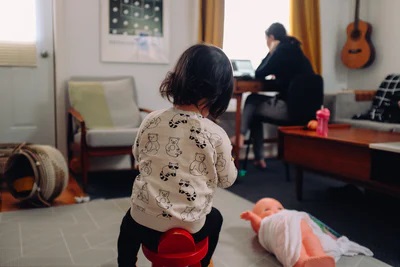
Refugee migration, labor demand, and local employment. A new GLO Discussion Paper by GLO Fellow Daniel Auer and Lilia Götz.

A new GLO Discussion Paper finds that refugee migration created native jobs and reduce their unemployment in Germany.

GLO Discussion Paper No. 989, 2021

Refugee migration, labor demand, and local employment Download PDF
by Auer, Daniel & Götz, Lilia

GLO Fellow Daniel Auer

Author Abstract: Whether or not immigration negatively affects the labor market outcomes of natives is an ongoing debate. One of the challenges for empirical evidence is the simultaneity of supply- and demand-side effects. To isolate the demand side, we focus on recent refugees in Germany who are exogenously allocated to districts and largely excluded from the labor market. Using panel data of all German districts between 2010 and 2018 and leveraging variation in the local stock of asylum seekers, we find that 1,000 asylum seekers create 267 jobs on average in a district. This growth effect is mainly driven by a demand for additional labor in service, public administration, and social work. As a consequence, we also observe a significant reduction in the local unemployment rate when more refugees arrive. The dynamic panel data estimates are robust to various sensitivity checks and two different instrumental variable approaches. Quantifying the demand side of immigration adds to our understanding of local labor market dynamics in an increasingly mobile world.

Featured image: Ra-Dragon-on-Unsplash

GLO Discussion Papers are research and policy papers of the GLO Network which are widely circulated to encourage discussion. Provided in cooperation with EconStor, a service of the ZBW – Leibniz Information Centre for Economics, GLO Discussion Papers are among others listed in RePEc (see IDEAS,  EconPapers)Complete list of all GLO DPs – downloadable for free.

The Global Labor Organization (GLO) is an independent, non-partisan and non-governmental organization that functions as an international network and virtual platform to stimulate global research, debate and collaboration.

Ends;

Redistribution across Europe: How much and to whom? A new GLO Discussion Paper by GLO Fellow Michael Christl and colleagues.

A new GLO Discussion Paper provides novel insights into the distributive role of tax-benefit systems.

GLO Discussion Paper No. 988, 2021

Redistribution across Europe: How much and to whom? Download PDF
by Hammer, Bernhard & Christl, Michael & De Poli, Silvia

GLO Fellow Michael Christl

Author Abstract: Governments face a potential trade-off between provision for the growing population in retirement and the support of working-age households with low income. Using EUROMOD-based microdata from 28 countries, we (a) quantify the redistribution to the pensioner and non-pensioner populations, (b) study the position of net beneficiaries in the overall income distribution and (c) analyse how taxes and benefits affect the working-age population with low income. Our results provide novel insights into the distributive role of tax-benefit systems across Europe. Interestingly, a strong overall redistribution between households is associated with generous pensions for a portion of the retirees but negatively related to support for low-income households.

GLO Discussion Papers are research and policy papers of the GLO Network which are widely circulated to encourage discussion. Provided in cooperation with EconStor, a service of the ZBW – Leibniz Information Centre for Economics, GLO Discussion Papers are among others listed in RePEc (see IDEAS,  EconPapers)Complete list of all GLO DPs – downloadable for free.

The Global Labor Organization (GLO) is an independent, non-partisan and non-governmental organization that functions as an international network and virtual platform to stimulate global research, debate and collaboration.

Ends;

Labour-saving automation and occupational exposure: a text-similarity measure. A new GLO Discussion Paper by GLO Fellows Fabio Montobbio, Jacopo Staccioli, Maria Enrica Virgillito & Marco Vivarelli.

A new GLO Discussion Paper constructs a direct measure of occupational exposure to robotic labour-saving technologies.

GLO Discussion Paper No. 987, 2021

Labour-saving automation and occupational exposure: a text-similarity measure Download PDF
by Montobbio, Fabio & Staccioli, Jacopo & Virgillito, Maria Enrica & Vivarelli, Marco

GLO Fellows Fabio Montobbio, Jacopo Staccioli, Maria Enrica Virgillito & Marco Vivarelli

Author Abstract: This paper represents one of the first attempts at building a direct measure of occupational exposure to robotic labour-saving technologies. After identifying robotic and LS robotic patents retrieved by Montobbio et al. (2022), the underlying 4-digit CPC definitions are employed in order to detect functions and operations performed by technological artefacts which are more directed to substitute the labour input. This measure allows to obtain fine-grained information on tasks and occupations according to their similarity ranking. Occupational exposure by wage and employment dynamics in the United States is then studied, complemented by investigating industry and geographical penetration rates.

Featured image: Andy-Kelly-on-Unsplash

GLO Discussion Papers are research and policy papers of the GLO Network which are widely circulated to encourage discussion. Provided in cooperation with EconStor, a service of the ZBW – Leibniz Information Centre for Economics, GLO Discussion Papers are among others listed in RePEc (see IDEAS,  EconPapers)Complete list of all GLO DPs – downloadable for free.

The Global Labor Organization (GLO) is an independent, non-partisan and non-governmental organization that functions as an international network and virtual platform to stimulate global research, debate and collaboration.

Ends;

How education and GDP drive the COVID-19 vaccination campaign. A new GLO Discussion Paper by GLO Fellows Vu Ngo, Toan Luu Duc Huynh, Huan Huu Nguyen, GLO Affiliate Phuc Nguyen and GLO President Klaus F. Zimmermann

A new GLO Discussion Paper finds that initially authoritarian countries are slow in the vaccination process, while education is most relevant for scaling up the campaign and financial strength of the economies drive them to higher vaccination rates.

GLO Discussion Paper No. 986, 2021

How education and GDP drive the COVID-19 vaccination campaign Download PDF
by Ngo, Vu M. & Zimmermann, Klaus F. & Nguyen, Phuc V. & Huynh, Toan L.D. & Nguyen, Huan H.

GLO Fellows Vu Ngo, Toan Luu Duc Huynh, Huan Huu Nguyen, GLO Affiliate Phuc Nguyen and GLO President Klaus F. Zimmermann

Author Abstract: Since vaccination is the decisive factor for controlling the COVID-19 pandemic, it is important to understand the process to vaccination success. We identify a variety of factors playing a crucial role including the availability of vaccines, pandemic pressures, economic strength (GDP), educational development and political regimes. Examining the speed of vaccinations across countries, we find that initially authoritarian countries are slow in the vaccination process, while education is most relevant for scaling up the campaign and financial strength of the economies drive them to higher vaccination rates.

Featured image: Markus-Spiske-on-Unsplash

Further research on the pandemic:

  • Gokhan Karabulut, Klaus F. Zimmermann, Mehmet Huseyin Bilgin and Asli Cansin Doker (2021), “Democracy and COVID-19 Outcomes”, Economics Letters, Vol. 203, June 2021, 109840 Open Access; free PDF. https://doi.org/10.1016/j.econlet.2021.109840
  • Klaus F. Zimmermann, Gokhan Karabulut, Mehmet Huseyin Bilgin and Asli Cansin Doker  (2020), “Inter-country Distancing, Globalization and the Coronavirus Pandemic“, The World Economy, Vol. 43, pp. 1484-1498. OPEN ACCESS, doi:10.1111/twec.12969. PDF.

MORE from the GLO Coronavirus Cluster: LINK

GLO Discussion Papers are research and policy papers of the GLO Network which are widely circulated to encourage discussion. Provided in cooperation with EconStor, a service of the ZBW – Leibniz Information Centre for Economics, GLO Discussion Papers are among others listed in RePEc (see IDEAS,  EconPapers)Complete list of all GLO DPs – downloadable for free.

The Global Labor Organization (GLO) is an independent, non-partisan and non-governmental organization that functions as an international network and virtual platform to stimulate global research, debate and collaboration.

Ends;

Is raising the school leaving age enough to decrease dropping out? A new GLO Discussion Paper by GLO Fellow Anna Adamecz-Volgyi.

A new GLO Discussion Paper finds that a school reform in Hungary increasing the length of schooling did not decrease the probability of dropping out of secondary school at all levels.

GLO Discussion Paper No. 985, 2021

Is raising the school leaving age enough to decrease dropping out? Download PDF
by Adamecz-Völgyi, Anna

GLO Fellow Anna Adamecz-Völgyi

Author Abstract: This paper examines the effects of increasing the compulsory school leaving age from 16 to 18 in Hungary using a difference-in-regression-discontinuities design identification strategy. While the reform increased the length of schooling, it did not decrease the probability of dropping out of secondary school, either on average or among the most at-risk group of Roma ethnic minority young people. Due to grade retentions, marginal students were older than their peers and couldn’t have made it to the final grade of secondary school by age 18. Neither did the reform increase the probability of employment at age 20 and 25. I show descriptive evidence that the share of disadvantaged students increased heavily in vocational training schools -that most marginal students attended- and potentially crowded out resources. This mechanism raises concerns about using school leaving age reforms as instrumental variables for education as it may violate its monotonicity assumption.

GLO Discussion Papers are research and policy papers of the GLO Network which are widely circulated to encourage discussion. Provided in cooperation with EconStor, a service of the ZBW – Leibniz Information Centre for Economics, GLO Discussion Papers are among others listed in RePEc (see IDEAS,  EconPapers)Complete list of all GLO DPs – downloadable for free.

The Global Labor Organization (GLO) is an independent, non-partisan and non-governmental organization that functions as an international network and virtual platform to stimulate global research, debate and collaboration.

Ends;

corona

Fertility, Family Policy, and Labor Supply: Quasi-Experimental Evidence from France. A new GLO Discussion Paper by GLO Fellow Nelly El-Mallakh.

A new GLO Discussion Paper finds that restricting family allowance eligibility criteria decreases fertility and increases both male and female labor supply.

GLO Discussion Paper No. 984, 2021

Fertility, Family Policy, and Labor Supply: Quasi-Experimental Evidence from France Download PDF
by Elmallakh, Nelly

GLO Fellow Nelly El-Mallakh

Author Abstract: This paper examines fertility and labor supply responses to a French policy reform that consisted in conditioning the amount of child allowances on household income. Relying on Regression Discontinuity Design and administrative income data, the paper finds that restricting family allowance eligibility criteria decreases fertility. The results also highlight that receiving half the amount of the allowances or not receiving any leads to an increase in both male and female labor supply. Auxiliary regressions show that at least part of the decline in fertility is due to timing effects, as the fertility impact declines as women’s age increases.

Featured image: jude-beck-unsplash

GLO Discussion Papers are research and policy papers of the GLO Network which are widely circulated to encourage discussion. Provided in cooperation with EconStor, a service of the ZBW – Leibniz Information Centre for Economics, GLO Discussion Papers are among others listed in RePEc (see IDEAS,  EconPapers)Complete list of all GLO DPs – downloadable for free.

The Global Labor Organization (GLO) is an independent, non-partisan and non-governmental organization that functions as an international network and virtual platform to stimulate global research, debate and collaboration.

Ends;

Vicious Circle or New Paradigm? Exploring the Impact of Shadow Economy on Labour Market in Latin America and Eurozone. A new GLO Discussion Paper by GLO Fellow Sangeeta Khorana, GLO Affiliate Marco Biagetti & Santiago Caram.

A new GLO Discussion Paper studies how institutional quality affects the size of the informal economy to find a positive and a significant association between labor productivity and the size of the shadow economy, among others.

GLO Discussion Paper No. 983, 2021

Vicious Circle or New Paradigm? Exploring the Impact of Shadow Economy on Labour Market in Latin America and Eurozone Download PDF
by Khorana, Sangeeta & Caram, Santiago & Biagetti, Marco

GLO Fellow Sangeeta Khorana & GLO Affiliate Marco Biagetti

Author Abstract: The relationship between shadow economy (or informal economy) and development has been extensively researched. But there is a lack of consensus on how institutional quality affects the size of informal economy in any country. Using the Kuznets Curve hypothesis we assess the relationship between institutional quality and the size of SE for a group of Latin American and Eurozone countries for 1991-2015. We examine the rationale of the ‘exclusion’ and ‘escape’ theories in short and long-run with the multiple indicators multiple causes (MIMIC) model. We use two techniques, namely an instrumental variable (IV) and Fully Modified OLS (FMOLS) approach. The results show positive and a significant relationship between labour productivity and the size of the shadow economy. We also find that the size of the informal sector is related to the institutional framework, and while the size of the informal sector varies across countries, both formal and informal sectors can co-exist in the long run. High corruption together with an excessive tax burden and adverse socio-economic conditions impact the size of the informal sector in an economy.

Featured image: JR-Korpa-on-Unsplash

GLO Discussion Papers are research and policy papers of the GLO Network which are widely circulated to encourage discussion. Provided in cooperation with EconStor, a service of the ZBW – Leibniz Information Centre for Economics, GLO Discussion Papers are among others listed in RePEc (see IDEAS,  EconPapers)Complete list of all GLO DPs – downloadable for free.

The Global Labor Organization (GLO) is an independent, non-partisan and non-governmental organization that functions as an international network and virtual platform to stimulate global research, debate and collaboration.

Ends;

Does Multitasking Affect Students’ Academic Performance? Evidence From a Longitudinal Study. A new GLO Discussion Paper by GLO Fellow Stijn Baert and colleagues.

A new GLO Discussion Paper finds that multitasking does not work out for students.

Stijn Baert

GLO Discussion Paper No. 982, 2021

Does Multitasking Affect Students’ Academic Performance? Evidence From a Longitudinal Study Download PDF
by Amez, Simon & Baert, Stijn & Heydencamp, Emily & Wuyts, Joey

GLO Fellow Stijn Baert

Author Abstract: Multitasking – alternating between two different tasks at the same time – has become a daily habit for many university students. However, this may come at a cost since the existing literature emphasises the negative association between multitasking and academic performance. Nonetheless, this literature is based on cross-sectional observational data so that that estimates cannot be given a causal interpretation. To complement these studies, we opted for a longitudinal design in this study. Specifically, for three consecutive years, students at two Belgian universities, in more than ten different study programmes, were surveyed on their multitasking preferences and academic performance. Then, these results were merged with the students’ exam scores. We exploited the longitudinal character of the data by running random and fixed effect models. Our results indicate that the positive and negative aspects of multitasking with respect to academic performance cancel each other out.

Featured image: j-zamora-on-unsplash

GLO Discussion Papers are research and policy papers of the GLO Network which are widely circulated to encourage discussion. Provided in cooperation with EconStor, a service of the ZBW – Leibniz Information Centre for Economics, GLO Discussion Papers are among others listed in RePEc (see IDEAS,  EconPapers)Complete list of all GLO DPs – downloadable for free.

The Global Labor Organization (GLO) is an independent, non-partisan and non-governmental organization that functions as an international network and virtual platform to stimulate global research, debate and collaboration.

Ends;

Unemployment and health: a panel event study. A new GLO Discussion Paper by Athina Raftopoulou & GLO Fellow Nicholas Giannakopoulos.

A new GLO Discussion Paper finds that periods ahead of an unemployment event, health outcomes decline and unmet needs for medical care increase.

Nicholas Giannakopoulos

GLO Discussion Paper No. 981, 2021

Unemployment and health: a panel event study Download PDF
by Raftopoulou, Athina & Giannakopoulos, Nicholas

GLO Fellow Nicholas Giannakopoulos

Author Abstract: Adopting a panel event study framework, we estimate the effect of unemployment on health outcomes by exploiting the variation in the timing of entering unemployment using longitudinal data for Greece. We find, that in the periods ahead of an unemployment event, health outcomes decline and unmet needs for medical care increase. These findings are valid only for men and are robust to alternative definitions of health outcomes, unemployment events and model specifications.

GLO Discussion Papers are research and policy papers of the GLO Network which are widely circulated to encourage discussion. Provided in cooperation with EconStor, a service of the ZBW – Leibniz Information Centre for Economics, GLO Discussion Papers are among others listed in RePEc (see IDEAS,  EconPapers)Complete list of all GLO DPs – downloadable for free.

The Global Labor Organization (GLO) is an independent, non-partisan and non-governmental organization that functions as an international network and virtual platform to stimulate global research, debate and collaboration.

Ends;

Learning the Right Skill: The Returns to Social, Technical and Basic Skills for Middle-Educated Graduates. A new GLO Discussion Paper by GLO Fellows Femke Cnossen and Guy Tchuente & GLO Director Matloob Piracha.

A new GLO Discussion Paper extract verbs and nouns in text data to measure social, technical and basic skills in a novel way.

GLO Discussion Paper No. 979, 2021

Learning the Right Skill: The Returns to Social, Technical and Basic Skills for Middle-Educated Graduates Download PDF
by Cnossen, Femke & Piracha, Matloob & Tchuente, Guy

GLO Fellows Femke Cnossen and Guy Tchuente & GLO Director Matloob Piracha

Author Abstract: Technological change and globalization have sparked debates on the changing demand for skills in western labour markets, especially for middle skilled workers who have seen their tasks replaced. This paper provides a new data set, which is based on text data from curricula of the entire Dutch vocational education system. We extract verbs and nouns to measure social, technical and basic skills in a novel way. This method allows us to uncover the skills middle-skilled students learn in school. Using this data, we show that skill returns vary across students specialized in STEM, economics or health, as well as across sectors of employment.

GLO Discussion Papers are research and policy papers of the GLO Network which are widely circulated to encourage discussion. Provided in cooperation with EconStor, a service of the ZBW – Leibniz Information Centre for Economics, GLO Discussion Papers are among others listed in RePEc (see IDEAS,  EconPapers)Complete list of all GLO DPs – downloadable for free.

The Global Labor Organization (GLO) is an independent, non-partisan and non-governmental organization that functions as an international network and virtual platform to stimulate global research, debate and collaboration.

Ends;