Category Archives: Events

CALL FOR PAPERS: 60th ISLE Annual Labour Conference on 19-21 December 2018 in Mumbai, India

The Global Labor Organization (GLO) supports the annual conference of the Indian Society of Labour Economics (ISLE) and the associated Indian Journal of Labour Economics. Both are partner institutions of the GLO.

CALL FOR PAPERS

60th ISLE Annual Conference, 19-21 December 2018, Mumbai, India
Conference Flyer ISLE 2018

The 60th Annual Conference of the Indian Society of Labour Economics (ISLE) will be held during 19-21 December 2018 in Mumbai, India, organized by the Indira Gandhi Institute of Development Research (IGIDR). The conference commemorates with the Diamond Jubilee year of the formation of ISLE.  Congratulations from GLO!

Conference Themes
– Emerging Labor Markets and Employment Challenges
– Inequality in Labor Markets and Wellbeing
– World of Work and Women

Submission of Papers:
– Submission deadline:  31 August 2018: EXTENDED TO OCTOBER 1, 2018.
– Submission details: Call for papers

GLO  intends to organize a special GLO session at this conference. Those GLO members interested to contribute to such a session are invited to contact GLO President Klaus F. Zimmermann (klaus.f.zimmermann@gmail.com) with ideas or preliminary paper titles.

INDIAN SOCIETY OF LABOUR ECONOMICS (ISLE)   

Ends;

The Institute of Global Economic Problems in Baku/Azerbaijan joins GLO as institutional supporter. Natig Shirinzade becomes GLO Country Lead Azerbaijan

Chairman Natig Shirinzade of the Institute of Global Economic Problems has recently participated at the GLO-EBES 25 conference on May 23-25, 2018 in Berlin to present a paper on “Migration and Social Mobility within and between Countries and its Economic Consequences in the Period of Globalization”. GLO is the Global Labor Organization, EBES the Eurasia Business and Economics Society. The full program of the conference is found here.

At the Berlin conference, Chairman Natig Shirinzade and GLO President Klaus F. Zimmermann discussed intensively collaborations between both organizations. Zimmermann accepted an invitation of Chairman Shirinzade to visit Baku and Azerbaijan soon to discuss research and policy projects. Natig Shirinzade has accepted the position of GLO Country Lead Azerbaijan to represent GLO in this country.

The Institute of Global Economic Problems is a non-profit, non-governmental organization founded in Baku, Azerbaijan. Its mission is to provide scientists, political figures and society with true and confident information about the global economic processes, the global social problems, including migration problems, and other problems that affect economic sustainability problems. It aims to organize a live platform for discussions, dialogues, for assisting the exchange of opinions and views. The institute is considering a wide range of cooperation and collaboration with European and World think tanks and institutes. It believes that through tight connections of adequate dialogue between the scientists, organizations, countries and continents it will be able to achieve the goal to help society, the people, to overcome the forthcoming waves of globalization, which undoubtedly will influence everyone. With the help of attracted experts from the fields of sociology and economics, the Institute intends to prepare both theoretical and empirical articles on world social and economic problems.

Chairman Natig Shirinzade (right)and GLO President Klaus F. Zimmermann on May 25, 2018 in Berlin.

www.globin.org

Ends;

GLO at AIEL 2018: Submission Deadline is June 10, 2018.

The Global Labor Organization (GLO) collaborates with many institutions worldwide including joint sessions at conferences.  As in 2017, the GLO seeks to be present at the 2018 Italian Association of Labor Economists (AIEL) conference in Italy. This initiative is headed by the GLO Country Lead of Italy, Francesco Pastore (Seconda Università di Napoli). GLO Italy is one of the largest country groups and among the most active.

Message

Francesco Pastore and Klaus F. Zimmermann (GLO President and UNU-MERIT, Maastricht) encourage all GLO members to submit a paper to the forthcoming XXXIII AIEL  Conference to be held on the 20-21st of September 2018 at the University Politecnica of Marche, in Ancona.

The conference will host one or more AIEL-GLO joint sessions. Those who are interested in submitting their paper should specify that the paper is meant to be presented in the AIEL-GLO joint session.

The deadline for the submission of papers is the 10th of June!

There will be a discounted rate for early bird registrations (before the 1st of August) of accepted papers.

The theme of the AIEL 2018 plenary sessions is the analysis of population ageing and of the role of families in fertility decisions, labor market participation, and children’s education.

Keynote lectures will be delivered by GLO Fellow Jan van Ours (Erasmus University Rotterdam),  Andrea Ichino (European University Institute), and Rafael Lalive (University of Lausanne).

For further information regarding the conference, see the home page of the Association: http://www.aiel.it/page/news.php

The call for papers can be downloaded from here:
http://www.aiel.it/cms/cms-files/eventi/lavoratori_eventi_consiglio_20180319175932_CBACDADC.pdf

Francesco and Klaus:
“We hope you can make it to Ancona at the XXXIII AIEL Conference!”


Left Francesco Pastore (GLO Country Lead Italy) and Klaus F. Zimmermann (GLO President)


Ends;

EBES Conference in Prague in October 2018: Submission Deadline 31 July 2018

The GLO – affiliated Eurasia Business and Economics Society (EBES) invites researchers to present their work at the 26th EBES Conference in Prague, Czech Republic, on October 24-26, 2018. The Submission Deadline is July 31, 2018. The GLO is the Global Labor Organization.

Call for Papers: 26th EBES Conference – Prague
October 24-26, 2018; Prague, Czech Republic
Hosted by University of Finance and Administration
Submission Deadline: July 31, 2018
www.ebesweb.org

You are cordially invited to submit your abstracts or papers for presentation consideration at the 26th EBES Conference that will take place on October 24-26, 2018 at the University of Finance and Administration.

The conference aims to bring together many distinguished researchers from all over the world. Participants will find opportunities for presenting new research, exchanging information, and discussing current issues. Although we focus on Europe and Asia, all papers from major economics, finance, and business fields – theoretical or empirical – are highly encouraged.

Keynote Speakers
Prof. Jonathan Batten
Prof. Peter G. Szilagyi

Board
Prof. Jonathan Batten, Monash University, Australia
Prof. Iftekhar Hasan, Fordham University, U.S.A.
Prof. Peter Rangazas, Indiana University-Purdue University Indianapolis, U.S.A.
Prof. Euston Quah, Nanyang Technological University, Singapore
Prof. John Rust, Georgetown University, U.S.A.
Prof. Marco Vivarelli, Università Cattolica Del Sacro Cuore, Italy
Prof. Klaus F. Zimmermann, UNU-MERIT, Maastricht University, The Netherlands

Abstract/Paper Submission
Authors are invited to submit their abstracts or papers no later than February 28, 2018. For submission, please visit our website at: http://www.ebesweb.org/Conferences/26th-EBES-Conference-Prague/Abstract-Submission.aspx no submission fee is required. General inquiries regarding the call for papers should be directed to ebes@ebesweb.org.

Publication Opportunities
Qualified papers will be published in the EBES journals (no submission and publication fees). EBES journals (Eurasian Business Review and Eurasian Economic Review) are published by Springer and indexed in the SCOPUS, EBSCO EconLit with Full Text, Google Scholar, ABI/INFORM, ABS Academic Journal Quality Guide, CNKI, EBSCO Business Source, EBSCO Discovery Service, EBSCO TOC Premier, Emerging Sources Citation Index (Web of Science), International Bibliography of the Social Sciences (IBSS), OCLC, ProQuest Business Premium Collection, ProQuest Central, ProQuest Turkey Database, Research Papers in Economics (RePEc), Summon by ProQuest, Cabell’s Directory, and Ulrich’s Periodicals Directory.

Also all accepted abstracts will be published electronically in the Conference Program and the Abstract Book (with an ISBN number). It will be distributed to all conference participants at the conference via USB. Although submitting full papers are not required, all the submitted full papers will also be included in the conference proceedings in the USB. After the conference, participants will also have the opportunity to send their paper to be published in the Springer’s series Eurasian Studies in Business and Economics (no submission and publication fees).

This will also be sent to Thomson Reuters in order to be reviewed for coverage in its Conference Proceedings Citation Index. Please note that the 10th, 11th, 12th, 13th, 14th, 15th, 16th, 17th and 19th EBES Conference Proceedings are accepted for inclusion in the Conference Proceedings Citation Index. 18th, 20th and subsequent conference proceedings are in progress.

Important Dates

Submission deadline: July 31, 2018
Reply-by: August 13, 2018
Registration deadline: September 14, 2018
Announcement of the Program: September 18, 2018

Contact
Ugur Can (ebes@ebesweb.org)
Dr. Ender Demir (demir@ebesweb.org)

Ends;

Understanding the Challenges of the NEW Austrian Government Program. Video Analysis Available

The Global Labor Organization (GLO) is commited to evidence-based policy making and global exchange. GLO Fellow Peter Brandner and his independent group DIE WEIS[S]E WIRTSCHAFT has now provided the videos of a series of expert panel events summarizing the core policy areas (i) health, (ii) economics, (iii) education and (iv) migration and integration policy. A number of GLO Fellows including GLO President Klaus F. Zimmermann have participated in the analysis. The links to the information and the videos (all in German) are provided below. The videos are just freshly published.

Peter Brandner, Austrian Policy Advisor, University of Vienna and GLO

Die österreichische unabhängige Gruppe DIE WEIS[S]E WIRTSCHAFT macht komplexe Fragen im Sinne evidenzbasierter Politik transparent. Dem diente auch eine Veranstaltungsreihe zum Regierungsprogramm der neuen Österreichischen Regierung mit den Themenbereichen Gesundheit, Wirtschaft, Bildung und Migrations- und Integrationspolitik. Die Videos der Veranstaltungen liegen jetzt vor. Klaus F. Zimmermann, Präsident der Global Labor Organization (GLO), war an der Veranstaltung zur Migrations- und Integrationspolitik im Panel als Akteur beteiligt.

Im Regierungsprogramm 2017-2022 der neuen Österreichischen Regierung ist vieles bloß angedeutet, soll geprüft oder evaluiert werden. Aber auch konkrete Maßnahmen sind erkennbar. In der Veranstaltungsreihe

„Experten bewerten – das Regierungsprogramm auf dem Prüfstand“

organisiert unter der Leitung von GLO Fellow Peter Brandner (Wien) durch

Weis[s]e Wirtschaft

werden wesentliche Politikbereiche aus unterschiedlichen Perspektiven kritisch im Lichte evidenzbasierter Politik beleuchtet und diskutiert.

Jetzt wurde das Programm weitgehend durch Videos dokumentiert vorgelegt und auf der Website DIE WEIS[S]E WIRTSCHAFT verfügbar gemacht.

17. Jänner 2018
>> Gesundheitspolitik

29. Jänner 2018
>> Wirtschaftspolitik

14. Februar 2018
>> Bildungspolitik (folgt demnächst)

27. Februar 2018
>> Migrations- und Integrationspolitik
Die Veranstaltung am 27. Februar erfolgte unter Beteiligung von GLO Präsident Klaus F. Zimmermann.

Migrations- und Integrationspolitik im Regierungsprogramm 2017-2022

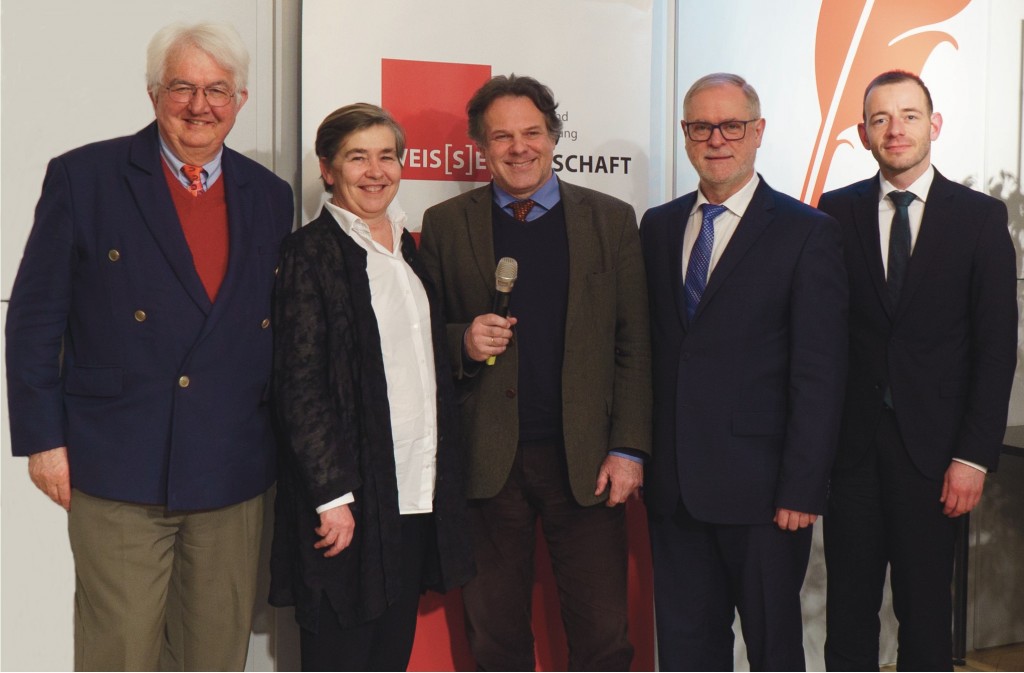
Der Migrations- und Integrationspanel (von links): GLO Fellow Robert Holzmann, University of New South Wales (Sydney), Österreichische Akademie der Wissenschaften (Wien); Ursula Struppe, Dienststellenleiterin Integration und Diversität, Magistratsabteilung 17, Stadt Wien; Andreas Kresbach, Die Weis[s]e Wirtschaft; Klaus F. Zimmermann, Präsident Global Labor Organization (GLO) und Co-Direktor UNU-MERIT, Universität Maastricht; Roland Goiser, Stv. Direktor Österreichischer Integrationsfonds (ÖIF).

Literatur:
Zimmermann, Klaus F., Migrationspolitik im Mediensturm, Wirtschaftspolitische Blätter, 63 (2016), 497-508.
Zimmermann, Klaus F., Evidenzbasierte wissenschaftliche Politikberatung, Journal of Applied Social Science Studies, 134 (2014), 259-270.
Zimmermann, Klaus F., Lobbyisten der Wahrheit, Deutsche Universitätszeitung (DUZ), 3 (2015), 14-15.
Zimmermann, Klaus F., The Core of Global Scientific Policy Advice: op-ed 

Ends;

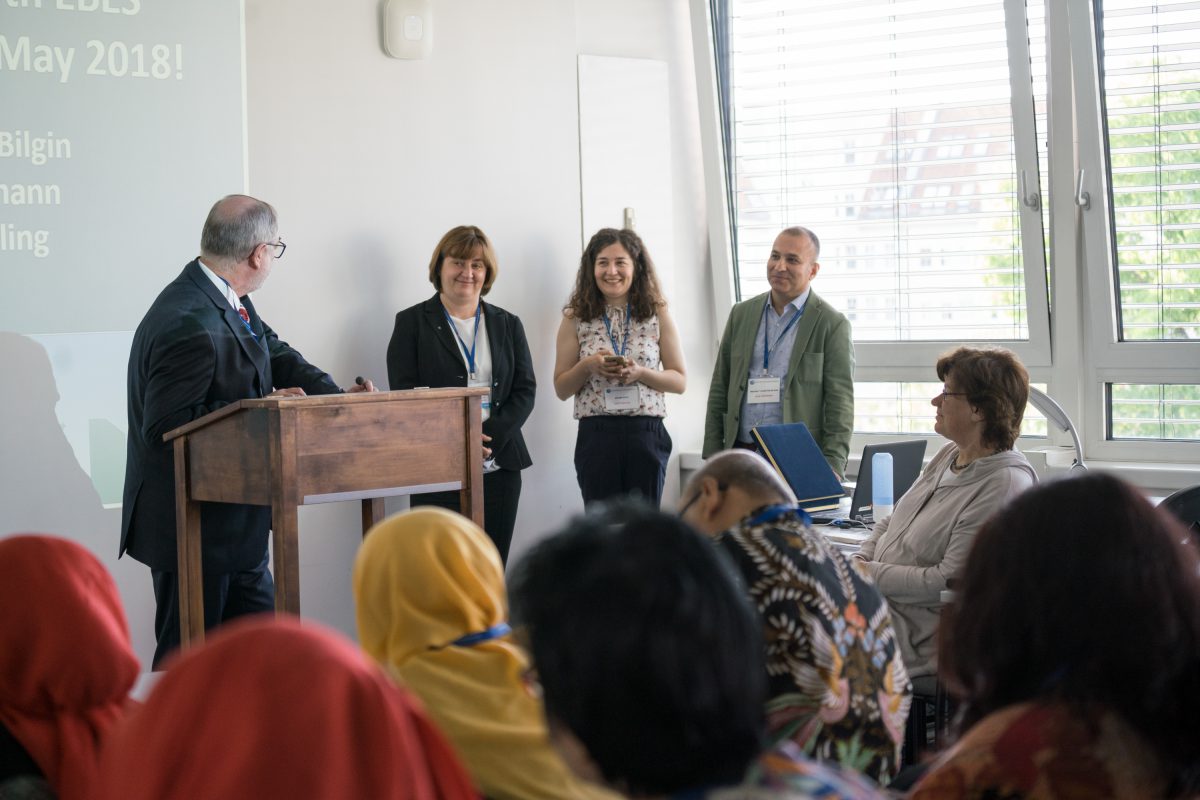
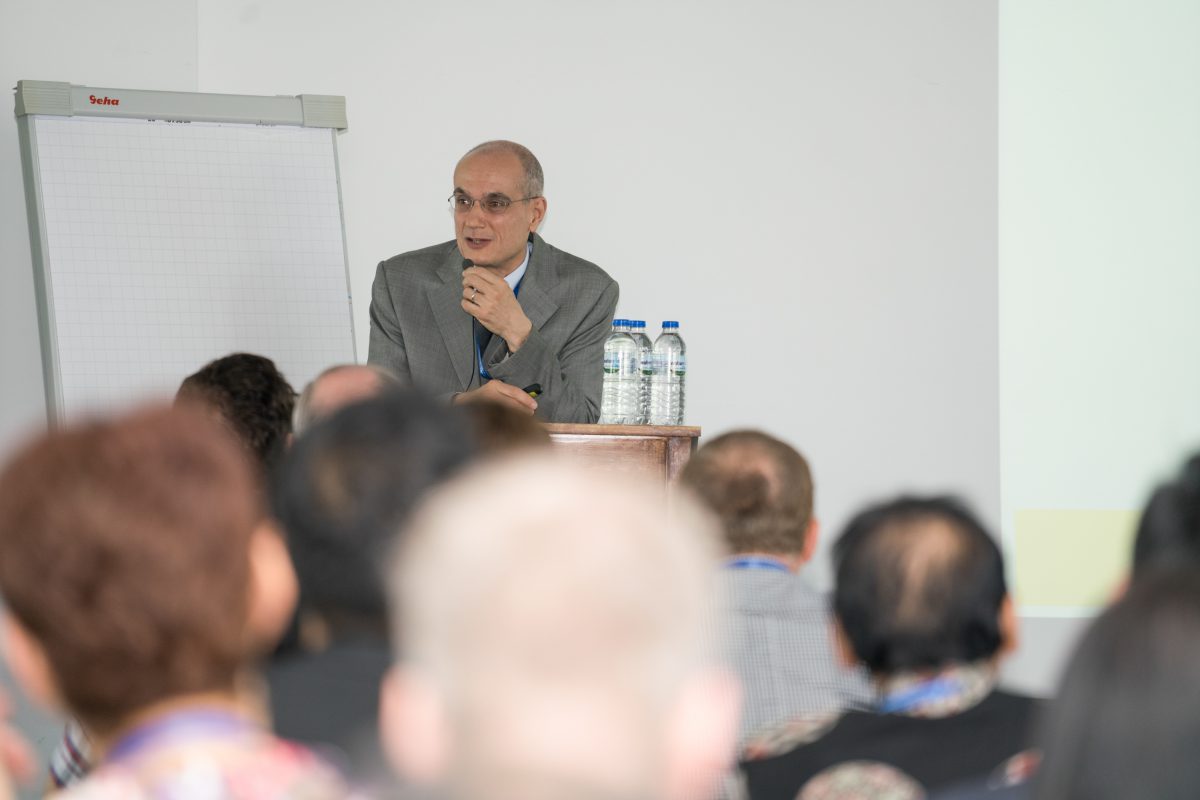
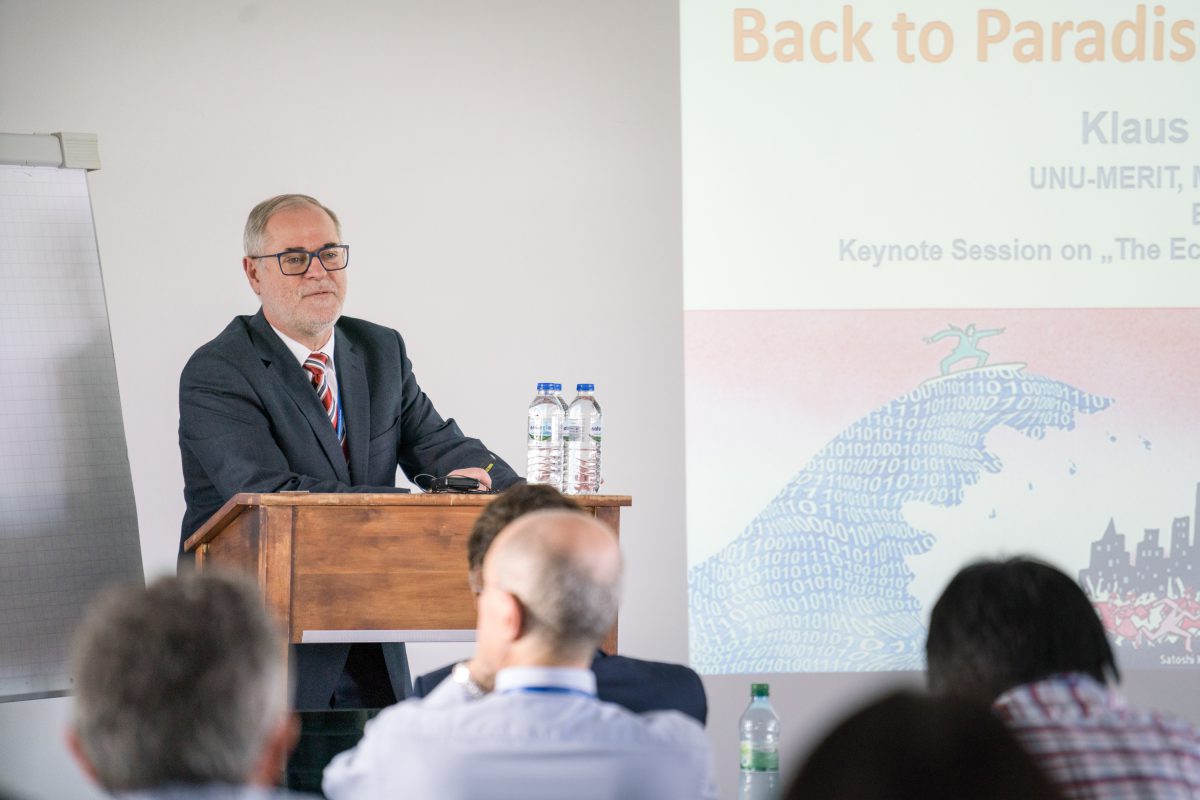
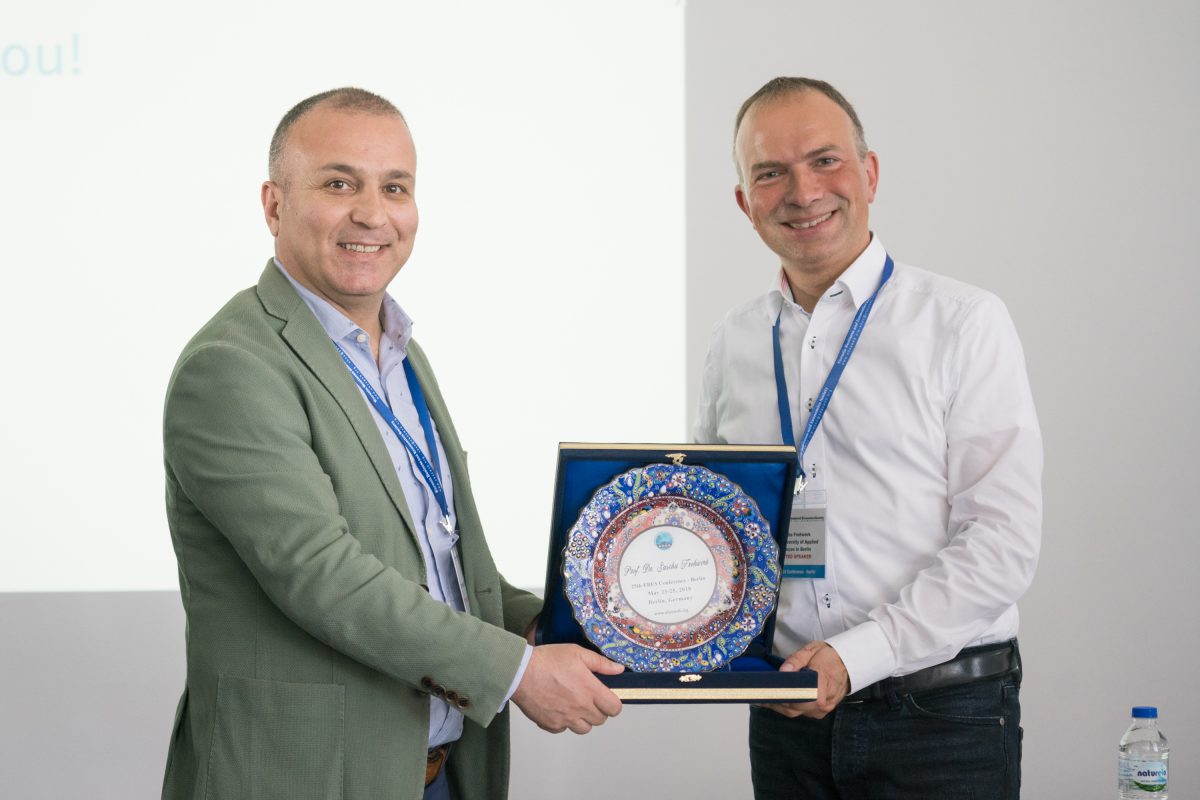
EBES 25 in Berlin honors GLO President Zimmermann for his lifetime contributions to the areas of labor, population economics, and migration.

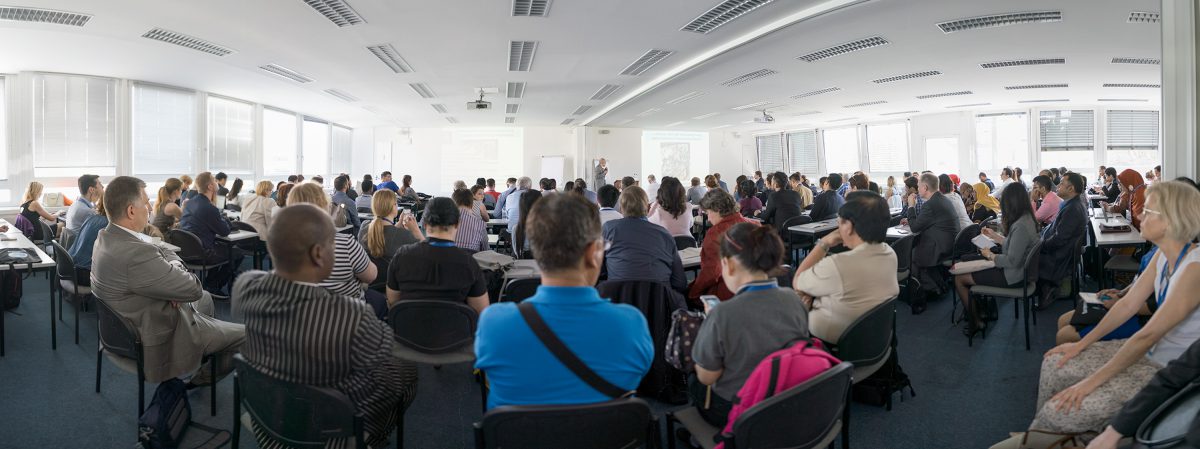
The 25th Conference of the Eurasia Business and Economics Society (EBES)  currently takes place on May 23-25, 2018 in Berlin/Germany. The conference program covers 525 authors from 60 countries of the world with over 300 papers presented. The event is jointly organized with the Global Labor Organization (GLO) and hosted by the FOM University in the Berlin study center. MORE INFORMATION ABOUT THE EVENT.

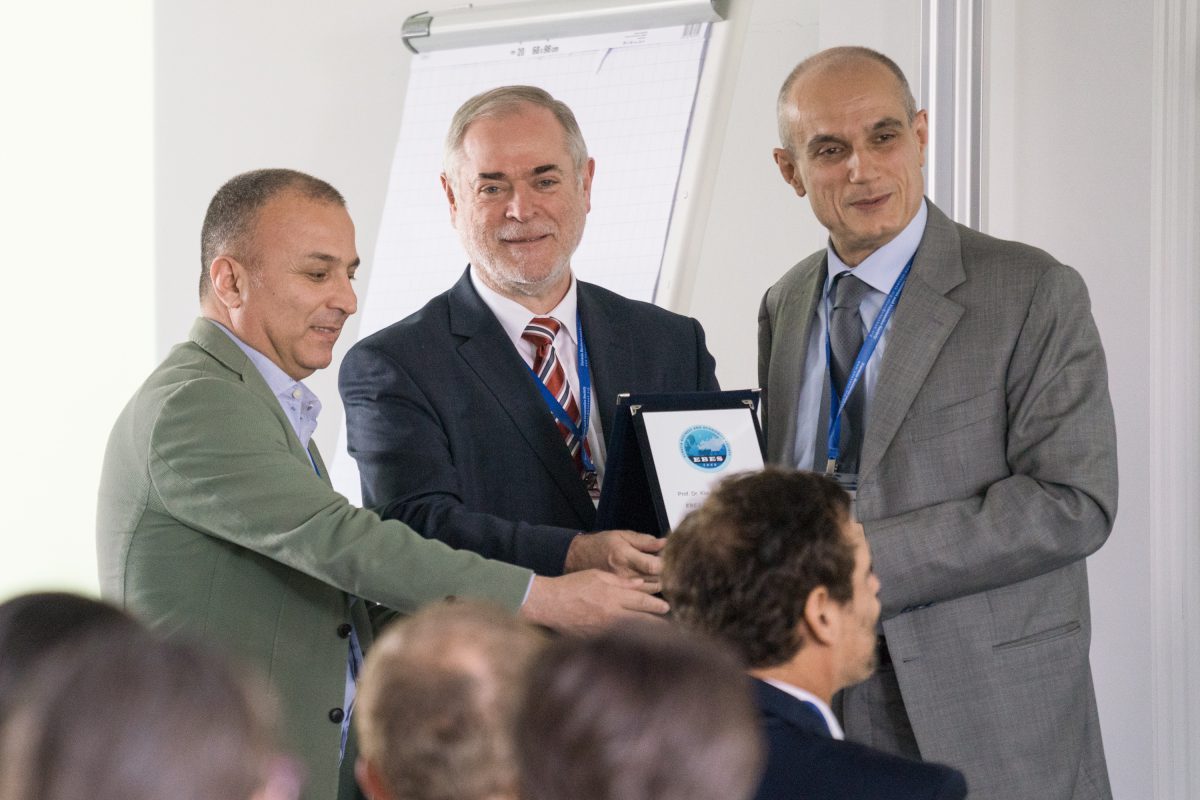
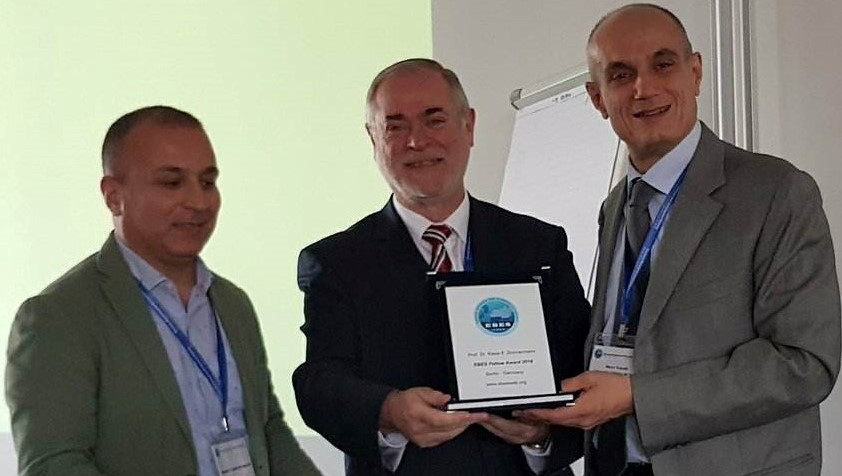
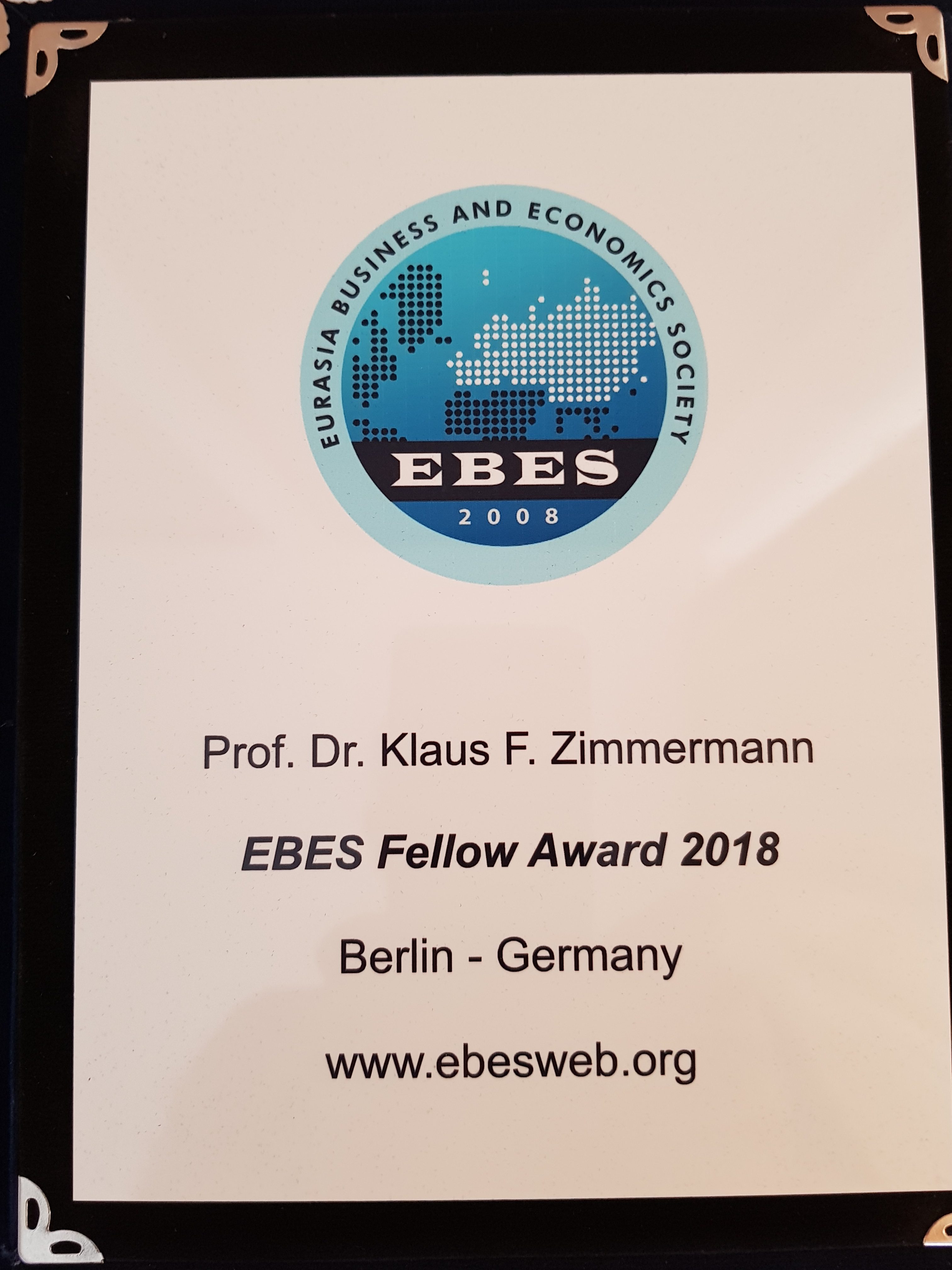
On Wednesday May 23, the EBES Fellow Award 2018 was given to Klaus F. Zimmermann, Professor Emeritus of Bonn University and Honorary Professor of the Free University of Berlin. He is also Co-Director of POP at UNU-MERIT and Honorary Professor at Maastricht University and Honorary Professor at Renmin University of China.

Previous EBES Fellow Award winners  have been Giovanni Dosi (2017) and M. Hashem Pesaran (2016).

The EBES Fellow Award honors an academician for his lifetime contributions to his field. Zimmermann got the award for his outstanding achievements and invaluable contributions to the areas of labor, population economics, and migration. The award was given in an impressive ceremony with a laudation by Professor Marco Vivarelli, Universita Cattolica del Sacro Cuore, Milano, Italy in front of over 300 conference participants.

GLO President Zimmermann appreciated the presence of a large number of collaborators, including GLO Fellows Martin Kahanec, Corrado Giulietti, Matloob Piracha, Francesco Pastore, Kea Tijdens, Almas Heshmati, Timan Brück, Milena Nikolova, Olena, Nizalova, Marco Leonardi and Nick Drydakis.

After a long day with a dense academic program, the hundreds of conference participants celebrated with Zimmermann and exchanged their views at the GLO Reception at the fantastic event place Wasserwerk Berlin. Many participants enjoyed the lovely city Berlin until very early in the morning.


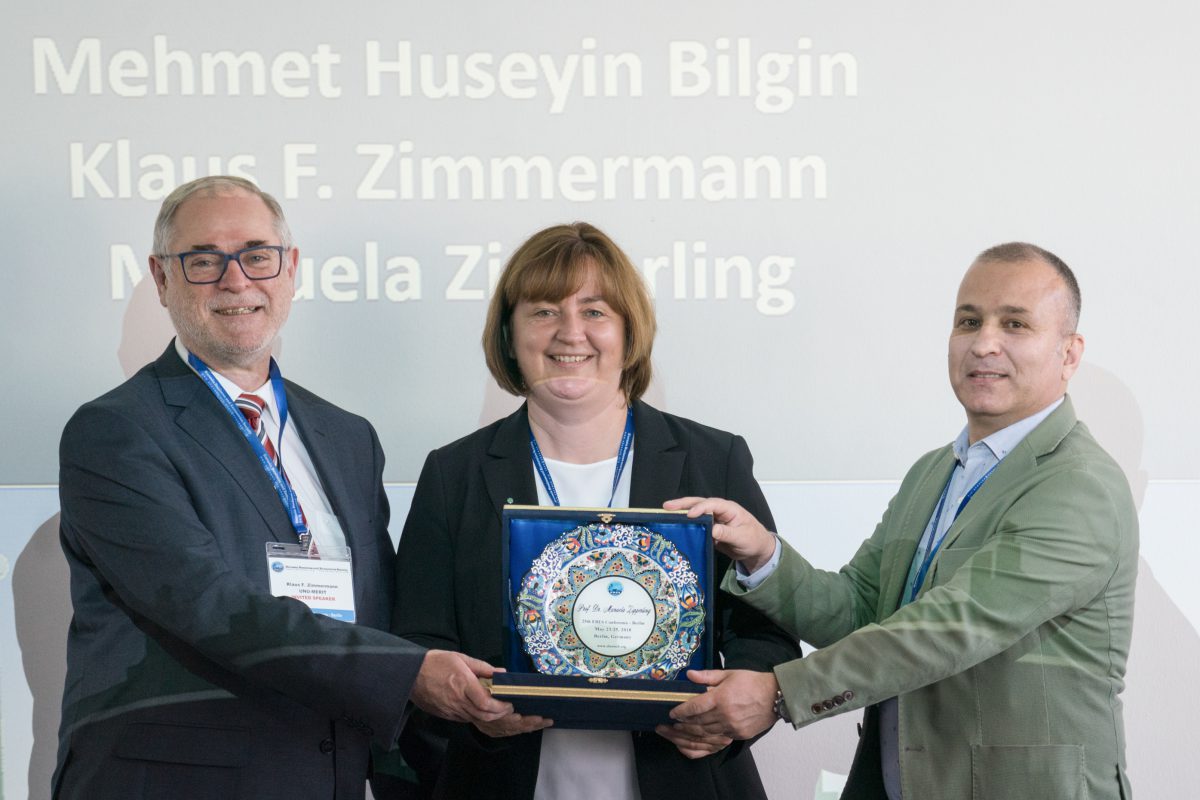
From the left: Professor Mehmet Huseyin Bilgin, Vice President of EBES, Istanbul Medeniyet University and GLO; Klaus F. Zimmermann; Professor Marco Vivarelli, Universita Cattolica del Sacro Cuore, Milano, and GLO.

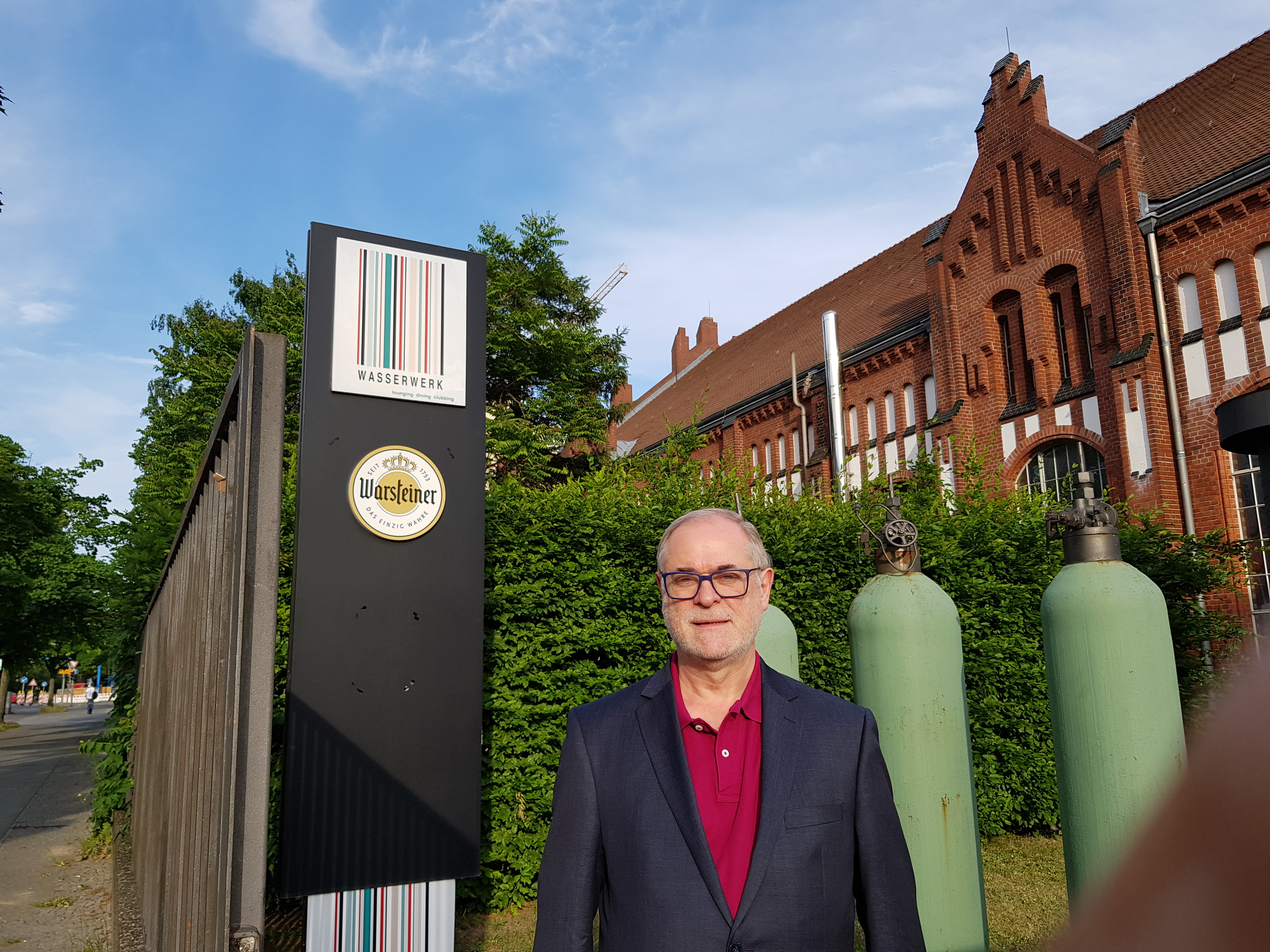
Zimmermann in front of the Wasserwerk Berlin.

Image result for Bilder Wasserwerk Berlin

Wasserwerk Berlin


Ends;

FOM University and GLO: GLO Fellow Alexander Spermann (Freiburg University) Appointed Professor of Economics at FOM Cologne

Alexander Spermann (University of Freiburg) and prominent German policy advisor, has accepted a position at FOM University Cologne. He was appointed Professor of Economics on May 16, 2018 in a festive ceremony  by FOM Vice-Chancellor Professor Ingrid Eumann at the FOM Cologne Study Center. Spermann will keep his affiliation with the University of Freiburg.

Alexander Spermann is also Fellow of the  Global Labor Organization (GLO). GLO President Klaus F. Zimmermann (UNU-MERIT, Maastricht University and Bonn University) participated at the appointment ceremony. Zimmermann and Spermann worked together for many years during their tenure at the Bonn – based IZA Institute as Director and Policy Director and published together on minimum wages and the role of unions at the time of digitization.

Professor Alexander Spermann (FOM Cologne, University of Freiburg and GLO) & FOM Vice-Chancellor Professor Ingrid Eumann

The appointment of Professor Spermann deepens the relationship between GLO and FOM. Among others, FOM University Berlin hosts the forthcoming large EBES 25 & GLO congress in Berlin on May 23-25, 2018. FOM University runs 29 study centers all over in Germany and is also very active in China. FOM and GLO prepare a forthcoming conference on climate change in Hong Kong in October 2018.

GLO – President Klaus F. Zimmermann (UNU-MERIT, Maastricht & Bonn Universities) participating at the appointment ceremony in Cologne on May 16, 2018.

Ends;


GLO joined with global scholars to convene at Yale for the advances of the world’s largest health system

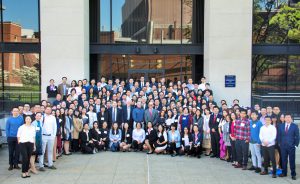
Over 200 researchers and health leaders gathered at Yale University on May 11-13, 2018 for the second biennial conference of the China Health Policy and Management Society (CHPAMS), focusing on advances in health policy and health care in China and the United States. The event was co-sponsored by the Yale School of Public Health, Yale Macmillan Center, China Medical Board, Global Labor Organization (GLO), among others.

The three-day conference featured 7 keynote speeches, 3 roundtables, and 140 talks by health experts from China and the US on a wide range of topics. In addition, CHPAMS also celebrated its 10th birthday and vowed to continue its mission of promoting public health research and practice on China, the largest health system in the world, in the next 10 years.


Health and labor economics studies have emphasized health as a fundamental object of choice and together with schooling as two most important components of the stock of human capital. Revolving around this consensus, leading authorities in health economics and labor economics delivered keynote talks.

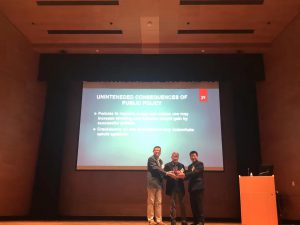
Michael Grossman, Director of Health Economics Program at the U.S. National Bureau of Economic Research (NBER), summarized health economics research at the Bureau and its implications for China. Grossman advised Chinese policymakers that policies to regulate e-cigs and reduce use may increase smoking and increase weight gain by successful quitters and that crackdowns on use of marijuana may exacerbate the opioid epidemic.


GLO Fellow Paul Schultz, the Malcolm K. Brachman Professor Emeritus in Economics and former Director of Economic Growth Center at Yale University, spoke on the challenges both high- and low-income countries face in achieving health equity, even with national health systems in place.


Two GLO special sessions were organized by GLO Fellow Dr.  Xi Chen of Yale University in his capacity as the GLO Cluster Lead of the “Environment and Human Capital in Developing Countries” program.


GLO Special Session I: Environment, Smoking and Population Health (Chair: Ce Shang, University of Illinois at Chicago)
Something in the Pipe: Flint Water Crisis and Health at Birth
Rui Wang                 Tulane University
Smoking and cigarette pack size: evidence from 75 countries from 2007 to 2014
Kai-Wen Cheng       University of Illinois at Chicago
What affects pregnant women expose to secondhand smoke: a cross-sectional study in the border and minority urban areas of northwest China
Jiangyun Chen         Huazhong  University of Science and Technology
R24 proposal to build a consortium on trans-disciplinary public health law research (PHLR), education, prevention of substance use disorders in Colorado
Qing Li                      University of Colorado Denver, San Diego State University

GLO Special Session II: Air Pollution (Chair: Zheng Li, US CDC/ATSDR)
Air Pollution and Lung Cancer Mortality: Evidence from a Natural Experiment
Qing Han                  The University of Kansas
What Happens in the Womb under the Dome: The Impact of Air Pollution on Birth Outcomes
Xiaoying Liu           University of Pennsylvania
Maternal Exposure to Ambient Air Pollution and Childhood Overweight and Obesity: A Prospective Birth Cohort Study in Wuhan, China
Shaoping Yang       Huazhong University of Science and Technology
Maternal Exposure to Air Pollution and Risk of Neural Tube Defects
Jinzhu Zhao             Huazhong University of Science and Technology


NEWS ARTICLE

The link below leads to the Yale News article on the conference.
Improving the World’s Largest Health System—Scholars Convene at YSPH to Plan for Future

FULL PROGRAM

CHPAMS Yale Conference Program Book

THE ORGANIZER


Xi Chen, Yale University and GLO. He is the GLO Cluster Lead of “Environment and Human Capital in Developing Countries” and the incoming President of CHPAMS.


Ends;

Update: Full Program for the 25th EBES conference at FOM University in Berlin on May 23-25, 2018. Christoph Kannengießer (CEO, German African Business Association) speaks on Africa Panel. GLO RECEPTION in the Wasserwerk.

The 25th Conference of the Eurasia Business and Economics Society (EBES) will take place on May 23-25, 2018 in Berlin/Germany. It is jointly organized with the Global Labor Organization (GLO) and hosted by the FOM University in their Berlin study center.

THE FULL CONFERENCE PROGRAM CAN BE ACCESSED HERE.

On May 23, 2018 four GLO events will contribute to the success of the 25th EBES conference in Berlin:

9.00 – 10.50 am: GLO Policy Panel on: “Mobilizing Human Resources in Africa”

13.30 – 15.30 pm: GLO Research Paper Session  on: “Wellbeing”

15.40 – 17.40 pm: GLO “Thematic Research Cluster” Session

19.30 – 22.30 pm: GLO Reception (Wasserwerk · Hohenzollerndamm 208 · 10713 Berlin)

Highlight

One highlight of the first day will be a presentation of Christoph Kannengießer (CEO, German African Business Association) on the Africa Panel of the conference. See for more information: German-African Business Association   Association Website

Christoph Kannengießer has been CEO of the Afrika-Verein der deutschen Wirtschaft e.V. (German-African Business Association) since June 2012. He studied law and political science in Bonn and Munich and holds a Master´s Degree in Law from the Rheinische Friedrich-Wilhelms-Universität in Bonn where he worked as a research assistant at the Chair of Public Law. Since 1995 he is registered as Attorney-at-law. In the course of his career in major German business associations, Christoph Kannengießer held leading positions at the DIHK, the Association of German Chambers of Industry and Commerce, the BDA, the Confederation of German Employers’ Associations (Managing Director for Labour Market Policy) and at the Markenverband (German Brands Association), where he served as CEO. From 2004 to 2007 he served as Deputy Secretary General of the Konrad-Adenauer-Foundation, a leading political think tank with a broad international network i.a. on the African continent.

May 23, 2018: 9.00 – 10.50 am

Policy Panel on: “Mobilizing Human Resources in Africa”

Christoph Kannengießer (CEO, German African Business Association): German Business in Africa – Challenges for Employment Creation

Ernest Ngeh Tingum (University of Cape Town, South Africa): A research agenda for trade developments in Africa

Martin Kahanec (Central European University, Budapest, Hungary) with Martin Guzi (Masaryk University, Brno, Czech Republic): A research agenda concerning subjective and objective evaluations of living wages in Africa

Kea Tijdens (University of Amsterdam, Netherlands, and WageIndicator Foundation): A research agenda focussing on informal labour markets in Africa

Tilman Brück (International Security and Development Center, Berlin, Germany and London School of Economics, UK): Employment Creation and Peace Building

Almas Heshmati (Jönköping International Business School, Sweden, and Sogang University, South Korea; GLO Cluster Lead Africa): GLO Thematic Cluster on Labor Markets in Africa

SESSION CHAIR: Kea Tijdens (University of Amsterdam, Netherlands, and WageIndicator Foundation) and Christoph Kannengießer (CEO, German African Business Association)

Abstracts:

KANNENGIESSER: He will report on the extent to which German companies are currently involved on the African continent regarding trade, foreign direct investment (FDI) and job creation. He will characterize the essential conditions for more international and in particular German economic engagement on the continent, especially with regard to the creation of more local employment.

TINGUM: Micro data of the Regional Program Enterprise Development for Cameroon’s manufacturing firms in 2009 reveal that most firms were technically inefficient, but that firms in the food processing sector, followed by wood and furniture were most efficient. Firms with 5 to 20 years of operation experience were found to be more efficient. Results show that a higher level of efficiency, firm size, foreign ownership, lower tax rates, producing in the industrial zone, and being in the food processing and textile sectors are the major determinants of the propensity to export and for the decision to export or not. The policy recommendation is that, there is still room for technical efficiency improvements with existing firm technologies. In the near future, however, new technologies must be introduced to sustain higher efficiency levels and reduce related production costs. More so, in order to promote efficiency and export performance, polices should be designed at attracting FDIs more especially in the food processing and textile sectors. Follow-up research is urgently needed, for Cameroon and other African countries. (See Ngeh Ernest Tingum (2014) Technical Efficiency and Manufacturing Export Performance in Cameroon, A Firm Level Analysis, Ph.D. (Economics) Dissertation, University of Dar es Salaam, Tanzania.)

KAHANEC with GUZI: Living wages are increasingly used to assess the economic adequacy of legal minimum wages. Different approaches have been developed to estimate the cost of living for a family of a particular size across countries. In this paper the calculated living costs are contrasted with the subjective measures of minimum family income necessary to secure a decency. The aim of this effort is to understand that the subjective and objective evaluations of living wages have direct relevance to the concerns of societies and individuals. Data from different sources are put together (including available national surveys and WageIndicator Cost of Living surveys that include question on minimum family income) to gather information for the number of African countries. The calculated living costs are obtained from the reports of Global Living Wage Coalition and WageIndicator that estimate the living wages in developing countries. In addition to informing policy, this research will show that living wages provide a meaningful metric of economic adequacy that reflects the needs of workers and their cost of living.

TIJDENS: In recent decades, the informal economy has evoked considerable interest from researchers, aiming to estimate and explain its size in developing countries. Over the years a variety of views on informality have proliferated and the range of indicators has been broadened accordingly, as can be grasped from ILO, IMF and World Bank publications. The topics of discussion focus around the status of micro-entrepreneurs, informal or unregistered workers in formal enterprises, and in/exclusion from the benefits and rights incorporated in labour laws and social security systems. The plurality of views tends to collide with the limited possibilities to empirically test the dimensions suggested, often resulting in a return to simple dichotomies. Based on merged data of comparable face-to-face surveys sampled from national establishment registers in nine countries: Benin, Ghana, Guinea, Kenya, Madagascar, Niger, Rwanda, Senegal and Togo (2006-2014) the authors developed an index for job-based informality: an 11-point interval scale, ranging from 0=very informal to 10=very formal, based on employment status, agreed working hours, earnings in cash or in kind, and contribution and entitlement to social security. Working in a small establishment is the most important factor determining a low score on the index, and so are workers in trade, transport and hospitality, and having a low education. The more informal workers are, the lower their wages, and the more they are working more than 48 hours. A research agenda for Africa should include detailed empirical measurement and analysis of the multi-dimensional concepts of informal work, to underpin policies related to formality in labour markets. (See Tijdens KG, Besamusca J, Van Klaveren M (2015) Workers and labour market outcomes of informal jobs in formal enterprises. A job-based informality index for nine sub-Saharan African countries, European Journal of Development Research, 1 – 19, doi: 10.1057/ejdr.2014.73)

BRÜCK: An increasing share of the poorest people in the world live under the shadow of violent conflict, weak institutions or humanitarian emergencies, in particular in Africa. Their behavior and welfare and the means to support these people effectively is not very well understood academically, in part as a result of the poor availability of data in this field. Recent advances in this field have focused on understanding the impact of conflict on human capital, analyzing how employment and entrepreneurship can contribute to peacebuilding, learning about the interactions between conflict and migration, and the development of tools of conduct rigorous impact evaluations in conflict and fragile Areas. The contribution in this panel will will focus on the lessons this research can provide for policymaking in Africa.

HESHMATI: The African economy is growing fast. The change is a result of the continents development, relocation of production, industrial development and service sectors expansion. The continent is facing a number interrelated challenges. This include the pressing issues related to labor market, human resources, environment, and population in an African context. The recent World Bank advances in household, firm, industry and national level data collections have enabled a new interest in development economics research. The focus of this cluster is on: the mobility of labor within and across countries; the labor market reforms, work conditions and rights of workers; the job market training programs and their evaluations; school-to-work transition and youth unemployment; trends in income, assets and education inequality and multidimensional poverty; discrimination and women’s participation in the labor market; urban-rural migration and infrastructure investments; entrepreneurship; environment, sustainable development and labor market policy; health, happiness, social policy and well-being; and labor market implications of growing population and ageing. This GLO Cluster includes studies using policies and their evaluations with regard to the emerging and the developing economies in Africa.

May 23, 2018: 13.30 – 15.30 pm

GLO Research Paper Session  on: “Wellbeing”

Almas Heshmati (Jönköping International Business School, Sweden, and Sogang University, South Korea) with Masoomeh Rashidghalam and Pia Nilsson: Measurement and Analysis of Multidimensional Well-being in Rwanda

Olena Nizalova (University of Kent, UK) with Olga Nikolaieva, Jonas Voßemer, Michael Gebel and Katerina Gousia: Youths’ experiences of labor market shocks and late life well-being and health

Milena Nikolova (University of Groningen) with Boris Nikolaev: Family Matters: Involuntary Parental Unemployment During Childhood and Subjective Well-being Later in Life

Corrado Giulietti (University of Southampton): Migration and Wellbeing in the UK

Klaus F. Zimmermann (UNU-MERIT) with John Haisken-DeNew: The New Australian Work Life After the Refugee Camp

Francesco Pastore (University of Napoli): Working But Watching Every Penny? Working Poverty and School Dropout in Mongolia

SESSION CHAIR: Milena Nikolova (University of Groningen) and Matloob Piracha (University of Kent)

Abstracts

HESHMATI: The well-being of families and their children is given high priority in development goals. Children’s well-being in Africa is important since the growing number of children is the greatest resource of this continent. Rwanda was one of the first countries that ratified the Convention on the Rights of the Child. The country, despite its very low GDP per capita, also has one of the best child well-being indicators in Africa. In the recent past the country has also had two important achievements: protection of children by establishing the National Commission for Children and launching a Strategy for National Child Care Reform. The measures aim to protect children’s rights and integrate children into families that are supported to provide needed care to them. These achievements are largely the result of strong laws and policies many of which have been developed with support from UNICEF. Investments in children’s well-being will help in addressing many persistent difficulties that society may have to face in the future. What happens during the early years is of crucial importance for every child’s development. This period offers great opportunities, but children are also vulnerable to negative influences. The objective of this research is to estimate multidimensional well-being of children and their families in Rwanda. The aim is to compute an overall well-being index decomposed into its underlying main components. The households are ranked by the level of well-being and by various household and community characteristics. The results shed light on the state and changes in the well-being of children and their families in Rwanda indicating which provinces and districts offer relatively better conditions for them. This can serve as a model for public policies aimed at improving general well-being in the country.

NIZALOVA: Since the start of the Great Recession many European countries have been witnessing unprecedented growth in unemployment rate, with youth being hit the hardest. This trend has raised concerns about the long-term consequences of unemployment and labour market insecurity while young on various outcomes. This paper exploits a unique opportunity provided by the retrospective module of the Survey of Health, Aging and Retirement in Europe to investigate the impact of unemployment experienced at young age on wellbeing and health at age 50 and beyond. Employing random coefficients modelling we find that labor market shocks from layoffs and plant closures have negative long-lasting consequences in terms of people’s health and wellbeing. Moreover, in case of the wellbeing, there is not only a downward shift of the entire wellbeing-age trajectory, but also an alteration in its shape. We do not find evidence in support of the hypothesis that individual response to labor market shocks differs by country.

NIKOLOVA with NIKOLAEV: This paper is the first to study how unexpected and involuntary parental unemployment experienced during childhood affects adult life satisfaction in Germany. Using household panel data linking parents and children and information on exogenous parental job loss due to company closures, we find that children whose parents were jobless have lower life satisfaction at ages 18-31 if the unemployment occurred when the child was 11-15 years old and if the father—rather than the mother—became unemployed at those ages. The life satisfaction penalty from parental unemployment experienced at ages 11-15 is also more pronounced among males, non-first born children, and those living in West Germany. Maternal unemployment during childhood is particularly harmful for young adults’ well-being if it occurred when the child was 0-5 years old and is entirely driven by those living in East Germany. Nevertheless, parental unemployment during childhood can also be positive for young adults’ life satisfaction, depending on the age at which it occurred and the child’s gender. Our results are independent of the local unemployment conditions and individual and family characteristics when growing up and are robust to controlling for parental job loss expectations. Adopting a life course perspective of family unemployment demonstrates that the intergenerational psychological costs of unemployment are more nuanced than previously thought. Such information can be important to policymakers when designing the timing of unemployment relief programs.

GIULIETTI: In this paper, we study the effects of immigration on the well-being of the UK native population. We use data from the British Household Panel Survey and the UK Household Longitudinal Study to empirically assess the impact of immigration on life satisfaction. Subsequently, we explore whether the impact of immigration varies depending on the geographical level considered, the characteristics of natives and on the type of immigrants. In the final part of the analysis, we assess the various dimensions of life satisfaction and explore the potential channels at work.

ZIMMERMANN with HAISKEN-DENEW: The world has recently seen a strong rise in refugee migration causing stricter reception policies in traditional immigration countries such as Australia in 2013. In the public debate, refugee and detention camps have played a very controversial role, in particular in the Australian case. The paper uses unique Australian panel data for 2013 – 2016 of (recognized) refugees to examine the effects such camps have on the employment success and wellbeing of the forced migrants. The data exhibits a slow labor market integration process only. The experience of camps has positive employment effects and there are no measurable mental health consequences.

PASTORE: This essay aims to study the determinants of working poverty at an individual level in Mongolia, one of the 50 poorest countries of the world. Working poverty means working for a salary that is below the poverty line. Our focus is on school dropout and family background, which is allowed by the type of data used, a school-to-work transition survey carried out by the ILO over a sample of young people aged 15 through 29 years.

May 23, 2018: 15.40 – 17.40 pm

GLO Thematic Research Cluster Session

Marco Leonardi (University of Milan): Labor Reform Policies and Italy After the Elections

Martin Kahanec (Central European University): Labor Mobility in the EU

Nick Drydakis (Anglia Ruskin University, Cambridge, UK): Gender, Gender Identity, Sexual Orientation and Labor Market Outcomes

Corrado Giulietti (University of Southampton): The Chinese Labor Market

Francesco Pastore (University of Napoli): School-to-Work Transition

Marco Vivarelli (Catholic University of Milan): Technological Change and the Labor Market: Employment, Skills, and Wages

Almas Heshmati (Jönköping International Business School, Sweden, and Sogang University, South Korea): Green Employment Creation

Tilman Brück (International Security and Development Center, Berlin, Germany and London School of Economics, UK):  Labor in Conflict, Fragile and Emergency Areas

SESSION CHAIR: Corrado Giulietti (University of Southampton) and Matloob Piracha (University of Kent)

Abstracts

LEONARDI: The GLO Cluster Labor Reform Policies focuses on reviewing and comparing the impacts of labor market reforms across countries. Many countries have had different labor market reforms across time. Germany in the year 2000s and much later Spain, France and Italy. Labor market reforms cover different dimensions: employment protection legislation, unemployment benefits, short time work, active labor market policies and wage bargaining. Each reform has a specific impact that can be evaluated using econometric methods in partial equilibrium. However, when countries try to learn from each other the best practice of reforms, the attention shifts to the political economy of reforms: the overall impact on the economy and the judgment on the political feasibility of reforms. More broadly, this GLO Cluster includes both studies using policy evaluation methods and studies which tackle the political economy of reforms in EU countries with the purpose of providing academic and policy makers with a large spectrum of reviews of the existing literature and of comparisons across countries. The presentation at the conference will have a special focus on the situation of labor market reforms after the Italian election.

KAHANEC: The consecutive enlargements of the EU, most recently including 11 countries from Central Eastern Europe and Cyprus and Malta (2004, 2007, 2013), have extended the freedom of movement to workers from 28 EU member states and a population of more than half a billion. In spite of the documented overwhelmingly positive effects of EU mobility, the perceptions of and attitudes to EU mobility have become increasingly polarized, which may have contributed to UK’s decision to leave the EU. The GLO Cluster EU Mobility focuses on causes and impacts of EU mobility on receiving as well as sending labor markets, and migrants themselves. Some of the key focus topics include EU mobility’s impacts on employment and wages, productivity and innovation, public budgets, labor supply and employment prospects of those left behind, remittances and brain drain, and perceptions of and attitudes to EU mobility. This Cluster has the ambition to generate rigorously scrutinized evidence on these topics and by doing so enable key stakeholders and policy makers to make informed decisions about EU mobility frameworks to the benefit of EU citizens.

DRYDAKIS: The GLO Cluster Gender, Gender Identity, Sexual Orientation and Labor Market Outcomes focuses on the state of being man or woman (gender), which is typically used with reference to masculinity vs femininity rather than sex, the internal and personal conception of oneself as man or woman (gender identity), and sexual preferences (sexual orientation) and their effects on wages, employment levels, occupational sorting, and workplace evaluations.

What is seen as gender-appropriate can change over time, and gender assumptions are interpolated by cultural, historical and regional location. The combined effects of sex equality, feminism and the gay movement have challenged the conception of gender related issues. This GLO Cluster includes studies on gender characteristics, stereotypes and deviations, trans identities, sexual orientation minorities and labor market outcomes. This GLO Cluster aims to provide evaluations of labor and organizational initiatives, practices and policies aiming at a higher degree of knowledge and inclusion for gender, gender identity and sexual orientation expressions.

Despite the enactment, in English speaking countries and the EU, of labor legislation against discrimination in the labor market based on sexual orientation and gender identity, LGBTI people continue to experience occupational access constraints, lower job satisfaction, wage discrimination, and more bullying and harassment than their heterosexual counterparts. In general, the dearth of studies makes it difficult to examine how education, occupation, industrial relations, region, core socio-economic characteristics, personality and mental health traits moderate the relationship between sexual orientation and labor market outcomes. In addition, quantitative research on employment outcomes is scarce for trans people. The interaction between trans identity, and sexual orientation, and the effects of this on employment outcomes is under-examined. Whether explicit, legislative employment protection against discrimination on the ground of a trans identity has an effect on employment outcomes has also received little attention.

GLO cluster on Gender, Gender Identity, Sexual Orientation and Labor Market Outcomes handles empirical studies on labor economics which have a clear and highlighted added value, and solid policy implications, on the following areas:

◾Testing, in under-examined geographical regions, for wage discrimination based on sexual orientation.

◾Empirically testing and disentangling the forms of employment discrimination (i.e. prejudice-based, and/or statistical discrimination) against LGBTI people.

◾Examining the relationship between sexual orientation, personality characteristics, mental health and employment outcomes.

◾Assessing how moderators (i.e. human capital, educational choices, occupations, family structure, industrial relations etc.) affect the relationship between sexual orientation and labor market outcomes.

◾Testing the relationship between sexual orientation, past/present victimization and labor market outcomes.

◾Quantifying the relationship between sexual orientation and job satisfaction.

◾Evaluating the impact of the legal recognition of same-sex couples on labor market outcomes.

◾Evaluating the impact of employment legislation against sexual orientation and trans identity discrimination on labor market outcomes.

◾Quantifying employment bias against trans people.

◾Examining the interaction between transidentities, sexual orientation and labor market outcomes.

 GIULIETTI: The GLO Cluster on the Chinese Labor Market aims at developing a research agenda around major challenges that China is currently facing, such as: rural-urban migration, structural changes in the labor force, rising income inequality, segmentation and labor market discrimination, labor market policy. At a broader level, this cluster aims at generating evidence-based policy advice for Chinese policymakers and for stakeholders interested in the Chinese labor market.

PASTORE: The GLO Cluster School-to-Work Transition will address economic and policy issues related to the school-to-work transition (SWT). A SWT regime denotes the set of institutions and rules that govern and supervise the passage of young people from school to adulthood. They include the degree of regulation and flexibility of the labour market, but also of the educational and training systems and the provision of employment services (placement and training) to help young people finding a job more easily. The household is also part of the regime, by providing, for instance, financial support during the entire transition and a cushion against the risk of unemployment. The role assigned to each institution within a regime is different from one country to another, so that different SWT regimes can be identified in the world.

VIVARELLI: The link between innovation and employment is both a classical and controversial issue, recently revived by the rapid diffusion of AI and robots in manufacturing and service sectors. This issue will be investigated theoretically and empirically, using both aggregate and microeconometric analyses. However, technological and structural change not only imply an impact on the employment levels, but also involve deep transformations in the skill and wage structure. These effects – which may also directly affect income distribution – will be studied at the national, sectoral, firm and individual level. These topics are treated with regard to the industrialized, the emerging and the developing economies.

HESHMATI: Green and circular economies are increasingly used in transition to sustainable development through increased use of renewable energy, pollution reduction measures, waste management and reuse and recycling of material. Investment in these areas are expected to influence both directly and indirectly the labor market. The literature on the ties between investment in sustainable development and employment creating development planning and policy that make sustainability a practical reality is receiving more attention. This GLO cluster covers research on the relationship between the green economy and green jobs and related areas. These include but not limited to green entrepreneurship, green taxes and regulations, green investment, green innovations, and matching education system and sustainability structures, how they are related and what their main determinants are.

BRÜCK: The Cluster focuses on the economics of labor supply and demand and the functioning of labor markets in areas of extreme uncertainty and weak institutions. An increasing share of the poorest people in the world live under the shadow of violent conflict, weak institutions or humanitarian emergencies. Their behavior and welfare and the means to support these people effectively is not very well understood academically, in part as a result of the poor availability of data in this field. Recent advances in this field have focused on understanding the impact of conflict on human capital, analyzing how employment and entrepreneurship can contribute to peacebuilding, learning about the interactions between conflict and migration, and the development of tools of conduct rigorous impact evaluations in conflict and fragile Areas. The GLO Cluster will support efforts to improve data collection and analysis in areas affected by conflict, suffering from weak governance or from humanitarian emergencies, bringing together academic researchers and practitioners from national governments, international organizations and NGOs.

GLO President Klaus F. Zimmermann

Ends;

Reminder: Four GLO Supported Scientific Events in May

The Global Labor Organization (GLO) supports events and international collaborations. In May a few interesting conferences will take place involving a larger number of GLO Fellows. Here are some links as a reminder:

  • Bucharest on May 10-11, 2018. 4th International Conference on “Recent Advances in Economic and Social Research organized by the Institute for Economic Forecasting and the Romanian Academy. (Paper submission still possible until May 2.)
  • Yale University on May 11-13, 2018. This is the 2nd biennial meeting of the China Health Policy and Management Society (CHPAMS). The topic is Advances in Health Policy and Healthcare: The Road Ahead, with a special focus on Healthy China 2030 national blueprint and two special GLO sessions.
  • Paris on May 23-24, 2018. The Second Meeting of the Society of the Economics of the HOusehold (SEHO) is held at the Paris School of Economics.
  • Berlin on May 23-25, 2018. 25th Conference of the Eurasia Business  and Economics Society (EBES) is jointly organized with GLO and hosted by the FOM University in their Berlin study center.


Ends;

GLO Present at Important Health Policy and Healthcare Event at Yale University on May 11-13, 2018

Important health research and policy event at Yale University organized by the China Health Policy and Management Society and GLO Fellow Xi Chen of Yale University, and supported, among others, by the Global Labor Organization (GLO). GLO is contributing two sessions at the event (see below). (See also here for a first GLO announcement in 2017.)


 Advances in Health Policy and Healthcare: The Road Ahead

China Health Policy and Management Society 2nd Biennial Conference & a Celebration of the 10th Anniversary of China Health Policy and Management Society (2008-2018)

http://blog.betsygrauerrealty.com/wp-content/uploads/2016/05/yale-university.jpg

Yale University: May 11-13, 2018

Purpose: This is the 2nd biennial meeting of China Health Policy and Management Society (CHPAMS) and its official journal China Health Review. The meeting’s theme is Advances in Health Policy and Healthcare: The Road Ahead, with a special focus on Healthy China 2030 national blueprint.

A draft of the impressive complete program of the event can be found here.

The event will also see two GLO Special Sessions which have been organized by Professor and GLO Fellow Xi Chen in his capacity as the GLO Cluster Lead of the “Environment and Human Capital in Developing Countries” program. The two sessions are listed here:

C3: GLO Special Session I: Environment, Natural Disasters and Health
Something in the Pipe: Flint Water Crisis and Health at Birth
Rui Wang Tulane University
Major disease burden and all-cause mortality among the China largest multiple metal exposure cohort: Jinchang cohort
Zhiyuan Cheng Lanzhou University & Yale University
Long Term Health Consequences among Wenchuan Earthquake Affected Adult Survivors: Evidence from Literature and Empirical Data
Mingqi Fu Huazhong University of Science and Techonology
Smog in Aging Brains: The Impact of Exposure to Air Pollution on Cognitive Performance
Xi Chen Yale University
D2: GLO Special Session II: Air Pollution
Air Pollution and Lung Cancer Mortality: Evidence from a Natural Experiment
Qing Han The University of Kansas
What Happens in the Womb under the Dome: The Impact of Air Pollution on Birth Outcomes
Xiaoying Liu University of Pennsylvania
Maternal Exposure to Ambient Air Pollution and Childhood Overweight and Obesity: A Prospective Birth Cohort Study in Wuhan, China
Shaoping Yang Huazhong University of Science and Technology
Maternal Exposure to Air Pollution and Risk of Neural Tube Defects
Jinzhu Zhao Huazhong University of Science and Technology

Xi Chen, Yale University and GLO. He is the GLO Cluster Lead of “Environment and Human Capital in Developing Countries” and the incoming President of CHPAMS.


Ends;


May 10-11, 2018 Bucharest Conference on Economic and Social Research: Paper Submissions Possible Until May 2!

The Institute for Economic Forecasting and the Romanian Academy in Bucharest invite paper submissions and participants to the 4th International Conference on “Recent Advances in Economic and Social Research“, in Bucharest on May 10-11, 2018.

SECTIONS
Section I – Economic Modeling and Forecasting
Section II – Financial Markets
Section III – Macroeconomics and Monetary Economics
Section IV – Economic Development, Innovation, Growth
Section V – Young Talent

WORKSHOPS
SPOS 2017 – Impactul aderării României la Uniunea Europeană asupra economiei românești. Analiză sectorială (industrie, agricultură, servicii etc.)
Romania – Korea Productivity Workshop

IMPORTANT DATES
May 2nd 2017 – Deadline for abstract submission
May 6th 2017 – Notification of acceptance
May 8th 2017 – Deadline for paper submission

PUBLICATION
Romanian Journal of Economic Forecasting
Financial Studies
Hyperion Economic Journal
Institute for Economic Forecasting Conference Proceedings

LOCATION
Casa Academiei, Calea 13 Septembrie no. 13, Bucharest Romania

EXPENSES
The conference participation is free of charge.

PAPER SUBMISSION
Please submit your contributions to raesr@ipe.ro

HONORARY BOARD
Lucian Liviu Albu, Institute for Economic Forecasting and GLO
Tsangyao Chang, Feng Chia University
Lili Ding, Ocean University of China
Don Lien, The University of Texas at San Antonio
Xin Zhao, Ocean University of China
Klaus F. Zimmermann, UNU-MERIT, Maastricht University and GLO

PROGRAM CHAIR
Adrian Cantemir Călin, Institute for Economic Forecasting and GLO

SCIENTIFIC BOARD
Bogdan Albu, XTB România
Mariana Bălan, Institute for Economic Forecasting
Petre Caraiani, Institute for Economic Forecasting
Adrian Cantemir Călin, Institute for Economic Forecasting
Ion Ghizdeanu, Institute for Economic Forecasting
Alexandra Lavinia Horobeţ, Bucharest University of Economic Studies
Gheorghe Hurduzeu, Bucharest University of Economic Studies
Marioara Iordan, Institute for Economic Forecasting
Yin Kedong, Ocean University of China
Tienwei Lou, Chinese Culture University Department of Banking & Finance
Radu Lupu, Institute for Economic Forecasting
Radu Muşetescu, Bucharest University of Economic Studies
Dorel Mihai Paraschiv, Bucharest University of Economic Studies
Cătălin Păuna, World Bank
Elena Pelinescu, Institute for Economic Forecasting
Oana Cristina Popovici, Institute for Economic Forecasting
Meng Zhaosu, Ocean University of China

ORGANIZING COMMITTEE
Tiberiu Diaconescu, Institute for Economic Forecasting
Adnan Khurshid, Abbottabad University of Science and Technology
Oana Cristina Popovici, Institute for Economic Forecasting
Sorana Vătavu, West University of Timisoara

ORGANIZING INSTITUTIONS
Institute for Economic Forecasting, Romanian Academy & XTB România

GLO – GLOBAL LABOR ORGANIZATION
The Institute for Economic Forecasting supports the GLO. GLO President
Klaus F. Zimmermann is a member of the Honorary Board.

Ends;

GLO President visited Jinan University in Guangzhou/China from March 11 to March 20: A summary and overview

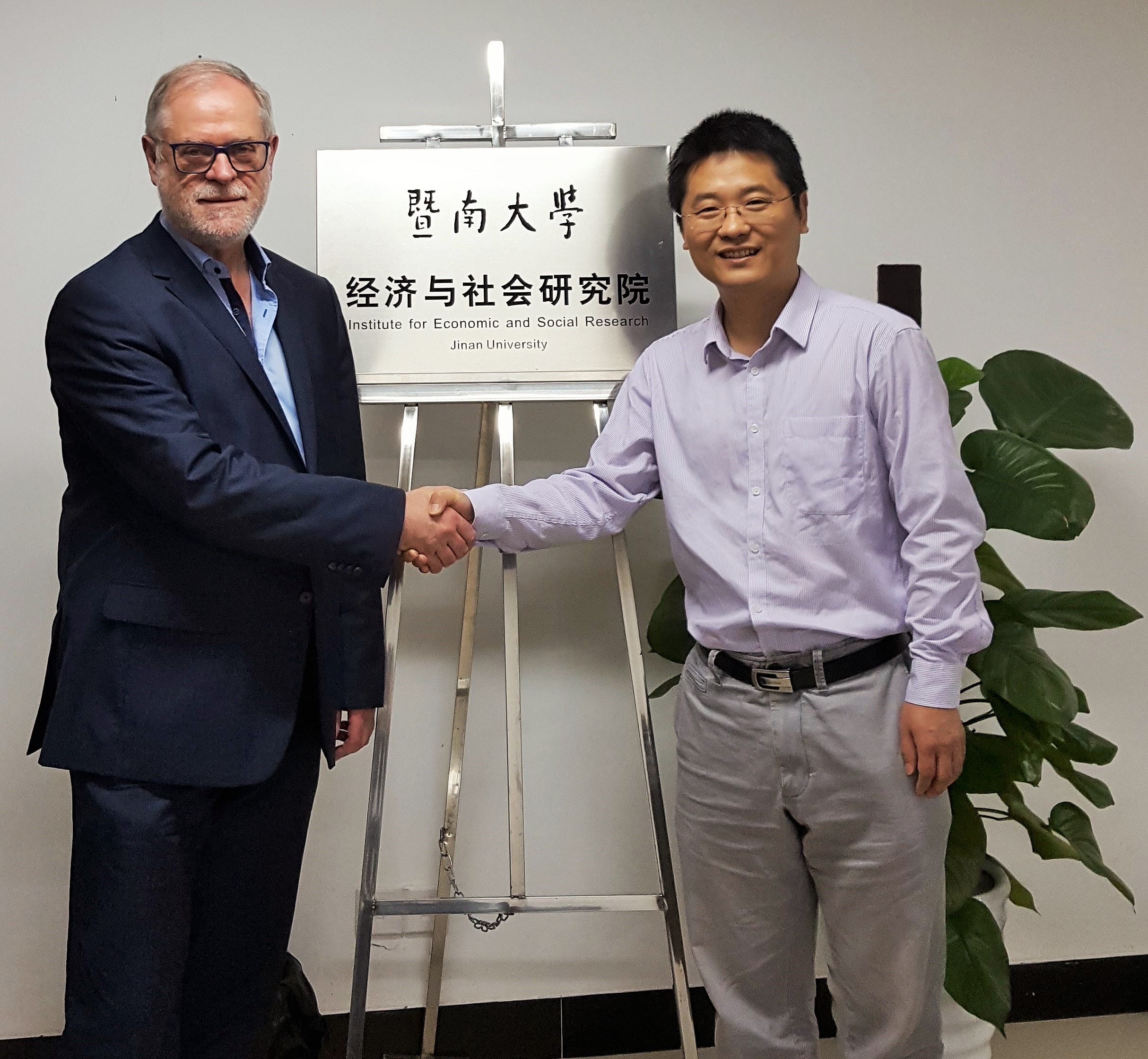
On the invitation of Professor and Dean Shuaizhang Feng, Head of the Institute for Economic and Social Research (IESR), the President of the Global Labor Organization (GLO), Klaus F. Zimmermann (UNU-MERIT, Maastricht), visited Jinan University in Guangzhou/China from March 11 to March 20. The objective had been to intensify relationships and to develop long-term partnerships, in particular between IESR and GLO. IESR has been an early supporter of GLO. Both organizations have agreed on effective measures to deepen and extending the partnership.

The following provides a quick overview about the activities during the visit with links to more detailed information and pictures.

March 19: Two hours video debate between GLO Fellow Shuaizhang Feng and Klaus F. Zimmermann on long-term unemployment in China and Europe. Click for further details. Further: Meeting with Corrado Giulietti, GLO Research Director, University of Southampton, who visited IESR for the day. Klaus F. Zimmermann gave a one hour personality interview for the IESR Chinese website.

March 18: Two hours debate between Hua Liang, the Economics Editor of the top Chinese research journal “Social Science in China” and Klaus F. Zimmermann, the Editor-in-Chief of the “Journal of Population Economics”. They met for a thorough exchange of ideas, strategies and practices of the academic journal business. The meeting was guided by Shuaizhang Feng. Click for further details.

March 16-17: Numerous meetings and interactions with IESR researchers.

March 15: Klaus F. Zimmermann gave a Public Policy Lecture at the University of Jinan on European Migration Challenges and Perspectives. Click for further details.

March 14:  Klaus F. Zimmermann participated in a research seminar of  Zhong Zhao of Renmin University of China, who visited IESR that day to meet the GLO President. Click for further details. Niaz Asadullah (University of Malaysia), who is also the Southeast Asia Lead of the GLO research program, and Klaus F. Zimmermann met to discuss the GLO Southeast Asia program. Click for further details.

March 13: First IESR – GLO Labor Workshop took place at IESR, Jinan University. Prominent speakers included Niaz Asadullah, Shuaizhang Feng and Klaus F. Zimmermann. Click for further details.

March 12:   “Career seminar talk”. Klaus F. Zimmermann discussed career strategies with young IESR scholars. Click for further details.

March 11:  Shuaizhang Feng and Klaus F. Zimmermann met for an exchange of ideas.


THANKS FOR A GREAT VISIT!


Ends;

Niaz Asadullah and Klaus F. Zimmermann met at Jinan University, China, in Guangzhou, to discuss the GLO Southeast Asia program

A larger number of Chinese researchers, GLO Fellows and scientists from outside China recently met at Jinan University, China, in Guangzhou on March 13, 2018 for the first IESR – GLO Labor Workshop.  GLO stands for Global Labor Organization, which is one of the largest networks in economics in the world, and IESR stands for the Institute for Economic and Social Research, a rising star among top Chinese research institutions in economics.

GLO Fellows present included Professor and Dean Shuaizhang Feng, Head of IESR,  GLO President Klaus F. Zimmermann (UNU-MERIT, Maastricht) and M Niaz  Asadullah (University of Malaysia and GLO), who is also the Southeast Asia Lead of the GLO research program.

At the workshop, Niaz Asadullah spoke about “Marriage, Work, and Migration: The Role of Infrastructure Development and Gender Norms”.

Zimmermann and Asadullah took the chance to discuss on March 13-14 the GLO Southeast Asia program (see below).

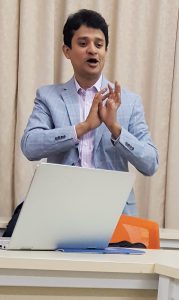
Asadullah during his workshop presentation at work.


South-East Asia Cluster

Cluster Lead: Niaz Asadullah

This GLO Cluster  concentrates on pressing issues: the impact of foreign labor on native employment; work conditions and rights of migrant workers; school-to-work transition and graduate/youth unemployment; trends in income and education inequality; market returns to education and skills; women’s participation in the economy; and labor market implications of population ageing.

Ends;


GLO Sessions at the forthcoming 25th EBES conference at FOM University in Berlin on May 23, 2018

The 25th Conference of the Eurasia Business and Economics Society (EBES) will take place on May 23-25, 2018 in Berlin/Germany. It is jointly organized with the Global Labor Organization (GLO) and hosted by the FOM University in their Berlin study center. A previous announcement.  See also for: Further information.

On May 23, 2018 three GLO sessions will contribute to the success of the 25th EBES conference in Berlin:

GLO Policy Panel on: “Mobilizing Human Resources in Africa”

GLO Research Paper Session  on: “Wellbeing”

GLO “Thematic Research Cluster” Session

!! At the 25th EBES/GLO Conference – Berlin, Germany, May 23, 2018!!

Policy Panel on: “Mobilizing Human Resources in Africa”

Ernest Ngeh Tingum (University of Cape Town, South Africa): A research agenda for trade developments in Africa

Martin Kahanec (Central European University, Budapest, Hungary) with Martin Guzi (Masaryk University, Brno, Czech Republic): A research agenda concerning subjective and objective evaluations of living wages in Africa

Kea Tijdens (University of Amsterdam, Netherlands, and WageIndicator Foundation): A research agenda focussing on informal labour markets in Africa

Tilman Brück (International Security and Development Center, Berlin, Germany and London School of Economics, UK): Employment Creation and Peace Building

Almas Heshmati (Jönköping International Business School, Sweden, and Sogang University, South Korea; GLO Cluster Lead Africa): GLO Thematic Cluster on Labor Markets in Africa

SESSION CHAIR: Kea Tijdens (University of Amsterdam, Netherlands, and WageIndicator Foundation) and Christoph Kannengießer (CEO, German African Business Association)

 !! At the 25th EBES/GLO Conference – Berlin, Germany, May 23, 2018!!

GLO Research Paper Session  on: “Wellbeing”

Almas Heshmati (Jönköping International Business School, Sweden, and Sogang University, South Korea) with Masoomeh Rashidghalam and Pia Nilsson: Measurement and Analysis of Multidimensional Well-being in Rwanda

Olena Nizalova (University of Kent, UK) with Olga Nikolaieva, Jonas Voßemer, Michael Gebel and Katerina Gousia: Youths’ experiences of labor market shocks and late life well-being and health

Milena Nikolova (University of Groningen) with Boris Nikolaev: Family Matters: Involuntary Parental Unemployment During Childhood and Subjective Well-being Later in Life

Corrado Giulietti (University of Southampton): Migration and Wellbeing in the UK

Klaus F. Zimmermann (UNU-MERIT) with John Haisken-DeNew: The New Australian Work Life After the Refugee Camp

Francesco Pastore (University of Napoli): Working But Watching Every Penny? Working Poverty and School Dropout in Mongolia

SESSION CHAIR: Milena Nikolova (University of Groningen) and Matloob Piracha (University of Kent)

!! At the 25th EBES/GLO Conference – Berlin, Germany, May 23, 2018 !!

GLO Thematic Research Cluster Session

Marco Leonardi (Economic Advisor to the Prime Minister of Italy and University of Milan): Labor Reform Policies and Italy After the Elections

Martin Kahanec (Central European University): Labor Mobility in the EU

Nick Drydakis (Anglia Ruskin University, Cambridge, UK): Gender, Gender Identity, Sexual Orientation and Labor Market Outcomes

Corrado Giulietti (University of Southampton): The Chinese Labor Market

Francesco Pastore (University of Napoli): School-to-Work Transition

Marco Vivarelli (Catholic University of Milan): Technological Change and the Labor Market: Employment, Skills, and Wages

Almas Heshmati (Jönköping International Business School, Sweden, and Sogang University, South Korea): Green Employment Creation

Tilman Brück (International Security and Development Center, Berlin, Germany and London School of Economics, UK):  Labor in Conflict, Fragile and Emergency Areas

SESSION CHAIR: Corrado Giulietti (University of Southampton) and Matloob Piracha (University of Kent)

FOR DETAILED ABSTRACTS OF ALL PAPERS CLICK HERE.

GLO President Klaus F. Zimmermann

Ends;

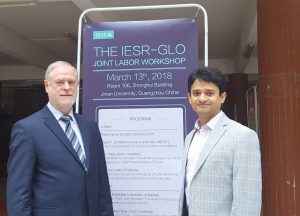
Joint IESR – GLO Labor Workshop at Jinan University, China, on March 13, 2018

On the invitation of Professor and Dean Shuaizhang Feng, Head of the Institute for Economic and Social Research (IESR), a joint IESR – GLO Labor Workshop takes place at Jinan University, China, on March 13, 2018.  GLO stands for Global Labor Organization, and its President, Klaus F. Zimmermann (UNU-MERIT, Maastricht), will provide the opening paper presentation. As a GLO Fellow, Professor Feng is also a prominent member of this network. Several other GLO Fellows are present at the event, including M Niaz Asadullah (University of Malaysia), who is also the Southeast Asia Lead of the GLO research program.

The IESR-GLO Joint Labor Workshop Program

Venue: Room 106, Zhonghui Building, Jinan University, Guangzhou China

9:00am: Welcome

Shyamal Chowdhury, Annabelle Krause and Klaus F. Zimmermann (GLO and UNU-MERIT): Arsenic Contamination of Drinking Water and Wellbeing

Yang, Zhe (Jinan University): Cohabitation or Marriage? Relationship Bargaining with an Endogenously Determined Balance of Power

Cai, Shu (Jinan University), Albert Park and Winnie Yip: Migration and Subjective Well-Being of Left-behind Parents in Rural China: Evidence from Time Use Data

12:00-1:30pm Lunch

1:30pm:

Amrit Amirapu, M Niaz Asadullah (University of Malaysia) and Zaki Wahhaj: Marriage, Work, and Migration: The Role of Infrastructure Development and Gender Norms

Shuaizhang Feng (Jinan University) and Gaojie Tang: Accounting for China’s Income Inequality: 1992-2009

Chen Yi (Jinan University) and Yingfei Huang: The Power of the Government: China’s Family Planning Leading Group and the Fertility Decline since 1970

Ends;

INBAM Publishing Workshop for Emerging Scholars – 23-25 May 2018 at Kingston University: Invitation to participate

INBAM, the International Network of Business & Management Journal Editors, is an organization affiliated with the Global Labor Organization (GLO). The INBAM Website can be accessed here: https://www.inbam-editors.org/

Those interested are invited to join the forthcoming

Publishing Workshop for Emerging Scholars – 23-25 May 2018 at Kingston University

This hands-on practical workshop is managed by ISI journal editors who will help participants to publish their papers in top business and management journals. There are only limited slots available!

https://www.inbam-editors.org/s/misc/logo.jpg?t=1518473551

For more information see the Flyer INBAM Workshop.

The initiative is coordinated by GLO Fellow Adrian Ziderman, who has also suggested to post it on the GLO Website.

Professor Adrian Ziderman

Professor Emeritus, Formerly Sir Isaac Wolfson Chair in Economics and Business Administration at Bar-Ilan University, Israel, Department of Economics, Editor-in-Chief of The International Journal of Manpower (published by Emerald), Research Chair, COPE, the Committee on Publication Ethics, President and Trustee of INBAM

https://www.inbam-editors.org/s/cc_images/teaserbox_53256013.JPG?t=1517741162

Ends;


GLO President Zimmermann on Tour Through Europe: Nicosia, Glasgow, Vienna and St Petersburg

In recent weeks, the President of the Global Labor Organization (GLO), Klaus F. Zimmermann (UNU-MERIT, Maastricht University & Bonn University) has been on a contact tour through Europe for talks, research seminar presentations and policy debates.

  • February 14 – 17, 2018: Nicosia and the University of Cyprus to study the border situation and intensify university connections.   See for more details.
  • February 21-22, 2018: Glasgow/Scotland and the University of Strathclyde. Contacts and Research Seminar presentation of Zimmermann on Arsenic water consumption and wellbeing in Bangladesh on the invitation of GLO Fellow Robert Wright and Markus Gehrsitz.
  • February 26, 2018: Austrian Federal Economic Chamber, Vienna/Austria: Conference on the “The European Labor Market – between Unemployment and Shortages of Skilled Labor”. Zimmermann gave a speech on “Challenges and Chances of the free European Mobility of Workers” and participated on a Plenary Panel about the labor markets of Austria, Poland and Romania. Many interactions, among others with Christoph Leidl, the President of the Austrian Federal Economic Chamber, and GLO Fellow Rainer Münz (European Political Strategy Centre, European Commission, Brussels). See for more details.
  • February 27, 2018: Policy Panel in Vienna/Austria of DIE WEIS[S]E WIRTSCHAFT in the Press Center Concordia on Migration and Integration Policy of the new Austrian Government. Panel organized by GLO Fellow Peter Brandner. Zimmermann discussed among others with GLO Fellows Robert Holzmann and Manfred Deistler. See for more details.
  • March 1 -2, 2018: St Petersburg/Russia. Zimmermann spoke on the Second International Labour Forum of the Government of St. Petersburg on “The design of effective labor market policies“. See for more details.

Below: Zimmermann in St Petersburg, Russia.

Ends;

Attention: Abstract Submission Deadline for EBES – GLO – FOM Conference in Berlin is February 28!

The 25th EBES Conference takes place on May 23-25, 2018 in Berlin/Germany. It is jointly organized by the Eurasia Business and Economics Society (EBES) with the Global Labor Organization (GLO) and hosted by the FOM University of Applied Sciences.

Submission Deadline for Presentation Abstracts is February 28, 2018!

Call for Papers
25th EBES Conference – Berlin
May 23-25, 2018
Berlin, Germany

Jointly organized with the GLO (The Global Labor Organization)
and hosted by the FOM University of Applied Sciences

Deadline: February 28, 2018
You are cordially invited to submit your abstracts or papers for presentation consideration at the 25th EBES Conference. The conference will be jointly organized with the GLO (The Global Labor Organization) and will take place on May 23th, 24th, and 25th, 2018 at the FOM University of Applied Sciences in Berlin, Germany with the support of the Istanbul Economic Research Association.
The conference aims to bring together many distinguished researchers from all over the world. Participants will find opportunities for presenting new research, exchanging information, and discussing current issues. Although we focus on Europe and Asia, all papers from major economics, finance, and business fields – theoretical or empirical – are highly encouraged.
Keynote Speakers
  • Prof. Klaus F. Zimmerman, UNU-MERIT, Maastricht University, The Netherlands
  • Prof. Marco Vivarelli, Università Cattolica Del Sacro Cuore, Italy
  • Prof. Sascha Frohwerk, the FOM University of Applied Sciences in Berlin, Germany
  • Prof. Ahmet Faruk Aysan, Istanbul Sehir University, Turkey
Board
  • Prof. Jonathan Batten, Monash University, Australia
  • Prof. Iftekhar Hasan, Fordham University, U.S.A.
  • Prof. Peter Rangazas, Indiana University-Purdue University Indianapolis, U.S.A.
  • Prof. Euston Quah, Nanyang Technological University, Singapore
  • Prof. John Rust, Georgetown University, U.S.A.
  • Prof. Marco Vivarelli, Università Cattolica Del Sacro Cuore, Italy
  • Prof. Klaus F. Zimmermann, UNU-MERIT, Maastricht University, The Netherlands
Abstract/Paper Submission

Authors are invited to submit their abstracts or papers no later than February 28, 2018. For submission, please visit our website at: http://ebesweb.org/Conferences/25th-EBES-Conference-Berlin/Abstract-Submission.aspx. No submission fee is required. General inquiries regarding the call for papers should be directed to ebes@ebesweb.org.
Publication Opportunities
  • Qualified papers will be published in the EBES journals (Eurasian Business Review and Eurasian Economic Review). EBES journals are published by Springer and indexed in the Scopus, Emerging Sources Citation Index (Thomson Reuters), EconLit, EBSCO Discovery Service, ProQuest, ABI/INFORM, Business Source, International Bibliography of the Social Sciences (IBSS), OCLC, Research Papers in Economics (RePEc), Summon by ProQuest, TOC Premier, Cabell’s Directory, Ulrich’s Periodicals Directory, and Google Scholar. There is no submission and publication fee for EBES journals.
  • All accepted abstracts will be published electronically in the Conference Program and the Abstract Book (with an ISBN number). It will be distributed to all conference participants at the conference via USB. Although submitting full papers are not required, all the submitted full papers will also be included in the conference proceedings in the USB.
  • After the conference, participants will also have the opportunity to send their paper to be published in the Springer’s series Eurasian Studies in Business and Economics (no submission and publication fee). This will also be sent to Thomson Reuters in order to be reviewed for coverage in its Conference Proceedings Citation Index. Please note that the 10th, 11th, 12th, 13th, 14th, 15th, 16th, and 17th EBES Conference Proceedings are accepted for inclusion in the Conference Proceedings Citation Index. 18th and subsequent conference proceedings are in progress.

Important Dates

  • Submission deadline: February 28, 2018
  • Reply-by: March 8, 2018
  • Registration deadline: April 20, 2018
  • Announcement of the Program: April 30, 2018

Contact

Ends;

How marriage delays cause earnings increases and what it means for society: Interview with author Le Wang of the University of Oklahoma

The prestigious 2018 Kuznets Prize of the Journal of Population Economics has been awarded to Chunbei Wang and Le Wang of the University of Oklahoma. The prize has been presented at a recent event of the Global Labor Organization (GLO) in Washington DC.
Le Wang, your paper in the Journal of Population Economics (with Chunbin Wang) got the Kuznets Prize 2018. Your research suggests that there is an earnings premium of marriage delays which is larger for females than for males. This causal effect seems to work almost exclusively through more education for both men and women. 
 
GLO: Marrying later generates higher incomes: You say it is “causal”, what does this mean in your context and why is it important?
 
Le Wang: We often observe that people who marry later also earn higher earnings. This positive association, however, may not necessarily imply that delaying marriages would necessarily lead to higher productivity or higher earnings. It may be simply due to the fact that people who delay their marriages may be different from those who do not. For example, people who delay marriages may be more career oriented or motivated, and thus these people are more likely to have higher earnings, whether they delay marriage or not. By “causal”, we mean that we are actually able to isolate the productivity-enhancing effects of marriage delay. This result has important policy implications because if we can somehow “cause” or induce people to delay their marriages, we could increase their earnings.
GLO: What are the policy implications, who can “cause” marriage delays and make couples richer?
 

Le Wang: Government can, for example, institute minimum marriage age laws (the differences in such laws across states were also the reason why we can identify the causal impacts of marriage delay). There are also other examples in which rather than regulating the minimum marriage age, governments can provide incentives for people to marry late. For example, Chinese government implemented the “late marriage leave” that allowed workers who get married at age 25 or older to take a 30-day paid leave when getting married.

GLO: Research in the gender-equality literature argues that the more females work full-time, the lower the gender wage gap. What implications do your findings have for this debate?
 

Le Wang: Much of the gender gap literature has been focused on whether and how human capital characteristics and discrimination can explain the gap. Our results highlight the potential role of family in explaining it. Over the past decades, there have been similar changes in the median age of first marriage between men and women. In light of our findings, such demographic trends could have much greater impacts on women’s earnings, thereby leading to the narrowing gender gap.

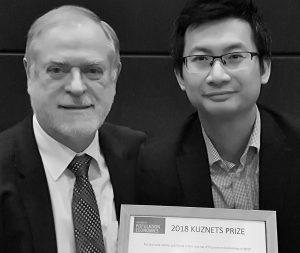
GLO Fellow Le Wang of the University of Oklahoma (right) and Klaus F. Zimmermann (GLO President and Editor-in-Chief of the Journal of Population Economics.)
 

Ends;

2018 Kuznets Prize Awarded to Chunbei Wang and Le Wang of the University of Oklahoma: How marriage delays cause earnings increases

There is a causal effect of marriage delays on earnings, with a stronger impact for females than for males. This works almost exclusively through more education for both men and women.

2018 Kuznets Prize Awarded to Chunbei Wang and Le Wang of the University of Oklahoma

Chunbei Wang and Le Wang of the University of Oklahoma receive the 2018 Kuznets Prize for their article “Knot yet: Minimum marriage age law, marriage delay, and earnings,” which was published in the Journal of Population Economics (2017), 30(3), pp. 771-804. The annual prize honors the best article published in the Journal of Population Economics in the previous year. The article editor of the paper has been Junsen Zhang (Hongkong University) supported by his team of anonymous referees.

The prize will be given at a dinner event of the Global Labor Organization (GLO) in Washington DC on February 8, 2018. GLO supports the Journal of Population Economics, and the Editor-in-Chief of the Journal, Klaus F. Zimmermann (UNU-MERIT, Maastricht), who is also the President of GLO, is presenting the prize.

1  Biographical Abstracts

Chunbei Wang is an Assistant Professor of Economics at the University of Oklahoma and a Fellow at the Global Labor Organization (GLO). Before that, she was an Assistant Professor at Birmingham-Southern College and the University of Massachusetts Dartmouth. She obtained her Ph.D. degree from the University of Texas at Dallas in 2008 and her bachelor’s degree from Jinan University in Guangzhou, China in 2001.

Her research focuses on immigration, entrepreneurship, gender, minorities, and family. Her work has been published in the Journal of Population Economics, Journal of Environmental Economics and Management, Research in Labor Economics, and Industrial Relations, among others.

Le Wang is Chong K. Liew Chair and Associate Professor of Economics at the University of Oklahoma, as well as a Fellow at Global Labor Organization and IZA. He also serves as an Associate Editor of Econometric Reviews and Journal of Labor Research. He also holds a special term professorship at Jinan University. Prior to joining OU, he has held positions at the University of Alabama, the University of New Hampshire, and University of Minnesota. He was also a Women and Public Policy Fellow at Harvard Kennedy School. He received his Ph.D in Economics from Southern Methodist University in 2006 and his B.A. in International Finance from Jinan University, Guangzhou, China in 2001.

His research focuses on questions in the subfields of microeconomics—labor and demographic economics, development economics and public economics—with a particular emphasis on the development and use of distributional/nonparametric and program evaluation methods to address issues in these areas. His work has been published in journals such as Journal of Political Economy, Journal of Econometrics, Journal of Applied Econometrics, Journal of Population Economics, Journal of Environmental Economics and Management Econometrics Journal, Economic Development and Cultural Change, Health Economics, and Industrial Relations.

GLO Fellows Chunbei Wang and Le Wang of the University of Oklahoma

 2  Abstract of the Winning Paper

“Despite the historical highs for age at first marriage, little is known about the causal relationship between marriage delay and wages, and more importantly, the mechanisms driving such relationship. We attempt to fill the void. Building on an identification strategy proposed in Dahl (Demography 47:689–718, 2010), we first establish the causal wage effects of marriage delay. We then propose ways to distinguish among competing theories and hypotheses, as well as the channels through which marriage delay affects wages. Specifically, we take advantage of their different implications for causal relationship, across gender and sub-populations. We reach two conclusions. First, we find a positive causal impact of marriage delay on wages, with a larger effect for women. Comparison of IV and OLS estimates suggests that the observed relationship between marriage delay and wages is attributed to both selection in late marriages and true causal effects. Second, we find strong evidence that the positive, causal effects are almost exclusively through increased education for both men and women.”

3  About the Kuznets Prize

The Journal of Population Economics awards the ‘Kuznets Prize’ for the best paper published in the Journal of Population Economics in the previous year. Starting from 2014 the Prize has been awarded annually. Papers are judged by the Editors of the Journal.

Simon Kuznets, a pioneer in population economics, Professor Emeritus at Harvard University and the 1971 Nobel Prize laureate in economics, died on July 10, 1985. Professor Kuznets was born 1901 in Pinsk, Belarus, and came to the United States in 1922. He earned his Bachelor of Science in 1923, a Master of Arts degree in 1924 and his doctorate in 1926, all from Columbia University. During World War II he was Associate Director of the Bureau of Planning and Statistics on the War Production Board, and he served on the staff of the National Bureau of Economic Research from 1927 to 1960. Mr. Kuznets was a faculty member at the University of Pennsylvania for 24 years and Professor of Political Economy at Johns Hopkins University from 1954 until he joined Harvard University in 1960. He retired in 1971 and was given the title of George F. Baker Professor Emeritus of Economics. He was a former president of the American Economic Association and the American Statistical Association.

 4  Previous Winners

 The Kuznets Prize has previously been awarded to:

2017: Binnur Balkan (Stockholm School of Economics) and Semih Tumen (Central Bank of the Republic of Turkey) for their article “Immigration and prices: quasi-experimental evidence from Syrian refugees in Turkey,” Journal of Population Economics 29(3): pp. 657-686.

2016: Loren Brandt (University of Toronto), Aloysius Siow (University of Toronto), and Hui Wang (Peking University) for their article “Compensating for unequal parental investments in schooling,” Journal of Population Economics 28: 423-462.

2015: Haoming Liu (National University of Singapore) for his article “The quality–quantity trade-off: evidence from the relaxation of China’s one-child policy”, Journal of Population Economics 27: 565-602.

2014: Paolo Masella (University of Essex) for his article “National Identity and Ethnic Diversity”, Journal of Population Economics 26: 437-454.

Period 2010-2012: Richard W. Evans (Brigham Young University), Yingyao Hu (Johns Hopkins University) and Zhong Zhao (Renmin University) for their article “The fertility effect of catastrophe: US hurricane births”, Journal of Population Economics 23: 1-36.

Period 2007-2009: Makoto Hirazawa (Nagoya University) and Akira Yakita (Nagoya University) for their article ” Fertility, child care outside the home, and pay-as-you-go social security “, Journal of Population Economics 22: 565-583.

Period 2004-2006: Jinyoung Kim (Korea University) received the Kuznets Prize for his article “Sex selection and fertility in a dynamic model of conception and abortion,” Journal of Population Economics 18: 041-067.

Period 2001–2003: Olympia Bover (Bank of Spain) and Manuel Arellano (CEMFI), for their article “Learning about migration decisions from the migrants: Using complementary datasets to model intra-regional migrations in Spain”, Journal of Population Economics 15:357–380.

Period 1998–2000: David C. Ribar (George Washington University), for his article “The socioeconomic consequences of young women’s childbearing: Reconciling disparate evidence”, Journal of Population Economics 12: 547–565.

Period 1995–1997: James R. Walker (University of Wisconsin-Madison), for his article “The effect of public policies on recent Swedish fertility behavior”, Journal of Population Economics, 8: 223–251.

Ends;

Germany, Europe at the Crossroads: German Social Democrats vote for further negotiations about a Grand Coalition

Bonn – Germany. Sunday, 21 January 2018: (An analysis in German.) A narrow majority of 56% of the delegates of the center-left Social Democratic Party (SPD) has agreed to start negotiations about the continuation of the currently ruling “grand coalition” with Merkel’s center-right Christian Democratic Union (CDU) party. After those negotiations all SPD party members will have to vote on a potential government contract. It therefore will take still substantial time until Germany may return to a stable government. While doing economically very well and being the respected leader of Europe, the continent’s largest economy will  probably be without a formal government for at least half a year since the last elections.

As GLO – President Klaus F. Zimmermann has stated: “Over the last decade, the SPD as a party had failed to identify with the successes of their members in government and to communicate well the value of their achievements to their voters. It remains to be seen how the party leaders will manage this challenge in the future. An unstable and potentially collapsing Europe badly needs a stable Germany.”

GLO President Zimmermann in front of the conference center in Bonn close to river Rhine observing the event.

Ends;

ASSA Meeting Celebrates Nobel Prize Winners in Economics

The American Economic Association (AEA), in conjunction with 58 associations in related disciplines known as the Allied Social Sciences Associations (ASSA), holds a three-day meeting each January to present papers on general economics topics. The event which is the largest meeting of academic economists in the world typically brings together more than 13,000 individuals from all parts of the world.  ASSA 2018 took place in Philadelphia on January 5 -7.

Many GLO Fellows were at ASSA 2018 to present their work and engage in academic exchange and informal meetings. GLO President Klaus F. Zimmermann (UNU-MERIT, Maastricht and Bonn University) was also present to discuss and develop GLO issues in many informal meetings and gatherings. One prominent issue of the conference dealt with: Should Economists Make More Use of Direct Data on Subjective Wellbeing?”

The Nobel Laureate Luncheon on Saturday, January 6, was organized in the honor of Oliver Hart and Bengt Holmström. See Bengt Holmström speaking, Oliver Hart right; and from the left: Ben Bernanke, Daron Acemoglu and Olivier Blanchard.

And from the left: GLO President Klaus F. Zimmermann, Daron Acemoglu, Bengt Holmström, Olivier Blanchard, Luigi Zingales (speaking) and Oliver Hart.


Ends;

Berlin Conference: EBES-25 is jointly organized with FOM Berlin and the GLO

The 25th Conference of the Eurasia Business and Economics Society (EBES) will take place on May 23-25, 2018 in Berlin/Germany. It is jointly organized with the Global Labor Organization (GLO) and hosted by the FOM University in their Berlin study center. A previous announcement.

Call for Papers

25th EBES Conference – Berlin/Germany

May 23-25, 2018

Jointly organized with the GLO and hosted by the FOM University, Berlin
Submission Deadline: February 28, 2018
www.ebesweb.org

Researchers are cordially invited to submit abstracts or papers for consideration for presentation at the 25th EBES Conference. The event will take place on May 23-25, 2018 at the FOM University of Applied Sciences in Berlin, Germany. It is jointly organized with the GLO (Global Labor Organization) and hosted by the FOM University of Applied Sciences with the support of the Istanbul Economic Research Association.

The conference aims to bring together many distinguished researchers from all over the world. Participants will find opportunities for presenting new research, exchanging information, and discussing current issues. Although a focus is on Europe and Asia, all papers from major economics, finance, and business fields – theoretical or empirical – are highly welcome.

Keynote Speakers:  Klaus F. Zimmermann and Marco Vivarelli

Board

Prof. Jonathan Batten, Monash University, Australia; Prof. Iftekhar Hasan, Fordham University, U.S.A.; Prof. Peter Rangazas, Indiana University-Purdue University Indianapolis, U.S.A.; Prof. Euston Quah, Nanyang Technological University, Singapore; Prof. John Rust, Georgetown University, U.S.A.; Prof. Marco Vivarelli, Università Cattolica Del Sacro Cuore, Italy; Prof. Klaus F. Zimmermann, UNU-MERIT, Maastricht University, The Netherlands, and Bonn University, Germany.

Abstract/Paper Submission

Authors are invited to submit abstracts or papers no later than February 28, 2018. For submission, please visit this website: http://www.ebesweb.org/Conferences/25th-EBES-Conference-Berlin/Abstract-Submission.aspx No submission fee is required. General inquiries regarding the Call for Papers should be directed to ebes@ebesweb.org.

Publication Opportunities

Qualified papers are offered to be published in the EBES journals (no submission or publication fees). EBES journals (Eurasian Business Review and Eurasian Economic Review) are published by Springer and indexed in the Scopus, Emerging Sources Citation Index (Web of Science), EconLit, EBSCO Discovery Service, ProQuest, ABI/INFORM, Business Source,  International Bibliography of the Social Sciences (IBSS), OCLC, Research Papers in Economics (RePEc), Summon by ProQuest, TOC Premier, Cabell’s Directory, Ulrich’s Periodicals Directory, and Google Scholar.

Also all accepted abstracts will be published electronically in the Conference Program and the Abstract Book (with an ISBN number). It will be distributed to all conference participants at the conference via USB. Although the submission of full papers is not required, all the submitted full papers will also be included in the conference proceedings in the USB. After the conference, participants will also have the opportunity to send their paper to be published in the Springer’s series Eurasian Studies in Business and Economics (no submission or publication fees).

The conference proceedings will also be sent to Thomson Reuters in order to be reviewed for coverage in its Conference Proceedings Citation Index. Please note that the 10th, 11th, 12th, 13th, 14th, 15th and 17th EBES Conference Proceedings were all accepted for inclusion in the Conference Proceedings Citation Index. 16th, 18th and subsequent conference proceedings are in progress.

Important Dates

Submission deadline: February 28, 2018
Reply-by: March 8, 2018
Registration deadline: April 20, 2018
Announcement of the Program: April 30, 2018

Contact
Ugur Can (
ebes@ebesweb.org)
Dr. Ender Demir (
demir@ebesweb.org)

Ends;
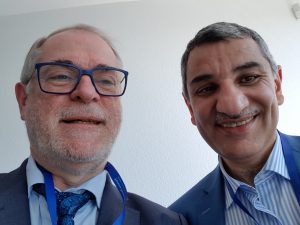
GLO at the ASSA Conference in Philadelphia, January 5 – 7, 2018. Meet GLO President Zimmermann.

The American Economic Association (AEA), in conjunction with 58 associations in related disciplines known as the Allied Social Sciences Associations (ASSA), holds a three-day meeting each January to present papers on general economics topics. The event which is the largest meeting of academic economists in the world typically brings together more than 13,000 individuals from all parts of the world.

ASSA 2018 takes place in Philadelphia on January 5 -7.

The Global Labor Organization (GLO) is an international, independent, non-partisan and non-governmental organization that has no institutional position. The GLO functions as global network and virtual platform for researchers, policy makers, practitioners and the general public interested in scientific research and its policy and societal implications on global labor markets, demographic challenges and human resources.

Many GLO Fellows are at ASSA to present their work and engage in academic exchange and informal meetings. GLO President Klaus F. Zimmermann (UNU-MERIT, Maastricht and Bonn University) is also present to discuss and develop GLO issues. Those interested to talk can investigate his availability by contacting: klaus.f.zimmermann@gmail.com


Ends;

GLO Season’s Greetings!

Dear Friends of GLO:

We are enjoying an exciting and successful first year.

Best wishes for the holidays and the New Year!

Klaus F. Zimmermann, GLO President  & Staff

Sydney/Australia Near-by the Waterfront; 12 December 2017. GLO Training Camp — Globalists at Work.

Melbourne/Australia; 17 December 2017.

Frankfurt/Main Airport, Germany; 19 December 2017.

Ends;

 

GLO in Buenos Aires: Kahanec speaks to Migration and Trade Conference

The Global Labor Organization (GLO) was represented at the Forum on Migration, Trade and the Global Economy on December 14, 2017, in Buenos Aires by Martin Kahanec, CEU professor and member of GLO’s Advisory Board and leader of its “EU Mobility” and “Hungary” thematic and geographic clusters, respectively.  Also present was GLO’s Slovak cluster leader and Managing Director at the Bratislava-based Central European Labor Studies Institute (CELSI), Marta Kahancová.

The Forum was organized by the International Organization for Migration (IOM), Fundación Foro del Sur (FFS), and the International Centre for Trade and Sustainable Development (ICTSD) as a side event of the 11th WTO Ministerial Conference taking place in Buenos Aires during the same week. See IOM reporting.

The opening panel stressed the importance of the nexus between migration and trade, and highlighted the relevance of the event for this under-researched topic. It is obvious that migrants contribute to trade and investment through their work, small businesses, knowledge and technology; however, we are aware that more research on the link between migration and trade is required,” underscored Diego Beltrand, IOM’s Regional Director for South America.

In the ensuing panels leading experts, policymakers and researches explored key migration questions such as policies and frameworks governing international migrations; their relation to international flows of goods, services, investment and knowledge; and the impact of digital technologies, innovation networks, diaspora communities, as well as regional integration processes and bilateral and multi-lateral mobility agreements.

In his contribution, Martin Kahanec advanced three arguments. First, demographic transitions in most advanced economies feature aging, lack of dynamic, entrepreneurial, and innovative labor, and risks for public budgets. Mobile workers may help to alleviate the economic vulnerabilities associated with these demographic trends by bringing in young and dynamic workers where they are needed.

Second, Europe’s experience shows that labor mobility comes with a policy challenge: In spite of prevailing evidence of generally positive impacts of migration on host countries, natives tend to look upon immigration with aversion and fear. A negative policy spiral may start spinning: negative attitudes of voters result in ill-chosen policies, which in turn drive negative labor market and social outcomes and these, completing the circle, fuel further negative attitudes.

Third, research conducted in cooperation within the GLO network shows that the notions that immigrants crowd natives out of their jobs, lower their wages, steal their welfare, or target countries with generous welfare provision are unfounded. To the contrary, this research shows that immigration fosters trade, creates jobs in the long run, and immigrants are more responsive to labor shortages than the natives. This last finding is important, as it implies that immigrants go precisely to those sectors, occupations and countries which need them most.

The bottom line is that free mobility of labor has a definite potential to benefit the receiving countries, but to enable such benefits politicians must engage in a dialogue with their voters to explain the benefits and opportunities free mobility entails, as well as effective strategies of coping with any actual or perceived risks of immigration”, concluded Kahanec.

GLO Fellow Martin Kahanec in Buenos Aires

Kahanec making his presentation to the conference

GLO Fellows Marta Kahancová and Kahanec in Buenos Aires

Ends;
Call for papers: Conference on “Globalisation and Labour Markets”, London June 14-15, 2018.

On the suggestion of GLO Fellow Cevat Giray Aksoy (European Bank for Reconstruction and Development), we post the following Call for Papers for a Conference on “Globalisation and Labour Markets”:

CEPR, EBRD and The Economics of Transition

Conference Call for Papers
Submission deadline – 30th January 20182nd CEPR/EBRD/Economics of Transition Symposium: Globalisation and Labour Markets;  London, June 14-15, 2018

You are invited to submit a paper to the 2nd CEPR/EBRD/Economics of Transition Economics Symposium on globalisation and labour markets in advanced and emerging markets. The symposium will provide a platform for researchers and policy makers to discuss new research findings and to identify areas where further academic and policy-oriented work is needed. Papers are invited on the following – non-exhaustive – list of topics:

  • International trade and labour market outcomes
  • The political, economic and social consequences of globalisation
  • Migration and social mobility within and across countries
  • Educational attainment and skill development in a globalised world
  • The changing nature of work in the digital economy
  • Inequality, inclusion and gender in the global economy
  • Institutional quality and governance in a comparative perspective
  • Globalisation and its impact on the environment
  • The role of automation and robots in shaping labour markets
  • Globalisation and labour regulation

The symposium features keynote talks by Paola Conconi (Université Libre de Bruxelles and CEPR) and David Dorn (University of Zurich and CEPR).

Authors of accepted papers will be invited (without obligation) to submit their papers for a special issue of the Economics of Transition. Accommodation expenses will be covered for speakers and discussants. Travel expenses will be reimbursed in accordance with CEPR’s expense guidelines.

To submit a paper (full papers accepted only), please send an email to Lucie Newman at NewmanL@ebrd.com. In the subject header please add “Submission: Globalisation and Labour Markets Symposium” and nothing else. In the case of multiple-authored papers, indicate who will present and whether or not the presenter would also be willing to act as a discussant. The submission deadline is 30 January 2018 and authors will be notified about the acceptance of papers by 16 March 2018.

The conference will be held at the EBRD, One Exchange Square, London. The conference programme starts on Thursday morning (June 14) and ends on Friday afternoon (June 15). An invitation-only conference dinner will be held on Thursday evening. Details about the sponsors: www.ebrd.com,  www.cepr.org and http://services.bepress.com/eot/.

ORGANISING AND PROGRAMME COMMITTEE

Cevat Giray Aksoy (EBRD, LSE and WEF)
Cagatay Bircan (EBRD)
Michelle J. Brock (EBRD and CEPR)
Ralph De Haas (EBRD and Tilburg University)
Guido Friebel (Goethe University Frankfurt and CEPR)
Sergei Guriev (EBRD, Sciences Po and CEPR)
Guy Michaels (LSE, CEP and CEPR)
Barbara Petrongolo (Queen Mary University of London, LSE and CEPR)

GLO Fellow Cevat Giray Aksoy (European Bank for Reconstruction and Development)

Giray


Ends;


GLO Representative Martin Kahanec at IOM event in Buenos Aires on Migration, Trade & the Global Economy

The International Organization for Migration (IOM) together with partners ICTSD and Fundancion Foro del Sur will host on December 14, 2017 in Buenos Aires a

Forum on Migration, Trade & the Global Economy.

The Forum will discuss the active role of international trade in achieving safe and regular migration between representatives from government, private sector, civil society and other relevant actors. The event also seeks to strengthen networks in the South America region and beyond. It will consist of five plenary sessions, as well as two parallel and one special session, dealing with innovation and technology, regional economic integration and policy coherence on migration and trade, among other topics.

The invited GLO – representative of the Global Labor Organization will be Martin Kahanec. GLO-Fellow Kahanec is Professor and Acting Head of the School of Public Policy at the Central European University (CEU) in Budapest. He will speak at the Forum about

“Labor Mobility in Europe: Challenges and Opportunities for Trade”.

Also speaking is GLO-Fellow Sonia Plaza of the World Bank on:

“Regional integration and labor mobility: Specific linkages with trade policy”

Martin Kahanec

Ends;

GLO President Zimmermann meets MP Andrew Leigh in Canberra to discuss the merits of openness.

Discussion with MP Andrew Leigh on Globalism and his new book “Choosing Openness. Why global engagement is best for Australia” Penguin Books, Lowy Institute for International Policy 2017 (183 pages).

On December 8, 2017, GLO President Klaus F. Zimmermann met Andrew Leigh in his office in Canberra to discuss the merits of openness for Australia and the World, and the mission of the Global Labor Organization (GLO).

GLO Fellow Andrew Leigh is the Shadow Assistant Treasurer and Federal Member for Fenner. Prior to entering the Australian Parliament in 2010, he was a Professor of Economics at the Australian National University (ANU) in Canberra. Andrew Leigh holds a PhD from Harvard University and is a Fellow of the Australian Academy of Social Sciences.

As Leigh and Zimmermann agree, global engagement has become a major political fault line around the world, where some argue that trade, investment and migration are threats rather than opportunities. The challenges to an open world are generated by global uncertainty, rising inequality and populism. In his book, Andrew Leigh argues that Australia’s past prosperity has been the result of engaging with the world, a view that complements the evaluation of global economic progress by the GLO President, and is in line with the GLO mission. Not less, but more openness is required in the future for capital, goods, and people to stabilize and foster prosperity.

The Book:

The two men after the discussion in front of the office of Andrew Leigh (left).

Ends;

Important GLO-supported journal projects: Published issues & Call for papers for special issues

The Global Labor Organization (GLO) is collaborating with various journals like the International Journal of Manpower  and the Journal of Population Economics, among others. Here are recent products or new ventures:

Journal of Population Economics

  • Volume 31, Issue 1, January 2018 is PUBLISHED. Here is the access to the TABLE OF CONTENT of the ten top articles freshly published. (Editors are Alessandro Cigno, Erdal Tekin, Junsen Zhang and Klaus F. Zimmermann.)

International Journal of Manpower

  • Volume 38, Issue 7, 2017 is PUBLISHED. Special Issue: Labor adjustment in the European economic area during the Great Recession. Here is the access to the TABLE OF CONTENT of the eight top articles freshly published. (Special Issue Editors are Martin Kahanec, Martin Suster and Klaus F. Zimmermann.)
  • Call for Papers for a Special Issue on: “Sexual Orientation and the Labor Market”. Submissions will be accepted up until the 31th of August 2018.  Please study details of the CALL HERE. (Special Issue Editors are Nick Drydakis and Klaus F. Zimmermann.)
  • Call for Papers for a Special Issue on: “The School to Work Transition: Cross-Country Differences, Evolution and Reforms”. Submissions will be accepted until the 15th of February 2018.  Please study details of the CALL HERE. (Special Issue Editors are Francesco Pastore and Klaus F. Zimmermann.)

Ends;

Tirana/Albania: Forthcoming International Conference on 1-2 December 2017

INTERNATIONAL CONFERENCE ON “SOCIO–ECONOMIC PERSPECTIVES IN THE AGE OF XXI CENTURY GLOBALIZATION”, TIRANA – ALBANIA, DECEMBER 2017
Organized by University of Tirana, Department of Economics
Venue: Faculty of Economics, Rruga e Elbasanit, Tirana
Dates: 01st -02nd December 2017

The event is supported by GLO Country Lead of Albania Besa Shanini.

The Department of Economics, Faculty of Economy, Tirana is honored to invite academia, scholars, researchers, economists and policy makers with broad and diverse research interests from around the world to share knowledge, ideas, experiences and establish academic relationships in the 1st International Conference on “Socio –Economic Perspectives in the Age of XXI Century Globalization”. The Economics Department comes to this conference after several years’ experience in organizing the European Doctoral Seminar (EDS) in collaboration with the University of Bamberg, Budapest University of Technology, University of Sarajevo and the South East European University (SEEU) in Tetovo, Macedonia.

CONFERENCE DESCRIPTION
In today’s context the world is experiencing a wide variety of issues, of which some have been long lasting and are considered a global phenomenon. In the current era of globalization fuelled by the rapid growth of new technology, it is widely acknowledged that the ability to innovate is a significant driver of competitiveness for entrepreneurs, teams, organizations, industries, countries, and economies of all sizes. Competition is increasingly forged not just to achieve financial performance, but also to deliver social and environmental outcomes for the present and future. Within this context of global competition, innovative models, strategies, policies, processes, and practices become ever more important in creating value for sustainable growth and development at various levels within firms, industries, countries, and economies, and also across borders in company networks, industrial clusters, and economic and regional blocs.
The last decades have acknowledged a growing integration of economies and societies worldwide. There has been an increase of interdependence among countries in trade, finance, people and ideas. The development of information technology and advancement of telecommunication have facilitated both resources and output mobility, improving further efficiency at which economies operate. However, the international trade arena and competitiveness lead to increased pressure for the policy makers and the independent economic agents in both developed and developing countries. On one side, there is the importance of the public policies and institutions to creating a sustainable and dynamic environment in a time when trade liberalization policies and moderate capital control have changed the role of state in the
global economy. On the other side, there is the response of consumers and producers in making efficient choices under the perspective of widen possibilities and reshaped constraints.
The changing conjecture of the last two decades around the world has led to a restructuring of the growth potentials and international market roles of countries, and economic actors and economic decision processes have evolved considerably. Our conference is focusing on evaluation of the last two decades from a multidimensional point of view. Thus generating a platform in which the economic, social and policy transformations of the last twenty years are debated will be vision enhancing for both policy formulation for tomorrow and understanding the current state of affairs.
The conference aims at bringing together in one venue academics, researchers and all the interested parties in the field, with the purpose of elaborating at a theoretical, empirical and policy-making perspective the above. We invite you to submit papers dealing with the challenges associating the economic perspectives in the age of the 21st century globalization.

The conference will be focused, but not limited, on the following areas:
 Monetary Policy before, during and after the global financial crises
 Trade Openness, Competitiveness and Growth Globalization and labor markets
 Public Policies to Sustain Competitiveness
 Globalization, Financial Markets, and Fiscal Policy
 Financial Inclusion and Financial Regulation
 Integration and Economic Globalization: Challenges for Development
 Corporate Governance and Business Regulation
 Inequality, Poverty & Social Inclusion
 Gender Equality and Sustainable Development
 Real and Potential Usage of Resources: Identifying Gaps
 Value and Importance of Sustainable Agriculture and the Environment  Urban – Rural Disparity, Migration and Remittances  Economic Modeling of Tourism  Socio-Cultural Environment and Innovation
 The Digital Economy
 Economic Structure Performance and Structural Adjustments

Submission of abstracts and papers Submission of abstracts and papers are invited from academia, policy makers, business people, public and private sector organizations, non-governmental organizations, and international organizations. Poster presentations are also encouraged. While multiple submissions by individuals or groups of authors are welcome, the abstract selection process will seek to ensure
as broad participation as possible: each author may present only one paper or one poster in the conference. No author should submit more than one abstract as its single author. Structure of abstracts and papers Submissions should be of high standard, unpublished, and suitable for scientific or professional publications. They can be theoretical or field research based papers as well as practical/experiential papers based on individual, institutional or community experience. All submitted papers will be refereed to blind reviewers to uphold the high standards of the conference. Papers demonstrating high rigor, high theoretical and/or practical implications will be considered for publication. The abstracts should not exceed 300 words and should be organized as: title, context and objectives, methodology, findings, conclusion, contribution, key words. Key words: from 3 up to 5 words (12 pt. font size). Avoid abbreviations unless they are firmly established. Key words should efficiently represent the paper content.
Authors’ autobiographical details should appear as the first footnote of each contribution, and include the name, academic and professional qualifications, institutional affiliation, current title, position and e-mail of each author.
Authors are also advised to proofread their abstracts because they will be reproduced from the online submission. Any error in spelling, grammar or data will appear online or in print. Papers are expected to have a uniform structure/format, times new roman (font 12), 1.5 line spacing, maximum of 12 pages including references, appendices, figures etc. Thus, the contents are expected to rhyme with background that includes a theoretical context and objectives; methodology covering the way the study was designed and carried out; findings, discussion and conclusions.
All accepted abstracts will be published in the conference abstract book. Best papers will be published at the Journal of the Faculty of Economics, University of Tirana “Albanian Journal of Economics and Business” (AJEB).

PLEASE NOTE THE FOLLOWING DEADLINES:
 Deadline for abstract submissions : September 30, 2017
 Notification of abstract acceptances: October 15, 2017
 Deadline for full paper submissions : November 15, 2017
 Deadline for participants registration : November 25, 2017
THE CONFERENCE FEE:
 Participant (attending / paper presenting author): 50 EUR
 Accompanying co-author: 30 EUR
 Attending (without paper): 20 EUR
DISCOUNTED FEE:
 PhD students: 30 EUR
 MSc students: 20 EUR
 2nd paper registration (publishing only): 20 EUR
Registration fee includes admission to all sessions, conference kit (including the Scientific Book of Proceedings on CD and Book of Abstracts in hard copy) and admission to the lunch or dinner with all coffee brakes according to the program.

SCIENTIFIC COMMITTEE
1. Prof. Dr. Abdylmenaf Bexheti, Southeast University of Tetovo, Republic of Macedonia
2. Prof. Dr. Ahmet Mançellari, University of Tirana
3. Prof. Dr. Albana Hashorva, University of Tirana
4. Prof. Dr. Dhori Kule, University of Tirana
5. Prof. Dr. Dietmar Meyer, Andrassy University, Budapest, Hungary
6. Prof. As. Dr. Elida Liko, University of Tirana 7. Prof. Dr. Enrico Saltari, Sapienza, Università di Roma, Italy 8. Prof. As. Dr. Ervin Demo, University of Tirana
9. Mr. Gent Sejko, Governer, Bank of Albania
10. Prof. Dr. Dr. h.c. Heinz. Dieter Wenzel, University of Bamberg, Germany
11. Prof. As. Dr. Holger Kaechelein, University of Bamberg
12. Prof. Dr. Iraj Hashi, Staffordshire University
13. Prof. Dr. Nick Adnett, Staffordshire University
14. Prof. Dr. Raimonda Duka, University of Tirana
15. Prof. Dr. Sulo Haderi, University of Tirana
16. Prof. Dr. Tonin Kola, University of Tirana
ORGANIZING COMMITTEE
1. Assoc. Prof. Dr. Adela Shera, University of Tirana
2. Dr. Arjan Tushaj, University of Tirana
3. Assoc. Prof. Dr. Arjeta Vokshi, University of Tirana
4. Assoc. Prof. Dr. Arsena Gjipali, University of Tirana
5. Assoc. Prof. Dr. Bernard Dosti, University of Tirana
6. Dr. Ditjona Kule, University of Tirana
7. Assoc. Prof. Dr. Doriana Dervishi, University of Tirana
8. Dr. Enton Duro, University of Tirana
9. Dr. Ergita Kokaveshi, University of Tirana 10. Assoc. Prof. Dr. Esmeralda Shehaj, University of Tirana
11. Dr. Etis Jorgji, University of Tirana
12. Dr. Ledjon Shahini, University of Tirana
13. Dr. Matilda Veliu, University of Tirana
14. Dr. Olta Milova, University of Tirana
15. Assoc. Prof. Dr. Soana Teka, University of Tirana
16. Assoc. Prof. Dr. Suela Thimo, University of Tirana
17. Dr. Valbona Karapici, University of Tirana
18. Dr. Visar Malaj, University of Tirana
19. Dr. Zenel Shalari, University of Tirana
For any questions or additional information please contact Prof. Dr. Albana HASHORVA
Email: economics@feut.edu.al

Ends;

Health Policy and Healthcare Event at Yale University supported by GLO

Important health research and policy event at Yale University organized by the China Health Policy and Management Society and GLO Fellow Xi Chen of Yale University, and supported, among others, by the Global Labor Organization (GLO). GLO is organizing one session at the event.


 Advances in Health Policy and Healthcare: The Road Ahead

China Health Policy and Management Society 2nd Biennial Conference & a Celebration of the 10th Anniversary of China Health Policy and Management Society (2008-2018)

http://blog.betsygrauerrealty.com/wp-content/uploads/2016/05/yale-university.jpg

Yale University: May 11-13, 2018

Purpose: This is the 2nd biennial meeting of China Health Policy and Management Society (CHPAMS) and its official journal China Health Review. The meeting’s theme is Advances in Health Policy and Healthcare: The Road Ahead, with a special focus on Healthy China 2030 national blueprint. Since October 2016, Healthy China 2030 (HC 2030), a national program of action to promote the health of 1.3 billion Chinese population, has been central to the Chinese Government’s agenda for health and development, and has the potential to benefit the rest of the world. This conference aims to bridge our minds and draw upon global wisdom in the advances of health policy and health care in China. Participants will include national health officials from China, U.S. public health NGO representatives, world-class scholars from the U.S., China, and other regions in the world, entrepreneurs in the health sector, and so on. Through this platform, participants will have the opportunity to establish professional networks with leaders in the field and enhance their professional career development. The Board of Directors of CHPAMS and Editorial Board of CHR will host business meetings and communicate with engaged members to further promote the organization and the journal to a new stage.

Co-sponsors: China Medical Board, Yale School of Public Health, Yale Macmillan Center, Yale-China Association,Chinese Economists Society, Global Labor Organization

Opening Addresses: Consulate General of the People’s Republic of China in New York, China Medical Board, China Health Policy and Management Society, Yale School of Public Health

Keynote Speakers

https://chinamedicalboard.org/sites/default/files/lincoln-chen.jpg

Lincoln Chen, M.D., President, China Medical Board

https://az736297.vo.msecnd.net/Profile/images/2cebd447-08b5-4a2b-ba4c-59879153f8ba_w0

Paul Cleary, Ph.D., Anna M.R. Lauder Professor of Public Health, Former Dean, Yale School of Public Health

MG2 (2)

Michael Grossman, Ph.D., Professor and Director of Health Economics Program, National Bureau of Economic Research (NBER), Advisory Board Member, CHPAMS

http://emeritus.yale.edu/system/files/schultz_paul.jpg

T Paul Schultz, Ph.D., Malcolm K. Brachman Professor Emeritus in Economics, Former Director of Economic Growth Center, Yale University and GLO

https://az736297.vo.msecnd.net/Profile/images/cdacd946-1a11-49c1-9f87-9cb6f888ba36_w0

Sten H. Vermund, M.D., Ph.D., Anna M.R. Lauder Professor of Public Health, Dean, Yale School of Public Health

Yang

Gonghuan Yang, M.D., Professor and Former Vice Director, China National CDC

Image result for Winnie Yip

Winnie Yip, Ph.D.; Professor of Global Health Policy and Economics, Harvard T.H. Chan School of Public Health, Advisory Board Member, CHPAMS

Invited Sessions and Panels

Special Session(s): Environment, Health, Health Care and Human Capital  (Joint with Global Labor Organization)

Special Session: “Mining Gold” from Big Data in Healthcare

Hongyu Zhao, Department Chair and Ira V. Hiscock Professor of Biostatistics, Professor of Genetics, Statistics and Data Science, Yale University

Shuangge Steven Ma, Professor of Biostatistics, Yale School of Public Health

Roundtable: Healthy China 2030 (TBC)

Paul Cleary, Anna M.R. Lauder Professor of Public Health; Former Dean, Yale School of Public Health

Harlan M Krumholz, Harold H. Hines, Jr. Professor of Medicine; Director, Center for Outcomes Research and Evaluation, Yale-New Haven Hospital

Special Session: Behavioral Health Innovations

Jody L. Sindelar, Professor of Public Health (Health Policy) and Economics, Yale University and Entrepreneurs from Health Tech Companies

Roundtable: Environment, Climate Change and Health (Joint with Yale Climate Change and Health Initiative)

Michelle L. Bell, Mary E. Pinchot Professor of Forestry and Environmental Studies and Professor of Environmental Health, Yale University

Robert Dubrow, Faculty Director of the Climate Change and Health Initiative, Yale University

Yawei Zhang, Section Chief Surgical Outcomes and Epidemiology, Yale Department of Surgery; Associate Professor, Yale School of Public Health

Special Reception: Celebrating 10th Anniversary of CHPAMS

Call for abstracts and organized sessions: The call for abstracts and proposed sessions for CHPAMS Biennial Meetings to be held at Yale University May 11-13, 2018 is now open! We welcome abstracts and sessions on any public health issues in the fields of health economics, system science, global health, health policy, health care management, and/or epidemiology, preferably related to China. Methodological or theoretical innovations related to health policy and management are also encouraged. Organized sessions and individual abstracts will be accepted for consideration by the Scientific Committee. If an organized session is not accepted, the papers included in that session will be considered as individual abstract submissions; abstracts not accepted for oral presentation will be considered for poster presentation. Notification of acceptance will be made no later than January 15, 2018.

Please use our co-sponsor Chinese Economists Society’s online submission page to submit individual abstracts now through December 31, 2017. https://www.china-ces.org/Conferences/ConferenceDefault.aspx?ID=48 No CES membership fee is required in order to submit your session or abstract. Each abstract submission should include authors’ names, affiliation, and the corresponding author’s contact information. A 250-word structured abstract (introduction, method, results, and discussion) is expected.

Each organized session should consist of 3-4 individual papers. Each proposal should contain a tentative name of the session, titles of papers along with their abstracts, as well as names and e-mails of session presenters. If you would like to organize one or more sessions on a specific topic and have speakers/presenters lined up, please submit your proposal to Dr. Zhuo (Adam) CHEN for approval at zchen1@uga.edu by December 15th, 2017.

At least one of the coauthors need to be a registered member of CHPAMS. When submitting the abstract, please indicate which coauthor(s) is a CHPAMS member. CHPAMS membership is open to all with no membership fee. To register, please visit http://www.chpams.org/member-registration/.

The Best Abstract Award: All authors, whether submitting through individual abstracts or organized sessions, have the option to indicate whether this abstract will compete for “Best Abstract Award.” The winner will receive $200 plus a certificate, and the full article will be invited to be published in the fall 2018 issue of China Health Review.

Conference Registration and Travel Support

  1. Registration fee is $100 (by April 15, 2018) and $150 (starting from April 16, 2018), which covers conference materials, food, and other services.
  2. For all CHPAMS registered members who are current students and pay the conference registration fee by March 31, 2018, CHPAMS will provide $100 travel subsidy to the attendees.
  3. Limited number of travel fellowships ($250) will be provided for students who pay the conference registration fee and whose abstract is accepted for oral presentation. To apply, email member@chpams.org with an updated CV.
  4. To receive any of the incentives, participants must be registered as a CHPAMS member on www.chpams.org and pay the conference registration fee.

Job Placement Service:

We call for participation of Chinese universities or other entities to recruit talents during the CHPAMS Biennial Conference. CHPAMS will provide the platform of job matching, including organized introduction and Q&A sessions, interview tables and rooms.  Participating institutions will also be invited to become CHPAMS institutional members. For questions, email Dr. Xi CHEN at Yale University (xi.chen@yale.edu).

Meeting Facilities

Yale School of Public Health (May 11) & Yale Macmillan Center (May 12)

Team building activities:

May 2018 marks the 10th anniversary of China Health Policy and Management Society. We will have team building events, and attendants are welcome to participate and arrange their departures from New Haven, CT.

May 12, 2018: Yale campus tour to the historical sites of China’s Grand Cross-cultural Educational Experiment (大清留美幼童运动) and Yale-China Association (雅礼中国协会)

May 13, 2018: hiking in the East Rock Park, New Haven, CT.

Important Dates

Date
December 15, 2017 Deadline for submitting organized sessions
December 31, 2017 Deadline for submitting abstracts
January 15, 2018 Notification of acceptance
March 31, 2018 Deadline for students to pay the conference registration fee in order to receive travel subsidy and be considered travel fellowships
May 11-13, 2018 Conference Dates


Xi Chen, Yale University and GLO.

Ends;

GLO President Klaus F. Zimmermann is Eminent Research Scholar & Visiting Professor at Melbourne University in Australia. Seminars in Perth and Melbourne

Since November 4, 2017, GLO President Klaus F. Zimmermann (Co-Director of POP at UNU-MERIT & Maastricht University) is visiting Australia for research and seminar presentations. On November 10, he spoke on a well – attended seminar at the University of Western Australia (UWA) in Perth about the role of migrant status at host country entry for economic performance; he also exchanged views with a number of GLO Fellows in the staff of UWA. On November 16, he will give a seminar on European migration policy at Melbourne University.

GLO President Zimmermann has been granted the prestigious Australian Eminent Research Scholar Award. He is resident in November and December 2017 at The Melbourne Institute of Applied Economic and Social Research of the University of Melbourne, Australia. The Melbourne Institute is Australia’s pre-eminent economic and social policy research institution. Renowned for developing longitudinal research tools and using data to build an evidence base for reform, the institute has been powering effective change for more than 50 years.

During his Australian visit, Zimmermann will give further public lectures and research seminars including at the Inaugural Conference of the Asian and Australasian Society of Labour Economics (AASLE) and the Australian Labour Market Research Conference (ALMR) in Canberra at the premises of the Australian National University in December 2017; he will also speak in Wollongong, Sydney, Adelaide and Brisbane.

View on Perth from the Kings Park, one of the largest inner city parks of the world:

Near Melbourne University: Klaus F. Zimmermann after arrival close to his office:

Ends;

GLO at the Transilvanian University in Brasov

The Faculty of Economic Sciences and Business Administration within the Transilvania University of Brasov, in collaboration with the Bucharest-based Institute for Economic Forecasting within the National Institute for Economic Research “Costin C. Kiritescu” of the Romanian Academy had organized on 20-21 October 2017 in the Transilvania University Brasov the International Conference

„Inclusive and sustainable economic growth. Challenges, measures and solutions” (ISEG 2017).

Conference Program can be accessed here.

Among the many conference participants were GLO Fellows Monica Raileanu Szeles (Transilvania University of Brasov), Lucian Liviu Albu (Institute for Economic Forecasting), Francesco Pastore (University of Campania Luigi Vanvitelli),  Aniruddha Mitra (Bard College) and GLO President Klaus F. Zimmermann (UNU-MERIT & Rockefeller Policy Fellow), who also provided paper presentations.

In his conference keynote on “Migration and Well-being”, Zimmermann dealt with the following issues:

(1) The Value of Mobility

(2) GDP or Happiness?

(3) Measurement of Happiness and Wellbeing

(4) Research Questions

(5) Migration and the Wellbeing of the Natives

(6) Wellbeing of Migrants and Conditions at Home

(7) Migrants Abroad and the Wellbeing of the Left Behind

(8) Conclusions and Challenges

His overview was based on the following key publications:

(5) Wellbeing of the Natives:

►A. Akay, A. Constant and C. Giulietti: The Impact of Immigration on the Well-Being of Natives, Journal of Economic Behavior & Organization, (2014), 103, 72-92.

►A. Akay, A. Constant, C. Giulietti, and M. Guzi: Ethnic Diversity and Well-Being, Journal of Population Economics, (2017), 30, 265-306.

►M. Kuroki: Racial Diversity, Immigrants and the Well-being of Residents: Evidence from US Counties, Forthcoming, Journal of Population Economics, (2018). https://link.springer.com/article/10.1007/s00148-017-0657-9; GLO Discussion Paper, No. 76.

►N. B. Simpson, Happiness and Migration, in. A. Constant and K. F. Zimmermann (Eds.), International Handbook on the Economics of Migration, Edward Elgar, (2013), 393-407.

►W. Betz and N. B. Simpson, The Effects of International Migration on the Well-being of Native Populations in Europe, IZA Journal of Migration, 2013,2.

(6) Migrants’ Wellbeing and Macroeconomic Conditions

Akay, O. Bargain and K. F. Zimmermann: Home Sweet Home? Macroeconomic Conditions in Home Countries and the Well-Being of Migrants, Journal of Human Resources, 52 (2017), 351-373.

(7) Migrants Abroad and the Wellbeing of the Left Behind

Remittances:

►A. Akay, C. Giulietti, J.D. Robalino and K. F. Zimmermann: Remittances and Well-Being among Rural-to-Urban Migrants in China, Review of Economics of the Household, 12 (2014), 517-546.

► M. Akgüc, C. Giulietti and K. F.Zimmermann: The RUMiC Longitudinal Survey: Fostering Research on Labor Markets in China, IZA Journal of Labor & Development, 2014, 3:5

► A. Akay, O. Bargain, C. Guilietti, J. D. Robalino and K. F.Zimmermann: Remittances and Relative Concerns in Rural China, China Economic Review, 37 (2016), 191-207.

Social Remittances:

►M. Nikolova, M. Roman and K. F. Zimmermann: Left Behind but Doing Good? Civic Engagement in Two Post-Socialist Countries. Journal of Comparative Economics, 45 (2017), 658–684.

***************

A GLO Session: Issues in Global Labor included:

“Overeducation wage penalty among Ph.D. holders: Does the field of study make the difference? An unconditional quantile regression analysis on Italian data”: Giuseppe Lucio Gaeta (University of Naples L’Orientale), Giuseppe Lubrano Lavadera (University of Salerno) and Francesco Pastore (University of Campania Luigi Vanvitelli and GLO)

“Remittances and Income Inequality in Nigeria: A Quantile Regression Analysis”: James T. Bang (St. Ambrose University and GLO), Aniruddha Mitra (Bard College and GLO) and Phanindra V. Wunnava (Middlebury College and GLO)

***********

The GLO international participants: From the left: Francesco Pastore (University of Campania Luigi Vanvitelli and GLO),  Klaus F. Zimmermann (UNU-MERIT, GLO & Rockefeller Policy Fellow) and Aniruddha Mitra (Bard College and GLO).

First row from the left: Lucian Liviu Albu (Institute for Economic Forecasting and GLO), conference chair Monica Raileanu Szeles (Transilvania University of Brasov and GLO) and GLO President Klaus F. Zimmermann (UNU-MERIT & Rockefeller Policy Fellow)


Conference participants in front of the Transilvania University of Brasov

Ends;

Transilvania University of Brasov: Conference Program on “Inclusive and Sustainable Economic Growth” is Up

Conference program available: The Faculty of Economic Sciences and Business Administration within the Transilvania University of Brasov, in collaboration with the Bucharest-based Institute for Economic Forecasting within the National Institute for Economic Research “Costin C. Kiritescu” of the Romanian Academy organizes the International Conference

„Inclusive and sustainable economic growth. Challenges, measures and solutions” (ISEG 2017).

The conference will be held on 20-21 October 2017 in the Transilvania University Hall, Street Iuliu Maniu no. 47A, Brasov.

Conference Program can be accessed here.

GLO Fellows Monica Raileanu Szeles (Transilvania University of Brasov), Lucian Liviu Albu (Institute for Economic Forecasting), Francesco Pastore (University of Campania Luigi Vanvitelli) and GLO President Klaus F. Zimmermann (UNU-MERIT & Rockefeller Policy Fellow) are members of the Scientific Committee of the conference.

On October 20, 11:00 am, GLO President Klaus F. Zimmermann will provide a keynote on “Migration and Well-Being”. There will be further a GLO session:

GLO Session: Issues in Global Labor: Chair: Klaus F. Zimmermann (UNU-MERIT Maastricht and GLO). On October 20, 14:00 pm.

“Overeducation wage penalty among Ph.D. holders: Does the field of study make the difference? An unconditional quantile regression analysis on Italian data”: Giuseppe Lucio Gaeta (University of Naples L’Orientale), Giuseppe Lubrano Lavadera (University of Salerno) and Francesco Pastore (University of Campania Luigi Vanvitelli and GLO)

“Remittances and Income Inequality in Nigeria: A Quantile Regression Analysis”: James T. Bang (St. Ambrose University and GLO), Aniruddha Mitra (Bard College and GLO) and Phanindra V. Wunnava (Middlebury College and GLO)

“Protection and Abuse of Property Rights: Political Culture Heritage in the Eastern European Post-Communist Society”: Camelia Florela Voinea (University of Bucharest and GLO)


Ends;

Bellagio & Milan/Italy: GLO President Zimmermann spoke on Migration Policy Issues

Zimmermann is a 2017 Rockefeller Foundation Policy Fellow. He is currently visiting their Bellagio Center to execute research, engage in discussions and provide seminars and lectures.

On 4 October 2017, Zimmermann gave a paper at the Rockefeller Foundation Bellagio Center on “Challenges of Migration Policy Advice“.

On 5 October 2017, he provided a public lecture on “The European Migration Challenge after the German Elections” at the Università Cazzolica del Sacro Cuore, Milano.

The Rockefeller Foundation Bellagio Residency Program offers distinguished academics, artists, thought leaders, policymakers, and practitioners a serene setting conducive to focused, goal-oriented work, and the unparalleled opportunity to establish new connections with fellow residents from a wide array of backgrounds, disciplines, and geographies. The hospitality and impact of The Bellagio Center in Italy has been legendary.

Klaus F. Zimmermann, UNU-MERIT, Maastricht University and Bonn University, Founding Director of IZA/Bonn, has been granted Rockefeller Foundation Policy Fellow to visit the Bellagio Center in September/October 2017 to execute his research and discuss it with his fellow residents. Zimmermann, who is also the President of the Global Labor Organization (GLO), works on migration and global labor economics.

******************************************************

Zimmermann at the Università Cazzolica del Sacro Cuore, Milano, with GLO Fellow Marco Vivarelli, Professor and Director of the Institute of Economic Policy of the Università Cattolica del Sacro Cuore, Milano. On 5 October 2017, after he provided a public lecture on “The European Migration Challenge after the German Elections“.

*****************************************

Zimmermann  with view from the Bellagio Center of the Rockfeller Foundation. There, he gave a presentation on October 4, 2017 on “Challenges of Migration Policy Advice“. See for further pictures.

Ends;


Transilvania University of Brasov Conference with GLO session on “Issues in Global Labor”

The Faculty of Economic Sciences and Business Administration within Transilvania University of Brasov, in collaboration with the Institute for Economic Forecasting within the National Institute for Economic Research “Costin C. Kiritescu” of the Romanian Academy organizes the International Conference

„Inclusive and sustainable economic growth. Challenges, measures and solutions” (ISEG 2017).

GLO Fellows Monica Raileanu Szeles and Lucian Liviu Albu of the Institute for Economic Forecasting are involved in organizing the conference. The conference will be hosted by Transilvania University of Brasov and will be held 20-21 October 2017 in the Transilvania University Hall, Street Iuliu Maniu no. 47A, Brasov.

GLO President Klaus F. Zimmermann will provide a keynote on “Migration and Well-Being”. There will be further a GLO session:

GLO Session: Issues in Global Labor: Chair: Klaus F. Zimmermann (UNU-MERIT Maastricht and GLO)

“Overeducation wage penalty among Ph.D. holders: Does the field of study make the difference? An unconditional quantile regression analysis on Italian data”: Giuseppe Lucio Gaeta (University of Naples L’Orientale), Giuseppe Lubrano Lavadera (University of Salerno) and Francesco Pastore (University of Campania Luigi Vanvitelli and GLO)

“Remittances and Income Inequality in Nigeria: A Quantile Regression Analysis”: James T. Bang (St. Ambrose University and GLO), Aniruddha Mitra (Bard College and GLO) and Phanindra V. Wunnava (Middlebury College and GLO)

“Protection and Abuse of Property Rights: Political Culture Heritage in the Eastern European Post-Communist Society”: Camelia Florela Voinea (University of Bucharest and GLO)

From left to right …..

Francesco Pastore (University of Campania Luigi Vanvitelli and GLO)
Aniruddha Mitra (Bard College and GLO)
Camelia Florela Voinea (University of Bucharest and GLO)
Klaus F. Zimmermann (UNU-MERIT Maastricht and GLO)
Image result for Francesco Pastore PicturesImage result for Aniruddha Mitra PicturesImage result for Camelia Florela Voinea PicturesImage result for Klaus F. Zimmermann Pictures

Ends;

2018 meeting of Society of the Economics of the HOusehold (SEHO) will be held on May 23 and 24 at the Paris School of Economics

This advertises t​he​  Call for Papers ​of the 2018 meetings of the Society of Economics of the HOusehold (SEHO) to be  held at the Paris School of Economics on 23-24 May 2018.

In 2017, the Global Labor Organization (GLO) had supported the creation of SEHO by GLO Fellow Shoshana Grossbard. GLO President Klaus F. Zimmermann has been one of the keynote speakers at the first SEHO congress. In the Paris organizing and scientific committees a number of GLO Fellows are involved, including Francois Bourguignon, Elena Stancanelli, Arie Kapteyn, Daniele Paserman, and Arthur Van Soest.
                   

CALL FOR PAPERS

The Society of Economics of the HOusehold (SEHO) was founded in 2017 by Shoshana Grossbard to promote the economic analysis of all outcomes of decision-making by household members, including child outcomes, consumption, savings, labor supply, and healthy and risky behaviors. The 2018 meetings of Society of the Economics of the HOusehold (SEHO) will be held on May 23 and 24 at the Paris School of Economics. The organizing committee includes Francois Bourguignon, Andrew Clark, Hippolyte d’Albis, Claudia Senik, and Elena Stancanelli.

The scientific committee includes Viola Angelini (Groningen University), Daniela del Boca (Collegio Carlo Alberto, Turin), Orla Doyle (University College Dublin), Arie Kapteyn (University of Southern California), Raphael Lalive (University of Lausanne), Daniele Paserman (Boston University), Valerie Ramey (University of California San Diego), Catherine Sofer (University Paris 1, Panthéon Sorbonne), and Arthur Van Soest (Tilburg University).

The keynote speakers are Lee Badgett (University of Massachussets, Amherst), Pierre-Andre Chiappori (Columbia University), Raquel Fernandez (New York University) and Shoshana Grossbard (San Diego State University).

Full papers submitted for presentation will be due by January 8th 2018. Each author can submit at most one paper. To submit a paper to the conference, send a mail to:

sehoconf2018@gmail.com

Please indicate your position and affiliation in the email’s subject. Emails that do not show the sender’s position and affiliation in the email’s heading will not be open.

Please attach your paper to the email and also report in the email:

The title of the paper;

A short summary (max 100 words);

Your affiliation, postal address, telephone and email;

At least 4 keywords, of which one chosen from the list below.

Keywords: marriage and divorce; children outcomes; labor supply; household production; savings and consumption; ageing; happiness and well-being; health economics; cultural economics; migration; domestic violence and crime.

 Incomplete emails not complying with these instructions will not be considered!

Authors will be notified whether the paper is accepted for presentation by January 30th 2018.

Ends;

Mexico needs help: Relief efforts after the terrible earthquakes

The very successful last World Congress of the International Economic Association (IEA) took place June 19-23, 2017 in Mexico city with a large number of GLO Fellows attending. Among them were IEA President Kaushik Basu, Jackie Wahba, Corrado Giulietti, Martin Kahanec and GLO President Klaus F. Zimmermann.

In the meanwhile, a terrible earthquake has hit Mexico again and has also affected Mexico city. The research community is deeply concerned about this. On this occasion, IEA President and GLO Fellow  Kaushik Basu has written the following letter (together with IEA Past-President Tim Besley), which has the full GLO backing:

“Dear World Congress Participant,

I am sure like us you have been watching in horror at the events unfolding in Mexico as a result of the tragic earthquake.  It is all the more salient to those of us who only recently spent such a wonderful time in Mexico City at the IEA World Congress.  We thought, therefore, that you might wish to show solidarity with the victims by contributing to the relief effort.  Should you choose to do so, we include a list of web links below.

1. Los Topos Mexico: reputed and well-known NGO which specializes in rescuing people from the rubble.
You can donate to their PayPal account through their website:
www.topos.mx
Brigada de Rescate Topos Tlaltelolco a.C.

2. Cruz Roja: Mexico´s Red Cross.
You can donate to their PayPal account through their website:
www.cruzrojamexicana.org.mx
Cruz Roja Mexicana

 3. Amazon Wishlist: Look for the “Cruz Roja Mexico” wish list on Amazon.com or enter the following address into your web browser: https://www.amazon.com.mx/b?ie=UTF8&node=17290014011

Cruz Roja Mexicana en Amazon
www.amazon.com.mx
Dona a la Cruz Roja Mexicana

Yours sincerely,

Kaushik Basu (IEA President)

Tim Besley (IEA, Past President)”

Ends;

27th academic year begins: Central European University (CEU) at times of challenge

The Central European University (CEU) in Budapest has been under threat recently. The Global Labor Organization (GLO) and Klaus F. Zimmermann as the President of the GLO have supported the CEU with declarations and eventsAt the occasion of the Opening Ceremony 2017,  Michael Ignatieff, President and Rector of the CEU, has now announced:

“Dear Friends and Supporters,

We begin our 27th academic year at Central European University this week. At our 2017 Opening Ceremony, we welcomed 769 incoming students from 93 countries and recognized the extraordinary teaching and research taking place at CEU and elsewhere in Europe. Our community continues to inspire as we carry forward our mission to search for truth and add to the world’s precious stock of knowledge.

Your support enables this exciting work, and we thank you for your dedication to CEU even as we await the outcome of negotiations between the Hungarian government and the State of New York. I share my opening address below …. and welcome you to watch the video and read the full story here.”


“To the ambassadors and representatives of their countries
To the rectors and representatives of Hungarian universities.
To our hard-working faculty
To our dedicated staff
To our returning students
Welcome!

To the incoming CEU class of Masters and Doctoral students—all 769 of you from 93 countries—we hope CEU will be a transformative experience and we welcome you warmly to this community.

For we are a community, brought together as never before by our defense of academic freedom. Let me thank the entire CEU community for standing together, during what I like to call, with British understatement, ‘our little local difficulty.’

As many of you know, New York State, where we are accredited, and the Government of Hungary are negotiating an agreement that would enable us to stay in Budapest. Negotiations continue, but we remain hopeful that an agreement can be reached and ratified by the Hungarian Parliament.

This experience—still ongoing, still unresolved, but hopefully soon behind us—has changed us all. We have rediscovered why free institutions matter and why our open society mission is so important.

We are the only university with such a mission. What does it mean? Let’s be clear, first of all, what it doesn’t mean. It’s worth saying, once again, we’re not a political organization, we’re not an opposition movement, not an NGO. Though we encourage our students, staff, faculty, and alumni to be active citizens and to express their political convictions freely.

We ARE a university: a free, self-governing institution, independent of government, independent of those who finance us, a community of scholars and students whose task is to search for truth and to add to the world’s precious stock of knowledge.

And what is knowledge? The unbroken strand of understanding that human beings have woven together through experimentation, research and experience and that they have passed on from generation to generation.

Our mission as a university is to weave our tiny thread of knowledge into this strand of understanding and to pass it on unbroken to our children.

There is no single vision for an open society—that would violate the principle of openness itself—but all visions of an open society share a critical component: the belief in an epistemology of freedom: that the ideas we need most arise from critical debate and the courage to discard them when they fail the test of reality.

A university lives by this epistemology, but its goals are ethical. We are the institutions whose very essence is to create free people: responsible, prudent, moral human beings who do their best to care for their families, care for their country, care for each other.

An open society is a society of such men and women. Such people are skeptical but passionate citizens. They know the distinction between knowledge and opinion, between a fact and a rumor, between a tweet or a post and a research finding, between passion and sound judgment. Grasping the core of knowledge is hard. It is the work of a university every day, in every class: to teach men and women to make these distinctions, to do so fiercely, to subject all ideological claims—liberal and conservative alike—to the critical scrutiny that only knowledge of real life allows.

This is our mission. We hope you will feel it at work in our classrooms, in our lectures and seminars. We are an institution under constant scrutiny and external pressure. But that must not prevent us from being critical of ourselves. We re-examine our mission every day. We question whether we are measuring up. You will see that we are running a presidential lecture series entitled, Rethinking Open Society. Join us for these talks, form your own opinion about what open society means. The first one is on Monday, and guess who is starting it off: yours truly. So come, be critical. Join the debate.

In a moment you will hear a poem read, by one of the greatest spirits of our region and of our world, Czeslaw Milosz, the Polish Nobel Laureate in Literature. In it you will hear him say, “human reason guides our hand so we write Truth and Justice with capital letters, lie and oppression with small.” You will also hear a Kodaly song sung by a Hungarian artist. Their inclusion in this program is our way of saying: poetry, art, literature, music teach us our mission every day.

We will have a good year, together. I know it. We will argue, we will debate. The library will be full. Your heads will feel full with the pressure of new ideas. You will be changed.

So let us begin the year, proud of who we are: a community of men and women who love knowledge, learning, literature, art and who believe that when we work together, we can help each other on the arduous journey that is never over, the journey to become free men and women.”

Ends;

GLO Fellow Haisken-DeNew of Melbourne University spoke at UNU-MERIT on the Impact of School Quality on the Housing Market

September 18, 2017: GLO Fellow John P. Haisken-DeNew of Melbourne University visited POP at UNU-MERIT  to meet and discuss research projects with Klaus F. Zimmermann, Co-Director POP at UNU-MERIT and President of the Global Labor Organization (GLO). On this occasion,  Haisken-DeNew presented a paper in the UNU-MERIT/School of Governance Seminar at noon on:

Unawareness and Selective Disclosure: The Effect of School Quality Information on Property Prices

The seminar was chaired by Hugo Confraria (Joint UNU-MERIT/MGSoG Seminar Series); a larger number of UNU-MERIT students, researchers and professors, including GLO Fellow Melissa Siegel (UNU-MERIT), were participating and generated a lively debate.

Hugo Confraria (left) and John Haisken-DeNew during the seminar:

GLO Fellow John Haisken-DeNew (left) with GLO President Klaus F. Zimmermann in front of UNU-MERIT in Maastricht:

Haisken-DeNew and Zimmermann: Old friends and collaborators. They worked previously together at Universities of Mannheim and Munich, and at the German Institute for Economic Research  (DIW Berlin). They will soon continue their joint work when Zimmermann is visiting Melbourne University in November and December 2017.

After the hour on September 18, 2017 in the “Alte Wartesaal” close to the main station of Cologne.

Ends;

Kyiv Conference on Population Wellbeing Ends Successfully

International Conference “People Matter: Quality of Life and Population Wellbeing in Post-Transition Economies organized by the Kyiv School of Economics and VoxUkraine on September 14-15, 2017 in Kyiv in Ukraine has ended. See the full program of the conference. The organizing committee of the conference included GLO Fellow Olena Nizalova (University of Kent), Yuri Gorodnichenko (University of California, Berkley), Tymofiy Mylovanov (Kyiv School of Economics and University of Pittsburgh), Mariya Aleksynska (ILO), and Olga Kupets (Kyiv School of Economics).

GLO Fellow Olena Nizalova (University of Kent), Conference Chair, while opening the conference:

GLO Fellow Sergei Guriev (Chief Economist of the European Bank for Reconstruction and Development and Professor at Sciences Po in Paris) in one of his many presentations to the conference on Friday, September 2017. In 2004 – 2013, Guriev was a tenured Professor of Economics and Rector of the New Economic School in Moscow. He spoke about the “Happiness Transition” in Eastern Europe, discussed on a panel the role of international organizations for population wellbeing, commented on the interaction between religion and communism and spoke about “What prevents people in post Soviet countries to be happy?”.

On the first day of the conference on Thursday, September 14, Klaus F. Zimmermann (UNU-MERIT, Maastricht University and President of the Global Labor Organization – GLO) had provided a keynote lecture on “Migration and Wellbeing”. He also chaired a policy panel on “Migration caused by conflicts: Wellbeing of refugees and internally displaced people”.

Klaus F. Zimmermann (UNU-MERIT and GLO)

In his conference keynote on “Migration & Wellbeing”, Zimmermann dealt with the following issues:

(1) The Value of Mobility

(2) GDP or Happiness?

(3) Measurement of Happiness and Wellbeing

(4) Research Questions

(5) Migration and the Wellbeing of the Natives

(6) Wellbeing of Migrants and Conditions at Home

(7) Migrants Abroad and the Wellbeing of the Left Behind

(8) Conclusions and Challenges

His overview was based on the following key publications:

(5) Wellbeing of the Natives:

►A. Akay, A. Constant and C. Giulietti: The Impact of Immigration on the Well-Being of Natives, Journal of Economic Behavior & Organization, (2014), 103, 72-92.

►A. Akay, A. Constant, C. Giulietti, and M. Guzi: Ethnic Diversity and Well-Being, Journal of Population Economics, (2017), 30, 265-306.

►M. Kuroki: Racial Diversity, Immigrants and the Well-being of Residents: Evidence from US Counties, Forthcoming, Journal of Population Economics, (2018). https://link.springer.com/article/10.1007/s00148-017-0657-9; GLO Discussion Paper, No. 76.

►N. B. Simpson, Happiness and Migration, in. A. Constant and K. F. Zimmermann (Eds.), International Handbook on the Economics of Migration, Edward Elgar, (2013), 393-407.

►W. Betz and N. B. Simpson, The Effects of International Migration on the Well-being of Native Populations in Europe, IZA Journal of Migration, 2013,2.

(6) Migrants’ Wellbeing and Macroeconomic Conditions

Akay, O. Bargain and K. F. Zimmermann: Home Sweet Home? Macroeconomic Conditions in Home Countries and the Well-Being of Migrants, Journal of Human Resources, 52 (2017), 351-373.

(7) Migrants Abroad and the Wellbeing of the Left Behind

Remittances:

►A. Akay, C. Giulietti, J.D. Robalino and K. F. Zimmermann: Remittances and Well-Being among Rural-to-Urban Migrants in China, Review of Economics of the Household, 12 (2014), 517-546.

► M. Akgüc, C. Giulietti and K. F.Zimmermann: The RUMiC Longitudinal Survey: Fostering Research on Labor Markets in China, IZA Journal of Labor & Development, 2014, 3:5

► A. Akay, O. Bargain, C. Guilietti, J. D. Robalino and K. F.Zimmermann: Remittances and Relative Concerns in Rural China, China Economic Review, 37 (2016), 191-207.

Social Remittances:

►M. Nikolova, M. Roman and K. F. Zimmermann: Left Behind but Doing Good? Civic Engagement in Two Post-Socialist Countries. Journal of Comparative Economics, 45 (2017), 658–684.

Ends;

Reminder: UNU-MERIT Seminar on “School Quality & Property Prices” on September 18 in Maastricht

UNU-MERIT EVENT ANNOUNCEMENT

United Nations University – Maastricht Economic and Social Research Institute on Innovation and Technology

A joint research and training institute of Maastricht University and United Nations University

Title: Unawareness and Selective Disclosure: The Effect of School Quality Information on Property Prices
Speaker: Prof. Dr. John P. Haisken-DeNew
Institute: Melbourne Institute of Applied Economic and Social Research, University of Melbourne
Date: Sep 18, 2017
Time: 12:00 – 13:00
Venue: Conference room (0.16 & 0.17)
Type: Joint UNU-MERIT/School of Governance Seminar
Website: https://papers.ssrn.com/sol3/papers.cfm?abstract_id=2889680##

Abstract

The Australian Government launched the My School website in 2010 to provide standardised information about the quality of schools to the Australian public. This paper combines data from this website with home sales data for the state of Victoria to estimate the effect of the publication of school quality information on property prices. We use a difference-in-difference approach to estimate the causal effect of the release of information about high-quality and low-quality schools relative to medium-quality schools in the neighborhood and find that the release of information about high-quality schools increases property prices by 3.6 percent, whereas the release of information about low-quality schools has no significant effect. The findings indicate that many buyers are unaware of the relevance of school quality information and that real estate agents pursue a strategy of disclosing information about high-quality schools to increase the sales price. Results from a survey of Victorian real estate agents provide evidence in favor of this strategy.

About the speaker(s)

Prof. Dr. John P. Haisken-DeNew is Professorial Research Fellow and Deputy Director (Projects) at the Melbourne Institute of Applied Economic and Social Research, University of Melbourne, Australia. He is also a Fellow of the Global Labor Organization (GLO). His research interests include amongst others education, health, applied labour economics, applied micro econometrics, migration, welfare and income inequality.

He has published in many top ranking journals such as American Economic Review, Journal of Economic Behavior & Organization, Journal of Comparative Economics, Journal of Population Economics, Applied Economics, Labour Economics and Economics Letters.

He has held various administrative positions at the University of Melbourne including Deputy Director of the Melbourne Institute,Associate Dean Research and Associate Dean Research Training for the Faculty of Business and Economics. He was previously a fully tenured “Beamter auf Lebenszeit” W3 Professor of Economics and holder of the Chair “Economic Policy: Competition Theory and Policy” at the Ruhr University Bochum, Germany, from March 2009 to June 2013. He received his doctorate in economics in 1995 at the University of Munich. Last but not least, he is the author of the panel data package for Stata called “PanelWhiz” (http://www.panelwhiz.eu).

Contact details
Hugo Confraria
UNU-MERIT
Boschstraat 24
6211 AX Maastricht
the Netherlands
tel: +31 (0)43 388 44 00
E: confraria@merit.unu.edu
Twitter: http://twitter.com/UNUMERIT
Facebook: https://www.facebook.com/UnitedNationsUniversityMerit
*************************************************************************

About UNU-MERIT
The United Nations University – Maastricht Economic and social Research institute on Innovation and Technology (UNU-MERIT) is a joint research and training institute of United Nations University and Maastricht University, based in the south of the Netherlands. The institute explores the social, political and economic factors that drive technological innovation, with a particular focus on creation, diffusion and access to knowledge. Working with its School of Governance, UNU-MERIT covers all aspects of governance in domestic and global organisations, from risk assessment to policy analysis, design and evaluation. Overall the institute functions as a unique research centre and graduate school for around 100 PhD fellows and 100 Master students. It is also a UN think tank addressing a broad range of policy questions on science, innovation and democratic governance. http://www.merit.unu.edu

The speaker: John Haisken-DeNew

Ends;

GLO Session on Annual Conference of the Italian Labor Economists Chaired by Francesco Pastore

The Global Labor Organization (GLO) is organizing a special GLO session at the 32nd annual Conference of the Italian Association of Labour Economists, hosted by the Department of Economics, Statistics and Finance “Giovanni Anania” at the University of Calabria in the Arcavacata Campus in Rende (Cosenza), on the 14th-15th September 2017.

The theme for this year’s conference “Gender Gaps in Educational Choices” is the analysis of the factors determining different educational choices and labour market outcomes across gender. The AIEL keynote lecture will be delivered by Victor Lavy (Hebrew University of Jerusalem and University of Warwick) on  “Why There Are Fewer Female Engineers: The Role of Teachers”. 

Full program with the GLO session here. The joint AIEL-GLO session is chaired by GLO Country Lead Italy Francesco Pastore.

Related image

C4. Family and Work (Joint Session AIEL-GLO): Chair: Francesco Pastore (Università della Campania Luigi Vanvitelli & GLO)

Daniele Biancardi (Università di Milano and Irvapp): A Structural Model of Life-cycle Decisions of (Italian) Households

Margherita Calderone (Università di Torino): Are There Different Spillover Effects from Cash Transfers to Men and Women?

Isabella Giorgetti (Università Politecnica delle Marche): Job Instability and Fertility Choices during the Economic Recession: European Countries

Francesco Pastore (Università della Campania Luigi Vanvitelli), Sanghamitra Kanjilal (University of Calcutta): Are Lower Labour Market Returns to Education in India Responsible for Low Female Work Participation? An Analysis of NSSO Data: 2011-12

Ends;

Population Wellbeing in Post-Transition Economies: Conference Program for Kyiv Online

International Conference “People Matter: Quality of Life and Population Wellbeing in Post-Transition Economies organized by the Kyiv School of Economics and VoxUkraine on September 14-15, 2017 in Kyiv in Ukraine. It is supported by the Global Labor Organization (GLO). Available: full program of the conference.

This is the first conference in the region which will bring together researchers from around the world who have been studying population well-being and its various aspects in post-socialist countries during the transition period and beyond. It will provide an opportunity for extended dialogue among academic and policy researchers, government officials and policy makers to promote use of evidence and analytics in the decision making at all levels.

The organizing committee of the conference includes GLO Fellow Olena Nizalova (University of Kent), Yuri Gorodnichenko (University of California, Berkley), Tymofiy Mylovanov (Kyiv School of Economics and University of Pittsburgh), Mariya Aleksynska (ILO), and Olga Kupets (Kyiv School of Economics).

Klaus F. Zimmermann (UNU-MERIT, Maastricht University and President of GLO) will provide a keynote lecture on “Migration and Well-being” on September 14. He will also chair a policy panel on “Migration caused by conflicts: Wellbeing of refugees and internally displaced people”.

Ends;

Submission deadline for GLO supported Labour Conference in Kerela/India is 30 September 2017

SUBMISSION DEADLINE EXTENDED TO September 30, 2017!


The 59th Annual Conference of the Indian Society of Labour Economics (ISLE) will be held during 16-18 December 2017 in the premises of Gulati Institute of Finance and Taxation (GIFT), Thiruvananthapuram, Kerala. The conference is organized for ISLE by  GIFT in collaboration with the Department of Economics, Kerala University, and the Centre for Development Studies, Thiruvananthapuram.

The Global Labor Organization (GLO) supports the annual conference of the Indian Society of Labour Economics (ISLE) and the associated Indian Journal of Labour Economics. Both are partner institutions of the GLO.

Submission of Papers:  Papers along with a summary of about 500 to 750 words should be submitted online at www.isleijle.org/59isleconference or emailed to conference.isle@gmail.com. Selected papers are considered for publication in the Indian Journal of Labour Economics after peer reviewing. Submission deadline is 30 September 2017.

The GLO will organize a special GLO session at this conference. Those GLO members interested to contribute to such a session are invited to contact GLO President Klaus F. Zimmermann (klaus.f.zimmermann@gmail.com).


INDIAN SOCIETY OF LABOUR ECONOMICS (ISLE)   

NOTE: Submission deadline extended to 30 September 2017.

Ends;

GLO Fellows Andreu Mas-Colell and Rick van der Ploeg delivered speeches in Budapest

The Academia Europaea (AE), The Academy of Europe, has awarded its prestigious Erasmus Medal in 2017 to Andreu Mas-Colell.  Andreu is a Member of Academia Europaea (MAE) and its section “Economics, Business and Management Sciences”, a Fellow of the Global Labor Organization (GLO), and one of the most prominent European economists of our time. For more details on the medal and the award winner.

In response to this honor, Andreu Mas-Colell had delivered an insightful and optimistic lecture on

“Is the era of work ending?”

during the Academia Europaea 29th Annual Conference 2017 in the Hungarian Academy of Sciences, Budapest, on Tuesday September 5, 2017.

Before, Rick van der Ploeg (Oxford University), had given his impressive and alarming lecture on

Obstacles to successful climate policy“.

Also,  Rick van der Ploeg is a Member of Academia Europaea (MAE) and its section “Economics, Business and Management Sciences” and a Fellow of the Global Labor Organization (GLO).

Andreu Mas-Colell delivering the Erasmus Medal speech.

Rick van der Ploeg presenting his lecture on climate policy

Klaus F. Zimmermann in the most impressive Ceremonial Hall of the Hungarian Academy of Sciences

Ends;

# I stand with CEU! GLO Fellows and Academicians expressed their solidarity at CEU in Budapest

Budapest, September 6, 2017.  At the Central European University (CEU), an outstanding institution of higher education under national political threat, the Global Labor Organization (GLO), the CEU School of Public Policy and the Section “Economics, Business and Management Sciences” of the Academia Europea (AE), had jointly organized a discussion panel meeting on the relationship between science and policymaking.

Evidence-free policy making is on the move. This is a particular challenge for the relationship between scientists and policymakers. A workshop with a high-ranked panel of scientists in Budapest engaged in policy advice and policy-making was debating this in the face of the ongoing discussion about the future of the Central European University (CEU). The open event took place on September 6, 2017 on the premises of CEU hosted by the CEU School of Public Policy. The distinguished panel of the event consisted of prominent members of the Academia Europaea (MAE) and the Global Labor Organization (GLO).

The issue was also debated during the  Academia Europaea 29th Annual Conference 2017 in the Hungarian Academy of Sciences, Budapest, September 4-6, 2017. Academia Europaea (AE) is the Academy of Europe.

EVENT ACTORS:

Panel Chair: Klaus F. Zimmermann, UNU-MERIT, Maastricht University & MAE; President of the Global Labor Organization (GLO), Section Chair of the Academia Europaea for “Economics, Business and Management Sciences”; Former President of DIW Berlin & Founding Director of IZA.

Martin Kahanec, Central European University (CEU), CELSI, MAE; Acting Head of the School of Public Policy; Fellow of the Global Labor Organization (GLO); Founding Scientific Director of CELSI.

Andreu Mas-Colell, University Pompeu Fabra (UPF) and Barcelona GSE, MAE & GLO; Recipient of the Erasmus Medal of the Academia Europaea 2017; former Minister for Universities and Research and former Minister of Economy and Knowledge of the Government of Catalonia.

Sergiu Hart, The Hebrew University of Jerusalem & MAE;   Founding Director of the Center for the Study of Rationality.

Frederick van der Ploeg, Oxford University, MAE  & GLO ; Former State Secretary of Education, Culture and Science, the Netherlands, former Member of the Dutch Parliament.

THE DEBATE: van der Ploeg; Mas-Colell; Zimmermann; Hart & Kahanec

http://www.klausfzimmermann.de/wp/wp-content/uploads/2017/09/20170906_094745.jpg

HOST AND ACTING HEAD: Kahanec

http://www.klausfzimmermann.de/wp/wp-content/uploads/2017/09/20170906_093926-e1504698590435.jpg

PANEL CHAIR: Zimmermann (left: van der Ploeg)

http://www.klausfzimmermann.de/wp/wp-content/uploads/2017/09/20170906_094031-e1504698697779.jpg

Kahanec (left) & Zimmermann in front of CEU

WE ALL STAND WITH CEU

http://www.klausfzimmermann.de/wp/wp-content/uploads/2017/04/170402-ceuval.png

Ends;

GLO President Klaus F. Zimmermann on: Why we need global scientific policy advice.

Evidence-free policy making is on the move. This is a particular challenge for the relationship between scientists and policymakers. A workshop with a high-ranked panel of scientists in Budapest engaged in policy advice and policy-making will debate this in the face of the ongoing debate about the future of the Central European University (CEU). The open event takes place on September 6, 2017 on the premises of CEU.

The issue is also debated during the  Academia Europaea 29th Annual Conference 2017 in the Hungarian Academy of Sciences, Budapest, on Tuesday September 4-6, 2017. Academia Europaea (AE) is the Academy of Europe.

Klaus F. Zimmermann (UNU-MERIT, Maastricht & Bonn University) is President of the Global Labor Organization (GLO) and Member of the AE. The AE Council of Academia Europaea has just confirmed his position as Chair of the AE Section “Economics, Business and Management Sciences”.

Zimmermann writes on “Why we need global scientific policy advice”:

“Scientific research does not have to follow socio-political concerns, but it is often inspired by practical challenges. While science cannot help policymakers in cases where hard evidence and convincing findings are lacking, both sides should nonetheless engage in evidence-based policy advice. National and international labor market policies provide a number of good examples how this concept can work.

The concept has, however, come more under pressure in recent years leading to an age of evidence-free policy making at a time when fake-news became fashionable.

The world has learned a lot from the evidence-based policy making of the successful German labor market reforms. This has been a great step forward. On the other hand, many in Europe still fear the economic and social consequences of open and mobile labor markets – despite the proven success of EU enlargement and the available evidence from numerous international migration studies. Unfortunately, the new refugee issue has led people to increasingly ignore such findings after 2015.

But even though the success and the potential of evidence-based policy advice have been widely shown, the concept is subject to criticism from various sides. The necessary independence cannot be guaranteed, a common arguments goes. From this point of view, any policy recommendations are ultimately driven by political and economic interests and dependencies. This allegation is an attack on the scientist’s professional ethos, which includes compliance with the principles of good scientific practice, the pursuit of robust findings, and the impartial communication of these findings. New ethics codes, which the profession has recently adopted, ensure that these principles are upheld.

While good science is always global, some claim that good policy advice must be primarily national in scope. To be sure, national contexts and institutional differences are relevant for a policy advisor. But the increasing global interdependence leaves no room for provincial strategies. For highly open economies like Germany, policy is no longer national. Since globally oriented science ensures the competitiveness of national policy advisors, the quality of German policy advice would be threatened if it were to concentrate on national peculiarities alone.

Evidence-based policy advice, moreover, requires a combination of research and advice: The researcher also acts as an advisor, while the advisor also conducts research. In Germany, the Science Council and other scientific organizations have always stressed the need for this dual role, and the Academies of Science have been practicing it worldwide. Opponents of this concept claim that the dirty business of policy making only keeps scientists from doing good research. Likewise, the demands of policymakers are better met, according to the argument, if they free themselves from the constraints of seeking science-based advice.

Of course, there will always be scientists who shy away from offering policy advice, just as well as policy advisors who do not want to do research. This is not to be condemned. But these two types cannot be considered actors of evidence-based policy advice. And in the long run, this is likely to result in policies of inferior quality. Only the best scientific findings should provide the foundation for important economic policy decisions. Only genuine scientists, i.e., those who contribute to the advancement of science through their own publications, can produce such output, inspired by the challenges of their advisory role, and communicate their results as evidence-based policy advice. This superiority is owed to global competition both in research and policy advice, which ensures the use of the best methodology and findings.”

Revised version of an op-ed of Zimmermann published in IZA Compact 4/2015, p. 16, and on the website of the Academia Europaea, The Academy of Europe.

http://www.klausfzimmermann.de/wp/wp-content/uploads/2017/09/unnamed-file.jpg

Zimmermann in front of the Hungarian Academy of Science, Budapest

Ends;