Category Archives: Events

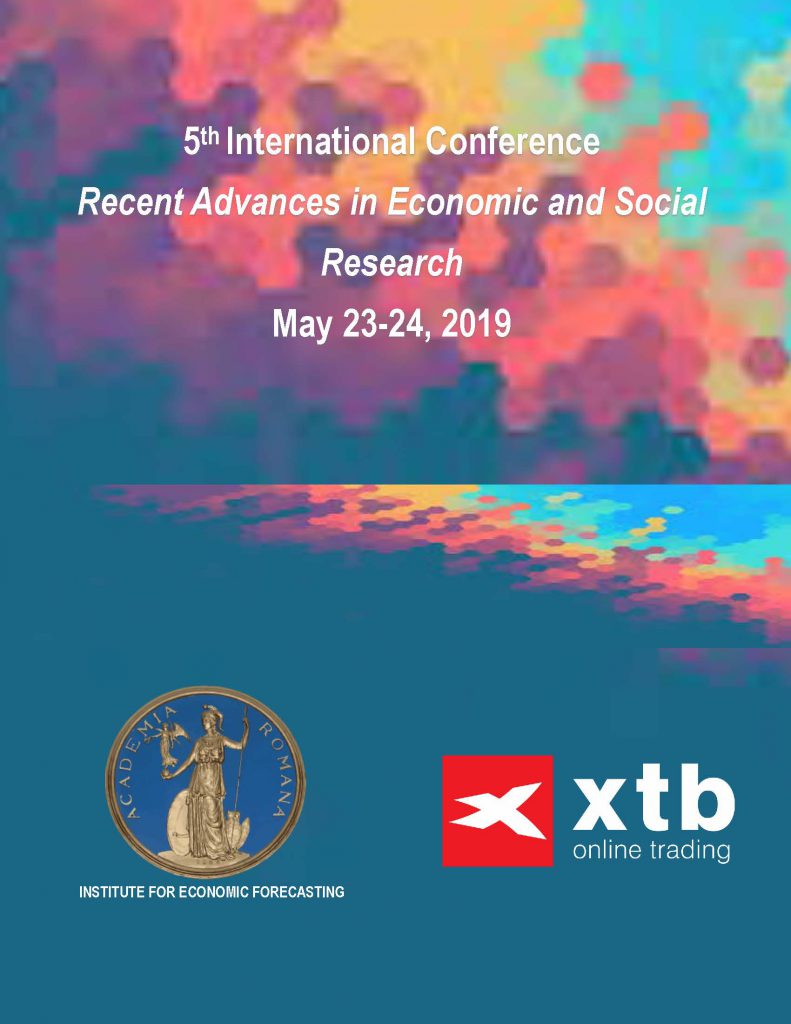
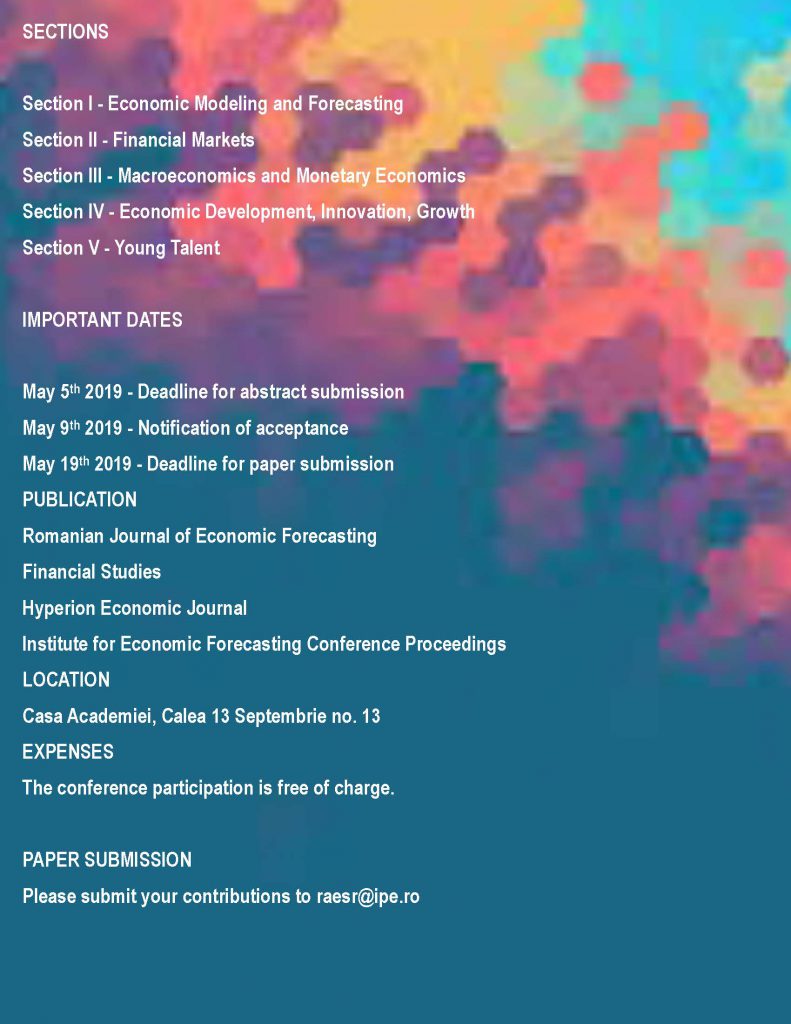
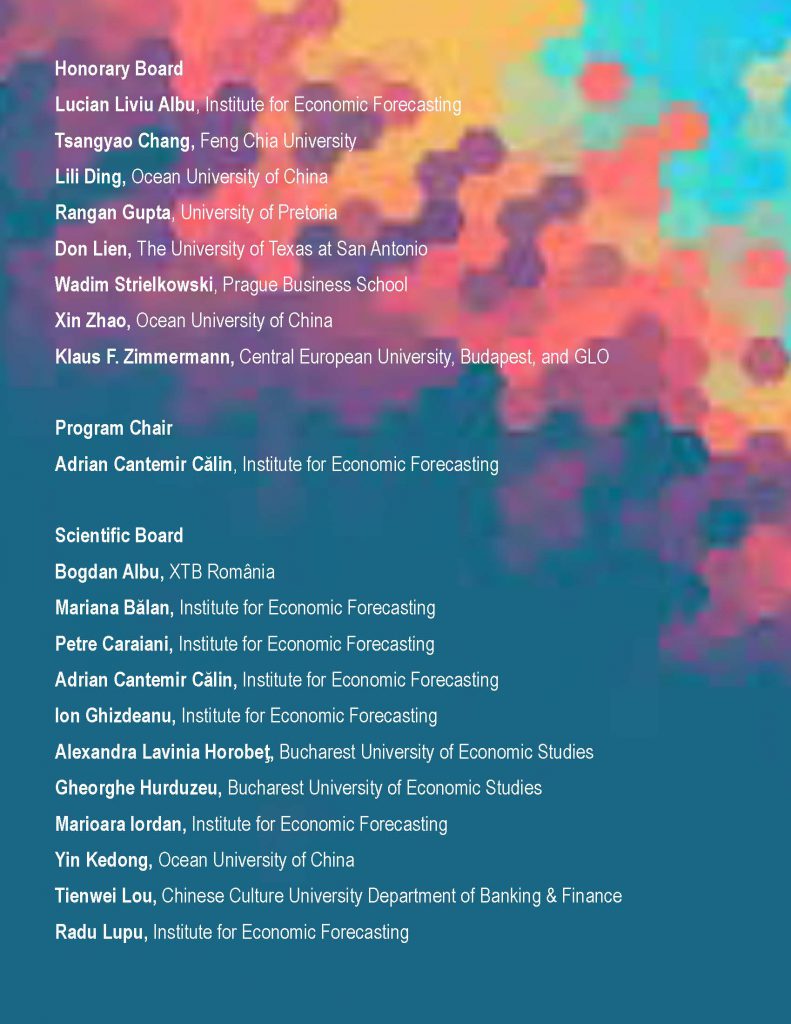
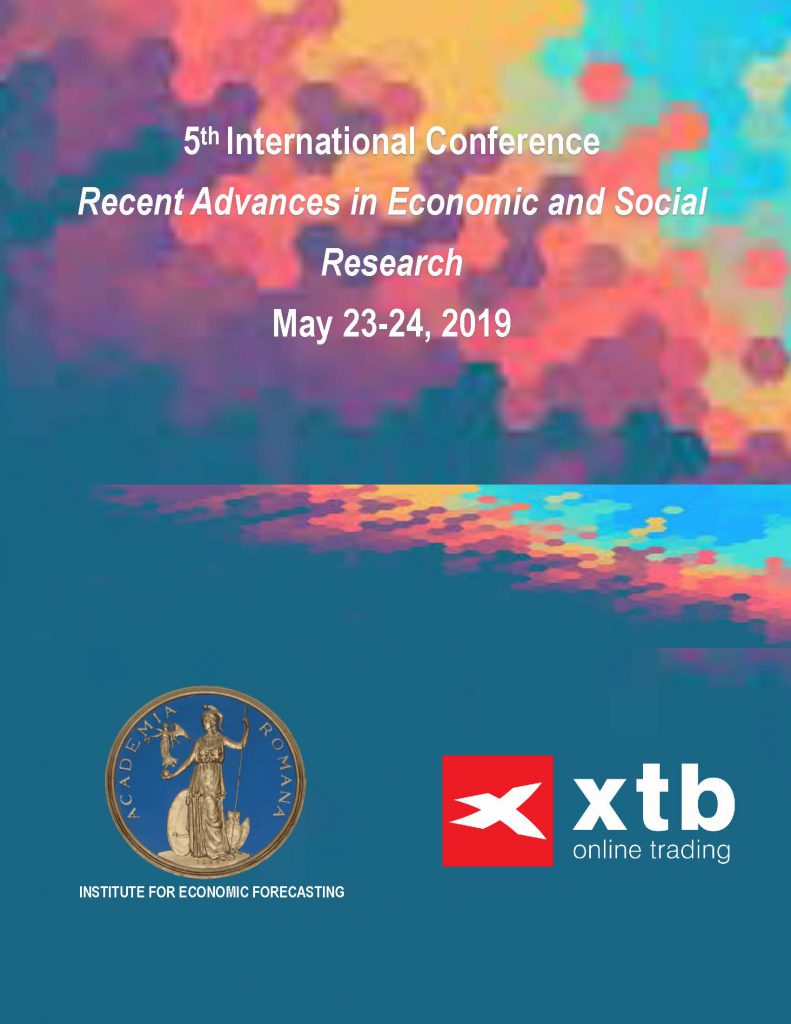
UPDATE AND REMINDER: 5th International Conference on “Recent Advances in Economic and Social Research” on May 23-24, 2019 in Bucharest

Ends;

Paper submission to Brasov conference on 31 May to June 1, 2019 still possible until April 26.

International Conference„Inclusive and sustainable economic growth. Challenges, measures and solutions” (ISEG 2019).

Place: 31 May-June 1: Brasov, Romania, at the Transilvania University of Brasov.

Organizers: Transilvania University of Brasov; Romanian Academy, Institute of Economic Forecasting; Global Labor Organization (GLO)

Invited Speakers are Filomena Maggino and  Klaus F. Zimmermann.

To participate: Register until April 26 through the conference website and send an abstract asap. CONTACT.

GLO is interested in research papers for a special session related to the Labor Markets of Countries in South East Europe; GLO members who wish to contribute to this are invited to send an abstract by April 20 to Klaus F. Zimmermann. (klaus.f.zimmermann@gmail.com)

Ends;

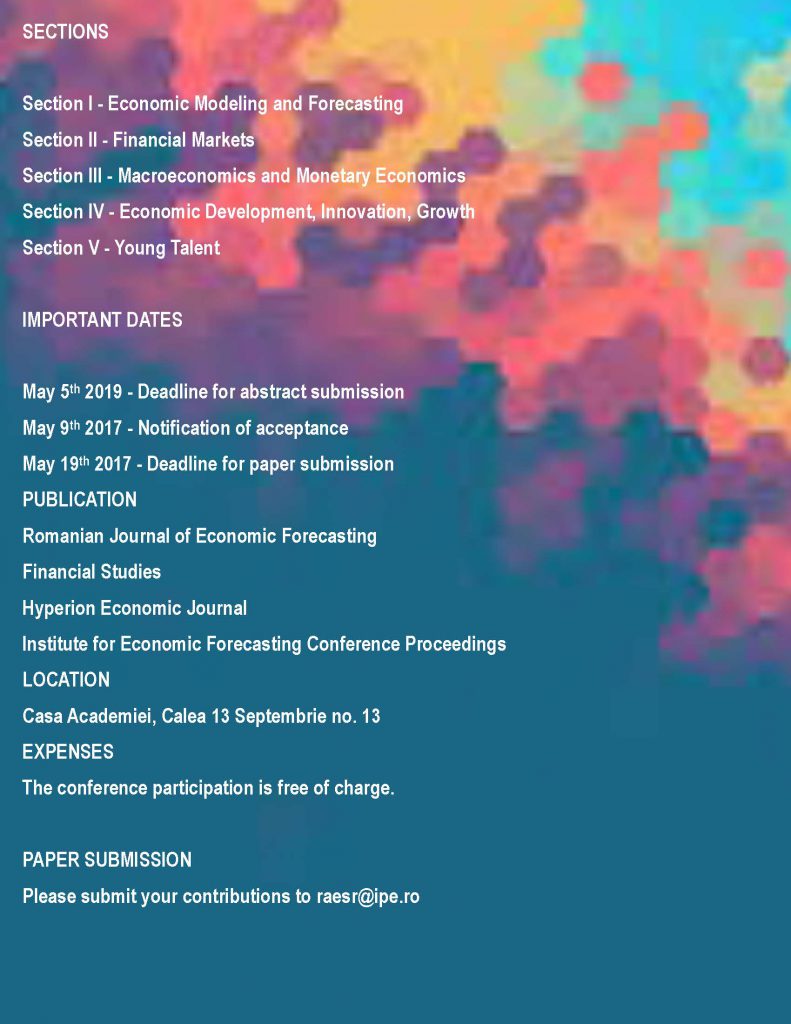
May 23-24, 2019: Bucharest. 5th International Conference on “Recent Advances in Economic and Social Research”

GLO Fellow Adrian Cantemir Calin of the Institute for Economic Forecasting, Romanian Academy, organizes the 5th International Conference on Recent Advances in Economic and Social Research on May 23-24, 2019 at the Romanian Academy in Bucharest. See below for more details.

The conference takes great pride in offering young researcher an opportunity to discuss their work in the current economic context. In this line, the organizers are continuing the tradition of the “young talent” section, aiming to provide a vehicle for scientific dissemination for an even younger audience. Under this section they welcome papers from PhD students, master students and even bachelor students that aim at a career in academic research.

May 25, 2019: FULL PROGRAM OF THE EVENT.

Ends;

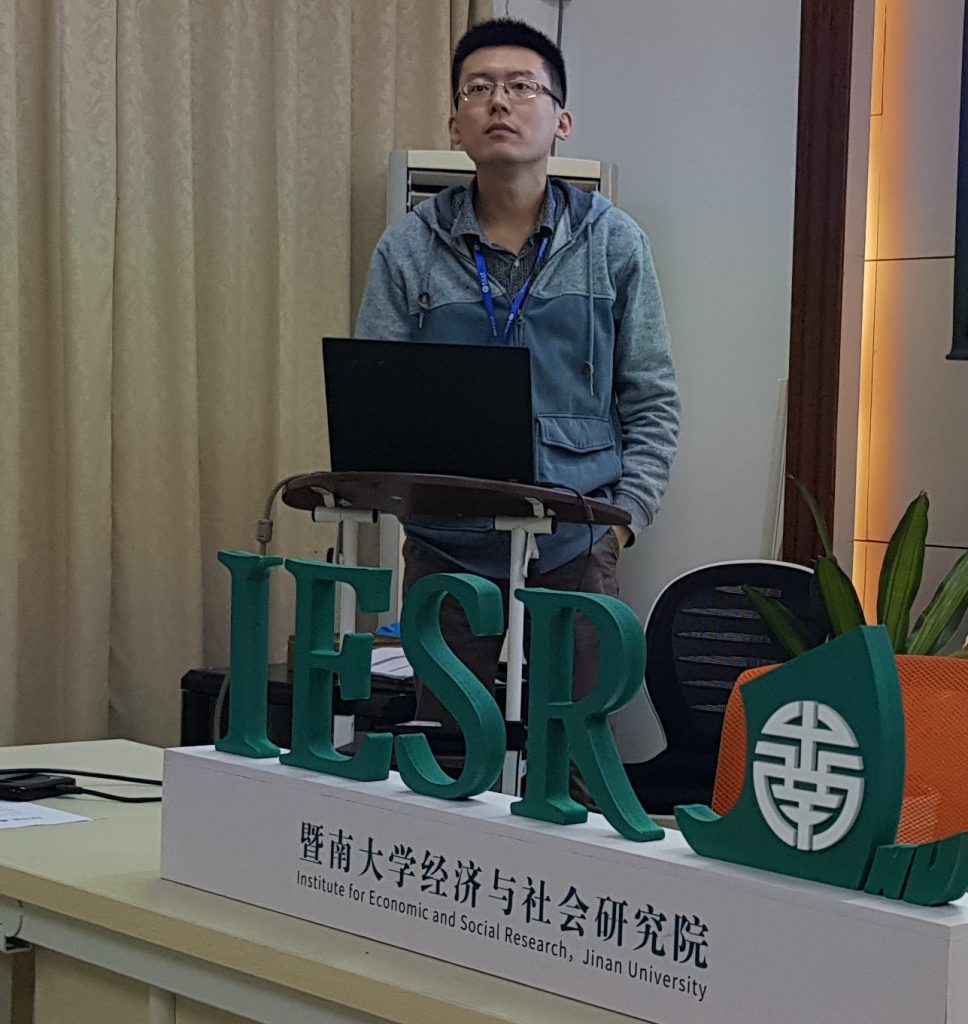
Guangzhou, China; Jinan University, March 21-22, 2019. IESR-GLO Workshop on ‘Belt and Road’ – Labor Markets. What are the challenges on human resources issues? The exchange has begun.

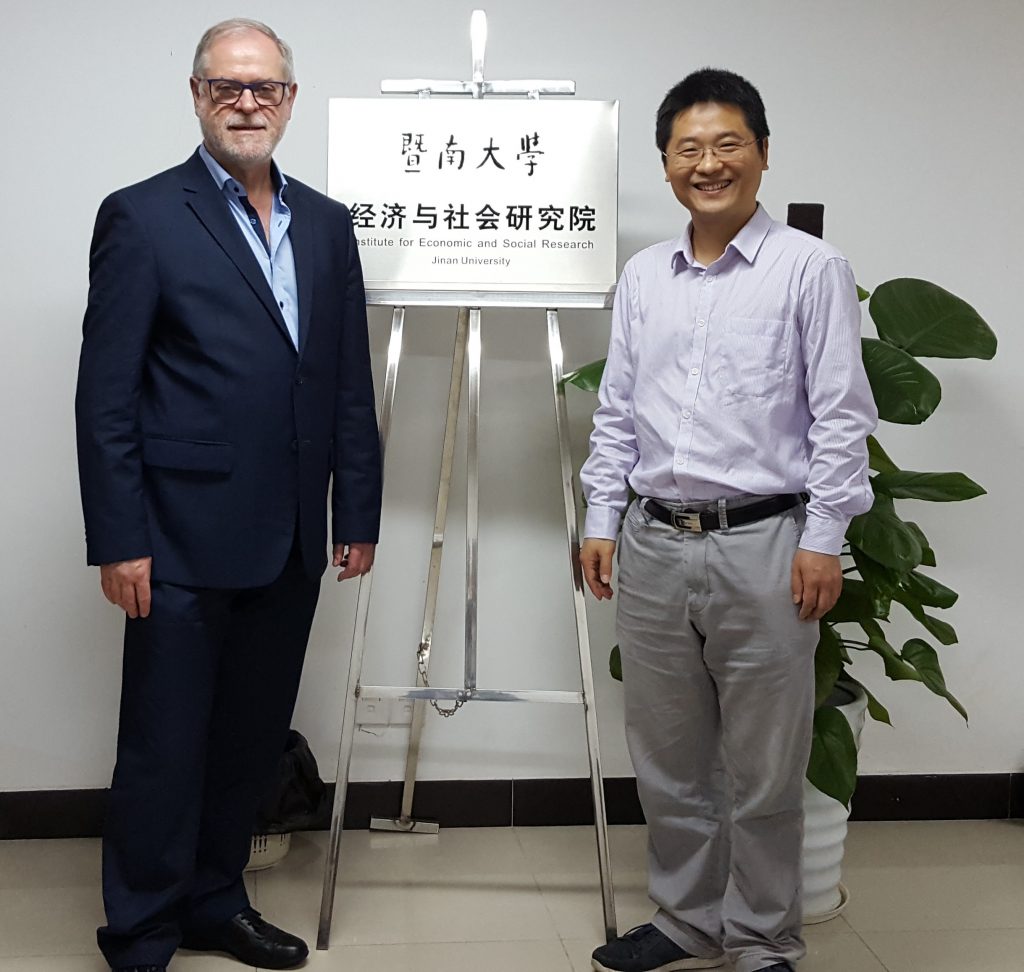
GLO President Klaus F. Zimmermann has visited the Institute for Economic and Social Research (IESR), Jinan University in Guangzhou, China, at IESR, Jinan University during 17 – 24 March, 2019. On March 21 – 22, he had organized IESR-GLO Workshop on ‘Belt and Road’ Labor Markets together with GLO Fellow Shuaizhang Feng, the Dean of IESR. The focus of the workshop was China, South Asia and South East Asia. For the workshop program see below. IESR Report LINK WEBSITE.


Shuaizhang Feng, Dean of IESR

March 21st, 2019
9:30-9:40 Welcome remarks by Shuaizhang Feng and Klaus F. Zimmermann
9:40-10:40 Michele Bruni: China and the BRI Countries at a Demographic Crossroad: Labour Market Implications, Challenges and Opportunities
10:40-11:10 Group Picture and Coffee Break
11:10-11:50 Asad Islam: Can Referral Improve Targeting? Evidence from a Training Experiment
11:50-13:50 Lunch
13:50-14:30 Jinseong Park: Parental Wealth, Time to First Job, and Labor Market Outcomes: Evidence from Housing Wealth Shocks in South Korea
14:30-14:50 Coffee Break
14:50-15:30 M Niaz Asadullah: Female Seclusion from Paid Work: A Social Norm or Cultural Preference?
15:30-16:10 Shuaizhang Feng: The Challenge of Internal Migration on China’s Long Term Sustainable Growth

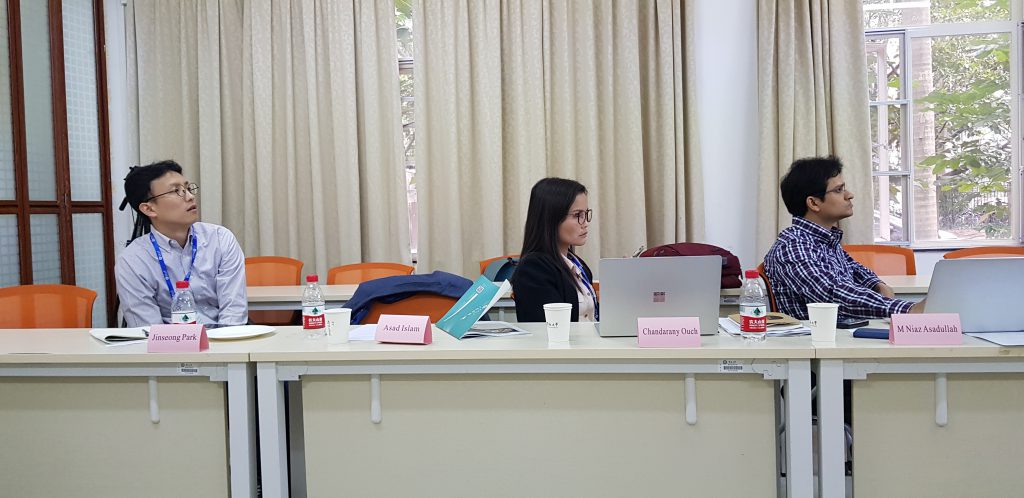
Park, Ouch, Asadullah

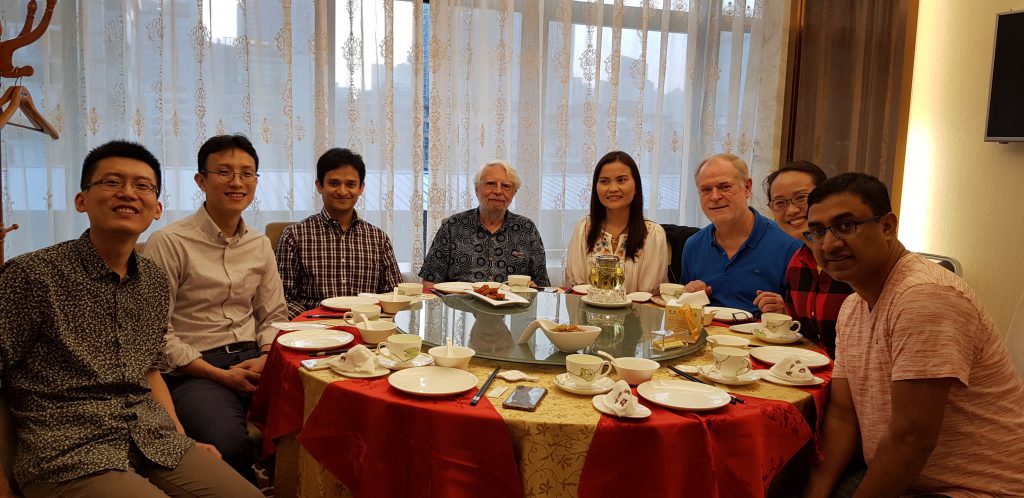
Dinner with Associate Dean and GLO Fellow Sisi Zhang (second from right)
GLO Fellows (from left) Xue, Park, Assadullah, Bruni, Ouch, and Islam with Zimmermann

March 22nd, 2019
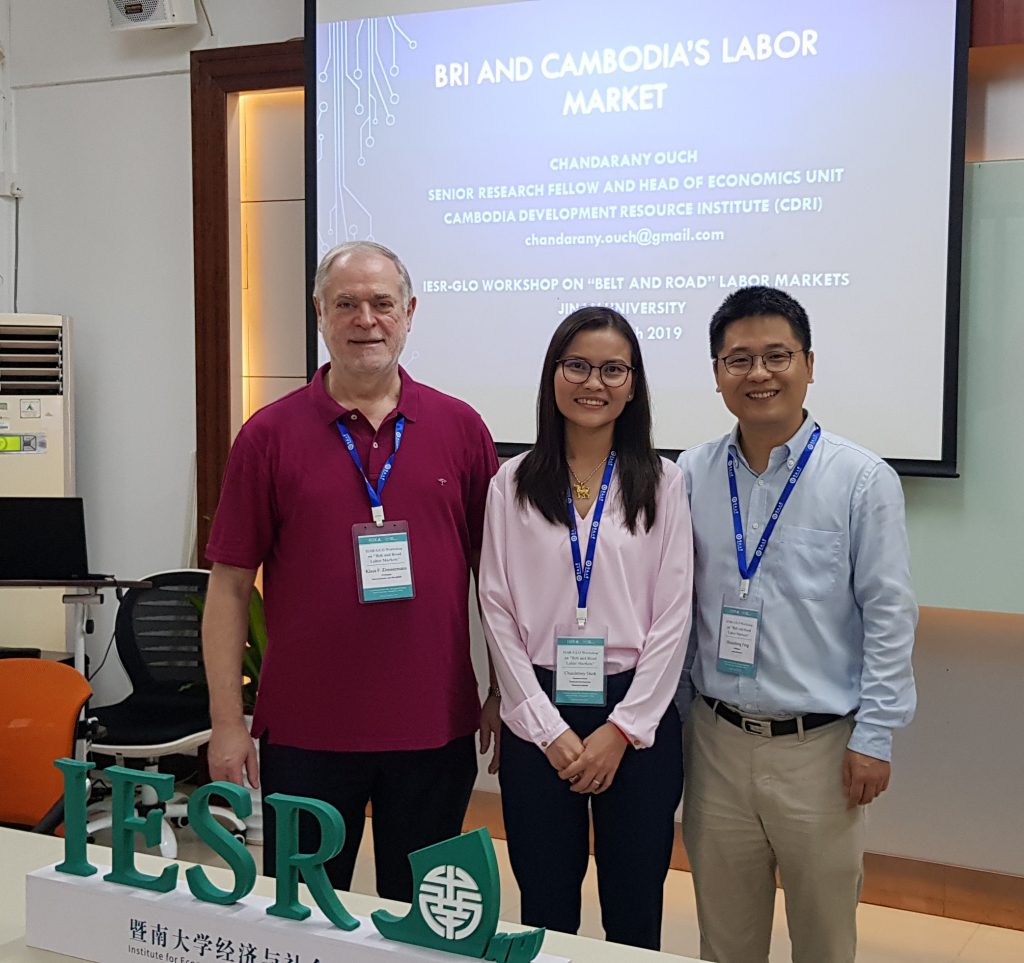
9:00-9:40 Chandarany Ouch: China’s BRI and Challenges and Opportunities for Cambodia’s Labour Market 9:40-10:20
Sen Xue: Institutional Restrictions on Migration and Migrant Consumption and Savings Response
10:20-10:40 Coffee Break
10:40-11:20 Klaus F. Zimmermann: Arsenic Contamination of Drinking Water in Bangladesh: Knowledge and Response
11:20-12:00 Round Table Discussion
12:00-14:00 Lunch

Zimmermann, Ouch & Feng

List of GLO Participants
Michele Bruni: Professor at Centre for the Analysis of Public Policies, University of Modena, Team Leader of EU-China Social Protection Reform Project
Shuaizhang Feng: Professor and Dean of IESR, Jinan University
Asad Islam: Associate Professor of Department of Economics, Monash University
M Niaz Asadullah: Professor, Faculty of Economics and Administration, Univ of Malaya
Chandarany Ouch: Research Fellow, Head of Economics Unit, Cambodia Development Resource Institute
Jinseong Park: Assistant Professor of IESR, Jinan University
Sen Xue: Assistant Professor of IESR, Jinan University
Klaus F. Zimmermann: Professor of Bonn University and UNU-MERIT, President of the Global Labor Organization

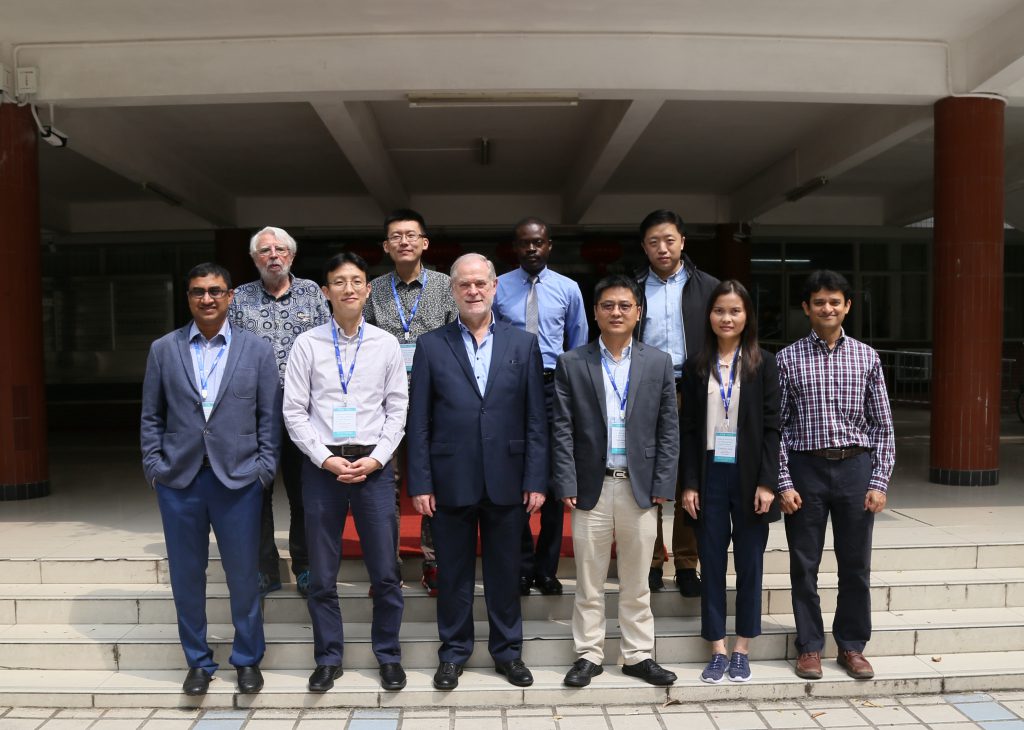
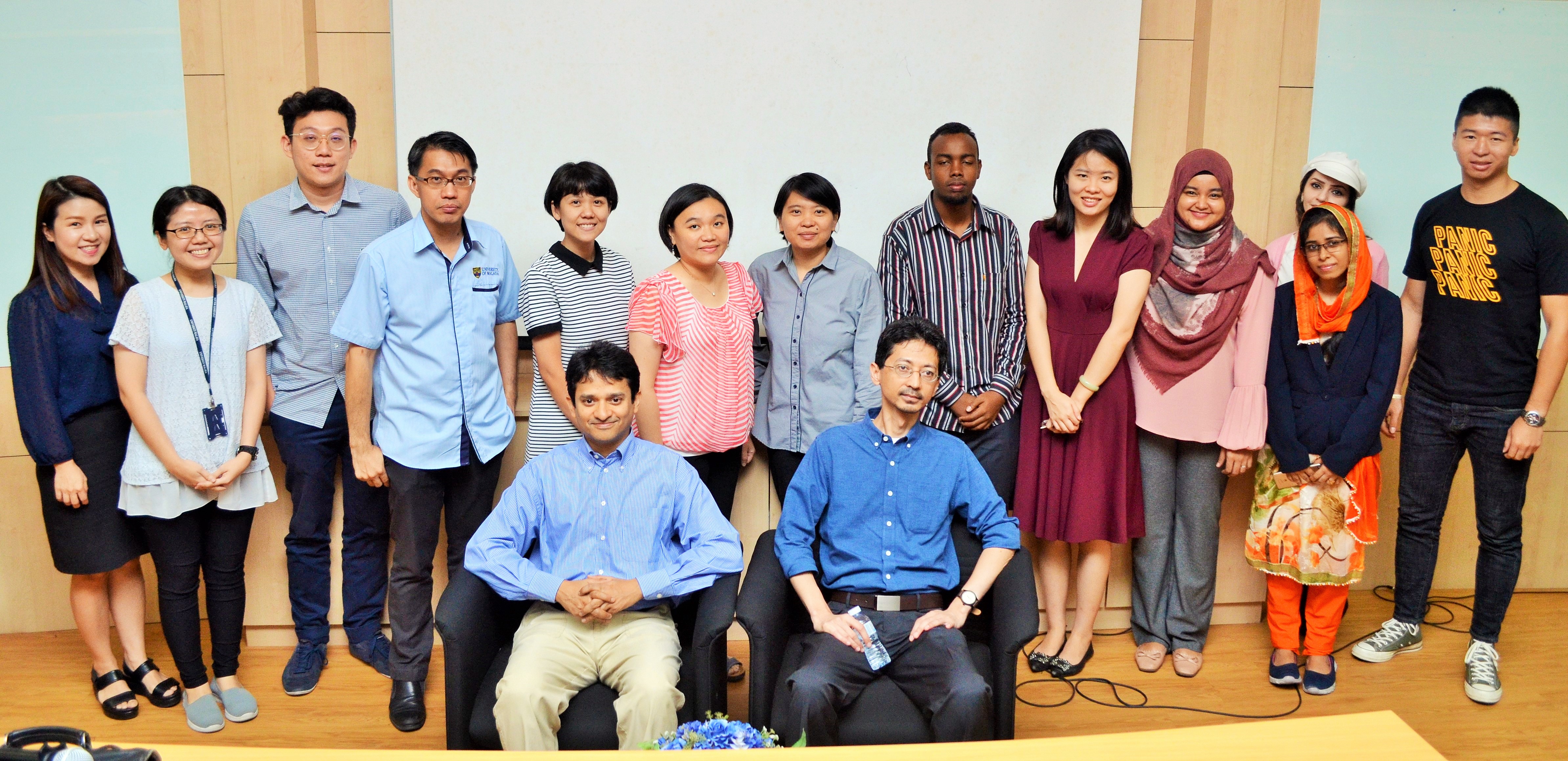
Group Photo of the Workshop

Ends;

GLO President Klaus F. Zimmermann visited IESR in Guangzhou. IESR Dean Shuaizhang Feng appointed Editor of the Journal of Population Economics.

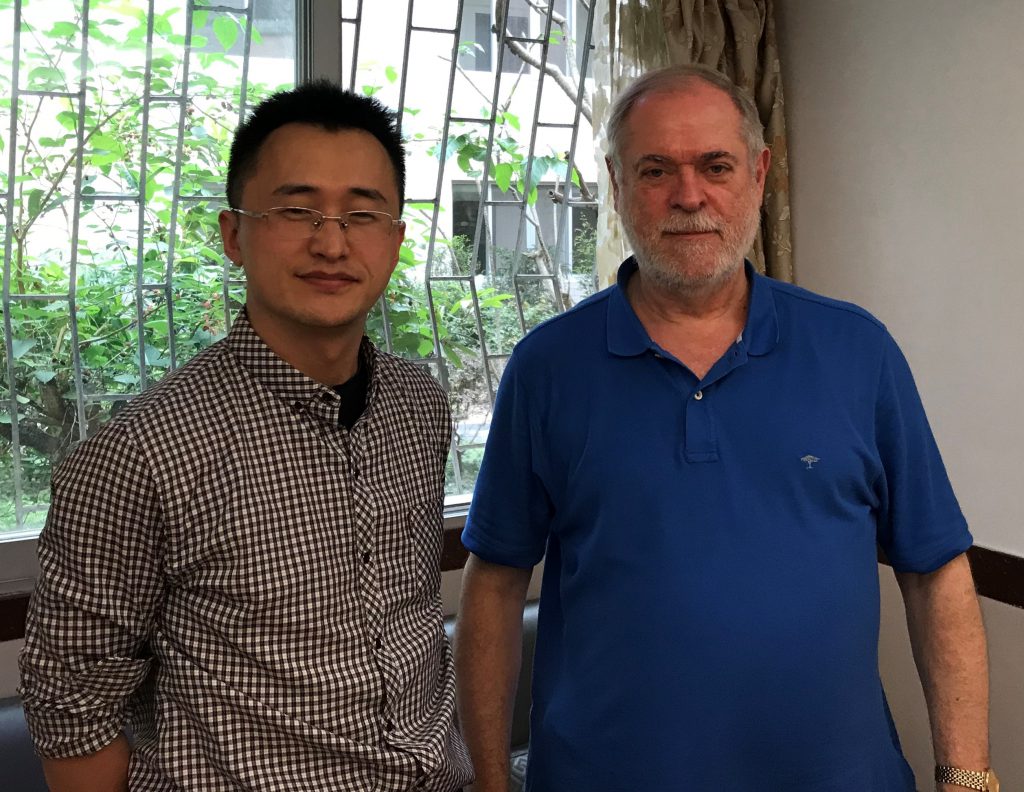
Arriving from Kuala Lumpur, where he had spent time as a Visiting Professor at the University of Malaya, GLO President Klaus F. Zimmermann arrived on March 17 in Guangzhou, China, to work a full week at the Institute for Economic and Social Research (IESR), Jinan University.

Jinan University (JNU) was founded in 1906 by the Qing government in Nanjing as the first university in China to enroll overseas Chinese students. Now, it is the top university in mainland China for international students and it has fully devoted itself to creating a culture of openness, diversity and creativity among its faculty and students.

The Institute for Economic and Social Research (IESR) was created in December 2015 by appointing Yangtze River Scholar Professor Shuaizhang Feng appointed as the first Dean. The mission of IESR is to advance policy-oriented economic and social research addressing the most relevant challenges of the modern China. Within a short time, IESR has gained a strong faculty of significant researchers and a global reputation of excellence.

IESR has been an early supporter and collaborator of the Global Labor Organization (GLO) and Dean and Professor Shuaizhang Feng is a GLO Fellow of the first hour. During his second visit to IESR, Klaus F. Zimmermann met again with many IESR researchers to discuss their latest research.

Shuaizhang Feng was also recently appointed Editor of the Journal of Population Economics published by Springer Nature. The Journal, the leader of the academic field of Population Economics, is directed by Zimmermann, who is the Editor-in-Chief. Both Feng and Zimmermann had various talks about the further collaborations to strenghten IESR, GLO and the Journal of Population Economics.

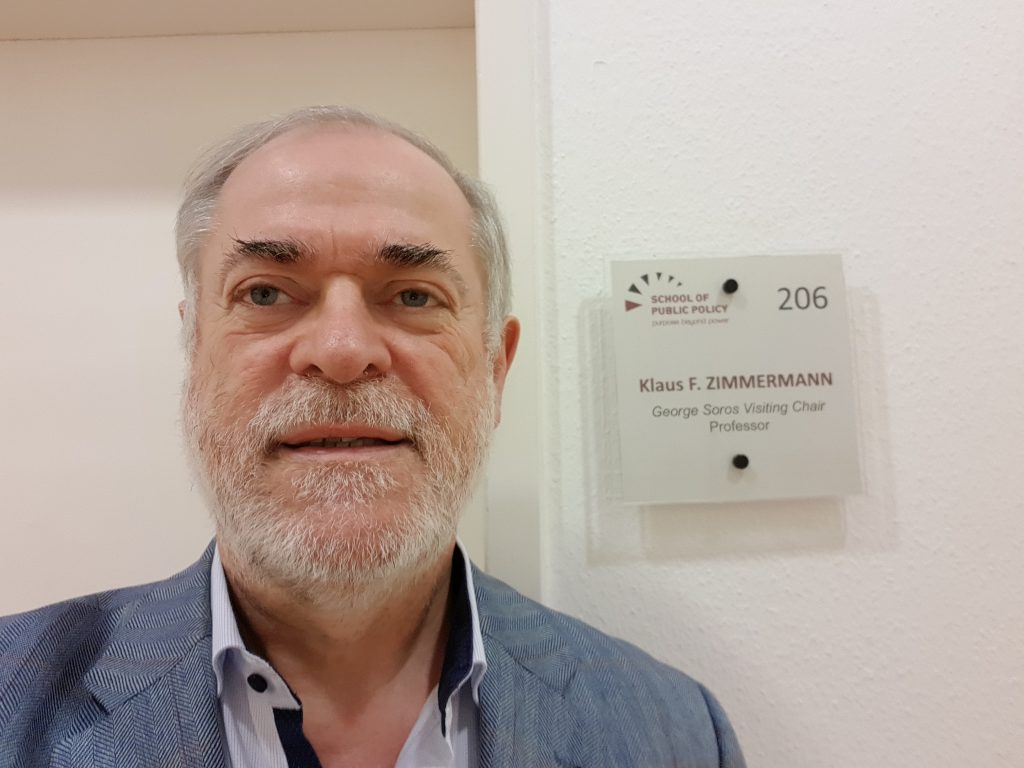
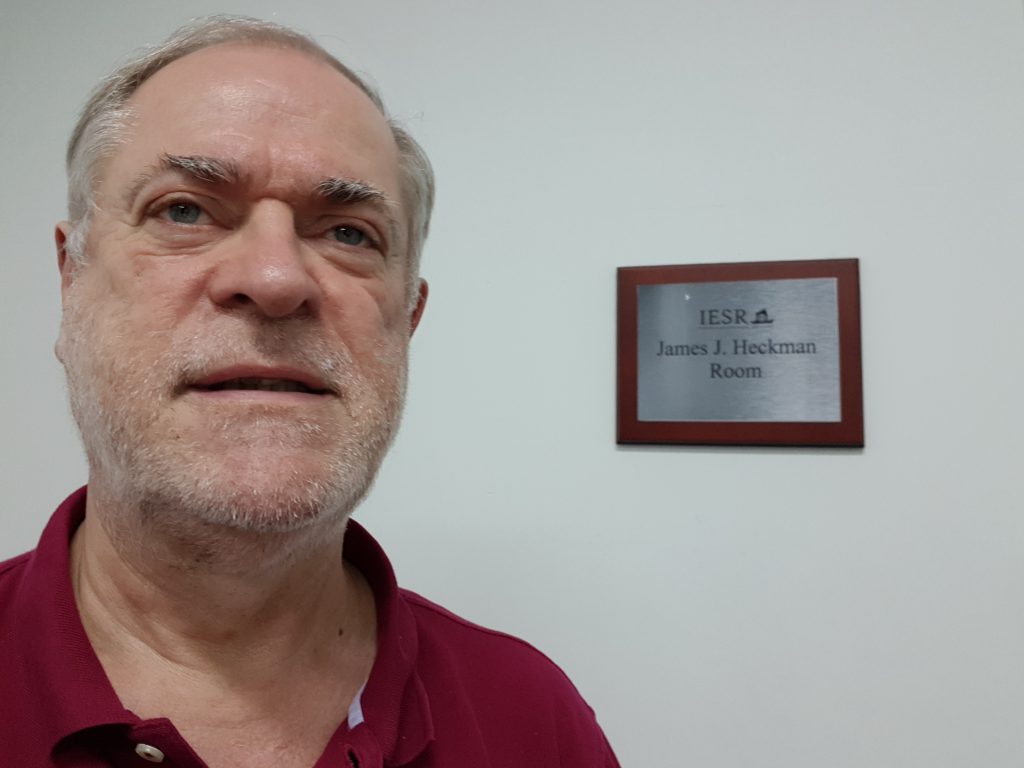
At IESR, Zimmermann was working in the Jim Heckman room….

After discussions with visitor Wenkai Sun, Professor & Labor Economist of the Renmin University of China, Beijing, and GLO Fellow. As an Honorary Professor of Beijing University, Zimmermann has frequently visited Beijing.

Ends;

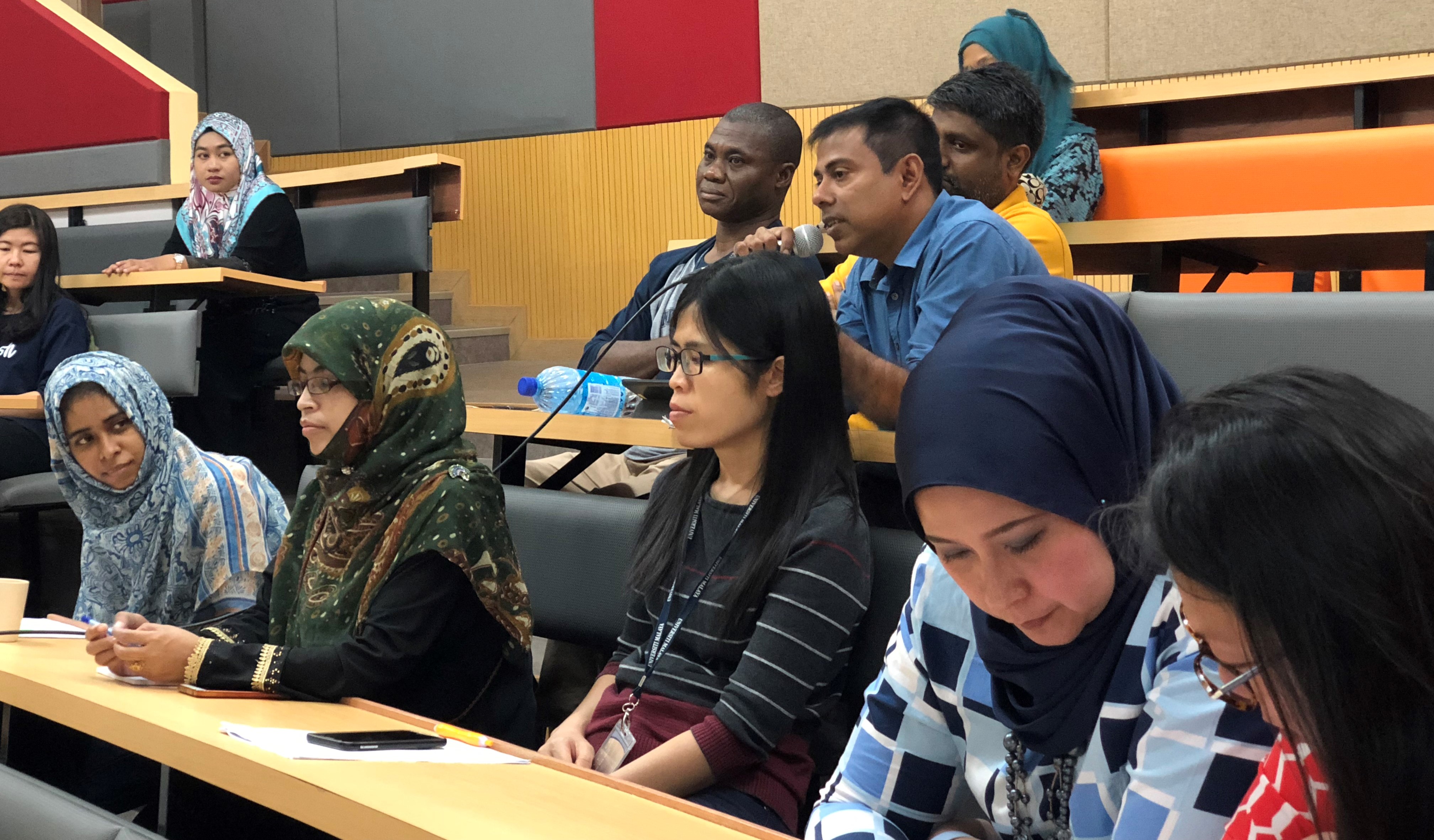
GLO President Zimmermann appointed Visiting Professor at the University of Malaya, Kuala Lumpur, Malaysia, in March 2019. Highlights from the visit.

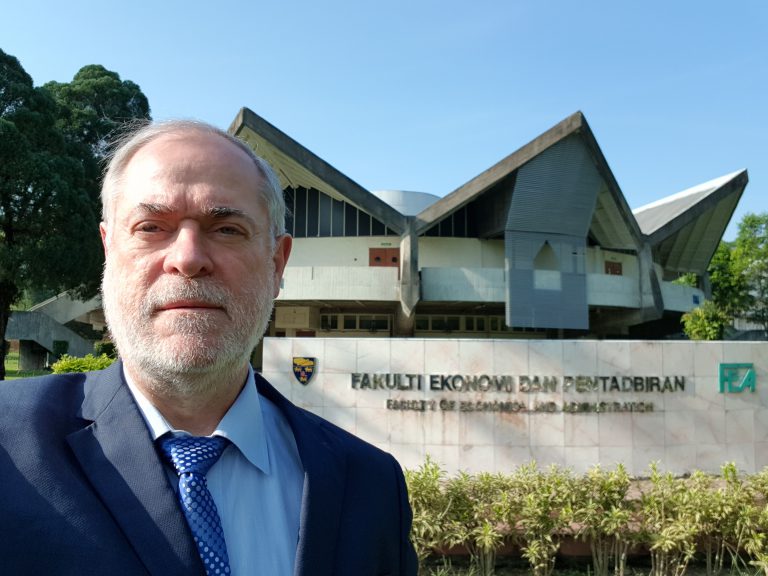
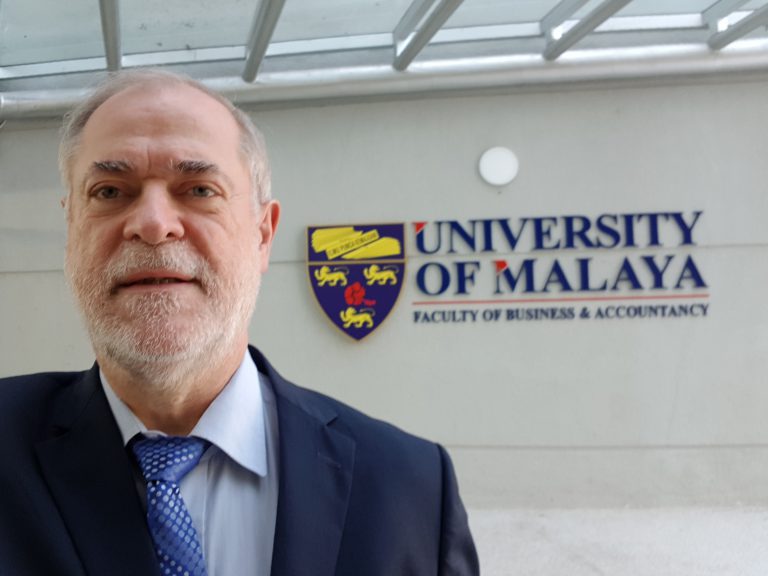
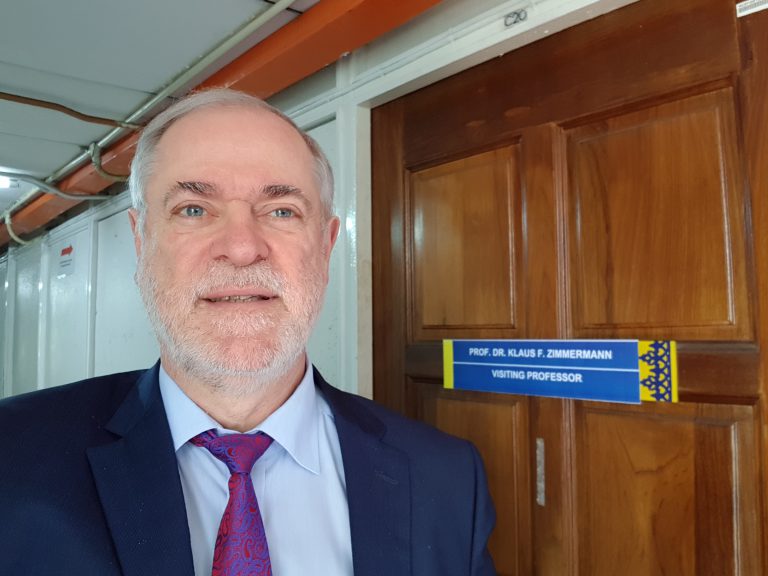
Klaus F. Zimmermann, Professor Emeritus of Bonn University, Co-Director POP at UNU-MERIT, Maastricht, and Honorary Professor Maastricht University, has been appointed Visiting Professor at the Faculty of Economics & Administration of the University of Malaya (UM) for his March visit to Malaysia. He provided academic lectures and debated research issues with colleagues and students. Zimmermann, who is also the President of the Global Labor Organization (GLO), introduced this large academic network and promoted the Journal of Population Economics, which he is directing as the Editor-in-Chief. He also discussed research initiatives with GLO Fellow M. Niaz Asadullah, (UM), who is also the GLO South -East Asia Research Cluster Lead.

THE PROGRAM AT UM

  • March 10-17, 2019: Kuala Lumpur, Malaysia. University of Malaya (UM). Klaus F. Zimmermann has been Visiting Professor at UM. See for the warm welcome with the Dean. The detailed program in Malaysia was as follows:
  • March 12: Kota Kinabalu, Malaysia. Universiti Malaysia Sabah (UMS).
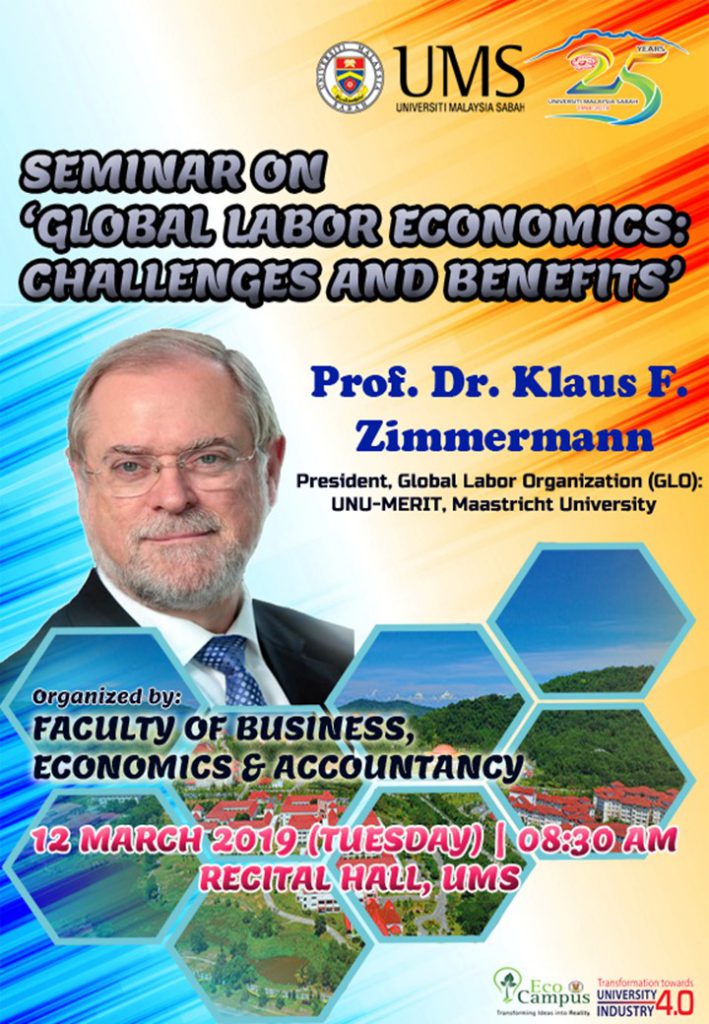
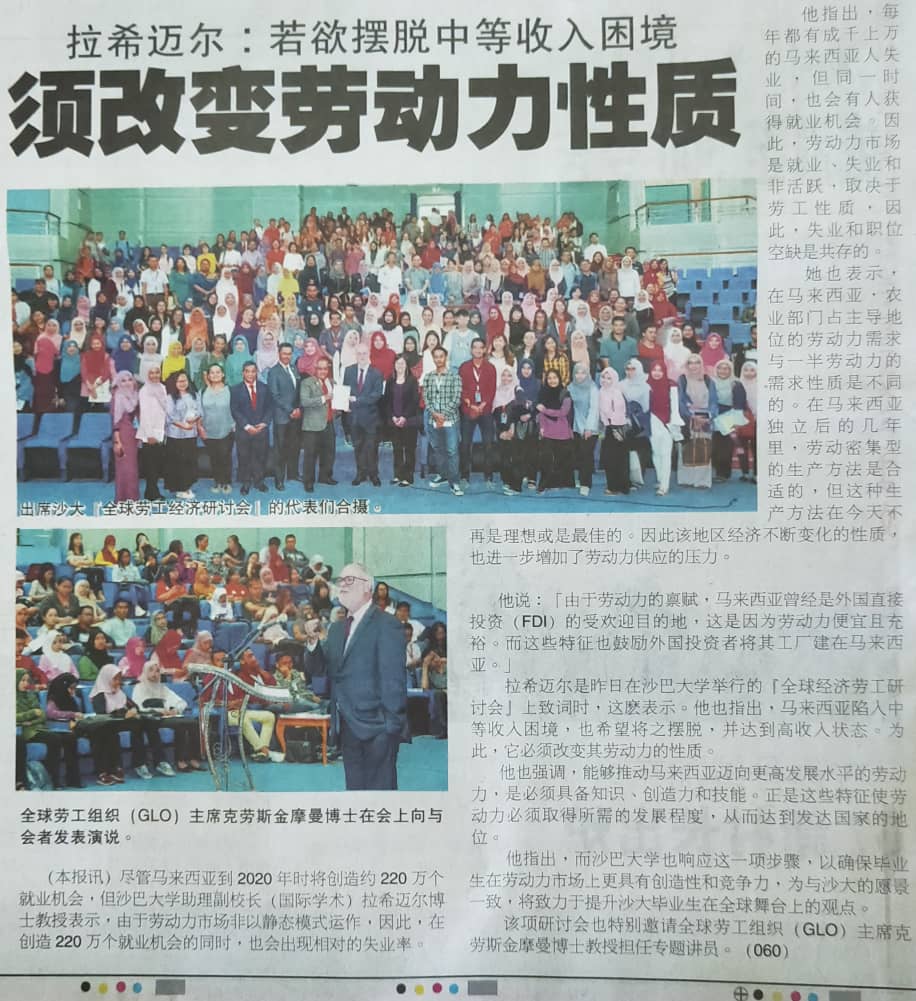
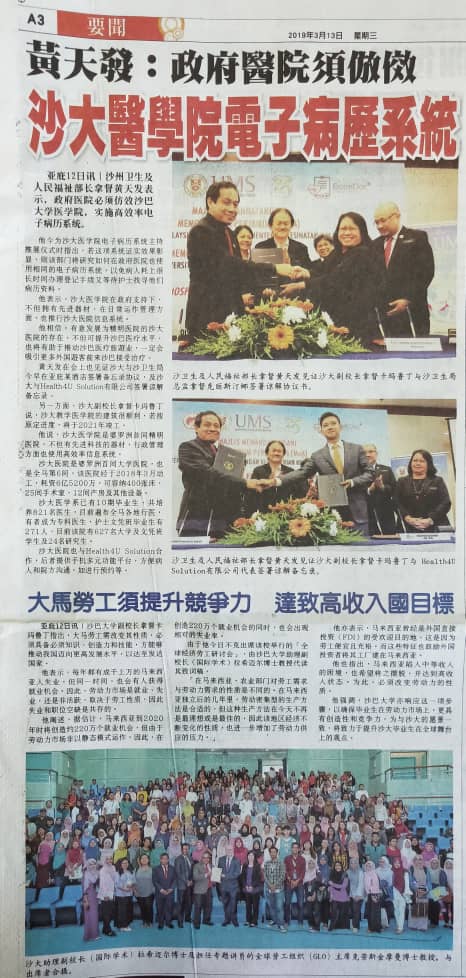
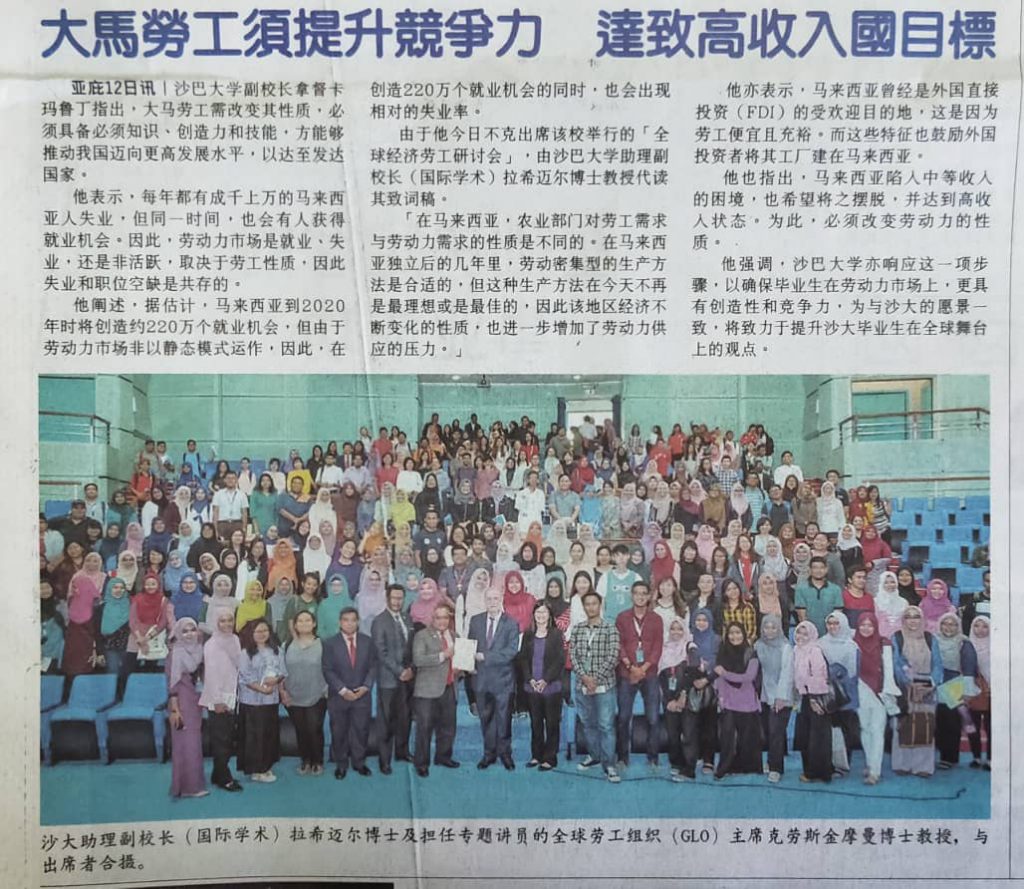
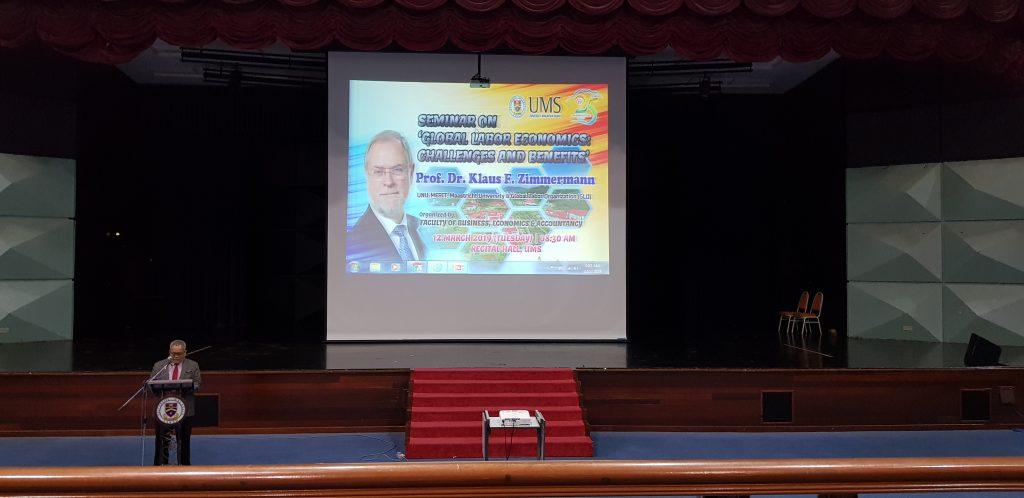
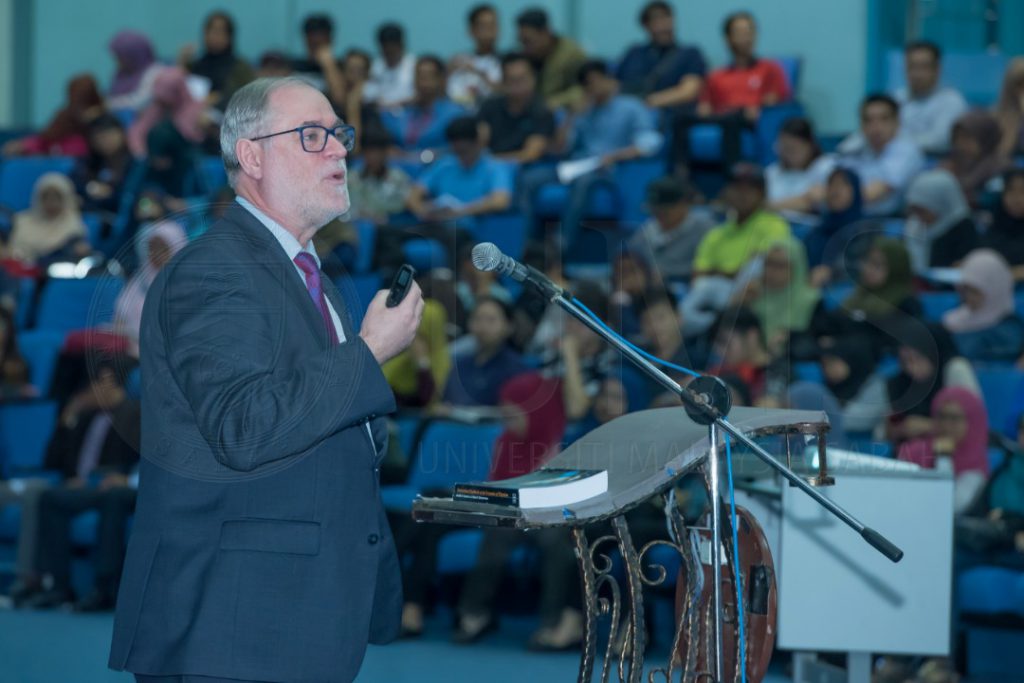
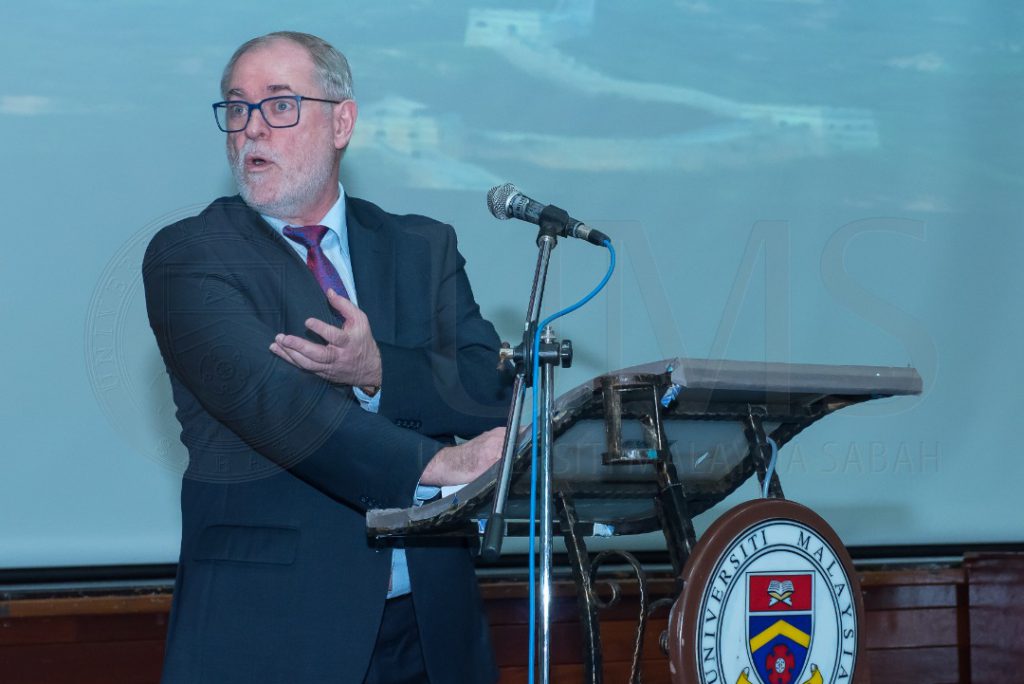
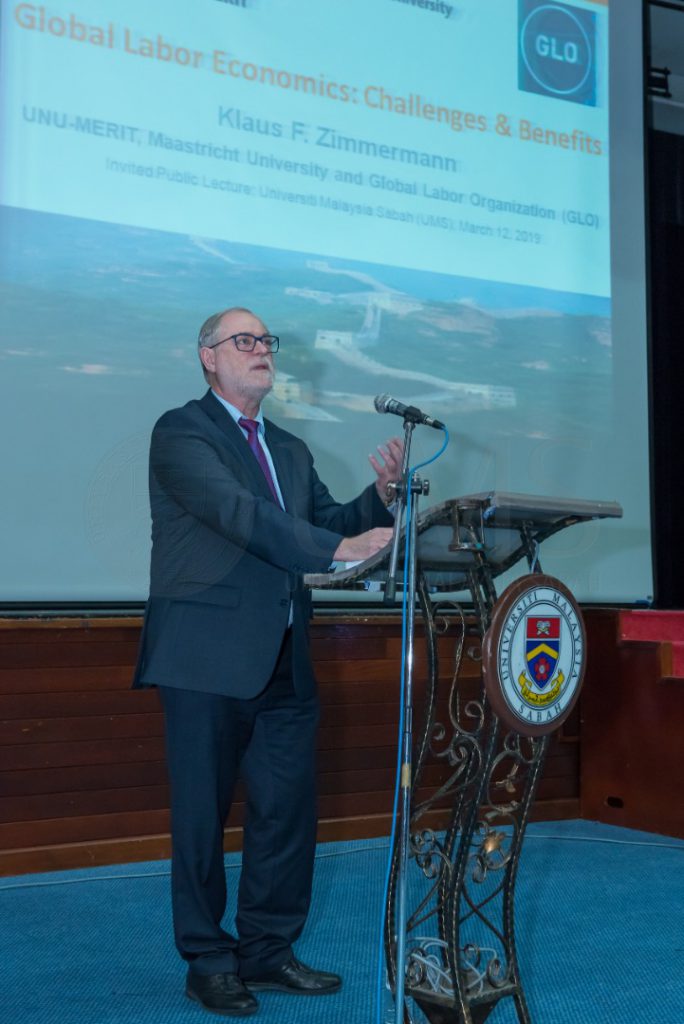
    Klaus F. Zimmermann provided the public University Silver Jubilee Lecture on “Global Labor Economics: Challenges and Benefits” and a public Seminar on “Publishing in Good Journals”. See for details.
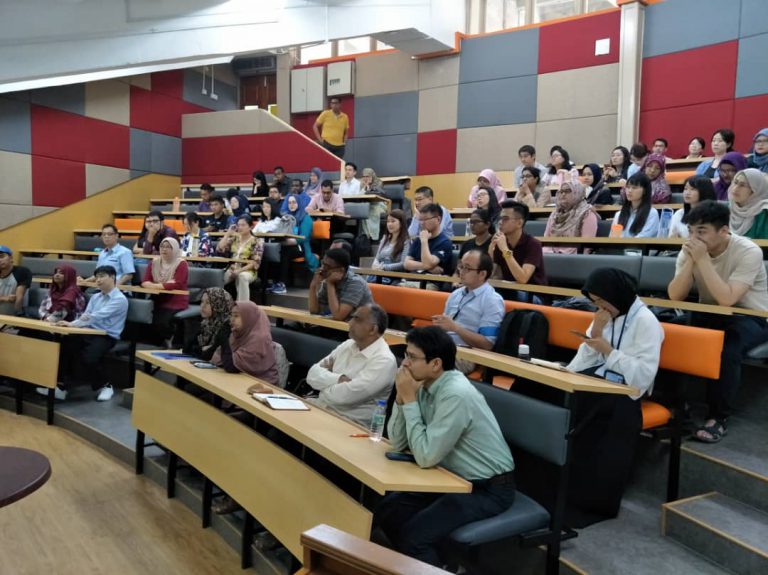
  • March 13: Kuala Lumpur, Malaysia. University of Malaya (UM). Joint GLO -UM public Seminar on “Introducing GLO –  Pushing the Research Frontier on Labor and Human Resources Issues”. See for more details.
  • March 14: Kuala Lumpur, Malaysia. University of Malaya (UM). Joint GU- World Bank Research Seminar of Klaus F. Zimmermann on “Economic Preferences Across Generations“. See for more details.
  • March 15: Kuala Lumpur, Malaysia. University of Malaya (UM). Klaus F. Zimmermann provides a public Seminar on “Publishing in Good Journals”. See for more details.
  • Farewell. See for details.

HIGHLIGHTS OF THE VISIT


Arrived at the University of Malaya
University of Malaya
In front of the office

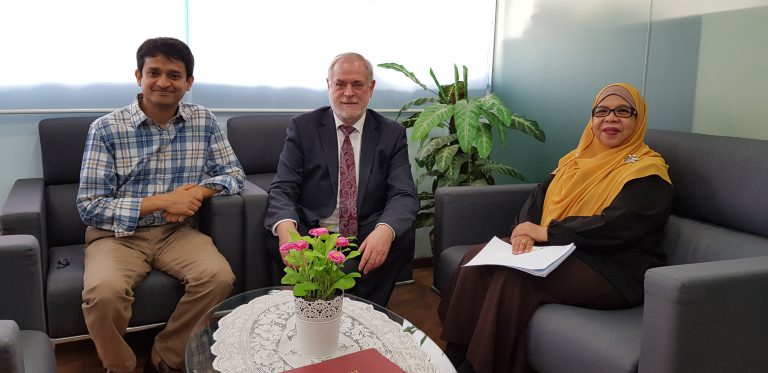
Zimmermann with Dean & Prof. Rohana Binti Jani and his host, GLO Fellow and Prof. M. Niaz Asadullah (left)
Lecturing
Zimmermann Lecture at the Joint UN – World Bank Seminar

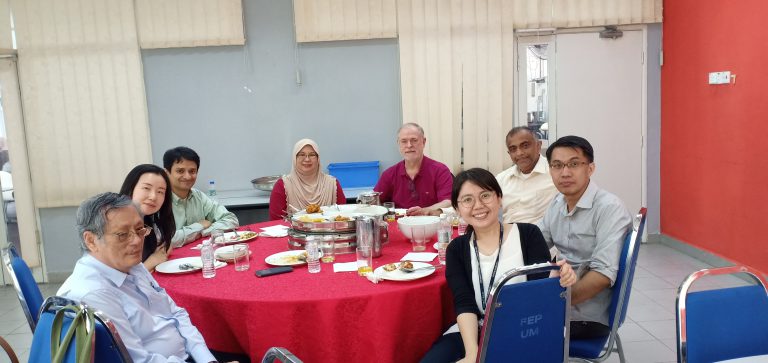
UM Faculty and Word Bank Researchers from the left: Nai Peng Tey, Young Eun Kim, M. Niaz Asadullah, Noor Azina Ismail, Klaus F. Zimmermann, Ong Sheue Li, Vijayendra Rao and Lim Kian Ping. After lunch following the UM – World Bank Research Seminar.

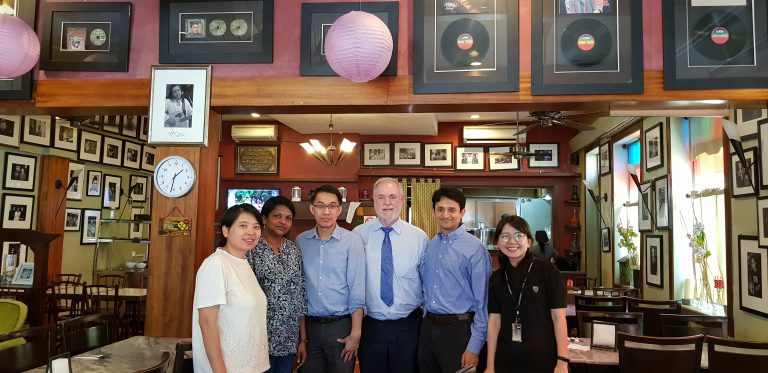
UM Faculty of Economics and Administration, ‘his’ Visitor’s Committee. From the left: Pui Kiew Ling, Santha A/P Chenayah @ Ramu (Head of the Department of Economics), Lim Kian Ping, Klaus F. Zimmermann, M. Niaz Asadullah and Ong Sheue Li. After lunch in a great local Malaysian Restaurant celebrating the end of a very successful visit with the team.

Ends;

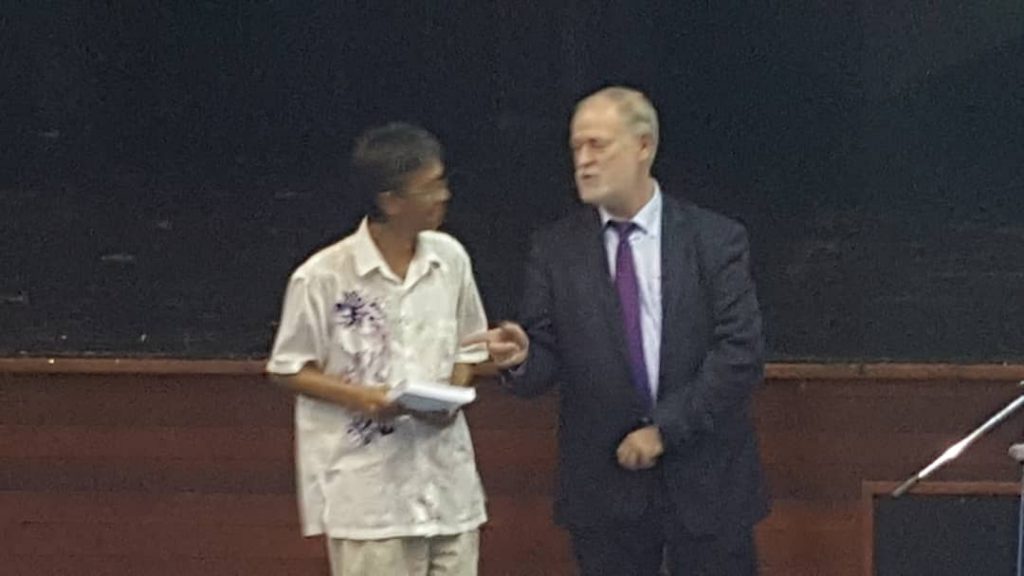
Universiti Malaysia Sabah (UMS) in Kota Kinabalu: GLO President Klaus F. Zimmermann delivered public University Silver Jubilee Lecture

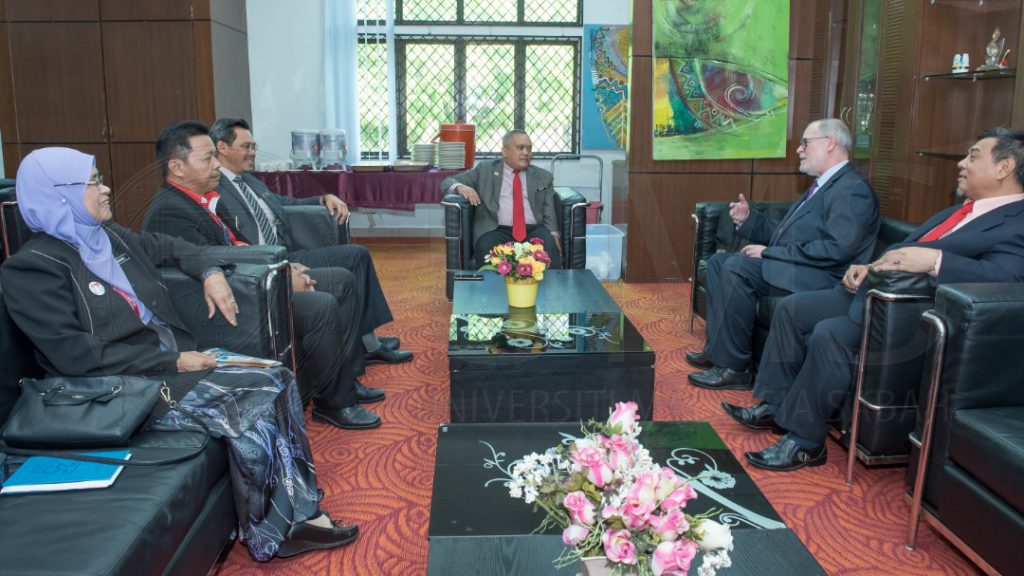
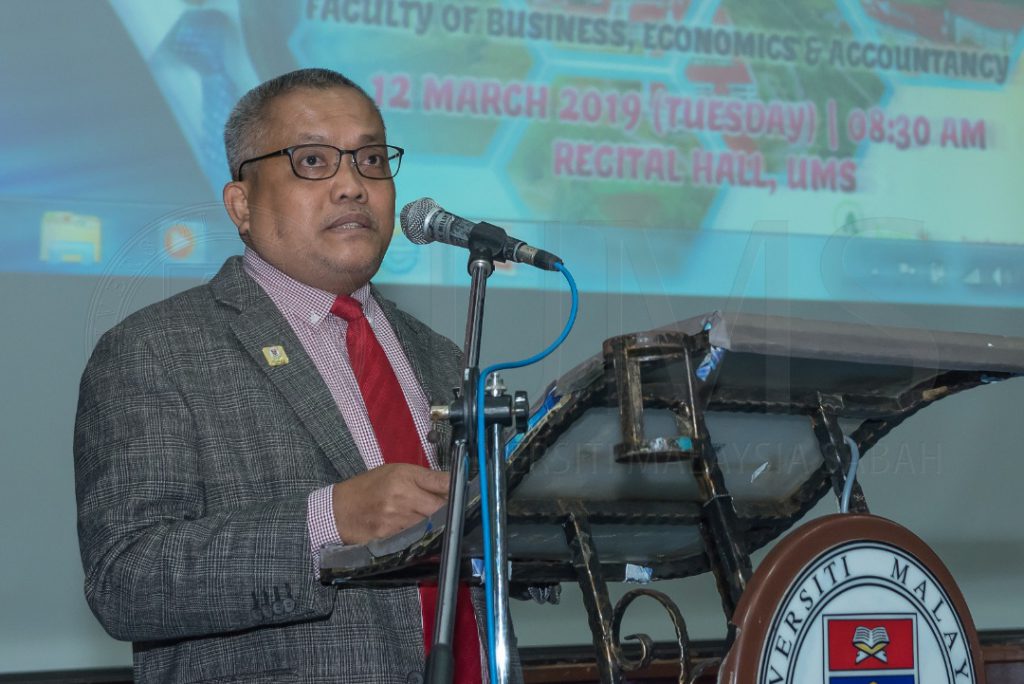
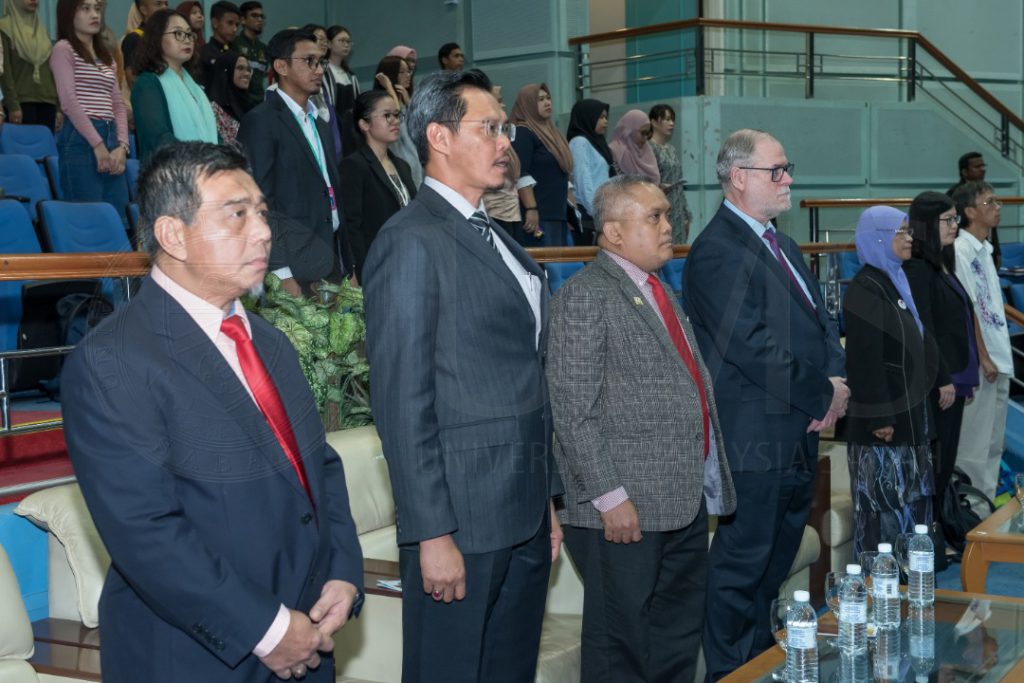
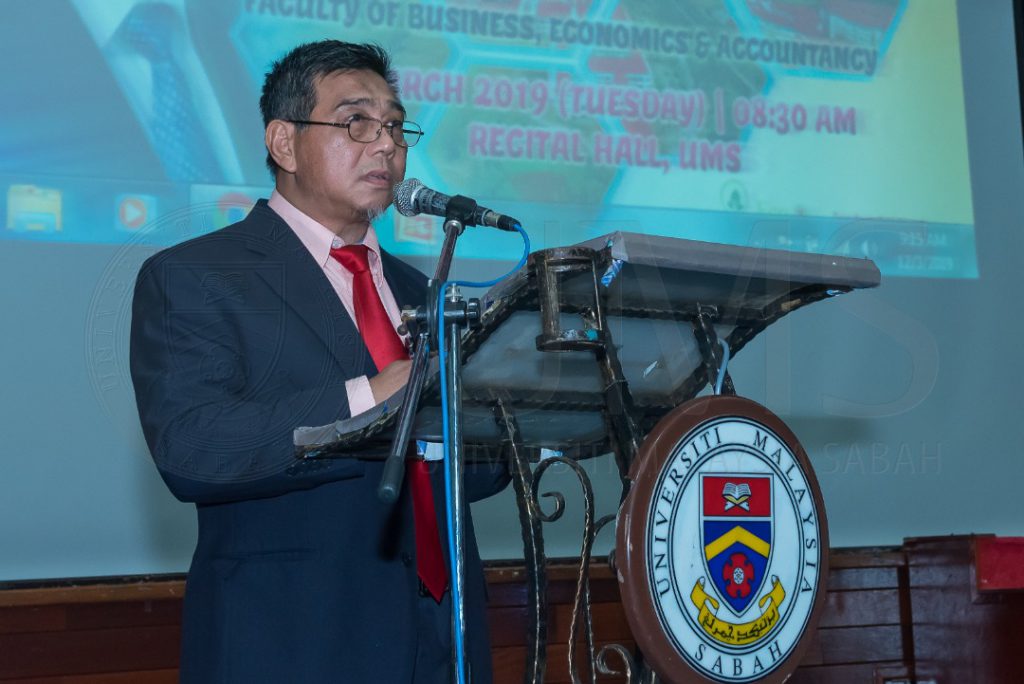
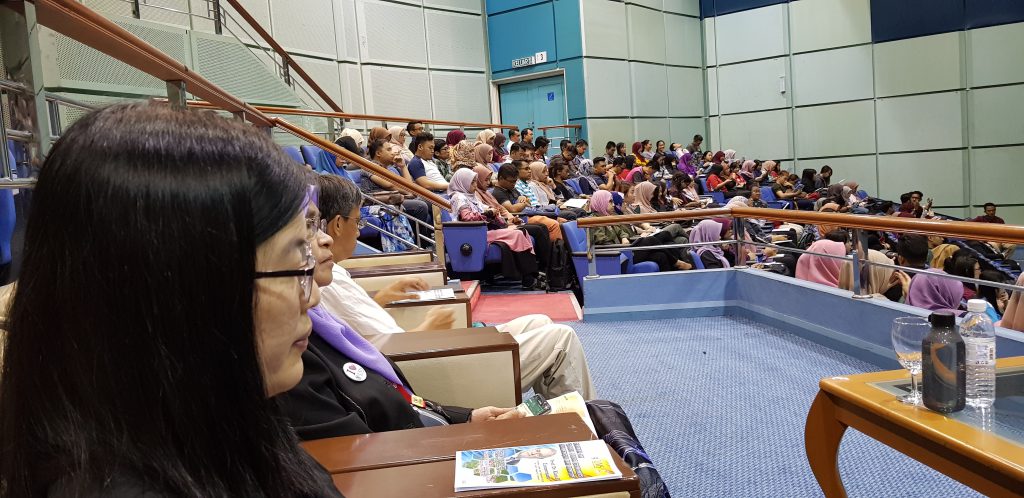
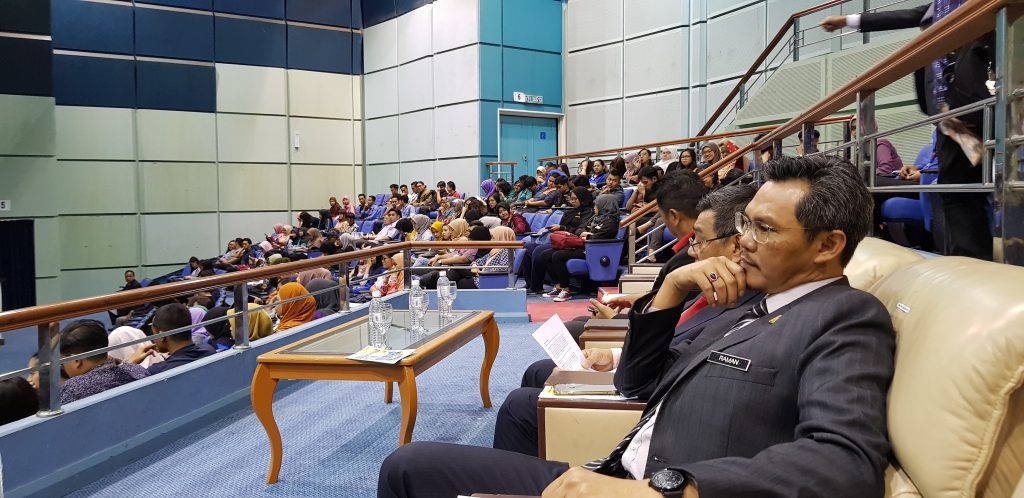
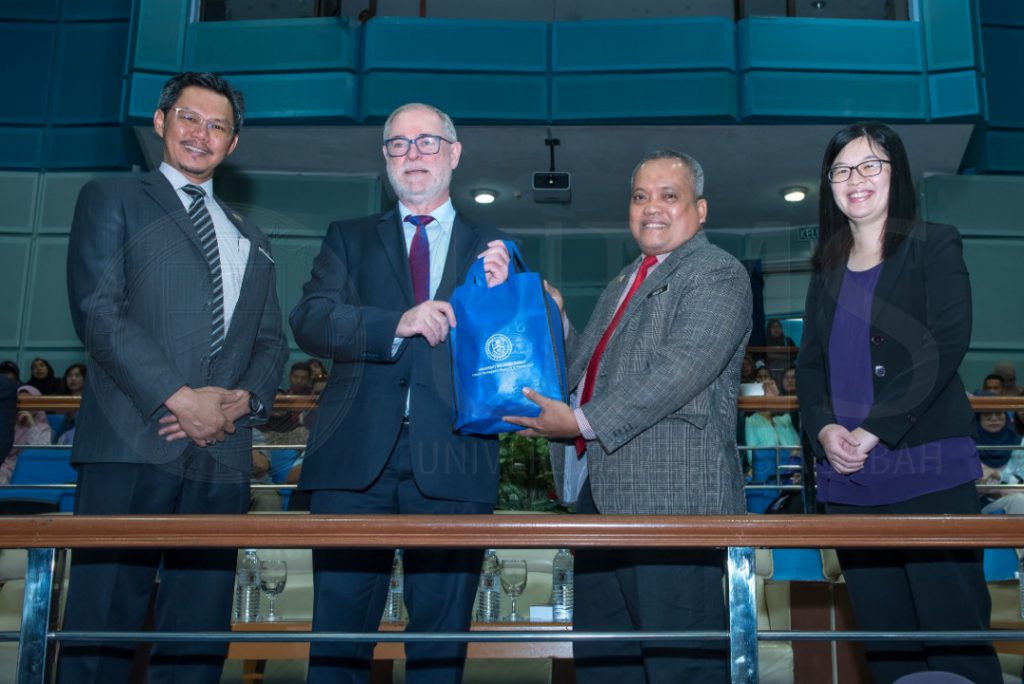
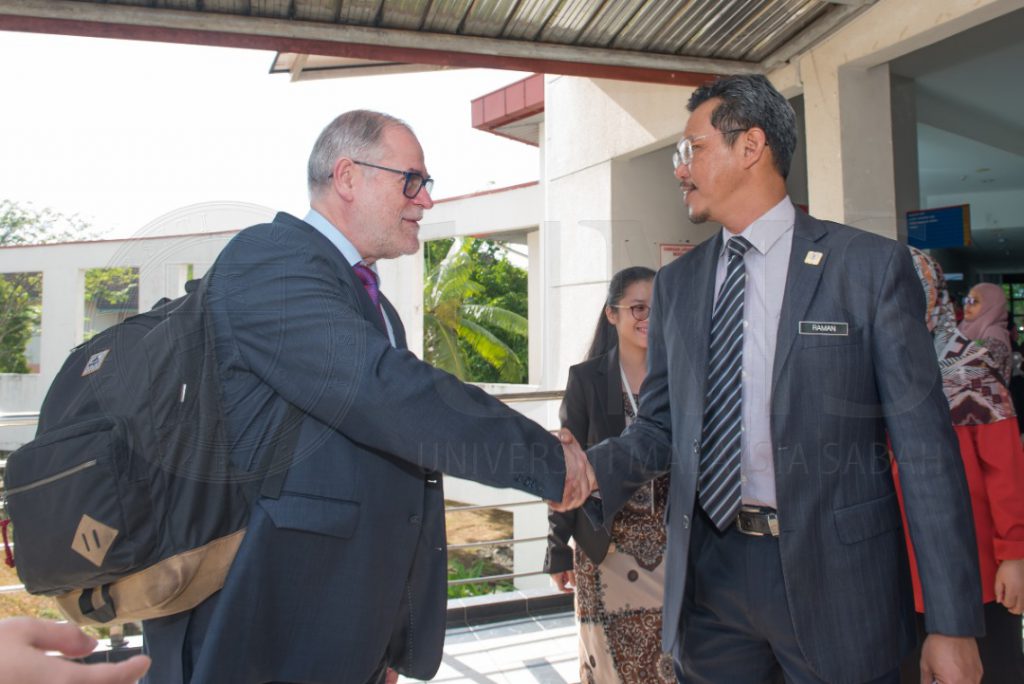
March 11 -12, 2019. Kota Kinabalu, Sabah, Island of Borneo, Malaysia. GLO President Klaus F. Zimmermann was visiting the Universiti Malaysia Sabah (UMS) and the Faculty of Business, Economics and Accountancy to celebrate its 25th anniversary. On March 12, he provided the public University Silver Jubilee Lecture on “Global Labor Economics: Challenges and Benefits” and gave a public Seminar on “Publishing in Good Journals”. He was welcomed by a committee consisting of Dean & Associate Prof. Raman Noordin, GLO Fellow Dr. Beatrice Lim and GLO Affiliate & Lecturer Dr. Borhan Abdullah. Beatrice Lim is also a Senior Lecturer and Head of the Human Resource Economics Program of the Faculty. Zimmermann also used the possibility to discuss research and strategic university issues with key officials of UMS and the faculty.

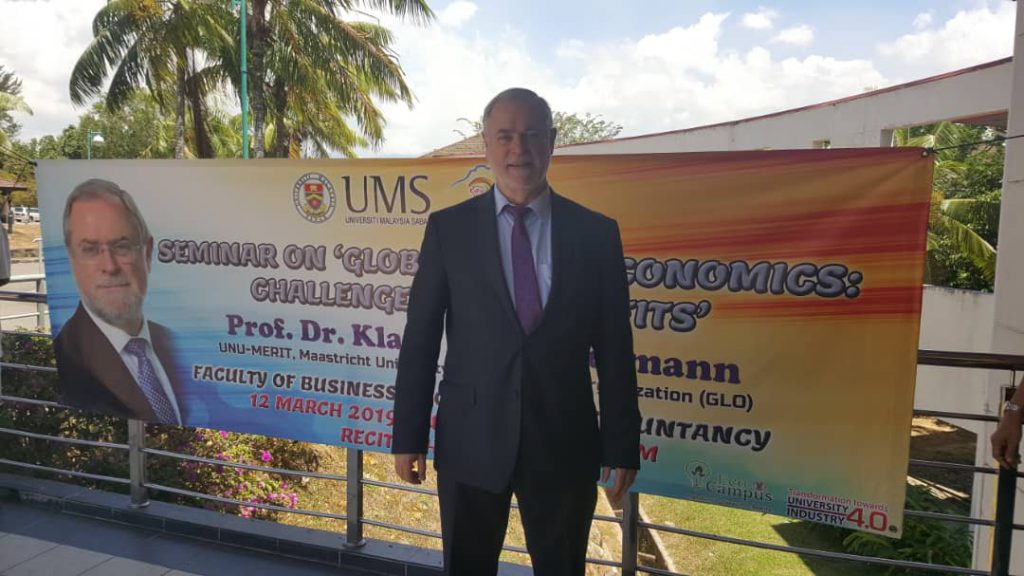
Event banner from the street

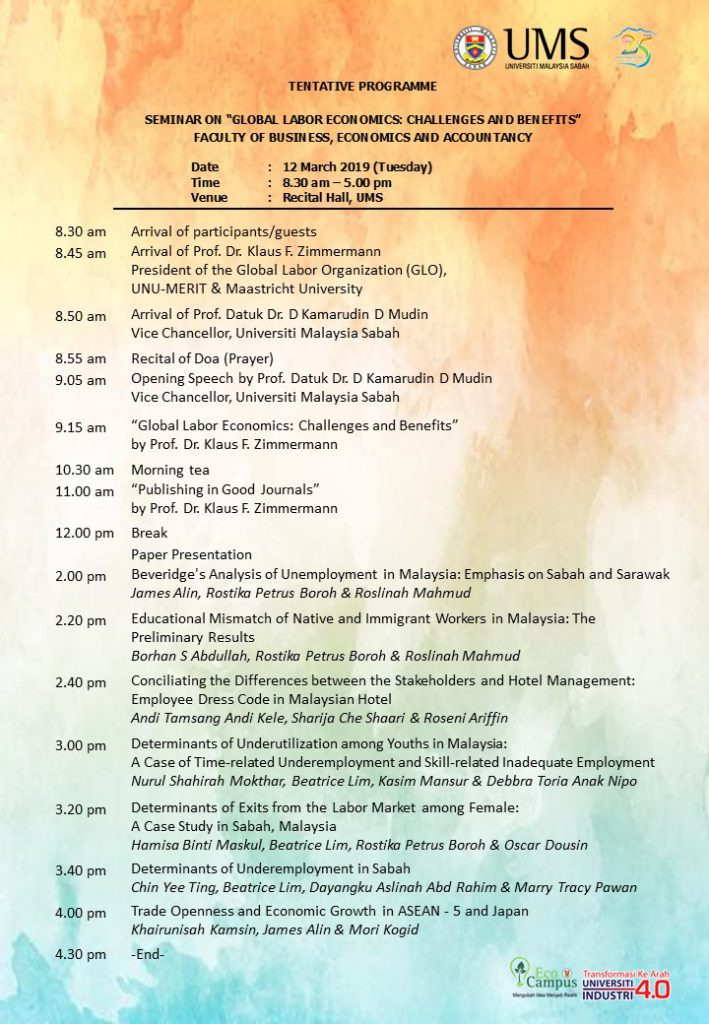
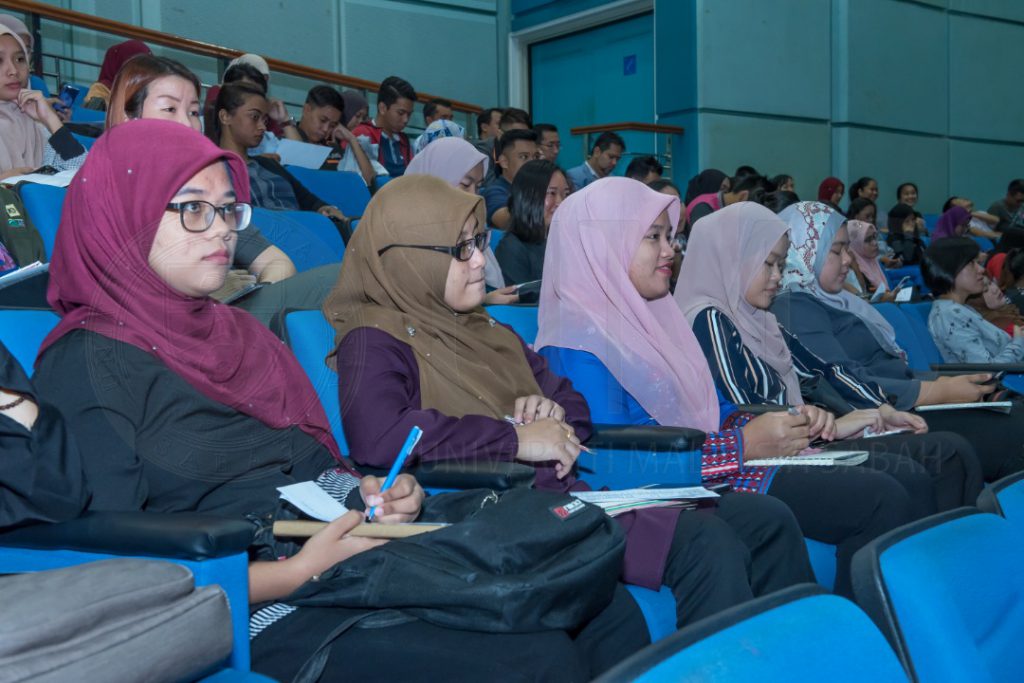
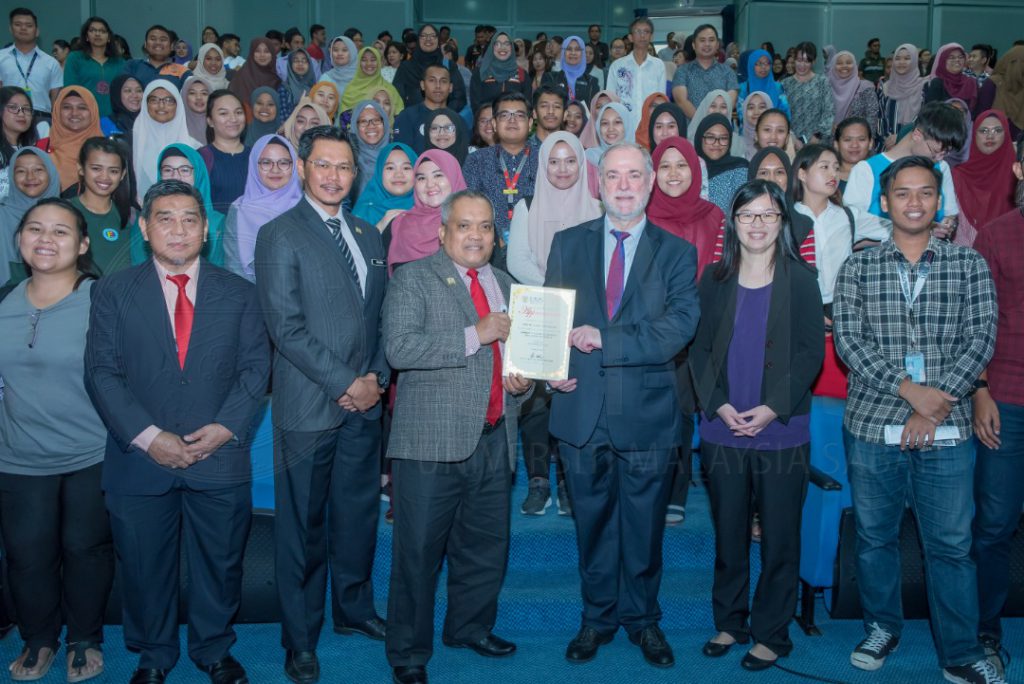
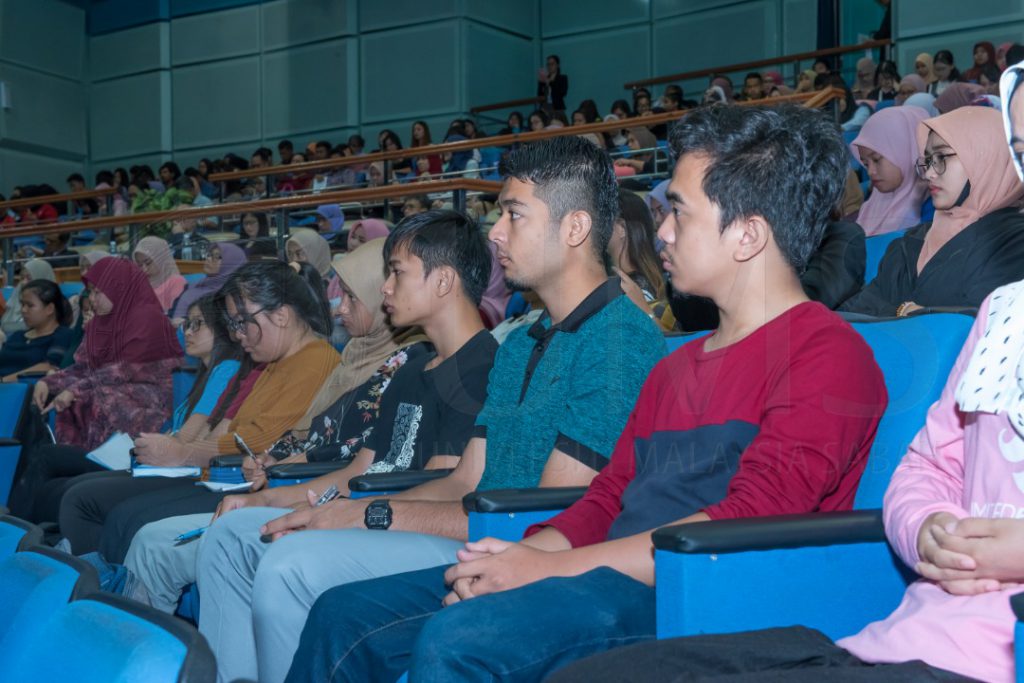
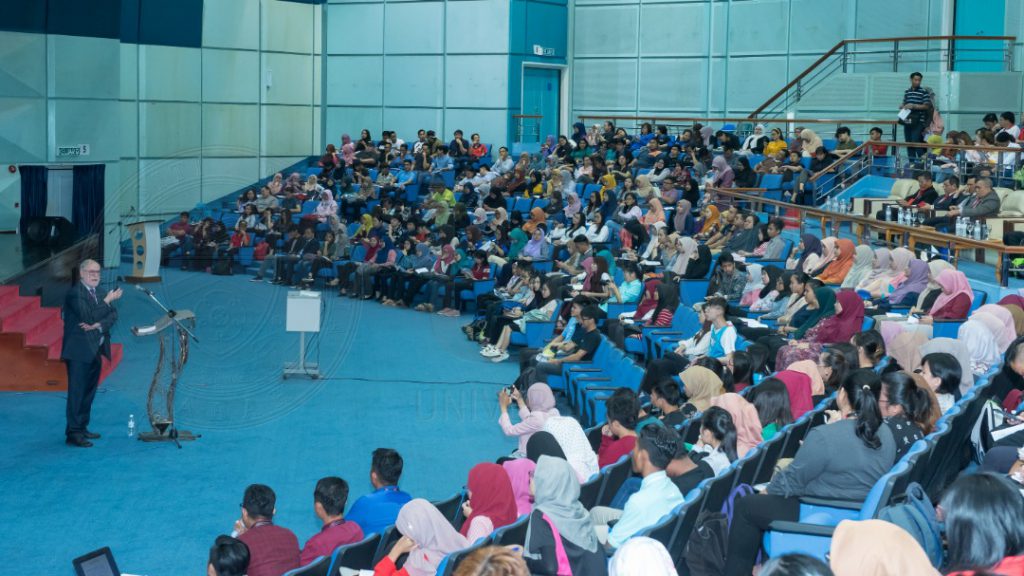
About 400 people attended the festive ceremony around the Silver Jubilee Lecture and around 40 stayed to learn and discuss about the art of publishing in good academic journals. The two events were part of a day-long seminar (see below) of the Faculty of Business, Economics and Accountancy on “Global Labor Economics: Challenges and Benefits” with a series of paper presentations of local scholars in the afternoon.

The event was opened and chaired by Professor Dr. Rasid Mail, Deputy Vice Chancelor (Academic & International), and the introductory speech was delivered by Professor Datuk Dr. Kasim Mansur. The session on publishing was chaired by Senior Lecturer Dr. James Eng. A large number of academic staff, including those of other faculties of the university were attending the event and the discussions in the break.

THE PROGRAM

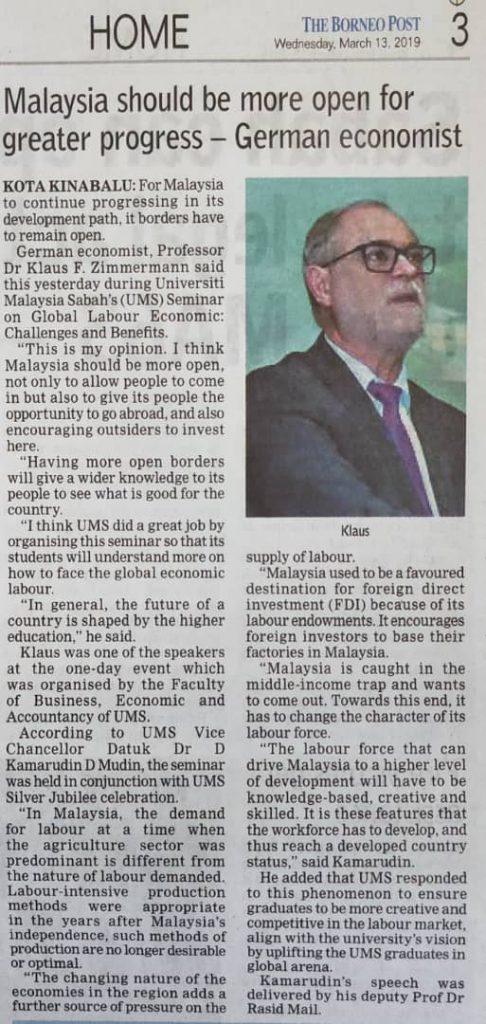
BROAD MEDIA COVERAGE


Welcome by Prof. Dr. Rasid Mail, Deputy Vice Chancelor (Academic & International)
Internal discussion with top faculty and university official
About 400 registered participants.

Dean Noordin, Zimmermann, Deputy Vice Chancellor Mail & Beatrice Lim

Ready to travel: With Dean & Associate Prof. Raman Noordin

Ends;

EBES & GLO President Klaus F. Zimmermann met EBES activists in Malysia to discuss EBES business issues

Klaus F. Zimmermann (UNU-MERIT, Bonn University and Maastricht University) is the President of the Global Labor Organization (GLO) and the President of the Eurasia Business and Economics Society (EBES). EBES and GLO are academic partner organizations with a number of joint activities.

Zimmermann in his role as EBES President is the recent successor of Jonathan A. Batten, currently a distinguished Professor of University Utara Malaysia, who was serving in this function for many years. Batten is also a GLO Fellow.

Noor Azina Ismail, a Professor of Applied Statistics of the University of Malaya, is the local contact for the 30th EBES congress, which will take place on January 8-10, 2020 at the University of Malaya, Faculty of Economics and Administration.

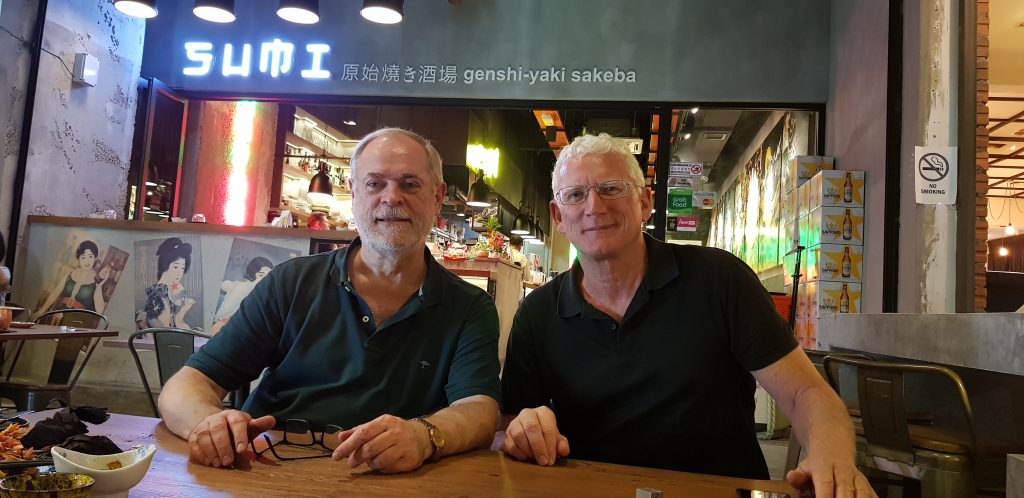
Zimmermann used his visit at UM to meet with Jonathan A. Batten for dinner and with Noor Azina Ismail for lunch to discuss EBES business issues.

Noor Azina Ismail & Klaus F. Zimmermann after lunch.
Klaus F. Zimmermann & Jonathan A. Batten after dinner.

Ends;

Call for papers: Urban & Territorial Themes (NESPUTT 2019) 21-22 of November 2019 in Milan/Italy

Deadline for the submission of abstracts is 30 June 2019.

New Economic & Statistical Perspectives on Urban & Territorial Themes (NESPUTT 2019)

The Center for Interdisciplinary Studies in Economics, Psychology and Social Sciences (CISEPS) and the Department of Economics, Management and Statistics (DEMS) at the University of Milan-Bicocca in collaboration with the Regional Economic Modelling Team (REMO) of the European Commission, Joint Research Centre (JRC) are organizing an international workshop entitled New Economic & Statistical Perspectives on Urban and Territorial Themes (NESPUTT), which will take place in Milan on the 21st and 22nd of November 2019.

The workshop aims at fostering an interdisciplinary debate involving economists, statisticians, modellers and other social scientists towards a better understanding of contemporary regions and cities, viewed as complex socio-economic systems. The NESPUTT Workshop encourages contributions about new theoretical/methodological approaches and applied research from regional economics, behavioral economics, environmental economics, experimental economics, statistics and other quantitative disciplines.

The following list illustrates, but does not exhaust, possible topics applied to regional and urban themes:

  • Behavioral economics
  • Digital transformation
  • Environmental economics
  • Experimental economics
  • Inequality
  • Innovation and competitiveness
  • Migration
  • Nudging
  • Regional divide
  • Regional economic adjustment and development
  • Small areas
  • Social exclusion
  • Social mobility
  • Spatial modelling/statistics/econometric

Submissions of papers based on the application of behavioral, experimental and computational economics approaches to urban studies are also welcome. Special sessions devoted to particularly innovative approaches may be organized.

Participation of interested researchers and policy makers from all countries is welcome.

Proceedings: The NESPUTT2019 workshop will publish an electronic “Papers and Proceedings” edition with ISBN highlighting selected short papers (maximum 4 pages) from the meeting. You must indicate that your paper is to be included in the proceedings.

Location of the conference: University of Milan-Bicocca, Piazza dell’Ateneo Nuovo 1, Milan.

Scientific Committee: Riccardo Borgoni (UnimiB), Andrea Caragliu (PoliMi), Andrea Conte (European Commission JRC), André De Palma (ENS Paris Saclays), Giacomo Degli Antoni (University of Parma), Marco Faillo (University of Trento), Patrizio Lecca (European Commission, JRC), Alessandra Michelangeli (UnimiB), Nathalie Picard (University of Cergy-Pontoise).

Organizing Committee: Riccardo Borgoni (UnimiB), Antonella Carcagnì (UnimiB); Andrea Gilardi (UnimiB), Alessandra Michelangeli (UnimiB).

The link to the abstract submission site is https://easychair.org/conferences/?conf=nesputt2019

Important dates:

  • 30 June 2019 – Deadline for abstract submission.
  • 20 July 2019 – Acceptance notification.
  • 20 September 2019 – Deadline for early registration.
  • 30 October 2019 – Standard registration deadline.
  • 21-22 November 2019 – Workshop at University of Milan-Bicocca.

Further information will be available from April 2019 on the workshop website http://www.nesputt2019.unimib.it/

Should you have any questions, please send an email to nesputt2019@unimib.it

Ends;

Call for Papers Kigali June 2019: 4th International Conference of Eastern Africa Business and Economic Watch (4th EABEW-2019)

Theme: “Inclusive Growth and Sustainable Socio-Economic Transformation”  
June 12-14, 2019, College of Business and Economics, University of Rwanda, Kigali  
 

  • NOTE: Deadline for paper submissions is APRIL 30!
  • June 12-14: Kigali, Rwanda. College of Business and Economics, University of Rwanda. 4th EABEW Conference (International Conference of Eastern Africa Business and Economic Watch) on “Inclusive Growth and Sustainable Socio-Economic Transformation” with GLO support. GLO Fellows Manfred Fischedick, Almas Heshmati and GLO President Klaus F. Zimmermann are among the invited speakers. Call for Papers with deadline April 30, 2019. Almas Heshmati is the academic Lead of the GLO Research Cluster on “Labor Markets in Africa”. GLO Fellow Rama B. Rao is the Chair of the Organizing Committee of the conference.
  • Call for Papers. Original evidence based theoretical, methodological, empirical research, policy or practice oriented research papers on the theme are invited from researchers, academicians, industry practitioners for presentation at the conference. Submitted papers should be in the areas of economics and business management and any other interdisciplinary fields that contribute to socio-economic transformation that may fall in any of the tracks defined in the call.
  • For other GLO Events see the GLO event calendar.

Ends;

Forthcoming Deadlines of GLO – supported events: Coventry/UK: February 28 and Brasov/Romania: March 1.

Deadlines of Forthcoming Scientific Conferences supported by the GLO:

Ends;

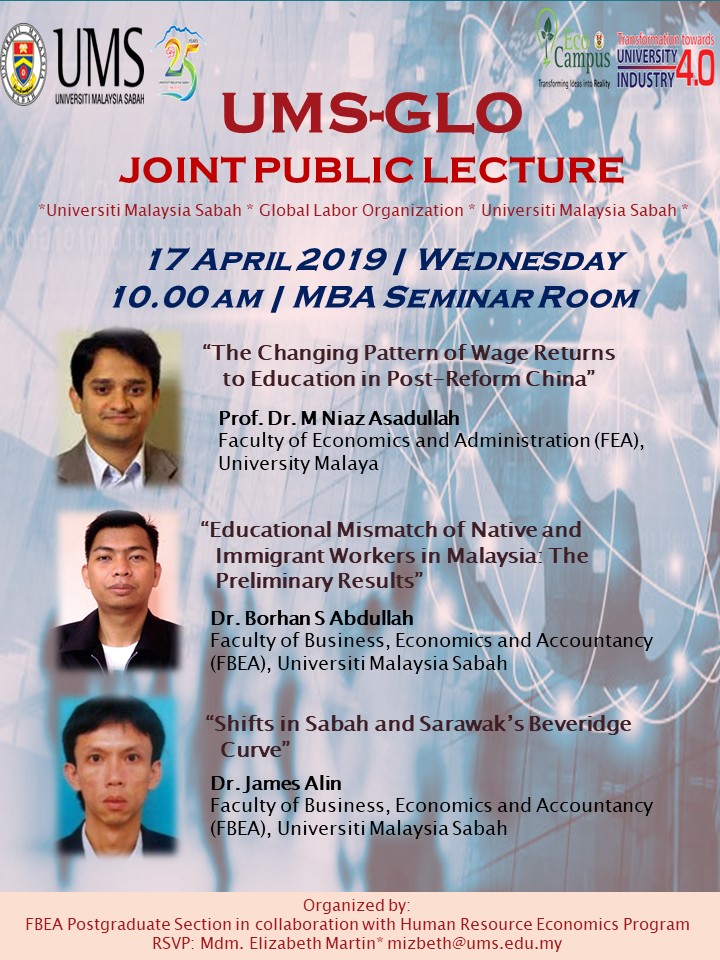
8 February 2019. GLO-MSUIIT Public Lecture by M Niaz Asadullah on “Education 4.0: Technology, Teachers and Learners” on the Philippines.

On 8 February 2019, M Niaz Asadullah, Professor at the University of Malaya, Fellow of the Global Labor Organization (GLO) and GLO Lead for South-East Asia, gives the

GLO-MSUIIT Public Lecture on “Education 4.0: Technology, Teachers and Learners”.

The event takes place on 8.00 am to 12:00 pm at the Amphitheatre, College of Education, Mindanao State University, Iligan Institute of Technology (MSUIIT), Philippines.

Abstract

This lecture provides an overview of the challenges that developing country education systems face to prepare youths for Industry 4.0. I start with a critical overview of the global “learning crisis” and summarize the evidence on automation risks. I then discuss how teachers are responding to these two challenges by adopting new technologies to re-design the learning space in order to impart 21st Century skills and future-proof the labor force. The discussion also highlights some of the factors that limit the potential positive impact of technology on learners in developing countries. I conclude by discussing the importance of system-wide reforms and early interventions to deliver New Economy skills and achieve the SDG 4 target of quality education for all.

EVENT FLYER FOR MORE INFORMATION


M Niaz Asadullah

Ends;

Announcement: 28th EBES Conference in Coventry (UK) in May 29-31, 2019

28th EBES Conference. May 29-31, 2019 in Coventry, United Kingdom
Hosted by the Centre for Financial and Corporate Integrity (CFCI), Coventry University

Interested researchers are cordially invited to submit abstracts or papers for presentation consideration at the 28th EBES Conference in Coventry. It will take place on May 29th, 30th, and 31st, 2019 at Coventry University in Coventry, United Kingdom. The conference will be organized with the support of the Istanbul Economic Research Association and will be hosted by the Centre for Financial and Corporate Integrity (CFCI) in collaboration with the Coventry Business School Trading Floor.

To support the event, the Global Labor Organization (GLO) will organize three invited paper sessions. If you are a GLO Fellow or Affiliate and interested to be be included, please submit the title of a potential contribution to office@glabor.org until February 20, 2019.

Invited Speakers are David B. Audretsch, Marco Vivarelli and  Klaus F. Zimmermann.

David B. Audretsch is a Distinguished Professor at Indiana University, where he also serves as Director of the Institute for Development Strategies. He is an Honorary Professor of Industrial Economics and Entrepreneurship at the WHU-Otto Beisheim School of Management in Germany and a Research Fellow of the CEPR in London. He has also worked as a consultant to the UN, World Bank, OECD, EU Commission, and U.S. Federal Trade Commission. Prof. Audretsch’s research has focused on the links between entrepreneurship, government policy, innovation, economic development, and global competitiveness. He is co-author of The Seven Secrets of Germany (Oxford University Press) along with several other books. He is co-founder and Editor-in-Chief of Small Business Economics: An Entrepreneurship Journal and many other journals. He was awarded the Global Award for Entrepreneurship Research by the Swedish Entrepreneurship Forum (Entreprenörskapsforum). He has received honorary doctorate degrees from the University of Augsburg in Germany and Jonköping University in Sweden. Prof. Audretsch was also awarded the Schumpeter Prize from the University of Wuppertal in Germany. He has served as an advisory board member to a number of international research and policy institutes, including Chair of the Deutsches Institut für Wirtschaftsforschung Berlin(German Institute for Economic Analysis Berlin), Chair of the Stifterverband für die Deutsche Wissenschaft (Foundation for the Promotion of German Science) in Berlin, Germany, and the Center for European Economic Research (Zentrum für Europäische Wirtschaftsforschung) in Mannheim, Germany etc. He has authored numerous papers which were published in prestigious journals such as American Economic Review, European Economic Review, Review of Economics and Statistics, and Journal of Management and his researches have been cited more than 77,000 (Google Scholar). He holds a PhD in economics from University of Wisconsin, Madison in U.S.A.

Marco Vivarelli, Ph.D. in Economics and Ph.D. in Science and Technology Policy, is full professor at the Catholic University of Milano, where he is also Director of the Institute of Economic Policy. He is Professorial Fellow at UNU-MERIT, Maastricht; Research Fellow at IZA, Bonn; Fellow of the Global Labor Organization (GLO). He is member of the Scientific Executive Board of the Eurasia Business and Economics Society (EBES, Istanbul); member of the Scientific Advisory Board of the Austrian Institute of Economic Research (WIFO, Vienna) and has been scientific consultant for the International Labour Office (ILO), World Bank (WB), the Inter-American Development Bank (IDB), the United Nations Industrial Development Organization (UNIDO) and the European Commission. He is Editor-in-Chief of the Eurasian Business Review, Editor of Small Business Economics, Associate Editor of Industrial and Corporate Change, Associate Editor of Economics E-Journal, member of the Editorial Board of Sustainability and he has served as referee for more than 70 international journals. He is author/editor of various books and his papers have been published in journals such as Cambridge Journal of Economics,  Canadian Journal of Economics, Economics Letters, Industrial and Corporate Change, International Journal of Industrial Organization,  Journal of Economics, Journal of Evolutionary Economics, Journal of Productivity Analysis, Labour Economics, Oxford Bulletin of Economics and Statistics, Regional Studies, Research Policy, Small Business Economics, Southern Economic Journal, World Bank Research Observer, World Development. His current research interests include the relationship between innovation, employment and skills; the labor market and income distribution impacts of globalization; the entry and post-entry performance of newborn firms.

Abstract/Paper Submission: Authors are invited to submit their abstracts or papers no later than February 28, 2018. For submission, please visit the EBES website at https://www.ebesweb.org/Conferences/28th-EBES-Conference-Coventry/Abstract-Submission.aspx. No submission fee is required. General inquiries regarding the call for papers should be directed to ebes@ebesweb.org.

Publication Opportunities: Qualified papers can be published (after refereeing) in the EBES journals (no submission and publication fees). EBES journals (Eurasian Business Review and Eurasian Economic Review) are published by Springer Nature and indexed by SCOPUS, EBSCO EconLit with Full Text, Google Scholar, ABI/INFORM, ABS Academic Journal Quality Guide, CNKI, EBSCO Business Source, EBSCO Discovery Service, EBSCO TOC Premier, Emerging Sources Citation Index (Clarivate Analytics), International Bibliography of the Social Sciences (IBSS), OCLC, ProQuest Business Premium Collection, ProQuest Central, ProQuest Turkey Database, Research Papers in Economics (RePEc), Summon by ProQuest, Cabell’s Directory, and Ulrich’s Periodicals Directory.

Furthermore, qualified papers after review will be recommended to be considered for publication in regular issues of the Journal of Corporate Finance after a review process. However, presentation at the EBES Conference does not guarantee publication in the Journal of Corporate Finance.

Also all accepted abstracts will be published electronically in the Conference Program and the Abstract Book (with an ISBN number). It will be distributed to all conference participants at the conference via USB. Although submitting full papers are not required, all the submitted full papers will also be included in the conference proceedings in the USB. After the conference, participants will also have the opportunity to send their paper to be published in the Springer’s series Eurasian Studies in Business and Economics (no submission and publication fees).

This will also be sent to Clarivate Analytics in order to be reviewed for coverage in the Conference Proceedings Citation Index – Social Science & Humanities (CPCI-SSH). Please note that the 10th, 11th, 12th, 13th, 14th, 15th, 16th, 17th and 19th EBES Conference Proceedings were accepted for inclusion in the Conference Proceedings Citation Index – Social Science & Humanities (CPCI-SSH). 18th, 20th and subsequent conference proceedings are in progress.

Important Dates
Abstract Submission Deadline: February 28, 2019
Decision Communicated by: March 8, 2019*
Registration Deadline: April 19, 2019
Announcement of the Program: April 30, 2019
Paper Submission Deadline (Optional): April 19, 2019**
Paper Submission for the EBES journals: July 31, 2019
* The decision regarding the acceptance/rejection of each abstract/paper will be communicated with the corresponding author within a week of submission.
** Full paper submission is optional. If you want to be considered for the Best Paper Award or your full paper to be included in the conference proceedings in the USB, after submitting your abstract before February 28, 2018, you must also submit your completed (full) paper by April 19, 2019.

Contact: Ugur Can (ebes@ebesweb.org); Dr. Ender Demir (demir@ebesweb.org)

Ends;

Inclusive and sustainable economic growth. Call for papers for a conference in Brasov/Romania

The Faculty of Economic Sciences and Business Administration within Transilvania University of Brasov, in collaboration with the Institute for Economic Forecasting of the Romanian Academy cordially invites you to submit research papers for presentation and discussions at the third edition of the International Conference „Inclusive and sustainable economic growth. Challenges, measures and solutions” (ISEG 2019). The 2019 event is supported by the Global Labor Organization (GLO).

The conference will be hosted by Transilvania University of Brasov and will be held 31 May-1 June 2019 in the Transilvania University Hall, Street Iuliu Maniu no. 47A, Brasov.

The keynote speakers of the 2019 ISEG conference are:

Klaus F. Zimmermann, President of the Global Labor Organization (GLO); Co-Director of POP at UNU-MERIT; Full Professor of Economics at Bonn University; Honorary Professor, Maastricht University, Free University of Berlin and Renmin University of China, Beijing.

Filomena Maggino, Full Professor at Sapienza University of Rome; Editor-in-Chief of Social Indicators Research (Springer); Counsellor – Prime Minister Office – Italian Government (Conte’s cabinet); Editor-in-Chief of Encyclopedia of Quality of Life and Well-being Research; Past-President of the International Society for Quality Of Life Studies; President of the Italian Association for Quality of Life Studies.

The meeting will be an excellent opportunity for academics, researchers and doctoral students to present new research results and to discuss challenging issues on the topics of conference. The aim of this new series of conferences is to gather research interests and to stimulate collaborative research around actual macro- and microeconomic topics (as suggested below).

Topics:

We are inviting submissions of both empirical and theoretical work that fits into the conference topics. Being a multi- and interdisciplinary conference, we encourage submission of papers in the following broad research areas: economics, finance, marketing and management. Examples of suitable topics:

  • Economic growth and convergence perspectives in the European Union: Measurement methods and new empirical evidence
  • Public and Private Finance Sustainability in the Context of Current Economic Challenges
  • Issues and challenges in the Romanian higher education
  • Challenges and prospects of economic growth in South Eastern Europe
  • New inequalities, multidimensionality and growth pro-poorness
  • Business for sustainable development
  • New approaches in marketing and management

Submission

Deadline for abstract submission is 1st of March, 2019, and for full paper submission is May 15th, 2019. Authors of accepted abstracts will be informed by the 1st of April, 2019.

Please submit your abstracts and full papers through the conference website!

Publication opportunities

All papers must be written and presented in English. A blind review process apply to all submissions. During the conference, one discussant will be assigned to each paper.

Accepted papers will be included in the conference proceedings volume, which will be sent for being indexed by ISI Proceedings volume (CPCI – Conference Proceedings Citation Index) under Clarivate Analytics (or former Thomson Reuters).

Selected papers from the conference may be subsequently published in one of the following journals, subject to the agreement and decision of editors:

Romanian Journal of Economic Forecasting

Journal of Smart Economic Growth

Bulletin of the Transilvania University of Brasov

Registration

The conference fee is 100 euro for each paper. The conference fee must be paid until the 26th of April by bank transfer, according to the indications which will be posted on the conference website. The fee covers the book of abstracts, the attendance certificate, as well as the access to all conference sessions, coffee breaks, lunch and festive dinner.

Best paper award

The “Best Paper Award” is granted to the best paper in the conference. Junior researchers are particularly encouraged to submit papers.

Updated information about the conference program, the organizing and scientific committees, and other related information will be posted on the conference website: http://unitbv.ro/iseg/

For any information related to the conference, please contact us: monica.szeles@unitbv.ro

Research on Africa shows: A rise in the disease risk increases fertility: Interview with Professor Yoo-Mi Chin

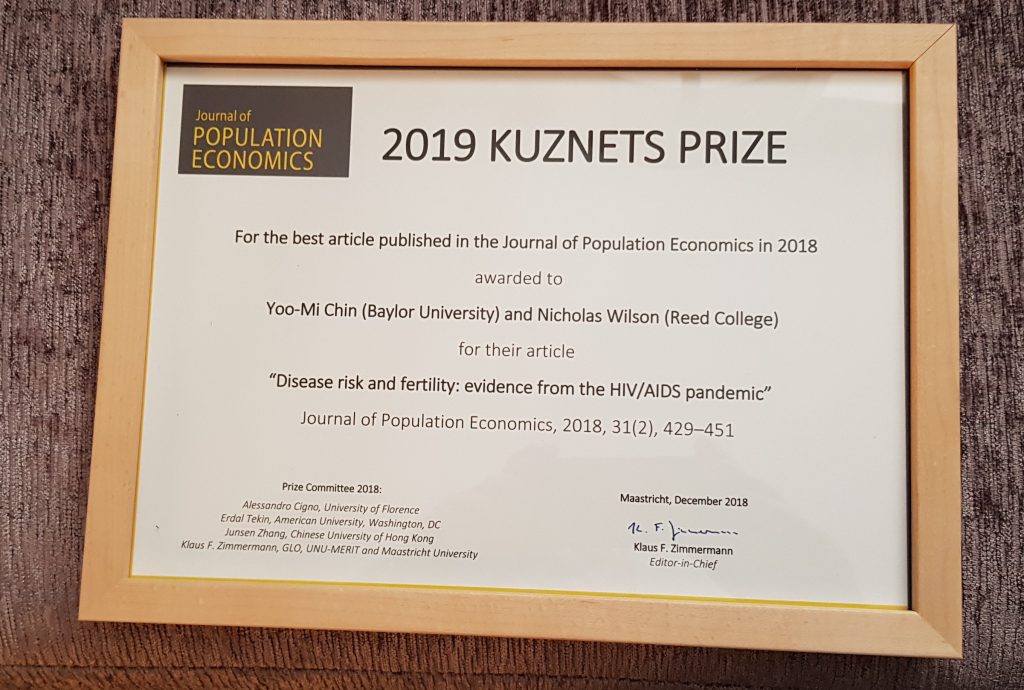
The Kuznets Prize Paper of the Journal of Population Economics was announced and given at the #ASSA2019 meeting in Atlanta. The Award Study shows that a rise in the disease risk increases the total fertility rate and the number of surviving children, a finding which has important policy implications. In every year, the Prize is selected by the Editors of the Journal among the papers published in the previous year. List of Kuznets Prize winners.

The paper is freely downloadable for a short period.

Yoo-Mi Chin & Nicholas Wilson, Disease risk and fertility: evidence from the HIV/AIDS pandemic, Journal of Population Economics, 31 (2018), 429–451.

Yoo-Mi Chin

Interview with Author Yoo-Mi Chin, Professor of Economics at Baylor University

GLO: Is a rise of fertility after a disaster not the expected proper Malthusian response?

Yoo-Mi Chin: It is ambiguous whether we can clearly expect a Malthusian response to the HIV/AIDS pandemic. It is true that population might recover from a positive check like diseases by increasing fertility. But after all, HIV is a sexually transmitted disease, and proliferation of HIV may lower fertility by inducing the use of contraception for safe sex. Further, HIV takes a heavy toll on working age adults. Like we see in the case of Black Death, as large-scale mortality causes labor shortages and subsequent higher wages, more women participate in labor market, which would lead to lower fertility. On the other hand, it is also possible that higher wages generate an income effect on the number of children. A lower life expectancy may increase fertility through lower returns to education and the child quantity-quality trade-off. Given such theoretical ambiguity, we find that an empirical examination of the issue is warranted.

GLO: How is fertility affected by a rise in the disease risk?

Yoo-Mi Chin: We find that a doubling of HIV prevalence increased total fertility rate by approximately 1.37 births and increased surviving children by approximately 0.38 children, using distance to the origin of the pandemic as an instrument for HIV prevalence. Although HIV/AIDS likely has increased child mortality, our findings suggest that the increase in births exceeded the increase in child mortality.

GLO: What are the policy implications?

Yoo-Mi Chin: The rise of the HIV/AIDS pandemic appears to have increased total fertility and the number of surviving children. Although the net effect of the pandemic on GDP per capita needs to be more thoroughly examined in future research, the increases in total fertility and the number of surviving children coupled with high mortality of working age adults could potentially lead to increases in dependency ratios and decreases in GDP per capita. Our results suggest that positive externalities generated by HIV prevention efforts might be larger than previously thought in that they contribute not only to reductions in HIV prevalence but also to reductions in total fertility, which could potentially enhance future welfare. Therefore, more resources for HIV prevention efforts are warranted.

The Story

Yoo-Mi Chin & Nicholas Wilson, Disease risk and fertility: evidence from the HIV/AIDS pandemic, Journal of Population Economics, 31 (2018), 429–451.

The paper is freely downloadable for a short period.

Abstract: A fundamental question about human behavior is whether fertility responds to disease risk. The standard economic theory of household fertility decision-making generates ambiguous predictions, and the response has large implications for human welfare. We examine the fertility response to the HIV/AIDS pandemic using national household survey data from 14 sub-Saharan African countries. Instrumental variable (IV) estimates using distance to the origin of the pandemic suggest that HIV/AIDS has increased the total fertility rate (TFR) and the number of surviving children. These results rekindle the debate about the fertility response to disease risk, particularly the HIV/AIDS pandemic, and highlight the question of whether the HIV/AIDS pandemic has reduced GDP per capita.

The Author

Yoo-Mi Chin is an Assistant Professor of Economics at Baylor University with a Ph.D. from Brown University. She is also a Fellow of the Global Labor Organization (GLO). Most of her research focuses on the analysis of domestic violence. She has published her previous work in the Journal of Applied Statistics, the Journal of Health Economics, and World Development, among other outlets. Prior to joining Baylor University, she was an Assistant Professor at the Missouri University of Science & Technology.

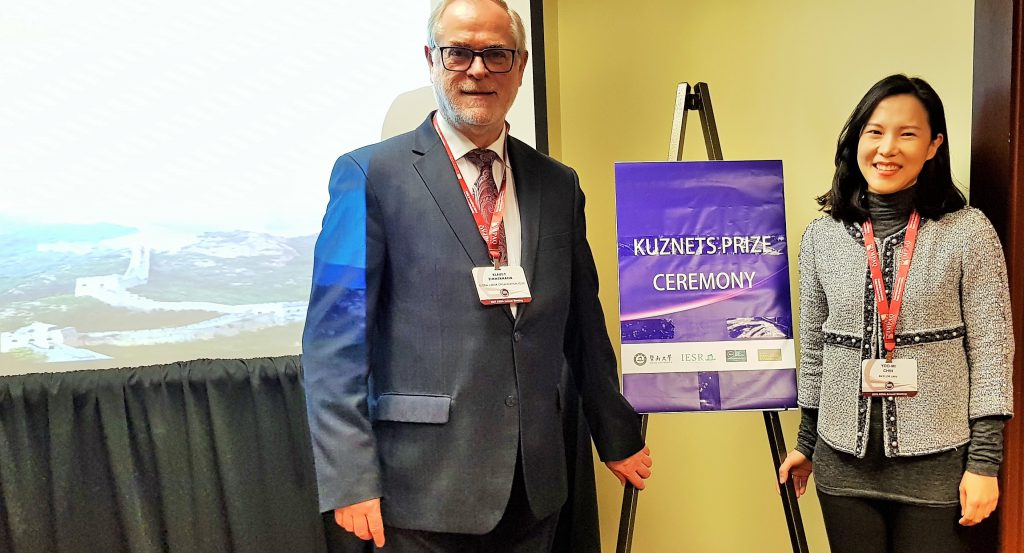
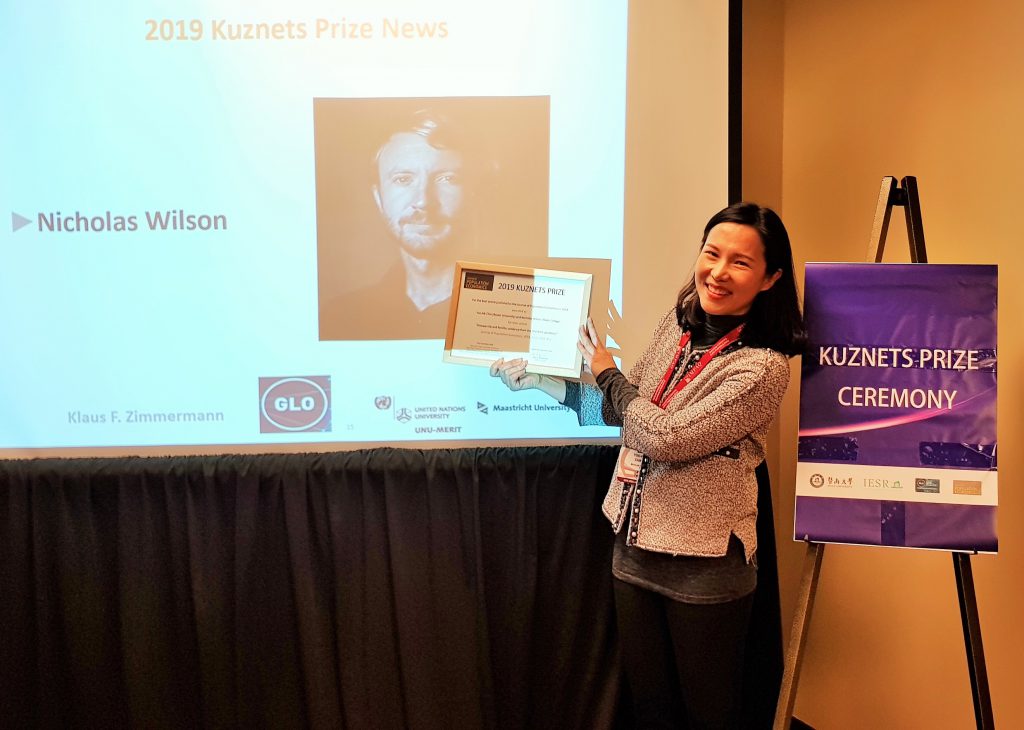
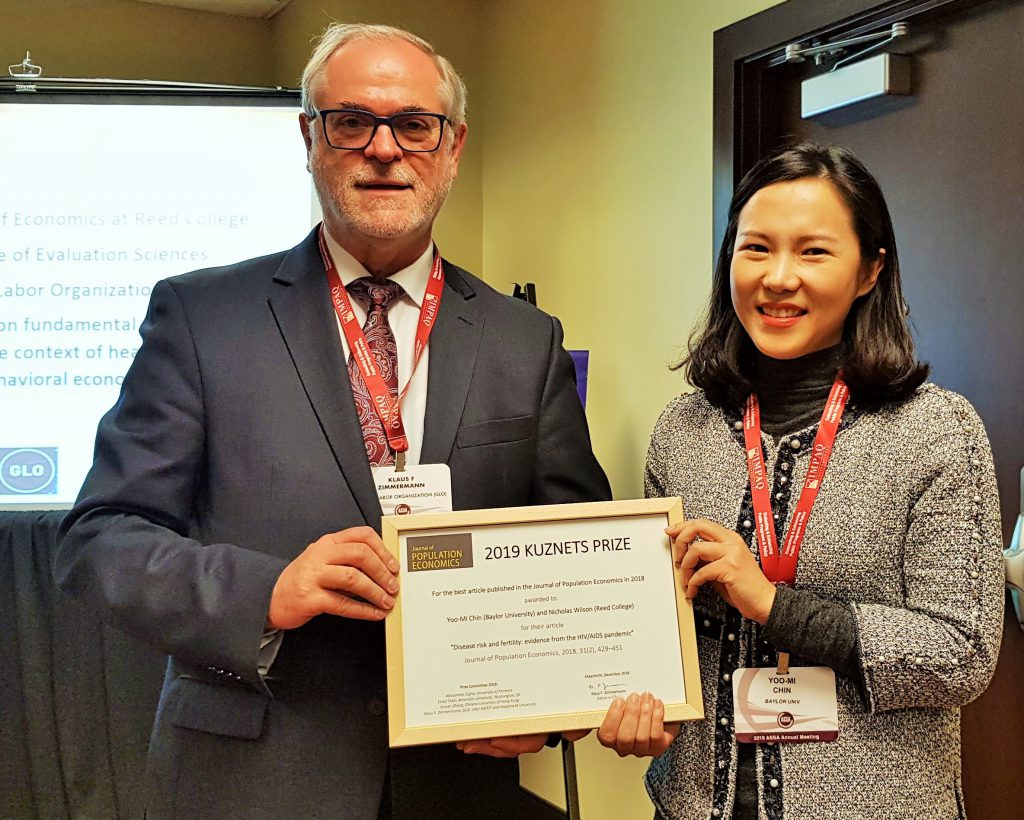
YOO-Mi Chin and Editor-in-Chief Klaus F. Zimmermann during the award ceremony in Atlanta

2019 Journal of Population Economics: Issues

Issue 2019/1: Is already out! Please see Table of Content: Volume 32, Issue 1, January 2019

The Lead Article is about:
Migration as an adjustment mechanism in the crisis? A comparison of Europe and the United States 2006–2016

Issue 2019/2: Will be out in a few weeks. See forthcoming announcements.

Ends;

Editorial Staff News for the Journal of Population Economics: Shuaizhang Feng, Kompal Sinha & Madeline Zavodny join the team. Issue 1/2019 out.

There are some changes in the editorial staff of the Journal of Population Economics. As of January 2019, Madeline Zavodny moved from the position of Associate Editor to Managing Editor joining Michaella Vanore in this role. Last summer, Oded Galor had changed roles from Associate Editor to Editor. The two free positions of Associate Editors are now filled by Shuaizhang Feng of Jinan University and Kompal Sinha of Macquarie University. All those are also GLO Fellows.

Madeline Zavodny is a Professor of Economics at the University of North Florida. Her research concentrates on economic issues related to immigration and the economic and demographic effects of immigration policies. She is a member of the editorial board of the International Migration Review and has served as co-editor of the Southern Economic Journal and a board member of the American Economic Association’s Committee on the Status of Women in the Economics Profession. She received a Ph.D. in economics from the Massachusetts Institute of Technology and a B.A. in economics from Claremont McKenna College. She has frequently published in journals like the American Economic Review, Demography, Journal of Labor Economics, Health Economics, Journal of Health Economics, International Migration Review, Journal of Population Economics and Journal of Development Economics. See her personal website for further information.

Shuaizhang Feng is a Professor of Economics, and the Dean of the Institute of Economic and Social Research at the Jinan University. He received a Ph.D. in Economics from Cornell University. Before, he was a Professor at the School of Economics, Shanghai University of Finance and Economics. His research interest is focused on labor economics and the Chinese economy, including issues relating to human capital, income inequality, migration and the labor market. He has frequently published in journals like the American Economic Review, Proceedings of the National Academy of Sciences of the United States of America, Review of Economics and Statistics, and Journal of Population Economics

Kompal Sinha is a Senior Lecturer and HDR Director at the Department of Economics of Macquarie University. She has worked before at the Center for Health Economics, Department of Econometrics and Business Statistics and Department of Economics at Monash University. She has received her Ph.D. from the Australian National University. Her research deals with economic effects of consumer behavior, particularly in the area of health economics and development economics and the impacts on the design of economic policy. She has frequently published in journals like Health Economics, Journal of Economic Behavior and Organization, American Journal for Agricultural Economics, Social Science and Medicine, Macroeconomic Dynamics, Review of Income and Wealth and Journal of Biosocial Sciences.

2019 Journal Issues

Issue 2019/1: Is already out! Please see Table of Content: Volume 32, Issue 1, January 2019

The Lead Article is about:
Migration as an adjustment mechanism in the crisis? A comparison of Europe and the United States 2006–2016

Issue 2019/2: Will be out in a few weeks. See forthcoming announcements.

Ends;

Kuznets Prize of the Journal of Population Economics given at the #ASSA2019 Reception of IESR in Atlanta.

The awarded study receiving the Kuznets Prize shows that a rise in the disease risk increases the total fertility rate and the number of surviving children. This has important policy implications.

The Kuznets Prize Paper of the Journal of Population Economics in a particular year is selected by the Editors of the Journal among the papers published in the previous year. Then the winners will be presented in a prize ceremony. This time, the winners remained confidential until January 4, 2019. The prize committee for the 2019 award consisted out of Alessandro Cigno, Erdal Tekin, Junsen Zhang and Klaus F. Zimmermann selecting from the 2018 published articles they were in charge of as acting Editors.

Dean Shuaizhang Feng, Head of the Institute for Economic and Social Research (IESR) of Jinan University, had invited the members of the Global Labor Organizations (GLO) and the Kuznets Prize Ceremony of the Journal of Population Economics as other ASSA 2019 participants to join the reception of the Institute. IESR and GLO are collaborating organizations, and Shuaizhang Feng is a GLO Fellow and Associate Editor of the Journal.

GLO President Zimmermann (UNU-MERIT & Maastricht University) and Editor-in-Chief of the Journal had visited Jinan University and IESR in March 2018 for a longer period and a GLO-IESR workshop. He had also presented the Journal in 2018 to various academic events in Beijing, Xiamen and Hongkong to strengthen the already strong contacts to the Chinese research community. A larger number of economists participated, including many Editorial Board Members of the Journal of Population Economics and Kuznets Prize winners of previous years.

Shuaizhang Feng reported about the activities of IESR and the hiring interviews at the ASSA job market and explained the attractive research climate at the Institute. He also warmly welcomed the affiliates of GLO and the Journal of Population Economics. Klaus F. Zimmermann congratulated Feng for the successful development of IESR and the strong research climate and the attractive working conditions he had observed while visiting the Institute in 2018 and met with the very many strong and ambitious researchers.

Zimmermann also welcomed the 2018 Kuznets Prize Winner, Le Wang (University of Oklahoma), who received the award together with Chunbei Wang (University of Oklahoma) for their article:

Knot yet: Minimum marriage age law, marriage delay, and earnings, Journal of Population Economics (2017), 30(3), pp. 771-804.

Both authors had studied and graduated at Jinan University before they came to the United States. Le Wang expressed his gratitude for receiving the Kuznets Prize and explained how it created visibility for his work.

Then the 2019 Kuznets Prize paper was announced. Studying the HIV/AIDS pandemic using national household survey data from 14 sub-Saharan African countries, it suggests that a rise in the disease risk increases the total fertility rate and the number of surviving children. This has important policy implications.

Yoo-Mi Chin & Nicholas Wilson, Disease risk and fertility: evidence from the HIV/AIDS pandemic, Journal of Population Economics, 31 (2018), 429–451.

Abstract: A fundamental question about human behavior is whether fertility responds to disease risk. The standard economic theory of household fertility decision-making generates ambiguous predictions, and the response has large implications for human welfare. We examine the fertility response to the HIV/AIDS pandemic using national household survey data from 14 sub-Saharan African countries. Instrumental variable (IV) estimates using distance to the origin of the pandemic suggest that HIV/AIDS has increased the total fertility rate (TFR) and the number of surviving children. These results rekindle the debate about the fertility response to disease risk, particularly the HIV/AIDS pandemic, and highlight the question of whether the HIV/AIDS pandemic has reduced GDP per capita.

Yoo-Mi Chin is an Assistant Professor of Economics at Baylor University with a Ph.D. from Brown University. She is also a Fellow of the Global Labor Organization (GLO). Most of her research focuses on the analysis of domestic violence. She has published her previous work in the Journal of Applied Statistics, the Journal of Health Economics, and World Development, among other outlets. Prior to joining Baylor University, she was an Assistant Professor at the Missouri University of Science & Technology.

Nicholas Wilson is a Fellow with the Office of Evaluation Sciences, an Associate Professor of Economics at Reed College and the Chair of the Department of Economics. He is also a Fellow of the Global Labor Organization (GLO). His research focuses on fundamental puzzles about human behavior in the context of health, development, and behavioral economics. Prior to joining Reed College, he was a Visiting Scholar at the University of California, Berkeley and an Assistant Professor of Economics at Williams College. He has published a larger number of papers in journals including the American Economic Review, Demography, Economics & Human Biology, Journal of Development Economics and Journal of Health Economics.

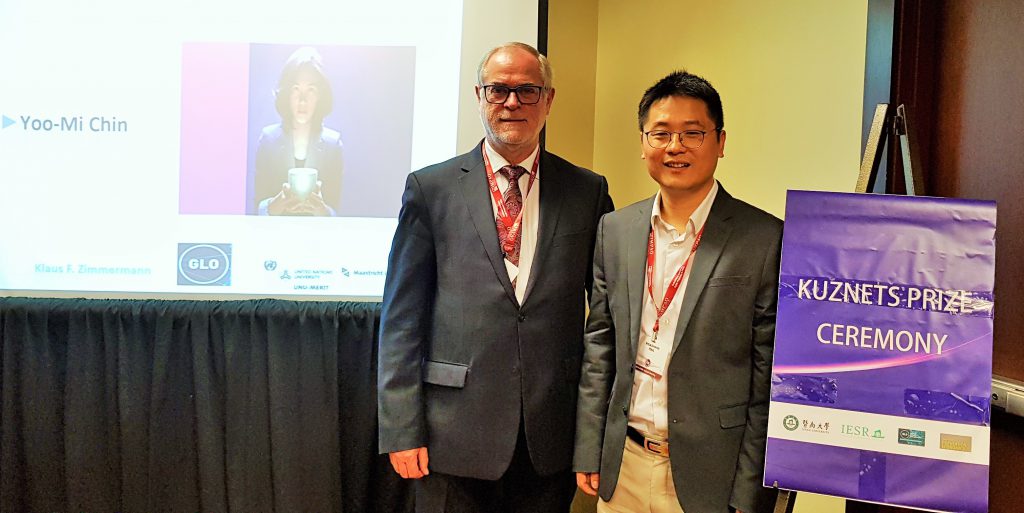
Yoo-Mi Chin was present at the ceremony and happily took the prize. The large crowd of participants congratulated the prize winners and networked intensively within the remaining reception time.

Yoo-Mi Chin & Nicholas Wilson

Yoo-Mi Chin & Klaus F. Zimmermann
Klaus F. Zimmermann & Shuaizhang Feng

Ends;

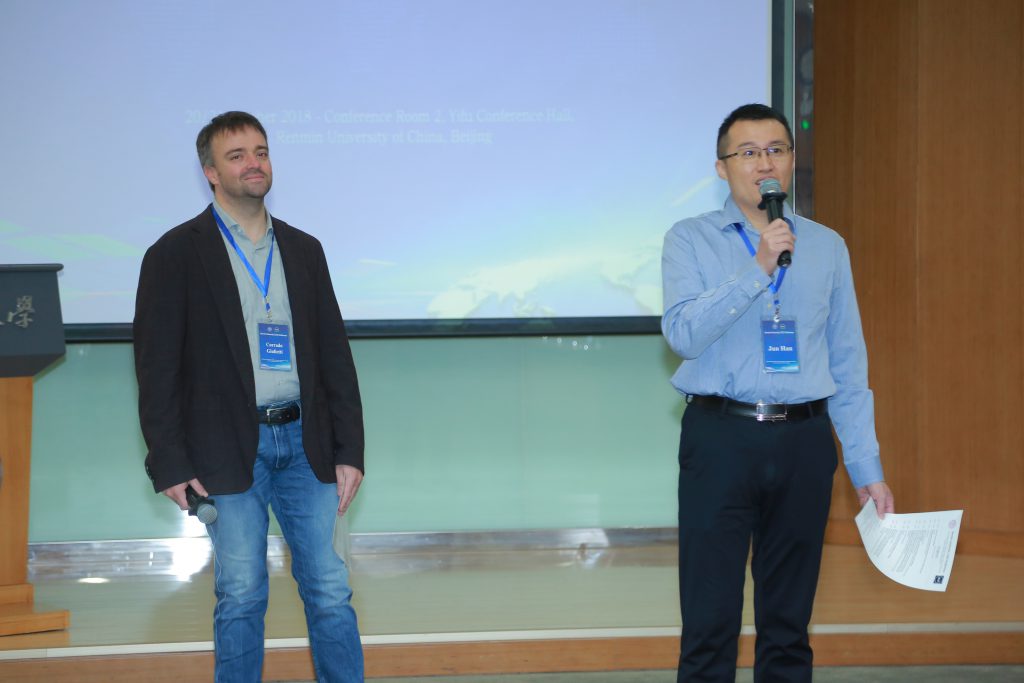
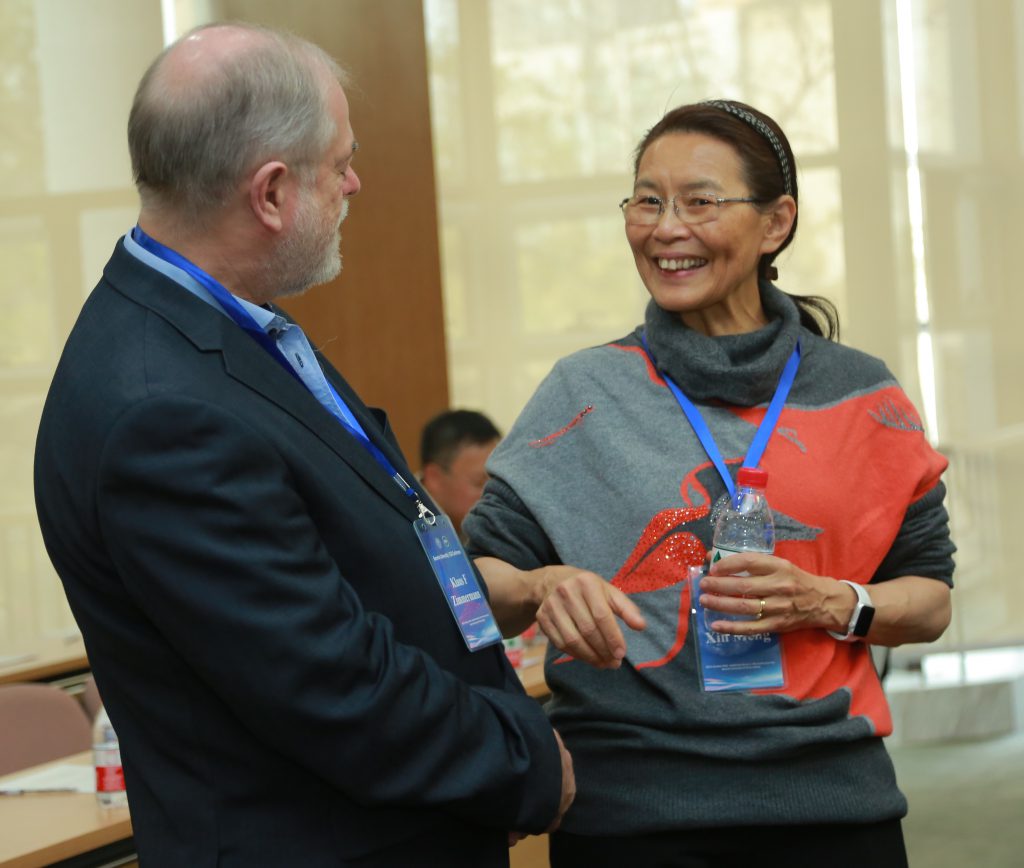
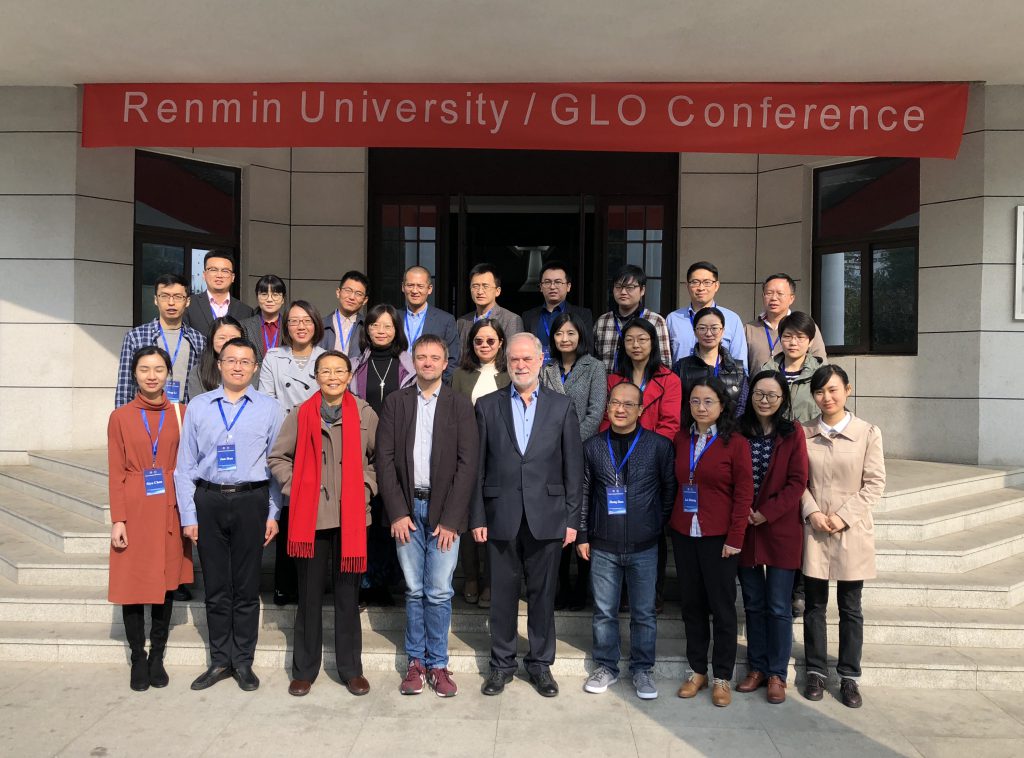
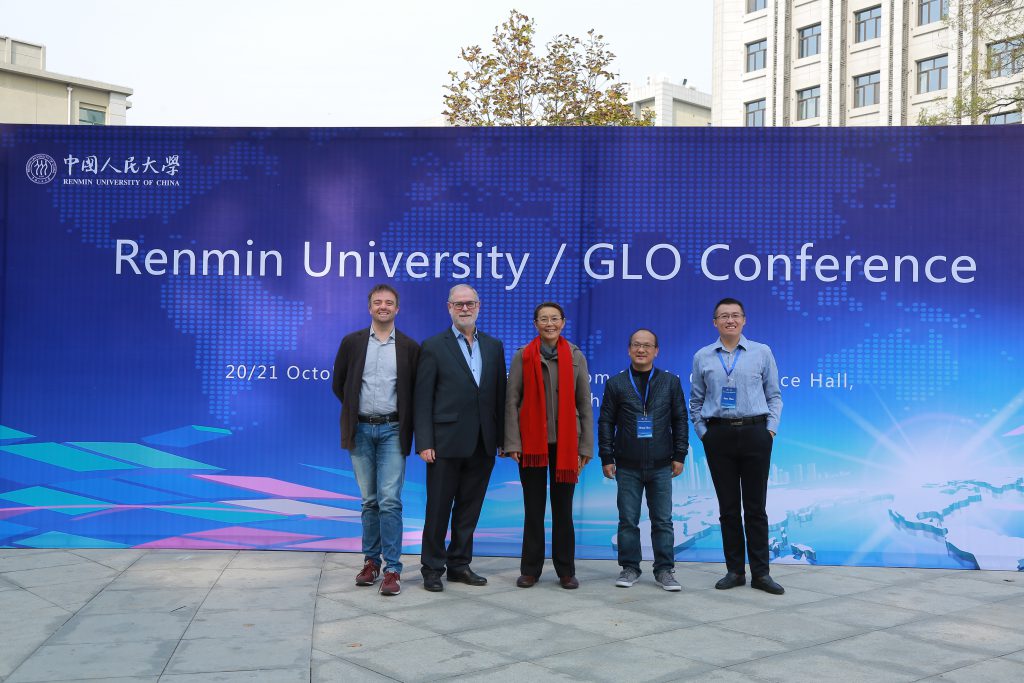
First Renmin – GLO Conference on the Chinese Labor Market 2018: Final Program and Event Pictures

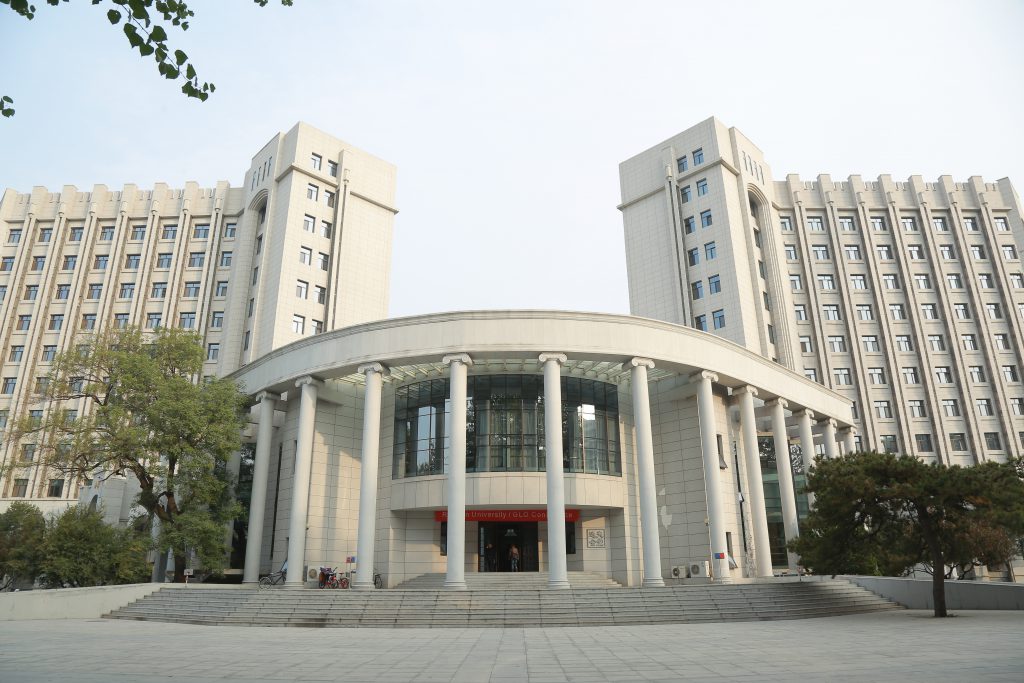
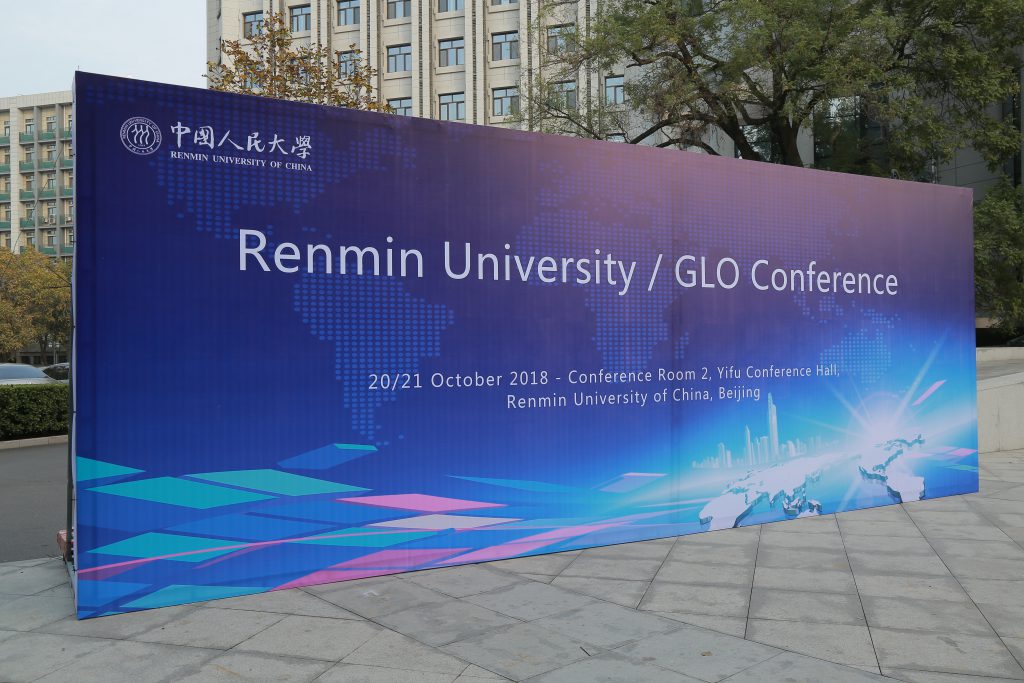
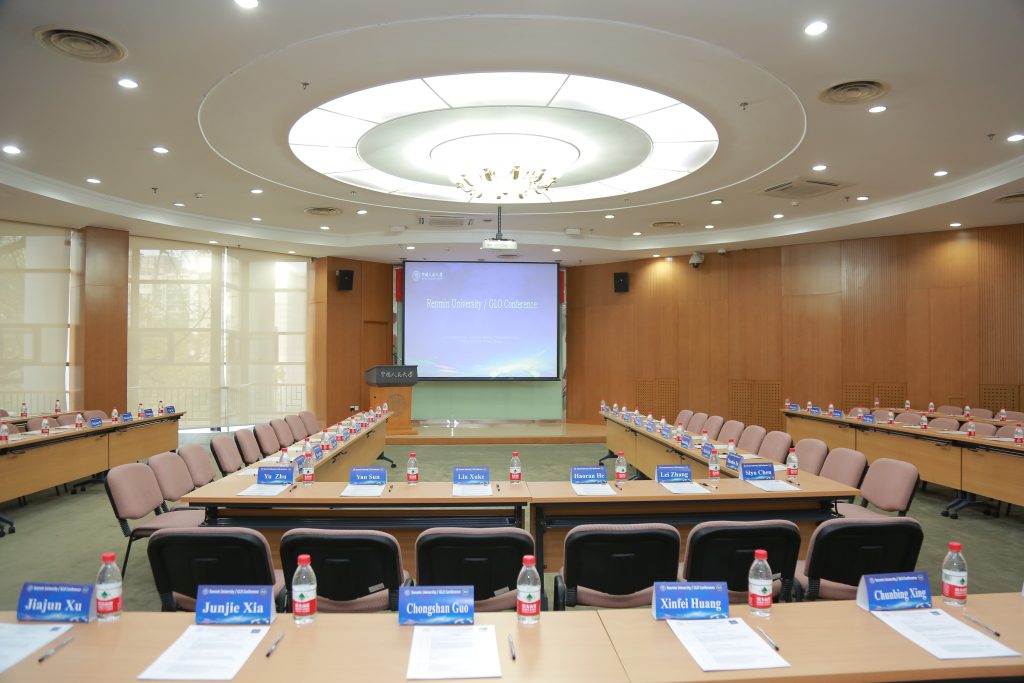
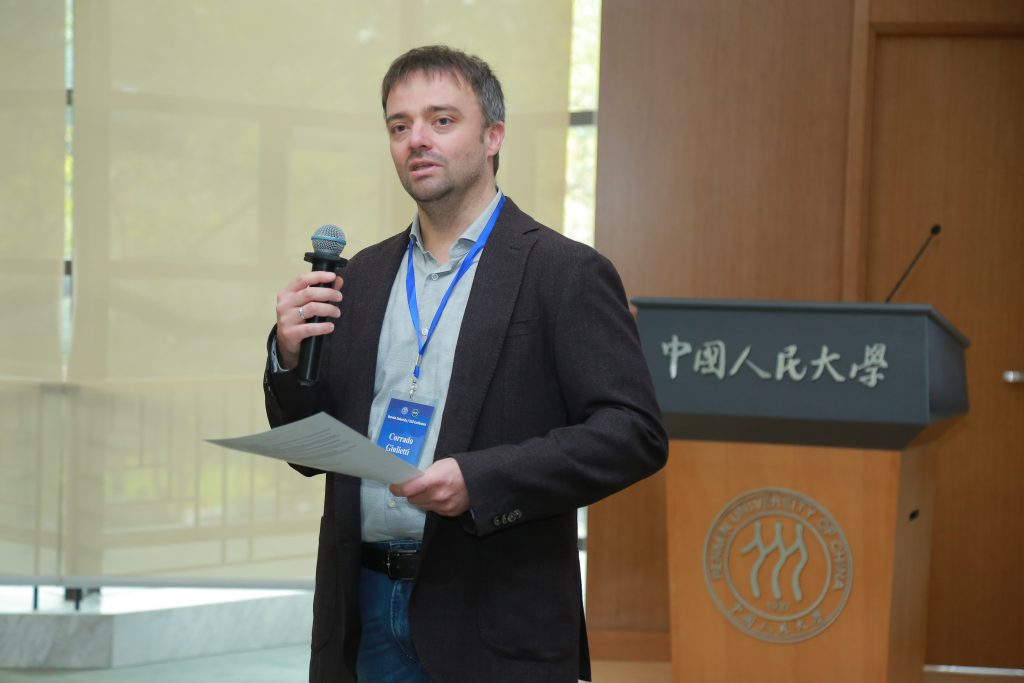
The School of Labor and Human Resources at Renmin University of China (Beijing) and the Global Labor Organization (GLO) had organized their First Joint Conference on the Chinese labor market on 20 and 21 October 2018 at Renmin University of China, Beijing. The conference series provides a platform for researchers working on topics related to the Chinese labor market, including migration, discrimination, health and well-being, education, environment and labor market policies. The event is part of the Chinese Labor Market Cluster of GLO headed by GLO Cluster Lead Corrado Giulietti (University of Southampton & GLO), who is also a GLO Research Director.


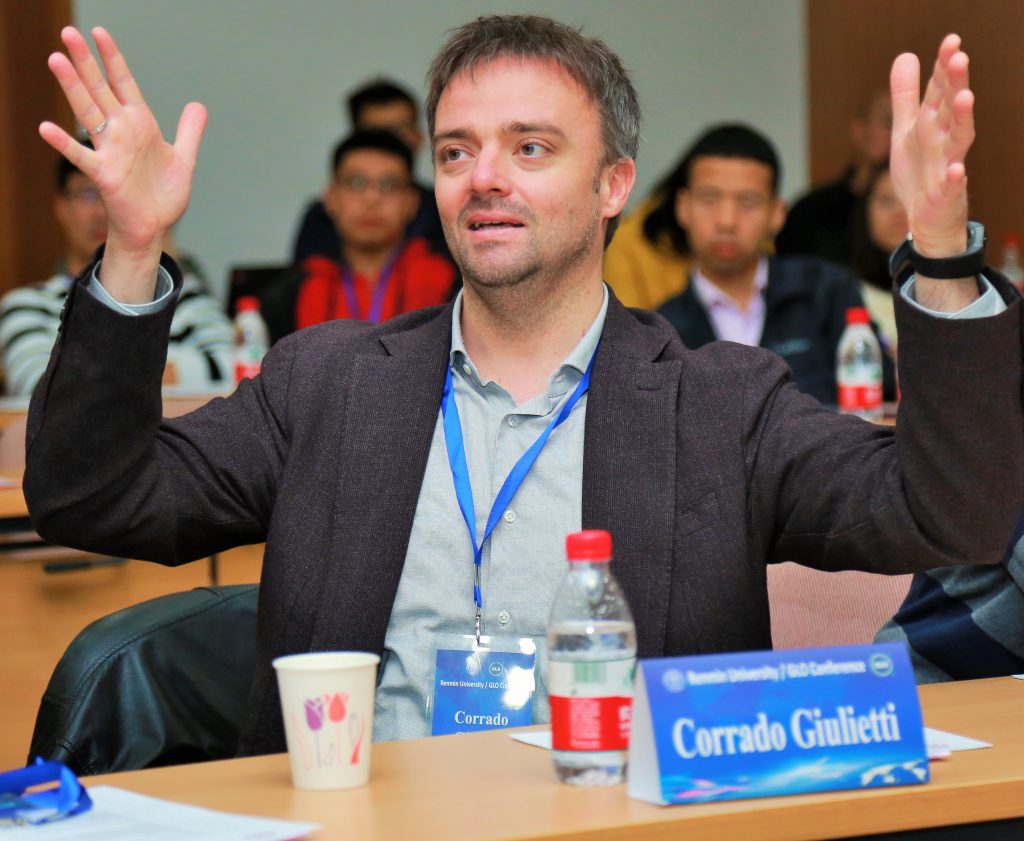
GLO Cluster Lead Corrado Giulietti

Keynote speakers were
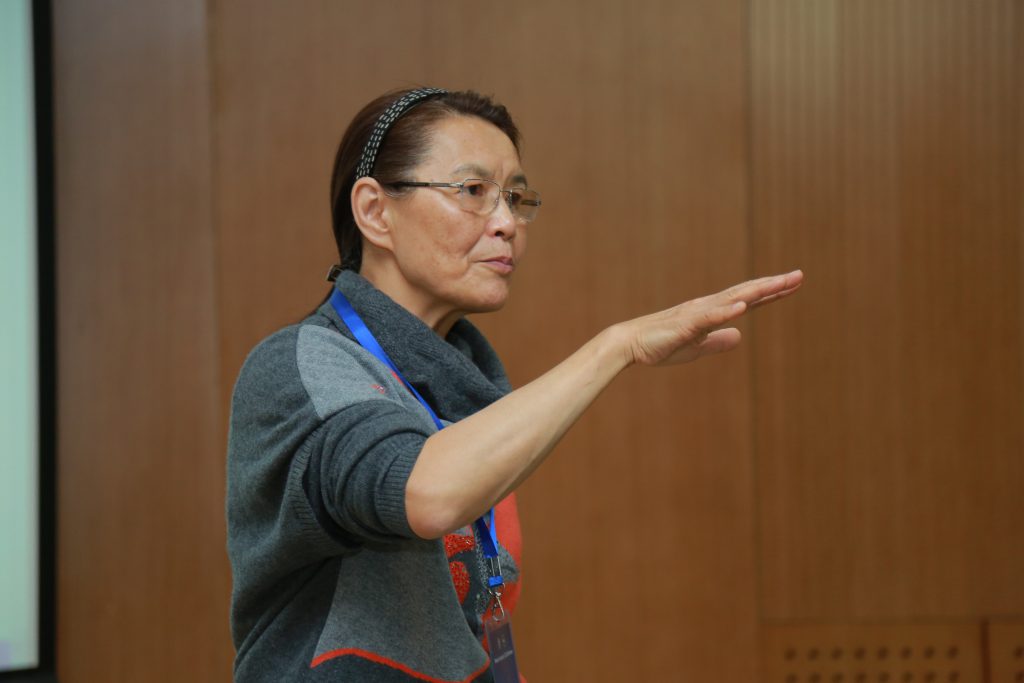
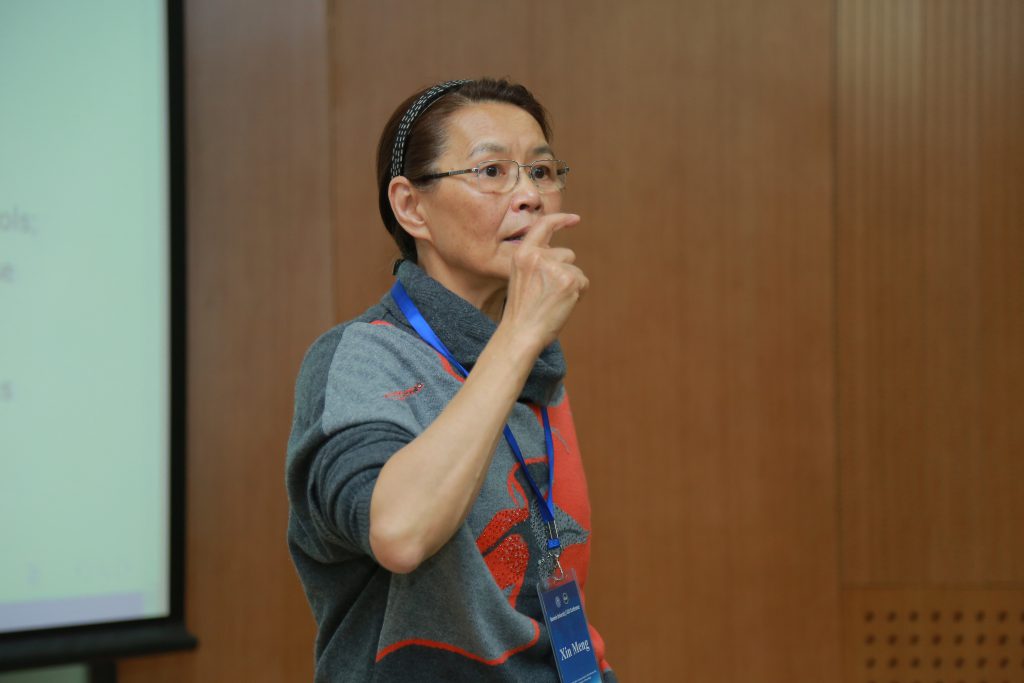
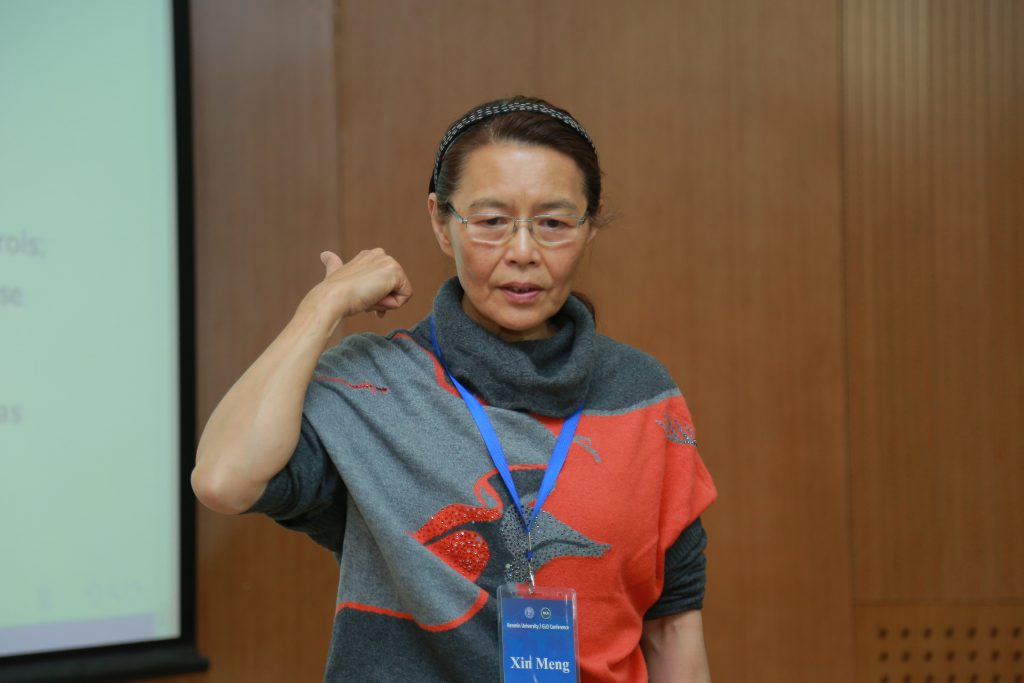
Xin Meng (Australian National University & GLO)
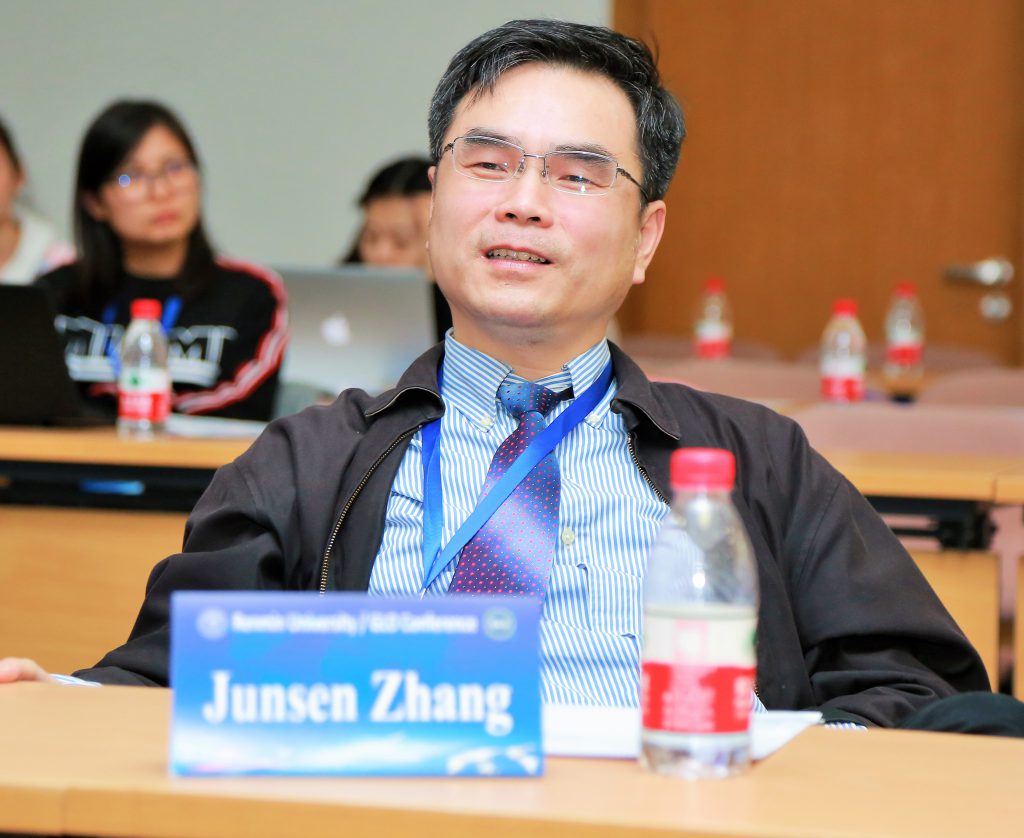
Junsen Zhang (Chinese University of Hong Kong & GLO )
Klaus F. Zimmermann (UNU-MERIT and Maastricht University & GLO )

The Program Committee consisted of
Sylvie Démurger (French National Centre for Scientific Research & GLO )
Shuaizhang Feng (Jinan University & GLO )
Corrado Giulietti (University of Southampton & GLO )
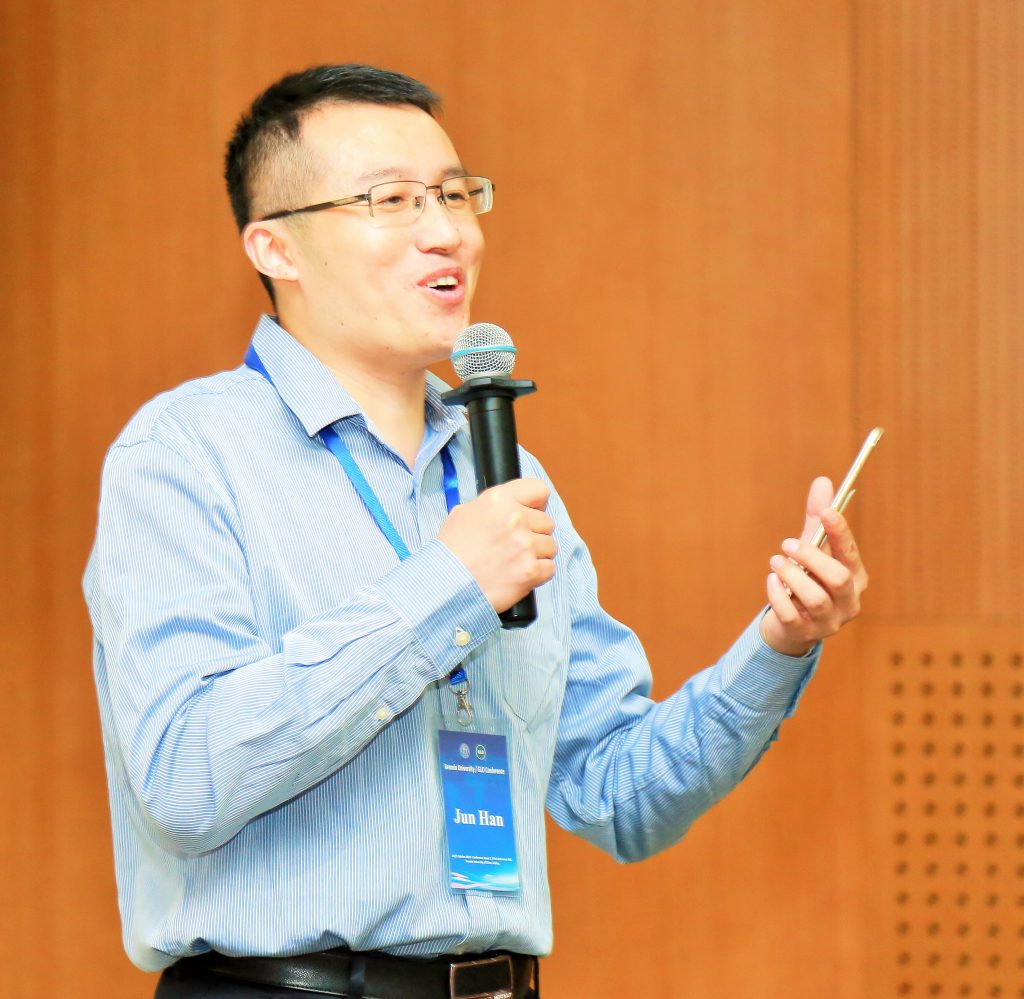
Jun  Han (Renmin University of China & GLO)

The Organizers were:
Corrado Giulietti (University of Southampton & GLO )
Jun  Han (Renmin University of China& GLO

The strong Final Program:
COPY

The well organized event brought a larger number of labor economists interested in the Chinese labor market together for intensive two days of high quality academic exchange and social interactions to foster future research. All participants were very satisfied with the outcomes and are grateful for the work of the local organizing team led by Jun Han and the strong support of GLO Fellow Dean Weiguo Yang of Remin University of China.

Day 1: 20 October 2018

Keynote: Intergenerational Behavioural Consequences of a Socio-Political Upheaval
Xin Meng (Australian National University & GLO)

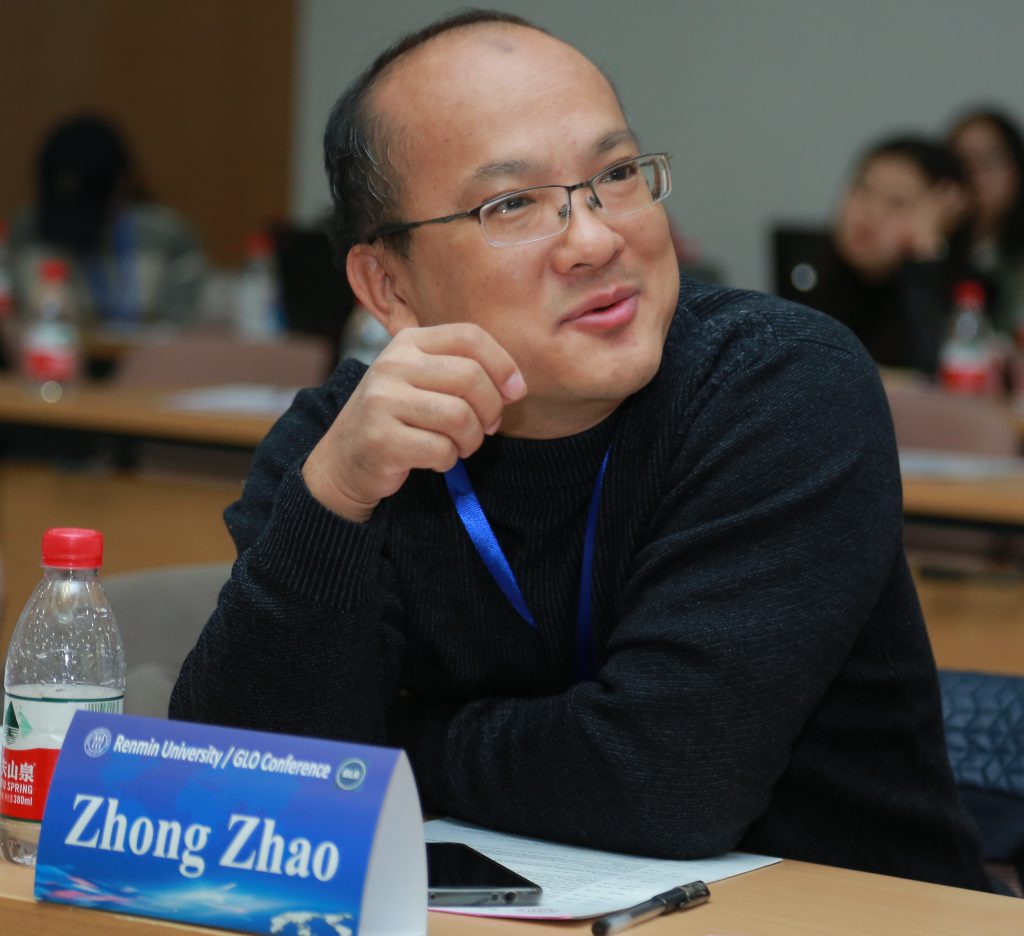
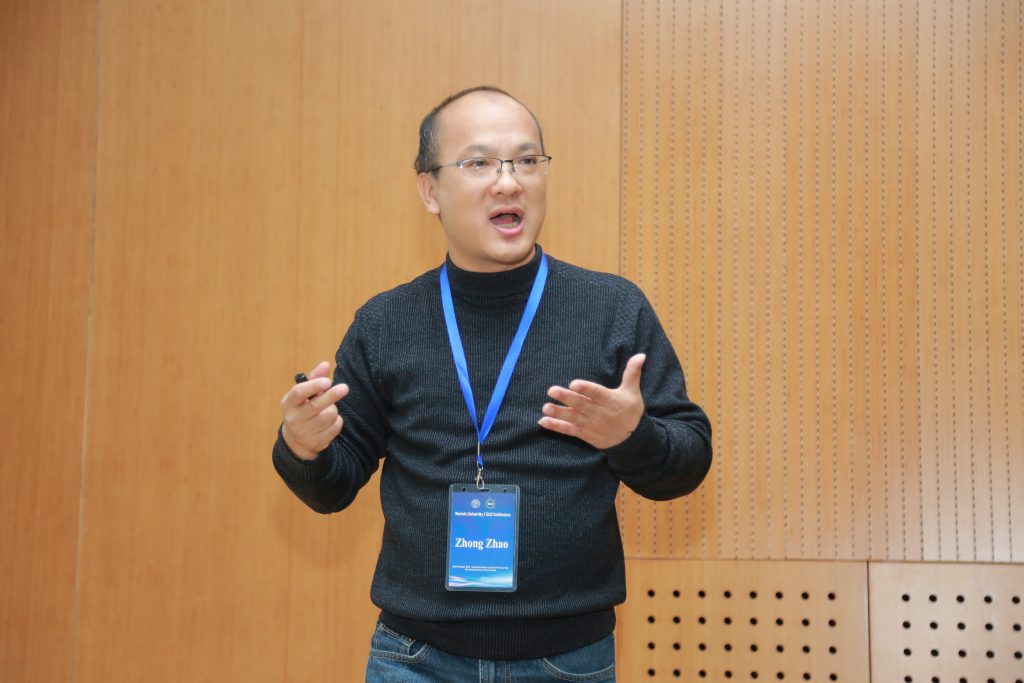
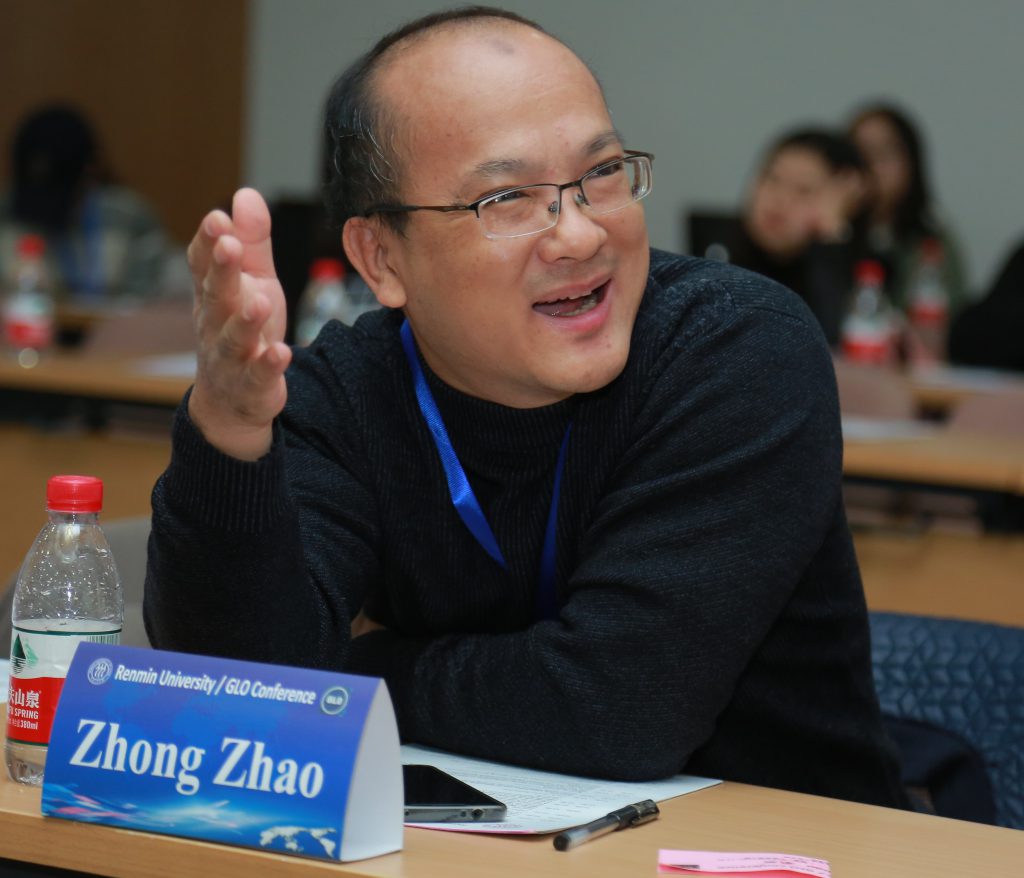
Session: “Labor Demand” Chair : Zhong Zhao (Renmin University of China & GLO)
Workers’ Valuation of Workplace Flexibility: A Field Experiment
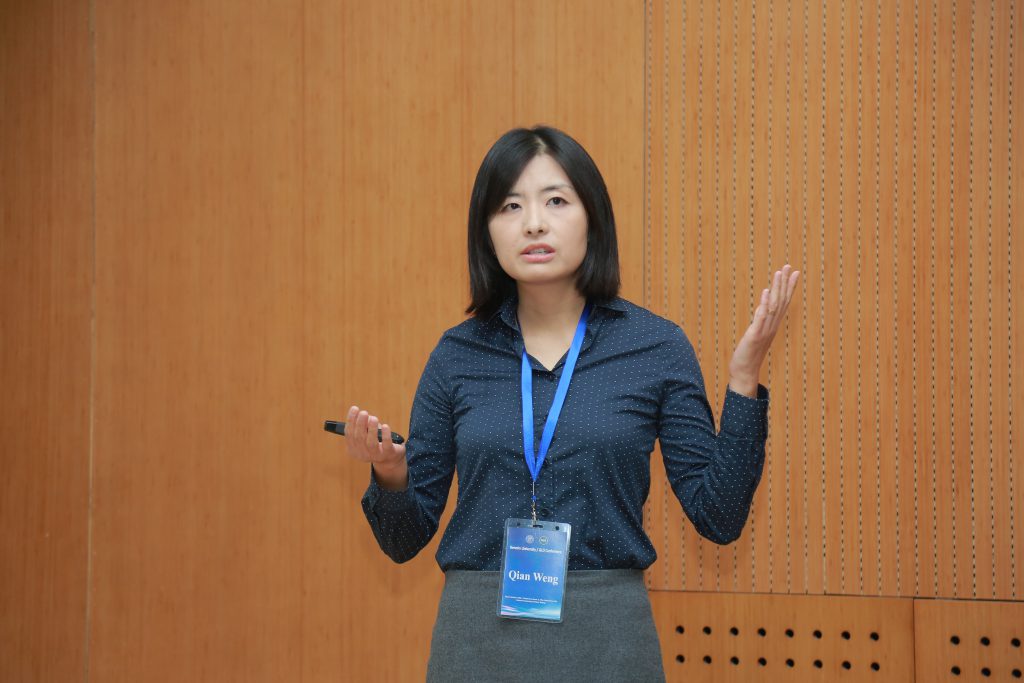
Haoran He (Beijing Normal University), David Neumark (University of California at Irvine), Qian Weng
(Renmin University of China)
A Curse or a Blessing: Long-term Effects of the Soviet Union Aid Plants to China
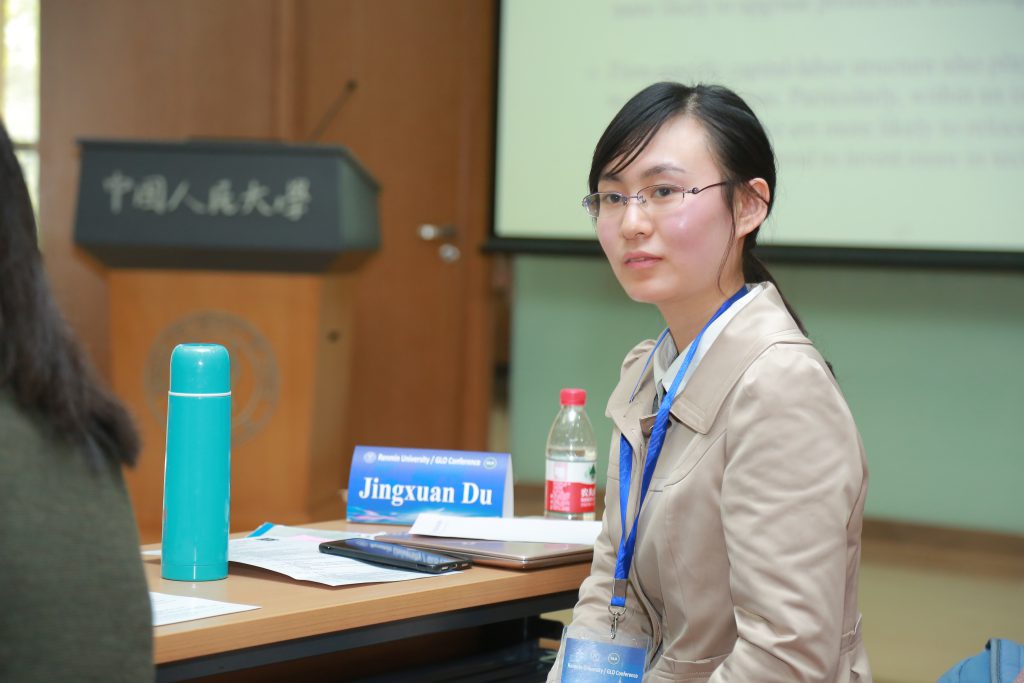
Jingxuan Du (Renmin University of China), Zhong Zhao (Renmin University of China & GLO)
To Upgrade or To Relocate? Explaining Heterogeneous Responses of Chinese Light
Manufacturing Firms to Rising Labor Costs
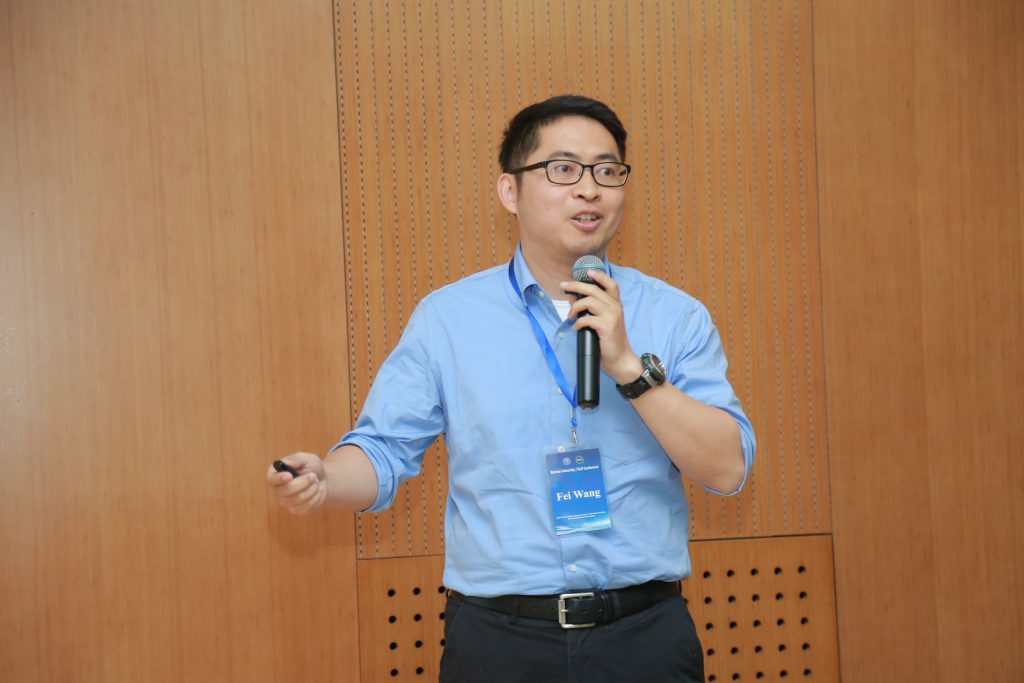
Fei Wang (Renmin University of China & GLO), Junjie Xia (Peking University), Jiajun Xu (Peking
University)

Keynote: China’s One-Child Policy and Its Relaxation Effects on Fertility
Junsen Zhang (Chinese University of Hong Kong & GLO)

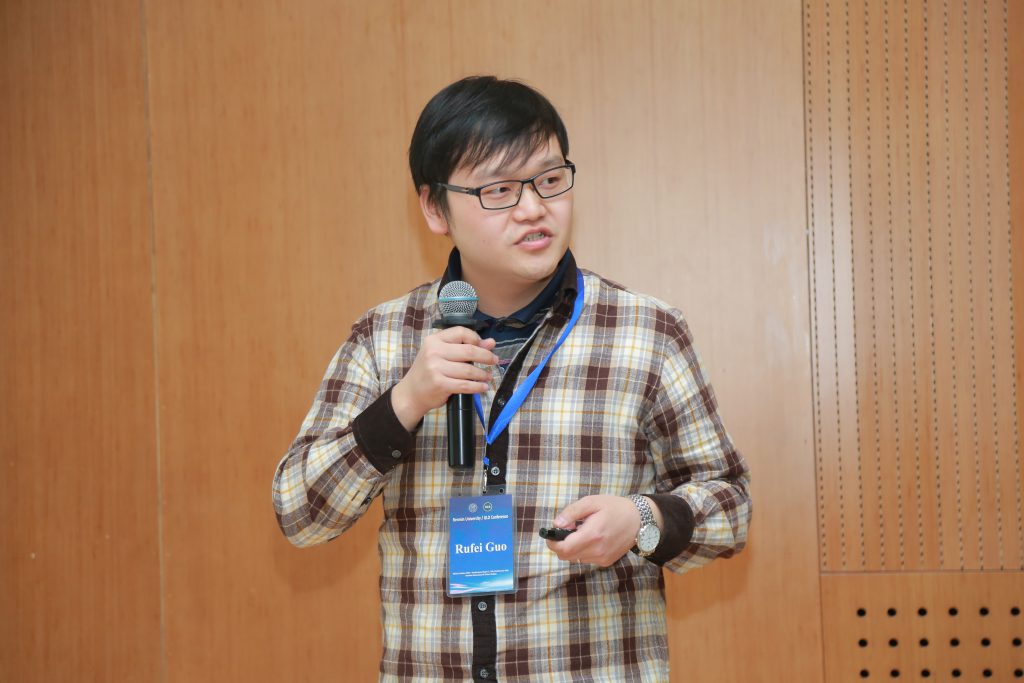
Session: “Family Economics” Chair : Rufei Guo(Wuhan University & GLO)
The Effects of Children’s Gender Composition on Filial Piety and Old-Age Support
Rufei Guo (Wuhan University & GLO), Junsen Zhang (Chinese University of Hong Kong & GLO)
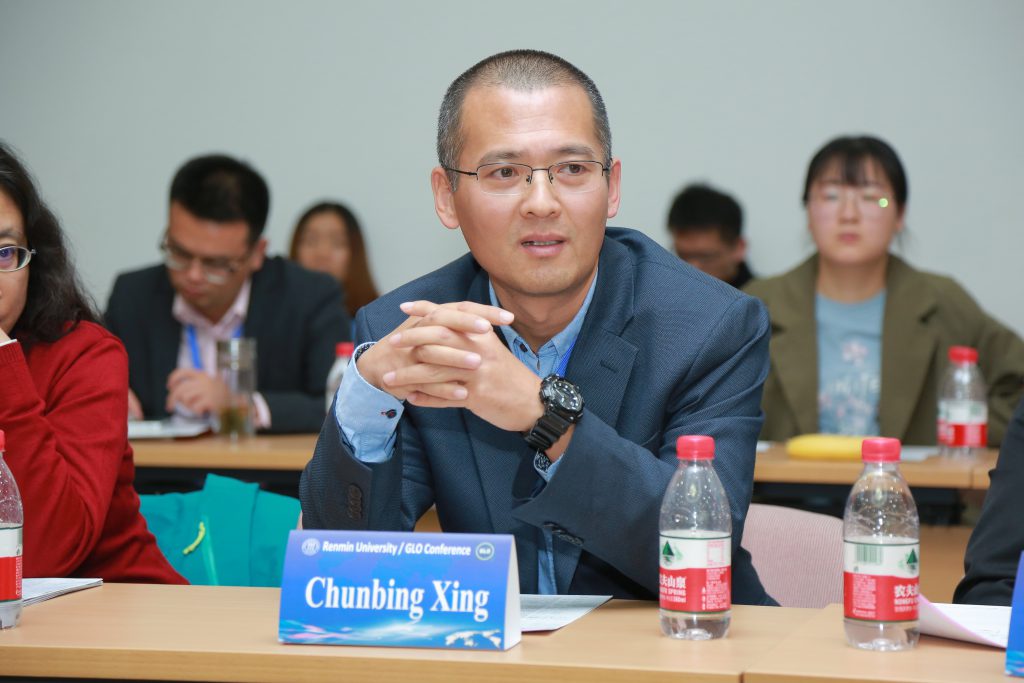
Son Preference and Human Capital Investment Among China’s Rural-Urban Migrant Households Carl Lin (Bucknell University & GLO), Yan Sun (Beijing Normal University), Chunbing Xing (Beijing
Normal University & GLO)
Session: “Productivity and Innovation” Chair : Teng Li(National University of Singapore)
From Tradition to Modern: The Impact of Knowledge Diffusion on Idea
Liu Xuke (Guangzhou Academy of Social Sciences)
Non-linear Incentives and Worker Productivity: Evidence from a Quasi-experiment
Richard Freeman (Harvard University), Wei Huang (National University of Singapore), Teng Li
(National University of Singapore)
The Wage-productivity Nexus in the World Factory Economy
Giovanni Dosi (Scuola Superiore Sant’Anna & GLO), Maria Enrica Virgillito (Catholic University of
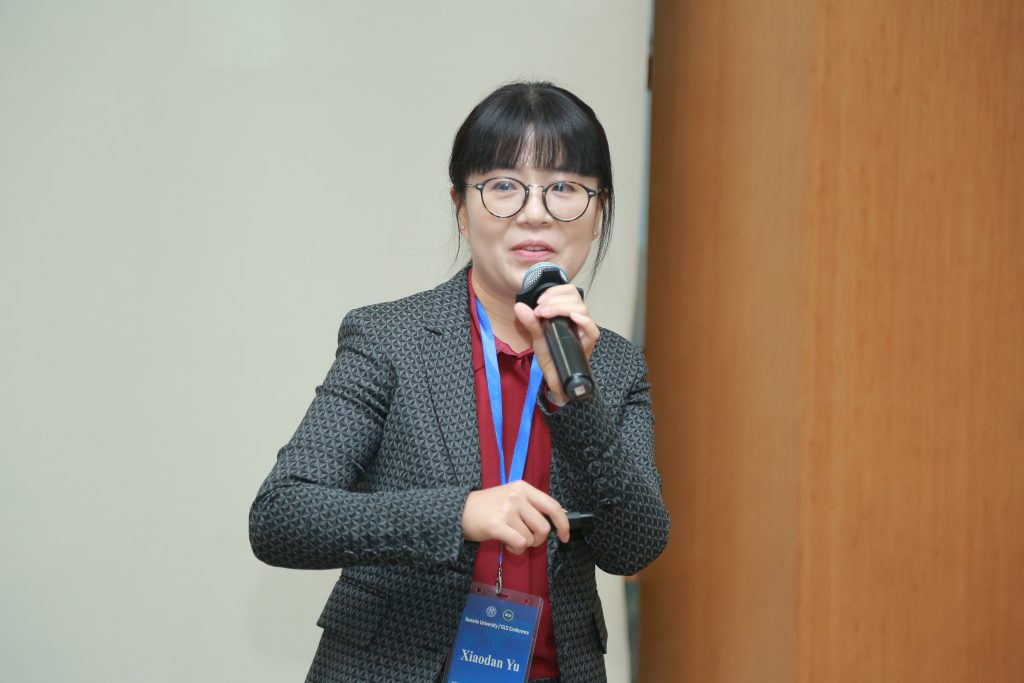
Milan & GLO), Xiaodan Yu (University of Nottingham Ningbo China & GLO)

Day 2: 21 October 2018

Session: “Education” Chair : Haoran He (Beijing Normal University)
Labor Market Discrimination against Family Responsibilities: A Correspondence Study with
Policy Change in China
Haoran He (Beijing Normal University), Sherry Xin Li (University of Texas at Dallas), Yuling Han (Beijing Normal University)
Dynamics of Returns to Elite University Education: Evidence from Chinese Labor Market
Sylvie Démurger (French National Center for Scientific Research & GLO),  Eric A. Hanushek (Stanford
University),  Lei Zhang (Shanghai Jiao Tong University)
Elite School Designation and House Prices: Quasi-experimental Evidence from Beijing, China
Bin Huang (Nanjing University of Finance and Economics), Xiaoyan He (Nanjing University of Finance and Economics), Lei Xu (National Institute of Economic and Social Research), Yu Zhu (University of
Dundee & GLO)
Air Pollution, Student Health, and School Absences: Evidence from China
Siyu Chen (National University of Singapore), Chongshan Guo (Guangzhou Center for Disease Control and Prevention), Xinfei Huang (International School of Business and Finance)  
Keynote: Recent Labor Market Research on China
Klaus F. Zimmermann (UNU-MERIT, Maastricht University, Renmin University of China & GLO)
 
Conclusions and Farewell : The intention is to organize the next joint workshop in October 2019.

Ends;

Happy Holidays and MORE from the GLO!

Happy holidays and a great start into an exciting New Year 2019 to all members and friends of GLO! Thanks to a large number of activists, we have made substantial progress in 2018.

I am now writing from the plane on my way to Florida. Earlier next year, I will be at the ASSA meeting in Atlanta. Please try to meet me, if you are there and have issues to discuss. You may wish to send me an email to arrange a meeting there or to just meet me at the Reception of the Institute for Economic and Social Research (IESR), Jinan University, on Friday January 4, 2019, from 6pm to 8pm, at Hilton Atlanta 217.

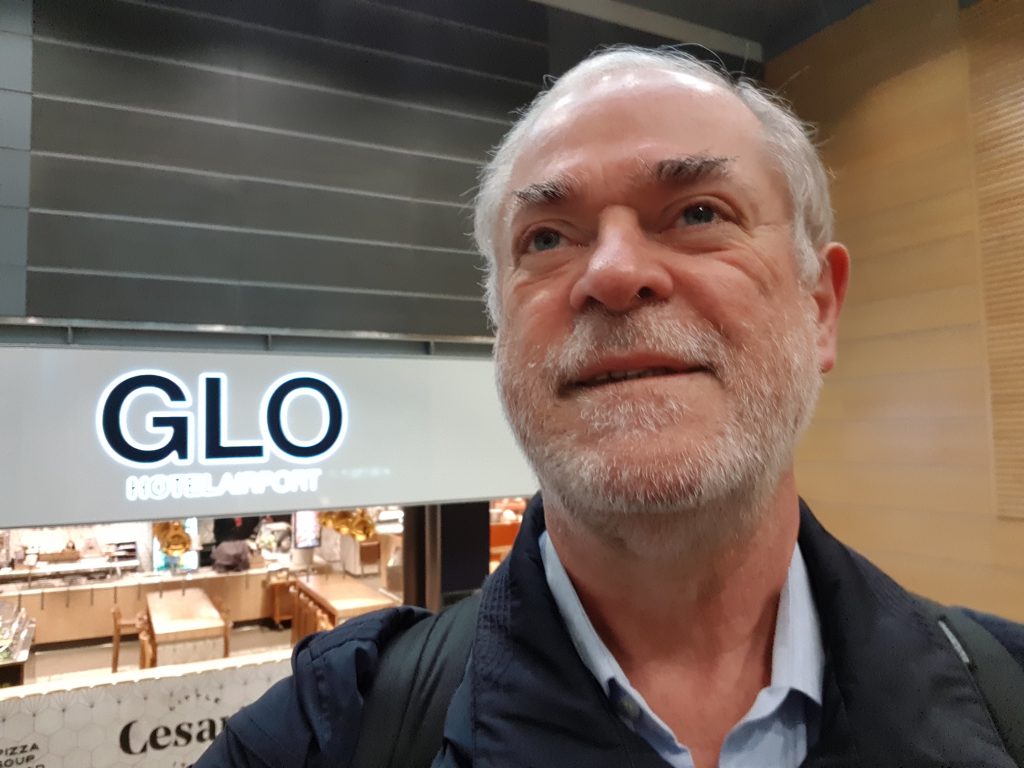
Over the last few weeks, I had the chance to meet and interact with many of you. From November 28 to December 22, I have been in Luxembourg, Darmstadt, Brussels, Kigali, Xiamen, Seoul, and Mumbai for events and conferences. See below some own quick pictures from the tour.

Klaus F. Zimmermann, GLO President

Brussels Airport
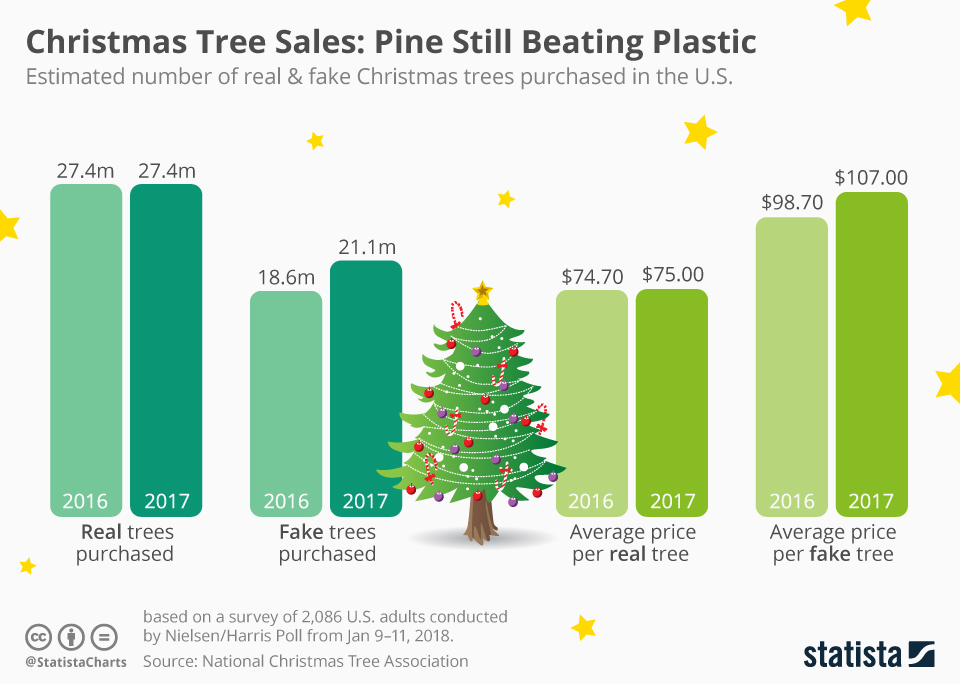
Real  & Fake Christmas Trees

Ends;

Join the Kuznets Prize Ceremony at ASSA 2019 in Atlanta

Those friends of the Journal of Population Economics and the Global Labor Organization (GLO) participating at the ASSA 2019 Atlanta conference are invited to the prominent Kuznets Prize ceremony. It takes part at the Reception of the Institute for Economic and Social Research (IESR), Jinan University, on Friday January 4, 2019, from 6pm to 8pm, at Hilton Atlanta 217. The ceremony will start at about 6.30 pm and will take about 15 minutes. The Editor-in-Chief of the Journal of Population Economics will announce some journal news including the 2019 prize winner(s). Then the award plate is given to the (still confidential) author(s). The 2018 Prize winner Le Wang will be also present; see an interview with him about the last prize paper.

Those planning to attend the reception are invited to register with Jiayu Lin via email: iesr_job@126.com.

The Kuznets Prize ceremony takes place on the invitation of Dean Shuaizhang Feng, Head of the Institute for Economic and Social Research (IESR), who is also a GLO Fellow. He will introduce the ceremony. The Editor-in-Chief of the Journal of Population Economics is also the President of the Global Labor Organization (GLO): Klaus F. Zimmermann (UNU-MERIT and Maastricht University). IESR has been an early institutional supporter of GLO.

Feng (right) and Zimmermann at IESR
Kuznets Prize Winner 2018 Chunbei Wang & Le Wang, University of Oklahoma

Ends;

GLO President Zimmermann visited Örebro University in Sweden

On the invitation of GLO Fellow Daniela Andren and Magnus Lodefalk, Klaus F. Zimmermann, (UNU-MERIT and President of the Global Labor Organization, GLO) was visiting Örebro University/Sweden on 19-20 November 2018 to attend a workshop on publishing in scientific journals. In his function as keynote speaker to the event, he was also reporting about his experience as Editor-in-Chief of the Journal of Population Economics and his role with many other journals in the profession. (MORE INFORMATION about the Journal of Population Economics.) The workshop discussed publication strategies and studied them on a selection of papers presented by the authors together with invited external reviewers, among them GLO Fellow Björn Gustafsson of Gothenburg University and Daniel Halvarsson of the Ratio Institute, Stockholm. Zimmermann and department members further discussed ways to intensify contacts with the GLO. He also enjoyed parts of Örebro, this wonderful Swedish city, which is very much worth visiting.

Workshop Co-Organizer and GLO Fellow Daniela Andren of Örebro University (left).


Dinner time for workshop participants

Also of potential interest for fans of the Journal: Brown, Alessio J.G. & Klaus F. Zimmermann, Three Decades of Publishing Research in Population Economics: Journal of Population Economics, 30 (2017), 11-27.

Ends;

GLO intensifies collaborations with Baku: Collaboration contract (MoU) signed and GLO President joins the Advisory Board of IGEP

During his recent visit to Baku/Azerbaijan on 10-13 November 2018, the President of the Global Labor Organization (GLO), Klaus F. Zimmermann, has met Chairman Natig Shirinzade of the Institute of Global Economic Problems (IGEP) and collaborated intensively with him. MORE DETAILS. Shirinzade, who is also a GLO Fellow and the GLO Country Lead Azerbaijan, had organized the meetings of Zimmermann with key representatives from government, academia and business to discuss the global challenges and approaches of the country. MORE DETAILS.

In the light of the great success of the visit and the large potentials, Chairman Shirinzade and President Zimmermann agreed to intensify the relationships between both organizations even further. For this purpose, both signed a Memorandum of Understanding (MoU). The MoU expresses that the planned collaborations should advance academic knowledge in both organizations through the encouragement of academic research, the communication among scholars through meetings, the promotion of publication opportunities and by providing networking opportunities for scholars through conferences and other joint activities.

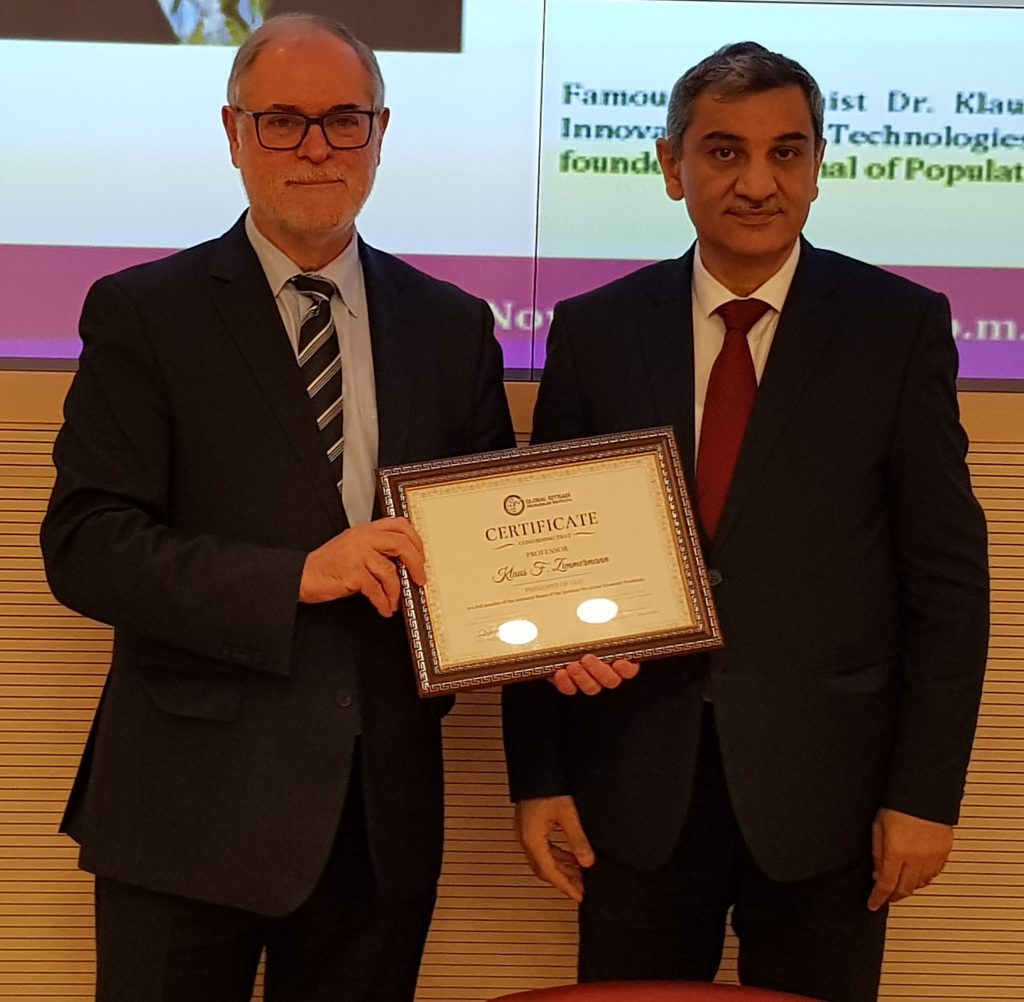
For this purpose, Zimmermann has also accepted to join the IGEP Advisory Board headed by the Honorary Academician Ziyad Samedzade, the Chairman of the Economic Policy, Industry and Entrepreneurship Committee of the National Assembly (Milli Mejlis). In a festive ceremony, Natig Shirinzade presented Zimmermann the certificate for this appointment, which is signed by him and Ziyad Samedzade.

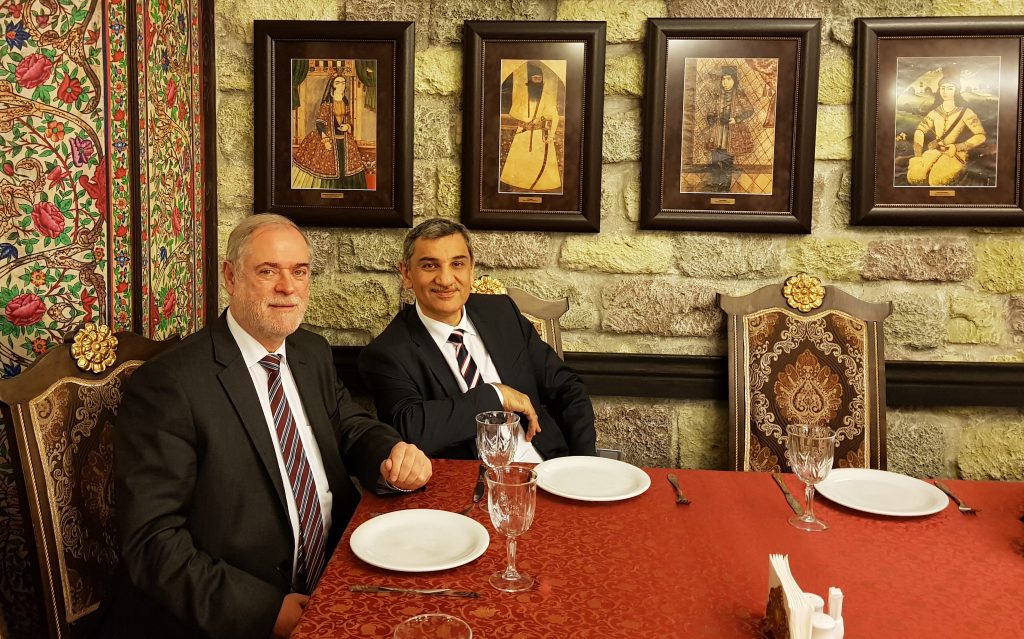
Over dinner on the previous night, Samedzade, Shirinzade and Zimmermann had discussed further details of the global challenges and found that they largely agree how one needs to approach them.

Shirinzade and Zimmermann after the presentation of the Certificate of the membership in the IGEP Advisory Board.

Relaxation after the hour.

The Honorary Academician Ziyad Samedzade, the Chairman of the Economic Policy, Industry and Entrepreneurship Committee of the National Assembly (Milli Mejlis) and Chairman of the IGEP Advisory Board with Zimmermann.

Klaus F. Zimmermann: “The exchange with Ziyad Samedzade was a big honor and great pleasure, we have debated and agreed on important issues of the globalized world, the perspectives of our countries, and what we have to do. A truly great man; I am deeply impressed. He found time on the eve of an important budget debate in the parliament to receive me in his office in the National Assembly and to join us for dinner. About his significant intervention in the parliamentary debate in the following morning I read in the media:”

“The activities of the country’s banks once again caused a barrage of criticism. This time, criticism was voiced by the parliamentarians during the discussion of the draft state budget for 2019 at the plenary session of the Milli Majlis (National Assembly). The statement of Chairman of the Parliamentary Committee on Economic Policy, Industry and Entrepreneurship Ziyad Samadzadeh was especially noteworthy. He stated bluntly: ‘We cannot be satisfied with the activities of banks in Azerbaijan, because their assistance to the real sector is insignificant.’” (MPs attacked banks. Elnur Mammadov in the AZERI DAILY)

Ends;

GLO President visits government officials, business and the research community in Azerbaijan

On the invitation of Natig Shirinzade, Chairman of the Institute of Global Economic Problems, the President of the Global Labor Organization (GLO), Klaus F. Zimmermann, has visited Baku, Azerbaijan, on 10-13 November 2018 to discuss research and policy issues and to intensify contacts. Chairman Natig Shirinzade is also a GLO Fellow and the GLO Country Lead Azerbaijan representing GLO. MORE DETAILS.

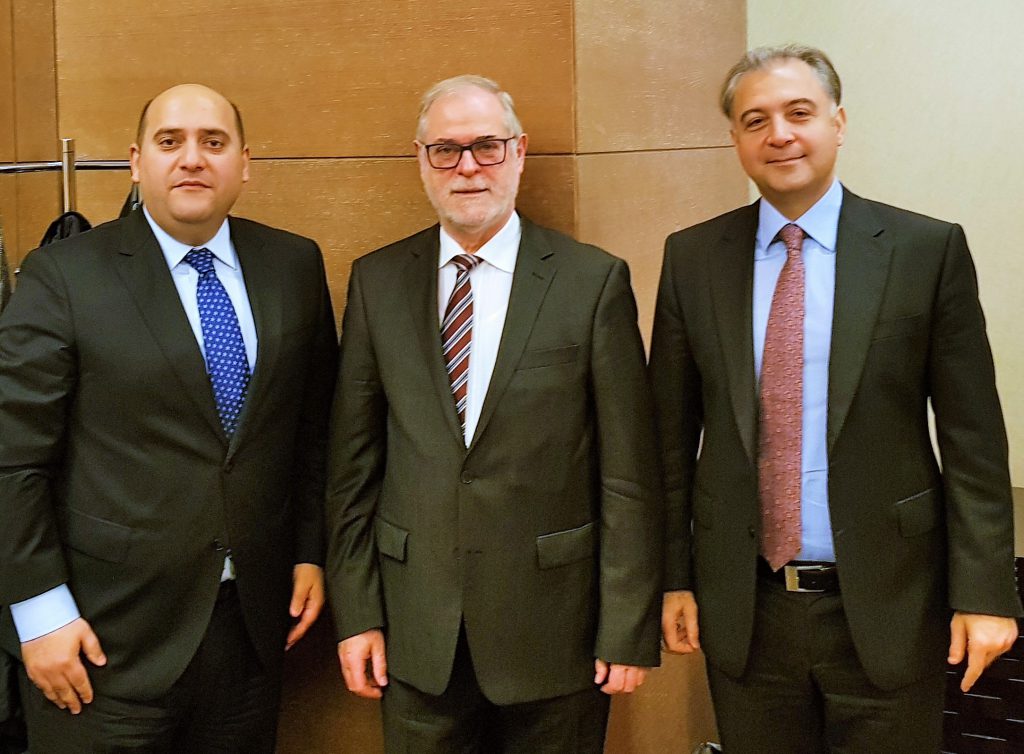
Organized by Natig Shirinzade (right side of the picture), Zimmermann met with researchers and scientists, representatives from business and government including members from the office of the First Vice President of the Republic of Azerbaijan, the Executive Director of the State Oil Fund and his staff, the Minister of Labor and the Minister of Education with their staff, the Chairman of the Economic Policy, Industry and Entrepreneurship Committee of the National Assembly, and the Deputy Foreign Minister and Founding Rector of the Azerbaijan Diplomatic Academy (ADA University) with various administrators and professors from ADA University and the Azerbaijan State University of Economics.

The full program on November 12-13, 2018 included the following major program points in this sequence:

The joint initiative of Natig Shirinzade and Klaus F. Zimmermann was broadly covered by the Azerbaijani media:

Left picture: In the middle, Sahil Babayev, Minister of Labor and Social Protection. Right: Natig Shirinzade and Klaus F. Zimmermann


Excellent and deep discussions with key staff members of the office of the First Vice President of the Republic of Azerbaijan, First Lady Mehriban Aliyeva: Emin Huseynov (left) and Khalid Ahadov (right). Broad and common understanding about the global human challenges and the large potentials for deeper collaborations between Azerbaijan and Europe.


With Shahmar Movsumov as the Executive Director of the State Oil Fund of the Republic of Azerbaijan, the Fund prepares for the future of the country investing resources around the world and supporting the change of the country including activities strengthening infrastructure and human resources. Both Natig Shirinzade and Klaus F. Zimmermann were visiting Shahmar Movsumov and his staff in his headquarter to introduce the respective institutions and to discuss the research needs to deal with the major challenges of the country. Bellow: In the headquarter of the Fund.


In both ministries, labor and education, the exchange was about the political strategies to deal with the demand for effective government using the instruments of the digital age, establishing the physical and administrative infrastructure needed for the post oil age, the need to strengthen entrepreneurship and the development of skills and education. A particular need was identified in vocational training, where large efforts of both ministries are under way. Zimmermann agreed with ministers Sahil Babayev (labor) and Ceyhun Bayamon (education) that vocational training could be key for the development if combined with proper entrepreneurship and small business. He advertised for the German dual system, knowing the difficulties with an adaption of the model that requires long traditions and the strong support of the business community.

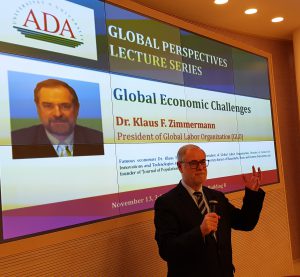
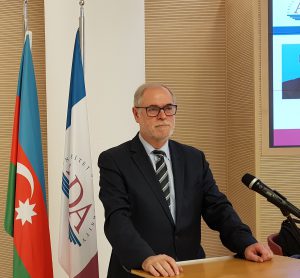
Shirinzade and Zimmermann further met with Ambassador Hafiz Pashayev, Deputy Foreign Minister and Founding Rector of the Azerbaijan Diplomatic Academy (ADA University). At the ADA University, they met with him and Fariz Ismailzade (Vice Rector for External, Government and Student Affairs), Elkin Nurmammadov (Dean of the School of Business), Rahman Shahhuseynli (Director of the Office of International Affairs), Kavus Abushov (Assistant Professor, Political Sciences), all ADA University, and Anar Rzayev, Vice-Rector International Relations and Programs of UNEC, the Azerbaijan State University of Economics. Topics discussed included the mission of GLO, the natural role of the country as a geographic, economic and political meeting point between Europe and Asia, and potentials for academic exchange of the universities with Europe. The visit at ADA University ended with a lecture of Zimmermann for ADA students.

Zimmermann speaking at the ADA University Global Perspectives Lecture Series in front of a large audience of interested students.


REFERENCES:
Klaus F. Zimmermann et al. (2013). Youth Unemployment and Vocational Training. Foundations and Trends in Microeconomics, Vol. 9, 1-157. now publishers.

Luca Barbone, Martin Kahanec, Klaus F. Zimmermann and Lucia Kureková (2013), Migration from the Eastern Partnership Countries to the European Union — Options for a Better Future, IZA Research Report, No. 55, Bonn. (50 pages)

Martin Kahanec, Klaus F. Zimmermann, Lucia Kureková and Costanza Biavaschi (2013), Labour Migration from EaP Countries to the EU – Assessment of Costs and Benefits and Proposals for Better Labour Market Matching, IZA Research Report, No. 56, Bonn. (164 pages)

On the more touristic side, Zimmermann explored on November 11 and 12 the city of Baku and the environment directed by a strongly motivated team of tourist guide, interpreter and driver. These experiences provided him with deep insides into history, modern developments, challenges and potentials of the country. On November 10, he was visiting modern Baku and enjoyed some of the local culture. On November 10 in the afternoon, he has been in the old city of Baku, and on November 11, among others, in the Gobustan National Park, saw the Petroglyphs and investigated the Zoroastrian temple of Ateshgah (Part III). At the end, he inspected Yanardag, the burning mountain. (The links lead to the four individual reports on Zimmermann’s private website for those interested.)

Ends;

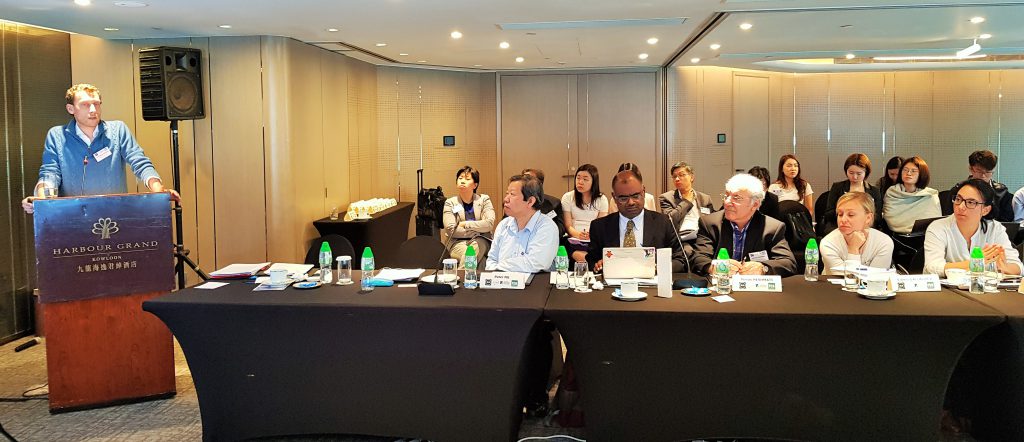
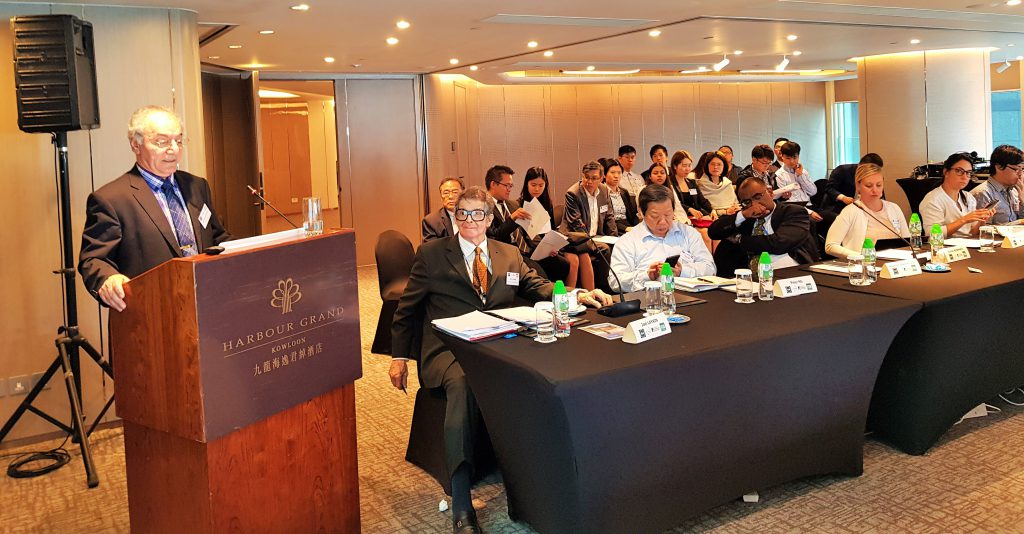
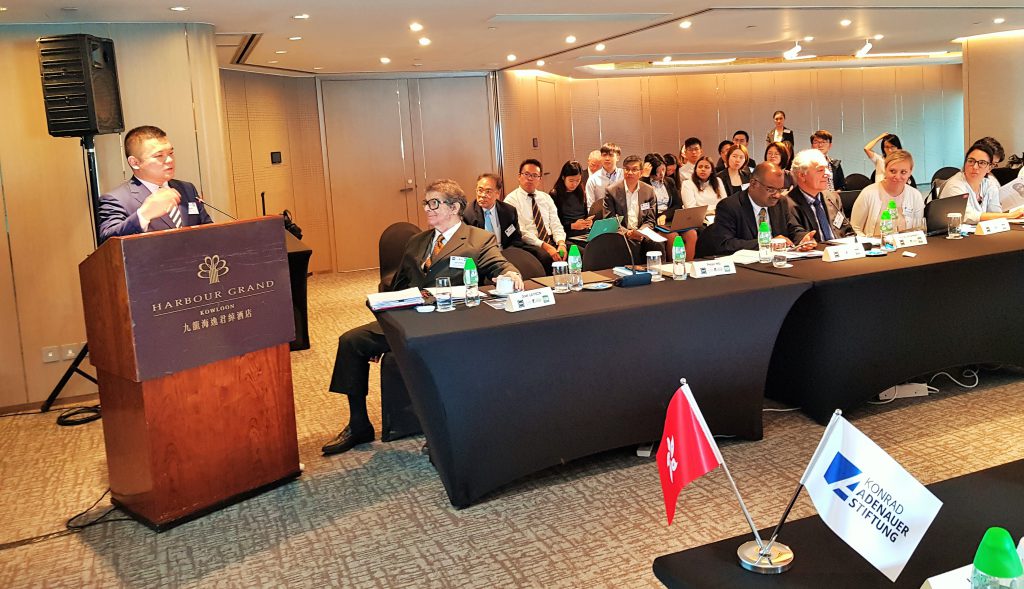
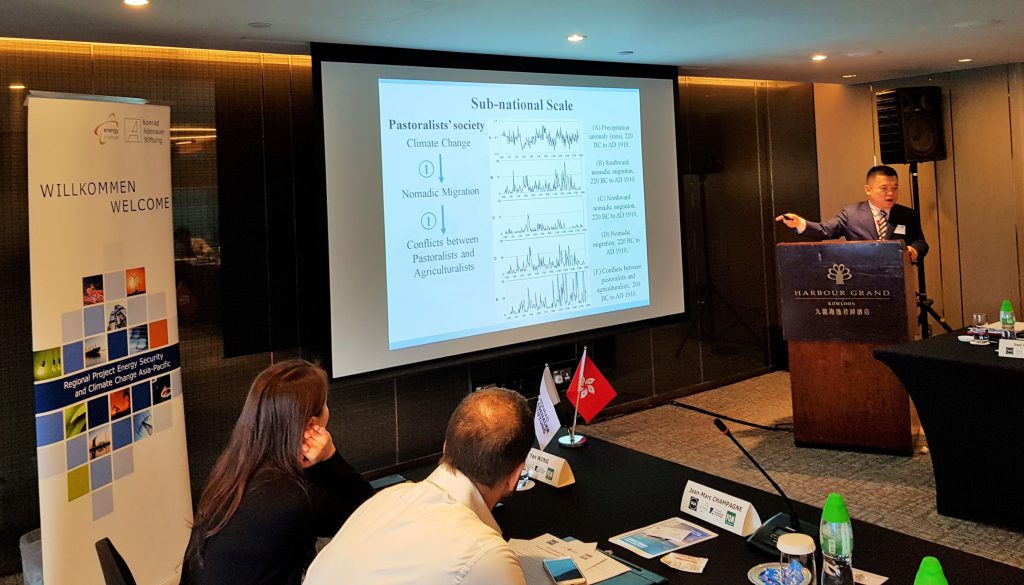
Climate Change and Human Responses: More impressions from the KAS-FOM-GLO conference in Hong Kong co-organized by the Global Labor Organization (GLO), FOM University of Applied Sciences and Konrad Adenauer Foundation (KAS)

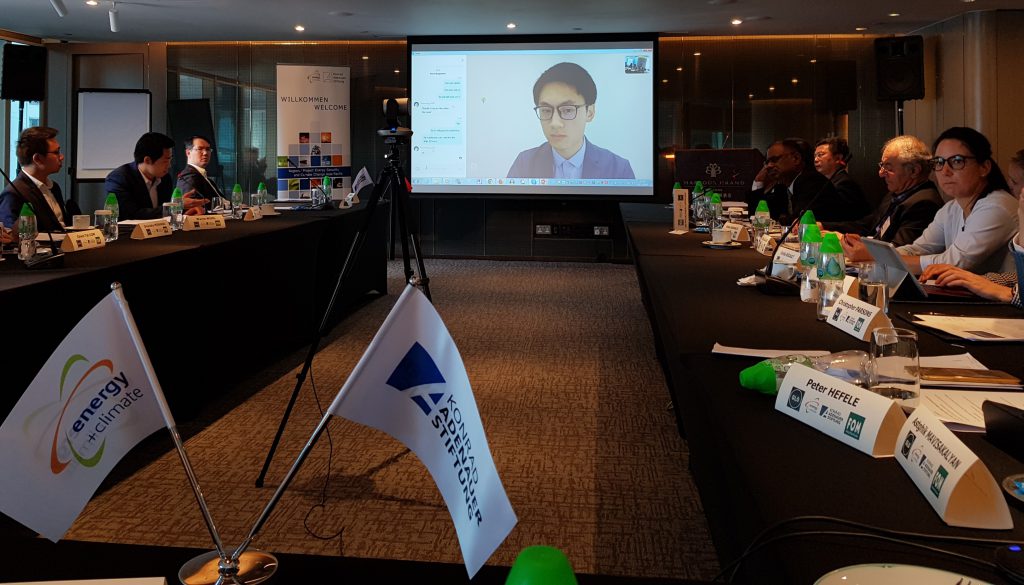
The joint FOM-GLO-KAS Conference about “Climate Change and Human Responses” co-organized by the Global Labor Organization (GLO), FOM University of Applied Sciences and Konrad Adenauer Foundation (KAS) took place on October 31 – November 2 in Hong Kong. (See for detailed reports: DAY ONE, DAY TWO, DAY THREE ) Here are some further impressions (courtesy of KAS):

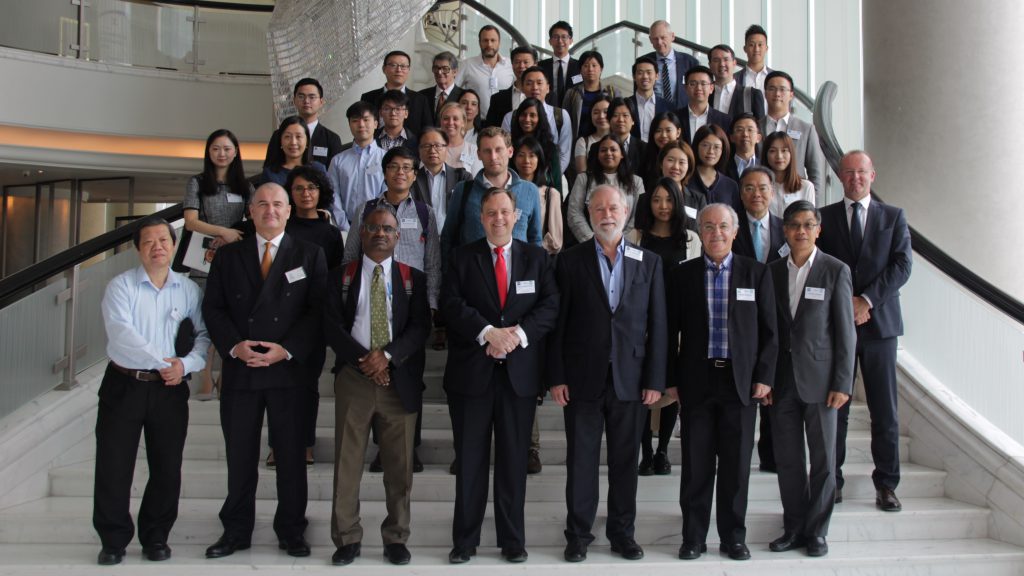
Conference participants at Day 2 after lunch.


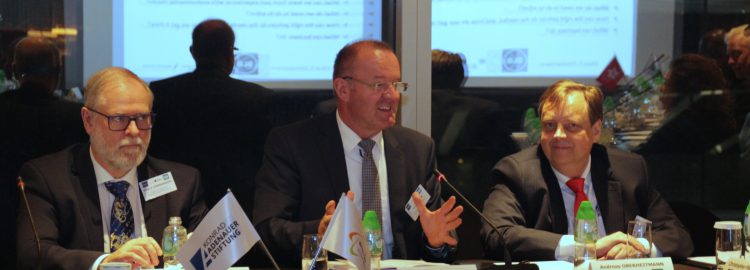
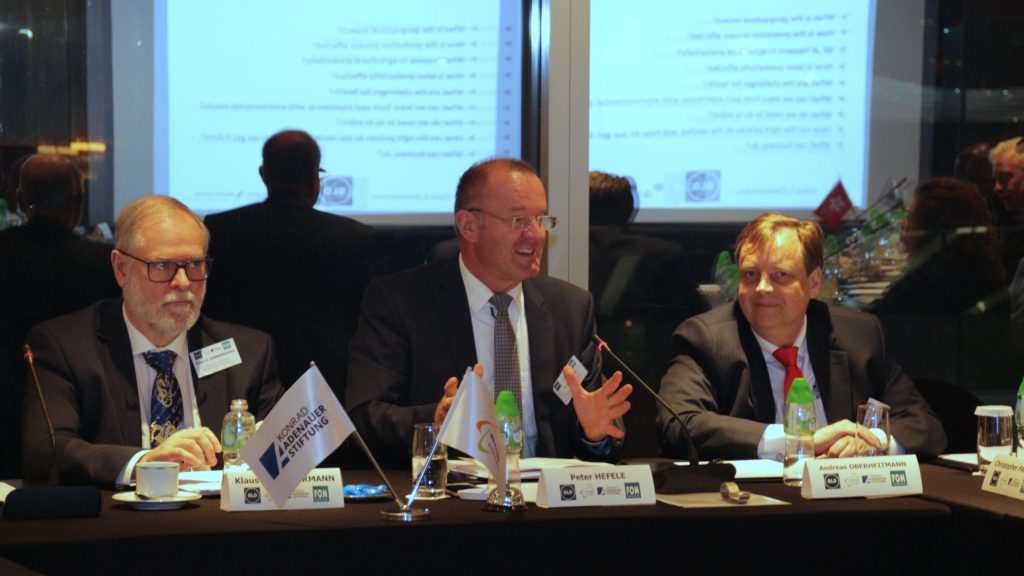
Conference organizers (from the left): GLO President Klaus F. Zimmermann, Peter Hefele, Director of the Hong Kong branch of the German Konrad-Adenauer Foundation and Andreas Oberheitmann (FOM, RWI and GLO).

RECENT GLO Discussion Papers on the issue of the conference (freely downloadable):

DP 266 Smog, Cognition and Real-World Decision MakingDownload PDF
by Chen, Xi
DP 221 Gender and climate change: Do female parliamentarians make a difference?Download PDF
by Mavisakalyan, Astghik & Tarverdi, Yashar
DP 86 Do Environmental Regulations Effect FDI decisions? The Pollution Haven Hypothesis Revisited – Download PDF
by Yoon, Haeyeon & Heshmati, Almas
DP 78 Managing the Impact of Climate Change on Migration: Evidence from Mexico – Download PDF
by Chort, Isabelle & de la Rupelle, Maëlys
DP 56 Happiness in the Air: How Does a Dirty Sky Affect Mental Health and Subjective Well-being? – Download PDF
by Zhang, Xin & Zhang, Xiaobo & Chen, Xi
DP 32 Smog in Our Brains: Gender Differences in the Impact of Exposure to Air Pollution on Cognitive Performance  – Download PDF
by Chen, Xi & Zhang, Xiaobo & Zhang, Xin

Ends;

Conference Announcement: 28th EBES Conference in Coventry (UK) in 2019

28th EBES Conference. May 29-31, 2019 in Coventry, United Kingdom
Hosted by the Centre for Financial and Corporate Integrity (CFCI), Coventry University

Interested researchers are cordially invited to submit abstracts or papers for presentation consideration at the 28th EBES Conference in Coventry. It will take place on May 29th, 30th, and 31st, 2019 at Coventry University in Coventry, United Kingdom. The conference will be organized with the support of the Istanbul Economic Research Association and will be hosted by the Centre for Financial and Corporate Integrity (CFCI) in collaboration with the Coventry Business School Trading Floor. To support the event, GLO will organize three invited paper sessions.

Invited Speakers are David B. Audretsch, Klaus F. Zimmermann and Marco Vivarelli.

David B. Audretsch is a Distinguished Professor at Indiana University, where he also serves as Director of the Institute for Development Strategies. He is an Honorary Professor of Industrial Economics and Entrepreneurship at the WHU-Otto Beisheim School of Management in Germany and a Research Fellow of the CEPR in London. He has also worked as a consultant to the UN, World Bank, OECD, EU Commission, and U.S. Federal Trade Commission. Prof. Audretsch’s research has focused on the links between entrepreneurship, government policy, innovation, economic development, and global competitiveness. He is co-author of The Seven Secrets of Germany (Oxford University Press) along with several other books. He is co-founder and Editor-in-Chief of Small Business Economics: An Entrepreneurship Journal and many other journals. He was awarded the Global Award for Entrepreneurship Research by the Swedish Entrepreneurship Forum (Entreprenörskapsforum). He has received honorary doctorate degrees from the University of Augsburg in Germany and Jonköping University in Sweden. Prof. Audretsch was also awarded the Schumpeter Prize from the University of Wuppertal in Germany. He has served as an advisory board member to a number of international research and policy institutes, including Chair of the Deutsches Institut für Wirtschaftsforschung Berlin(German Institute for Economic Analysis Berlin), Chair of the Stifterverband für die Deutsche Wissenschaft (Foundation for the Promotion of German Science) in Berlin, Germany, and the Center for European Economic Research (Zentrum für Europäische Wirtschaftsforschung) in Mannheim, Germany etc. He has authored numerous papers which were published in prestigious journals such as American Economic Review, European Economic Review, Review of Economics and Statistics, and Journal of Management and his researches have been cited more than 77,000 (Google Scholar). He holds a PhD in economics from University of Wisconsin, Madison in U.S.A.

Klaus F. Zimmermann is President of the Global Labor Organization (GLO); Co-Director of POP at UNU-MERIT; Full Professor of Economics at Bonn University (em.); Honorary Professor, Maastricht University, Free University of Berlin and Renmin University of China; Member, German Academy of Sciences Leopoldina, Regional Science Academy, and Academia Europaea (Chair of its Section for Economics, Business and Management Sciences). Among others, he has worked at Macquarie University, the Universities of Melbourne, Princeton, Harvard, Munich, Kyoto, Mannheim, Dartmouth College and the University of Pennsylvania. Research Fellow of the Centre for Economic Policy Research (CEPR) and Fellow of the European Economic Association (EEA). Editor-in-Chief of the Journal of Population Economics. Editorial Board of International Journal of Manpower, Research in Labor Economics and Comparative Economic Studies, among others. Founding Director, Institute for the Study of Labor (IZA); Past-President, German Institute for Economic Research (DIW). Distinguished John G. Diefenbaker Award 1998 of the Canada Council for the Arts; Outstanding Contribution Award 2013 of the European Investment Bank. Rockefeller Foundation Policy Fellow 2017; Eminent Research Scholar Award 2017, Australia;  EBES Fellow Award 2018 of the Eurasia Business and Economics Society. His research has been published in the top journals of the profession, including Journal of Economic Perspectives, American Economic Review, Econometrica, Journal of the European Economic Association, Journal of Human Resources, Journal of Applied Econometrics, Public Choice, Review of Economics and Statistics, Journal of Population Economics and Journal of Public Economics. He has published 53 books, 168 papers in refereed research journals, 152 chapters in collected volumes, 11 contributions to handbooks and encyclopaedias, 113 contributions to policy journals and reports and 517 media pieces. His research fields are population, labor, development and migration.

Marco Vivarelli, Ph.D. in Economics and Ph.D. in Science and Technology Policy, is full professor at the Catholic University of Milano, where he is also Director of the Institute of Economic Policy. He is Professorial Fellow at UNU-MERIT, Maastricht; Research Fellow at IZA, Bonn; Fellow of the Global Labor Organization (GLO). He is member of the Scientific Executive Board of the Eurasia Business and Economics Society (EBES, Istanbul); member of the Scientific Advisory Board of the Austrian Institute of Economic Research (WIFO, Vienna) and has been scientific consultant for the International Labour Office (ILO), World Bank (WB), the Inter-American Development Bank (IDB), the United Nations Industrial Development Organization (UNIDO) and the European Commission. He is Editor-in-Chief of the Eurasian Business Review, Editor of Small Business Economics, Associate Editor of Industrial and Corporate Change, Associate Editor of Economics E-Journal, member of the Editorial Board of Sustainability and he has served as referee for more than 70 international journals. He is author/editor of various books and his papers have been published in journals such as Cambridge Journal of Economics,  Canadian Journal of Economics, Economics Letters, Industrial and Corporate Change, International Journal of Industrial Organization,  Journal of Economics, Journal of Evolutionary Economics, Journal of Productivity Analysis, Labour Economics, Oxford Bulletin of Economics and Statistics, Regional Studies, Research Policy, Small Business Economics, Southern Economic Journal, World Bank Research Observer, World Development. His current research interests include the relationship between innovation, employment and skills; the labor market and income distribution impacts of globalization; the entry and post-entry performance of newborn firms.

EBES Board: Prof. Jonathan Batten, Monash University, Australia; Prof. Iftekhar Hasan, Fordham University, U.S.A.; Prof. Peter Rangazas, Indiana University-Purdue University Indianapolis, U.S.A.; Prof. Euston Quah, Nanyang Technological University, Singapore; Prof. John Rust, Georgetown University, U.S.A.; Prof. Marco Vivarelli, Università Cattolica Del Sacro Cuore, Italy; Prof. Klaus F. Zimmermann, UNU-MERIT & Maastricht University, The Netherlands:

Abstract/Paper Submission: Authors are invited to submit their abstracts or papers no later than February 28, 2018. For submission, please visit the EBES website at https://www.ebesweb.org/Conferences/28th-EBES-Conference-Coventry/Abstract-Submission.aspx. No submission fee is required. General inquiries regarding the call for papers should be directed to ebes@ebesweb.org.

Publication Opportunities: Qualified papers can be published (after refereeing) in the EBES journals (no submission and publication fees). EBES journals (Eurasian Business Review and Eurasian Economic Review) are published by Springer Nature and indexed by SCOPUS, EBSCO EconLit with Full Text, Google Scholar, ABI/INFORM, ABS Academic Journal Quality Guide, CNKI, EBSCO Business Source, EBSCO Discovery Service, EBSCO TOC Premier, Emerging Sources Citation Index (Clarivate Analytics), International Bibliography of the Social Sciences (IBSS), OCLC, ProQuest Business Premium Collection, ProQuest Central, ProQuest Turkey Database, Research Papers in Economics (RePEc), Summon by ProQuest, Cabell’s Directory, and Ulrich’s Periodicals Directory.

Furthermore, qualified papers after review will be recommended to be considered for publication in regular issues of the Journal of Corporate Finance after a review process. However, presentation at the EBES Conference does not guarantee publication in the Journal of Corporate Finance.

Also all accepted abstracts will be published electronically in the Conference Program and the Abstract Book (with an ISBN number). It will be distributed to all conference participants at the conference via USB. Although submitting full papers are not required, all the submitted full papers will also be included in the conference proceedings in the USB. After the conference, participants will also have the opportunity to send their paper to be published in the Springer’s series Eurasian Studies in Business and Economics (no submission and publication fees).

This will also be sent to Clarivate Analytics in order to be reviewed for coverage in the Conference Proceedings Citation Index – Social Science & Humanities (CPCI-SSH). Please note that the 10th, 11th, 12th, 13th, 14th, 15th, 16th, 17th and 19th EBES Conference Proceedings were accepted for inclusion in the Conference Proceedings Citation Index – Social Science & Humanities (CPCI-SSH). 18th, 20th and subsequent conference proceedings are in progress.

Important Dates
Abstract Submission Start Date: November 5, 2018
Abstract Submission Deadline: February 28, 2019
Decision Communicated by: March 8, 2019*
Registration Deadline: April 19, 2019
Announcement of the Program: April 30, 2019
Paper Submission Deadline (Optional): April 19, 2019**
Paper Submission for the EBES journals: July 31, 2019
* The decision regarding the acceptance/rejection of each abstract/paper will be communicated with the corresponding author within a week of submission.
** Full paper submission is optional. If you want to be considered for the Best Paper Award or your full paper to be included in the conference proceedings in the USB, after submitting your abstract before February 28, 2018, you must also submit your completed (full) paper by April 19, 2019.

Contact: Ugur Can (ebes@ebesweb.org); Dr. Ender Demir (demir@ebesweb.org)

Ends;
Hong Kong based German business meets GLO experts to debate the role of the city and business at the time of climate change

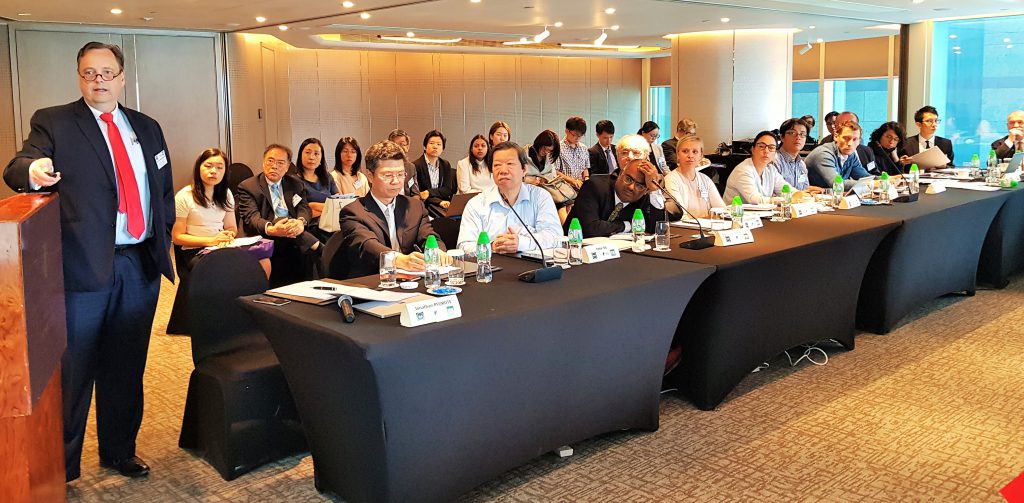
After two days of scientific discussions (see details linked: DAY ONE, DAY TWO), the joint FOM-GLO-KAS Conference about “Climate Change and Human Responses” co-organized by the Global Labor Organization (GLO), FOM University of Applied Sciences and Konrad Adenauer Foundation (KAS) met on 2 November 2018 German business at and with the German Chamber of Commerce, Hong Kong for a Breakfast Discussion. Peter Hefele, Director of the Hong Kong branch of the German Konrad-Adenauer Foundation was organizing this event for the team of organizers.

Business agreed with academics that climate change can no longer be stopped, and one needs a strong focus on adaptation, in particular in large cities such as Hong Kong.

The event was chaired by Andreas Oberheitmann (FOM, RWI and GLO) and welcomed by Wolfgang Ehmann, Head of the German Chamber of Commerce, Hong Kong, and GLO President Klaus F. Zimmermann for all participating organizations. Oberheitmann speaking:

The keynote speeches were provided by Manfred Fischedick, Wuppertal Institute for Climate, Energy and Environment, and Eric Chung, President and CEO of Siemens Ltd. Hong Kong and Member of the Board of Directors of the Business Environment Council (BEC), Hong Kong.

From the left: Wolfgang Ehmann (Welcome), Keynote Speaker Manfred Fischedick, Andreas Oberheitmann, Klaus F. Zimmermann (Welcome), and Keynote Speaker Eric Chung.

GLO Fellows Almas Heshmati, Venkatachalam Anbumozhi, Xi Chen under the observation of Peter Hefele, Director of the Hong Kong branch of the German Konrad-Adenauer Foundation.

GLO experts debating in Hong Kong with representatives of German business about the consequences of climate change for business and humanity. From the left:
Xi Cheng, Professor at Yale University and GLO Cluster Lead “Environment and Human Resources”.
Klaus F. Zimmermann, Professor at Bonn University (em.),  Honorary Professor at the Renmin University of China, UNU-MERIT, and President of GLO.
Andreas Oberheitmann, Professor at FOM, RWI and GLO.
Almas Heshmati, Jönköping International Business School, Sogang University
and GLO, Sweden/South Korea, and GLO Cluster Lead “Green Employment Creation”.
Venkatachalam Anbumozhi, Senior Economist, Economic Research Institute for ASEAN and East Asia (ERIA) and GLO.

PROGRAM; FRIDAY, 2ND NOVEMBER 2018
8:30 Breakfast Discussion (in cooperation with the German Chamber of Commerce)
Climate Change and Human Responses: How to prepare for Change?
Venue: German Chamber of Commerce, 3601, Tower One, Lippo Centre,
89 Queensway, Admiralty, Hong Kong
Chair: Andreas OBERHEITMANN, FOM, RWI and GLO
Welcoming Remarks
– Wolfgang EHMANN, German Chamber of Commerce
Klaus F. ZIMMERMANN, UNU-MERIT, Maastricht University and GLO
Keynote Speeches (10 min each)
– Manfred FISCHEDICK, Wuppertal Institute for Climate, Energy and Environment
– Eric CHONG, President and CEO of Siemens Ltd. Hong Kong; Member of the
Board of Directors of Business Environment Council (BEC), Hong Kong
Q&A
10:00 End of Event

RECENT GLO Discussion Papers on the issue (freely downloadable):

DP 266 Smog, Cognition and Real-World Decision MakingDownload PDF
by Chen, Xi
DP 221 Gender and climate change: Do female parliamentarians make a difference?Download PDF
by Mavisakalyan, Astghik & Tarverdi, Yashar
DP 86 Do Environmental Regulations Effect FDI decisions? The Pollution Haven Hypothesis Revisited – Download PDF
by Yoon, Haeyeon & Heshmati, Almas
DP 78 Managing the Impact of Climate Change on Migration: Evidence from Mexico – Download PDF
by Chort, Isabelle & de la Rupelle, Maëlys
DP 56 Happiness in the Air: How Does a Dirty Sky Affect Mental Health and Subjective Well-being? – Download PDF
by Zhang, Xin & Zhang, Xiaobo & Chen, Xi
DP 32 Smog in Our Brains: Gender Differences in the Impact of Exposure to Air Pollution on Cognitive Performance  – Download PDF
by Chen, Xi & Zhang, Xiaobo & Zhang, Xin

Ends;

Climate Change and Human Responses: Impressions from a scientific debate in Hong Kong

The joint FOM-GLO-KAS Conference about “Climate Change and Human Responses” co-organized by the Global Labor Organization (GLO), FOM University of Applied Sciences and Konrad Adenauer Foundation (KAS) at the Hotel Harbour Grand Kowloon, Hung Hom, Hong Kong (see FIRST DAY, for the full program of all three days, literature references and some pictures of the first day; details of THIRD DAY) continued on 1 November 2018 with a dense scientific program.

Here are some photos of the academic event of the SECOND DAY (November 1, 2018):

9:00 Session 1: Impact of Climate Change on Regions and Industry Sectors
Chair: ZHANG Yifan, The Chinese University of Hong Kong and GLO

Session chair ZHANG Yifan (The Chinese University of Hong Kong and GLO) next to Klaus F. Zimmermann (UNU-MERIT and President GLO)

Manfred FISCHEDICK, Wuppertal Institute for Climate, Energy and Environment
Climate Change and (Basic) Industry: Options and Related Chances and Challenges for a Green Transformation


Andreas OBERHEITMANN, FOM, RWI and GLO
Challenges of Climate Change for Coastal Regions and Cities: the Case of China

11:00 Session 2: Impacts of Climate Change on Global Labor Force and Labor Markets. Chair: GUO Chaoran, Chinese University of Hong Kong and GLO

Session Chair Chaoran Guo (Chinese University of Hong Kong and GLO) with Jean-Marc Champagne  (World Wide Fund for Nature) and Walton Li (Greenpeace)

FENG Shuaizhang, Jinan University and GLO, video
presentation
(with CUI Xiaomeng, Jinan University,
per skype in the discussion belowLINK TO VIDEO

Climate Variability, Agricultural Productivity and Migration


CHEN Xi, Yale University and GLO
Climate and Environmental Challenges to Health Capital

DEBATE: Astghik Mavisakalyan (Curtin University and GLO), discussing; with from the left Chris Parsons (University of Western Australia and GLO), Peter Hefele (Director, Konrad Adenauer- Foundation, Hong Kong SAR, PR China), Eric Chun Sum Lee (Konrad Adenauer- Foundation), Nicolas de Loisy (SCMO, Hong Kong), and session chair GUO Chaoran (Chinese University of Hong Kong and GLO)

Christopher PARSONS, The University of Western Australia and GLO
Climate Change and Migration, Exit, Voice and Loyalty: A Solution to the Immobility Paradox

14.00 Session 3: Climate Change: Historical Lessons
Chair: Manfred FISCHEDICK, Wuppertal Institute for Climate, Energy and Environment

Almas HESHMATI, Jönköping International Business School, Sogang University
and GLO, Sweden/South Korea
What Can We Learn from Environmental Disasters for the Climate Change Challenges?

PEI Qing, Education University of Hong Kong, Hong Kong
Mandate of Heaven – Climate change, migration and geopolitical cycles in imperial China

15:45 Session 4: Climate Change: How to React?
Chair: Anbumozhi VENKATACHALAM, Economic Research Institute for ASEAN and East Asia (ERIA)

Session Chair Anbumozhi VENKATACHALAM (Economic Research Institute for ASEAN and East Asia, ERIA) with Almas HESHMATI (Jönköping International Business School, Sogang University, Sweden/South Korea and GLO), and speaker Astghik MAVISAKALYAN (Curtin University and GLO)

Astghik MAVISAKALYAN, Curtin University and GLO
Gender and Climate Change: Do Female Parliamentarians Make a Difference?

Background Paper GLO DP 221 Gender and climate change: Do female parliamentarians make a difference?Download PDF
by Mavisakalyan, Astghik & Tarverdi, Yashar

Eileen GALLAGHER, BSR, Business for Social Responsibility, Hong Kong
How Business Can Manage Climate Risk in Southeast Asia

THE WORKDAY ENDED WITH STUDENT PRESENTATIONS ON THE TOPIC
17:20 KAS–CUHK Students Forum
(in cooperation with the Faculty of Law/Chinese University of Hong Kong (CUHK)
“Climate Change and Human Responses”
Chair: Peter HEFELE, KAS RECAP, Hong Kong
Welcoming Remarks:
– Anatole BOUTE, Chinese University of Hong Kong (CUHK)
– LL.M-Master Course Student, CUHK
Discussion
18:00 Wrap-up and Concluding Remarks
– Andreas OBERHEITMANN

RECENT GLO Discussion Papers on the issue (freely downloadable):

DP 266 Smog, Cognition and Real-World Decision MakingDownload PDF
by Chen, Xi
DP 221 Gender and climate change: Do female parliamentarians make a difference?Download PDF
by Mavisakalyan, Astghik & Tarverdi, Yashar
DP 86 Do Environmental Regulations Effect FDI decisions? The Pollution Haven Hypothesis Revisited – Download PDF
by Yoon, Haeyeon & Heshmati, Almas
DP 78 Managing the Impact of Climate Change on Migration: Evidence from Mexico – Download PDF
by Chort, Isabelle & de la Rupelle, Maëlys
DP 56 Happiness in the Air: How Does a Dirty Sky Affect Mental Health and Subjective Well-being? – Download PDF
by Zhang, Xin & Zhang, Xiaobo & Chen, Xi
DP 32 Smog in Our Brains: Gender Differences in the Impact of Exposure to Air Pollution on Cognitive Performance  – Download PDF
by Chen, Xi & Zhang, Xiaobo & Zhang, Xin

Ends;

“Climate Change and Human Responses”: GLO conference in Hong Kong with FOM & KAS has started on Wednesday, 31 October 2018

The joint FOM-GLO-KAS Conference about “Climate Change and Human Responses”  scheduled  for 31 October – 2 November 2018 in Hong Kong has begun on Wednesday, 31 October 2018. The event is co-organized by the Global Labor Organization (GLO), FOM University of Applied Sciences and Konrad Adenauer Foundation (KAS).

See details on the following days, linked: DAY TWO, DAY THREE

Climate change is one of the biggest challenges of the 21st Century. It does not only have severe consequences for eco-systems, but also directly and indirectly affects societies and economies. The consequences for global production chains, output, labor markets and well-being will be massive. Rising sea levels, floods and droughts, changing agricultural patterns – tremendous economic losses and migration of labor force will lead to unforeseeable consequences on human well-being, public health, labor performance and productivity. The innovative conference deals with the under-researched human consequences of climate change and brings together researchers, business, the policy community and civil society in a city which will be heavily affected by climate change, Hong Kong.

GLO has recently provided a number of Discussion Papers on the topic, see below.

Organizers are Peter Hefele (KAS RECAP, Hongkong), Andreas Oberheitmann (FOM, RWI and GLO) and Klaus F. Zimmermann (UNU-MERIT, Maastricht University and GLO). Participants are renowned researchers, politicians and entrepreneurs from Hong Kong, Asia, Europe and the US.

THE PROGRAM: “Climate Change and Human Responses” 

WEDNESDAY, 31ST OCTOBER 2018
Venue: Meeting Room Whampoa 1&2, 1/F, Hotel Harbour Grand Kowloon, Hung Hom,
Hong Kong

16:00 Registration
16:15 Welcoming Remarks
Peter HEFELE, KAS RECAP, Hong Kong
Andreas OBERHEITMANN, FOM Hochschule, RWI and GLO
16:45 Keynote Speech
Klaus F. ZIMMERMANN, UNU-MERIT, Maastricht University and GLO
Climate Change: The Global Labor Challenge
17:15 Q&A
18:00 End of Discussion
19:00 Dinner
Keynote Speech: Ir Albert LAI, CEO of Carbon Care Asia, Hong Kong
Climate Change: Challenges and Opportunities for Hong Kong´s Innovation System
Venue: Grand Salon, Hotel Harbour Grand Kowloon

THURSDAY, 1ST NOVEMBER 2018

9:00 Session 1: Impact of Climate Change on Regions and Industry Sectors
Chair: ZHANG Yifan, The Chinese University of Hong Kong and GLO
– Manfred FISCHEDICK, Wuppertal Institute for Climate, Energy and Environment
Climate Change and (Basic) Industry: Options and Related Chances and Challenges
for a Green Transformation
– Andreas OBERHEITMANN, FOM, RWI and GLO
Challenges of Climate Change for Coastal Regions and Cities: the Case of China
10:30 Coffee break
11:00 Session 2: Impacts of Climate Change on Global Labor Force and Labour
Markets
Chair: GUO Chaoran, The Chinese University of Hong Kong and GLO
FENG Shuaizhang, Jinan University and GLO (with CUI Xiaomeng, Jinan University)
Climate Variability, Agricultural Productivity and Migration
(video presentation)
– CHEN Xi, Yale University and GLO
Climate and Environmental Challenges to Health Capital
– Christopher PARSONS, The University of Western Australia and GLO
Climate Change and Migration, Exit, Voice and Loyalty: A Solution to the Immobility Paradox
13:00 Lunch
Venue: Restaurant Waterfront Bar & Terrace, G/F, Harbour Grand Kowloon

14.00 Session 3: Climate Change: Historical Lessons
Chair: Manfred FISCHEDICK, Wuppertal Institute for Climate, Energy and Environment
– Almas HESHMATI, Jönköping International Business School, Sogang University
and GLO, Sweden/South Korea
What Can We Learn from Environmental Disasters for the Climate Change Challenges?
– PEI Qing, Education University of Hong Kong, Hong Kong
Mandate of Heaven – Climate change, migration and geopolitical cycles in imperial
China
15:30 Coffee Break
15:45 Session 4: Climate Change: How to React?
Chair: Anbumozhi VENKATACHALAM, Economic Research Institute for ASEAN and East
Asia (ERIA)
– Astghik MAVISAKALYAN, Curtin University and GLO
Gender and Climate Change: Do Female Parliamentarians Make a Difference?
Eileen GALLAGHER, BSR (Business for Social Responsibility), Hong Kong
How Business Can Manage Climate Risk in Southeast Asia
17:00 Coffee Break

17:20 KAS–CUHK Students Forum
(in cooperation with the Faculty of Law/Chinese University of Hong Kong (CUHK)
“Climate Change and Human Responses”
Chair: Peter HEFELE, KAS RECAP, Hong Kong / Anjle GUPTA, CUHK, Hong Kong
Welcoming Remarks:
– Anatole BOUTE, Chinese University of Hong Kong (CUHK)
Statements (each 5–10 mins)
– LL.M-Master Course Student, CUHK
Discussion
18:00 Wrap-up and Concluding Remarks
– Andreas OBERHEITMANN
– Peter HEFELE
18:30 Meet at Lobby and Transfer to Restaurant
19:00 Dinner

FRIDAY, 2ND NOVEMBER 2018
8:30 Breakfast Discussion (in cooperation with the German Chamber of Commerce)
Climate Change and Human Responses: How to prepare for Change?
Venue: German Chamber of Commerce, 3601, Tower One, Lippo Centre,
89 Queensway, Admiralty, Hong Kong
Chair: Andreas OBERHEITMANN, FOM, RWI and GLO
Welcoming Remarks
– Wolfgang EHMANN, German Chamber of Commerce
Klaus F. ZIMMERMANN, UNU-MERIT, Maastricht University and GLO
Keynote Speeches (10 min each)
– Manfred FISCHEDICK, Wuppertal Institute for Climate, Energy and Environment
– Eric CHONG, President and CEO of Siemens Ltd. Hong Kong; Member of the
Board of Directors of Business Environment Council (BEC), Hong Kong
Q&A
10:00 End of Event

 
From the left: GLO Fellows Andreas OBERHEITMANN, Christopher PARSONS &  Astghik MAVISAKALYAN
Andreas OBERHEITMANN &
Klaus F. ZIMMERMANN
From the left: Almas HESHMATI, GLO Fellow and GLO Cluster Lead Africa, listening to Peter HEFELE who is introducing the Keynote Dinner Speaker: Ir Albert LAI Keynote Dinner Speaker
  Ir Albert LAI
CEO of Carbon Care Asia
Hong Kong

RECENT GLO Discussion Papers on the issue (freely downloadable):

DP 266 Smog, Cognition and Real-World Decision MakingDownload PDF
by Chen, Xi
DP 221 Gender and climate change: Do female parliamentarians make a difference?Download PDF
by Mavisakalyan, Astghik & Tarverdi, Yashar
DP 86 Do Environmental Regulations Effect FDI decisions? The Pollution Haven Hypothesis Revisited – Download PDF
by Yoon, Haeyeon & Heshmati, Almas
DP 78 Managing the Impact of Climate Change on Migration: Evidence from Mexico – Download PDF
by Chort, Isabelle & de la Rupelle, Maëlys
DP 56 Happiness in the Air: How Does a Dirty Sky Affect Mental Health and Subjective Well-being? – Download PDF
by Zhang, Xin & Zhang, Xiaobo & Chen, Xi
DP 32 Smog in Our Brains: Gender Differences in the Impact of Exposure to Air Pollution on Cognitive Performance  – Download PDF
by Chen, Xi & Zhang, Xiaobo & Zhang, Xin

Ends;


Zimmermann gave a research seminar at Beijing Normal University last Friday on arsenic drinking water

In October 2018, Klaus F. Zimmermann, President of the Global Labor Organization (GLO) and UNU-MERIT, Maastricht, had taken his office at Renmin University of China. On Friday October 26, he visited Beijing Normal University to provide a research seminar on “Arsenic Contamination of Drinking Water and Mental Health”.

The seminar was invited and chaired by GLO Fellow & Professor Li Shi of Beijing Normal University, who also introduced Zimmermann to the very large audience. The presentation was based on a revised version of his recent Princeton University Discussion Paper (Working Paper #607, Princeton University, Industrial Relations Section). The discussion was lively and Zimmermann has received a number of useful comments.

Zimmermann during his lecture.
LAI Desheng (right), Professor & Dean of the Business School of Beijing Normal University.
AFTER THE HOUR. Zimmermann, left, with GLO Fellow Professor LI Shi of Beijing Normal University, one of the leading labor scholars of the country.


Ends;

Another GLO & University of Malaya Research Seminar took place in Kuala Lumpur on 19 October 2018

19 October 2018 at the University of Malaya, Kuala Lumpur, Malaysia. The Global Labor Organization (GLO) and the Faculty of Economics and Administration of the University of Malaya (UM) has organized again an event in this seminar series: The GLO-UM Joint Labor Economics Seminar. It is headed by GLO Fellow Professor Niaz Asadullah in his function as the GLO Lead for South-East Asia (GLO activities in South-East Asia). He is also the GLO Country Lead Malaysia.

The speaker has been Dr Rasyad  Parinduri, who is an Associate Professor at the Nottingham University Business School (NUBS), the University of Nottingham, Malaysia Campus. He spoke about:

“The Effects of Mediums of Instruction on Educational and Labor Market Outcomes: Evidence from Malaysia ”

Abstract of the lecture:
We examine the effects of having English as a medium of instruction on labor market outcomes later in life. We exploit an exogenous variation in mediums of instruction induced by the government of Malaysia’s decision to discontinue English-medium public schools and phase them out with Malay-medium public schools in 1970, which fits a fuzzy regression discontinuity design. We find some evidence that having English as a medium of instruction improves labor market outcomes. We explore some mechanisms through which mediums of instruction matter: We find having English as a medium of instruction improves English proficiency, especially reading and writing skills, and increases educational attainment, which in turn increase earnings and improve employability.

PDF Flyer of the event: GLO-Seminar-19-Oct-2018
Paper for the event.
Further details of the event schedule.

GLO Fellow Niaz Asadullah (left) & Rasyad  Parinduri
Associate Professor Yong Chen Chen commenting on the talk

Speaker bio:
Rasyad A. Parinduri
is an Associate Professor of Economics at the Nottingham University Business School (NUBS), the University of Nottingham, Malaysia Campus. Rasyad teaches industrial organization at the NUBS. He does research on the intersection of development economics and industrial organization using applied microeconometrics, analyzing the effects of policies and market changes on development, competition, labor outcomes, and trade. He has published in, among others, the Journal of Development Studies, Economics of Transition, Economics of Education Review, and World Development.

Seminar Speaker Rasyad A. Parinduri GLO Fellow Professor Niaz Asadullah
Ends;


Employment in China: CIER Forecasting Workshop debates future while celebrating CIER’s 10th anniversary

CIER at Renmin University celebrates its 10th anniversary and debates the challenging employment prospective in the face of global trade tensions. GLO President Klaus F. Zimmermann, while visiting Renmin University in October, congratulates to the success of CIER and contributes to the exchange on the future of labor.

The China Institute for Employment Research (CIER) at Renmin University of China, now a globally well known and respected research institution, organizes regular influential meetings by academics, government experts and practitioners from business to judge the state of the Chinese labor market. CIER is directed by Professor Xiangquan Zeng, a former long-term Dean of the School of Labor and Human Resources of Renmin University and Fellow of the Global Labor Organization (GLO).

Due to the large changes of China and in the world, traditional data sources have often become meaningless and new indicators and their permanent evaluation have to be organized. It was an innovative initiative, when CIER presented in 2011 for the first time what is now called the CIER-Index, an indicator that measures the tightness of the Chinese labor market by relating the size of jobseekers to the demands of the hiring authorities using survey data from business. The index has established its value and is well used inside and outside China.

On 18 October 2018, the regular seasonal forecasting meeting at Renmin University has dealt with the employment consequences of the global tensions in international economic relations. Concerns have been expressed about the predicted moderation of economic growth and an expected decline in employment, which were detailed and confirmed by CIER analysis and all the experts present.

All invited speakers including Renmin Vice-President Liu Yuanchun, former Labor Minister of China Xiaojian Zhang and GLO President Klaus F. Zimmermann expressed in their keynote speeches strongly the importance  and significance CIER and its leader, Professor Xiangquan Zeng, had over the entire decade. Zimmermann has called Director Zeng a “man of vision and practice” during challenging times. All wished Zeng and CIER much success for the important work in the time to come.

Former Chinese Minister of Labor Xiaojian Zhang (middle) with GLO Fellow Xiangquan Zeng (left) & GLO President Klaus F. Zimmermann after a joint dinner.

During the celebration & analysis meeting:

GLO Fellows Xiangquan Zeng (right) and Shi Li of Beijing Normal University CIER Director Xiangquan Zeng of Rinmin University during his talk presenting his analysis of the Chinese labor market. In front: Liu Yuanchun, Vice President of Renmin University During the debate:  Liu Yuanchun, Xiangquan Zeng & Klaus F. Zimmermann


Ends;

Recent Research Papers on the Chinese Labor Market

The School of Labor and Human Resources at Renmin University of China (Beijing) and the Global Labor Organization (GLO) currently organize a joint conference on the Chinese Labor Market. The place on 20 and 21 October 2018 at Renmin University of China, Beijing. On Sunday October 21, Klaus F. Zimmermann, the President of the Global Labor Organization (GLO) and Honorary Professor at Renmin University will give a keynote speech on “Recent Labor Market Research on China”. In his presentation, he will draw on three sources: (i) His own published recent research work in the area, (ii) papers made available in 2017 & 2018 through the prominent GLO Discussion Paper series and (iii) the papers on China published in 2017-2018 and online 2019 In the Journal of Population Economics. Zimmermann is also the Editor-in-Chief of the Journal of Population Economics, the leading global academic journal of this field.

Klaus F. Zimmermann

A. RESEARCH PAPERS BY KLAUS F. ZIMMERMANN

Relative Concerns of Rural-to-Urban Migrants in China, Journal of Economic Behavior and Organization, 81 (2012), 421-441. (With A. Akay and O. Bargain.)

Self-Employment of Rural-to-Urban Migrants in China, International Journal of Manpower, 33 (2012), 96-117.  (With C. Giulietti and G. Ning.)

China’s Latent Human Capital Investment: Achieving Milestones and Competing for the Top, Journal of Contemporary China, 22 (2013), 109-130. (With A. Constant, B. Tien and J. Meng.)

The RUMiC Longitudinal Survey: Fostering Research on Labor Markets in China, IZA Journal of Labor and Development, 3 (2014) (With M. Akgüc and C. Giulietti.)

Remittances and Well-Being among Rural-to-Urban Migrants in China, Review of Economics of the Household, 12 (2014), 517-546. (With A. Akay, C. Giulietti and J.D. Robalino.)

Sibling Influence on the Human Capital of the Left Behind, Journal of Human Capital, 9 (2015), 403-438. (With C. Biavaschi and C. Giulietti.)

Remittances and Relative Concerns in Rural China, China Economic Review, 37 (2016), 191-207. (With A. Akay, O. Bargain, C. Guilietti and J. D. Robalino.)

Risk Attitudes and Migration, China Economic Review, 37 (2016), 166-176. (With M. Akgüc, X. Liu and M. Tani.)

B. RESEARCH PAPERS IN THE GLO DISCUSSION PAPER SERIES (DP numbers and links for free access): 2017 & 2018

Chi Chen, Yale University Zhong Zhao, Renmin University Michele Bruni, EU Expert

242 Unintended Consequences of China’s New Labor Contract Law on Unemployment and Welfare Loss of the WorkersDownload PDF
by Akee, Randall & Zhao, Liqiu & Zhao, Zhong

238 Returns to higher education subjects and tiers in China – Evidence from the China Family Panel StudiesDownload PDF
by Kang, Lili & Peng, Fei & Zhu, Yu

222 Ageing, the socioeconomic burden, labour market and migration. The Chinese case in an international perspectiveDownload PDF
by Bruni, Michele

204 The Power of the Government: China’s Family Planning Leading. Group and the Fertility Decline since 1970 – Download PDF
by Chen, Yi & Huang, Yingfei

177 Technological catching-up, sales dynamics and employment growth: evidence from China’s manufacturing firms – Download PDF
by Dosi, Giovanni & Yu, Xiaodan

159 Do Skewed Sex Ratios Among Children Promote Parental Smoking? Longitudinal Evidence from Rural China – Download PDF
by Chen, Xi

130 Do Migrant Students Affect Local Students’ Academic Achievements in Urban China? – Download PDF
by Wang, Haining & Cheng, Zhiming & Smyth, Russell

127 What Drives Spatial Clusters of Entrepreneurship in China? Evidence from Economic Census Data – Download PDF
by Zheng, Liang & Zhao, Zhong

120 Where Are Migrants from? Inter- vs. Intra-Provincial Rural-Urban Migration in China – Download PDF
by Su, Yaqin & Tesfazion, Petros & Zhao, Zhong

80 The Heterogeneous Impact of Pension Income on Elderly Living Arrangements: Evidence from China’s New Rural Pension Scheme – Download PDF
by Cheng, Lingguo & Liu, Hong & Zhang, Ye & Zhao, Zhong

56 Happiness in the Air: How Does a Dirty Sky Affect Mental Health and Subjective Well-being? – Download PDF
by Zhang, Xin & Zhang, Xiaobo & Chen, Xi

53 The Impact of Social Pensions on Intergenerational Relationships: Comparative Evidence from China Download the PDF
by Chen, Xi & Eggleston, Karen & Ang, Sun

37 On the exposure of the BRIC countries to global economic shocks  – Download PDF
by Belke, Ansgar & Dreger, Christian & Dubova, Irina

32 Smog in Our Brains: Gender Differences in the Impact of Exposure to Air Pollution on Cognitive Performance  – Download PDF
by Chen, Xi & Zhang, Xiaobo & Zhang, Xin

C. PAPERS PUBLISHED IN THE JOURNAL OF POPULATION ECONOMICS: 2017-2019

Journal of Population Economics

Three decades of publishing research in population economics by Alessio J. G. Brown & Klaus F. Zimmermann; Journal of Population Economics (2017) 30: 1, 11–27

Klaus F. Zimmermann, Report of the Editor-in-Chief, 2018

ONLINE forthcoming

How does internal migration affect the emotional health of elderly parents left-behind? By Juliane Scheffel, Yiwei Zhang

The dragon cohort of Hong Kong: traditional beliefs, demographics, and education by Yan Lau

PUBLISHED 2018

Informal search, bad search?: The effects of job search method on wages among rural migrants in urban China by Yuanyuan Chen, Le Wang, Min Zhang; Vol. 31:3, 837-876

The intergenerational education spillovers of pension reform in China by Cheng Yuan, Chengjian Li, Lauren A. Johnston; Vol. 31:3, 671-701

Run away? Air pollution and emigration interests in China by Yu Qin, Hongjia Zhu; Vol. 31: 1, 235-266

The heterogeneous impact of pension income on elderly living arrangements: evidence from China’s new rural pension scheme by Lingguo Cheng, Hong Liu, Ye Zhang, Zhong Zhao; Vol. 31: 1, 155-192

PUBLISHED 2017

Quality of migrant schools in China: evidence from a longitudinal study in Shanghai by Yuanyuan Chen, Shuaizhang Feng; Vol. 30:3, 1007-1034

Sibling gender composition’s effect on education: evidence from China by Xiaoyan Lei, Yan Shen, James P. Smith, Guangsu Zhou; Vol. 30:2, 569-590

China’s family planning policies and their labor market consequences by Fei Wang, Liqiu Zhao, Zhong Zhao; Vol 30:1, 31-68

Ends;

Renmin University of China & GLO Conference on the Chinese Labor Market on October 20-21: Program is out!

The School of Labor and Human Resources at Renmin University of China (Beijing) and the Global Labor Organization (GLO) have published the program of their forthcoming  conference on the Chinese labor market. The event will take place on 20 and 21 October 2018 at Renmin University of China, Beijing, in Conference Room 2, Yifu Conference Hall, Renmin University. Program Announcement (Chinese link). Program Flyer

The Renmin University / GLO Conference provides a platform for researchers working on topics related to the Chinese labor market, including migration, discrimination, health and well-being, education, environment, labor market policies. The event is part of the Chinese Labor Market Cluster of GLO headed by GLO Cluster Lead Corrado Giulietti (University of Southampton).
————————
Keynote speakers are
Xin Meng (Australian National University & GLO)
Junsen Zhang (Chinese University of Hong Kong & GLO )
Klaus F. Zimmermann (UNU-MERIT and Maastricht University & GLO )
————————
Program Committee
Sylvie Démurger (French National Centre for Scientific Research& GLO ), Shuaizhang
Feng (Jinan University & GLO ), Corrado Giulietti (University of Southampton & GLO ), Jun
Han (Renmin University of China& GLO)
————————
Organizers:
Corrado Giulietti
(University of Southampton & GLO)
Jun Han (Renmin University of China & GLO)
————————

Entrance to Renmin University

From above: GLO activists Feng, Meng, Zhang, Zimmermann, Giulietti & Han

Ends;


GLO President visits Beijing & Renmin University of China in October

During the entire October 2018, GLO President Klaus F. Zimmermann is visiting the School of Labor and Human Resources at Renmin University of China in Beijing on a research and communication mission. He has taken an office at the school, participates at conferences and workshops, and meets with individual researchers. In particular, he will provide a keynote speech to a joint GLO-Renmin University conference on 20 and 21 October 2018. Since 2006, Zimmermann is Honorary Professor of this university and has visited the institution a larger number of times (see for more details). Renmin University of China is one of the most prominent and influential of the country.

Selected program:

  • 10; 24: Beijing/China. School of Labor and Human Resources of Renmin University; Research Seminar on “Arsenic Contamination of Drinking Water and Mental Health”
  • 10; 21: Capital University of Economics and Business, Beijing/China. Third Annual Conference of Labor Economics in China. Keynote speech on “Migration and Wellbeing”.
  • 10; 20-21: Renmin University of China, Beijing/China. Conference on “The Chinese Labor Market”.  Keynote speech on “Recent Labor Market Research on China”.
  • 10; 12: Beijing/China. “EU-China Social Protection Reform Project.” 2018 Workshop. Event participation.


Zimmermann at the entrance of the School of Labor and Human Resources of Renmin University of China.

Ends;

Kuala Lumpur 19 October: GLO & University of Malaya Research Seminar on Mediums of Instruction

19 October 2018 at the University of Malaya, Kuala Lumpur, Malaysia.The Global Labor Organization (GLO) and the Faculty of Economics and Administration of the University of Malaya (UM) invite again to the new joint seminar series:

The GLO-UM Joint Labor Economics Seminar

It is headed by GLO Fellow Professor Niaz Asadullah in his function as the GLO Lead for South-East Asia (GLO activities in South-East Asia). He is also the GLO Country Lead Malaysia.

The speaker will be Dr Rasyad  Parinduri, who is an Associate Professor at the Nottingham University Business School (NUBS), the University of Nottingham, Malaysia Campus. He will speak about:

“The Effects of Mediums of Instruction on Educational and Labor Market Outcomes: Evidence from Malaysia ”.  

PDF Flyer of the event: GLO-Seminar-19-Oct-2018

19 October 2018, Friday
10.00 am to 12:00 pm DK4,
Faculty of Economics & Administration,
University of Malaya
Program
10.00-10:10 am Registration
10.10-10:15 am Introductory remarks by Professor Niaz Asadullah, GLO Lead for South-East Asia 
10:15 – 11:15 am Lecture by Dr Rasyad Parinduri
11:15 – 11.45 am Q & A session
11.45 – 12.30 pm Lunch (only by invitation)
Abstract: We examine the effects of having English as a medium of instruction on labor market outcomes later in life. We exploit an exogenous variation in mediums of instruction induced by the government of Malaysia’s decision to discontinue English-medium public schools and phase them out with Malay-medium public schools in 1970, which fits a fuzzy regression discontinuity design. We find some evidence that having English as a medium of instruction improves labor market outcomes. We explore some mechanisms through which mediums of instruction matter: We find having English as a medium of instruction improves English proficiency, especially reading and writing skills, and increases educational attainment, which in turn increase earnings and improve employability.
Speaker bio: Rasyad A. Parinduri is an Associate Professor of Economics at the Nottingham University Business School (NUBS), the University of Nottingham, Malaysia Campus. Rasyad teaches industrial organization at the NUBS. He does research on the intersection of development economics and industrial organization using applied microeconometrics, analyzing the effects of policies and market changes on development, competition, labor outcomes, and trade. He has published in, among others, the Journal of Development Studies, Economics of Transition, Economics of Education Review, and World Development.

Seminar Speaker Rasyad A. Parinduri

GLO Fellow Professor Niaz Asadullah in his function as the GLO Lead for South-East Asia heading the new GLO-UM Joint Labor Economics Seminar in Kuala Lumpur, Malaysia.

Ends;


GLO – supported scientific conferences and events 2018

REMINDER –  forthcoming events 2018:
(Note that the submission deadline for the Bali EBES 27 conference on January 9-11, 2019 is October 31, 2018!)


Past events 2018


Ends;

Joint GLO University of Malaya Seminar Series in Labor Economics Took Place in Kuala Lumpur.

On 21 August 2018 at the University of Malaya, Kuala Lumpur, Malaysia the Global Labor Organization (GLO) and the Faculty of Economics and Administration of the University of Malaya (UM) started an new joint seminar series:

The GLO-UM Joint Labor Economics Seminar

It is chaired by GLO Fellow Professor Niaz Asadullah in his function as the GLO Lead for South-East Asia. He is also the GLO Country Lead Malaysia. More information on the GLO South-East Asia Cluster.

The first speaker was GLO Fellow Dr Chandravadan Shah, who is an Adjunct Professor at the Centre for International Research on Education Systems (CIRES), Victoria University and Affiliate of Monash University in Australia.

GLO Fellow Shah spoke about

“Forecasting Labor Demand: International Best Practices”. 

FURTHER DETAILS.


From the left: Dr Kian-Ping Lim (Deputy Dean Research of the Faculty of Economics), the speaker of the day GLO Fellow Dr. Chandravadan Shah, and Niaz Asadullah (GLO Lead for South-East Asia and  GLO Country Lead Malaysia).

A well-attended event! On the microphone: University of  Malaya economist Dr VGR Chandran.


In the lively debate during the Q&A discussion session: picture features University of  Malaya economist Dr Evelyn Devadason, left.

Ends;

GLO – recommended Kent University Workshop: Employment and Wage Determination in European Labour Markets

On the suggestion of the organizers, the Global Labor Organization GLO is pleased to announce the Kent Workshop in Labour Economics organized at the University of Kent, Keynes College, Canterbury, Kent CT2 7NP, United Kingdom.

Employment and Wage Determination in European Labour Markets

Organizers: Amanda Gosling (University of Kent) & Andrey Launov (University of Kent & GLO)
Date: November 22, 2018
Location: University of Kent, Canterbury, UK

Call for Papers

The School of Economics at the University of Kent, Canterbury, UK, invites submissions for a one-day Kent Workshop in Labour Economics which will take place on November 22, 2018. The focus of the workshop will be on the changes in European labour markets over the last two decades. Topics of particular interest include, yet not limited to, the stagnation of real wages, the role of policies such as minimum wages and social security, employment and firm dynamics as well as changes to wage structure and inequality. Submission of descriptive papers and empirical papers on policy evaluations (reduced form or structural) is equally encouraged. Keynote speech of the workshop will be delivered by

Prof. Stephen Machin (London School of Economics).

The deadline for submissions is September 15, 2018. Authors of submitted papers will be notified of decision shortly thereafter. For submission, please send your paper as an email attachment to GLO Fellow Andrey Launov (a.launov@kent.ac.uk).

The University of Kent will provide accommodation and reimburse economy class travel expenses to all authors whose contributions were accepted for presentation at the workshop.

For more information please contact Amanda Gosling (a.gosling@kent.ac.uk) or Andrey Launov (a.launov@kent.ac.uk). Further details regarding the workshop are available.

The workshop is public and open to all.  GLO wishes this workshop the best success.

Ends;

Submission Deadline is August 15! Conference on the Chinese labor market in Beijing on 20-21 October 2018

The School of Labor and Human Resources at Renmin University of China (Beijing) and the Global Labor Organization (GLO) announce the creation of a new conference series on issues related to the Chinese labor market. The first event will take place on 20 and 21 October 2018 at Renmin University of China, Beijing. Papers or long abstracts should be submitted by 15 August 2018 to renmin-glo@ruc.edu.cn. CONFERENCE FLYER

FOR FURTHER DETAILS SEE ALSO THE GLO WEBSITE.

Ends;

Climate Change and Human Responses: Joint FOM-GLO-KAS Conference in Hong Kong

A joint FOM-GLO-KAS Conference about “Climate Change and Human Responses” takes place on 31 October – 2 November 2018 in Hong Kong. The event is co-organized by the Global Labor Organization (GLO), FOM University of Applied Sciences and Konrad Adenauer Foundation (KAS).

Climate change is one of the biggest challenges of the 21st Century. It does not only have severe consequences for eco-systems, but also directly and indirectly affects societies and economies. The consequences for global production chains, output, labor markets and well-being will be massive. Rising sea levels, floods and droughts, changing agricultural patterns – tremendous economic losses and migration of labor force will lead to unforeseeable consequences on human well-being, public health, labor performance and productivity.

Mitigation and adaptation measures might have positive impacts on local and regional economies and labor markets – but with huge sector differences. Shifting from carbon-based economies to renewable ones create new sources of value and increase demand for skilled labor globally.

Against this background, the Global Labor Organization (GLO) and FOM University of Applied Sciences organize an international conference in cooperation with Konrad Adenauer Foundation (KAS) | Regional Project Energy Security and Climate Change Asia-Pacific to discuss these issues. The event will take place on October 31 – November 2 in Hongkong.

Organizers are Peter Hefele (KAS RECAP, Hongkong), Andreas Oberheitmann (FOM, RWI and GLO) and Klaus F. Zimmermann (UNU-MERIT, Maastricht University and GLO)

Participants are renowned researchers, politicians and entrepreneurs from Hongkong, Asia, Europe and the US. Speakers include:

  • Klaus F. Zimmermann, UNU-MERIT, Maastricht University and GLO: Climate Change: The Global Labor Challenge
  • Manfred Fischedick, Wuppertal Institute for Climate, Energy and Environment, Climate Change and (Basic) Industry: Options and related Chances and Challenges for a Green Transformation
  • Andreas Oberheitmann, FOM, RWI and GLO, Challenges of Climate Change for Coastal Regions and Cities: the Case of China
  • Almas Heshmati, Jönköping International Business School, Sogang University and GLO, What Can We Learn from Environmental Disasters for the Climate Change Challenges
  • Shuaizhang Feng, Jinan University and GLO, Climate Variability, Agricultural Productivity and Migration
  • Xi Chen, Yale University and GLO, Climate and Environmental Challenges to Health Capital
  • Christopher Parsons, The University of Western Australia and GLO, Climate Change and Migration, Exit, Voice and Loyalty: A Solution to the Immobility Paradox

Ends;

Submission deadline extended to October 1, 2018: 60th ISLE Annual Conference, 19-21 December 2018, Mumbai, India

The Global Labor Organization (GLO) supports the annual conference of the Indian Society of Labour Economics (ISLE) and the associated Indian Journal of Labour Economics. Both are partner institutions of the GLO.

CALL FOR PAPERS

60th ISLE Annual Conference, 19-21 December 2018, Mumbai, India
Conference Flyer ISLE 2018

The 60th Annual Conference of the Indian Society of Labour Economics (ISLE) will be held during 19-21 December 2018 in Mumbai, India, organized by the Indira Gandhi Institute of Development Research (IGIDR). The conference commemorates with the Diamond Jubilee year of the formation of ISLE.  Congratulations from GLO!

Conference Themes
– Emerging Labor Markets and Employment Challenges
– Inequality in Labor Markets and Wellbeing
– World of Work and Women

Submission of Papers:
– Submission deadline:  31 August 2018: EXTENDED TO OCTOBER 1, 2018.
– Submission details: Call for papers

GLO  intends to organize a special GLO session at this conference. Those GLO members interested to contribute to such a session are invited to contact GLO President Klaus F. Zimmermann (klaus.f.zimmermann@gmail.com) with ideas or preliminary paper titles.

INDIAN SOCIETY OF LABOUR ECONOMICS (ISLE)   

Ends;
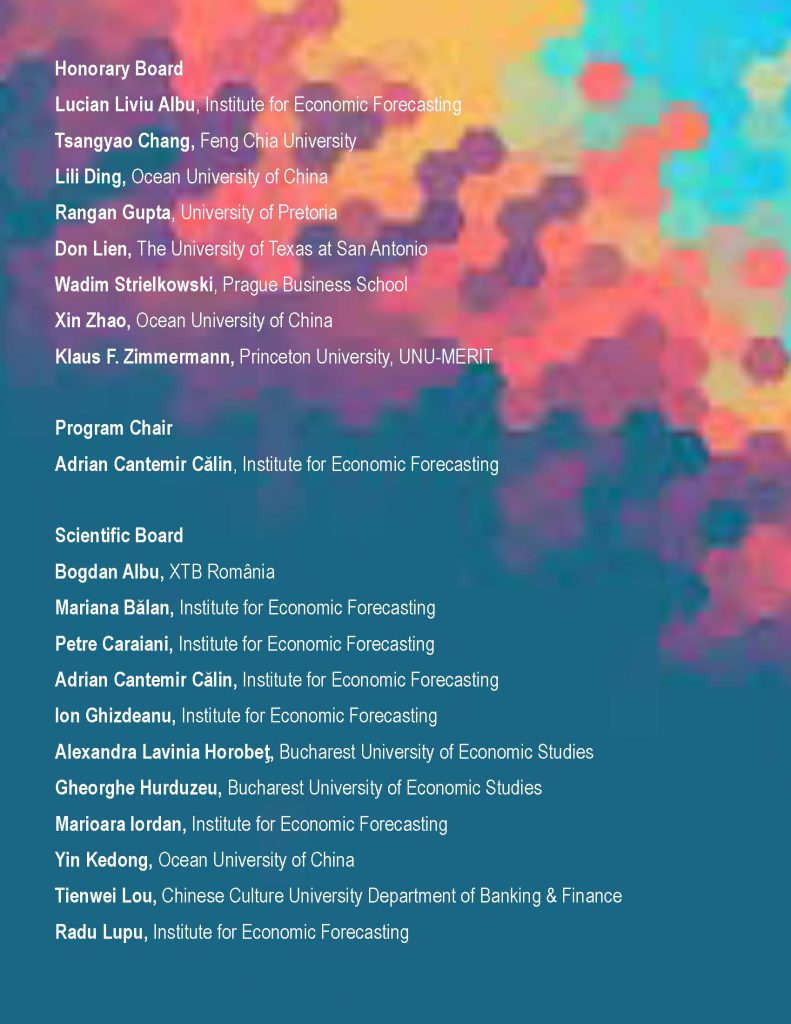
GLO – UM Joint Seminar at the University of Malaya, Kuala Lumpur, Malaysia, on August 21, 2018

21 August 2018 at the University of Malaya, Kuala Lumpur, Malaysia.The Global Labor Organization (GLO) and the Faculty of Economics and Administration of the University of Malaya (UM) start an new joint seminar series:

The GLO-UM Joint Labor Economics Seminar

It is headed by GLO Fellow Professor Niaz Asadullah in his function as the GLO Lead for South-East Asia. He is also the GLO Country Lead Malaysia.

The first speaker will be GLO Fellow Dr Chandravadan Shah, who is an Adjunct Professor at the Centre for International Research on Education Systems (CIRES), Victoria University and Affiliate of Monash University in Australia. He will speak about “Forecasting Labor Demand: International Best Practices”.  For further details see below.

PDF of this agenda: GLO-UM Program

PDF of this flyer: GLO-UM Joint Seminar

GLO Fellow Professor Niaz Asadullah in his function as the GLO Lead for South-East Asia heading the new GLO-UM Joint Labor Economics Seminar in Kuala Lumpur, Malaysia.

Ends;
WISE Labor Conference at Xiamen University, China, on the 8-9 December 2018 with GLO participants

Since years, the Wang Yanan Institute for Studies in Economics (WISE), Xiamen University, China, is organizing an International Symposium on Contemporary Labor Economics together with the Institute for Economic and Social Research (IESR) of Jinan University, and the Department of Economics of the Chinese University of Hong Kong. The purpose of this Symposium is to facilitate the exchange of ideas between Chinese and international scholars on labor economics.

In 2018, the event takes place on December 8-9. The CALL FOR PAPERS is now available. Those interested in participating should submit their papers at http://www.wise.xmu.edu.cn/meetings/LABOR2018. The submission deadline is October 15, 2018.

Klaus F. Zimmermann, President of the Global Labor Organization (GLO) will support the event as one of the keynote speakers. He has provided lectures before at Xiamen University in 2006 and 2009; 2006 together with Richard Freeman and Junsen Zhang at the first 2006 International Symposium on Contemporary Labor Economics.

The eminent keynote speakers of this year are:

  •         Richard Freeman (Harvard University)
  •         Paola Giuliano (University of California, Los Angeles)
  •         Carsten Holz (Hong Kong University of Science and Technology)
  •         Craig McIntosh (University of California, San Diego)
  •         Paul Oyer (Stanford University)
  •         Junsen Zhang (Chinese University of Hong Kong)
  •         Klaus F. Zimmermann (Global Labor Organization, UNU-MERIT & Maastricht University )

Junsen Zhang and Paola Giuliano are also GLO Fellows.

Ends;
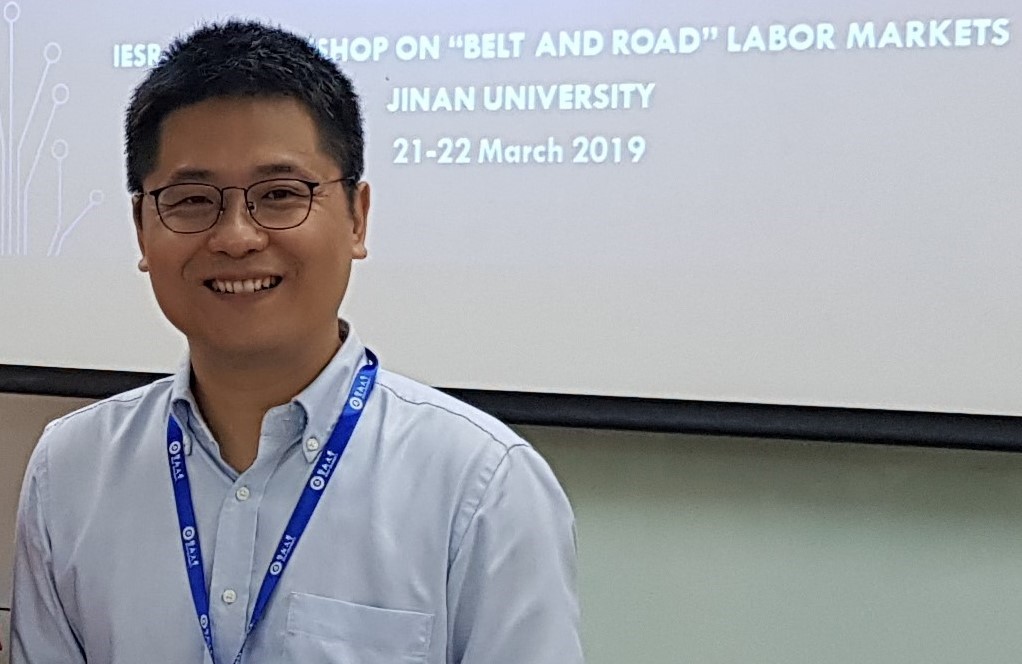
Challenges for European Integration: Monetary, Fiscal and Labor Issues Discussed at Conference in Linz/Austria

Jens Weidmann of the German Bundesbank provided a keynote lecture. Klaus F. Zimmermann of the Global Labor Organization (GLO) spoke in a panel on social cohesion and labor mobility.

The 45th Economics Conference of the Oesterreichische Nationalbank (OeNB) with the Austrian Federal Economic Chamber (WKO) took place on July 5, 2018 – July 6, 2018 in Linz/Austria.

The event was entitled

“Economic and Monetary Union – Deepening and Convergence”.

The most prominent keynote speaker of the first afternoon was Jens Weidmann of the German Bundesbank followed by three panel sessions. Klaus F. Zimmermann (UNU-MERIT and Maastricht University), who is also the President of the Global Labor Organization (GLO), spoke about the role of labor mobility for social cohesion.

“Amid formidable challenges, Europe’s future depends not least on the capacity of its economies to converge toward their best performing peers. The conference at the start of the Austrian EU Presidency analyzed which dimensions matter most for the smooth functioning of Economic and Monetary Union (EMU) and for the convergence of Central, Eastern and Southeastern European (CESEE) countries. The conference shed light on economic, social and territorial cohesion as enshrined in the EU Treaty. Experts from academia, business and politics debated how to prevent economic dispersion, promote deeper integration and ensure sustainable East-West and South-North convergence. They discussed the viability of the institutional framework, deepening of EMU, assessed the Commission’s recent proposals, looked into EU structural and cohesion policies and explored both the potential and policy challenges for CESEE.”

Klaus F. Zimmermann, Angela Pfister & Thomas Liebig — the panelists on social cohesion and migration.

Angela Pfister works for the Austrian Trade Union Federation (ÖGB).

Thomas Liebig (OECD) is a also a Fellow of the Global Labor Organization (GLO).

As Klaus F. Zimmermann argued in his presentation, “Labor mobility is about cooperating in societies or between societies in order to survive and prosper. Hence, migration does not have to be in conflict with social cohesion. Furthermore, it:
►supports the optimal allocation of resources,
►leads to balanced adjustments to asymmetric shocks,
►fights temporary scarcity and deals with shared long-term needs,
►is an indicator of solidarity (see the current “refugee” debate in Europe and the mobility concerns), and
►is of central importance for all countries in the monetary union like the Eurozone.”

Thomas Liebig is co-author of a prominent recent research paper that documents how economies in Europe and the United States have adjusted to asymmetric shocks in the recent Great Recession. It has been the GLO Discussion Paper of the Month in February 2018 and is forthcoming in the Journal of Population Economics.

Jauer, Julia & Liebig, Thomas & Martin, John P. & Puhani, Patrick A., Migration as an adjustment mechanism in the crisis? A comparison of Europe and the United States 2006-2016,  GLO Discussion Paper 178, February 2018. Free download.

Abstract: We estimate whether migration can be an equilibrating force in the labor market by comparing pre-and post-crisis migration movements at the regional level in both Europe and the United States, and their association with symmetric labor market shocks. Based on fixed-effects regressions using regional panel data, we find that Europe’s migratory response to unemployment shocks was almost identical to that recorded in the United States after the crisis. Our estimates suggest that, if all measured population changes in Europe were due to migration for employment purposes – i.e. an upper-bound estimate – up to about a quarter of the asymmetric labor market shock would be absorbed by migration within a year. However, in Europe and especially in the Eurozone, the reaction to a very large extent stems from migration of recent EU accession country citizens as well as of third – country nationals.

See also a recent debate about internal labor mobility in Europe and Austria.

***********************************************************************
From the program of July 5, 2018:

Keynote lecture:
Deepening EMU – Political Integration and Economic Convergence

Jens Weidmann
President, Deutsche Bundesbank

……….
Panel: Social Cohesion – The Role of Labour Mobility
Chair:
Kurt Pribil
Executive Director, Oesterreichische Nationalbank
Panelists:
Thomas Liebig, Senior Migration Specialist, OECD
Angela Pfister, Economic Expert, Austrian Trade Union Federation (ÖGB)
Klaus F. Zimmermann, President | Professor
Global Labor Organization (GLO) | Maastricht University | UNU-MERIT

………

For a link to the Full Program click Program on this page.
******************************************************************************************

Ends;
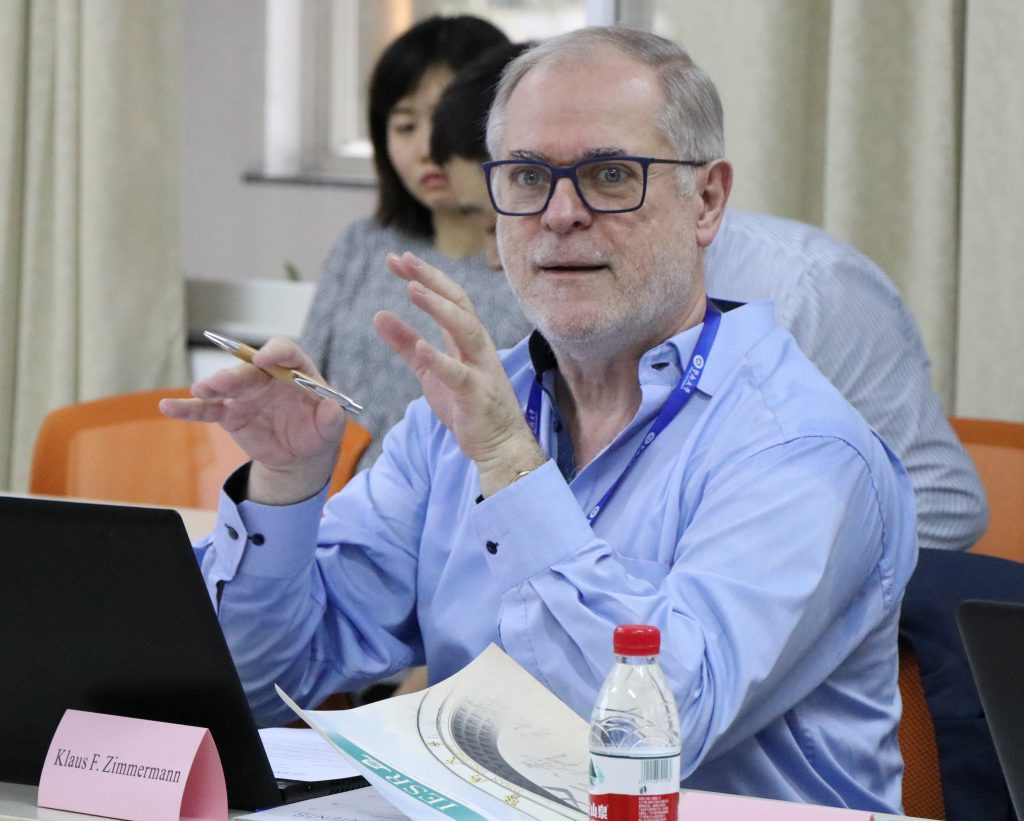
GLO members visited the Swedish Collegium for Advanced Study in Uppsala

GLO Fellow Maria Paradiso and Klaus F. Zimmermann, President of the Global Labor Organization (GLO) both visited the Swedish Collegium for Advanced Study in Uppsala to participate at the annual Class Meeting of the section chairs of Social and Related Sciences (Class A2) of the Academia Europea (AE), the European Academy. The Class Meeting discussed nominations for membership and the future academic work of the class.

GLO Fellow Professor Maria Paradiso is Section Chair of the Section Social Sciences of the Academia Europea (AE) and also affiliated with the University of Sannio, Italy.

GLO President Professor Klaus F. Zimmermann is Section Chair of the Section Economics, Business and Management Sciences of the Academia Europea (AE) and also affiliated with UNU-MERIT & Maastricht University, The Netherlands.

After the Uppsala meeting: Maria Paradiso and Klaus F. Zimmermann at Frankfurt airport changing flights. Both had discussed ways to intensify collaborations between their AE Sections and about research related to their joint research area, migration, including GLO business.

The AE is the Academy of Europe, and the sections of Class A2 are (i) Behavioural Sciences, (ii) Social Sciences, (iii) Economics, Business and Management Sciences and (iv) Law with the respective chairs Ulrich Teichler (University of Kassel, representing Peter Scott), Maria Paradiso, Klaus F. Zimmermann and Dagmar Coester-Waltjen (University of Göttingen). The event was led by Class Chair Björn Wittrock  of the Swedish Collegium for Advanced Study in Uppsala, who also acted as the local host. The Class Meeting discussed nominations for membership and the future academic work of the class.

From the left: Ulrich Teichler, Björn Wittrock, Maria Paradiso, Klaus F. Zimmermann and Dagmar Coester-Waltjen.

From the right: Ulrich Teichler, Dagmar Coester-Waltjen, Maria Paradiso and Klaus F. Zimmermann  in front of the Swedish Collegium for Advanced Study in Uppsala.

Many prominent GLO Fellows are elected distinguished members of the Acedemia Europaea.

Examples are: Lucian Liviu Albu, Torben Andersen, Graziella Bertocchi, Amelie Constant, Partha Dasgupta, Manfred Deistler, Peter Dolton, Gustav Feichtinger, Stepan Jurajda, Martin Kahanec, Kai Konrad, Andreu Mas-Colell, Peter Nijkamp, Karine Nyborg, Jacques Poot, Mirjana Radovic-Markovic, Nina Smith, Rick van der Ploeg, Thierry Verdier, Reinhilde Veugelers, Marie Claire Villeval, Rainer Winkelmann, and Yves Zenou.

GLO and AE have collaborated in various ways, e.g. supporting Central European University (CEU) in Budapest in 2017.

# I stand with CEU! GLO Fellows and Academicians expressed their solidarity at CEU in Budapest

“The Scientist and Policy Making”: MAE & GLO Economists in Budapest

Central European University (CEU) under threat


Over 2015 – 2017, GLO President Klaus F. Zimmermann had hosted the Social and Related Sciences (Class A2) of the Academia Europea (AE) annual Class Meeting in Bonn, twice at his private home, and 2015 at the Institute for the Study of Labor (IZA).

The Section Chairs of Class 2 of the Academia Europaea (AE) met on July 13 – 14, 2015, at the Institute for the Study of Labor (IZA) in Bonn to discuss joint initiatives including the nominations of new AE members.

Zimmermann_Group_2015_small.jpg

The picture has (from the left) Peter Scott, Antoine Bailly, Anne Buttimer (+), Joseph Straus, Aleksandra Nowak, and Klaus F. Zimmermann representing the sections (i) Behavioural Sciences, (ii) Social Sciences, (iii) Economics, Business and Management Sciences, and (iv) Law.

Ends;
International Conference in Berlin: Highlights of EBES25 with GLO & FOM in Berlin

The 25th Conference of the Eurasia Business and Economics Society (EBES) took place on May 23-25, 2018 in Berlin/Germany. It was jointly organized with the Global Labor Organization (GLO) and hosted by the FOM University of Applied Sciences in their Berlin study center. During the conference, 316 papers by 525 researchers from 60 countries were presented. The event is part of a long-term partnership of GLO & EBES and GLO & FOM.

THE FULL CONFERENCE PROGRAM CAN BE ACCESSED HERE.

Further information can be found here: Conference call; EBES Fellow Award; GLO Activities.

This post reports some highlights by presenting a few selected pictures.

Welcome! And “Thank You!” for a perfect local organization: Professor and GLO Fellow Manuela Zipperling (Head of FOM Berlin) receives the “EBES thank you plate” presented by Professor and GLO Fellow Mehmet Huseyin Bilgin (Vice President of EBES and Istanbul Medeniyet University, Istanbul) (right) and assisted by GLO President Klaus F. Zimmermann (left).

GLO President Professor Klaus F. Zimmermann (UNU-MERIT, Maastricht, from the left) addressed the large audience, and Manuela Zipperling (Head of FOM Berlin),  Aylin Akin (Assistant Editor of the EBES Journals), Mehmet Huseyin Bilgin (Vice President of EBES and Istanbul Medeniyet University, Istanbul) and Professor and GLO Fellow Kea Tijdens (University of Amsterdam and WageIndicator Foundation).

GLO Fellows Kea Tijdens and Christoph Kannengießer (CEO, German African Business Association), both chairing and speaking at the GLO Policy Panel on: “Mobilizing Human Resources in Africa”.

GLO Fellow Marco Vivarelli (Catholic University of Milan) during his keynote lecture in the keynote session “The Economics of Technology and Employment”).

Klaus F. Zimmermann during his keynote lecture about “Back to Paradise? Technology and Jobs” in the keynote session on “The Economics of Technology and Employment”.

Mehmet Huseyin Bilgin and Professor and GLO Fellow Sascha Frohwerk (FOM University, Berlin, right) after Frohwerk’s keynote lecture in the keynote session on “The Economics of Technology and Employment” receiving a thank you plate.

On Wednesday May 23, the EBES Fellow Award 2018 was given to Klaus F. Zimmermann, Professor Emeritus of Bonn University and Honorary Professor of the Free University of Berlin. He is also Co-Director of POP at UNU-MERIT and Honorary Professor at Maastricht University and Honorary Professor at Renmin University of China. The award was given to Zimmermann by Marco Vivarelli and Mehmet Huseyin Bilgin.

Wonderful emotions at the Wasserwerk Berlin. GLO Reception for all conference participants.

After the hour…. sightseeing tour of conference participants through Berlin by night. Friends Mehmet Huseyin Bilgin (right) and Klaus F. Zimmermann (left) at the Brandenburg Gate.

Aylin Akin (Assistant Editor of the EBES Journals) and Klaus F. Zimmermann as part of the effective EBES team in front of the Brandenburg Gate. Zimmermann is also a member of the Executive Board of EBES and a member of the Editorial Board of the Eurasian Economic Review.

Managing Editor Ender Demir (Istanbul Medeniyet University) of the Eurasian Business Review with Klaus F. Zimmermann in front of the Brandenburg Gate.

The old West Berlin, view on the Kaiser Wilhelm Memorial Church from a prominent event place near-by enjoying free time and drinks after the very successful EBES25 Berlin conference and a great dinner at Gendarmenmarkt.

Ends;
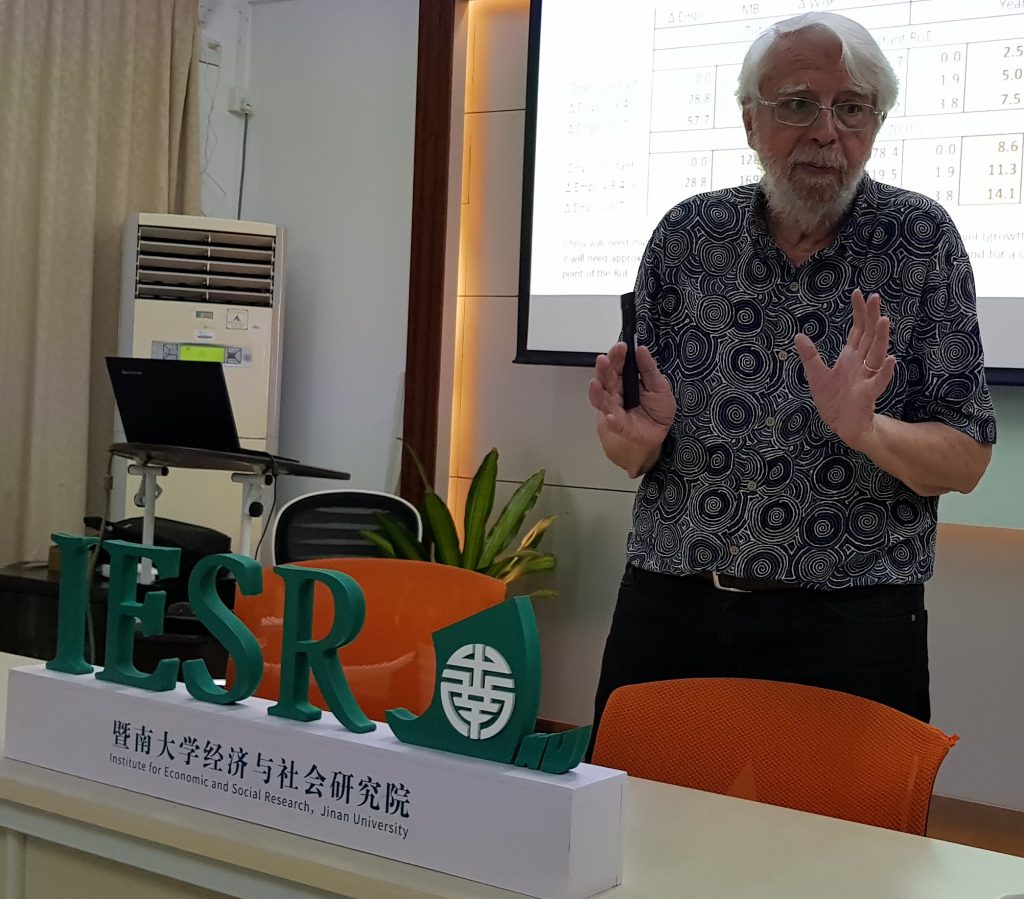
First Renmin University & GLO Conference on the Chinese labor market in Beijing on 20-21 October 2018. Submission deadline is August 15!

The School of Labor and Human Resources at Renmin University of China (Beijing) and the Global Labor Organization (GLO) announce the creation of a new conference series on issues related to the Chinese labor market. The first event will take place on 20 and 21 October 2018 at Renmin University of China, Beijing. Papers or long abstracts should be submitted by 15 August 2018. CONFERENCE FLYER

First Renmin University / GLO Conference
Call for Papers
Renmin University of China, Beijing
20 and 21 October 2018

The Renmin University / GLO Conference aims to provide a platform for researchers working on topics related to the Chinese labor market, including migration, discrimination, health and well-being, education, environment, labor market policies.

The event is organized by the School of Labor and Human Resources at Renmin
University of China and the Global Labor Organization (GLO). It is part of the Chinese Labor Market Cluster of GLO headed by Cluster Lead Corrado Giulietti (University of Southampton).
————————
Keynote speakers
Shi Li (Beijing Normal University)
Xin Meng (Australian National University)
Junsen Zhang (Chinese University of Hong Kong)
Klaus F. Zimmermann (UNU-MERIT and Maastricht University)
————————
Submissions
Papers or long abstracts should be submitted by August 15 2018 at renmin-glo@ruc.edu.cn

Program Committee
Sylvie Démurger (French National Centre for Scientific Research), Shuaizhang
Feng (Jinan University), Corrado Giulietti (University of Southampton), Jun
Han (Renmin University of China)

Ends;
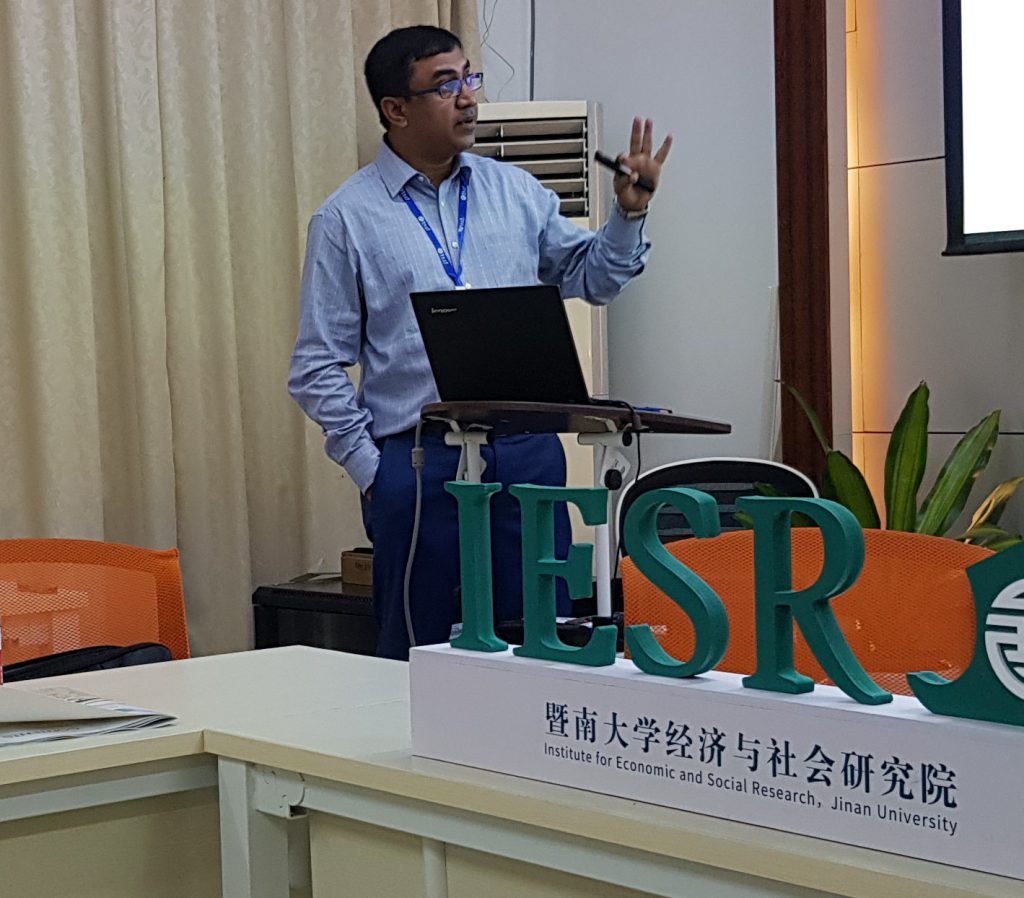
International Summer School on Migration and Asylum joins GLO as institutional supporter. Deadline for next Summer School is June 15, 2018!

The Global Labor Organization (GLO) supports the International Summer School on Migration and Asylum (migrationschool.eu) in Bologna. migrationschool.eu has joined GLO as an institutional supporter.

The International Summer School on Migration and Asylum is a high-level training organized every year in Bologna. The School is organized by the Italian NGO Africa e Mediterraneo with the support of a number of international partners and sponsors.

Starting from 2018, the Summer School focuses on labor market integration of migrants and asylum seekers, exploring this vast topic from several perspectives, such as: analysis and comparisons of current labor integration policies for migrants and refugees in Europe, certifications and recognition of qualifications, migrants’ self-employment and self-enterprise, and more. Lectures and seminars are integrated with field visits and meetings with experts and professionals working in the field, offering contributions and training on how labour integration of migrants and asylum seekers can be translated into practice in different social and economic contexts.

The next International Summer School on Migration and Asylum will be held in Bologna from 9 -14 July 2018.

The deadline for applications is June 15, 2018!                              LINK for Registration

After two successful events, to which around 300 people from more than 40 countries have applied and more than 100 participants were selected, the main focus of this year edition will be the labor integration of migrants and refugees. Participants will be social workers, researchers, students, journalists, members of international organizations and NGOs, national and European public officials, who will have the chance to be involved in moments of training and sharing of experiences, best practices and knowledge on the topic of labor integration of migrants and refugees under the direction of international experts, academics and professionals in the field.

Flyer Summer School 2018 – Labour Integration

Program 2018 of the Summer School.

Faculty

GLO Founding Director Alessio J. G. Brown, Co‐Director of the Centre for Population, Development and Labour Economics (POP) at UNU-MERIT and Maastricht University, is a member of the Scientific Committee of the School. He is also a Speaker on this years program on “Labor Market Integration of Migrants in the European Union”.

From previous event:

Ends;

Second Conference of the Asian and Australasian Society of Labour Economics (AASLE) in Seoul on 13-15 December 2018

The Asian and Australasian Society of Labour Economics (AASLE) was founded in 2017 to promote research and cooperation in Labour and Applied Economics across Asia and Australasia.

The second conference will take place on

13 – 15 December 2018 at Seoul National University, Seoul, South Korea.

Keynote speakers are Richard Blundell (University College London) and Henry Farber (Princeton University), who is also a Fellow of the Global Labor Organization (GLO).

For details see also the conference flyer: Flyer AASLE-Conference-2018

The inaugural conference 2017:

The inaugural conference of the AASLE brought together over 400 researchers and over 120 papers from around the world and was hosted by the Australian National University Research School of Economics in Canberra, Australia, from 7-9 December 2017. The event had been impressive and was a huge success.

The event was organized by Christian Dustmann, University College London; Bob Gregory, Australian National University and GLO; Xin Meng, Australian National University and GLO; John Tang, Australian National University; and Matthew Gray, Australian National University.

See here for the conference program.

The Global Labor Organization (GLO) had early on welcomed this initiative and has supported it through a special GLO session. A large number of GLO Fellows were participating in the event and were presenting papers in other sessions.  The session was chaired by GLO Country Lead Australia, John Haisken-DeNew (Melbourne University).

Ends;