A new GLO Discussion Paper studies a natural experiment in the US to find that there are relevant effects of in utero exposure to polluted water on health at birth.
Author Abstract: In 2014, the city of Flint, MI in the U.S. changed its public water source, resulting in severe water contamination and a public health crisis. Using the Flint Water Crisis as a natural experiment, we estimate the effect of in utero exposure to polluted water on health at birth. Matching vital statistics birth records with various sources of data, we use a Synthetic Control Method (SCM) to identify the causal impact of water pollution on key birth outcomes. Our results suggest that the crisis modestly increased the rate of low birth weight (LBW) by 1.8 percentage points (or 15.5 percent) but had little effect on the length of gestation or rate of prematurity. However, these effects are larger among children born to black mothers, as indicated by an increase in the rate of LBW by 2.5 percentage points (or 19 percent). Children born to white mothers exhibit, on average, a 30.1-gram decrease in birth weight. We find little evidence that the male-to-female sex ratio declines in the overall population, suggesting that the inutero scarring effect of the Flint Water Crisis may dominate the channel of mortality selection. However, we observe a slight decline in the sex ratio among children born to black mothers. Finally, we find no notable change in the fertility rates of either black women or white women in Flint. These results are robust to a rich set of placebo and falsification tests. Our findings highlight the importance and urgency of upgrading U.S. aging, lead-laced water systems in promoting racial and ethnic health equity.
The Global Labor Organization (GLO) is an independent, non-partisan and non-governmental organization that functions as an international network and virtual platform to stimulate global research, debate and collaboration.
A new GLO Discussion Paper suggests that extreme weather conditions, including those associated with climate change, could make children vulnerable to reduced physical activity.
Author Abstract: This study explores the differential impact of weather on time allocation to physical activity and sleep by children and their parents. We use nationally representative data with time use indicators objectively measured on multiple occasions for more than 1,100 child-parent pairs, coupled with daily meteorological data. Employing an individual fixed effects regression model to estimate the causal impact of weather, we find that unfavourable weather conditions, as measured by cold or hot temperatures or rain, cause children to reduce physical activity time and increase sedentary time. However, such weather conditions have little impact on children’s sleep time or the time allocation of their parents. We also find substantial differential weather impact, especially on children’s time allocation, by weekdays/weekends and parental employment status, suggesting that these factors may contribute to explaining the differential weather impact that we observed. Our results additionally provide evidence of adaptation, as temperature appears to have a more pronounced impact on time allocation in colder months and colder regions. The results suggest that extreme weather conditions, including those associated with climate change, could make children vulnerable to reduced physical activity.
The Global Labor Organization (GLO) is an independent, non-partisan and non-governmental organization that functions as an international network and virtual platform to stimulate global research, debate and collaboration.
Interested researchers are cordially invited to submit their abstracts or papers for presentation consideration. The 37th EBES Conference in Berlin will take place on October 6-8 2021 in Hybrid Mode (online and in-person). GLO is a co-organizing partner, and FOM University of Applied Sciences is the local host.
This is aGLO supported event. EBESis theEurasia Business and Economics Society, a strategic partner and institutional supporter of GLO as well as FOM University of Applied Sciences. GLO President Klaus F. Zimmermann is also President of EBES.FOM and GLO will organize own sessions for the event.
Invited Speakers
EBES is pleased to announce that distinguished colleagues Dorothea Schäfer, Klaus F. Zimmermann and Marco Vivarelli will participate as keynote speakers and/or invited editors.
Dorothea Schäfer is the Research Director of Financial Markets at the German Institute for Economic Research (DIW Berlin) and Adjunct Professor of Jönköping International Business School, Jönköping University. She has also worked as an evaluator for the European Commission, the Federal Ministry of Education and Research and Chairwoman of Evaluation Committee for LOEWE (Landes-Offensive zur Entwicklung Wissenschaftlich-ökonomischer Exzellenz des Bundeslandes Hessen). She managed various research projects supported by the Deutsche Forschungsgemeinschaft (DFG), the EU Commission, the Fritz Thyssen Foundation and the Stiftung Geld und Währung. Her researches were published in various journals such as Journal of Financial Stability; German Economic Review; International Journal of Money and Finance; and Small Business Economics. She is regularly invited as an expert in parliamentary committees, including the Finance Committee of the Bundestag and gives lectures on financial market issues in Germany and abroad. She is also a member of the Editorial Board and Editor-in-Chief of the policy-oriented journal “Vierteljahrshefte zur Wirtschaftsforschung” and Editor-in-Chief of Eurasian Economic Review. Her research topics include financial crisis, financial market regulation, financing constraints, gender, and financial markets, financial transaction tax.
Klaus F. Zimmermann is President of the Global Labor Organization (GLO); Co-Director of POP at UNU-MERIT; Full Professor of Economics at Bonn University (em.); Honorary Professor, Maastricht University, Free University of Berlin and Renmin University of China; Member, German Academy of Sciences Leopoldina, Regional Science Academy, and Academia Europaea (Chair of its Section for Economics, Business and Management Sciences). Among others, he has worked at Macquarie University, the Universities of Melbourne, Princeton, Harvard, Munich, Kyoto, Mannheim, Dartmouth College and the University of Pennsylvania. Research Fellow of the Centre for Economic Policy Research (CEPR) and Fellow of the European Economic Association (EEA). Editor-in-Chief of the Journal of Population Economics. Editorial Board of International Journal of Manpower, Research in Labor Economics and Comparative Economic Studies, among others. Founding Director, Institute for the Study of Labor (IZA); Past-President, German Institute for Economic Research (DIW). Distinguished John G. Diefenbaker Award 1998 of the Canada Council for the Arts; Outstanding Contribution Award 2013 of the European Investment Bank. Rockefeller Foundation Policy Fellow 2017; Eminent Research Scholar Award 2017, Australia; EBES Fellow Award 2018. He has published in many top journals including Journal of Economic Perspectives, American Economic Review, Econometrica, Journal of the European Economic Association, Journal of Human Resources, Journal of Applied Econometrics, Public Choice, Review of Economics and Statistics, Journal of Population Economics and Journal of Public Economics. His research fields are population, labor, development, and migration.
Marco Vivarelli is a full professor at the Catholic University of Milano, where he is also Director of the Institute of Economic Policy. He is Professorial Fellow at UNU-MERIT, Maastricht; Research Fellow at IZA; Fellow of the Global Labor Organization (GLO). He is member of the Scientific Executive Board of the Eurasia Business and Economics Society (EBES); member of the Scientific Advisory Board of the Austrian Institute of Economic Research (WIFO, Vienna) and has been scientific consultant for the International Labour Office (ILO), World Bank (WB), the Inter-American Development Bank (IDB), the United Nations Industrial Development Organization (UNIDO) and the European Commission. He is Editor-in-Chief of the Eurasian Business Review, Editor of Small Business Economics, Associate Editor of Industrial and Corporate Change, Associate Editor of Economics EJournal, member of the Editorial Board of Sustainability and he has served as a referee for more than 70 international journals. He is author/editor of various books and his papers have been published in journals such as Cambridge Journal of Economics, Canadian Journal of Economics, Economics Letters, Industrial and Corporate Change, International Journal of Industrial Organization, Journal of Economics, Journal of Evolutionary Economics, Journal of Productivity Analysis, Labour Economics, Oxford Bulletin of Economics and Statistics, Regional Studies, Research Policy, Small Business Economics, Southern Economic Journal, World Bank Research Observer, and World Development. His current research interests include the relationship between innovation, employment, and skills; the labor market and income distribution impacts of globalization; the entry and post-entry performance of newborn firms.
Executive Board
Prof. Klaus F. Zimmermann, UNU-MERIT, Maastricht, and Free University Berlin Prof. Jonathan Batten, University Utara Malaysia, Malaysia Prof. Iftekhar Hasan, Fordham University, U.S.A. Prof. Euston Quah, Nanyang Technological University, Singapore Prof. John Rust, Georgetown University, U.S.A. Prof. Dorothea Schäfer, German Institute for Economic Research DIW Berlin, Germany Prof. Marco Vivarelli, Università Cattolica Del Sacro Cuore, Italy
Abstract/Paper Submission
Authors are invited to submit their abstracts or papers no later than August 20, 2021
General inquiries regarding the call for papers should be directed to ebes@ebesweb.org.
Publication Opportunities
Qualified papers can be published in EBES journals (Eurasian Business Review and Eurasian Economic Review) or EBES proceedings books after a peer review process without any submission or publication fees. EBES journals (EABR and EAER) are published by Springer and both are indexed in the SCOPUS, EBSCO EconLit with Full Text, Google Scholar, ABS Academic Journal Quality Guide, CNKI, EBSCO Business Source, EBSCO Discovery Service, ProQuest International Bibliography of the Social Sciences (IBSS), OCLC WorldCat Discovery Service, ProQuest ABI/INFORM, ProQuest Business Premium Collection, ProQuest Central, ProQuest Turkey Database, ProQuest-ExLibris Primo, ProQuest-ExLibris Summon, Research Papers in Economics (RePEc), Institute of Scientific and Technical Information of China, Naver, SCImago, ABDC Journal Quality List, Cabell’s Directory, and Ulrich’s Periodicals Directory. In addition, while EAER is indexed in the Emerging Sources Citation Index (Clarivate Analytics), EABR is indexed in the Social Science Citation Index (SSCI) and Current Contents / Social & Behavioral Sciences.
Also, all accepted abstracts will be published electronically in the Conference Program and the Abstract Book (with an ISBN number). It will be distributed to all conference participants at the conference via USB. Although submitting full papers are not required, all the submitted full papers will also be included in the conference proceedings in a USB.
After the conference, participants will also have the opportunity to send their paper to be published (after a refereeing process managed by EBES) in the Springer’s series Eurasian Studies in Business and Economics (no submission and publication fees). This is indexed by Scopus. It will also be sent to Clarivate Analytics in order to be reviewed for coverage in the Conference Proceedings Citation Index – Social Science & Humanities (CPCI-SSH). Please note that the 10th, 11th, 12th, 13th, 14th, 15th, 16th, 17th, 18th, 19th, 20th (Vol. 2), 21st, and 24th EBES Conference Proceedings are accepted for inclusion in the Conference Proceedings Citation Index – Social Science & Humanities (CPCI-SSH). Other conference proceedings are in progress.
Important Dates
Conference Date: October 6-8, 2021 Abstract Submission Deadline: August 20, 2021 Reply-by: August 23, 2021* Registration Deadline: August 31, 2021 Submission of the Virtual Presentation: August 31, 2021 Announcement of the Program: September 10, 2021 Paper Submission Deadline (Optional): August 23, 2021** Paper Submission for the EBES journals: November 16, 2021
* The decision regarding the acceptance/rejection of each abstract/paper will be communicated with the corresponding author within a week of submission.
** Completed paper submission is optional. If you want to be considered for the Best Paper Award or your full paper to be included in the conference proceedings in the USB, after submitting your abstract before August 20, 2021, you must also submit your completed (full) paper by August 31, 2021.
Contact
Ugur Can, Director of EBES (ebes@ebesweb.org) Dr. Ender Demir, Conference Coordinator of EBES (demir@ebesweb.org)
A new GLO Discussion Paper finds that living in a student room as a tertiary education student in Belgium (instead of commuting between one’s parental residence and college or university) does not affect exam results.
Author Abstract: We study whether living in a student room as a tertiary education student (instead of commuting between one’s parental residence and college or university) affects exam results. To the best of our knowledge, we are the first to study this relationship beyond cross-sectional analysis. That is, we exploit rich longitudinal data on 1,653 Belgian freshmen students’ residential status and exam scores to control for observed heterogeneity as well as for individual fixed (or random) effects. We find that after correcting for unobserved heterogeneity, the association found in earlier contributions disappears. This finding of no significant impact of living in a student room on exam results is robust for other methods used for causal inference including instrumental variable techniques.
The Global Labor Organization (GLO) is an independent, non-partisan and non-governmental organization that functions as an international network and virtual platform to stimulate global research, debate and collaboration.
A new GLO Discussion Paper confirms that refugees and other migrants are less likely to be employed than natives and the employment gap is much higher for refugees.
Author Abstract: Using the panel data from 1995 to 2019, this paper investigates the labor market integration of non-EU immigrants in Germany. The existing evidence shows that the economic outcomes of migrants are far behind natives. However, immigrants are a heterogeneous group in terms of their motives for migration and skills composition. In this paper, I disentangle immigrants into refugees and other migrants and compare the employment probability gap between refugees, other migrants, and natives. I also examine whether refugees have a lower employment outcome than other migrants and to what extent the level of education, language proficiency, health status, years since migration, and cohort effects explain the employment gap between the refugees and other migrants. The result confirms that refugees and other migrants are less likely to be employed than natives and the employment gap is much higher for refugees. I also find evidence of heterogeneity across gender. Other migrant men do not significantly differ from native men in the probability of being employed. In contrast, refugee women have an economic disadvantage than other migrant women and native women. I find no evidence that health status differences attribute to the employment gap between refugees, other migrants, and natives. Finally, this paper highlights the importance of the migration category when assessing the integration of immigrants into the labor market.
The Global Labor Organization (GLO) is an independent, non-partisan and non-governmental organization that functions as an international network and virtual platform to stimulate global research, debate and collaboration.
A new GLO Discussion Paper finds for South Africa that the highest household income quintiles claim social welfare payments meant for the poor, most likely leading to increased inequality.
Author Abstract: Social welfare payments (SWP) were designed with policy priority to transfer revenue to vulnerable groups, thereby addressing poverty and inequality. Previous studies have shown that SWPs alleviate poverty, but investigating their effect on well-being is sparse. We investigate the relationship between SWPs and the mean subjective well-being (SWB) of a household and analyse it across household income quintiles. We use the National Income Dynamics Study dataset, which is representative of South Africa. South Africa is an example of extremes, as it suffers from poverty, inequality, and low levels of SWB; yet, paradoxically, it has an exemplary social welfare system. We use a range of analytical methods, including ordered probit regressions and a quasi-experimental technique. We find that the highest household income quintiles claim SWPs meant for the poor, most likely leading to increased inequality. Additionally, SWPs are positively related to SWB for quintiles one to four, but the relationship is negative in the highest quintile.
The Global Labor Organization (GLO) is an independent, non-partisan and non-governmental organization that functions as an international network and virtual platform to stimulate global research, debate and collaboration.
A new paper published ONLINE FIRST freely accessible finds that the minimum working age raised from 14 to 16 in Spain, while the compulsory education age remained at 14. The reform decreased mortality at ages 14–29 among men by 6.4% and women by 8.9%, mainly from a reduction in deaths due to traffic accidents. However, the reform also increased mortality for women ages 30–45 by 7%.
by Cristina Bellés-Obrero, Sergi Jiménez-Martín & Judit Vall Castello
Published ONLINE FIRST 2021: Journal of Population Economics READLINK: https://rdcu.be/cq2lY
Author Abstract: In 1980, a few years after its democratization process, Spain raised the minimum working age from 14 to 16, while the compulsory education age remained at 14. This reform changed the within-cohort incentives to remain in the educational system. We use a difference-in-differences approach, where our treated and control individuals only differ in their month of birth, to analyze the gender asymmetries in mortality generated by this change. The reform decreased mortality at ages 14–29 among men by 6.4% and women by 8.9%, mainly from a reduction in deaths due to traffic accidents. However, the reform also increased mortality for women ages 30–45 by 7%. This is driven by increases in HIV mortality, as well as by diseases related to the nervous and circulatory systems. We show that women’s health habits deteriorated as a consequence of the reform, while this was not the case for men. The gender differences in the impact of the reform on smoking and drinking should be understood in the context of the gender equalization process that affected women were experiencing when the reform took place. All in all, these patterns help explain the narrowing age gap in life expectancy between women and men in many developed countries while, at the same time, they provide important policy implications for middle-income countries that are undergoing those gender equalization processes right now.
The Global Labor Organization (GLO) is an independent, non-partisan and non-governmental organization that functions as an international network and virtual platform to stimulate global research, debate and collaboration.
A new GLO Discussion Paper shows that retirement leads to a statistically significant and sizable increase in the probability of making a residential move or the likelihood of becoming outright homeowners.
Author Abstract: This paper provides the first causal evidence on the impact of retirement on housing choices. Our empirical strategy exploits the discontinuity in the eligibility ages for state pension as an instrument for the endogenous retirement decision and controls for time-invariant individual characteristics. The results show that retirement leads to a statistically significant and sizable increase in the probability of making a residential move or the likelihood of becoming outright homeowners. We also find that individuals downsize both physically and financially and tend to move to better neighbourhoods or closer to the coast upon retirement. We additionally discover that some housing adjustments take place up to 6 years before retirement. Moreover, our results reveal significant heterogeneity in the retirement impact by gender, marital status, education, housing tenue, income and wealth. Within couple households, housing mobility choices are primarily influenced by the wife’s retirement while housing downsizing decisions are only affected by the husband’s retirement. The results suggest that failing to address the endogeneity of retirement often under-states the retirement impact on such housing arrangements.
The Global Labor Organization (GLO) is an independent, non-partisan and non-governmental organization that functions as an international network and virtual platform to stimulate global research, debate and collaboration.
A new GLO Discussion Paper evaluates the impact of an economic and financial education program targeted to senior high-school students and finds positive effects.
Author Abstract: Using data from a randomized control trial in Uruguay, we evaluate the impact of an economic and financial education program targeted to senior high-school students. The program is based on an innovative playful approach workshop about monetary policy and financial supervision. We find that the workshop has a positive and significant impact on student knowledge. Our results shed light on the importance of economic and financial education for the youth in developing countries.
The Global Labor Organization (GLO) is an independent, non-partisan and non-governmental organization that functions as an international network and virtual platform to stimulate global research, debate and collaboration.
Author Abstract: Social distancing measures help contain the spread of COVID-19, but actual compliance has varied substantially across space and time. We ask whether cultural differences underlie this heterogeneity using mobility data across Switzerland between February and December 2020. We find that German-speaking cantons decreased their mobility for non-essential activities significantly less than French-speaking cantons. However, we find no such significant differences for bilingual cantons. Contrary to the evidence in the literature, we find that within the Swiss context, high trusting areas exhibited a smaller decline in mobility. Additionally, cantons supporting a limited role of the state in matters of welfare also experienced a smaller reduction in mobility.
The Global Labor Organization (GLO) is an independent, non-partisan and non-governmental organization that functions as an international network and virtual platform to stimulate global research, debate and collaboration.
A new GLO Discussion Paper finds that poverty in Russia has been steadily decreasing, with most of the poor having a transient rather than a chronic nature.
Author Abstract: Hardly any recent study exists that broadly reviews poverty trends over time for Russia. Analyzing the Russian Longitudinal Monitoring Surveys between 1994 and 2019, we offer an updated review of poverty trends and dynamics for the country over the past quarter of century. We find that poverty has been steadily decreasing, with most of the poor having a transient rather than a chronic nature. The bottom 20 percent of the income distribution averages an annual growth rate of 5 percent, which compares favorably with that of 3.3 percent for the whole population. Income growth, particularly the shares that are attributed to labor incomes and public transfers, have important roles in reducing poverty. Our findings are relevant to poverty and social protection policies.
The Global Labor Organization (GLO) is an independent, non-partisan and non-governmental organization that functions as an international network and virtual platform to stimulate global research, debate and collaboration.
A new paper published ONLINE FIRST freely accessible finds that the minimum working age raised from 14 to 16 in Spain, while the compulsory education age remained at 14. The reform decreased mortality at ages 14–29 among men by 6.4% and women by 8.9%, mainly from a reduction in deaths due to traffic accidents. However, the reform also increased mortality for women ages 30–45 by 7%.
by Cristina Bellés-Obrero, Sergi Jiménez-Martín & Judit Vall Castello
Published ONLINE FIRST 2021: Journal of Population Economics READLINK: https://rdcu.be/cq2lY
Author Abstract: In 1980, a few years after its democratization process, Spain raised the minimum working age from 14 to 16, while the compulsory education age remained at 14. This reform changed the within-cohort incentives to remain in the educational system. We use a difference-in-differences approach, where our treated and control individuals only differ in their month of birth, to analyze the gender asymmetries in mortality generated by this change. The reform decreased mortality at ages 14–29 among men by 6.4% and women by 8.9%, mainly from a reduction in deaths due to traffic accidents. However, the reform also increased mortality for women ages 30–45 by 7%. This is driven by increases in HIV mortality, as well as by diseases related to the nervous and circulatory systems. We show that women’s health habits deteriorated as a consequence of the reform, while this was not the case for men. The gender differences in the impact of the reform on smoking and drinking should be understood in the context of the gender equalization process that affected women were experiencing when the reform took place. All in all, these patterns help explain the narrowing age gap in life expectancy between women and men in many developed countries while, at the same time, they provide important policy implications for middle-income countries that are undergoing those gender equalization processes right now.
The Global Labor Organization (GLO) is an independent, non-partisan and non-governmental organization that functions as an international network and virtual platform to stimulate global research, debate and collaboration.
A new GLO Discussion Paper using data of Belgian students finds no statistically significant mediating effect of sleep quality in the relationship between smartphone use and academic performance.
Author Abstract: University students’ smartphone use has recently been shown to negatively affect their academic performance. Surprisingly, research testing the empirical validity of potential mechanisms underlying this relationship is very limited. In particular, indirect effects of negative health consequences due to heavy smartphone use have never been investigated. To fill this gap, we investigate, for the first time, whether deteriorated sleep quality drives the negative impact on academic performance. To this end, we examine longitudinal data on 1,635 students at two major Belgian universities. Based on a combination of a random effects approach and seemingly unrelated regression, we find no statistically significant mediating effect of sleep quality in the relationship between smartphone use and academic performance.
The Global Labor Organization (GLO) is an independent, non-partisan and non-governmental organization that functions as an international network and virtual platform to stimulate global research, debate and collaboration.
A new paper published ONLINE FIRST freely accessible finds that immigration from low-income countries reduces intergenerational mobility and thus steepens the social gradient in natives’ labor market outcomes, whereas immigration from high-income countries levels it.
Author Abstract: We examine how immigration affects natives’ relative prime-age labor market outcomes by economic class background, with class background established on the basis of parents’ earnings rank. Exploiting alternative sources of variation in immigration patterns across time and space, we find that immigration from low-income countries reduces intergenerational mobility and thus steepens the social gradient in natives’ labor market outcomes, whereas immigration from high-income countries levels it. These findings are robust with respect to a wide range of identifying assumptions. The analysis is based on high-quality population-wide administrative data from Norway, which is one of the rich-world countries with the most rapid rise in the immigrant population share over the past two decades. Our findings suggest that immigration can explain a considerable part of the observed relative decline in economic performance among natives with a lower-class background.
The Global Labor Organization (GLO) is an independent, non-partisan and non-governmental organization that functions as an international network and virtual platform to stimulate global research, debate and collaboration.
A new GLO Discussion Paper studies the impact of the European Medicines Agency’s 2021 March 18th statement assuring the public of the safety of Vaxzevria and the immediate reinstatement of the vaccine by most countries to find that survey respondents’ intention to get vaccinated substantially restored.
Author Abstract: Over the first half of March 2021, the majority of European governments suspended Astrazeneca’s Vaxzevria vaccine as a precaution following media reports of rare blood clots. We analyse the impact of the European Medicines Agency’s (EMA) March 18th statement assuring the public of the safety of Vaxzevria and the immediate reinstatement of the vaccine by most countries on respondents’ intention to get vaccinated. By relying on survey data collected in Luxembourg and neighbouring areas between early March and mid-April, we observe that the willingness to be vaccinated was severely declining in the days preceding the EMA statement. We implement a regression discontinuity design exploiting the time at which respondents completed the survey and find that the vaccine reinstatement substantially restored vaccination intentions.
The Global Labor Organization (GLO) is an independent, non-partisan and non-governmental organization that functions as an international network and virtual platform to stimulate global research, debate and collaboration.
A new paper published ONLINE FIRST freely accessible examines the robustness of the optimal lockdown strategy to the postulated social welfare criterion.
Published ONLINE FIRST 2021: Journal of Population Economics FREE READLINK: https://rdcu.be/cpRlF
Pierre Pestieau
Grégory Ponthière
Author Abstract: This paper examines the robustness of the optimal lockdown strategy to the postulated social welfare criterion. We show that utilitarianism can, under some conditions, imply a COVID-19 variant of Parfit’s (1984) Repugnant Conclusion: for any (interior) lockdown with life periods of low quality, there must be a stricter lockdown that is regarded as better, even though this reduces the quality of life periods even more. On the contrary, the ex post egalitarian criterion (giving priority to the worst-off ex post) implies zero lockdown. Varying between its minimal and its maximal levels, the optimal lockdown is not robust to the postulated ethical criterion. We also identify a general ethical dilemma between the goal of saving lives (modeled by the Survivors Number Count axiom) and the goal of giving priority to the worst-off (Hammond Equity).
The Global Labor Organization (GLO) is an independent, non-partisan and non-governmental organization that functions as an international network and virtual platform to stimulate global research, debate and collaboration.
A new GLO Discussion Paper finds that a poverty-reducing effect of collective bargaining institutions stems from the political strength of trade unions in promoting public social spending rather than from any direct effect on earnings inequalities.
Author Abstract: Although many studies point to the significant influence of collective bargaining institutions on earnings inequalities, evidence on how these institutions shape poverty rates across developed economies remains surprisingly scarce. It would be a mistake, though, to believe that the relationship between earnings inequalities and poverty is straightforward. Indeed, whereas earnings inequalities are measured at the individual level, poverty is calculated at the household level using equivalised (disposable) incomes. Accordingly, in most developed countries poverty is not primarily an issue of the working poor. This paper explicitly addresses the relationship between collective bargaining systems and working-age poverty rates in 24 developed countries over the period 1990-2015. Using an up-to-date and fine-grained taxonomy of bargaining systems and relying on state-of-the-art panel data estimation techniques, we find that countries with more centralised and/or coordinated bargaining systems display significantly lower working-age poverty rates than countries with largely or fully decentralised systems. However, this result only holds in a post-tax benefit scenario. Controlling for country-fixed effects and endogeneity, our estimates indeed suggest that the poverty-reducing effect of collective bargaining institutions stems from the political strength of trade unions in promoting public social spending rather than from any direct effect on earnings inequalities.
The Global Labor Organization (GLO) is an independent, non-partisan and non-governmental organization that functions as an international network and virtual platform to stimulate global research, debate and collaboration.
Author Abstract: Elections define representative democracies, but also produce spikes in physical mobility if voters need to travel to electoral rooms. In this paper, we examine whether large-scale, in-person elections propagate the spread of COVID-19. We exploit a natural experiment from the Czech Republic which biannually renews mandates in 1/3 of Senate constituencies rotating according to the 1995 election law. We show that in the second and third weeks after the 2020 elections (held on October 9-10), new COVID-19 infections grow significantly faster in voting compared to non-voting constituencies. A temporarily-related peak in hospital admissions and essentially no changes in test positivity rates suggest that the acceleration is not merely due to increased testing. The acceleration is absent in population above 65, consistently with strategic risk-avoidance by older voters. Our results have implications for postal voting reforms or postponing of large-scale, in-person (electoral) events during viral outbreaks.
The Global Labor Organization (GLO) is an independent, non-partisan and non-governmental organization that functions as an international network and virtual platform to stimulate global research, debate and collaboration.
The meta-analysis provided in a new paper published ONLINE FIRST freely accessible finds that gay men earned less than heterosexual men; lesbian women earned more than heterosexual women, while bisexual men earned less than heterosexual men.
Published ONLINE FIRST 2021: Journal of Population Economics FREE READLINK: https://rdcu.be/cpeNT
Nick Drydakis
Author Abstract: This meta-analysis utilizes 24 papers published between 2012-2020 that focus on earnings differences by sexual orientation. The papers cover the period between 1991 and 2018, and countries in Europe, North America and Australia. The meta-analysis indicates that gay men earned less than heterosexual men. Lesbian women earned more than heterosexual women, while bisexual men earned less than heterosexual men. Bisexual women earned less than heterosexual women. According to the meta-analysis, in data sets after 2010, gay men and bisexual men and women continue to experience earnings penalties, while lesbian women continue to experience earnings premiums. Τhe meta-regression estimates indicate relationships between study characteristics and the estimated earnings effects for sexual minorities. For instance, regions, sexual minority data set sizes, and earnings classifications influence the outcomes. The persistence of earnings penalties for gay men and bisexual men and women in the face of anti-discrimination policies represents a cause for concern and indicates the need for comprehensive legislation and workplace guidelines to guarantee that people receive fair pay and not experience any form of workplace inequality simply because of their sexual orientation.
The Global Labor Organization (GLO) is an independent, non-partisan and non-governmental organization that functions as an international network and virtual platform to stimulate global research, debate and collaboration.
Norway extended to workers the right to self-certify sickness absence from work. A new paper published ONLINE FIRST OPEN ACCESS in the Journal of Population Economics rules out large absence increases after the reform but provides evidence that the policy change caused a reduction in absence for female workers.
Published ONLINE FIRST 2021: Journal of Population Economics OPEN ACCESS: PDF
Author Abstract: This paper examines the impact of a policy reform in a municipality in Norway that extended to workers the right to self-certify sickness absence from work. After the reform, workers were no longer obliged to obtain a certificate from a physician to receive sickness benefits. They could call in sick directly to their line leader and had to engage in a counselling program organized by the employer. To estimate the effect of this reform, we contrast the change in sickness absence among employees who were granted the extended right to self-certify absence with absence among employees who had to obtain a physician’s certificate to be entitled to sickness benefits. We use both a standard difference-in-differences method and the synthetic control method to estimate the effect of the reform. We can rule out large positive effects on absence after the reform, with strong evidence that the policy change actually resulted in a reduction in absence for female workers.
The Global Labor Organization (GLO) is an independent, non-partisan and non-governmental organization that functions as an international network and virtual platform to stimulate global research, debate and collaboration.
A new paper published ONLINE FIRST OPEN ACCESS in the Journal of Population Economics presents evidence to support the hypothesis that personal growth and life appreciation emerge after traumatic events, thereby leading to optimistic perceptions of longevity.
by Bruno Arpino, Pierluigi Conzo & Francesco Salustri
Published ONLINE FIRST 2021: Journal of Population Economics OPEN ACCESS: PDF
Author Abstract: Life-course studies have shown that early-life conditions predict health and socio-economic status in adult life. This study analyzes whether experiencing a traumatic event in childhood, i.e., the Second World War (WW2), affects subjective survival probabilities (SSPs). We rely on a representative sample of European adults who were differentially exposed to WW2 during childhood as a result of their date and place of birth. Results show that exposure to WW2 increases SSPs, with socio-economic and health characteristics not playing a mediating role. War exposure also counterbalances the adverse effects of health impairments on SSPs, but it does not affect health outcomes per se. This fact, jointly with low mortality rates of the cohort under investigation, suggests that selective mortality and post-traumatic stress are not the main channels. Instead, the results support the hypothesis that personal growth and life appreciation emerge after traumatic events, thereby leading to optimistic perceptions of longevity.
The Global Labor Organization (GLO) is an independent, non-partisan and non-governmental organization that functions as an international network and virtual platform to stimulate global research, debate and collaboration.
As the first country in the world, Slovakia implemented and repeated mass rapid antigen testing. A new paper published ONLINE FIRST OPEN ACCESS in the Journal of Population Economics has shown that this had reduced infections substantially.
by Martin Kahanec, Lukáš Lafférs & Bernhard Schmidpeter
Published ONLINE FIRST 2021: Journal of Population Economics OPEN ACCESS: PDF
Martin Kahanec
Author Abstract: In the absence of effective vaccination, mass testing and quarantining of positive cases and their contacts could help to mitigate pandemics and allow economies to stay open. We investigate the effects of repeated mass testing on the COVID-19 pandemic caused by the SARS-CoV-2 virus, using data from the first ever nationwide rapid antigen testing implemented in Slovakia in autumn 2020. After the first round of testing, only districts above an ex ante unknown threshold of test positivity were re-tested. Comparing districts above and below the threshold, we provide evidence that repeated mass antigen testing can temporarily reduce the number of new infections. Our results suggest that mass testing coupled with the quarantining of positive cases and their contacts could be an effective tool in mitigating pandemics. For lasting effects, re-testing at regular intervals would likely be necessary.
The Global Labor Organization (GLO) is an independent, non-partisan and non-governmental organization that functions as an international network and virtual platform to stimulate global research, debate and collaboration.
Published ONLINE FIRST 2021: Journal of Population Economics FREE READLINK: https://rdcu.be/coNTX
Author Abstract: This paper investigates the impact of an increase in life expectancy on the level and the distribution of income in the presence of skill heterogeneity and automation. It shows analytically that an increase in life expectancy induces the replacement of low-skilled workers by automation capital and high-skilled workers. Moreover, it raises the skill premium and has an ambiguous effect on total income. A simulation exercise, based on US data, shows that an increase in life expectancy raises the level as well as the inequality of income. We consider redistributive policies that can mitigate some of the adverse effects of an increase in life expectancy for low-skilled workers.
The Global Labor Organization (GLO) is an independent, non-partisan and non-governmental organization that functions as an international network and virtual platform to stimulate global research, debate and collaboration.
A new GLO Discussion Paper finds that the election of a mayor supported by an anti-immigrant coalition significantly affect immigrants’ location choices only when considering the most recent years.
Author Abstract: We investigate the influence of anti-immigrant parties on foreigners’ location choices in Italy. Considering municipal elections from 2000 to 2018, we create a database that includes a scientific-based classification on the anti-/pro-immigration axis of all Italian political parties based on experts’ opinions. Via the adoption of a regression discontinuity design, we find that the election of a mayor supported by an anti-immigrant coalition significantly affect immigrants’ location choices only when considering the most recent years. This finding does not appear to be driven by the enactment of policies against immigrants but by an ‘inhospitality effect’, which got stronger over time due to the exacerbation of political propaganda at the national and local level.
The Global Labor Organization (GLO) is an independent, non-partisan and non-governmental organization that functions as an international network and virtual platform to stimulate global research, debate and collaboration.
A new GLO Discussion Paper for Italy documents that the economic effects of the COVID-19 shock are dramatically unbalanced across the Italian territory and spatially uncorrelated with the epidemiological pattern of the first wave.
Author Abstract: This paper assesses the impact of the first wave of the pandemic on the local economies of one of the hardest-hit countries, Italy. We combine quarterly local labor market data with the new machine learning control method for counterfactual building. Our results document that the economic effects of the COVID-19 shock are dramatically unbalanced across the Italian territory and spatially uncorrelated with the epidemiological pattern of the first wave. The heterogeneity of employment losses is associated with exposure to social aggregation risks and pre-existing labor market fragilities. Finally, we quantify the protective role played by the labor market interventions implemented by the government and show that, while effective, they disproportionately benefitted the most developed Italian regions. Such diverging trajectories and unequal policy effects call for a place-based policy approach that promptly addresses the uneven economic geography of the current crisis.
The Global Labor Organization (GLO) is an independent, non-partisan and non-governmental organization that functions as an international network and virtual platform to stimulate global research, debate and collaboration.
A new GLO Discussion Paper finds that the implementation of a six-week paid family leave in California/USA reduced the post-neonatal mortality rate with larger effects for infants with married mothers and infant boys.
Author Abstract: One goal of the paid family leave (PFL) is to help working mothers balance their careers and family responsibilities and hence improve the well-being of their infants. However, most studies of PFL on early childhood outcomes have been based on the analyses of surviving infants. If PFL reduces infant deaths, such analyses would understate the effects. Using the linked birth and infant death data in the U.S. with a difference-in-differences framework, I find that the implementation of a six-week PFL in California reduced the post-neonatal mortality rate by 0.135, or it saved approximately 339 infant lives. The effects were driven by death from internal causes, and there were larger effects for infants with married mothers and infant boys. Additional robustness checks and placebo examinations indicate that the effect is not due to confounding factors or contemporary shocks but causal.
The Global Labor Organization (GLO) is an independent, non-partisan and non-governmental organization that functions as an international network and virtual platform to stimulate global research, debate and collaboration.
A new GLO Discussion Paper reflects and evaluates the literature on labour standards against the background of changes in the nature of labour , the workplace and societal needs.
Author Abstract: This chapter deals with the question of whether labour standards are less relevant or more relevant for the new world of work which is vastly different from the old world of work when most labour standards were first established. The various rationales for labour standards are first outlined. This is followed by a discussion of the changing pressures in the labour market that emanate from various forces: the pressures affecting employers and hence their demand for labour; the changing nature of the supply of labour; changes in forms of employee representation and the legal and regulatory environment in which the parties operate; and changes in the workplace and human resource practices within firms. These pressures lead to a changing role and need for labour standards, generally increasing the need, but also tending to reduce the ability of governments to provide such standards. Some illustrative evidence of the impact of specific labour standards is outlined, followed by a discussion of labour standards in developing and emerging economies. The paper concludes with a discussion of possible elements of smart regulation in this area to deal with the difficult trade-off between the increased need for labour standards confronting the reduced ability of governments to provide such standards.
The Global Labor Organization (GLO) is an independent, non-partisan and non-governmental organization that functions as an international network and virtual platform to stimulate global research, debate and collaboration.
A new GLO Discussion Paper finds that international students move away strongly in response to recent political factors suggesting a considerable loss for European economies.
Author Abstract: Over the last decades, Europe attracted an increasing number of internationally mobile students. The related influx of talent into European labour markets constituted an important factor to the knowledge economy. This research addresses the question whether changing political landscapes in Europe, e.g. an increasing scepticism concerning migrants or support for right-wing parties, translated into a diminishing attractiveness of European economies. To this end, international graduates’ staying behaviour in 28 European destination countries is investigated based on bilateral stay rates for almost 150 countries of origin in the years 2009 to 2019. Controlling for various immigration regimes and institutional settings, international graduates are found to display a high level of sensitivity with respect to political dynamics: A distinct dominance of the right political spectrum may lower the number of international graduates willing to stay by up to 50%. The effect is particularly strong in election years when voters’ political preferences become more salient. Eventually, this amounts to a considerable loss for European economies since international graduates have acquired destination country specific human capital and are easily integrated into host societies.
The Global Labor Organization (GLO) is an independent, non-partisan and non-governmental organization that functions as an international network and virtual platform to stimulate global research, debate and collaboration.
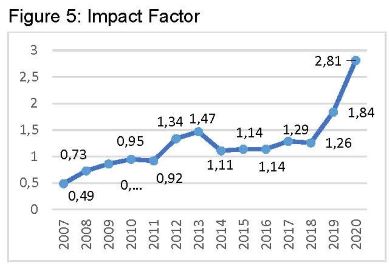
SSCIIMPACT FACTOR2.813 (2020) from 1.840 (2019) & 1.253 (2018) SSCI 5-Year Impact Factor3.318 (2020) from 2.353 (2019) & 2.072 (2018) SSCI Journal Citation Indicator (JCI) = 1.20 (2020).JoPE has 20% more citation impact than the average in its category. Rank by JCI in 2020: 98/549, Q1 Economics; 10/49, Q1 in Demography CiteScore (Scopus): 3.9 (2020) SJR (Scimago Journal Rank): 1.89 (2020) IDEAS/RePEc ranking (July 2021) was 77/2,698 journals (based on the Simple Impact Factor 17.327, for Journals and all years)
The Journal of Population of Economicsis an international quarterly that publishes original theoretical and applied research in all areas of population economics, household economics, and human resources. This report contains information about the Journal and its editorial process in the past year and some earlier years.
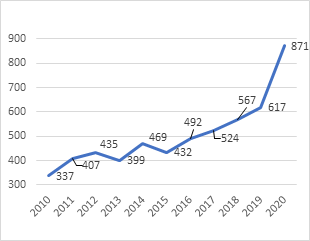
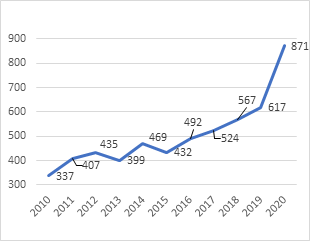
Figure 1: Number of Submissions
The number of submissions has substantially increased over recent years (Figure 1). Between 2011 and 2013, the Journal received about 400 submissions per year; by 2016 the number of submissions neared 500, and in 2020, 871 manuscripts were received. This marks an annual increase of submissions of 41%. Over the decade 2010-2020, the manuscript inflow rose from 337 to a level 2.6 times higher. The additional workload was managed through an efficient desk rejection policy for initial screening.
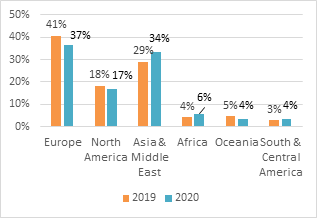
Figure 2: Origin of Submissions
In line with past years, the largest single share of submissions made in 2020 were from corresponding authors based in Europe (Figure 2). Nearly 40% of all submissions originated from Europe, and over one-third (34%) of submissions came from authors based in Asia and the Middle East. Under one-fifth (17%) of submissions came from authors based in North America. The remaining submissions came from contributors from Africa (6%), Oceania (Australia and New Zealand; 4%), and South and Central America (4%).
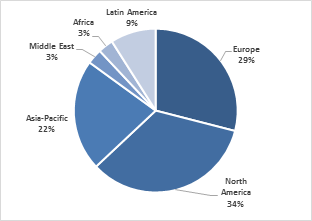
Figure 3: Visits by World Region 2019
Figure 3 contains the internet visits to the Journal on the Springer website from the world regions. With over a third of visits coming from North America and 29% from Europe, followed by the Asia-pacific region (22%), the Journal is globally accessed and read.
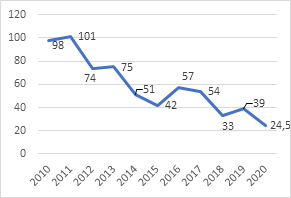
Figure 4: Days to First Decision
Figure 4 shows that the average number of days between submission and first decision has generally declined over time. Despite a slight uptick in the turnaround time for first decisions between 2015 and 2016, which may be partially attributed to the increased volume of submissions, there was a substantial reduction in turnaround time in following years. In 2020, the average time for first decisions was 24 days. The Journal is committed to keep the time between submission and decisions low, including eventual publication. Since 2013 the Journal has executed a desk rejection policy to provide authors with an early signal for better targeting of their work. The large number of submissions combined with an annual quota of 40 manuscripts keeps the acceptance rates of the Journal very low.
Table 1 shows three acceptance rate measures: 1) the number of manuscripts accepted in a given year as a share of all final decisions made in that year; 2) the number of published articles in a given year as a share of all submissions in that year; and; 3) the number of articles published in a given year divided by the number of the previous year’s submissions.
The number of accepted papers (submitted at any point in time) in a given year as a share of all decisions made in that year has shifted over time. The acceptance rate has declined from 7% in 2018 to 4.9% in 2019, slightly increasing in 2020 to 5.4%. If acceptance rate is measured as the number of published manuscripts as a share of total submissions received in that year, the acceptance rate was slightly higher, at 4.6% in 2020 (at 40 manuscripts from among 871 submissions), falling from 7.1% in 2018 and 6.5% in 2019. Measuring the acceptance rate as the number of publications as a share of the number of submissions received in the previous year (2019) would yield a 2020 rate of 6.5%, which is lower than the previous years (7.6% in 2018 and 7.1% in 2019).
Table 1: Acceptance Rates
Index Year
2018
2019
2020
No. accepted / Total No. decisions
7.0%
4.9%
5.4%
No. articles publ. / No. submissions
7.1%
6.5%
4.6%
No. articles publ. / No. subm. prev. year
7.6%
7.1%
6.5%
Table 2 reports the status of papers submitted in the given year for years 2018 – 2020. The Journal’s Impact Factor has increased substantially over time (Figure 5). In 2020 Impact Factor was 2.813, and the 5-year Impact Factor was 3.318. The Journal ranked 104/377 in economics and 10/29 in demography in 2020. As of July 2021, the Journal’s IDEAS/RePEc ranking was 77/2,698 (based on the Simple Impact Factor 17.327, for Journals and all years).
Table 2: Status of Papers Submitted in Particular Year
Outcome/Year
2018
2019
2020
Accept
39
35
47
Revise
68
125
81
Reject
522
551
737
The Journal is ranked in: Social Science Citation Index, Journal Citation Reports/Social Sciences, SCOPUS, EconLit, Google Scholar, EBSCO Discovery Service, ProQuest, CAB International, ABS Academic Journal Quality Guide, Academic OneFile, Academic Search, Bibliography of Asian Studies, CAB Abstracts, CSA Environmental Sciences, Current Contents/Social & Behavioral Sciences, ECONIS, ERIH PLUS, Gale, Global Health, International Bibliography of the Social Sciences (IBSS), JSTOR, OCLC, Research Papers in Economics (RePEc), Review of Population Reviews, SCImago, and Summon by ProQuest.
Klaus F. Zimmermann, Editor-in-Chief Journal of Population Economics
Author Abstract: Recent studies have explored hiring discrimination as an obstacle to former burnout patients. Many workers, however, return to the same employer, where they face an even more severe aftermath of burnout syndrome: promotion discrimination. To our knowledge, we are the first to directly address this issue in research. More specifically, we conducted a vignette experiment with 406 genuine managers, testing the potential of the main burnout stigma theoretically described in the literature as potential mediators of promotion discrimination. Estimates reveal that compared to employees without an employment interruption, former burnout patients have no less than a 34.4% lower probability of receiving a promotion. Moreover, these employees are perceived as having low (1) leadership, (2) learning capacity, (3) motivation, (4) autonomy and (5) stress tolerance, as well as being (6) less capable of taking on an exemplary role, (7) having worse current and (8) future health, (9) collaborating with them is regarded more negatively, and (10) managers perceive them as having fewer options to leave the organisation if denied a promotion. Four of these perceptions, namely lower leadership capacities, stress tolerance, abilities to take on an exemplary role and chances of finding another job explain almost half the burnout effect on promotion probabilities.
The Global Labor Organization (GLO) is an independent, non-partisan and non-governmental organization that functions as an international network and virtual platform to stimulate global research, debate and collaboration.
A new paper published ONLINE FIRST freely accessible finds that changes in legislation across time and between US states during the early twentieth century make parents chose to have fewer children in response to the constraints imposed.
The effect of compulsory schooling laws and child labor restrictions on fertility: evidence from the early twentieth century
by Yannay Shanan
Published ONLINE FIRST 2021: Journal of Population Economics FREE READLINK: https://rdcu.be/cn2UZ
Author Abstract: This paper uses census data to examine the impact of child labor restrictions imposed by compulsory schooling laws and child labor regulation on fertility. By exploiting variation induced by changes in legislation across time and between US states during the early twentieth century, I show that parents chose to have fewer children in response to the constraints imposed on the labor supply of their potential children and the increase in their expected quality. My findings suggest that compulsory schooling laws and child labor regulation contributed to the demographic transition in the US and provide additional empirical support for the notion that financial incentives play a role in determining household fertility decisions.
The Global Labor Organization (GLO) is an independent, non-partisan and non-governmental organization that functions as an international network and virtual platform to stimulate global research, debate and collaboration.
A new GLO Discussion Paper studies various aspects of the wage gaps between formal and informal sector workers in Turkey: The decline in informal employment is not uniform, returns to informality vary significantly, and the rise of white collar low skilled service jobs is mainly responsible for the increasing wage gap at the bottom end.
Author Abstract: Various studies found wage gaps between formal and informal sector workers even after controlling for a number of individual and firm level characteristics. It has also been shown that earnings differentials across these sectors are quite stable over the years. While there is limited amount of research considering the same issues focusing on Turkish labor market, the development of wage gap between formal and informal employment has not been examined. In our paper, we carry this analysis for Turkey and estimate the wage gap between formal and informal sector workers by utilizing the Household Labor Force Survey (LFS) for the period of 2005 and 2019. There are three main findings; first, decline in informal employment is not uniform and especially after 2012 there is a slight increase in the share of informal jobs at the lower end of wage distribution. Second, we demonstrate that returns to informality vary significantly across quantiles even after a matching technique through inverse probability treatment weights are considered. While at the upper end of the distribution, the penalty is extremely small and stable over the years, at the bottom end, the informal sector considerably reduces wages, and the effect becomes larger over time. The negative and increasing penalty is observable well before the refugee inflows. The last part of our analysis looks at the occupational composition within formal and informal sectors over time and points out that the rise of white collar low skilled service (WCLS) jobs among informal employment is mainly responsible for the increasing wage gap for the workers at the bottom end.
The Global Labor Organization (GLO) is an independent, non-partisan and non-governmental organization that functions as an international network and virtual platform to stimulate global research, debate and collaboration.
A new GLO Discussion Paper finds for Italian women that those with stronger stereotypes are more likely to state that they know a victim of violence but are not more likely to state that violence (physical or psychological) is widespread in their area of residence.
Author Abstract: Using a new measure of the strength of gender stereotypes defined at the individual level and based on responses to a survey conducted with more than 4,500 Italian women in July 2020, we show that women with stronger stereotypes are more likely to state that they know a victim of violence but are not more likely to state that violence (physical or psychological) is widespread in their area of residence. They are also more likely to rank behaviours meant to control a victim’s interpersonal contacts and access to financial resources as more serious than physically and sexually violent behaviours and to justify violent acts using distressing, event-specific circumstances (e.g., a period of economic distress) rather than the deep-seated psychological issues of the attackers. Finally, when personal stereotyping is stronger, respondents are more likely to suggest that a hypothetical victim of violence either not react to or deal directly with the partner rather than look for formal help. Using different controls for the impact of the first wave of the COVID-19 pandemic on the respondents’ personal and economic lives does not affect our main findings.
The Global Labor Organization (GLO) is an independent, non-partisan and non-governmental organization that functions as an international network and virtual platform to stimulate global research, debate and collaboration.
The meta-analysis provided in a new GLO Discussion Paper finds that gay men earned less than heterosexual men; lesbian women earned more than heterosexual women, while bisexual men earned less than heterosexual men.
Author Abstract: This meta-analysis utilizes 24 papers published between 2012-2020 that focus on earnings differences by sexual orientation. The papers cover the period between 1991 and 2018, and countries in Europe, North America and Australia. The meta-analysis indicates that gay men earned less than heterosexual men. Lesbian women earned more than heterosexual women, while bisexual men earned less than heterosexual men. Bisexual women earned less than heterosexual women. According to the meta-analysis, in data sets after 2010, gay men and bisexual men and women continue to experience earnings penalties, while lesbian women continue to experience earnings premiums. Τhe meta-regression estimates indicate relationships between study characteristics and the estimated earnings effects for sexual minorities. For instance, regions, sexual minority data set sizes, and earnings classifications influence the outcomes. The persistence of earnings penalties for gay men and bisexual men and women in the face of anti-discrimination policies represents a cause for concern and indicates the need for comprehensive legislation and workplace guidelines to guarantee that people receive fair pay and not experience any form of workplace inequality simply because of their sexual orientation.
The Global Labor Organization (GLO) is an independent, non-partisan and non-governmental organization that functions as an international network and virtual platform to stimulate global research, debate and collaboration.
A new GLO Discussion Paper finds for Switzerland that children born to mothers who were exogenously allocated to an environment that matched their linguistic heritage are on average healthier than those that were allocated to an unfamiliar language environment.
Author Abstract: This paper investigates the intergenerational effect of communication barriers on child health at birth using a natural experiment in Switzerland. We leverage the fact that refugees arriving in Switzerland originate from places that have large shares of French (or Italian) speakers for historical reasons and upon arrival are by law randomly allocated across states that are dominated by different languages but subject to the same jurisdiction. Our findings based on administrative records of all refugee arrivals and birth events between 2010 and 2017 show that children born to mothers who were exogenously allocated to an environment that matched their linguistic heritage are on average 72 gram heavier (or 2.2%) than those that were allocated to an unfamiliar language environment. The differences are driven by growth rather than gestation and manifest in a 2.9 percentage point difference in low birth weight incidence. We find substantial dose-response relationships in terms of language exposure in both, the origin country and the destination region. Moreover, French (Italian) exposed refugees only benefit from French-(Italian-) speaking destinations, but not vice versa. Contrasting the language match with co-ethnic networks, we find that high quality networks are acting as a substitute rather than a complement.
The Global Labor Organization (GLO) is an independent, non-partisan and non-governmental organization that functions as an international network and virtual platform to stimulate global research, debate and collaboration.
A new GLO Discussion Paper for Scottish universities finds a substantial and persistent increase in cases in areas containing halls and evidence of persistent spillovers.
Author Abstract: This paper estimates the impact of University reopenings in Scotland in Autumn 2020 on COVID-19 cases in Scottish neighbourhoods. We geolocate all student halls in Scotland, and merge this data with neighbourhood-level case data. We employ a local differences-indi fferences strategy and tackle two research questions. First, we ask what was the impact of the start of semester on cases in the student neighbourhoods? Next, we turn our attention to the spillover of cases in the nearby communities to student neighbourhoods. University semester start dates in Scotland are staggered over the month of September, and we deal with this by focusing on each start cluster, as well as implementing the Callaway and Sant’Anna (2020) estimator. We find a substantial and persistent increase in cases in areas containing halls and evidence of persistent spillovers. These effects are linked to the group of Universities that started on 14th September, which include large Universities located in the major urban areas. The cases began to rise on 21st September, with 100 extra cases per 100,000 per day, and peaked a week later with 400 additional cases per 100,000 per day, after which they started declining, but persist until the Autumn tightening of coronavirus restrictions bit in November, two months after the restrictions were enacted. Our results invite a re-think of how close contact activities may safely resume.
The Global Labor Organization (GLO) is an independent, non-partisan and non-governmental organization that functions as an international network and virtual platform to stimulate global research, debate and collaboration.
Global Labor Organization (GLO) invites interested young scholars to apply for participation in the 2021-22GLO Virtual Young Scholars Program (GLO VirtYS). This is the third cohort of the successful GLO venture to support career developments of young researchers. It also provides a unique opportunity to interact with the large and very active GLO global network.
A new GLO Discussion Paper studies the brain drain, human capital, and inequality’s institutional impact in a model where a rent-seeking elite taxes residents and voicing affects the likelihood of regime change.
Author Abstract: Brain drain BD, human capital h, and inequality’s institutional impact is examined in a model where a rent-seeking elite taxes residents and voicing affects the likelihood of regime change. We find that BD and h’s impact on institutional quality (Q) are as follows: i) Q is a U-shaped function of BD, with maximum (minimum) at BD = 0 (0 ) BD1, and is maximized at BD = 0; vi) Q increases in a high (low) BD country under a host country’s immigration promotion (restriction); vii) a high BD country’s institutions improve (worsen) under a large (small) reduction in BD; viii) the latter is particularly relevant for small and micro states where BD and Q are likely to be greater than in large but otherwise similar countries.
The Global Labor Organization (GLO) is an independent, non-partisan and non-governmental organization that functions as an international network and virtual platform to stimulate global research, debate and collaboration.
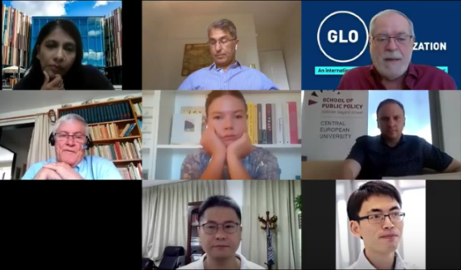
The 36th EBES Conference in Istanbul took place July 1-3, 2021 in Hybrid Mode. A highlight of the second day was the GLO Handbook Session on “Worker Representation, Labor-Management Relations and Labor Standards” chaired by GLO Fellow Uwe Jirjahn. GLO and EBES are collaborating organizations.
The conference included a GLO Handbook Session on “Worker Representation, Labor-Management Relations and Labor Standards” organized and chaired by Uwe Jirjahn (University of Trier and GLO), who is a Section Editor of the Handbook. The event took place on July 2, 3.50-5.50 pm, Istanbul time.
Decent Work and the Quality of Work and Employment Francis Green (University College London and GLO)
Union Membership and Collective Bargaining: Trends and Determinants Claus Schnabel (Universität Erlangen Nürnberg)
Unions, Worker Participation and Worker Well-Being Benjamin Artz (University of Wisconsin-Oshkosh and GLO) and John S. Heywood (University of Wisconsin-Milwaukee and GLO)
Worker Voice and Political Participation in Civil Society John Budd (University of Minnesota and GLO) and Ryan Lamare (University of Illinois and GLO)
Works Councils Jens Mohrenweiser (Bournemouth University)
Board-Level Worker Representation Aleksandra Gregoric (Copenhagen Business School)
The Covid-19 delayed IEA World Congress (“Bali”) now takes place virtually on 2-6 July 2021.
On invitation of the International Economic Association (IEA) the Global Labor Organization (GLO) has organized three sessions for the IEA World Congress, which were recorded by GLO with support of Kent University on June 10, 2021. See program details, report and video access: LINK
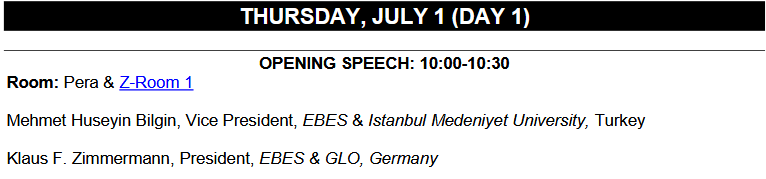
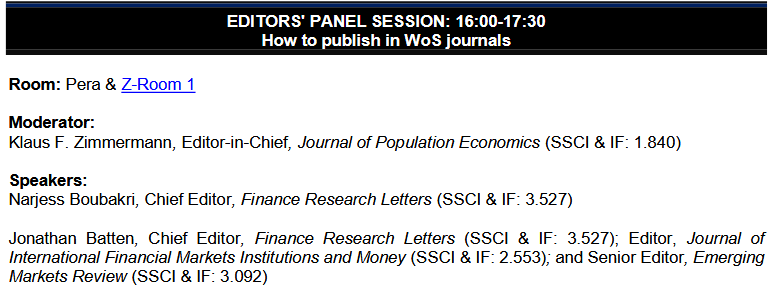
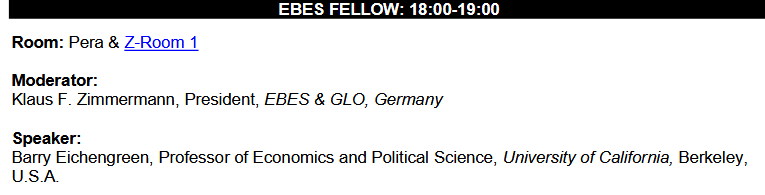
The 36th EBES Conference in Istanbul took place July 1-3, 2021 in Hybrid Mode. Highlights of the first day included a session of journal editors on journal publishing and the presentation of the EBES Fellow Award to Barry Eichengreen who delivered his Fellow Speech on “Financial Regulation for the Platform Economy”. The sessions were chaired by EBES & GLO President Klaus F. Zimmermann. GLO and EBES are collaborating organizations.
Just announced IF Impact Factors for 2020 by Clarivate Web of Science: Journal of Population Economics: 2.813 Finance Research Letters: 5.596 Journal of International Financial Markets Institutions and Money: 4.211 Emerging Markets Review: 4.073 Eurasian Business Review: 3.500
EBES Fellow Speech: “Financial Regulation for the Platform Economy”
Barry Eichengreen is the George C. Pardee and Helen N. Pardee Professor of Economics and Professor of Political Science at the University of California, Berkeley, where he has taught since 1987. He is a Research Associate of the National Bureau of Economic Research (NBER) and Research Fellow of the Centre for Economic Policy Research (CEPR). He worked as Senior Policy Advisor at the IMF. He is a regular monthly columnist for Project Syndicate. He has held Guggenheim and Fulbright Fellowships and has been a fellow of the Center for Advanced Study in the Behavioral Sciences (Palo Alto) and the Institute for Advanced Study (Berlin).
His larger number of books include recently • In Defense of Public Debt (with Asmaa El-Ganainy, Rui Esteves and Kris Mitchener), Oxford University Press, 2021 • How to Achieve Inclusive Growth (edited with Valerie Serra, Asmaa El-Ganainy and Martin Schindler), Oxford University Press, 2021 • The Populist Temptation: Economic Grievance and Political Reaction in the Modern Era (2018), • How Global Currencies Work: Past, Present, and Future, with Livia Chitu and Arnaud Mehl, (2017) • The Korean Economy: From a Miraculous Past to a Sustainable Future (Harvard East Asian Monographs) with Wonhyuk Lim, Yung Chul Park and Dwight H. Perkins, (2015) • Renminbi Internationalization: Achievements, Prospects, and Challenges, co-edited with Masahiro Kawai, (2015) • Hall of Mirrors: The Great Depression, The Great Recession, and the Uses-and Misuses-of History, (2015)
He was awarded the Economic History Association’s Jonathan R.T. Hughes Prize for Excellence in Teaching in 2002 and the University of California at Berkeley Social Science Division’s Distinguished Teaching Award in 2004. He is also the recipient of a doctor honoris causa from the American University in Paris. He is ranked as one of the top economists by IDEAS: 6th (number of works), 22 (average rank score) etc. •His research interests are: exchange rates and capital flows; the gold standard and the Great Depression; the European economy; European integration; the impact of China on the international economic and financial system; IMF policy. His research was published in top journals such as Journal of Economic Perspectives, American Economic Review, Economic Journal, Journal of Economic Dynamics and Control,Economic Policy, and Journal of International Economics.
A new GLO Discussion Paper based on data collected by the World Bank suggests that a significant proportion of surviving firms in Central America are vulnerable to permanent closure.
Author Abstract: This study considers the economic impact of Covid-19 on enterprises in four Central American countries – El Salvador, Guatemala, Honduras and Nicaragua. At the time of the analysis neither the pandemic nor its economic consequences had fully run their course. It is not, therefore, a definitive analysis but it is important to try to draw important lessons as soon as possible. The main focus of the study was the initial impact on labour markets. The analysis was based on World Bank enterprise surveys§ undertaken before the outbreak of Covid-19 and follow-up surveys on the effects of the pandemic, also undertaken by the World Bank. These were combined with data on government containment measures and on morbidity and mortality rates.
The use of enterprise data to analyse labour market issues has some limitations but also many strengths. The data is useful for analysing the consequences for gender equality in employment. Since the demand for labour is a derived demand firm level data provides a clear link to labour market effects. The pandemic has caused a significant loss in sales for many firms, This creates a loss of liquidity which, in turn, has caused some firms to reduce employment, working hours and wages. Government containment measures necessary to save lives such as temporary workplace closures have added to the burden for both firms and employees.
The study starts by using the surveys to identify the important stylised facts. Although some issues are already well documented anecdotally through media reports this provides a more evidence based approach. It also helps identify several issues, such as the impact on gender equality which have received less journalistic attention. The study is further supported by a regression analysis (OLS and SURE) of several key outcomes (changes in sales, employment, the share of females in employment and firm expectations of survival). A limitation of such analysis with any enterprise level is heterogeneity and, in consequence, a risk of sample selection bias. To provide robustness checks we use a matching approach.
The results suggest that a significant proportion of surviving firms are vulnerable to permanent closure. The ability of firms to retain labour depends on sales which are affected by both the pandemic itself and the government containment measures. Only a small proportion of firms have received government support and there is evidence that it could help both firm survival and the retention of labour. There is some doubt whether the four countries have the institutional capacity to provide effective support. If such doubts prove well founded then support may need to be externally driven.
The Global Labor Organization (GLO) is an independent, non-partisan and non-governmental organization that functions as an international network and virtual platform to stimulate global research, debate and collaboration.
A new GLO Discussion Paper on Vietnam suggests that COVID-19 leads to a substantial reduction in household’s per-capita income and to additional 1.7 million poor people.
Author Abstract: Using household data from the Vietnam Household Living Standard Survey (VHLSS) and the sector-specific growth and remittance inflow projections by Asian Development Bank (ADB), this study first estimated the COVID-19 pandemic on income and poverty status of the Vietnamese households, and then simulated the impact of cash transfer programs by the government of Vietnam on the income and poverty status of households. Our simulations suggest that COVID-19 leads to substantial reduction in household’s per-capita income, and results in additional 1.7 million poor people. The cash transfers would be pro-poor and helps bring about 1.2 million people out of poverty. The transfers would be particularly pro-poor for ethnic minority and rural persons and those working in severely affected economic sectors. Based on the findings, we discussed various policies to implement appropriate measures to help households cope with adverse economic impact of COVID-19.
The Global Labor Organization (GLO) is an independent, non-partisan and non-governmental organization that functions as an international network and virtual platform to stimulate global research, debate and collaboration.
Author Abstract: This paper evaluates if and to what extend the risk of becoming Not in Employment, Education or Training (NEET) has worsened during the Covid-19 pandemic in Italy. The analysis is based on a unique dataset from the merging of two sample surveys, the Italian Labor Force Survey and the Institutional Quality Index dataset. We find that the probability of being NEET significantly increased during the pandemic, but heterogeneously between age cohorts and geographical areas. The most affected categories have been young people (aged 25-34) and those living in North-West regions. Females are mostly affected compared to males, especially those experiencing motherhood and living in a Southern province. Investment in education reduces the NEET status, mainly for age-group 25-34 in the South. Participation in the civil society significantly reduces the probability to being NEET. Finally, active policies conducted at regional level are a further educational investment that protect from becoming NEET, although their effectiveness is not significant in the Southern regions. We provide novel evidence to inform policymakers and help building evidence-based policies, tailored on local needs.
The Global Labor Organization (GLO) is an independent, non-partisan and non-governmental organization that functions as an international network and virtual platform to stimulate global research, debate and collaboration.
The 36th EBES Conference in Istanbul will take place on July 1st, 2nd, and 3rd, 2021 in Hybrid Mode.This is aGLO supported event. EBESis theEurasia Business and Economics Society, a strategic partner and institutional supporter of GLO. GLO President Klaus F. Zimmermann is also President of EBES.(Invited speakers see below)
The conference includes a GLO Handbook Session on “Worker Representation, Labor-Management Relations and Labor Standards” organized and chaired by Uwe Jirjahn (University of Trier and GLO), who is a Section Editor of the Handbook. The event takes place on July 2, 3.50-5.50 pm, Istanbul time.
GLO Handbook Session: Worker Representation, Labor-Management Relations and Labor Standards
Decent Work and the Quality of Work and Employment Francis Green (University College London and GLO)
Union Membership and Collective Bargaining: Trends and Determinants Claus Schnabel (Universität Erlangen Nürnberg)
Unions, Worker Participation and Worker Well-Being Benjamin Artz (University of Wisconsin-Oshkosh and GLO) and John S. Heywood (University of Wisconsin-Milwaukee and GLO)
Worker Voice and Political Participation in Civil Society John Budd (University of Minnesota and GLO) and Ryan Lamare (University of Illinois and GLO)
Works Councils Jens Mohrenweiser (Bournemouth University)
Board-Level Worker Representation Aleksandra Gregoric (Copenhagen Business School)
Invited Speakersof EBES 36
EBES is pleased to announce that distinguished colleagues Barry Eichengreen, Narjess Boubakri, Klaus F. Zimmermann and Jonathan Batten will join the conference as the keynote speakers and/or invited editors.
Barry Eichengreen is the George C. Pardee and Helen N. Pardee Professor of Economics and Professor of Political Science at the University of California, Berkeley, where he has taught since 1987. He is a Research Associate of the National Bureau of Economic Research (NBER) and Research Fellow of the Centre for Economic Policy Research (CEPR). He worked as Senior Policy Advisor at the IMF. He is a regular monthly columnist for Project Syndicate. His books include The Populist Temptation: Economic Grievance and Political Reaction in the Modern Era (2018), How Global Currencies Work: Past, Present, and Future, with Livia Chitu and Arnaud Mehl, (2017), The Korean Economy: From a Miraculous Past to a Sustainable Future (Harvard East Asian Monographs) with Wonhyuk Lim, Yung Chul Park and Dwight H. Perkins, (2015), Renminbi Internationalization: Achievements, Prospects, and Challenges, co-edited with Masahiro Kawai, (2015), Hall of Mirrors: The Great Depression, The Great Recession, and the Uses-and Misuses-of History, (2015). He was awarded the Economic History Association’s Jonathan R.T. Hughes Prize for Excellence in Teaching in 2002 and the University of California at Berkeley Social Science Division’s Distinguished Teaching Award in 2004. He is also the recipient of a doctor honoris causa from the American University in Paris. He is ranked as one of the top economists by IDEAS: 6th (number of works), 22 (average rank score) etc. His research interests are: exchange rates and capital flows; the gold standard and the Great Depression; the European economy; European integration; the impact of China on the international economic and financial system; IMF policy. His research was published in top journals such as Journal of Economic Perspectives, American Economic Review, Journal of Economic Dynamics and Control, and Journal of International Economics.
Narjess Boubakri is professor of Finance at American University of Sharjah (AUS) (United Arab Emirates) where she joined in 2007. She is currently the Dean of the School of Business Administration at AUS as well. She has taught at Laval University and HEC Montreal School of Business (Canada). She has also several editorial roles at leading journals such as Editor (Finance Research Letters), Co-Editor (Quarterly Review of Economics and Finance), Associate Editor (Journal of Corporate Finance), and Subject Editor (Emerging Markets Review; Journal of International Financial Markets, Institutions, and Money; and Journal of International Business Policy). Her papers were published in well-known journals such as Journal of Finance, Journal of Financial Economics, Journal of Corporate Finance, Journal of Banking and Finance, and Journal of Accounting Research. Her research has been widely cited (Google Scholar=6,000+). Her research areas are Corporate Governance, Privatization, Corporate Finance, International Finance, Mergers and Acquisitions, Legal and Political Institutions, Lobbying, and Earnings Management.
Klaus F. Zimmermann is President of the Global Labor Organization (GLO); Co-Director of POP at UNU-MERIT; Full Professor of Economics at Bonn University (em.); Honorary Professor, Maastricht University, Free University of Berlin and Renmin University of China; Member, German Academy of Sciences Leopoldina, Regional Science Academy, and Academia Europaea (Chair of its Section for Economics, Business and Management Sciences). Among others, he has worked at Macquarie University, the Universities of Melbourne, Princeton, Harvard, Munich, Kyoto, Mannheim, Dartmouth College and the University of Pennsylvania. Research Fellow of the Centre for Economic Policy Research (CEPR) and Fellow of the European Economic Association (EEA). Editor-in-Chief of the Journal of Population Economics. Editorial Board of International Journal of Manpower, Research in Labor Economics and Comparative Economic Studies, among others. Founding Director, Institute for the Study of Labor (IZA); Past-President, German Institute for Economic Research (DIW). Distinguished John G. Diefenbaker Award 1998 of the Canada Council for the Arts; Outstanding Contribution Award 2013 of the European Investment Bank. Rockefeller Foundation Policy Fellow 2017; Eminent Research Scholar Award 2017, Australia; EBES Fellow Award 2018. He has published in many top journals including Journal of Economic Perspectives, American Economic Review, Econometrica, Journal of the European Economic Association, Journal of Human Resources, Journal of Applied Econometrics, Public Choice, Review of Economics and Statistics, Journal of Population Economics and Journal of Public Economics. His research fields are population, labor, development, and migration.
Jonathan Batten is professor of finance and CIMB-UUM Chair in Banking and Finance at the School of Economics, Finance and Banking at the University Utara Malaysia (Malaysia). Prior to this position, he worked at the Monash University (Australia), Hong Kong University of Science and Technology (Hong Kong), and Seoul National University (Korea). He is a well-known academician who has published articles in many of the leading economics and finance journals and currently serves as the Editor of Emerging Markets Review (SSCI), Journal of International Financial Markets, Institutions & Money (SSCI), and Finance Research Letters (SSCI). He was also the President of EBES from July 2014 till December 2018. His current research interests include: financial market development and risk management; spread modelling arbitrage and market integration; and the investigation of the non-linear dynamics of financial prices.
The Institute for Economic and Social Research (IESR) at Jinan University and the Global Labor Organization (GLO) are jointly organizing the Fourth IESR-GLO Virtual Conference. The conference this year is held from June 24 (Thursday) to June 26 (Saturday), 2021 through Zoom. The theme is Social Safety Net and Welfare Programs. Robert Moffitt and Timothy Smeeding are the keynote speakers. (Feng of IESR right & Zimmermann of GLO left)
Speakers on June 24 from the left: Michael Christl, Jinyuan Yang, Sen Xue Shuaizhang Feng, Robert Moffitt, Klaus F. Zimmermann Feng Chen, Laura V. Zimmermann, Xi Chen
Day 2; June 25:
Program
8.00-11.05 pm Beijing Time / 8:00-11.05 am New York / 1:00-4:05 pm London JUNE 24 (Thursday). Chair:Sen Xue(IESR, Jinan University & GLO)
8.00-8.05 pm Beijing Time / 8:00-8.05 am New York / 1:00-1:05 pm London Opening Remarks by Shuaizhang Feng (IESR, Jinan University & GLO) & Klaus F. Zimmermann (UNU-MERIT, Maastricht University & GLO)
8.05-9.05 pm Beijing Time / 8:05-9.05 am New York / 1:05-2:05 pm London Keynote Lecture:Take-up in Social Assistance Programs: Theory and Evidence Keynote Speaker: Robert Moffitt (Johns Hopkins University)
9.05-9.35 pm Beijing Time / 9:05-9.35 am New York / 2:05-2:35 pm London The Power of Lakshmi: Monetary Incentives for Raising a Girl Nabaneeta Biswas (Marshall University), Christopher Cornwell (University of Georgia) &Laura V. Zimmermann(University of Georgia & GLO). Based on GLO Discussion Paper No. 888. Download PDF.
9.35-10.05 pm Beijing Time / 9:35-10.05 am New York / 2:35-3:05 pm London Grandfathers and Grandsons: Social Security Expansion and Child Health in China Jinyuan Yang (Virginia Tech)& Xi Chen (Yale University & GLO)
10.05-10.35 pm Beijing Time / 10:05-10.35 am New York / 3:05-3:35 pm London Trapped in inactivity? Social Assistance and Labour Supply in Austria Michael Christl (European Commission & GLO) & Silvia De Poli (European Commission)
10.35-11.05 pm Beijing Time / 10:35-11.05 am New York / 3:35-4:05 pm London Does Paid Family Leave Save Infant Lives? Evidence from California Feng Chen(Tulane University & GLO)
8.00-11.00 pm Beijing Time / 8:00-11.00 am New York / 1:00-4:00 pm London June 25 (Friday). Policy Forum on Social Assistance Systems Chair: Klaus F. Zimmermann (UNU-MERIT, Maastricht University & GLO)
8.00-8.45 pm Beijing Time / 8:00-8.45 am New York / 1:00-1:45 pm London Japan. Masayoshi Hayashi (University of Tokyo) Public Assistance in Japan: Current State and Challenges
8.45-9.30 pm Beijing Time / 8:45-9.30 am New York / 1:45-2:30 pm London South Korea. Inhoe Ku(Seoul National University) Social Assistance in South Korea: Policy Developments, Impacts and Implications for Future Reform
9.30-10.15 pm Beijing Time / 9:30-10.15 am New York / 2:30-3:15 pm London Germany. Alexander Spermann (FOM/Cologne, University of Freiburg and GLO) Basic Income in Germany 1991-2021: Challenges After Reunification, Hartz Reforms and the Current Reform Debate
10.15-11.00 pm Beijing Time / 10.15-11.00 am New York / 3:15-4:00 pm London Sweden. Björn Gustafsson (University of Gothenburg and GLO) Social Assistance in Sweden – Provision, Recipients and Challenges
8.00-11.00 pm Beijing Time / 8:00-11.00 am New York / 1:00-4:00 pm London JUNE 26 (Saturday). Chair: Shuaizhang Feng (IESR, Jinan University & GLO)
8.00-9.00 pm Beijing Time / 8:00-9.00 am New York / 1:00-2:00 pm London Keynote Lecture:Poverty and Income Support Around the World: China, India and Asia in Comparative Perspective Keynote Speaker: Timothy Smeeding (University of Wisconsin–Madison)
9.00-9.30 pm Beijing Time / 9:00-9.30 am New York / 2:00-2:30 pm London The Health of Disability Insurance Enrollees: An International Comparison Enrica Croda (Ca’Foscari University of Venice & GLO),Jonathan Skinner (Dartmouth College) & Laura Yasaitis (Dartmouth College)
9.30-10.00 pm Beijing Time / 9:30-10.00 am New York / 2:30-3:00 pm London The Unintended Effect of Medicaid Aging Waivers on Informal Caregiving Xianhua (Emma) Zai(Ohio State University & GLO)
10.00-10.30 pm Beijing Time / 10:00-10.30 am New York / 3:00-3:30 pm London Housing Vouchers, Labor Supply and Household Formation: A Structural Approach Ning Zhang (University of Pittsburgh)
10.30-11.00 pm Beijing Time / 10:30-11.00 am New York / 3:30-4:00 pm London The Structure and Incentives of a COVID related Emergency Wage Subsidy Jules Linden (National University Ireland Galway & Luxembourg Institute of Socio-Economic Reesarch), Cathal O’Donoghue (National University Ireland Galway), Denisa M. Sologon (Luxembourg Institute of Socio-Economic Reesarch)
Keynote speakers
Robert Moffitt on June 24; 8.00 pm Beijing Time
Robert A. Moffitt is the Krieger-Eisenhower Professor of Economics at Johns Hopkins University and holds a joint appointment at the Johns Hopkins Bloomberg School of Public Health. He obtained his Ph.D. degree from Brown University. His research interests are in the areas of labor economics and applied microeconometrics, with a special focus on the economics of issues relating to the low-income population in the U.S.. A large portion of his research has concerned the labor supply decisions of female heads of family and its response to the U.S. welfare system. He has published on the AFDC, Food Stamp, and Medicaid programs.
Moffitt has served as Chief Editor of the American Economic Review, Coeditor of the Review of Economics and Statistics, Chief Editor of the Journal of Human Resources, and as Chair of the National Academy of Sciences Panel to Evaluate Welfare Reform. He is currently editor of Tax Policy and the Economy.
Moffitt is also a Fellow of the Econometric Society, a Fellow of the Society of Labor Economists, a member of the National Academy of Sciences, a recipient of a MERIT Award from the National Institutes of Health, a recipient of a Guggenheim Fellowship, a Fellow of the American Academy of Arts and Sciences, and Past President of the Population Association of America.
Timothy Smeeding on June 26; 8.00 pm Beijing Time
Timothy Smeeding is Lee Rainwater Distinguished Professor of Public Affairs and Economics of the University of Wisconsin–Madison. He obtained his Ph.D. in Economics from the University of Wisconsin–Madison. He was director of the Institute for Research on Poverty from 2008–2014 and was the founding director of the Luxembourg Income Study from 1983-2006. He was named the John Kenneth Galbraith Fellow, American Academy of Political and Social Science in 2017.
Professor Smeeding’s recent work has been on social and economic mobility across generations, inequality of income, consumption and wealth, and poverty in national and cross-national contexts.
His recent publications include: SNAP Matters: How Food Stamps Affect Health and Well Being (Stanford University Press, 2015); Monitoring Social Mobility in the 21st Century (Annals of the American Academy of Political and Social Science, 2015); From Parents to Children: The Intergenerational Transmission of Advantage (Russell Sage Foundation, 2012); Persistence, Privilege and Parenting: The Comparative Study of Intergenerational Mobility (Russell Sage Foundation, 2011); The Handbook of Economic Inequality (Oxford University Press, 2009); Poor Kids in a Rich Country: America’s Children in Comparative Perspective (Russell Sage Foundation, 2003); and The American Welfare State: Laggard or Leader?, (Oxford University Press, 2010).
Policy Forum on Social Assistance Systems
June 25th: 8:pm-11pm Beijing Time/ 8:00am-11am New York / 1:00pm-4:00pm London Chair: Klaus F. Zimmermann (UNU-MERIT, Maastricht University & GLO)
8:00-8:45 pm: Japan. Masayoshi Hayashi (University of Tokyo) Public Assistance in Japan: Current State and Challenges
8:45-9:30 pm: Korea. Inhoe Ku(Seoul National University) Social Assistance in South Korea: Policy Developments, Impacts and Implications for Future Reform
9:30-10:15 pm: Germany. Alexander Spermann (FOM/Cologne, University of Freiburg and GLO) Basic Income in Germany 1991-2021: Challenges After Reunification, Hartz Reforms and the Current Reform Debate
10:15-11:00 pm: Sweden. Björn Gustafsson (University of Gothenburg and GLO) Social Assistance in Sweden – Provision, Recipients and Challenges
Masayoshi Hayashi (University of Tokyo) Professor of Economics at the University of Tokyo, and the President of the Japan Institute of Public Finance. He received a Ph.D. in Economics from Queen’s University at Kingston, Canada. His research interests include redistribution, taxation and fiscal federalism.
Inhoe Ku(Seoul National University) Professor at the Department of Social Welfare, Seoul National University. He is currently working as the President of the Korean Academy of Social Welfare. His research has been focusing on poverty, inequality and social policy.
Alexander Spermann (FOM/Cologne, University of Freiburg and GLO) Has started his research on social assistance more than thirty years ago. After finishing his dissertation and habilitation at the University of Freiburg, he held leading positions at international research institutes (ZEW, IZA) and is currently Professor of Economics at FOM Cologne and University of Freiburg. He has been a regular contributor to the media for decades.
Björn Gustafsson (University of Gothenburg and GLO) Professor Emeritus, University of Gothenburg, Sweden. He has published several papers on social assistance in Sweden. Since the 1990s he has also studied various aspects on income among Chinese households.
From the left: Masayoshi Hayashi, Inhoe Ku, Alexander Spermann, and Björn Gustafsson
A new paper published ONLINE FIRST freely accessible finds that commodity shocks lead to an increase in the number of births and the birth rate in Chile.
Baby commodity booms? The impact of commodity shocks on fertility decisions and outcomes
by Francisco Gallego & Jeanne Lafortune
Published ONLINE FIRST 2021: Journal of Population Economics FREE READLINK: https://rdcu.be/cnd2y
Author Abstract: This paper uses international commodity prices and local natural resource endowments as a source of plausibly exogenous variation in local Chilean economic conditions to study how these shocks impact fertility behavior of families in a small, emerging open economy where non-marital fertility is common but parental obligations are not well enforced. We find that these commodity shocks lead to an increase in the number of births and the birth rate. We argue that these results are consistent with most women experiencing an income effect and a limited substitution effect from commodity booms. This is confirmed by looking at groups that would have experienced a larger income than substitution effect: higher-order births, births within marital relationships, and those by mothers who do not experience an increase in their employment probability respond more strongly to these commodity booms.
The Global Labor Organization (GLO) is an independent, non-partisan and non-governmental organization that functions as an international network and virtual platform to stimulate global research, debate and collaboration.
A new GLO Discussion Paper finds that an increase in national teams’ performance in international cups is associated with a drop in birth rates nine months after the event.
Author Abstract: Does national team performance boost birth rates? We compiled a unique dataset combining country-level monthly birth rates for 50 European countries, along 56 years, with measures of national teams’ performance in 27 international football events. We find that an increase in national teams’ performance in international cups is associated with a drop in birth rates nine months after the event. We hypothesize that these results might be explained by individuals’ time allocation choices.
The Global Labor Organization (GLO) is an independent, non-partisan and non-governmental organization that functions as an international network and virtual platform to stimulate global research, debate and collaboration.
The Institute for Economic and Social Research (IESR) at Jinan University and the Global Labor Organization (GLO) are jointly organizing the Fourth IESR-GLO Virtual Conference. The conference this year will be held from June 24 (Thursday) to June 26 (Saturday), 2021 through Zoom. The theme is Social Safety Net and Welfare Programs. Robert Moffitt and Timothy Smeeding are the keynote speakers. To register see below.
The IESR-GLO annual conference is aimed to provide a platform for scholars and experts to exchange ideas on the current pressing economic issues through presentations of high-quality academic papers and policy discussions. Previous IESR-GLO Conferences have covered topics such as the Economics of Covid-19 in 2020 and on the Labor Markets in Belt and Road countries in 2019. (Feng of IESR right & Zimmermann of GLO left)
To participate
No participation fee. For registration, please click the link: https://www.wjx.cn/vj/mKRDcqR.aspx
8.00-11.05 pm Beijing Time / 8:00-11.05 am New York / 1:00-4:05 pm London JUNE 24 (Thursday). Chair:Sen Xue(IESR, Jinan University & GLO)
Speakers on June 24 from the left: Michael Christl, Jinyuan Yang, Sen Xue Shuaizhang Feng, Robert Moffitt, Klaus F. Zimmermann Feng Chen, Laura V. Zimmermann, Xi Chen
8.00-8.05 pm Beijing Time / 8:00-8.05 am New York / 1:00-1:05 pm London Opening Remarks by Shuaizhang Feng (IESR, Jinan University & GLO) & Klaus F. Zimmermann (UNU-MERIT, Maastricht University & GLO)
8.05-9.05 pm Beijing Time / 8:05-9.05 am New York / 1:05-2:05 pm London Keynote Lecture:Take-up in Social Assistance Programs: Theory and Evidence Keynote Speaker: Robert Moffitt (Johns Hopkins University)
9.05-9.35 pm Beijing Time / 9:05-9.35 am New York / 2:05-2:35 pm London The Power of Lakshmi: Monetary Incentives for Raising a Girl Nabaneeta Biswas (Marshall University), Christopher Cornwell (University of Georgia) &Laura V. Zimmermann(University of Georgia & GLO)
9.35-10.05 pm Beijing Time / 9:35-10.05 am New York / 2:35-3:05 pm London Grandfathers and Grandsons: Social Security Expansion and Child Health in China Jinyuan Yang (Virginia Tech)& Xi Chen (Yale University & GLO)
10.05-10.35 pm Beijing Time / 10:05-10.35 am New York / 3:05-3:35 pm London Trapped in inactivity? Social Assistance and Labour Supply in Austria Michael Christl (European Commission & GLO) & Silvia De Poli (European Commission)
10.35-11.05 pm Beijing Time / 10:35-11.05 am New York / 3:35-4:05 pm London Does Paid Family Leave Save Infant Lives? Evidence from California Feng Chen (Tulane University & GLO)
Using data for young Romanians, a new GLO Discussion Paper finds that it is external religiosity that interacts with weaker addictive behaviors like smoking, drinking and using drugs.
Author Abstract: While under communism, identity-providing religion was suppressed, religiosity is strong today even among the youth in post-communist countries. This provides an appropriate background to investigate how external and internal religiosity relates to addictive behaviors like smoking, drinking and drugs among the young. This study shows that not religion as such or internal religiosity, but largely observable (external) religiosity prevents them from wallowing those vices.
The Global Labor Organization (GLO) is an independent, non-partisan and non-governmental organization that functions as an international network and virtual platform to stimulate global research, debate and collaboration.