A new GLO Discussion Paper finds that the higher the level of perceived income inequality is, the lower is the individual’s perception of social standing.
Author Abstract: This paper analyzes how perceived income inequality is associated with subjective well-being. Using four waves of the “Social Inequality” module of the International Social Survey Programme, I show that the higher the level of perceived income inequality is, the lower the individual’s perception of her social standing, even if objective income inequality and preferences for the legitimate level of income inequality are controlled for. The results are robust to the measure of perceived inequality and the choice of the outcome variable. The analysis also provides evidence that the estimated association is weaker for individuals with higher income, higher education, and countries without postcommunist history. Overall, the results suggest that not only do objective inequality and perception of fairness have consequences regarding subjective well-being but also the perceived level of income inequality itself.
The Global Labor Organization (GLO) is an independent, non-partisan and non-governmental organization that functions as an international network and virtual platform to stimulate global research, debate and collaboration.
Author Abstract: Kassenboehmer and DeNew (2012) claim that there is no well-being age U-shape effect for Germany, when controlling for fixed effects and respondent experience and interviewer characteristics in the German Socio-Economic Panel, 1994-2006. We re-estimate with a longer run of years and restrict the age of respondents to those under seventy and find the well-being age U-shape effect is neither flat nor trivial.
The Global Labor Organization (GLO) is an independent, non-partisan and non-governmental organization that functions as an international network and virtual platform to stimulate global research, debate and collaboration.
A new GLO Discussion Paper finds that workers with no written contract of employment, receiving hourly wages lower than the national hourly minimum wages, and experiencing insults and/or threats in their present job experience worse physical health and increased levels of depression.
Author Abstract: Τhe study examines whether adverse working conditions for immigrants in Greece bear an association with deteriorated physical health and increased levels of depression during 2018 and 2019. Findings indicate that workers with no written contract of employment, receiving hourly wages lower than the national hourly minimum wages, and experiencing insults and/or threats in their present job experience worse physical health and increased levels of depression. The study found that the inexistence of workplace contracts, underpayment, and verbal abuse in the workplace may coexist. An increased risk of underpayment and verbal abuse reveals itself when workers do not have a contract of employment and vice versa. Immigrant workers without a job contract might experience a high degree of workplace precariousness and exclusion from health benefits and insurance. Immigrant workers receiving a wage lower than the corresponding minimum potentially do not secure a living income, resulting in unmet needs and low investments in health. Workplace abuse might correspond with vulnerability related to humiliating treatment. These conditions can negatively impact workers’ physical health and foster depression. Policies should promote written employment contracts and ensure a mechanism for workers to register violations of fair practices.
The Global Labor Organization (GLO) is an independent, non-partisan and non-governmental organization that functions as an international network and virtual platform to stimulate global research, debate and collaboration.
Interested researchers are cordially invited to submit their abstracts or papers for presentation consideration. The 37th EBES Conference will take place ONLINE ONLY on October 6-8 2021. GLO is a co-organizing partner, and FOM University of Applied Sciences is the local host supporting the event from Berlin.
This is aGLO supported event. EBES, theEurasia Business and Economics Society, and FOM University of Applied Sciencesboth are strategic partners and institutional supporters of GLO. GLO President Klaus F. Zimmermann is also President of EBES.FOM and GLO contribute own sessions as listed below.
Authors are invited to submit their abstracts or papers no later than September 17, 2021.
9.00 – 9.45. Welcome Speeches: Mehmet Bilgin (EBES & GLO), Manuela Zipperling (FOM & GLO), and Azita Berar Awad (Graduate Institute of International and Development Studies, Geneva, & GLO) Opening Lecture: Klaus F. Zimmermann (UNU-MERIT, Free University Berlin & GLO) The Future of Global Mobility Chair: Mehmet Bilgin (Istanbul Medeniyet University, EBES & GLO)
15.15-16.15. Keynote Speech David G. Blanchflower (Dartmouth College & GLO) The Economics of Walking About and Predicting Unemployment Chair: Matloob Piracha (University of Kent & GLO)
16.30-17.15. EBES Journals Session Chair: Klaus F. Zimmermann (EBES President & GLO) with Dorothea Schäfer (DIW Berlin, Jönköping University & GLO), Editor-in-Chief of Eurasian Economic Review, and Marco Vivarelli (Catholic University of Milano & GLO), Editor-in-Chief of the Eurasian Business Review.
Thursday, October 7:
9.00-11.00. FOM-GLO Session Chair: Alexander Spermann (FOM University of Applied Sciences, Cologne, Freiburg University and GLO)
Monika Wohlmann (FOM University of Applied Science): The European Central Bank’s Strategy Review and the Management of Inflation Expectations
Sascha Frohwerk (FOM University of Applied Sciences, Berlin, Hasso-Plattner-Institute, Potsdam and GLO): Retail Location Choice Models. A Comparison of Gravitation and Logit Model
Andreas Oberheitmann (Tsinghua University, FOM and GLO): Development of a Low Carbon Economy in Wuxi City. An Example of Climate Change Mitigation in China on the Local Level.
Michael Drewes (FOM University of Applied Sciences, Mannheim) and Luca Rebeggiani (FOM University of Applied Sciences, Bonn): Private vs. Public Financing of Sport Stadia in Germany – An Empirical Analysis.
Sascha Frohwerk (FOM University of Applied Sciences, Berlin, Hasso-Plattner-Institute, Potsdam and GLO), Carsten Kruppe and Holger Wassermann: Evolution or Revolution: The Entry of New Company Successors in Germany
Kai Klotz and Alexander Spermann (FOM University of Applied Sciences, Cologne, Freiburg University and GLO): Did the Refugee Crisis Cause the Rise of Right-wing Parties? Empirical Evidence from East Germany.
14.00-15.00. Plenary Speech joint with the monthly GLO Seminar Sriya Iyer (University of Cambridge and GLO): Religion and Mental Health Chair: Olga Popova (Leibniz Institute for East and Southeast European Studies, CERGE-EI & GLO)
Note: The session relates to the Springer Nature Handbook project“Labor, Human Resources and Population Economics”supported by the GLO network.
15.15 – 17.15. GLO Session Migration I Chair: Cynthia Bansak (St. Lawrence University & GLO)
Note: The session relates to the Springer Nature Handbook project“Labor, Human Resources and Population Economics”supported by the GLO network.
Sonia Plaza (World Bank & GLO): Measuring Migration
Massimiliano Tani (University of New South Wales & GLO) & Matloob Piracha (University of Kent & GLO): Migration and Education
Cinzia Rienzo ( University of Brighton & GLO): Performance of Economic Migrants
Cynthia A. Bansak (St. Lawrence University & GLO), Nicole Simpson (Colgate University & GLO) and Madeline Zavodny (University of North Florida & GLO): Immigrants and Their Effects on Labor Market Outcomes of Natives
Chunbei Wang (University of Oklahoma & GLO) & Magnus Lofstrom (Public Policy Institute of California & GLO): Immigrant Entrepreneurs
Friday, October 8:
14.15 – 16.15. GLO SessionFamily & Household Economics Chair: Victoria Vernon (SUNY Empire State College & GLO)
Note: The session relates to the Springer Nature Handbook project“Labor, Human Resources and Population Economics”supported by the GLO network.
Effrosyni Adamopoulou (University of Mannheim & GLO): Infidelity
Juan Carlos Campaña (Antonio de Nebrija University), José Ignacio Giménez-Nadal (University of Zaragoza) & José Alberto Molina (University of Zaragoza & GLO): Time-Use Surveys
Benjamin Scharadin (Colby College): Household Food Expenditures and Diet Quality
Daniel Fernandez-Kranz (IE Business School, Madrid) & Jennifer Roff (Queens College and the Graduate Center, CUNY): Child Custody Laws and Household Outcomes
Irene Mosca (Maynooth University & GLO) and Robert E. Wright (University of Glasgow & GLO): Economics of Marriage Bars
16.30 – 18.30. GLO Session Migration II Chair: Marina Murat (University of Modena and Reggio Emilia & GLO)
Note: The session relates to the Springer Nature Handbook project“Labor, Human Resources and Population Economics”supported by the GLO network.
Jakub Lonsky (University of Liverpool & GLO) & Osea Giuntella (University of Pittsburgh & GLO): Migrant Health and Wellbeing
Kusum Mundra (Rutgers University & GLO): The Political Economy of Citizenship
Catalina Amuedo-Dorantes (University of California & GLO), Anna Marie Kietzerow (Western Michigan University) & Susan Pozo (Western Michigan University): Naturalization, Citizenship, and Identity Documents
Stefanija Veljanoska (University of Rennes) & Frederic Docquier (LISER & GLO): Brain Drain or Gain
Amelie Constant (Princeton University & GLO): Time-Space Dynamics of Return and Circular Migration
Michele Tuccio (Université Paris-Dauphine & GLO) & Jackline Wahba (University of Southampton & GLO): Social Remittances
A new GLO Discussion Paper finds substantial ethnic segregation across workplaces in the UK, but most of the ethnic wage gap exists between observationally equivalent co-workers.
Author Abstract: Using matched employer-employee data for Britain, we examine ethnic wage differentials among full-time employees. We find substantial ethnic segregation across workplaces: around three-fifths of workplaces in Britain employ no ethnic minority workers. However, this workplace segregation does not contribute to the aggregate wage gap between ethnic minorities and white employees. Instead, most of the ethnic wage gap exists between observationally equivalent co-workers. Lower pay satisfaction and higher levels of skill mismatch among ethnic minority workers are consistent with discrimination in wage-setting on the part of employers. The use of job evaluation schemes within the workplace is shown to be associated with a smaller ethnic wage gap.
The Global Labor Organization (GLO) is an independent, non-partisan and non-governmental organization that functions as an international network and virtual platform to stimulate global research, debate and collaboration.
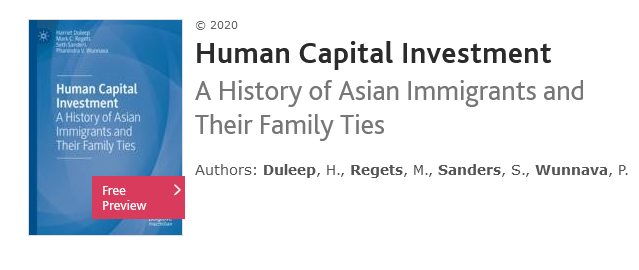
“In 1965, a family-reunification policy for admitting immigrants to the United States replaced a system that chose immigrants based on their national origin. With this change, a 40-year hiatus in Asian immigration ended. Today, over three-quarters of US immigrants originate from Asia and Latin America. Two issues that dominate discussions of US immigration policy are the progress of post-reform immigrants and their contributions to the US economy.
This book focuses on the earnings and human capital investment of Asian immigrants to the US after 1965. In addition, it provides a primer on studying immigrant economic assimilation, by explaining economists’ methodology to measure immigrant earnings growth and the challenges with this approach. The book also illustrates strategies to more fully use census data such as how to measure family income and how to use “panel data” that is embedded in the census.
The book is a historical study as well as an extremely timely work from a policy angle. The passage of the 1965 Immigration and Nationality Act set the United States apart among economically developed countries due to the weight given to family unification. Based on analyses by economists—which suggest that the quality of immigrants to the US fell after the 1965 law—policymakers have called for fundamental changes in the US system to align it with the immigration systems of other countries. This book offers an alternative view point by proposing a richer model that incorporates investments in human capital by immigrants and their families. It challenges the conventional model in three ways: First, it views the decline in immigrants’ entry earnings after 1965 as due to investment in human capital, not to permanently lower “quality.” Second, it adds human capital investment and earnings growth after entry to the model. And finally, by taking investments by family members into account, it challenges the policy recommendation that immigrants should be selected for their occupational qualifications rather than family connections.”
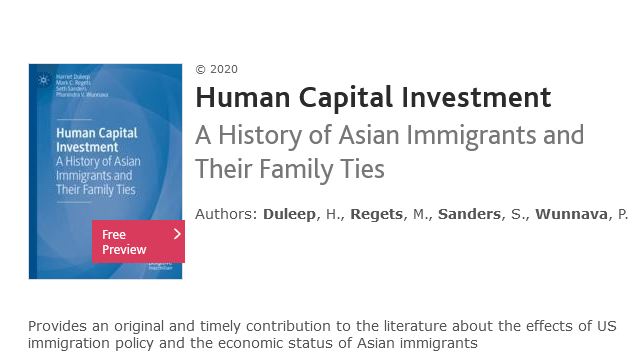
Human Capital Investment. A History of Asian Immigrants and Their Family Ties
Authors: Duleep, H., Regets, M., Sanders, S., Wunnava, P.
“The authors attack forcefully an established myth in the US based immigration literature, namely that post-1965 immigrants were of low quality since they came at a time with a policy focus on family unification. They make us aware of the huge impact family investments have had among their studied Asian immigrants on high school attendance rates and other human capital improvements generating the most upwardly mobile among American workers. It seems that the migration history of that period has to be re-written.” (Klaus F. Zimmermann, President Global Labor Organization, Bonn University and UNU-MERIT, Maastricht)
Mark C. Regets, Seth Sanders, Phanindra V. Wunnava and Harriet Duleep
Harriet Duleep is Research Professor of Public Policy at the College of William and Mary. She is a Fellow of the Global Labor Organization. Her main areas of research include immigration, the socioeconomic determinants of mortality, discrimination and minority economic status, and women’s labor force behavior.
Mark Regets is a Senior Fellow at the National Foundation for American Policy; a Fellow at the Global Labor Organization; and a Research Fellow at IZA. He “retired” from the National Science Foundation’s National Center for Science and Engineering Statistics and continues to write on immigration and science labor markets both as separate issues and where they intersect.
Seth G. Sanders is the Ronald G. Ehrenberg Chair in the Department of Economics at Cornell University. His research focuses on marginalized groups in the U.S. His work has appeared in a wide set of leading journals.
Phanindra V. Wunnava is the David K. Smith ’42 Chair in Applied Economics at Middlebury College, Middlebury, Vermont, a Research Fellow at IZA, Bonn, Germany, and Fellow at Global Labor Organization. His research appeared in a wide range of scholarly journals.
GLO: What is wrong with the received wisdom of the economics literature on the earnings of immigrants?
Harriet Duleep: Economists make two conceptual errors in their study of immigrant earnings. They equate earnings with level of human capital and they assume that differences in entry earnings, adjusting for levels of education and experience, measure differences in immigrant quality.
A perspective that permeates our book is that the economic success of immigrants cannot be measured by their initial ability to market their skills. If entry earnings are correlated with any factor that enables or increases human capital investment then immigrant entry earnings measure neither human capital or unmeasured immigrant quality.
Human capital that is not immediately valued in the host-country’s labor market is useful for learning new skills. Immigrants who do not initially earn on par with similarly educated natives provide a flexible source of human capital that supports the ever-changing needs of the U.S. economy. Emphasizing the low entry earnings of the post-1965 immigrants minimizes the depth of their contributions to the U.S. economy.
Also distorted is the measurement of immigrant earnings growth. By using the fixed-cohort-effect method economists commit a statistical design error by assuming that earnings growth rates are constant across year-of-entry cohorts.
Seth Sanders: The received wisdom also ignores interactions among family members. For the groups analyzed in this book, the low adjusted earnings of immigrant men during their initial U.S. years are often partially, or even completely, offset by the earnings of immigrant women.
We also find a large negative effect of husband’s self-employment on wives’ labor force participation. This likely reflects the wife contributing unpaid labor to the family’s business. In fact, whether the husband is self-employed is more important to a woman’s decision to work than whether the husband has been recently unemployed and, for some groups, than having young children at home.
Phanindra Wunnava: The extended family is also ignored. Sibling admissions negatively affect initial earnings but positively affect earnings growth. This suggest that extended family, or being part of a group with high extended-family admissions, aids the human capital investment of individual immigrants. We also find a positive and highly statistically significant relationship between the propensity of individual immigrants to be self-employed and the percent of their cohort who gained admission as siblings. For Asian immigrant men, the effect of sibling admissions on the propensity to be self-employed exceeds the effect of any other variable in our analysis.
GLO: Why are human capital investments the clue?
Mark Regets: When immigrants have problems transferring skills between labor markets—whether because of credentials, language, work processes, or changing their career—they have both lower costs and higher returns to human capital investments. Lower initial wages mean lower opportunity costs. New host-country human capital, valuable in of itself, also helps make their prior skills usable in their new labor market. In addition, the skill of knowing how to learn often transfers more directly than labor market skills. Thus, human capital investment not only makes entry earnings a poor predictor of an immigrant’s labor market success, but creates an inverse relationship between entry earnings and earnings growth.
Harriet Duleep:The human capital investments of immigrants who initially have problems transferring skills impact the U.S. economy. In a recent GLO paper David Jaeger, Peter McHenry, and I took the Immigrant Human Capital Investment (IHCI) model described in this book and viewed it from an employer’s perspective. Immigrants’ willingness to engage in human capital investment makes them a particular asset to entrepreneurs needing a labor force to learn new skills. We find that college-educated immigrants, especially from less-developed countries, are associated with increased entrepreneurship at the state level, a result that persists when we focus on entrepreneurship among natives (rather than immigrants themselves). David Green, in his 1999 Journal of Labor Economics paper, finds that immigration may contribute to a more flexible labor force because immigrants are more occupationally mobile than natives even long after their arrival.
GLO: Why have you chosen Asian immigrants to the US as reference? Strong family connections and high educational ambitions may make them a special group.
Seth Sanders:In the mosaic that is U.S. immigration, Asian immigrants have been understudied. They are, however, a very important part of U.S. immigration: as a percent of U.S. legal immigration they surpass Hispanic immigration.
I would also like to stress that though the book’s title is “Human Capital Investment: A History of Asian Immigrants and Their Family Ties,” it is more broadly focused on comparing immigrants from economically developing countries versus economically developed countries. We compare the earnings profiles, human capital investment, and family-aided assimilation of Asian immigrant groups from developing countries with immigrants from Western Europe and Japan.
Harriet Duleep:Persons coming from economically developing countries face serious constraints in their career, living conditions, and hopes for their children. By migrating—even if it means starting an entirely new career—they provide a highly flexible workforce to the U.S. A workforce all the more valuable because of what they have learned prior to their migration.
In addition to skill transferability (the lower the skill transferability, the higher the propensity to invest in new human capital), the book explores additional themes that affect the propensity of immigrants to invest in new human capital. These themes likely hold for other groups from economically developing countries.
One is the importance of permanence to human capital investment. In contrast to West European immigrants, Asian immigrants from developing countries are highly permanent. The propensity to invest in new human capital and the propensity to stay in the U.S. are jointly determined. Why invest in new human capital if you don’t plan on staying?
We would expect a high level of permanence for immigrants from the developing nations of Africa and much of Latin America. Analysts who follow our methodological suggestions should find high earnings growth particularly among those who enter the U.S. with relatively high levels of schooling.
Education’s effect on human capital investment is ambiguous in most human capital investment models increasing both the productivity and opportunity cost of human capital investment. In the IHCI model, explored in our book, education that does not fully transfer to the labor market (and thus does not raise the opportunity cost of human capital investment) is useful for learning new skills. The incentive to invest in new human capital increases for those with low skill transferability and with relatively high levels of education. We would expect to find high earnings growth among not only the Asian immigrants from developing countries but from similar immigrants from Africa and much of Latin America.
GLO: What brought you together as a team?
Harriet Duleep: Seth, Mark, and I were part of the research office of the U.S. Commission on Civil Rights. One of our goals was to follow the economic status of various ethnic and racial groups over time. Examining the earnings growth of immigrant men, Mark and I found high earning growth, contradicting Borjas’ Journal of Economic Literature article.
Mark, Seth, and I also worked on how to measure discrimination. Phani invited us to Middlebury College for a conference focused on discrimination, which led to the book New Approaches to Economic and Social Analyses of Discrimination (Link to). Steve Woodbury, who attended Phani’s conference, had read The Economic Status of Americans of Asian Descent, which Seth and I had written. Steve noted that very little work had been done on Asian immigrants. He urged us to pursue a book focused on Asian immigrants. With this, Human Capital Investment: A History of Asian Immigrants and Their Family Ties was born. It was an ongoing activity for the four of us for two decades.
Phanindra Wunnava:I had the good fortune to have known Mark in graduate school (we both had the same mentor: Solomon Polachek), and worked with Harriet in co-organizing a professional conference at my home institution focusing on family ties and immigration in 1993, which resulted in a well-received edited volume (Link to). Our coedited volume provided a logical springboard to our current book focusing on Asian immigrants and the role of family in augmenting their human capital investments to succeed in the U.S.
GLO: What are the policy conclusions from your work?
Mark Regets:Too much of the U.S. immigration debate talks about good immigrants and not-so-good immigrants. Most green cards are given to people with either an employer or a family sponsor. Our book shows that family-sponsored immigrants, even if they often start with lower earnings, do well economically in the United States. To find a niche in the U.S. labor market, they invest in human capital. Their earnings rapidly rise because of their new human capital, and because their new skills or certifications help them use more of their old skills.
Their families are also a factor. There is the positive selectivity of a relative being willing to sponsor—few immigrants want to sponsor someone who will be a burden on them. There is also the possibility of family members assisting immigrants in adapting to the United States. Family-based immigrants and refugees do not enjoy the immediate high-demand for their skills that employment-based immigrants do. But, they experience much higher earnings growth than employment-based immigrants. The highest earning growth rates are among those from countries with high rates of sibling admissions—one of the most criticized admission categories.
It is not only employer-sponsored immigrants who help the economy. Other immigrants add dynamism to the economy by their numerous strategies to find a niche for their skills in the labor market. Their much faster earnings growth eliminates social pathologies associated with low initial earnings, creating a more optimistic path for both them and their children.
Harriet Duleep:Concerns about a decline in immigrant quality emanate from methodological flaws in the measurement of immigrant earnings growth. The high earnings growth we find for immigrants beginning with low adjusted earnings is inconsistent with low labor market quality. The whole notion of a decline in immigrant quality when Asia and Latin America replaced Europe as the main source of immigrants should be excised from the policy discussion.
From a perspective of boosting human capital investment, policies to promote immigrant permanence should be encouraged. Temporary migration has an increasingly important role to play in a global economy, but policies that discourage long-term migration are short-sighted.
Policy makers should not view the U.S. post-1965 emphasis on family admissions solely from a humanitarian perspective. Their high human capital investment via educational investment, occupational change, and other paths has the important policy implication that the post-1965 immigrants may be better equipped than U.S. natives or immigrants with high skill transferability to dynamically respond to the changing skill needs of the U.S. economy.
Mark Regets: None of our work explicitly deals with finding an “optimal” mix of admissions programs, but I don’t see any policy reason that the number of family and employer sponsored immigrants need to be under a common total cap—if anything family and employer sponsored immigration create an increased demand for each other and complement each other in labor markets.
While I see value to both family and employer sponsorship, it might be worthwhile for the United States to once again allow unsponsored immigrants. Any point system we adopt in the future should be an addition to, not a replacement to the sponsorship system—creating a pathway for unsponsored immigrants.
GLO: Your support of immigration selection through family connections may undervalue the policy of selecting immigrants from successful foreign university graduates. What do you think?
Mark Regets: Though often presented as a dichotomy, family-based immigration complements employment-based immigration When NSF’s surveys ask foreign-born university grads about why they came to the United States, more than half list family as one of the reasons. There is a lot I would support to make it easier for the highest skilled migrants to come to the United States and easier for them to stay, but if we want the best, we need to be friendly to families. Even if we were able to cherry-pick immigrants without consideration for their families, each type of immigrant provides different types of economic benefits.
Phanindra Wunnava: My family is a perfect example of what Mark is talking about. My brother, Professor Subbarao Wunnava, is currently Emeritus Professor of Electrical and Computer engineering at Florida International University. Prior to coming to the U.S. he had a Ph.D. in nuclear physics from India with both teaching and industrial experience. He came to the U.S. via a visitor visa as a Post-Doctoral Fellow to North Dakota State University’s Physics Department, and later received his green card via an “Employment Visa.” I then came to the U.S. from India through a “Family Preference Visa” sponsored by my brother. One of the attractions of the U.S. to my brother was its family-friendly admissions policy.
Once here, my brother and sister-in-law supported me giving me a chance at the American Dream, which included among other things, allowing me to pursue a doctorate in economics. As documented in our book, the role of family cannot be overemphasized in the journey of immigrants to realize their full potential to be productive and contributing members of our society.
GLO: Harriet, how relates the book to your forthcoming article in the Journal of Population Economics?
The book shows how the assumption that earnings growth rates are constant across year-of-entry cohorts understates the earnings growth of specific groups that begin their U.S. trajectories with low initial earnings. The JOPE article illustrates this point for all immigrants.
The JOPE article also proves another important reason for the underestimates of immigrant earnings growth in studies following synthetic cohorts. This is how that revelation occurred.
For many years, Mark and I maintained that our results differed from those of Borjas because the fixed-cohort-effect method does not allow earnings growth to vary with entry earnings. But then, in recent years, editors rejecting our elusive and country-of-origin papers said that Borjas in his 2015 Journal of Human Capital paper did allow earnings growth to vary with entry earnings, and he still found low earnings growth for post-1965 immigrants.
The Society of Labor Economists was meeting in the Washington DC area and Xingfei Liu was presenting. Mark, Xingfei, and I met at the National Gallery of Art to discuss our most recent country-of-origin paper rejection. Mark and I were skeptical that Borjas (2015) actually let earnings growth vary with entry earnings. Xingfei disagreed. In the midst of Matisse, Monet, and Cezanne, he painstakingly went through the computer programming that underlies Borjas’ Journal of Human Capital article and showed Mark and me that Borjas had indeed let earnings growth vary with entry earnings.
The three of us then asked, what is going on??! Why did Mark and I in our elusive papers and Xingfei, Mark, and I in our Country of Origin papers find high earnings growth for immigrant men relative to natives, when Borjas found low earnings growth, using the same data!
In the silence, a calling from Sherlock Holmes occurred: “Once you eliminate the impossible, whatever remains, no matter how improbable, must be the truth.”
We did not exclude zero earners or students in our synthetic cohort analyses whereas Borjas did. We had also found high earnings growth for immigrants in longitudinal data (see our papers in Demography) where we did exclude zero earners. What did our synthetic cohort analyses and the longitudinal analyses have in common?
In each case the same type of individuals were in both first- and second-period samples—in the longitudinal data because they were the same individuals and in the synthetic cohorts because zero earnings did not knock anyone out of the sample in either period. Excluding zero earners in a synthetic cohort analysis will exclude people from the first period who would be eligible for the sample in the second period and vice versa. If immigrants are differentially affected from the sample restrictions as natives, then estimates of immigrant earnings growth relative to natives may have little to do with the actual earnings growth of immigrants. High earnings growth for immigrants may be changed to low earnings growth simply because low wage-earning natives are more likely to leave the labor force with age. Our results overturn the accepted wisdom that post-1965 U.S. immigrants have low earnings growth. They have high earnings growth. Please see Part IV of the forthcoming JOPE paper.
************* With the authors spoke Klaus F. Zimmermann, GLO President.
A new GLO Discussion Paper reports that there is a systematic age gradient in the reporting error in BMIsuggesting potential bias in the use of such data and the need to collect objective measures.
Author Abstract: We designed an experiment to explore the extent of measurement error in body mass index (BMI), when based on self-reported body weight and height. We find that there is a systematic age gradient in the reporting error in BMI, while there is limited evidence of systematic associations with gender, education and income. This is reassuring evidence for the use of self-reported BMI in studies that use it as an outcome, for example, to analyse socioeconomic gradients in obesity. However, our results suggest a complex structure of non-classical measurement error in BMI, depending on both individuals’ and within-household peers’ true BMI. This may bias studies that use BMI based on self-reported data as a regressor. Common methods to mitigate reporting error in BMI using predictions from corrective equations do not fully eliminate reporting heterogeneity associated with individual and withinhousehold true BMI. Overall, the presence of non-classical error in BMI highlights the importance of collecting measured body weight and height data in large social science datasets.
The Global Labor Organization (GLO) is an independent, non-partisan and non-governmental organization that functions as an international network and virtual platform to stimulate global research, debate and collaboration.
A new GLO Discussion Paper find that local politicians in India systematically misallocate resources based on party loyalty and successfully deliver votes to their national co-partisans.
Author Abstract: Local politicians can function as crucial intermediaries between voters and party bosses in a clientelistic network. We study their role by matching data on 300 million welfare payments in the Indian state of West Bengal to village-level election returns. Local politicians systematically misallocate resources based on party loyalty and successfully deliver votes to their national co-partisans. Politicians are compensated for successful mobilization through a performance bonus immediately after the national election. The (promise of) increased compensation from government funds induces opposition candidates to switch to the ruling party in strategically important local councils, bringing them under its control.
Laura V. Zimmermann has a joint appointment as Associate Professor in the Department of Economics and in theDepartment of International Affairs at the University of Georgia. She recently presented her research on gender bias and policy in India summarized in GLO Discussion Paper No. 888 at the Fourth IESR-GLO Conference. Video of presentation: LINK
The Global Labor Organization (GLO) is an independent, non-partisan and non-governmental organization that functions as an international network and virtual platform to stimulate global research, debate and collaboration.
All the presentation in this series are based on the projects that GLO-VirtYS program scholars completed as part of their program participation.
September 9th 2021 Program on 1 pm London/UK time.
Chaired by GLO VirtYS Program Director Olena Nizalova.
Jun Hyung Kim, Jinan University and GLO Affiliate Mental Health Consequences of Working from Home during the Pandemic (GLO VirtYS program advisor Professor Jan van Ours) Watch the video of the event: Kim.
Femke Cnossen, University of Groningen and GLO Affiliate Learning the Right Skill: Revealed Local Labour Demand for Underlying Skills in STEM and Non-STEM Graduates (GLO VirtYS program advisors Dr Matloob Piracha and Dr Guy Tchuente)
Author Abstract:This paper is the first to investigate the role of firm-level upstreamness (i.e. the number of steps before the production of a firm meets final demand) in explaining wage differences according to workers’ origin. Using unique linked employer-employee data relative to the Belgian manufacturing industry for the period 2002-2010, our estimates show that firms that are further up in the value chain pay significantly higher wages. However, the wage premium associated with upstreamness is also found to vary substantially depending on the origin of the workers. Unconditional quantile estimates suggest that those who benefit the most from being employed in more upstream firms are high-wage workers born in developed countries. In contrast, workers born in developing countries, irrespective of their earnings, appear to be unfairly rewarded. Quantile decompositions further show that, while differences in average values of upstreamness according to workers’ origin play a limited role, differences in wage premia associated with upstreamness account for a substantial part of the wage gap between workers born in developed and developing countries, especially at the top of the earnings distribution. These results are shown to be robust to a number of sensitivity tests, including broader or narrower definitions of workers’ wages and different firm environments in terms of technological and knowledge intensity.
The Global Labor Organization (GLO) is an independent, non-partisan and non-governmental organization that functions as an international network and virtual platform to stimulate global research, debate and collaboration.
A new GLO Discussion Paper shows that studies cited by psychologists claiming there are no U-shapes are in error. The effects of the mid-life dip are comparable to major life events such as losing a spouse or becoming unemployed.
Author Abstract: A number of studies – including our own – find a mid-life dip in well-being. Yet several papers in the psychology literature claim that the evidence of a U-shape is “overblown” and if there is such a thing that any such decline is “trivial”. Others have claimed that the evidence of a U-shape “is not as robust and generalizable as is often assumed,” or simply “wrong.” We identify 424 studies, mostly published in peer reviewed journals that find U-shapes that these researchers apparently were unaware of. We use data for Europe from the Eurobarometer Surveys (EB), 1980-2019; the Gallup World Poll (GWP), 2005-2019 and the UK’s Annual Population Survey, 2016-2019 and the Census Bureau’s Household Pulse Survey of August 2021, to examine U-shapes in age in well-being. We find remarkably strong and consistent evidence across countries of statistically significant and non-trivial U-shapes in age with and without socio-economic controls. We show that studies cited by psychologists claiming there are no U-shapes are in error; we reexamine their data and find differently. The effects of the mid-life dip we find are comparable to major life events such as losing a spouse or becoming unemployed. This decline is comparable to half of the unprecedented fall in well-being observed in the UK in 2020 and 2021, during the Covid19 pandemic and lockdown, which is hardly “inconsequential” as claimed.
The Global Labor Organization (GLO) is an independent, non-partisan and non-governmental organization that functions as an international network and virtual platform to stimulate global research, debate and collaboration.
Global Labor Organization (GLO) invites interested young scholars to apply for participation in the 2021-22GLO Virtual Young Scholars Program (GLO VirtYS). This is the third cohort of the successful GLO venture to support career developments of young researchers. It also provides a unique opportunity to interact with the large and very active GLO global network.
Application deadlineEXTENDED: September 24, 2021, 5 pm GM.
A new GLO Discussion Paper finds that self-reported physical and mental health decreased in 2013 and in 2019 compared to 2009indicating the need for more inclusive health strategies.
Author Abstract: In Greece, given the precarious nature of the sex work industry, sex workers health and wellbeing is of concern. However, relevant research remains limited. This study examined whether sex workers’ self-reported physical and mental health deteriorated across time points during the economic recession in Athens, Greece. The study focused on 13 areas where off-street and street-based sex work occured. Cross-sectional data was collected from the same areas in 2009 (i.e. before the economic recession began) and in 2013 and 2019 (i.e. at time points during the recession). Self-reported physical and mental health decreased in 2013 and in 2019 compared to 2009. A positive association was found between the country’s gross domestic product and sex workers’ self-reported physical and mental health. The opposite was found for annual aggregate unemployment. The determinants of better self-reported physical and mental health were sex workers’ economic condition, Greek nationality, off-street sex work, and registered sex work status. The opposite was found for more years’ involvement in sex work and drug consumption. Findings indicate the need for more inclusive health strategies, especially during periods of economic downturn when sex workers’ physical/mental health is likely to decline. This is the first study to investigate the association between economic recession and sex workers’ self-reported physical and mental health.
The Global Labor Organization (GLO) is an independent, non-partisan and non-governmental organization that functions as an international network and virtual platform to stimulate global research, debate and collaboration.
Presentations in this series are based on the projects that GLO-VirtYS program scholars completed as part of the their program participation. See for the details VirtYs program and the cohort 2021.
September 16th 2021 Program on 1 pm London/UK time.
Odmaa Narantungalag, Massey University and GLO Affiliate The Local Impacts of Natural Resource Extraction: Evidence from Mongolia (GLO VirtYS program advisor Professor Kompal Sinha)
Soumya Pal, Centre for Public Policy, Indian Institute of Management Bangalore and GLO Affiliate Weather Shock, Agricultural Productivity, and Infant Health: A Tale of Environmental Justice (GLO VirtYS program advisor Professor Almas Heshmati) Video
Chaired by GLO VirtYS Program Director Olena Nizalova.
Featured Image: Employee-Training-unsplash
Odmaa Narantungalag is a Ph.D. student in economics at Massey University in New Zealand. Her research interests are in development economics, natural resource economics, and health economics. Odmaa holds a Bachelor of Arts in Economics from American University in Bulgaria and a Master of Public Administration from Tsinghua University, China. Prior to starting her doctoral studies, Odmaa worked as a national consultant at the Ministry of Economic Development and Ministry of Finance in Mongolia for various projects implemented by the World Bank and United Nations Development Programme.
GLO VirtYS project: The Local Impacts of Natural Resource Extraction: Evidence from Mongolia
This paper investigates the local economic impacts of a large-scale copper-gold mine in Mongolia. Employing household data from 2008 to 2016, I find positive economic effects of the mine. A ten percent increase in mining activities resulted in 2.2 and 2.3 percent increases in income and food consumption, respectively. Mining activities enabled households to increase their medical expenditures, while sickness did not increase significantly. In contrast, education expenditures dropped while educational attainments improved in mining areas. Both expenditure patterns indicate that large-scale extractive industries can positively benefit residents, and corporate social responsibility activities further enhance the mining sector’s traditional benefits.
Soumya Pal is PhD Candidate at the Centre for Public Policy, Indian Institute of Management Bangalore. His research interests are broadly in the domain of Climate Change, Regulations, and Environmental Justice. His doctoral thesis focuses on Economics of Climate Change and Environmental Regulations. He completed his bachelor’s in Statistics, Master’s, and M.Phil. in Demography.
GLO VirtYS project: Weather Shock, Agricultural Productivity, and Infant Health: A Tale of Environmental Justice
We study how income shock due to extreme weather fluctuations causally impacts the birth outcomes. We selected households depended directly on agriculture due to their extreme vulnerability to temperature and rainfall shocks. We find large efficiency loss attributed to weather shock for major food crops to the extent of 20%. However, we find that access to technology provides resilience against weather shock, therefore, causing the heterogeneity in vulnerability across farming households. Based on it, we designed the agriculture-household model, which predicts that health outcomes of child are dependent on income shock due to abrupt change in weather conditions. We tested the hypothesis by introducing weather shock in the cropping season before the conception of child to eliminate the confounding effect of direct impact due to extreme weather conditions. We find that weather shocks in cropping season, increases the likelihood of child mortality, low birth weight, and birth size. We further find that access to technology, financial tools, and economic security net reduces the impact of income loss due to weather shock. Our results suggests that access to resilient capabilities leads to heterogeneous impact across farmer households causing environmental injustice. Further, our findings provide insights into the policy design for long term shift in weather patterns due to climate change and stresses on the inequality in resilience against extreme weather events.
A new GLO Discussion Paper finds that discretionary fiscal policy measures in Austria are key to counteracting the inequality- and poverty-enhancing effect of COVID-19.
Author Abstract: This paper analyzes the impact of the COVID-19 crisis on household income in Austria, using detailed administrative labor market data, in combination with micro-simulation techniques, that enable specific labor market transitions to be modeled. We find that discretionary fiscal policy measures in Austria are key to counteracting the inequality- and poverty-enhancing effect of COVID-19. Additionally, we find that females tend to experience a greater loss in terms of market income. The Austrian tax-benefit system, however, reduces this gender differences. Disposable income has dropped by around 1% for both males and females. By comparison, males profit mainly from short-time work scheme, while females profit especially from other discretionary policy measures, such as the one-off payment for children.
The Global Labor Organization (GLO) is an independent, non-partisan and non-governmental organization that functions as an international network and virtual platform to stimulate global research, debate and collaboration.
A new paper published ONLINE FIRST with free readlink in the Journal of Population Economics finds that left-behind parents experience lower utility when their adult children migrate.
Published ONLINE FIRST 2021: Journal of Population Economics READLINK: https://rdcu.be/cxiiq
Shu Cai
Author Abstract: This paper examines the impact of children’s migration on the well-being of left-behind parents using panel data on experienced utility measured by the Day Reconstruction Method. Exploiting exogenous variation in exposure to employment shocks at migration destinations for identification, we find that left-behind parents experience lower utility when their adult children migrate. This is partly due to increased working time and less time spent in social activities, and partly due to reduced utility within activity type. The latter effect is consistent with the finding of less physical care and psychological support from children who have migrated. These negative effects dominate the possible benefits of greater income associated with children’s migration.
The Global Labor Organization (GLO) is an independent, non-partisan and non-governmental organization that functions as an international network and virtual platform to stimulate global research, debate and collaboration.
Author Abstract: The study replicates the first European field experiment on gay men’s labor market prospects in Greece. Utilizing the same protocol as the original study in 2006-2007, two follow-up field experiments took place in 2013-2014 and 2018-2019. The study estimated that gay men experienced occupational access constraints and wage sorting in vacancies offering lower remuneration. It was found that in 2013-2014 and 2018-2019, gay men experienced increasingly biased treatment compared to 2006-2007. Moreover, the results suggested that unemployment bore an association with occupational access constraints and wage sorting in vacancies offering lower remuneration for gay men. In each of the three experiments, this study captured recruiters’ attitudes toward gay men. A one standard deviation increase in taste-discrimination attitudes against gay men decreased their access to occupations by 9.6%. Furthermore, a one standard deviation increase in statistical-discrimination attitudes against gay men decreased their access to occupations by 8.1%. According to the findings, in 2013-2014 and 2018-2019, firms excluding gay applicants expressed a higher level of taste- and statistical-discrimination attitudes compared to 2006-2007. A gay rights backlash due to the LGBTIQ+ group’s attempt to advance its agenda, rising far-right rhetoric, and prejudice associated with economic downturns experienced in Greece might correspond with increasing biases against gay men.
The Global Labor Organization (GLO) is an independent, non-partisan and non-governmental organization that functions as an international network and virtual platform to stimulate global research, debate and collaboration.
A new GLO Discussion Paper argues that negative and zero incomes cannot be treated equally in terms of household well-being and that standard methods used by practitioners fail to recognize this fact likely resulting in overestimations of poverty.
Author Abstract: The paper discusses the main issues related to negative and zero incomes that are relevant for the measurement of poverty. It shows the prevalence of non-positive incomes in high- and middle-income countries, provides an analysis of the sources and structure of these incomes, outlines the various approaches proposed by scholars and statistical agencies to treat non-positive incomes, and explains how non-positive incomes and alternative correction methods impact the measurement of standard poverty indexes. It is argued that negative and zero incomes cannot be treated equally in terms of household well-being and that standard methods used by practitioners fail to recognize this fact likely resulting in overestimations of poverty.
The Global Labor Organization (GLO) is an independent, non-partisan and non-governmental organization that functions as an international network and virtual platform to stimulate global research, debate and collaboration.
In a festive ceremony at Maastricht University on September 2, 2021, Anne-Lore Fraikin received her double PhD degree with University of Liege after proper examinations. The procedure was hybrid (online and in person) chaired by the Pro-Rector of Maastricht University Prof. Dr. Alexander Bruggen. The theme of the thesis is “The Effect of Financial Retirement Incentives Originating from the Social Security System on the Retirement Behavior of Older Belgian Workers”.
Dr. Anne-Lore Fraikin is an Affiliated Researcher in the POP @ UNU-MERIT group and a GLO Research Affiliate. The thesis work was done under the supervision of Prof. Dr. Alain Jousten (University of Liege) and Prof. Dr. Alessio Brown (UNU-MERIT & Maastricht University). The Assessment Committee consisted of Prof. Dr. Klaus F. Zimmermann (UNU-MERIT & Maastricht University) as the Chair, Prof. Dr. Sergio Perelman (University of Liege), Prof. Dr. Antoine Bozio (Paris School of Economics), Prof. Dr. Corrado Giulietti (University of Southampton), Prof. Dr. Mathieu Lefebvre (University of Strassbourg and Liege) and Dr. Zina Nimeh (UNU-MERIT). Brown and Zimmermann are Co-Directors of the POP @ UNU-MERIT group dealing with Population, Development and Labor Economics. Brown, Jousten and Giulietti are GLO Fellows and Zimmermann is GLO President.
TheGLO Virtual Seminar is a monthly internal GLO research event chaired by GLO Director Matloob Piracha and hosted by the GLO partner institution University of Kent. The results are available on the GLO website and the GLO News section, where also the video of the presentation is posted. All GLO related videos are also available in the GLO YouTube channel. (To subscribe go there.)
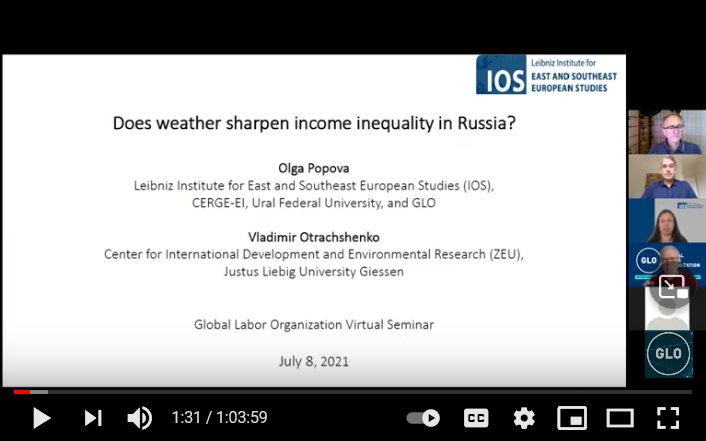
The last seminar was given on July 8, 2021, London/UKat 1-2 pm, by Olga Popova, Institute for East and Southeast European Studies (IOS) & GLO on Does weather sharpen income inequality in Russia? See below a report, the presentation slides and the full video of the seminar.
Report
Does weather sharpen income inequality in Russia?
GLO Virtual Seminar on July 8, 2021
Olga Popova, Institute for East and Southeast European Studies (IOS) & GLO
ABSTRACT Using subnational panel data, this paper analyzes how hot and cold extreme temperatures and precipitation affect economic activity and income distribution in Russia. We account for the intensity of exposure to extreme temperatures by analyzing the impacts of both single and consecutive days with extreme temperature, i.e., heat waves and cold spells, and examine several labor market channels behind those effects. We find that consecutive extremely hot days decrease regional GDP per capita but do not affect income inequality. Poor regions are affected by extreme temperatures relatively more than rich regions. These effects occur because of reallocation of labor from employment to unemployment, an increase in prices in poor regions, and to some extent because of changes in the industrial employment structure, while relative wages are not affected. Extremely cold days, both single and consecutive, as well as extreme precipitation have a limited impact on economic activity and income distribution.
Research Questions and Contribution
Examine the distributional impacts of extreme temperature and precipitation shocks, using the regional panel data from Russia
Account for the intensity of extreme temperatures exposure by simultaneously examining the impacts of both single and consecutive days with extreme temperature
Identify and test the labor market channels behind the inequality‐temperature relationship
Study if the impacts are heterogeneous • Poor vs. rich regions • Hot vs. cold regions
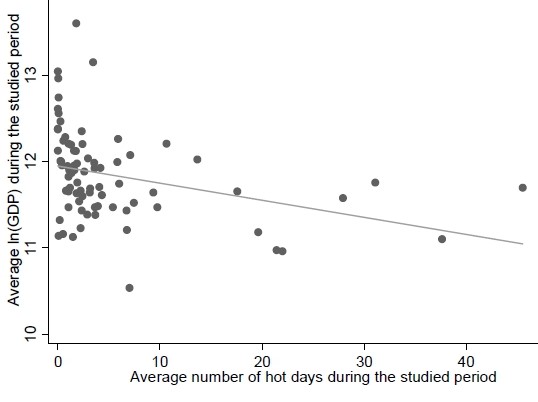
Correlation between days above 25°C and ln(GDP) in Russia
Wherever you work, pick your gig: join WageIndicator’s gig webinar on migration and telemigration on September 24.
GLO and WageIndicator Foundation are partner organizations.
Due to the digital revolution and the COVID-19 pandemic, labor mobility has increased significantly. Migrants use platforms to get a job locally, while telemigrants use platforms to perform remote work.
WageIndicator’s third event on the gig economy focuses on the experiences of these migrants and telemigrants.
Why do they choose this type of work?
And what challenges do they face?
Listen to the stories of researchers and platform representatives by joining the event on Friday 24 September!
A new GLO Discussion Paper highlights the impact of delay and the importance of structuring bankruptcy procedures to rapidly resolve uncertainty about firms’ future prospects.
Author Abstract: Bankruptcy restructuring procedures are used in most legal systems to decide the fate of businesses facing financial hardship. We study how bargaining failures in such procedures impact the economic performance of participating firms in the context of Croatia, which introduced a “pre-bankruptcy settlement” (PBS) process in the wake of the Great Recession of 2007 – 2009. Local institutions left over from the communist era provide annual financial statements for both sides of more than 180,000 debtor- creditor pairs, enabling us to address selection into failed negotiations by matching a rich set of creditor and debtor characteristics. Failures to settle at the PBS stage due to idiosyncratic bargaining problems, which effectively delays entry into the standard bankruptcy procedure, leads to a lower rate of survival among debtors as well as re- duced employment, revenue, and profits. We also track how bargaining failures diffuse through the network of creditors, finding a significant negative effect on small creditors, but not others. Our results highlight the impact of delay and the importance of structuring bankruptcy procedures to rapidly resolve uncertainty about firms’ future prospects.
The Global Labor Organization (GLO) is an independent, non-partisan and non-governmental organization that functions as an international network and virtual platform to stimulate global research, debate and collaboration.
Author Abstract: Information and communication technology (ICT) challenges traditional assumptions about the capacity to manage workers beyond organizational and physical boundaries. A typology connects a variety of non-traditional work organizations made possible by ICT, including offshoring, outsourcing, remote work, virtual companies, and platforms. A model illustrates how new technology serves as a proximate cause for a revision of social contracts between capital, labor and government reached through bargaining, and how external shocks such as the COVID-19 pandemic, the institutional environment, and limitations in practice influence how technology changes the organization of work. An historical case illustrates the general features of the model, and a review of the outsourcing and offshoring literature provides instructive examples of how features of the model will potentially influence the future of post-pandemic remote work
The Global Labor Organization (GLO) is an independent, non-partisan and non-governmental organization that functions as an international network and virtual platform to stimulate global research, debate and collaboration.
A new GLO Discussion Paper revisits the influential theory of monopolistic competition and optimum product variety. Differences in factor endowments across countries determine the pattern of trade between varieties and output per variety, which is indeterminate the standard model.
Author Abstract: In this paper we revisit the influential theory of monopolistic competition and optimum product variety as developed by Dixit and Stiglitz (1977) with applications in international trade by Krugman (1979,1980), by modeling fixed and variable costs of production in terms of underlying use of skilled and unskilled labor in a single good model. This is different from earlier work on multi sector variant of Krugman cum Heckscher-Ohlin-Samuelson model such as Helpman (1981) and others. In our structure factor endowment and factor intensities determine both number of varieties and output per variety in a closed economy mimicking the features of Heckscher-Ohlin-Samuelson model. Differences in factor endowments across countries determine the pattern of trade between varieties and output per variety, which is indeterminate in a standard single good Dixit-Stiglitz-Krugman model. Later we reflect on wage inequality and unemployment providing some interesting results.
The Global Labor Organization (GLO) is an independent, non-partisan and non-governmental organization that functions as an international network and virtual platform to stimulate global research, debate and collaboration.
Author Abstract: Academic consensus about normative prescriptions on the ethnic and cultural composition of societies has been shifting in recent decades. It has evolved from what seemed desirable but was acknowledged to be unrealistic (the noble idea of a melting pot), to what is realistic because it has already happened, but might be undesirable in the long run: the multicultural diaspora. Plural societies, an unintended consequence of multiculturalism, lurk in the background. Thus scholars of social and economic questions, as well as societies, face a threehorned dilemma. We throw some light on the dilemma by examining school friendship networks in five European countries with recent immigration. Our results highlight the force of elective affinities in overcoming differences, but they also point to the countervailing forces of elective discordance that are currently driving increasing division.
The Global Labor Organization (GLO) is an independent, non-partisan and non-governmental organization that functions as an international network and virtual platform to stimulate global research, debate and collaboration.
Author Abstract: This article explores the gender gap in time allocation in Europe, offering up-to-date statistics and information on several factors that may help to explain these differences. Prior research has identified several factors affecting the time individuals devote to paid work, unpaid work, and child care, and the gender gaps in these activities, but most research refers to single countries, and general patterns are rarely explored. Cross-country evidence on gender gaps in paid work, unpaid work, and child care is offered, and explanations based on education, earnings, and household structure are presented, using data from the EUROSTAT and the Multinational Time Use Surveys. There are large cross-country differences in the gender gaps in paid work, unpaid work, and child care, which remain after controlling for socio-demographic characteristics, although the gender gap in paid work dissipates when the differential gendered relationship between socio-demographic characteristics and paid work is taken into account. This paper provides a comprehensive analysis of gender gaps in Europe, helping to focus recent debates on how to tackle inequality in Europe, and clarifying the factors that contribute to gender inequalities in the uses of time.
The Global Labor Organization (GLO) is an independent, non-partisan and non-governmental organization that functions as an international network and virtual platform to stimulate global research, debate and collaboration.
A new GLO Discussion Paper finds that menstrual restriction related rituals can have persistent negative implications on women’s physical and mental health that is not just limited to the time of menstruation.
Author Abstract: We study the association between the ritual of menstrual restrictions and maternal health- care access as well as women’s subjective well-being. Similar restrictions, also practised around the time of childbirth, are based on the assumption that women are ritually impure during these phases of their lives. Although menstrual taboos and restrictions are common across many developing countries, we use micro-data from Nepal where these rituals are widely prevalent. We use a rich set of controls as well as assess the sensitivity of our results to alternative estimation methods. We find that women who face any menstrual restriction are also more likely to give birth at home and receive assistance only from untrained individuals during childbirth, which increases the risk of maternal mortality. We find that only the strictest menstrual restrictions are associated with a decline in subjective well-being. These findings indicate that menstrual restriction related rituals can have persistent negative implications on women’s physical and mental health that is not just limited to the time of menstruation.
The Global Labor Organization (GLO) is an independent, non-partisan and non-governmental organization that functions as an international network and virtual platform to stimulate global research, debate and collaboration.
A new GLO Discussion Paper reports a stark difference in rural India between men and women: while many male workers took up informal employment, most female workers dropped out of the labor force.
Author Abstract: This paper presents evidence on the short and long-term impact of the first COVID-19 wave on India’s rural youth. We interviewed about 2,000 vocational trainees from Bihar and Jharkhand between March 2020 and March 2021. We report a stark difference between men and women: while many male workers took up informal employment, most female workers dropped out of the labour force. Using a randomised experiment, we find that a government supported digital job platform does not increase job search or employment. Our findings suggest that bridging the gap between rural youths and urban formal labour markets requires much more active and targeted policy interventions, especially for female workers.
The Global Labor Organization (GLO) is an independent, non-partisan and non-governmental organization that functions as an international network and virtual platform to stimulate global research, debate and collaboration.
We analyse the different fiscal treatment of married and cohabiting couples across all EU Member States using microsimulation methods. Our paper highlights important differences across EU countries’ tax-benefit systems, where seven countries show substantial bonuses for married couples and four exhibit marriage penalties. On a micro level, we find that these marriage bonuses/penalties differ substantially across household types and income. From a policy point of view, our results suggest that the abolishment of marriage-related tax-benefit components in countries with marriage bonuses would leave some households financially worse off but would increase governments revenues that could be spent to targeted support of specific groups. From both an equity and a gender equality point of view, this abolishment would be desirable.
The Global Labor Organization (GLO) is an independent, non-partisan and non-governmental organization that functions as an international network and virtual platform to stimulate global research, debate and collaboration.
Presentations in this series are based on the projects that GLO-VirtYS program scholars completed as part of the their program participation. See for the details VirtYs program and the cohort 2021.
September 9th 2021 Program on 1 pm London/UK time.
Jun Hyung Kim, Jinan University and GLO Affiliate Mental Health Consequences of Working from Home during the Pandemic (GLO VirtYS program advisor Professor Jan van Ours)
Femke Cnossen, University of Groningen and GLO Affiliate Learning the Right Skill: Revealed Local Labour Demand for Underlying Skills in STEM and Non-STEM Graduates (GLO VirtYS program advisors Dr Matloob Piracha and Dr Guy Tchuente)
Chaired by GLO VirtYS Program Director Olena Nizalova.
Featured Image: Employee-Training-unsplash
Jun Hyung Kim is an assistant professor of economics at the Institute of Economic and Social Research at Jinan University. His research is focused on parenting and child development, with particular attention on how life cycle decisions of parents interact with parenting decisions. He received B.A. in economics at UC Berkeley and PhD in economic at the University of Chicago.
GLO VirtYS project: Mental Health Consequences of Working from Home during the Pandemic
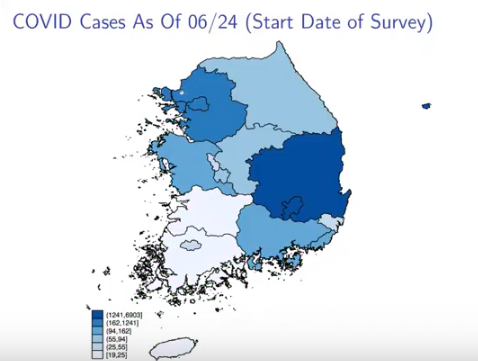
This paper examines the effects of working from home on mental health, using unique real time survey data from South Korea collected during the COVID-19 pandemic. We find that working from home negatively affects the mental health of workers in the first half of 2020. Furthermore, we find substantial heterogeneity across gender and home environment. The negative impact of working from home is concentrated on women, and on those who are primarily responsible for housework while also maintaining market work. Surprisingly, workers who live with children in the household do not suffer from the negative effects of working from home. Our findings suggest that family-work interaction may be an important factor in the optimal design of working from home.
Femke Cnossen is a PhD student at the University of Groningen. Her PhD focuses on the micro-dynamics of technological change and labour markets, by linking survey data to registerdata. She studies skill demand, (routine) task prices, and on the impact of technological progress on meaningfulness of work. From september, she is a postdoctoral researcher in regional skill analysis at the Faculty of Spatial Sciences at the University of Groningen.
GLO VirtYS project: Learning the Right Skill: Revealed Local Labour Demand for Underlying Skills in STEM and Non-STEM Graduates
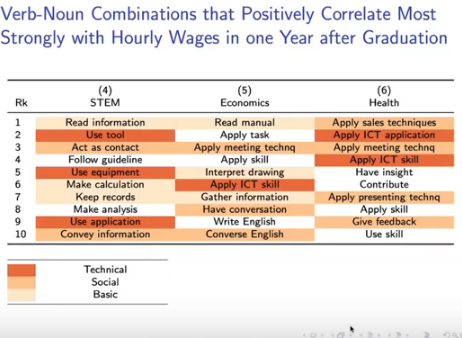
Technological change and globalization have sparked debates on the changing demand for skills in western labour markets, especially for middle skilled workers who have seen their tasks replaced. This paper provides a new data set, which is based on text data from curricula of the entire Dutch vocational education system. We extract verbs and nouns to measure social, technical and basic skills in a novel way. This method allows us to uncover the skills middle-skilled students learn in school. Using this data, we show that skill returns vary across students specialized in STEM, services or health. Furthermore, we show that social and technical skills differentially relate to the probability of being employed in either the low or high skill sector or in the goods sector. Our findings can guide future research on the complementarity between skills and production technologies.
Interested researchers are cordially invited to submit their abstracts or papers for presentation consideration. The 37th EBES Conference will take place ONLINE ONLY on October 6-8 2021. GLO is a co-organizing partner, and FOM University of Applied Sciences is the local host operating from Berlin.
This is aGLO supported event. EBES, theEurasia Business and Economics Society, and FOM University of Applied Sciencesboth are strategic partners and institutional supporters of GLO. GLO President Klaus F. Zimmermann is also President of EBES.FOM and GLO will organize own sessions for the event.
Authors are invited to submit their abstracts or papers no later than September 17, 2021.
Measuring poverty trends and dynamics is an important undertaking for poverty reduction policies, which is further highlighted by the SDG goal 1 on eradicating poverty by 2030. We provide a broad overview of the pros and cons of poverty imputation in data-scarce environments, update recent review papers, and point to the latest research on the topics. We briefly review two common uses of poverty imputation methods that aim at tracking poverty over time and estimating poverty dynamics. We also discuss new areas for imputation.
The Global Labor Organization (GLO) is an independent, non-partisan and non-governmental organization that functions as an international network and virtual platform to stimulate global research, debate and collaboration.
A new GLO Discussion Paper shows that the differences in test scores between big and small cities depend on school characteristics, while the differences between general and vocational schools are mainly explained by family social status.
This study aims to identify the main determinants of student performance in reading and maths across eight European Union countries (Austria, Croatia, Germany, Hungary, Italy, Portugal, Slovakia, and Slovenia). Based on student-level data from the OECD’s PISA 2018 survey and by means of the application of efficient algorithms, we highlight that the number of books at home and a variable combining the type and location of their school represent the most important predictors of student performance in all of the analysed countries, while other school characteristics are rarely relevant. Econometric results show that students attending vocational schools perform significantly worse than those in general schools, except in Portugal. Considering only general school students, the differences between big and small cities are not statistically significant, while among students in vocational schools, those in a small city tend to perform better than those in a big city. Through the Gelbach decomposition method, which allows measuring the relative importance of observable characteristics in explaining a gap, we show that the differences in test scores between big and small cities depend on school characteristics, while the differences between general and vocational schools are mainly explained by family social status.
The Global Labor Organization (GLO) is an independent, non-partisan and non-governmental organization that functions as an international network and virtual platform to stimulate global research, debate and collaboration.
Global Labor Organization (GLO) invites interested young scholars to apply for participation in the 2021-22GLO Virtual Young Scholars Program (GLO VirtYS). This is the third cohort of the successful GLO venture to support career developments of young researchers. It also provides a unique opportunity to interact with the large and very active GLO global network.
A new GLO Discussion Paper highlights social identity as an important determinant of STEM-related education with potential long-term implications for the economic welfare of disadvantaged groups.
In this study, we examine characteristics of employment in FDI in Vietnam. Workers from FDI account for 5.6% of working people. Female and younger people are more likely to work the FDI sector. Compared with private and public sectors, the FDI sector has a lower share of workers who have tertiary education. The FDI sector has a high proportion of workers with social insurance, at 95%. However, there is a relatively large proportion of the FDI workers receiving daily wages and piece payment. The FDI workers have a high number of working hours and more likely to have overtime working hours. The FDI workers have lower wages per hour than those in the private and public sector. However, once observed characteristics of workers are controlled for, the FDI workers have higher hourly and monthly wages than the private as well as public workers. The proportion of FDI workers who moved out of the FDI sector was 11% over a three-month period and 31% over a two-year period. Older workers are more likely to move out of the FDI sector than young ones. There is no evidence that workers move out of the FDI sector after age 35.
The Global Labor Organization (GLO) is an independent, non-partisan and non-governmental organization that functions as an international network and virtual platform to stimulate global research, debate and collaboration.
A new GLO Discussion Paper highlights social identity as an important determinant of STEM-related education with potential long-term implications for the economic welfare of disadvantaged groups.
Author Abstract: This paper investigates the role of social identity, namely gender and caste of individuals, in stream choice at the higher secondary level of schooling in India. We analyze the choice of science stream that is a crucial determinant of subsequent science, technology, engineering, and mathematics (STEM) related education and labour market outcomes. Using three rounds of nationally representative surveys between 2007 and 2018, we estimate regression models including household characteristics and fixed effects to control for region-specific unobserved heterogeneity. We find that females and individuals belonging to historically disadvantaged social groups (castes) are significantly less likely to study science. On average, female students enrolled in higher secondary education have 9 percentage points lower probability than male students to study science during the period considered for the analysis. For students belonging to the socially disadvantaged groups – Scheduled Tribes (ST), Scheduled Caste (SC), and Other Backward Classes (OBC), the likelihood of studying science is significantly lower by 6.9, 4.4, and 2.7 percentage points, respectively, than students from the less-disadvantaged groups. Using decomposition analysis, we show that the differences in the observable characteristics such as economic affluence and household head’s education significantly explain some portion of the caste-based gaps, but they do not explain the gender gap that persists even in an intra-household comparison. We also test for the intersectionality of the overlapping identities of gender and caste in this context. We find evidence of cumulative disadvantages for females of SC and OBC groups, but lower gender disparity among ST students indicating the presence of intersectionality for this group. Thus, our paper highlights social identity as an important determinant of STEM-related education that may have long-term implications for the economic welfare of disadvantaged groups.
The Global Labor Organization (GLO) is an independent, non-partisan and non-governmental organization that functions as an international network and virtual platform to stimulate global research, debate and collaboration.
A new GLO Discussion Paper suggests that composite fuel deprivation indicators may be useful energy policy instruments for uncovering the underlining mechanism via which fuel poverty may get “under the skin”.
Author Abstract: This paper uses data from Understanding Society: the UK Household Longitudinal Study to explore the association between fuel poverty and a set of well-being outcomes: life-satisfaction, self-reported health measures and more objectively measured biomarker data. Over and above the conventional income–fuel cost indicators, we also use more proximal heating deprivation indicators. We create and draw upon a set of composite indicators that concomitantly capture (the lack of) affordability and thermal comfort. Depending on which fuel deprivation indicator is used, we find heterogeneous associations between fuel poverty and our well-being outcomes. Employing combined fuel deprivation indicators, which takes into account the income–fuel cost balance and more proximal perceptions of heating adequacy, reveals the presence of more pronounced associations with life satisfaction and fibrinogen, one of our biological health measures. The presence of these strong associations would have been less pronounced or masked when using separately each of the components of our composite fuel deprivation indicators as well as in the case of self-reported generic measures of physical health. Lifestyle and chronic health conditions plays a limited role in attenuating our results, while material deprivation partially, but not fully, attenuates our associations between fuel deprivation and well-being. These results remain robust when bounding analysis is employed to test the potential confounding role of unobservables. Our analysis suggests that composite fuel deprivation indicators may be useful energy policy instruments for uncovering the underlining mechanism via which fuel poverty may get “under the skin”.
The Global Labor Organization (GLO) is an independent, non-partisan and non-governmental organization that functions as an international network and virtual platform to stimulate global research, debate and collaboration.
A new GLO Discussion Paper using meta-regression estimates suggest that the results of the primary literature are not stable across cultures and gender, and that ranking and academic field of the journal matter.
Author Abstract: The past two decades have witnessed an increasing interest in the relationship between personality and labor market outcomes, as well as the emergence of the Five-Factor Model as the reference framework for the study of personality. In this paper, we provide the first meta-analytical review of the empirical literature on the association between personal earnings and the Big Five personality traits. The analysis combines the results of 63 peer-reviewed articles published between 2001-2020, from which we retrieved 896 partial effect sizes. Overall, the primary literature provides robust support for a positive association between personal earnings and the traits of Openness, Conscientiousness, and Extraversion, while simultaneously revealing a negative and significant association between earnings and the traits of Agreeableness and Neuroticism. We find no evidence of a substantial publication bias. Meta-regression estimates suggest that Openness and Conscientiousness are positively associated with earnings even when primary researchers control for individual cognitive abilities and educational attainments. Similarly, the studies that includes labor market control variables exhibit weaker associations between earnings and Extraversion and Agreeableness. The results of the primary studies seem unaffected by the time at which the Big Five are measured, as well as by the scale and number of inventory items. Meta-regression estimates suggest that the results of the primary literature are not stable across cultures and gender, and that the ranking and academic field of the journal matter.
The Global Labor Organization (GLO) is an independent, non-partisan and non-governmental organization that functions as an international network and virtual platform to stimulate global research, debate and collaboration.
A new GLO Discussion Paper finds that they do and half of the penalty can be explained by the perception that those applicants who make spelling errors have lower interpersonal skills, conscientiousness and mental abilities.
Author Abstract: Earlier research has associated spelling errors in resumes with reduced hiring chances. However, the analysis of hiring penalties due to spelling errors has thus far been restricted to white-collar occupations and relatively high numbers of errors per resume. Moreover, the mechanisms underlying the spelling error penalty have remained unclear. To fill these gaps in the peerreviewed literature, we conducted a scenario experiment with 445 genuine recruiters. Results show that, compared to error-free resumes, hiring penalties are being inflicted for both error-laden resumes (18.5 percent points lower interview probability) and resumes with fewer errors (7.3 percent points lower interview probability). Furthermore, we find substantial heterogeneity in penalties inflicted based on various applicant, job and participant characteristics. About half of the spelling error penalty can be explained by the perception that applicants who make spelling errors have lower interpersonal skills (9.0%), conscientiousness (12.1%) and mental abilities (32.2%).
The Global Labor Organization (GLO) is an independent, non-partisan and non-governmental organization that functions as an international network and virtual platform to stimulate global research, debate and collaboration.
A new GLO Discussion Paper finds that the correlation between income and satisfaction is greater for the lower-income group (the Roma) than for the higher-income group (majority population).
Author Abstract: This paper utilizes two measures of subjective well-being to test a hypothesis that a marginal increase in subjective well-being associated with a marginal increase in income is larger for poorer than for richer populations. This hypothesis is examined in the setting of Slovak Roma, who are poor in comparison to the non-Roma population. The results suggest that the correlation between income and satisfaction is greater for the lower-income group (the Roma) than for the higher-income group (majority population). Further, the correlation between income and emotional well-being does not differ between the two groups.
The Global Labor Organization (GLO) is an independent, non-partisan and non-governmental organization that functions as an international network and virtual platform to stimulate global research, debate and collaboration.
Author Abstract: This paper reviews the literature concerning the evolution of cultural traits in general and preferences in particular, and the emergence and persistence of rules or norms, from a family perspective. In models where each person is effectively the clone of an existing one (either a parent or anyone else), there may be evolution only in the demographic sense that the share of the population who hold a certain trait increases or decreases. Evolution in the strict sense of new traits making their appearance occurs in models where the trait characterizing any given member of any given generation is a combination of traits drawn at random from those represented in the previous generation. Preferences may be altruistic or non-altruistic, but individuals may behave as if they were altruistic even if they are not, because a rule or norm may make it in their interest to do so. Evolutionary stability and renegotiation proofness play analogous roles, the former by selecting altruistic preferences, and the latter by selecting cooperation-inducing rules. The existence of population groups recognizable by outward characteristics like ethnicity or religious practice may convey useful information regarding imperfectly observable traits of direct interest to individuals, but it may also lead individuals to judge others by their group membership rather than by their unobservable individual qualities, and thus to see them as possible foes.
The Global Labor Organization (GLO) is an independent, non-partisan and non-governmental organization that functions as an international network and virtual platform to stimulate global research, debate and collaboration.
A new GLO Discussion Paper examines an Indian conditional cash transfer program to find an improved sex ratio at birth and better post-birth outcomes like immunization and education.
Author Abstract: Worldwide, 1.6 million girls are “missing” at birth every year. One policy tool to improve the sex ratio is a conditional cash transfer that pays parents to invest in daughters, but existing evidence on their effectiveness is sparse. Using a difference-in-differences framework, we evaluate the Dhanlakshmi scheme, an Indian CCT program that strongly encouraged girl births without restricting fertility. Dhanlakshmi improved the sex ratio at birth, with only a small fertility increase. The girl-birth effect was concentrated among the first two parities and partially persisted after the program was discontinued. Post-birth outcomes like immunization and education also improved.
The Global Labor Organization (GLO) is an independent, non-partisan and non-governmental organization that functions as an international network and virtual platform to stimulate global research, debate and collaboration.
A new GLO Discussion Paper finds based on 85 articles in the literature that retirement affects health positively in 28% of the studies, 13% negatively while the rest are inconclusive.
Author Abstract: This paper presents a meta-analysis on the effects of retirement on health. We select academic papers published between 2000 and 2021 studying the impact of retirement on physical and mental health, self-assessed general health, healthcare utilization and mortality. Among 275 observations from 85 articles, 28% (13%) find positive (negative) effects of retirement on health outcomes. Almost 60% of the observations do not provide statistically significant findings. Using meta-regression analysis, we checked for the presence of publication bias after distinguishing among different journal subject areas and, once correcting for it, we find that the average effect of retirement on health outcomes is small and barely significant. We apply model averaging techniques to explore possible sources of heterogeneity and our results suggest that the different estimated effects can be explained by the differences in both health measurements and retirement schemes.
The Global Labor Organization (GLO) is an independent, non-partisan and non-governmental organization that functions as an international network and virtual platform to stimulate global research, debate and collaboration.
Author Abstract: This chapter reviews the empirical literature on the impacts of temperature and climate change on human pregnancies. The focus is on the quasi-experimental studies that use panel data, apply a fixed effect approach, and exploit the random year-to-year fluctuation in temperature. The insights that emerge from the review highlight that exposure to heat in the pre-conception period has detrimental impacts on fertility. In addition, heat during pregnancy increases pregnancy losses, leads to a reduction in gestational length, and lowers birth weight. Despite the growing empirical evidence on the subject, understanding the relationship between temperature and pregnancy-related outcomes is far from perfect. Importantly, the potential impacts of climate change are rarely quantified. The chapter outlines directions for future research.
The Global Labor Organization (GLO) is an independent, non-partisan and non-governmental organization that functions as an international network and virtual platform to stimulate global research, debate and collaboration.
A new GLO Discussion Paper highlights the relevance of the definition of the dependent variable for inferences and interpretation of studies about the effectiveness of industrial relations institutions and raises questions about the validity of the studied performance measures.
Author Abstract: Recent studies on the economic effects of works councils in Germany using the European Company Survey estimate a significant negative effect of works councils on establishment productivity and profitability. These results are in stark contrast to studies using the IAB Establishment Panel estimating a significant positive effect of works councils on establishment productivity and profitability. This article scrutinises these empirical approaches. While sample selection and control variables have a substantial impact on the magnitude of marginal effects, the definition of the dependent variable as an objective or subjective measure causes the opposing signs. Beyond that, similar measures in both datasets lead to comparable marginal effects highlighting the relevance of the definition of the dependent variable for inferences and interpretation of studies about the effectiveness of industrial relations institutions and raising questions about the validity of the performance measures.
The Global Labor Organization (GLO) is an independent, non-partisan and non-governmental organization that functions as an international network and virtual platform to stimulate global research, debate and collaboration.
A new GLO Discussion Paper shows that exposure to the FIFA Soccer World Cups had had a negative impact on male Vietnamese student performance and subsequent labor market success.
Author Abstract: The FIFA Soccer World Cups often happen within one month just before the national entrance exam to universities and colleges in Vietnam. Watching soccer matches can distract male students from their studies and reduce their probability to pass the exam. We find that Vietnamese men who had the university entrance exam during the FIFA Soccer World Cups tend to have a lower proportion of having a bachelor’s degree. Exposure to World Cups also reduces the probability of having a formal job, a high-skilled job and management position for men. Using the exposure to World Cups as a natural shock for tertiary education, we find a large and positive effect of tertiary education on employment. It confirms the important role of education in reducing gender gap in employment.
The Global Labor Organization (GLO) is an independent, non-partisan and non-governmental organization that functions as an international network and virtual platform to stimulate global research, debate and collaboration.
2021 Virtual Conference of the International Society for Quality-of-Life Studies ISQOLS 2021 CONFERENCE: “Quality-of-life and Adaptation in a Virulent World” VIRTUAL EVENT: 23-27, AUGUST 2021
The 2021 Virtual Conference of the International Society for Quality-of-Life Studies (ISQOLS 2021) on “Quality-of-life and Adaptation in a Virulent World” takes place on 23-27 August 2021 as a virtual event. The conference features five GLO/EHERO Special Sessions on Happiness Economics put together under the direction of Martijn Hendriks, Martijn Burger, and Milena Nikolova. Milena Nikolova is also the GLO Cluster Lead on Happiness Economics and a Section Editor dealing with happiness economics in the GLO-supported forthcoming Handbook “Labor, Human Resources and Population Economics” edited by GLO President Klaus F. Zimmermann. A number of review papers presented in the GLO/EHERO Special Sessions are articles from this Handbook.
Stephanie Rossouw and Talita Greyling: Big Data and Happiness
Olga Popova and Vladimir Otrachshenko: Religion and happiness
Clemens Hetschko, Andreas Knabe and Ronnie Schöb: Happiness, Work and Identity
Martin Binder and Ann-Kathrin Blankenberg: Self-Employment and Subjective Well-Being
Happiness Economics II: 10.00-11.40
Diana Tam and Arthur Grimes: The Economics of Free Speech: A Subjective Wellbeing Approach
Philip Morrison: Whose happiness in which cities? The urban wellbeing paradox revisited
Martijn Hendriks and Randall Birnberg: Happiness in the daily socio-cultural integration process: A day reconstruction study among US immigrants in Germany
Jeehoon Han and Caspar Kaiser: Changes in Time Use and Happiness
Happiness Economics III: 12.00-13.40
Richard Easterlin and Kelsey O’Connor: The Easterlin Paradox
Alberto Prati and Claudia Senik: Feeling good or feeling better?
Robin Konietzny, Milena Nikolova and Bart Los: Trade and Job (In)Security: The Two Sides of Occupational Import Exposure
Happiness Economics IV: 14.00-15.40
Carol Graham, Emily Dobson and James Kunhardt: When Public Health Crises Become Entwined: How Trends in COVID-19, Deaths of Despair, and Well-being Track Across the U.S.A.
Francesco Sarracino, Kelsey O’Connor, Chiara Peroni, Talita Greyling and Stephanie Rossouw: Well-being expressed through Twitter during the COVID-19 Pandemic
Julia Schmidtke, Clemens Hetschko, Gesine Stephan, Michael Eid, Ronnie Schöb and Mario Lawes: The impact of Covid-19 on mental health and well-being. An event-study based on high-frequency longitudinal survey data
Happiness Economics V: 19.00-20.40
Paul Fenton Villar: Is there a Mineral-Induced ‘Economic Euphoria’?: Evidence from Latin America
Mariano Rojas, Karen Watkins and Lázaro Rodríguez: The Happiness of CEOs in Family and Nonfamily Firms: Different Explanatory Structures and its Consequences
Annie Tubadji: Consumer Happiness and AI Sensitivity to Cultural and Moral Preferences
A new GLO Discussion Paper finds a decreasing trend in subjective poverty in 16 of 28 countries. Conversely, the official relative income poverty indicator exhibits increasing trends in eleven countries, with decreasing trends in only four countries.
Author Abstract: When developing anti-poverty policies, policy makers need accurate data on the prevalence of poverty. In this paper, we focus on subjective poverty, a concept which has been largely neglected in literature, yet remains a conceptually appealing way to define poverty. The primary goal of this study is to re-examine the concept of subjective poverty measurement and to estimate trends in subjective poverty rates in the European Union. Our estimations are based on a minimum income question using data from a representative survey, EU-SILC, and we find a decreasing trend in subjective poverty in 16 of 28 countries. Conversely, the official relative income poverty indicator exhibits increasing trends in eleven countries, with decreasing trends in only four countries. We believe that these trends may reflect changes in societies which have not been previously captured, and our results thus enrich the existing data on general poverty trends in the EU.
The Global Labor Organization (GLO) is an independent, non-partisan and non-governmental organization that functions as an international network and virtual platform to stimulate global research, debate and collaboration.
A new GLO Discussion Paper finds that social mobility rates were low during the Communist regime, and did not change measurably during the transition; however, the composition of the political elite changed fast and sharply.
Author Abstract: This paper measures social mobility rates in Hungary 1949-2017, for upper class and underclass families, using surnames to measure social status. In these years there were two very different social regimes. The first was the Hungarian People’s Republic, 1949-1989, a Communist regime with an avowed aim of favouring the working class. Then the modern liberal democracy, 1989-2020, a free-market economy. We find five surprising things. First, social mobility rates were low for both upper- and lower-class families 1949- 2017, with an underlying intergenerational status correlation of 0.6-0.8. Second, social mobility rates under communism were the same as in the subsequent capitalist regime. Third, the Romani minority throughout both periods showed even lower social mobility rates. Fourth, the descendants of the noble class in Hungary in the eighteenth century were still significantly privileged in 1949 and later. And fifth, while social mobility rates did not change measurably during the transition, the composition of the political elite changed fast and sharply.
The Global Labor Organization (GLO) is an independent, non-partisan and non-governmental organization that functions as an international network and virtual platform to stimulate global research, debate and collaboration.
A new GLO Discussion Paper evaluate the differential responses of poor households vs. non-poor households to changes in food expenditures and prices and simulate the welfare losses from food price changes across poverty definitions.
Author Abstract: Evidence suggests that household responses to price and income changes are significantly sensitive across income levels and rural-urban location. In this paper, we focus on poor households vs. non-poor households using two definitions of poverty, objective and subjective. We evaluate the differential responses of poor households vs. non-poor households to changes in food expenditures and prices and simulate the welfare losses from food price changes across poverty definitions. We use the QUAIDS model to estimate food elasticities with data from the National Expenditure and Household Income Survey, 2016-2017, from Uruguay. Expenditure elasticities at the food level reveal that bread and dairy products are a necessity-food category, regardless of the poverty status and across poverty definitions, while beverages are a luxury good. The demand sensitivity for the rest of the food categories differs by poverty status and poverty definitions. Uncompensated own-price elasticities indicate that when poverty is defined objectively, then changes in demand due to changes in price are greater for poor households (except for meat products). However, poor households, under the subjective definition, are more sensitive than non-poor households only to changes in beverage prices. Additionally, changes in household economic welfare due to price increases vary according to poverty status. On average, the percentage of total income needed to avoid a loss in economic welfare of poor households, defined by the objective method, is double that required by the non-poor households, for all price changes. However, differences are much smaller when using the subjective approach to measure poverty.
The Global Labor Organization (GLO) is an independent, non-partisan and non-governmental organization that functions as an international network and virtual platform to stimulate global research, debate and collaboration.