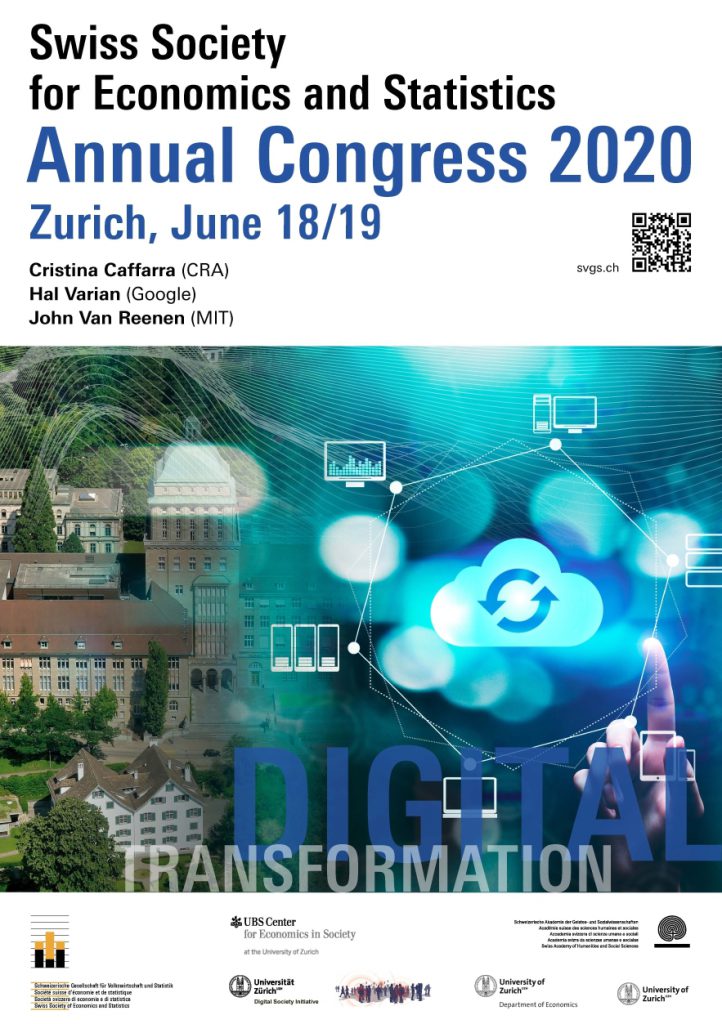
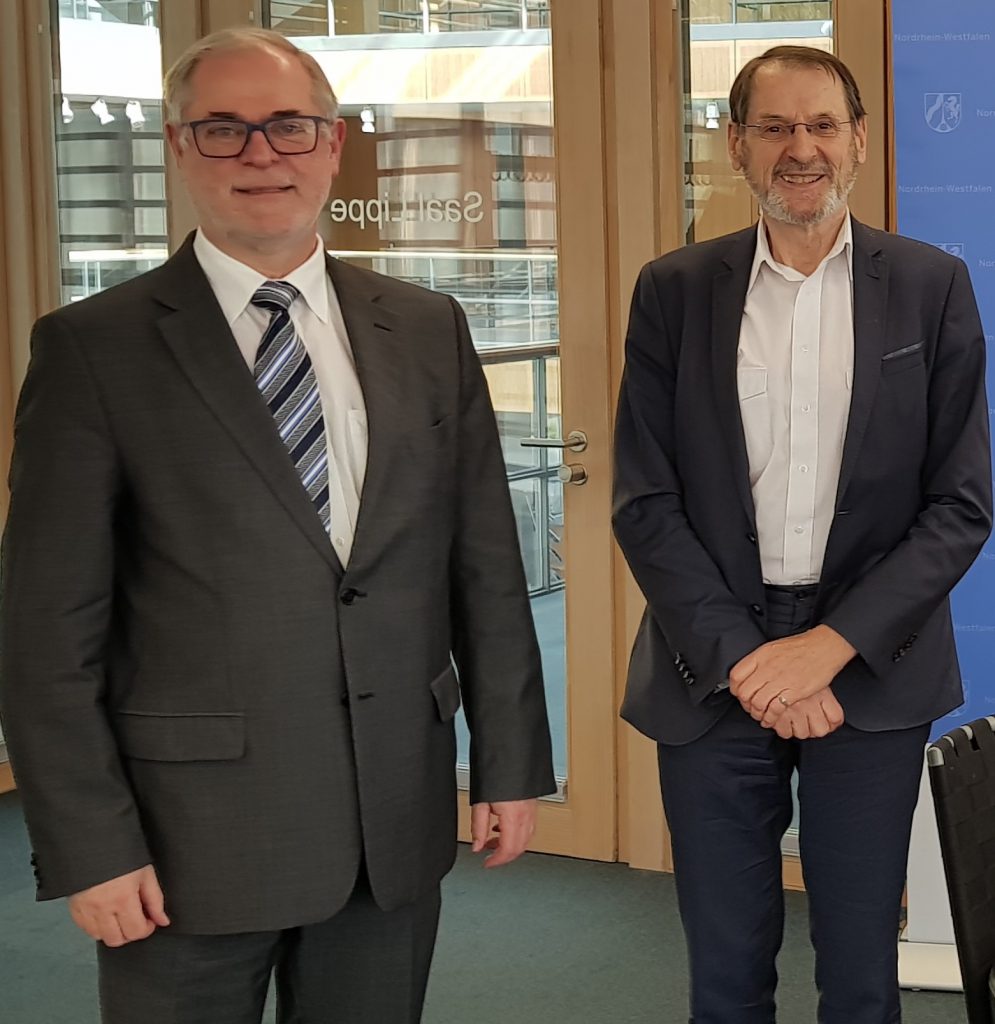
The 2020 Annual Congress of the Swiss Society of Economics and Statistics (SSES/SGVS) onJune 18-19 takes place at the University of Zürich organized by the Department of Economics. GLO Fellow and GLO Country Lead Switzerland Rainer Winkelmann heads the Organizing Committee that includes also GLO Fellow David Dorn.
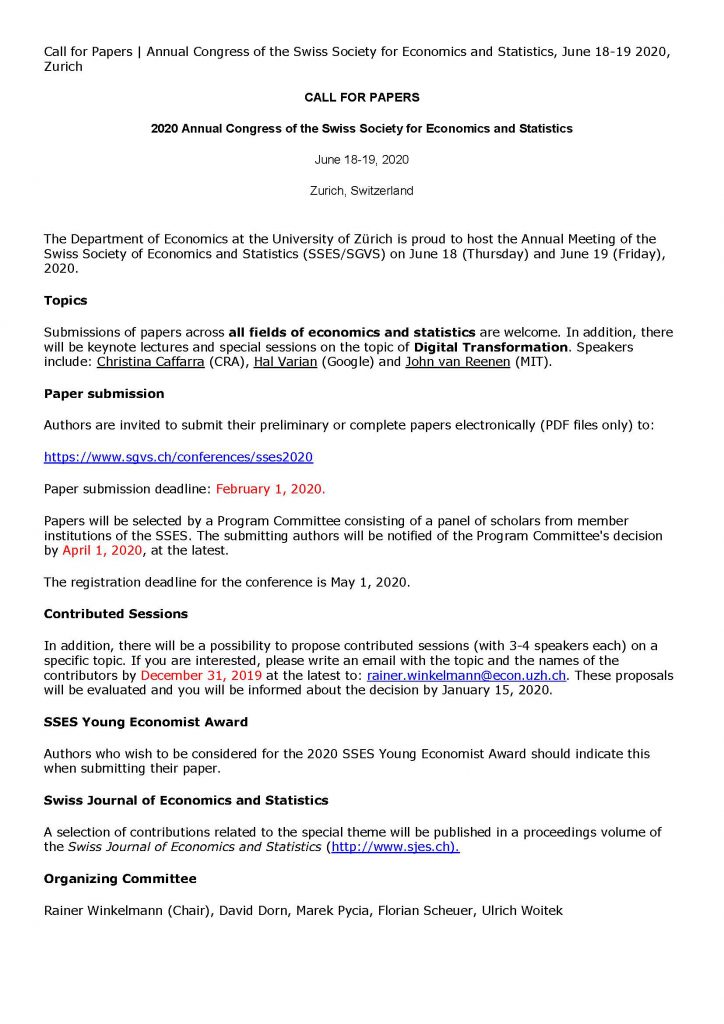
Paper submission deadline: February 1, 2020.All fields of economics and statistics are welcome. PDF Call for Papers.
There will be keynote lectures and special sessions on the topic of Digital Transformation with speakers including: Christina Caffarra (CRA), Hal Varian (Google) and John van Reenen (MIT).
CALL FOR PAPERS: 2020 Annual Congress of the Swiss Society for Economics and Statistics, June 18-19, 2020, Zurich, Switzerland.
The Department of Economics at the University of Zürich is proud to host the Annual Meeting of the Swiss Society of Economics and Statistics (SSES/SGVS) on June 18 (Thursday) and June 19 (Friday), 2020.
Topics
Submissions of papers across all fields of economics and statistics are
welcome. In addition, there will be keynote lectures and special sessions on
the topic of Digital Transformation. Speakers include: Christina
Caffarra (CRA), Hal Varian (Google) and John van Reenen (MIT).
Paper submission
Authors are invited to submit their preliminary or complete papers electronically (PDF files only) to: https://www.sgvs.ch/conferences/sses2020 Paper submission deadline: February 1, 2020.
Papers will be selected by a Program Committee consisting of a panel of
scholars from member institutions of the SSES. The submitting authors will be
notified of the Program Committee’s decision by April
1, 2020, at the latest.
The registration deadline for the conference is May 1, 2020.
Contributed Sessions
In addition, there will be a possibility to propose contributed sessions
(with 3-4 speakers each) on a specific topic. If you are interested, please
write an email with the topic and the names of the contributors by December 31, 2019 at the latest to: rainer.winkelmann@econ.uzh.ch. These proposals will be evaluated and you will be informed about the
decision by January 15, 2020.
SSES Young Economist Award
Authors who wish to be considered for the 2020 SSES Young Economist
Award should indicate this when submitting their paper.
Swiss Journal of Economics and Statistics
A selection of contributions related to the special theme will be
published in a proceedings volume of the Swiss Journal of Economics and
Statistics (http://www.sjes.ch).
Organizing Committee Rainer Winkelmann (Chair), David Dorn, Marek Pycia, Florian Scheuer, Ulrich Woitek
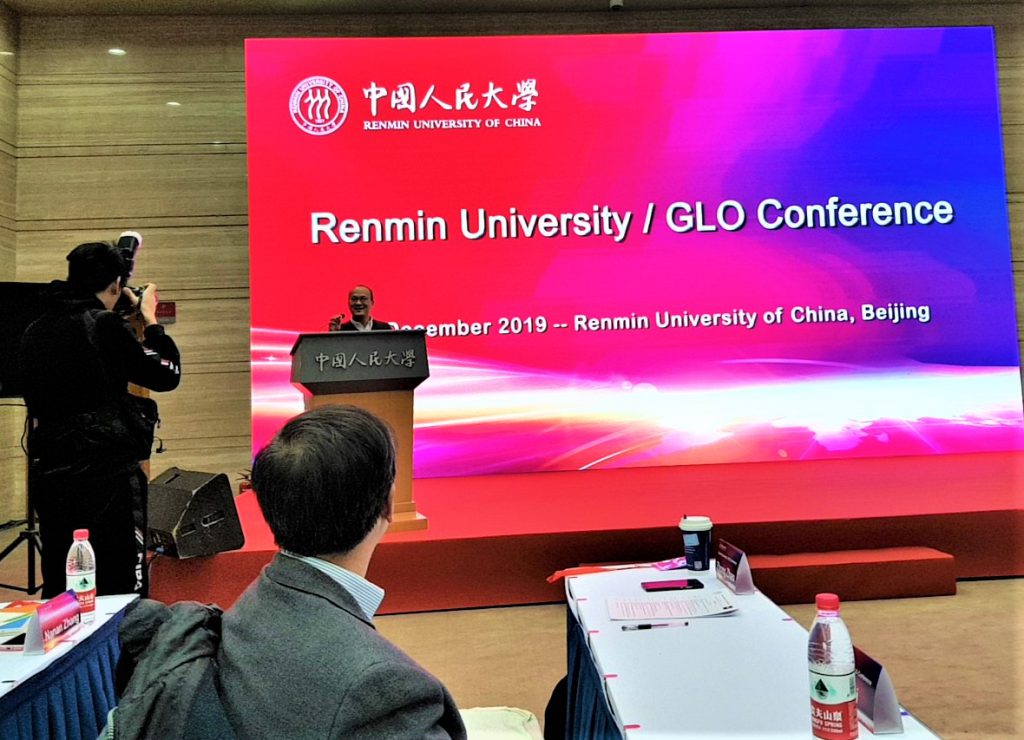
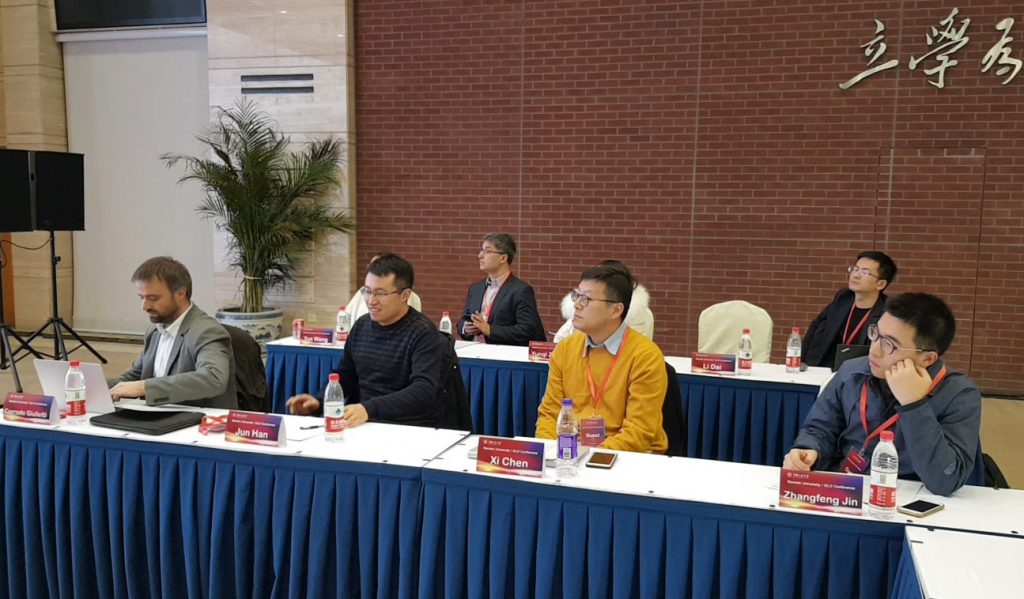
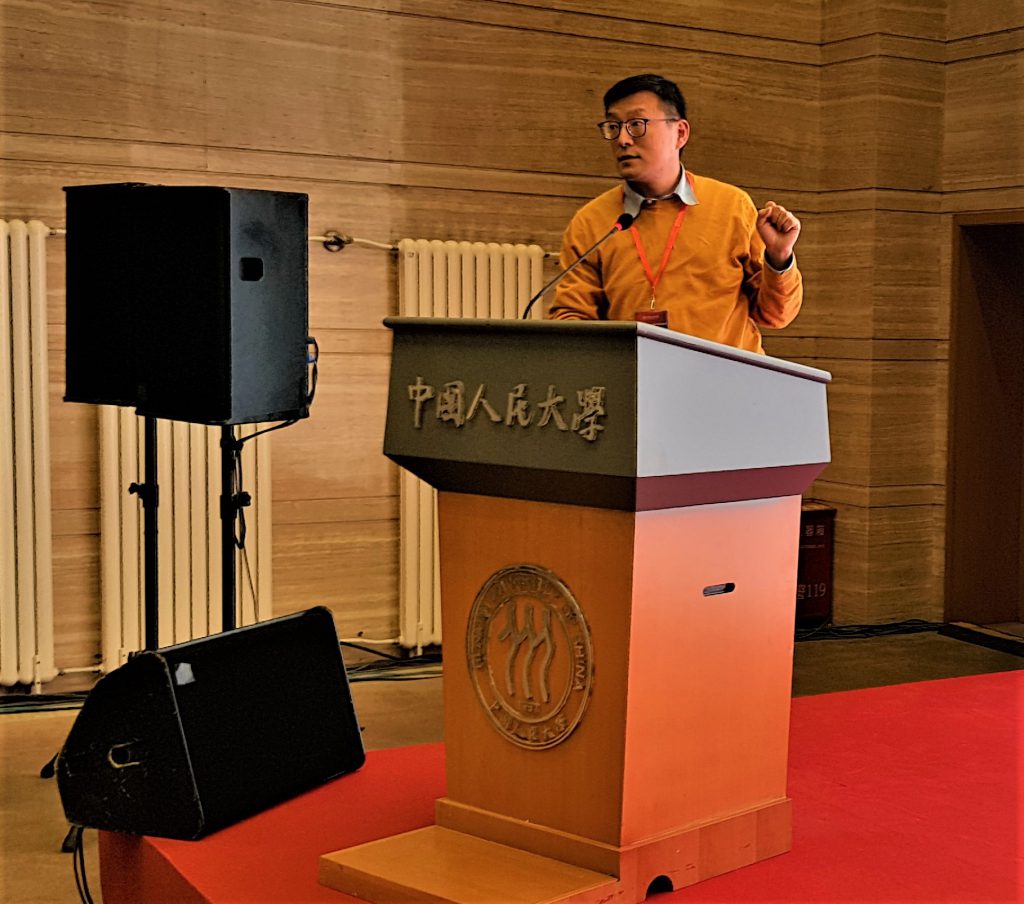
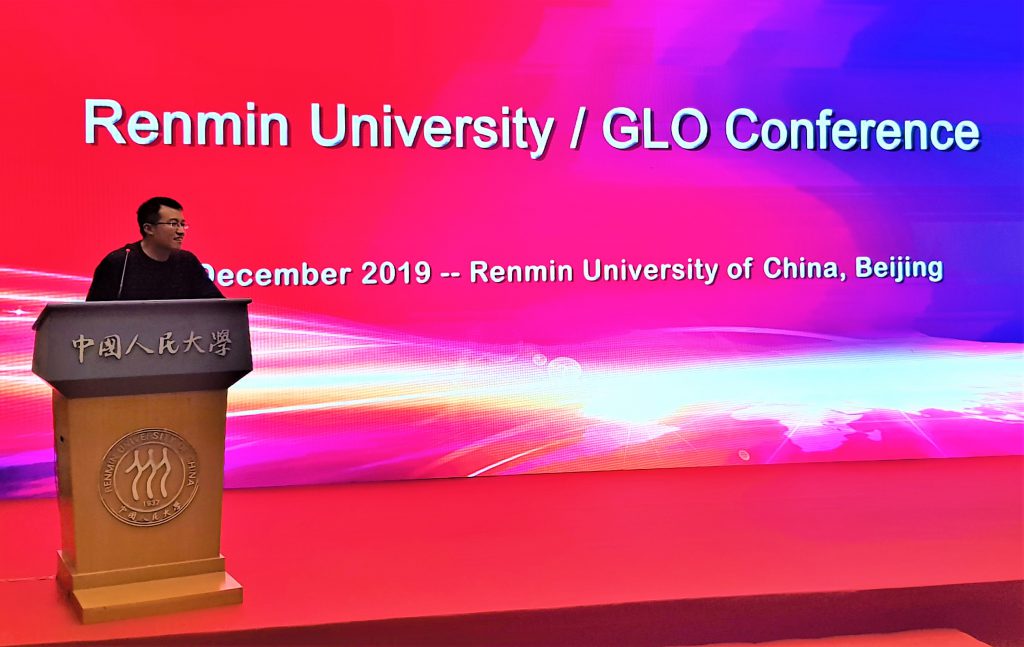
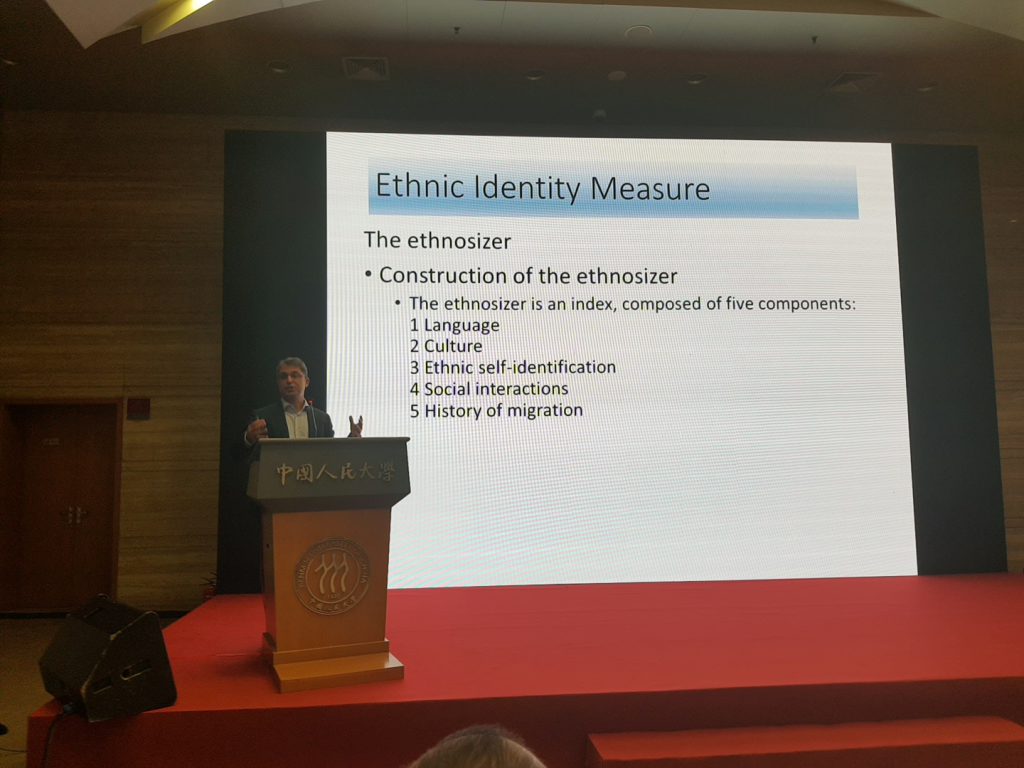
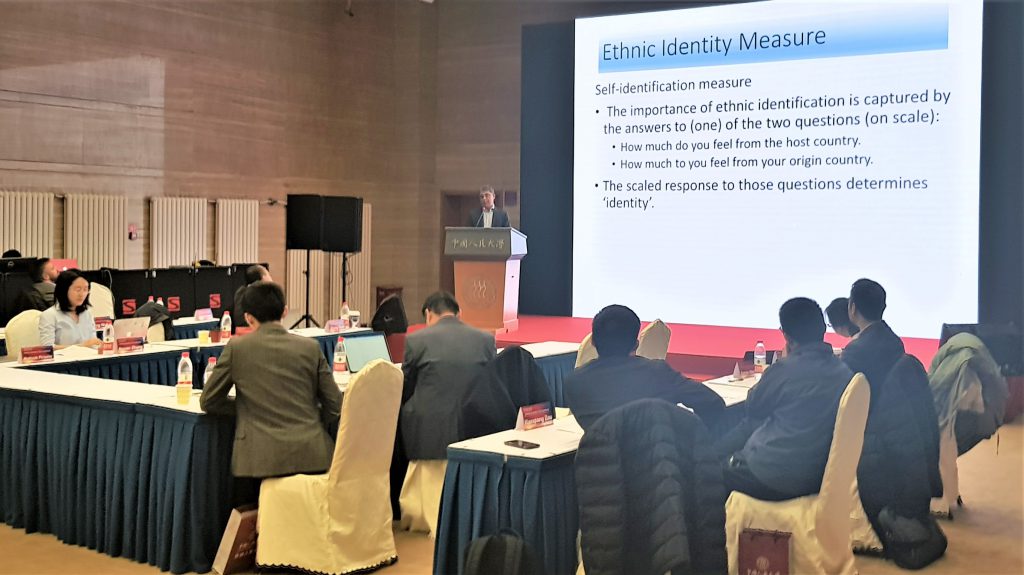
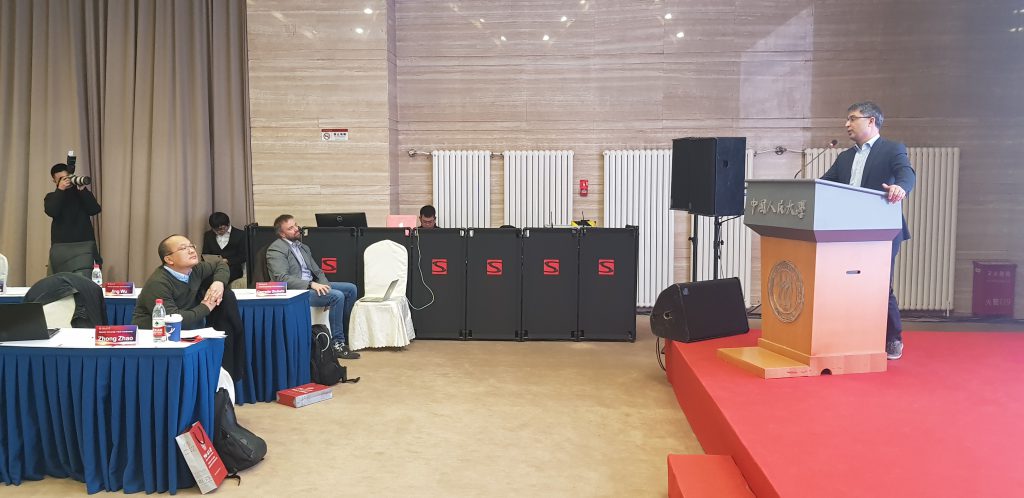
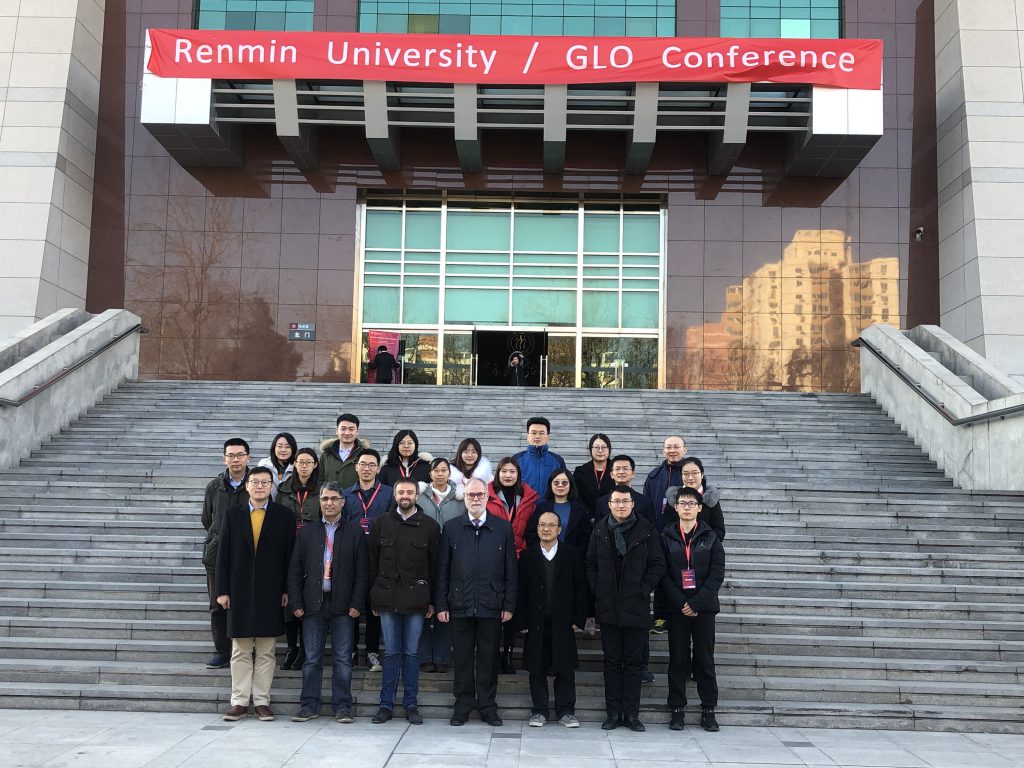
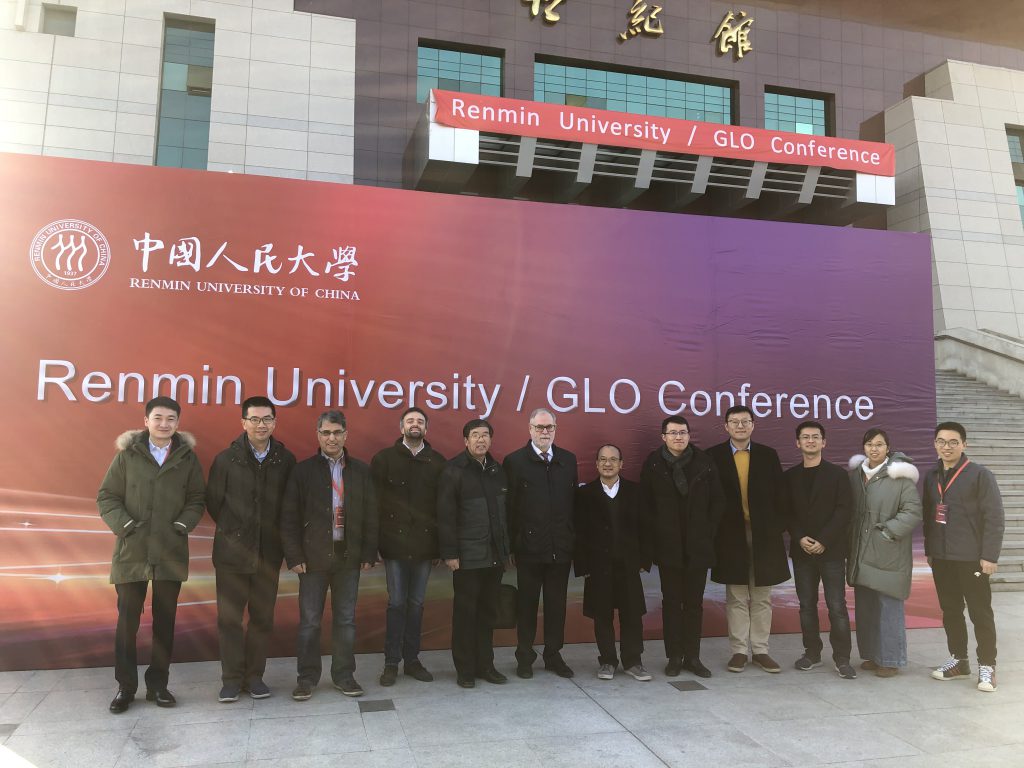
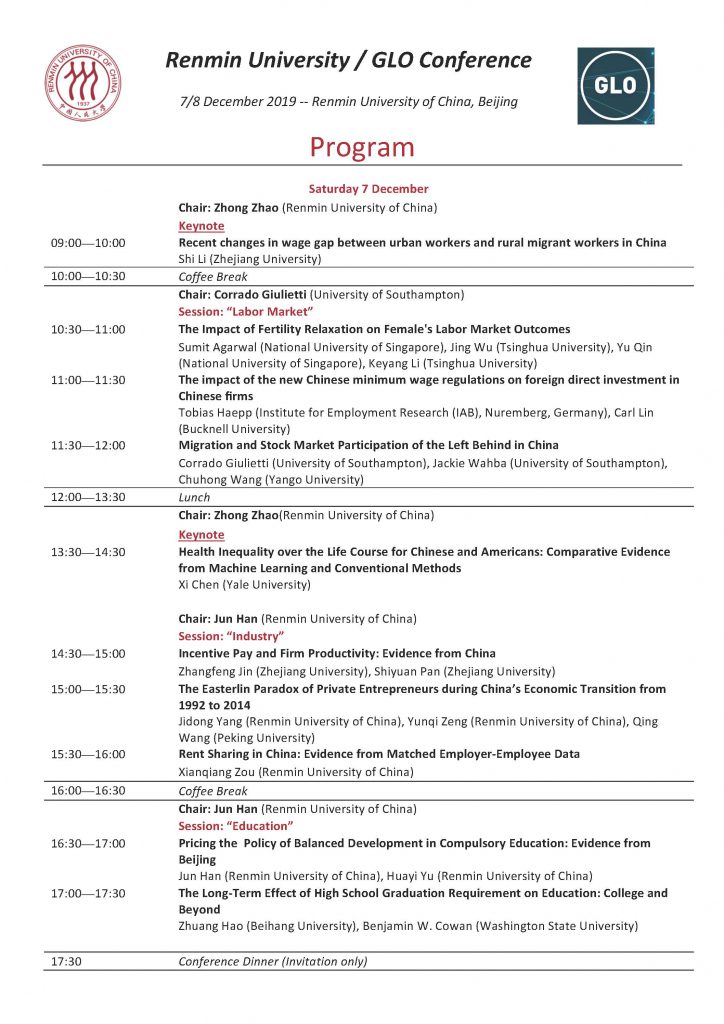
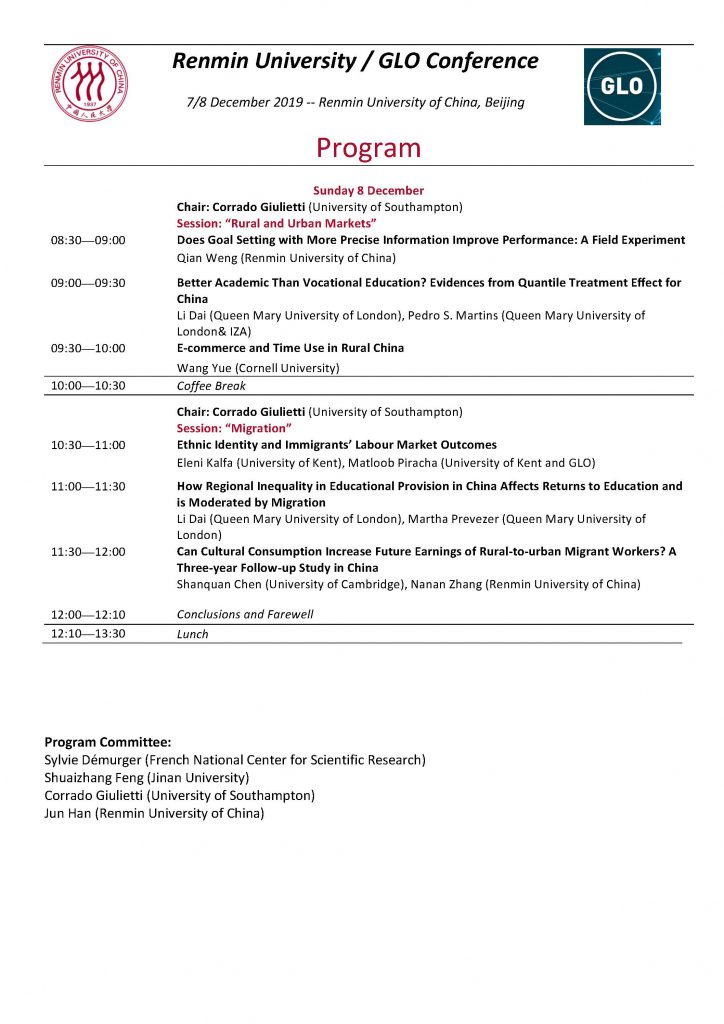
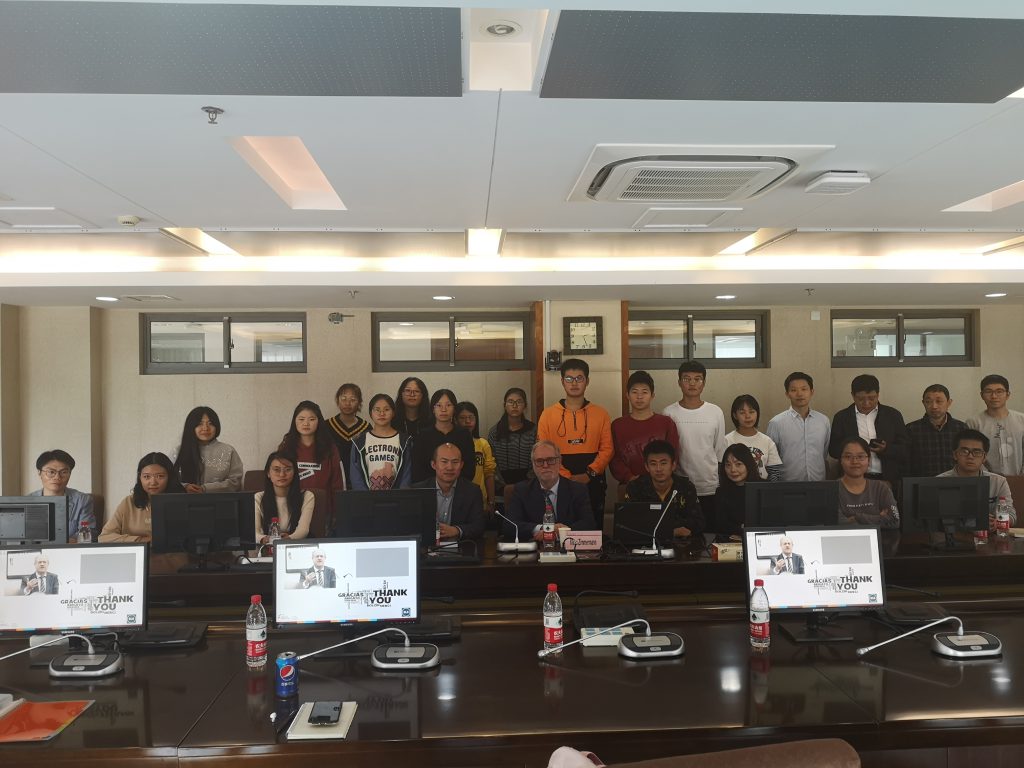
The Second GLO – Renmin University of China Conference on Labor Economics in Beijing took place in the North Hall, Century Hall, RUC 7-8 December 2019. More details and full program.
Conference organizers were GLO Fellows Corrado Giulietti and Jun Han. The event is part of the GLO China Research Cluster, which is lead by Corrado Giulietti, who is also a GLO Research Director.
The conference was opened on December 7 by Corrado Giulietti, Jun Han, GLO President Klaus F. Zimmermann, and Deputy Dean and GLO Fellow Zhong Zhao.
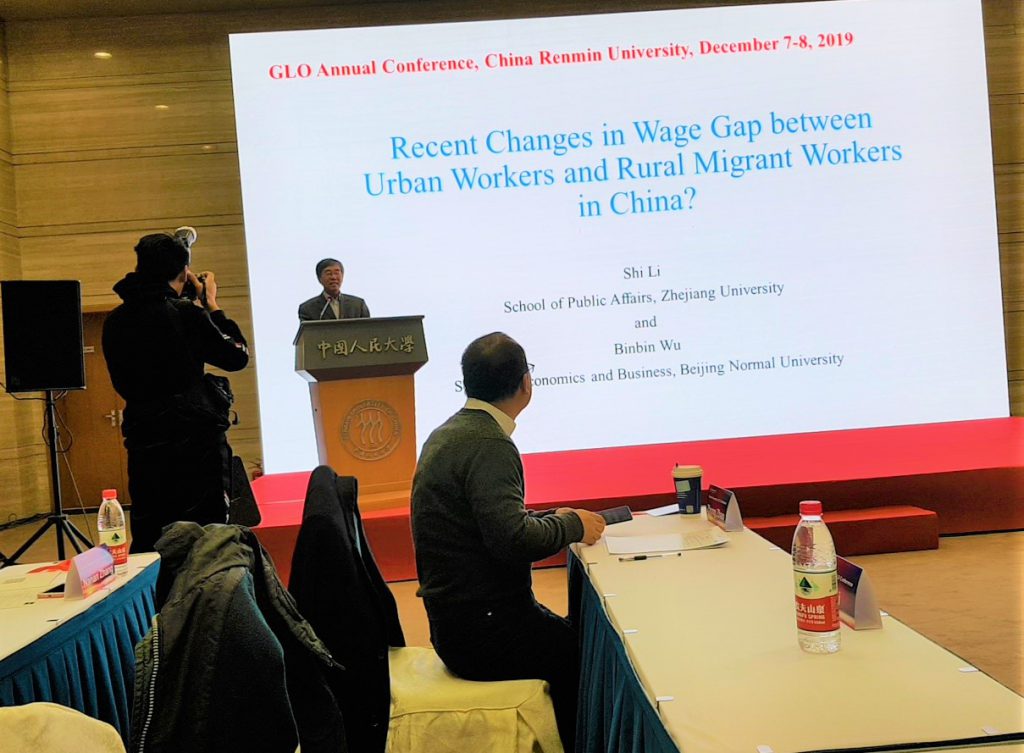
Keynote speakers were GLO FellowsShi Li of Zhejiang University and Xi Chen of Yale University. The conference saw 15 further paper presentations, one of them by GLO Director Matloob Piracha on Sunday, the second day of the event.
DAY 1; December 7
Zhong Zhao
Shi Li
From the left: Corrado Giulietti, Jun Han, Matloob Piracha, Xi Chen, Xianqiang Zou, and Zhangfeng Jin
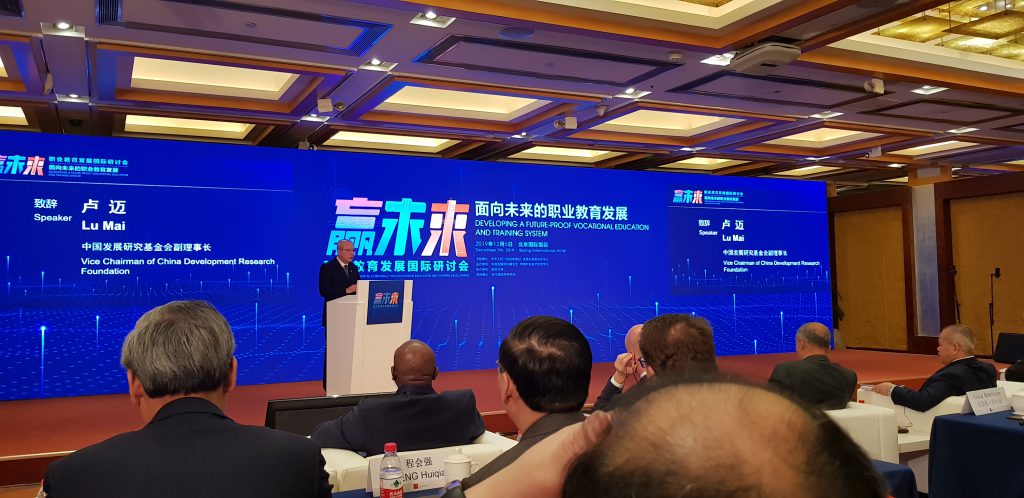
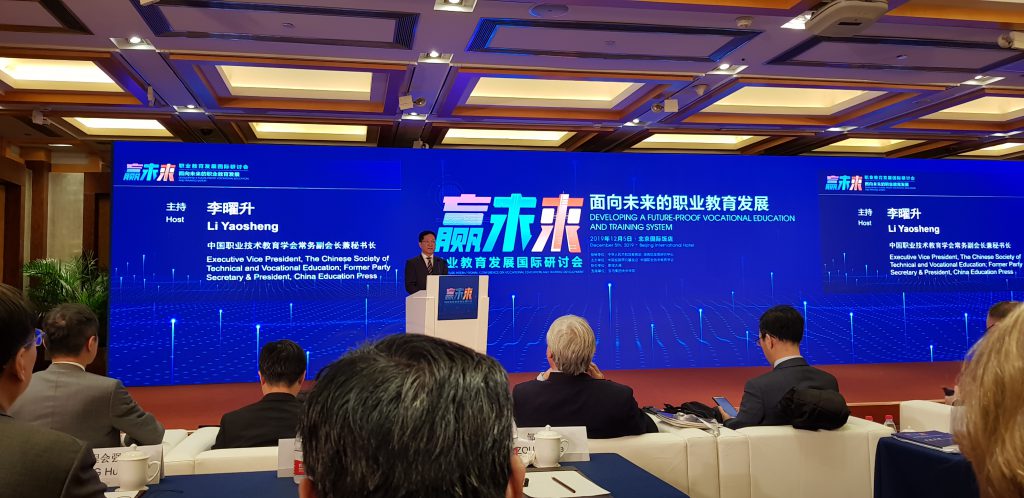
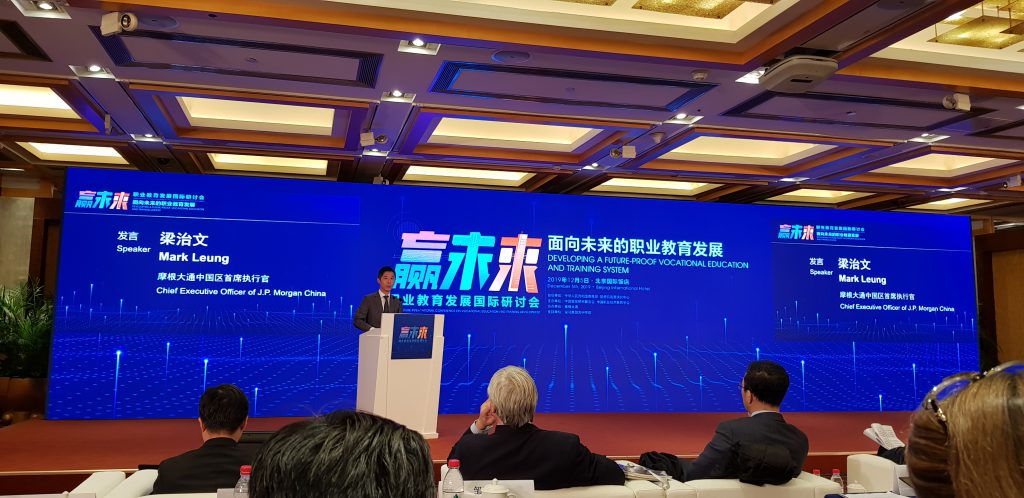
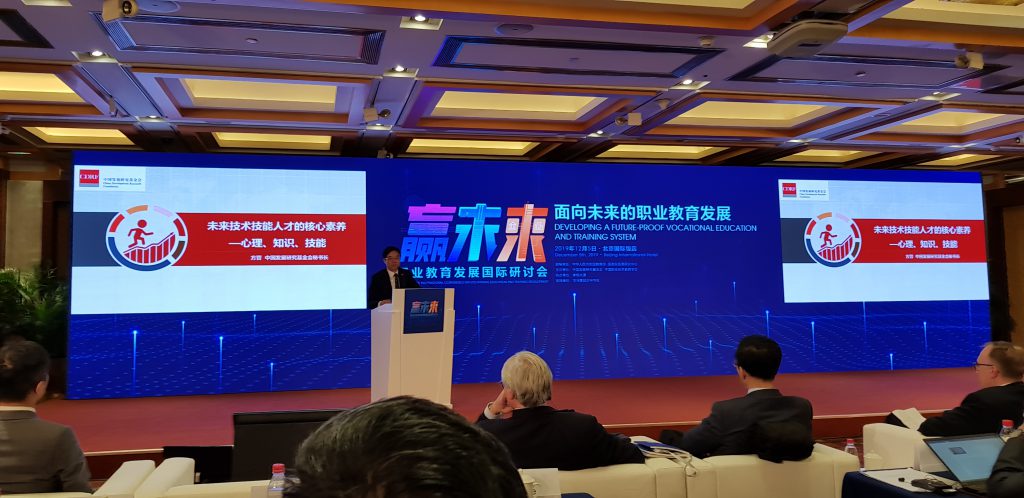
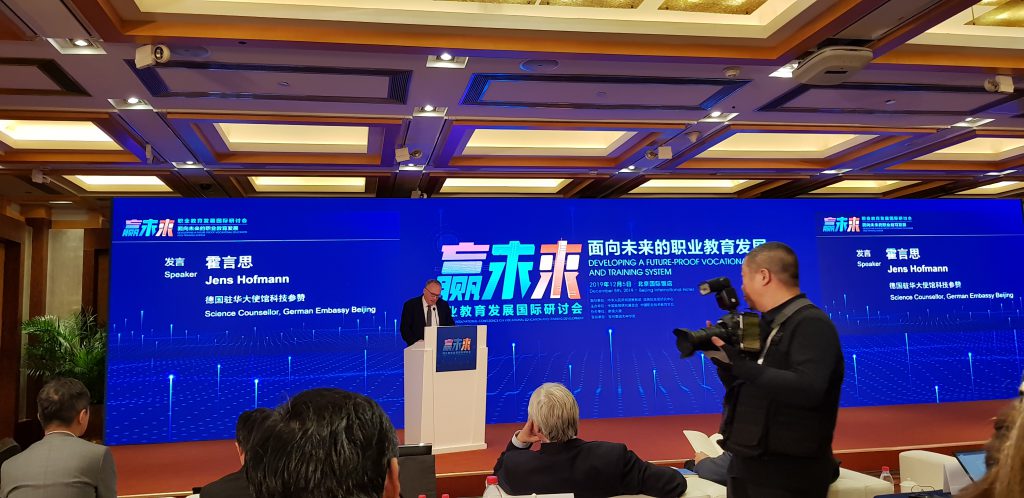
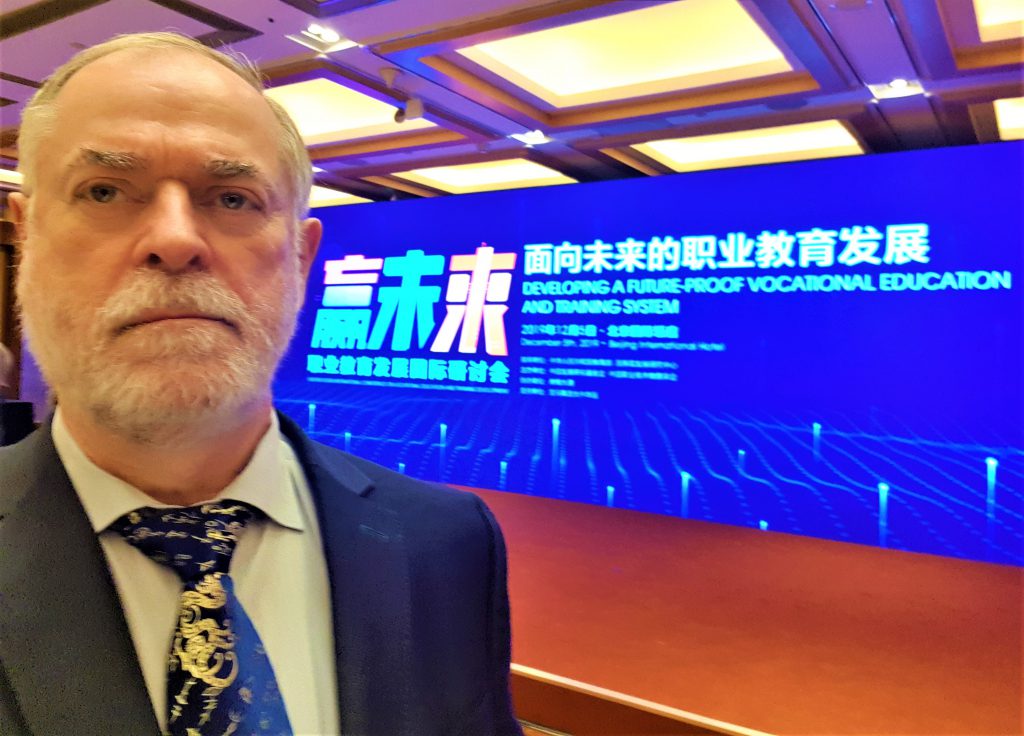
GLO President Klaus F. Zimmermann started his December visit to Beijing on December 5 to participate in a one-day event on:
For the Future: International Conference on Vocational Education and Training Development
The event took place in the Conference Center, Beijing International Hotel, Beijing/China. It was hosted by the China Development Research Foundation (CDRF) and The Chinese Society of Technical and Vocational Education (CSTVE) and supervised by the Ministry of Education of the People’s Republic of China and the Development Research Center of the State Council.
Next to following an intensive program with over 300 participants, Zimmermann was the Luncheon Keynote Speaker on the topic “Vocational Education & Training: Socio-Economic Sustainable Development“.
Key topics:
Vocational systems and youth unemployment
A roadmap to vocational education and training
General education versus vocational education
Challenges in the digital age
Central messages:
The Youth-to-Adult Unemployment Ratio of Germany With Its Dual Vocational Training System is Far Below Others in the Western World.
Vocational systems are a valued alternative beyond the core of general education.
Vocational high school graduates have better employment outcomes than general high school graduates.
The dual system is more effective in helping youth transition into employment than alternative academic or vocational training.
In the digital age, ICT skills are obviously important, but success comes with the development of non-cognitive skills.
Selective references:
Klaus F. Zimmermann, Costanza Biavaschi, Werner Eichhorst, Corrado Giulietti, Michael J. Kendzia, Alexander Muravyev, Janneke Pieters, Núria Rodríguez-Planas & Ricarda Schmidl (2013), Youth Unemployment and Vocational Training”, Foundations and Trends® in Microeconomics (2013), 9: 1-157.
Werner Eichhorst, Núria Rodríguez-Planas, Ricarda Schmidl & Klaus F. Zimmermann, A Roadmap to Vocational Education and Training in Industrialized Countries, Industrial and Labor Relations Review (2015), 68: 314-337.
Pierre Cahuc, Stéphane Carcillo, Ulf Rinne & Klaus F. Zimmermann, Youth Unemployment in Old Europe: The Polar Cases of France and Germany, IZA Journal of European Labor Studies, (2013), 2:18
Huzeyfe Torun & Semih Tumen, Do Vocational High School Graduates Have Better Employment Qutcomes Than General High School Graduates?, International Journal of Manpower (2019), 40: 1364-1388.
Shubha Jayaram, Tara Hill & Daniel Plaut, Training Models for Employment in the Digital Economy, Results for Development Institute (2013).
The new European Union Commission under the leadership of Ursula von der Leyen started working on December 1, 2019 with the aim to re-vitalize Europe.
GLO Fellow Jo Ritzen is a Professorial Fellow of UNU-MERIT and its School of Governance.UNU-MERIT is a joint institute of the United Nations University (UNU) and Maastricht University. Ritzen is a former Minister of Education, Culture, and Science of the Netherlands, served in the Dutch Cabinet at the Maastricht Treaty, is a former Vice President of the World Bank and a former President of Maastricht University.
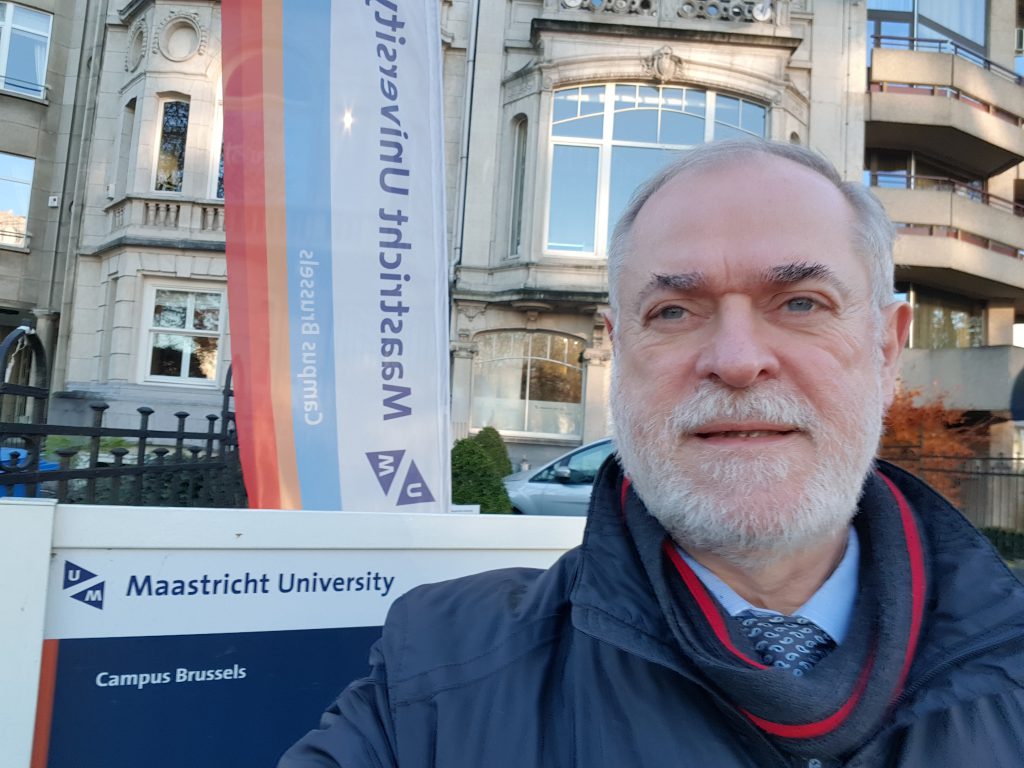
On December 3, Jo Ritzen presented his new book at the Campus Brussels of Maastricht University on the future of Europe: Una segunda oportunidad para Europa (A Second Chance for Europe) calls upon to rethink and reboot the European Union, obviously right in time for the fresh start of Europe, Ursula von der Leyen attempts to organize.
On this occasion, GLO President Klaus F. Zimmermann was visiting Brussels to prepare a European strategy for this organization. Zimmermann, Professor Emeritus of Bonn University, a Honorary Professor of Maastricht University and Co-Director of POP at UNU-MERIT, was also participating in the book launch; he was chairing the event and was moderating the respective policy panel.
The book was first introduced in Spanish by Salvador Pérez-Moreno, Professor of Economic Policy, University of Malaga, and discussed in Spanish by Javier López, Member of the European Parliament. Then Zimmermann moderated the panel discussion in English between Jo Ritzen, SalvadorPérez-Moreno and Javier López.
MORE DETAILS on the book. The video of this event is available HERE.
From the right: López, Ritzen, Pérez-Moreno and Zimmermann.
After a Christmas shopping tour on the Grand Place, he was visiting Bruegel, the economic think tank, to discuss research and policy projects with GLO Fellow Martin Kahanec. Kahanec, who is a Professor at the Central European University (CEU) in Vienna & Budapest and a Mercator Senior Visiting Fellow at Bruegel, acts also as the GLO Cluster Lead for EU Mobility.
Labor market issues will play the major role at the Second GLO – Renmin University of China Conference in Beijing on 7-8 December 2019. Keynote speakers of the event are GLO FellowsShi Li of Zhejiang University and Xi Chen of Yale University. This continues the very successful tradition started with the first conference. See program and event pictures of the 2018 event. The 2019 program is now out (LINK), see also below. Conference organizers are GLO Fellows Corrado Giulietti and Jun Han.GLO Director Matloob Piracha will give one of the many contributed papers. GLO President Klaus F. Zimmermann will attend and address the conference. The event is part of the GLO China Research Cluster, which is lead by Corrado Giulietti, who is also a GLO Research Director. Place: North Hall, Century Hall, RUC.
A new GLO Discussion Paper finds for The Netherlands that retirement of partnered men positively affects mental health of both themselves and their partners, while single men experience a drop in mental health.
The Global Labor Organization (GLO) is an independent, non-partisan and non-governmental organization that functions as an international network and virtual platform to stimulate global research, debate and collaboration.
Author Abstract: We study the retirement effects on mental health using a fuzzy regression discontinuity design based on the eligibility age to the state pension in the Netherlands. We find that the mental effects are heterogeneous by gender and marital status. Retirement of partnered men positively affects mental health of both themselves and their partners. Single men retiring experience a drop in mental health. Female retirement has hardly any effect on their own mental health or the mental health of their partners. Part of the effects seem to be driven by loneliness after retirement.
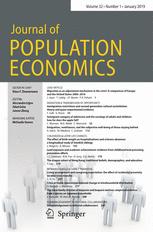
An article in the January 2020 issue of the Journal of Population Economicsreveals that former residents of the German Democratic Republic have a smaller present bias than former residents of the Federal Republic of Germany.
Journal of Population Economics 33 (2020), 349–387 GLO Discussion PaperNo. 306, 2019.
GLO FellowMarkus Pannenberg
Author Abstract: We use the separation and later reunification of Germany after World War II to show that a political regime shapes time preferences of its residents. Using two identification strategies, we find that former residents of the German Democratic Republic exhibit a significantly less pronounced present bias when compared with former residents of the Federal Republic of Germany, whereas measures of patience are statistically indistinguishable. Interpreting the years spent under the regime as a proxy for treatment intensity yields consistent results. Moreover, we present evidence showing that present bias predicts choices in the domains of health, finance, and education, thereby illustrating lasting repercussions of a regime’s influence on time preferences.
An article published in the January 2020 issue of the Journal of Population Economicsfinds that assortative mating in education has become stronger in the United States, which has contributed to the observed rise in inequality.
Journal of Population Economics 33 (2020), 307–347
Author Abstract: In this paper, we describe mating patterns in the USA from 1964 to 2017 and measure the impact of changes in marital preferences on between-household income inequality. We rely on the recent literature on the econometrics of matching models to estimate complementarity parameters of the household production function. Our structural approach allows us to measure sorting along multiple dimensions and to effectively disentangle changes in marital preferences and in demographics, addressing concerns that affect results from existing literature. We answer the following questions: Has assortativeness increased over time? Along which dimensions? To what extent can the shifts in marital preferences explain inequality trends? We find that, after controlling for other observables, assortative mating in education has become stronger. Moreover, if mating patterns had not changed since 1971, the 2017 Gini coefficient between married households would be 6% lower. We conclude that about 25% of the increase in between-household inequality is due to changes in marital preferences. Increased assortativeness in education positively contributes to the rise in inequality, but only modestly.
Despite a measured strong cross-sectional relationship between income and health, a new article in the January 2020 issue of the Journal of Population Economicsfinds no necessary connection between changes in income inequality and changes in health inequality.
Journal of Population Economics 33 (2020), 197–231
GLO FellowHannes Schwandt
Author Abstract: We develop a method for comparing levels and trends in inequality in mortality in the United States and France between 1990 and 2010 in a similar framework. The comparison shows that while income inequality has increased in both the United States and France, inequality in mortality in France remained remarkably low and stable. In the United States, inequality in mortality increased for older groups (especially women) while it decreased for children and young adults. These patterns highlight the fact that despite the strong cross-sectional relationship between income and health, there is no necessary connection between changes in income inequality and changes in health inequality.
A new article in the January 2020 issue of the Journal of Population Economicssuggests that migrant social networks in host cities mitigate adverse mental health challenges of Chinese rural-urban migrant workers.
Journal of Population Economics 33 (2020), 155–195 GLO Discussion PaperNo. 370, 2019.
GLO FellowsXin Meng & Sen Xue
Author Abstract: Over the past two decades, more than 160 million Chinese rural workers have migrated to cities to work. They are separated from their familiar rural networks to work in an unfamiliar, and often hostile, environment. Many of them thus face significant mental health challenges. This paper is the first to investigate the extent to which migrant social networks in host cities can mitigate these adverse mental health effects. Using unique longitudinal survey data from Rural-to-Urban Migration in China (RUMiC), we find that network size matters significantly for migrant workers. Our preferred instrumental variable estimates suggest that a one standard deviation increase in migrant city networks, on average, reduces the measure of mental health problems by 0.47 to 0.66 of a standard deviation. Similar effects are found among the less educated, those working longer hours, and those without access to social insurance. The main channel of the network effect is through boosting migrants’ confidence and reducing their anxiety.
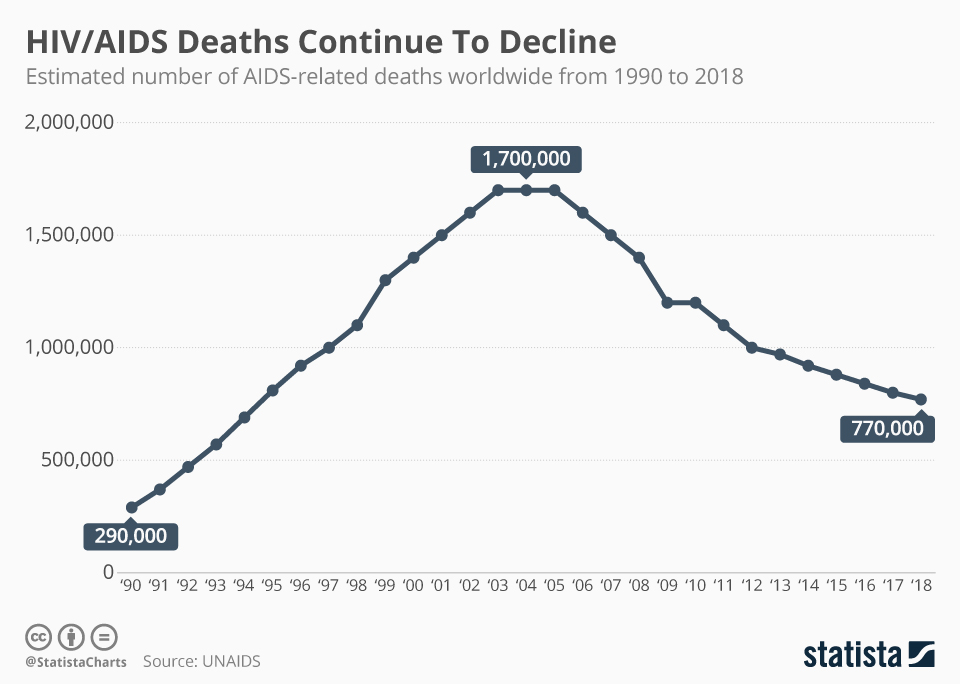
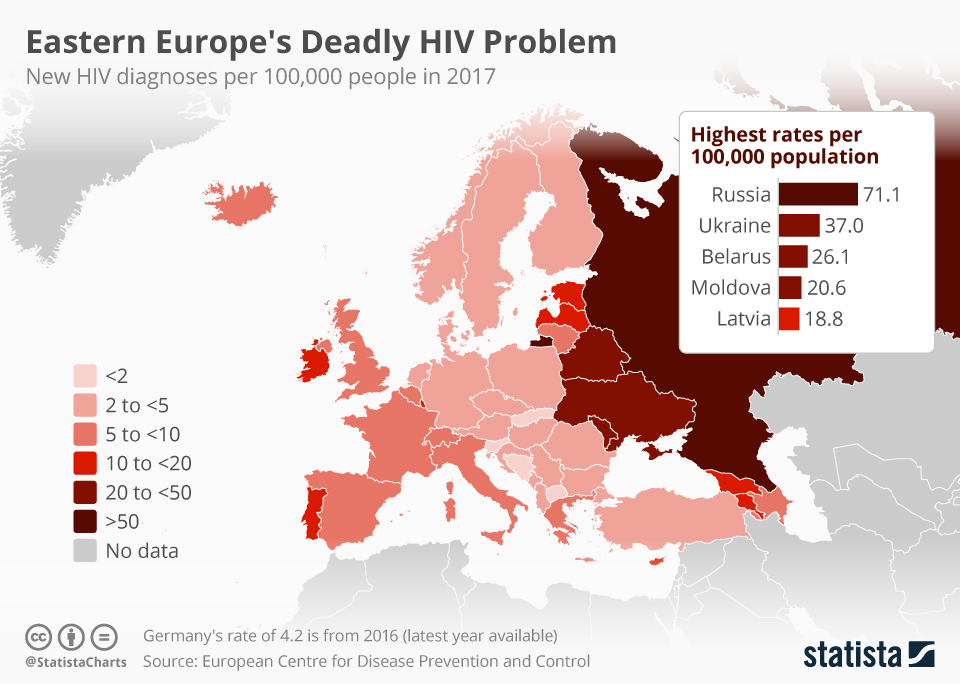
The number of deaths from the HIV/AIDS pandemic continues to fall. This is particularly true in Africa with a striking example in South Africa, where new infections and deaths have both been reduced by 40 percent since 2010. However, the problem is still worrisome in the South of the USA and in Eastern Europe. (See the three figures below.)
The Journal of Population Economics has published a number of economic research articles on the disease and the societal consequences. The 2019 Kuznets Prize of the Journal was devoted to a recent article:
A new article in the January 2020 issue of the Journal of Population Economicssuggests that intergenerational altruism explains between 24 and 42% of the African American northward migration.
Journal of Population Economics 33 (2020), 115–154
GLO FellowJohn Gardner
Author Abstract: It is widely believed that many migrations are undertaken at least in part for the benefit of future generations. To provide evidence on the effect of intergenerational altruism on migration, I estimate a dynamic residential location choice model of the African American Great Migration in which individuals take the welfare of future generations into account when deciding to remain in the Southern USA or migrate to the North. I measure the influence of altruism on the migration decision as the implied difference between the migration probabilities of altruistic individuals and myopic ones who consider only current-generation utility when making their location decisions. My preferred estimates suggest that intergenerational altruism explains between 24 and 42% of the Northward migration that took place during the period that I study, depending on the generation.
A new article in the January 2020 issue of the Journal of Population Economicssuggests that foreign aid may reduce asylum inflows from poor countries in the short run, but inflows from less poor economies show a positive but weak relation with aid. Aid is not an effective instrument to avoid migration flows.
Journal of Population Economics 33 (2020), 79–114 GLO Discussion PaperNo. 378, 2019.
GLO FellowMarina Murat
Author Abstract: This paper measures the links between aid from 14 rich to 113 developing economies and bilateral asylum applications during the years 1993 to 2013. Results show that asylum applications are related to aid in a U-shaped fashion with respect to the level of development of origin countries, although only the downward segment proves to be robust to all specifications. Asylum inflows from poor countries are significantly and negatively associated with aid in the short run, with mixed evidence of more lasting effects, while inflows from less poor economies show a positive but non-robust relationship to aid. Moreover, aid leads to negative cross-donor spillovers. Applications linearly decrease with humanitarian aid. Voluntary immigration is not related to aid. Overall, the reduction in asylum inflows is stronger when aid disbursements are conditional on economic, institutional and political improvements in the recipient economy.
Are new immigrants causing persistent voting effects? The lead article in the January 2020 issue of the Journal of Population Economics suggests that the voting effects are short-term only.
Read more in:
Read free the Lead Article of issue 1 (2020) of the Journal of Population Economics :
Author Abstract: In this paper, we test the hypothesis that the causal effect of immigrant presence on anti-immigrant votes is a short-run effect. For this purpose, we consider a distributed lag model and adapt the standard instrumental variable approach proposed by Altonji and Card (1991) to a dynamic framework. The evidence from our case study, votes for the UK Independent Party (Ukip) in recent European elections, supports our hypothesis. Furthermore, we find that this effect is robust to differences across areas in terms of population density and socioeconomic characteristics, and it is only partly explained by integration issues.
Interested researchers are cordially invited to submit their abstracts or papers for presentation consideration at the 31st EBES Conference – Warsaw, which will take place on April 15-17, 2020 hosted by the Faculty of Economic Sciences, University of Warsaw, Warsaw/Poland, with the support of the Istanbul Economic Research Association.
This is aGLO supported conference.EBESis theEurasia Business and Economics Society, a strategic partner and institutional supporter of GLO. GLO President Klaus F. Zimmermann is also President of EBES.
Invited Speaker
EBES is pleased to announce that distinguished scholar Professor Brian Lucey will join the conference as keynote speaker:
Professor Brian Lucey is a well-known researcher in the finance field. He
is professor of finance at the School of Business, Trinity College Dublin and
editor of Journal of Behavioral and Experimental Finance; International Review
of Financial Analysis; and Finance Research Letters. He also is an associate
editor of Journal of Banking and Finance. He worked as an economist in the
Department of Health and Central Bank in Ireland and has more than 150
peer-reviewed papers which were published in reputable finance journals
including Journal of International Financial Markets, Institutions and Money;
Journal of Banking and Finance; Journal of Financial Stability; and Journal of
Multinational Financial Management.
Board Prof. Klaus F. Zimmermann, UNU-MERIT, Maastricht University, The Netherlands, & GLO. Prof. Jonathan Batten, Monash University, Australia, & GLO Prof. Iftekhar Hasan, Fordham University, U.S.A. Prof. Euston Quah, Nanyang Technological University, Singapore Prof. John Rust, Georgetown University, U.S.A., & GLO Prof. Dorothea Schäfer, German Institute for Economic Research DIW Berlin,Germany, and GLO Prof. Marco Vivarelli, Università Cattolica Del Sacro Cuore, Italy, & GLO
Abstract/Paper Submission
Authors are invited to submit their abstracts or papers no later than February 12, 2020.
Qualified papers can be published
in EBES journals (Eurasian Business Review and Eurasian Economic Review) or
EBES Proceedings books after a peer review process without any submission or
publication fees. EBES journals (EABR and EAER) are published by Springer and
both are indexed in the SCOPUS, EBSCO EconLit with Full Text, Google Scholar,
ABS Academic Journal Quality Guide, CNKI, EBSCO Business Source, EBSCO
Discovery Service, EBSCO TOC Premier, International Bibliography of the Social
Sciences (IBSS), OCLC WorldCat Discovery Service, ProQuest ABI/INFORM, ProQuest
Business Premium Collection, ProQuest Central, ProQuest Turkey Database,
ProQuest-ExLibris Primo, ProQuest-ExLibris Summon, Research Papers in Economics
(RePEc), Cabell’s Directory, and Ulrich’s Periodicals Directory. In addition,
while EAER is indexed in the Emerging Sources Citation Index (Clarivate
Analytics), EABR is indexed in the Social Science Citation Index (SSCI) and
Current Contents / Social & Behavioral Sciences.
Furthermore, high qualified
papers will be invited to be submitted for publication in regular issues of the
Review of Managerial Science (SSCI) and they will go through a review process.
However, presentation at the EBES Conference does not guarantee publication in
the Review of Managerial Science.
Also, all accepted abstracts will
be published electronically in the Conference Program and the Abstract Book
(with an ISBN number). It will be distributed to all conference participants at
the conference via USB. Although submitting full papers are not required, all
the submitted full papers will also be included in the conference proceedings
in a USB. After the conference, participants will also have the opportunity to
send their paper to be published (after a refereeing process managed by EBES)
in the Springer’s series Eurasian Studies in Business and Economics (no
submission and publication fees).
This will also be sent to
Clarivate Analytics in order to be reviewed for coverage in the Conference
Proceedings Citation Index – Social Science & Humanities (CPCI-SSH). Please
note that the 10th, 11th, 12th, 13th, 14th, 15th, 16th, 17th, 18th, 19th and
20th (Vol. 2) EBES Conference Proceedings are accepted for inclusion in the
Conference Proceedings Citation Index – Social Science & Humanities
(CPCI-SSH). 20th (Vol. 1), 21st and subsequent conference proceedings are in
progress.
Important Dates
Abstract Submission Start Date: November 1, 2019 Abstract Submission Deadline: February 12, 2020 Reply-by: February 14, 2020* Registration Deadline: March 13, 2020 Announcement of the Program: March 17, 2020 Paper Submission Deadline (Optional): March 13, 2020** Paper Submission for the EBES journals: July 15, 2020
* The decision regarding the acceptance/rejection of each abstract/paper will be communicated with the corresponding author within a week of submission. ** Completed paper submission is optional. If you want to be considered for the Best Paper Award or your full paper to be included in the conference proceedings in the USB, after submitting your abstract before February 12, 2020, you must also submit your completed (full) paper by March 13, 2020.
Contact Ugur Can, Director of EBES (ebes@ebesweb.org); EBES & GLO Dr. Ender Demir, Conferene Coordinator of EBES (demir@ebesweb.org); EBES & GLO
The paper studies the migrant-native differences in wealth among older households in Europe which is significant and to the advantage of the natives. The importance of origin country, age at migration, and citizenship status in reducing the gap is shown.
Author Abstract: This study uses a matching method to provide an estimate of the nativity wealth gap among older households in Europe. This approach does not require imposing any functional form on wealth and avoids validity-out-of-the-support assumptions; furthermore, it allows estimation not only of the mean of the wealth gap but also of its distribution for the common-support sub-population. The results show that on average there is a positive and significant wealth gap between natives and migrants. However, the average gap may be misleading as the distribution of the gap reveals that immigrant households in the upper part of the wealth distribution are better off, and those in the lower part of the wealth distribution are worse off, than comparable native households. A heterogeneity analysis shows the importance of origin, age at migration, and citizenship status in reducing the gap. Indeed, households who migrated within Europe, those who moved at younger ages rather than as adults, and those who are citizens of the destination country display a wealth gap that is consistently smaller over the entire distribution.
The article finds thatparents compensate disadvantaged children with greater cognitive resources using data fromprimary school-aged Ethiopian siblings.
Author Abstract: A small but increasing body of literature finds that parents invest in their children unequally. However, the evidence is contradictory, and providing convincing causal evidence of the effect of child ability on parental investment in a low-income context is challenging. This paper examines how parents respond to the differing abilities of primary school-aged Ethiopian siblings, using rainfall shocks during the critical developmental period between pregnancy and the first 3 years of a child’s life to isolate exogenous variations in child ability within the household, observed at a later stage than birth. The results show that on average parents attempt to compensate dis-advantaged children through increased cognitive investment. The effect is significant,but small in magnitude: parents provide about 3.9% of a standard deviation more in educational fees to the lower-ability child in the observed pair. We provide suggestive evidence that families with educated mothers, smaller household size and higher wealth compensate with greater cognitive resources for a lower-ability child.
Gender pay gaps are still of much concern, in particular in the United States. A paper published in the Journal of Population Economics adds to our understanding how the gender gap is shaped by multiple different forces such as parenthood, gender segregation, part-time work and unionization.
GLO Fellows Francesco Pastore & Allan Webster The paper is also GLO Discussion Paper No. 363, 2019.
Author Abstract: This study examines the gender wage gap in the USA using two separate cross-sections from the Current Population Survey (CPS). The extensive literature on this subject includes wage decompositions that divide the gender wage gap into “explained” and “unexplained” components. One of the problems with this approach is the heterogeneity of the sample data. In order to address the difficulties of comparing like with like, this study uses a number of different matching techniques to obtain estimates of the gap. By controlling for a wide range of other influences, in effect, we estimate the direct effect of simply being female on wages. However, a number of other factors, such as parenthood, gender segregation, part-time working, and unionization, contribute to the gender wage gap. This means that it is not just the core “like for like” comparison between male and female wages that matters but also how gender wage differences interact with other influences. The literature has noted the existence of these interactions, but precise or systematic estimates of such effects remain scarce. The most innovative contribution of this study is to do that. Our findings imply that the idea of a single uniform gender pay gap is perhaps less useful than an understanding of how gender wages are shaped by multiple different forces.
“A Second Chance for Europe” calls upon us to rethink and reboot the European Union. The discontents of globalization threaten European values and call for a new economic order. EU Member States are backsliding on the rule of law and control of corruption. There is a need to rethink immigration policy. The debt overhang of some Euro countries is unsustainable.
Given the sum total of these vulnerabilities, the book argues that the EU may not survive beyond 2025 in its present form. It puts forward a number of workable solutions: a European economic model to secure full employment, a stronger European Court of Human Rights, a points-based immigration system, clear exit options from the Eurozone and an Open Education Area with a common second language. These solutions may reduce the number of EU countries in the core-EU, but would increase cohesion and overall sustainability.
“Una segunda oportunidad para Europa” nos llama a repensar y reiniciar la Unión Europea. El descontento con la globalización amenaza los valores europeos y pide un nuevo orden económico. Los Estados Miembros están retrocediendo en el mantenimiento del estado de derecho y el control de la corrupción. Existe la necesidad de repensar la política migratoria. La deuda pública de algunos países de la Eurozona es insostenible.
Teniendo en cuenta la suma de estas vulnerabilidades, el libro argumenta que la Unión Europea podría no sobrevivir más allá de 2025 en su forma actual. El libro propone una serie de soluciones: un modelo económico europeo para asegurar el pleno empleo, un Tribunal Europeo de Derechos Humanos más fuerte, un sistema de inmigración por puntos, opciones claras de salida de la Eurozona, y un Área de Educación Abierta con un segundo idioma común. Estas soluciones podrían reducir el número de países de la UE en el núcleo de la Unión, pero incrementarían la cohesión y la sostenibilidad general.
INVITATION: The United Nations University – MERIT and Maastricht University Campus Brussels invite to the book launch of
Una segunda oportunidad para Europa edited by Jo Ritzen
on December 3, 2019, 16:00-18:00. Venue: Maastricht University Campus Brussels | Avenue de Tervueren 153, 1150, Brussels. The event will be in both Spanish and English.
Presentation of the book in Spanish by Mr. Salvador Pérez-Moreno, Professor of Economic Policy, University of Malaga
Comments in Spanish by Mr. Javier López, Member of the European Parliament
Discussion in English between Prof. Moreno, Prof. Inmaculada Serón-Ordoñez, Lecturer of Translation and Interpretation at Pablo de Olavide University, Seville, and Mr. Javier Lopez, led by Prof. Klaus F. Zimmermann, President of the Global Labor Organization (GLO), UNU-MERIT and Bonn University
Drinks
ABOUT THE EDITOR
Jo Ritzen is a professorial fellow in the International Economics of Science, Technology and Higher Education at United Nations University-MERIT and its School of Governance. UNU-MERIT is a joint institute of the United Nations University (UNU) and Maastricht University. Prof. Ritzen is a former Minister of Education, Culture, and Science of the Netherlands, served in the Dutch Cabinet at the Maastricht Treaty, a former Vice President of the World Bank and former President of Maastricht University. Jo Ritzen is also a Fellow of the Global Labor Organization (GLO).
Jo Ritzen (right) & Klaus F. Zimmermann
How to order the book: https://www.edicionespiramide.es/libro.php?id=5928108 https://www.amazon.fr/Una-segunda-oportunidad-para-Europa/dp/8436841166
The issue is now available online. Three articles are open access. All articles listed below have a READ LINK which allows free reading. These links can be freely used on websites and in the social media. The link enables to READ the article. For the concept behind read more: https://www.springernature.com/gp/researchers/sharedit
A new GLO Discussion Paper finds in line with the literature on vocational education programs that internship experience has a positive effect on labor market outcomes.
The Global Labor Organization (GLO) is an independent, non-partisan and non-governmental organization that functions as an international network and virtual platform to stimulate global research, debate and collaboration.
Author Abstract: The literature on workplace learning in secondary education has mainly focused on vocational education programs. In this study, we examine the impact of internship experience in secondary education on a student’s schooling and early labor market outcomes, by analyzing unique, longitudinal data from Belgium. To control for unobserved heterogeneity, we model sequential outcomes by means of a dynamic discrete choice model. In line with the literature on vocational education programs, we find that internship experience has a positive effect on labor market outcomes that diminishes over time, although within the time window of our study, we find no evidence for a null or negative effect over time.
A new GLO Discussion Paper studies female entrepreneurship as a possible growth driver. It finds that tertiary education makes entrepreneurial training of females effective.
The Global Labor Organization (GLO) is an independent, non-partisan and non-governmental organization that functions as an international network and virtual platform to stimulate global research, debate and collaboration.
Author Abstract: In the aftermath of the global financial crisis, policymakers have been increasingly striving to support female entrepreneurship as a possible growth driver. This paper contributes to reconciling mixed findings in the literature on the effectiveness of entrepreneurial training with an analysis that links training and human capital, including tertiary education and non-cognitive skills, with gender gaps in entrepreneurial performance in Africa. We have found that while financial literacy training directly benefits men, it does not raise the sales level of women entrepreneurs. Instead, tertiary education has a direct positive link with the performance of women. Consistent with our theoretical model where different skills are complements, tertiary education can act as a channel that makes training effective. Regarding non-cognitive skills, evidence shows that women entrepreneurs who are tenacious achieve stronger sales performance. Our results underscore the importance of incorporating tertiary education and entrepreneurial training programs focused on a balanced set of skills, including non-cognitive skills, among policies for women entrepreneurs.
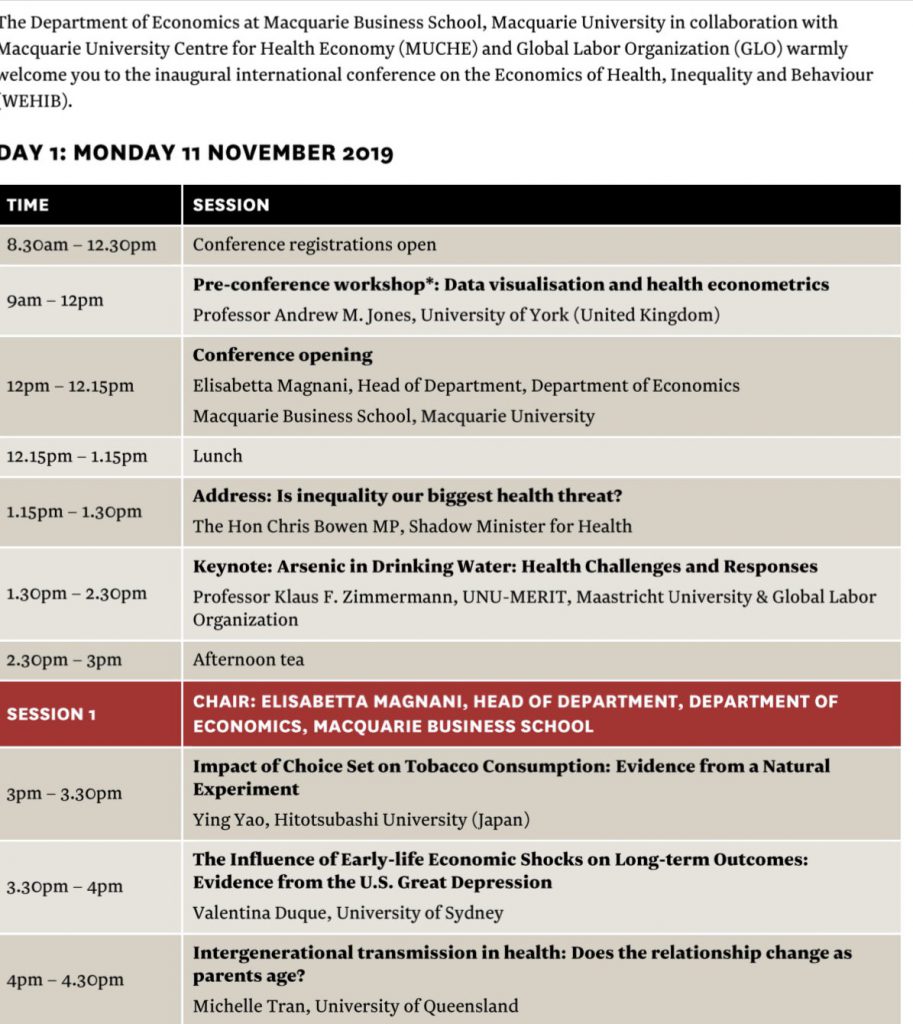
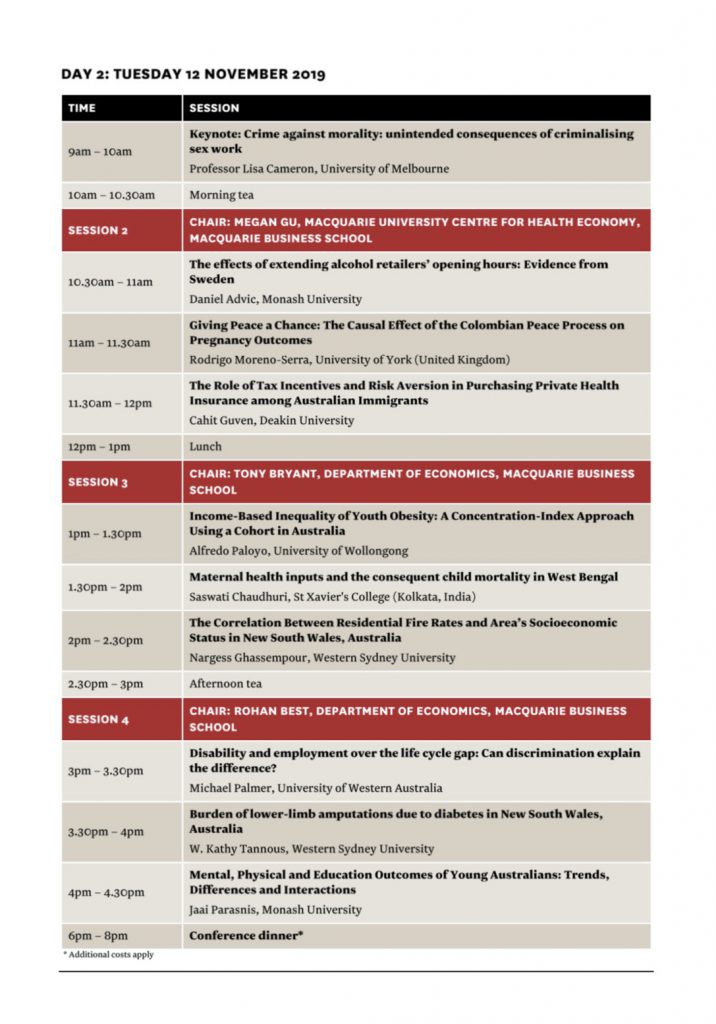
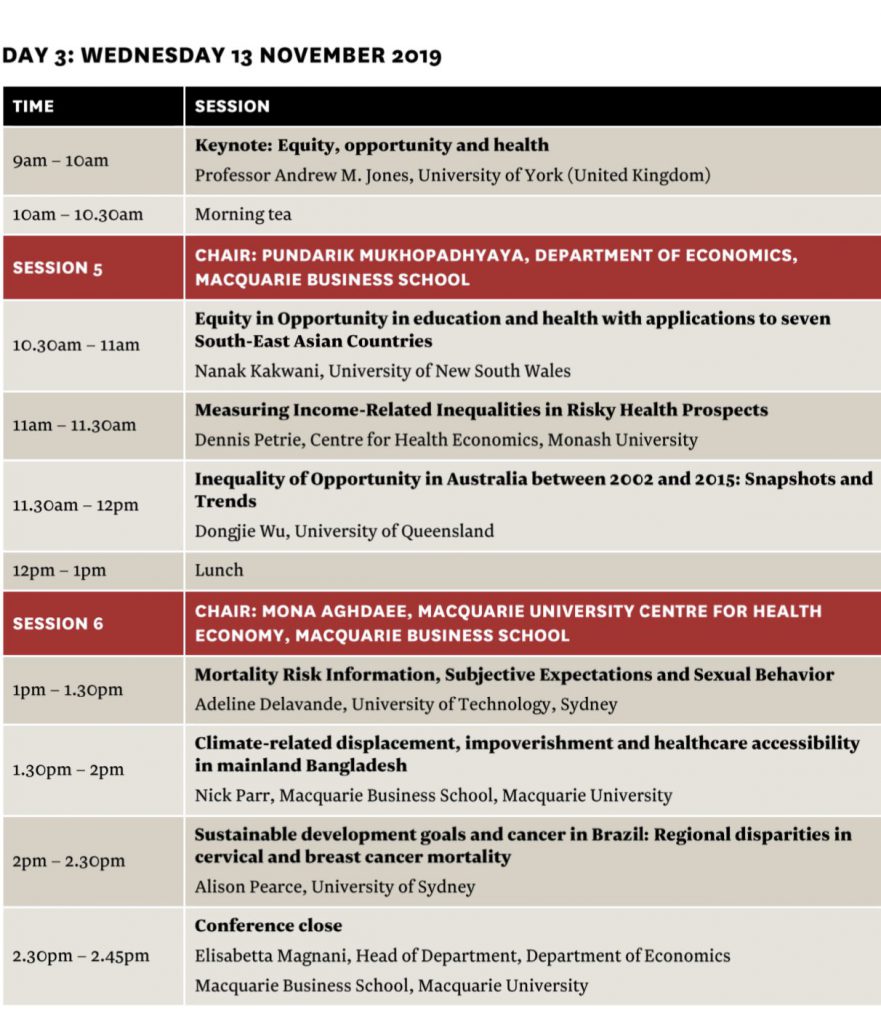
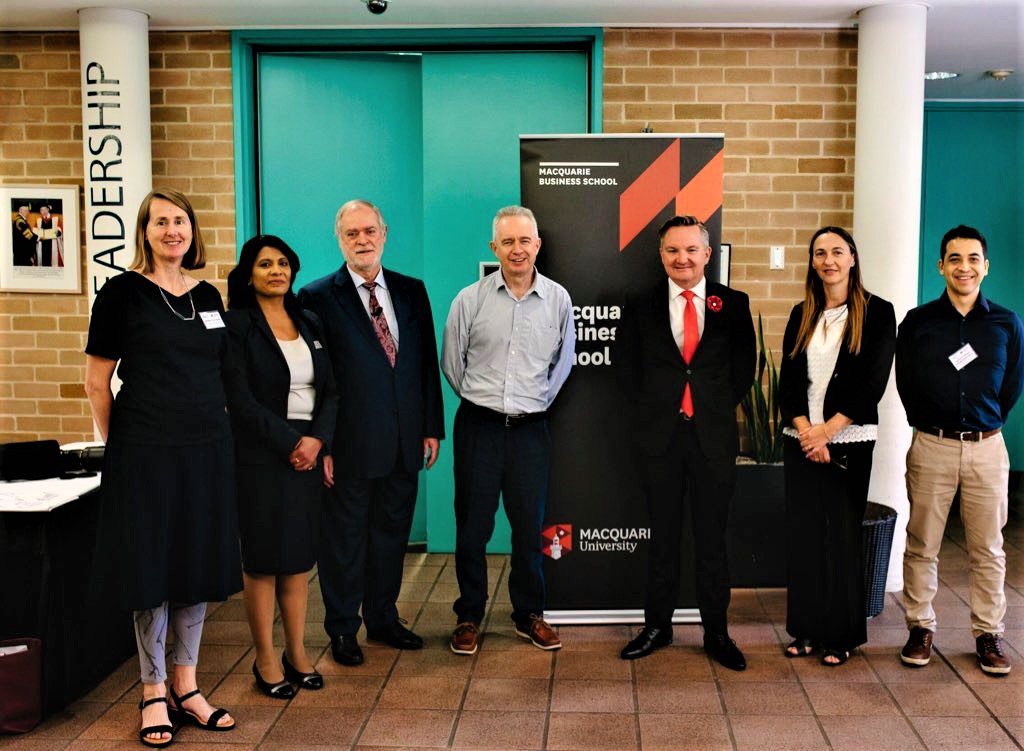
The Department of Economics at Macquarie University in collaboration with Macquarie University Centre for Health Economy (MUCHE) and Global Labor Organization (GLO) was organizing an international conference on the “Economics of Health, Inequality and Behaviour (WEHIB)” in Sydney/Australia over 11-13 November 2019. The multidisciplinary conference aimed to foster dialogue among social scientists on the nexus between health, behavior, and inequality across developed and developing societies.
The event was organized at the University under the leadership of GLO FellowKompal Sinha, a Senior Lecturer and HDR Director at the Department of Economics of Macquarie University. Sinha is also an Associate Editor of the Journal of Population Economics and the GLO Research Cluster Lead for Development, Health, Inequality and Behavior. The cluster is keen to develop the event further as its trade-mark.
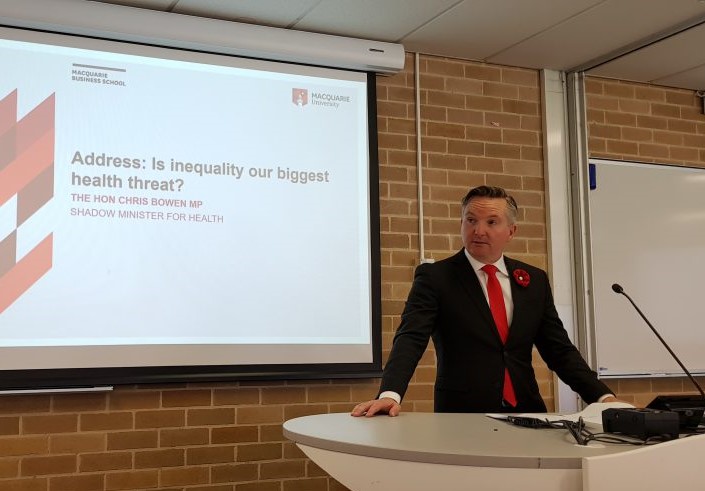
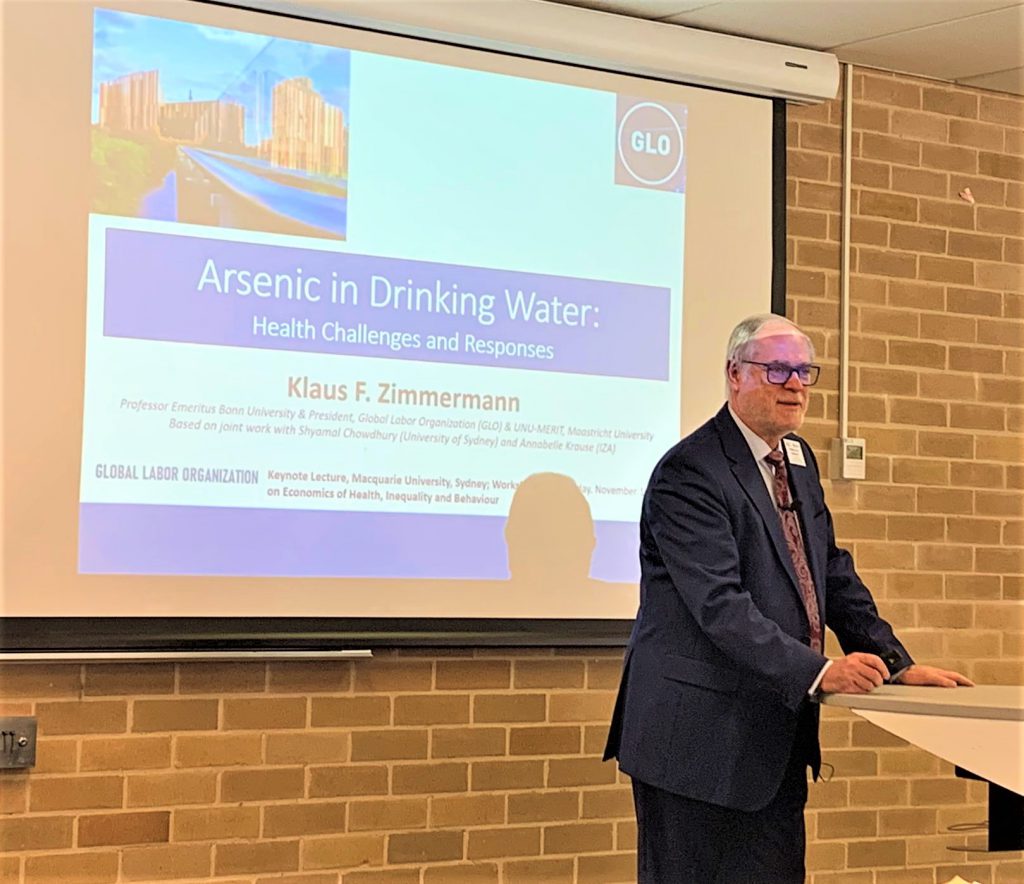
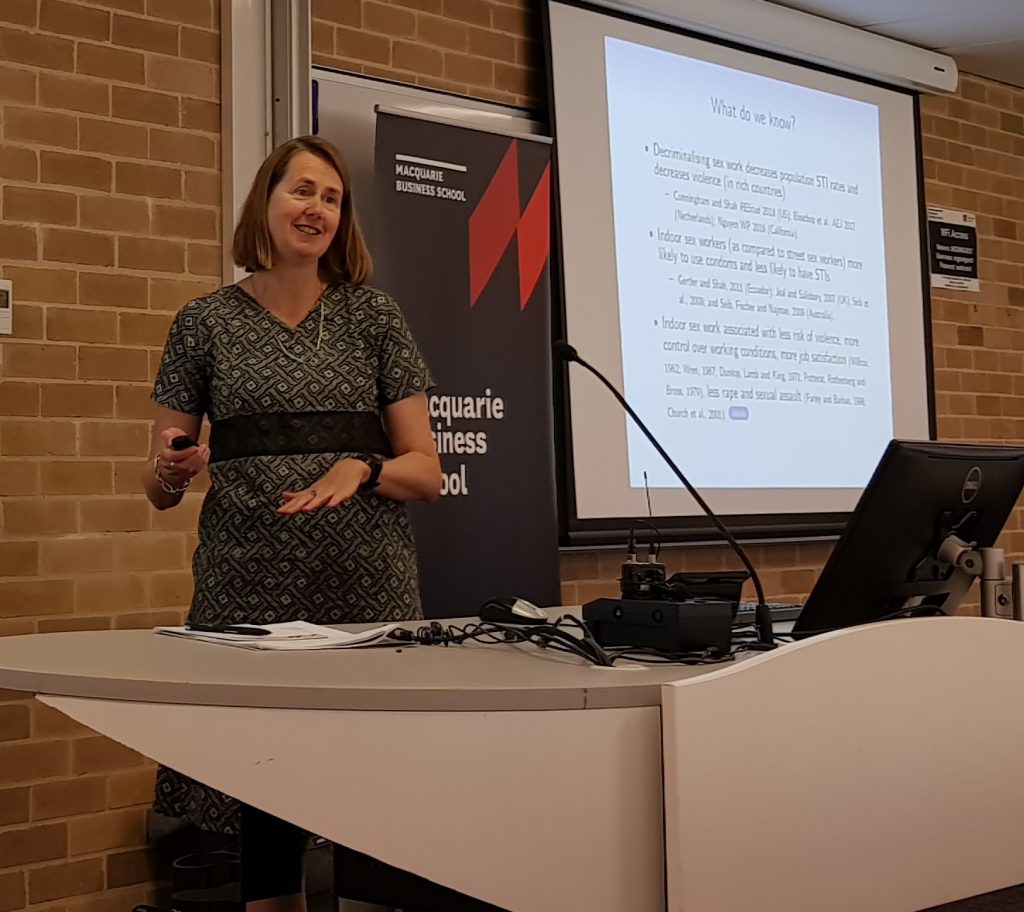
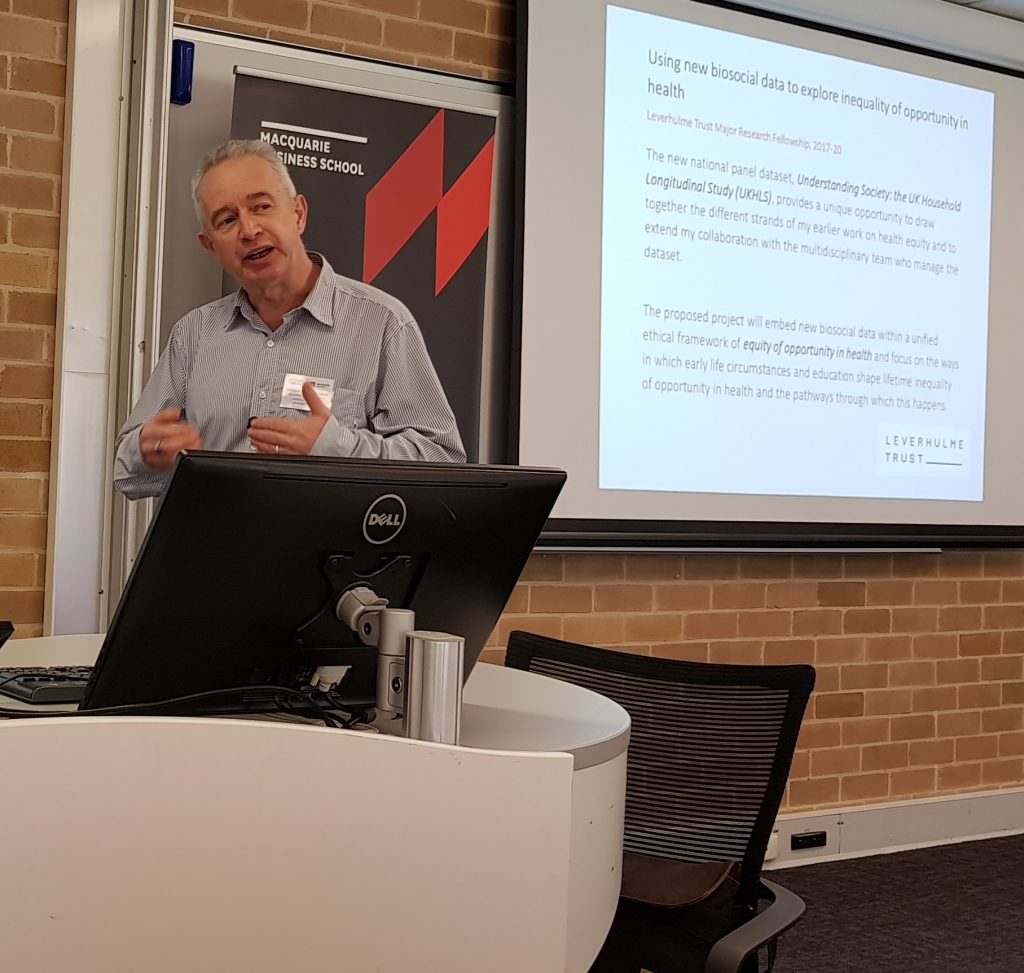
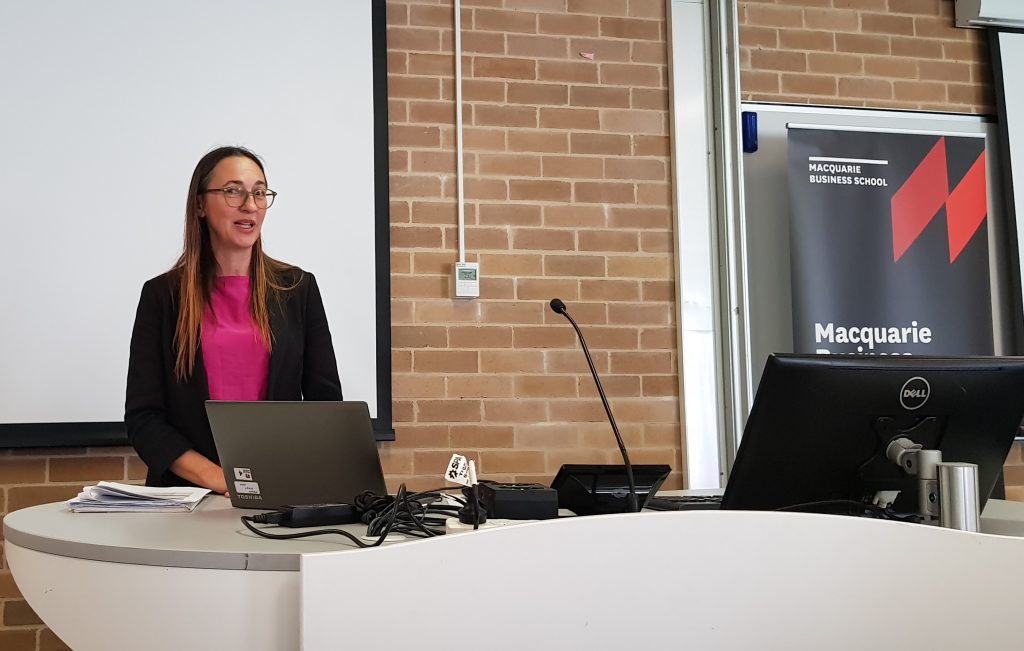
Keynote speakers at the conference were Lisa Cameron (University of Melbourne), Andrew Jones (University of York), and Klaus F. Zimmermann (UNU-MERIT, Maastricht University & GLO). The conference started on November 11 with an address by Hon Chris Bowen MP, Shadow Minister for Health, followed by the keynote speech of GLO – President Klaus F. Zimmermann on “Arsenic in drinking water: health challenges and responses”. (See also.) Lisa Cameron (University of Melbourne) spoke on November 12 about “Crime against morality: unintended consequences of criminalising sex work” and Andrew Jones (University of York) on November 13 about “Equity, opportunity and health”. Next to the 4 keynotes, the event included 18 fine contributed papers, among others by GLO Fellows Cahit Guven (Deakin University), Alfredo Paloyo (University of Wollongong), Michael Palmer (University of Western Australia) and Jaai Parasnis (Monash University).
The conference ended on November 13 with a farewell speech by the Head of the Economics Department, ProfessorElisabetta Magnani, who also had welcomed the participants at the opening ceremony. Everybody was pleased with the wonderful event, with the place and service, the excellent meeting and working conditions, the very high quality of papers presented, and the lively discussions.
Former communist party members often become successful entrepreneurs. A new GLO Discussion Paper is the first study to separate the causal effect of former Communist party membership from self-selection.
The Global Labor Organization (GLO) is an independent, non-partisan and non-governmental organization that functions as an international network and virtual platform to stimulate global research, debate and collaboration.
Author Abstract: After the collapse of Communism in Central and Eastern Europe, former party members were particularly likely to start businesses and become entrepreneurs. However, it remains unclear whether this entrepreneurial activity was driven by the resources, information and opportunities provided by former party membership or because people with specific individual attributes were more likely to become party members (self-selection). This study is the first to separate the causal effect of former Communist party membership from self-selection. Using individual-level Life in Transition–III survey and instrumental variables analysis, we find that, in Central and Eastern European countries, membership of former Communist party has facilitated business set-up but not business longevity. Our results also suggest evidence of negative self-selection, meaning that people who joined the former ruling party tended have fewer of the traits associated with entrepreneurship such as motivation, risk tolerance, and entrepreneurial spirit. We show that former Communist party membership still matters for business practices, business ethics, and the nature of doing business in transition economies.
In traditional couple formation males seem to attach more value to attractiveness and women seem to focus on earnings potentials. A new GLO Discussion Paper finds in an online dating field experiment that job status or job prestige does not play a role for initial contact interest for both sexes.
The Global Labor Organization (GLO) is an independent, non-partisan and non-governmental organization that functions as an international network and virtual platform to stimulate global research, debate and collaboration.
Author Abstract: Research exploiting data on classic (offline) couple formation has confirmed predictions from evolutionary psychology in a sense that males attach more value to attractiveness and women attach more value to earnings potential. We examine whether these human partner preferences survive in a context of fewer search and social frictions. We do this by means of a field experiment on the mobile dating app Tinder, which takes a central place in contemporary couple formation. Thirty-two fictitious Tinder profiles that randomly differ in job status and job prestige are evaluated by 4,800 other, real users. We find that both males and females do not use job status or job prestige as a determinant of whom to show initial interest in on Tinder. However, we do see evidence that, after this initial phase, males less frequently begin a conversation with females when those females are unemployed but also then do not care about the particular job prestige of employed females.
A new GLO Discussion Paper discusses the US gun-related murder rate and places it in an international perspective, where the US rate is 27 times the average rate for 22 other developed countries; and the gun ownership rate is over five times higher so that the murder rate per gun is 5 times higher.
The Global Labor Organization (GLO) is an independent, non-partisan and non-governmental organization that functions as an international network and virtual platform to stimulate global research, debate and collaboration.
Author Abstract: This paper examines the US gun-related murder (GM) rate and places it in an international perspective. The data show that the US GM rate is 27 times the average rate for 22 other developed countries (ODC). Its gun ownership rate is 5.4 times that of ODC and the murder rate per gun is 5 times that of ODC. Thus, as is done in the paper, an effective reduction of the US GM rate requires an analysis of both the high gun ownership rate and the high murder rate per gun. The paper examines about fifteen gun-policy reforms – including their impact, cost, structure for maximum benefit – and other reforms affecting the GM rate. It also looks at the GM impact of immigration and of programs that provide alternative life pursuits for young men at risk. It further presents a number of policy implications and some new proposals designed to reduce the GM rate. Four appendices provide 1) results from two recent opinion polls on gun-policy reforms, 2) a detailed analysis of the relationship between gun ownership and the GM rate, 3) calculations of gun buyback costs, and 4) a correction of existing results on the Brady Bill’s impact on gun ownership.
The GLO Discussion Paper of the Month of October investigates the economic effects of sector-wide bargaining agreements in Portugal, finding that extensions may contribute to unemployment and firm closure.
Author Abstract:Many governments extend the coverage of collective agreements to
workers and employers that were not involved in their bargaining. These
extensions may address coordination
issues but may also distort competition by imposing sector-specific
minimum wages and
other work conditions that are not suitable for some firms and workers.
In this paper,
we analyse the impact of such extensions along several economic margins.
Drawing on
worker- and firm-level monthly data for Portugal, a country where
extensions have been
widespread, and the scattered timing of the extensions, we find that,
while continuing
workers experience wage increases following an extension, formal
employment and wage
bills in the relevant sectors fall, on average, by 2%. These results
increase by about 25%
across small firms and are driven by reduced hirings. In contrast, the
employment and
wage bills of independent contractors, who are not subject to labour law
or collective
bargaining, increases by over 1% following an extension.
GLO DP Team Senior
Editors: Matloob Piracha (University of Kent) & GLO; Klaus F.
Zimmermann (UNU-MERIT, Maastricht University and Bonn University). Managing Editor: Magdalena Ulceluse, University of Groningen. DP@glabor.org
The Department of Economics at Macquarie University in collaboration with Macquarie University Centre for Health Economy (MUCHE) and Global Labor Organization (GLO) are organizing an international conference entitled the Economics of Health, Inequality and Behavior (WEHIB). It takes place at Macquarie University, Sydney/Australia, 11-13 November 2019. This multidisciplinary event aims to foster dialogue among social scientists on the nexus between health, behavior, and inequality across developed and developing societies.
The event is chaired by Kompal Sinha, a Senior Lecturer and HDR Director at the Department of Economics of Macquarie University. Sinha is also an Associate Editor of the Journal of Population Economics and the GLO Research Cluster Lead for Development, Health Inequality and Behavior. Keynote speakers are Lisa Cameron (University of Melbourne), Andrew Jones (University of York), and Klaus F. Zimmermann (UNU-MERIT, Maastricht University & GLO).
A new GLO Discussion Paper reviews this timely issue for the digital labor markets where labor-intensive services are traded by matching requestors (employers and/or consumers) and providers (workers).
The Global Labor Organization (GLO) is an independent, non-partisan and non-governmental organization that functions as an international network and virtual platform to stimulate global research, debate and collaboration.
Author Abstract: This critical and scoping review essay analyses digital labour markets where labour-intensive services are traded by matching requesters (employers and/or consumers) and providers (workers). It first discusses to what extent labour platform can be treated as two-sided or multi-sided markets, and the implications of these classifications. It then moves to address the legal and regulatory issues implied by these technologies. From a theoretical point of view, using a framework where innovation is not neutral in the labour market, platforms have implications for the quantity of jobs, for the kind of skills and tasks which are exchanged, and in terms of bargaining power of the contracting parties. It includes a critical evaluation of the empirical evidence from a variety of sources.
A new GLO Discussion Paper revealsthat in the Netherlands good social contacts and a good mastery of the native language enhance immigrants’ economic performance.
The Global Labor Organization (GLO) is an independent, non-partisan and non-governmental organization that functions as an international network and virtual platform to stimulate global research, debate and collaboration.
Author Abstract: Using longitudinal data on immigrants in the Netherlands from the survey ‘Social Position and Use of Public Facilities by Immigrants’ (SPVA) for the years 1991, 1994, 1998, 2002, we examined the impacts of social contacts and Dutch language proficiency on adult foreign-born men’s earnings, employment and occupational status. On average, social contacts and a good mastery of the Dutch language enhance immigrants’ economic performances. The effects are much stronger for immigrants with low-skill-transferability than for immigrants with high-skill-transferability, are stronger for economic migrants than for non-economic migrants, and are stronger for white-collar workers than for blue-collar workers. Contact with Dutch people and Dutch organisations unambiguously enhances all aspects of immigrants’ economic performance, however, no evidence is found for a positive effect of co-ethnic contact on employment status. To deal with the endogeneity between Dutch language ability and earnings, an interaction term between age at migration and a dichotomous variable for a non-Dutch-speaking origin is used as the identifying instrument. The selectivity issue of survey respondents was tackled as well to validate the main findings. The study has a strong policy implication for integration policies in the Netherlands, or more broadly in the immigrant receiving countries.
A new GLO Discussion Paper demonstrates that the Italian occupational structure is strongly hierarchical, with the locus of power distinct by the locus of knowledge generation.
The Global Labor Organization (GLO) is an independent, non-partisan and non-governmental organization that functions as an international network and virtual platform to stimulate global research, debate and collaboration.
GLO Fellows Dario Guarascio & Maria Enrica Virgillito
Author Abstract: Which type of work do Italians perform? In this contribution we aim at detecting the anatomy of the Italian occupational structure by taking stock of a micro-level dataset registering the task content, the execution of procedures, the knowledge embedded in the work itself, called ICP (Indagine Campionaria sulle Professioni), the latter being comparable to the U.S. O*NET dataset. We perform an extensive empirical investigation moving from the micro to the macro level of aggregation. Our results show that the Italian occupational structure is strongly hierarchical, with the locus of power distinct by the locus of knowledge generation. It is also weak in terms of collaborative and worker involvement practices, and possibility to be creative. Our analysis allows to pinpoint the role exerted by hierarchical structures, decision making autonomy, and knowledge as the most relevant attributes characterizing the division of labour.
Contributions to school-to-work transitions: vocational training, skill mismatch and policy
The persistently high youth unemployment rates in many countries are of major concern in society and a challenge for researchers to provide evidence for policy-making (Francesco Pastore and Zimmermann, 2019; Zimmermann et al., 2013). Recent interest has concentrated on a better understanding of the role of specific institutional features of different school-to-work transition (SWT) regimes in affecting the youth labor market performance (Pastore, 2015a, b).
To foster this academic debate, the Global Labor Organization (GLO) had created in 2017 the GLO School-to-Work Transition Cluster under the leadership of Francesco Pastore. From this initiative, a first set of seven research papers were published in a special issue on “Advances on School-to-Work Transitions” (International Journal of Manpower, Vol. 40, No. 3) edited by Francesco Pastore and Klaus F. Zimmermann. In a second round, seven additional contributions in this special issue, Part II, deal with the role of vocational training, overeducation and skill mismatch and labor market conditions and policy for the SWT. We provide a brief guide into the value added to our understanding of this important process.
Vocational training
A significant part of the literature expects from vocational education or training an important role in SWT. Is it more important than general education? This crucial question is addressed by Huzeyfe Torun and Semih Tumen (Do vocational high school graduates have better employment outcomes than general high school graduates?). They attempt to reveal causal effects of vocational high school education on employment relative to general high school education using Turkish census data. Initial OLS estimates support the superiority of vocational training for employment performance, but the findings get only qualified backing by instrumental-variable (IV) estimates. While the effects are still positive when IV methods are employed, they are only statistically significant for measures capturing the availability of vocational high school education but not for the inclusion of town-level controls or town fixed effects.
If vocational training is relevant, it should be the focus of
significant policy measures. An innovative study by Elena Cappellini,
Marialuisa Maitino, Valentina Patacchini, Nicola Sciclone (Are
traineeships stepping-stones for youth working careers in Italy?)
documents the role of traineeships as an active labor market policy in
Italy. The evaluation study relies on administrative data where a
counterfactual approach was used to compare trainees to unemployed young
people registered with Public Employment Services with respect to
employment success measured as hiring, job quality and persistence. The
paper concludes that traineeships may delay the transition to work, but
can open youngsters’ perspectives for a quality career in the long term.
To broaden and complete the picture, Irene Brunetti and Lorenzo Corsini (School-to-work transition and vocational education: a comparison across Europe) examine the impact of the types of vocational education across 11 European countries using the 2009 and 2014 European Union Labor Force Survey. Eichhorst et al. (2015) had classified vocational education and training strategies into school-based vocational education and training (as part of upper secondary education), formal apprenticeships, and dual vocational training: Which vocational systems show better results? Multinomial probit models provide indications that dual vocational training speeds up SWT and the vocational focus is particularly effective here.
Overeducation and skill mismatch
Skill mismatches including overeducation are important aspects of SWT
affecting labor market success in many ways. Two further studies
dealing with those issues in a more global country setting are involving
data from the Lebanon and Kyrgyzstan. Ghassan Dibeh, Ali Fakih and
Walid Marrouch (Employment and skill mismatch among youth in Lebanon)
were estimating a bivariate probit model where employment status and
skill mismatch perceptions for the labor market were jointly modeled.
Employability and skill mismatch were found jointly determined for males
and the core region only.
Kamalbek Karymshakov and Burulcha Sulaimanova (The school-to-work
transition, overeducation and wages of youth in Kyrgyzstan) study
overeducation and the impact on wages using Mincer type OLS regressions.
The propensity score matching method is applied to deal with potential
unobserved heterogeneity. Mismatch in the SWT process is studied
employing the Kaplan-Meier failure analysis. Tertiary education
correlates highly with being employed with a good match. Overeducated
workers reflecting the required level of education for a certain
position receive lower wages than those with suitable matches. However,
those individuals judging their education or qualifications to be larger
than necessary have higher wages.
Labor market conditions and policy
Are local labor market conditions an important driver of
post-compulsory schooling decisions and how this vary by gender? Elena
Francesca Meschi, Joanna Swaffield and Anna Vignoles (The role of local
labour market conditions and youth attainment on post-compulsory
schooling decisions) investigate this using the 2006/2007 wave of the
Longitudinal Study of Young People in England survey coupled with
individual-level attainment and school-based data available through
national administrative databases and local labor market data. Their
nested logit model shows that the most relevant factors behind
post-compulsory schooling decisions are expected wages, current
educational attainment and attitudes to school and parental aspirations.
How can labor policy foster the fast integration of young individuals
into the labor market? Stefan Sonke Speckesser, Francisco Jose Gonzalez
Carreras and Laura Kirchner Sala (Active labour market policies for
young people and youth unemployment: An analysis based on aggregate
data) provide a paper using European Union 27 countries Eurostat data
for 1996–2012. The findings suggest that wage subsidies and job creation
programs have reduced youth unemployment effectively. However, the
20–24-year-old unemployed benefit more than the very young.
References
Eichhorst, W., Rodríguez-Planas, N., Schmidl, R. and Zimmermann, K.F. (2015), “A roadmap to vocational education and training in industrialized countries”, Industrial and Labor Relations Review, Vol. 68 No. 2, pp. 314-337.
Francesco Pastore, F. and Zimmermann, K.F. (2019), “Understanding school-to-work transitions”, International Journal of Manpower, Vol. 40 No. 3, pp. 374-378.
Pastore, F. (2015a), The Youth Experience Gap: Explaining National Differences in the School-to- Work Transition, Springer International Publishing, Heidelberg.
Pastore, F. (2015b), “The European Youth Guarantee: labor market context, conditions and opportunities in Italy”, IZA Journal of European Labor Studies, Vol. 4.
Zimmermann, K., Biavaschi, C., Eichhorst, W., Giulietti, C., Kendzia, M.J., Muravyev, A., Pieters, J., Rodrìguez-Planas, N. and Schmidl, R. (2013), “Youth unemployment and vocational training”, Foundations and Trends in Microeconomics, Vol. 9 Nos 1-2, pp. 1-157.
Pastore, F. and Zimmermann, K. (2019), “Contributions to school-to-work transitions: vocational training, skill mismatch and policy”, International Journal of Manpower, Vol. 40 No. 8, pp. 1361-1363. https://doi.org/10.1108/IJM-11-2019-420
Torun, H. and Tumen, S. (2019), “Do vocational high school graduates have better employment outcomes than general high school graduates?”, International Journal of Manpower, Vol. 40 No. 8, pp. 1364-1388. https://doi.org/10.1108/IJM-11-2017-0314
Cappellini, E., Maitino, M., Patacchini, V. and Sciclone, N. (2019), “Are traineeships stepping-stones for youth working careers in Italy?”, International Journal of Manpower, Vol. 40 No. 8, pp. 1389-1410. https://doi.org/10.1108/IJM-03-2018-0099
Brunetti, I. and Corsini, L. (2019), “School-to-work transition and vocational education: a comparison across Europe”, International Journal of Manpower, Vol. 40 No. 8, pp. 1411-1437. https://doi.org/10.1108/IJM-02-2018-0061
Dibeh, G., Fakih, A. and Marrouch, W. (2019), “Employment and skill mismatch among youth in Lebanon”, International Journal of Manpower, Vol. 40 No. 8, pp. 1438-1457. https://doi.org/10.1108/IJM-02-2018-0073
Karymshakov, K. and Sulaimanova, B. (2019), “The school-to-work transition, overeducation and wages of youth in Kyrgyzstan”, International Journal of Manpower, Vol. 40 No. 8, pp. 1458-1481. https://doi.org/10.1108/IJM-02-2018-0054
Meschi, E., Swaffield, J. and Vignoles, A. (2019), “The role of local labour market conditions and pupil attainment on post-compulsory schooling decisions”, International Journal of Manpower, Vol. 40 No. 8, pp. 1482-1509. https://doi.org/10.1108/IJM-11-2017-0303
Speckesser, S., Gonzalez Carreras, F. and Kirchner Sala, L. (2019), “Active labour market policies for young people and youth unemployment”, International Journal of Manpower, Vol. 40 No. 8, pp. 1510-1534. https://doi.org/10.1108/IJM-03-2018-0100
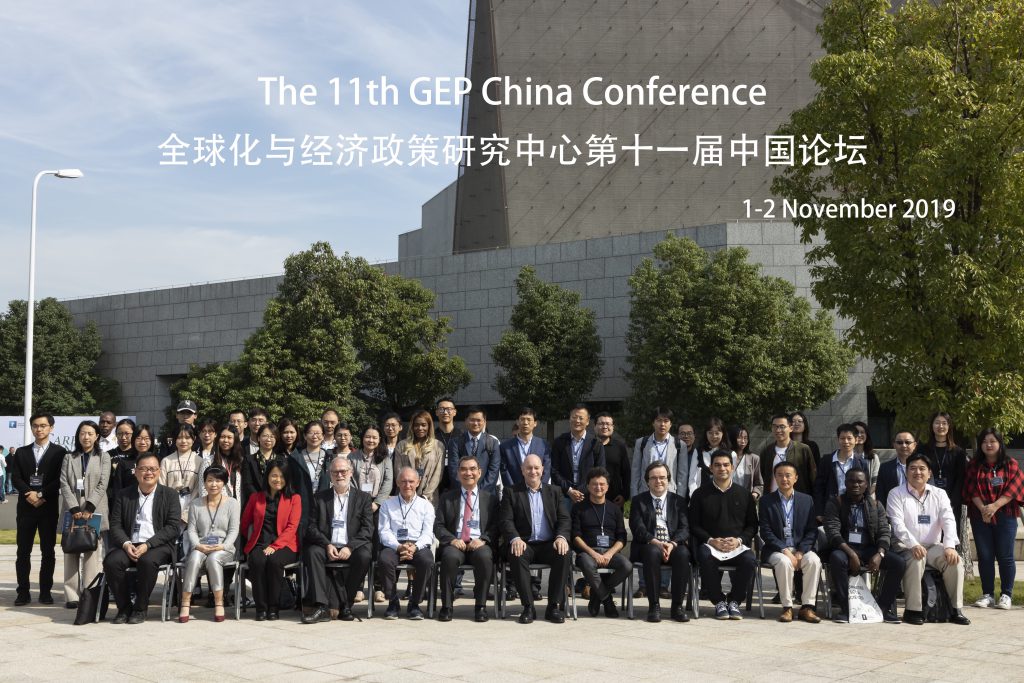
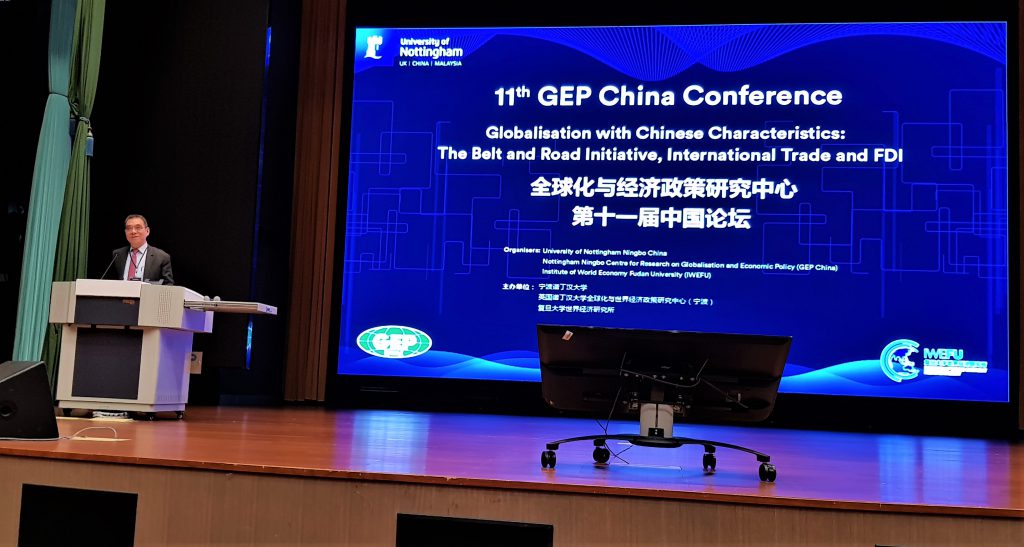
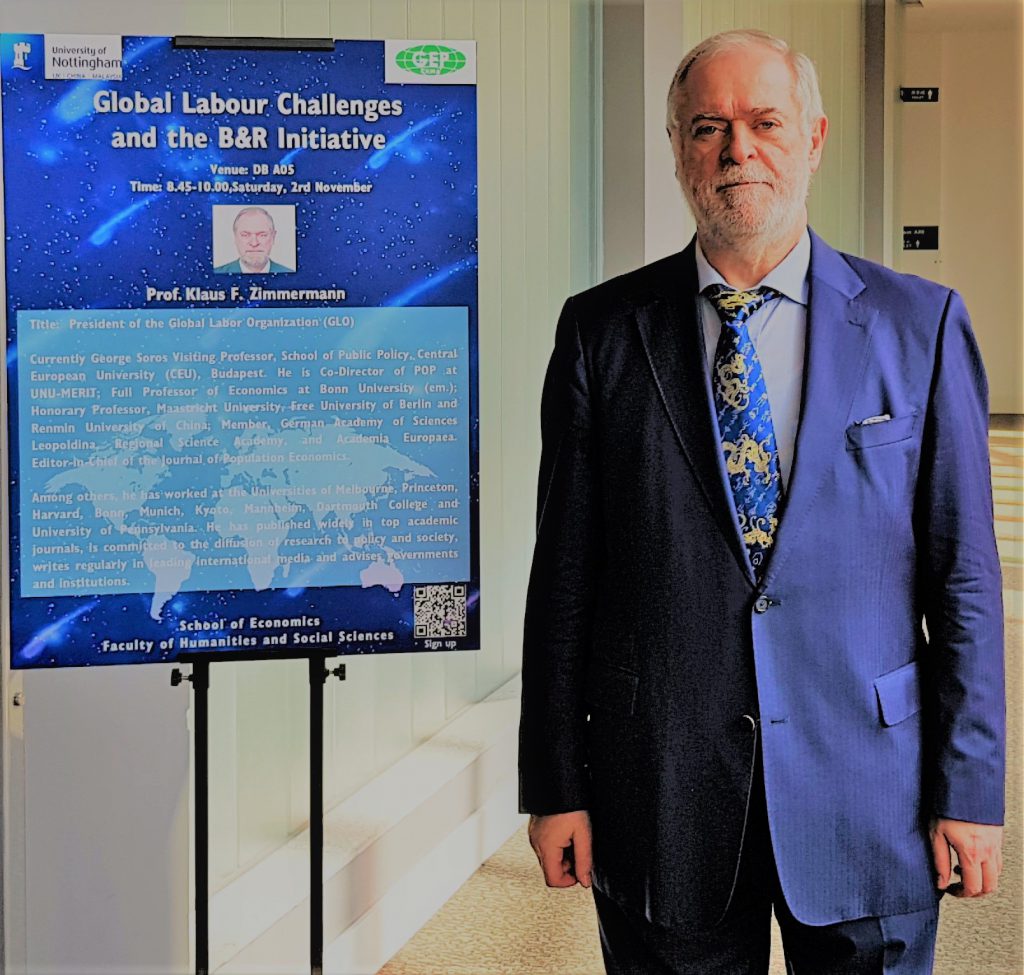
On October 31, 2019 GLO President Zimmermann arrived in Ningbo after his visit at Lexin University in Shanghai. At the University of Nottingham Ningbo/China, Globalisation and Economic Policy Centre (GEP), he participated on November 1-2 at the 11th GEP China Conference: “Globalisation with Chinese Characteristics: The Belt and Road Initiative, International Trade and FDI”. He investigated the upcoming B&R research presented at the meeting, followed on November 1 the “World Economy China Lecture” of Justin Yifu Lin (Peking University) on “The Rise of China and the Belt and Road Initiative” and gave on November 2 his own “Distinguished GEP China Lecture” on “Global Labor Challenges and the B&R Initiative”. GLO Fellow Minghai Zhou of the University of Nottingham Ningbo had introduced Zimmermann and chaired his lecture and the following intensive discussions. Zimmermann also gave a longer interview to a team of student journalists from the Ningbo Economic Review. Full Conference Program. More details and pictures on the Ningbo visit see Report 1 and Report 2.
As Zimmermann outlined in his keynote, the globalization of work is a necessary process in the evolution of human specialization of work to improve efficiency and to increase welfare. In the face of adjustment costs during transition and development, societies may ignore this for some time, but this comes with welfare losses. The keynote lecture discussed the role of global labor in the context of the great human challenges of our time: demography, urbanization, the technological revolutions at the work place, climate change, migration, and populism. The lecture contributed to the understanding of these challenges, and how global labor can foster welfare. While the benefits of labor mobility are more and more debated around the globe, in particular in the United States, Europe, and Australia, the Asian and African nations follow a different approach. China is the most mobile nation of the globe. Through its internal migration and the B&R initiative it strongly contributes to general welfare. But China needs to observe the global labor challenges, in particular the aging issue and the international migration pressures to be able to act properly. It has security issues as well as it needs food and natural resources.
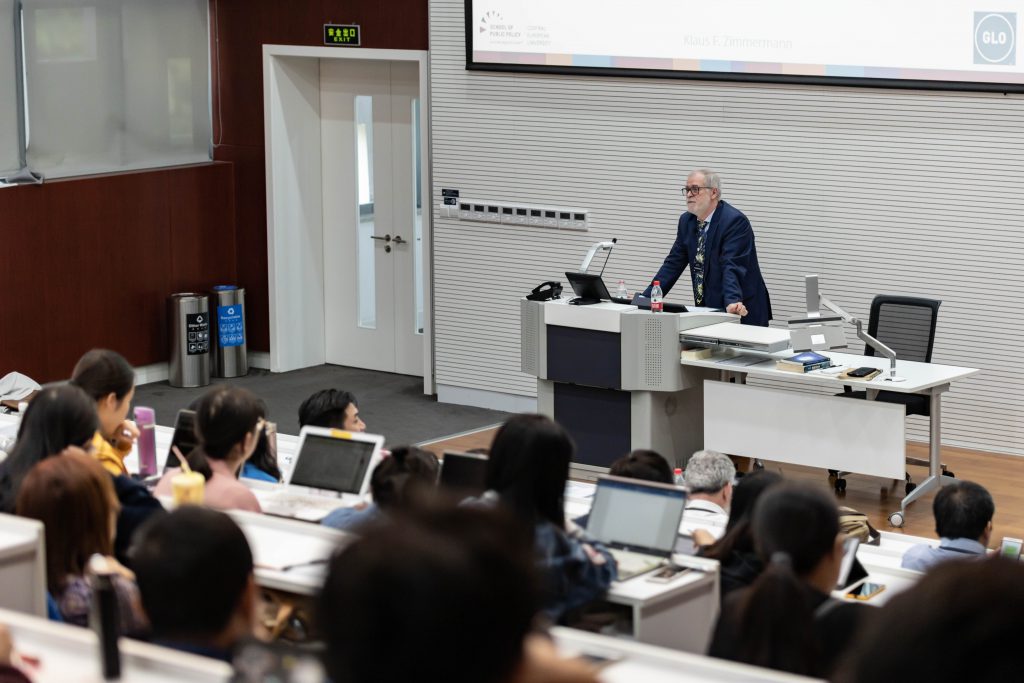
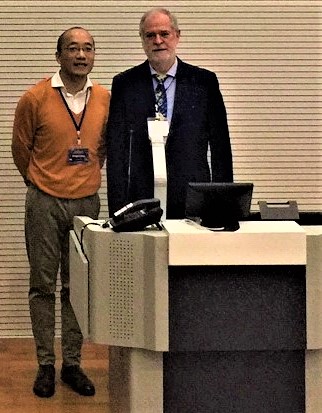
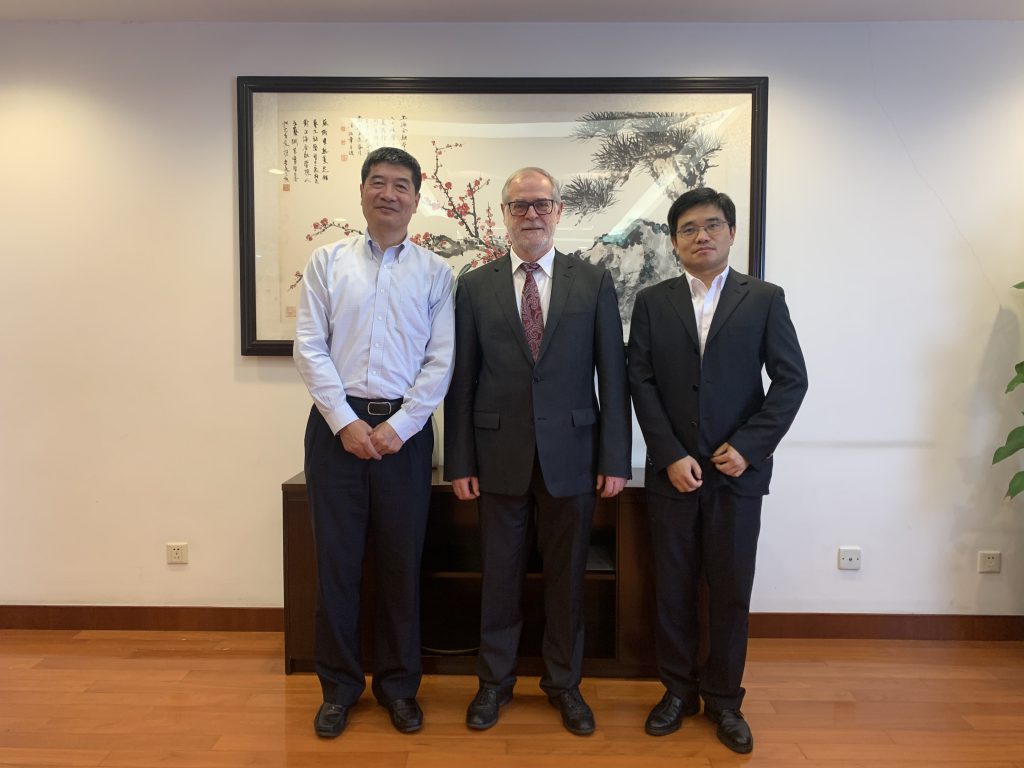
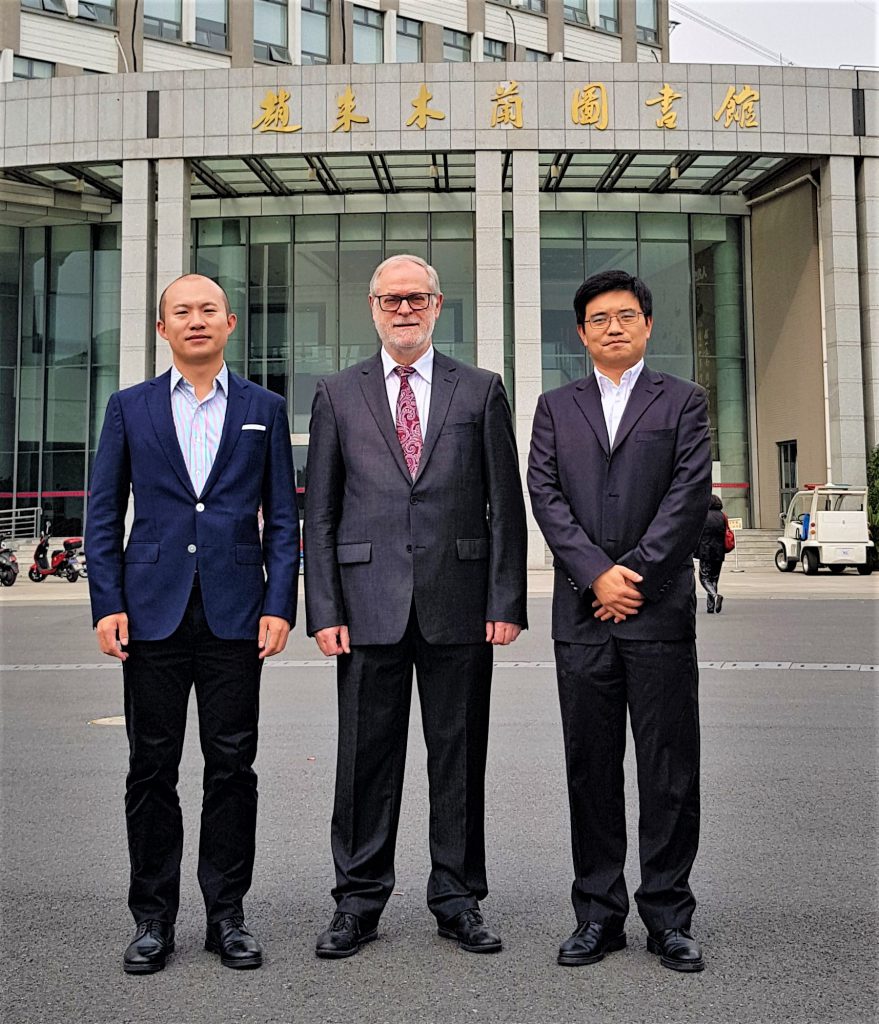
On his recent trip to China, GLO President Klaus F. Zimmermann had reached Shanghai on October 28. There he met his local hosts at theShanghai Lixin University of Accounting and Finance, Wenxuan Hou, Chair in Corporate Finance, University of Edinburgh Business School and Lixin University, and Yun Zhang, Associate Dean of the School of Finance, Lixin University. He was also warmly welcomed by the President of the University, Li Shiping. They discussed the perspectives of higher education and models of international collaboration. On October 29, Zimmermannprovided a general lecture on the merits of global labor economics. The event was chaired by GLO Fellow Wenxuan Hou. China is the most mobile country of the world; it needs globalization to deal with the challenges of demographic change and security as well as the need of food and natural resources.
President Li Shiping (left) & Associate Dean Yun Zhang (right)
A new GLO Discussion Paper reveals a predominance of empirical results in the academic literature supporting a negative association between students’ frequency of smartphone use and their academic success.
The Global Labor Organization (GLO) is an independent, non-partisan and non-governmental organization that functions as an international network and virtual platform to stimulate global research, debate and collaboration.
Author Abstract: We present the first systematic review of the scientific literature on smartphone use and academic success. We synthesise the theoretical mechanisms, empirical approaches, and empirical findings described in the multidisciplinary literature to date. Our analysis of the literature reveals a predominance of empirical results supporting a negative association between students’ frequency of smartphone use and their academic success. However, the strength of this association is heterogeneous by (a) the method of data gathering, (b) the measures of academic performance used in the analysis, and (c) the measures of smartphone use adopted. The main limitation identified in the literature is that the reported associations cannot be given a causal interpretation. Based on the reviewed findings and limitations, directions for further research are discussed.
A new GLO Discussion Paperreviews the growing body of research in economics which concentrates on the education gender gap and its evolution, over time and across countries.
The Global Labor Organization (GLO) is an independent, non-partisan and non-governmental organization that functions as an international network and virtual platform to stimulate global research, debate and collaboration.
Author Abstract: This paper reviews the growing body of research in economics which concentrates on the education gender gap and its evolution, over time and across countries. The survey first focuses on gender differentials in the historical period that roughly goes from 1850 to the 1940s and documents the deep determinants of the early phase of female education expansion, including pre-industrial conditions, religion, and family and kinship patterns. Next, the survey describes the stylized facts of contemporaneous gender gaps in education, from the 1950s to the present day, accounting for several alternative measures of attainment and achievement and for geographic and temporal differentiations. The determinants of the gaps are then summarized, while keeping a strong emphasis on an historical perspective and disentangling factors related to the labor market, family formation, psychological elements, and societal cultural norms. A discussion follows of the implications of the education gender gap for multiple realms, from economic growth to family life, taking into account the potential for reverse causation. Special attention is devoted to the persistency of gender gaps in the STEM and economics fields.
You have labor and migration research dealing with well-being in a development context? Consider to contribute to the GLO/EHERO Special Sessions on Well-beingat the18th International Society for Quality-of-Life Studies ISQOLS Annual Conference on August 25-28, 2020 in Rotterdam, The Netherlands. Note that the Submission deadline is January 15, 2020.
CALL FOR SUBMISSIONS
The Global Labor Organization (GLO) and the Erasmus Happiness Economics Research Organization (EHERO) are organizing several special sessions at the 18th ISQOLS Conference (August 25-28, 2020, Rotterdam). We welcome submissions from the economics discipline related to two themes: “Labor, Development, and Well-being” and “Migration, Politics, and Well-being Research”.
Contributions to the theme “Labor, Development, and Well-being” can address topics related, but not limited, to the well-being causes and consequences of development, labor market arrangements, or migration.
Submissions for the theme “Migration, Politics and Well-being Research” can focus on the well-being causes and consequences of migration and migration policy and subjective well-being effects on political behavior, among others.
Presentation format
Each 90-minute special session will feature three papers. Each presentation will last 20 minutes, followed by 10-minute remarks by a discussant and a general discussion. We hope that this format will allow for a workshop-like atmosphere and more in-depth discussions of the individual papers.
Abstract
and paper submission
Please submit a short abstract (250 words) by January 15, 2020 to https://easychair.org/my/conference?conf=isqols2020 and choose the symposium “GLO/EHERO Well-being Sessions” when submitting. Before the conference, we will contact you for submission of the full paper.
ISQOLS 2020
These sessions are part of the ISQOLS 2020 conference and conference fees for this conference have to be paid accordingly. More information on www.isqols2020.com
GLO – EHERO organizers
Dr. Milena Nikolova (University of Groningen and GLO), Dr. Martijn Hendriks (EHERO) and Dr. Martijn Burger (EHERO)
On the initiative of GLO Fellow Dorothea Schäfer, we post the launching of the XPRESS project funded by @EU_H2020 under GA 857831.
The XPRESS project gives support to public procurement to facilitate the collaboration between Small and Medium-sized Enterprises (SMEs) and the public sector for the development and adoption of RES (Renewable Energy Sources) in regions. It also investigates the role of public procurement in promoting innovations and technological change toward RES, including its role in facilitating SMEs’ financial access and funding opportunities. XPRESS will demonstrate the positive impact of innovative Green Public Procurement on cities, municipalities and SMEs in terms of energy savings, energy efficiency and lower carbon emissions.
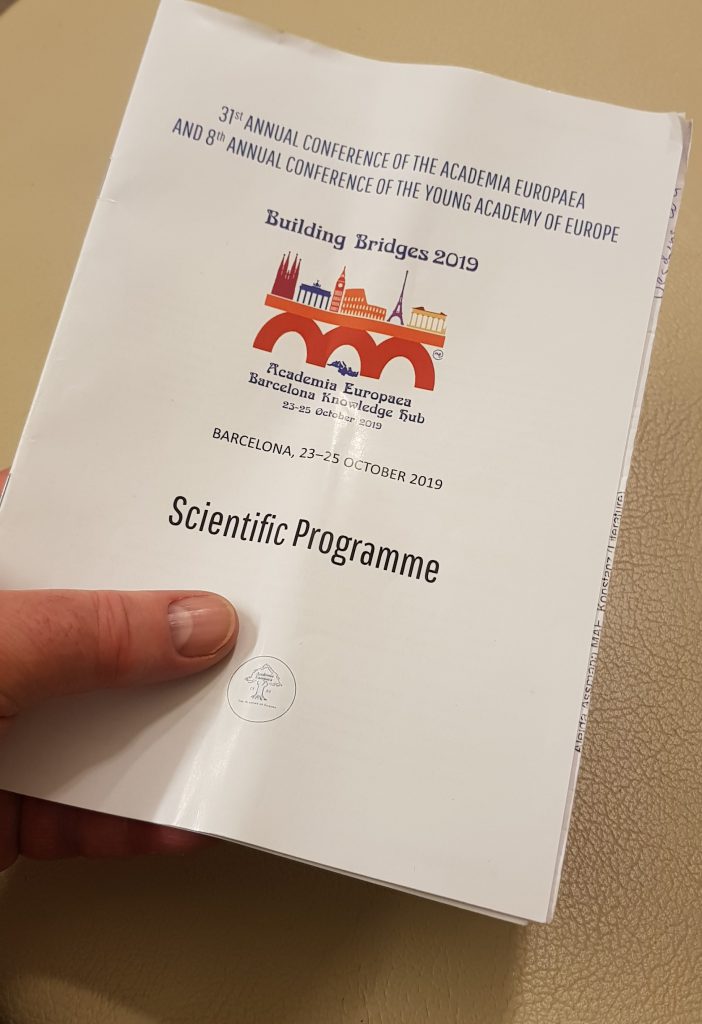
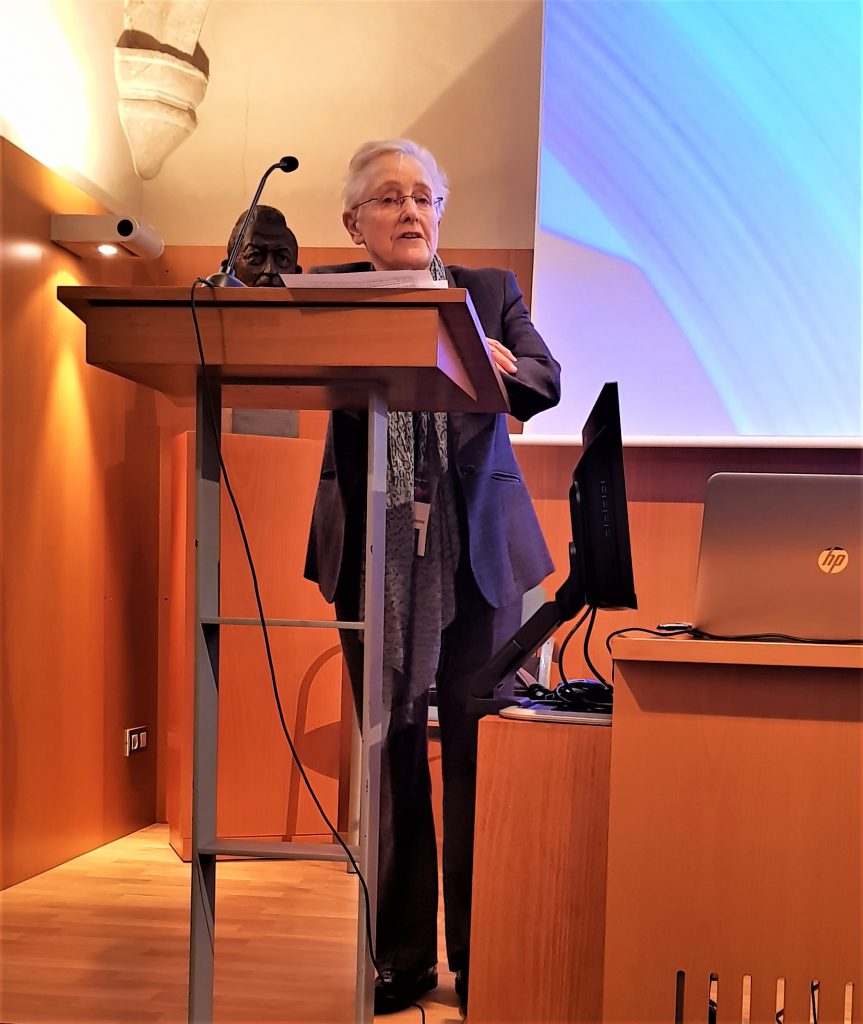
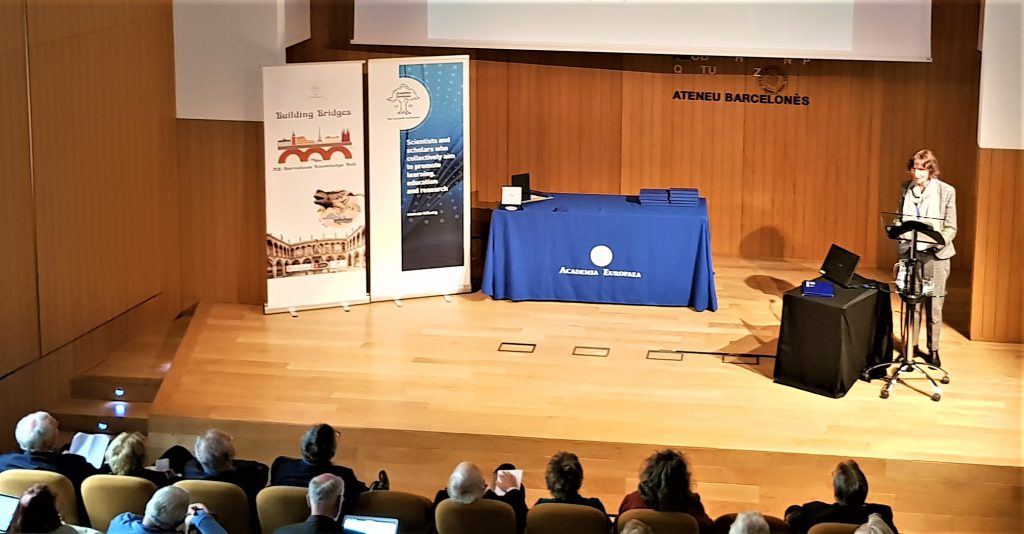
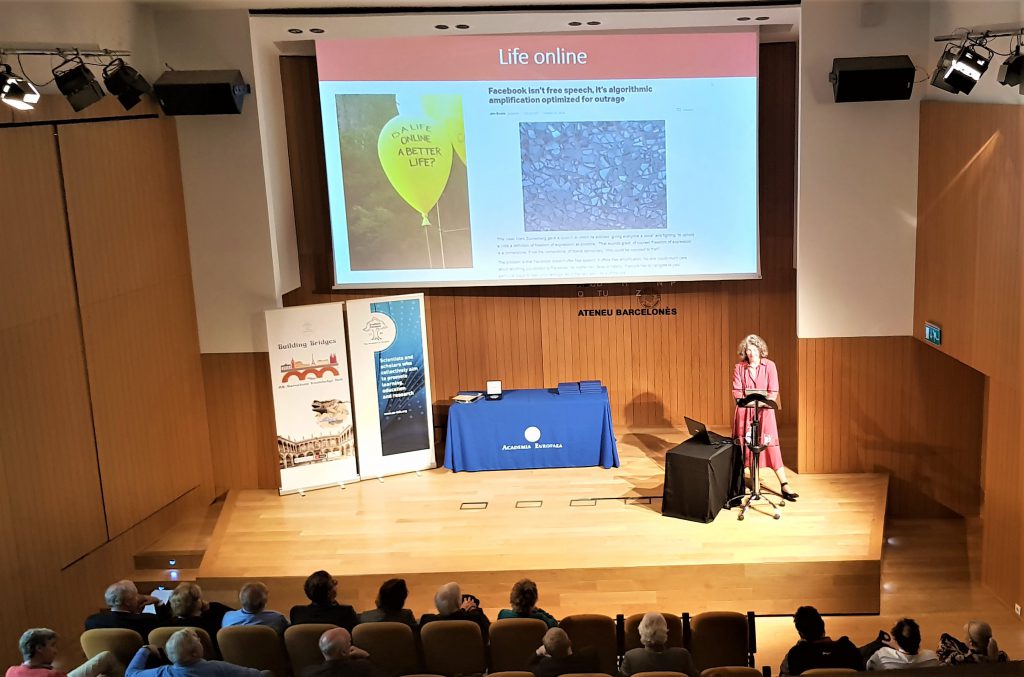
The Annual Conference 2019 on “Bilding Bridges” of The Academy of Europe – Academia Europaea (AE), took place on October 23-25, 2019 in Barcelona. AE welcomed a large number of new members, including GLO Fellows Marco Vivarelli (Università Cattolica-Milano) and Douglas S. Massey (Princeton University), and saw a larger number of academic sessions of high quality and interest. Klaus F. Zimmermann, Professor Emeritus of Bonn University, UNU-MERIT, Maastricht University and President of the Global Labor Organization was also present in his role as Chair of the AE Section “Economics, Business and Management Sciences”. More pictures.
In a joint meeting of AE Classes A1 (Humanities) and A2 (Social and Related Sciences) chaired by AE Class Chairs Poul Holm (Trinity College Dublin, A1) and Björn Wittrock (Swedish Collegium for Advanced Study, A2), Marilyn Strathern, University of Cambridge, provided a lecture on “Counting People”. Her contribution was debated by Kirsten Drotner (University of Southern Denmark) and a very lively discussion of the members of both classes. The two AE Erasmus Medal Award winners gave their lectures on “Re-imagining the Nation: Memory, Identity and the Emotions” (Aleida Assmann, University of Konstanz) and “Realising Children’s Rights in Relation to the Digital Environment” (Sonia Livingstone, London School of Economics).
Marilyn Strathern, University of Cambridge, speaks on “Counting People”
Zimmermann and Class Chairs Björn Wittrock (A2) and Poul Holm (A1) (left to right)
Kirsten Drotner, Poul Holm, Marilyn Strathern & Björn Wittrock (left to right)
Aleida Assmann, University of Konstanz, Erasmus Medal Lecture I
Sonia Livingstone, London School of Economics, Erasmus Medal Lecture II
Oded Galor, an eminent and very influential economist, has originated three influential research fields that are central to macro history and the study of the evolution of human resources. He is the founder of Unified Growth Theory, has pioneered the study of the interaction between the evolution of human and cultural traits and the process of economic development, and he has recently pioneered the examination of the implications of the exodus of anatomically modern humans from Africa, on the observed variations in social cohesion and productivity across the globe. MORE DETAILS.
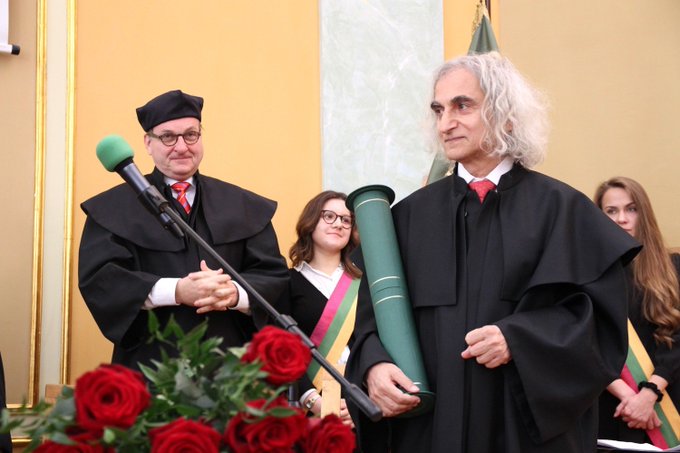
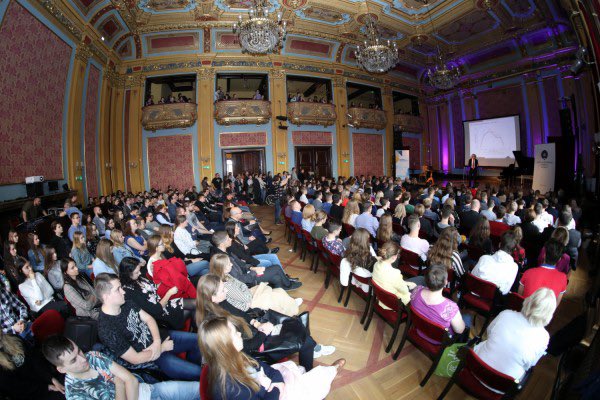
He is a GLO Fellow, Editor of the Journal of Population Economics and the Journal of Economic Growth. To honor his contributions to economics, he just received his Doctor Honoris Causa from the University of Poznan and he delivered the prestigious Copernican Lecture in the Nicolaus Copernicus University in the magnificent medieval town of Torun (UNESCO World Heritage). The lecture that was attended by nearly 500 scientists (astronomers, physicists, mathematicians, biologists, and economists), took place at the magnificent, Artus Court, in the center of ancient Torun.
Award Ceremony – Doctor Honoris Causa, University of Poznan
The Copernican Lecture on “The Journey of Humanity – Roots of Inequality in the Wealth of Nations”, Nicolaus Copernicus University, Artus Court in Torun.
A new GLO Discussion Paperreviews challenges and perspectives of work policies affecting the well-being of trans people.
The Global Labor Organization (GLO) is an independent, non-partisan and non-governmental organization that functions as an international network and virtual platform to stimulate global research, debate and collaboration.
Author Abstract: For trans people (i.e. people whose gender is not the same as the sex they were assigned at birth) evidence suggests that transitioning (i.e. the steps a trans person may take to live in the gender with which they identify) positively affects positivity towards life, extraversion, ability to cope with stress, optimism about the future, self-reported health, social relations, self-esteem, body image, enjoyment of tasks, personal performance, job rewards and relations with colleagues. These relationships are found to be positively affected by gender affirmation and support from family members, peers, schools and workplaces, stigma prevention programs, coping intervention strategies, socioeconomic conditions, anti-discrimination policies, and positive actions. Also important are legislation including the ability to change one’s sex on government identification documents without having to undergo sex reassignment surgery, accessible and affordable transitioning resources, hormone therapy, surgical treatments, high-quality surgical techniques, adequate preparation and mental health support before and during transitioning, and proper follow-up care. Societal marginalization, family rejection, violations of human and political rights in health care, employment, housing and legal systems, gendered spaces, and internalization of stigma can negatively affect trans people’s well-being and integration in societies. The present study highlights that although transitioning itself can bring well-being adjustments, a transphobic environment may result in adverse well-being outcomes. Policy makers should aim to facilitate transitioning and create cultures of inclusion in different settings, such as schools, workplaces, health services and justice.
On September 12-13, 2019 the 34th Annual Conference of the Italian Association of Labour Economists (AIEL) took place in Novara/Italy. During the conference, a joint session AIEL-CCME/GLO was organized. Please find here the program with the speakers in bold, the bio of the speakers and the paper abstracts. The report was provided by Francesco Pastore (University of Campania Luigi Vanvitelli), GLO Country Lead Italy and GLO Thematic Cluster Lead School-to-Work Transition.
2.6 Joint Session AIEL-CCME / GLO
Organizer and chair: GLO Fellow Enkelejda Havari (European Commission JRC)
Antonella Rocca (University of Naples Parthenope), Floro Ernesto Caroleo (University of Naples Parthenope and GLO), Francesco Pastore (University of Campania Luigi Vanvitelli and GLO), Claudio Quintano (University of Naples Parthenope): The School-to-Work Transition: What Affects Mainly its Duration?
Elena Claudia Meroni (European Commission JRC), Daniela Piazzalunga (Università di Verona), Chiara Pronzato (Università di Torino): Use of Extra-school Time and Child Behaviour
Enkelejda Havari (European Commission JRC and GLO), Franco Peracchi (Georgetown University, EIEF and University of Rome “Tor Vergata”): Intergenerational Effects of War on Education: Evidence from World War II in Europe
Silvia Granato (University of Warwick): Early Influences and the Gender Gap in STEM
Antonella Rocca
Elena Claudia Meroni
Enkelejda Havari
Silvia Granato
Bios
Antonella Rocca is Aggregate Professor in Economic Statistics (Qualified as Associate Professor) at the Department of Management and Quantitative Studies, (Excellence Department), University of Naples “Parthenope”, Italy, where she teaches “Statistics for Business” and “Information systems for decision-making processes in public administration”. Her research interests concern labor markets, with a focus on the most disadvantaged groups (young people, women, immigrants). She uses econometric models and decomposition techniques for the analysis of economic gaps and constructs composite indicators for cross-countries comparisons. She collaborates with the European Commission and other international scientific organizations as expert for the evaluation of scientific projects.
Elena Claudia Meroni is Research Fellow at the European Commission, Joint Research Centre (Ispra, Italy). She is part of the Competence Centre on Microeconomic Evaluation (CC-ME), within the Monitoring, Indicators and Evaluation unit. She holds a PhD in Statistics from the University of Padua. During her PhD she has been a visiting scholar at Pompeu Fabra University. Her main research interests are policy evaluation, economics of education, labour economics, economics of the family and demography.
Enkelejda Havari is Research Fellow at the European Commission, Joint Research Centre (Ispra, Italy). She is part of the Competence Centre on Microeconomic Evaluation (CC-ME), within the Monitoring, Indicators and Evaluation unit. Before joining the Commission in 2015, she was a Visiting Scholar and Lecturer at the Economics Department of Boston University and a Post-Doctoral researcher at the University of Ca’ Foscari Venice. She holds a Ph.D. in Econometrics and Empirical Economics from the University of Rome “Tor Vergata” and a M.Sc. in Economics from the University of Bologna. Her research interests lie in the area of applied micro-econometrics and impact evaluation with a special focus on labour economics, economics of education, and family economics.
Silvia Granato is Research Fellow at the European Commission, Joint Research Centre (Ispra, Italy). She is part of the Competence Centre on Microeconomic Evaluation (CC-ME), within the Monitoring, Indicators and Evaluation unit. Before joining the Commission in September 2019 she was a Teaching Fellow at the Economics Department of Warwick University, teaching courses on labour economics and applied economics. In 2018 she completed her PhD in Economics at Queen Mary University of London, after obtaining two Master’s Degrees in Economics – at the University of Naples and at the Barcelona Graduate School of Economics. Her main research interests are in the area of applied micro-econometrics, in particular topics related to economics of education and gender economics.
Abstracts of papers
The school to work transition: What affects mainly its duration? Antonella Rocca (University of Naples Parthenope) with Floro Ernesto Caroleo (University of Naples Parthenope), Francesco Pastore (University of Campania Luigi Vanvitelli), Claudio Quintano (University of Naples Parthenope)
In this research, the authors analyze the School-To-Work Transition (STWT) in a selection of 21 European countries by level of education (low and medium vs high education). The main scope of this research consists in identifying the determinants of such different durations of the STWT across the countries considered. Duration models based on survivor functions are used including a wide spectrum of factors linked to personal characteristics, labour market and institutional factors and aspects related to the education system and the type of transition regime. The authors contribute to the existing literature in many ways. First of all, they analyze the duration of STWT rather than unemployment duration. Second, a separate analysis of low and medium educated is provided, which is usually neglected in previous studies. Data refer to the EU-SILC cross-sectional waves from 2013 to 2017. All sample units aged between 18 and 34, who completed education two years before, are included in the analysis. Those who are attempting military service, student-workers and permanent disabled are also excluded from the analysis. Results suggest that, even after controlling for all these factors, Continental and Liberal countries show performances significantly higher in comparison above all with the countries of the Mediterranean regime. Another important result is that, after the model has been corrected to account for unobserved heterogeneity, data show positive duration dependence, that means that the probability of achieving a job increases with time but also the need to improve the set of indicators for the education system monitoring and the importance of individual characteristics not captured by the observed covariates.
Use of extra-school time and child behaviour Elena Claudia Meroni (European Commission JRC) with Daniela Piazzalunga (University of Verona) and Chiara Pronzato (University of Turin)
In this paper, we study the effects of extra-school activities on children’s non-cognitive development, using data from the Millennium Cohort Study (UK) and focusing on children aged 7-11 years old. We classify the time spent out of school into six homogenous groups of activities, using principal component analysis, and estimate the relationship thereof with five behavioural dimensions drawn from the Strength and Difficulties questionnaire, exploiting the panel structure of the data. Results show the beneficial effects on children’s behaviour of sports, school-related activities, time with parents and household chores, while a small detrimental effect of video-screen time is detected. We test the robustness of our estimates against omitted variable bias, and the results are confirmed.
Intergenerational effects of war on education: Evidence from World War II in Europe Enkelejda Havari (European Commission JRC) with Franco Peracchi (Georgetown University, EIEF and University of Rome “Tor Vergata”)
The negative effects of war on the education and health of the civilian population are well documented. However, there is no evidence on whether these effects extend to subsequent generations. To fill-in this gap we analyze the inter-generational effects of World War II on educational attainments focusing on parent-child dyads in which parents were born in 1926– 1949. We show two things. First, parents who suffered the war, that is, were exposed to major war events or personally experienced war-related hardship, ended up with less schooling than parents with similar characteristics who did not. Second, the children of parents who suffered the war have lower educational attainments than the children of parents with similar characteristics who did not suffer the war. Our reduced form results also suggest estimates of the coefficient of inter-generational transmission of education based on war-related hardships as instruments. These estimates show that mother’s education matters more for daughters, whereas father’s education matters more for sons.
Early influences and the gender gap in STEM Silvia Granato (University of Warwick)
Despite the striking reversal of the gender gap in industrialized countries in the last 40 years, women still pursue degrees in science, technology, engineering and mathematics (STEM) much less than their male peers do. I use data from a uniquely rich and largely unexplored source that combines both administrative and survey information on the population of Italian graduates to analyse the determinants of gender gaps in STEM graduation rates for Italian college leaving cohorts from 2010 to 2015, with emphasis on family, cultural and school influences, as well as geographic proximity in the supply of STEM degrees. Half of the gender gap in STEM graduation is attributed to the gender difference in maths and science content of the respective high school curricula. My results indicate that in Italy the gender gap in STEM graduation has its roots in a gendered choice originating many years before. This finding suggests that the role of the influence of environmental factors – such as the family – in the different educational choices of females and males is even greater than can be estimated through this study.
A new GLO Discussion Paperfinds for Portugal that while wages of continuing workers were increasing following an extension, formal employment and wage bills in the relevant sectors were falling.
The Global Labor Organization (GLO)
is an independent, non-partisan and non-governmental organization that
functions as an international network and virtual platform to stimulate
global research, debate and collaboration.
Author Abstract: Many governments extend the coverage of collective agreements to workers and employers that were not involved in their bargaining. These extensions may address coordination issues but may also distort competition by imposing sector-specific minimum wages and other work conditions that are not suitable for some firms and workers. In this paper, we analyze the impact of such extensions along several economic margins. Drawing on worker- and firm-level monthly data for Portugal, a country where extensions have been widespread, and the scattered timing of the extensions, we find that, while continuing workers experience wage increases following an extension, formal employment and wage bills in the relevant sectors fall, on average, by 2%. These results increase by about 25% across small firms and are driven by reduced hiring. In contrast, the employment and wage bills of independent contractors, who are not subject to labor law or collective bargaining, increases by over 1% following an extension.
A new GLO Discussion Paper assesses the effects of introducing centralized scoring standards into schools with higher and lower quality peer groups.
The Global Labor Organization (GLO)
is an independent, non-partisan and non-governmental organization that
functions as an international network and virtual platform to stimulate
global research, debate and collaboration.
Author Abstract: Because accountability may improve the comparability that is compromised by lenient grading, we compare exit exam outcomes in the same schools before and after a policy change that increased teacher accountability by anchoring grading scales. In particular, using a large administrative dataset of 364,445 exit exam outcomes for 72,889 students, we assess the effect of introducing centralized scoring standards into schools with higher and lower quality peer groups. We find that implementation of these standards increases scoring differences between the two school types by about 25 percent.
A new GLO Discussion Paperprovides a state-of-the-art literature review about research that aims to explain the return, repeat, circular and onward migration of the highly-skilled migrants around the world.
The Global Labor Organization (GLO)
is an independent, non-partisan and non-governmental organization that
functions as an international network and virtual platform to stimulate
global research, debate and collaboration.
Author Abstract: This chapter provides a state-of-the-art literature review about research that aims to explain the return, repeat, circular and onward migration of the highly-skilled migrants around the world. After it describes the status quo in the knowledge economy and the international race for talent, it presents the relevant theories and concepts of migration in the social sciences and how these theories accommodate the phenomena of return, repeat and onward migration. A special section is devoted to selection. The chapter then summarizes, evaluates, and juxtaposes existing empirical evidence related to theoretical predictions. Observables such as education, income, gender and home country as well as unobservables such as ability, social capital and negotiating skills play a strong role in influencing return, repeat and onward migration decisions. Yet, there is no consensus on the direction of the effect. The chapter discusses shortcomings and limitations along with policy lessons. It concludes by highlighting holes in the literature and the need for better data.
March 30-31, 2020 in Pisa, Italy. The GLO supported workshop on “Migrations, Populism and the Crisis of Globalization” will take place at the Department of Economics of the University of Pisa. Submission deadline is 15 January 2020. For a detailed conference announcement see below.
Please send an abstract of approx. 300 words to the editorial board of the academic journal Scienza e Pace/Science and Peace (redazione@cisp.unipi.it) and to the AISSEC secretariat (aissec.org@gmail.com) by 15 January 2020. Acceptance will be notified around mid-February. A first draft of the paper would be expected by mid-March.
An issue of Scienza e Pace/Science and Peace will be devoted to the themes addressed in the workshop and will include the articles that will be submitted by April 30, 2020. Conference participants are particularly encouraged to submit their papers. The articles submitted for publication in the journal will be subject to peer review refereeing.
Francesco Pastore, GLO Country Lead Italy, University of Campania “Luigi Vanvitelli”, is representing GLO.
A new GLO Discussion Paperreviews gender identity and workplace legislation at national and international levels across Europe.
The Global Labor Organization (GLO)
is an independent, non-partisan and non-governmental organization that
functions as an international network and virtual platform to stimulate
global research, debate and collaboration.
Author Abstract: It is a fact that transgender people experience severe discrimination in various forms not only in their everyday lives but also in their working lives, especially when transitioning. It seems that Europe is slowly changing over the years as there are constant calls to tackle this complex issue by considering the inclusion of a third gender option, the abolition of any abusive practices, recommendations for legal redress in cases of violation, and a more transparent and self-determined legal recognition procedure. There are national laws which offer protection on the basis of gender identity at national and international levels. Nevertheless, there is still a lack of uniformity due to a number of unresolved matters such as uncertainty about who is covered, whether gender identity should be covered as a protected ground, what is required to gain a legal change of name and gender marker in official documents, who is responsible for authorization and uncertainty over the stages, nature and duration of the actual procedure. Fewer distressed transgender employees and transphobic incidents are observed when there is greater social acceptability, organizational effort and national intervention. Research and collective actions by movements, political leaders, academics, medical experts and non-governmental organizations are further required to minimize societal and employment exclusions of transgender people.
In his new book, GLO Research Director Danny Blanchflower has explained us why the job market is not as healthy as we think, in particular he promotes to look at underemployment instead of unemployment. glabor.org had announced the book earlier this year and published in the summer an interview with the author. In her book review for theLSE Review of Books website, GLO Fellow Hélène Syed Zwick provides more details and insights, but also formulates questions and challenges.
GLO Research Director David G. Blanchflower.GLO bio. He is the Bruce V. Rauner Professor of Economics at Dartmouth College, Professor of Economics at the University of Stirling, and a Research Associate at the National Bureau of Economic Research.
GLO Fellow Hélène Syed Zwick. GLO bio. She is Executive Director of the ESLSCA Research Center and Associate Professor in Economics at ESLSCA University (Egypt).
“In Not Working: Where Have All the Good Jobs Gone?, David Blanchflower contributes to the already substantial stream of scholarship on job quality, happiness and economic downturns. The author, a prominent economist and former external member of the Bank of England’s Monetary Policy Committee (MPC) between 2006 and 2009, offers a praiseworthy, didactic and anticipated analysis ‘on well-paying [or good] jobs and the failure of policymakers to deliver them’ (11).
In the first part of the book, the author skillfully argues that most Western countries, especially the US and the UK, are far away from full employment, despite their respective low unemployment rates. Through a heavy reliance on data, he argues, and brilliantly demonstrates, that the unemployment rate is no longer an accurate signal of labour market slack. He repeats throughout his book that the main signal that confirms this hypothesis is the lack of sustained wage and price growths. Normally, Blanchflower explains, in a situation of full employment, there ‘would be so few people looking for jobs’ (25) that wages would grow rapidly and ‘workers would be able to climb the occupational ladder’ (140). Unfortunately, he writes, this is not happening either in the US or the UK. On the contrary, underemployment – which relates to ‘unstable, precarious, low-paying, and temporary jobs’ (35) and which expanded after the Great Recession in most rich Western countries – appears as a significant new predictor of wage and inflation growth. Here we reach the central argument of the book: underemployment associated with weak bargaining power on the part of workers leads to contained wage pressure. Blanchflower advises that we therefore rely on underemployment rather than unemployment to analyse the labour market situation, especially within this post-recession period characterised by ‘an extended semi-slump, of subnormal prosperity’ (80).
If such a proposal is quite orthodox, three elements transversal to
this first part capture the reader’s attention: the economics of walking about
(EWA); the societal consequences; and house-ownership and mobility. Firstly, thanks
to Blanchflower’s EWA approach which is ‘fundamental’ to the book (184), he is
in contact with what has been happening to ordinary people. As he explains,
Blanchflower believes in data from the real world. His thinking has been
‘driven mostly by observing how the world works and attempting to uncover
fundamental truths and patterns in the data’ (9). Discussions with London
cabbies or looking at jingle mails (the act of mailing the keys back to the
mortgage lender) are common ways for Blanchflower to feel what is going on in
societies. Secondly, he discusses the links between feelings of insecurity on
the labour market, happiness and societal outcomes like obesity, mental
disorders, depression and even suicide. Thirdly, he examines the negative impact
of house ownership on mobility. He evokes the fall in the homeownership rate,
especially in the US and the UK, and explains that an unconstrained housing
market leads to more efficient labour markets and to a fall in the equilibrium
unemployment rate thanks to higher mobility. These effects have too often been neglected
by researchers, he argues.
The second part of Not Working is composed of five chapters
and aims to study the response to the Great Recession. Blanchflower’s analysis
led him to anticipate the crisis in 2007, while most of his colleagues did not.
The author calls therefore for a ‘big rethink’ (11, 315), especially among
policymakers, central bankers and economists. Scathingly, he denounces their
obstinacy in relying on theoretical, mathematical-based models and
prescriptions from the 1970s. As he argues, ‘the elites were stuck in the past’
(171) and ‘the experts were looking in the wrong places’ (162). Policymakers
decided in 2009-10, under the recommendations of economists, to launch what
Blanchflower names a ‘reckless and unnecessary austerity’ (173) ‘attacking the
Keynesian school of thought from multiple directions’ (171). The author writes
that this was a ‘unique opportunity [for them] to decrease the size of the
state’ (173).
In this section of the book, Blanchflower’s efforts may appear overly
detailed to the less specialised reader and not especially innovative for the
specialists. Yet, he convincingly establishes the socio-economic, demographic
and geographic profile of the ‘left-behinds’ in the US, the UK and Eurozone
countries after 2010. Unsurprisingly, decreases in expenditure ‘hit the weak,
the disabled and vulnerable’ (214). Such fractures between the have-nots and
haves were already present before the Great Recession, which only ‘exacerbated
them’ (37). He notes that the left-behinds from the US, the UK, France and
Austria have been ‘strongly opposed to political and social developments they
see as threatening sovereignty, identity and continuity’ (258). He therefore indicates
that he was already expecting in 2010 a political ‘backlash’ (265) after all
the pain and suffering. Why should politics not therefore suffer? Few can have
ignored recent populist movements in the US with Donald Trump’s presidency, in
the UK with the Brexit vote and in France with Marine Le Pen. The author
establishes a direct relationship between the profile of the left-behinds and
those who voted for populist parties.
This inquiry leads us to the third part dedicated to prescriptions
and policy recommendations. Whilst the quality of analysis and richness of its
scholarly references impresses across two-thirds of the book, here the author
fails in making the reader optimistic or confident about the future. Why? First,
because the recommendations he formulates are unoriginal and lack ambition, and
second, because several dimensions elsewhere detailed in the book, like the
decline in unionism and bargaining power, are not even discussed. Strictly
speaking, the use of idioms and expressions in the titles and subtitles in this
third part appear by far insufficient to convince me. Most of the Keynesian recommendations
that he formulates are well-known and have been debated for decades. For
instance, he recommends reaching full employment by decreasing the interest
rate to boost wages and therefore living standards, investing more in infrastructure
to create jobs, subsidising childcare services and providing incentives for
low-skilled workers. From my point of view, such advice relies far too much on
the intervention of public authorities, which seems quite inconsistent with Blanchflower’s
lack of trust in policymakers and politicians that he claims throughout his
book: ‘Why believe them?’ he asks several times. ‘Why should we trust any of
them now? I don’t,’ he writes (211).
It could certainly be argued that this third part is disappointing as Blanchflower fails to provide sufficient depth in the formulation of his recommendations, which is essential once the analysis has been delivered. However, even with this limitation, this encyclopedic book is highly welcome and will be an unquestionably worthy addition to the bookshelves of a general readership as well as scholars in labour economics, macroeconomics, monetary economics and political science.”
Dr. Hélène Syed Zwick, Executive Director of ESLSCA Research Center, ESLSCA University, Egypt
A new GLO Discussion Paperstudies through counterfactual analysis how income taxation affects the correlation of income across generations. Introducing a flat tax regime reduces the correlation in comparison to no taxes, which is enforced through child benefits and a progressive scheme.
The Global Labor Organization (GLO)
is an independent, non-partisan and non-governmental organization that
functions as an international network and virtual platform to stimulate
global research, debate and collaboration.
Author Abstract: We study the impact of income taxation on intergenerational income correlation. We estimate a life cycle dynastic model and conduct counterfactual analysis to observe the effects of various tax regimes. Compared to a no tax environment, a flat tax regime reduces the correlation only by one percentage points. If the flat tax regime provides child benefits, the correlation additionally declines by four percentage points. Finally, if the taxes are progressive, the reduction, which is due to the increase in the fertility rate (quantity) and the decrease in the educational outcome of children (quality), is highly significant (seven percentage points).
The Global Labor Organization (GLO) is an independent, non-partisan and non-governmental organization that functions as an international network and virtual platform to stimulate global research, debate and collaboration.
The University of Kent (UoK), the UK’s European university, is a public research university based in Kent, United Kingdom. It has a rural campus in Canterbury as well as campuses in Kent and European postgraduate centers in various European cities. The University is committed to rigorous research and excellent education; it is international, with over 20,000 students from about 160 nationalities and about 40% of international academic staff. It provides GLO with a local platform in the UK.
GLO Director Matloob Piracha is Senior Lecturer at the University of Kent and Country Lead of GLO for the entire UK; he will act as Head of the local initiatives at Kent. A first joint research workshop is planned for April 2020 at Kent; a Call for Papers will appear in due course.
GLO’s Virtual Young Scholars (VirtYS) program for emerging young scholars is also headed from Kent, namely by GLO Fellow Olena Nizalova, Senior Research Fellow at the University of Kent.