Category Archives: Post

Hong Kong based German business meets GLO experts to debate the role of the city and business at the time of climate change

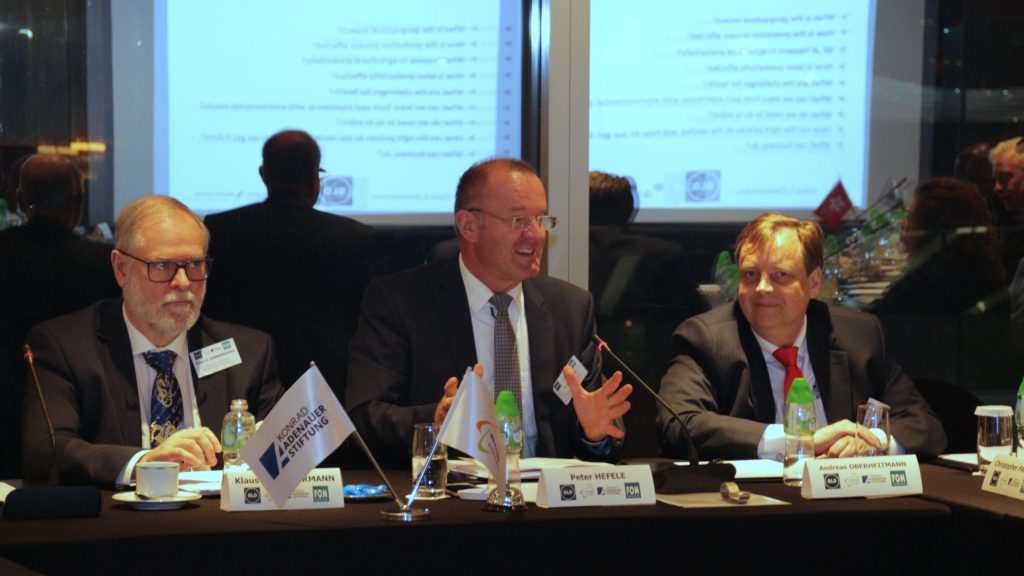
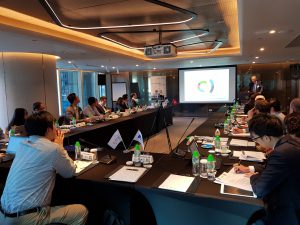
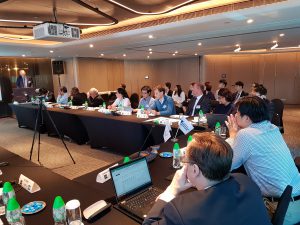
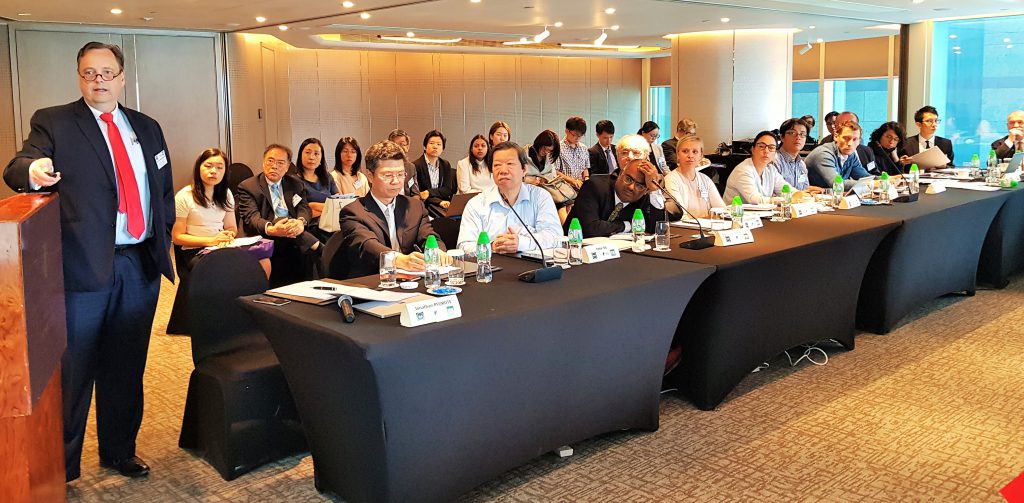
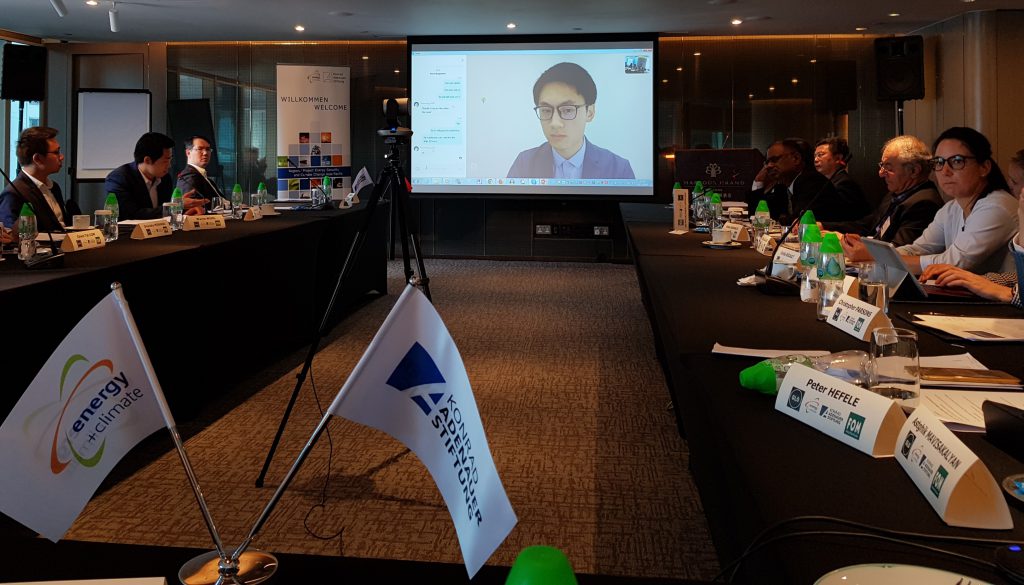
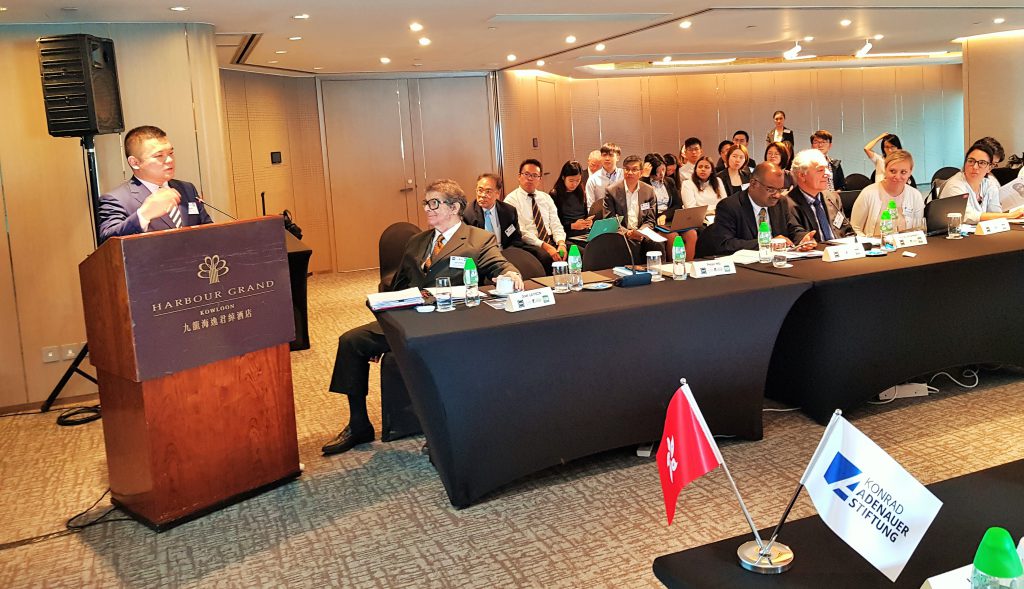
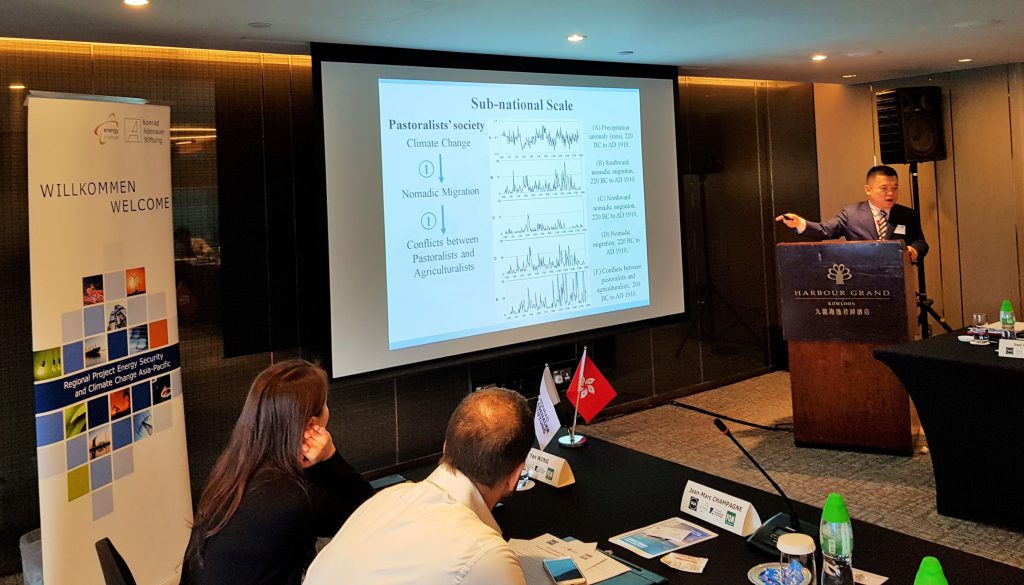
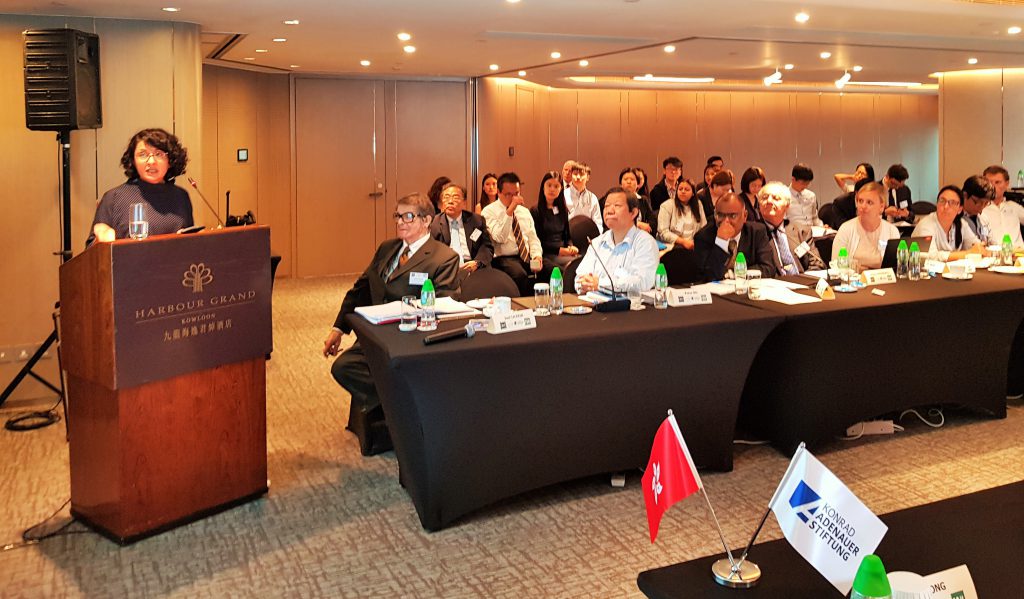
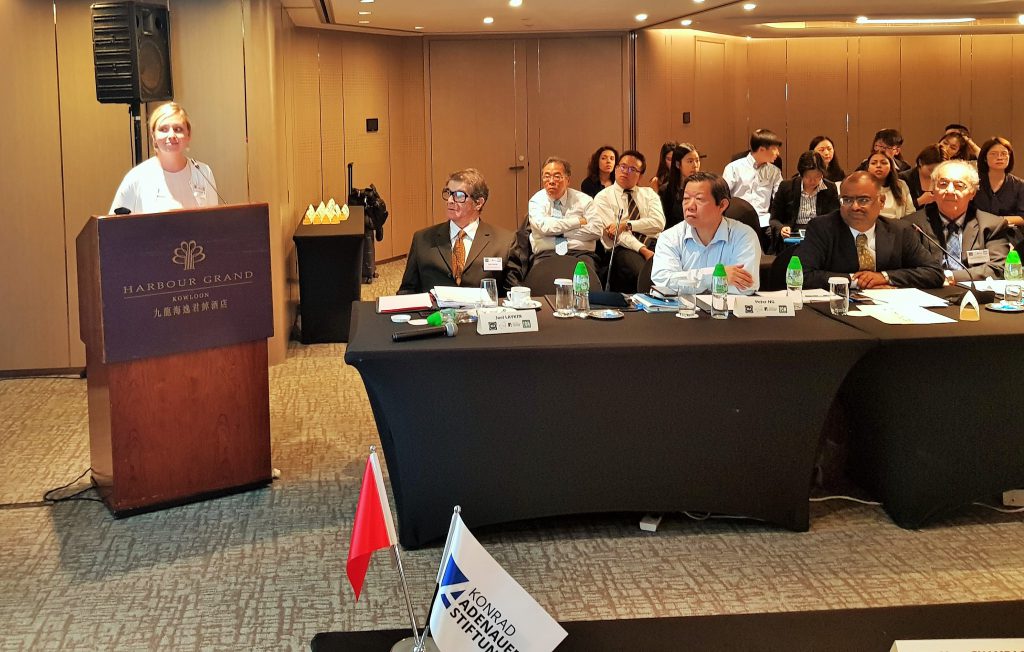
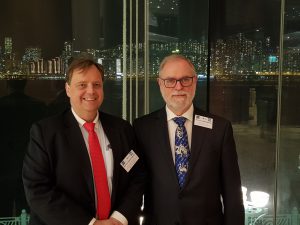
After two days of scientific discussions (see details linked: DAY ONE, DAY TWO), the joint FOM-GLO-KAS Conference about “Climate Change and Human Responses” co-organized by the Global Labor Organization (GLO), FOM University of Applied Sciences and Konrad Adenauer Foundation (KAS) met on 2 November 2018 German business at and with the German Chamber of Commerce, Hong Kong for a Breakfast Discussion. Peter Hefele, Director of the Hong Kong branch of the German Konrad-Adenauer Foundation was organizing this event for the team of organizers.

Business agreed with academics that climate change can no longer be stopped, and one needs a strong focus on adaptation, in particular in large cities such as Hong Kong.

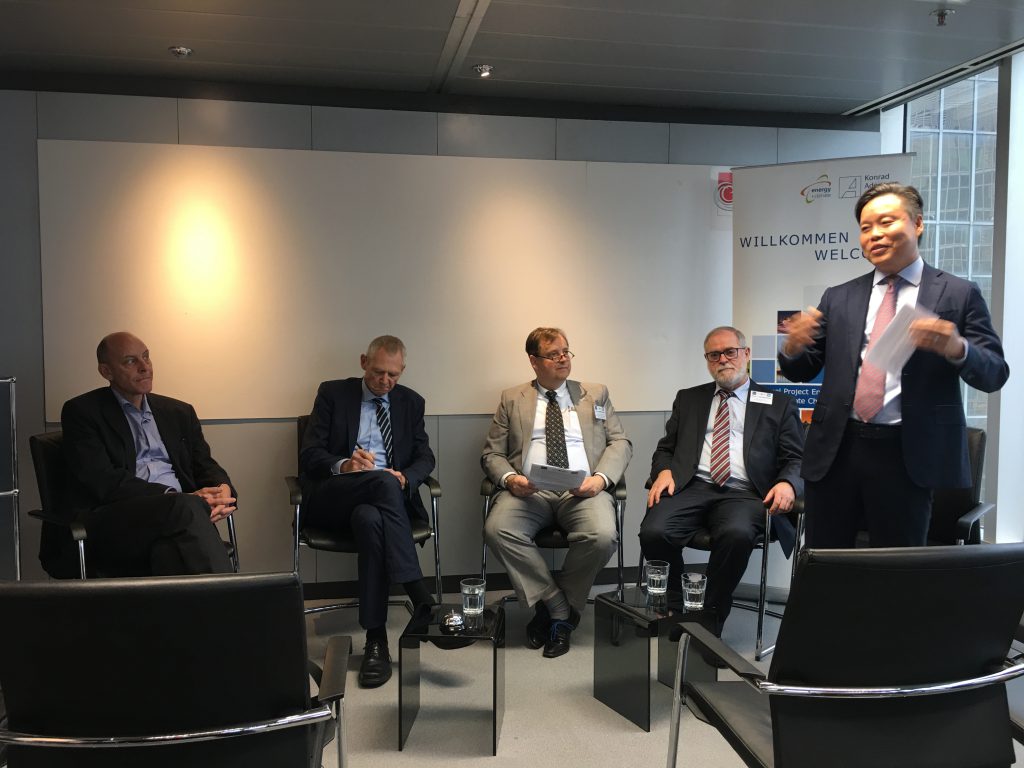
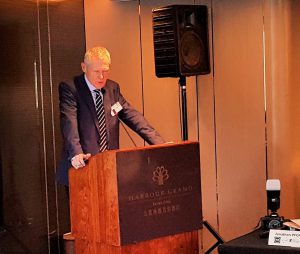
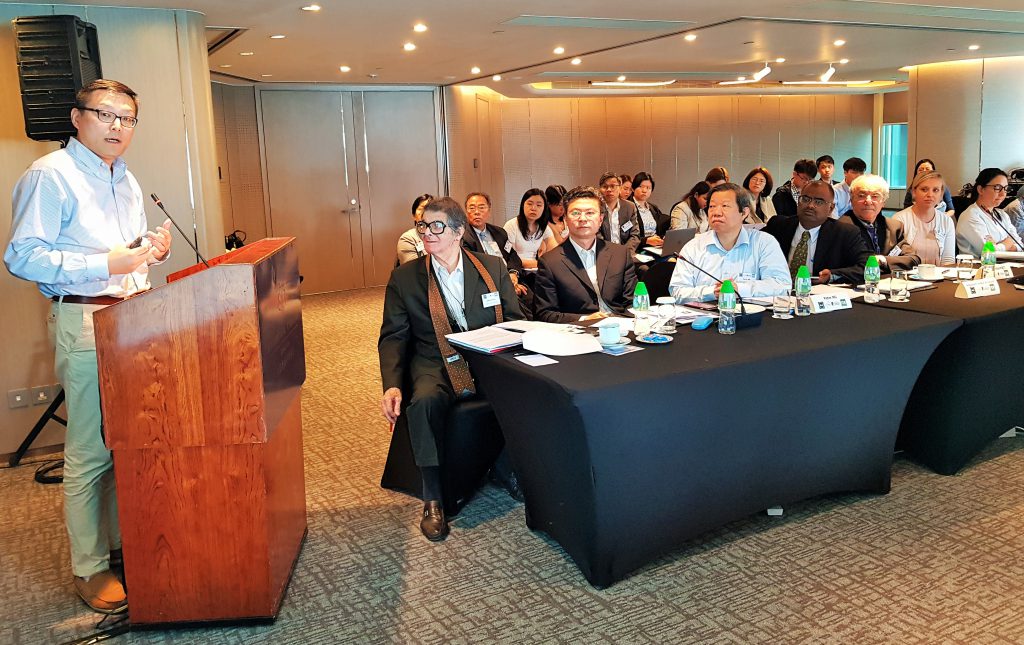
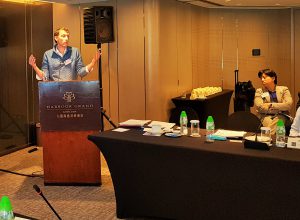
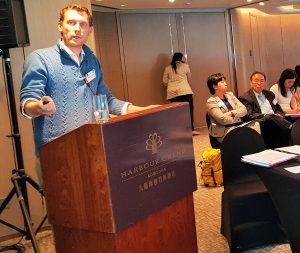
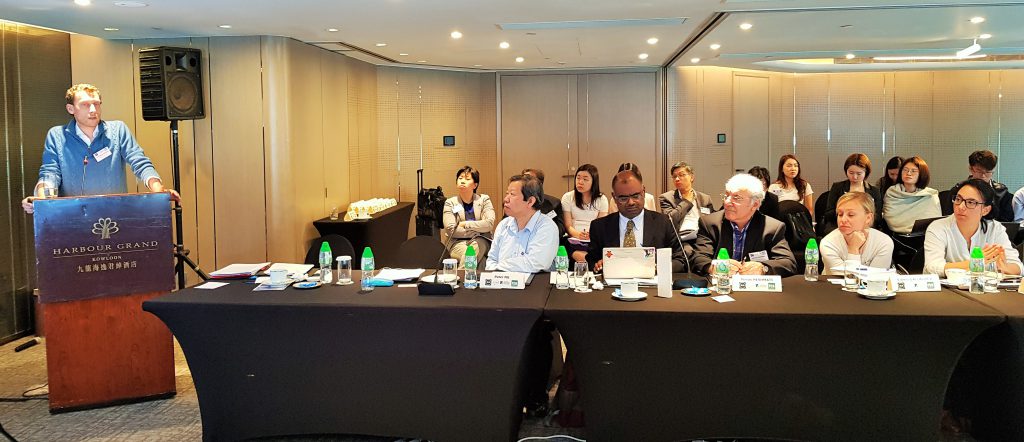
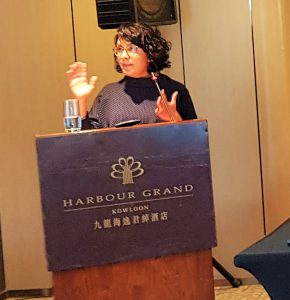
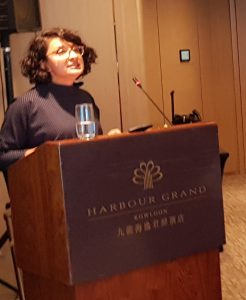
The event was chaired by Andreas Oberheitmann (FOM, RWI and GLO) and welcomed by Wolfgang Ehmann, Head of the German Chamber of Commerce, Hong Kong, and GLO President Klaus F. Zimmermann for all participating organizations. Oberheitmann speaking:

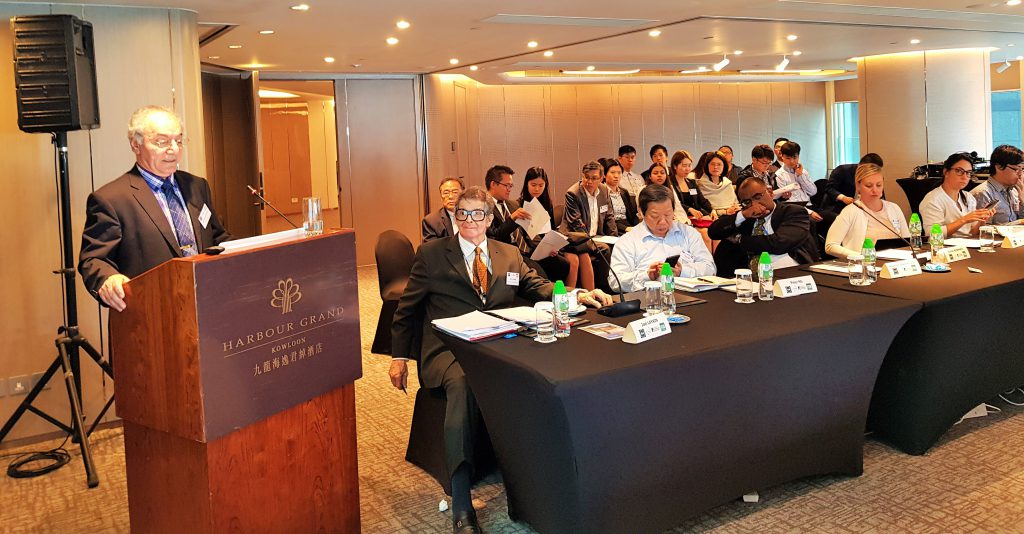
The keynote speeches were provided by Manfred Fischedick, Wuppertal Institute for Climate, Energy and Environment, and Eric Chung, President and CEO of Siemens Ltd. Hong Kong and Member of the Board of Directors of the Business Environment Council (BEC), Hong Kong.

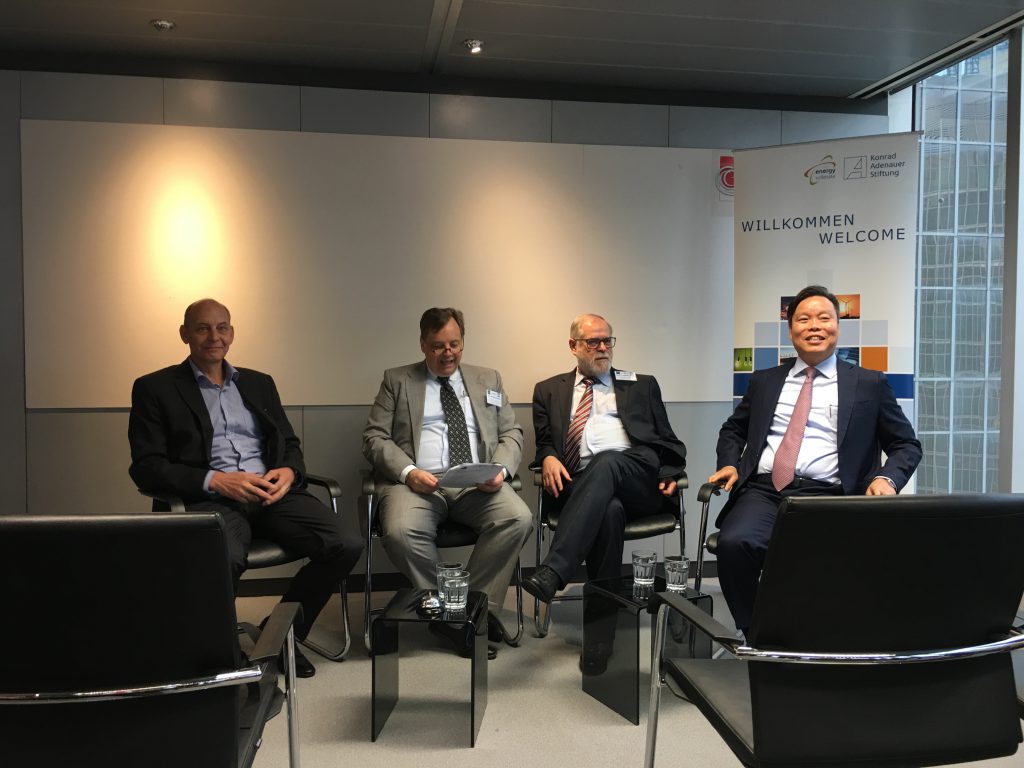
From the left: Wolfgang Ehmann (Welcome), Keynote Speaker Manfred Fischedick, Andreas Oberheitmann, Klaus F. Zimmermann (Welcome), and Keynote Speaker Eric Chung.

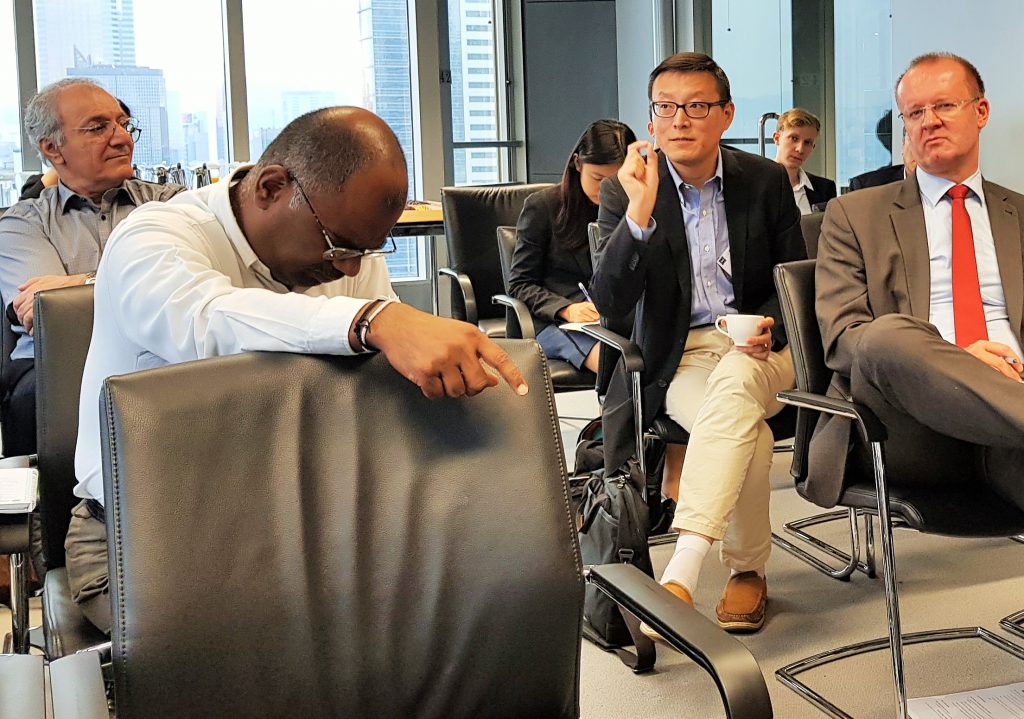
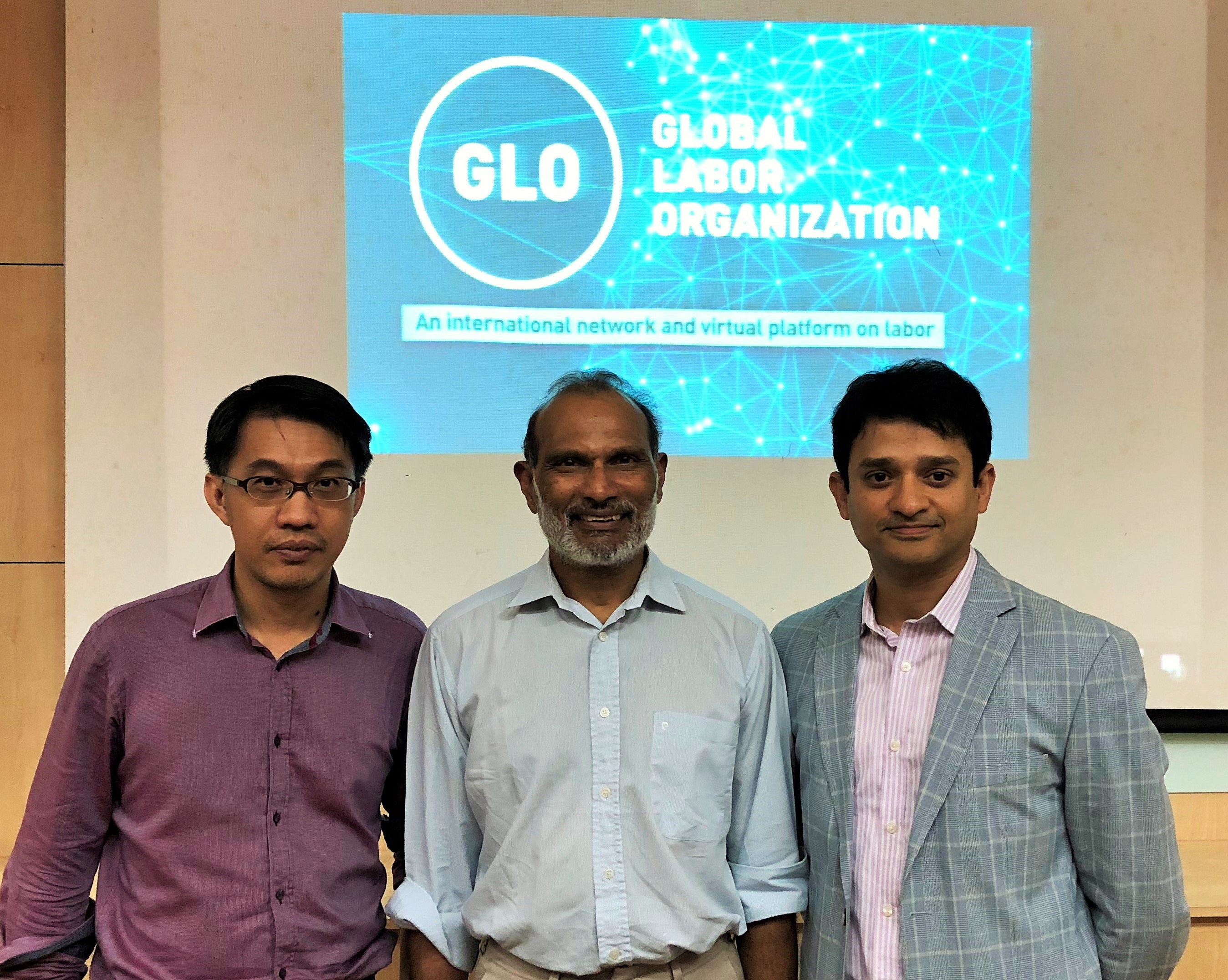
GLO Fellows Almas Heshmati, Venkatachalam Anbumozhi, Xi Chen under the observation of Peter Hefele, Director of the Hong Kong branch of the German Konrad-Adenauer Foundation.

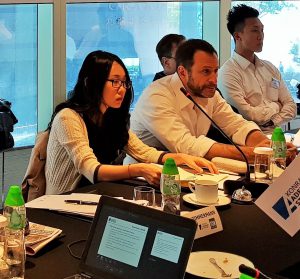
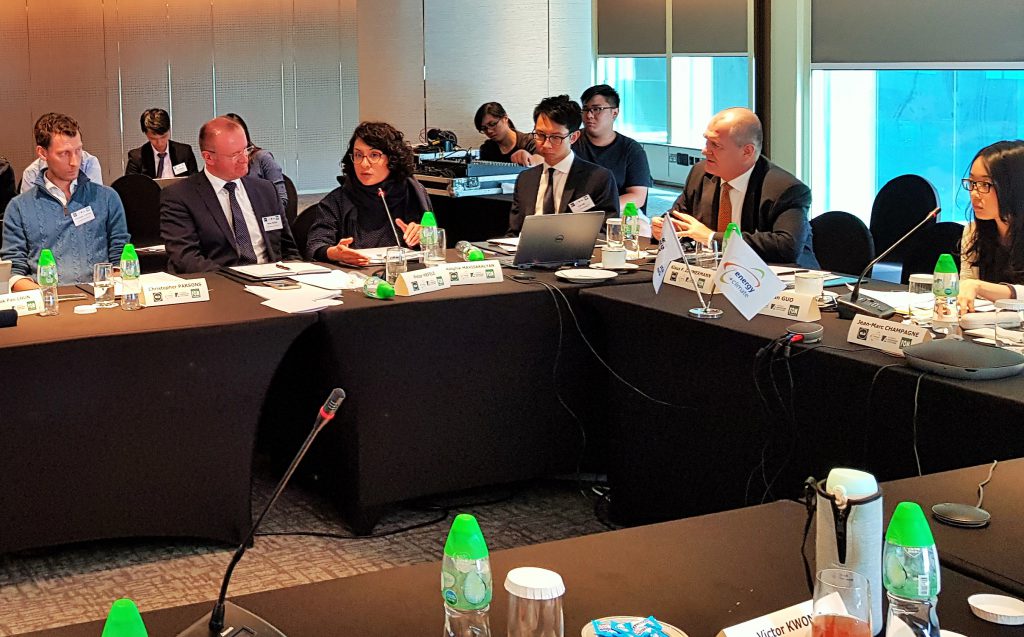
GLO experts debating in Hong Kong with representatives of German business about the consequences of climate change for business and humanity. From the left:
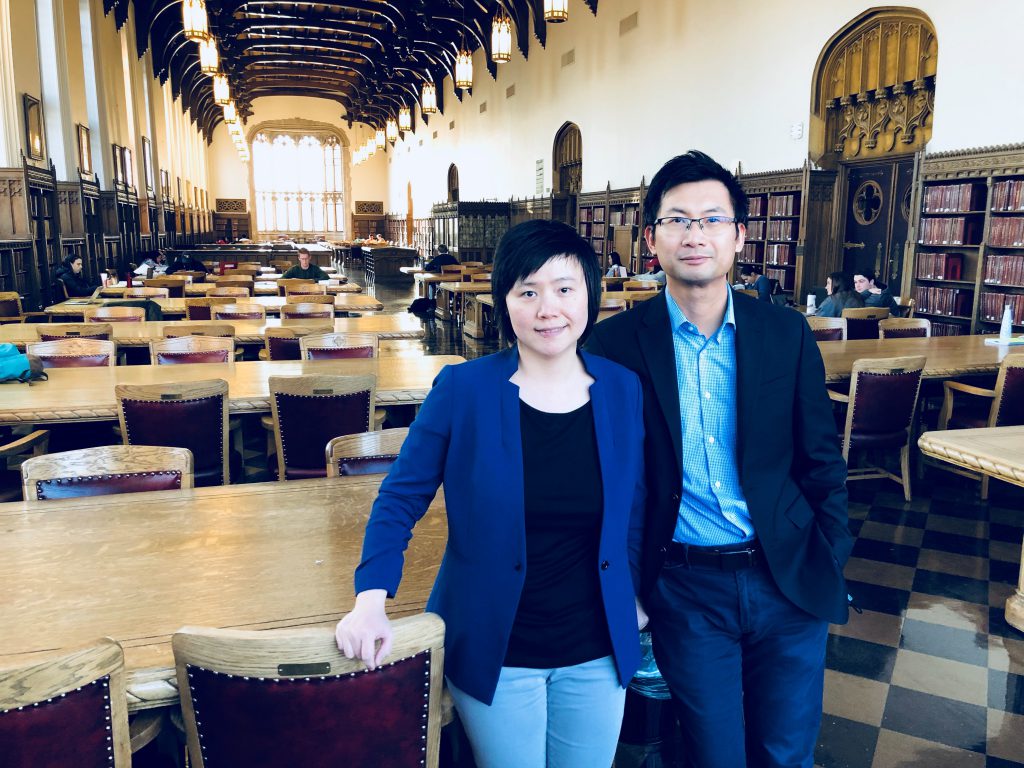
Xi Cheng, Professor at Yale University and GLO Cluster Lead “Environment and Human Resources”.
Klaus F. Zimmermann, Professor at Bonn University (em.),  Honorary Professor at the Renmin University of China, UNU-MERIT, and President of GLO.
Andreas Oberheitmann, Professor at FOM, RWI and GLO.
Almas Heshmati, Jönköping International Business School, Sogang University
and GLO, Sweden/South Korea, and GLO Cluster Lead “Green Employment Creation”.
Venkatachalam Anbumozhi, Senior Economist, Economic Research Institute for ASEAN and East Asia (ERIA) and GLO.

PROGRAM; FRIDAY, 2ND NOVEMBER 2018
8:30 Breakfast Discussion (in cooperation with the German Chamber of Commerce)
Climate Change and Human Responses: How to prepare for Change?
Venue: German Chamber of Commerce, 3601, Tower One, Lippo Centre,
89 Queensway, Admiralty, Hong Kong
Chair: Andreas OBERHEITMANN, FOM, RWI and GLO
Welcoming Remarks
– Wolfgang EHMANN, German Chamber of Commerce
Klaus F. ZIMMERMANN, UNU-MERIT, Maastricht University and GLO
Keynote Speeches (10 min each)
– Manfred FISCHEDICK, Wuppertal Institute for Climate, Energy and Environment
– Eric CHONG, President and CEO of Siemens Ltd. Hong Kong; Member of the
Board of Directors of Business Environment Council (BEC), Hong Kong
Q&A
10:00 End of Event

RECENT GLO Discussion Papers on the issue (freely downloadable):

DP 266 Smog, Cognition and Real-World Decision MakingDownload PDF
by Chen, Xi
DP 221 Gender and climate change: Do female parliamentarians make a difference?Download PDF
by Mavisakalyan, Astghik & Tarverdi, Yashar
DP 86 Do Environmental Regulations Effect FDI decisions? The Pollution Haven Hypothesis Revisited – Download PDF
by Yoon, Haeyeon & Heshmati, Almas
DP 78 Managing the Impact of Climate Change on Migration: Evidence from Mexico – Download PDF
by Chort, Isabelle & de la Rupelle, Maëlys
DP 56 Happiness in the Air: How Does a Dirty Sky Affect Mental Health and Subjective Well-being? – Download PDF
by Zhang, Xin & Zhang, Xiaobo & Chen, Xi
DP 32 Smog in Our Brains: Gender Differences in the Impact of Exposure to Air Pollution on Cognitive Performance  – Download PDF
by Chen, Xi & Zhang, Xiaobo & Zhang, Xin

Ends;

Climate Change and Human Responses: Impressions from a scientific debate in Hong Kong

The joint FOM-GLO-KAS Conference about “Climate Change and Human Responses” co-organized by the Global Labor Organization (GLO), FOM University of Applied Sciences and Konrad Adenauer Foundation (KAS) at the Hotel Harbour Grand Kowloon, Hung Hom, Hong Kong (see FIRST DAY, for the full program of all three days, literature references and some pictures of the first day; details of THIRD DAY) continued on 1 November 2018 with a dense scientific program.

Here are some photos of the academic event of the SECOND DAY (November 1, 2018):

9:00 Session 1: Impact of Climate Change on Regions and Industry Sectors
Chair: ZHANG Yifan, The Chinese University of Hong Kong and GLO

Session chair ZHANG Yifan (The Chinese University of Hong Kong and GLO) next to Klaus F. Zimmermann (UNU-MERIT and President GLO)

Manfred FISCHEDICK, Wuppertal Institute for Climate, Energy and Environment
Climate Change and (Basic) Industry: Options and Related Chances and Challenges for a Green Transformation


Andreas OBERHEITMANN, FOM, RWI and GLO
Challenges of Climate Change for Coastal Regions and Cities: the Case of China

11:00 Session 2: Impacts of Climate Change on Global Labor Force and Labor Markets. Chair: GUO Chaoran, Chinese University of Hong Kong and GLO

Session Chair Chaoran Guo (Chinese University of Hong Kong and GLO) with Jean-Marc Champagne  (World Wide Fund for Nature) and Walton Li (Greenpeace)

FENG Shuaizhang, Jinan University and GLO, video
presentation
(with CUI Xiaomeng, Jinan University,
per skype in the discussion belowLINK TO VIDEO

Climate Variability, Agricultural Productivity and Migration


CHEN Xi, Yale University and GLO
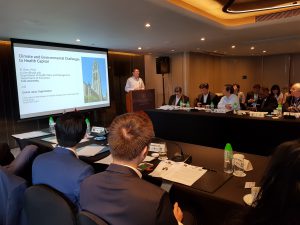
Climate and Environmental Challenges to Health Capital

DEBATE: Astghik Mavisakalyan (Curtin University and GLO), discussing; with from the left Chris Parsons (University of Western Australia and GLO), Peter Hefele (Director, Konrad Adenauer- Foundation, Hong Kong SAR, PR China), Eric Chun Sum Lee (Konrad Adenauer- Foundation), Nicolas de Loisy (SCMO, Hong Kong), and session chair GUO Chaoran (Chinese University of Hong Kong and GLO)

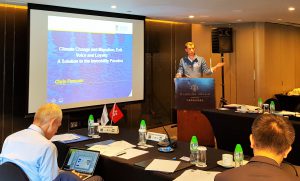
Christopher PARSONS, The University of Western Australia and GLO
Climate Change and Migration, Exit, Voice and Loyalty: A Solution to the Immobility Paradox

14.00 Session 3: Climate Change: Historical Lessons
Chair: Manfred FISCHEDICK, Wuppertal Institute for Climate, Energy and Environment

Almas HESHMATI, Jönköping International Business School, Sogang University
and GLO, Sweden/South Korea
What Can We Learn from Environmental Disasters for the Climate Change Challenges?

PEI Qing, Education University of Hong Kong, Hong Kong
Mandate of Heaven – Climate change, migration and geopolitical cycles in imperial China

15:45 Session 4: Climate Change: How to React?
Chair: Anbumozhi VENKATACHALAM, Economic Research Institute for ASEAN and East Asia (ERIA)

Session Chair Anbumozhi VENKATACHALAM (Economic Research Institute for ASEAN and East Asia, ERIA) with Almas HESHMATI (Jönköping International Business School, Sogang University, Sweden/South Korea and GLO), and speaker Astghik MAVISAKALYAN (Curtin University and GLO)

Astghik MAVISAKALYAN, Curtin University and GLO
Gender and Climate Change: Do Female Parliamentarians Make a Difference?

Background Paper GLO DP 221 Gender and climate change: Do female parliamentarians make a difference?Download PDF
by Mavisakalyan, Astghik & Tarverdi, Yashar

Eileen GALLAGHER, BSR, Business for Social Responsibility, Hong Kong
How Business Can Manage Climate Risk in Southeast Asia

THE WORKDAY ENDED WITH STUDENT PRESENTATIONS ON THE TOPIC
17:20 KAS–CUHK Students Forum
(in cooperation with the Faculty of Law/Chinese University of Hong Kong (CUHK)
“Climate Change and Human Responses”
Chair: Peter HEFELE, KAS RECAP, Hong Kong
Welcoming Remarks:
– Anatole BOUTE, Chinese University of Hong Kong (CUHK)
– LL.M-Master Course Student, CUHK
Discussion
18:00 Wrap-up and Concluding Remarks
– Andreas OBERHEITMANN

RECENT GLO Discussion Papers on the issue (freely downloadable):

DP 266 Smog, Cognition and Real-World Decision MakingDownload PDF
by Chen, Xi
DP 221 Gender and climate change: Do female parliamentarians make a difference?Download PDF
by Mavisakalyan, Astghik & Tarverdi, Yashar
DP 86 Do Environmental Regulations Effect FDI decisions? The Pollution Haven Hypothesis Revisited – Download PDF
by Yoon, Haeyeon & Heshmati, Almas
DP 78 Managing the Impact of Climate Change on Migration: Evidence from Mexico – Download PDF
by Chort, Isabelle & de la Rupelle, Maëlys
DP 56 Happiness in the Air: How Does a Dirty Sky Affect Mental Health and Subjective Well-being? – Download PDF
by Zhang, Xin & Zhang, Xiaobo & Chen, Xi
DP 32 Smog in Our Brains: Gender Differences in the Impact of Exposure to Air Pollution on Cognitive Performance  – Download PDF
by Chen, Xi & Zhang, Xiaobo & Zhang, Xin

Ends;

“Climate Change and Human Responses”: GLO conference in Hong Kong with FOM & KAS has started on Wednesday, 31 October 2018

The joint FOM-GLO-KAS Conference about “Climate Change and Human Responses”  scheduled  for 31 October – 2 November 2018 in Hong Kong has begun on Wednesday, 31 October 2018. The event is co-organized by the Global Labor Organization (GLO), FOM University of Applied Sciences and Konrad Adenauer Foundation (KAS).

See details on the following days, linked: DAY TWO, DAY THREE

Climate change is one of the biggest challenges of the 21st Century. It does not only have severe consequences for eco-systems, but also directly and indirectly affects societies and economies. The consequences for global production chains, output, labor markets and well-being will be massive. Rising sea levels, floods and droughts, changing agricultural patterns – tremendous economic losses and migration of labor force will lead to unforeseeable consequences on human well-being, public health, labor performance and productivity. The innovative conference deals with the under-researched human consequences of climate change and brings together researchers, business, the policy community and civil society in a city which will be heavily affected by climate change, Hong Kong.

GLO has recently provided a number of Discussion Papers on the topic, see below.

Organizers are Peter Hefele (KAS RECAP, Hongkong), Andreas Oberheitmann (FOM, RWI and GLO) and Klaus F. Zimmermann (UNU-MERIT, Maastricht University and GLO). Participants are renowned researchers, politicians and entrepreneurs from Hong Kong, Asia, Europe and the US.

THE PROGRAM: “Climate Change and Human Responses” 

WEDNESDAY, 31ST OCTOBER 2018
Venue: Meeting Room Whampoa 1&2, 1/F, Hotel Harbour Grand Kowloon, Hung Hom,
Hong Kong

16:00 Registration
16:15 Welcoming Remarks
Peter HEFELE, KAS RECAP, Hong Kong
Andreas OBERHEITMANN, FOM Hochschule, RWI and GLO
16:45 Keynote Speech
Klaus F. ZIMMERMANN, UNU-MERIT, Maastricht University and GLO
Climate Change: The Global Labor Challenge
17:15 Q&A
18:00 End of Discussion
19:00 Dinner
Keynote Speech: Ir Albert LAI, CEO of Carbon Care Asia, Hong Kong
Climate Change: Challenges and Opportunities for Hong Kong´s Innovation System
Venue: Grand Salon, Hotel Harbour Grand Kowloon

THURSDAY, 1ST NOVEMBER 2018

9:00 Session 1: Impact of Climate Change on Regions and Industry Sectors
Chair: ZHANG Yifan, The Chinese University of Hong Kong and GLO
– Manfred FISCHEDICK, Wuppertal Institute for Climate, Energy and Environment
Climate Change and (Basic) Industry: Options and Related Chances and Challenges
for a Green Transformation
– Andreas OBERHEITMANN, FOM, RWI and GLO
Challenges of Climate Change for Coastal Regions and Cities: the Case of China
10:30 Coffee break
11:00 Session 2: Impacts of Climate Change on Global Labor Force and Labour
Markets
Chair: GUO Chaoran, The Chinese University of Hong Kong and GLO
FENG Shuaizhang, Jinan University and GLO (with CUI Xiaomeng, Jinan University)
Climate Variability, Agricultural Productivity and Migration
(video presentation)
– CHEN Xi, Yale University and GLO
Climate and Environmental Challenges to Health Capital
– Christopher PARSONS, The University of Western Australia and GLO
Climate Change and Migration, Exit, Voice and Loyalty: A Solution to the Immobility Paradox
13:00 Lunch
Venue: Restaurant Waterfront Bar & Terrace, G/F, Harbour Grand Kowloon

14.00 Session 3: Climate Change: Historical Lessons
Chair: Manfred FISCHEDICK, Wuppertal Institute for Climate, Energy and Environment
– Almas HESHMATI, Jönköping International Business School, Sogang University
and GLO, Sweden/South Korea
What Can We Learn from Environmental Disasters for the Climate Change Challenges?
– PEI Qing, Education University of Hong Kong, Hong Kong
Mandate of Heaven – Climate change, migration and geopolitical cycles in imperial
China
15:30 Coffee Break
15:45 Session 4: Climate Change: How to React?
Chair: Anbumozhi VENKATACHALAM, Economic Research Institute for ASEAN and East
Asia (ERIA)
– Astghik MAVISAKALYAN, Curtin University and GLO
Gender and Climate Change: Do Female Parliamentarians Make a Difference?
Eileen GALLAGHER, BSR (Business for Social Responsibility), Hong Kong
How Business Can Manage Climate Risk in Southeast Asia
17:00 Coffee Break

17:20 KAS–CUHK Students Forum
(in cooperation with the Faculty of Law/Chinese University of Hong Kong (CUHK)
“Climate Change and Human Responses”
Chair: Peter HEFELE, KAS RECAP, Hong Kong / Anjle GUPTA, CUHK, Hong Kong
Welcoming Remarks:
– Anatole BOUTE, Chinese University of Hong Kong (CUHK)
Statements (each 5–10 mins)
– LL.M-Master Course Student, CUHK
Discussion
18:00 Wrap-up and Concluding Remarks
– Andreas OBERHEITMANN
– Peter HEFELE
18:30 Meet at Lobby and Transfer to Restaurant
19:00 Dinner

FRIDAY, 2ND NOVEMBER 2018
8:30 Breakfast Discussion (in cooperation with the German Chamber of Commerce)
Climate Change and Human Responses: How to prepare for Change?
Venue: German Chamber of Commerce, 3601, Tower One, Lippo Centre,
89 Queensway, Admiralty, Hong Kong
Chair: Andreas OBERHEITMANN, FOM, RWI and GLO
Welcoming Remarks
– Wolfgang EHMANN, German Chamber of Commerce
Klaus F. ZIMMERMANN, UNU-MERIT, Maastricht University and GLO
Keynote Speeches (10 min each)
– Manfred FISCHEDICK, Wuppertal Institute for Climate, Energy and Environment
– Eric CHONG, President and CEO of Siemens Ltd. Hong Kong; Member of the
Board of Directors of Business Environment Council (BEC), Hong Kong
Q&A
10:00 End of Event

 
From the left: GLO Fellows Andreas OBERHEITMANN, Christopher PARSONS &  Astghik MAVISAKALYAN
Andreas OBERHEITMANN &
Klaus F. ZIMMERMANN
From the left: Almas HESHMATI, GLO Fellow and GLO Cluster Lead Africa, listening to Peter HEFELE who is introducing the Keynote Dinner Speaker: Ir Albert LAI Keynote Dinner Speaker
  Ir Albert LAI
CEO of Carbon Care Asia
Hong Kong

RECENT GLO Discussion Papers on the issue (freely downloadable):

DP 266 Smog, Cognition and Real-World Decision MakingDownload PDF
by Chen, Xi
DP 221 Gender and climate change: Do female parliamentarians make a difference?Download PDF
by Mavisakalyan, Astghik & Tarverdi, Yashar
DP 86 Do Environmental Regulations Effect FDI decisions? The Pollution Haven Hypothesis Revisited – Download PDF
by Yoon, Haeyeon & Heshmati, Almas
DP 78 Managing the Impact of Climate Change on Migration: Evidence from Mexico – Download PDF
by Chort, Isabelle & de la Rupelle, Maëlys
DP 56 Happiness in the Air: How Does a Dirty Sky Affect Mental Health and Subjective Well-being? – Download PDF
by Zhang, Xin & Zhang, Xiaobo & Chen, Xi
DP 32 Smog in Our Brains: Gender Differences in the Impact of Exposure to Air Pollution on Cognitive Performance  – Download PDF
by Chen, Xi & Zhang, Xiaobo & Zhang, Xin

Ends;


Is female breadwinning unhealthy for partnerships? Not broadly, says new evidence for the US and Australia

The GLO Discussion Paper of the Month (see below) from all GLO DP’s of October (see below) presents new evidence on the association between female breadwinning and the quality of US and Australian partnerships and their stability. The good news is that it is not widely negatively related.

Titles and free access/links to GLO Discussion Papers

GLO Discussion Papers are research and policy papers of the GLO Network which are widely circulated to encourage discussion. Provided in cooperation with EconStor, a service of the ZBW – Leibniz Information Centre for Economics, GLO Discussion Papers are among others listed in RePEc (see IDEAS, EconPapers). Complete list of all GLO DPs downloadable for free.

GLO Discussion Paper of the Month: October 2018

Foster, Gigi & Stratton, Leslie S., 2018. “Does female breadwinning make partnerships less healthy or less stable?,” GLO Discussion Paper Series 259, Global Labor Organization (GLO). FREE Download PDF

Abstract: Using Bertrand, Kamenica and Pan’s (2015) original data, we find that female breadwinning is significantly associated with partnership problems only for older women in cross sections, but for younger ones in fixed-effects specifications. In more recent US and Australian data, female breadwinning is associated with a modestly higher dissolution risk and a fall in some measures of reported relationship quality, but mainly for young people in cohabiting partnerships and men in less educated partnerships. We suggest our results reflect changing norms plus market dynamics arising from the ease of access to superior partnership alternatives for women who out-earn their partners.

GLO Discussion Papers of October 2018

267 New Education Models for the Future of Work ForceDownload PDF
by Pastore, Francesco

266 Smog, Cognition and Real-World Decision MakingDownload PDF
by Chen, Xi

265 Drivers of Labor Force Participation in Advanced Economies: Macro and Micro EvidenceDownload PDF
by Grigoli, Francesco & Koczan, Zsoka & Topalova, Petia

264 A Cohort-Based Analysis of Labor Force Participation for Advanced EconomiesDownload PDF
by Grigoli, Francesco & Koczan, Zsoka & Topalova, Petia

263 Low, High and Super Congestion of an Open-Access Resource: Impact under Autarky and Trade, with Aquaculture as IllustrationDownload PDF
by Schiff, Maurice

262 Brain Drain-Induced Brain Gain and the Bhagwati Tax: Are Early and Recent Paradigms Compatible?Download PDF
by Schiff, Maurice

261 Labor Market and Institutional Drivers of Youth Irregular Migration: Evidence from the MENA RegionDownload PDF
by Dibeh, Ghassan & Fakih, Ali & Marrouch, Walid

260 Public versus Private Sector Wage Gap in Egypt: Evidence from Quantile Regression on Panel DataDownload PDF
by Tansel, Aysit & Keskin, Halil Ibrahim & Ozdemir, Zeynel Abidin

259 Does female breadwinning make partnerships less healthy or less stable?Download PDF
by Foster, Gigi & Stratton, Leslie S.

258 Marriage Market Signals and Homeownership for the Never MarriedDownload PDF
by Mundra, Kusum & Uwaifo Oyelere, Ruth

257 Economic impact of STEM immigrant workersDownload PDF
by Baum, Christopher F. & Lööf, Hans & Stephan, Andreas

256 Does Regulation Trade-Off Quality against Inequality? The Case of German Architects and Construction EngineersDownload PDF
by Rostam-Afschar, Davud & Strohmaier, Kristina

M.M. (Magdalena) Ulceluse, PhD

GLO DP Team
Senior Editors:
Matloob Piracha (University of Kent) & GLO; Klaus F. Zimmermann (UNU-MERIT, Maastricht University and Bonn University).
Managing Editor: Magdalena Ulceluse, University of Groningen. DP@glabor.org

Ends;

Zimmermann gave a research seminar at Beijing Normal University last Friday on arsenic drinking water

In October 2018, Klaus F. Zimmermann, President of the Global Labor Organization (GLO) and UNU-MERIT, Maastricht, had taken his office at Renmin University of China. On Friday October 26, he visited Beijing Normal University to provide a research seminar on “Arsenic Contamination of Drinking Water and Mental Health”.

The seminar was invited and chaired by GLO Fellow & Professor Li Shi of Beijing Normal University, who also introduced Zimmermann to the very large audience. The presentation was based on a revised version of his recent Princeton University Discussion Paper (Working Paper #607, Princeton University, Industrial Relations Section). The discussion was lively and Zimmermann has received a number of useful comments.

Zimmermann during his lecture.
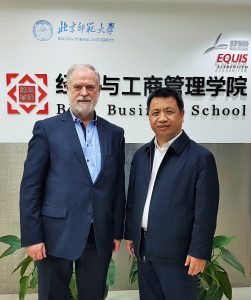
LAI Desheng (right), Professor & Dean of the Business School of Beijing Normal University.
AFTER THE HOUR. Zimmermann, left, with GLO Fellow Professor LI Shi of Beijing Normal University, one of the leading labor scholars of the country.


Ends;

China Research promoted by the GLO Discussion Papers series: On the Chinese transition to permanent work contracts

New research in the Discussion Paper Series of the Global Labor Organization (GLO): In its Labor Contract Law introduced in 2008, China strengthened the labor protection for workers. As a consequence, temporary work contracts have to be permanent after 10 years of work duration. Randall Akee (University of California, Los Angeles) with GLO Fellows Ligiu Zhao and Zhong Zhao (both Renmin University of China) have presented evidence that Chinese companies have often dismissed workers to avoid such permanent contracts resulting in large welfare losses among those workers.

GLO Fellow Zhong Zhao, Renmin University of China, Beijing, and Associate Editor of the Journal of Population Economics

GLO Discussion Paper No. 242

Unintended Consequences of China’s New Labor Contract Law on Unemployment and Welfare Loss of the WorkersDownload PDF
by Akee, Randall & Zhao, Liqiu & Zhao, Zhong

Abstract

China’s new Labor Contract Law, which intended to strengthen the labor protection for workers, went into effect on January 1, 2008. The law stipulated that the maximum cumulative duration of successive fixed-term (temporary) labor contracts is 10 years, and employees working for the same employer for more than 10 consecutive years are able to secure an open-ended (permanent) labor contract under the new law, which is highly desirable to employees. However, in order to circumvent the new Labor Contract Law, some employers may have dismissed workers, after the passage of the new law, who had worked in the same firm for more than 10 years. Using data from the 2008 China General Social Survey, we find strong evidence that firms did in fact dismiss their formal-contract employees who have been employed for more than 10 years. Additionally, using a regression discontinuity design based on this exogenous change in unemployment status for this particular group of workers, we show that the dismissed workers suffered significant welfare loss in terms of happiness. Our results are robust to various specifications and placebo tests.

Interested in other GLO Discussion Papers?  The GLO DP series for free.

Interested in other research on China? Recent Papers on the Chinese Labor Market.

Ends;

Another GLO & University of Malaya Research Seminar took place in Kuala Lumpur on 19 October 2018

19 October 2018 at the University of Malaya, Kuala Lumpur, Malaysia. The Global Labor Organization (GLO) and the Faculty of Economics and Administration of the University of Malaya (UM) has organized again an event in this seminar series: The GLO-UM Joint Labor Economics Seminar. It is headed by GLO Fellow Professor Niaz Asadullah in his function as the GLO Lead for South-East Asia (GLO activities in South-East Asia). He is also the GLO Country Lead Malaysia.

The speaker has been Dr Rasyad  Parinduri, who is an Associate Professor at the Nottingham University Business School (NUBS), the University of Nottingham, Malaysia Campus. He spoke about:

“The Effects of Mediums of Instruction on Educational and Labor Market Outcomes: Evidence from Malaysia ”

Abstract of the lecture:
We examine the effects of having English as a medium of instruction on labor market outcomes later in life. We exploit an exogenous variation in mediums of instruction induced by the government of Malaysia’s decision to discontinue English-medium public schools and phase them out with Malay-medium public schools in 1970, which fits a fuzzy regression discontinuity design. We find some evidence that having English as a medium of instruction improves labor market outcomes. We explore some mechanisms through which mediums of instruction matter: We find having English as a medium of instruction improves English proficiency, especially reading and writing skills, and increases educational attainment, which in turn increase earnings and improve employability.

PDF Flyer of the event: GLO-Seminar-19-Oct-2018
Paper for the event.
Further details of the event schedule.

GLO Fellow Niaz Asadullah (left) & Rasyad  Parinduri
Associate Professor Yong Chen Chen commenting on the talk

Speaker bio:
Rasyad A. Parinduri
is an Associate Professor of Economics at the Nottingham University Business School (NUBS), the University of Nottingham, Malaysia Campus. Rasyad teaches industrial organization at the NUBS. He does research on the intersection of development economics and industrial organization using applied microeconometrics, analyzing the effects of policies and market changes on development, competition, labor outcomes, and trade. He has published in, among others, the Journal of Development Studies, Economics of Transition, Economics of Education Review, and World Development.

Seminar Speaker Rasyad A. Parinduri GLO Fellow Professor Niaz Asadullah
Ends;


Update: More on the 10th CIER Anniversary on 18 October 2018 in Beijing

On October 18, 2018, the China Institute for Employment Research (CIER) at Renmin University of China had celebrated its 10th Anniversary during a regular seasonal meeting to analyze the employment situation at the Chinese labor market. GLO President Klaus F. Zimmermann gave one of the invited keynotes. More details. More pictures of the event:

First row from the left: GLO Fellows and Professors Shi Li (Beijing Normal University) & Xiangquan Zeng (Renmin University, Director CIER), former Chinese Minister of Labor Xiaojian Zhang, and GLO President Klaus F. Zimmermann


Conference Hall During the debate Conference participants

Several further GLO Fellows participated at the event, including Renmin University Professors Liqin Zhao and Fei Wang.

Ends;

Expert Michele Bruni says: African mass emigration is not an option, but unavoidable.

In an interview with GLO President Klaus F. Zimmermann in Beijing, Michele Bruni, Team Leader and Resident Expert of the EU-China Social Protection Reform Project, outlines that the world will see large, unstoppable demographic imbalances causing substantial challenges. It will in particular involve China, Europe and Africa. Only managed migration and educational efforts can help to deal with this.

GLO Fellow Michele Bruni, Team Leader and Resident Expert of the EU-China Social Protection Reform Project, Beijing.

Michele Bruni holds a Laurea in Political Sciences from the University of Florence and a Ph.D. in Economics from the University of California, Berkeley. He has taught at the Universities of Calabria, Bologna, and Modena. He is a Fellow of  the Global Labor Organization (GLO) and member of the Center for the Analysis of Public Policies of the Faculty of Economics “M. Biagi”, University of Modena (CAPP). At present, Bruni lives in Beijing where he is Team Leader and Resident Expert of the EU-China Social Protection Reform Project. For more than twenty five years he has participated as labor market expert in numerous EU, ADB and WB funded projects in Eastern Europe, Africa and South East Asia countries. In his research, Bruni has focused on the development of stock and flow models and their application to the analysis of labor market and migration.

QUESTION: Your research seems to suggest that the world will soon experience the largest demographic imbalances that mankind has ever seen. What do you mean by this?

During this century, the growth of working age population will level off as a consequence of the unstoppable demographic transition. But this will result from two opposite tendencies:  the working age population of (i) an increasing number of countries will sharply decline, and (ii) of an decreasing number of countries, the poorest ones, it will explode. This is an unprecedented demographic polarization due to the very different stages countries are currently in the demographic transition.

Over the next 40 years, the world’s working age population will increase from 4.85 billion to 6.21 billion, this is a rise of 1.36 billion people and 28%. This results from positive balances of 1.9 billion and negative balances of 524 million people. The shrinking areas are lead by China with a share of 48.1%, followed by Europe (25.6%), Asia excluding China (18.2%), Latin America (4.1%), and the new world countries (USA, Canada, Australia and New Zealand) with only 3.8%. The positive balances will be concentrated in Africa (56.8%) and in Asia (37.6 %).

QUESTION: Although both shrinking and aging, China and Europe plan to play the “fortress game”. Will this be sustainable?

In absence of migration the working age population of Europe will decline by 134 million and that of China by 252 million over the next 4 decades. Can Europe and China really continue on their path of economic growth and social development without migrants? Is technological change capable to increase productivity as then needed?

The idea that AI and robots will produce a dramatic decline of labor needs has been put forward by gurus of the new technologies, economists, and obviously politicians. However, this is not supported by empirical evidence, it is static and ignores second order effects. Computer-based technologies may destroy jobs, but may also create new ones. Furthermore, the human mind has what appears to be a limitless capacity and fantasy to “invent” new needs and a limitless capacity to invent and produce new goods to satisfy them. It seems therefore evident that for Europe, China – and other numerous countries like Japan and Korea that will experience an even more dramatic decline of working age population – mass immigration is not an option, but a necessity.

To play the “fortress game” by exploiting irrational fears and ignore how the labor market works and how strong the demographic trends are would be totally irrational. Moreover, this game would be undermined by the market itself that will find a way to satisfy its labor needs. At the same time it is difficult to believe that Africa, a continent plagued by war, endemic problems of corruption, and a low educational level will be able to outperform the Chinese economic miracle and create over a 40 year period the more than 700 million jobs necessary to satisfy its increase of labor supply. Therefore, African mass emigration is not an option, but unavoidable.

QUESTION:  Would global collaboration help, and could educational investments be part of a solution?

The demographic polarization contains the potential solution to the problems it generates: The structural need of labor of the countries in the last phase of the demographic transition will correspond a structural excess of labor in the countries in the first phase. However, it is unrealistic that in the present political context immigration countries will open their countries sufficiently allowing the market to do the matching. In my work, I have suggested a cooperative management of migration flows recognizing that arrival countries will almost only need migrants with a medium or high level of education. Hence, the necessary education and vocational training should be financed by the immigration countries and organized by a specialized international organization in the origin countries.

QUESTION: How can China and Europe cooperate, and could they absorb African excess supply of labor?

Europe and China cannot absorb the huge rise in the job-seeking African population, but significantly reduce the burden of job-creation there to less than 400 million. Still a large number, but together with the Chinese infrastructure initiatives the proposed educational activities could help to give the African continent a push. This analysis also suggest that Europe, China and other Asian countries could join forces to maximize the potential of demand-driven migrations, while given its location and rich experience in this field, Europe could take the role of the “training center” of the project.

QUESTION: So the face of migration in the future is “African”?

Human history has already recorded two “out of Africa” migrations. It is a matter of speculation whether those early migrations were due to economic reasons or, as I suspect, to one of the basic characteristic of primates, curiosity. This century will record the third out of Africa migration, but this time migrants will be pulled by the labor needs of Europe and Asia.

GLO Experts Bruni & Zimmermann debating the facts and the policy options in a Beijing coffee shop

References

Bruni, Michele (2017), Egypt Labour market report. Demographic trends, labour market evolution and scenarios for the period 2015-30, International Organization for Migration, Cairo.

Bruni, Michele (2017), Promoting a Common Understanding of Migration Trends. Analysis and Policies, International Organization for Migration, Cairo.

Bruni, Michele (2018), Ageing, the socioeconomic burden, labour market and migration. The Chinese case in an international perspectiveDownload PDF, GLO Discussion Paper No. 222.

Cervellati, Matteo, Uwe Sunde & Klaus F. Zimmermann, Demographic Dynamics and Long-Run Development: Insights for the Secular Stagnation Debate, Working Paper #604, Princeton University, Industrial Relations Section, UNU – MERIT Working Paper # 2016-049, ZEF Discussion Papers on Development Policy #226 & CEPR Discussion Paper DP 11569. Published:  Journal of Population Economics , Volume 30, Issue 2, pp 401–432; DOI: 10.1007/s00148-016-0626-8.

Zimmermann, Klaus F. et al. (2013), Youth Unemployment and Vocational Training, Foundations and Trends® in Microeconomics 9, 1-157.

Ends;

GLO President Zimmermann delivered keynote speech at Beijing Capital University

Beijing, 21 October 2018. Capital University of Economics and Business, Beijing/China. During the Third Annual Conference of Labor Economics in ChinaGLO President Klaus F. Zimmermann provided a keynote speech on “Migration and Wellbeing”.

Zimmermann also provided information about GLO, the Journal of Population Economics, where he serves as Editor-in-Chief and made references to the recent research work in these outlets on China. See for the material.

At the gate of Capital University of Economics and Business, Beijing. Before the keynote in the lecture room. Announcement of the keynote.
Welcome by Prof. Xiliang Feng, Chairman of the School of Labor Economics (left). Comments and summary by Prof. Yufen Tong of the School of Labor Economics


Ends;

GLO Fellow Michele Bruni, Beijing, studies the long-term implications of demographic change for China

China is much younger than Europe, but ages much faster reaching and passing Europe in due course. Michele Bruni, EU Expert resident in Beijing and Fellow of the Global Labor Organization (GLO) analyzes the consequences of the significant demographic changes for the Chinese labor market and welfare.

GLO Fellow Michele Bruni, EU Expert, and  Resident in Beijing

GLO Discussion Paper No. 222 Ageing, the socioeconomic burden, labour market and migration. The Chinese case in an international perspectiveDownload PDF
by Bruni, Michele

Abstract

China still lags behind Europe along the path of the demographic transition and therefore is still much younger. However, due to the speed with which the fertility rate dropped and life expectancy increased, China ageing process will proceed at a very fast space and around the middle of the century the population of China is projected to be as old as that of France and the UK and older than that of the USA. The paper evaluates the labor market and welfare implications of this process, also by an economic indicator of dependency and socioeconomic burden.

Interested in other GLO Discussion Papers?  The GLO DP series for free.

Interested in other research on China? Recent Papers on the Chinese Labor Market

Ends;

Employment in China: CIER Forecasting Workshop debates future while celebrating CIER’s 10th anniversary

CIER at Renmin University celebrates its 10th anniversary and debates the challenging employment prospective in the face of global trade tensions. GLO President Klaus F. Zimmermann, while visiting Renmin University in October, congratulates to the success of CIER and contributes to the exchange on the future of labor.

The China Institute for Employment Research (CIER) at Renmin University of China, now a globally well known and respected research institution, organizes regular influential meetings by academics, government experts and practitioners from business to judge the state of the Chinese labor market. CIER is directed by Professor Xiangquan Zeng, a former long-term Dean of the School of Labor and Human Resources of Renmin University and Fellow of the Global Labor Organization (GLO).

Due to the large changes of China and in the world, traditional data sources have often become meaningless and new indicators and their permanent evaluation have to be organized. It was an innovative initiative, when CIER presented in 2011 for the first time what is now called the CIER-Index, an indicator that measures the tightness of the Chinese labor market by relating the size of jobseekers to the demands of the hiring authorities using survey data from business. The index has established its value and is well used inside and outside China.

On 18 October 2018, the regular seasonal forecasting meeting at Renmin University has dealt with the employment consequences of the global tensions in international economic relations. Concerns have been expressed about the predicted moderation of economic growth and an expected decline in employment, which were detailed and confirmed by CIER analysis and all the experts present.

All invited speakers including Renmin Vice-President Liu Yuanchun, former Labor Minister of China Xiaojian Zhang and GLO President Klaus F. Zimmermann expressed in their keynote speeches strongly the importance  and significance CIER and its leader, Professor Xiangquan Zeng, had over the entire decade. Zimmermann has called Director Zeng a “man of vision and practice” during challenging times. All wished Zeng and CIER much success for the important work in the time to come.

Former Chinese Minister of Labor Xiaojian Zhang (middle) with GLO Fellow Xiangquan Zeng (left) & GLO President Klaus F. Zimmermann after a joint dinner.

During the celebration & analysis meeting:

GLO Fellows Xiangquan Zeng (right) and Shi Li of Beijing Normal University CIER Director Xiangquan Zeng of Rinmin University during his talk presenting his analysis of the Chinese labor market. In front: Liu Yuanchun, Vice President of Renmin University During the debate:  Liu Yuanchun, Xiangquan Zeng & Klaus F. Zimmermann


Ends;

Recent Research Papers on the Chinese Labor Market

The School of Labor and Human Resources at Renmin University of China (Beijing) and the Global Labor Organization (GLO) currently organize a joint conference on the Chinese Labor Market. The place on 20 and 21 October 2018 at Renmin University of China, Beijing. On Sunday October 21, Klaus F. Zimmermann, the President of the Global Labor Organization (GLO) and Honorary Professor at Renmin University will give a keynote speech on “Recent Labor Market Research on China”. In his presentation, he will draw on three sources: (i) His own published recent research work in the area, (ii) papers made available in 2017 & 2018 through the prominent GLO Discussion Paper series and (iii) the papers on China published in 2017-2018 and online 2019 In the Journal of Population Economics. Zimmermann is also the Editor-in-Chief of the Journal of Population Economics, the leading global academic journal of this field.

Klaus F. Zimmermann

A. RESEARCH PAPERS BY KLAUS F. ZIMMERMANN

Relative Concerns of Rural-to-Urban Migrants in China, Journal of Economic Behavior and Organization, 81 (2012), 421-441. (With A. Akay and O. Bargain.)

Self-Employment of Rural-to-Urban Migrants in China, International Journal of Manpower, 33 (2012), 96-117.  (With C. Giulietti and G. Ning.)

China’s Latent Human Capital Investment: Achieving Milestones and Competing for the Top, Journal of Contemporary China, 22 (2013), 109-130. (With A. Constant, B. Tien and J. Meng.)

The RUMiC Longitudinal Survey: Fostering Research on Labor Markets in China, IZA Journal of Labor and Development, 3 (2014) (With M. Akgüc and C. Giulietti.)

Remittances and Well-Being among Rural-to-Urban Migrants in China, Review of Economics of the Household, 12 (2014), 517-546. (With A. Akay, C. Giulietti and J.D. Robalino.)

Sibling Influence on the Human Capital of the Left Behind, Journal of Human Capital, 9 (2015), 403-438. (With C. Biavaschi and C. Giulietti.)

Remittances and Relative Concerns in Rural China, China Economic Review, 37 (2016), 191-207. (With A. Akay, O. Bargain, C. Guilietti and J. D. Robalino.)

Risk Attitudes and Migration, China Economic Review, 37 (2016), 166-176. (With M. Akgüc, X. Liu and M. Tani.)

B. RESEARCH PAPERS IN THE GLO DISCUSSION PAPER SERIES (DP numbers and links for free access): 2017 & 2018

Chi Chen, Yale University Zhong Zhao, Renmin University Michele Bruni, EU Expert

242 Unintended Consequences of China’s New Labor Contract Law on Unemployment and Welfare Loss of the WorkersDownload PDF
by Akee, Randall & Zhao, Liqiu & Zhao, Zhong

238 Returns to higher education subjects and tiers in China – Evidence from the China Family Panel StudiesDownload PDF
by Kang, Lili & Peng, Fei & Zhu, Yu

222 Ageing, the socioeconomic burden, labour market and migration. The Chinese case in an international perspectiveDownload PDF
by Bruni, Michele

204 The Power of the Government: China’s Family Planning Leading. Group and the Fertility Decline since 1970 – Download PDF
by Chen, Yi & Huang, Yingfei

177 Technological catching-up, sales dynamics and employment growth: evidence from China’s manufacturing firms – Download PDF
by Dosi, Giovanni & Yu, Xiaodan

159 Do Skewed Sex Ratios Among Children Promote Parental Smoking? Longitudinal Evidence from Rural China – Download PDF
by Chen, Xi

130 Do Migrant Students Affect Local Students’ Academic Achievements in Urban China? – Download PDF
by Wang, Haining & Cheng, Zhiming & Smyth, Russell

127 What Drives Spatial Clusters of Entrepreneurship in China? Evidence from Economic Census Data – Download PDF
by Zheng, Liang & Zhao, Zhong

120 Where Are Migrants from? Inter- vs. Intra-Provincial Rural-Urban Migration in China – Download PDF
by Su, Yaqin & Tesfazion, Petros & Zhao, Zhong

80 The Heterogeneous Impact of Pension Income on Elderly Living Arrangements: Evidence from China’s New Rural Pension Scheme – Download PDF
by Cheng, Lingguo & Liu, Hong & Zhang, Ye & Zhao, Zhong

56 Happiness in the Air: How Does a Dirty Sky Affect Mental Health and Subjective Well-being? – Download PDF
by Zhang, Xin & Zhang, Xiaobo & Chen, Xi

53 The Impact of Social Pensions on Intergenerational Relationships: Comparative Evidence from China Download the PDF
by Chen, Xi & Eggleston, Karen & Ang, Sun

37 On the exposure of the BRIC countries to global economic shocks  – Download PDF
by Belke, Ansgar & Dreger, Christian & Dubova, Irina

32 Smog in Our Brains: Gender Differences in the Impact of Exposure to Air Pollution on Cognitive Performance  – Download PDF
by Chen, Xi & Zhang, Xiaobo & Zhang, Xin

C. PAPERS PUBLISHED IN THE JOURNAL OF POPULATION ECONOMICS: 2017-2019

Journal of Population Economics

Three decades of publishing research in population economics by Alessio J. G. Brown & Klaus F. Zimmermann; Journal of Population Economics (2017) 30: 1, 11–27

Klaus F. Zimmermann, Report of the Editor-in-Chief, 2018

ONLINE forthcoming

How does internal migration affect the emotional health of elderly parents left-behind? By Juliane Scheffel, Yiwei Zhang

The dragon cohort of Hong Kong: traditional beliefs, demographics, and education by Yan Lau

PUBLISHED 2018

Informal search, bad search?: The effects of job search method on wages among rural migrants in urban China by Yuanyuan Chen, Le Wang, Min Zhang; Vol. 31:3, 837-876

The intergenerational education spillovers of pension reform in China by Cheng Yuan, Chengjian Li, Lauren A. Johnston; Vol. 31:3, 671-701

Run away? Air pollution and emigration interests in China by Yu Qin, Hongjia Zhu; Vol. 31: 1, 235-266

The heterogeneous impact of pension income on elderly living arrangements: evidence from China’s new rural pension scheme by Lingguo Cheng, Hong Liu, Ye Zhang, Zhong Zhao; Vol. 31: 1, 155-192

PUBLISHED 2017

Quality of migrant schools in China: evidence from a longitudinal study in Shanghai by Yuanyuan Chen, Shuaizhang Feng; Vol. 30:3, 1007-1034

Sibling gender composition’s effect on education: evidence from China by Xiaoyan Lei, Yan Shen, James P. Smith, Guangsu Zhou; Vol. 30:2, 569-590

China’s family planning policies and their labor market consequences by Fei Wang, Liqiu Zhao, Zhong Zhao; Vol 30:1, 31-68

Ends;

Renmin University of China & GLO Conference on the Chinese Labor Market on October 20-21: Program is out!

The School of Labor and Human Resources at Renmin University of China (Beijing) and the Global Labor Organization (GLO) have published the program of their forthcoming  conference on the Chinese labor market. The event will take place on 20 and 21 October 2018 at Renmin University of China, Beijing, in Conference Room 2, Yifu Conference Hall, Renmin University. Program Announcement (Chinese link). Program Flyer

The Renmin University / GLO Conference provides a platform for researchers working on topics related to the Chinese labor market, including migration, discrimination, health and well-being, education, environment, labor market policies. The event is part of the Chinese Labor Market Cluster of GLO headed by GLO Cluster Lead Corrado Giulietti (University of Southampton).
————————
Keynote speakers are
Xin Meng (Australian National University & GLO)
Junsen Zhang (Chinese University of Hong Kong & GLO )
Klaus F. Zimmermann (UNU-MERIT and Maastricht University & GLO )
————————
Program Committee
Sylvie Démurger (French National Centre for Scientific Research& GLO ), Shuaizhang
Feng (Jinan University & GLO ), Corrado Giulietti (University of Southampton & GLO ), Jun
Han (Renmin University of China& GLO)
————————
Organizers:
Corrado Giulietti
(University of Southampton & GLO)
Jun Han (Renmin University of China & GLO)
————————

Entrance to Renmin University

From above: GLO activists Feng, Meng, Zhang, Zimmermann, Giulietti & Han

Ends;


GLO President visits Beijing & Renmin University of China in October

During the entire October 2018, GLO President Klaus F. Zimmermann is visiting the School of Labor and Human Resources at Renmin University of China in Beijing on a research and communication mission. He has taken an office at the school, participates at conferences and workshops, and meets with individual researchers. In particular, he will provide a keynote speech to a joint GLO-Renmin University conference on 20 and 21 October 2018. Since 2006, Zimmermann is Honorary Professor of this university and has visited the institution a larger number of times (see for more details). Renmin University of China is one of the most prominent and influential of the country.

Selected program:

  • 10; 24: Beijing/China. School of Labor and Human Resources of Renmin University; Research Seminar on “Arsenic Contamination of Drinking Water and Mental Health”
  • 10; 21: Capital University of Economics and Business, Beijing/China. Third Annual Conference of Labor Economics in China. Keynote speech on “Migration and Wellbeing”.
  • 10; 20-21: Renmin University of China, Beijing/China. Conference on “The Chinese Labor Market”.  Keynote speech on “Recent Labor Market Research on China”.
  • 10; 12: Beijing/China. “EU-China Social Protection Reform Project.” 2018 Workshop. Event participation.


Zimmermann at the entrance of the School of Labor and Human Resources of Renmin University of China.

Ends;

GLO Discussion Papers September 2018 & Discussion Paper of the Month

The discussion paper of the month (see below) presents a new method to estimate non-pecuniary returns to adult education.

Titles and free access/links to GLO Discussion Papers

GLO Discussion Papers are research and policy papers of the GLO Network which are widely circulated to encourage discussion. Provided in cooperation with EconStor, a service of the ZBW – Leibniz Information Centre for Economics, GLO Discussion Papers are among others listed in RePEc (see IDEAS, EconPapers). Complete list of all GLO DPs downloadable for free.

GLO Discussion Paper of the Month: September

Ruhose, Jens & Thomsen, Stephan L. & Weilage, Insa, 2018. “The Wider Benefits of Adult Learning: Work-Related Training and Social Capital,” GLO Discussion Paper Series 250, Global Labor Organization (GLO). FREE Download PDF

Abstract: We propose a regression-adjusted matched difference-in-differences framework to estimate non-pecuniary returns to adult education. This approach combines kernel matching with entropy balancing to account for selection bias and sorting on gains. Using data from the German SOEP, we evaluate the effect of work-related training, which represents the largest portion of adult education in OECD countries, on individual social capital. Training increases participation in civic, political, and cultural activities while not crowding out social participation. Results are robust against a variety of potentially confounding explanations. These findings imply positive externalities from work-related training over and above the well-documented labor market effects.

GLO Discussion Papers of September 2018

255 Natural hazards and internal migration: The role of transient versus permanent shocksDownload PDF
by Pavel, Tanvir & Hasan, Syed & Halim, Nafisa & Mozumder, Pallab

254 Globalization, Structural Change and Innovation in Emerging Economies : The Impact on Employment and SkillsDownload PDF
by Vivarelli, Marco

253 The Impact of Compulsory Schooling on Earnings. Evidence from the 1999 Education Reform in PolandDownload PDF
by Liwiński, Jacek

252 Transitioning towards more equality? Wealth gender differences and the changing role of explanatory factors over timeDownload PDF
by Sierminska, Eva & Piazzalunga, Daniela & Grabka, Markus M.

251 The Wage Premium from Foreign Language SkillsDownload PDF
by Liwiński, Jacek

250 The Wider Benefits of Adult Learning: Work-Related Training and Social CapitalDownload PDF
by Ruhose, Jens & Thomsen, Stephan L. & Weilage, Insa

249 Social Cohesion and Labor MobilityDownload PDF
by Zimmermann, Klaus F.

248 Fertility Transitions in Developing Countries: Convergence, Timing, and CausesDownload PDF
by Papagni, Erasmo

247 Country of Origin, Earnings Convergence, and Human Capital Investment: A New Method for the Analysis of U.S. Immigrant Economic AssimilationDownload PDF
by Duleep, Harriet & Liu, Xingfei & Regets, Mark

246 Who Benefits from Local Oil and Gas Employment? Labor Market Composition in the Oil and Gas Industry in TexasDownload PDF
by Cai, Zhengyu & Maguire, Karen & Winters, John V.

245 The effect of self-employment on health: Instrumental variables analysis of longitudinal social security dataDownload PDF
by Gonçalves, Judite & Martins, Pedro S.

244 The effect of culture on home-ownershipDownload PDF
by Marcén, Miriam & Morales, Marina

243 Is Unemployment on Steroids in Advanced Economies?Download PDF
by Di Bella, Gabriel & Grigoli, Francesco & Ramírez, Francisco

M.M. (Magdalena) Ulceluse, PhD

GLO DP Team
Senior Editors:
Matloob Piracha (University of Kent) & GLO; Klaus F. Zimmermann (UNU-MERIT, Maastricht University and Bonn University).
Managing Editor: Magdalena Ulceluse, University of Groningen. DP@glabor.org

Ends;

Kuala Lumpur 19 October: GLO & University of Malaya Research Seminar on Mediums of Instruction

19 October 2018 at the University of Malaya, Kuala Lumpur, Malaysia.The Global Labor Organization (GLO) and the Faculty of Economics and Administration of the University of Malaya (UM) invite again to the new joint seminar series:

The GLO-UM Joint Labor Economics Seminar

It is headed by GLO Fellow Professor Niaz Asadullah in his function as the GLO Lead for South-East Asia (GLO activities in South-East Asia). He is also the GLO Country Lead Malaysia.

The speaker will be Dr Rasyad  Parinduri, who is an Associate Professor at the Nottingham University Business School (NUBS), the University of Nottingham, Malaysia Campus. He will speak about:

“The Effects of Mediums of Instruction on Educational and Labor Market Outcomes: Evidence from Malaysia ”.  

PDF Flyer of the event: GLO-Seminar-19-Oct-2018

19 October 2018, Friday
10.00 am to 12:00 pm DK4,
Faculty of Economics & Administration,
University of Malaya
Program
10.00-10:10 am Registration
10.10-10:15 am Introductory remarks by Professor Niaz Asadullah, GLO Lead for South-East Asia 
10:15 – 11:15 am Lecture by Dr Rasyad Parinduri
11:15 – 11.45 am Q & A session
11.45 – 12.30 pm Lunch (only by invitation)
Abstract: We examine the effects of having English as a medium of instruction on labor market outcomes later in life. We exploit an exogenous variation in mediums of instruction induced by the government of Malaysia’s decision to discontinue English-medium public schools and phase them out with Malay-medium public schools in 1970, which fits a fuzzy regression discontinuity design. We find some evidence that having English as a medium of instruction improves labor market outcomes. We explore some mechanisms through which mediums of instruction matter: We find having English as a medium of instruction improves English proficiency, especially reading and writing skills, and increases educational attainment, which in turn increase earnings and improve employability.
Speaker bio: Rasyad A. Parinduri is an Associate Professor of Economics at the Nottingham University Business School (NUBS), the University of Nottingham, Malaysia Campus. Rasyad teaches industrial organization at the NUBS. He does research on the intersection of development economics and industrial organization using applied microeconometrics, analyzing the effects of policies and market changes on development, competition, labor outcomes, and trade. He has published in, among others, the Journal of Development Studies, Economics of Transition, Economics of Education Review, and World Development.

Seminar Speaker Rasyad A. Parinduri

GLO Fellow Professor Niaz Asadullah in his function as the GLO Lead for South-East Asia heading the new GLO-UM Joint Labor Economics Seminar in Kuala Lumpur, Malaysia.

Ends;


How gender and family types shape wealth and homeownership: New book from Palgrave Macmillan

Two Fellows of the Global Labor Organization (GLO) have just published a new study on “Wealth and Homeownership: Women, Men and Families” with the prominent publisher Palgrave Macmillan. In this timely book, Mariacristina Rossi and Eva Sierminska analyze the complex relationship between gender, wealth and homeownership. By providing a conceptual framework to insert homeownership and housing decisions within an economic rationale, the authors explore how gender and family types have shaped wealth accumulation and homeownership.​

MORE DETAILS – Content and Order

GLO Fellow Mariacristina Rossi is Associate Professor of Economics at the University of Turin, Italy. Her research interests include intertemporal saving and consumption choices, household finance, development and gender economics.


GLO Fellow Mariacristina Rossi

GLO Fellow Eva M. Sierminska is Senior Researcher at the Luxembourg Institute of Socio-Economic Research, Luxembourg. She is a labor economist and has extensive research experience in the area of labor markets, inequality, household finance and population economics.


GLO Fellow Eva M. Sierminska


Ends;

GLO – supported scientific conferences and events 2018

REMINDER –  forthcoming events 2018:
(Note that the submission deadline for the Bali EBES 27 conference on January 9-11, 2019 is October 31, 2018!)


Past events 2018


Ends;

Migration and well-being among those left behind: New research from the Journal of Population Economics

New research forthcoming in the Journal of Population Economics finds: Having family members abroad internationally may be associated with greater well-being of those staying behind as one study shows Nikolova, Graham and Ivlevs)! However, it does not hold for the emotional health of elderly parents left-behind in China as other research in the Journal shows (Scheffel and Zhang).

Milena Nikolova, Carol Graham, and Artjoms Ivlevs:

Emigration, remittances, and the subjective well-being of those staying behind

The authors are: Artjoms Ivlevs ( University of the West of England), Milena Nikolova (University of Groningen) & Carol Graham (The Brookings Institution). Milena Nikolova & Carol Graham are also Fellows of the Global Labor Organization (GLO).

The paper is open access/freely downloadable and already pre-published online. It is forthcoming 2019 in the Journal of Population Economics.

A Brookings blog has just introduced and detailed the analysis and contribution of the paper: International migration: What happens to those left behind?

Full Abstract:
We offer the first global perspective on the well-being consequences of emigration for those staying behind using several subjective well-being measures (evaluations of best possible life, positive affect, stress, and depression). Using the Gallup World Poll data for 114 countries during 2009–2011, we find that having family members abroad is associated with greater evaluative well-being and positive affect, and receiving remittances is linked with further increases in evaluative well-being, especially in poorer contexts—both across and within countries. We also document that having household members abroad is linked with increased stress and depression, which are not offset by remittances. The out-migration of family members appears less traumatic in countries where migration is more common, indicating that people in such contexts might be able to cope better with separation. Overall, subjective well-being measures, which reflect both material and non-material aspects of life, furnish additional insights and a well-rounded picture of the consequences of emigration on migrant family members staying behind relative to standard outcomes employed in the literature, such as the left-behind’s consumption, income, or labor market outcomes.

Journal of Population Economics

This adds to the literature on the positive impacts of emigrants on families and friends left behind.  See for instance:

Nikolova, Milena, Monica Roman & Klaus F. Zimmermann. Left Behind but Doing Good? Civic Engagement in Two Post-Socialist Countries. Journal of Comparative Economics, 45 (2017) 658–684.

The authors document for two post-socialist states (Bulgaria & Romania) that migration can affect the values and norms of those left behind in the home country and promote more social behavior. See on this paper a recent Gallup Blog. And a related Linkedin blog.

OTHER FRESH MIGRATION RESEARCH FORTHCOMING IN THE JOURNAL OF POPULATION ECONOMICS HAS A DIFFERENT PICTURE:

Juliane Scheffel (Leeds University, Business School, UK)  and Yiwei Zhang (Beijing, China) find that internal Chinese migration has caused reduced happiness and a higher probability of loneliness among elderly parents.

How does internal migration affect the emotional health of elderly parents left-behind?

The paper is open access/freely downloadable and already pre-published online. It is forthcoming 2019 in the Journal of Population Economics.

Full Abstract:
The ageing population resulting from the one-child policy and massive flows of internal migration in China pose major challenges to elderly care in rural areas where elderly support is based on a traditional inter-generational family support mechanism. We use data from the China Health and Retirement Longitudinal Study to examine how migration of an adult child affects the emotional health of elderly parents left-behind. We identify the effects using fixed effects and IV approaches which rely on different sources of variation. We find that migration reduces happiness by 6.6 percentage points and leads to a 3.3 percentage points higher probability of loneliness. CES-D scores of elderly parents are severely increased pushing average scores close to the cut-off indicating clinical levels of depressive symptoms. As emotional health is a key determinant of the overall health status, our findings have significant impacts on economic development in China.

Ends;

GLO Discussion Papers August 2018 & Discussion Paper of the Month

Titles and free access/links to GLO Discussion Papers

GLO Discussion Papers are research and policy papers of the GLO Network which are widely circulated to encourage discussion. Provided in cooperation with EconStor, a service of the ZBW – Leibniz Information Centre for Economics, GLO Discussion Papers are among others listed in RePEc (see IDEAS, EconPapers). Complete list of all GLO DPs downloadable for free.

GLO Discussion Paper of the Month: August

Drydakis, Nick, 2018. “School-age bullying, workplace bullying and job satisfaction: Experiences of LGB people in Britain,” GLO Discussion Paper No. 237, Global Labor Organization (GLO). FREE Download PDF

Abstract: Using a data set that contains information on retrospective school-age bullying, as well as on workplace bullying in the respondents’ present job, the outcomes of this study suggest that bullying, when it is experienced by sexual orientation minorities tends to persist over time. According to the estimations, it seems that school-age bullying of LGB people is associated with victims’ lower educational level and occupational sorting into non-white-collar jobs, especially for gay/bisexual men. In addition, the outputs suggest that for both gay/bisexual men and lesbian/bisexual women, school-age bullying is positively associated with workplace bullying and negatively associated with job satisfaction. Additional results suggest a negative association between workplace bullying and job satisfaction. However, the outcomes show a positive association between the existence of an LGBT group in the workplace and job satisfaction.

Image result for Nick Drydakis pictures

Nick Drydakis (Anglia Ruskin University, University of Cambridge & GLO) is the Lead of the GLO ClusterGender, Gender Identity, Sexual Orientation and Labor Market Outcomes“.

With GLO President Klaus F. Zimmermann, Nick Drydakis is editing a special issue of the International Journal of Manpower  on: “Sexual Orientation and the Labor Market“. For Details. Submissions will be accepted until March 30, 2019.

GLO Discussion Papers of August 2018

242 Unintended Consequences of China’s New Labor Contract Law on Unemployment and Welfare Loss of the WorkersDownload PDF
by Akee, Randall & Zhao, Liqiu & Zhao, Zhong

241 The labour-augmented K+S model: a laboratory for the analysis of institutional and policy regimesDownload PDF
by Dosi, G. & Pereira, M. C. & Roventini, A. & Virgillito, M. E.

240 Workers’ awareness context in Italian 4.0 factoriesDownload PDF
by Cirillo, Valeria & Rinaldini, Matteo & Staccioli, Jacopo & Virgillito, Maria Enrica

239 From Engineer to Taxi Driver? Language Proficiency and the Occupational Skills of ImmigrantsDownload PDF
by Imai, Susumu & Stacey, Derek & Warman, Casey

238 Returns to higher education subjects and tiers in China – Evidence from the China Family Panel StudiesDownload PDF
by Kang, Lili & Peng, Fei & Zhu, Yu

237 School-age bullying, workplace bullying and job satisfaction: Experiences of LGB people in BritainDownload PDF
by Drydakis, Nick

236 When the market drives you crazy: Stock market returns and fatal car accidentsDownload PDF
by Giulietti, Corrado & Tonin, Mirco & Vlassopoulos, Michael

M.M. (Magdalena) Ulceluse, PhD

GLO DP Team
Senior Editors:
Matloob Piracha (University of Kent) & GLO; Klaus F. Zimmermann (UNU-MERIT, Maastricht University and Bonn University).
Managing Editor: Magdalena Ulceluse, University of Groningen. DP@glabor.org

Ends;


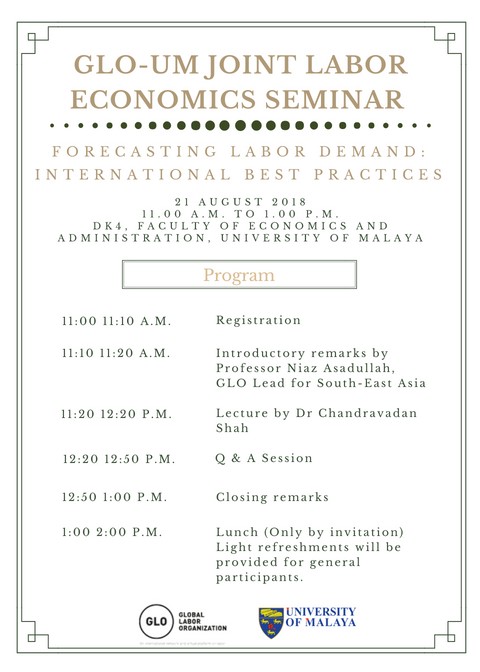
Joint GLO University of Malaya Seminar Series in Labor Economics Took Place in Kuala Lumpur.

On 21 August 2018 at the University of Malaya, Kuala Lumpur, Malaysia the Global Labor Organization (GLO) and the Faculty of Economics and Administration of the University of Malaya (UM) started an new joint seminar series:

The GLO-UM Joint Labor Economics Seminar

It is chaired by GLO Fellow Professor Niaz Asadullah in his function as the GLO Lead for South-East Asia. He is also the GLO Country Lead Malaysia. More information on the GLO South-East Asia Cluster.

The first speaker was GLO Fellow Dr Chandravadan Shah, who is an Adjunct Professor at the Centre for International Research on Education Systems (CIRES), Victoria University and Affiliate of Monash University in Australia.

GLO Fellow Shah spoke about

“Forecasting Labor Demand: International Best Practices”. 

FURTHER DETAILS.


From the left: Dr Kian-Ping Lim (Deputy Dean Research of the Faculty of Economics), the speaker of the day GLO Fellow Dr. Chandravadan Shah, and Niaz Asadullah (GLO Lead for South-East Asia and  GLO Country Lead Malaysia).

A well-attended event! On the microphone: University of  Malaya economist Dr VGR Chandran.


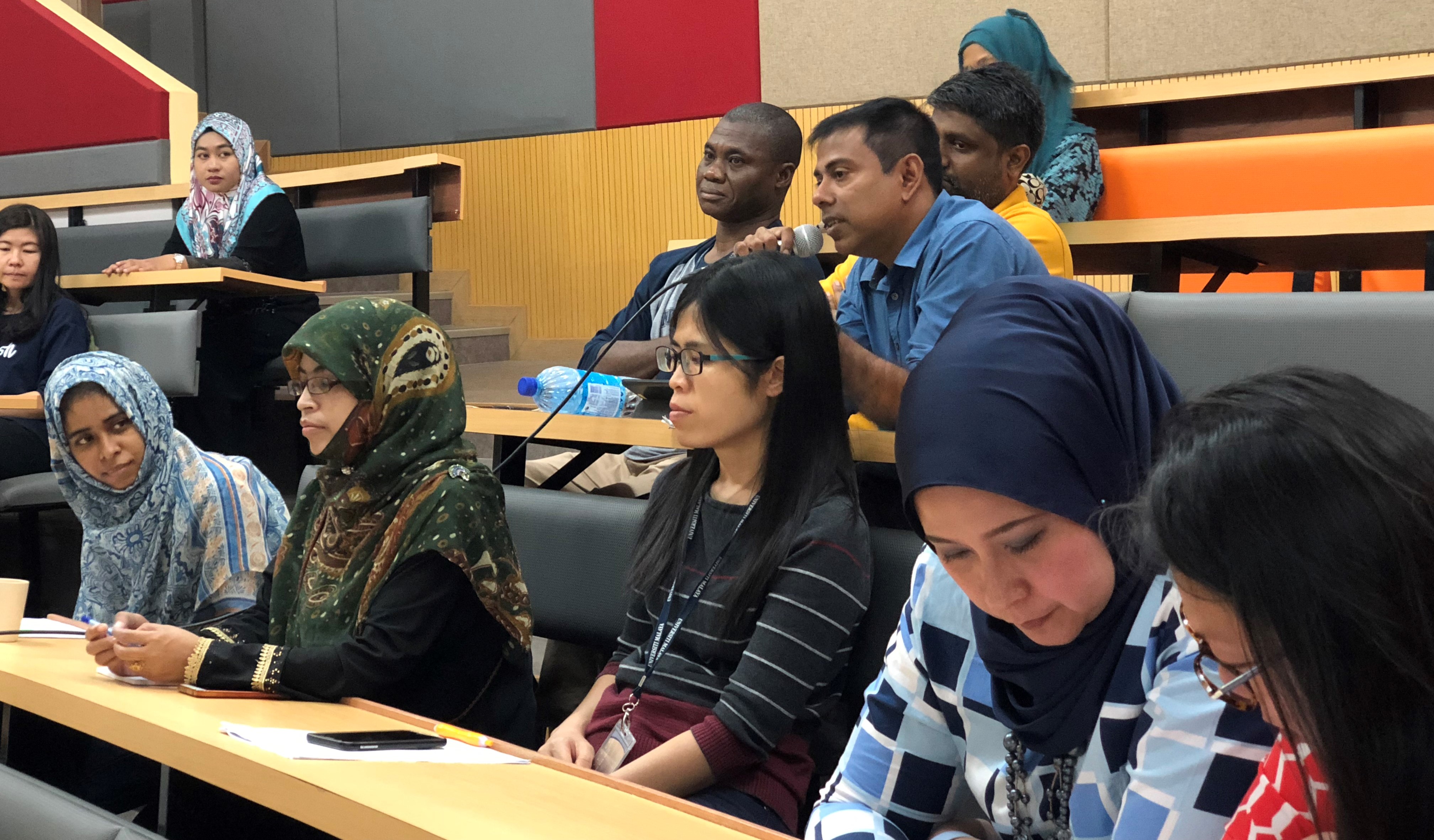
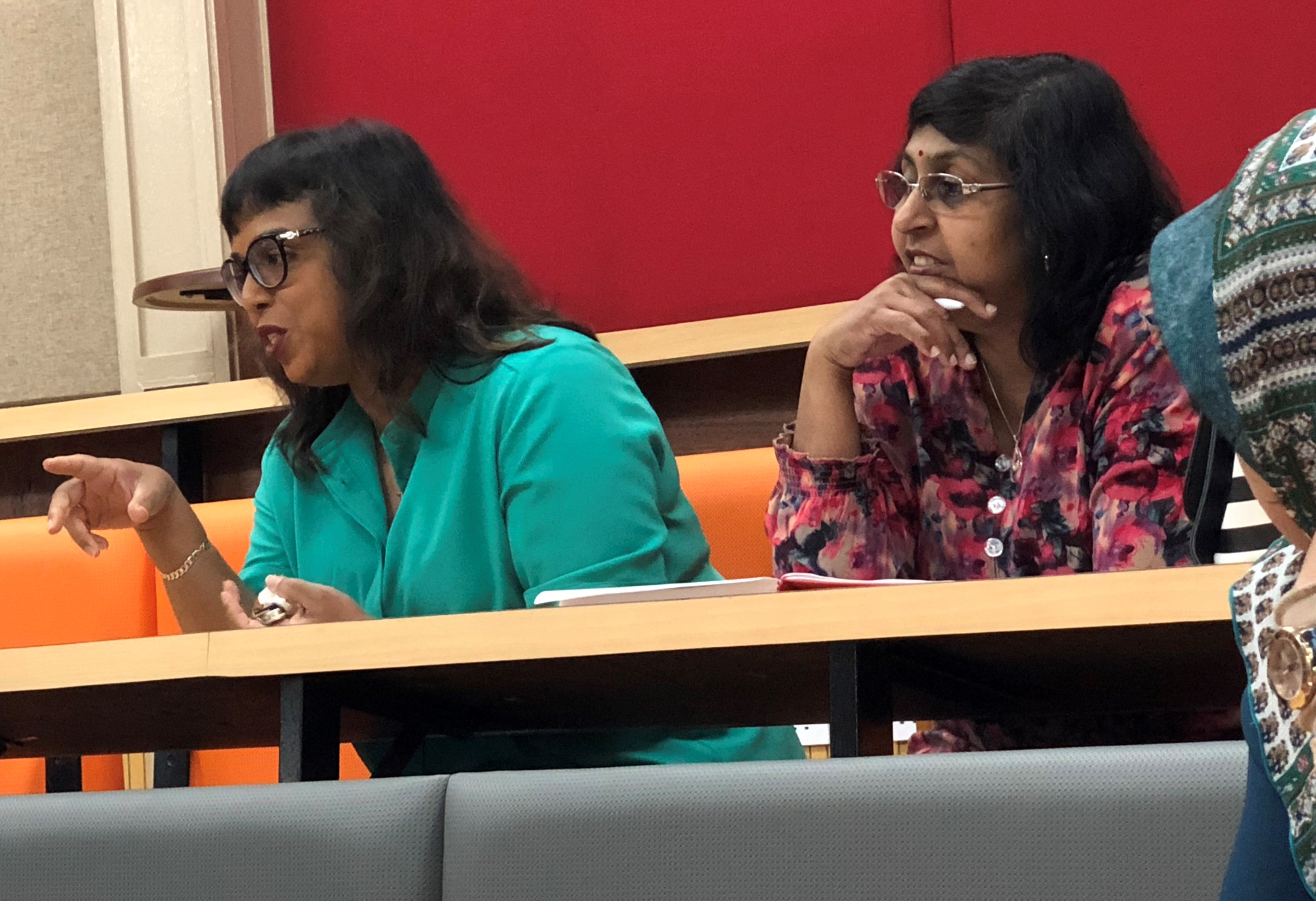
In the lively debate during the Q&A discussion session: picture features University of  Malaya economist Dr Evelyn Devadason, left.

Ends;

GLO research initiatives on “Sexual Orientation and Work” & “Gender-based Violence”

The GLO Cluster Gender, Gender Identity, Sexual Orientation and Labor Market Outcomes headed by GLO Cluster Lead Nick Drydakis focuses on the state of being man or woman (gender), which is typically used with reference to masculinity vs femininity rather than sex, the internal and personal conception of oneself as man or woman (gender identity), and sexual preferences (sexual orientation) and their effects on wages, employment levels, occupational sorting, and workplace evaluations. What is seen as gender-appropriate can change over time, and gender assumptions are interpolated by cultural, historical and regional location.

Image result for Nick Drydakis pictures

GLO Cluster Lead Nick Drydakis

Among a number of activities (MORE), the GLO Cluster has prepared:

  • A Call for papers for a special issue of the International Journal of Manpower  on: “Sexual Orientation and the Labor Market“. For Details.
  • A number of GLO Discussion Papers on “Gender-Based Violence“.

Gender – based violence is a very serious but under-researched issue.

Researchers affiliated with the Global Labor Organization (GLO) have now provided a number of scientific papers to respond to this challenge. Read the following abstracts of those contributions. Download and read the affiliated work.

GLO DP 171: A fuzzy approach to measuring violence against women and its severity – Download PDF
by Bettio, Francesca & Ticci, Elisa & Betti, Gianni

  • We develop a scale of severity of violence against women based on fuzzy set theory. The scale can be used to derive fuzzy indexes of violence which account for the prevalence, frequency and severity of violence. Using the results of the survey conducted by the European Agency for Human Rights (FRA) we find strong congruence of ranking between the proposed scale and three widely used alternatives – the Conflict Tactic Scale, The Severity of Violence Against Women Scale and the Index of Spouse Abuse. Unlike existing alternatives, however, the scale that we propose is based on objective information rather than subjective assessment; it is parsimonious in terms of the amount of information that it requires; and it is less vulnerable to risks of cultural bias. As an example of the uses to which fuzzy measurement of violence can be put, we compute fuzzy indexes of intimate partner violence for European countries and find a clear, inverse correlation across countries with the degree of gender equality.

GLO DP 109: Male Education and Domestic Violence in Turkey: Evidence from a Natural Experiment – Download PDF
by Özer, Mustafa & Fidrmuc, Jan

  • We utilize a natural experiment, an education reform increasing compulsory schooling from five to eight years in Turkey, to obtain endogeneity-robust estimates of the effect of male education on the incidence of abusive and violent behaviour against women. We find that husband`s education lowers the probability of suffering physical, emotional and economic violence. The only aspect of violence not affected by spouse`s education is sexual violence. Schooling also lowers the likelihood that the marriage was arranged against the woman`s will, and makes men less inclined to engage in socially unacceptable behaviours such as drinking, gambling, and drug abuse. We also find that women whose mothers or whose husbands’ mothers experienced domestic violence are more likely to suffer violence themselves.

GLO DP 107: Attitudes towards intimate partner violence against women in Latin America – Download PDF
by Bucheli, Marisa & Rossi, Máximo

  • In this paper we analyze the factors that explain attitudes towards intimate partner violence against women (IPVAW) in 23 countries in Latin America and the Caribbean (LAC). Analyses of IPVAW in LAC are relatively scarce although there is growing concern about this problem in the region. We aim to assess the effect of individual and country characteristics using data from common sources for all countries. This work contributes to the sparse literature dealing with methods that attempt to assess the effect of macro variables. We perform a two-step procedure. We first estimate a logit model at the individual level, we calculate a measure of relative approval of IPVAW at country level and we use this measure as a dependent variable to estimate the effect of macro variables. Our study finds that most LAC patterns at individual level are similar to the international ones: approval of IPVAW is higher among women, people in rural areas, people in a disadvantaged socio-economic situation and individuals with some particular cultural characteristics. Unlikely international evidence, attitudes do not differ between ages. Our findings at country level show that approval of IPVAW increases with poverty, fertility rate and equal gender outcomes. It decreases with internet access and, with a lesser degree of robustness, with the time elapsed since the enactment of women’s suffrage. The most novel contribution of our work is the study of the variables at country level.

GLO DP 96 Stigma of Sexual Violence and Womens Decision to Work – Download PDF
by Chakraborty, Tanika & Mukherjee, Anirban & Rachapalli,Swapnika Reddy &Saha, Sarani

  • Our study is motivated by two disturbing evidences concerning women in India. On one hand, crime against women is on the rise while on the other, women’s labor force participation rate (WLFPR) has been declining over the last three decades. We estimate the extent to which the decline in WLFPR can be assigned to increasing instances of crime against women. We argue that an increase in crime against women, increases the non-pecuniary costs of traveling to work, particularly in a traditional society marked by stigma against victims of sexual crimes. Our findings suggest that women are less likely to work away from home in regions where the perceived threat of sexual harassment against girls is higher. The estimate is robust to various sensitivity checks. Moreover, the deterrence effect of crime responds to the opportunity cost of work on one hand and the stigma cost of sexual crimes on the other.

GLO Discussion Papers
GLO Discussion Papers are research and policy papers of the GLO Network which are widely circulated to encourage discussion. Provided in cooperation with EconStor, a service of the ZBW – Leibniz Information Centre for Economics, GLO Discussion Papers are among others listed in RePEc (see IDEAS, EconPapers).

Complete list of all GLO DPs downloadable for free.

Ends;

Azita Berar Awad (previously ILO) joins GLO as Policy Director

Azita Berar Awad has been appointed GLO Policy Director of the Global Labor Organization (GLO). She had been previously the Director of the Employment Policy Department of the International Labour Organization (ILO).

Azita Berar Awad has been the Director of the Employment Policy Department of the ILO in the period 2006 – 2017, working for the institution since 1983. In this position, she was responsible for the development of ILO’s approach to promoting full, productive, decent and freely chosen employment. Since employment is one of the four strategic pillars of  ILO‘s decent work agenda, her task was crucial. She was also facilitating broad-based social dialogue processes and extensive capacity-building for employment policy, engaging governments and social partners (employers and workers organizations) in all regions of the world.

See MORE on the Featured Alumna of The Graduate Institute of International and Development Studies, Geneva.

As the GLO Policy Director, Azita Berar Awad will continue her mission to strengthen employment creation around the world by directing policy initiatives of the GLO network. Her rich experience and large network will help GLO to develop further and connect to the relevant international organizations.

Azita BERAR AWAD

GLO Policy Director Azita Berar Awad

Ends;

Asian Productivity Organization (APO) workshop on The Impact of Education Policies on National Productivity Growth Completed in Manila/Philippines

Global Labor Organization (GLO) Fellows led the recently completed Asian Productivity Organization (APO) Workshop on the impact of education policies on national productivity growth as experts on labor productivity.

The event took place at the Development Planning Academy (DAP) in Manila (Philippines) on 14 – 17 August 2018. The GLO Lead for South-East Asia, Professor Niaz Asadullah (Malaya University), was joined by three other fellows as resource persons. They were: Dr Chandra Shah (Monash University, Australia), Dr Franceso Pastore (Seconda Università di Napoli, Italy) and Dr Gyuhee Hwang (Korea Research Institute for Vocational Education and Training, South Korea).

The GLO Fellows discussed issues such as dual-track technical and vocational training programs, school to work transition, on the job training programs, modelling future labor demand, the race between man and machine and so on.

Below: GLO Lead for South-East Asia Niaz Asadullah (Malaya University)


Below: GLO Fellow Franceso Pastore (Seconda Università di Napoli, Italy)


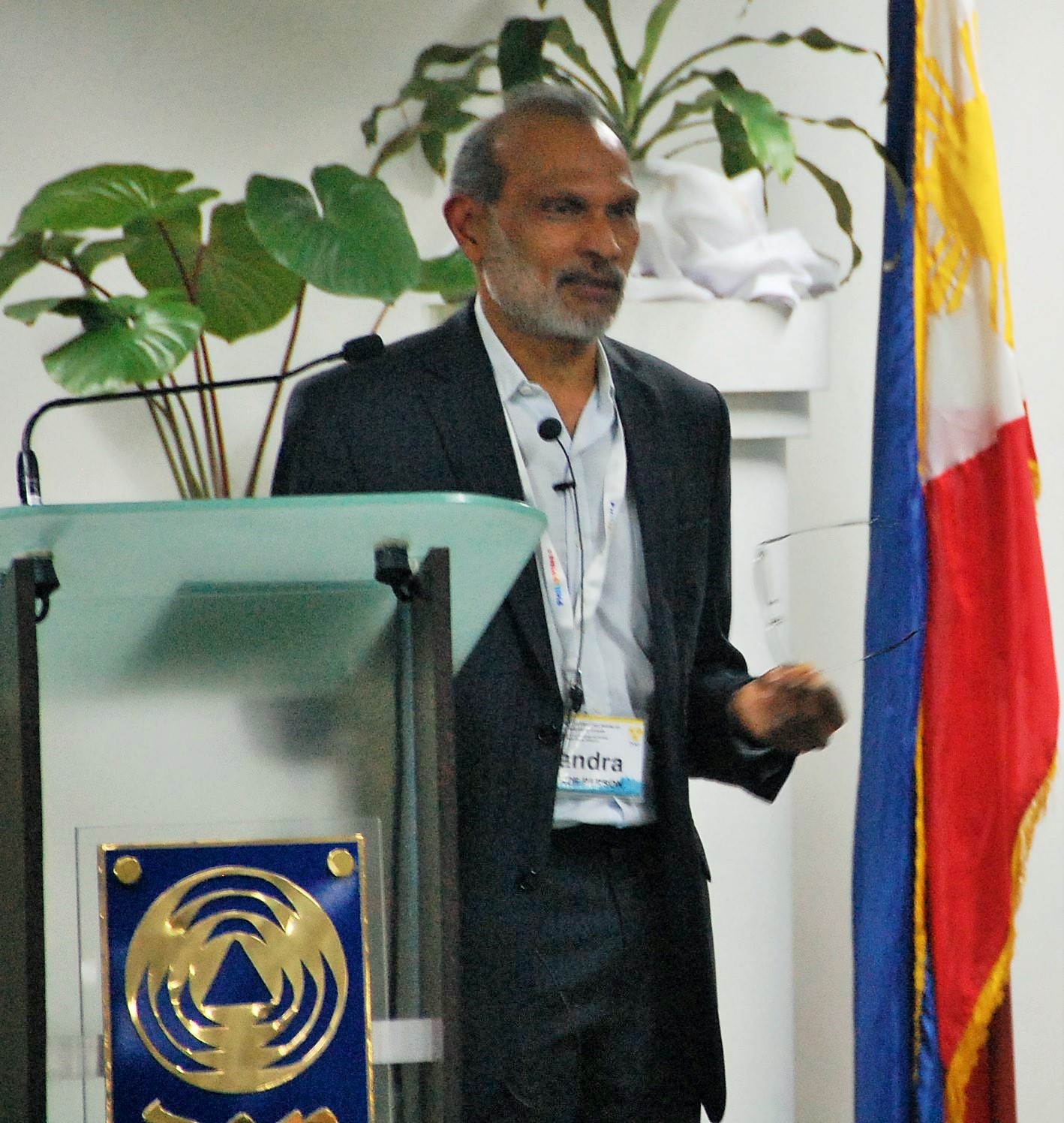
Below: GLO Fellow Chandra Shah (Monash University, Australia)


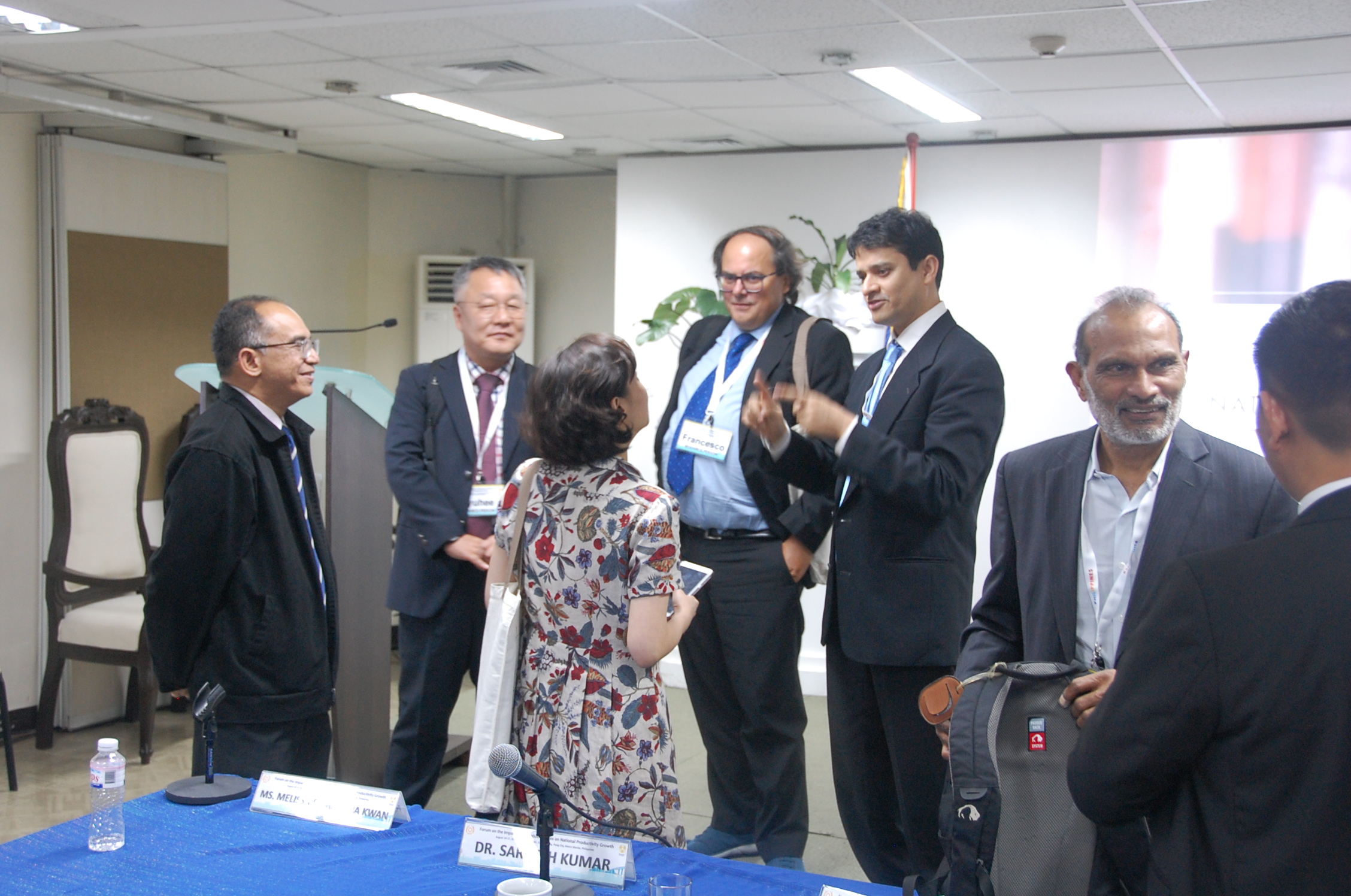
Below: GLO speakers in debate from the left GLO Fellow Gyuhee Hwang (Korea Research Institute for Vocational Education and Training, South Korea; #2), Pastore (#4), Asadullah (#5) and Shah (#6) .


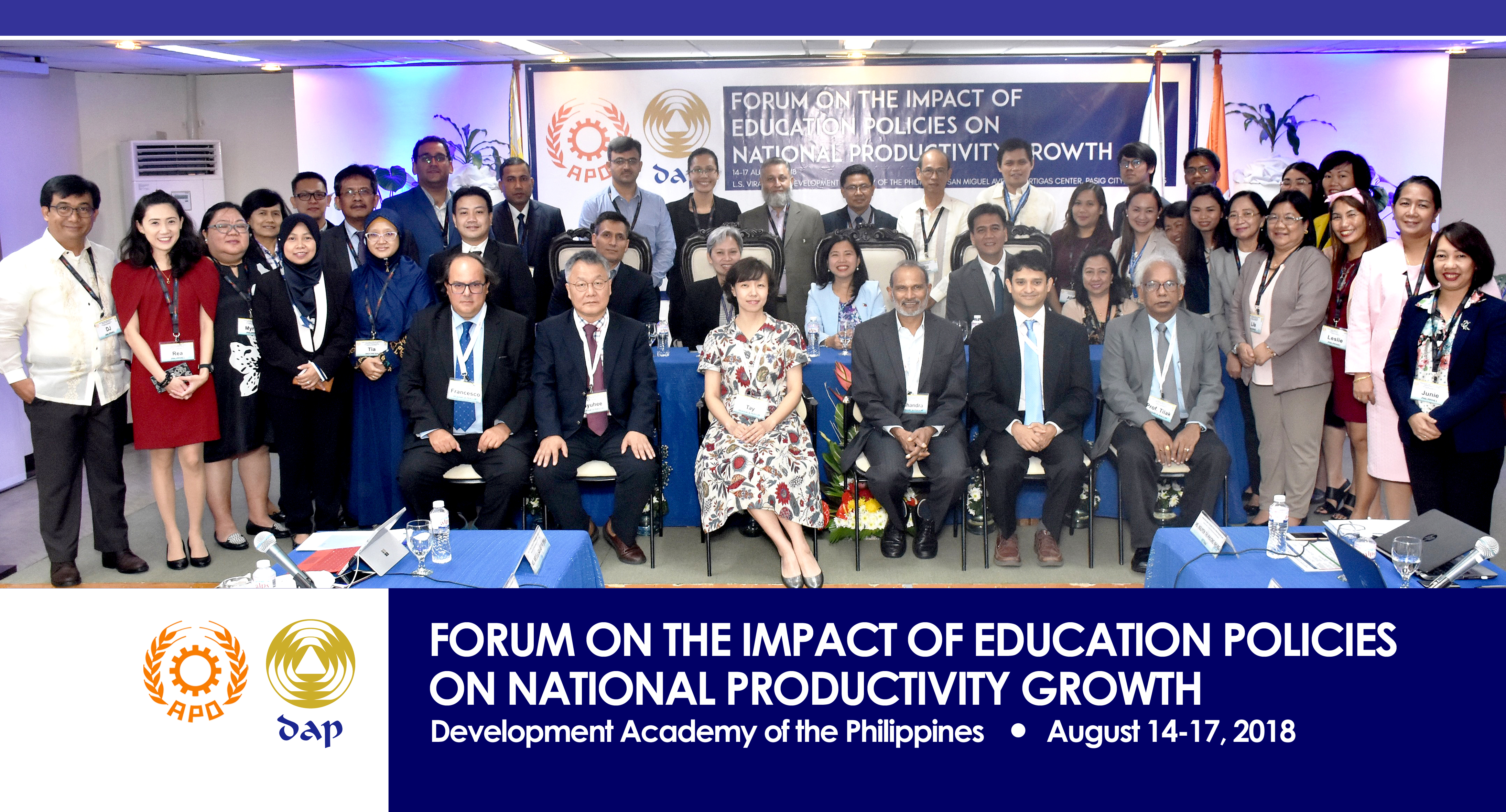
Below: All forum participants. GLO Fellows from the left sitting in the first row: Pastore (#1), Hwang (#2), Shah (#4) and Asadullah (#5).


Ends;

GLO – recommended Kent University Workshop: Employment and Wage Determination in European Labour Markets

On the suggestion of the organizers, the Global Labor Organization GLO is pleased to announce the Kent Workshop in Labour Economics organized at the University of Kent, Keynes College, Canterbury, Kent CT2 7NP, United Kingdom.

Employment and Wage Determination in European Labour Markets

Organizers: Amanda Gosling (University of Kent) & Andrey Launov (University of Kent & GLO)
Date: November 22, 2018
Location: University of Kent, Canterbury, UK

Call for Papers

The School of Economics at the University of Kent, Canterbury, UK, invites submissions for a one-day Kent Workshop in Labour Economics which will take place on November 22, 2018. The focus of the workshop will be on the changes in European labour markets over the last two decades. Topics of particular interest include, yet not limited to, the stagnation of real wages, the role of policies such as minimum wages and social security, employment and firm dynamics as well as changes to wage structure and inequality. Submission of descriptive papers and empirical papers on policy evaluations (reduced form or structural) is equally encouraged. Keynote speech of the workshop will be delivered by

Prof. Stephen Machin (London School of Economics).

The deadline for submissions is September 15, 2018. Authors of submitted papers will be notified of decision shortly thereafter. For submission, please send your paper as an email attachment to GLO Fellow Andrey Launov (a.launov@kent.ac.uk).

The University of Kent will provide accommodation and reimburse economy class travel expenses to all authors whose contributions were accepted for presentation at the workshop.

For more information please contact Amanda Gosling (a.gosling@kent.ac.uk) or Andrey Launov (a.launov@kent.ac.uk). Further details regarding the workshop are available.

The workshop is public and open to all.  GLO wishes this workshop the best success.

Ends;

GLO directed special issue of the International Journal of Manpower on: “Sexual Orientation and the Labor Market”

REMINDER: Call for papers for a special issue of the International Journal of Manpower  on: “Sexual Orientation and the Labor Market

Submissions will be accepted from now on until March 30, 2019. See also Call for Papers of the Journal.

Edited by

Nick Drydakis (Anglia Ruskin University, University of Cambridge, IZA, and GLO) and Klaus F. Zimmermann (UNU-MERIT, Maastricht University, CEPR and GLO)

An initiative of the Global Labor Organization (GLO), this project is related to the GLO Thematic Cluster on “Gender, Gender Identity, Sexual Orientation and Labor Market Outcomes” headed by Nick Drydakis.

Despite the enactment, in English speaking countries and the EU, of labor legislation against discrimination in the labor market based on sexual orientation, LGBTI (lesbian, gay, bisexual, trans and intersex) people continue to experience occupational access constraints, lower job satisfaction, wage discrimination (especially gay men), and more bullying and harassment than their heterosexual counterparts (Drydakis, 2014; Valfort, 2017).

Studies for the period 1989–2014 suggest that gay men receive lower wages than heterosexual men of comparable education, skills, and experience. For instance, studies find that gay men earn from 4–5% less than heterosexual men in the Netherlands, France, Greece, and the UK and up to 12–16% less in Canada, Sweden, and the US (Drydakis, 2014). Whether wage discrimination against gay men exists in other regions is of great interest and ascertaining this is of importance for policy interventions. In addition, whether wage discrimination lessens over time in response to policy interventions and legislation is hard to determine in the absence of relevant studies. It is not yet clear whether prejudice-based and/or statistical discrimination is the more appropriate framework for the study of labor discrimination against LGBTI people.

The available studies on sexual orientation and job satisfaction highlight that in Australia, Canada, and Greece, both gay men and lesbians experience lower job satisfaction than do their otherwise similar heterosexual counterparts (Drydakis, 2014). Because gay and lesbian employees face severe workplace harassment and bullying, these conditions may affect their workplace experience evaluations (Drydakis, 2014). Whether factors other than workplace harassment cause gay and lesbian employees’ dissatisfaction requires examination. Also, for instituting appropriate policy actions, it is important to determine whether these job satisfaction differences suffered by sexual orientation minorities exist in other countries.

In general, the dearth of studies makes it difficult to examine how education, occupation, industrial relations, region, core socio-economic characteristics, personality and mental health traits moderate the relationship between sexual orientation and labor market outcomes (Drydakis, 2014). Indeed, although studies suggest that lesbians face prejudice in the labor market, some studies estimate that lesbians earn more than comparable heterosexual women. Lesbians have been found to earn 3% more in the Netherlands, 8% more in the UK, 11% more in Germany, 15% more in Canada, and 20% more in the US. Whether personality characteristics, coping strategies, occupational choices, family structures and/or region positively affect lesbians’ wages is still an open question.

In addition, quantitative research on employment outcomes is scarce for trans people (Drydakis, 2017). A representative study suggests that trans people tend to suffer higher unemployment rates than those reported, in other studies, for the general U.S. population (Leppel, 2016). In addition, the interaction between trans identity, and sexual orientation, and the effects of this on employment outcomes is under-examined (Drydakis, 2017). Whether explicit, legislative employment protection against discrimination on the ground of a trans identity has an effect on employment outcomes has also received little attention (Drydakis, 2017).

Given the aforementioned lack of sufficient literature, the editors welcome empirical papers on labor economics which have a clear and highlighted added value, and solid policy implications, on the following general areas:

  • Testing, in under-examined geographical regions, for wage discrimination based on sexual orientation.
  • Empirically testing and disentangling the forms of employment discrimination (i.e. prejudice-based, and/or statistical discrimination) against LGBTI people.
  • Examining the relationship between sexual orientation, personality characteristics, mental health and employment outcomes.
  • Assessing how moderators (i.e. human capital, educational choices, occupations, family structure, industrial relations etc.) affect the relationship between sexual orientation and labor market outcomes.
  • Testing the relationship between sexual orientation, past/present victimization and labor market outcomes.
  • Quantifying the relationship between sexual orientation and job satisfaction.
  • Evaluating the impact of the legal recognition of same-sex couples on labor market outcomes.
  • Evaluating the impact of employment legislation against sexual orientation and trans identity discrimination on labor market outcomes.
  • Quantifying employment bias against trans people.
  • Examining the interaction between trans identities, sexual orientation and labor market outcomes.

Submissions will be accepted from now on until the 30th of March 2019. They should be made using ScholarOne Manuscripts, the online submission and peer review system: http://mc.manuscriptcentral.com/ijm. Before submission, please verify that you have carefully read the Author guidelines of the Journal. While making your submission, please specify the title of the current call for papers. See also the forthcoming call on the journal website.

Nick Drydakis (Anglia Ruskin University, University of Cambridge, IZA and GLO)

Image result for Nick Drydakis pictures

and Klaus F. Zimmermann (UNU-MERIT, Maastricht University, CEPR and GLO)

References:

Drydakis N. (2014). Sexual orientation and labor market outcomes. IZA World of Labor: 111. DOI: 10.15185/izawol.111

Drydakis N. (2017). Trans people, well-being, and labor market outcomes. IZA World of Labor: 386. DOI: 10.15185/izawol.386

Leppel, K. (2016). The labor force status of transgender men and women. International Journal of Transgenderism,  Vol. 17, No. (3−4), pp. 155−164.

Patacchini, E.; Ragusa, G.; Zenou, Y. (2015)
Unexplored dimensions of discrimination in Europe: homosexuality and physical appearance, Journal of Population Economics, Vol. 28, pp. 1045-1073.

Valfort, M. (2017). LGBTI in OECD countries: A review. OECD Social, Employment and Migration Working Papers, No. 198, OECD Publishing, Paris. DOI: 10.1787/d5d49711-en

Ends;

Submission Deadline is August 15! Conference on the Chinese labor market in Beijing on 20-21 October 2018

The School of Labor and Human Resources at Renmin University of China (Beijing) and the Global Labor Organization (GLO) announce the creation of a new conference series on issues related to the Chinese labor market. The first event will take place on 20 and 21 October 2018 at Renmin University of China, Beijing. Papers or long abstracts should be submitted by 15 August 2018 to renmin-glo@ruc.edu.cn. CONFERENCE FLYER

FOR FURTHER DETAILS SEE ALSO THE GLO WEBSITE.

Ends;

Climate Change and Human Responses: Joint FOM-GLO-KAS Conference in Hong Kong

A joint FOM-GLO-KAS Conference about “Climate Change and Human Responses” takes place on 31 October – 2 November 2018 in Hong Kong. The event is co-organized by the Global Labor Organization (GLO), FOM University of Applied Sciences and Konrad Adenauer Foundation (KAS).

Climate change is one of the biggest challenges of the 21st Century. It does not only have severe consequences for eco-systems, but also directly and indirectly affects societies and economies. The consequences for global production chains, output, labor markets and well-being will be massive. Rising sea levels, floods and droughts, changing agricultural patterns – tremendous economic losses and migration of labor force will lead to unforeseeable consequences on human well-being, public health, labor performance and productivity.

Mitigation and adaptation measures might have positive impacts on local and regional economies and labor markets – but with huge sector differences. Shifting from carbon-based economies to renewable ones create new sources of value and increase demand for skilled labor globally.

Against this background, the Global Labor Organization (GLO) and FOM University of Applied Sciences organize an international conference in cooperation with Konrad Adenauer Foundation (KAS) | Regional Project Energy Security and Climate Change Asia-Pacific to discuss these issues. The event will take place on October 31 – November 2 in Hongkong.

Organizers are Peter Hefele (KAS RECAP, Hongkong), Andreas Oberheitmann (FOM, RWI and GLO) and Klaus F. Zimmermann (UNU-MERIT, Maastricht University and GLO)

Participants are renowned researchers, politicians and entrepreneurs from Hongkong, Asia, Europe and the US. Speakers include:

  • Klaus F. Zimmermann, UNU-MERIT, Maastricht University and GLO: Climate Change: The Global Labor Challenge
  • Manfred Fischedick, Wuppertal Institute for Climate, Energy and Environment, Climate Change and (Basic) Industry: Options and related Chances and Challenges for a Green Transformation
  • Andreas Oberheitmann, FOM, RWI and GLO, Challenges of Climate Change for Coastal Regions and Cities: the Case of China
  • Almas Heshmati, Jönköping International Business School, Sogang University and GLO, What Can We Learn from Environmental Disasters for the Climate Change Challenges
  • Shuaizhang Feng, Jinan University and GLO, Climate Variability, Agricultural Productivity and Migration
  • Xi Chen, Yale University and GLO, Climate and Environmental Challenges to Health Capital
  • Christopher Parsons, The University of Western Australia and GLO, Climate Change and Migration, Exit, Voice and Loyalty: A Solution to the Immobility Paradox

Ends;

GLO Discussion Papers July 2018 & Discussion Paper of the Month

Titles and free access/links to GLO Discussion Papers

GLO Discussion Papers are research and policy papers of the GLO Network which are widely circulated to encourage discussion. Provided in cooperation with EconStor, a service of the ZBW – Leibniz Information Centre for Economics, GLO Discussion Papers are among others listed in RePEc (see IDEAS, EconPapers). Complete list of all GLO DPs downloadable for free.

GLO Discussion Paper of the Month: July

Goel, Deepti & Deshpande, Ashwini, 2018. “Social Identity and Perceived Income Adequacy,” GLO Discussion Paper No. 232, Global Labor Organization (GLO). FREE Download PDF

Abstract: Economists are increasingly interested in subjective well-being, but the economic literature on perceptions of income adequacy, which is one of the factors that shapes subjective well-being, is small. Our paper fills this lacuna in the literature. We utilize nationally representative data on perceptions of amounts considered as remunerative earnings from self-employment in India, and examine how these are shaped by social identity, namely, caste. We also investigate if institutional change such as the introduction of an employment guarantee scheme alters these perceptions. Finally, we examine the relationship between caste identity and actual earnings. We find that caste identity does shape both perceptions of income adequacy as well as actual earnings: lower-ranked groups perceive lower amounts as being remunerative, and also earn lower amounts. Further, the employment guarantee scheme alters self-perceptions differentially for different caste groups, but in more nuanced ways than our ex-ante beliefs.

GLO Discussion Papers of July 2018

235 Selling hope? A review of current youth unemployment initiatives in CairoDownload PDF
by Pettit, Harry

234 Defining and Measuring Workforce Development in the United States in a Post-Bipartisan EraDownload PDF
by Holland, Brian

233 Flexible Work Organization and Employer Provided Training: Evidence from German Linked Employer-Employee DataDownload PDF
by Campaner, Annika & Heywood, John S. & Jirjahn, Uwe

232 Social Identity and Perceived Income AdequacyDownload PDF
by Goel, Deepti & Deshpande, Ashwini

231 Drivers of Student Performance: Evidence from Higher Secondary Public Schools in DelhiDownload PDF
by Goel, Deepti & Barooah, Bidisha

230 Reflections on wage-settingDownload PDF
by Zimmermann, Klaus F.

229 Will you marry me? It depends (on the business cycle)Download PDF
by Bellido, Héctor & Marcén, Miriam

228 Immigration and the Health of Older Natives in Western EuropeDownload PDF
by Escarce, José J. & Rocco, Lorenzo

227 The Effects of Political Reservations on Credit Access and Borrowing Composition: New Evidence from IndiaDownload PDF
by Ao, Chon-Kit & Chatterjee, Somdeep

226 Self-Employment Can Be Good for Your HealthDownload PDF
by Nikolova, Milena

225 What Women Want (their men to do): Housework and satisfaction in Australian householdsDownload PDF
by Foster, Gigi & Stratton, Leslie S.

224 My Choice: Female Contraceptive Use Autonomy in BangladeshDownload PDF
by Blunch, Niels-Hugo

223 The Long-Run and Gender-Equalizing Impacts of School Access: Evidence from the First Indochina WarDownload PDF
by Dang, Hai-Anh H. & Hoang, Trung X. & Nguyen, Ha

M.M. (Magdalena) Ulceluse, PhD

GLO DP Team
Senior Editors:
Matloob Piracha (University of Kent) & GLO Klaus F. Zimmermann (UNU-MERIT, Maastricht University and Bonn University).
Managing Editor: Magdalena Ulceluse, University of Groningen. DP@glabor.org

Ends;


Submission deadline extended to October 1, 2018: 60th ISLE Annual Conference, 19-21 December 2018, Mumbai, India

The Global Labor Organization (GLO) supports the annual conference of the Indian Society of Labour Economics (ISLE) and the associated Indian Journal of Labour Economics. Both are partner institutions of the GLO.

CALL FOR PAPERS

60th ISLE Annual Conference, 19-21 December 2018, Mumbai, India
Conference Flyer ISLE 2018

The 60th Annual Conference of the Indian Society of Labour Economics (ISLE) will be held during 19-21 December 2018 in Mumbai, India, organized by the Indira Gandhi Institute of Development Research (IGIDR). The conference commemorates with the Diamond Jubilee year of the formation of ISLE.  Congratulations from GLO!

Conference Themes
– Emerging Labor Markets and Employment Challenges
– Inequality in Labor Markets and Wellbeing
– World of Work and Women

Submission of Papers:
– Submission deadline:  31 August 2018: EXTENDED TO OCTOBER 1, 2018.
– Submission details: Call for papers

GLO  intends to organize a special GLO session at this conference. Those GLO members interested to contribute to such a session are invited to contact GLO President Klaus F. Zimmermann (klaus.f.zimmermann@gmail.com) with ideas or preliminary paper titles.

INDIAN SOCIETY OF LABOUR ECONOMICS (ISLE)   

Ends;
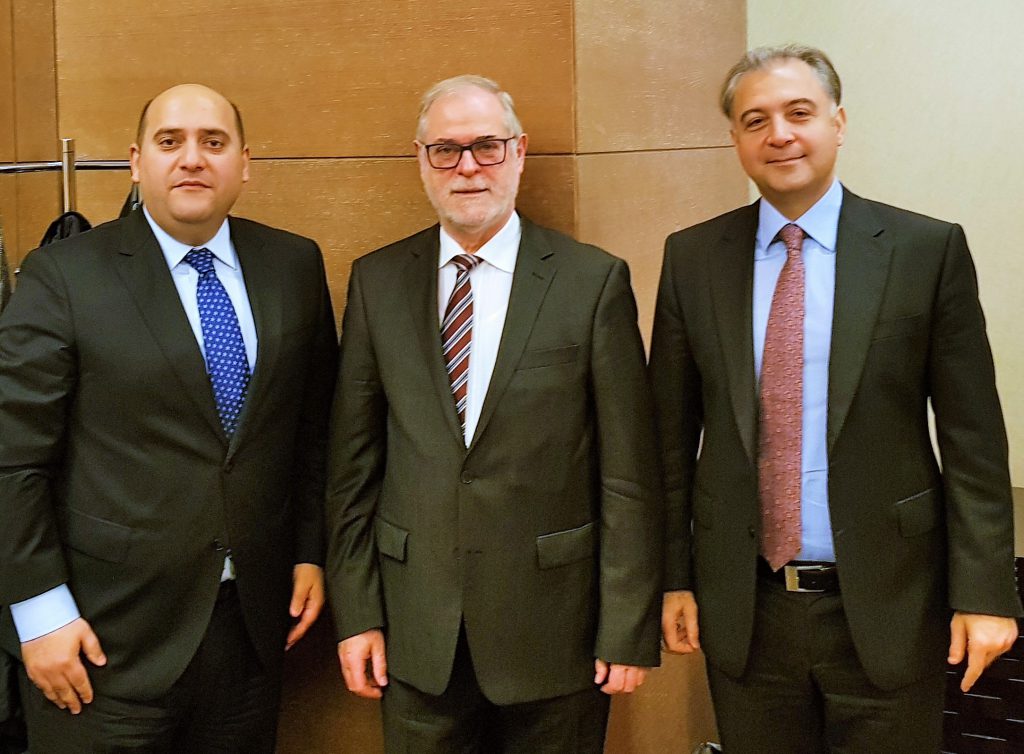
GLO – UM Joint Seminar at the University of Malaya, Kuala Lumpur, Malaysia, on August 21, 2018

21 August 2018 at the University of Malaya, Kuala Lumpur, Malaysia.The Global Labor Organization (GLO) and the Faculty of Economics and Administration of the University of Malaya (UM) start an new joint seminar series:

The GLO-UM Joint Labor Economics Seminar

It is headed by GLO Fellow Professor Niaz Asadullah in his function as the GLO Lead for South-East Asia. He is also the GLO Country Lead Malaysia.

The first speaker will be GLO Fellow Dr Chandravadan Shah, who is an Adjunct Professor at the Centre for International Research on Education Systems (CIRES), Victoria University and Affiliate of Monash University in Australia. He will speak about “Forecasting Labor Demand: International Best Practices”.  For further details see below.

PDF of this agenda: GLO-UM Program

PDF of this flyer: GLO-UM Joint Seminar

GLO Fellow Professor Niaz Asadullah in his function as the GLO Lead for South-East Asia heading the new GLO-UM Joint Labor Economics Seminar in Kuala Lumpur, Malaysia.

Ends;

GLO Fellows Wim Naudé & Alessio J. G. Brown with GLO President Zimmermann at UNU-MERIT annual internal research conference

Klaus F. Zimmermann, Co-Directors of POP at UNU-MERIT, Maastricht University and President of the Global Labor Organization (GLO), participated on June 26 – 28, 2018 at the UNU-MERIT Internal Conference 2018 and discussed with colleagues recent research activities. Zimmermann presented two papers:

  • Migration Policy as Development and Innovation Policy (with GLO Fellows Alessio J. G. Brown and Marco Vivarelli)
  • Evaluating Intergenerational Persistence of Economic Preferences: A Large Scale Experiment with Families in Bangladesh (with GLO Fellows Shyamal Chowdhury and Matthias Sutter)

and acted as a discussant of

  • Racky Balde (UNU-MERIT): The Eff ects of a Tougher Regulation of the Informal Sector: Evidence from South Africa

Zimmermann presenting paper on economic preference formation.
(Picture courtesy of GLO Fellow Franziska Gassmann, UNU-MERIT.)

At this important event, GLO – Fellow Wim Naudé, Maastricht University, and GLO Cluster Lead “Occupations and Development” presented his paper “Start-Up Accelerators as Tool to Facilitate Adaptation to Climate Change in Developing Countries: A Critical Assessment”:

Wim Naudé speaking.

Naudé and Zimmermann after a discussion of research & GLO issues in front of UNU-MERIT.

Klaus F. Zimmermann also met and spoke with GLO Fellow Alessio J. G. Brown, Co-Director of POP at UNU-MERIT and Maastricht University about long-term GLO strategies and their joint research paper with GLO Fellow Marco Vivarelli.

Ends;
EBES and GLO confirm long-term collaborations between both organizations

On July 15, 2018, representatives of the Eurasia Business and Economics Society (EBES) and the Global Labor Organization (GLO) have signed a Memorandum of Understanding (MOU) about establishing a long-term collaboration on educational and research activities between both organizations. Among other issues, the cooperation will include the exchange of academic documents, the organization of events, joint publications and other means to foster research. For instance, GLO intends to organize sessions at the May 29-31, 2019 EBES conference in Coventry, UK following the very successful experiences of a first joint event organized in May 2018 in Berlin. The MOU has been signed by EBES Vice President Mehmet Huseyin Bilgin and GLO President Klaus F. Zimmermann.


Mehmet Huseyin Bilgin (right) and Klaus F. Zimmermann (left) with FOM Head Berlin Manuela Zipperling at the May 2018 joint EBES-FOM-GLO conference in Berlin.

Ends;
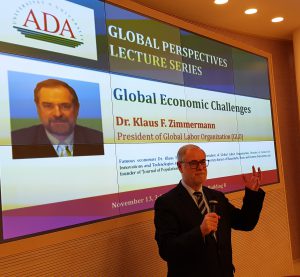
New GLO Discussion Paper investigates how life satisfaction of couples relates to the allocation of housework between them.

Does a fairer allocation of housework make her feel better? A new research paper by Gigi Foster (University of New South Wales) and Leslie S. Stratton (Virginia Commonwealth University) on housework is just freely available as a Global Labor Organization (GLO) Discussion Paper. A core finding of the study is that “when he exceeds housework norms, she is happier with housework allocations, but is less happy in broader dimensions.”

Foster, Gigi & Stratton, Leslie S. (2018) : What Women Want (their men to do): Housework and satisfaction in Australian households, GLO Discussion Paper, No. 225. PDF Free Download.

Abstract: The time allocated to household chores is substantial, with the burden falling disproportionately upon women. Further, social norms about how much housework men and women should contribute are likely to influence couples’ housework allocation decisions and satisfaction. Using Australian data spanning the years 2001-2014, we employ a two-stage estimation procedure to examine how deviations from housework norms relate to couples’ satisfaction. We find that satisfaction is negatively affected by predicted housework time, and that women’s satisfaction, but not men’s, is robustly affected by their partners’ residual housework time. When he exceeds housework norms, she is happier with housework allocations, but less happy in broader dimensions. We suggest several reasons for our results, including that housework is more salient in women’s lives than in men’s, that housework in general is not a preferred activity, and that some degree of gender-norm conformity in regard to housework can positively affect women’s life satisfaction.

Titles and free access/links to GLO Discussion Papers

GLO Discussion Papers are research and policy papers of the GLO Network which are widely circulated to encourage discussion. Provided in cooperation with EconStor, a service of the ZBW – Leibniz Information Centre for Economics, GLO Discussion Papers are among others listed in RePEc (see IDEAS, EconPapers). Complete list of all GLO DPs downloadable for free.

GLO DP Team
Senior Editors:
Matloob Piracha (University of Kent) & GLO Klaus F. Zimmermann (UNU-MERIT, Maastricht University and Bonn University).
Managing Editor: Magdalena Ulceluse, University of Groningen. DP@glabor.org

M.M. (Magdalena) Ulceluse, PhD

Ends;
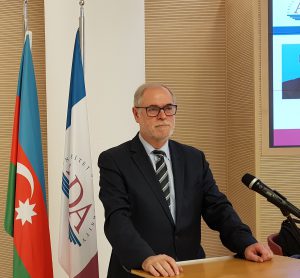
Special issue on hiring discrimination edited by GLO Fellows

A special issue of the International Journal of Manpower on “Hiring Discrimination” has just been published under the editorship of three Fellows of the Global Labor Organization (GLO).

***Special Issue on Hiring Discrimination***

GLO Fellows Nick Drydakis, Stijn Baert, and Magnus Carlsson are delighted to publish a collection of papers on “Hiring Discrimination: Measures, Moderators and Mechanisms” in the International Journal of Manpower (Volume 39, Issue 4). Many of the papers are related to the GLO Thematic Cluster on “Gender, Gender Identity, Sexual Orientation and Labor Market Outcomes” headed by Nick Drydakis as GLO Cluster Lead.

The papers offer new patterns in the study of hiring discrimination and employment bias. Innovative primary field experiments, literature reviews on field experiments, scenario experiments and wage studies are provided from a most interesting sample of countries including Belgium, China, Czech Republic, France, the GCC, Sweden and the UK.

The Special Issue examines a plethora of characteristics that might entail favorable or adverse treatments in the labor market. How transgenderism, attractiveness, masculine and feminine personality traits, ethnicity, labor market history, neighborhood signalling effects, commuting time, firm size, marital status, and parental leave length affect the hiring stage and individuals’ employment prospects are explored and evaluated through the lens of economic theory.

The papers report several statistically significant patterns which might create a fruitful discussion in the research field. For instance, the papers suggest that: (a) hiring prospects might be negatively affected by a part-time profile for men, living in a deprived neighborhood for ethnic minorities, commuting time, spells of unemployment for married women, transgenderism for women; and (b) hiring prospects might be positively affected by attractiveness, high quality profiles after a short parental leave for women, and masculine personality traits for women.

Nick DrydakisStijn BaertProfilbild

GLO Cluster Lead Nick Drydakis (left) and GLO Fellows Stijn Baert and Magnus Carlsson

RELATED LITERATURE (open access):

GLO Discussion Paper No. 176: Economic Pluralism in the Study of Wage Discrimination: A Note – Download PDF
by Drydakis, Nick

GLO Discussion Paper No. 175: Public Opinion and Immigration: Who Favors Employment Discrimination against Immigrants? – Download PDF
by Cooray, Arusha & Marfouk, Abdeslam & Nazir, Maliha

GLO Discussion Paper No. 173: The Signal of Applying for a Job Under a Vacancy Referral Scheme – Download PDF
by Van Belle, Eva & Caers, Ralf & De Couck, Marijke & Di Stasio, Valentina & Baert, Stijn

GLO Discussion Paper No. 115: Why Is Unemployment Duration a Sorting Criterion in Hiring? – Download PDF
by Van Belle, Eva & Caers, Ralf & De Couck, Marijke & Di Stasio, Valentina & Baert, Stijn

GLO Discussion Paper No. 103: Inclusive recruitment? Hiring discrimination against older workers – Download PDF
by Drydakis, Nick & MacDonald, Peter & Bozani, Vasiliki & Chiotis, Vangelis

GLO Discussion Paper No. 61: Hiring Discrimination: An Overview of (Almost) All Correspondence Experiments Since 2005 – Download PDF
by Baert, Stijn

GLO Discussion Paper No. 2: Hiring a Homosexual, Taking a Risk? A Lab Experiment on Employment Discrimination and Risk AversionDownload PDF
by Baert, Stijn

Annabelle Krause
Ulf Rinne
Klaus F. Zimmermann
Anonymous Job Applications in Europe
IZA Journal of European Labor Studies, 1:5 (2012)
Annabelle Krause
Ulf Rinne
Klaus F. Zimmermann
Anonymous Job Applications of Fresh Ph.D. Economists
Economics Letters, 117 (2012), pp. 441-444

Ends;
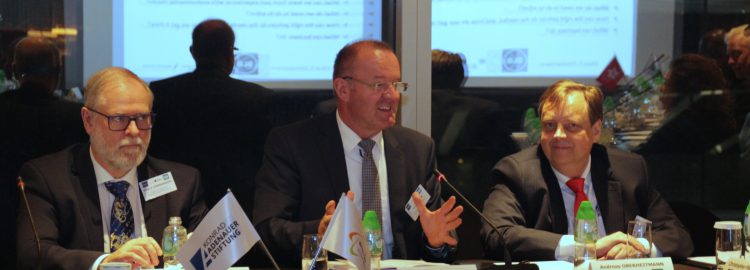
 

WISE Labor Conference at Xiamen University, China, on the 8-9 December 2018 with GLO participants

Since years, the Wang Yanan Institute for Studies in Economics (WISE), Xiamen University, China, is organizing an International Symposium on Contemporary Labor Economics together with the Institute for Economic and Social Research (IESR) of Jinan University, and the Department of Economics of the Chinese University of Hong Kong. The purpose of this Symposium is to facilitate the exchange of ideas between Chinese and international scholars on labor economics.

In 2018, the event takes place on December 8-9. The CALL FOR PAPERS is now available. Those interested in participating should submit their papers at http://www.wise.xmu.edu.cn/meetings/LABOR2018. The submission deadline is October 15, 2018.

Klaus F. Zimmermann, President of the Global Labor Organization (GLO) will support the event as one of the keynote speakers. He has provided lectures before at Xiamen University in 2006 and 2009; 2006 together with Richard Freeman and Junsen Zhang at the first 2006 International Symposium on Contemporary Labor Economics.
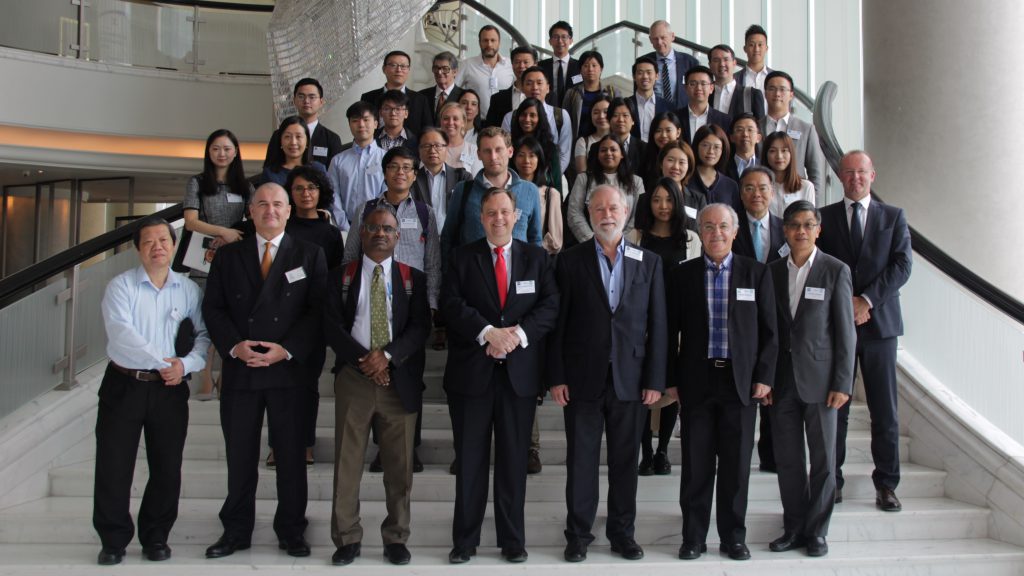
The eminent keynote speakers of this year are:

  •         Richard Freeman (Harvard University)
  •         Paola Giuliano (University of California, Los Angeles)
  •         Carsten Holz (Hong Kong University of Science and Technology)
  •         Craig McIntosh (University of California, San Diego)
  •         Paul Oyer (Stanford University)
  •         Junsen Zhang (Chinese University of Hong Kong)
  •         Klaus F. Zimmermann (Global Labor Organization, UNU-MERIT & Maastricht University )

Junsen Zhang and Paola Giuliano are also GLO Fellows.

Ends;

Challenges for European Integration: Monetary, Fiscal and Labor Issues Discussed at Conference in Linz/Austria

Jens Weidmann of the German Bundesbank provided a keynote lecture. Klaus F. Zimmermann of the Global Labor Organization (GLO) spoke in a panel on social cohesion and labor mobility.

The 45th Economics Conference of the Oesterreichische Nationalbank (OeNB) with the Austrian Federal Economic Chamber (WKO) took place on July 5, 2018 – July 6, 2018 in Linz/Austria.

The event was entitled

“Economic and Monetary Union – Deepening and Convergence”.

The most prominent keynote speaker of the first afternoon was Jens Weidmann of the German Bundesbank followed by three panel sessions. Klaus F. Zimmermann (UNU-MERIT and Maastricht University), who is also the President of the Global Labor Organization (GLO), spoke about the role of labor mobility for social cohesion.

“Amid formidable challenges, Europe’s future depends not least on the capacity of its economies to converge toward their best performing peers. The conference at the start of the Austrian EU Presidency analyzed which dimensions matter most for the smooth functioning of Economic and Monetary Union (EMU) and for the convergence of Central, Eastern and Southeastern European (CESEE) countries. The conference shed light on economic, social and territorial cohesion as enshrined in the EU Treaty. Experts from academia, business and politics debated how to prevent economic dispersion, promote deeper integration and ensure sustainable East-West and South-North convergence. They discussed the viability of the institutional framework, deepening of EMU, assessed the Commission’s recent proposals, looked into EU structural and cohesion policies and explored both the potential and policy challenges for CESEE.”

Klaus F. Zimmermann, Angela Pfister & Thomas Liebig — the panelists on social cohesion and migration.

Angela Pfister works for the Austrian Trade Union Federation (ÖGB).

Thomas Liebig (OECD) is a also a Fellow of the Global Labor Organization (GLO).

As Klaus F. Zimmermann argued in his presentation, “Labor mobility is about cooperating in societies or between societies in order to survive and prosper. Hence, migration does not have to be in conflict with social cohesion. Furthermore, it:
►supports the optimal allocation of resources,
►leads to balanced adjustments to asymmetric shocks,
►fights temporary scarcity and deals with shared long-term needs,
►is an indicator of solidarity (see the current “refugee” debate in Europe and the mobility concerns), and
►is of central importance for all countries in the monetary union like the Eurozone.”

Thomas Liebig is co-author of a prominent recent research paper that documents how economies in Europe and the United States have adjusted to asymmetric shocks in the recent Great Recession. It has been the GLO Discussion Paper of the Month in February 2018 and is forthcoming in the Journal of Population Economics.

Jauer, Julia & Liebig, Thomas & Martin, John P. & Puhani, Patrick A., Migration as an adjustment mechanism in the crisis? A comparison of Europe and the United States 2006-2016,  GLO Discussion Paper 178, February 2018. Free download.

Abstract: We estimate whether migration can be an equilibrating force in the labor market by comparing pre-and post-crisis migration movements at the regional level in both Europe and the United States, and their association with symmetric labor market shocks. Based on fixed-effects regressions using regional panel data, we find that Europe’s migratory response to unemployment shocks was almost identical to that recorded in the United States after the crisis. Our estimates suggest that, if all measured population changes in Europe were due to migration for employment purposes – i.e. an upper-bound estimate – up to about a quarter of the asymmetric labor market shock would be absorbed by migration within a year. However, in Europe and especially in the Eurozone, the reaction to a very large extent stems from migration of recent EU accession country citizens as well as of third – country nationals.

See also a recent debate about internal labor mobility in Europe and Austria.

***********************************************************************
From the program of July 5, 2018:

Keynote lecture:
Deepening EMU – Political Integration and Economic Convergence

Jens Weidmann
President, Deutsche Bundesbank

……….
Panel: Social Cohesion – The Role of Labour Mobility
Chair:
Kurt Pribil
Executive Director, Oesterreichische Nationalbank
Panelists:
Thomas Liebig, Senior Migration Specialist, OECD
Angela Pfister, Economic Expert, Austrian Trade Union Federation (ÖGB)
Klaus F. Zimmermann, President | Professor
Global Labor Organization (GLO) | Maastricht University | UNU-MERIT

………

For a link to the Full Program click Program on this page.
******************************************************************************************

Ends;

GLO members visited the Swedish Collegium for Advanced Study in Uppsala

GLO Fellow Maria Paradiso and Klaus F. Zimmermann, President of the Global Labor Organization (GLO) both visited the Swedish Collegium for Advanced Study in Uppsala to participate at the annual Class Meeting of the section chairs of Social and Related Sciences (Class A2) of the Academia Europea (AE), the European Academy. The Class Meeting discussed nominations for membership and the future academic work of the class.

GLO Fellow Professor Maria Paradiso is Section Chair of the Section Social Sciences of the Academia Europea (AE) and also affiliated with the University of Sannio, Italy.

GLO President Professor Klaus F. Zimmermann is Section Chair of the Section Economics, Business and Management Sciences of the Academia Europea (AE) and also affiliated with UNU-MERIT & Maastricht University, The Netherlands.

After the Uppsala meeting: Maria Paradiso and Klaus F. Zimmermann at Frankfurt airport changing flights. Both had discussed ways to intensify collaborations between their AE Sections and about research related to their joint research area, migration, including GLO business.

The AE is the Academy of Europe, and the sections of Class A2 are (i) Behavioural Sciences, (ii) Social Sciences, (iii) Economics, Business and Management Sciences and (iv) Law with the respective chairs Ulrich Teichler (University of Kassel, representing Peter Scott), Maria Paradiso, Klaus F. Zimmermann and Dagmar Coester-Waltjen (University of Göttingen). The event was led by Class Chair Björn Wittrock  of the Swedish Collegium for Advanced Study in Uppsala, who also acted as the local host. The Class Meeting discussed nominations for membership and the future academic work of the class.

From the left: Ulrich Teichler, Björn Wittrock, Maria Paradiso, Klaus F. Zimmermann and Dagmar Coester-Waltjen.

From the right: Ulrich Teichler, Dagmar Coester-Waltjen, Maria Paradiso and Klaus F. Zimmermann  in front of the Swedish Collegium for Advanced Study in Uppsala.

Many prominent GLO Fellows are elected distinguished members of the Acedemia Europaea.

Examples are: Lucian Liviu Albu, Torben Andersen, Graziella Bertocchi, Amelie Constant, Partha Dasgupta, Manfred Deistler, Peter Dolton, Gustav Feichtinger, Stepan Jurajda, Martin Kahanec, Kai Konrad, Andreu Mas-Colell, Peter Nijkamp, Karine Nyborg, Jacques Poot, Mirjana Radovic-Markovic, Nina Smith, Rick van der Ploeg, Thierry Verdier, Reinhilde Veugelers, Marie Claire Villeval, Rainer Winkelmann, and Yves Zenou.

GLO and AE have collaborated in various ways, e.g. supporting Central European University (CEU) in Budapest in 2017.

# I stand with CEU! GLO Fellows and Academicians expressed their solidarity at CEU in Budapest

“The Scientist and Policy Making”: MAE & GLO Economists in Budapest

Central European University (CEU) under threat


Over 2015 – 2017, GLO President Klaus F. Zimmermann had hosted the Social and Related Sciences (Class A2) of the Academia Europea (AE) annual Class Meeting in Bonn, twice at his private home, and 2015 at the Institute for the Study of Labor (IZA).

The Section Chairs of Class 2 of the Academia Europaea (AE) met on July 13 – 14, 2015, at the Institute for the Study of Labor (IZA) in Bonn to discuss joint initiatives including the nominations of new AE members.

Zimmermann_Group_2015_small.jpg

The picture has (from the left) Peter Scott, Antoine Bailly, Anne Buttimer (+), Joseph Straus, Aleksandra Nowak, and Klaus F. Zimmermann representing the sections (i) Behavioural Sciences, (ii) Social Sciences, (iii) Economics, Business and Management Sciences, and (iv) Law.

Ends;

GLO Discussion Papers June 2018 & Discussion Paper of the Month

Titles and free access/links to GLO Discussion Papers

GLO Discussion Papers are research and policy papers of the GLO Network which are widely circulated to encourage discussion. Provided in cooperation with EconStor, a service of the ZBW – Leibniz Information Centre for Economics, GLO Discussion Papers are among others listed in RePEc (see IDEAS, EconPapers). Complete list of all GLO DPs downloadable for free.

GLO Discussion Paper of the Month: June

Giuntella, Osea & Mazzonna, Fabrizio & Nicodemo, Catia & Vargas-Silva, Carlos, 2018. “Immigration and the Reallocation of Work Health Risks,” GLO Discussion Paper No. 215, Global Labor Organization (GLO). PDF Free Download. Forthcoming: Journal of Population Economics

Abstract: This paper studies the effects of immigration on the allocation of occupational physical burden and work injury risks. Using data for England and Wales from the Labour Force Survey (2003-2013), we find that, on average, immigration leads to a reallocation of UK-born workers towards jobs characterized by lower physical burden and injury risk. The results also show important differences across skill groups. Immigration reduces the average physical burden of UK-born workers with medium levels of education, but has no significant effect on those with low levels. We also find that that immigration led to an improvement of self-reported measures of native workers’ health. These findings, together with the evidence that immigrants report lower injury rates than natives, suggest that the reallocation of tasks could reduce overall health care costs and the human and financial costs typically associated with workplace injuries.

GLO Discussion Papers of June 2018

222 Ageing, the socioeconomic burden, labour market and migration. The Chinese case in an international perspectiveDownload PDF
by Bruni, Michele

221 Gender and climate change: Do female parliamentarians make a difference?Download PDF
by Mavisakalyan, Astghik & Tarverdi, Yashar

220 Unemployment and Marital Breakdown: The Spanish Case – Download PDF
by González-Val, Rafael & Marcén, Miriam

219 Self-employment as a stepping stone to better labour market matching: a comparison between immigrants and natives – Download PDF
by Ulceluse, Magdalena

218 The Role of Human Capital Resources in East African Economies – Download PDF
by Urgaia, Worku R

217 The role of conflict in sex discrimination: The case of missing girls – Download PDF
by Mavisakalyan, Astghik & Minasyan, Anna

216 A parsimonious model of longevity, fertility, HIV transmission and development – Download PDF
by Gori, Luca & Manfredi, Piero & Sodini, Mauro

215 Immigration and the Reallocation of Work Health Risks – Download PDF
by Giuntella, Osea & Mazzonna, Fabrizio & Nicodemo, Catia & Vargas-Silva, Carlos

214 R&D, Embodied Technological Change and Employment: Evidence from Spain – Download PDF
by Pellegrino, Gabriele & Piva, Mariacristina & Vivarelli, Marco

M.M. (Magdalena) Ulceluse, PhD

GLO DP Team
Senior Editors:
Matloob Piracha (University of Kent) & GLO Klaus F. Zimmermann (UNU-MERIT, Maastricht University and Bonn University).
Managing Editor: Magdalena Ulceluse, University of Groningen. DP@glabor.org

Ends;


International Conference in Berlin: Highlights of EBES25 with GLO & FOM in Berlin

The 25th Conference of the Eurasia Business and Economics Society (EBES) took place on May 23-25, 2018 in Berlin/Germany. It was jointly organized with the Global Labor Organization (GLO) and hosted by the FOM University of Applied Sciences in their Berlin study center. During the conference, 316 papers by 525 researchers from 60 countries were presented. The event is part of a long-term partnership of GLO & EBES and GLO & FOM.

THE FULL CONFERENCE PROGRAM CAN BE ACCESSED HERE.

Further information can be found here: Conference call; EBES Fellow Award; GLO Activities.

This post reports some highlights by presenting a few selected pictures.

Welcome! And “Thank You!” for a perfect local organization: Professor and GLO Fellow Manuela Zipperling (Head of FOM Berlin) receives the “EBES thank you plate” presented by Professor and GLO Fellow Mehmet Huseyin Bilgin (Vice President of EBES and Istanbul Medeniyet University, Istanbul) (right) and assisted by GLO President Klaus F. Zimmermann (left).

GLO President Professor Klaus F. Zimmermann (UNU-MERIT, Maastricht, from the left) addressed the large audience, and Manuela Zipperling (Head of FOM Berlin),  Aylin Akin (Assistant Editor of the EBES Journals), Mehmet Huseyin Bilgin (Vice President of EBES and Istanbul Medeniyet University, Istanbul) and Professor and GLO Fellow Kea Tijdens (University of Amsterdam and WageIndicator Foundation).

GLO Fellows Kea Tijdens and Christoph Kannengießer (CEO, German African Business Association), both chairing and speaking at the GLO Policy Panel on: “Mobilizing Human Resources in Africa”.

GLO Fellow Marco Vivarelli (Catholic University of Milan) during his keynote lecture in the keynote session “The Economics of Technology and Employment”).

Klaus F. Zimmermann during his keynote lecture about “Back to Paradise? Technology and Jobs” in the keynote session on “The Economics of Technology and Employment”.

Mehmet Huseyin Bilgin and Professor and GLO Fellow Sascha Frohwerk (FOM University, Berlin, right) after Frohwerk’s keynote lecture in the keynote session on “The Economics of Technology and Employment” receiving a thank you plate.

On Wednesday May 23, the EBES Fellow Award 2018 was given to Klaus F. Zimmermann, Professor Emeritus of Bonn University and Honorary Professor of the Free University of Berlin. He is also Co-Director of POP at UNU-MERIT and Honorary Professor at Maastricht University and Honorary Professor at Renmin University of China. The award was given to Zimmermann by Marco Vivarelli and Mehmet Huseyin Bilgin.

Wonderful emotions at the Wasserwerk Berlin. GLO Reception for all conference participants.

After the hour…. sightseeing tour of conference participants through Berlin by night. Friends Mehmet Huseyin Bilgin (right) and Klaus F. Zimmermann (left) at the Brandenburg Gate.

Aylin Akin (Assistant Editor of the EBES Journals) and Klaus F. Zimmermann as part of the effective EBES team in front of the Brandenburg Gate. Zimmermann is also a member of the Executive Board of EBES and a member of the Editorial Board of the Eurasian Economic Review.

Managing Editor Ender Demir (Istanbul Medeniyet University) of the Eurasian Business Review with Klaus F. Zimmermann in front of the Brandenburg Gate.

The old West Berlin, view on the Kaiser Wilhelm Memorial Church from a prominent event place near-by enjoying free time and drinks after the very successful EBES25 Berlin conference and a great dinner at Gendarmenmarkt.

Ends;

Danny Blanchflower joins GLO as additional Research Director

David Blanchflower is the Bruce V Rauner Professor of Economics at Dartmouth College, New Hampshire, part-time professor at the University of Stirling, and a Research Associate at the National Bureau of Economic Research. He was an external member of the monetary policy committee at the Bank of England from June 2006 to May 2009.

With currently 61.4 K followers on Twitter, Blanchflower is one of the most visible economists of our time in the social media.

Blanchflower is now appointed GLO Research Director dealing with global labor policy issues in advanced economies including happiness research, wage formation and Brexit. He complements GLO Research Director Corrado Giulietti, who focuses on discrimination, migration, China and developing countries.

See his website and follow him on Twitter: @D_Blanchflower

For some of his recent public comments see:

“Brexit has bumped us from the fast lane to the slow lane – experts debate the data”, The Guardian, 28th November 2017

“University vice-chancellors deserve more pay, not less. Here’s why”, The Guardian,  22 November 2017

“The Government’s lack of Brexit plan showed in the Budget”, The Mirror, 22 November 2017

“Can an interest rate rise halt UK inflation? Experts debate the data”, The Guardian, 24 October 2017

“A place in the sun, in Hurricane Alley: was this my worst investment ever?”, The Guardian 22nd September 2017

Ends;

Oded Galor of Brown University becomes Editor of the Journal of Population Economics. Interview with Galor about Unified Growth Theory and journal editing.

On 1 July 2018, Oded Galor becomes Editor of the Journal of Population Economics following Erdal Tekin, who has taken the position of Editor-in-Chief of the Journal of Policy Analysis and Management (JPAM) (see for further details). For an interview with Oded Galor see below.

Oded Galor (Herbert H. Goldberger Professor of Economics at Brown University) is the founder of Unified Growth Theory. He has contributed to the understanding of process of development over the entire course of human history and the role of deep-rooted factors in the transition from stagnation to growth and in the emergence of the vast inequality across the globe. He has pioneered the exploration of the impact of human evolution, population diversity, and inequality on the process of development and his interdisciplinary research has redirected research in the field of economic growth to the exploration of the long shadow of history and to the role of biogeographical and demographic forces in comparative economic development.

The Journal of Population of Economics is the top journal in the field of population economics. It is an international research journal that publishes original theoretical and applied contributions on the economics of population, household, and human resources. It is owned by Springer Nature and operates from POP at UNU-MERIT, Maastricht, The Netherlands. It is published in collaboration with the Global Labor Organization (GLO) and the European Society for Population Economics (ESPE).

The Journal of Population Economics is one of the top ranked Springer Nature journals in economics. In 2017 it has published 40 research papers out of 524 submissions, which implies a 92.4% final rejection rate. Submissions have significantly increased, eg. doubled in the last decade from below 300 to nearly 600 this year. The impact factor has increased from 0.5 in 2007 to an expected 1.3 in 2017. For more details of the actual performance of the journal  see this post and the just published Report of the Editor-in-Chief 2018.

Journal of Population Economics

Number of Submissions to the Journal of Population Economics:

Journal of Economic Growth

Oded Galor is the Founding Editor of the Journal of Economic Growth also owned by Springer Nature and will remain in the position of Editor of this outlet. The Journal of Policy Analysis and Management (JPAM) is the top field journal in public policy and published on behalf of the Association for Public Policy and Management (APPAM). It has been ranked number 21 for 2016 among economics journals by the impact factor (IF: 3.415) with Journal of Economic Growth rank 20 (IF: 3.440) and Econometrica rank 22 (IF: 3.379). Oded Galor and Klaus F. Zimmermann see a large strategic benefit for both the Journal of Economic Growth and the Journal of Population Economics in a close collaboration.

As Editor-in-Chief Klaus F. Zimmermann, who is also the GLO President, stated:

“Oded is a legendary figure, both as top researcher and an admired journal editor. He has already served for decades as Associate Editor of the Journal of Population Economics and understands the relevance and context of our work. Sandro Cigno, Junsen Zhang, Michaella Vanore and I are very excited to work with him. We all share the same ambitions and the expectations to make the Journal of Population Economics an even more influential academic outlet of the field.”

Interview with Oded Galor

  1. What makes population economics an exciting field of analysis for a leading researcher in the field of economic growth?

Oded Galor: The transition from an epoch of stagnation to an era of sustained economic growth has marked the onset of one of the most remarkable transformations in the course of human history. While living standards in the world economy stagnated during the millennia preceding the Industrial Revolution, income per capita has undergone an unprecedented tenfold increase over the past two centuries, profoundly altering the level and distribution of education, health, and wealth across the globe. The rise in the standard of living has not been universally shared among individuals and societies. Variation in the timing of the take-off from stagnation to growth has led to a vast worldwide divergence in income per capita. Inequality, which had been modest until the nineteenth century, has widened considerably, and the ratio of income per capita between the richest and the poorest regions of the world has been magnified.

Throughout most of human existence, the process of development was marked by Malthusian stagnation. Resources generated by technological progress and land expansion were channeled primarily toward an increase in the size of the population, providing only a glacial contribution to the level of income per capita in the long run. Cross-country technological differences were reflected in variations population densities, and their effect on variation in living standards was merely transitory. In contrast, over the past two centuries, various regions of the world have departed from the Malthusian trap and have witnessed a considerable increase in growth rates of income per capita. The decline in population growth over the course of the demographic transition has liberated productivity gains from the counterbalancing effect of population growth and enabled technological progress and human capital formation to pave the way for the emergence of an era of sustained economic growth.

Thus, the pivotal role of population dynamics in the transition from Malthusian stagnation to sustained economic growth and the emergence of vast inequality across nations, makes the study of population economics central for the understanding of the growth process.

  1. What attracted a leading scholar in the field of economic growth to the Journal of Population Economics?

Oded Galor: In light of the importance of demographic forces in the understanding of the process of development and the vast inequality across the globe, the Journal of Population Economics is in a unique position to make a significant contribution in the understanding of this important relationship.

  1. What kind of research do you wish to attract to the Journal of Population Economics?

Oded Galor: I would like to encourage the submission of research papers that are centered around:

  • The causes and the consequences of the demographic transition
  • Population diversity and economic development
  • Human evolution and the process of development
  • The interaction between population and economic growth
  • Population dynamism in the Malthusian epoch


Picture below: Managing Editor Michaella Vanore and Klaus F. Zimmermann working intensively together at UNU-MERIT, Maastricht.

Ends;

Erdal Tekin (American University) leaves position as Editor of the Journal of Population Economics. Followed by Oded Galor of Brown University. Interview with Erdal Tekin about public policy research and journal editing.

On 1 July 2018, Erdal Tekin becomes the Editor-in-Chief of the Journal of Policy Analysis and Management (JPAM). His role as Editor of the Journal of Population Economics will be taken by Oded Galor. For an interview with Erdal Tekin see below.

Erdal Tekin is a Professor of Public Policy in the School of Public Affairs at American University. He is also a Research Associate at the National Bureau of Economic Research (NBER) and a Fellow of the Global Labor Organization (GLO). His research focuses on health economics and the economics of crime.  More information about Erdal Tekin’s research and his other professional activities can be found on www.erdaltekin.com.

The Journal of Population of Economics is the top journal in the field of population economics. It is an international research journal that publishes original theoretical and applied contributions on the economics of population, household, and human resources. It is owned by Springer Nature and operates from POP at UNU-MERIT, Maastricht, The Netherlands. It is published in collaboration with the Global Labor Organization (GLO) and the European Society for Population Economics (ESPE).

The Journal of Population Economics is one of the top ranked Springer Nature journals in economics. In 2017 it has published 40 research papers out of 524 submissions, which implies a 92.4% final rejection rate. Submissions have significantly increased, eg. doubled in the last decade from below 300 to nearly 600 this year. The impact factor has increased from 0.5 in 2007 to an expected 1.3 in 2017. For more details of the actual performance of the journal  see this post and the just published Report of the Editor-in-Chief 2018.

Number of Submissions to the Journal of Population Economics:

The Journal of Policy Analysis and Management (JPAM) is the top field journal in public policy and published on behalf of the Association for Public Policy and Management (APPAM). It has been ranked number 21 for 2016 among economics journals by the impact factor (IF: 3.415) with Journal of Economic Growth rank 20 (IF: 3.440) and Econometrica rank 22 (IF: 3.379).

Erdal Tekin has served as an Editor for the Journal of Population Economics between 2000 and 2018 together with the acting editors Alessandro Cigno and Junsen Zhang and Editor-in-Chief Klaus F. Zimmermann. For nearly two decades, Erdal Tekin took responsibility for papers dealing with risky behavior, family and labor. Together with the full team, he considerably shaped the profile and extraordinary success of the Journal of Population Economics. He also supported the development of the European Society of Population Economics (ESPE) by contributing to their annual meetings and making the connections to the local team organizing the very successful 2015 annual ESPE congress at Izmir University of Economics, Izmir, Turkey.

As Editor-in-Chief Klaus F. Zimmermann, who is also the GLO President, stated:

“Erdal has been of invaluable help in developing new areas like risky behavior for the journal, ensuring the highest quality standards and always providing the requested team spirit. The remaining editorial team is grateful for his long-term contributions and will miss his advice, ambitions and inspirations. We wish him all the best in his new role as Editor-in-Chief  of this major journal, JPAM.”

The appointment of Oded Galor of Brown University as Editor of the Journal of Population Economics will be detailed in a separate post!

Interview with Erdal Tekin

Questions are by Klaus F. Zimmermann.

  1. What makes policy research so important at this historical time?

Erdal Tekin: The U.S. society and many societies across the globe are facing an increasingly complex set of pressing problems, ranging from climate change and health care to immigration and gun violence.  Unfortunately, we sometimes see that the so-called solutions to these problems are debated or evaluated through the lenses of ideology and faith. These non-scientific approaches both prolong these problems and make any remedial efforts later less likely to succeed and much costlier for the public. This is unfortunate because, thanks to the analytic tools developed by social scientists and the availability of large scale and rich data sources, we are in a position to identify effective and efficient solutions to many of these problems today. What we need is less ideology and more data-driven, evidence based approaches that are formulated based upon on policy research.

  1. What does one learn from journal editing?

Erdal Tekin: Editing a journal is a big job – it is extremely time consuming and comes with tremendous responsibility. But at the same time, it is a very gratifying experience to be at a position where you can have an influence the way in which your discipline evolves.  In my own experience serving as an editor for the Journal of Population Economics for more than eight years, I have learned tremendously from reading hundreds of papers and thousands of referee reports, which has improved my sense of what constitutes good scientific work.  As a result, I believe, or I hope, that I have become a better researcher myself. Editing a journal also forces one to become more disciplined, organized, and patient.

  1. What kind of research do you wish to attract to the Journal of Policy Analysis and Management?

Erdal Tekin: The Journal of Policy Analysis and Management (JPAM) already enjoys a well-deserved reputation of publishing innovative and empirically rigorous research that meets the highest standards of scholarship across disciplines and policy domains.  JPAM is not only the most visible journal in the academic community concerned with issues related to public policy and management, but it is also one of the most prominent journals across all social sciences with respect to its reputation and impact factor. I view it as my utmost critical responsibility to ensure that the journal continues to advance in its current trajectory and solidify its reputation as the “go to” outlet for the very best scientific contributions in public policy and management. Accordingly, a key goal of my editorship would be to continue practices that ensure that priorities of high quality and inclusivity of various disciplines and policy domains are met. The vision of JPAM that I embrace is one that emphasizes high standards, wide visibility and impact, inclusivity, and diversity.

Editorial meeting during the 2015 annual ESPE congress at Izmir University of Economics, Izmir, Turkey. From the left: Sandro Cigno, Klaus F. Zimmermann, Katharina Wetzel-Vandai (Economics Editor of Springer Nature) and Erdal Tekin.

Ends;

Publishing frontier research – the Journal of Population Economics. 2018 Report of the Editor-in-Chief available!

Continuing the strong performance of the top journal in population economics. Annual reporting provides details of the success. The journal is global and invites top and innovative submissions of research papers from all over the world.

The Journal of Population of Economics is an international quarterly research journal that publishes original theoretical and applied contributions on the economics of population, household, and human resources. It is owned by Springer Nature and operates from POP at UNU-MERIT, Maastricht, The Netherlands. It is published in collaboration with the Global Labor Organization (GLO) and the European Society for Population Economics (ESPE).

The Journal of Population of Economics is considered to be the top journal in the field of population economics. Editor-in-Chief is Klaus F. Zimmermann (UNU-MERIT, The Netherlands), who is also the President of GLO. He had initiated the creation of ESPE, and was its first Secretary and later ESPE President.

Editors are Alessandro Cigno (University of Florence, Italy), Erdal Tekin (American University, USA) and Junsen Zhang (Chinese University of Hong Kong, Hong Kong). Managing Editor is Michaella Vanore (‎Maastricht University, The Netherlands). For the complete Editorial Board see the website. Cigno, Tekin, Zhang and Vanore are also GLO Fellows.

After the Journal of Economic Growth, the Journal of Population Economics is the highest ranked Springer Nature journal in economics. It publishes 40 research papers out of 524 (2017) submissions, which implies a 92.4% final rejection rate. Submissions have significantly increased also in 2018, so that the number of submissions obtained in this year is expected to be close to 600. The 2-Year Impact Factor of Clarivate Analytics (previously Thomson Reuters) for 2016 has been 1.136 (5-Year Impact Factor: 1.846); it is expected to be around 1.3 for 2017.

Number of Submissions to the Journal of Population Economics.


Among the submissions in 2017, 47% were from Europe, 22% from North America and 21% from Asia and the Middle East. In terms of online access to articles in 2017, 34% of the visits were from North America, 29% from Europe and 25% from Asia and the Middle East. This documents well the global reach of the Journal of Population Economics.

FOR MORE DETAILS see the new Report of the Editor-in-Chief 2018.

Report Editor-in-Chief 2018

Managing Editor Michaella Vanore and Klaus F. Zimmermann working intensively together at UNU-MERIT, Maastricht.


Ends;

First Renmin University & GLO Conference on the Chinese labor market in Beijing on 20-21 October 2018. Submission deadline is August 15!

The School of Labor and Human Resources at Renmin University of China (Beijing) and the Global Labor Organization (GLO) announce the creation of a new conference series on issues related to the Chinese labor market. The first event will take place on 20 and 21 October 2018 at Renmin University of China, Beijing. Papers or long abstracts should be submitted by 15 August 2018. CONFERENCE FLYER

First Renmin University / GLO Conference
Call for Papers
Renmin University of China, Beijing
20 and 21 October 2018

The Renmin University / GLO Conference aims to provide a platform for researchers working on topics related to the Chinese labor market, including migration, discrimination, health and well-being, education, environment, labor market policies.

The event is organized by the School of Labor and Human Resources at Renmin
University of China and the Global Labor Organization (GLO). It is part of the Chinese Labor Market Cluster of GLO headed by Cluster Lead Corrado Giulietti (University of Southampton).
————————
Keynote speakers
Shi Li (Beijing Normal University)
Xin Meng (Australian National University)
Junsen Zhang (Chinese University of Hong Kong)
Klaus F. Zimmermann (UNU-MERIT and Maastricht University)
————————
Submissions
Papers or long abstracts should be submitted by August 15 2018 at renmin-glo@ruc.edu.cn

Program Committee
Sylvie Démurger (French National Centre for Scientific Research), Shuaizhang
Feng (Jinan University), Corrado Giulietti (University of Southampton), Jun
Han (Renmin University of China)

Ends;

International Summer School on Migration and Asylum joins GLO as institutional supporter. Deadline for next Summer School is June 15, 2018!

The Global Labor Organization (GLO) supports the International Summer School on Migration and Asylum (migrationschool.eu) in Bologna. migrationschool.eu has joined GLO as an institutional supporter.

The International Summer School on Migration and Asylum is a high-level training organized every year in Bologna. The School is organized by the Italian NGO Africa e Mediterraneo with the support of a number of international partners and sponsors.

Starting from 2018, the Summer School focuses on labor market integration of migrants and asylum seekers, exploring this vast topic from several perspectives, such as: analysis and comparisons of current labor integration policies for migrants and refugees in Europe, certifications and recognition of qualifications, migrants’ self-employment and self-enterprise, and more. Lectures and seminars are integrated with field visits and meetings with experts and professionals working in the field, offering contributions and training on how labour integration of migrants and asylum seekers can be translated into practice in different social and economic contexts.

The next International Summer School on Migration and Asylum will be held in Bologna from 9 -14 July 2018.

The deadline for applications is June 15, 2018!                              LINK for Registration

After two successful events, to which around 300 people from more than 40 countries have applied and more than 100 participants were selected, the main focus of this year edition will be the labor integration of migrants and refugees. Participants will be social workers, researchers, students, journalists, members of international organizations and NGOs, national and European public officials, who will have the chance to be involved in moments of training and sharing of experiences, best practices and knowledge on the topic of labor integration of migrants and refugees under the direction of international experts, academics and professionals in the field.

Flyer Summer School 2018 – Labour Integration

Program 2018 of the Summer School.

Faculty

GLO Founding Director Alessio J. G. Brown, Co‐Director of the Centre for Population, Development and Labour Economics (POP) at UNU-MERIT and Maastricht University, is a member of the Scientific Committee of the School. He is also a Speaker on this years program on “Labor Market Integration of Migrants in the European Union”.

From previous event:

Ends;

Second Conference of the Asian and Australasian Society of Labour Economics (AASLE) in Seoul on 13-15 December 2018

The Asian and Australasian Society of Labour Economics (AASLE) was founded in 2017 to promote research and cooperation in Labour and Applied Economics across Asia and Australasia.

The second conference will take place on

13 – 15 December 2018 at Seoul National University, Seoul, South Korea.

Keynote speakers are Richard Blundell (University College London) and Henry Farber (Princeton University), who is also a Fellow of the Global Labor Organization (GLO).

For details see also the conference flyer: Flyer AASLE-Conference-2018

The inaugural conference 2017:

The inaugural conference of the AASLE brought together over 400 researchers and over 120 papers from around the world and was hosted by the Australian National University Research School of Economics in Canberra, Australia, from 7-9 December 2017. The event had been impressive and was a huge success.

The event was organized by Christian Dustmann, University College London; Bob Gregory, Australian National University and GLO; Xin Meng, Australian National University and GLO; John Tang, Australian National University; and Matthew Gray, Australian National University.

See here for the conference program.

The Global Labor Organization (GLO) had early on welcomed this initiative and has supported it through a special GLO session. A large number of GLO Fellows were participating in the event and were presenting papers in other sessions.  The session was chaired by GLO Country Lead Australia, John Haisken-DeNew (Melbourne University).

Ends;
CALL FOR PAPERS: 60th ISLE Annual Labour Conference on 19-21 December 2018 in Mumbai, India

The Global Labor Organization (GLO) supports the annual conference of the Indian Society of Labour Economics (ISLE) and the associated Indian Journal of Labour Economics. Both are partner institutions of the GLO.

CALL FOR PAPERS

60th ISLE Annual Conference, 19-21 December 2018, Mumbai, India
Conference Flyer ISLE 2018

The 60th Annual Conference of the Indian Society of Labour Economics (ISLE) will be held during 19-21 December 2018 in Mumbai, India, organized by the Indira Gandhi Institute of Development Research (IGIDR). The conference commemorates with the Diamond Jubilee year of the formation of ISLE.  Congratulations from GLO!

Conference Themes
– Emerging Labor Markets and Employment Challenges
– Inequality in Labor Markets and Wellbeing
– World of Work and Women

Submission of Papers:
– Submission deadline:  31 August 2018: EXTENDED TO OCTOBER 1, 2018.
– Submission details: Call for papers

GLO  intends to organize a special GLO session at this conference. Those GLO members interested to contribute to such a session are invited to contact GLO President Klaus F. Zimmermann (klaus.f.zimmermann@gmail.com) with ideas or preliminary paper titles.

INDIAN SOCIETY OF LABOUR ECONOMICS (ISLE)   

Ends;

The Institute of Global Economic Problems in Baku/Azerbaijan joins GLO as institutional supporter. Natig Shirinzade becomes GLO Country Lead Azerbaijan

Chairman Natig Shirinzade of the Institute of Global Economic Problems has recently participated at the GLO-EBES 25 conference on May 23-25, 2018 in Berlin to present a paper on “Migration and Social Mobility within and between Countries and its Economic Consequences in the Period of Globalization”. GLO is the Global Labor Organization, EBES the Eurasia Business and Economics Society. The full program of the conference is found here.

At the Berlin conference, Chairman Natig Shirinzade and GLO President Klaus F. Zimmermann discussed intensively collaborations between both organizations. Zimmermann accepted an invitation of Chairman Shirinzade to visit Baku and Azerbaijan soon to discuss research and policy projects. Natig Shirinzade has accepted the position of GLO Country Lead Azerbaijan to represent GLO in this country.

The Institute of Global Economic Problems is a non-profit, non-governmental organization founded in Baku, Azerbaijan. Its mission is to provide scientists, political figures and society with true and confident information about the global economic processes, the global social problems, including migration problems, and other problems that affect economic sustainability problems. It aims to organize a live platform for discussions, dialogues, for assisting the exchange of opinions and views. The institute is considering a wide range of cooperation and collaboration with European and World think tanks and institutes. It believes that through tight connections of adequate dialogue between the scientists, organizations, countries and continents it will be able to achieve the goal to help society, the people, to overcome the forthcoming waves of globalization, which undoubtedly will influence everyone. With the help of attracted experts from the fields of sociology and economics, the Institute intends to prepare both theoretical and empirical articles on world social and economic problems.

Chairman Natig Shirinzade (right)and GLO President Klaus F. Zimmermann on May 25, 2018 in Berlin.

www.globin.org

Ends;