Category Archives: Post-22

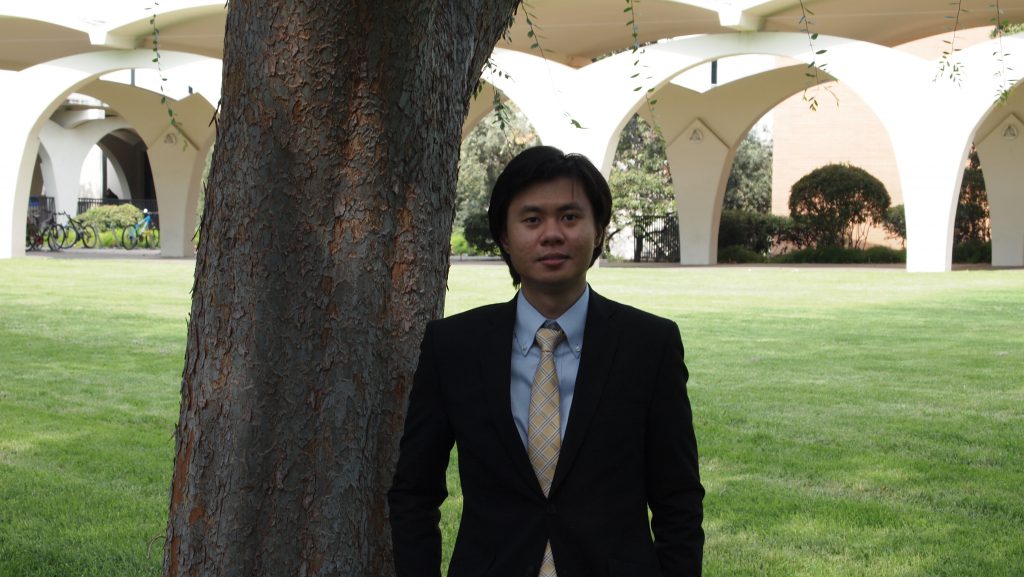
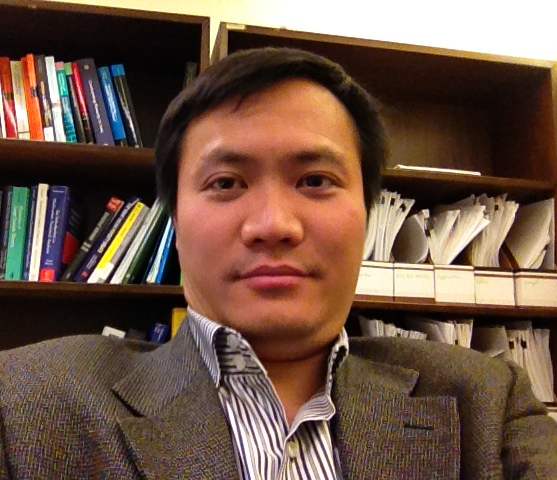
Public sentiment towards economic sanctions in the Russia-Ukraine war. A new GLO Discussion Paper by GLO Fellows Vu M. Ngo, Toan L.D. Huynh, Huan H. Nguyen and GLO Affiliate Phuc V. Nguyen.

A new GLO Discussion Paper analyzes what the social media think.

GLO Discussion Paper No. 1108, 2022

Public sentiment towards economic sanctions in the Russia-Ukraine war  Download PDF
by Vu M. Ngo & Toan L.D. Huynh & Phuc V. Nguyen & Huan H. Nguyen

GLO Fellows Vu M. Ngo, Toan L.D. Huynh, Huan H. Nguyen and GLO Affiliate Phuc V. Nguyen

Author Abstract: This paper introduces novel data on public sentiment towards economic sanctions based on nearly one million social media posts in 109 countries during the Russia-Ukraine war by using machine learning. We show the geographical heterogeneity between government stances and public sentiment. Finally, political regimes, trading relationships, and political instability could predict how people perceived this inhumane war.

JUST PUBLISHED
Vol. 35, Issue 3, July 2022: Journal of Population Economics: 15 articles
https://link.springer.com/journal/148/volumes-and-issues/35-3

GLO Discussion Papers are research and policy papers of the GLO Network which are widely circulated to encourage discussion. Provided in cooperation with EconStor, a service of the ZBW – Leibniz Information Centre for Economics, GLO Discussion Papers are among others listed in RePEc (see IDEAS,  EconPapers)Complete list of all GLO DPs – downloadable for free.

The Global Labor Organization (GLO) is an independent, non-partisan and non-governmental organization that functions as an international network and virtual platform to stimulate global research, debate and collaboration.

Ends;

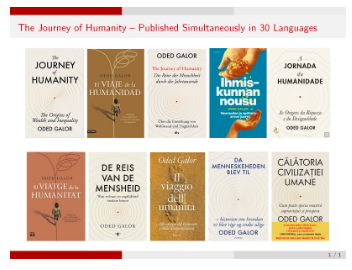
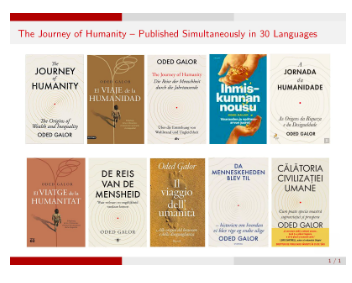
Oded Galor: The Journey of Humanity. Interview with the Author.

New book published in 30 languages. It studies the driving forces and long-run perspectives of the journey of mankind. We discuss major points with the author in an interview (see below).

  • Oded Galor : The Journey of Humanity. The Origins of Wealth and Inequality, 2022.
  • More information: AmazonPenguin Random House

Oded Galor is

  • Herbert H. Goldberger Professor of Economics at Brown University
  • the founding thinker behind Unified Growth Theory, which seeks to uncover the fundamental causes of development, prosperity and inequality over the entire span of human history. 
  • Editor-in-Chief of the Journal of Economic Growth and an Editor of the Journal of Population Economics.

INTERVIEW

GLO: What brought you to focus your research on long-term roots of the history of mankind?

Oded Galor: I was born and raised in Jerusalem, and perhaps not surprisingly given the inescapable historical context of daily life in the city, I have developed a great affinity to the understanding of the roots of human behavior and the historical origins of religiosity, ethnicity, diversity, and the lasting impact of historical factors on human prosperity.

During my academic career, I was intrigued by the origins of inequality in the wealth of nations,  and this curiosity gravitated me over time towards the field of Economic Growth.  But, in contrast to the dominating trends in the late 1980s and early 1990s, my research in the field of economic growth was quite different. Rather than focusing on the notion of convergence, which is predicated naturally on the presumption that initial conditions do not matter in the long run, my research has focused on the understanding of the roots of inequality across nations and the role of initial conditions in the determination of the fate of nations.

My quest for the understanding of the vast inequality in the wealth of nations led ultimately to my creation of Unified Growth Theory.  The development of this theory was fueled by the conviction and the evidence that a comprehensive understanding of global inequality would not be feasible in the absence of a theory that would reflect the principal driving forces behind the entire process of development and capture the central role that historical and pre-historical factors have played in bringing about the current disparities in living standards.

Along this process, I developed a great passion to the mathematical fields of dynamical systems and bifurcation theory, which underlines the importance of initial conditions in the determination of long-run position of complex systems. These important mathematical tools have enabled me to develop the Unified Growth Theory and to resolve some of the most fundamental mysteries in the development process.

GLO: What story reveals your recent book, ‘The Journey of Humanity’?

Oded Galor: The book explores the evolution of human societies since the emergence of Homo sapiens in Africa nearly 300,000 years ago. It resolves  two of the most fundamental mysteries that surround this journey:

  • The mystery of growth – what are the roots of the dramatic transformation in living standards in the past 200 years, after 300,000 years of near stagnation. Why, in the past 200 years, has income per capital in the world increased 14-fold and life expectancy more than doubled, after 300,000 years of minuscule progress in these dimensions?
  • The mystery is inequality – what is the origin of the vast inequality in living standards across countries and regions and why has this inequality increased so dramatically in the past 200 years?

The book advances a revolutionary perspective about the origins of wealth and global inequality. It suggests that much of the inequality in the wealth of nations can be traced to historical and pre-historical forces that operated hundreds of years ago, thousands of years ago, and even tens of thousands of years ago.

GLO: The Malthusian poverty trap: How did we got out of this according to your ‘Unified Growth Theory‘?

Oded Galor: Ever since the emergence of Homo sapiens and development of the first stone-cutting tool, technological progress fostered the growth and the adaptation of the human population to its changing environment. In turn, growth and the adaptation of the population widened the pool of inventors and expanded the demand for innovations, further stimulating the creation and adoption of new technologies. Nevertheless, over most of human existence, one central aspect of the human condition remained largely unaffected: living standards. Innovations stimulated economic prosperity for a few generations, but ultimately, population growth brought living conditions back towards subsistence levels.

For millennia, the wheels of change – the reinforcing interplay between technological progress and the size and composition of the human population – turned at an ever-increasing pace until, eventually, a tipping point was reached, unleashing the rapid technological progress of the Industrial Revolution. The increasing demand for skilled and educated workers who could navigate this rapidly changing technological environment incentivized parents to invest in the education of their children and therefore to bear fewer of them.  Fertility rates started to decline and living standards improved without being swiftly counterbalanced by population growth, and thus began a long-term rise in human prosperity that the world has experienced in the past two centuries.

GLO: You conclude that instead of the predicted communist revolution, industrialization lead to mass education. Why was Marx wrong?

Oded Galor: Marx maintained that the intensifying competition among capitalists would result in a reduction in their profits, inducing them to deepen the exploitation of workers. He argued that class struggle would therefore be inevitable since society would necessarily reach the point where the ‘proletarians have nothing to lose but their chains’.

Nevertheless, contrary to Marx’s hypothesis, the transformation of the production process in the course of the Industrial Revolution made education a critical element in boosting industrial productivity and maintaining profit rates. Education and the skills of the workforce became increasingly more important to the capitalist class, as they came to realize that education held the key to preventing a decline in their profit margins. They have therefore lobbied forcefully for the provision of public education for the masses. Hence, instead of a communist revolution, industrialization triggered a revolution in mass education.

GLO: Why has the industrialization over the last two centuries brought amazing growth but also huge global inequality?  

Oded Galor: Intriguingly, when prosperity skyrocketed in recent centuries, it did so earlier in some parts of the world, triggering a second major transformation: the emergence of immense inequality across societies. Institutional, cultural, geographical and societal characteristics that emerged in the ancient past propelled societies on their distinct historical trajectories, influenced the timing of their escape from the epoch of stagnation, and contributed to the gap in the wealth of nations.

GLO: Why is global inequality so persistent and received strategies like the ‘Washington Consensus‘ with a set of universal structural reforms in your view a fundamental misconception?

Oded Galor: Privatization of industry, trade liberalization and secure property rights might be growth-conducive policies for countries that have already developed the social, cultural and educational prerequisites for economic growth, but in environments where these foundations are absent, where social cohesion is tenuous and corruption well entrenched, such universal reforms have often been fruitless.

Institutional, cultural, geographical and societal characteristics that emerged in the distant past have propelled civilizations through their distinct historical routes and fostered the divergence in the wealth of nations. Incontestably, cultures and institutions conducive to economic prosperity can be gradually adopted and formed. Barriers erected by aspects of geography can be mitigated. But any such interventions that ignore the particular characteristics that have emerged over the course of each country’s journey are unlikely to reduce inequality and may instead provoke frustration, turmoil and prolong stagnation.

GLO: Where does your interest and concern about inequality come from? How does inequality in the distribution of wealth affect growth?

Oded Galor: My long-term interest and concern about inequality has been based on my personal moral conviction as well as the understanding of potential adverse effect of inequality on economic prosperity. Wealth inequality is associated with inefficient education and investment decisions of the poorer segments of society. It has therefore an adverse effect on the allocation of talents across occupations and it reduces economic efficiency. In addition, it adversely affects social cohesiveness and is associated with civil unrest and therefore loss in productivity. Thus, despite the importance of wage inequality in generating the proper economic incentives, it is quite apparent that excessive wealth inequality adversely affects ‘equality of opportunity’ in society and is therefore both unjust and harmful for economic efficiency and social cohesiveness.

GLO: How do you differentiate your contribution from the bestselling work of Yuval Noah Harari (‘Sapiens. A Brief History of Humankind’)?

Oded Galor: The Journey of Humanity consists of two major parts. The first part examines the progression of humanity, as a whole, since the emergence of Homo sapiens in Africa nearly 300,000 ago. The scope of this part has some parallels to “Sapiens”, but it is fundamentally different conceptually and scientifically. It is based on Unified Growth Theory, which identifies the wheels of change that have governed the journey of humanity over the entire course of human history. Each of the building blocks of this theory is evidence-based, founded on rigorous empirical analysis. In contrast, many of the critical transitions in “Sapiens” are largely speculative, and as the results of UGT reveal, its basic premise— that humanity progressed gradually since the agricultural revolution— is counter-factual. Moreover, The Journey of Humanity highlights the demographic forces that are central for the understanding of the Malthusian trap, as they have characterized 99.9% of human history and ultimately the take-off from stagnation to growth. This factor, however, is absent in “Sapiens”.

The second part of the Journey of Humanity explores the origins of inequality across countries. It highlights the role of institution, culture, geography, and human diversity in the divergence in the wealth of nations in the past 200 years. It leads into important policy implications about the vital role of gender equality, tolerance, and diversity in the future prosperity of humanity and the importance of the history of each individual country in the design of policies that could mitigate inequality across nations. This important analysis about the roots of inequality between nations is also absent from “Sapiens”.

As the author of “Origins”, Lewis Dartnell  wrote: “if you like Sapiens you will love [The Journey of Humanity].

GLO: Your book feeds the hope for a long-term rise in humanity, of increased wealth, understanding and collaboration.

  • On p. 9 you write: “…. the outlook derived from this exploration can be described as fundamentally hopeful, in terms of the overarching trajectory of societies across the globe. ….education, tolerance and greater gender equality hold the keys to our species’ flourishing in the decades and centuries to come. ”
  • And after discussing major global catastrophes over the last century, you write on pp. 242-243: “But history shows that, shattering and dreadful as they are, these events have had limited long-term impact on the grand arc of human development. The relentless march of humanity has so far been unstoppable.”

How does this fit with the Russian invasion of the Ukraine, which appears to many, like a game-changer of history?

Oded Galor: In fact the current crisis has reinforced my confidence about the relentless march of humanity. It is quite apparent that the Russian invasion to Ukraine has clarified to individuals across the globe that their liberties are at risk, and unless the forces that cherish freedom would unify, totalitarian regime may prevail and derail humanity from its promising march. And indeed, we have witnessed unprecedented unity within the European continent and even between the deeply polarized US society. As was the case in the course of human history, therefore this dreadful event is very unlikely to affect the grand arc of human development, and humanity may emerge from this crisis stronger than otherwise, as totalitarian regimes will recede further.

******

Oded Galor was interviewed by  Klaus F. ZimmermannGLO President.

Ends;

Call for papers for special issue on: Faith-based education and development. Deadline October 1, 2022.

GLO Southeast Asia Lead Niaz Asadullah is co-editing a special issue for the International Journal of Educational Development (IJED). The editors are inviting interested authors to submit proposals for review. Prospective authors are also encouraged to make informal queries to guest editors by email. Deadline for full paper submission is 1st Oct 2022. See below for a summary of the call and here for a link to the official call through Elsevier.

Call Details: Faith-based education and development: Opportunities, challenges, and controversies

The special issue explores the possible distinctive contributions, roles, and issues related to faith-based schools and educational actors and how they are situated in contexts.

Guest editors:

TJ D’AgostinoAssistant Professor of the Practice, University of Notre Dame Institute for Educational Initiatives (adagosti@nd.edu)

Niaz AsadullahProfessor of Education Economics, Monash University Malaysia School of Business (niaz.asadullah@monash.edu)

Special issue information:

Faith-based education has long played a vital role in education systems globally. We are seeking manuscripts for a special issue of IJED that explores the possible distinctive contributions, roles, and issues related to faith-based schools and educational actors and how they are situated in contexts. Manuscripts may cover a range of disciplinary perspectives on topics that may include:

  • comparative non-academic outcomes (e.g. civic, etc.);
  • role and contributions to educational development / SGDs, opportunities and challenges of partnering
  • political and legal issues, challenges, and conflicts
  • organizational identity
  • funding models and regulatory approaches
  • benefits or challenges of engaging
  • historical development
  • intersection of social contexts and role / mission

Manuscript submission information:

You are invited to submit your manuscript at any time before the submission deadline of 1st October 2022. For any inquiries about the appropriateness of contribution topics, please contact Professor TJ D’Agostino at adagosti@nd.edu

International migration and the religious schooling of children in the home country: evidence from Bangladesh
Khandker Wahedur Rahman
Published OPEN ACCESS in the Journal of Population Economics.

Ends;

The varying impact of COVID-19 in the Spanish Labor Market. A new GLO Discussion Paper by Guillermo Cabanillas-Jiménez and GLO Fellow Yannis Galanakis.

A new GLO Discussion Paper analyzes the immediate impact of the pandemic on Spanish labor market outcomes. 

GLO Discussion Paper No. 1104, 2022

The varying impact of COVID-19 in the Spanish Labor Market  Download PDF
by Cabanillas-Jiménez, & Galanakis, Yannis

Yannis Galanakis

Author Abstract: Historically, the Spanish labor market has been quite unstable. The unexpected arrival of COVID-19 in 2020 has stressed these vulnerabilities. In this paper, we analyze the immediate impact of the pandemic on Spanish labor market outcomes. We find that, during the lockdown period, individuals work 3 hours less per week. Moreover, results show that the labor force participation reduced by 2.3% due to the pandemic. Finally, sectors of activity present heterogeneous effects.

JUST PUBLISHED
Vol. 35, Issue 3, July 2022: Journal of Population Economics: 15 articles
https://link.springer.com/journal/148/volumes-and-issues/35-3

GLO Discussion Papers are research and policy papers of the GLO Network which are widely circulated to encourage discussion. Provided in cooperation with EconStor, a service of the ZBW – Leibniz Information Centre for Economics, GLO Discussion Papers are among others listed in RePEc (see IDEAS,  EconPapers)Complete list of all GLO DPs – downloadable for free.

The Global Labor Organization (GLO) is an independent, non-partisan and non-governmental organization that functions as an international network and virtual platform to stimulate global research, debate and collaboration.

Ends;

Works Councils. A new GLO Discussion Paper by GLO Fellow Jens Mohrenweiser.

A new GLO Discussion Paper reviews the mechanisms that enable the productivity enhancing role of works councils. 

GLO Discussion Paper No. 1103, 2022

Works Councils  Download PDF
by Mohrenweiser, Jens

GLO Fellow Jens Mohrenweiser

Author Abstract: This chapter reviews the economic effects of employee representation with statutory consultation and information rights at the workplace, the works councils. The chapter summarises the international literature which is heavily skewed towards the German case. This review focuses, first, on the mechanisms that enable the productivity enhancing role of works councils. Second, the review discusses the context factors that hamper or facilitate the productivity enhancing role of works councils. The chapter will start discussing the economic consequences of German works councils and then review the evidence obtained from other countries.

JUST PUBLISHED
Vol. 35, Issue 3, July 2022: Journal of Population Economics: 15 articles
https://link.springer.com/journal/148/volumes-and-issues/35-3

GLO Discussion Papers are research and policy papers of the GLO Network which are widely circulated to encourage discussion. Provided in cooperation with EconStor, a service of the ZBW – Leibniz Information Centre for Economics, GLO Discussion Papers are among others listed in RePEc (see IDEAS,  EconPapers)Complete list of all GLO DPs – downloadable for free.

The Global Labor Organization (GLO) is an independent, non-partisan and non-governmental organization that functions as an international network and virtual platform to stimulate global research, debate and collaboration.

Ends;

Measuring the Value of Rent Stabilization and Understanding its Implications for Racial Inequality: Evidence from New York City. A new GLO Discussion Paper by GLO Affiliate Hanchen Jiang & colleagues.

A new GLO Discussion Paper finds that rent stabilization has disproportionately benefited White tenants. 

Hanchen Jiang

GLO Discussion Paper No. 1102, 2022

Measuring the Value of Rent Stabilization and Understanding its Implications for Racial Inequality: Evidence from New York City  Download PDF
by Chen, Ruoyu & Jiang, Hanchen & Quintero, Luis E.

GLO Affiliate Hanchen Jiang

Author Abstract: Assessing rent discounts implied by rent regulation is challenging because the counterfac- tual rents of regulated units in the unregulated market are not observed. We estimate these counterfactual rents and predict the quality-adjusted rent discount for each rent-stabilized unit in New York City (NYC) using novel data from 2002 to 2017. We find robust average rent discounts of $410 per month (34% of contract rents of stabilized units). The aggregate size of these discounts in NYC is between 4 to 5.4 billion USD per year, roughly 10-14% of the federal budget on means-tested housing programs. We document that discounts: (1) increase linearly with housing tenure; (2) are not progressively distributed; (3) are larger in Manhattan and increasing in gentrifying neighborhoods; and (4) are three times larger for households correctly aware of being beneficiaries. We find that rent stabilization has disproportionately benefited White tenants. Not only are they more likely to occupy rent-stabilized units conditional on observables, but they also receive higher discounts. On average, Black stabilized tenants get $150, Hispanics $135, and AAPI $43 less on monthly rent discounts than White stabilized ten- ants. This racial gap, which has shrunk over time, is mainly explained by the uneven sorting of households of different races across locations.

JUST PUBLISHED
Vol. 35, Issue 3, July 2022: Journal of Population Economics: 15 articles
https://link.springer.com/journal/148/volumes-and-issues/35-3

GLO Discussion Papers are research and policy papers of the GLO Network which are widely circulated to encourage discussion. Provided in cooperation with EconStor, a service of the ZBW – Leibniz Information Centre for Economics, GLO Discussion Papers are among others listed in RePEc (see IDEAS,  EconPapers)Complete list of all GLO DPs – downloadable for free.

The Global Labor Organization (GLO) is an independent, non-partisan and non-governmental organization that functions as an international network and virtual platform to stimulate global research, debate and collaboration.

Ends;

The Response of Firms to Maternity Leave and Sickness Absence. A new GLO Discussion Paper by GLO Fellow Ian Schmutte and Meghan M. Skira.

A new GLO Discussion Paper finds for Brazil that using external markets is costly and firms manage absences through other channels than hiring.

Ian Schmutte

GLO Discussion Paper No. 1101, 2022

The Response of Firms to Maternity Leave and Sickness Absence  Download PDF
by Schmutte, Ian M. & Skira, Meghan M.

GLO Fellow Ian Schmutte

Author Abstract: We study how firms respond to predictable, but uncertain, worker absences arising from maternity and non-work-related sickness leave. Using administrative data on over 1.5 million spells of leave in Brazil, we identify the short-run effects of a leave spell starting on firms’ employment, hiring, and separations. Firms respond immediately by increasing hiring, but the increase is substantially less than one-for-one replacement. Hiring responses are more pronounced for absences arising in occupations with more transferable skills and in firms operating in thicker labor markets. Overall, our results imply that using external markets is costly and firms manage absences through other channels.

Featured image: kelly-sikkema-unsplash

JUST PUBLISHED
Vol. 35, Issue 3, July 2022: Journal of Population Economics: 15 articles
https://link.springer.com/journal/148/volumes-and-issues/35-3

GLO Discussion Papers are research and policy papers of the GLO Network which are widely circulated to encourage discussion. Provided in cooperation with EconStor, a service of the ZBW – Leibniz Information Centre for Economics, GLO Discussion Papers are among others listed in RePEc (see IDEAS,  EconPapers)Complete list of all GLO DPs – downloadable for free.

The Global Labor Organization (GLO) is an independent, non-partisan and non-governmental organization that functions as an international network and virtual platform to stimulate global research, debate and collaboration.

Ends;

Are Grandparents a Good Substitute for Parents as the Primary Caregiver? The Impact of Grandparents on Children’s Academic Performance. A new GLO Discussion Paper by GLO Fellows Sophie Xuefei Wang & Cynthia Bansak.

A new GLO Discussion Paper finds that grandparents in China appear to have an adverse effect on the test scores of their school-age grandchildren. 

Cynthia Bansak

GLO Discussion Paper No. 1100, 2022

Are Grandparents a Good Substitute for Parents as the Primary Caregiver? The Impact of Grandparents on Children’s Academic Performance  Download PDF
by Wang, Sophie Xuefei & Bansak, Cynthia

GLO Fellows Sophie Xuefei Wang & Cynthia Bansak

Author Abstract: This study examines the impacts of caregiving by grandparents on children’s academic performance in China, using data from the China Family Panel Studies (CFPS 2010 and 2014). Applying pooled OLS, instrumental variables and fixed-effects models with panel data estimation techniques, we find evidence that grandparents appear to have an adverse effect on the test scores of their school-age grandchildren. We further examine the mechanisms of this negative effect. Our results suggest that the education of grandparents plays an important role on the success of grandchildren and that increased schooling of grandparents can mitigate the negative effects of non-parental caregivers; thus, there are potential positive intergenerational impacts as grandparents become more educated themselves. When examining additional channels depressing test scores, we find evidence of grandparents’ tendency to overindulge single-child grandchildren and grandsons. Lastly, it also appears that the common parenting practices of grandparents are detrimental to childhood development.

Featured image: mark-timberlake-unsplash

JUST PUBLISHED
Vol. 35, Issue 3, July 2022: Journal of Population Economics: 15 articles
https://link.springer.com/journal/148/volumes-and-issues/35-3

GLO Discussion Papers are research and policy papers of the GLO Network which are widely circulated to encourage discussion. Provided in cooperation with EconStor, a service of the ZBW – Leibniz Information Centre for Economics, GLO Discussion Papers are among others listed in RePEc (see IDEAS,  EconPapers)Complete list of all GLO DPs – downloadable for free.

The Global Labor Organization (GLO) is an independent, non-partisan and non-governmental organization that functions as an international network and virtual platform to stimulate global research, debate and collaboration.

Ends;

Are women breaking the glass ceiling? A gendered analysis of the duration of sick leave in Spain. A new GLO Discussion Paper by GLO Fellow Ángel L. Martín-Román & colleagues.

A new GLO Discussion Paper finds that women were more inefficient at lower levels of income, whereas for men, this occurred at higher levels of income. 

GLO Discussion Paper No. 1099, 2022

Are women breaking the glass ceiling? A gendered analysis of the duration of sick leave in Spain  Download PDF
by Martín-Román, Ángel L. & Moral, Alfonso & Pinillos-Franco, Sara

GLO Fellow Ángel L. Martín-Román

Author Abstract: We study the gender gap in the duration of sick leave in Spain by splitting this duration into two types of days – those which are related to biological characteristics and those derived from behavioral reasons. Using the Statistics of Accidents at Work for 2011-2019, we found that women presented longer standard durations (i.e., purely attached to physiological reasons) compared to men. However, when estimating individuals’ efficiency as the ratio between actual and standard durations, we found that women were more inefficient at lower levels of income, whereas in case of men, this occurred at higher levels of income. These results were reinforced when considering that men and women do not recover from the same injury at the same rate. Women were more efficient than men across all the compensation distribution, especially at higher income levels.

Featured image: kelly-sikkema-unsplash

JUST PUBLISHED
Vol. 35, Issue 3, July 2022: Journal of Population Economics: 15 articles
https://link.springer.com/journal/148/volumes-and-issues/35-3

GLO Discussion Papers are research and policy papers of the GLO Network which are widely circulated to encourage discussion. Provided in cooperation with EconStor, a service of the ZBW – Leibniz Information Centre for Economics, GLO Discussion Papers are among others listed in RePEc (see IDEAS,  EconPapers)Complete list of all GLO DPs – downloadable for free.

The Global Labor Organization (GLO) is an independent, non-partisan and non-governmental organization that functions as an international network and virtual platform to stimulate global research, debate and collaboration.

Ends;

Greek Myth or Fact? The Role of Greek Houses in Alcohol and Drug Violations on American Campuses. A new GLO Discussion Paper of GLO Fellow Manu Raghav and colleagues.

A new GLO Discussion Paper finds indeed associations with drug and liquor law violations.

GLO Discussion Paper No. 1098, 2022

Greek Myth or Fact? The Role of Greek Houses in Alcohol and Drug Violations on American Campuses  Download PDF
by Raghav, Manu & Diette, Timothy M.

GLO Fellow Manu Raghav

Author Abstract: Greek-letter student social groups, better known as fraternities and sororities, are a ubiquitous feature on many American higher education campuses. These organizations, especially fraternities, have a reputation for encouraging unruly and improper behavior among both members and non-members. This paper investigates the effect of the degree of prevalence of these Greek organizations at a campus, as measured by the percentage of students who are members of fraternities and sororities, on the instances of liquor and drug law violations on campuses, as measured by the number of arrests for liquor and drug laws violations. Using a unique dataset, which combines data from three sources, we address any potential selection bias by including several controls associated with party culture and through the inclusion of institution-level fixed effects. We find that a larger percentage of students in fraternities (but not sororities) is associated with an increase in the number of arrests for drug law violations. A larger percentage of students in sororities (but not the percentage of students in fraternities) is associated with a larger number of arrests for liquor law violations. This result is highly significant and is robust across various specifications.

Featured image: tim-cooper-on-unsplash-

JUST PUBLISHED
Vol. 35, Issue 3, July 2022: Journal of Population Economics: 15 articles
https://link.springer.com/journal/148/volumes-and-issues/35-3

GLO Discussion Papers are research and policy papers of the GLO Network which are widely circulated to encourage discussion. Provided in cooperation with EconStor, a service of the ZBW – Leibniz Information Centre for Economics, GLO Discussion Papers are among others listed in RePEc (see IDEAS,  EconPapers)Complete list of all GLO DPs – downloadable for free.

The Global Labor Organization (GLO) is an independent, non-partisan and non-governmental organization that functions as an international network and virtual platform to stimulate global research, debate and collaboration.

Ends;

What the Mean Measures of Mobility Miss: Learning About Intergenerational Mobility from Conditional Variance. A new GLO Discussion Paper by GLO Affiliate Hanchen Jiang and colleagues.

A new GLO Discussion Paper finds that standard measures substantially underestimate the effects of family background on children’s educational opportunities, among other effects.

GLO Discussion Paper No. 1097, 2022

What the Mean Measures of Mobility Miss: Learning About Intergenerational Mobility from Conditional Variance  Download PDF
by Ahsan, Md. Nazmul & Emran, M. Shahe & Jiang, Hanchen & Shilpi, Forhad

GLO Affiliate Hanchen Jiang

Author Abstract: A large literature on intergenerational mobility focuses on the conditional mean of children’s economic outcomes to understand the role of family background, but ignores the information contained in conditional variance. Using exceptionally rich data free of coresidency bias, we provide evidence on three large developing countries (China, India, and Indonesia) that suggests a strong influence of father’s education on conditional variance of children’s schooling. We find substantial heterogeneity across countries, gender, and geography (rural/ urban). Cohort based estimates suggest that the effects of father’s education on the conditional variance has changed qualitatively, in some cases a positive effect in the 1950s cohort turning into a substantial negative effect in the 1980s cohort. We develop a methodology to incorporate the effects of family background on the conditional variance along with the standard conditional mean effects. We derive risk adjusted measures of relative and absolute mobility by accounting for an estimate of the risk premium for the conditional variance faced by a child. The estimates of risk adjusted relative and absolute mobility for China, India and Indonesia suggest that the standard measures substantially underestimate the effects of family background on children’s educational opportunities, and may give a false impression of high educational mobility. The downward bias is specially large for the children born into the most disadvantaged households where fathers have no schooling, while the bias is negligible for the children of college educated fathers. The standard (but partial) measures may lead to incorrect ranking of regions and groups in terms of relative mobility. Compared to the risk adjusted measures, the standard measures are likely to underestimate gender gap and rural-urban gap in educational opportunities.

JUST PUBLISHED
Vol. 35, Issue 3, July 2022: Journal of Population Economics: 15 articles
https://link.springer.com/journal/148/volumes-and-issues/35-3

GLO Discussion Papers are research and policy papers of the GLO Network which are widely circulated to encourage discussion. Provided in cooperation with EconStor, a service of the ZBW – Leibniz Information Centre for Economics, GLO Discussion Papers are among others listed in RePEc (see IDEAS,  EconPapers)Complete list of all GLO DPs – downloadable for free.

The Global Labor Organization (GLO) is an independent, non-partisan and non-governmental organization that functions as an international network and virtual platform to stimulate global research, debate and collaboration.

Ends;

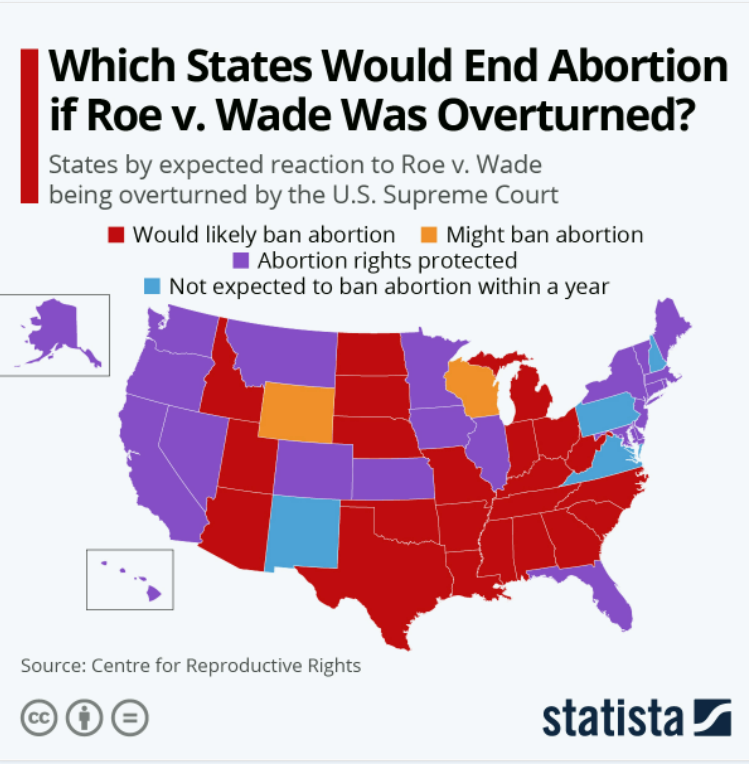
Regulating Abortions in the United States. Report & Video of a Research Meeting of the Journal of Population Economics.

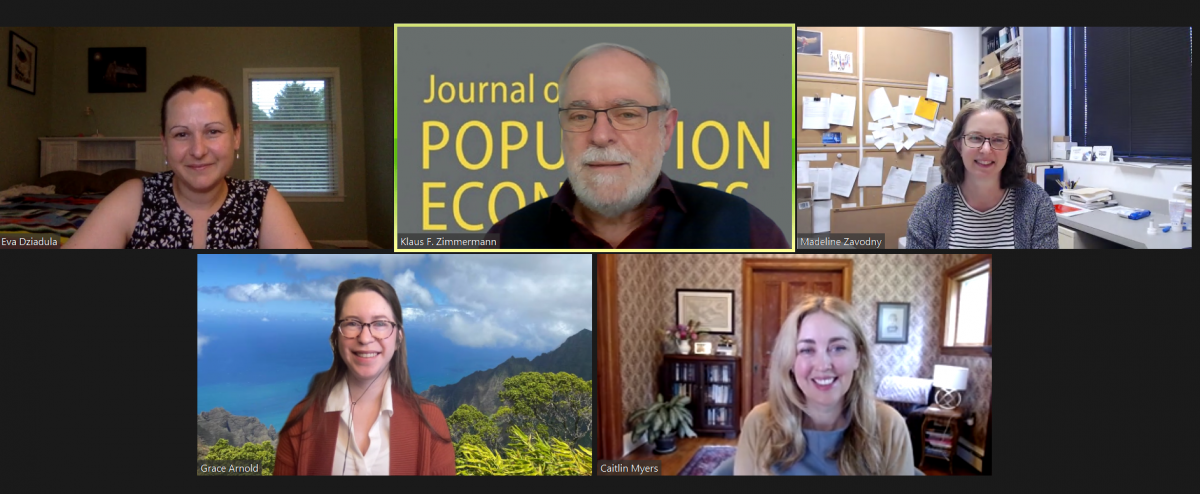
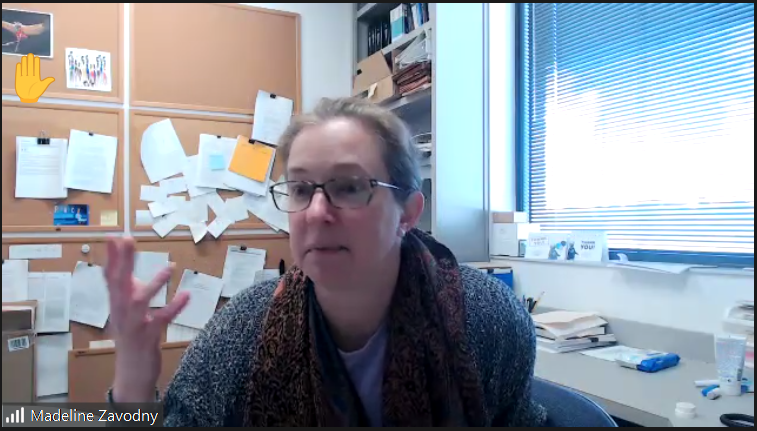
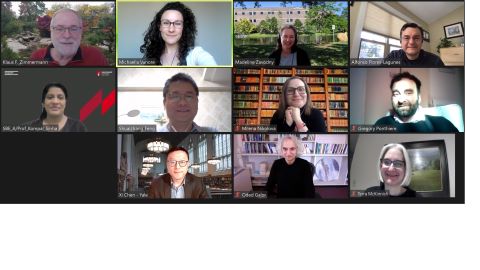
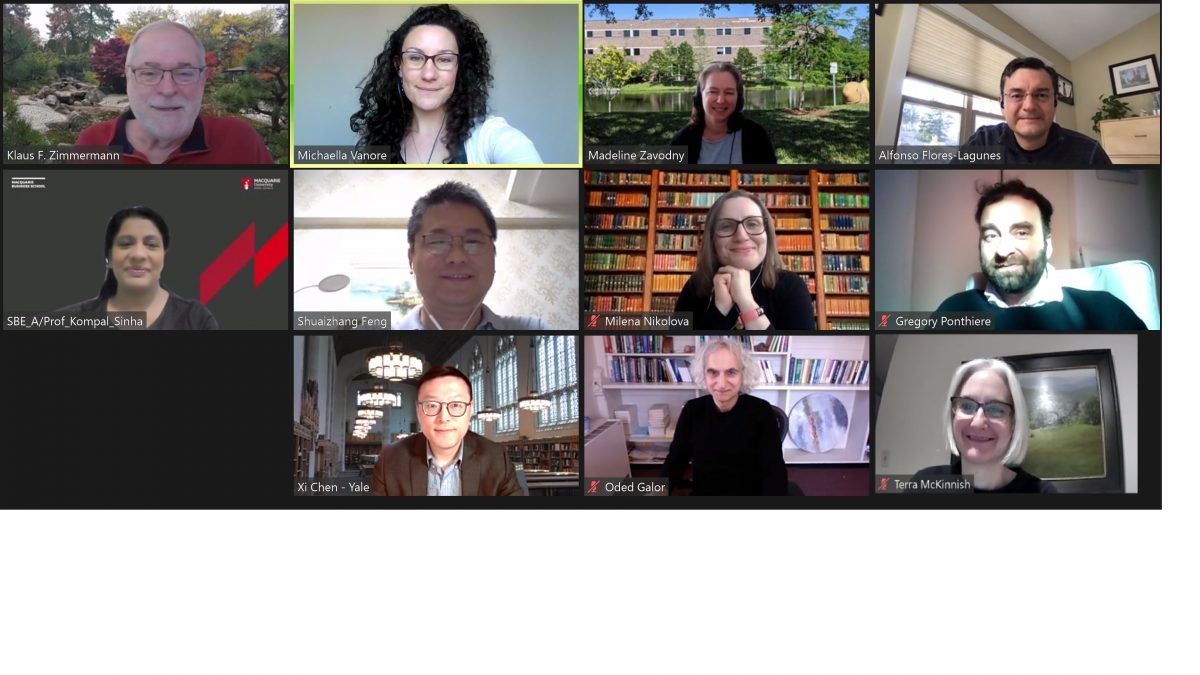
Abortion issues are again on the agenda in may societies around the globe. Academic research can inform the public debate. The Journal of Population Economics (JOPE) is a scientific outlet for studying important issues. It has published a larger number of relevant papers recently on this topic. Two new papers studying abortion regulations in the United States were presented on June 1, 2022 open to the public. JOPE Editor-in-Chief Klaus F. Zimmermann (GLO, UNU-MERIT & Maastricht University) has opened the event, and Managing Editor Madeline Zavodny (University of North Florida) had chaired the session.

JOPE Research Workshop on Abortion Issues II (see Abortion Issues I)
Wednesday June 1; 4-5 pm CEST (Berlin time) Chair: Madeline Zavodny (University of North Florida)

Event Video

Free access to the papers see below.

  • Caitlin Knowles Myers (Middlebury College, USA)
    Confidential and legal access to abortion and contraception in the United States, 1960-2020

  • Grace Arnold (Portland State University, USA)
    The Impact of Targeted Regulation of Abortion Providers Laws on Abortions and Births

Recently published JOPE abortion research:

JUST PUBLISHED
Vol. 35, Issue 3, July 2022: Journal of Population Economics: 15 articles
https://link.springer.com/journal/148/volumes-and-issues/35-3

Ends;

Migration and University Education: An Empirical (Macro) Link. A new GLO Discussion Paper by GLO Fellows Sule Akkoyunlu, Gil S. Epstein & Ira Gang.

A new GLO Discussion Paper finds that over the long run, increased higher education reduces emigration flows.

GLO Discussion Paper No. 1096, 2022

Migration and University Education: An Empirical (Macro) Link  Download PDF
by Akkoyunlu, Şule & Epstein, Gil S. & Gang, Ira N.

GLO Fellows Sule Akkoyunlu, Gil S. Epstein & Ira Gang

Author Abstract: Distinguishing between short-run and long-run outcomes we provide new insight into the relationship between education and migration. We examine the specific link between the acquisition of high levels of human capital in the form of university education in Turkey and migration to Germany. We implement bounds testing procedures to ascertain the long-run relationships with the variables of interest in a migration model. Although the bounds testing procedure has advantages compared to other methods, it has not been widely implemented in the migration literature. We find a negative and decreasing non-linear long-run and short-run relationship between home country university education and Turkish migration to Germany over 1970-2015. Over the long run, increased higher education reduces emigration flows.

Featured image: j-zamora-on-unsplash.

JUST PUBLISHED
Vol. 35, Issue 3, July 2022: Journal of Population Economics: 15 articles
https://link.springer.com/journal/148/volumes-and-issues/35-3

GLO Discussion Papers are research and policy papers of the GLO Network which are widely circulated to encourage discussion. Provided in cooperation with EconStor, a service of the ZBW – Leibniz Information Centre for Economics, GLO Discussion Papers are among others listed in RePEc (see IDEAS,  EconPapers)Complete list of all GLO DPs – downloadable for free.

The Global Labor Organization (GLO) is an independent, non-partisan and non-governmental organization that functions as an international network and virtual platform to stimulate global research, debate and collaboration.

Ends;

Consequences of Abortion Bans in India & Romania. Report & Video: Research event of the Journal of Population Economics.

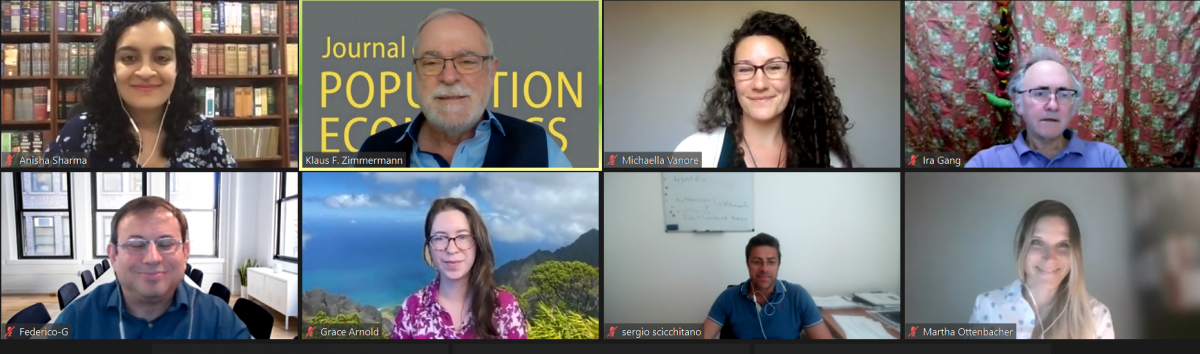
Abortion issues are again on the agenda in may societies around the globe. Academic research can inform the public debate. The Journal of Population Economics (JOPE) is a scientific outlet for studying important issues. It has published a larger number of relevant papers recently. Two new papers on the consequences of abortion bans were presented on May 31, 2022 open to the public. JOPE Editor-in-Chief Klaus F. Zimmermann (GLO, UNU-MERIT & Maastricht University) has opened the event, and Managing Editor Michaella Vanore (UNU-MERIT & Maastricht University) chaired the session.

JOPE Research Workshop on Abortion Issues I (see Abortion Issues II)

Tuesday May 31; 4-5 pm CEST (Berlin time) Chair: Michaella Vanore (UNU-MERIT & Maastricht University)

Event Video 

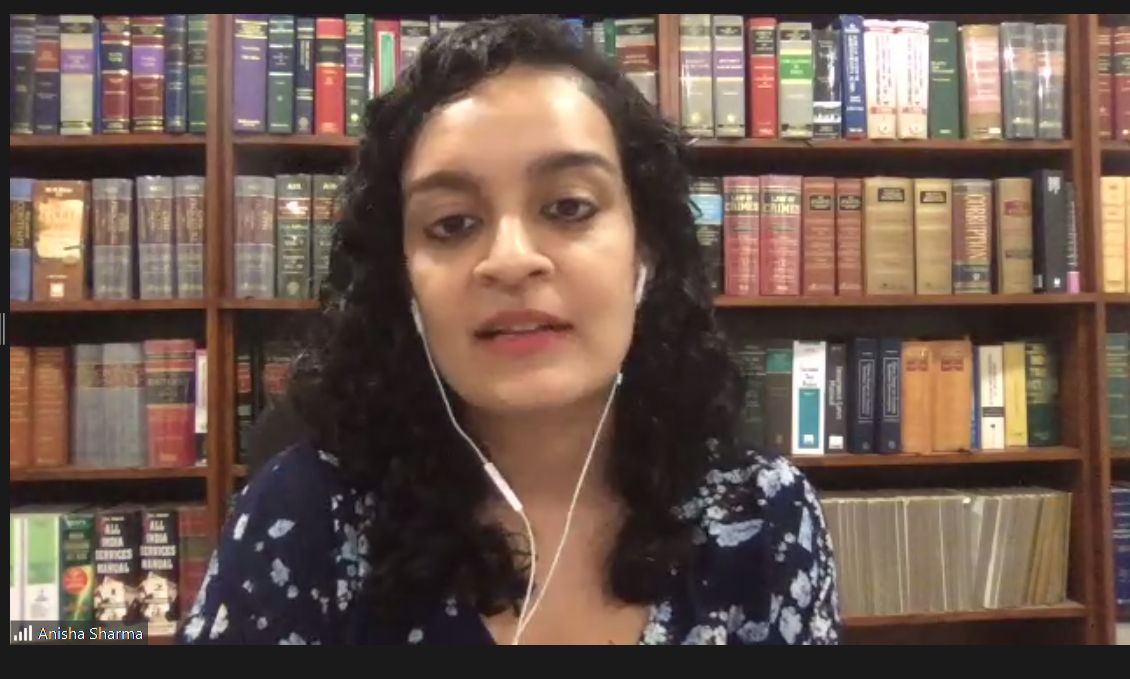
  • Anisha Sharma (Ashoka University, India)
    Unwanted daughters: the unintended consequences of a ban on sex-selective abortions on the educational attainment of women
  • Federico H. Gutierrez (Bates White, previously Vanderbilt University, USA)
    The inter-generational fertility effect of an abortion ban

Free access to the papers see below.

Recently published JOPE abortion research:

JUST PUBLISHED
Vol. 35, Issue 3, July 2022: Journal of Population Economics: 15 articles
https://link.springer.com/journal/148/volumes-and-issues/35-3

Ends;

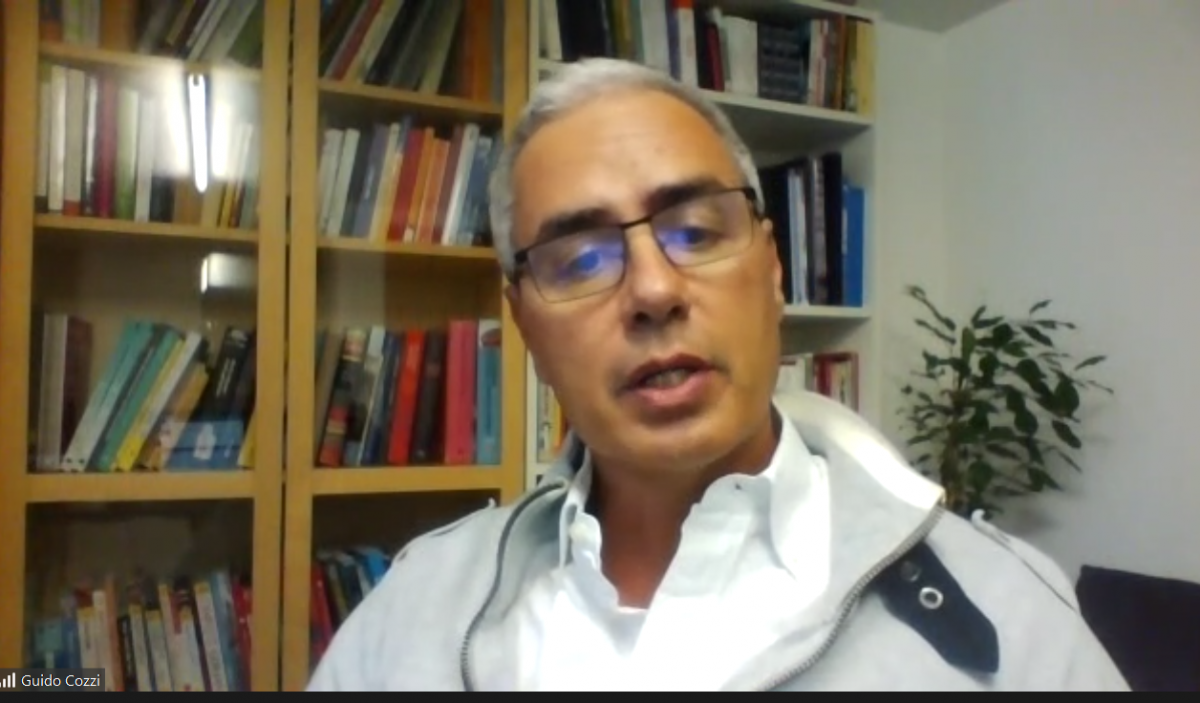
Covid-19 Vaccines, Innovation, and Intellectual Property Rights. A new GLO Discussion Paper by GLO Fellow Guido Cozzi.

A new GLO Discussion Paper guides the reader step-by-step to the leading scientific, political, and cultural challenges in granting broad worldwide access to vaccination.

GLO Discussion Paper No. 1095, 2022

Covid-19 Vaccines, Innovation, and Intellectual Property Rights  Download PDF
by Cozzi, Guido & Galli, Silvia

GLO Fellow Guido Cozzi

Author Abstract: Should the intellectual property rights on the first Covid-19 vaccines be temporarily lifted in applying the Trade-Related Aspect of Intellectual Property (TRIPS) flexibility? Is it right to grant the first generation of Covid-19 vaccines a special treatment from an IPR perspective? On what grounds? By extensively reviewing the available medical and economic literature on the subject, this chapter will guide the reader step-by-step to the leading scientific, political, and cultural challenges in granting broad worldwide access to vaccination. The accumulated delays in providing effective Covid-19 vaccine intervention in the low- and middle-income countries are ultimately responsible for the virus circulation at the global level and the proliferation of immunity-escaping variants. Therefore governmental rationality around the world would suggest any possible active policy tool to scale up the current vaccines supply. However, not to prevent future investment in R&D, the governments should bear the cost of the expected increased industry obsolescence determined by a temporary patent waiver; this includes public patent-buy-outs and regulated public-private R&D partnerships.

Featured image: Markus-Spiske-DnBtFBnqlRc-unsplash

JUST PUBLISHED
Vol. 35, Issue 3, July 2022: Journal of Population Economics: 15 articles
https://link.springer.com/journal/148/volumes-and-issues/35-3

GLO Discussion Papers are research and policy papers of the GLO Network which are widely circulated to encourage discussion. Provided in cooperation with EconStor, a service of the ZBW – Leibniz Information Centre for Economics, GLO Discussion Papers are among others listed in RePEc (see IDEAS,  EconPapers)Complete list of all GLO DPs – downloadable for free.

The Global Labor Organization (GLO) is an independent, non-partisan and non-governmental organization that functions as an international network and virtual platform to stimulate global research, debate and collaboration.

Ends;

The Fertility Effect of Laws Granting Undocumented Migrants Access to Driving Licenses in the United States. A new GLO Discussion Paper by GLO Fellow Christian Gunadi.

A new GLO Discussion Paper finds that granting undocumented migrants access to driving licenses increased the propensity to work along the intensive margin. Among those at work, their usual weekly hours rose by approximately 1.5%.

GLO Discussion Paper No. 1094, 2022

The Fertility Effect of Laws Granting Undocumented Migrants Access to Driving Licenses in the United States  Download PDF
by Gunadi, Christian

GLO Fellow Christian Gunadi

Author Abstract: As of 2021, 16 U.S. States and the District of Columbia have implemented laws allowing undocumented migrants to acquire a driver’s license. In this paper, I hypothesize that lower barriers to work caused by the ability to obtain driving licenses can affect undocumented migrants’ fertility decisions. Using a differencein- differences strategy based on temporal and geographical variation in the implementation of laws granting undocumented migrants access to driving licenses across U.S. states, I find that these laws were associated with about 9% decline in childbirth among likely undocumented married women. Exploring the mechanism, the results of the analysis indicate that granting undocumented migrants access to driving licenses increased the propensity to work along the intensive margin. Among those at work, their usual weekly hours rose by approximately 1.5%.

Featured image: dan-gold-kARZuSYMfrA-unsplash

JUST PUBLISHED
Vol. 35, Issue 3, July 2022: Journal of Population Economics: 15 articles
https://link.springer.com/journal/148/volumes-and-issues/35-3

GLO Discussion Papers are research and policy papers of the GLO Network which are widely circulated to encourage discussion. Provided in cooperation with EconStor, a service of the ZBW – Leibniz Information Centre for Economics, GLO Discussion Papers are among others listed in RePEc (see IDEAS,  EconPapers)Complete list of all GLO DPs – downloadable for free.

The Global Labor Organization (GLO) is an independent, non-partisan and non-governmental organization that functions as an international network and virtual platform to stimulate global research, debate and collaboration.

Ends;

Call for conference contributions on Covid-19 Econometrics, London 17-19 December, 2022.

King’s College London, UK. 17-19 December 2022.

On behalf of the GLO, Sergio Scicchitano  (Lead of the Coronavirus GLO Cluster) is organizing the “Session CO551: Covid-19 econometrics” at the 16th International Conference on Computational and Financial Econometrics (CFE 2022).

Ends;

Returns to Education in China: Evidence from the Great Higher Education Expansion. A new GLO Discussion Paper by GLO Fellows Massimiliano Tani & Yu Zhu & colleagues.

A new GLO Discussion Paper shows that the Great HE Expansion has exacerbated a large pre-existing urban-rural gap in educational attainment underpinned by the hukou system. 

GLO Discussion Paper No. 1092, 2022

 Returns to Education in China: Evidence from the Great Higher Education Expansion  Download PDF
by Huang, Bin & Tani, Massimiliano & Wei, Yi & Zhu, Yu

GLO Fellows Massimiliano Tani & Yu Zhu

Max Tani

Author Abstract: China experienced a near 5-fold increase in annual Higher Education (HE) enrolment in the decade starting in 1999. Using the China Household Finance Survey, we show that the Great HE Expansion has exacerbated a large pre-existing urban-rural gap in educational attainment underpinned by the hukou (household registration) system. We instrument the years of schooling with the interaction between urban hukou status during childhood and the timing of the expansion – in essence a difference-in-differences estimator using rural students to control for common time trends. We find that the Great HE raised earnings by 17% for men and 12% for women respectively, allowing for county fixed-effects. These Two Stage Least Squares (2SLS) estimates, which are robust to additional controls for hukou status at birth fully interacted with birth hukou province, can be interpreted as the Local Average Treatment Effect (LATE) of education on earnings for urban students who enrolled in HE only because of the Great HE Expansion. For the selected subsample of respondents with parental education information, we find that the 2SLS returns for students from more disadvantaged backgrounds are at least as high as their more advantaged counterparts, for both genders.

Featured image: j-zamora-on-Unsplash

RELATED WORK

Higher Education Expansion and the Rise of China in Economics Research” by Matloob Piracha, Massimiliano Tani, Klaus F. Zimmermann & Yu Zhang. China Economic Review 74 (2022) 101813. Published FREE OPEN ACCESS. Free PDF

Higher Education Expansion and Gender Norms: Evidence from China by Wei Shi. Journal of Population Economics (2022). https://doi.org/10.1007/s00148-022-00888-z FREE OPEN ACCESS.

GLO DP 1091 Returns to Higher Education – Graduate and Discipline Premiums Download PDF by Yu Zhu & Lei Xu

JUST PUBLISHED
Vol. 35, Issue 3, July 2022: Journal of Population Economics: 15 articles
https://link.springer.com/journal/148/volumes-and-issues/35-3

GLO Discussion Papers are research and policy papers of the GLO Network which are widely circulated to encourage discussion. Provided in cooperation with EconStor, a service of the ZBW – Leibniz Information Centre for Economics, GLO Discussion Papers are among others listed in RePEc (see IDEAS,  EconPapers)Complete list of all GLO DPs – downloadable for free.

The Global Labor Organization (GLO) is an independent, non-partisan and non-governmental organization that functions as an international network and virtual platform to stimulate global research, debate and collaboration.

Ends;

Returns to Higher Education – Graduate and Discipline Premiums. A new GLO Discussion Paper by GLO Fellows Yu Zhu & Xu Lei.

A new GLO Discussion Paper reviews the most up-to-date research that sheds light on the causal effects of higher-education and subject choice.

GLO Discussion Paper No. 1091, 2022

Returns to Higher Education – Graduate and Discipline Premiums  Download PDF
by Zhu, Yu & Xu, Lei

GLO Fellows Yu Zhu & Xu Lei

Author Abstract: This chapter reviews and evaluates progress in recent research on the graduate premium in general as well as the differential graduate premiums by discipline, accounting for higher-education choice by individuals under substantial uncertainty. The contribution of this review, relative to previous reviews, is the collection of a wider variety of evidence that all bears on a relatively narrow issue, namely the graduate and discipline premiums, allowing for selection into undergraduate degree and degree subjects which include the option value of undertaking postgraduate degrees. The issue of subject-job match quality after graduation is only treated as a sensitivity check to the main results, due to concerns with self-selection. To avoid overlap with the more thematic chapters in this handbook which focus on HE structures and student financing respectively, this review only emphasizes that the sizes of the graduate and discipline premiums are context-specific, especially regarding how HE is structured and financed in a country, without going into details. Much higher weight is placed on the most up-to-date research that sheds light on the causal effects of higher-education and subject choice, and the conclusions are heavily driven by the best evidence rather than by consensus built around correlations. The chapter ends with a short summary of the empirical evidence and a brief discussion of possible areas for future research.

Featured image: Mikael-Kristenson-on-Unsplash

RELATED WORK

Higher Education Expansion and the Rise of China in Economics Research” by Matloob Piracha, Massimiliano Tani, Klaus F. Zimmermann & Yu Zhang. China Economic Review 74 (2022) 101813. Published FREE OPEN ACCESS. Free PDF

Higher Education Expansion and Gender Norms: Evidence from China by Wei Shi. Journal of Population Economics (2022). https://doi.org/10.1007/s00148-022-00888-z FREE OPEN ACCESS.

GLO DP 1092 Returns to Education in China: Evidence from the Great Higher Education Expansion  Download PDF by Bin Huang, Massimiliano Tani, Yi Wei & Yu Zhu

JUST PUBLISHED
Vol. 35, Issue 3, July 2022: Journal of Population Economics: 15 articles
https://link.springer.com/journal/148/volumes-and-issues/35-3

GLO Discussion Papers are research and policy papers of the GLO Network which are widely circulated to encourage discussion. Provided in cooperation with EconStor, a service of the ZBW – Leibniz Information Centre for Economics, GLO Discussion Papers are among others listed in RePEc (see IDEAS,  EconPapers)Complete list of all GLO DPs – downloadable for free.

The Global Labor Organization (GLO) is an independent, non-partisan and non-governmental organization that functions as an international network and virtual platform to stimulate global research, debate and collaboration.

Ends;

Homosexuality’s Signalling Function in Job Candidate Screening: Why Gay is (Mostly) OK. A new GLO Discussion Paper by GLO Fellow Stijn Baert & colleagues.

A new GLO Discussion Paper finds causal evidence for distinct effects of sexual identities on candidate perceptions and interview probabilities. 

GLO Discussion Paper No. 1090, 2022

Homosexuality’s Signalling Function in Job Candidate Screening: Why Gay is (Mostly) OK  Download PDF
by Sterkens, Philippe & Dalle, Axana & Wuyts, Joey & Pauwels, Ines & Durinck, Hellen & Baert, Stijn

GLO Fellow Stijn Baert

Stijn Baert

Author Abstract: To explain the mixed findings on hiring discrimination against homosexual applicants, we explore the perceptual drivers behind employers’ evaluations of gay men and lesbian women. Therefore, we conduct an extensive vignette experiment among 404 genuine recruiters, for which we test systematically-selected perceptions theoretically associated with homosexual job candidates in earlier studies. We find causal evidence for distinct effects of sexual identities on candidate perceptions and interview probabilities. In particular, interview probabilities are positively (negatively) associated with the perception of lesbian women (gay men) as being more (less) pleasant to work with compared to heterosexual candidates. In addition, interview chances are negatively associated with the perception of gay men and lesbian women as being more outspoken. Furthermore, our data align well with the idea of a concentrated discrimination account, whereby a minority of employers who privately hold negative attitudes towards homosexual individuals are responsible for most instances of hiring discrimination.

Featured image: tim-gouw-bwki71ap-y8-unsplash

JUST PUBLISHED
Vol. 35, Issue 3, July 2022: Journal of Population Economics: 15 articles
https://link.springer.com/journal/148/volumes-and-issues/35-3

GLO Discussion Papers are research and policy papers of the GLO Network which are widely circulated to encourage discussion. Provided in cooperation with EconStor, a service of the ZBW – Leibniz Information Centre for Economics, GLO Discussion Papers are among others listed in RePEc (see IDEAS,  EconPapers)Complete list of all GLO DPs – downloadable for free.

The Global Labor Organization (GLO) is an independent, non-partisan and non-governmental organization that functions as an international network and virtual platform to stimulate global research, debate and collaboration.

Ends;

Talk next week to the authors: Research for the Abortion Debate in the Journal of Population Economics. Register for the online workshops on May 31 & June 1.

Abortion issues are again on the agenda in may societies around the globe. Academic research can inform the public debate. The Journal of Population Economics ((JOPE) is a scientific outlet for studying important issues. It has published a larger number of relevant papers recently, which are discussed in the workshops announced below. The events are open to the general public. Use this chance to discuss research findings with the authors. Prior registration to both parts separately is required. JOPE Editor-in-Chief Klaus F. Zimmermann (GLO, UNU-MERIT & Maastricht University) will open the events, and Managing Editors Michaella Vanore (UNU-MERIT & Maastricht University) and Madeline Zavodny (University of North Florida) will chair the sessions.

JOPE Research Workshop on Abortion Issues I
Tuesday May 31; 4-5 pm CEST (Berlin time) Chair: Michaella Vanore (UNU-MERIT & Maastricht University)

  • Anisha Sharma (Ashoka University, India)
    Unwanted daughters: the unintended consequences of a ban on sex-selective abortions on the educational attainment of women
  • Federico H. Gutierrez (Vanderbilt University, USA)
    The inter-generational fertility effect of an abortion ban

Prior registration required:

  • You are invited to a Zoom meeting.
    When: May 31, 2022 04:00 PM Amsterdam, Berlin, Rome, Stockholm, Vienna
  • After registering, you will receive a confirmation email containing information about joining the meeting.

Free access to the papers see below.

JOPE Research Workshop on Abortion Issues II
Wednesday June 1; 4-5 pm CEST (Berlin time) Chair: Madeline Zavodny (University of North Florida)

  • Caitlin Knowles Myers (Middlebury College, USA)
    Confidential and legal access to abortion and contraception in the United States, 1960-2020
  • Grace Arnold (Portland State University, USA)
    The Impact of Targeted Regulation of Abortion Providers Laws on Abortions and Births

Prior registration required:

  • You are invited to a Zoom meeting.
    When: Jun 1, 2022 04:00 PM Amsterdam, Berlin, Rome, Stockholm, Vienna
  • After registering, you will receive a confirmation email containing information about joining the meeting.

Free access to the papers see below.

Forthcoming articles

In print in the Journal of Population Economics (JOPE):

GLO Fellow Grace Arnold (Portland State University, USA)

Author Abstract: This paper analyzes the impact of supply-side abortion restrictions on aggregate abortion and birth rates in the United States. Specifically, I exploit state and time variation in the implementation of the first targeted regulation of abortion provider (TRAP) law in a state to identify the effects of the laws. I find that TRAP laws are associated with a reduction in the abortion rate of approximately 5% the year the first law is implemented, and an average reduction of 11-14% in subsequent years. There is also evidence that TRAP laws increased birth rates by 2-3%, which accounts for approximately 80-100% of the observed decline in abortion rates.

GLO Fellow Caitlin Knowles Myers (Middlebury College, USA)

Author Abstract: An expansive empirical literature estimates the causal effects of policies governing young women’s confidential and legal access to contraception and abortion. I present a new review of changes in the historical policy environment in the United States that serve as the foundation of this work. I consult primary sources including annotated statutes, judicial rulings, attorney general opinions, and advisory articles in medical journals, as well as secondary sources including newspaper articles and snapshots of various policy environments prepared by scholars, advocates, and government organizations. Based on this review, I provide a suggested coding of the policy environment over the past 60 years. I also present and compare the legal coding schemes used in the empirical literature and where possible I resolve numerous and substantial discrepancies.

Access to more published JOPE research on abortion issues:

JUST PUBLISHED
Vol. 35, Issue 3, July 2022: Journal of Population Economics: 15 articles
https://link.springer.com/journal/148/volumes-and-issues/35-3

Ends;

STOREP Covid Special Session. “Covid-19 pandemic and the future of economics and economic systems”.

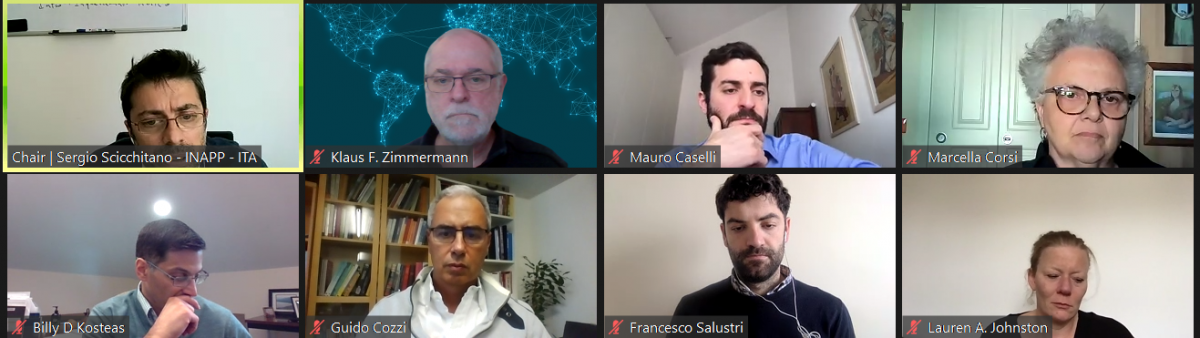
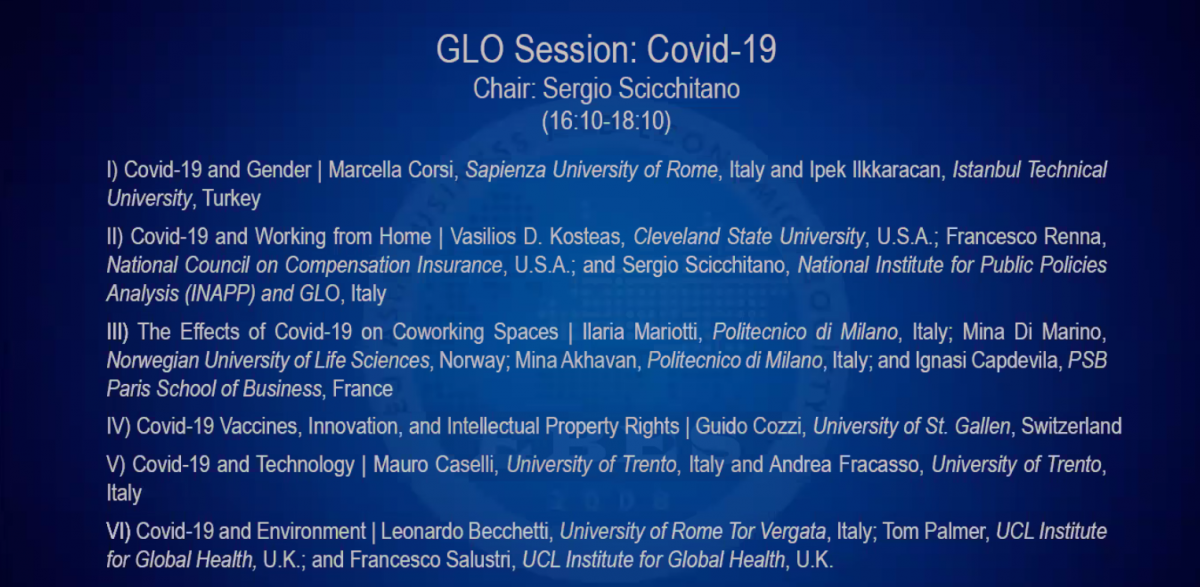
Sergio Scicchitano (GLO Coronavirus Cluster Lead) organized with Minerva Lab (University La Sapienza of Rome) a session on “Covid-19 pandemic and the future of economics and economic systems” for STOREP, 26-28 May 2022, Tuscia University, Viterbo, Italy.

Program of the conference:
Economics and the Economic System: The Ecological Transition<br>19th Annual Conference of the Italian Association for the History of Political Economy (STOREP) (editorialexpress.com)

Session 5: [ISSUES](MinervaLab- INAPP) Covid-19 pandemic and the future of economics and economic systems
May 26, 2022 15:00 to 16:30 (Rome time)
The participation free at the link

Session Chair: Sergio Scicchitano, National Institute for Public Policies Analysis (INAPP)

DISTRIBUTIONAL EFFECTS OF THE COVID-19 ON WAGES IN ITALY
By Carmen Aina; Università Piemonte Orientale
Irene Brunetti; INAPP – National Institute for Public Policy Analysis
Chiara Mussida; Catholic University of the Sacred Heart
Sergio Scicchitano; National Institute for Public Policies Analysis (INAPP)
presented by: Irene Brunetti, INAPP – National Institute for Public Policy Analysis
Discussant:   Guglielmo Forges Davanzati, Università del Salento

The new industrial revolution: the optimal choice for flexible work companies
By Leonardo Becchetti; University of Rome “Tor Vergata”
Francesco Salustri; Roma Tre & UCL
Nazaria Solferino; UNICAL
presented by: Francesco Salustri, Roma Tre & UCL
Discussant:   Davide Gualerzi, Università di Padova

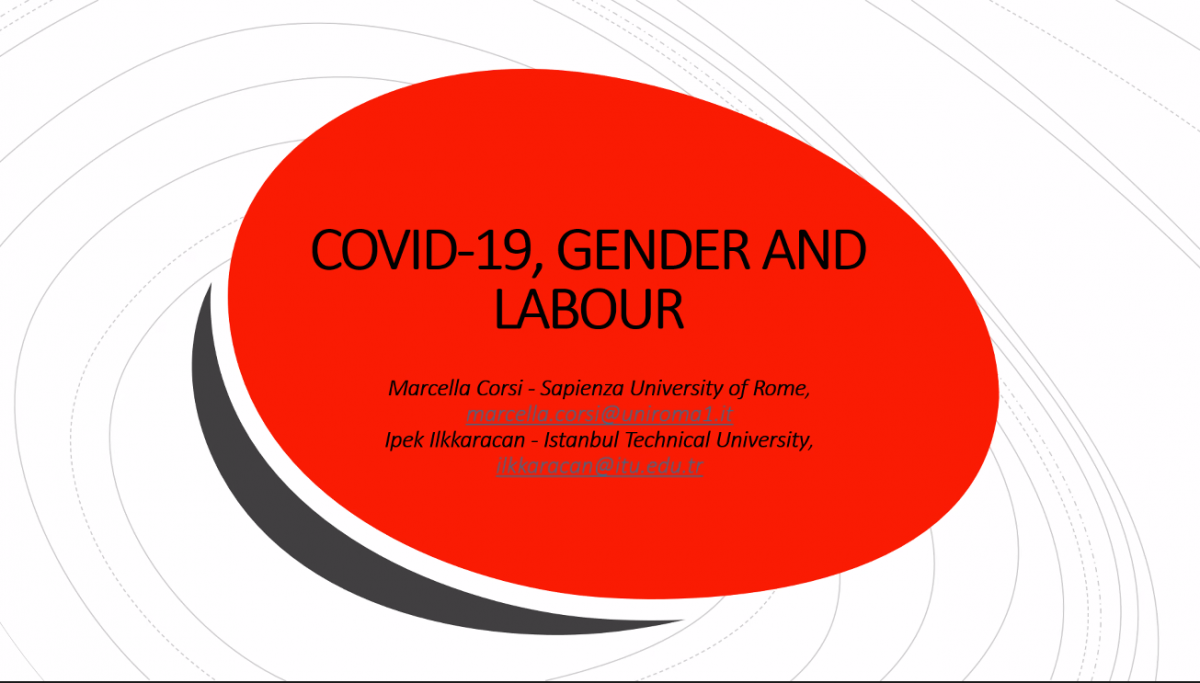
COVID-19, GENDER AND LABOUR
By Marcella Corsi; Sapienza University of Rome
Ipek Ilkkaracan; Istanbul Technical University
presented by: Marcella Corsi, Sapienza University of Rome
Discussant:   Antonella Stirati, Università Roma Tre

Economics and the Economic System: The Ecological Transition 19th STOREP Annual Conference Università della Tuscia, Viterbo, 26-28 May 2022.

Ends;

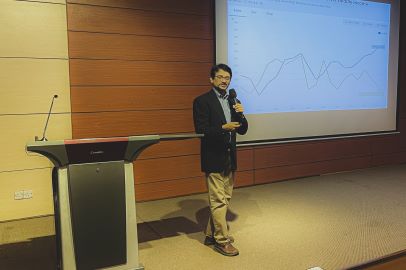
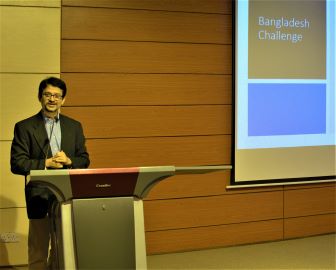
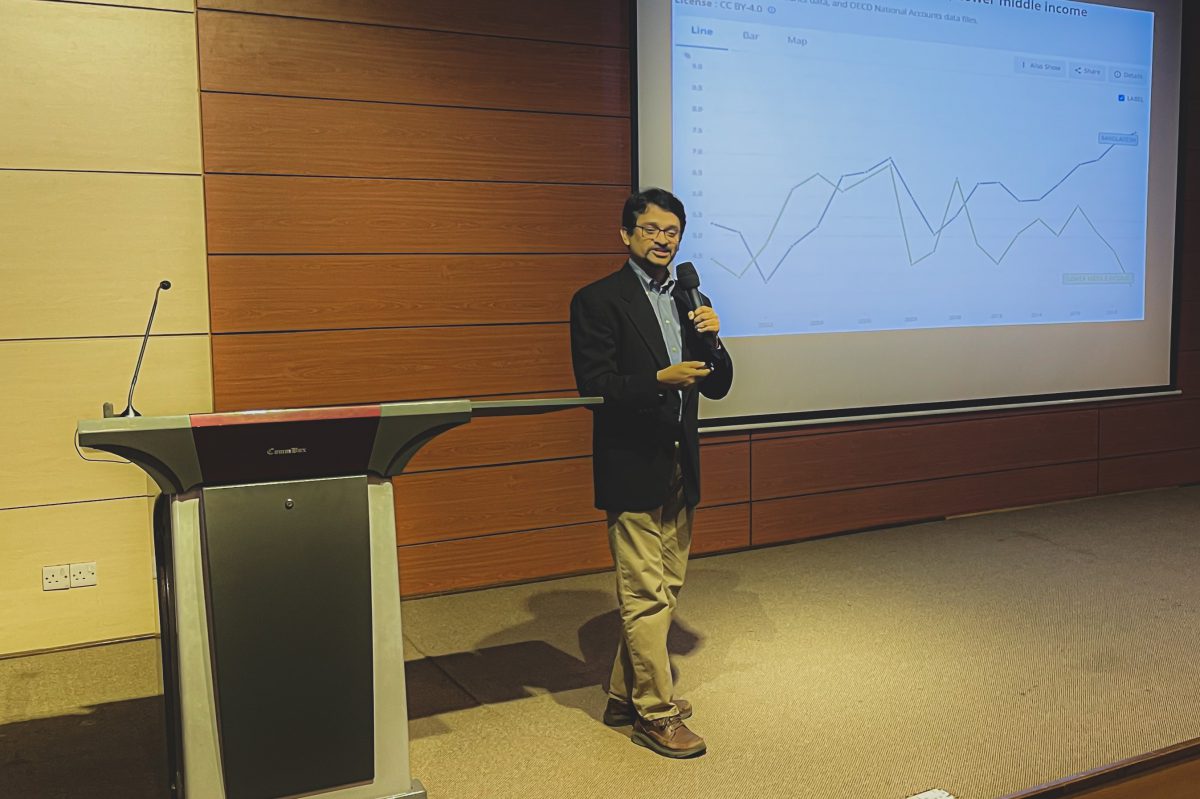
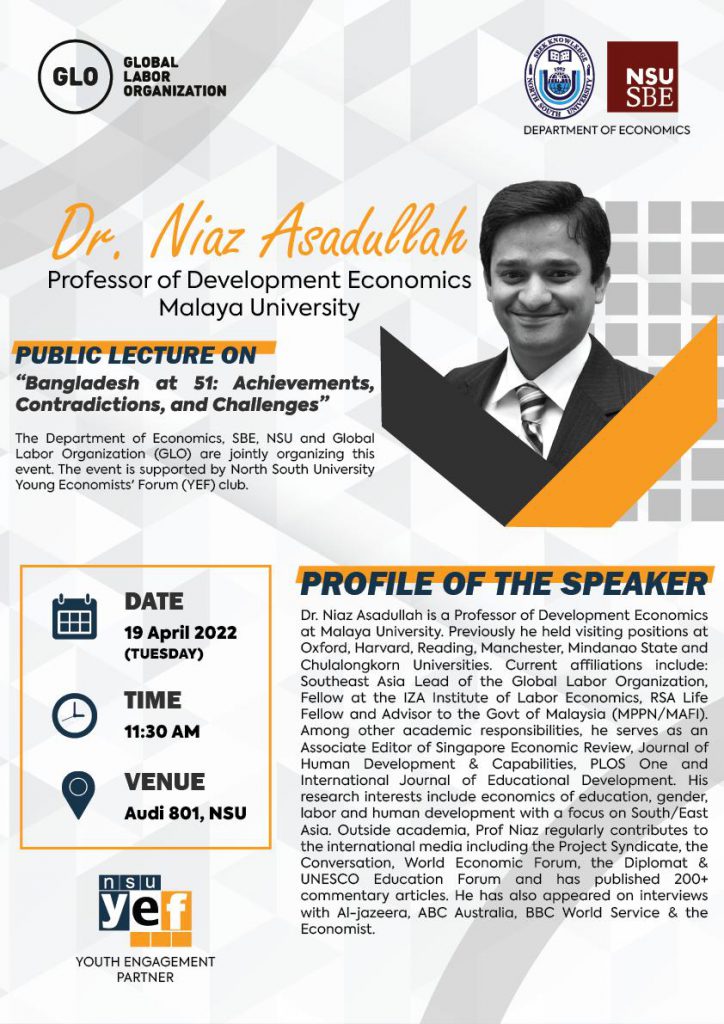
Report: GLO Public Lecture on 51 years of Bangladesh’s Development Achievements delivered by Niaz Asadullah.

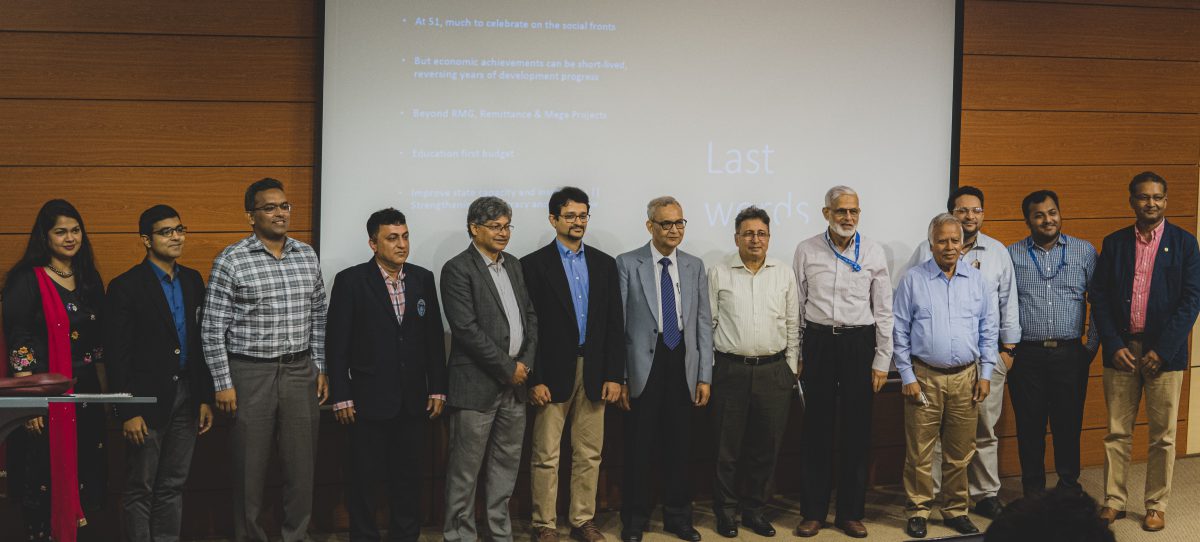
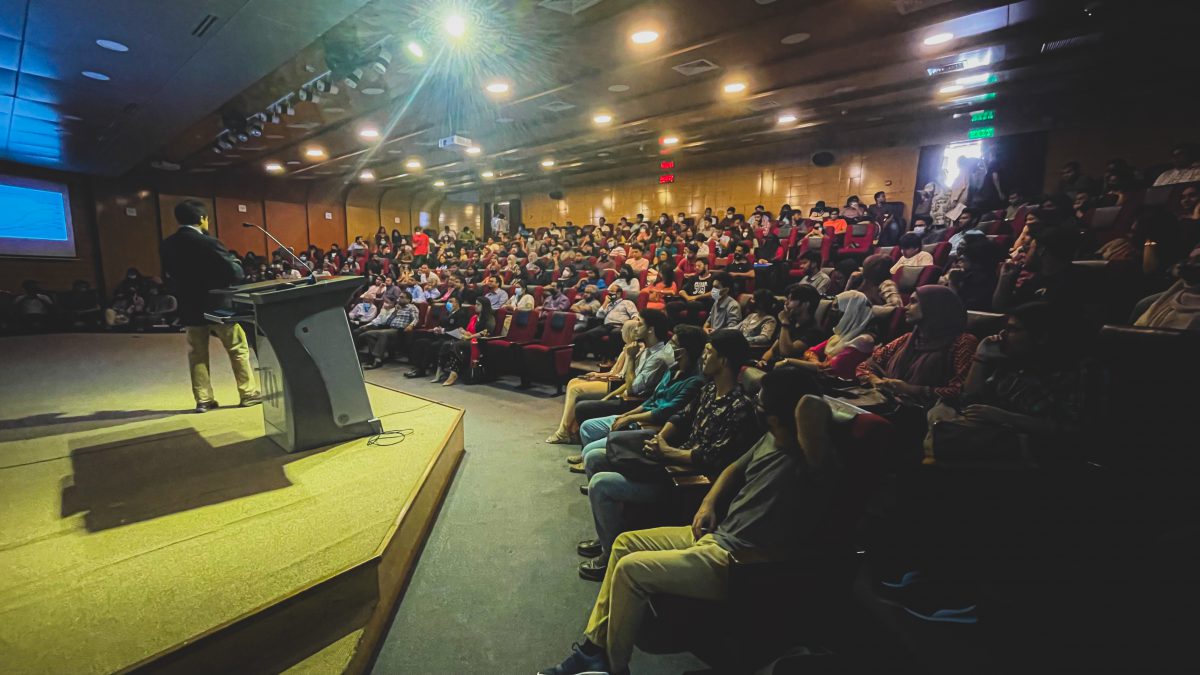
Dr. Niaz Asadullah (PhD, Oxford), the Global Labor Organization (GLO) Lead of South Asia and Professor of Development Economics, Monash University Malaysia, delivered a public lecture titled “Bangladesh at 51: Achievements, Contradictions, and Challenges”, at North South University (NSU) in Dhaka on April 19, 2022.


The event was jointly organized by the Department of EconomicsSchool of Business & Economics (SBE), NSU, and GLO Southeast Asia Cluster. NSU Young Economists’ Forum (YEF), a student club of NSU affiliated with the Department of Economics, was the youth engagement partner of the event.

In his intriguing and thought-provoking lecture, Professor Niaz demystified Bangladesh’s development achievements since 1970s revisiting trends in a range of indicators across different sectors. He explained that Bangladesh’s social achievements in female schooling, fertility reduction, immunization coverage, contraception usage, and weakening of son preference in fertility are truly exceptional when compared with Pakistan, India and other countries at the same stage of economic development. These cases of ‘positive deviance’ point to a ‘development miracle’ i.e. systematic social progress achieved before Bangladesh’s recent surge in GDP growth.


Professor Niaz however cautioned that the public spendings on education and health as ratios of GDP are among the lowest in the world. If Bangladesh is to emulate the East Asian model of economic growth (e.g. South Korea, Singapore and Malaysia), then a drastic increase in education and health spending is necessary – mega infrastructure projects must be complemented with human capital development for sustainable development. Among other issues, Professor Niaz commented on the sustainability of our current economic progress, highlighting some worrying trends in data on FDI, exports, inequality, military expenditure and state capacity as well as the rise of plutocracy.

The public lecture was followed by a lively Q&A session where participants actively engaged with the speaker asking questions about the future of Bangladesh economy. The event was attended by over 200 students. NSU faculty members, the Chair of the Department of Economics Dr. Asad Karim Khan Priyo, the Dean of NSU SBE Dr. Abdul Hannan Chowdhury, and the Pro-Vice-Chancellor of NSU Dr. M Ismail Hossain were all present in the lecture.

Pro-VC-Sir-Dean-Sir-Eco-Department-Chair-Director-of-Student-Affairs-and Faculty-Members


The event received extensive press coverage in the Bangladeshi media in outlets such as The News Time, The Daily Swadesh PratidinThe Daily Jugantorthe Daily JanakanthaThe Daily Bonik BartaThe Daily Bhorer Kagoj and The Daily Bporikroma.

Ends;

The Impact of Targeted Regulation of Abortion Providers Laws on Abortions and Births. A new GLO Discussion Paper by GLO Fellow Grace Arnold.

A new GLO Discussion Paper finds for the USA that regulations have reduced abortions and increased fertility.

GLO Discussion Paper No. 1093, 2022

The Impact of Targeted Regulation of Abortion Providers Laws on Abortions and Births  Download PDF
by Arnold, Grace E.

GLO Fellow Grace Arnold

Meet the author and read related work in the Journal of Population Economics: More details

Author Abstract: This paper analyzes the impact of supply-side abortion restrictions on aggregate abortion and birth rates in the United States. Specifically, I exploit state and time variation in the implementation of the first targeted regulation of abortion provider (TRAP) law in a state to identify the effects of the laws. I find that TRAP laws are associated with a reduction in the abortion rate of approximately 5% the year the first law is implemented, and an average reduction of 11-14% in subsequent years. There is also evidence that TRAP laws increased birth rates by 2-3%, which accounts for approximately 80-100% of the observed decline in abortion rates.

JUST PUBLISHED
Vol. 35, Issue 3, July 2022: Journal of Population Economics: 15 articles
https://link.springer.com/journal/148/volumes-and-issues/35-3

GLO Discussion Papers are research and policy papers of the GLO Network which are widely circulated to encourage discussion. Provided in cooperation with EconStor, a service of the ZBW – Leibniz Information Centre for Economics, GLO Discussion Papers are among others listed in RePEc (see IDEAS,  EconPapers)Complete list of all GLO DPs – downloadable for free.

The Global Labor Organization (GLO) is an independent, non-partisan and non-governmental organization that functions as an international network and virtual platform to stimulate global research, debate and collaboration.

Ends;

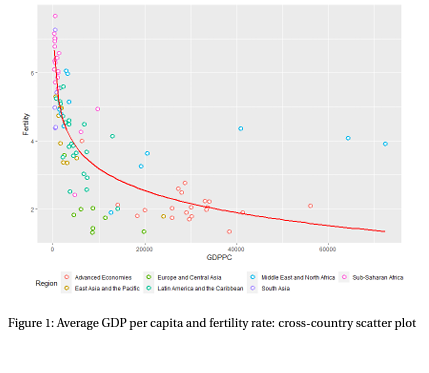
Income and Differential Fertility: Evidence from Oil Price Shocks. A new GLO Discussion Paper by GLO Fellow Abebe Hailemariam.

A new GLO Discussion Paper finds for a panel of 122 countries spanning the period 1965-2020 that national per capita income has generally a negative and significant effect on the total fertility rate.

GLO Discussion Paper No. 1089, 2022

Income and Differential Fertility: Evidence from Oil Price Shocks  Download PDF
by Hailemariam, Abebe

GLO Fellow Abebe Hailemariam

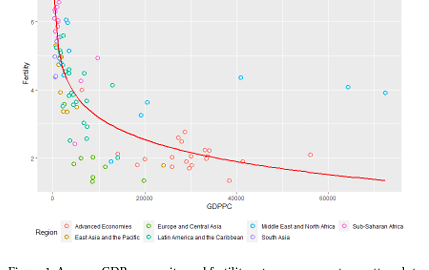
Author Abstract: This paper examines the effect of national income on the total fertility rate (children born per woman). We estimate the effects on fertility of shocks to national per capita income using plausibly exogenous variations in oil price shock as an instrument for income and using instrumental variable generalized quantile regressions (IV-GQR). Using data for a panel of 122 countries spanning the period 1965-2020, our results show that national per capita income has generally a negative and significant effect on the total fertility rate. Looking at the entire spectrum of the fertility distribution, the IVGQR estimates exhibit considerable heterogeneity in the impact of income on fertility. The income elasticity of fertility is relatively low at the upper tail of the distribution (for countries with high fertility) compared to the value at the median.

Source: GLO DP 1089

JUST PUBLISHED
Vol. 35, Issue 3, July 2022: Journal of Population Economics: 15 articles
https://link.springer.com/journal/148/volumes-and-issues/35-3

GLO Discussion Papers are research and policy papers of the GLO Network which are widely circulated to encourage discussion. Provided in cooperation with EconStor, a service of the ZBW – Leibniz Information Centre for Economics, GLO Discussion Papers are among others listed in RePEc (see IDEAS,  EconPapers)Complete list of all GLO DPs – downloadable for free.

The Global Labor Organization (GLO) is an independent, non-partisan and non-governmental organization that functions as an international network and virtual platform to stimulate global research, debate and collaboration.

Ends;

Do Gender, Child, and Parent Characteristics Contribute to Intergenerational Subjective Well-being Mobility? A new GLO Discussion Paper by GLO Fellow Hai-Anh Dang & Kseniya Abanokova.

A new GLO Discussion Paper finds that intergenerational mobility exists with daughters having higher transmissions from their mothers than sons. 

GLO Discussion Paper No. 1088, 2022

Do Gender, Child, and Parent Characteristics Contribute to Intergenerational Subjective Well-being Mobility? Evidence from Russia during 1994-2019 Download PDF
by Dang, Hai-Anh H. & Abanokova, Kseniya

GLO Fellow Hai-Anh Dang

Hai-Anh Dang

Author Abstract: Measuring the intergenerational mobility of welfare provides key inputs for policies, but very few studies examine intergenerational mobility of subjective well-being (SWB), particularly in a poorer, transitional country context. We make new contributions by analyzing rich panel SWB data from Russia over the past quarter century, which address various shortcomings with traditional income data. We find that intergenerational SWB mobility-as measured by subjective wealth and life satisfaction-exists, with daughters having higher transmission of SWB from their mothers than sons. Adding other child and parent characteristics to the multivariate regression models can reduce the estimated impacts of mothers’ SWB by up to 40% but does not change the gender gaps in the intergenerational transmission. Our results are robust to different model specifications and sample restrictions.

Featured image: Elijah-Hail-on-Unsplash

JUST PUBLISHED
Vol. 35, Issue 3, July 2022: Journal of Population Economics: 15 articles
https://link.springer.com/journal/148/volumes-and-issues/35-3

GLO Discussion Papers are research and policy papers of the GLO Network which are widely circulated to encourage discussion. Provided in cooperation with EconStor, a service of the ZBW – Leibniz Information Centre for Economics, GLO Discussion Papers are among others listed in RePEc (see IDEAS,  EconPapers)Complete list of all GLO DPs – downloadable for free.

The Global Labor Organization (GLO) is an independent, non-partisan and non-governmental organization that functions as an international network and virtual platform to stimulate global research, debate and collaboration.

Ends;

The new industrial revolution: The optimal choice for flexible work companies. A new GLO Discussion paper by GLO Fellows Leonardo Becchetti & Francesco Salustri and Nazaria Solferino.

A new GLO Discussion Paper suggests that COVID-19 made employers and employees more aware of the productivity gains arising from the digital revolution. 

GLO Discussion Paper No. 1087, 2022

The new industrial revolution: The optimal choice for flexible work companies  Download PDF
by Becchetti, Leonardo & Salustri, Francesco & Solferino, Nazaria

GLO Fellows Leonardo Becchetti & Francesco Salustri

Author Abstract: The forced remote working relationships experienced during the COVID-19 pandemics made employers and employees more aware of the productivity gains arising from the digital revolution. To investigate the characteristics of such gains, we model firms’ production allowing companies to choose among three types of (face-to-face in presence, remote synchronous, and remote asynchronous) employees relationships. The introduction of remote interactions allows us to outline five features affecting workers productivity such as i) mobility reduction, ii) frequency of interactions, iii) optimal time/place, iv) work-life balance, and v) relationship decay effects. We calculate the optimal share of the three types of relationships that maximise corporate profits conditional to reasonable parametric assumptions on the five effects under perfect and asymmetric information. We as well assess the potential productivity growth of companies that use only faceto- face interactions when allowing also remote interactions. We finally discuss existing private business contracts that introduced hybrid combinations of in-person and remote work activities for their employees, that are aligned with our theoretical findings and call for new industrial and environmental policies at national and supranational level.

Featured image: kelly-sikkema-S47XBGwRZkc-unsplash

JUST PUBLISHED
Vol. 35, Issue 3, July 2022: Journal of Population Economics: 15 articles
https://link.springer.com/journal/148/volumes-and-issues/35-3

GLO Discussion Papers are research and policy papers of the GLO Network which are widely circulated to encourage discussion. Provided in cooperation with EconStor, a service of the ZBW – Leibniz Information Centre for Economics, GLO Discussion Papers are among others listed in RePEc (see IDEAS,  EconPapers)Complete list of all GLO DPs – downloadable for free.

The Global Labor Organization (GLO) is an independent, non-partisan and non-governmental organization that functions as an international network and virtual platform to stimulate global research, debate and collaboration.

Ends;

Talk to the authors: Research for the Abortion Debate in the Journal of Population Economics. Register for online workshops on May 31 & June 1.

Abortion issues are again on the agenda in may societies around the globe. Academic research can inform the public debate. The Journal of Population Economics ((JOPE) is a scientific outlet for studying important issues. It has published a larger number of relevant papers recently, which are discussed in the workshops announced below. The events are open to the general public. Use this chance to discuss research findings with the authors. Prior registration to both parts separately is required. JOPE Editor-in-Chief Klaus F. Zimmermann (GLO, UNU-MERIT & Maastricht University) will open the events, and Managing Editors Michaella Vanore (UNU-MERIT & Maastricht University) and Madeline Zavodny (University of North Florida) will chair the sessions.

JOPE Research Workshop on Abortion Issues I
Tuesday May 31; 4-5 pm CEST (Berlin time) Chair: Michaella Vanore (UNU-MERIT & Maastricht University)

  • Anisha Sharma (Ashoka University, India)
    Unwanted daughters: the unintended consequences of a ban on sex-selective abortions on the educational attainment of women
  • Federico H. Gutierrez (Vanderbilt University, USA)
    The inter-generational fertility effect of an abortion ban

Prior registration required:

  • You are invited to a Zoom meeting.
    When: May 31, 2022 04:00 PM Amsterdam, Berlin, Rome, Stockholm, Vienna
  • After registering, you will receive a confirmation email containing information about joining the meeting.

Free access to the papers see below.

JOPE Research Workshop on Abortion Issues II
Wednesday June 1; 4-5 pm CEST (Berlin time) Chair: Madeline Zavodny (University of North Florida)

  • Caitlin Knowles Myers (Middlebury College, USA)
    Confidential and legal access to abortion and contraception in the United States, 1960-2020
  • Grace Arnold (Portland State University, USA)
    The Impact of Targeted Regulation of Abortion Providers Laws on Abortions and Births

Prior registration required:

  • You are invited to a Zoom meeting.
    When: Jun 1, 2022 04:00 PM Amsterdam, Berlin, Rome, Stockholm, Vienna
  • After registering, you will receive a confirmation email containing information about joining the meeting.

Free access to the papers see below.

Forthcoming articles

In print in the Journal of Population Economics (JOPE):

GLO Fellow Grace Arnold (Portland State University, USA)

Author Abstract: This paper analyzes the impact of supply-side abortion restrictions on aggregate abortion and birth rates in the United States. Specifically, I exploit state and time variation in the implementation of the first targeted regulation of abortion provider (TRAP) law in a state to identify the effects of the laws. I find that TRAP laws are associated with a reduction in the abortion rate of approximately 5% the year the first law is implemented, and an average reduction of 11-14% in subsequent years. There is also evidence that TRAP laws increased birth rates by 2-3%, which accounts for approximately 80-100% of the observed decline in abortion rates.

GLO Fellow Caitlin Knowles Myers (Middlebury College, USA)

Author Abstract: An expansive empirical literature estimates the causal effects of policies governing young women’s confidential and legal access to contraception and abortion. I present a new review of changes in the historical policy environment in the United States that serve as the foundation of this work. I consult primary sources including annotated statutes, judicial rulings, attorney general opinions, and advisory articles in medical journals, as well as secondary sources including newspaper articles and snapshots of various policy environments prepared by scholars, advocates, and government organizations. Based on this review, I provide a suggested coding of the policy environment over the past 60 years. I also present and compare the legal coding schemes used in the empirical literature and where possible I resolve numerous and substantial discrepancies.

Access to more published JOPE research on abortion issues:

JUST PUBLISHED
Vol. 35, Issue 3, July 2022: Journal of Population Economics: 15 articles
https://link.springer.com/journal/148/volumes-and-issues/35-3

Ends;

Health shocks and spousal labor supply: An international perspective. A new GLO Discussion Paper by Nicholas Jolly and GLO Fellow Nikolaos Theodoropoulos.

A new GLO Discussion Paper finds minimal changes on the probability of work and the intensity of work for both husbands and wives of disabled spouses.

GLO Discussion Paper No. 1086, 2022

Health shocks and spousal labor supply: An international perspective  Download PDF
by Jolly, Nicholas A. & Theodoropoulos, Nikolaos

GLO Fellow Nikolaos Theodoropoulos

Nikolaos Theodoropoulos


Author Abstract: This paper uses data from the Survey of Health, Ageing and Retirement in Europe to analyze the effect of spousal health shocks on own labor supply decisions. Results from the analysis suggest minimal changes to the probability of work and the intensity of work for both husbands and wives of disabled spouses. Wives, however, do experience an increase in the probability of retirement after their husbands experience a work-limiting health shock. Results suggest that this increased probability is due to the desire to consume joint leisure. Finally, the analysis finds substantial cross-regional heterogeneity in the effect spousal health shocks have on the various labor market outcomes examined here, which suggests an important role for country-specific factors in the estimates provided in the earlier literature.

JUST PUBLISHED
Vol. 35, Issue 3, July 2022: Journal of Population Economics: 15 articles
https://link.springer.com/journal/148/volumes-and-issues/35-3

GLO Discussion Papers are research and policy papers of the GLO Network which are widely circulated to encourage discussion. Provided in cooperation with EconStor, a service of the ZBW – Leibniz Information Centre for Economics, GLO Discussion Papers are among others listed in RePEc (see IDEAS,  EconPapers)Complete list of all GLO DPs – downloadable for free.

The Global Labor Organization (GLO) is an independent, non-partisan and non-governmental organization that functions as an international network and virtual platform to stimulate global research, debate and collaboration.

Ends;

Don’t Cross the Line: Bounding the Causal Effect of Hypergamy Violation on Domestic Violence in India. A new GLO Discussion paper by GLO Fellow Punarjit Roychowdhury & Gaurav Dhamija.

A new GLO Discussion Paper finds strong evidence that violation of hypergamy leads to a significant increase in domestic violence.

GLO Discussion Paper No. 1085, 2022

Don’t Cross the Line: Bounding the Causal Effect of Hypergamy Violation on Domestic Violence in India  Download PDF
by Roychowdhury, Punarjit & Dhamija, Gaurav

GLO Fellow Punarjit Roychowdhury

Punarjit Roychowdhury


Author Abstract:We empirically examine whether violation of hypergamy – which occurs when the wife’s economic status equals or exceeds that of her husband’s – causally affects domestic violence using microdata from India. Identifying the causal effect of hypergamy violation on domestic violence, however, is challenging due to unmeasured confounding and reverse causality. To overcome these difficulties, we utilize a nonparametric bounds approach. Relying on fairly weak assumptions, we find strong evidence that violation of hypergamy leads to a significant increase in domestic violence. Further, we provide suggestive evidence that this result arises because violation of hypergamy is likely to undermine patriarchal beliefs and norms about gender roles, and also because it is likely to increase men’s likelihood of using domestic violence as an instrument. Our findings suggest that policies that seek to empower women and promote gender equality might paradoxically increase women’s exposure to domestic violence.

JUST PUBLISHED
Vol. 35, Issue 3, July 2022: Journal of Population Economics: 15 articles
https://link.springer.com/journal/148/volumes-and-issues/35-3

GLO Discussion Papers are research and policy papers of the GLO Network which are widely circulated to encourage discussion. Provided in cooperation with EconStor, a service of the ZBW – Leibniz Information Centre for Economics, GLO Discussion Papers are among others listed in RePEc (see IDEAS,  EconPapers)Complete list of all GLO DPs – downloadable for free.

The Global Labor Organization (GLO) is an independent, non-partisan and non-governmental organization that functions as an international network and virtual platform to stimulate global research, debate and collaboration.

Ends;

Economic preferences across generations and family clusters: A large-scale experiment in a developing country. Public Speech of Shyamal Chowdhury in Dhaka/Bangladesh on May 12, 2022.

Using data from large-scale experiments with entire families for Bangladesh, the research finds that both mothers’ and fathers’ risk, time and social preferences are significantly positively correlated with their children’s economic preferences. Results differ from evidence for rich countries.

Shyamal Chowdhury (University of Sydney) presents the paper in a public speech in the University of Dhaka on May 12, 2022.

GLO Discussion Paper No. 592, 2020 now forthcoming as

Economic preferences across generations and family clusters: A large-scale experiment in a developing country
by
Chowdhury, Shyamal & Sutter, Matthias & Zimmermann, Klaus F.

in: Journal of Political Economy

Free Pre-publication version

GLO Fellows Shyamal Chowdhury and Matthias Sutter & GLO President Klaus F. Zimmermann

Author Abstract: Our large-scale experiment with 542 families from rural Bangladesh finds substantial intergenerational persistence of economic preferences. Both mothers’ and fathers’ risk, time and social preferences are significantly (and largely to the same degree) positively correlated with their children’s economic preferences, even when controlling for personality traits and socio-economic background. We discuss possible transmission channels and are the first to classify all families into one of two clusters, with either relatively patient, risk-tolerant and pro-social members or relatively impatient, risk averse and spiteful members. Classifications correlate with socio-economic background variables. We find that our results differ from evidence for rich countries.

This image has an empty alt attribute; its file name is favicon_glabor.png

GLO Discussion Papers are research and policy papers of the GLO Network which are widely circulated to encourage discussion. Provided in cooperation with EconStor, a service of the ZBW – Leibniz Information Centre for Economics, GLO Discussion Papers are among others listed in RePEc (see IDEAS,  EconPapers)Complete list of all GLO DPs – downloadable for free.

The Global Labor Organization (GLO) is an independent, non-partisan and non-governmental organization that functions as an international network and virtual platform to stimulate global research, debate and collaboration.

Ends;

Interview with Ambassador Alfredo Toro Hardy on his new book on “America’s Two Cold Wars”.

New book published. It investigates the global challenges for the United States and the upcoming competition with China.

  • Alfredo Toro Hardy: America’s Two Cold Wars: From Hegemony to Decline? Palgrave Macmillan, 2022. More information: SpringerAmazon

Below: GLO interview with the author!

  • Without a single shot being fired, the United States had won the Cold War. This led to the homogenization of the world under America’s liberal order. Its global hegemony, though, proved to be brief. A country that arrived from the blue, China, is now contesting the U.S. primacy.
  • China has been the driving force of a whole array of multilateral cooperative initiatives that have kept a lid on its nationalistic excesses and enhanced its global convergence appeal.
  • China’s GDP is in the process of surpassing that of the United States. It has already developed the capability to technologically offset America’s superior forces through disruptive asymmetric weapons.
  • During its first Cold War the U.S. had the wind on its back. All the right configuration of elements supported it. In this emerging Cold War with China the opposite happens as the U.S. confronts the wrong configuration of factors. With such inauspicious outlook Washington should explore other alternatives to Cold War.

ALFREDO TORO HARDY is a Venezuelan retired diplomat, scholar and author.

  • He has a PhD on International Relations by the Geneva School of Diplomacy and International Affairs, two master degrees on international law and international economics by the University of Pennsylvania and the Central University of Venezuela, a post-graduate diploma in diplomatic studies by the Ecole Nationale D’Administration (ENA) and a Bachelor of Law degree by the Central University of Venezuela.
  • Before resigning from the Venezuelan Foreign Service in protest for events taking place in his country, he was one of its most senior career diplomats. As such, he served as Ambassador to the United States, the United Kingdom, Spain, Brazil, Singapore, Chile and Ireland. He directed the Diplomatic Academy of the Venezuelan Ministry of Foreign Affairs, as well as other Venezuelan academic institutions in the field of international affairs.
  • He is an Honorary Research Fellow of the Geneva School of Diplomacy and International Relations and has been a Visiting Professor at the universities of Princeton and Brasilia and an on-line Professor at the University of Barcelona. He has also been a Fulbright Scholar, a two-time Rockefeller Foundation Bellagio Center Resident Scholar and an academic advisor on diplomatic studies to the University of Westminster.
  • He has authored twenty-one books and co-authored fifteen more on international affairs and history, while publishing thirty peer reviewed papers on the same subjects. His latest book America’s Two Cold Wars: From Hegemony to Decline? was published by Palgrave Macmillan in March 2022.

INTERVIEW

GLO: In your book you argue that the United States won the Cold War with the Soviet Union, and is now at the outset of a new Cold War with China. Is this not an illusion in the face of the invasion of Ukraine, where we are confronted again in a radical way with a split of the world between democratic and autocratic regimes with Russia as a particularly aggressive opponent? This new war seems to be hot, not cold.

Alfredo Toro Hardy: The idea of an ideological split of the world between democratic and autocratic regimes, with the U.S. towering again a “free world” notion, is controversial. Notwithstanding that Russia’s invasion to Ukraine has provided a temporary support to Biden’s democracy versus autocracy proposal, the fact remains that America’s liberal order has been invaded by the cancer of populism and its functioning and basic norms are under threat. In three years’ time Washington could be inaugurating a fresh Trump administration.

Conversely, at least in the case of China there is no interest whatsoever in promoting or weighing an ideological contest on behalf of authoritarianism. First, since Deng Xiaoping days’ results are all that matter. A straightforward social contract exists between the Chinese Communist Party and the people: We’ll make you better off and you will follow our orders. Efficacy becomes the magic word. Second, the authoritarian nature of the Chinese regime is not tantamount to ideology but to culture. A political culture that dates back to 221 BC with the establishing of the Qin dynasty and that presents the CCP regime as part of a continuum within China’s long dynastic history. This duality efficacy-culture is not prone to ideological disquisitions.

As for Russia’s invasion of Ukraine other elements are also in line: Its historical obsession with borders, imperial nostalgia, Ivan Ilyn’s fashionable ideas on Russia’s exceptionalism and the need of spiritual renewal. And so on.

In sum, the ideologically oriented dichotomy democracy versus autocracy fails to capture the complexities involved within the great powers competition.

GLO: While Russia may live on its natural resources and the military, China badly depends on trade and technology. China seeks world domination beyond military strength and needs the collaboration of the Western World. Will globalization return or will we see a bipolar world again?

Alfredo Toro Hardy:  China has indeed become the main promoter and defender of globalization. However, trends are moving in the opposite direction. This requires some explanation. Globalization emerged as a result of political intention and technological feasibility. Now, it finds itself seriously challenged for the same reasons. In both cases, political intention and technological feasibility are clearly identified with Western economies.

Globalization, as its promoters assumed, would mainly benefit the Western world as fast moving nations appeared to be the better prepared to take advantage from a rapidly moving global economy. Based on this assumption, Western nations and the economic multilateral institutions under their control, gave the necessary steps to make globalization a reality. Political intention was reinforced by technological feasibility. One centered in the so called supply chains and global chains of value, which allowed for the offshoring of countless manufacturing and service jobs within an integrated world economy.

However, political intention has been reversing course. The massive contraction of traditional employments and the dramatic shrinking of middle classes within Western economies, ignited this change. A wave of protectionism and economic nationalism has kept globalization under siege. On its side, a technological feasibility centered in the Fourth Industrial Revolution makes possible the onshoring of economic activities to the Western world. Why, indeed, go manufacturing or looking for service providers afar, when technology allows for cheap options at home?

Onshoring which identifies with producing home or near shoring which identifies with regionalism, have been gathering strength. Covid 19 has provided an important push in the same direction, as the disruption of supply chains that it unleashed generated inflation. Russia’s invasion of Ukraine is providing an even more significant push. Not only by disrupting the energy and food supply chains, which in themselves are immensely important, but because it implies a return to the age of geopolitical uncertainty. Henceforward, economic security would advise producing home or close to home.

China would be certainly affected by the crisis of globalization.

GLO: Many observers think that the core of the US-Chinese competition will be the race to achieve the most advanced technological breakthroughs. Will the United States be able to keep its leading position?

Alfredo Toro Hardy: Until not long ago China’s technological advances depended on its “picking from the low-hanging trees”. Nowadays, China is an extremely efficient indigenous innovator in direct competition with the United States in several key technological areas. Although not yet prepared to displace America’s technological superiority overall, the technologies in which they are forcefully competing have a tremendous multiplier effect.

Their competition is contingent on the efficiency of two very different development models – the State guided and funded one, and the market oriented one. Curiously enough, the Chinese have become the best pupils in following the textbook of America’s innovation success story in the decades that followed World War II, when the Federal Government played a pivotal role. Nowadays, however, the former teachers completely adhere to the market forces. The Chinese route map in science, technology and innovation looks more coherent and holistic than the one currently been followed by the United States.

GLO: How should the Western world deal with the forthcoming Chinese conflict with Taiwan? What lessons do we lean from the current war in Europe?

Alfredo Toro Hardy: To begin with, the newfound strength of the European Alliance, which under Trump seemed to have been brain dead according to Macron’s definition, has yet to prove itself. Would it survive a long conflict in Ukraine? Would it survive beyond the European continent? Would it survive a plausible Trump return to the White House? Hence, better circumscribe ourselves to the United States when referring to a Western approach in the “forthcoming” Chinese conflict with Taiwan.

The case of Taiwan is particularly forbidding in relation to an American containment policy of the Popular Republic of China. This, for three reasons. First, the distances involved. Distance from California to Taiwan is 7,000 miles and from Hawaii close to 5,300 miles. Conversely, distance between mainland China and Taiwan is only 90 miles. John Mearsheimer’s notion of the stopping power of water fully applies here. Second, the asymmetric interests involved. For Beijing reuniting Taiwan with the mainland represents a historical restitution not a territorial expansion. Meaning, it sees Taiwan as an integral part of the country’s territory and has immanent incentives in seeking reunification. For the U.S., on the contrary, only reputational interests are involved. What it’s at stake for both lies at completely different levels. Third, the principles involved. Since the 1972 joint communique between Washington and Beijing, the former has never contested the One China policy. A good example of this was Clinton’s “three no’s” policy – the U.S. doesn’t support independence for Taiwan, nor does it support “two Chinas”, nor does believe that Taiwan should have membership in any organization for which statehood is required. Under those bases how to go to war with Beijing in support of Taipei?

******

Alfredo Toro Hardy was interviewed by  Klaus F. ZimmermannGLO President.

Ends;

On the social desirability of centralized wage setting when fims are run by biased managers. A new GLO Discussion Paper by GLO Fellow Nicola Meccheri.

A new GLO Discussion Paper finds that in such a framework, the common tenet that consumer surplus and overall welfare are always higher under decentralized wage setting is completely overturned. 

GLO Discussion Paper No. 1084, 2022

On the social desirability of centralized wage setting when fims are run by biased managers  Download PDF
by Meccheri, Nicola

GLO Fellow Nicola Meccheri

Author Abstract: This paper compares the welfare outcomes obtained under alternative unionization regimes (decentralized vs. centralized wage setting) in a duopoly market, in which shareholders delegate strategic decisions to biased (overconfident or underconfident) managers. In such a framework, the common tenet that consumer surplus and overall welfare are always higher under decentralized wage setting is completely overturned. Indeed, since in the presence of centralized unionization (industry-wide union) firms’ shareholders always prefer to hire more aggressive or less conservative managers, output (consumer surplus) and overall welfare are larger in a centralized wage setting structure. This result holds true independently of the degree of product differentiation and the weight attached by unions to wages with respect to employment. Moreover, it also proves to be largely robust relative to the competition regime (quantity or price) in the product market.

JUST PUBLISHED
Vol. 35, Issue 3, July 2022: Journal of Population Economics: 15 articles
https://link.springer.com/journal/148/volumes-and-issues/35-3

GLO Discussion Papers are research and policy papers of the GLO Network which are widely circulated to encourage discussion. Provided in cooperation with EconStor, a service of the ZBW – Leibniz Information Centre for Economics, GLO Discussion Papers are among others listed in RePEc (see IDEAS,  EconPapers)Complete list of all GLO DPs – downloadable for free.

The Global Labor Organization (GLO) is an independent, non-partisan and non-governmental organization that functions as an international network and virtual platform to stimulate global research, debate and collaboration.

Ends;

Independent Research Informing the Abortion Debate from the Journal of Population Economics.

In print in the Journal of Population Economics (JOPE):

GLO Fellow Grace Arnold (Portland State University, USA)

Author Abstract: This paper analyzes the impact of supply-side abortion restrictions on aggregate abortion and birth rates in the United States. Specifically, I exploit state and time variation in the implementation of the first targeted regulation of abortion provider (TRAP) law in a state to identify the effects of the laws. I find that TRAP laws are associated with a reduction in the abortion rate of approximately 5% the year the first law is implemented, and an average reduction of 11-14% in subsequent years. There is also evidence that TRAP laws increased birth rates by 2-3%, which accounts for approximately 80-100% of the observed decline in abortion rates.

GLO Fellow Caitlin Knowles Myers (Middlebury College, USA)

Author Abstract: An expansive empirical literature estimates the causal effects of policies governing young women’s confidential and legal access to contraception and abortion. I present a new review of changes in the historical policy environment in the United States that serve as the foundation of this work. I consult primary sources including annotated statutes, judicial rulings, attorney general opinions, and advisory articles in medical journals, as well as secondary sources including newspaper articles and snapshots of various policy environments prepared by scholars, advocates, and government organizations. Based on this review, I provide a suggested coding of the policy environment over the past 60 years. I also present and compare the legal coding schemes used in the empirical literature and where possible I resolve numerous and substantial discrepancies.

Access to more published JOPE research on abortion issues:

JUST PUBLISHED
Vol. 35, Issue 3, July 2022: Journal of Population Economics: 15 articles
https://link.springer.com/journal/148/volumes-and-issues/35-3

Ends;

Diving in the minds of recruiters: What triggers gender stereotypes in hiring? A new GLO Discussion Paper by Hannah Van Borm and GLO Fellow Stijn Baert.

A new GLO Discussion Paper finds that employers in the United States perceive women in gender stereotypical terms when making hiring decisions. 

GLO Discussion Paper No. 1083, 2022

Diving in the minds of recruiters: What triggers gender stereotypes in hiring?  Download PDF
by Van Borm, Hannah & Baert, Stijn

GLO Fellow Stijn Baert

Stijn Baert

Author Abstract: We investigate the drivers of gender differentials in hiring chances. More concretely, we test (i) whether recruiters perceive job applicants in gender stereotypical terms when making hiring decisions and (ii) whether the activation of these gender stereotypes in recruiters’ minds varies by the salience of gender in a particular hiring context and the gender prototypicality of a job applicant, as hypothesised in Ridgeway and Kricheli-Katz (2013). To this end, we conduct an innovative vignette experiment in the United States with 290 genuine recruiters who evaluate fictitious job applicants regarding their hireability and 21 statements related to specific gender stereotypes. Moreover, we experimentally manipulate both the gender prototypicality of a job applicant and the salience of gender in the hiring context. We find that employers perceive women in gender stereotypical terms when making hiring decisions. In particular, women are perceived to be more social and supportive than men, but also as less assertive and physically strong. Furthermore, our results indicate that the gender prototypicality of job applicants moderates these perceptions: the less prototypical group of African American women, who are assumed to be less prototypical, are perceived in less stereotypical terms than white women, while some stereotypes are more outspoken when female résumés reveal family responsibilities.

Featured image: tim-gouw-bwki71ap-y8-unsplash

JUST PUBLISHED
Vol. 35, Issue 3, July 2022: Journal of Population Economics: 15 articles
https://link.springer.com/journal/148/volumes-and-issues/35-3

GLO Discussion Papers are research and policy papers of the GLO Network which are widely circulated to encourage discussion. Provided in cooperation with EconStor, a service of the ZBW – Leibniz Information Centre for Economics, GLO Discussion Papers are among others listed in RePEc (see IDEAS,  EconPapers)Complete list of all GLO DPs – downloadable for free.

The Global Labor Organization (GLO) is an independent, non-partisan and non-governmental organization that functions as an international network and virtual platform to stimulate global research, debate and collaboration.

Ends;

Confidential and legal access to abortion and contraception in the United States, 1960-2020. Article by GLO Fellow Caitlin Myers forthcoming in the Journal of Population Economics.

A new GLO Discussion Paper provides a suggested coding of the policy environment over the past 60 years.

Accepted for publication in the Journal of Population Economics.

Has the US Supreme Court voted to overturn abortion rights? The paper by Caitlin Myers provides important background information about the US policy environment over decades.

GLO Discussion Paper No. 1073, 2022

Confidential and legal access to abortion and contraception in the United States, 1960-2020 Download PDF
by Myers, Caitlin Knowles

GLO Fellow Caitlin Myers

Author Abstract: An expansive empirical literature estimates the causal effects of policies governing young women’s confidential and legal access to contraception and abortion. I present a new review of changes in the historical policy environment in the United States that serve as the foundation of this work. I consult primary sources including annotated statutes, judicial rulings, attorney general opinions, and advisory articles in medical journals, as well as secondary sources including newspaper articles and snapshots of various policy environments prepared by scholars, advocates, and government organizations. Based on this review, I provide a suggested coding of the policy environment over the past 60 years. I also present and compare the legal coding schemes used in the empirical literature and where possible I resolve numerous and substantial discrepancies.

NOTE on the latest situation in Florida: “Florida is the latest state to pass legislation that further restricts access to abortion.”

JUST PUBLISHED
Vol. 35, Issue 3, July 2022: Journal of Population Economics: 15 articles
https://link.springer.com/journal/148/volumes-and-issues/35-3

GLO Discussion Papers are research and policy papers of the GLO Network which are widely circulated to encourage discussion. Provided in cooperation with EconStor, a service of the ZBW – Leibniz Information Centre for Economics, GLO Discussion Papers are among others listed in RePEc (see IDEAS,  EconPapers)Complete list of all GLO DPs – downloadable for free.

The Global Labor Organization (GLO) is an independent, non-partisan and non-governmental organization that functions as an international network and virtual platform to stimulate global research, debate and collaboration.

Ends;

Monetary compensation schemes during the COVID-19 pandemic: Implications for household incomes, liquidity constraints and consumption across the EU. A new GLO Discussion Paper by GLO Fellow Michael Christl & colleagues.

A new GLO Discussion Paper studies the diverse impacts of Covid-19 on the private households and labor markets of EU member states making use of the EU microsimulation model EUROMOD and nowcasting techniques.

GLO Discussion Paper No. 1082, 2022

Monetary compensation schemes during the COVID-19 pandemic: Implications for household incomes, liquidity constraints and consumption across the EU Download PDF
by Christl, Michael & De Poli, Silvia & Figari, Francesco & Hufkens, Tine & Leventi, Chrysa & Papini, Andrea & Tumino, Alberto

GLO Fellow Michael Christl

Michael Christl

Author Abstract: This paper analyses the effect of the COVID-19 pandemic on household disposable income and household demand in the European Union (EU), making use of the EU microsimulation model EUROMOD and nowcasting techniques. We show evidence of heterogeneity in the impact of the COVID-19 pandemic on the labour markets in EU Member States, with some countries hit substantially harder than others. Most EU Member States experience a large drop in market incomes in 2020, with poorer households hit the hardest. Tax-benefit systems cushioned significantly the transmission of the shock to the disposable income and the household demand, with monetary compensation schemes playing a major role. Additionally, we show that monetary compensation schemes prevent a significant share of households from becoming liquidity constrained during the pandemic.

Featured image: Adli-Wahid-on-Unsplash

JUST PUBLISHED
Vol. 35, Issue 3, July 2022: Journal of Population Economics: 15 articles
https://link.springer.com/journal/148/volumes-and-issues/35-3

GLO Discussion Papers are research and policy papers of the GLO Network which are widely circulated to encourage discussion. Provided in cooperation with EconStor, a service of the ZBW – Leibniz Information Centre for Economics, GLO Discussion Papers are among others listed in RePEc (see IDEAS,  EconPapers)Complete list of all GLO DPs – downloadable for free.

The Global Labor Organization (GLO) is an independent, non-partisan and non-governmental organization that functions as an international network and virtual platform to stimulate global research, debate and collaboration.

Ends;

VIDEO & REPORT: Spring Event of the Journal of Population Economics, 25 April 2022.

Meet the author! The Journal of Population Economics (JOPE) Spring Event took place online on 25 April 2022, 4-6 pm CEST (Maastricht, Dutch time). Authors presented the highlights of their articles published in issues 35:1 and 35:2 of 2022. Sessions were chaired by 4 journal editors. Various members of the JOPE Board present. Intensive discussions with a large audience. High number of participants registered.

Missed the event? Want to study details? Here is the Video of the event. Explore also the links to the papers provided below in the program outline!

Program

Presenting authors in bold! Scheduled times all CEST/Maastricht-Netherlands

16:00-18:00/4-6 pm: Welcome: Klaus F. Zimmermann

16:00-16:30/4:00-4.30 pm — Elderly & YouthChair: Kompal Sinha

Havari: Unemployed Youth in Latvia

16:30-17.00/4:30-5.00 pm — Children Chair: Terra McKinnish

Strom: Children & Labor Outcome

17:00-17.30/5:00-5.30 pm — Covid-19Chair: Alfonso Flores-Lagunes

Skoda: Elections & Covid-19

17:30-18.00/5:30-6.00 pm — US ImmigrantsChair: Michaella Vanore

Regets: Immigrant Earnings I
Regets: Immigrant Earnings II

***

Explore the full set of JOPE papers (23 papers): January 2022, issue 1 & April 2022, issue 2

Annual Journal of Population Economics Report 2021: many submissions, fast first decisions, high impact. JOPE EiC Report 2021.

JUST PUBLISHED
Vol. 35, Issue 3, July 2022: Journal of Population Economics: 15 articles
https://link.springer.com/journal/148/volumes-and-issues/35-3

Ends;

Causal impact of physical activity on child health and development. A new GLO Discussion Paper by GLO Fellows Ha Nguyen & Luke Connelly and colleagues.

A new GLO Discussion Paper finds that physical activity leads to widespread benefits in child development in Australia.

GLO Discussion Paper No. 1081, 2022

Causal impact of physical activity on child health and development Download PDF
by Nguyen, Ha Trong & Christian, Hayley & Le, Huong Thu & Connelly, Luke & Zubrick, Stephen R. & Mitrou, Francis

GLO Fellows Ha Nguyen & Luke Connelly

Author Abstract: The relationship between physical activity and child health and development is well-documented, yet the extant literature provides limited causal insight into the amount of physical activity considered optimal for improving any given health or developmental outcome. This paper exploits exogenous variations in local weather conditions observed across random time use diary dates for the same individuals over time to investigate the causal impact of physical activity on a comprehensive set of health, non-cognitive development, and academic outcomes of children and adolescents. Applying an individual fixed-effects instrumental variables model to a nationally representative panel dataset from Australia, we find that physical activity leads to widespread benefits in child development. These include improved health, social and emotional development, and lower health expenditure. The results further indicate that physical activity offers greater developmental benefits for females. However, we find no evidence that physical activity improves academic performance. Our study highlights that the “optimal” amount of time that children and adolescents should spend physically active each day varies by the health or non-cognitive development outcome of interest. The results are robust to a series of specification and sensitivity tests, including an over-identification test and controlling for weather conditions recorded on the day when development outcomes were assessed.

JUST PUBLISHED
Vol. 35, Issue 3, July 2022: Journal of Population Economics: 15 articles
https://link.springer.com/journal/148/volumes-and-issues/35-3

GLO Discussion Papers are research and policy papers of the GLO Network which are widely circulated to encourage discussion. Provided in cooperation with EconStor, a service of the ZBW – Leibniz Information Centre for Economics, GLO Discussion Papers are among others listed in RePEc (see IDEAS,  EconPapers)Complete list of all GLO DPs – downloadable for free.

The Global Labor Organization (GLO) is an independent, non-partisan and non-governmental organization that functions as an international network and virtual platform to stimulate global research, debate and collaboration.

Ends;

Intermediate activities while commuting. A new GLO Discussion Paper by GLO Fellows José Ignacio Gimenez-Nadal, José Alberto Molina & Jorge Velilla.

A new GLO Discussion Paper analyzes what activities workers do while commuting using the American Time Use Survey.

GLO Discussion Paper No. 1080, 2022

Intermediate activities while commuting Download PDF
by Giménez-Nadal, José Ignacio & Molina, José Alberto & Velilla, Jorge

GLO Fellows José Ignacio Gimenez-Nadal, José Alberto Molina & Jorge Velilla

José Alberto Molina

Author Abstract: Recent analyses have shown that commutes to and from work are not symmetric, suggesting that intermediate activities are at the root of these asymmetries. However, how intermediate activities interact with trips to and from work is an unexplored issue. Using data from the American Time Use Survey 2003-2019, we analyze what activities workers do while commuting, and compare measures of commuting when intermediate activities are included or excluded as part of the commuting trip. We show that commuting is underestimated if measured with the Time Use Survey lexicon. Such differences are especially significant in commuting from work. Furthermore, gender comparisons of commuting are affected by the inclusion of intermediate while commuting, with gender differences narrowing when intermediate activities are considered. Our results contribute to the analysis of commuting behavior, by proposing new identification strategies based on intermediate non-trip episodes, and by showing how commuting interacts with other non-commuting activities.

Featured image: Manuel-Lardizabal-on-Unsplash

JUST PUBLISHED
Vol. 35, Issue 3, July 2022: Journal of Population Economics: 15 articles
https://link.springer.com/journal/148/volumes-and-issues/35-3

GLO Discussion Papers are research and policy papers of the GLO Network which are widely circulated to encourage discussion. Provided in cooperation with EconStor, a service of the ZBW – Leibniz Information Centre for Economics, GLO Discussion Papers are among others listed in RePEc (see IDEAS,  EconPapers)Complete list of all GLO DPs – downloadable for free.

The Global Labor Organization (GLO) is an independent, non-partisan and non-governmental organization that functions as an international network and virtual platform to stimulate global research, debate and collaboration.

Ends;

TODAY: Meet the author! Spring Event of the Journal of Population Economics, 4-6 pm CEST.

The Journal of Population Economics Spring Event will take place online on 25 April 2022, 4-6 pm CEST (Maastricht, Dutch time). Register in time to meet the authors to get informed about new research and to ask questions. Authors will present the highlights of their articles published in issues 35:1 and 35:2 of 2022.

Meet the author! You are invited to a Zoom meeting.
When: Apr 25, 2022 04:00 PM Amsterdam, Berlin, Rome, Stockholm, Vienna
Register in advance for this meeting:
https://us02web.zoom.us/meeting/register/tZUpf-6qpjwsGdEESSI7NncAhQHdcMqT-hf6

After registering, you will receive a confirmation email containing the personal event link.

Program

Presenting authors in bold! Scheduled times all CEST/Maastricht-Netherlands

16:00-18:00/4-6 pm: Welcome: Klaus F. Zimmermann

16:00-16:30/4:00-4.30 pm Chair: Kompal Sinha

16:30-17.00/4:30-5.00 pm Chair: Terra McKinnish

17:00-17.30/5:00-5.30 pm Chair: Alfonso Flores-Lagunes

17:30-18.00/5:30-6.00 pm Chair: Michaella Vanore

Explore the full set of JOPE papers (23 papers): January 2022, issue 1 & April 2022, issue 2

Annual Journal of Population Economics Report 2021: many submissions, fast first decisions, high impact. JOPE EiC Report 2021.

JUST PUBLISHED
Vol. 35, Issue 3, July 2022: Journal of Population Economics: 15 articles
https://link.springer.com/journal/148/volumes-and-issues/35-3

Ends;

The Benefits of Medicaid Home and Community-Based Services on Health. A new GLO Discussion Paper by Yinan Liu & GLO Affiliate Xianhua Zai.

A new GLO Discussion Paper shows that the Medicaid Home and Community- Based Services program in the United States is beneficial to improve general health outcomes of older individuals.

GLO Discussion Paper No. 1079, 2022

The Benefits of Medicaid Home and Community-Based Services on Health Download PDF
by Liu, Yinan & Zai, Xianhua

GLO Affiliate Xianhua Zai

Xianhua Zai

Author Abstract: The Medicaid Home and Community- Based Services (HCBS) program in the United States subsidizes the long-term care provided at home or in community-based settings for older adults. Little is known about how HCBS affects the well-being of the aging population. Using detailed information about health from the Health and Retirement Study (HRS) linked with state-level HCBS policy expenditures, we show that HCBS is beneficial to improve general health outcomes of older individuals. Our results find that HCBS generosity is positively associated with the probability of older individuals self-reporting better health status, mitigating functional mobility limitations, showing better emotional feelings, and increasing cognitive skills. In addition, these health benefits of HCBS differ across groups by resources and demographic characteristics.

Featured image: mark-timberlake-unsplash

JUST PUBLISHED
Vol. 35, Issue 3, July 2022: Journal of Population Economics: 15 articles
https://link.springer.com/journal/148/volumes-and-issues/35-3

GLO Discussion Papers are research and policy papers of the GLO Network which are widely circulated to encourage discussion. Provided in cooperation with EconStor, a service of the ZBW – Leibniz Information Centre for Economics, GLO Discussion Papers are among others listed in RePEc (see IDEAS,  EconPapers)Complete list of all GLO DPs – downloadable for free.

The Global Labor Organization (GLO) is an independent, non-partisan and non-governmental organization that functions as an international network and virtual platform to stimulate global research, debate and collaboration.

Ends;

Call for contributions: 40th EBES Conference, Istanbul/Turkey, 6-8 July 2022. Submission deadline for abstracts is May 27!

Interested researchers are cordially invited to submit their abstracts or papers for presentation consideration. The 40th EBES Conference in Istanbul will take place on July 6-8, 2022 in Hybrid Mode (online and in-person). The event is supported by the Istanbul Economic Research Association. GLO & EBES are collaborating organizations; GLO President Klaus F. Zimmermann is also President of EBES.

Invited Speakers

EBES is pleased to announce that distinguished colleagues Iftekhar Hasan, Narjess Boubakri, Douglas Cumming, Jonathan A. Batten, Marco Vivarelli and Klaus F. Zimmermann will participate as keynote speakers and/or invited editors.

Jonathan Batten is professor of finance and CIMB-UUM Chair in Banking and Finance at the School of Economics, Finance and Banking at the University Utara Malaysia (Malaysia). Prior to this position, he worked at the Monash University (Australia), Hong Kong University of Science and Technology (Hong Kong), and Seoul National University (Korea). He is a well-known academician who has published articles in many of the leading economics and finance journals and currently serves as the Editor of Emerging Markets Review (SSCI), Journal of International Financial Markets, Institutions & Money (SSCI), and Finance Research Letters (SSCI). He was also the President of EBES from July 2014 till December 2018. His current research interests include: financial market development and risk management; spread modelling arbitrage and market integration; and the investigation of the non-linear dynamics of financial prices.

Narjess Boubakri is professor of Finance at American University of Sharjah (AUS) (United Arab Emirates) where she joined in 2007. She is currently the Dean of the School of Business Administration at AUS as well. She has taught at Laval University and HEC Montreal School of Business (Canada). She has also several editorial roles at leading journals such as Editor (Finance Research Letters), Co-Editor (Quarterly Review of Economics and Finance), Associate Editor (Journal of Corporate Finance), and Subject Editor (Emerging Markets Review; Journal of International Financial Markets, Institutions, and Money; and Journal of International Business Policy). Her papers were published in well-known journals such as Journal of Finance, Journal of Financial Economics, Journal of Corporate Finance, Journal of Banking and Finance, and Journal of Accounting Research. Her research has been widely cited (Google Scholar=6,000+). Her research areas are Corporate Governance, Privatization, Corporate Finance, International Finance, Mergers and Acquisitions, Legal and Political Institutions, Lobbying, and Earnings Management.

Douglas Cumming, J.D., Ph.D., CFA, is the DeSantis Distinguished Professor of Finance and Entrepreneurship at the College of Business, Florida Atlantic University in Boca Raton, Florida. Douglas has published over 195 articles in leading refereed academic journals in finance, management, and law and economics, such as the Academy of Management Journal, Journal of Financial and Quantitative Analysis, Journal of Financial Economics, Review of Financial Studies, and Journal of International Business Studies. His work has been cited over 19,000 times according to Google Scholar. He is the Managing Editor-in-Chief of the Review of Corporate Finance (2021-current) and British Journal of Management (2020-current). Douglas has published 21 academic books, including Crowdfunding: Fundamental Cases, Facts, and Insights (Elsevier Academic Press, 2019). Douglas’ work has been reviewed in numerous media outlets, including The Economist, The New York Times, the Chicago Tribune, the Wall Street Journal, and The New Yorker.

Iftekhar Hasan holds the title of university professor at Fordham University, where he also serves as the E. Gerald Corrigan Chair in Finance at the Gabelli School of Business, co-director of the Center for Research in Contemporary Finance, and director of the Ph.D. program. He further serves as a scientific advisor at the Bank of Finland; as a fractional faculty member at the University of Sydney; as a research fellow at the Financial Institution Center at the Wharton School as well as at the IWH Institute in Halle, Germany. He is the managing editor of the Journal of Financial Stability and has served as an associate editor with several other reputed academic journals. Professor Hasan’s research interests are in the areas of financial institutions, corporate finance, capital markets, and emerging economies. He has been involved in numerous academic research grants from different governmental, national, and international science foundations and organizations in the U.S. and abroad. Hasan has more than 375 publications in print, including 16 books and edited volumes, and more than 280 peer-reviewed articles in distinguished academic outlets in finance, economics, international business, management, accounting, operation research, and information systems, including JFE, JFQA, JB, JME, RF, JFI, JMCB, JCF, FM, JBF, JIMF, SMJ, JIBS, HRM, JoM, BJM, JBE, RP, JAR, CAR, RAST, JAPP, JAAF, ABR, MSc, EJOR, and JMIS. Professor Hasan has held visiting faculty positions at several research universities around the world, including the University of Rome, Italy; the University of Strasbourg, France; the University of Carlos III, Madrid; EPFL at Lausanne, Switzerland; the University of Limoges, France; National Taiwan University at Taipei; the University of Romania at Bucharest; Xi’an Jiaotong University, China, the University of Sydney, Australia; and NYU’s Stern School of Business. Professor Hasan has also been a consultant or a visiting scholar for numerous international organizations, including the World Bank, the IMF, the United Nations, the Federal Reserve Bank of Atlanta, the Office of the Comptroller of Currency of the U.S. Treasury, the Banque de France, Development Bank of Japan, and the Italian Deposit Insurance Corporation. A Fulbright scholar and a Fulbright selector, Professor Hasan is also a recipient of a “Doctor Honoris Causa” degree from the Romanian-American University in Bucharest.

Marco Vivarelli is a full professor at the Catholic University of Milano, where he is also Director of the Institute of Economic Policy. He is Professorial Fellow at UNU-MERIT, Maastricht; Research Fellow at IZA; Fellow of the Global Labor Organization (GLO). He is member of the Scientific Executive Board of the Eurasia Business and Economics Society (EBES); member of the Scientific Advisory Board of the Austrian Institute of Economic Research (WIFO, Vienna) and has been scientific consultant for the International Labour Office (ILO), World Bank (WB), the Inter-American Development Bank (IDB), the United Nations Industrial Development Organization (UNIDO) and the European Commission. He is Editor-in-Chief of the Eurasian Business Review, Editor of Small Business Economics, Associate Editor of Industrial and Corporate Change, Associate Editor of Economics EJournal, member of the Editorial Board of Sustainability and he has served as a referee for more than 70 international journals. He is author/editor of various books and his papers have been published in journals such as Cambridge Journal of Economics, Canadian Journal of Economics, Economics Letters, Industrial and Corporate Change, International Journal of Industrial Organization, Journal of Economics, Journal of Evolutionary Economics, Journal of Productivity Analysis, Labour Economics, Oxford Bulletin of Economics and Statistics, Regional Studies, Research Policy, Small Business Economics, Southern Economic Journal, World Bank Research Observer, and World Development. His current research interests include the relationship between innovation, employment, and skills; the labor market and income distribution impacts of globalization; the entry and post-entry performance of newborn firms.

Klaus F. Zimmermann is President of EBES; President of the Global Labor Organization (GLO); Co-Director of POP at UNU-MERIT; Full Professor of Economics at Bonn University (ret.); Honorary Professor, Maastricht University, Free University of Berlin, Renmin University of China and Lixin University; Member, German Academy of Sciences Leopoldina, Regional Science Academy, and Academia Europaea. Among others, he has worked at Macquarie University, the Universities of Melbourne, Princeton, Harvard, Munich, Kyoto, Mannheim, Dartmouth College and the University of Pennsylvania. Research Fellow of the Centre for Economic Policy Research (CEPR) and Fellow of the European Economic Association (EEA). Editor-in-Chief of the Journal of Population Economics. Editorial Board of International Journal of Manpower, Research in Labor Economics and Comparative Economic Studies, among others. Founding Director, Institute for the Study of Labor (IZA); Past-President, German Institute for Economic Research (DIW). Distinguished John G. Diefenbaker Award 1998 of the Canada Council for the Arts; Outstanding Contribution Award 2013 of the European Investment Bank. Rockefeller Foundation Policy Fellow 2017; Eminent Research Scholar Award 2017, Australia; EBES Fellow Award 2018. He has published in many top journals including Journal of Economic Perspectives, American Economic Review, Econometrica, Journal of Political Economy, Journal of the European Economic Association, Journal of Human Resources, Journal of Applied Econometrics, Public Choice, Review of Economics and Statistics, Journal of Population Economics and Journal of Public Economics. His research fields are population, labor, development, and migration.

Executive Board

Prof. Klaus F. Zimmermann, UNU-MERIT, Maastricht, and Free University Berlin
Prof. Jonathan Batten, University Utara Malaysia, Malaysia
Prof. Iftekhar Hasan, Fordham University, U.S.A.
Prof. Euston Quah, Nanyang Technological University, Singapore
Prof. John Rust, Georgetown University, U.S.A.
Prof. Dorothea Schäfer, German Institute for Economic Research DIW Berlin, Germany
Prof. Marco Vivarelli, Università Cattolica Del Sacro Cuore, Italy

Abstract/Paper Submission

Authors are invited to submit their abstracts or papers no later than May 27, 2022.

For submission, please visit our website at https: //ebesweb.org/40th-ebes-conference-istanbul/40th-ebes-istanbul-abstract-submission/

No submission fee is required.

General inquiries regarding the call for papers should be directed to ebes@ebesweb.org

Publication Opportunities

Qualified papers can be published in EBES journals (Eurasian Business Review and Eurasian Economic Review) or EBES proceedings books after a peer review process without any submission or publication fees. EBES journals (EABR and EAER) are published by Springer and both are indexed in the SCOPUS, EBSCO EconLit with Full Text, Google Scholar, ABS Academic Journal Quality Guide, CNKI, EBSCO Business Source, EBSCO Discovery Service, ProQuest International Bibliography of the Social Sciences (IBSS), OCLC WorldCat Discovery Service, ProQuest ABI/INFORM, ProQuest Business Premium Collection, ProQuest Central, ProQuest Turkey Database, ProQuest-ExLibris Primo, ProQuest-ExLibris Summon, Research Papers in Economics (RePEc), Institute of Scientific and Technical Information of China, Naver, SCImago, ABDC Journal Quality List, Cabell’s Directory, and Ulrich’s Periodicals Directory. In addition, while EAER is indexed in the Emerging Sources Citation Index (Clarivate Analytics), EABR is indexed in the Social Science Citation Index (SSCI) and Current Contents / Social & Behavioral Sciences.

Also, all accepted abstracts will be published electronically in the Conference Program and the Abstract Book (with an ISBN number). It will be distributed to all conference participants at the conference via USB. Although submitting full papers are not required, all the submitted full papers will also be included in the conference proceedings in a USB.

After the conference, participants will also have the opportunity to send their paper to be published (after a refereeing process managed by EBES) in the Springer’s series Eurasian Studies in Business and Economics (no submission and publication fees). This is indexed by Scopus. It will also be sent to Clarivate Analytics in order to be reviewed for coverage in the Conference Proceedings Citation Index – Social Science & Humanities (CPCI-SSH). Please note that the 10th, 11th, 12th, 13th, 14th, 15th, 16th, 17th, 18th, 19th, 20th (Vol. 2), 21st, 24th, and 25th EBES Conference Proceedings are accepted for inclusion in the Conference Proceedings Citation Index – Social Science & Humanities (CPCI-SSH). Other conference proceedings are in progress.

Important Dates

Conference Date: July 6-8, 2022
Abstract Submission Deadline: May 27, 2022
Reply-by: June 8, 2022*
Registration Deadline: June 13, 2022
Submission of the Virtual Presentation: June 13, 2022
Announcement of the Program: June 16, 2022
Paper Submission Deadline (Optional): June 13, 2022**
Paper Submission for the EBES journals: October 15, 2022

* The decision regarding the acceptance/rejection of each abstract/paper will be communicated with the corresponding author within a week of submission.

** Completed paper submission is optional. If you want to be considered for the Best Paper Award or your full paper to be included in the conference proceedings in the USB, after submitting your abstract before May 27, 2022, you must also submit your completed (full) paper by June 13, 2022.

Contact

Ugur Can, Director of EBES (ebes@ebesweb.org)
Ender Demir, Conference Coordinator of EBES (demir@ebesweb.org)

Conference Link

Improving Entrepreneurs’ Digital Skills and Firms’ Digital Competencies through Business Apps Training: A Study of Small Firms. A new GLO Discussion Paper by GLO Fellow Nick Drydakis.

A new GLO Discussion Paper shows that business apps training in Athens/Greece was positively associated with migrant entrepreneurs’ attitudes toward technology, willingness to change, and internet/digital skills, increased use of business apps and with firms’ digital competencies in general.

GLO Discussion Paper No. 1078, 2022

Improving Entrepreneurs’ Digital Skills and Firms’ Digital Competencies through Business Apps Training: A Study of Small Firms Download PDF
by Drydakis, Nick

GLO Fellow Nick Drydakis

Author Abstract: The lack of awareness of digital services and outcomes is a concern in business environments since small firms need to improve their digital competencies. The present exploratory study investigated whether business apps training was associated with entrepreneurs’ and firms’ digital advancements. The business apps training was offered to migrant entrepreneurs running small firms in Athens (Greece) over three months, with data collected before and after the training. The analysis revealed that business apps training was positively associated with entrepreneurs’ attitudes toward technology, willingness to change (relating to technology/skills/operations), and internet/digital skills, as well as increased use of business apps. Moreover, the training was positively associated with firms’ digital competencies related to communication, networking, social media, customer relationship management, payments, accounting and finance, and project management operations. Furthermore, the business apps training was positively associated with migrant entrepreneurs’ integration into Greek society. Given the increased number of migrants in Europe, factors that positively impact their entrepreneurship and integration merit consideration. The study provides researchers with a systematic method for evaluating the association between business app training and entrepreneurs’ and firms’ digital advancements.

Featured image: Alex-Knight-on-Unsplash

JUST PUBLISHED
Vol. 35, Issue 3, July 2022: Journal of Population Economics: 15 articles
https://link.springer.com/journal/148/volumes-and-issues/35-3

GLO Discussion Papers are research and policy papers of the GLO Network which are widely circulated to encourage discussion. Provided in cooperation with EconStor, a service of the ZBW – Leibniz Information Centre for Economics, GLO Discussion Papers are among others listed in RePEc (see IDEAS,  EconPapers)Complete list of all GLO DPs – downloadable for free.

The Global Labor Organization (GLO) is an independent, non-partisan and non-governmental organization that functions as an international network and virtual platform to stimulate global research, debate and collaboration.

Ends;

The effects of natural resource extraction on household expenditure patterns: Evidence from Mongolia. A new GLO Discussion Paper by GLO Fellow Odmaa Narantungalag.

A new GLO Discussion Paper shows how mining activities benefited local residents in Mongolia.

GLO Discussion Paper No. 1077, 2022

The effects of natural resource extraction on household expenditure patterns: Evidence from Mongolia Download PDF
by Narantungalag, Odmaa

GLO Fellow Odmaa Narantungalag

Author Abstract: This paper investigates the economic impacts of the mining sector on household expenditures. Employing the difference-in-differences model and the Mongolia Household Socio-Economic Survey data from 2008 to 2016, I find that the mining activities benefited local residents. Specifically, mining activities increase household expenditures on food, health, and electricity, respectively, while households reduce their expenditures on education and other non-food items. Interestingly, illness did not increase in the resource-producing region, while educational attainment improved. The findings highlight that the positive impacts of the mining sector are likely to be higher than what is determined by traditional welfare measurements of income and consumption. I provide some anecdotal evidence that the changes in household expenditure patterns can be due to increased availability of health care services and educational facilities in the mining region.

GLO Discussion Papers are research and policy papers of the GLO Network which are widely circulated to encourage discussion. Provided in cooperation with EconStor, a service of the ZBW – Leibniz Information Centre for Economics, GLO Discussion Papers are among others listed in RePEc (see IDEAS,  EconPapers)Complete list of all GLO DPs – downloadable for free.

The Global Labor Organization (GLO) is an independent, non-partisan and non-governmental organization that functions as an international network and virtual platform to stimulate global research, debate and collaboration.

Ends;

2022-23 GLO Virtual Young Scholars Program (GLO VirtYS). Deadline for Applications: June 20, 2022.

Global Labor Organization (GLO) invites interested young scholars to apply for participation in the 2022-23 GLO Virtual Young Scholars Program (GLO VirtYS). This is the fourth cohort of the successful GLO venture to support career developments of young researchers. It also provides a unique opportunity to interact with the large and very active GLO global research network.

2022-23 GLO Virtual Young Scholars Program (GLO VirtYS)

About GLO: The Global Labor Organization (GLO) is a global, independent, non-partisan and non-governmental organization that has no institutional position. The GLO functions as an international network and virtual platform for researchers, policy makers, practitioners and the general public interested in scientific research and its policy and societal implications on global labor markets, demographic challenges and human resources. These topics are defined broadly in line with its Mission to embrace the global diversity of labor markets, institutions, and policy challenges, covering advanced economies as well as transition and less developed countries.

Program’s Goal: In the spirit of the GLO Mission, the GLO VirtYS program’s goal is to contribute to the development of the future generation of researchers, who are committed to the creation of policy-relevant research, are well equipped to work in collaboration with policy makers and other stakeholders, and adhere to the highest standards of academic integrity. This goal is achieved through the process of working on a specific research paper within the duration of the program, which is 10 months starting from September 2022.

Program’s Advisory Board:

  • Jan van Ours, Professor of Applied Economics, Erasmus School of Economics Rotterdam, Netherlands, & Professorial Fellow, University of Melbourne, Australia
  • Marie Claire Villeval, Research Professor, CNRS GATE, France
  • Marco Vivarelli, Professor at the Università Cattolica del Sacro Cuore in Milano and Director of the Department of Economic Policy
  • Le Wang, Chong K. Liew Chair and Professor & President’s Associates Presidential Professor, University of Oklahoma, USA
  • Klaus F. Zimmermann, Professor Emeritus, Bonn University, UNU-MERIT & President of GLO

Program’s Activities:

  • Virtual kick-off meeting of all the participants and Thematic Cluster advisors, who will be appointed by the participating Cluster leads to match closely participants’ research interests.
  • One-to-one activities with the Thematic Cluster Advisor will be agreed upon at the beginning of the scholarship period in an Individual Research Plan. These activities at a minimum shall include 2-3 virtual consultations, 1 review round of the completed research work and a discussion of the amendments (if needed) to follow up.
  • Provide a virtual platform for the GLO VirtYS program participants to present their findings and receive feedback from their peers and the GLO wider community.
  • The scholarship will conclude in June 2023 followed by the presentations by the scholars within the GLO-wide seminar series in September 2023, after which the GLO Management Board will make a decision on whether to extend an invitation to the graduate of the GLO Virtual Scholar Program to join the organization as a GLO Fellow, based on the recommendation from their Thematic Cluster Advisors and evaluation of the GLO VirtYS Advisory Board.

Research proposals are invited within one of the following GLO thematic clusters:

  1. Coronavirus
  2. Development, Health, Inequality and Behavior
  3. Economics of Happiness
  4. EU Mobility
  5. Gender
  6. Labor and Wealth
  7. School-to-Work Transition
  8. South-East Asia
  9. Technological Change

Benefits to the GLO VYSP Scholars:

  • No fees: Participation is free for the scholars.
  • All GLO VirtYS program participants will become GLO Affiliates, if they are not already, and receive a GLO Bio page.
  • GLO VirtYS program participants will be listed with pictures on the www.glabor.org website of the program.
  • Feedback on their research from leading researchers in the area of their interest.
  • Networking opportunities with researchers from other countries within the same area and beyond
  • (Priority) access to GLO activities.
  • Interactions with the scholars of the cohort, program’s alumni, and the future cohorts.
  • Opportunity to promote own research via GLO channels.
  • Completed research paper ready for submission to the GLO Discussion Paper series.
  • Possibility of promotion to GLO Fellow after exceptional performance.

Eligibility criteria:

  • Applicant must be either currently enrolled in a doctoral program or be within 2 years after graduation as evidenced by the letter from the degree awarding institution or a degree certificate.
  • Applicant must be at an advanced stage of the analysis of a specific research question within the corresponding GLO Thematic Cluster to which he/she is applying as evidenced by the submitted draft.
  • Applicant must be supported by a letter of endorsement from either one of the GLO Fellows or from the administration of one of the GLO supporting institutions.

How to apply: all application materials have to be submitted online. If there are any questions, please write to virtys@glabor.org.

Selection procedure:

The GLO Virtual Young Scholars will be selected by a Scientific Selection Committee consisting of the GLO VirtYS Program Director, GLO thematic cluster leads participating in the current year, and a member of the GLO Management Board.

The results of the selection will be posted on the GLO site www.glabor.org by July 18, 2022. Scholars will be notified via email. In the 2022-23 academic year we expect to select 5-7 scholars.

The final research paper should be submitted by June 30th, 2023, by 5 pm GMT.

Upon completion of the program and based on the quality of the produced research paper, some of the GLO VirtYS programme graduates may be invited to become GLO Fellows and their paper accepted as a GLO Discussion Paper.

Evaluation criteria for applications:

  1. Research excellence (50 points)
  2. Policy relevance of the research question in a local and/or global context (25 points)
  3. Potential for capacity development (25 points) (preference will be given to the applicants for which the GLO Young Scholars Program can bring the highest capacity development, compared to what the applicant would have achieved without being a GLO Young Scholar)

Application procedure:

Many applicants apply in the last days before the submission deadline. To avoid last minute problems, we ask applicants to apply in advance. Applications received after the deadline or applications that do not meet the requirements set out below will not be accepted.

To apply please complete the online application form with three attachments:

1. Research proposal (maximum 2 pages including references, single-spaced, font size 12) should include the following information:

• Formulation of the problem/ research question.
• Research methodology (data and empirical approach).
• (Potential) Practical/Policy implications.
• Reference list.

2. 2-page CV

3. Transcript from the doctoral program or doctoral degree certificate

4. Letter of endorsement for the candidate and the research proposal from either one of the GLO fellows or from the administration of one of the GLO supporting institutions reflecting on the potential of the candidate to benefit from the Program and the merits of the research proposal.

Featured image: The-Coherent-Team-on-Unsplash

Ends;

Annual Journal of Population Economics Report 2021 (many submissions, fast first decisions, high impact) & two additional Associate Editors appointed.

The Journal of Population Economics (JOPE) welcomes Raphael Franck (Hebrew University of Jerusalem, Israel) and Rigissa Megalokonomou (University of Queensland, Australia) among its team of Associate Editors.

Congratulations. We all are looking forward to working with you!

Note: Meet authors of JOPE Issue 1 & 2 in the Spring Event presentation on April 25 of the Journal of Population Economics. More information and registration.

Report of the Editor-in-Chief for 2021

The Journal of Population of Economics is an international quarterly that publishes original theoretical and applied research in all areas of population economics, household economics, and human resources. This report contains information about the Journal and its editorial process in the past year and some earlier years.

The number of submissions has substantially increased over recent years (Figure 1). Between 2011 and 2013, the Journal received about 400 submissions per year; by 2016 the number of submissions neared 500. In 2020, 871 manuscripts were received, marking an annual increase of submissions of 41%. In 2021 the total number of submissions declined to 793. Over the decade 2010-2020, the manuscript inflow rose from 337 to a level 2.6 times higher. The additional workload was managed through an efficient desk rejection policy for initial screening.

In line with past years, the largest single share of submissions made in 2021 were from corresponding authors based in Europe (Figure 2). Over 40% of all submissions originated from Europe, and over one-third (32%) of submissions came from authors based in Asia and the Middle East. Under one-fifth (14.7%) of submissions came from authors based in North America. The remaining submissions came from contributors from Africa (3.6%), Oceania (Australia and New Zealand; 4.2%), and South and Central America (2.6%). Figure 3 contains the internet visits to the Journal on the Springer website from the world regions. With over a third of visits coming from North America and 29% from Europe, followed by the Asia-pacific region (22%), the Journal is globally accessed and read.

Figure 4 shows that the average number of days between submission and first decision has generally declined over time. Despite a slight uptick in the turnaround time for first decisions between 2015 and 2016, which may be partially attributed to the increased volume of submissions, there was a substantial reduction in turnaround time in following years. In 2021, the average time for first decisions was 23 days. The Journal is committed to keeping the time between submission and decisions low, including eventual publication. Since 2013 the Journal has executed a desk rejection policy to provide authors with an early signal for better targeting of their work. The large number of submissions combined with an annual quota of 40 manuscripts keeps the acceptance rates of the Journal  very low.

Table 1 shows three acceptance rate measures: 1) the number of manuscripts accepted in a given year as a share of all final decisions made in that year; 2) the number of published articles in a given year as a share of all submissions in that year; and; 3) the number of articles published in a given year divided by the number of the previous year’s submissions.

The number of accepted papers (submitted at any point in time) in a given year as a share of all decisions made in that year has shifted over time. The acceptance rate has slightly increased in the past years, from 4.9% in 2019 to 5.4% in 2020 and 7% in 2021. If acceptance rate is measured as the number of published manuscripts as a share of total submissions received in that year, the acceptance rate was lower, at 5% in 2021 (at 40 manuscripts from among 793 submissions), falling from 6.5% in 2019 but slightly increasing from 4.6% in 2020. Measuring the acceptance rate as the number of publications as a share of the number of submissions received in the previous year (2020) would yield a 2021 rate of 4.6%, which is lower than the previous years (7.1% in 2019 and 6.5% in 2020).

Table 2 reports  the status of papers submitted in the given year for years 2019 – 2021. The Journal’s Impact Factor has increased substantially over time (Figure 5). In the 2020 published simple Impact Factor was 2.813, and the 5-year Impact Factor was 3.318. The Journal ranked 104/377 in economics and 10/29 in demography in 2020. As of March 2022, the Journal’s IDEAS/RePEc ranking was 79/2,740 (based on the Simple Impact Factor 17.646, for Journals and all years).

The Journal is ranked in: Social Science Citation Index, Journal Citation Reports/Social Sciences, SCOPUS, EconLit, Google Scholar, EBSCO Discovery Service, ProQuest, CAB International, ABS Academic Journal Quality Guide, Academic OneFile, Academic Search, Bibliography of Asian Studies, CAB Abstracts, CSA Environmental Sciences, Current Contents/Social & Behavioral Sciences, ECONIS, ERIH PLUS, Gale, Global Health, International Bibliography of the Social Sciences (IBSS), JSTOR, OCLC, Research Papers in Economics (RePEc), Review of Population Reviews, SCImago, and Summon by ProQuest.

Klaus F. Zimmermann, Editor-in-Chief
Journal of Population Economics

Ends;

Reflecting Research on Covid-19. GLO Handbook Session at EBES 39: Video & Report.

The 39th EBES Conference in Rome took place on April 6-8, 2022 including a session on Covid-19 research on April 8. Organizer and Session Chair Sergio Scicchitano, National Institute for Public Policies Analysis (INAPP), was GLO Cluster Lead COVID-19 and Section Editor COVID-19 of the Handbook “Labor, Human Resources and Population Economics”. The presentations in this session refer to the review chapters in the Handbook, which is in production.

Day 3: Friday, April 8 (16:20-18:20 CEST, Rome time): VIDEO of the session

Featured image: fusion-medical-animation-rnr8D3FNUNY-unsplash

Ends;

GLO SE Asia to Celebrate 51st Birthday of Bangladesh jointly with North South University

GLO is co-sponsoring a public lecture in Dhaka in collaboration with the country’s leading private higher educational institution — North South University (NSU) — to celebrate the 51st anniversary of Bangladesh. GLO Southeast Asia Lead, Niaz Asadullah, will deliver the lecture entitled “Bangladesh at 51: Achievements, Contradictions, and Challenges”. The main organizer is Department of Economics, School of Business & Economics (SBE) of NSU. The event is also supported by North South University Young Economists’ Forum (YEF) club.

Venue: Auditorium 801, NSU, Bashundhara City, Bangladesh

Date: 19 April 2022

Time: 11:30 am (Dhaka)

Contact of the local organizer: For media and event related queries, please contact HoD (Economics), Professor Asad Priyo (asad.priyo@northsouth.edu) .

Ends;

Register: Meet the author! Spring Event on April 25 of the Journal of Population Economics.

The Journal of Population Economics Spring Event will take place online on 25 April 2022, 4-6 pm CEST (Maastricht, Dutch time). Register in time to meet the authors to get informed about new research and to ask questions. Authors will present the highlights of their articles published in issues 35:1 and 35:2 of 2022.

Meet the author! You are invited to a Zoom meeting.
When: Apr 25, 2022 04:00 PM Amsterdam, Berlin, Rome, Stockholm, Vienna
Register in advance for this meeting:
https://us02web.zoom.us/meeting/register/tZUpf-6qpjwsGdEESSI7NncAhQHdcMqT-hf6

After registering, you will receive a confirmation email containing the personal event link. You will be reminded about this link on April 25 in time.

Program

Presenting authors in bold! Scheduled times all CEST/Maastricht-Netherlands

16:00-18:00/4-6 pm: Welcome: Klaus F. Zimmermann

16:00-16:30/4:00-4.30 pm Chair: Kompal Sinha

16:30-17.00/4:30-5.00 pm Chair: Terra McKinnish

17:00-17.30/5:00-5.30 pm Chair: Alfonso Flores-Lagunes

17:30-18.00/5:30-6.00 pm Chair: Michaella Vanore

Explore the full set of JOPE papers (23 papers): January 2022, issue 1 & April 2022, issue 2

Annual Journal of Population Economics Report 2021: many submissions, fast first decisions, high impact. JOPE EiC Report 2021.

Ends;