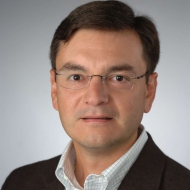
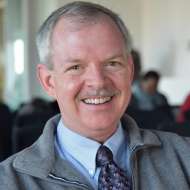
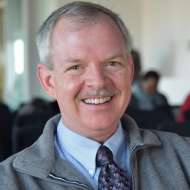
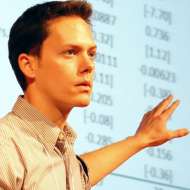
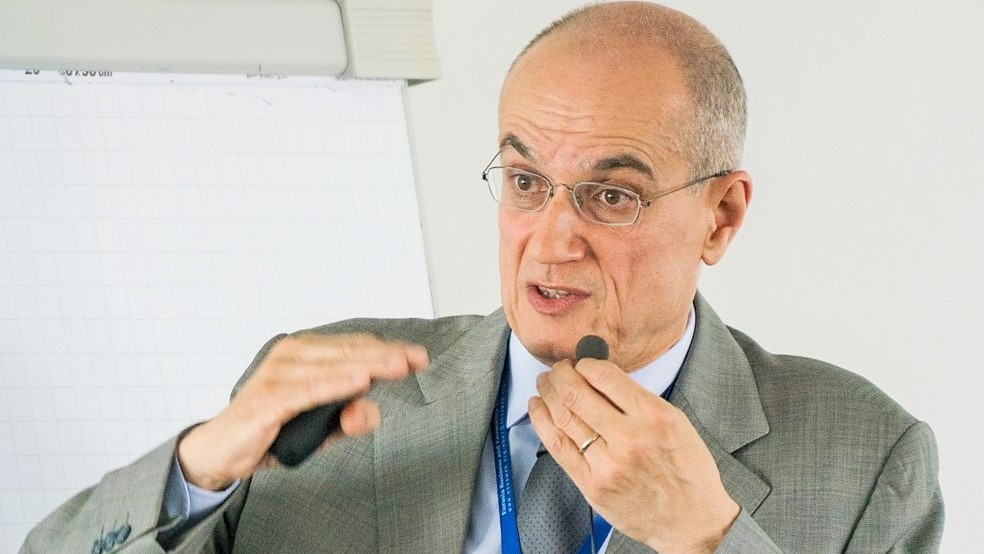
With immediate effect, Alfonso Flores-Lagunesjoins the group of Editors of the Journal of Population Economics. He is aProfessor of Economics at the Maxwell School of Citizenship & Public Affairs, Syracuse University, USA, and a Section Editor of the Springer Handbook “Labor, Human Resources and Population Economics” for “Methods and Data”. He will strengthen the editorial team on issues related to the evaluation of public programs, education and health.
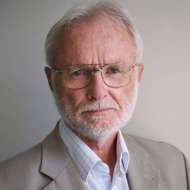
Alfonso Flores-Lagunes
He will work with Editors Shuaizhang Feng (Jinan University), Oded Galor (Brown University), Terra McKinnish (University of Colorado Boulder), Grégory Ponthière (UCLouvain), Editor-in-Chief Klaus F. Zimmermann (UNU-MERIT) and with Managing Editors Michaella Vanore (UNU-MERIT) and Madeline Zavodny (University of North Florida).
A new GLO Discussion Paper shows that short-time work accounts for almost all of the working-time reduction in Germany during the pandemic.
The Global Labor Organization (GLO) is an independent, non-partisan and non-governmental organization that functions as an international network and virtual platform to stimulate global research, debate and collaboration.
Author Abstract: We analyse measures of internal flexibility taken to safeguard employment during the Coronavirus Crisis in comparison to the Great Recession. Cyclical working-time reductions are again a major factor in safeguarding employment. Whereas during the Great Recession all working-time instruments contributed to the reduction in working time, short-time work (STW) now accounts for almost all of the working-time reduction. STW was more rapidly extended, more generous, and for the first time a stronger focus was put on securing household income on a broad basis. Still, the current crisis is more severe and affects additional sectors of the economy where low-wage earners are affected more frequently by STW and suffered on average relatively greater earnings losses. A hypothetical average short-time worker had a relative income loss in April 2020 that was more than twice as large as that in May 2009. Furthermore, marginal employment is affected strongly but not protected by STW.
The new GLO Discussion Paper finds that Dutch graduates from international programsstart their career with higher wages and the initial wage advantages persist in the long-run.
The Global Labor Organization (GLO) is an independent, non-partisan and non-governmental organization that functions as an international network and virtual platform to stimulate global research, debate and collaboration.
Author Abstract: International study programmes are increasing in number worldwide, but little is known about the impact on local students’ job prospects, especially in a non-English speaking countries. Using rich administrative data from Statistics Netherlands, we analyse labour market outcomes of native graduates in master programmes of Dutch universities between 2006 to 2014 within 5 years after graduation. A coarsened exact matching analysis within cohort-university-detailed field of study group addresses the self-selection issue by generating a matched sample of students with similar characteristics. We find that graduates from international programmmes obtain a wage premium of 2.3% starting from the 1st year after graduation, ceteris paribus. The wage premium keeps increasing by about 1% every year. We investigate the mechanisms through which the wage premium operates. The wage premia can neither be explained by wage increase via cross-firm mobility, nor by faster upward mobility within a firm. Instead, evidence point towards the differential characteristics of the first job upon graduation. Graduates from international programmes are much more likely to choose large firms that have a higher share of foreign-born employees and have business of trade for the first job. They get a head start in wage level and the initial wage advantages persist in the long-run.
A new paper published ONLINE FIRST with free OPEN ACCESS shows that the life satisfaction of elderly people in West Germany declined; they are experiencing their remaining lifetime in states of dissatisfaction.
The Global Labor Organization (GLO) is an independent, non-partisan and non-governmental organization that functions as an international network and virtual platform to stimulate global research, debate and collaboration.
Increasing longevity and life satisfaction: Is there a catch to living longer?
by Janina Nemitz
Published ONLINE FIRST 2021: Journal of Population Economics OPEN ACCESS
Author Abstract: Human longevity is rising rapidly all over the world, but are longer lives more satisfied lives? This study suggests that the answer might be no. Despite a substantial increase in months of satisfying life, people’s overall life satisfaction declined between 1985 and 2011 in West Germany due to substantial losses of life satisfaction in old age. When compared to 1985, in 2011, elderly West Germans were, on average, much less satisfied throughout their last five years of life. Moreover, they spent a larger proportion of their remaining lifetime in states of dissatisfaction, on average. Two important mechanisms that contributed to this satisfaction decline were health and social isolation. Using a broad variety of sensitivity tests, I show that these results are robust to a large set of alternative explanations.
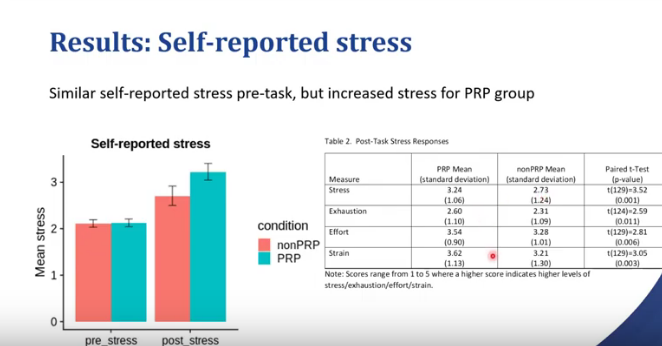
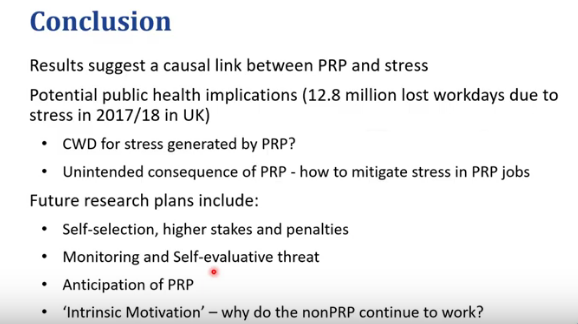
The new GLO Discussion Paper reveals the detrimental effects performance-related paymay have on health.
The Global Labor Organization (GLO) is an independent, non-partisan and non-governmental organization that functions as an international network and virtual platform to stimulate global research, debate and collaboration.
Author Abstract: This study examines the efficiency and distributional effects of selected labor market institutions in Albania, a rather underresearched country. An initial overview of the postcommunist developments articulates why Albania has the poorest labor market performance among other South East European countries. Using a set of mixed qualitative and descriptive quantitative methods we find evidence of inefficient segmental effects and a predatory structure of labor market institutions which noticeably diverge from the efficient institutions’ point of reference. The institutional/welfare regime at the cross-national level points out at a relationship between the labor market institutional framework and labor market performance, as measured by unemployment. At the country level, a disproportional relationship between the “de jure” labor market regulation and unemployment is identified, which is also moderated by the interaction between labor market and economic institution
The new GLO Discussion Paper reveals the weaknesses of Albanian labor market institutions.
The Global Labor Organization (GLO) is an independent, non-partisan and non-governmental organization that functions as an international network and virtual platform to stimulate global research, debate and collaboration.
Author Abstract: This study examines the efficiency and distributional effects of selected labor market institutions in Albania, a rather underresearched country. An initial overview of the postcommunist developments articulates why Albania has the poorest labor market performance among other South East European countries. Using a set of mixed qualitative and descriptive quantitative methods we find evidence of inefficient segmental effects and a predatory structure of labor market institutions which noticeably diverge from the efficient institutions’ point of reference. The institutional/welfare regime at the cross-national level points out at a relationship between the labor market institutional framework and labor market performance, as measured by unemployment. At the country level, a disproportional relationship between the “de jure” labor market regulation and unemployment is identified, which is also moderated by the interaction between labor market and economic institution
School-to-Work Transition: An International Comparative Perspective
for: International Journal of Manpower. Guest Editor: Francesco Pastore. Professor Pastore is Head of the GLO Cluster on School-to-Work Transition and GLO Country Lead Italy.
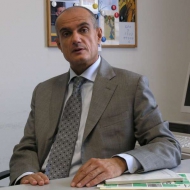
Francesco Pastore
The school-to-work transition is at the centre of several academic and public debates. It is behind the debate on persistent youth unemployment in many countries. It is also at the centre of the debate on the future of work and the need to adapt educational and training institutions to the needs of the fourth industrial revolution which is ongoing at a pace which has been clearly accelerated by the COVID-19 emergency.
The new GLO Discussion Paper shows that deregulation creates jobs.
The Global Labor Organization (GLO) is an independent, non-partisan and non-governmental organization that functions as an international network and virtual platform to stimulate global research, debate and collaboration.
Author Abstract: We examine a deregulation of German pharmacists to assess its effects on retail and labor markets. From 2004 onward, the reform allowed pharmacists to expand their single-store firms and to open or acquire up to three affiliated stores. This partial deregulation of multi-store prohibition reduced the cost of firm expansion substantially and provides the basis for our analysis. We develop a theoretical model that suggests that the general limitation of the total store number per firm to four is excessively restrictive. Firms with high managerial efficiency will open more stores per firm and have higher labor demand. Our empirical analysis uses very rich information from the administrative panel data on the universe of pharmacies from 2002 to 2009 and their affiliated stores matched with survey data, which provide additional information on the characteristics of expanding firms before and after the reform. We find a sharp immediate increase in entry rates, which continues to be more than five-fold of its pre-reform level after five years for expanding firms. Expanding firms can double revenues but not profits after three years. We show that the increase of the number of employees by 50% after five years and the higher overall employment in the local markets, which increased by 40%, can be attributed to the deregulation.
TheGLO Virtual Seminar is a monthly internal GLO research event chaired by GLO Director Matloob Piracha and hosted by the GLO partner institution University of Kent. The results are available on the GLO website and the GLO News section, where also the video of the presentation is posted. All GLO related videos are also available in the GLO YouTube channel. (To subscribe go there.)
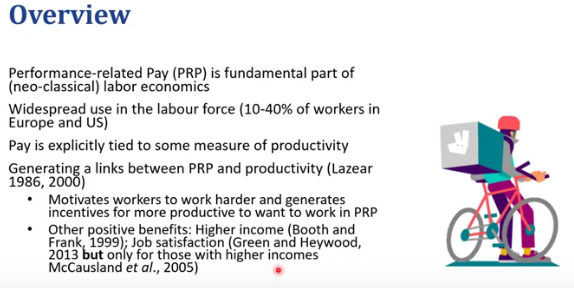
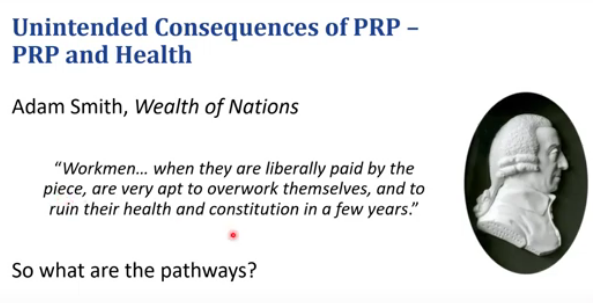
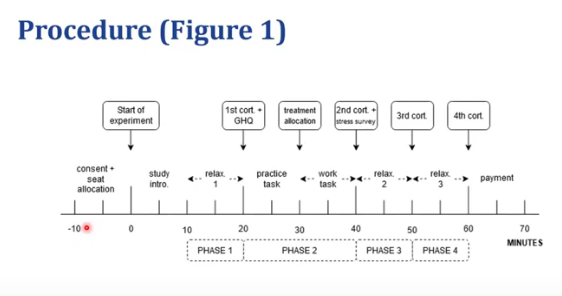
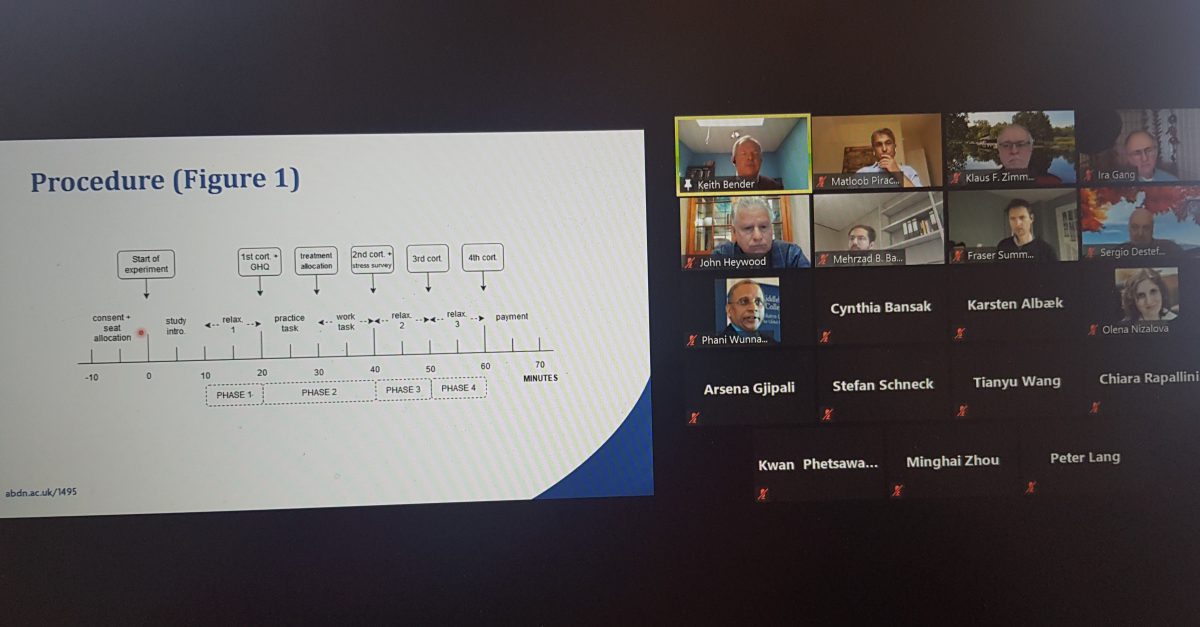
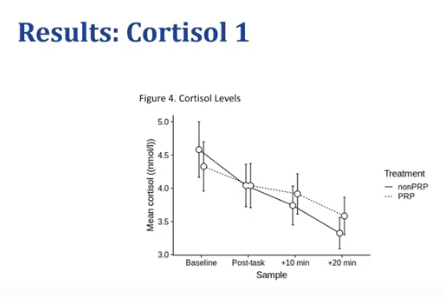
The last seminar was given on May 6, 2021, London/UKat 1-2 pm, by Keith Bender, University of Aberdeen and GLO on Employment Contracts and Stress. See below a report and the full video of the seminar.
A new GLO Discussion Paper finds almost no statistically significant effects of a 6 to 9 month career interruption for young German men, with the exception of hourly wages.
The Global Labor Organization (GLO) is an independent, non-partisan and non-governmental organization that functions as an international network and virtual platform to stimulate global research, debate and collaboration.
Author Abstract: In this paper, we estimate the effects of mandatory military service by exploiting the post-cold war decrease in the need for soldiers causing a substantial number of potential conscripts not to be drafted into the German military. Specifically, using previously unavailable information on degree of fitness in the military’s medical exam as a control variable, we test for the effects of mandatory military service on wages; employment; marriage/partnership status; and satisfaction with work, financial situation, health, family life, friends, and life in general. We find almost no statistically significant effects of this 6 to 9 month career interruption for young German men, with the exception of hourly wage, which shows a negative point estimate of -15 percent with a large confidence interval of between -30 and -0.2 percent. This interval estimate is consistent with previous findings for the United States, Denmark, and the Netherlands.
The findings in a new GLO Discussion Paper suggest that policies supporting female higher education and rural-urban mobility could reduce persistent inequalities in Eswatini’s labor market outcomes
The Global Labor Organization (GLO) is an independent, non-partisan and non-governmental organization that functions as an international network and virtual platform to stimulate global research, debate and collaboration.
Author Abstract: Persistent gender gaps characterize labor markets in many African countries. Utilizing Eswatini’s first three labor market surveys (conducted in 2007, 2010, and 2013), this paper provides first systematic evidence on the country’s gender gaps in employment and earnings. We find that women have notably lower employment rates and earnings than men, even though the global financial crisis had a less negative impact on women than it had on men. Both unadjusted and unexplained gender earnings gaps are higher in self-employment than in wage employment. Tertiary education and urban location account for a large part of the gender earnings gap and mitigate high female propensity to self-employment. Our findings suggest that policies supporting female higher education and rural-urban mobility could reduce persistent inequalities in Eswatini’s labor market outcomes as well as in other middle-income countries in southern Africa.
A new GLO Discussion Paper confirms a strong relationship between exposure to technological risk and support for social safety nets among men but not for women.
The Global Labor Organization (GLO) is an independent, non-partisan and non-governmental organization that functions as an international network and virtual platform to stimulate global research, debate and collaboration.
Author Abstract: This paper investigates the role of exposure to technological risk in shaping social policy preferences, specifically on support for universal basic income and means-tested generalised minimum income. Evidence is provided for Italy, to exploit the availability of high-quality data, allowing measures of two dimensions of technological risk. Objective risk hinges upon the degree of substitutability of one’s occupation by machines, while subjective risk concerns a worker’s perception of their substitutability. We posit that exposure to technological risk induces individuals to ask for protection, and thus increases support for social policy. We test two hypotheses: first, that exposure to objective risk of replacement by machines is correlated with support for both safety nets; second, that such effect is increased by high perception of risk. On the whole, results confirm a strong relationship between exposure to technological risk and support for social safety nets, once objective risk is disentangled from subjective perceptions. However, we find that such relationship only holds for men, while it cannot be confirmed for women.
A new GLO Discussion Paper highlights that the level of parental education is more relevant than the level of parental occupational skill in individuals’ educational and social opportunities.
The Global Labor Organization (GLO) is an independent, non-partisan and non-governmental organization that functions as an international network and virtual platform to stimulate global research, debate and collaboration.
Author Abstract: In this paper, we explore channels by which household background determines an individual’s educational and social opportunities in Italy. Our analysis relies on a rich dataset that contains data both on individuals and their real parents, as well as information on individuals’ non-cognitive skills. This paper also represents the first attempt to evaluate if and to what extent personality traits affect educational and occupational opportunities in Italy and how they interact with household background. The results highlight that the level of parental education is more relevant than the level of parental occupational skill in individuals’ educational and social opportunities. The inclusion of ‘Big-5’ variables in the model helps control for omitted variables and reduces the unobserved heterogeneity in intergenerational social mobility among individuals with the same level of education and skills. Our results depict a dual and unequal labour market.
A new GLO Discussion Paper provides long-term evidence that sentiment analysis of Tweets can provide reliable and timely information on well-being.
The Global Labor Organization (GLO) is an independent, non-partisan and non-governmental organization that functions as an international network and virtual platform to stimulate global research, debate and collaboration.
Author Abstract: In this article we describe how well-being changed during 2020 in ten countries, namely Australia, Belgium, France, Germany, Great Britain, Italy, Luxembourg, New Zealand, South Africa, and Spain. Our measure of well-being is the Gross National Happiness (GNH), a country-level index built applying sentiment analysis to data from Twitter. Our aim is to describe how GNH changed during the pandemic within countries, to assess its validity as a measure of well-being, and to analyse its correlates. We take advantage of a unique data-set made of daily observations about GNH, generalized trust and trust in national institutions, fear concerning the economy, loneliness, infection rate, policy stringency and distancing. To assess the validity of data sourced from Twitter, we exploit various sources of survey data, such as Eurobarometer and consumer satisfaction, and big data, such as Google Trends. Results indicate that sentiment analysis of Tweets can provide reliable and timely information on well-being. This can be particularly useful to timely inform decision-making.
A new GLO Discussion Paper finds that Italian firms managed by a CEO that belongs to a family with past emigration experience tend to perform better and to be more productive.
The Global Labor Organization (GLO) is an independent, non-partisan and non-governmental organization that functions as an international network and virtual platform to stimulate global research, debate and collaboration.
Author Abstract: We study the effect of the attitudes of a CEO’s ancestors on firm performance. To do so, we collect detailed information on emigrants from Italian municipalities during the Age of Mass Migration (1892-1924) from Ellis Island ships lists and use emigration experience as a proxy for ancestors’ risk propensity. We adopt an epidemiological approach complemented with an instrumental variables strategy and find that Italian firms managed by a CEO that belongs to a family with past emigration experience tend to perform better and to be more productive. In line with an inter-generational transmission of attitudes hypothesis, we show a positive relationship between the emigration experience of a CEO’s ancestors and alternative measures of corporate risk-taking. The attitudes of a CEO’s ancestors have as well consequences on firm solvency and on the cost of capital.
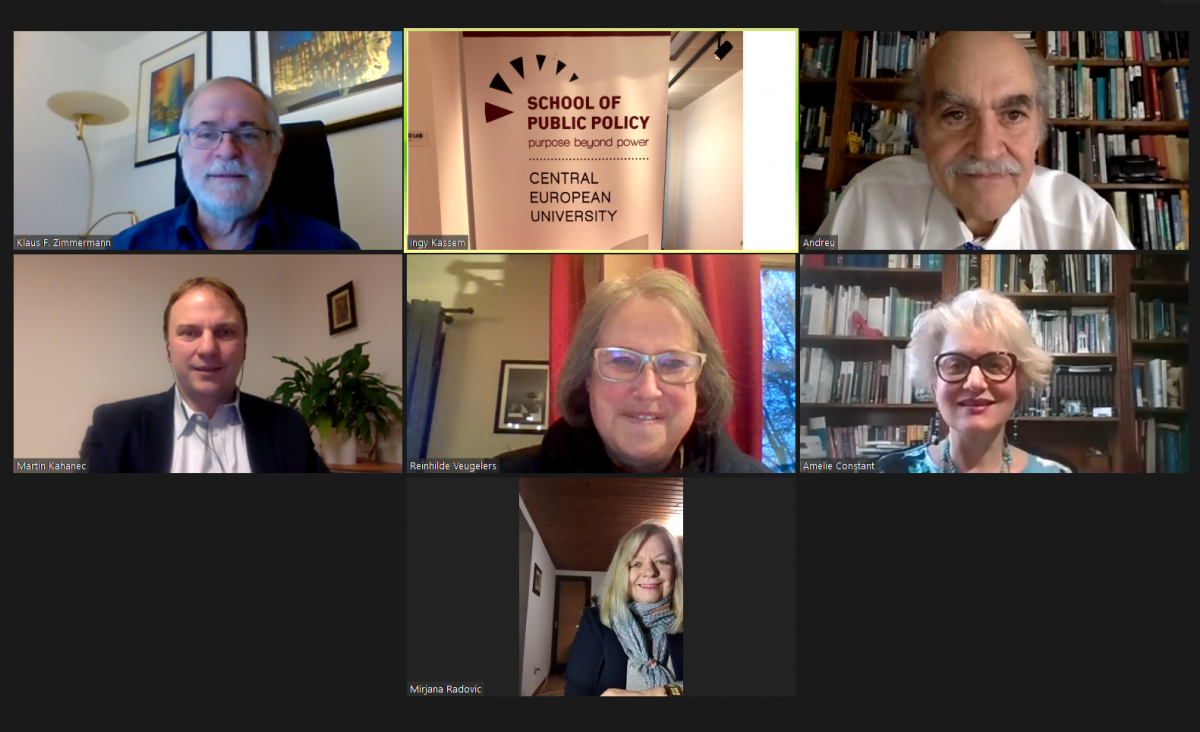
May 17, 2021: “Human Resources Challenges” Virtual Workshop of the Academia Europaea (AE) Section “Economics, Business and Management Sciences”, all CET/Vienna. See also: Academia Europaea Website; CEU Website.
PROGRAM
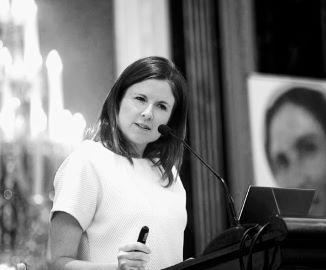
Ingy Kassem
Moderator of the event: Ingy Kassem (Central European University, Executive Assistant to the Head of the School of Public Policy)
11.00 – 11.10 am Welcome
Ingy Kassem (CEU), Martin Kahanec (MAE & CEU), Klaus F. Zimmermann (MAE, UNU-MERIT & GLO)
11.10 – 12.30 am SESSION I: Review of Knowledge Both presentations will survey relevant literature. Video of Session I.
11.10 – 11.50 am Marco Vivarelli (MAE & Università Cattolica Milano) Technology, Employment and Skills
11.50 – 12.30 am Pieter Bevelander (MAE & Malmö University) with Haodong Qi Migration and Aging
12.30 – 13.00 pm Lunch Break (Breakout room for exchange and snacks; you need to bring your own food and drinks; or just take a power nap)
13.00 – 15.00 pm SESSION II:Covid-19 Research Both presentations are based on fresh and elaborated research papers. Videoof Session II.
13.00 – 14.00 pm Martin Kahanec (MAE & CEU) with Lukas Laffers and Bernhard Schmidpeter The Impact of Mass Antigen Testing for COVID-19 on the Prevalence of the Disease
14.00 – 15.00 pm Alexander Kritikos (DIW Berlin & Potsdam University) with Daniel Graeber & Johannes Seebauer COVID-19: A Crisis of the Female Self-employed
A new GLO Discussion Paper details what happened to the wage distribution in Italy during the first wave of the COVID-19 pandemic.
The Global Labor Organization (GLO) is an independent, non-partisan and non-governmental organization that functions as an international network and virtual platform to stimulate global research, debate and collaboration.
Author Abstract: This paper investigates what happened to the wage distribution in Italy during the first wave of the COVID-19 pandemic. It shows which categories of workers and economic sectors have suffered more than others and to what extent both the actual level of smart-working and the ability to Working From-Home can influence the wage distribution. We use a unique dataset relying on the merging of two sample surveys: the Italian Labor Force Survey set up by National Institute of Statistics and the Italian Survey of Professions conducted by the National Institute for Public Policy Analysis. We estimate quantile regression models accounting for selection. First, the findings reveal that the pandemic has affected the wages of the whole workers, but the effect is higher at the bottom of the wage distribution. Second, the actual working from home mitigates the negative distributional consequences of the COVID-19 observed for those at the bottom of the wage distribution. However, the advantage of workers at the bottom tail of the wage distribution seems to lessen in the long term once the health emergency is passed. Third, looking at sectoral heterogeneity, retail and the restaurant are the most hit sectors in terms of wage loss. Fourth, separating by gender, men have been mostly hit by the pandemic, particularly at lowest deciles, though they benefited more from working at home at higher deciles. Finally, women appear as the one that in the long run would benefit more from increasing working from home possibility.
A new GLO Discussion Paper finds that previous crises have typically lead not only to more unemployment but also to larger numbers of discouraged unemployed and thus more inactivity.
The Global Labor Organization (GLO) is an independent, non-partisan and non-governmental organization that functions as an international network and virtual platform to stimulate global research, debate and collaboration.
Author Abstract: This article discusses the evolution of key labour market indicators in the EU-27 countries between 2019 and 2020, i.e. between the year before the covid-19 crisis broke out and the year in which it impacted the economy heavily. Whereas earlier policy-oriented studies have dealt with the evolution of unemployment in 2020, often country by country, this article focuses on the evolution of unemployment as well as inactivity across European countries. Indeed, previous crises have typically lead not only to more unemployment but also to larger numbers of discouraged unemployed and thus more inactivity. It appears that the Southern European countries, in particular, recorded increases in inactivity, while the Baltic States experienced higher unemployment. In many other countries, unemployment and inactivity remained remarkably stable despite covid-19.
A new GLO Discussion Paper provides a theoretical framework to show that offshoring to a different time zone is beneficial even when the complexity of stages of production varies.
The Global Labor Organization (GLO) is an independent, non-partisan and non-governmental organization that functions as an international network and virtual platform to stimulate global research, debate and collaboration.
Author Abstract: The paper extends Dei (2010) to check the role of time zone difference on offshoring of service tasks when the quality of workers varies between the partner countries. We frame a model where partner countries are located in non-overlapping time zones, and the skill level of the partner country workers is lower than that of the domestic workers. In our model, service production is divided into two sequential stages, and output is a supermodular function of the skill of workers and time. The problem of the service producers is to choose between domestic production and offshoring. Domestic production employs high-quality skilled labours but the time management is inefficient. On the other hand, offshoring to a non-overlapping time zone helps a firm to work round the clock, but the low quality of skilled labour lowers the output, though they cost less. In such a framework, we check under what conditions offshoring is beneficial. The analysis provides a condition where firms decide to offshore through a tradeoff between time and skill. We observe that the lesser of 24 hours domestic production use, the lower will be the threshold of acceptable skill level. Results show that offshoring to a different time zone is beneficial even when the complexity of stages of production vary. However, it is observed that only the relatively less-critical task is offshored. We further observe that availability of domestic lowquality labour does not benefit the firm, but foreign low-quality labour can be beneficially utilized through time-zone exploitation.
A new GLO Discussion Paper explains part of this success story not by differences in students’ and schools’ observed characteristics, but instead by Vietnam’s greater “productivity” of those characteristics in comparison to other countries.
The Global Labor Organization (GLO) is an independent, non-partisan and non-governmental organization that functions as an international network and virtual platform to stimulate global research, debate and collaboration.
Author Abstract: Despite being the poorest or second poorest participant, Vietnam performed much better than all other developing countries, and even ahead of wealthier countries such as the U.S. and the U.K., on the 2012 and 2015 PISA assessments. We provide a rigorous investigation of Vietnam’s strong performance. After making various parametric and non-parametric corrections for potentially non-representative PISA samples, including bias due to Vietnam’s large out-of-school population, Vietnam still remains a large positive outlier conditional on its income. Possible higher motivation of, and coaching given to, Vietnamese students only partly explains Vietnam’s performance, and this is also the case for various observed household- and school-level variables. Finally, Blinder-Oaxaca decompositions indicate that the gap in average test scores between Vietnam and the other participating countries is due not to differences in students’ and schools’ observed characteristics, but instead to Vietnam’s greater “productivity” of those characteristics.
A new paper published ONLINE FIRST with free OPEN ACCESSfinds for Denmark that women with a second-born brother acquire more traditional gender roles as measured through their choice of occupation and partner.
The Global Labor Organization (GLO) is an independent, non-partisan and non-governmental organization that functions as an international network and virtual platform to stimulate global research, debate and collaboration.
Author Abstract: I examine how one central aspect of the family environment—sibling sex composition—affects women’s gender conformity. Using Danish administrative data, I causally estimate the effect of having a second-born brother relative to a sister for first-born women. I show that women with a brother acquire more traditional gender roles as measured through their choice of occupation and partner. This results in a stronger response to motherhood in labor market outcomes. As a relevant mechanism, I provide evidence of increased gender-specialized parenting in families with mixed-sex children. Finally, I find persistent effects on the next generation of girls.
A new paper published ONLINE FIRST with free OPEN ACCESSfinds for Finland that higher private day care allowances have no effect on employment while higher home care allowances increase the length of home care.
The Global Labor Organization (GLO) is an independent, non-partisan and non-governmental organization that functions as an international network and virtual platform to stimulate global research, debate and collaboration.
Back to work or stay at home? Family policies and maternal employment in Finland.
Author Abstract: The employment effects of family policies depend on the mother’s labor market attachment and on the age of the child. We study the effects of child home care (cash-for-care) and private day care allowances on mothers’ return to employment after childbirth. Our identification strategy exploits changes in municipal-level subsidies. We find that higher private day care allowances have no effect while higher home care allowances increase the length of home care. A 100-euro higher level of home care allowance prolongs home care by 2–3 months, on average. The home care allowance combined with low labor market attachment and low earnings potential pre-birth delay the return to employment. However, the effect of the allowance diminishes over time. Higher subsidies have no impact by the time a child turns two. Reductions in subsidies stimulate a faster return to employment.
A new GLO Discussion Paper advocates neo-humanism for a world in which the well-being of people comes before the wellbeing of markets, in which promoting cooperation and social relations represents the starting point for better lives, and a peaceful and respectful coexistence with other species on Earth.
The Global Labor Organization (GLO) is an independent, non-partisan and non-governmental organization that functions as an international network and virtual platform to stimulate global research, debate and collaboration.
Author Abstract: A series of crises, culminating with COVID-19, shows that going “Beyond GDP” is urgently necessary. Social and environmental degradation are consequences of emphasizing GDP as a measure of progress. This degradation created the conditions for the COVID-19 pandemic and limited the efficacy of counter-measures. Additionally, rich countries did not fare the pandemic much better than poor ones. COVID-19 thrived on inequalities and a lack of cooperation. In this article we leverage on defensive growth models to explain the complex relationships between these factors, and we put forward the idea of neohumanism, a cultural movement grounded on evidence from quality-of-life studies. The movement proposes a new culture leading towards a socially and environmentally sustainable future. Specifically, neo-humanism suggests that prioritizing well-being by, for instance, promoting social relations, would benefit the environment, enable collective action to address public issues, which in turn positively affects productivity and health, among other behavioral outcomes, and thereby instills a virtuous cycle. Arguably, such a society would have been better endowed to cope with COVID-19, and possibly even prevented the pandemic. Neo-humanism proposes a world in which the well-being of people comes before the wellbeing of markets, in which promoting cooperation and social relations represents the starting point for better lives, and a peaceful and respectful coexistence with other species on Earth.
A new GLO Discussion Paper expects a decline in fertility in Pakistan caused by the disease.
The Global Labor Organization (GLO) is an independent, non-partisan and non-governmental organization that functions as an international network and virtual platform to stimulate global research, debate and collaboration.
Author Abstract: An aspect of the Covid-19 pandemic that merits attention is its effects on marriage and childbirth. Although the direct fertility effects of people getting the virus may be minor, the impact of delayed marriages due to the first preventive lockdown, such as that imposed in Pakistan from March 14 to May 8 2020, and the closure of marriage halls that lasted till September 14 may be non-negligible. These demographic consequences are of particular import to developing countries such as Pakistan where birth rates remain high, marriage is nearly universal, and almost all child- bearing takes place within marriage. Based on historic marriage patterns, we estimate that the delay in nuptiality during the first phase of coronavirus outbreak may affect about half of the marriages that were to take place during the year. In Pakistan, childbearing begins soon after marriage, and about 37% of Pakistani married women give birth to their first child within twelve months of marriage. A sizeable number out of these around 400,000 annual births that occur within twelve months of the marriage may consequently be delayed. Postponement of marriages due to the accompanying difficult economic situation and employment precariousness should accentuate this fertility effect. The net fertility impact of the Covid-19 outbreak would ultimately depend not only on the delay in marriages but also on the reproductive behavior of existing couples.
Recently GLO and Includovate joined forces, including vice-versa the set of institutional supporters. On this occasion, Kristie Drucza, the CEO of Includovate gave an interview to reveal mission and objectives of the organization. More information.
Dr. Kristie Drucza, CEO of Includovate
With over 17-years of experience as a community developer, gender and inclusion adviser, or researcher, Kristie Drucza is theoretically strong on gender, human rights/child rights, and social inclusion, particularly within a developing country context.
She completed her PhD in Political Anthropology on social inclusion and has a Master’s in Applied Anthropology and Participatory Development specializing in gender and has a passion for building partnerships and capacity for systems change around social inclusion.
Her passion for applied research and social inclusion has driven her education, her career, and the launch of Includovate.
Throughout her varied career, she has conducted 12+ mixed-method evaluation projects for major donor country programs, including UNICEF and the UN.
She has built a reputation for innovative, participatory data collection methods with stakeholders of all types, e.g., people with disabilities, NGO and government officials, youth, the private sector, and women.
As founder and CEO of Includovate, she has been both the administrative and research team lead of 10 experts to deliver various assignments for the International Labour Organization, World Bank, Care International, WorldFish, International Rice Research Institute, and the International Water Management Institute.
Kristie Drucza:Includovate is a feminist research incubator that ‘walks the talk’. We decolonize research by employing researchers who have a lived experience of the topic being studied (this includes people living with disabilities and people from diverse religious and ethnic backgrounds). Includovate’s mission is to incubate transformative and inclusive solutions for measuring, studying and changing discriminatory norms that lead to poverty, inequality and injustice. Following the meaning of our name, which is to innovate for inclusion, Includovate empowers researchers to co-create knowledge and make it more inclusive and sustainable.
GLO:What are core topics you intend to work on?
Kristie Drucza:Includovate studies and designs solutions for gender equality and social inclusion in close alignment with the UN’s Sustainable Development Goals. We usually conduct research in low- or middle- income countries and adopt an inclusive and empowering approach to the way we study and analyze. Poverty alleviation, social inclusion and protection, social policy and power relations, gender equality, disability and youth inclusion, behavior change and social norms, and migration and climate change are among our favorite research topics.
GLO: Are you a new global think tank with employed staff or a network of researchers?
Kristie Drucza: We are a certified social enterprise that consists of a network of researchers and employed staff who peer support one another to improve inclusive research capacity. Includovate was established in early 2019 as a self-sustaining incubator to change the way inequality and exclusion are reproduced through research and data analysis. Privileged researchers complete paid research assignments while helping to build the capacity of researchers from the global south that lack exposure to international opportunities. We have a social licence business model where the office in Australia helps to grow the office in Ethiopia. We have doubled in size at the start of 2020 to more than 40 employees. We have employed staff working globally and have access to a network of more than 700 registered consultants.
GLO: You are 100% female-owned, accident or program?
Kristie Drucza: The Ethiopian firm is owned by Ethiopian women and the Australian women who own the Australian Includovate help the Ethiopian firm to grow in a co-created sister-supported style. We specialize in women’s empowerment and a feminist approach to research for international development. We deliver best practices curation and truly deep dive into the intersectionality of inequality and exclusion. Not only that, 62% of Includovate employees are women as we hire through diverse mechanisms. Our work on women is accredited to the several feminist researchers we have who have worked on projects with UNIDO on the Economic Empowerment of women in the Green Industry, and a Policy Mapping with IDRC on Women’s Economic Empowerment, among others.
GLO:You are headquartered in Ethiopia and Australia. Is this a regional focus to meet the largest needs of your program?
Kristie Drucza:Includovate works globally. Once the Ethiopian office is more independent, Includovate‘s next goal is to open another office in Uganda by the end of 2022. We do have a regional focus on the Global South – however, are country agnostic as we feel the work in the development sector is needed across the globe!
GLO:How relevant is a physical presence at post-Covid times?
Kristie Drucza:Includovate has researchers and employees worldwide, and most of our communications are virtual (before and after the pandemic). Includovate recently re-opened our office in Ethiopia after a staff survey indicated an office was needed. Health and safety protocols are applied in the office and there is a roster for when people use the office. Every other Includovator works remotely.
GLO: You seem to have a strategic interest in Africa. Where do you see the major challenges and potentials to support development?
Kristie Drucza: We do have a strategic interest in Africa because the colonial legacy and power inequities are entrenched. The discrimination faced by African researchers is more pronounced than in other continents. This means that aside from language and analytical capacity, Includovate needs to deal with cross-cultural challenges, insecurities and the legacy of racism. We have to create an incubator that can develop the whole person (not just research outputs). Privileged researchers have as much work to do on themselves as those from Africa. Includovate’s vision is to create inclusive markets, businesses, states and institutions that provide men and women with the power, aspiration and ability to innovate for their development and advancement. By doing this, Includovate would like to decolonize research by supporting, and empowering, researchers from the Global South to publish and use the evidence to shape the policies in their countries. A major challenges is that we want to pay enumerators (those who collect data) a fair wage, but NGOs and other development actors employ a ‘value for money’ agenda that involves ‘a race to the bottom’ whereby budgets are cut until it is hard to maintain research ethics and quality and a decent wage. If we are able to secure funding we would develop a certification for enumerators that ensures safety and quality of researchers and the data collected. The whole research for the development sector needs to improve in standards. Includovate has a highly ambitious agenda and thankfully, we have the passion and people to deliver systems change for inclusive research for development.
************* With Kristie Drucza spoke Klaus F. Zimmermann, GLO President.
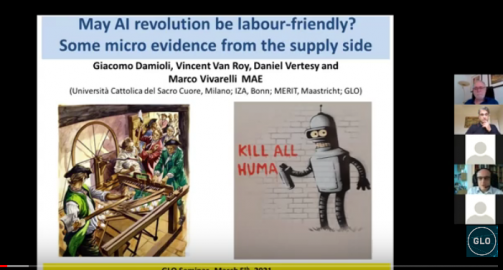
A new GLO Discussion Paper finds a positive and significant impact of AI patent families on employment, supporting the labour friendly nature of product innovation in the AI supply industries.
The Global Labor Organization (GLO) is an independent, non-partisan and non-governmental organization that functions as an international network and virtual platform to stimulate global research, debate and collaboration.
Author Abstract: This study investigates the possible job-creation impact of AI technologies, focusing on the supply side, namely the providers of the new knowledge base. The empirical analysis is based on a worldwide longitudinal dataset of 3,500 front-runner companies that patented the relevant technologies over the period 2000-2016. Obtained from GMM-SYS estimates, our results show a positive and significant impact of AI patent families on employment, supporting the labour friendly nature of product innovation in the AI supply industries. However, this effect is small in magnitude and limited to service sectors and younger firms, which are the leading actors of the AI revolution. Finally, some evidence of increasing returns seems to emerge; indeed, the innovative companies which are more focused on AI technologies are those obtaining the larger impacts in terms of job creation.
See also the recent GLO virtual Seminar on this paper: LINK
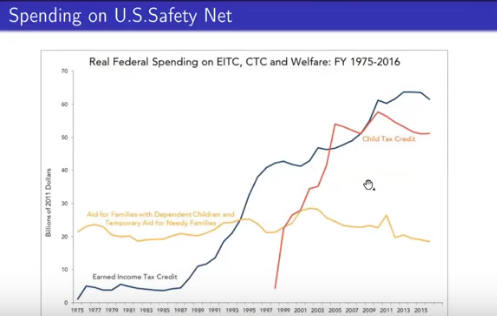
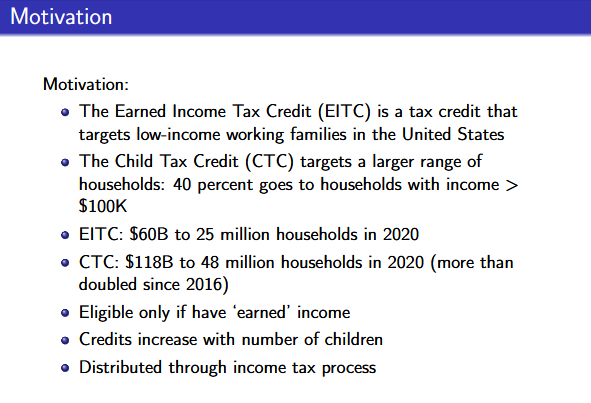
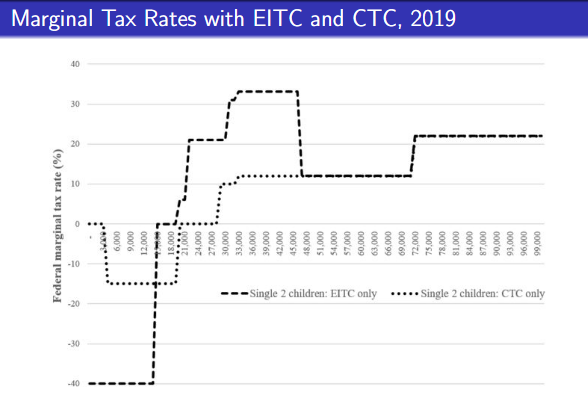
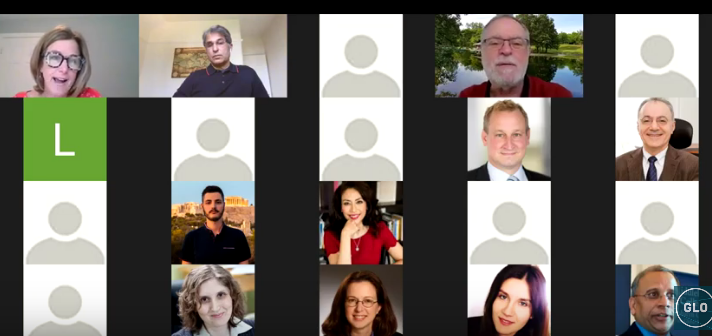
The Institute for Economic and Social Research (IESR) at Jinan University and the Global Labor Organization (GLO) are jointly organizing the Fourth IESR-GLO Virtual Conference. The conference this year will be held from June 24 (Thursday) to June 26 (Saturday), 2021 through Zoom. The theme is Social Safety Net and Welfare Programs. Robert Moffitt and Timothy Smeeding will be the keynote speakers.
The IESR-GLO annual conference is aimed to provide a platform for scholars and experts to exchange ideas on the current pressing economic issues through presentations of high-quality academic papers and policy discussions. Previous IESR-GLO Conferences have covered topics such as the Economics of Covid-19 in 2020 and on the Labor Markets in Belt and Road countries in 2019.
Submission
We welcome papers on topics related to Social Safety Net and Welfare Programs, especially social assistance programs.
Please submit a full paper or extended abstracts at
no later than 24:00 May 31, 2021 (Beijing Time, GMT+8).
The corresponding author will be notified of the decision by June 10, 2021.
No submission fee is required.
Time Structure on June 24 – 26, 2021
8.00-11.00 pm Beijing Time / 8:00-11.00 am New York / 1:00-4:00 pm London
Keynote speakers
Robert Moffitt
Robert A. Moffitt is the Krieger-Eisenhower Professor of Economics at Johns Hopkins University and holds a joint appointment at the Johns Hopkins Bloomberg School of Public Health. He obtained his Ph.D. degree from Brown University. His research interests are in the areas of labor economics and applied microeconometrics, with a special focus on the economics of issues relating to the low-income population in the U.S.. A large portion of his research has concerned the labor supply decisions of female heads of family and its response to the U.S. welfare system. He has published on the AFDC, Food Stamp, and Medicaid programs.
Moffitt has served as Chief Editor of the American Economic Review, Coeditor of the Review of Economics and Statistics, Chief Editor of the Journal of Human Resources, and as Chair of the National Academy of Sciences Panel to Evaluate Welfare Reform. He is currently editor of Tax Policy and the Economy.
Moffitt is also a Fellow of the Econometric Society, a Fellow of the Society of Labor Economists, a member of the National Academy of Sciences, a recipient of a MERIT Award from the National Institutes of Health, a recipient of a Guggenheim Fellowship, a Fellow of the American Academy of Arts and Sciences, and Past President of the Population Association of America.
Timothy Smeeding
Timothy Smeeding is Lee Rainwater Distinguished Professor of Public Affairs and Economics of the University of Wisconsin–Madison. He obtained his Ph.D. in Economics from the University of Wisconsin–Madison. He was director of the Institute for Research on Poverty from 2008–2014 and was the founding director of the Luxembourg Income Study from 1983-2006. He was named the John Kenneth Galbraith Fellow, American Academy of Political and Social Science in 2017.
Professor Smeeding’s recent work has been on social and economic mobility across generations, inequality of income, consumption and wealth, and poverty in national and cross-national contexts.
His recent publications include: SNAP Matters: How Food Stamps Affect Health and Well Being (Stanford University Press, 2015); Monitoring Social Mobility in the 21st Century (Annals of the American Academy of Political and Social Science, 2015); From Parents to Children: The Intergenerational Transmission of Advantage (Russell Sage Foundation, 2012); Persistence, Privilege and Parenting: The Comparative Study of Intergenerational Mobility (Russell Sage Foundation, 2011); The Handbook of Economic Inequality (Oxford University Press, 2009); Poor Kids in a Rich Country: America’s Children in Comparative Perspective (Russell Sage Foundation, 2003); and The American Welfare State: Laggard or Leader?, (Oxford University Press, 2010).
Klaus F. Zimmermann, GLO Shuaizhang Feng, Jinan University Sen Xue, Jinan University
Contact
For inquiries regarding the conference, please contact Sen Xue at sen.xue@jnu.edu.cn. General inquiries regarding the submissions should be directed to iesrjnu@gmail.com.
A new paper published ONLINE FIRST with free OPEN ACCESS documents a harming effect of the Fox News Channel in the United States on physical distancing during the COVID-19 pandemic.
The Global Labor Organization (GLO) is an independent, non-partisan and non-governmental organization that functions as an international network and virtual platform to stimulate global research, debate and collaboration.
Author Abstract: We document a causal effect of conservative Fox News Channel in the United States on physical distancing during COVID-19 pandemic. We measure county-level mobility covering all U.S. states and District of Columbia produced by GPS pings to 15-17 million smartphones and zip-code-level mobility using Facebook location data. Then, using the historical position of Fox News Channel in the cable lineup as the source of exogenous variation, we show that increased exposure to Fox News led to a smaller reduction in distance traveled and smaller increase in the probability to stay home after the national emergency declaration in the United States. Our results show that slanted media can have a harmful effect on containment efforts during a pandemic by affecting people’s behaviour.
The Handbook in “Labor, Human Resources and Population Economics” provides an integrated picture of knowledge about the economic and social behaviors and interactions of human beings on markets, in households, in companies and in societies.A fast evolving project by the GLO with a core basis in labor economics, human resources, demography and econometrics, it will provide a large and complete summary and evaluation of the scientific state of the art. Chapters are developed under the guidance of an engaged team of editors led by the GLO President administered in 30 sections.
to find out how to contribute to this exciting venture with an own chapter.
The Section “Technological Changes and the Labor Market” is directed by Marco Vivarelli, who is also the GLO Cluster Lead of the “Technological Change” area.The Section is just completing its set of 20 published papers now available for use, review and debate.List of the articles and links to access them are below.
The Handbook of Labor, Human Resources and Population Economics Editor: Klaus F. Zimmermann
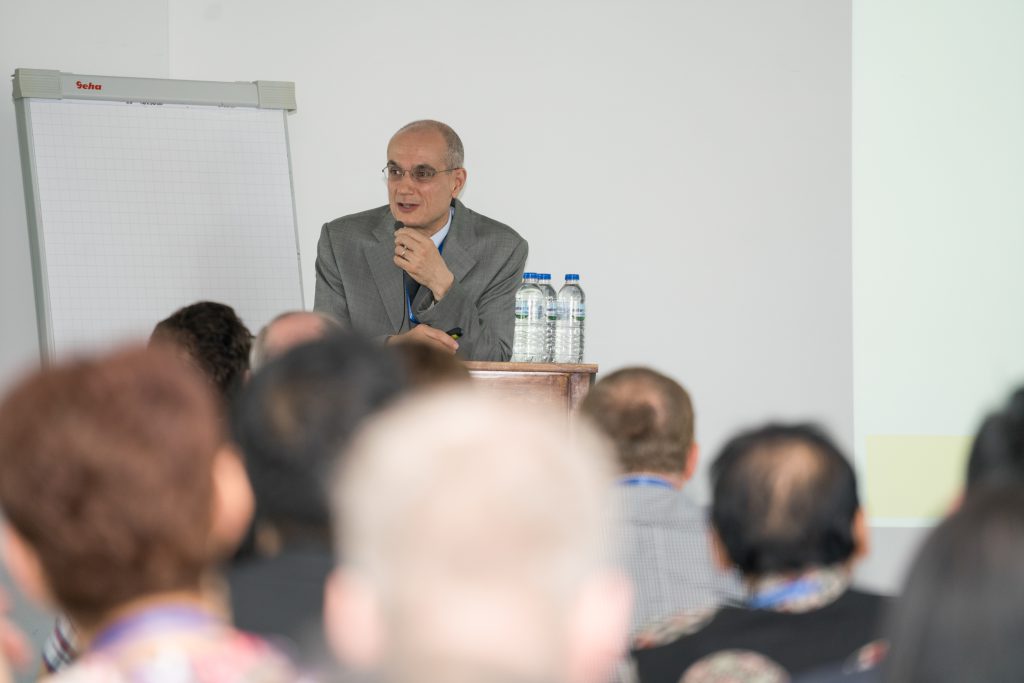
Section – Technological Changes and the Labor Market Marco Vivarelli, Section Editor Università Cattolica del Sacro Cuore Department of Economic Policy, Milan, Italy
Marco Vivarelli
Note: Find abstract links of the articles below the chapter titles.
Digitization and the Future of Work: Macroeconomic Consequences Melanie Arntz1,2, Terry Gregory3,1, Ulrich Zierahn5,1,4 1 Leibniz Centre for European Economic Research, 2University of Heidelberg, 3Institute of Labor Economics, IZA,4CESifo Research Network, 5Utrecht University
Innovation, Employment, and the Business Cycle Bernhard Dachs1, Martin Hud2, Bettina Peters2,3 1AIT Austrian Institute of Technology, 2Leibniz Centre for European Economic Research, 3University of Luxembourg
Why do employees participate in innovations? Skills and organisational design issues and the ongoing technological transformation, in production Nathalie Greenan, Silvia Napolitano Conservatoire National des Arts et Métiers
Quantity and Quality of Work in the Platform Economy Francesco Bogliacino1, Cristiano Codagnone2,3, Valeria Cirillo4, Dario Guarascio5 1Universidad Nacional de Colombia, 2Università degli Studi di Milano, 3Universitat Oberta de Catalunya, 4INAPP, National Institute for the Analysis of Public Policies, 5Università degli Studi di Roma
Integration in Global Value Chains and Employment Filippo Bontadini1, Rinaldo Evangelista2, Valentina Meliciani3, Maria Savona1 1University of Sussex, 2University of Camerino, 3University Luiss Guido Carli
A new GLO Discussion Paper finds a large number of over-educated workers with secondary and university level qualifications.
The Global Labor Organization (GLO) is an independent, non-partisan and non-governmental organization that functions as an international network and virtual platform to stimulate global research, debate and collaboration.
Author Abstract: This study examines the impact that over-education has on the earnings of private and public sector workers in Trinidad and Tobago. Using individual person’s data from the Continuous Sample Survey of the Population (CSSP) for the period 1991-2015, the returns of over-educated workers is estimated using a simple Quantile Regression approach. The labour force comprises of a large amount of over-educated workers who hold secondary and university level qualifications. The returns of workers employed in high-income jobs seems to be falling throughout the entire 1991-2015 period, while that of low and middle-income workers improved during 2004-2009 but declined thereafter the 2010-2015 as Trinidad and Tobago entered an economic recession. In addition, even though the wage returns of over-educated men, improves over the wage distribution, those in low and high-income jobs degenerated consistently throughout the 1991-2015 period. When compared to that of women, the opposite is true as their returns tends to worsen across much of the wage distribution. With any improvement being observed during 1991-2009 by low-income women.
A new GLO Discussion Paper investigates whetherthe socio-economic disadvantages that platform workers are likely to face are primarily channeled through lower incomes or more precarious working conditions.They are primarily students and face greater economic insecurity relative to all other occupations.
The Global Labor Organization (GLO) is an independent, non-partisan and non-governmental organization that functions as an international network and virtual platform to stimulate global research, debate and collaboration.
Author Abstract: The emergence of the platform economy has served as a defining feature of increasing fragmented labour markets in modern economies. Recent research on platform work, however, has struggled to quantify the socio-economic conditions of platform workers relative to other occupation groups. Moreover, it remains unclear if the socio-economic disadvantages that platform workers are likely to face are primarily channeled through lower incomes or their more precarious working conditions. This study uses representative survey data of platform workers in Italy to investigate their size, composition, and socio- economic conditions relative to individuals in other occupations. Our findings reveal that platform workers tend to be students and of younger age, but are diverse with respect to sex, educational attainment, and native-born status. We find that platform workers face greater economic insecurity relative to all other occupation classes. Strikingly, they also feature a rate of economic insecurity that is not significantly different from that of unemployed adults. Moreover, we find that the higher levels of insecurity are not primarily channeled through lower incomes; instead, higher rates of insecurity persist even when taking family incomes into account, suggesting that the precarity and volatility of platform work matter as much as income differences in shaping economic disadvantage. Results hold under analyses that account for selection into platform work. Our findings carry important consequences for understandings of the intensity and sources of socio- economic disadvantage of individuals engaged in platform work.
A new GLO Discussion Paper demonstrates how immigrant men following the 1965 Immigration and Nationality Act in the United States have low initial earnings and high earnings growth after all.A re-visit of an influential debate in migration economics.
The Global Labor Organization (GLO) is an independent, non-partisan and non-governmental organization that functions as an international network and virtual platform to stimulate global research, debate and collaboration.
Author Abstract: Two radically different descriptions of immigrant earnings trajectories in the U.S. have emerged. One asserts that immigrant men following the 1965 Immigration and Nationality Act have low initial earnings and high earnings growth. Another asserts that post-1965 immigrants have low initial earnings and low earnings growth. We describe the methodological issues that create this divide and show that low earnings growth becomes high earnings growth when immigrants are followed from their initial years in the U.S., earnings growth is allowed to vary with entry earnings, and-when following cohorts instead of individuals-sample restrictions commonly used by labor economists are avoided.
A new GLO Discussion Paper finds that the recent adoption of a two-child policy in China has substantially increased the number of second-child births.
The Global Labor Organization (GLO) is an independent, non-partisan and non-governmental organization that functions as an international network and virtual platform to stimulate global research, debate and collaboration.
Author Abstract: This study examines the consequences of relaxing birth quotas by exploiting an exogenous two-child policy adopted by local Chinese governments on different dates. Using China’s 2015 population census combined with a difference-in-differences framework, we find that the adoption of a two-child policy substantially increases the number of second-child births. The impact of the policy is more pronounced among couples who have higher fertility preferences and who are less sensitive to child-rearing costs. At the same time, this policy substantially decreases the number of first-child births. Child-rearing costs are a likely underlying mechanism for this decrease. All of these findings are in line with an extended Barro-Becker model.
GLO Policy Note No. 4 Theme 2: Inequalities and labor markets Theme 3: Future of Work
Working from home and income inequality in the time of COVID-19
A case study of Italy
by Luca Bonacini, Giovanni Gallo, Sergio Scicchitano
Luca Bonacini (University of Modena and Reggio Emilia, GLO)
Giovanni Gallo (Sapienza University of Rome, University of Modena and Reggio Emilia, GLO)
Sergio Scicchitano (National Institute for Public Policies Analysis – INAPP, GLO)
Luca Bonacini
Giovanni Gallo
Sergio Scicchitano
In a recent GLO Discussion Paper and just published in the Journal of Population Economics (Bonacini et al., 2021), we explore the potential consequences in labour income distribution of long-lasting increase in Working From Home (WFH) among Italian employees. Results show that an increase in WFH would be associated with an increase in the average labour income, but this potential benefit would not be equally distributed among employees. Specifically, an increase in WFH would favour male, older, high-educated, and high-paid employees. This “forced innovation” thus risks to exacerbate pre-existing inequalities in the labour market. As a consequence, this study suggests a series of policies aimed at alleviating inequality in the short run and, more importantly, that should play a rebalancing role, in the long run. ____________________
What we should know
To limit the number of deaths and hospitalisations due to the novel coronavirus, most governments decided to suspend many economic activities and restrict people’s freedom of mobility.
In this context, the opportunity to work from home (hereinafter called WFH) became of great importance, since it allows: employees to continue working and thus receiving wages, employers to keep producing services and revenues, and overall limits infection spread risk and pandemic recessive impacts.
Recent estimates for the US show that between February and May 2020 over one third of the labour force switched to WFH, resulting in about half of workers working remotely during the pandemic. Remote workers have quadrupled to 50% of US workforce (Brynjolfsson et al., 2020). Due to uncertainty about the duration of the health emergency and future contagion waves, the role of WFH in the labour market is further emphasized by the fact that it might become a new standard (rather than an unconventional) way of working in many economic sectors, possibly resulting in structural effects on the labour market worldwide (Baert et al., 2020).
Because of the WFH sudden prominence and growth, several studies recently investigated this phenomenon, especially with the objective of identifying the number of jobs that can be done remotely (Adams-Prassl et al., 2020; Dingel and Neiman, 2020; Mongey at al., 2020). However, the literature neglects potential effects of WFH on wage distribution and on income inequality in general.
What we do
This study is a first to show how a future increase in WFH would be related to changes in labour income levels and inequality.
We analyse to what extent an increase in the number of employees who have the opportunity to WFH (or at least an increase in the likelihood their professions can be performed from home) would influence the wage distribution, under the hypothesis that this WFH feasibility shift is long lasting.
We focus on Italy as an interesting case study because before the pandemic, the WFH practice was not widespread and it is the first Western country to adopt a lockdown of economic activities (on March 11). Barbieri et al. (2020) estimated that at least 3 million employees started to WFH because of lockdown measures, and a large number started even earlier due to the closure of schools and universities on March 5. Moreover, Italy was the European country with the lowest share of teleworkers before the crisis (Eurofound and ILO, 2017) and, because of the pandemic, it had to face a massive increase in WFH in a very short time without precise legislation and adequate policies.
Our analysis relies on a uniquely detailed dataset relying on the merge of two sample surveys: the Survey on Labour Participation and Unemployment (INAPP-PLUS) for the year 2018, which contains information on incomes, skills, education level, and employment conditions of approximately 45,000 working-age Italians and the Italian Survey of Professions (ICP) for the year 2013, which provides detailed information on the task-content of occupations. The analysis is conducted through an influence function regression method which allows to estimate the impact of marginal changes on an outcome variable distribution (see the paper for more details on the method).
What we find
Employees with high WFH feasibility levels are more often female, older, highly educated, and among those living in metropolitan areas.
Economic sectors being characterized by greater shares of employees with high WFH feasibility are: Finance and Insurance, Information and Communications, and Other Business Services (e.g., car renting, travel agencies, employment agencies).
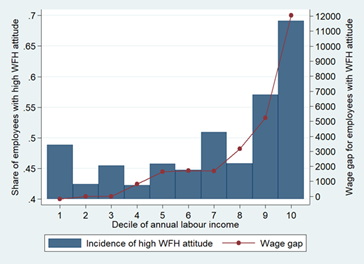
Figure 1 shows the wage gap between employees with high and low WFH feasibility and the share of WFH feasibility along the income deciles. The figure clearly shows that the wage gap is increasing along the distribution and reaches highest values in the last two decile groups, as well as the same incidence of high WFH feasibility among employees.
Figure 1 – Incidence of high WFH feasibility and wage gap in favor of employees with high feasibility levels by decile of annual income
What we suggest
WFH risks to exacerbate pre-existing inequalities in the labour market. In this respect, while during the current emergency, policies aimed at alleviating inequality in the short run (e.g. income support measures for the most vulnerable), should be implemented, long-term interventions are even more necessary in order to prevent future rise of inequalities in the labour market. These long-term policies go in three interrelated directions:
The necessary massive reorganisation of work, particularly in the field of reengineering of production processes based on new digital technologies and on the possibility offered in terms of work from home requires new and more widespread skills.
We need to promote through adequate economic and cultural incentives, non-compulsory education for youth coming from poorer households. This would include training courses, which would play an important role in reducing future unequal distribution of benefits related to an increase of WFH opportunities, by increasing human capital and favouring its complementarities with technology.
Our study highlights that while most of the increase in WFH will concern women, the wage premium would be borne by male employees. In this perspective, a possible, non-exhaustive solution could be offered by policies aimed at improving work–family reconciliation, that continues to be shouldered more significantly by women. In particular, we stress the importance of an improving of public childcare and financial support to households with children.
Our study brings out several policy issues for tackling inequalities that will arise in the labour market because of the current pandemic in particular the more than probable increase in Working From Home. Our results are based on Italian data, but they may be useful to policymakers in other countries as well and, in general, where COVID-19 has forced governments and businesses to rethink production processes with a more intense and stable use of WFH. __________________
References
Adams-Prassl, A., Boneva, T., Golin M., Rauh C., (2020). Inequality in the Impact of the Coronavirus Shock: Evidence from Real Time Surveys. IZA Discussion Paper No. 13183.
Baert, S. Lippens, L. Moens, E. Sterkens, P. Weytjens, J. (2020), How do we think the COVID-19 crisis will affect our careers (if any remain)?, GLO Discussion Paper, No. 520, Global Labor Organization (GLO), Essen.
Barbieri, T., Basso, G., Scicchitano, S., (2020). Italian Workers at Risk during the COVID-19 Epidemic, GLO Discussion Paper, No. 513, Global Labor Organization (GLO), Essen.
Bonacini, L., Gallo, G. & Scicchitano, S. (2021). Working from home and income inequality: risks of a ‘new normal’ with COVID-19. J Popul Econ 34, 303–360.
Brynjolfsson, E., Horton, J. Ozimek, A. Rock, D. Sharma, G. and Yi Tu Ye, H. (2020). Covid-19 and remote work: An early look at U.S. data. NBER Working Paper 27344.
Dingel, J. I. and B. Neiman (2020). How many jobs can be done at home? Journal of Public Economics 189, 104235.
Eurofound and the International Labour Office (2017), Working anytime, anywhere: The effects on the world of work, Publications Office of the European Union, Luxembourg, and the International Labour Office, Geneva.
Mongey, S., Pilossoph, L., Weinberg. A., (2020). Which Workers Bear the Burden of Social Distancing Policies?. NBER Working Paper No. 27085.
Note: The opinions expressed here are those of the authors and not of the GLO, which has no institutional position. Featured image: Charles-Deluvio-on-Unsplash
A new GLO Discussion Paper studies a model economy where a firm and its workforce are linked by an implicit contract and examine the dynamic behavioral properties.
The Global Labor Organization (GLO) is an independent, non-partisan and non-governmental organization that functions as an international network and virtual platform to stimulate global research, debate and collaboration.
Author Abstract: In this paper, we explore the dynamics of working hours and wages in a model economy where a firm and its workforce are linked to each other by an implicit contract. Specifically, we develop a deterministic and a stochastic framework in which the firm sets its level of labour utilization by considering that workers’ earnings tend to adjust in the direction of a fixed level. Without any uncertainty in firm’s profitability, we show that the existence and the properties of stationary solutions rely on factors that usually determine the enforceability of contracts and we provide evidence that wages tend to move countercyclically towards the allocation preferred by the firm. Moreover, we show that adding uncertainty does not overturn the counter-cyclical pattern of wages but is helpful in explaining their dynamic behaviour in response to demand shocks as well as their typical stickiness observed at the macro level.
A new paper published ONLINE FIRST with free READ ACCESS show that male scarcity (a decrease in the male-to-female sex ratio) induces an increase in the number and a decrease in the quality of children in a reasonable model framework and confirms this for post World War II Japan.
The Global Labor Organization (GLO) is an independent, non-partisan and non-governmental organization that functions as an international network and virtual platform to stimulate global research, debate and collaboration.
Consequences of war: Japan’s demographic transition and the marriage market
by Kota Ogasawara & Mizuki Komura
Published ONLINE FIRST 2021: Journal of Population Economics FREE READ LINK: https://rdcu.be/ci5pw
Author Abstract: This study explores the effects of imbalances in the sex ratio on both the quantity and the quality of children, with a focus on changes in intra-household bargaining power. We first present a theoretical model of intra-household bargaining in the presence of conflicting family goals within a couple, and show that male scarcity (a decrease in the male-to-female sex ratio) induces an increase in the number of children and a decrease in the quality of children. Second, using the impact of World War II on the sex ratio as a quasi-natural experiment, we establish empirically that the decrease in the male-to-female sex ratio in World War II contributed to a smaller decline in fertility and child mortality rates in postwar Japan. In particular, the fertility rate would have fallen by an additional 12% and the child mortality rate by an additional 13% between 1948 and 1970 absent the decrease in the sex ratio.
A new GLO Discussion Paper reviews and evaluates the concept of the quality of work and employment including both ‘decent work’ and the narrower concept of ‘job quality’.
The Global Labor Organization (GLO) is an independent, non-partisan and non-governmental organization that functions as an international network and virtual platform to stimulate global research, debate and collaboration.
Author Abstract: This review examines the concept of the quality of work and employment (QWE), including both ‘Decent Work’ and the narrower concept of ‘job quality’. The key axiom is that ‘quality’ relates to the extent and manner in which working conditions meet people’s needs from work. The review emphasises the multi-disciplinary nature of the topic. It discusses the concept’s objective character, its relationship with well-being, and its link with productivity. Important measurement issues are considered, including cost, international comparability, the choice of how many indices, the treatment of inequality and the problem of discipline insularity. Some theories of the antecedents of QWE imply universal trends, while others predict differentiation across countries and regions, attributable to labour market institutions and policy. The effects on well-being and health are studied in several disciplines, including a substantial research programme in psychology. Summary trends in Europe and distributions of job quality are presented for context, including gender gaps. This description shows gradual improvement in the physical environment of work and in working time quality over the decade from 2005. Yet the distribution of job quality in several domains is not at all closely related to a country’s GDP. The review concludes with a discussion of job quality policy making, and frames the ongoing research agenda.
A new paper published ONLINE FIRST with free READ ACCESS reveals that girls are mostly unaffected by peers from disrupted families, while boys exhibit more school problems in adolescence and higher arrest probabilities, less stable jobs, and higher probabilities of suffering from financial stress as young adults.
The Global Labor Organization (GLO) is an independent, non-partisan and non-governmental organization that functions as an international network and virtual platform to stimulate global research, debate and collaboration.
Short-run and long-run effects of peers from disrupted families
by Ziteng Lei
Published ONLINE FIRST 2021: Journal of Population Economics FREE READ LINK: https://rdcu.be/ciWuz
Author Abstract: I study the short-run and long-run effects of exposure to peers from disrupted families in adolescence. Using the National Longitudinal Study of Adolescent to Adult Health (Add Health) data, I find that girls are mostly unaffected by peers from disrupted families, while boys exposed to more peers from disrupted families exhibit more school problems in adolescence and higher arrest probabilities, less stable jobs, and higher probabilities of suffering from financial stress as young adults. These results suggest negative effects on non-cognitive skills but no effect on cognitive skills, as measured by academic performance. The dramatic increase in family disruption in the USA should thus receive more attention, as the intergenerational mobility and inequality consequences could be larger than anticipated as a result of classroom spillovers.
A new GLO Discussion Paper assesses firm data from World Bank enterprise surveys to obtain lessons from the early stages of the Coronavirus pandemic.
The Global Labor Organization (GLO) is an independent, non-partisan and non-governmental organization that functions as an international network and virtual platform to stimulate global research, debate and collaboration.
Author Abstract: This study uses evidence from World Bank enterprise surveys of a sample of firms from six countries in Southern Europe. It examines the early evidence of the effects of Covid-19 on labour markets. The evidence and the analysis are provided at a time when the pandemic is still in progress. The future progress of Covid-19 and government containment measures is uncertain, and the full economic consequences will probably continue to emerge after the end of the pandemic. The full extent of the impact on labour will probably not be the first of these. Nonetheless the possibility of learning lessons from the early stages of the pandemic is sufficiently important to make the exercise valuable. The study suggests that, despite efforts to support firms and hoard labour, there is a prospect of a significant number of firm closures with a consequent loss of employment. Temporary firm closures also represent a substantial loss of labour weeks. These are partly related to a significant number of workers subject to furloughs. Both temporary closures and furloughs impose costs that will be borne by firms, workers and government. The effects of Covid-19 on firms differ across sectors. Adverse effects tend to be higher in hospitality, non-essential retail and travel. A degree of gender segregation means that these are sectors with a high proportion of female workers and, in consequence, most of the countries in the sample exhibit an early decline of the share of women in employment. That many firms lack the capacity to survive further temporary closures of a similar duration to those in the earlier stages emphasises that the support provided in the near future is of critical importance to control employment losses through permanent firm closures.
Europe decided to abolish daylight saving time in 2021, since the save energy impact is debatable; but so far concrete actions remained elusive. Some evidence should not be overlooked. Based on natural experiments: Stratified demographic analyses for Indiana/USA indicate that daylight saving time had reduced mortality among males, females, and whites, but only among those aged 65 years and older. For Montevideo/Uruguay research identified a strong and statistically significant decrease in robbery. Two articles in the Journal of Population Economics take up these issues.
The Global Labor Organization (GLO) is an independent, non-partisan and non-governmental organization that functions as an international network and virtual platform to stimulate global research, debate and collaboration.
Author Abstract: This paper studies the relationship between ambient light and criminal activity. A Becker-style crime model is developed where it is shown that in areas with less public lighting a sudden increase in ambient light produces a higher reduction in crime. The Daylight Saving Time, the natural experiment used, induces a sharp increase in natural light during crime-intense hours. Using geolocated data on crime and public lighting for the city of Montevideo in Uruguay, regression discontinuity estimates identify a strong and statistically significant decrease in robbery of 17-percent. The decrease is larger in poorly lit areas. Computing the level of public lighting at which DST has no effect on crime reduction, we identify the minimum level of public lighting that an area should target.
Saving lives: the 2006 expansion of daylight saving in Indiana by Adam Cook
Published ONLINE FIRST 2021: Journal of Population Economics FREE READ LINK: https://rdcu.be/ciWlD
Author Abstract: Using data provided by the Indiana State Department of Vital Statistics, this study examines the mortality effects of daylight saving time observance using the April 2006 expansion of daylight saving time in Indiana as a natural experiment. The expansion of daylight saving time to all Indiana counties lowered the average mortality rate in the treatment counties during the months in which daylight saving time was observed. Stratified demographic analyses indicate that daylight saving time reduced mortality among males, females, and whites, but only among those aged 65 years and older. Specific-cause analysis indicates that daylight saving time lowered mortality primarily via reduced cancer mortality. The results of this study suggest a novel solar UVB-vitamin D mechanism could be responsible for the reduction in treatment county mortality following the expansion of daylight saving time in Indiana.
A new GLO Discussion Paper finds that seen from an average age-specific life-cycle perspective natives generally make a higher net fiscal contribution than both, intra-EU and extra-EU migrants, while extra-EU migrants contribute on average less than intra-EU migrants.
The Global Labor Organization (GLO) is an independent, non-partisan and non-governmental organization that functions as an international network and virtual platform to stimulate global research, debate and collaboration.
Author Abstract: The increasing flows of immigrants in Europe over the last decade has generated a range of considerations in the policy agenda of many receiving countries. One of the main considerations for policy makers and public opinions alike is whether immigrants contribute their ”fair” share to their host country tax and welfare system. This paper seeks to answer this question based on an empirical assessment of the net fiscal contributions of immigrants in the 27 EU Member States using EUROMOD, a EU-wide tax-benefit microsimulation model. In addition to the traditional view of the tax-benefit system, we add indirect taxation and in-kind benefits to the analysis of net contributions. Our findings highlight that migrants on average contributed about 250 euro per year more than natives to the welfare state in 2015. However, when we take an average age-specific life-cycle perspective, we find that natives generally show a higher net fiscal contribution than both, intra-EU and extra-EU migrants, while extra-EU migrants contribute on average less than intra-EU migrants.
A new GLO Discussion Paper finds that a culture with more gender equality in the country of ancestry of early-arrival first- and second-generation immigrants to the United States may reduce the observed gender commuting gap to/from work.
The Global Labor Organization (GLO) is an independent, non-partisan and non-governmental organization that functions as an international network and virtual platform to stimulate global research, debate and collaboration.
Author Abstract: This paper explores the role of the gender equality culture in cross-country gender commuting gap differences. To avoid inter-relationships between culture, institutions, and economic conditions in a simple cross-country analysis, we adopt the epidemiological approach. We merge data from the American Time Use Survey for the years 2006–2018 on early-arrival first- and second-generation immigrants living in the United States with their corresponding annual country of ancestry’s Gender Gap Index (GGI). Because all these immigrants (with different cultural backgrounds) have grown up under the same laws, institutions, and economic conditions in the US, the gender differences among them in the time devoted to commuting to/from work can be interpreted as evidence of the existence of a cultural impact. Our results show that a culture with more gender equality in the country of ancestry may reduce the gender commuting gap of parents. Specifically, an increase of 1 standard deviation in the GGI increases women’s daily commuting time relative to men by almost 5 minutes, a sizeable effect representing 23 percent of the standard deviation in the gender commuting gap across countries of ancestry. A supplementary analysis provides possible mechanisms through which culture operates and is transmitted, showing the potential existence of horizontal transmission and the importance of the presence of children in commuting. Our results are robust to the use of different subsamples, geographical controls, and selection into employment and telework.
Interested researchers are cordially invited to submit their abstracts or papers for presentation consideration. The 36th EBES Conference in Istanbul will take place on July 1st, 2nd, and 3rd, 2021 in Hybrid Mode.
This is aGLO supported event. EBESis theEurasia Business and Economics Society, a strategic partner and institutional supporter of GLO. GLO President Klaus F. Zimmermann is also President of EBES.
Invited Speakers
EBES is pleased to announce that distinguished colleagues Barry Eichengreen, Narjess Boubakri, Klaus F. Zimmermann and Jonathan Batten will join the conference as the keynote speakers and/or invited editors.
Barry Eichengreen is the George C. Pardee and Helen N. Pardee Professor of Economics and Professor of Political Science at the University of California, Berkeley, where he has taught since 1987. He is a Research Associate of the National Bureau of Economic Research (NBER) and Research Fellow of the Centre for Economic Policy Research (CEPR). He worked as Senior Policy Advisor at the IMF. He is a regular monthly columnist for Project Syndicate. His books include The Populist Temptation: Economic Grievance and Political Reaction in the Modern Era (2018), How Global Currencies Work: Past, Present, and Future, with Livia Chitu and Arnaud Mehl, (2017), The Korean Economy: From a Miraculous Past to a Sustainable Future (Harvard East Asian Monographs) with Wonhyuk Lim, Yung Chul Park and Dwight H. Perkins, (2015), Renminbi Internationalization: Achievements, Prospects, and Challenges, co-edited with Masahiro Kawai, (2015), Hall of Mirrors: The Great Depression, The Great Recession, and the Uses-and Misuses-of History, (2015). He was awarded the Economic History Association’s Jonathan R.T. Hughes Prize for Excellence in Teaching in 2002 and the University of California at Berkeley Social Science Division’s Distinguished Teaching Award in 2004. He is also the recipient of a doctor honoris causa from the American University in Paris. He is ranked as one of the top economists by IDEAS: 6th (number of works), 22 (average rank score) etc. His research interests are: exchange rates and capital flows; the gold standard and the Great Depression; the European economy; European integration; the impact of China on the international economic and financial system; IMF policy. His research was published in top journals such as Journal of Economic Perspectives, American Economic Review, Journal of Economic Dynamics and Control, and Journal of International Economics.
Narjess Boubakri is professor of Finance at American University of Sharjah (AUS) (United Arab Emirates) where she joined in 2007. She is currently the Dean of the School of Business Administration at AUS as well. She has taught at Laval University and HEC Montreal School of Business (Canada). She has also several editorial roles at leading journals such as Editor (Finance Research Letters), Co-Editor (Quarterly Review of Economics and Finance), Associate Editor (Journal of Corporate Finance), and Subject Editor (Emerging Markets Review; Journal of International Financial Markets, Institutions, and Money; and Journal of International Business Policy). Her papers were published in well-known journals such as Journal of Finance, Journal of Financial Economics, Journal of Corporate Finance, Journal of Banking and Finance, and Journal of Accounting Research. Her research has been widely cited (Google Scholar=6,000+). Her research areas are Corporate Governance, Privatization, Corporate Finance, International Finance, Mergers and Acquisitions, Legal and Political Institutions, Lobbying, and Earnings Management.
Klaus F. Zimmermann is President of the Global Labor Organization (GLO); Co-Director of POP at UNU-MERIT; Full Professor of Economics at Bonn University (em.); Honorary Professor, Maastricht University, Free University of Berlin and Renmin University of China; Member, German Academy of Sciences Leopoldina, Regional Science Academy, and Academia Europaea (Chair of its Section for Economics, Business and Management Sciences). Among others, he has worked at Macquarie University, the Universities of Melbourne, Princeton, Harvard, Munich, Kyoto, Mannheim, Dartmouth College and the University of Pennsylvania. Research Fellow of the Centre for Economic Policy Research (CEPR) and Fellow of the European Economic Association (EEA). Editor-in-Chief of the Journal of Population Economics. Editorial Board of International Journal of Manpower, Research in Labor Economics and Comparative Economic Studies, among others. Founding Director, Institute for the Study of Labor (IZA); Past-President, German Institute for Economic Research (DIW). Distinguished John G. Diefenbaker Award 1998 of the Canada Council for the Arts; Outstanding Contribution Award 2013 of the European Investment Bank. Rockefeller Foundation Policy Fellow 2017; Eminent Research Scholar Award 2017, Australia; EBES Fellow Award 2018. He has published in many top journals including Journal of Economic Perspectives, American Economic Review, Econometrica, Journal of the European Economic Association, Journal of Human Resources, Journal of Applied Econometrics, Public Choice, Review of Economics and Statistics, Journal of Population Economics and Journal of Public Economics. His research fields are population, labor, development, and migration.
Jonathan Batten is professor of finance and CIMB-UUM Chair in Banking and Finance at the School of Economics, Finance and Banking at the University Utara Malaysia (Malaysia). Prior to this position, he worked at the Monash University (Australia), Hong Kong University of Science and Technology (Hong Kong), and Seoul National University (Korea). He is a well-known academician who has published articles in many of the leading economics and finance journals and currently serves as the Editor of Emerging Markets Review (SSCI), Journal of International Financial Markets, Institutions & Money (SSCI), and Finance Research Letters (SSCI). He was also the President of EBES from July 2014 till December 2018. His current research interests include: financial market development and risk management; spread modelling arbitrage and market integration; and the investigation of the non-linear dynamics of financial prices.
Executive Board
Prof. Klaus F. Zimmermann, UNU-MERIT, Maastricht, and Free University Berlin Prof. Jonathan Batten, University Utara Malaysia, Malaysia Prof. Iftekhar Hasan, Fordham University, U.S.A. Prof. Euston Quah, Nanyang Technological University, Singapore Prof. John Rust, Georgetown University, U.S.A. Prof. Dorothea SCHAFER, German Institute for Economic Research DIW Berlin, Germany Prof. Marco Vivarelli, Università Cattolica Del Sacro Cuore, Italy
Abstract/Paper Submission
Authors are invited to submit their abstracts or papers no later than June 11, 2021
General inquiries regarding the call for papers should be directed to ebes@ebesweb.org.
Publication Opportunities
Qualified papers can be published in EBES journals (Eurasian Business Review and Eurasian Economic Review) or EBES Proceedings books after a peer review process without any submission or publication fees. EBES journals (EABR and EAER) are published by Springer and both are indexed in the SCOPUS, EBSCO EconLit with Full Text, Google Scholar, ABS Academic Journal Quality Guide, CNKI, EBSCO Business Source, EBSCO Discovery Service, ProQuest International Bibliography of the Social Sciences (IBSS), OCLC WorldCat Discovery Service, ProQuest ABI/INFORM, ProQuest Business Premium Collection, ProQuest Central, ProQuest Turkey Database, ProQuest-ExLibris Primo, ProQuest-ExLibris Summon, Research Papers in Economics (RePEc), Institute of Scientific and Technical Information of China, Naver, SCImago, ABDC Journal Quality List, Cabell’s Directory, and Ulrich’s Periodicals Directory. In addition, while EAER is indexed in the Emerging Sources Citation Index (Clarivate Analytics), EABR is indexed in the Social Science Citation Index (SSCI) and Current Contents / Social & Behavioral Sciences.
Furthermore, the qualified papers from the conference will be published in the regular issues of Singapore Economic Review (SSCI & Scopus) and International Journal of Business and Society (ESCI & Scopus) after a fast-track review.
Also, all accepted abstracts will be published electronically in the Conference Program and the Abstract Book (with an ISBN number). Although submitting full papers are not required, all the submitted full papers will also be included in the conference proceedings in a USB. Conference program/abstract book with ISBN and conference proceedings will be available on a cloud server for participants to download as well.
After the conference, participants will also have the opportunity to send their paper to be published (after a refereeing process managed by EBES) in the Springer’s series Eurasian Studies in Business and Economics (no submission and publication fees). This is indexed by Scopus. It will also be sent to Clarivate Analytics in order to be reviewed for coverage in the Conference Proceedings Citation Index – Social Science & Humanities (CPCI-SSH). Please note that the 10th, 11th, 12th, 13th, 14th, 15th, 16th, 17th, 18th, 19th, 20th (Vol. 2), 21st, and 24th EBES Conference Proceedings are accepted for inclusion in the Conference Proceedings Citation Index – Social Science & Humanities (CPCI-SSH). Other conference proceedings are in progress.
Important Dates
Conference Date: July 1-3, 2021 Abstract Submission Deadline: June 11, 2021 Reply-by: June 18, 2021* Registration Deadline: June 23, 2021 Submission of the Virtual Presentation: June 23, 2021 Announcement of the Program: June 25, 2021 Paper Submission Deadline (Optional): June 23, 2021** Paper Submission for the EBES journals: September 15, 2021
* The decision regarding the acceptance/rejection of each abstract/paper will be communicated with the corresponding author within a week of submission. ** Completed paper submission is optional. If you want to be considered for the Best Paper Award or your full paper to be included in the conference proceedings in the USB, after submitting your abstract before June 23, 2021, you must also submit your completed (full) paper by June 23, 2021.
Contact
Ugur Can, Director of EBES (ebes@ebesweb.org) Dr. Ender Demir, Conference Coordinator of EBES (demir@ebesweb.org)
Since 2019 the Databank of the Center for Economic and Regional Studies (CERS) is a strategic partner of GLO. The data service has been improved by the availability of a new website. Those interested working with rich Hungarian data sources should explore the possibilities on the web.JánosKöllő, Head of the Databank, is a GLO Fellow, and the GLO Country Lead Hungary.
LINK to the website: https://adatbank.krtk.mta.hu/en/
János Köllő is a Senior Research Fellow at the Institute of Economics (IE), Budapest, and director of the Databank of its Center for Economic and Regional Studies (CERS). He has been affiliated with IE since graduation, with interruptions in Collegium Budapest – Institute of Advanced Study (1993-94) and University of Michigan Business School (2003).
He has written widely on unemployment in Central and Eastern Europe, demand for human capital, industrial relations, and ethnic and regional inequalities.
GLO Fellow János Köllő is also the GLO Country Lead Hungary.
Interview
János Köllő:
GLO: What is the relationship of your Hungarian Data Center with the CERS and the Hungarian Academy of Sciences?
János Köllő: The Data Center belongs to the CERS. We have no official relationship with the Academy since it was deprived of its research network in 2019.
GLO: Your new website became available these days: Why should we visit?
János Köllő: You will find descriptions of the data, documentation, variable lists, and a fairly long list of selected publications, partly or fully based on our data. This can give you an impression of what kind of research these data can support.
GLO:In what ways does the center innovate the access to Hungarian data?
János Köllő: The statistical background is rich in Hungary but few of the data sets are ready for academic research. Our mission is to provide researchers with ready-to-use data files. We clean, harmonize and test the data, build panels, generate supplementary variables, add labels, and a documentation of each step of this process. We were also first in building big and rich administrative LEED panels, which cover about 5 million people up to 20 years, and yield information on employment, wages, co-workers, employers, transfers, schooling and state of health.
GLO: A key issue is language, is your material accessible in English?
János Köllő: With a few exceptions, the data have English labels.
GLO:At Covid times and (hopefully) beyond soon again, how can one make use of your Data Room?
János Köllő: We have data, including big ones, on our own servers: these are available through remote access from anywhere, any time. We kept the Data Room open throughout the epidemic but restricted the number of work stations used parallelly.
GLO:What are the limits of online access to your database?
János Köllő: Availability is regulated by the primary data owners. We share everything we can with two exceptions. First, in an initial period of two years, we reserve the big panels for projects led by CERS researchers. The participants may come from outside. Second, in the Data Room the rules are set by the Central Satistical Office. Here again, researchers of the former Academy are allowed to start projects but they can invite participants from other institutions, including foreigners. The Data Room can only be used in person.
GLO: Do you have affiliated researchers open for international collaborations with the data?
János Köllő: Our data have been used by 48 universities and research institutes worldwide from Harvard to Princeton and Cambridge to Oxford. We are happy to share the data directly, or in joint projects. In the CERS, cooperation with foreign partners is a common practice. Contact the CERS homepage https://www.krtk.hu/english/ to see potential partners.
************* With János Köllő spoke Klaus F. Zimmermann, GLO President.
A new GLO Discussion Paper finds that ranking among leading economists peak at age 60 or 30 years after Ph.D. graduation, but Nobel laureates do not experience deterioration.
The Global Labor Organization (GLO) is an independent, non-partisan and non-governmental organization that functions as an international network and virtual platform to stimulate global research, debate and collaboration.
Author Abstract: We study the relationship between age and influence in a closed group of leading economists. We consider, as a measure of influence, monthly RePEc rankings and address the dynamics of rankings within the top group as a function of age. We find that the rankings peak at age 60 or 30 years after Ph.D. graduation. Differently from other leaders, current and future Nobel laureates do not experience deterioration of the rankings if their works and citations are discounted by recursive impact factor, and their ranking with respect to the breadth of citations across fields improves at old age.
A new paper published online in the Journal of Population Economics finds that adopting safer-at-home orders or non-essential business closures 1 day before infections double can curtail the COVID-19 death rate by 1.9%.
The Global Labor Organization (GLO) is an independent, non-partisan and non-governmental organization that functions as an international network and virtual platform to stimulate global research, debate and collaboration.
Author Abstract: Using county-level data on COVID-19 mortality and infections, along with county-level information on the adoption of non-pharmaceutical interventions (NPIs), we examine how the speed of NPI adoption affected COVID-19 mortality in the United States. Our estimates suggest that adopting safer-at-home orders or non-essential business closures 1 day before infections double can curtail the COVID-19 death rate by 1.9%. This finding proves robust to alternative measures of NPI adoption speed, model specifications that control for testing, other NPIs, and mobility and across various samples (national, the Northeast, excluding New York, and excluding the Northeast). We also find that the adoption speed of NPIs is associated with lower infections and is unrelated to non-COVID deaths, suggesting these measures slowed contagion. Finally, NPI adoption speed appears to have been less effective in Republican counties, suggesting that political ideology might have compromised their efficacy.
A new GLO Discussion Paper provides methodological advances to develop synthetic panels based on matching individuals with the same time-invariant characteristics in consecutive cross-sections to improve the potentials for analysis.
The Global Labor Organization (GLO) is an independent, non-partisan and non-governmental organization that functions as an international network and virtual platform to stimulate global research, debate and collaboration.
Author Abstract: In many developing countries, the increasing public interest in monitoring economic inequality and mobility is hindered by the scarce availability of longitudinal data. Synthetic panels based on matching individuals with the same time-invariant characteristics in consecutive cross-sections have been recently proposed as a substitute to such data. We extend the methodology to construct such synthetic panels in several directions by: a) explicitly assuming the unobserved or time variant determinants of (log) income are AR(1) and relying on pseudo-panel procedures to estimate the corresponding auto-regressive coefficient; b) abstracting from (log) normality assumptions; c) generating a close to perfect match of the terminal year income distribution and d) considering the whole income mobility matrix rather than mobility in and out of poverty. We exploit the cross-sectional dimension of a national-representative Mexican panel survey to evaluate the validity of this approach. With the median estimate of the AR coefficient, the income mobility matrix in the synthetic panel closely approximates that of the genuine matrix observed in the actual panel, except for out-lying values of the AR coefficient.
Featured image: Photo-by-Mika-Baumeister-on-Unsplash
A new GLO Discussion Paper identifies the characteristics of senior university students in Turkey to understand and enhance entrepreneurship potential.
The Global Labor Organization (GLO) is an independent, non-partisan and non-governmental organization that functions as an international network and virtual platform to stimulate global research, debate and collaboration.
Author Abstract: This study analyzes the relationship between entrepreneurship intention and personal characteristics and skills by using the surveys we conducted in Turkey on 1465 senior university students. We use a modified version of the Entrepreneurial Orientation (EO) scale and the Political Skills Inventory to measure some personal characteristics and skills. We also use the nine sub-dimensions of these two scales. Probit model and wavelet coherence analysis results show that proactivity, entrepreneurship, and networking sub-dimensions of the scales are related to entrepreneurship intention. We also find that gender, the number of siblings, the grade point average (GPA) of the students, their family’s education level, the parent’ ownership of an enterprise, and the number of non-governmental organizations (NGO) that they are a member of are also related to entrepreneurship intention. Results may be useful to understand and enhance entrepreneurship potential.
A new GLO Discussion Paper finds for India gender equality in absolute intergenerational educational mobility for children of urban college educated fathers, but not in rural areas.
The Global Labor Organization (GLO) is an independent, non-partisan and non-governmental organization that functions as an international network and virtual platform to stimulate global research, debate and collaboration.
Author Abstract: We develop a model of intergenerational educational mobility incorporating gender bias against girls in the family, school, and labor market. Mobility and investment equations from the model are estimated for India using data not truncated by coresidency. The standard linear model misses important heterogeneity and yields misleading conclusions. Daughters of uneducated fathers face lower relative and absolute mobility (rural and urban). We find gender equality in absolute mobility for children of urban college educated fathers, but not in rural areas. Theoretical insights help understand the mechanisms. Parental nonfinancial inputs, unwanted girls, and patrilineal states are important for explaining the findings.
TheGLO Virtual Seminar is a monthly internal GLO research event chaired by GLO Director Matloob Piracha and hosted by the GLO partner institution University of Kent. The results are available on the GLO website and the GLO News section, where also the video of the presentation is posted. All GLO related videos are also available in the GLO YouTube channel. (To subscribe go there.)
The last seminar was given on April 8, 2021, London/UKat 1-2 pm, by Nicole Simpson, Colgate University and GLO, on Single Mothers and Tax Credits: Insurance Without Disincentives? See below a report, a link to the presentation slides and the full video of the seminar.
Report
Single Mothers and Tax Credits: Insurance Without Disincentives?