
Category Archives: Discussion Paper

Gendered Language and Gendered Violence. A new GLO Discussion Paper by GLO Fellow Astghik Mavisakalyan & colleagues.

A new GLO Discussion Paper finds that speaking a gendered language is associated with the belief that intimate partner violence is justifiable.

GLO Discussion Paper No. 1127, 2022

Gendered Language and Gendered Violence Download PDF
by Davis, Lewis & Mavisakalyan, Astghik & Weber, Clas

GLO Fellow Astghik Mavisakalyan

Astghik Mavisakalyan

Author Abstract: This study establishes the influence of sex-based grammatical gender on gendered violence. We demonstrate a statistically significant relationship between gendered language and the incidence of intimate partner violence in a cross-section of countries. Motivated by this evidence, we conduct an individual-level analysis exploiting the differences in the language structures spoken by individuals with a shared religious and ethnic background residing in the same country. We show that speaking a gendered language is associated with the belief that intimate partner violence is justifiable. Our results are consistent with the theoretical possibility that gendered language activates gender schemata in the minds of speakers, increasing the salience of gender distinctions and existing gender norms which legitimize gendered violence.

Featured image: dainis-graveris-unsplash

JUST PUBLISHED
Vol. 35, Issue 4, October 2022: Journal of Population Economics (JOPE): 15 articles
https://link.springer.com/journal/148/volumes-and-issues/35-4
Just released: CiteScore of JOPE moves up from 3.9 (2020) to 6.5 (2021)! LINK
Similar, its Impact Factor is now 4.7 (2021) after 2.8 (2020)! LINK

GLO Discussion Papers are research and policy papers of the GLO Network which are widely circulated to encourage discussion. Provided in cooperation with EconStor, a service of the ZBW – Leibniz Information Centre for Economics, GLO Discussion Papers are among others listed in RePEc (see IDEAS,  EconPapers)Complete list of all GLO DPs – downloadable for free.

The Global Labor Organization (GLO) is an independent, non-partisan and non-governmental organization that functions as an international network and virtual platform to stimulate global research, debate and collaboration.

Ends;

The Over-education Wage Penalty Among PhD Holders: A European Perspective. A new GLO Discussion Paper by GLO Fellow François Rycx and colleagues.

A new GLO Discussion Paper finds that over-educated PhD holders face a wage penalty ranging from 25 to 13.5% with respect to their well-matched counterparts.

GLO Discussion Paper No. 1126, 2022

The Over-education Wage Penalty Among PhD Holders: A European Perspective Download PDF
by Rycx, François & Santosuosso, Giulia & Vermeylen, Guillaume

GLO Fellow François Rycx

Author Abstract: While the literature on the incidence and wage effects of over-education is substantial, specific results for doctoral graduates are surprisingly scarce. This article aims to fill this gap, not only by measuring the prevalence of over-educated PhD holders in Europe (i.e. in EU Member States and the UK), but also by estimating their wage penalty relative to what they could have earned in a job corresponding to their level of education. Using a unique pan-European dataset, we rely on two alternative measures of over-education and control stepwise for four groups of covariates (i.e. socio-demographic characteristics, skills needed for the job, other job-specific characteristics and motivations for employment) in order to interpret the over-education wage penalty in light of theoretical models. Depending on the specification adopted, we find that over-educated PhD holders face a wage penalty ranging from 25 to 13.5% with respect to their well-matched counterparts. Our results also show that the over-education wage penalty is significantly higher for PhD holders who are both over-educated and over-skilled and especially for those who are both over-educated and dissatisfied with their jobs. Finally, unconditional quantile regressions highlight that the over-education wage penalty among PhD holders increases greatly along the wage distribution.

JUST PUBLISHED
Vol. 35, Issue 4, October 2022: Journal of Population Economics (JOPE): 15 articles
https://link.springer.com/journal/148/volumes-and-issues/35-4
Just released: CiteScore of JOPE moves up from 3.9 (2020) to 6.5 (2021)! LINK
Similar, its Impact Factor is now 4.7 (2021) after 2.8 (2020)! LINK

GLO Discussion Papers are research and policy papers of the GLO Network which are widely circulated to encourage discussion. Provided in cooperation with EconStor, a service of the ZBW – Leibniz Information Centre for Economics, GLO Discussion Papers are among others listed in RePEc (see IDEAS,  EconPapers)Complete list of all GLO DPs – downloadable for free.

The Global Labor Organization (GLO) is an independent, non-partisan and non-governmental organization that functions as an international network and virtual platform to stimulate global research, debate and collaboration.

Ends;

Job Satisfaction, Structure of Working Environment and Firm Size.A new GLO Discussion Paper by GLO Fellow Aysit Tansel.

A new GLO Discussion Paper finds lower levels of job satisfaction in larger firms in the United Kingdom.

GLO Discussion Paper No. 1125, 2022

Job Satisfaction, Structure of Working Environment and Firm Size Download PDF
by Tansel, Aysit

GLO Fellow Aysit Tansel

Author Abstract: Employees’ wellbeing is important to the firms. Analysis of job satisfaction may give insight into various aspect of labor market behavior, such as worker productivity, absenteeism and job turn over. Little empirical work has been done on the relationship between structure of working environment and job satisfaction. This paper investigates the relationship between working environment, firm size and worker job satisfaction. We use a unique data of 28,240 British employees, Workplace Employee Relations Survey. In this data set the employee questionnaire is matched with the employer questionnaire. Four measures of job satisfaction considered are satisfaction with influence over job, satisfaction with amount of pay, satisfaction with sense of achievement and satisfaction with respect from supervisors. They are all negatively related to the firm size implying lower levels of job satisfaction in larger firms. The firm size in return is negatively related to the degree of flexibility in the working environment. The small firms have more flexible work environments. This is the first study that explore the effect of work amenities. We further find that, contrary to the previous results lower levels of job satisfaction in larger firms can not necessarily be attributed to the inflexibility in their structure of working environment.

Featured image: Elijah-Hail-on-Unsplash

JUST PUBLISHED
Vol. 35, Issue 4, October 2022: Journal of Population Economics (JOPE): 15 articles
https://link.springer.com/journal/148/volumes-and-issues/35-4
Just released: CiteScore of JOPE moves up from 3.9 (2020) to 6.5 (2021)! LINK
Similar, its Impact Factor is now 4.7 (2021) after 2.8 (2020)! LINK

GLO Discussion Papers are research and policy papers of the GLO Network which are widely circulated to encourage discussion. Provided in cooperation with EconStor, a service of the ZBW – Leibniz Information Centre for Economics, GLO Discussion Papers are among others listed in RePEc (see IDEAS,  EconPapers)Complete list of all GLO DPs – downloadable for free.

The Global Labor Organization (GLO) is an independent, non-partisan and non-governmental organization that functions as an international network and virtual platform to stimulate global research, debate and collaboration.

Ends;

Does Hotter Temperature Increase Poverty? Global Evidence from Subnational Data Analysis. A new GLO Discussion Paper by GLO Fellow Hai-Anh Dang and Trong-Anh Trinh.

A new GLO Discussion Paper, analyzing a new global dataset of subnational poverty in 166 countries, confirms that higher temperature indeed increases poverty.

GLO Discussion Paper No. 1124, 2022

Does Hotter Temperature Increase Poverty? Global Evidence from Subnational Data Analysis Download PDF
by Dang, Hai-Anh H. & Trinh, Trong-Anh

GLO Fellow Hai-Anh Dang

Hai-Anh Dang

Author Abstract: Despite a vast literature documenting the negative effects of climate change on various socio-economic outcomes, surprisingly hardly any evidence exists on the global impacts of hotter temperature on poverty. Analyzing a new global dataset of subnational poverty in 166 countries, we find higher temperature to increase poverty. This finding is robust to various model specifications, data samples, and measures of temperature. Our preferred specification shows that a 1°C increase leads to a 2.1 percent increase in the headcount poverty rate, using the US$ 1.90 daily poverty threshold. Regional heterogeneity exists, with Sub-Saharan African countries being most vulnerable to higher temperature. We find suggestive evidence that reduction in crop yields could be a key channel that explains the effects of rising temperature. Further simulation indicates that global warming can significantly increase poverty, with more pronounced effects occurring in poorer regions and under scenarios of higher greenhouse gas emissions without mitigation policies.

Featured image: wesley-tingey-unsplash

JUST PUBLISHED
Vol. 35, Issue 4, October 2022: Journal of Population Economics (JOPE): 15 articles
https://link.springer.com/journal/148/volumes-and-issues/35-4
Just released: CiteScore of JOPE moves up from 3.9 (2020) to 6.5 (2021)! LINK
Similar, its Impact Factor is now 4.7 (2021) after 2.8 (2020)! LINK

GLO Discussion Papers are research and policy papers of the GLO Network which are widely circulated to encourage discussion. Provided in cooperation with EconStor, a service of the ZBW – Leibniz Information Centre for Economics, GLO Discussion Papers are among others listed in RePEc (see IDEAS,  EconPapers)Complete list of all GLO DPs – downloadable for free.

The Global Labor Organization (GLO) is an independent, non-partisan and non-governmental organization that functions as an international network and virtual platform to stimulate global research, debate and collaboration.

Ends;

A Lasting Crisis affects R&D decisions of smaller firms: the Greek experience. A new GLO Discussion Paper by GLO Fellow Alexander Kritikos and colleagues.

A new GLO Discussion Paper explores the link between R&D, innovation, and productivity for different size groups of Greek manufacturing firms during the prolonged crisis.

GLO Discussion Paper No. 1122, 2022

 A Lasting Crisis affects R&D decisions of smaller firms: the Greek experience  Download PDF
by Giotopoulos, Ioannis & Kritikos, Alexander S. & Tsakanikas, Aggelos

GLO Fellow Alexander Kritikos

Alexander Kritikos

Author Abstract: We use the prolonged Greek crisis as a case study to understand how a lasting economic shock affects the innovation strategies of firms in economies with moderate innovation activities. Adopting the 3-stage CDM model, we explore the link between R&D, innovation, and productivity for different size groups of Greek manufacturing firms during the prolonged crisis. At the first stage, we find that the continuation of the crisis is harmful for the R&D engagement of smaller firms while it increased the willingness for R&D activities among the larger ones. At the second stage, among smaller firms the knowledge production remains unaffected by R&D investments, while among larger firms the R&D decision is positively correlated with the probability of producing innovation, albeit the relationship is weakened as the crisis continues. At the third stage, innovation output benefits only larger firms in terms of labor productivity, while the innovation-productivity nexus is insignificant for smaller firms during the lasting crisis.

JUST PUBLISHED
Vol. 35, Issue 4, October 2022: Journal of Population Economics (JOPE): 15 articles
https://link.springer.com/journal/148/volumes-and-issues/35-4
Just released: CiteScore of JOPE moves up from 3.9 (2020) to 6.5 (2021)! LINK
Similar, its Impact Factor is now 4.7 (2021) after 2.8 (2020)! LINK

GLO Discussion Papers are research and policy papers of the GLO Network which are widely circulated to encourage discussion. Provided in cooperation with EconStor, a service of the ZBW – Leibniz Information Centre for Economics, GLO Discussion Papers are among others listed in RePEc (see IDEAS,  EconPapers)Complete list of all GLO DPs – downloadable for free.

The Global Labor Organization (GLO) is an independent, non-partisan and non-governmental organization that functions as an international network and virtual platform to stimulate global research, debate and collaboration.

Ends;

M-Health Apps and Physical and Mental Health Outcomes of Sexual Minorities. A new GLO Discussion Paper by GLO Fellow Nick Drydakis.

A new GLO Discussion Paper using the COVID-19 pandemic experience suggests that tracking health-related information through m-health apps during periods of increased uncertainty may help with better health prevention and management. 

GLO Discussion Paper No. 1121, 2022

 M-Health Apps and Physical and Mental Health Outcomes of Sexual Minorities  Download PDF
by Drydakis, Nick

GLO Fellow Nick Drydakis

Nick Drydakis

Author Abstract: Given the assigned health inequalities faced by sexual minorities, it is fitting to assess whether m-health could be associated with better health-related outcomes for these sexual minorities. The present study examines associations between m-physical and m-mental health apps and sexual minorities’ physical and mental health status in Greece. The study utilized three waves of panel data collected in 2018, 2019, and 2020. The findings indicated associations between the use of m-physical and m-mental health apps and increased physical and mental health status for sexual minorities. The work concludes that m-health could enhance informational capabilities associated with increased levels of physical and mental health for sexual minorities. Indeed, the study found that, during the COVID-19 pandemic, sexual minorities experienced physical and mental health deteriorations. Interestingly, the estimates indicated that the association between the use of m-physical and m-mental health apps and increased mental health status for sexual minorities was stronger during the COVID-19 pandemic than before. The study suggests that tracking health-related information through m-health apps during periods of increased uncertainty could be associated with better health prevention and management. If m-health apps can alleviate adverse physical and mental health symptoms for sexual minorities, their potential should be considered.

JUST PUBLISHED
Vol. 35, Issue 4, October 2022: Journal of Population Economics (JOPE): 15 articles
https://link.springer.com/journal/148/volumes-and-issues/35-4
Just released: CiteScore of JOPE moves up from 3.9 (2020) to 6.5 (2021)! LINK
Similar, its Impact Factor is now 4.7 (2021) after 2.8 (2020)! LINK

GLO Discussion Papers are research and policy papers of the GLO Network which are widely circulated to encourage discussion. Provided in cooperation with EconStor, a service of the ZBW – Leibniz Information Centre for Economics, GLO Discussion Papers are among others listed in RePEc (see IDEAS,  EconPapers)Complete list of all GLO DPs – downloadable for free.

The Global Labor Organization (GLO) is an independent, non-partisan and non-governmental organization that functions as an international network and virtual platform to stimulate global research, debate and collaboration.

Ends;

Women’s Careers and Family Formation. A new GLO Discussion Paper by GLO Fellow Damian Clarke & colleagues.

A new GLO Discussion Paper surveys methods used to obtain causal identification, and provides an overview of the evidence of causal effects in both directions.

GLO Discussion Paper No. 1120, 2022

Women’s Careers and Family Formation – Download PDF
by Bhalotra, Sonia & Clarke, Damian & Walther, Selma

GLO Fellow Damian Clarke

Damian Clarke

Author Abstract: This paper discusses research on the relationship between fertility and women’s labour force participation. It surveys methods used to obtain causal identification, and provides an overview of the evidence of causal effects in both directions. We highlight a few themes that we regard as important in guiding research and in reading the evidence. These include the importance of distinguishing between extensive and intensive margin changes in both variables; consideration not only of women’s participation but also of occupational and sectoral choice and of relative earnings; the relevance of studying dynamic effects and of analysing changes across the lifecycle and across successive cohorts; and of recognizing that women’s choices over both fertility and labour force participation are subject to multiple constraints. We observe that, while technological innovations in reproductive health technologies have muted the familycareer tradeoff primarily by allowing women to time their fertility, policy has not achieved as much as it might.

Featured image: Charles-Deluvio-on-Unsplash

JUST PUBLISHED
Vol. 35, Issue 4, October 2022: Journal of Population Economics (JOPE): 15 articles
https://link.springer.com/journal/148/volumes-and-issues/35-4
Just released: CiteScore of JOPE moves up from 3.9 (2020) to 6.5 (2021)! LINK
Similar, its Impact Factor is now 4.7 (2021) after 2.8 (2020)! LINK

GLO Discussion Papers are research and policy papers of the GLO Network which are widely circulated to encourage discussion. Provided in cooperation with EconStor, a service of the ZBW – Leibniz Information Centre for Economics, GLO Discussion Papers are among others listed in RePEc (see IDEAS,  EconPapers)Complete list of all GLO DPs – downloadable for free.

The Global Labor Organization (GLO) is an independent, non-partisan and non-governmental organization that functions as an international network and virtual platform to stimulate global research, debate and collaboration.

Ends;

On the Economic Consequences of Mass Shootings. A new GLO Discussion Paper by GLO Fellow Abel Brodeur and Hasin Yousaf.

A new GLO Discussion Paper finds that mass shootings have negative effects on economies by inducing  pessimistic views of financial and local business conditions and poorer mental health.

GLO Discussion Paper No. 1133, 2022

On the Economic Consequences of Mass Shootings
by Brodeur, Abel & Yousaf, Hasin

GLO Fellow Abel Brodeur

Abel Brodeur

Author Abstract: In this paper, we investigate the economic consequences of mass shootings. We find that shootings have negative effects on targeted counties’ economies. Estimates using three different comparison groups yield similar results. Examining the mechanisms, we find that residents of targeted areas: (i) develop pessimistic views of financial and local business conditions; and (ii) are more likely to report poor mental health, which hinders usual activities such as work, suggesting that shootings lead to decreases in productivity. Further, we find that greater national media coverage of shootings exacerbates their local economic consequences.

Featured image: colin-lloyd-unsplash

JUST PUBLISHED
Vol. 35, Issue 4, October 2022: Journal of Population Economics (JOPE): 15 articles
https://link.springer.com/journal/148/volumes-and-issues/35-4
Just released: CiteScore of JOPE moves up from 3.9 (2020) to 6.5 (2021)! LINK
Similar, its Impact Factor is now 4.7 (2021) after 2.8 (2020)! LINK

GLO Discussion Papers are research and policy papers of the GLO Network which are widely circulated to encourage discussion. Provided in cooperation with EconStor, a service of the ZBW – Leibniz Information Centre for Economics, GLO Discussion Papers are among others listed in RePEc (see IDEAS,  EconPapers)Complete list of all GLO DPs – downloadable for free.

The Global Labor Organization (GLO) is an independent, non-partisan and non-governmental organization that functions as an international network and virtual platform to stimulate global research, debate and collaboration.

Ends;

Will the Remote Work Revolution Undermine Progressive State Income Taxes in the USA? A new GLO Discussion Paper by GLO Fellow David R. Agrawal and Kirk J. Stark.

A new GLO Discussion Paper documents for the USA the rise of remote work, the status of state-level income tax progressivity as well as its evolution over time, and the correlation between work from home trends and progressivity.

GLO Discussion Paper No. 1119, 2022

Will the Remote Work Revolution Undermine Progressive State Income Taxes?  Download PDF
by Agrawal, David R. & Stark, Kirk J.

GLO Fellow David R. Agrawal

David R. Agrawal

Author Abstract: The remote work revolution raises the possibility that a much larger segment of the population will be able to sever the geographic linkage between home and work. This new development implicates several foundational questions in the law and economics of U.S. fiscal federalism. What are the taxing rights of states as to nonresident remote workers employed by firms within the state? May a state impose income taxes on nonresident employees only to the extent they are physically working within the state? Does state taxing power extend to all income derived from in-state firms, including wages paid to those who never set foot in the state? How these legal questions are resolved has important implications for the future of state income taxes. Standard sourcing rules attribute wage income to the employee’s physical location. In the presence of remote work, however, rigid ad-herence to this physical presence rule could intensify the progressivity-limiting dynamics of federalism by re-ducing the costs to households of exploiting labor income tax differentials across jurisdictions. In this article, we document the rise of remote work, the status of state-level income tax progressivity as well as its evolution over time, and the correlation between work from home trends and progressivity. We consider how alternative legal rules for the sourcing of income can affect telework-induced mobility, but conclude that, regardless of which sourcing regime prevails in coming legal battles, the rise of remote work is likely to limit redistribution via state income taxes. While some sourcing rules may better preserve progressivity in the short term than others, the more fundamental threat to progressive state tax regimes derives from remote work’s long-term erosion of the benefits of urban spatial clustering. To the extent that the nation’s productive cities lose their allure as centers of agglomeration and the wages of high-skilled workers in these cities fall, the ability of their host states to pursue redistributive tax policies will likely be constrained. Significantly, these deglomeration effects will arise regard-less of how state taxing rights are adapted for the remote work era, and therefore may carry with them implica-tions for income tax progressivity at the federal level as well.

Featured image: The-Coherent-Team-on-Unsplash

JUST PUBLISHED
Vol. 35, Issue 4, October 2022: Journal of Population Economics (JOPE): 15 articles
https://link.springer.com/journal/148/volumes-and-issues/35-4
Just released: CiteScore of JOPE moves up from 3.9 (2020) to 6.5 (2021)! LINK
Similar, its Impact Factor is now 4.7 (2021) after 2.8 (2020)! LINK

GLO Discussion Papers are research and policy papers of the GLO Network which are widely circulated to encourage discussion. Provided in cooperation with EconStor, a service of the ZBW – Leibniz Information Centre for Economics, GLO Discussion Papers are among others listed in RePEc (see IDEAS,  EconPapers)Complete list of all GLO DPs – downloadable for free.

The Global Labor Organization (GLO) is an independent, non-partisan and non-governmental organization that functions as an international network and virtual platform to stimulate global research, debate and collaboration.

Ends;
Pandemic buying: Covid-19 and purchasing behaviour of French households. A new GLO Discussion Paper by GLO Fellow Rashid Javed & colleagues.

A new GLO Discussion Paper finds that Covid-19 has inspired E-commerce and accentuated a fundamental trend in household purchases in France: “eat local”.

GLO Discussion Paper No. 1118, 2022

Pandemic buying: Covid-19 and purchasing behaviour of French households  Download PDF
by Lorey, Thierry & Mughal, Mazhar & Javed, Rashid

GLO Fellow Rashid Javed

Author Abstract: In this study, we use comprehensive French consumer data from the Nielsen ScanTrack retailer panel to analyse the progression of purchasing trends of French households during the coronavirus outbreak. Our results are threefold: First, we observe three temporal phases, namely the normal (pre-Covid-19) period, the anticipation period, and the lockdown period. During the three weeks of anticipation (24 February – 15 March), sales of basic and cleaning products increased by 17%. The first week of the preventive lockdown saw panic buying with sales jumping by 30%, followed by a more subdued growth during the subsequent weeks of the lockdown. We found these time trends to be similar to those observed in Italy and Spain. Second, sales of the hypermarkets fell by 6% during the lockdown, while those of supermarkets and convenience stores rose by 13% and 28% respectively. Online sales through drive stores (80%) and home delivery (93%) showed the highest growth. Covid-19 appears to have accentuated the joint evolution of two major phenomena: strong development of E-commerce, and the desire of the households to visit small shops close to their homes. Third, in terms of product categories, we observe an increase in basic, easy-to-store food products, an increasing consumption of fresh, local & organic products, a significant increase in the purchase of basic hygiene products, and a decline in the purchase of cosmetics. In the latter case, Covid-19 seems to have accentuated a fundamental trend in household purchases in France: “eat local”.

Featured image: Adli-Wahid-on-Unsplash

JUST PUBLISHED
Vol. 35, Issue 3, July 2022: Journal of Population Economics (JOPE): 15 articles
https://link.springer.com/journal/148/volumes-and-issues/35-3
Just released: CiteScore of JOPE moves up from 3.9 (2020) to 6.5 (2021)! LINK
Similar, its Impact Factor is now 4.7 (2021) after 2.8 (2020)! LINK

GLO Discussion Papers are research and policy papers of the GLO Network which are widely circulated to encourage discussion. Provided in cooperation with EconStor, a service of the ZBW – Leibniz Information Centre for Economics, GLO Discussion Papers are among others listed in RePEc (see IDEAS,  EconPapers)Complete list of all GLO DPs – downloadable for free.

The Global Labor Organization (GLO) is an independent, non-partisan and non-governmental organization that functions as an international network and virtual platform to stimulate global research, debate and collaboration.

Ends;

Excess deaths in England and Wales during the first year of COVID-19. A new GLO Discussion Paper by GLO Fellow Ioannis Laliotis and colleagues.

A new GLO Discussion Paper finds that using officially registered weekly death data for 2020, non-COVID-19 excess mortality may have been slightly higher that what has been previously estimated.

GLO Discussion Paper No. 1117, 2022

Excess deaths in England and Wales during the first year of COVID-19  Download PDF
by Laliotis, Ioannis & Stavropoulou, Charitini & Ceely, Greg & Brett, Georgia & Rushton, Rachel

GLO Fellow Ioannis Laliotis

Ioannis Laliotis


Author Abstract: Using officially registered weekly death data, we estimate a baseline count of excess deaths during 2020 in England and Wales. We break down this number by region, age, gender, place, and cause of death. Our results suggest that there were 82,428 excess deaths in 2020 after the pandemic onset. Almost 90% of these excess deaths were due to COVID-19, suggesting that non-COVID-19 excess mortality may have been slightly higher that what has been previously estimated. Regarding deaths not due to COVID-19, individuals older than 45 years old who died at their homes, mainly from heart diseases and cancer, were the most affected. Supported by regional panel event estimates, our results highlight how measures to mitigate the pandemic spread and ease the pressure on healthcare service systems may adversely affect out-of-hospital mortality from other causes.

JUST PUBLISHED
Vol. 35, Issue 3, July 2022: Journal of Population Economics (JOPE): 15 articles
https://link.springer.com/journal/148/volumes-and-issues/35-3
Just released: CiteScore of JOPE moves up from 3.9 (2020) to 6.5 (2021)! LINK
Similar, its Impact Factor is now 4.7 (2021) after 2.8 (2020)! LINK

GLO Discussion Papers are research and policy papers of the GLO Network which are widely circulated to encourage discussion. Provided in cooperation with EconStor, a service of the ZBW – Leibniz Information Centre for Economics, GLO Discussion Papers are among others listed in RePEc (see IDEAS,  EconPapers)Complete list of all GLO DPs – downloadable for free.

The Global Labor Organization (GLO) is an independent, non-partisan and non-governmental organization that functions as an international network and virtual platform to stimulate global research, debate and collaboration.

Ends;

Off to a bad start: youth nonemployment and labor market outcomes later in life. A new GLO Discussion Paper by Mattio Filomena, GLO Fellow Matteo Picchio & GLO Affiliate Isabella Giorgetti.

A new GLO Discussion Paper finds that the negative effect of nonemployment on earnings is especially persistent, being sizeable and statistically significant up to 25 years after school completion, for both men and women.

GLO Discussion Paper No. 1116, 2022

Off to a bad start: youth nonemployment and labor market outcomes later in life  Download PDF
by Filomena, Mattia & Giorgetti, Isabella & Picchio, Matteo

GLO Fellow Matteo Picchio & GLO Affiliate Isabella Giorgetti

Matteo Picchio

Author Abstract: We estimate the effect of nonemployment experienced by Italian youth after leaving secondary school on subsequent labor market outcomes. We focus on the impact on earnings and labor market participation both in the short- and in the long-term, up to 25 years since school completion. By estimating a factor analytic model which controls for time-varying unobserved heterogeneity, we find that the negative effect of nonemployment on earnings is especially persistent, being sizeable and statistically significant up to 25 years after school completion, for both men and women. Penalties in terms of participation last instead shorter; they disappear by the 10th year after school completion. Hence, early nonemployment operates by persistently locking the youth who get off to a bad start into low-wage jobs.

JUST PUBLISHED
Vol. 35, Issue 3, July 2022: Journal of Population Economics (JOPE): 15 articles
https://link.springer.com/journal/148/volumes-and-issues/35-3
Just released: CiteScore of JOPE moves up from 3.9 (2020) to 6.5 (2021)! LINK
Similar, its Impact Factor is now 4.7 (2021) after 2.8 (2020)! LINK

GLO Discussion Papers are research and policy papers of the GLO Network which are widely circulated to encourage discussion. Provided in cooperation with EconStor, a service of the ZBW – Leibniz Information Centre for Economics, GLO Discussion Papers are among others listed in RePEc (see IDEAS,  EconPapers)Complete list of all GLO DPs – downloadable for free.

The Global Labor Organization (GLO) is an independent, non-partisan and non-governmental organization that functions as an international network and virtual platform to stimulate global research, debate and collaboration.

Ends;

Study More Tomorrow. A new GLO Discussion Paper by GLO Fellow Todd Pugatch and colleagues.

A new GLO Discussion Paper designs a commitment contract for college students and conducts a randomized control trial testing its demand. 

GLO Discussion Paper No. 1115, 2022

Study More Tomorrow  Download PDF
by Pugatch, Todd & Schroeder, Elizabeth & Wilson, Nicholas

GLO Fellow Todd Pugatch

Todd Pugatch

Author Abstract: We design a commitment contract for college students, “Study More Tomorrow,” and conduct a randomized control trial testing a model of its demand. The contract commits students to attend peer tutoring if their midterm grade falls below a prespecified threshold. The contract carries a financial penalty for noncompliance, in contrast to other commitment devices for studying tested in the literature. We find demand for the contract, with take-up of 10% among students randomly assigned a contract offer. Contract demand is not higher among students randomly assigned to a lower contract price, plausibly because a lower contract price also means a lower commitment benefit of the contract. Students with the highest perceived utility for peer tutoring have greater demand for commitment, consistent with our model. Contrary to the model’s predictions, we fail to find evidence of increased demand among presentbiased students or among those with higher self-reported tendency to procrastinate. Our results show that college students are willing to pay for study commitment devices. The sources of this demand do not align fully with behavioral theories, however.

Featured image: Mikael-Kristenson-on-Unsplash

JUST PUBLISHED
Vol. 35, Issue 3, July 2022: Journal of Population Economics (JOPE): 15 articles
https://link.springer.com/journal/148/volumes-and-issues/35-3
Just released: CiteScore of JOPE moves up from 3.9 (2020) to 6.5 (2021)! LINK
Similar, its Impact Factor is now 4.7 (2021) after 2.8 (2020)! LINK

GLO Discussion Papers are research and policy papers of the GLO Network which are widely circulated to encourage discussion. Provided in cooperation with EconStor, a service of the ZBW – Leibniz Information Centre for Economics, GLO Discussion Papers are among others listed in RePEc (see IDEAS,  EconPapers)Complete list of all GLO DPs – downloadable for free.

The Global Labor Organization (GLO) is an independent, non-partisan and non-governmental organization that functions as an international network and virtual platform to stimulate global research, debate and collaboration.

Ends;

Does Schooling Improve Cognitive Abilities at Older Ages? Causal Evidence from Nonparametric Bounds. A new GLO Discussion Paper by Vikesh Amin, Jason M. Fletcher, Hans-Peter Kohler & GLO Fellows Jere Behrman, Carlos Flores and Alfonso Flores-Lagunes.

A new GLO Discussion Paper finds evidence for a causal effect of increasing schooling from secondary to tertiary on cognition. 

GLO Discussion Paper No. 1114, 2022

Does Schooling Improve Cognitive Abilities at Older Ages? Causal Evidence from Nonparametric Bounds  Download PDF
by Amin, Vikesh & Behrman, Jere R. & Fletcher, Jason M. & Flores, Carlos A. & Flores-Lagunes, Alfonso & Kohler, Hans-Peter

GLO Fellows Jere Behrman, Carlos Flores and Alfonso Flores-Lagunes

Alfonso Flores-Lagunes

Author Abstract: We revisit the much-investigated relationship between schooling and health, focusing on cognitive abilities at older ages using the Harmonized Cognition Assessment Protocol in the Health & Retirement Study. To address endogeneity concerns, we employ a nonparametric partial identification approach that provides bounds on the population average treatment effect using a monotone instrumental variable together with relatively weak monotonicity assumptions on treatment selection and response. The bounds indicate potentially large effects of increasing schooling from primary to secondary but are also consistent with small and null effects. We find evidence for a causal effect of increasing schooling from secondary to tertiary on cognition. We also replicate findings from the Health & Retirement Study using another sample of older adults from the Midlife in United States Development Study Cognition Project.

Featured image: Element5-Digital-on-Unsplash

JUST PUBLISHED
Vol. 35, Issue 3, July 2022: Journal of Population Economics (JOPE): 15 articles
https://link.springer.com/journal/148/volumes-and-issues/35-3
Just released: CiteScore of JOPE moves up from 3.9 (2020) to 6.5 (2021)! LINK
Similar, its Impact Factor is now 4.7 (2021) after 2.8 (2020)! LINK

GLO Discussion Papers are research and policy papers of the GLO Network which are widely circulated to encourage discussion. Provided in cooperation with EconStor, a service of the ZBW – Leibniz Information Centre for Economics, GLO Discussion Papers are among others listed in RePEc (see IDEAS,  EconPapers)Complete list of all GLO DPs – downloadable for free.

The Global Labor Organization (GLO) is an independent, non-partisan and non-governmental organization that functions as an international network and virtual platform to stimulate global research, debate and collaboration.

Ends;

Job Location Decisions and the Effect of Children on the Employment Gender Gap. A new GLO Discussion Paper by GLO Fellow Andrea Albanese, GLO Affiliate Adrian Nieto Castro and Konstantinos Tatsiramos.

A new GLO Discussion Paper finds that 75 percent of the effect of the birth of a first child on the overall gender gap in employment is accounted for by gender disparities in non-local employment.

GLO Discussion Paper No. 1113, 2022

Job Location Decisions and the Effect of Children on the Employment Gender Gap  Download PDF
by Albanese, Andrea & Nieto, Adrián & Tatsiramos, Konstantinos

GLO Fellow Andrea Albanese & GLO Affiliate Adrian Nieto Castro

Author Abstract: We study the effect of childbirth on local and non-local employment dynamics for both men and women using Belgian social security and geo-location data. Applying an eventstudy design that accounts for treatment effect heterogeneity, we show that 75 percent of the effect of the birth of a first child on the overall gender gap in employment is accounted for by gender disparities in non-local employment, with mothers being more likely to give up non-local employment compared to fathers. This gender specialisation is mostly driven by opposing job location responses of men and women to individual, household and regional factors. On the one hand, men do not give up non-local employment after childbirth when they are employed in a high-paid job, have a partner who is not participating in the labour market or experience adverse local labour market conditions, suggesting that fathers trade off better employment opportunities with longer commutes. On the other hand, women give up non-local jobs regardless of their earnings level, their partner’s labour market status and local economic conditions, which is consistent with mothers specialising in childcare provision compared to fathers.

Featured image: dainis-graveris-on-unsplash

JUST PUBLISHED
Vol. 35, Issue 3, July 2022: Journal of Population Economics (JOPE): 15 articles
https://link.springer.com/journal/148/volumes-and-issues/35-3
Just released: CiteScore of JOPE moves up from 3.9 (2020) to 6.5 (2021)! LINK
Similar, its Impact Factor is now 4.7 (2021) after 2.8 (2020)! LINK

GLO Discussion Papers are research and policy papers of the GLO Network which are widely circulated to encourage discussion. Provided in cooperation with EconStor, a service of the ZBW – Leibniz Information Centre for Economics, GLO Discussion Papers are among others listed in RePEc (see IDEAS,  EconPapers)Complete list of all GLO DPs – downloadable for free.

The Global Labor Organization (GLO) is an independent, non-partisan and non-governmental organization that functions as an international network and virtual platform to stimulate global research, debate and collaboration.

Ends;

Excellence for all? University honors programs and human capital formation. A new GLO Discussion Paper by GLO Fellow Todd Pugatch and Paul Thompson.

A new GLO Discussion Paper finds that selective Honors programs can accelerate skill acquisition for high-achieving students at public universities.

Todd Pugatch

GLO Discussion Paper No. 1112, 2022

Excellence for all? University honors programs and human capital formation  Download PDF
by Pugatch, Todd & Thompson, Paul

GLO Fellow Todd Pugatch

Author Abstract: Can public university honors programs deliver the benefits of selective undergraduate education within otherwise nonselective institutions? We evaluate the impact of admission to the Honors College at Oregon State University, a large nonselective public university. Admission to the Honors College depends heavily on a numerical application score. Nonlinearities in admis- sions probabilities as a function of this score allow us to compare applicants with similar scores, but different admissions outcomes, via a fuzzy regression kink design. The first stage is strong, with takeup of Honors College programming closely following nonlinearities in admissions prob- abilities. To estimate the causal effect of Honors College admission on human capital formation, we use these nonlinearities in the admissions function as instruments, combined with course- section fixed effects to account for strategic course selection. Honors College admission increases course grades by 0.10 grade points on the 0-4 scale, or 0.14 standard deviations. Effects are concentrated at the top of the course grade distribution. Previous exposure to Honors sections of courses in the same subject is a leading potential channel for increased grades. However, course grades of first-generation students decrease in response to Honors admission, driven by low performance in natural science courses. Results suggest that selective Honors programs can accelerate skill acquisition for high-achieving students at public universities, but not all students benefit from Honors admission.

Featured image: j-zamora-on-Unsplash

JUST PUBLISHED
Vol. 35, Issue 3, July 2022: Journal of Population Economics (JOPE): 15 articles
https://link.springer.com/journal/148/volumes-and-issues/35-3
Just released: CiteScore of JOPE moves up from 3.9 (2020) to 6.5 (2021)! LINK
Similar, its Impact Factor is now 4.7 (2021) after 2.8 (2020)! LINK

GLO Discussion Papers are research and policy papers of the GLO Network which are widely circulated to encourage discussion. Provided in cooperation with EconStor, a service of the ZBW – Leibniz Information Centre for Economics, GLO Discussion Papers are among others listed in RePEc (see IDEAS,  EconPapers)Complete list of all GLO DPs – downloadable for free.

The Global Labor Organization (GLO) is an independent, non-partisan and non-governmental organization that functions as an international network and virtual platform to stimulate global research, debate and collaboration.

Ends;

Population Adjustment to Asymmetric Labour Market Shocks in India: A Comparison to Europe and the United States at Two Different Regional Levels. A new GLO Discussion Paper by Franziska Braschke and GLO Fellow Patrick Puhani.

A new GLO Discussion Paper finds that Indian workers react to asymmetric regional shocks by adjusting up to a third of a regional non-employment shock through migration within two years. This is somewhat higher than the response to non-employment shocks in the United States and the European Union but somewhat lower than the response to unemployment shocks in these economies

GLO Discussion Paper No. 1111, 2022

Population Adjustment to Asymmetric Labour Market Shocks in India: A Comparison to Europe and the United States at Two Different Regional Levels Download PDF
by Braschke, Franziska & Puhani, Patrick A

GLO Fellow Patrick Puhani

Author Abstract: This paper uses Indian EUS-NSSO data on 32 states/union territories and 570 districts for a bi-annual panel with 5 waves to estimate how regional population reacts to asymmetric shocks. These shocks are measured by non-employment rates, unemployment rates, and wages in fixed-effects regressions which effectively use changes in these indicators over time within regions as identifying information. Because we include region and time effects, we interpret regression-adjusted population changes as proxies for regional migration. Comparing the results with those for the United States and the European Union, the most striking difference is that, in India, we do not find any significant reactions to asymmetric non-employment shocks at the state level, only at the district level, whereas the estimates are statistically significant and of similar size for the state/NUTS-1 and district level in both the United States and Europe. We find that Indian workers react to asymmetric regional shocks by adjusting up to a third of a regional non-employment shock through migration within two years. This is somewhat higher than the response to non-employment shocks in the United States and the European Union but somewhat lower than the response to unemployment shocks in these economies. In India, the unemployment rate does not seem to be a reliable measure of regional shocks, at least we find no signi ficant effects for it. However, we find a significant population response to regional wage differentials in India at both the state and district level.

JUST PUBLISHED
Vol. 35, Issue 3, July 2022: Journal of Population Economics (JOPE): 15 articles
https://link.springer.com/journal/148/volumes-and-issues/35-3
Just released: CiteScore of JOPE moves up from 3.9 (2020) to 6.5 (2021)! LINK

GLO Discussion Papers are research and policy papers of the GLO Network which are widely circulated to encourage discussion. Provided in cooperation with EconStor, a service of the ZBW – Leibniz Information Centre for Economics, GLO Discussion Papers are among others listed in RePEc (see IDEAS,  EconPapers)Complete list of all GLO DPs – downloadable for free.

The Global Labor Organization (GLO) is an independent, non-partisan and non-governmental organization that functions as an international network and virtual platform to stimulate global research, debate and collaboration.

Ends;

Earnings Discrimination in the Workplace. A new GLO Discussion Paper by John Forth and GLO Fellow Nikolaos Theodoropoulos.

A new GLO Discussion Paper reviews theories and evidence to find that most identified discrimination relates to gender in comparison to race or ethnic group.

GLO Discussion Paper No. 1110, 2022

Earnings Discrimination in the Workplace  Download PDF
by Forth, John & Theodoropoulos, Nikolaos

GLO Fellow Nikolaos Theodoropoulos

Author Abstract: This paper provides an overview of theory and empirical evidence on earnings discrimination within the workplace. Earnings discrimination occurs when employees producing work of equal value are differentially remunerated because of their social group. The paper reviews theories of why employers may discriminate in this way. The paper then goes on to review research evidence on earnings discrimination as one source of earnings inequality within the workplace. The ability of empirical studies to identify discrimination is discussed, and evidence on the mechanisms through which discrimination may affect earnings is reviewed, covering observational and experimental studies. The research evidence is most plentiful in respect of discrimination by gender. Accordingly, much of the discussion focuses on the role of discrimination in driving a wedge between the wages of men and women. However, the paper also reviews evidence on earnings discrimination by race or ethnic group. It concludes with a discussion of policy responses.

Featured image: kelly-sikkema-unsplash

JUST PUBLISHED
Vol. 35, Issue 3, July 2022: Journal of Population Economics (JOPE): 15 articles
https://link.springer.com/journal/148/volumes-and-issues/35-3
Just released: CiteScore of JOPE moves up from 3.9 (2020) to 6.5 (2021)! LINK

GLO Discussion Papers are research and policy papers of the GLO Network which are widely circulated to encourage discussion. Provided in cooperation with EconStor, a service of the ZBW – Leibniz Information Centre for Economics, GLO Discussion Papers are among others listed in RePEc (see IDEAS,  EconPapers)Complete list of all GLO DPs – downloadable for free.

The Global Labor Organization (GLO) is an independent, non-partisan and non-governmental organization that functions as an international network and virtual platform to stimulate global research, debate and collaboration.

Ends;
Does the employment effect of National Minimum Wage vary by non-employment rate? A Regression Discontinuity approach. A new GLO Discussion Paper by GLO Fellows Xu Lei & Yu Zhu.

A new GLO Discussion Paper finds that a minimum wage increase has caused positive employment effects in the UK.

GLO Discussion Paper No. 1109, 2022

Does the employment effect of National Minimum Wage vary by non-employment rate? A Regression Discontinuity approach  Download PDF
by Xu, Lei & Zhu, Yu

GLO Fellows Xu Lei & Yu Zhu

Author Abstract: We examine the impact of increasing minimum wage on employment by exploiting variation in the age-dependent National Minimum Wage (NMW) in the UK. We extend the Regression Discontinuity model to evaluate the procyclicality of employment effect and show that previous estimates may be biased due to failure to account for the local non-employment rate. Contrary to the existing literature, we report a positive employment elasticity after accounting for the effect of local labour market conditions. The results suggest that the positive employment effect of increasing minimum wage is strongly procyclical, i.e. is more pronounced in areas with low non-employment rates. Under an assumption that employers have no direct impact around the cut-off point, the results suggest that a higher minimum wage increases labour supply of young workers.

Featured image: Jose-Antonio-Gallego-Vázquez-on-Unsplash

JUST PUBLISHED
Vol. 35, Issue 3, July 2022: Journal of Population Economics (JOPE): 15 articles
https://link.springer.com/journal/148/volumes-and-issues/35-3
Just released: CiteScore of JOPE moves up from 3.9 (2020) to 6.5 (2021)! LINK

GLO Discussion Papers are research and policy papers of the GLO Network which are widely circulated to encourage discussion. Provided in cooperation with EconStor, a service of the ZBW – Leibniz Information Centre for Economics, GLO Discussion Papers are among others listed in RePEc (see IDEAS,  EconPapers)Complete list of all GLO DPs – downloadable for free.

The Global Labor Organization (GLO) is an independent, non-partisan and non-governmental organization that functions as an international network and virtual platform to stimulate global research, debate and collaboration.

Ends;

Can Child Marriage Law Affect Attitudes and Behaviour in the Absence of Strict Enforcement? Experimental Evidence from Bangladesh. A new GLO Discussion paper by GLO Fellows Amrit Amirapu, Niaz Asadullah and Zaki Wahhaj.

A new GLO Discussion Paper says it can and how.

GLO Discussion Paper No. 1107, 2022

Can Child Marriage Law Affect Attitudes and Behaviour in the Absence of Strict Enforcement? Experimental Evidence from Bangladesh  Download PDF
by Amirapu, Amrit & Asadullah, M Niaz & Wahhaj, Zaki

GLO Fellows Amrit Amirapu, Niaz Asadullah and Zaki Wahhaj

Niaz Asadullah

Author Abstract: In developing countries, one in four girls is married before turning 18, with adverse consequences for their own and their children’s human capital. In this paper, we investigate whether laws can affect attitudes and behaviour towards child marriage – in a context in which the laws are not strictly enforced. We do so using a randomised video-based information intervention that aimed to accelerate knowledge transmission about a new child marriage law in Bangladesh that introduced harsher punishments for facilitating early marriage. Follow-up surveys documented an increase in early marriage among treated households if the father or family elders received the information. The findings allow us to distinguish between two competing theoretical channels underlying the effect of legal change and highlight the risk of backlash against laws that contradict traditional norms and practices.

JUST PUBLISHED
Vol. 35, Issue 3, July 2022: Journal of Population Economics (JOPE): 15 articles
https://link.springer.com/journal/148/volumes-and-issues/35-3
Just released: CiteScore of JOPE moves up from 3.9 (2020) to 6.5 (2021)! LINK

GLO Discussion Papers are research and policy papers of the GLO Network which are widely circulated to encourage discussion. Provided in cooperation with EconStor, a service of the ZBW – Leibniz Information Centre for Economics, GLO Discussion Papers are among others listed in RePEc (see IDEAS,  EconPapers)Complete list of all GLO DPs – downloadable for free.

The Global Labor Organization (GLO) is an independent, non-partisan and non-governmental organization that functions as an international network and virtual platform to stimulate global research, debate and collaboration.

Ends;
The perceived social rejection of sexual minorities: Substance use and unprotected sexual intercourse. A new GLO Discussion Paper by GLO Fellow Nick Drydakis.

A new GLO Discussion Paper using Greek data finds that perceived social rejection as suggested by the minority stress theory is associated with increased consumption of tobacco, alcohol, and cannabis, as well as unprotected sex.

GLO Discussion Paper No. 1106, 2022

The perceived social rejection of sexual minorities: Substance use and unprotected sexual intercourse  Download PDF
by Drydakis, Nick

GLO Fellow Nick Drydakis

Nick Drydakis

Author Abstract: This study presents associations between the perceived social rejection of sexual minorities and tobacco, alcohol, and cannabis consumption and unprotected sexual intercourse in the capital of Greece, Athens. This is the first Greek study to evaluate the concept of the minority stress theory on sexual minorities’ substance use and unprotected sexual intercourse. In addition, this is among the first international studies to examine whether periods of adverse economic conditions are associated with sexual minorities’ substance use and unprotected sexual intercourse. Two panel datasets covering the periods 2013–2014 and 2018–2019 were used to determine the perceived social rejection, that is, whether sexual minorities have been rejected by friends, treated unfairly in educational and/or workplace environments, treated negatively in social situations and received poor health and public services due to their sexuality. The estimates indicate that perceived social rejection is associated with the increased consumption of tobacco (by 9.1%, P <0.01), alcohol (by 7.1%, P <0.01), and cannabis (by 12.5%, P <0.01), as well as unprotected sexual intercourse (by 6.5%, P <0.01). In the first three cases, the magnitude of the associations is stronger for men than women and there is increased cannabis consumption during periods of deteriorated economic conditions (by 5.5%, P <0.01). In the European Union, reducing stigma, substance use, risky sexual behaviours, and health inequalities for sexual minorities is a goal of public health. If minority stress is correlated with substance use and risky sexual behaviours leading to detrimental physical/mental health outcomes then prevention and support interventions should be designed.

JUST PUBLISHED
Vol. 35, Issue 3, July 2022: Journal of Population Economics: 15 articles
https://link.springer.com/journal/148/volumes-and-issues/35-3
Just released: CiteScore of the journals moves up from 3.9 (2020) to 6.5 (2021)!

GLO Discussion Papers are research and policy papers of the GLO Network which are widely circulated to encourage discussion. Provided in cooperation with EconStor, a service of the ZBW – Leibniz Information Centre for Economics, GLO Discussion Papers are among others listed in RePEc (see IDEAS,  EconPapers)Complete list of all GLO DPs – downloadable for free.

The Global Labor Organization (GLO) is an independent, non-partisan and non-governmental organization that functions as an international network and virtual platform to stimulate global research, debate and collaboration.

Ends;

Millet, Rice, and Isolation: Origins and Persistence of the World’s Most Enduring Mega-State. A new GLO Discussion Paper by GLO Fellow Ömer Özak and colleagues.

A new GLO Discussion Paper suggests and tests a theory describing the endogenous formation and persistence of mega-states, using China as an example.

GLO Discussion Paper No. 1105, 2022

Millet, Rice, and Isolation: Origins and Persistence of the World’s Most Enduring Mega-State  Download PDF
by Kung, James Kai-sing & Özak, Ömer & Putterman, Louis & Shi, Shuang

GLO Fellow Ömer Özak

Ömer Özak

Author Abstract: We propose and test empirically a theory describing the endogenous formation and persistence of mega-states, using China as an example. We suggest that the relative timing of the emergence of agricultural societies, and their distance from each other, set off a race between their autochthonous state-building projects, which determines their extent and persistence. Using a novel dataset describing the historical presence of Chinese states, prehistoric development, the diffusion of agriculture, and migratory distance across 1° x 1° grid cells in eastern Asia, we find that cells that adopted agriculture earlier and were close to Erlitou – the earliest political center in eastern Asia – remained under Chinese control for longer and continue to be a part of China today. By contrast, cells that adopted agriculture early and were located further from Erlitou developed into independent states, as agriculture provided the fertile ground for state-formation, while isolation provided time for them to develop and confront the expanding Chinese empire. Our study sheds important light on why eastern Asia kept reproducing a mega-state in the area that became China and on the determinants of its borders with other states.

JUST PUBLISHED
Vol. 35, Issue 3, July 2022: Journal of Population Economics: 15 articles
https://link.springer.com/journal/148/volumes-and-issues/35-3

GLO Discussion Papers are research and policy papers of the GLO Network which are widely circulated to encourage discussion. Provided in cooperation with EconStor, a service of the ZBW – Leibniz Information Centre for Economics, GLO Discussion Papers are among others listed in RePEc (see IDEAS,  EconPapers)Complete list of all GLO DPs – downloadable for free.

The Global Labor Organization (GLO) is an independent, non-partisan and non-governmental organization that functions as an international network and virtual platform to stimulate global research, debate and collaboration.

Ends;

Public sentiment towards economic sanctions in the Russia-Ukraine war. A new GLO Discussion Paper by GLO Fellows Vu M. Ngo, Toan L.D. Huynh, Huan H. Nguyen and GLO Affiliate Phuc V. Nguyen.

A new GLO Discussion Paper analyzes what the social media think.

GLO Discussion Paper No. 1108, 2022

Public sentiment towards economic sanctions in the Russia-Ukraine war  Download PDF
by Vu M. Ngo & Toan L.D. Huynh & Phuc V. Nguyen & Huan H. Nguyen

GLO Fellows Vu M. Ngo, Toan L.D. Huynh, Huan H. Nguyen and GLO Affiliate Phuc V. Nguyen

Author Abstract: This paper introduces novel data on public sentiment towards economic sanctions based on nearly one million social media posts in 109 countries during the Russia-Ukraine war by using machine learning. We show the geographical heterogeneity between government stances and public sentiment. Finally, political regimes, trading relationships, and political instability could predict how people perceived this inhumane war.

JUST PUBLISHED
Vol. 35, Issue 3, July 2022: Journal of Population Economics: 15 articles
https://link.springer.com/journal/148/volumes-and-issues/35-3

GLO Discussion Papers are research and policy papers of the GLO Network which are widely circulated to encourage discussion. Provided in cooperation with EconStor, a service of the ZBW – Leibniz Information Centre for Economics, GLO Discussion Papers are among others listed in RePEc (see IDEAS,  EconPapers)Complete list of all GLO DPs – downloadable for free.

The Global Labor Organization (GLO) is an independent, non-partisan and non-governmental organization that functions as an international network and virtual platform to stimulate global research, debate and collaboration.

Ends;

The varying impact of COVID-19 in the Spanish Labor Market. A new GLO Discussion Paper by Guillermo Cabanillas-Jiménez and GLO Fellow Yannis Galanakis.

A new GLO Discussion Paper analyzes the immediate impact of the pandemic on Spanish labor market outcomes. 

GLO Discussion Paper No. 1104, 2022

The varying impact of COVID-19 in the Spanish Labor Market  Download PDF
by Cabanillas-Jiménez, & Galanakis, Yannis

Yannis Galanakis

Author Abstract: Historically, the Spanish labor market has been quite unstable. The unexpected arrival of COVID-19 in 2020 has stressed these vulnerabilities. In this paper, we analyze the immediate impact of the pandemic on Spanish labor market outcomes. We find that, during the lockdown period, individuals work 3 hours less per week. Moreover, results show that the labor force participation reduced by 2.3% due to the pandemic. Finally, sectors of activity present heterogeneous effects.

JUST PUBLISHED
Vol. 35, Issue 3, July 2022: Journal of Population Economics: 15 articles
https://link.springer.com/journal/148/volumes-and-issues/35-3

GLO Discussion Papers are research and policy papers of the GLO Network which are widely circulated to encourage discussion. Provided in cooperation with EconStor, a service of the ZBW – Leibniz Information Centre for Economics, GLO Discussion Papers are among others listed in RePEc (see IDEAS,  EconPapers)Complete list of all GLO DPs – downloadable for free.

The Global Labor Organization (GLO) is an independent, non-partisan and non-governmental organization that functions as an international network and virtual platform to stimulate global research, debate and collaboration.

Ends;

Works Councils. A new GLO Discussion Paper by GLO Fellow Jens Mohrenweiser.

A new GLO Discussion Paper reviews the mechanisms that enable the productivity enhancing role of works councils. 

GLO Discussion Paper No. 1103, 2022

Works Councils  Download PDF
by Mohrenweiser, Jens

GLO Fellow Jens Mohrenweiser

Author Abstract: This chapter reviews the economic effects of employee representation with statutory consultation and information rights at the workplace, the works councils. The chapter summarises the international literature which is heavily skewed towards the German case. This review focuses, first, on the mechanisms that enable the productivity enhancing role of works councils. Second, the review discusses the context factors that hamper or facilitate the productivity enhancing role of works councils. The chapter will start discussing the economic consequences of German works councils and then review the evidence obtained from other countries.

JUST PUBLISHED
Vol. 35, Issue 3, July 2022: Journal of Population Economics: 15 articles
https://link.springer.com/journal/148/volumes-and-issues/35-3

GLO Discussion Papers are research and policy papers of the GLO Network which are widely circulated to encourage discussion. Provided in cooperation with EconStor, a service of the ZBW – Leibniz Information Centre for Economics, GLO Discussion Papers are among others listed in RePEc (see IDEAS,  EconPapers)Complete list of all GLO DPs – downloadable for free.

The Global Labor Organization (GLO) is an independent, non-partisan and non-governmental organization that functions as an international network and virtual platform to stimulate global research, debate and collaboration.

Ends;

Measuring the Value of Rent Stabilization and Understanding its Implications for Racial Inequality: Evidence from New York City. A new GLO Discussion Paper by GLO Affiliate Hanchen Jiang & colleagues.

A new GLO Discussion Paper finds that rent stabilization has disproportionately benefited White tenants. 

Hanchen Jiang

GLO Discussion Paper No. 1102, 2022

Measuring the Value of Rent Stabilization and Understanding its Implications for Racial Inequality: Evidence from New York City  Download PDF
by Chen, Ruoyu & Jiang, Hanchen & Quintero, Luis E.

GLO Affiliate Hanchen Jiang

Author Abstract: Assessing rent discounts implied by rent regulation is challenging because the counterfac- tual rents of regulated units in the unregulated market are not observed. We estimate these counterfactual rents and predict the quality-adjusted rent discount for each rent-stabilized unit in New York City (NYC) using novel data from 2002 to 2017. We find robust average rent discounts of $410 per month (34% of contract rents of stabilized units). The aggregate size of these discounts in NYC is between 4 to 5.4 billion USD per year, roughly 10-14% of the federal budget on means-tested housing programs. We document that discounts: (1) increase linearly with housing tenure; (2) are not progressively distributed; (3) are larger in Manhattan and increasing in gentrifying neighborhoods; and (4) are three times larger for households correctly aware of being beneficiaries. We find that rent stabilization has disproportionately benefited White tenants. Not only are they more likely to occupy rent-stabilized units conditional on observables, but they also receive higher discounts. On average, Black stabilized tenants get $150, Hispanics $135, and AAPI $43 less on monthly rent discounts than White stabilized ten- ants. This racial gap, which has shrunk over time, is mainly explained by the uneven sorting of households of different races across locations.

JUST PUBLISHED
Vol. 35, Issue 3, July 2022: Journal of Population Economics: 15 articles
https://link.springer.com/journal/148/volumes-and-issues/35-3

GLO Discussion Papers are research and policy papers of the GLO Network which are widely circulated to encourage discussion. Provided in cooperation with EconStor, a service of the ZBW – Leibniz Information Centre for Economics, GLO Discussion Papers are among others listed in RePEc (see IDEAS,  EconPapers)Complete list of all GLO DPs – downloadable for free.

The Global Labor Organization (GLO) is an independent, non-partisan and non-governmental organization that functions as an international network and virtual platform to stimulate global research, debate and collaboration.

Ends;

The Response of Firms to Maternity Leave and Sickness Absence. A new GLO Discussion Paper by GLO Fellow Ian Schmutte and Meghan M. Skira.

A new GLO Discussion Paper finds for Brazil that using external markets is costly and firms manage absences through other channels than hiring.

Ian Schmutte

GLO Discussion Paper No. 1101, 2022

The Response of Firms to Maternity Leave and Sickness Absence  Download PDF
by Schmutte, Ian M. & Skira, Meghan M.

GLO Fellow Ian Schmutte

Author Abstract: We study how firms respond to predictable, but uncertain, worker absences arising from maternity and non-work-related sickness leave. Using administrative data on over 1.5 million spells of leave in Brazil, we identify the short-run effects of a leave spell starting on firms’ employment, hiring, and separations. Firms respond immediately by increasing hiring, but the increase is substantially less than one-for-one replacement. Hiring responses are more pronounced for absences arising in occupations with more transferable skills and in firms operating in thicker labor markets. Overall, our results imply that using external markets is costly and firms manage absences through other channels.

Featured image: kelly-sikkema-unsplash

JUST PUBLISHED
Vol. 35, Issue 3, July 2022: Journal of Population Economics: 15 articles
https://link.springer.com/journal/148/volumes-and-issues/35-3

GLO Discussion Papers are research and policy papers of the GLO Network which are widely circulated to encourage discussion. Provided in cooperation with EconStor, a service of the ZBW – Leibniz Information Centre for Economics, GLO Discussion Papers are among others listed in RePEc (see IDEAS,  EconPapers)Complete list of all GLO DPs – downloadable for free.

The Global Labor Organization (GLO) is an independent, non-partisan and non-governmental organization that functions as an international network and virtual platform to stimulate global research, debate and collaboration.

Ends;

Are Grandparents a Good Substitute for Parents as the Primary Caregiver? The Impact of Grandparents on Children’s Academic Performance. A new GLO Discussion Paper by GLO Fellows Sophie Xuefei Wang & Cynthia Bansak.

A new GLO Discussion Paper finds that grandparents in China appear to have an adverse effect on the test scores of their school-age grandchildren. 

Cynthia Bansak

GLO Discussion Paper No. 1100, 2022

Are Grandparents a Good Substitute for Parents as the Primary Caregiver? The Impact of Grandparents on Children’s Academic Performance  Download PDF
by Wang, Sophie Xuefei & Bansak, Cynthia

GLO Fellows Sophie Xuefei Wang & Cynthia Bansak

Author Abstract: This study examines the impacts of caregiving by grandparents on children’s academic performance in China, using data from the China Family Panel Studies (CFPS 2010 and 2014). Applying pooled OLS, instrumental variables and fixed-effects models with panel data estimation techniques, we find evidence that grandparents appear to have an adverse effect on the test scores of their school-age grandchildren. We further examine the mechanisms of this negative effect. Our results suggest that the education of grandparents plays an important role on the success of grandchildren and that increased schooling of grandparents can mitigate the negative effects of non-parental caregivers; thus, there are potential positive intergenerational impacts as grandparents become more educated themselves. When examining additional channels depressing test scores, we find evidence of grandparents’ tendency to overindulge single-child grandchildren and grandsons. Lastly, it also appears that the common parenting practices of grandparents are detrimental to childhood development.

Featured image: mark-timberlake-unsplash

JUST PUBLISHED
Vol. 35, Issue 3, July 2022: Journal of Population Economics: 15 articles
https://link.springer.com/journal/148/volumes-and-issues/35-3

GLO Discussion Papers are research and policy papers of the GLO Network which are widely circulated to encourage discussion. Provided in cooperation with EconStor, a service of the ZBW – Leibniz Information Centre for Economics, GLO Discussion Papers are among others listed in RePEc (see IDEAS,  EconPapers)Complete list of all GLO DPs – downloadable for free.

The Global Labor Organization (GLO) is an independent, non-partisan and non-governmental organization that functions as an international network and virtual platform to stimulate global research, debate and collaboration.

Ends;

Are women breaking the glass ceiling? A gendered analysis of the duration of sick leave in Spain. A new GLO Discussion Paper by GLO Fellow Ángel L. Martín-Román & colleagues.

A new GLO Discussion Paper finds that women were more inefficient at lower levels of income, whereas for men, this occurred at higher levels of income. 

GLO Discussion Paper No. 1099, 2022

Are women breaking the glass ceiling? A gendered analysis of the duration of sick leave in Spain  Download PDF
by Martín-Román, Ángel L. & Moral, Alfonso & Pinillos-Franco, Sara

GLO Fellow Ángel L. Martín-Román

Author Abstract: We study the gender gap in the duration of sick leave in Spain by splitting this duration into two types of days – those which are related to biological characteristics and those derived from behavioral reasons. Using the Statistics of Accidents at Work for 2011-2019, we found that women presented longer standard durations (i.e., purely attached to physiological reasons) compared to men. However, when estimating individuals’ efficiency as the ratio between actual and standard durations, we found that women were more inefficient at lower levels of income, whereas in case of men, this occurred at higher levels of income. These results were reinforced when considering that men and women do not recover from the same injury at the same rate. Women were more efficient than men across all the compensation distribution, especially at higher income levels.

Featured image: kelly-sikkema-unsplash

JUST PUBLISHED
Vol. 35, Issue 3, July 2022: Journal of Population Economics: 15 articles
https://link.springer.com/journal/148/volumes-and-issues/35-3

GLO Discussion Papers are research and policy papers of the GLO Network which are widely circulated to encourage discussion. Provided in cooperation with EconStor, a service of the ZBW – Leibniz Information Centre for Economics, GLO Discussion Papers are among others listed in RePEc (see IDEAS,  EconPapers)Complete list of all GLO DPs – downloadable for free.

The Global Labor Organization (GLO) is an independent, non-partisan and non-governmental organization that functions as an international network and virtual platform to stimulate global research, debate and collaboration.

Ends;

Greek Myth or Fact? The Role of Greek Houses in Alcohol and Drug Violations on American Campuses. A new GLO Discussion Paper of GLO Fellow Manu Raghav and colleagues.

A new GLO Discussion Paper finds indeed associations with drug and liquor law violations.

GLO Discussion Paper No. 1098, 2022

Greek Myth or Fact? The Role of Greek Houses in Alcohol and Drug Violations on American Campuses  Download PDF
by Raghav, Manu & Diette, Timothy M.

GLO Fellow Manu Raghav

Author Abstract: Greek-letter student social groups, better known as fraternities and sororities, are a ubiquitous feature on many American higher education campuses. These organizations, especially fraternities, have a reputation for encouraging unruly and improper behavior among both members and non-members. This paper investigates the effect of the degree of prevalence of these Greek organizations at a campus, as measured by the percentage of students who are members of fraternities and sororities, on the instances of liquor and drug law violations on campuses, as measured by the number of arrests for liquor and drug laws violations. Using a unique dataset, which combines data from three sources, we address any potential selection bias by including several controls associated with party culture and through the inclusion of institution-level fixed effects. We find that a larger percentage of students in fraternities (but not sororities) is associated with an increase in the number of arrests for drug law violations. A larger percentage of students in sororities (but not the percentage of students in fraternities) is associated with a larger number of arrests for liquor law violations. This result is highly significant and is robust across various specifications.

Featured image: tim-cooper-on-unsplash-

JUST PUBLISHED
Vol. 35, Issue 3, July 2022: Journal of Population Economics: 15 articles
https://link.springer.com/journal/148/volumes-and-issues/35-3

GLO Discussion Papers are research and policy papers of the GLO Network which are widely circulated to encourage discussion. Provided in cooperation with EconStor, a service of the ZBW – Leibniz Information Centre for Economics, GLO Discussion Papers are among others listed in RePEc (see IDEAS,  EconPapers)Complete list of all GLO DPs – downloadable for free.

The Global Labor Organization (GLO) is an independent, non-partisan and non-governmental organization that functions as an international network and virtual platform to stimulate global research, debate and collaboration.

Ends;

What the Mean Measures of Mobility Miss: Learning About Intergenerational Mobility from Conditional Variance. A new GLO Discussion Paper by GLO Affiliate Hanchen Jiang and colleagues.

A new GLO Discussion Paper finds that standard measures substantially underestimate the effects of family background on children’s educational opportunities, among other effects.

GLO Discussion Paper No. 1097, 2022

What the Mean Measures of Mobility Miss: Learning About Intergenerational Mobility from Conditional Variance  Download PDF
by Ahsan, Md. Nazmul & Emran, M. Shahe & Jiang, Hanchen & Shilpi, Forhad

GLO Affiliate Hanchen Jiang

Author Abstract: A large literature on intergenerational mobility focuses on the conditional mean of children’s economic outcomes to understand the role of family background, but ignores the information contained in conditional variance. Using exceptionally rich data free of coresidency bias, we provide evidence on three large developing countries (China, India, and Indonesia) that suggests a strong influence of father’s education on conditional variance of children’s schooling. We find substantial heterogeneity across countries, gender, and geography (rural/ urban). Cohort based estimates suggest that the effects of father’s education on the conditional variance has changed qualitatively, in some cases a positive effect in the 1950s cohort turning into a substantial negative effect in the 1980s cohort. We develop a methodology to incorporate the effects of family background on the conditional variance along with the standard conditional mean effects. We derive risk adjusted measures of relative and absolute mobility by accounting for an estimate of the risk premium for the conditional variance faced by a child. The estimates of risk adjusted relative and absolute mobility for China, India and Indonesia suggest that the standard measures substantially underestimate the effects of family background on children’s educational opportunities, and may give a false impression of high educational mobility. The downward bias is specially large for the children born into the most disadvantaged households where fathers have no schooling, while the bias is negligible for the children of college educated fathers. The standard (but partial) measures may lead to incorrect ranking of regions and groups in terms of relative mobility. Compared to the risk adjusted measures, the standard measures are likely to underestimate gender gap and rural-urban gap in educational opportunities.

JUST PUBLISHED
Vol. 35, Issue 3, July 2022: Journal of Population Economics: 15 articles
https://link.springer.com/journal/148/volumes-and-issues/35-3

GLO Discussion Papers are research and policy papers of the GLO Network which are widely circulated to encourage discussion. Provided in cooperation with EconStor, a service of the ZBW – Leibniz Information Centre for Economics, GLO Discussion Papers are among others listed in RePEc (see IDEAS,  EconPapers)Complete list of all GLO DPs – downloadable for free.

The Global Labor Organization (GLO) is an independent, non-partisan and non-governmental organization that functions as an international network and virtual platform to stimulate global research, debate and collaboration.

Ends;

Migration and University Education: An Empirical (Macro) Link. A new GLO Discussion Paper by GLO Fellows Sule Akkoyunlu, Gil S. Epstein & Ira Gang.

A new GLO Discussion Paper finds that over the long run, increased higher education reduces emigration flows.

GLO Discussion Paper No. 1096, 2022

Migration and University Education: An Empirical (Macro) Link  Download PDF
by Akkoyunlu, Şule & Epstein, Gil S. & Gang, Ira N.

GLO Fellows Sule Akkoyunlu, Gil S. Epstein & Ira Gang

Author Abstract: Distinguishing between short-run and long-run outcomes we provide new insight into the relationship between education and migration. We examine the specific link between the acquisition of high levels of human capital in the form of university education in Turkey and migration to Germany. We implement bounds testing procedures to ascertain the long-run relationships with the variables of interest in a migration model. Although the bounds testing procedure has advantages compared to other methods, it has not been widely implemented in the migration literature. We find a negative and decreasing non-linear long-run and short-run relationship between home country university education and Turkish migration to Germany over 1970-2015. Over the long run, increased higher education reduces emigration flows.

Featured image: j-zamora-on-unsplash.

JUST PUBLISHED
Vol. 35, Issue 3, July 2022: Journal of Population Economics: 15 articles
https://link.springer.com/journal/148/volumes-and-issues/35-3

GLO Discussion Papers are research and policy papers of the GLO Network which are widely circulated to encourage discussion. Provided in cooperation with EconStor, a service of the ZBW – Leibniz Information Centre for Economics, GLO Discussion Papers are among others listed in RePEc (see IDEAS,  EconPapers)Complete list of all GLO DPs – downloadable for free.

The Global Labor Organization (GLO) is an independent, non-partisan and non-governmental organization that functions as an international network and virtual platform to stimulate global research, debate and collaboration.

Ends;

Covid-19 Vaccines, Innovation, and Intellectual Property Rights. A new GLO Discussion Paper by GLO Fellow Guido Cozzi.

A new GLO Discussion Paper guides the reader step-by-step to the leading scientific, political, and cultural challenges in granting broad worldwide access to vaccination.

GLO Discussion Paper No. 1095, 2022

Covid-19 Vaccines, Innovation, and Intellectual Property Rights  Download PDF
by Cozzi, Guido & Galli, Silvia

GLO Fellow Guido Cozzi

Author Abstract: Should the intellectual property rights on the first Covid-19 vaccines be temporarily lifted in applying the Trade-Related Aspect of Intellectual Property (TRIPS) flexibility? Is it right to grant the first generation of Covid-19 vaccines a special treatment from an IPR perspective? On what grounds? By extensively reviewing the available medical and economic literature on the subject, this chapter will guide the reader step-by-step to the leading scientific, political, and cultural challenges in granting broad worldwide access to vaccination. The accumulated delays in providing effective Covid-19 vaccine intervention in the low- and middle-income countries are ultimately responsible for the virus circulation at the global level and the proliferation of immunity-escaping variants. Therefore governmental rationality around the world would suggest any possible active policy tool to scale up the current vaccines supply. However, not to prevent future investment in R&D, the governments should bear the cost of the expected increased industry obsolescence determined by a temporary patent waiver; this includes public patent-buy-outs and regulated public-private R&D partnerships.

Featured image: Markus-Spiske-DnBtFBnqlRc-unsplash

JUST PUBLISHED
Vol. 35, Issue 3, July 2022: Journal of Population Economics: 15 articles
https://link.springer.com/journal/148/volumes-and-issues/35-3

GLO Discussion Papers are research and policy papers of the GLO Network which are widely circulated to encourage discussion. Provided in cooperation with EconStor, a service of the ZBW – Leibniz Information Centre for Economics, GLO Discussion Papers are among others listed in RePEc (see IDEAS,  EconPapers)Complete list of all GLO DPs – downloadable for free.

The Global Labor Organization (GLO) is an independent, non-partisan and non-governmental organization that functions as an international network and virtual platform to stimulate global research, debate and collaboration.

Ends;

The Fertility Effect of Laws Granting Undocumented Migrants Access to Driving Licenses in the United States. A new GLO Discussion Paper by GLO Fellow Christian Gunadi.

A new GLO Discussion Paper finds that granting undocumented migrants access to driving licenses increased the propensity to work along the intensive margin. Among those at work, their usual weekly hours rose by approximately 1.5%.

GLO Discussion Paper No. 1094, 2022

The Fertility Effect of Laws Granting Undocumented Migrants Access to Driving Licenses in the United States  Download PDF
by Gunadi, Christian

GLO Fellow Christian Gunadi

Author Abstract: As of 2021, 16 U.S. States and the District of Columbia have implemented laws allowing undocumented migrants to acquire a driver’s license. In this paper, I hypothesize that lower barriers to work caused by the ability to obtain driving licenses can affect undocumented migrants’ fertility decisions. Using a differencein- differences strategy based on temporal and geographical variation in the implementation of laws granting undocumented migrants access to driving licenses across U.S. states, I find that these laws were associated with about 9% decline in childbirth among likely undocumented married women. Exploring the mechanism, the results of the analysis indicate that granting undocumented migrants access to driving licenses increased the propensity to work along the intensive margin. Among those at work, their usual weekly hours rose by approximately 1.5%.

Featured image: dan-gold-kARZuSYMfrA-unsplash

JUST PUBLISHED
Vol. 35, Issue 3, July 2022: Journal of Population Economics: 15 articles
https://link.springer.com/journal/148/volumes-and-issues/35-3

GLO Discussion Papers are research and policy papers of the GLO Network which are widely circulated to encourage discussion. Provided in cooperation with EconStor, a service of the ZBW – Leibniz Information Centre for Economics, GLO Discussion Papers are among others listed in RePEc (see IDEAS,  EconPapers)Complete list of all GLO DPs – downloadable for free.

The Global Labor Organization (GLO) is an independent, non-partisan and non-governmental organization that functions as an international network and virtual platform to stimulate global research, debate and collaboration.

Ends;

Returns to Education in China: Evidence from the Great Higher Education Expansion. A new GLO Discussion Paper by GLO Fellows Massimiliano Tani & Yu Zhu & colleagues.

A new GLO Discussion Paper shows that the Great HE Expansion has exacerbated a large pre-existing urban-rural gap in educational attainment underpinned by the hukou system. 

GLO Discussion Paper No. 1092, 2022

 Returns to Education in China: Evidence from the Great Higher Education Expansion  Download PDF
by Huang, Bin & Tani, Massimiliano & Wei, Yi & Zhu, Yu

GLO Fellows Massimiliano Tani & Yu Zhu

Max Tani

Author Abstract: China experienced a near 5-fold increase in annual Higher Education (HE) enrolment in the decade starting in 1999. Using the China Household Finance Survey, we show that the Great HE Expansion has exacerbated a large pre-existing urban-rural gap in educational attainment underpinned by the hukou (household registration) system. We instrument the years of schooling with the interaction between urban hukou status during childhood and the timing of the expansion – in essence a difference-in-differences estimator using rural students to control for common time trends. We find that the Great HE raised earnings by 17% for men and 12% for women respectively, allowing for county fixed-effects. These Two Stage Least Squares (2SLS) estimates, which are robust to additional controls for hukou status at birth fully interacted with birth hukou province, can be interpreted as the Local Average Treatment Effect (LATE) of education on earnings for urban students who enrolled in HE only because of the Great HE Expansion. For the selected subsample of respondents with parental education information, we find that the 2SLS returns for students from more disadvantaged backgrounds are at least as high as their more advantaged counterparts, for both genders.

Featured image: j-zamora-on-Unsplash

RELATED WORK

Higher Education Expansion and the Rise of China in Economics Research” by Matloob Piracha, Massimiliano Tani, Klaus F. Zimmermann & Yu Zhang. China Economic Review 74 (2022) 101813. Published FREE OPEN ACCESS. Free PDF

Higher Education Expansion and Gender Norms: Evidence from China by Wei Shi. Journal of Population Economics (2022). https://doi.org/10.1007/s00148-022-00888-z FREE OPEN ACCESS.

GLO DP 1091 Returns to Higher Education – Graduate and Discipline Premiums Download PDF by Yu Zhu & Lei Xu

JUST PUBLISHED
Vol. 35, Issue 3, July 2022: Journal of Population Economics: 15 articles
https://link.springer.com/journal/148/volumes-and-issues/35-3

GLO Discussion Papers are research and policy papers of the GLO Network which are widely circulated to encourage discussion. Provided in cooperation with EconStor, a service of the ZBW – Leibniz Information Centre for Economics, GLO Discussion Papers are among others listed in RePEc (see IDEAS,  EconPapers)Complete list of all GLO DPs – downloadable for free.

The Global Labor Organization (GLO) is an independent, non-partisan and non-governmental organization that functions as an international network and virtual platform to stimulate global research, debate and collaboration.

Ends;

Returns to Higher Education – Graduate and Discipline Premiums. A new GLO Discussion Paper by GLO Fellows Yu Zhu & Xu Lei.

A new GLO Discussion Paper reviews the most up-to-date research that sheds light on the causal effects of higher-education and subject choice.

GLO Discussion Paper No. 1091, 2022

Returns to Higher Education – Graduate and Discipline Premiums  Download PDF
by Zhu, Yu & Xu, Lei

GLO Fellows Yu Zhu & Xu Lei

Author Abstract: This chapter reviews and evaluates progress in recent research on the graduate premium in general as well as the differential graduate premiums by discipline, accounting for higher-education choice by individuals under substantial uncertainty. The contribution of this review, relative to previous reviews, is the collection of a wider variety of evidence that all bears on a relatively narrow issue, namely the graduate and discipline premiums, allowing for selection into undergraduate degree and degree subjects which include the option value of undertaking postgraduate degrees. The issue of subject-job match quality after graduation is only treated as a sensitivity check to the main results, due to concerns with self-selection. To avoid overlap with the more thematic chapters in this handbook which focus on HE structures and student financing respectively, this review only emphasizes that the sizes of the graduate and discipline premiums are context-specific, especially regarding how HE is structured and financed in a country, without going into details. Much higher weight is placed on the most up-to-date research that sheds light on the causal effects of higher-education and subject choice, and the conclusions are heavily driven by the best evidence rather than by consensus built around correlations. The chapter ends with a short summary of the empirical evidence and a brief discussion of possible areas for future research.

Featured image: Mikael-Kristenson-on-Unsplash

RELATED WORK

Higher Education Expansion and the Rise of China in Economics Research” by Matloob Piracha, Massimiliano Tani, Klaus F. Zimmermann & Yu Zhang. China Economic Review 74 (2022) 101813. Published FREE OPEN ACCESS. Free PDF

Higher Education Expansion and Gender Norms: Evidence from China by Wei Shi. Journal of Population Economics (2022). https://doi.org/10.1007/s00148-022-00888-z FREE OPEN ACCESS.

GLO DP 1092 Returns to Education in China: Evidence from the Great Higher Education Expansion  Download PDF by Bin Huang, Massimiliano Tani, Yi Wei & Yu Zhu

JUST PUBLISHED
Vol. 35, Issue 3, July 2022: Journal of Population Economics: 15 articles
https://link.springer.com/journal/148/volumes-and-issues/35-3

GLO Discussion Papers are research and policy papers of the GLO Network which are widely circulated to encourage discussion. Provided in cooperation with EconStor, a service of the ZBW – Leibniz Information Centre for Economics, GLO Discussion Papers are among others listed in RePEc (see IDEAS,  EconPapers)Complete list of all GLO DPs – downloadable for free.

The Global Labor Organization (GLO) is an independent, non-partisan and non-governmental organization that functions as an international network and virtual platform to stimulate global research, debate and collaboration.

Ends;

Homosexuality’s Signalling Function in Job Candidate Screening: Why Gay is (Mostly) OK. A new GLO Discussion Paper by GLO Fellow Stijn Baert & colleagues.

A new GLO Discussion Paper finds causal evidence for distinct effects of sexual identities on candidate perceptions and interview probabilities. 

GLO Discussion Paper No. 1090, 2022

Homosexuality’s Signalling Function in Job Candidate Screening: Why Gay is (Mostly) OK  Download PDF
by Sterkens, Philippe & Dalle, Axana & Wuyts, Joey & Pauwels, Ines & Durinck, Hellen & Baert, Stijn

GLO Fellow Stijn Baert

Stijn Baert

Author Abstract: To explain the mixed findings on hiring discrimination against homosexual applicants, we explore the perceptual drivers behind employers’ evaluations of gay men and lesbian women. Therefore, we conduct an extensive vignette experiment among 404 genuine recruiters, for which we test systematically-selected perceptions theoretically associated with homosexual job candidates in earlier studies. We find causal evidence for distinct effects of sexual identities on candidate perceptions and interview probabilities. In particular, interview probabilities are positively (negatively) associated with the perception of lesbian women (gay men) as being more (less) pleasant to work with compared to heterosexual candidates. In addition, interview chances are negatively associated with the perception of gay men and lesbian women as being more outspoken. Furthermore, our data align well with the idea of a concentrated discrimination account, whereby a minority of employers who privately hold negative attitudes towards homosexual individuals are responsible for most instances of hiring discrimination.

Featured image: tim-gouw-bwki71ap-y8-unsplash

JUST PUBLISHED
Vol. 35, Issue 3, July 2022: Journal of Population Economics: 15 articles
https://link.springer.com/journal/148/volumes-and-issues/35-3

GLO Discussion Papers are research and policy papers of the GLO Network which are widely circulated to encourage discussion. Provided in cooperation with EconStor, a service of the ZBW – Leibniz Information Centre for Economics, GLO Discussion Papers are among others listed in RePEc (see IDEAS,  EconPapers)Complete list of all GLO DPs – downloadable for free.

The Global Labor Organization (GLO) is an independent, non-partisan and non-governmental organization that functions as an international network and virtual platform to stimulate global research, debate and collaboration.

Ends;

The Impact of Targeted Regulation of Abortion Providers Laws on Abortions and Births. A new GLO Discussion Paper by GLO Fellow Grace Arnold.

A new GLO Discussion Paper finds for the USA that regulations have reduced abortions and increased fertility.

GLO Discussion Paper No. 1093, 2022

The Impact of Targeted Regulation of Abortion Providers Laws on Abortions and Births  Download PDF
by Arnold, Grace E.

GLO Fellow Grace Arnold

Meet the author and read related work in the Journal of Population Economics: More details

Author Abstract: This paper analyzes the impact of supply-side abortion restrictions on aggregate abortion and birth rates in the United States. Specifically, I exploit state and time variation in the implementation of the first targeted regulation of abortion provider (TRAP) law in a state to identify the effects of the laws. I find that TRAP laws are associated with a reduction in the abortion rate of approximately 5% the year the first law is implemented, and an average reduction of 11-14% in subsequent years. There is also evidence that TRAP laws increased birth rates by 2-3%, which accounts for approximately 80-100% of the observed decline in abortion rates.

JUST PUBLISHED
Vol. 35, Issue 3, July 2022: Journal of Population Economics: 15 articles
https://link.springer.com/journal/148/volumes-and-issues/35-3

GLO Discussion Papers are research and policy papers of the GLO Network which are widely circulated to encourage discussion. Provided in cooperation with EconStor, a service of the ZBW – Leibniz Information Centre for Economics, GLO Discussion Papers are among others listed in RePEc (see IDEAS,  EconPapers)Complete list of all GLO DPs – downloadable for free.

The Global Labor Organization (GLO) is an independent, non-partisan and non-governmental organization that functions as an international network and virtual platform to stimulate global research, debate and collaboration.

Ends;
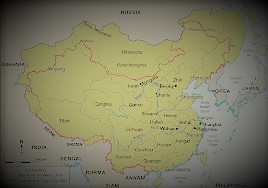
Income and Differential Fertility: Evidence from Oil Price Shocks. A new GLO Discussion Paper by GLO Fellow Abebe Hailemariam.

A new GLO Discussion Paper finds for a panel of 122 countries spanning the period 1965-2020 that national per capita income has generally a negative and significant effect on the total fertility rate.

GLO Discussion Paper No. 1089, 2022

Income and Differential Fertility: Evidence from Oil Price Shocks  Download PDF
by Hailemariam, Abebe

GLO Fellow Abebe Hailemariam

Author Abstract: This paper examines the effect of national income on the total fertility rate (children born per woman). We estimate the effects on fertility of shocks to national per capita income using plausibly exogenous variations in oil price shock as an instrument for income and using instrumental variable generalized quantile regressions (IV-GQR). Using data for a panel of 122 countries spanning the period 1965-2020, our results show that national per capita income has generally a negative and significant effect on the total fertility rate. Looking at the entire spectrum of the fertility distribution, the IVGQR estimates exhibit considerable heterogeneity in the impact of income on fertility. The income elasticity of fertility is relatively low at the upper tail of the distribution (for countries with high fertility) compared to the value at the median.

Source: GLO DP 1089

JUST PUBLISHED
Vol. 35, Issue 3, July 2022: Journal of Population Economics: 15 articles
https://link.springer.com/journal/148/volumes-and-issues/35-3

GLO Discussion Papers are research and policy papers of the GLO Network which are widely circulated to encourage discussion. Provided in cooperation with EconStor, a service of the ZBW – Leibniz Information Centre for Economics, GLO Discussion Papers are among others listed in RePEc (see IDEAS,  EconPapers)Complete list of all GLO DPs – downloadable for free.

The Global Labor Organization (GLO) is an independent, non-partisan and non-governmental organization that functions as an international network and virtual platform to stimulate global research, debate and collaboration.

Ends;

Do Gender, Child, and Parent Characteristics Contribute to Intergenerational Subjective Well-being Mobility? A new GLO Discussion Paper by GLO Fellow Hai-Anh Dang & Kseniya Abanokova.

A new GLO Discussion Paper finds that intergenerational mobility exists with daughters having higher transmissions from their mothers than sons. 

GLO Discussion Paper No. 1088, 2022

Do Gender, Child, and Parent Characteristics Contribute to Intergenerational Subjective Well-being Mobility? Evidence from Russia during 1994-2019 Download PDF
by Dang, Hai-Anh H. & Abanokova, Kseniya

GLO Fellow Hai-Anh Dang

Hai-Anh Dang

Author Abstract: Measuring the intergenerational mobility of welfare provides key inputs for policies, but very few studies examine intergenerational mobility of subjective well-being (SWB), particularly in a poorer, transitional country context. We make new contributions by analyzing rich panel SWB data from Russia over the past quarter century, which address various shortcomings with traditional income data. We find that intergenerational SWB mobility-as measured by subjective wealth and life satisfaction-exists, with daughters having higher transmission of SWB from their mothers than sons. Adding other child and parent characteristics to the multivariate regression models can reduce the estimated impacts of mothers’ SWB by up to 40% but does not change the gender gaps in the intergenerational transmission. Our results are robust to different model specifications and sample restrictions.

Featured image: Elijah-Hail-on-Unsplash

JUST PUBLISHED
Vol. 35, Issue 3, July 2022: Journal of Population Economics: 15 articles
https://link.springer.com/journal/148/volumes-and-issues/35-3

GLO Discussion Papers are research and policy papers of the GLO Network which are widely circulated to encourage discussion. Provided in cooperation with EconStor, a service of the ZBW – Leibniz Information Centre for Economics, GLO Discussion Papers are among others listed in RePEc (see IDEAS,  EconPapers)Complete list of all GLO DPs – downloadable for free.

The Global Labor Organization (GLO) is an independent, non-partisan and non-governmental organization that functions as an international network and virtual platform to stimulate global research, debate and collaboration.

Ends;

The new industrial revolution: The optimal choice for flexible work companies. A new GLO Discussion paper by GLO Fellows Leonardo Becchetti & Francesco Salustri and Nazaria Solferino.

A new GLO Discussion Paper suggests that COVID-19 made employers and employees more aware of the productivity gains arising from the digital revolution. 

GLO Discussion Paper No. 1087, 2022

The new industrial revolution: The optimal choice for flexible work companies  Download PDF
by Becchetti, Leonardo & Salustri, Francesco & Solferino, Nazaria

GLO Fellows Leonardo Becchetti & Francesco Salustri

Author Abstract: The forced remote working relationships experienced during the COVID-19 pandemics made employers and employees more aware of the productivity gains arising from the digital revolution. To investigate the characteristics of such gains, we model firms’ production allowing companies to choose among three types of (face-to-face in presence, remote synchronous, and remote asynchronous) employees relationships. The introduction of remote interactions allows us to outline five features affecting workers productivity such as i) mobility reduction, ii) frequency of interactions, iii) optimal time/place, iv) work-life balance, and v) relationship decay effects. We calculate the optimal share of the three types of relationships that maximise corporate profits conditional to reasonable parametric assumptions on the five effects under perfect and asymmetric information. We as well assess the potential productivity growth of companies that use only faceto- face interactions when allowing also remote interactions. We finally discuss existing private business contracts that introduced hybrid combinations of in-person and remote work activities for their employees, that are aligned with our theoretical findings and call for new industrial and environmental policies at national and supranational level.

Featured image: kelly-sikkema-S47XBGwRZkc-unsplash

JUST PUBLISHED
Vol. 35, Issue 3, July 2022: Journal of Population Economics: 15 articles
https://link.springer.com/journal/148/volumes-and-issues/35-3

GLO Discussion Papers are research and policy papers of the GLO Network which are widely circulated to encourage discussion. Provided in cooperation with EconStor, a service of the ZBW – Leibniz Information Centre for Economics, GLO Discussion Papers are among others listed in RePEc (see IDEAS,  EconPapers)Complete list of all GLO DPs – downloadable for free.

The Global Labor Organization (GLO) is an independent, non-partisan and non-governmental organization that functions as an international network and virtual platform to stimulate global research, debate and collaboration.

Ends;

Health shocks and spousal labor supply: An international perspective. A new GLO Discussion Paper by Nicholas Jolly and GLO Fellow Nikolaos Theodoropoulos.

A new GLO Discussion Paper finds minimal changes on the probability of work and the intensity of work for both husbands and wives of disabled spouses.

GLO Discussion Paper No. 1086, 2022

Health shocks and spousal labor supply: An international perspective  Download PDF
by Jolly, Nicholas A. & Theodoropoulos, Nikolaos

GLO Fellow Nikolaos Theodoropoulos

Nikolaos Theodoropoulos


Author Abstract: This paper uses data from the Survey of Health, Ageing and Retirement in Europe to analyze the effect of spousal health shocks on own labor supply decisions. Results from the analysis suggest minimal changes to the probability of work and the intensity of work for both husbands and wives of disabled spouses. Wives, however, do experience an increase in the probability of retirement after their husbands experience a work-limiting health shock. Results suggest that this increased probability is due to the desire to consume joint leisure. Finally, the analysis finds substantial cross-regional heterogeneity in the effect spousal health shocks have on the various labor market outcomes examined here, which suggests an important role for country-specific factors in the estimates provided in the earlier literature.

JUST PUBLISHED
Vol. 35, Issue 3, July 2022: Journal of Population Economics: 15 articles
https://link.springer.com/journal/148/volumes-and-issues/35-3

GLO Discussion Papers are research and policy papers of the GLO Network which are widely circulated to encourage discussion. Provided in cooperation with EconStor, a service of the ZBW – Leibniz Information Centre for Economics, GLO Discussion Papers are among others listed in RePEc (see IDEAS,  EconPapers)Complete list of all GLO DPs – downloadable for free.

The Global Labor Organization (GLO) is an independent, non-partisan and non-governmental organization that functions as an international network and virtual platform to stimulate global research, debate and collaboration.

Ends;

Don’t Cross the Line: Bounding the Causal Effect of Hypergamy Violation on Domestic Violence in India. A new GLO Discussion paper by GLO Fellow Punarjit Roychowdhury & Gaurav Dhamija.

A new GLO Discussion Paper finds strong evidence that violation of hypergamy leads to a significant increase in domestic violence.

GLO Discussion Paper No. 1085, 2022

Don’t Cross the Line: Bounding the Causal Effect of Hypergamy Violation on Domestic Violence in India  Download PDF
by Roychowdhury, Punarjit & Dhamija, Gaurav

GLO Fellow Punarjit Roychowdhury

Punarjit Roychowdhury


Author Abstract:We empirically examine whether violation of hypergamy – which occurs when the wife’s economic status equals or exceeds that of her husband’s – causally affects domestic violence using microdata from India. Identifying the causal effect of hypergamy violation on domestic violence, however, is challenging due to unmeasured confounding and reverse causality. To overcome these difficulties, we utilize a nonparametric bounds approach. Relying on fairly weak assumptions, we find strong evidence that violation of hypergamy leads to a significant increase in domestic violence. Further, we provide suggestive evidence that this result arises because violation of hypergamy is likely to undermine patriarchal beliefs and norms about gender roles, and also because it is likely to increase men’s likelihood of using domestic violence as an instrument. Our findings suggest that policies that seek to empower women and promote gender equality might paradoxically increase women’s exposure to domestic violence.

JUST PUBLISHED
Vol. 35, Issue 3, July 2022: Journal of Population Economics: 15 articles
https://link.springer.com/journal/148/volumes-and-issues/35-3

GLO Discussion Papers are research and policy papers of the GLO Network which are widely circulated to encourage discussion. Provided in cooperation with EconStor, a service of the ZBW – Leibniz Information Centre for Economics, GLO Discussion Papers are among others listed in RePEc (see IDEAS,  EconPapers)Complete list of all GLO DPs – downloadable for free.

The Global Labor Organization (GLO) is an independent, non-partisan and non-governmental organization that functions as an international network and virtual platform to stimulate global research, debate and collaboration.

Ends;

Economic preferences across generations and family clusters: A large-scale experiment in a developing country. Public Speech of Shyamal Chowdhury in Dhaka/Bangladesh on May 12, 2022.

Using data from large-scale experiments with entire families for Bangladesh, the research finds that both mothers’ and fathers’ risk, time and social preferences are significantly positively correlated with their children’s economic preferences. Results differ from evidence for rich countries.

Shyamal Chowdhury (University of Sydney) presents the paper in a public speech in the University of Dhaka on May 12, 2022.

GLO Discussion Paper No. 592, 2020 now forthcoming as

Economic preferences across generations and family clusters: A large-scale experiment in a developing country
by
Chowdhury, Shyamal & Sutter, Matthias & Zimmermann, Klaus F.

in: Journal of Political Economy

Free Pre-publication version

GLO Fellows Shyamal Chowdhury and Matthias Sutter & GLO President Klaus F. Zimmermann

Author Abstract: Our large-scale experiment with 542 families from rural Bangladesh finds substantial intergenerational persistence of economic preferences. Both mothers’ and fathers’ risk, time and social preferences are significantly (and largely to the same degree) positively correlated with their children’s economic preferences, even when controlling for personality traits and socio-economic background. We discuss possible transmission channels and are the first to classify all families into one of two clusters, with either relatively patient, risk-tolerant and pro-social members or relatively impatient, risk averse and spiteful members. Classifications correlate with socio-economic background variables. We find that our results differ from evidence for rich countries.

This image has an empty alt attribute; its file name is favicon_glabor.png

GLO Discussion Papers are research and policy papers of the GLO Network which are widely circulated to encourage discussion. Provided in cooperation with EconStor, a service of the ZBW – Leibniz Information Centre for Economics, GLO Discussion Papers are among others listed in RePEc (see IDEAS,  EconPapers)Complete list of all GLO DPs – downloadable for free.

The Global Labor Organization (GLO) is an independent, non-partisan and non-governmental organization that functions as an international network and virtual platform to stimulate global research, debate and collaboration.

Ends;

On the social desirability of centralized wage setting when fims are run by biased managers. A new GLO Discussion Paper by GLO Fellow Nicola Meccheri.

A new GLO Discussion Paper finds that in such a framework, the common tenet that consumer surplus and overall welfare are always higher under decentralized wage setting is completely overturned. 

GLO Discussion Paper No. 1084, 2022

On the social desirability of centralized wage setting when fims are run by biased managers  Download PDF
by Meccheri, Nicola

GLO Fellow Nicola Meccheri

Author Abstract: This paper compares the welfare outcomes obtained under alternative unionization regimes (decentralized vs. centralized wage setting) in a duopoly market, in which shareholders delegate strategic decisions to biased (overconfident or underconfident) managers. In such a framework, the common tenet that consumer surplus and overall welfare are always higher under decentralized wage setting is completely overturned. Indeed, since in the presence of centralized unionization (industry-wide union) firms’ shareholders always prefer to hire more aggressive or less conservative managers, output (consumer surplus) and overall welfare are larger in a centralized wage setting structure. This result holds true independently of the degree of product differentiation and the weight attached by unions to wages with respect to employment. Moreover, it also proves to be largely robust relative to the competition regime (quantity or price) in the product market.

JUST PUBLISHED
Vol. 35, Issue 3, July 2022: Journal of Population Economics: 15 articles
https://link.springer.com/journal/148/volumes-and-issues/35-3

GLO Discussion Papers are research and policy papers of the GLO Network which are widely circulated to encourage discussion. Provided in cooperation with EconStor, a service of the ZBW – Leibniz Information Centre for Economics, GLO Discussion Papers are among others listed in RePEc (see IDEAS,  EconPapers)Complete list of all GLO DPs – downloadable for free.

The Global Labor Organization (GLO) is an independent, non-partisan and non-governmental organization that functions as an international network and virtual platform to stimulate global research, debate and collaboration.

Ends;

Diving in the minds of recruiters: What triggers gender stereotypes in hiring? A new GLO Discussion Paper by Hannah Van Borm and GLO Fellow Stijn Baert.

A new GLO Discussion Paper finds that employers in the United States perceive women in gender stereotypical terms when making hiring decisions. 

GLO Discussion Paper No. 1083, 2022

Diving in the minds of recruiters: What triggers gender stereotypes in hiring?  Download PDF
by Van Borm, Hannah & Baert, Stijn

GLO Fellow Stijn Baert

Stijn Baert

Author Abstract: We investigate the drivers of gender differentials in hiring chances. More concretely, we test (i) whether recruiters perceive job applicants in gender stereotypical terms when making hiring decisions and (ii) whether the activation of these gender stereotypes in recruiters’ minds varies by the salience of gender in a particular hiring context and the gender prototypicality of a job applicant, as hypothesised in Ridgeway and Kricheli-Katz (2013). To this end, we conduct an innovative vignette experiment in the United States with 290 genuine recruiters who evaluate fictitious job applicants regarding their hireability and 21 statements related to specific gender stereotypes. Moreover, we experimentally manipulate both the gender prototypicality of a job applicant and the salience of gender in the hiring context. We find that employers perceive women in gender stereotypical terms when making hiring decisions. In particular, women are perceived to be more social and supportive than men, but also as less assertive and physically strong. Furthermore, our results indicate that the gender prototypicality of job applicants moderates these perceptions: the less prototypical group of African American women, who are assumed to be less prototypical, are perceived in less stereotypical terms than white women, while some stereotypes are more outspoken when female résumés reveal family responsibilities.

Featured image: tim-gouw-bwki71ap-y8-unsplash

JUST PUBLISHED
Vol. 35, Issue 3, July 2022: Journal of Population Economics: 15 articles
https://link.springer.com/journal/148/volumes-and-issues/35-3

GLO Discussion Papers are research and policy papers of the GLO Network which are widely circulated to encourage discussion. Provided in cooperation with EconStor, a service of the ZBW – Leibniz Information Centre for Economics, GLO Discussion Papers are among others listed in RePEc (see IDEAS,  EconPapers)Complete list of all GLO DPs – downloadable for free.

The Global Labor Organization (GLO) is an independent, non-partisan and non-governmental organization that functions as an international network and virtual platform to stimulate global research, debate and collaboration.

Ends;

Confidential and legal access to abortion and contraception in the United States, 1960-2020. Article by GLO Fellow Caitlin Myers forthcoming in the Journal of Population Economics.

A new GLO Discussion Paper provides a suggested coding of the policy environment over the past 60 years.

Accepted for publication in the Journal of Population Economics.

Has the US Supreme Court voted to overturn abortion rights? The paper by Caitlin Myers provides important background information about the US policy environment over decades.

GLO Discussion Paper No. 1073, 2022

Confidential and legal access to abortion and contraception in the United States, 1960-2020 Download PDF
by Myers, Caitlin Knowles

GLO Fellow Caitlin Myers

Author Abstract: An expansive empirical literature estimates the causal effects of policies governing young women’s confidential and legal access to contraception and abortion. I present a new review of changes in the historical policy environment in the United States that serve as the foundation of this work. I consult primary sources including annotated statutes, judicial rulings, attorney general opinions, and advisory articles in medical journals, as well as secondary sources including newspaper articles and snapshots of various policy environments prepared by scholars, advocates, and government organizations. Based on this review, I provide a suggested coding of the policy environment over the past 60 years. I also present and compare the legal coding schemes used in the empirical literature and where possible I resolve numerous and substantial discrepancies.

NOTE on the latest situation in Florida: “Florida is the latest state to pass legislation that further restricts access to abortion.”

JUST PUBLISHED
Vol. 35, Issue 3, July 2022: Journal of Population Economics: 15 articles
https://link.springer.com/journal/148/volumes-and-issues/35-3

GLO Discussion Papers are research and policy papers of the GLO Network which are widely circulated to encourage discussion. Provided in cooperation with EconStor, a service of the ZBW – Leibniz Information Centre for Economics, GLO Discussion Papers are among others listed in RePEc (see IDEAS,  EconPapers)Complete list of all GLO DPs – downloadable for free.

The Global Labor Organization (GLO) is an independent, non-partisan and non-governmental organization that functions as an international network and virtual platform to stimulate global research, debate and collaboration.

Ends;

Monetary compensation schemes during the COVID-19 pandemic: Implications for household incomes, liquidity constraints and consumption across the EU. A new GLO Discussion Paper by GLO Fellow Michael Christl & colleagues.

A new GLO Discussion Paper studies the diverse impacts of Covid-19 on the private households and labor markets of EU member states making use of the EU microsimulation model EUROMOD and nowcasting techniques.

GLO Discussion Paper No. 1082, 2022

Monetary compensation schemes during the COVID-19 pandemic: Implications for household incomes, liquidity constraints and consumption across the EU Download PDF
by Christl, Michael & De Poli, Silvia & Figari, Francesco & Hufkens, Tine & Leventi, Chrysa & Papini, Andrea & Tumino, Alberto

GLO Fellow Michael Christl

Michael Christl

Author Abstract: This paper analyses the effect of the COVID-19 pandemic on household disposable income and household demand in the European Union (EU), making use of the EU microsimulation model EUROMOD and nowcasting techniques. We show evidence of heterogeneity in the impact of the COVID-19 pandemic on the labour markets in EU Member States, with some countries hit substantially harder than others. Most EU Member States experience a large drop in market incomes in 2020, with poorer households hit the hardest. Tax-benefit systems cushioned significantly the transmission of the shock to the disposable income and the household demand, with monetary compensation schemes playing a major role. Additionally, we show that monetary compensation schemes prevent a significant share of households from becoming liquidity constrained during the pandemic.

Featured image: Adli-Wahid-on-Unsplash

JUST PUBLISHED
Vol. 35, Issue 3, July 2022: Journal of Population Economics: 15 articles
https://link.springer.com/journal/148/volumes-and-issues/35-3

GLO Discussion Papers are research and policy papers of the GLO Network which are widely circulated to encourage discussion. Provided in cooperation with EconStor, a service of the ZBW – Leibniz Information Centre for Economics, GLO Discussion Papers are among others listed in RePEc (see IDEAS,  EconPapers)Complete list of all GLO DPs – downloadable for free.

The Global Labor Organization (GLO) is an independent, non-partisan and non-governmental organization that functions as an international network and virtual platform to stimulate global research, debate and collaboration.

Ends;

Causal impact of physical activity on child health and development. A new GLO Discussion Paper by GLO Fellows Ha Nguyen & Luke Connelly and colleagues.

A new GLO Discussion Paper finds that physical activity leads to widespread benefits in child development in Australia.

GLO Discussion Paper No. 1081, 2022

Causal impact of physical activity on child health and development Download PDF
by Nguyen, Ha Trong & Christian, Hayley & Le, Huong Thu & Connelly, Luke & Zubrick, Stephen R. & Mitrou, Francis

GLO Fellows Ha Nguyen & Luke Connelly

Author Abstract: The relationship between physical activity and child health and development is well-documented, yet the extant literature provides limited causal insight into the amount of physical activity considered optimal for improving any given health or developmental outcome. This paper exploits exogenous variations in local weather conditions observed across random time use diary dates for the same individuals over time to investigate the causal impact of physical activity on a comprehensive set of health, non-cognitive development, and academic outcomes of children and adolescents. Applying an individual fixed-effects instrumental variables model to a nationally representative panel dataset from Australia, we find that physical activity leads to widespread benefits in child development. These include improved health, social and emotional development, and lower health expenditure. The results further indicate that physical activity offers greater developmental benefits for females. However, we find no evidence that physical activity improves academic performance. Our study highlights that the “optimal” amount of time that children and adolescents should spend physically active each day varies by the health or non-cognitive development outcome of interest. The results are robust to a series of specification and sensitivity tests, including an over-identification test and controlling for weather conditions recorded on the day when development outcomes were assessed.

JUST PUBLISHED
Vol. 35, Issue 3, July 2022: Journal of Population Economics: 15 articles
https://link.springer.com/journal/148/volumes-and-issues/35-3

GLO Discussion Papers are research and policy papers of the GLO Network which are widely circulated to encourage discussion. Provided in cooperation with EconStor, a service of the ZBW – Leibniz Information Centre for Economics, GLO Discussion Papers are among others listed in RePEc (see IDEAS,  EconPapers)Complete list of all GLO DPs – downloadable for free.

The Global Labor Organization (GLO) is an independent, non-partisan and non-governmental organization that functions as an international network and virtual platform to stimulate global research, debate and collaboration.

Ends;

Intermediate activities while commuting. A new GLO Discussion Paper by GLO Fellows José Ignacio Gimenez-Nadal, José Alberto Molina & Jorge Velilla.

A new GLO Discussion Paper analyzes what activities workers do while commuting using the American Time Use Survey.

GLO Discussion Paper No. 1080, 2022

Intermediate activities while commuting Download PDF
by Giménez-Nadal, José Ignacio & Molina, José Alberto & Velilla, Jorge

GLO Fellows José Ignacio Gimenez-Nadal, José Alberto Molina & Jorge Velilla

José Alberto Molina

Author Abstract: Recent analyses have shown that commutes to and from work are not symmetric, suggesting that intermediate activities are at the root of these asymmetries. However, how intermediate activities interact with trips to and from work is an unexplored issue. Using data from the American Time Use Survey 2003-2019, we analyze what activities workers do while commuting, and compare measures of commuting when intermediate activities are included or excluded as part of the commuting trip. We show that commuting is underestimated if measured with the Time Use Survey lexicon. Such differences are especially significant in commuting from work. Furthermore, gender comparisons of commuting are affected by the inclusion of intermediate while commuting, with gender differences narrowing when intermediate activities are considered. Our results contribute to the analysis of commuting behavior, by proposing new identification strategies based on intermediate non-trip episodes, and by showing how commuting interacts with other non-commuting activities.

Featured image: Manuel-Lardizabal-on-Unsplash

JUST PUBLISHED
Vol. 35, Issue 3, July 2022: Journal of Population Economics: 15 articles
https://link.springer.com/journal/148/volumes-and-issues/35-3

GLO Discussion Papers are research and policy papers of the GLO Network which are widely circulated to encourage discussion. Provided in cooperation with EconStor, a service of the ZBW – Leibniz Information Centre for Economics, GLO Discussion Papers are among others listed in RePEc (see IDEAS,  EconPapers)Complete list of all GLO DPs – downloadable for free.

The Global Labor Organization (GLO) is an independent, non-partisan and non-governmental organization that functions as an international network and virtual platform to stimulate global research, debate and collaboration.

Ends;