Category Archives: News

School commuting behaviors: A time-use exploration. A new GLO Discussion Paper by GLO Fellows José Ignacio Gimenez-Nadal, José Alberto Molina & Jorge Velilla.

A new GLO Discussion Paper finds significant differences in school commuting times across countries.

GLO Discussion Paper No. 1194, 2022

School commuting behaviors: A time-use exploration – Download PDF
by Giménez-Nadal, José Ignacio & Molina, José Alberto & Velilla, Jorge

GLO Fellows José Ignacio Gimenez-Nadal, José Alberto Molina & Jorge Velilla

Author Abstract: This paper explores school commuting behaviors of children who attend primary school, high-school, or University, using time use data for a set of countries obtained from the Multinational Time Use Study. We focus on the duration of school commutes, and how they correlate with individual and family characteristics. We also explore the transport modes used, and whether the commuting is done alone. The results show significant differences in school commuting times across countries. Furthermore, we find more time devoted to commuting, and higher rates of commuting done alone, as the schooling level of respondents increases. Means of transport are relatively similar within countries, although they change significantly across countries. This analysis is the first exploration of school, high-school, and University commuting behavior, using time use data that make the results comparable. Our analysis opens doors for future research, and may serve planners in terms of policies promoting specific student mobility.

Featured image: Element5-Digital-on-Unsplash

FORTHCOMING:
Vol. 36, Issue 1, January 2023: Meet the authors of all 16 articles of this issue online on December 1, 2022 during the GLO Global Conference 2022.

PUBLISHED
Vol. 35, Issue 4, October 2022: Journal of Population Economics (JOPE): 15 articles https://link.springer.com/journal/148/volumes-and-issues/35-4
CiteScore of JOPE moves up from 3.9 (2020) to 6.5 (2021). LINK
Similar, its Impact Factor is now 4.7 (2021) after 2.8 (2020)! LINK

GLO Discussion Papers are research and policy papers of the GLO Network which are widely circulated to encourage discussion. Provided in cooperation with EconStor, a service of the ZBW – Leibniz Information Centre for Economics, GLO Discussion Papers are among others listed in RePEc (see IDEAS,  EconPapers)Complete list of all GLO DPs – downloadable for free.

The Global Labor Organization (GLO) is an independent, non-partisan and non-governmental organization that functions as an international network and virtual platform to stimulate global research, debate and collaboration.

Ends;

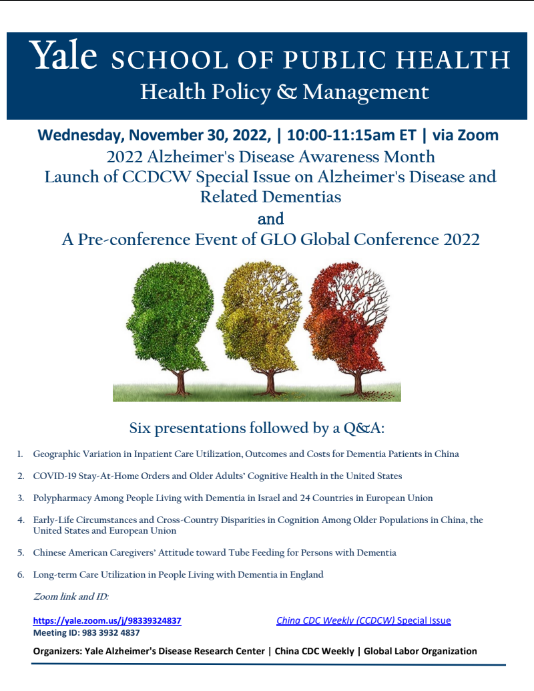
Alzheimer’s Disease Awareness Month. Global research insights are provided in a launch of a special issue organized by Yale Alzheimer’s Disease Research Center with China CDC Weekly and GLO on November 30, 2022.

Alzheimer’s disease is the most common form of dementia in older adults. Globally, over 55 million people live with dementia, and there are nearly 10 million new cases every year. The aggregate financial burden of the disease is over $1 trillion annually. As population aging accelerates, the need for a better understanding of the disease and for better treatments presents an urgent and major health challenge globally.

In recognition of November as Alzheimer’s Disease Awareness Month, Xi Chen (Yale University and GLO) served as guest editor of a special issue of the China CDC Weekly focused on Alzheimer’s disease and related dementias (ADRD) worldwide. The product is based on work of research teams at Yale University, London School of Economics, New York University, University of Cambridge, University of Washington, Peking University, Cornell University, and the Chinese University of Hong Kong.

  • That special publication can be accessed here.

Yale Alzheimer’s Disease Research Center is organizing together with China CDC Weekly and the Global Labor Organization a launch event as a pre-conference event of the GLO Global Conference 2022 (December 1-3, 2022):

Alzheimer’s Disease Awareness Month, November 2022
CCDC Weekly Special Issue Special issue released on November 11, 2022.
Guest Editor: Xi Chen

Ends;

Geographic Variation in Inpatient Care Utilization, Outcomes and Costs for Dementia Patients in China. A new GLO Discussion Paper by GLO Fellow Xi Chen & colleagues.

A new GLO Discussion Paper finds regional gaps in equity and efficiency of dementia care and management for dementia patients.

GLO Discussion Paper No. 1193, 2022

Geographic Variation in Inpatient Care Utilization, Outcomes and Costs for Dementia Patients in China – Download PDF
by Lin, Zhuoer & Ba, Fang & Allore, Heather & Liu, Gordon G. & Chen, Xi

GLO Fellow Xi Chen

Xi Chen

Author Abstract: Dementia leads public health issue worldwide. China has the largest population of adults living with dementia in the world, imposing increasing burdens on the public health and healthcare systems. Despite improved access to health services, inadequate and uneven dementia management remains common. We document the provincial-level geographic patterns in healthcare utilization, outcomes, and costs for patients hospitalized for dementia in China. Regional patterns demonstrate gaps in equity and efficiency of dementia care and management for dementia patients. Health policy and practices should consider geographic disparities in disease burden and healthcare provision to promote equitable allocation of resources for dementia care throughout China.

FORTHCOMING:
Vol. 36, Issue 1, January 2023: Meet the authors of all 16 articles of this issue online on December 1, 2022 during the GLO Global Conference 2022.

PUBLISHED
Vol. 35, Issue 4, October 2022: Journal of Population Economics (JOPE): 15 articles https://link.springer.com/journal/148/volumes-and-issues/35-4
CiteScore of JOPE moves up from 3.9 (2020) to 6.5 (2021). LINK
Similar, its Impact Factor is now 4.7 (2021) after 2.8 (2020)! LINK

GLO Discussion Papers are research and policy papers of the GLO Network which are widely circulated to encourage discussion. Provided in cooperation with EconStor, a service of the ZBW – Leibniz Information Centre for Economics, GLO Discussion Papers are among others listed in RePEc (see IDEAS,  EconPapers)Complete list of all GLO DPs – downloadable for free.

The Global Labor Organization (GLO) is an independent, non-partisan and non-governmental organization that functions as an international network and virtual platform to stimulate global research, debate and collaboration.

Ends;

Learning Inequalities during COVID-19: Evidence from Longitudinal Surveys from Sub-Saharan Africa. A new GLO Discussion Paper by GLO Fellow Hai-Anh Dang & colleagues.

A new GLO Discussion Paper finds that the pandemic generally results in lower school enrolment rates.

GLO Discussion Paper No. 1192, 2022

Learning Inequalities during COVID-19: Evidence from Longitudinal Surveys from Sub-Saharan Africa – Download PDF
by Dang, Hai-Anh H. & Oseni, Gbemisola & Zezza, Alberto & Abanokova, Kseniya

GLO Fellow Hai-Anh Dang

Hai-Anh Dang

Author Abstract: There is hardly any study on learning inequalities during the COVID-19 pandemic in a low-income, multi-country context. Analyzing 34 longitudinal household and phone survey rounds from Burkina Faso, Ethiopia, Malawi, Mali, Nigeria, Tanzania, and Uganda, we find that while countries exhibit heterogeneity, the pandemic generally results in lower school enrolment rates. We find that policies targeting individual household members are most effective for improving learning activities, followed by those targeting households, communities, and regions. Households with higher education levels or living standards or those in urban residences are more likely to engage their children in learning activities and more diverse types of learning activities. Furthermore, we find some evidence for a strong and positive relationship between public transfers and household head employment with learning activities for almost all the countries.

Featured image: Adli-Wahid-on-Unsplash

FORTHCOMING:
Vol. 36, Issue 1, January 2023: Meet the authors of all 16 articles of this issue online on December 1, 2022 during the GLO Global Conference 2022.

PUBLISHED
Vol. 35, Issue 4, October 2022: Journal of Population Economics (JOPE): 15 articles https://link.springer.com/journal/148/volumes-and-issues/35-4
CiteScore of JOPE moves up from 3.9 (2020) to 6.5 (2021). LINK
Similar, its Impact Factor is now 4.7 (2021) after 2.8 (2020)! LINK

GLO Discussion Papers are research and policy papers of the GLO Network which are widely circulated to encourage discussion. Provided in cooperation with EconStor, a service of the ZBW – Leibniz Information Centre for Economics, GLO Discussion Papers are among others listed in RePEc (see IDEAS,  EconPapers)Complete list of all GLO DPs – downloadable for free.

The Global Labor Organization (GLO) is an independent, non-partisan and non-governmental organization that functions as an international network and virtual platform to stimulate global research, debate and collaboration.

Ends;

CEU-GLO-CEPR Workshop on the Reconstruction of Ukraine on December 1, 2022 in Vienna as part of the GLO Global Conference 2022.

Hosted by the Department of Public Policy at Central European University (CEU) in collaboration with the Global Labor Organization (GLO) and the Centre for Economic Policy Research (CEPR) as a part of the GLO Global Conference 2022.

  • Format: Hybrid (On-site for the Vienna audience, online public access)
  • Venue: Central European University, Quellenstrasse 51, Vienna, Austria
  • CEU Website LINK
  • December 1, 2022; 16:30-18:30 CET Berlin time

Updated December 7, 2022.

The destruction and death toll that the Russian invasion of Ukraine has inflicted on the country is immense. One day, however, the war will be over. To offer Ukraine a positive prospect of effective, encompassing, and inclusive reconstruction that will not only recreate the status quo ante but will enable the country to upgrade for better, a salient roadmap is needed. One of the first contributions to this effort was the CEPR blueprint on the reconstruction of Ukraine. Following up on this effort, the CEPR has put together a group of scientists around the world, with two lead authors on each chapter – one from the EU and one from Ukraine (although most chapters have more than two authors) – to provide a salient blueprint for the reconstruction from Day 1. CEU and GLO have contributed several experts to this endeavor and will now hold a workshop on the reconstruction of Ukraine covering several chapters broadly related to labor issues on December 1, 2022; 16:30-17:30, at CEU’s Department of Public Policy in Vienna as part of the round the globe, round the clock GLO Global Conference 2022.

Program

16:30-16:35 Welcome

  • Martin Kahanec, Head of the Department of Public Policy; Central European University
  • Yuriy Gorodnichenko, Editor of the CEPR book on the reconstruction of Ukraine; University of California, Berkeley

16:35-16:55 Healthcare

  • Carol Propper, Imperial College London
  • Yuriy Dzyghyr, former Deputy Minister of Finance, Ukraine
  • Kateryna Maynzyuk, Ministry of Health and Ministry of Finance expert, Ukraine
  • Adrianna Murphy, London School of Hygiene and Tropical Medicine

16:55-17:15 Education

  • Martin Kahanec, Central European University, Vienna
  • Snizhana Leu-Severynenko, USAID Economic Resilience Activity
  • Anna Novosad, SavED, Ukraine, former Minister of Education and Science, Ukraine
  • Yegor Stadnyi, Kyiv School of Economics, former Deputy Minister of Education and Science, Ukraine

17:15-17:35 Labor Market

  • Giacomo Anastasia, Bocconi University, Milan
  • Tito Boeri, Bocconi University, Milan
  •  Marianna Kudlyak, Federal Reserve Bank of San Francisco
  •  Oleksandr Zholud, National Bank of Ukraine

17:35-17:55 Business Environment

  • Yegor Grygorenko, Deloitte Ukraine
  • Monika Schnitzer, Ludwig-Maximilian University, Munich

17:55-18:15 EU Enlargement

  • Ivan Miklos, MESA 10 and CEU, advisor to the Slovak President, Moldovan Prime Minister, and National Council for the Recovery of Ukraine
  • Pavlo Klimkin, Centre for National Resilience and Development, former Foreign Minister of Ukraine

18:15-18:30 Discussion and Closing Remarks

            Martin Kahanec, CEU

Bio’s of all speakers see CEU website.

Department of Public Policy (DPP), Central European University

DPP is a multi-disciplinary and global public policy Department at the Central European University in Vienna aiming to create an educational experience that involves not only the acquisition of skills and knowledge but also the cultivation of a mindset that emphasizes social entrepreneurship, innovation, cultural awareness and a commitment to the public good. DPP offers four master’s degrees in public policy, and the public policy track of the Doctor of Philosophy in Political Science program. The Department boasts a team of outstanding resident faculty, world-class visiting faculty made up of top researchers, and practitioners in the public policy field who bring a wide array of academic and practical subjects to DPP’s diverse classroom.

Central European University (CEU) is a research-intensive university specializing in the social sciences, humanities, law, public policy and management. It is accredited in the United States, Austria and Hungary. CEU’s mission is to promote academic excellence, state-of-the-art research, research-based teaching and learning and civic engagement, in order to contribute to the development of open societies. CEU offers bachelor’s, master’s and doctoral programs and enrolls more than 1,400 students from over 100 countries. The teaching staff consists of resident faculty from over 50 countries and prominent visiting scholars from around the world. The language of instruction is English.

Center for Economic Policy Research

The Centre for Economic Policy Research (CEPR) was founded in 1983 to enhance the quality of economic policy-making within Europe and beyond, by fostering high quality, policy-relevant economic research, and disseminating it widely to decision-makers in the public and private sectors. Drawing together the expertise of its Research Fellows and Affiliates, CEPR initiates, funds and coordinates research activities and communicates the results quickly and effectively to policymakers and other decision makers around the world. The Centre is an independent, non-profit organization and takes no institutional policy positions. 

Global Labor Organization

The Global Labor Organization (GLO) is a global, independent, non-partisan and non-governmental organization that has no institutional position. The GLO functions as an international network and virtual platform for researchers, policy makers, practitioners and the general public interested in scientific research and its policy and societal implications on global labor markets, demographic challenges and human resources. These topics are defined broadly in line with its Mission to embrace the global diversity of labor markets, institutions, and policy challenges, covering advanced economies as well as transition and less developed countries.

Ends;

Robots, Meaning, and Self-Determination. A new GLO Discussion Paper by GLO Fellows Milena Nikolova, Femke Cnossen & Boris Nikolaev.

A new GLO Discussion Paper finds that by deteriorating meaning and self-determination out of work, robotization will impact work-life beyond employment and wages.

GLO Discussion Paper No. 1191, 2022

Robots, Meaning, and Self-Determination – Download PDF
by Nikolova, Milena & Cnossen, Femke & Nikolaev, Boris

GLO Fellows Milena Nikolova, Femke Cnossen & Boris Nikolaev

Author Abstract: We are the first to examine the impact of robotization on work meaningfulness and autonomy, competence, and relatedness, which are key for motivation and human flourishing at work. Using worker-level data from 13 industries in 20 European countries and OLS and instrumental variables estimations, we find that industry-level robotization harms all work quality aspects except competence. We also examine the moderating role of routine and cognitive tasks, skills and education, and age and gender. While we do not find evidence of moderation concerning work meaningfulness in any of our models, noteworthy differences emerge for autonomy. For instance, workers with repetitive and monotonous tasks drive the negative effects of robotization on autonomy, while social tasks and working with computers – a tool that provides worker independence – help workers derive autonomy and competence in industries and jobs that adopt robots. In addition, robotization increases the competence perceptions of men. Our results highlight that by deteriorating the opportunities to derive meaning and self-determination out of work, robotization will impact the present and the future of work above and beyond its consequences for employment and wages.

Featured image: Alex-Knight-on-Unsplash

FORTHCOMING:
Vol. 36, Issue 1, January 2023: Meet the authors of 16 articles of this issue online on December 1, 2022 during the GLO Global Conference 2022.

PUBLISHED
Vol. 35, Issue 4, October 2022: Journal of Population Economics (JOPE): 15 articles https://link.springer.com/journal/148/volumes-and-issues/35-4
CiteScore of JOPE moves up from 3.9 (2020) to 6.5 (2021). LINK
Similar, its Impact Factor is now 4.7 (2021) after 2.8 (2020)! LINK

GLO Discussion Papers are research and policy papers of the GLO Network which are widely circulated to encourage discussion. Provided in cooperation with EconStor, a service of the ZBW – Leibniz Information Centre for Economics, GLO Discussion Papers are among others listed in RePEc (see IDEAS,  EconPapers)Complete list of all GLO DPs – downloadable for free.

The Global Labor Organization (GLO) is an independent, non-partisan and non-governmental organization that functions as an international network and virtual platform to stimulate global research, debate and collaboration.

Ends;

The Role of Social Identity and Perceived Discrimination in Human Capital Formation: Evidence from India. A new GLO Discussion Paper by GLO Affiliate Isha Gupta.

A new GLO Discussion Paper finds that the perception of social discrimination is a significant contributor to the gaps in cognitive outcomes and parental investment across Hindu castes. 

GLO Discussion Paper No. 1190, 2022

The Role of Social Identity and Perceived Discrimination in Human Capital Formation: Evidence from India – Download PDF
by Gupta, Isha

GLO Affiliate Isha Gupta

Author Abstract: This study examines the role of historically defined social identity in human capital development over time by focusing on a region from India where social identities are defined along the lines of castes and religious groups. It investigates the evolution of gaps across social groups in children’s cognitive outcomes and parental investment in children’s education from ages 5 to 15. Significant gaps in test scores and parental investment are found between children from lower and upper Hindu castes. These gaps, which originate early in childhood and persist throughout the 10 years of the study period, cannot be completely explained by the differences in socioeconomic status across social groups. Moreover, the perception of social discrimination is also found to be a significant contributor to the gaps in cognitive outcomes and parental investment across social groups. While parents’ perceived social discrimination is associated with lower parental investment throughout childhood, it is negatively associated with children’s cognitive outcomes only at later ages.

FORTHCOMING:
Vol. 36, Issue 1, January 2023: Meet the authors of 16 articles of this issue online on December 1, 2022 during the GLO Global Conference 2022.

PUBLISHED
Vol. 35, Issue 4, October 2022: Journal of Population Economics (JOPE): 15 articles https://link.springer.com/journal/148/volumes-and-issues/35-4
CiteScore of JOPE moves up from 3.9 (2020) to 6.5 (2021). LINK
Similar, its Impact Factor is now 4.7 (2021) after 2.8 (2020)! LINK

GLO Discussion Papers are research and policy papers of the GLO Network which are widely circulated to encourage discussion. Provided in cooperation with EconStor, a service of the ZBW – Leibniz Information Centre for Economics, GLO Discussion Papers are among others listed in RePEc (see IDEAS,  EconPapers)Complete list of all GLO DPs – downloadable for free.

The Global Labor Organization (GLO) is an independent, non-partisan and non-governmental organization that functions as an international network and virtual platform to stimulate global research, debate and collaboration.

Ends;

Learning Inequalities during COVID-19: Evidence from Longitudinal Surveys from Sub-Saharan Africa. A new GLO Discussion Paper by GLO Fellow Hai-Anh Dang & colleagues.

A new GLO Discussion Paper finds that the pandemic generally results in lower school enrolment rates moderated by education.

GLO Discussion Paper No. 1192, 2022

Learning Inequalities during COVID-19: Evidence from Longitudinal Surveys from Sub-Saharan Africa – Download PDF
by Dang, Hai-Anh H. & Oseni, Gbemisola & Zezza, Alberto & Abanokova, Kseniya

GLO Fellow Hai-Anh Dang

Hai-Anh Dang

Author Abstract: There is hardly any study on learning inequalities during the COVID-19 pandemic in a low-income, multi-country context. Analyzing 34 longitudinal household and phone survey rounds from Burkina Faso, Ethiopia, Malawi, Mali, Nigeria, Tanzania, and Uganda, we find that while countries exhibit heterogeneity, the pandemic generally results in lower school enrolment rates. We find that policies targeting individual household members are most effective for improving learning activities, followed by those targeting households, communities, and regions. Households with higher education levels or living standards or those in urban residences are more likely to engage their children in learning activities and more diverse types of learning activities. Furthermore, we find some evidence for a strong and positive relationship between public transfers and household head employment with learning activities for almost all the countries.

Featured image: Adli-Wahid-on-Unsplash

FORTHCOMING:
Vol. 36, Issue 1, January 2023: Meet the authors of 16 articles of this issue online on December 1, 2022 during the GLO Global Conference 2022.

PUBLISHED
Vol. 35, Issue 4, October 2022: Journal of Population Economics (JOPE): 15 articles https://link.springer.com/journal/148/volumes-and-issues/35-4
CiteScore of JOPE moves up from 3.9 (2020) to 6.5 (2021). LINK
Similar, its Impact Factor is now 4.7 (2021) after 2.8 (2020)! LINK

GLO Discussion Papers are research and policy papers of the GLO Network which are widely circulated to encourage discussion. Provided in cooperation with EconStor, a service of the ZBW – Leibniz Information Centre for Economics, GLO Discussion Papers are among others listed in RePEc (see IDEAS,  EconPapers)Complete list of all GLO DPs – downloadable for free.

The Global Labor Organization (GLO) is an independent, non-partisan and non-governmental organization that functions as an international network and virtual platform to stimulate global research, debate and collaboration.

Ends;

COVID-19 Pandemic and the Health and Well-being of Vulnerable People in Vietnam. A new GLO Discussion Paper by GLO Fellow Hai-Anh Dang & Minh Do.

A new GLO Discussion Paper finds that government policy responses were generally regarded as effective and indicates the need for a social protection database to identify the poor and the informal workers.

GLO Discussion Paper No. 1184, 2022

COVID-19 Pandemic and the Health and Well-being of Vulnerable People in Vietnam – Download PDF
by Dang, Hai-Anh H. & Do, Minh N. N.

GLO Fellow Hai-Anh Dang

Hai-Anh Dang

Author Abstract: Despite a sizable population and modest status as a low middle-income country, Vietnam has recorded a low COVID-19 fatality rate that rivals those of richer countries with far larger spending on health. We offer an early review of the emerging literatures in public health and economics on the pandemic effects in Vietnam, with a specific focus on vulnerable population groups. Our review suggests that vulnerable workers were at more health risks than the general population. The pandemic reduced household income, increased the poverty rate, and worsened wage equality. It increased the proportion of below-minimum wage workers by 2.5 percentage points (i.e., 32 percent increase). While government policy responses were generally regarded as effective, the public support for these responses was essential for this success, particularly where there were stronger public participation in the political process. Our review also indicates the need for a social protection database to identify the poor and the informal workers to further enhance targeting efforts. Finally, we suggest future directions for research in the Vietnamese context.

Featured image: Adli-Wahid-on-Unsplash

FORTHCOMING:
Vol. 36, Issue 1, January 2023: Meet the authors of 16 articles of this issue online on December 1, 2022 during the GLO Global Conference 2022.

PUBLISHED
Vol. 35, Issue 4, October 2022: Journal of Population Economics (JOPE): 15 articles https://link.springer.com/journal/148/volumes-and-issues/35-4
CiteScore of JOPE moves up from 3.9 (2020) to 6.5 (2021). LINK
Similar, its Impact Factor is now 4.7 (2021) after 2.8 (2020)! LINK

GLO Discussion Papers are research and policy papers of the GLO Network which are widely circulated to encourage discussion. Provided in cooperation with EconStor, a service of the ZBW – Leibniz Information Centre for Economics, GLO Discussion Papers are among others listed in RePEc (see IDEAS,  EconPapers)Complete list of all GLO DPs – downloadable for free.

The Global Labor Organization (GLO) is an independent, non-partisan and non-governmental organization that functions as an international network and virtual platform to stimulate global research, debate and collaboration.

Ends;

The diffusion of digital skills across EU regions: Structural drivers and polarization dynamics. A new GLO Discussion Paper by GLO Fellow Dario Guarascio & colleagues.

A new GLO Discussion Paper provides evidence of a strong and persistent regional polarization in the adoption and deployment of digital skills.

GLO Discussion Paper No. 1188, 2022

The diffusion of digital skills across EU regions: Structural drivers and polarization dynamics – Download PDF
by Caravella, Serenella & Cirillo, Valeria & Crespi, Francesco & Guarascio, Dario & Menghini, Mirko

GLO Fellow Dario Guarascio

Author Abstract: The digital transformation is an important driver of long-run productivity growth and, as such, it has the potential to promote a more inclusive and sustainable growth. However, digital capabilities, crucial to develop and govern new digital technologies, are unevenly distributed across European regions increasing the risk of divergence and polarization. By taking advantage of a set of original indicators capturing the level of digital skills in the regional workforce, this work analyzes the factors shaping the process of digital skill accumulation in the EU over the period 2011-2018. Relying on transition probability matrices and dynamic random effects probit models, we provide evidence of a strong and persistent regional polarization in the adoption and deployment of digital skills. Further, we investigate whether European Funds (European Regional Development Fund, Cohesion Funds, and European Social Funds) are capable to shape the digitalization process and to favor regional convergence.

FORTHCOMING:
Vol. 36, Issue 1, January 2023: Meet the authors of 16 articles of this issue on December 1, 2022 during the GLO Global Conference 2022.

PUBLISHED
Vol. 35, Issue 4, October 2022: Journal of Population Economics (JOPE): 15 articles https://link.springer.com/journal/148/volumes-and-issues/35-4
CiteScore of JOPE moves up from 3.9 (2020) to 6.5 (2021). LINK
Similar, its Impact Factor is now 4.7 (2021) after 2.8 (2020)! LINK

GLO Discussion Papers are research and policy papers of the GLO Network which are widely circulated to encourage discussion. Provided in cooperation with EconStor, a service of the ZBW – Leibniz Information Centre for Economics, GLO Discussion Papers are among others listed in RePEc (see IDEAS,  EconPapers)Complete list of all GLO DPs – downloadable for free.

The Global Labor Organization (GLO) is an independent, non-partisan and non-governmental organization that functions as an international network and virtual platform to stimulate global research, debate and collaboration.

Ends;

Sexual identity and Gender Gap in Leadership. A political intention experiment. A new GLO Discussion Paper by GLO Fellow Evangelos Mourelatos and colleagues.

A new GLO Discussion Paper finds that the competitive nature of politics has a strong negative effect on women’s and homosexuals’ interest to run for a political office, but not on men’s and heterosexuals’ interest, hence significantly increasing the gender and sexual gap in leadership ambition.

GLO Discussion Paper No. 1187, 2022

Sexual identity and Gender Gap in Leadership. A political intention experiment – Download PDF
by Mourelatos, Evangelos & Krimpas, George & Giotopoulos, Konstantinos

GLO Fellow Evangelos Mourelatos

Evangelos Mourelatos

Author Abstract: The underrepresentation of women and homosexuals in leadership positions has been well documented, but the grounds for this need further investigation. We conduct a field and an online experiment to test a prominent theory about the sources of the sexual and gender gap in political leadership ambition: women’s and homosexuals’ higher aversion to engage to competitive environments. Within an experimental political environment as a context for our research, we employ two distinct subject sample pools – highly politically active individuals and workers from an online labor market. By controlling for a variety of internal and external factors and preference-based indicators, we establish that there are fundamental sexual and gender behavioral differences, stemming from differences in underlying psychological abilities and differences due to the nature of electoral competition. We find that priming individuals to consider the competitive nature of politics has a strong negative effect on women’s and homosexuals’ interest to run for a political office, but not on men’s and heterosexuals’ interest, hence significantly increasing the gender and sexual gap in leadership ambition. While on the online experiment the gender gap holds, surprisingly, we found that homosexuals’ intention to participate in politics follows the opposite course.

Featured image: dainis-graveris-unsplash

FORTHCOMING:
Vol. 36, Issue 1, January 2023: Meet the authors of 16 articles of this issue on December 1, 2022 during the GLO Global Conference 2022.

PUBLISHED
Vol. 35, Issue 4, October 2022: Journal of Population Economics (JOPE): 15 articles https://link.springer.com/journal/148/volumes-and-issues/35-4
CiteScore of JOPE moves up from 3.9 (2020) to 6.5 (2021). LINK
Similar, its Impact Factor is now 4.7 (2021) after 2.8 (2020)! LINK

GLO Discussion Papers are research and policy papers of the GLO Network which are widely circulated to encourage discussion. Provided in cooperation with EconStor, a service of the ZBW – Leibniz Information Centre for Economics, GLO Discussion Papers are among others listed in RePEc (see IDEAS,  EconPapers)Complete list of all GLO DPs – downloadable for free.

The Global Labor Organization (GLO) is an independent, non-partisan and non-governmental organization that functions as an international network and virtual platform to stimulate global research, debate and collaboration.

Ends;

Are Long-Lived Persons Utility Monsters? A new GLO Discussion Paper by GLO Fellow Gregory Ponthiere.

A new GLO Discussion Paper finds that Nozick’s objection against utilitarianism turns out to be most relevant for real-world aging societies.

GLO Discussion Paper No. 1186, 2022

Are Long-Lived Persons Utility Monsters? – Download PDF
by Ponthiere, Gregory

GLO Fellow Gregory Ponthiere

Grégory Ponthière

Author Abstract: Nozick’s “utility monster” – a being who is more efficient than other persons at transforming resources into well-being – is often regarded as deeply impossible, on the ground of the incapacity of a single person to have a life that is better than a large number of other lives. In this article, I defend a purely marginalist view of the “utility monster”, that is, that the primary characteristic of a “utility monster” is a higher sensitivity, at the margin, of well-being to resources, rather than a larger total well-being. I propose three purely marginalist accounts of “utility monster” and I introduce the related concept of “collective utility monster”, in order to account for the collective predation of (almost) all resources by a group of persons. I argue that, although a long-lived person, if taken separately, could hardly belong to the category of “utility monster”, a large group of long-lived persons can, under some conditions, belong to the category of “collective utility monster”. In the light of the increasingly large proportion of cohorts reaching very old ages nowadays, Nozick’s objection against utilitarianism turns out, after a thorough review, to be most relevant for real-world aging societies.

Featured image: mark-timberlake-unsplash

FORTHCOMING:
Vol. 36, Issue 1, January 2023: Meet the authors of 16 articles of this issue on December 1, 2022 during the GLO Global Conference 2022.

PUBLISHED
Vol. 35, Issue 4, October 2022: Journal of Population Economics (JOPE): 15 articles https://link.springer.com/journal/148/volumes-and-issues/35-4
CiteScore of JOPE moves up from 3.9 (2020) to 6.5 (2021). LINK
Similar, its Impact Factor is now 4.7 (2021) after 2.8 (2020)! LINK

GLO Discussion Papers are research and policy papers of the GLO Network which are widely circulated to encourage discussion. Provided in cooperation with EconStor, a service of the ZBW – Leibniz Information Centre for Economics, GLO Discussion Papers are among others listed in RePEc (see IDEAS,  EconPapers)Complete list of all GLO DPs – downloadable for free.

The Global Labor Organization (GLO) is an independent, non-partisan and non-governmental organization that functions as an international network and virtual platform to stimulate global research, debate and collaboration.

Ends;

2022 US midterm elections & the abortion issue.

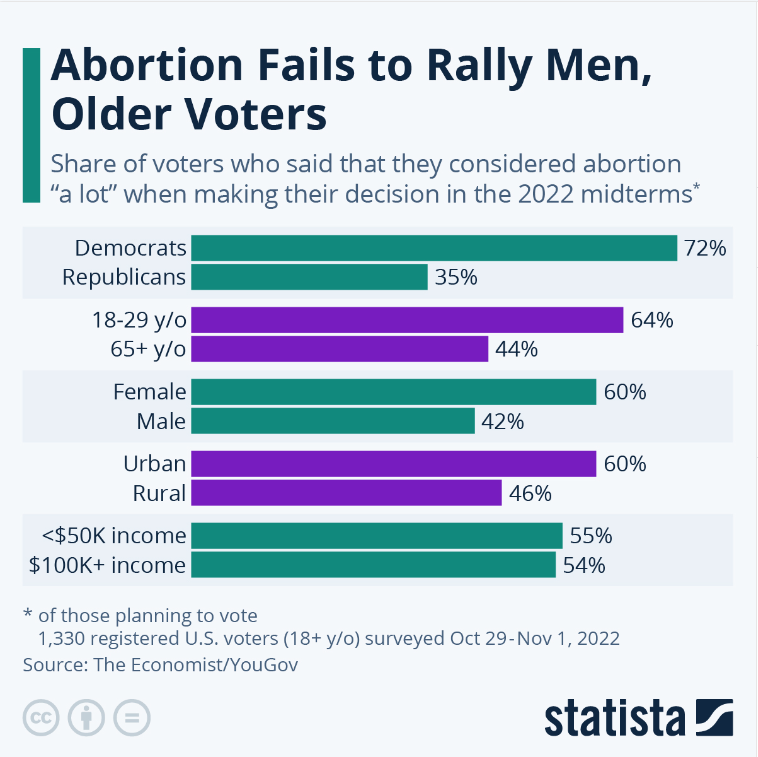
The abortion issue was relevant for the 2022 US midterm elections, but did not play the major role as inflation and crime. Those mostly concerned (see figure below) were Democrats, young, females and living in urban areas.

Abortion issues have been important in many societal debates around the globe during 2022. GLO & the Journal of Population Economics have informed the public about insightful research contributions on the topic among their publications. For free access to this research and on the organized public events:

Further:

Source: statista. Featured image: jonathan-simcoe-unsplash

Ends;

Gender gaps in time devoted to Commuting: Evidence from Peru, Ecuador, Chile, and Colombia. A new GLO Discussion Paper by GLO Fellows Juan Carlos Campaña & José Ignacio Gimenez-Nadal.

A new GLO Discussion Paper finds that women in these countries devote less time to commuting than men.

GLO Discussion Paper No. 1185, 2022 Juan Carlos Campaña

Gender gaps in time devoted to Commuting: Evidence from Peru, Ecuador, Chile, and Colombia – Download PDF
by Campaña, Juan Carlos & Gimenez-Nadal, J. IgnacioJuan Carlos Campaña

GLO Fellows Juan Carlos Campaña & José Ignacio Gimenez-Nadal

Juan Carlos Campaña

Author Abstract: We analyze the relationship between gender and the time devoted to commuting by men and women in Latin American Countries. Using data from time surveys from Peru (2010), Ecuador (2012), Chile (2015) and Colombia (2012 and 2017), we observe in the four countries, that women devoted less time to this activity compared to men. We find that among the possible justifications for these gender gaps, it is important to consider the presence of children in the household, the hours of work and the type of employment of individuals. These results illustrate the importance of studying this topic in countries where the evidence is scarce mainly due to limitations in comparing the data between countries.

Featured image: dainis-graveris-unsplash

FORTHCOMING:
Vol. 36, Issue 1, January 2023: Meet the authors of 16 articles of this issue on December 1, 2022 during the GLO Global Conference 2022.

PUBLISHED
Vol. 35, Issue 4, October 2022: Journal of Population Economics (JOPE): 15 articles https://link.springer.com/journal/148/volumes-and-issues/35-4
CiteScore of JOPE moves up from 3.9 (2020) to 6.5 (2021). LINK
Similar, its Impact Factor is now 4.7 (2021) after 2.8 (2020)! LINK

GLO Discussion Papers are research and policy papers of the GLO Network which are widely circulated to encourage discussion. Provided in cooperation with EconStor, a service of the ZBW – Leibniz Information Centre for Economics, GLO Discussion Papers are among others listed in RePEc (see IDEAS,  EconPapers)Complete list of all GLO DPs – downloadable for free.

The Global Labor Organization (GLO) is an independent, non-partisan and non-governmental organization that functions as an international network and virtual platform to stimulate global research, debate and collaboration.

Ends;

Maternity Leave. A new GLO Discussion Paper by Krishna Regmi & GLO Fellow Le Wang.

A new GLO Discussion Paper concludes from reviewing large literature that policy debates should not center around whether or not governments should offer paid leave; rather they should focus on how to design more efficient or optimal leave programs. 

GLO Discussion Paper No. 1184, 2022

Maternity Leave – Download PDF
by Regmi, Krishna & Wang, Le

GLO Fellow Le Wang

Le Wang

Author Abstract: Supporting working mothers to balance their work and childcare responsibilities is a central objective of maternal and parental leave policies. Nearly all countries offer some forms of maternity and family leave programs for childbearing on a national basis. This chapter reviews various types of leave policies available for working mothers (or parents) across countries and whether and how the policies affect women’s labor market outcomes, their own and children’s health, and child development. The leave policies can also influence women’s fertility choices, as well as household specialization and husbands’ labor supply. Recent studies also note the potential impacts on employers and coworkers of mothers who are on leave. One message that this chapter draws from the vast literature – with diverse and, in some instances, contradictory findings – is that policy debates should not center around whether or not governments should offer paid leave; rather they should focus on how to design more efficient or optimal leave programs. This chapter discusses some preliminary lessons for designing a leave program.

Featured image: christian-bowen-unsplash

PUBLISHED
Vol. 35, Issue 4, October 2022: Journal of Population Economics (JOPE): 15 articles https://link.springer.com/journal/148/volumes-and-issues/35-4
CiteScore of JOPE moves up from 3.9 (2020) to 6.5 (2021). LINK
Similar, its Impact Factor is now 4.7 (2021) after 2.8 (2020)! LINK

GLO Discussion Papers are research and policy papers of the GLO Network which are widely circulated to encourage discussion. Provided in cooperation with EconStor, a service of the ZBW – Leibniz Information Centre for Economics, GLO Discussion Papers are among others listed in RePEc (see IDEAS,  EconPapers)Complete list of all GLO DPs – downloadable for free.

The Global Labor Organization (GLO) is an independent, non-partisan and non-governmental organization that functions as an international network and virtual platform to stimulate global research, debate and collaboration.

Ends;

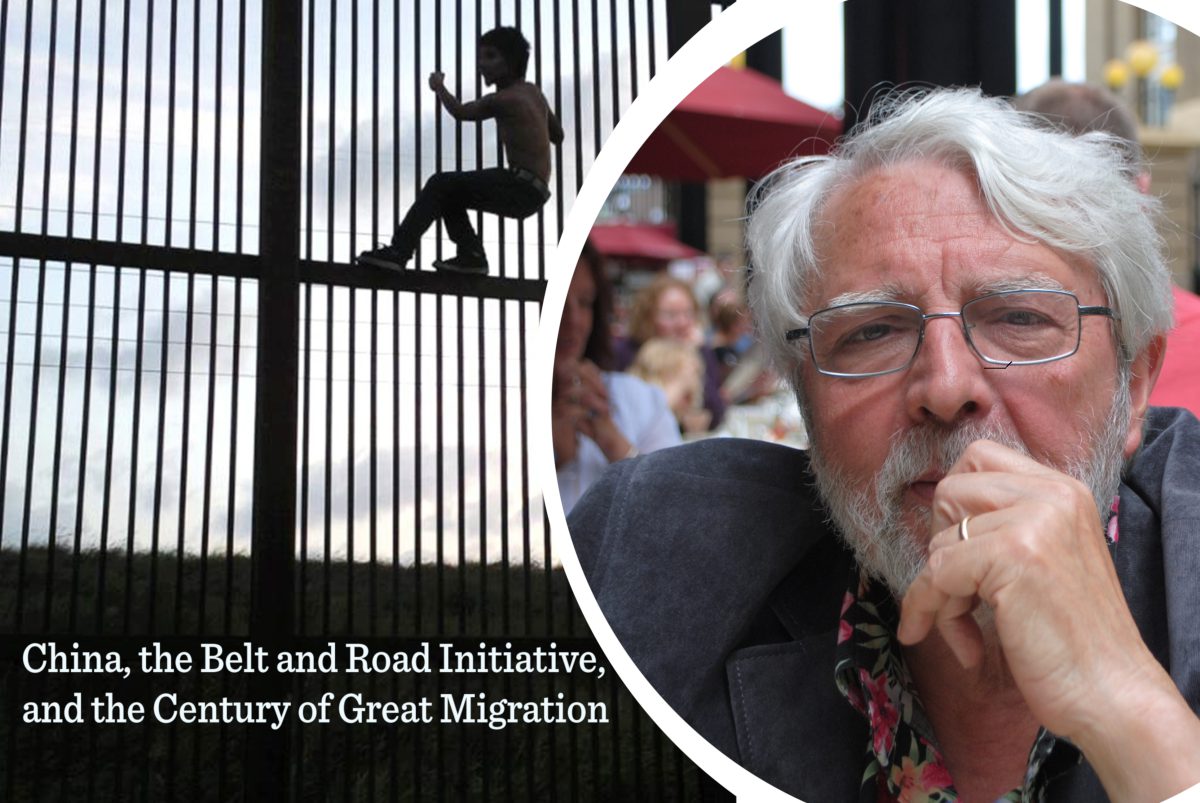
New Book: China, the Belt and Road Initiative, and the Century of Great Migration. Interview with author Michele Bruni.

New book just published analyzing the historical roots and long-term future implications of the tremendous demographical changes Europe, Asia and Africa will go through. The story uses China as the ideal case study to illustrate the major developments and implications, not only because of its history, institutional setting, and international relationships but because in the next decades it will be the country most affected by the largest shortage of labor. We discuss major points with the author in an interview (see below).

  • NOTE – Talk to the author. Michele Bruni will present highlights of his book during a public online panel (free Zoom access) on December 3, 2022, 13.30 – 15.30 CET (Berlin time) on “China in the World Economy” during the GLO Global Conference 2022. The free access online link will be provided at the GLO website and here in time.

Michele Bruni is a member of the Center for the Analysis of Public Policies (CAPP) of the University of Modena and Reggio and a Fellow of the Global Labor Organization (GLO).

  • For more than thirty years, he has participated in and led numerous EU, ILO, IOM, and ADB development and labor market analysis projects in China, Africa, Southeast Asia, and Eastern Europe.
  • His research focuses on the development of stock-flow models and their application to the analysis of labor markets, education, and migration.
  • Michele holds a PhD in Economics from the University of California, Berkeley and a Laurea in Political Science from the University of Florence.
  • He has taught at the universities of Calabria, Bologna, and Modena and was a visiting professor at the universities Jyväskylä, Le Salle, and Shanghai.
  • He is the author of “China, The Belt and Road Initiative, and the Century of Great Migration.”

INTERVIEW

Michele, this is a remarkable book with a secular perspective; very relevant, with many important and fascinating insights. I have learned a lot. Let us elaborate on some of your findings and conclusions:

GLO: What brought you to population research and the economics of China?

Michele Bruni: It is a long story. Despite demography being central to my research, I did not formally study it at the university, but I instead accidentally encountered it later in life.

During the early 1970s, one of the most influential explanations for Italy’s youth unemployment was De Cecco’s Ricardian thesis according to which the industrial sector prefers hiring prime age males as they were the most productive due to production demanding punctuality, accuracy, stamina, and reliability. However, my friend Franco Franciosi and I discovered that construction rather than manufacturing was responsible for the increase in prime-age male employment. Subsequently, we thought that the right way to identify the cause of youth unemployment was to estimate first time (generational) entries into employment and analyze the structure of these entries by sector, sex, age group, and educational level. This led us to develop a generational stock-flow model of the labor market based on the analysis of the demographic processes taking place inside the labor market (you can find this model in the book as the “China’s theater” apologue).

The empirical results of our model were at the same time surprising and obvious. We discovered that people enter into the labor force when they are young (normally immediately after the education and training phase), generally age inside the labor market, and then exit when they are old. Moreover, the average age of entry depends on the educational level requested by each sector and therefore is the lowest in construction, the highest in services, and intermediate in manufacturing; and, at that time, the average age structure of generational entries and exits of men and women were notably different. Finally, in a country whose social values and institutional setting aim to ensure the full employment of the main breadwinners, the high rate of youth unemployment is due to the labor demand in terms of flow not being sufficient to accommodate the young people entering the labor force for the first time: this is the result of the interaction between the demographic sphere that determines the generational entries into the labor market and exits from employment, and the economic sphere that determines the number of additional jobs.

In the mid-1980s, when the presence of migrants in Italy was still marginal, the stock-flow model allowed me to produce demographic and labor market scenarios that demonstrated that Italy’s supply of labor was shortly going to become largely insufficient. I also realized that the restrictive migration policies enacted by Western countries were totally unjustified as they prevented the arrival of people badly needed by the production system. My academic interest then became more and more political and humanitarian since I realized and hoped that a correct demo-economic analysis of migration flows could not only explain and forecast migrations, but also prevent the thousands of deaths caused by prejudices and wrong theoretical analyses of migration flows.

My conclusions were reinforced by UNDESA’s 2000 report Replacement migration: is it a solution to a declining and aging population. It broke an almost fifty-year-long dogma by courageously and bluntly stating that mass migration is unavoidable, something of which I am also convinced. I felt that the enormous amount of criticism levied at the report and its author, prof. Joseph Chamie, was completely undeserved and spoke volumes on academia’s inertia as well as the politically sensitive nature of migration.

Finally, in 2006, I moved to China where I began to study its labor market, demographic trends, and their connection to the country’s economic performance.

In conclusion, my book is not only a summary of my ideas on demography, labor market, and migration flows, but also the result of a lifelong academic and personal journey.

GLO: You have written a history of population from a Chinese perspective. What are the largest demographic challenges for the world today and what is specific to the Chinese case?  

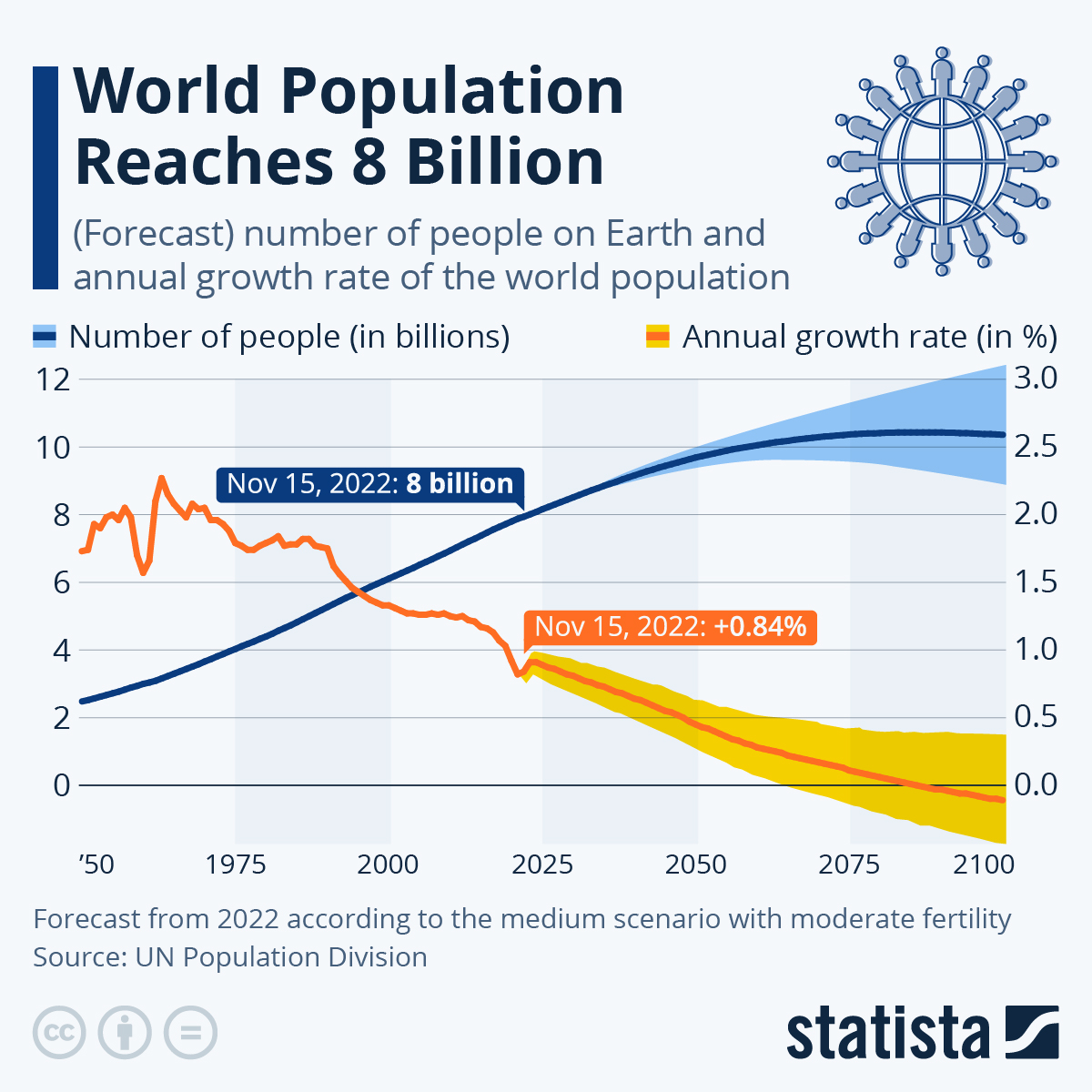
Michele Bruni: This century, our planet will witness a historical event, the end of a more than 250-year-long phase of explosive demographic growth. According to the 2022 World Population Prospects the planet’s total population is projected to peak at 10.4 billion by around 2085 and then decline; and even more importantly, the planet’s working age population is expected to increase by an additional 1.2 billion in the next 50 years before decreasing in the following decades.

Several positive considerations can be drawn. Firstly, a negative trend of the total population will reduce the GDP growth required to maintain GDP per capita constant, and therefore decrease the amount of natural resources used and our impact on the environment. It will also reduce the number of jobs required to keep the employment rate constant and provide the opportunity to confront the poverty, desperation, and moral debasement that derive from the lack of job opportunities.

Unfortunately, the situation is far more complex since over the past 200 years, the demographic transition (DT) has impacted countries around the world at different times resulting in them being at different stages of the DT. The richest and more developed states have already entered the “last” phase characterized by the decline of the working age population; many developing states will soon join them. Simultaneously, the poorest countries are experiencing and will continue to experience an explosive growth of their working age population. As a consequence, there will be an unprecedented demographic polarization between an increasing number of countries affected by a structural shortage of labor and a progressively aging population, and the poorest countries instead affected by a structural excess of labor.

Therefore, the DT is generating two opposite demographic challenges. Rich countries, to continue on a path of economic growth, will have to deal with both a decreasing labor force and an increasing number of elderly people. On the other hand, poor countries will have to manage a labor supply increasing at rates that cannot be realistically absorbed by economic growth. However, it is evident that these two situations are complementary and that it is possible to transform these regional problems into a global opportunity. This would require a political conversion to a rational approach to policymaking. Potential arrival countries should accept that it is in their economic and political interest to co-manage migration flows with potential departure countries in a manner quantitatively and qualitatively coherent with the needs of their labor market.

Despite not having achieved the status of developed country, China belongs to the group of potential arrival countries and is going to be affected by the largest absolute shortage of labor and an extremely fast aging process. While it is evident that Chinese society is not immune to xenophobia and racism, Beijing’s institutional setting, capacity to pragmatically pursue long-term goals, and desire to assume international leadership could lead it to adopt measures in contrast with the feelings of its citizens but beneficial to the country as a whole, such as in the case of the one-child policy.

GLO: Please elaborate a bit on the African challenge for Europe and Asia!

Michele Bruni: Is Africa the land of opportunities or the cradle of a demographic nightmare? Is it the new frontier for business, as suggested by CNN, or the place where children die since hospitals cannot afford pills that cost a few cents, as claimed by Save the Children?

What demographic data clearly shows is that, in absence of emigration, from now to the end of this century Africa’s working age population will register a fourfold increase bringing it from 15% to 43% of the world’s total working age population. Concurrently, the working age population of all the other continents will decline. Economically developed countries should therefore start to immediately ponder the economic, social, and political implications of these trends.

It should be evident that no matter how attractive Africa could be for foreign direct investment, it is unrealistic to assume that the continent will be able to create in the next 80 years the 1.3 billion jobs necessary to keep Africa’s rate of employment at an acceptable level (such a rate of job creation would imply outperforming China’s economic miracle). Thus, the only reasonable approach to avoid turning Africa into a demographic time-bomb is to absorb its structural excess of labor, especially since such a move would allow developed countries to deal with their structural shortage of labor.

Let me also add that humanitarian organizations should consider that too often saving the life of a child condemns them to live in dismal situations, to scavenge on rubbish damps to survive, to be easy prey of criminal groups or, if they are lucky, to be exploited by companies coming  from the same countries to which he own his  life. Saving the life of a child should also create the responsibility to make that child able to go to school, find a decent job, and face old age with dignity. This is only possible with a more rational and humane international order and approach to migration.

GLO: How do you judge China’s one-child policy today? Is it possible to further stabilize fertility decline?

Michele Bruni: Let me start placing the one-child policy in the international context in which it was conceived and adopted. The first demographic projections produced after WWII made evident that poor Asian countries, and especially India, were undergoing an unprecedented population explosion, caused not by an increase in fertility, but rather by a less pronounced decline of the crude birth rate with respect to the crude death rate. It was assumed that this situation would create poverty, poverty would beget communism, that in turn would destabilize the capitalist order. Moreover, the prevailing opinion shared by the leading demographers and economists of that era was that demographic growth could not be matched by economic growth and that the only possible solution was to reduce fertility. Therefore, in 1966, US President Lyndon B. Johnson decided to make foreign development aid dependent on the adoption of family planning programs, a decision immediately replicated by Japan, Sweden, and the UK. It should be noted that the Johnson administration’s decision preceded the publication of Paul and Anne Erlich’s Population Bomb (1968) and of Limits to Growth by the Club of Rome (1972). The result was a dramatic increase in the funding available to international organizations and private institutions in charge of implementing population policies. It also paved the way for India’s infamous campaign of compulsory sterilization headed by Sanjay Gandhi, during the state of National Emergency (1975-77) declared by his mother, Prime Minister Indira Gandhi.

In the meantime, China alternated between differing even contrary policies. On one hand, Mao and other high-ranking members of the CCP officially endorsed the pro-natalist Marxian position and in 1974 China helped lead Third World countries at the Bucharest Conference against the US position, under the slogan of “development is the best contraceptive”. On the other hand, family planning services were introduced in 1953 and, after an interruption during the Great Leap Forward, continued in earnest after 1964. Later on, Chinese families were urged to delay the birth of their first child, to lengthen the interval between children, and to reduce their number, a campaign encapsulated by the slogan “later, longer, fewer.” Data suggests that Chinese families shared this attitude as during the 1970s the total fertility rate (TFR) dropped from 6 to 3 children per woman.

It was in this context, characterized also by the new pragmatic and “scientific” atmosphere brought about by Deng Xiaoping’s leadership, that Beijing adopted the one-child policy, which was not an improvised measure imposed by a government devoid of humanity, but the expression of an ideology that put the nation’s interests above those of the individual. It was based on a substantially correct demographic projection made by one of China’s leading scientists and came after a debate that involved numerous national and provincial leaders, many of whom were openly against the measure. In the 1990s, China TFR fell below the replacement level of 2 children per woman, and it has remained below that figure since, despite the abolition of the one-child policy in 2016 and the subsequent measures aimed to foster fertility.

How to judge this measure? Firstly, I believe that the policy must be judged in its ideological context. At the same time, it is very difficult to assess the one-child policy’s impact with regard to the fall in fertility since at the moment of its implementation China’s TFR was already below three, in the 1990s it became a 1.5 child policy, and that other Asian countries experienced similar trends. Finally, there is no doubt that the law was kept long after it was not needed.

What is however undeniable is that the rapid fall of its TFR assisted China in lifting 800 million people out of poverty (and help to reduce global inequality as well), in surmounting an educational challenge concentrated in less than three decades, and then in facing the employment challenge with an educated labor force.

GLO: Fertility declines with development, this is the historical experience on a global level. Will fertility ever rise again with development?

Michele Bruni: In physics, an equivalent question would be asking whether gravity will one day start repelling apples from the Earth’s surface. However, while it is normally assumed that the laws of physics do not change because of the immutable nature of the universe, the laws “discovered” by social scientists do not have this universal and atemporal validity. Even assuming that human nature does not change, what is changing all the time is the demographic, socioeconomic, political, ideological, and technological context in which mankind lives and operates. Therefore, we cannot totally discard the hypothesis of a future characterized by a positive correlation between economic growth and fertility.

Before the end of this century, the Earth will enter a new demographic phase characterized by a declining population as a result not only of economic development but also of numerous other concomitant factors, including the recently acquired capacity to control the reproductive process. I suspect that this new phase will differ from our present one in numerous aspects.

The first interesting novelty is that it will be possible to improve the wellbeing of mankind while decreasing production, a feat that will however require us to drive the economic system “downhill” challenging the inbuilt inertia of the capitalist order that sees economic growth as a “natural goal.” The second is that this future society will be characterized by small families that could have fully interiorized the idea that small is beautiful. Moreover, while I doubt that the weight of reason and science will play a greater role in decision-making, it is possible that in the wake of the environmental disasters that are inevitably going to affect the planet in the next decades, humanity will have a deeper awareness of the scars that our growing population and hunger for raw material have inflicted on the Earth and will allow nature to reconquer a fair share of the planet. However, we cannot discard the possibility that some tribes produce large families. There is also a third science fiction-style possibility, that technological progress alongside the acquisition of different moral norms will bring to an externalized system of reproduction based on the quantitative and qualitative needs of the labor market.

The future is not in the hands of god, but it is the outcome of our actions, the result of chosen objectives and ways to reach them in a given material and ideological context. Therefore, economists and demographers should avoid making forecasts, limiting themselves to providing realistic scenarios to help policymakers find the best policies to reach their goals.

That said, personally I am rooting for a society that will choose to continue along a path of demographic degrowth paralleled by a degrowth in production, that aims to reduce all types of inequalities as much as possible and allow our planet to heal the deep wounds we have inflicted on it during last centuries.

GLO: What does it take to “manage” migration? Will mankind ever develop a successful institutional setting?

Michele Bruni: I believe that the most difficult step to manage (im)migration is in fact a preliminary, ideological step: to accept the idea that the labor market can be affected by a structural shortage of labor, that is a shortage that cannot be dealt with by market forces or active labor policies. This possibility is obstructed by the dominant paradigm. Moreover, this position finds support in the deeply rooted irrational – and therefore immune to any scientific refutation – prejudices successfully promoted by many populist and nationalist parties. These prejudices have also played a relevant role in assisting them to reach national prominence or even, as in the case of Italy, power.

Once a potential arrival country accepts this very simple and, in my opinion, self-evident position, these following more technical steps could be in order: estimate how many migrants are needed by educational level and skill; agree with one or more countries affected by a structural excess of labor to organize and co-manage migration flows quantitatively and qualitatively coherent with their needs; organize the transfer of migrants from the country of origin to the place where they are needed; and arrange for their placement in the labor market while supporting the social integration of their families. A fundamental aspect of my proposal deriving from my demand side explanation of migration is that recipient countries should finance and give technical support to the education and training systems of departure countries. In this way they would not only recognize the economic value of human capital they would be draining from departure countries, but this would also ensure that the migrants will have the skills they need.

A shortage of labor is already affecting North America, the EU, and numerous Asian countries and will affect many countries part of the Belt and Road Initiative (BRI). In the book, I suggest that China could take advantage of its leading position in the BRI and champion the adoption of immigration policies by member countries with a structural shortage of labor in accordance with member countries with a structural excess of labor, while at the same time providing departure countries with the financial, human, and organizational resources necessary to give migrants relevant skills. Since education and training represent a key to development, this rational migration policy should assist with the socioeconomic development of departure countries and eventually help them converge with the developed world. Obviously, this suggestion is valid for other groups of countries which, as in the case of the EU, already have institutions that could coordinate the migration policy I suggest. As I have already stated, what stands in the way of a rational and humane migration policy are a misleading economic paradigm and prejudices embedded not only in right-wing parties but also across a large section of academia.

GLO: Given the global demographic challenges: How can China avoid mass immigration? In your book, you argue it cannot, why? It has already seen the greatest internal migration flows ever in mankind. Would it not be the right political strategy to avoid immigration to not face rising societal instability? And if a country can do this, then would it not be China?

Michele Bruni: Starting in 2013 China’s working age population started to decrease and from 2020 to 2050 will decline by around 174 million (-17.6%). In an intermediate labour market scenario, that assumes a constant rate of participation and a modest increase of the employment level (8% over the 30-year period), China will be affected by a shortage of more than 220 million workers (28% of initial employment), that translates to around 250 million migrants. It is evident that this would generate enormous societal problems and China should adopt all the measures that can reduce the inflow of foreign workers. The question is: will these measures be sufficient to avoid mass immigration?

A labor shortage can be confronted by increasing the labor supply and by reducing labor demand. Starting from the supply side, increasing fertility would seem the most obvious answer to a declining labor force. Nevertheless, only very few countries (France in primis) through the adoption of complex and well-organized sets of pro-natalist measures have been able to achieve significant results. Moreover, while it is evident that any country should try to reduce the gap between births and deaths to avoid the destabilizing effects of an excessive natural demographic degrowth, any positive impact on the number of births would only affect the labor market after 20 years.

I have further argued that China cannot expect relevant results from other supply measures. The participation rate assumed by the intermediate scenario is already high and a further increase looks improbable. Removing the existing obstacles to internal mobility is certainly socially and economically advisable, but it will not significantly reduce the country’s national labor shortage. The lengthening of life expectancy will soon impose raising the legal age of retirement. However, this measure (that increases the number of generations co-present in the labor market, while decreasing the numbers in retirement) will have a limited and temporary impact on the labor shortage for two main reasons. Firstly, an increasing number of people above retirement age are already voluntarily remaining in the labor force; secondly, the increase in the number of elderly workers will be neutralized by a decline in the number of young workers since technological progress will determine an increase in the duration of the education and training phase.

The demand side measures that can be adopted are mainly two: delocalization and technological progress. Delocalization has been already adopted by many countries experiencing a situation of a structural shortage of labor, Italy and Japan being relevant examples, but no country has been able to solve the problem of a labor shortage in this way. Moreover, once we consider that not everything can be produced abroad and that numerous other countries with more international experience will be adopting the same approach, it becomes evident that China cannot hope to resolve its shortage of labor through this policy.

Let us finally consider the solution favored by many Chinese economists, technological progress such as AI and automation and its resulting increase in productivity. However, I have argued that we should not expect technological innovation to be the hoped-for Deus ex machina. Empirical evidence shows that once we adopt a dynamic perspective (i.e., we take into consideration also second-order effects) new technologies do not have a negative impact on the employment level, but rather lead to the substitution of labor for routine tasks with skilled labor that can perform non-routine cognitive tasks, and therefore with a higher level of educational attainment. More generally, I would argue that all the previous waves of technological change, starting with the initial Industrial Revolution, have expanded the employment level because while new technologies do destroy many jobs, they also create new jobs due to the boundless capacity of the human mind to invent new needs and the new goods necessary to satisfy them.

I believe that China’s internal migration is in fact the proof of my thesis. The unlimited supply of labor present in the countryside and in the poor inland provinces moved (was attracted) to where the local supply of labor was not sufficient to face an expanding labor demand. It also seems to prove the capacity of China to “manage” huge migration flows (the number of China’s internal migrants exceeds threefold international economic migration flows). According to my computations, the next thirty years’ labor needs are in line with the internal migrations that have taken place in China in the last thirty years. The difference is that potential migrants will not be Han Chinese. I sincerely hope that Beijing will recall that the apex of Chinese civilization was reached during the Han dynasty, an era characterized by a multi-ethnic, industrious, and creative society.

GLO: In your book, you identify a strategic advantage of China over other Asian and over European countries with similar demographic challenges: What are your suggestions for a rational and humane Chinese migration policy?

Michele Bruni: I think it is fair to state that China, while enjoying some advantages, also shares numerous disadvantages with respect to other Asian and European countries affected by a structural shortage of labor. More specifically, a large share of Chinese citizens have the same prejudices against migrants and xenophobic feelings as their Western counterparts. Furthermore, despite the different ideological background, economic thinking in China is dominated by the neoclassical paradigm.

Regarding advantages, as I have already suggested, when confronted with ”survival issues” China has been capable of embracing a pragmatic attitude and adopting measures that, while beneficial to the country as a whole, go against the feelings of its citizens. I hope that this pragmatic approach to policymaking will remain despite the increasingly ideological turn that Xi Jinping’s leadership is taking. Finally and most importantly, Beijing’s policies are guided by a long-term vision of the goals it wishes to reach both domestically and internationally and by an institutional setting that prioritizes efficiently achieving them.

GLO: Is the Belt and Road Initiative (BRI) a threat or a boon for the world? In your book you argue that it will be more positive than negative, since it began in a non-competitive setting. But the upcoming reality may be quite different. New competition between the systems, struggles for world economic, technological, and military leadership, excessive burdens and dependencies for the countries involved.

Michele Bruni: The BRI is an instrument and like many instruments it can be used to do good deeds or bad deeds. I think that Beijing would prefer to stick to its long-term internal and international goals and as I have suggested the BRI could play a central role in helping China achieve them. However, there is no doubt that totally different outcomes are possible since the future depends on the complex and interwoven relationships between actors with conflicting goals. Therefore, also in this case, I prefer to be coherent with my ideas on what role an economist should play. I will therefore avoid making forecasts and continue building alternative scenarios that could eventually help make rational and humane choices.

GLO: The human factor looks rather marginal in the Belt and Road Initiative (BRI) so far: Will this change and how?

Michele Bruni: For the moment the human factor has certainly played a marginal role in the BRI. My analysis suggests that the demographic trends that will affect BRI countries in the following decades could dramatically change this situation.

The total population of the estimated 65 original members of the BRI amounts to 4.8 billion people, 62% of the world population. In absence of migration, it is projected to reach a maximum of 5.6 billion in 2060 (when its share of world population will be down to 55.5%) to then decline progressively. The working age population will start to decrease 15 years earlier (in 2045) after reaching a maximum of 3.6 billion. However, as in the case of the planet, in the next 25 years the growth of the working age population of BRI countries will be the sum of the negative contributions of 24 countries including China, Thailand, Poland, Russia, and Ukraine, and the positive contributions of other countries, in particular Asian states, like India, Pakistan, Indonesia, Philippines, Afghanistan, but also African ones like Egypt.

I have argued that this situation will inevitably determine huge migration flows of up to 250 million people in the next 25 years and that it would be in the economic and political interest of China to champion organizing migration flows between BRI countries in a rational way. This would imply estimating the number of workers needed by the countries affected by a structural shortage of labor by educational level and skill typology. I have further argued that to maximize the positive impact of migration flows for both arrival and departure countries, the former and especially China should finance the education and training system of the latter and provide, when necessary, technical support. Departure and arrival countries should then organize the transfer of migrants, something which is currently very often in the hands of criminal organizations, while the latter should be in charge of their placement and the social integration of their families.

GLO: Why will China dominate the global order in this century? Has the Russian war against Ukraine not changed this perspective?

Michele Bruni: The scenario of China dominating the world depicted by Martin Jacques in 2010 is becoming more and more probable. In 2017, China became the world’s largest economy measured at PPP and has since then progressively distanced itself from its main competitors, the US and the EU whose GDP (measured at PPP constant 2017 international dollars) in 2021 was equal respectively to 84% and 79% that of China, despite the economic effects of China’s zero-COVID strategy. A further indication comes from China’s extremely fast technological progress promoted and supported by a growing number of highly educated and competent young people formed by universities whose international rankings are also steadily improving. However, what in my opinion makes this perspective very probable is the comparison between a country that has the capacity to establish long-term plans and an institutional setting that prioritizes efficiently pursuing them, and a Western world constantly engrossed in short-term issues and whose goals and the policies to achieve them are constantly being reshuffled.

In this perspective, the Russia-Ukraine war seems to me a short-term, albeit very dramatic, event that, as has been the case for the Iraq, Afghanistan and Yemen wars and the never-ending conflict in Syria, will not have a significant impact on China-US competition. It could even be argued that the war in Ukraine, while having a negative impact on Western economies where growth is slowing down due to the energy crisis and anti-inflation measures, could benefit China’s economy and global position.

Regarding Russia and Ukraine, let me recall that before the pandemic and the war, their total population and, more importantly, their working age population were in decline. The war is having an extremely heavy impact on fertility and on the working age population in both countries and will therefore modify both their short-term demographic situation and long-term demographic evolution. This will have serious implications that have not yet been considered. The first is that most probably when the war will be over, both countries will not be able to return to pre-war levels of production including of goods essentials for other countries, especially African ones. Let me also note that while Western countries are already promising a “Marshall Plan” of around 400 billion dollars to rebuild the country, nobody is asking whether Ukraine will have the labor force necessary to do so.

GLO: Given the current struggle for a new world order: Will globalization end? China does not want it, but can it be avoided? Or will it be just different?

Michele Bruni: I believe there is no going back from the international interconnection that currently characterizes the world. In many cases, such with natural resources, cutting ties would be impossible, in others it would have extremely negative economic impacts on economic growth and consumers. However, the decreasing economic weight of Western economies and the parallel increase in economic weight of developing countries opens the way to a multipolar globalized planet in which the role of Western countries and therefore the impact of their decisions will become less and less relevant. It is to be hoped that the new international order will try to reduce the negative aspects of today’s globalization, and that globalization will also include labor since it is the only way for the poorest countries to escape the poverty trap born from demographic trends and the “wall” policies dominating the planet.

******

Michele Bruni was interviewed by  Klaus F. ZimmermannGLO President.

Ends;

Inequality and Public Policy in Asia. Session as part of the GLO Global Conference 2022 on December 3. Details.

The online session Inequality and Public Policy in Asia was part of the 2022 GLO Global Conference (1-3 December 2022) scheduled for December 3 (1-3 am CET Berlin = 8-10 am Malaysia) free to participate through Zoom link without prior registration.

Updated December 7, 2022.

Session Overview: This session brings scholars from Southeast Asia to deliberate on the state of income inequality in the region. Papers selected are part of a GLO special issue edited by GLO SE Asia Cluster Lead, in collaboration with Jurnal Ekonomi Malaysia. The session will be also attended by all other contributors to the Special Issue as well as Chief Editor of the Jurnal Ekonomi Malaysia and other members of the editorial team.

Chair & Moderator: M Niaz Asadullah, Monash University Malaysia

Date:               03 Dec (Saturday) 2022

Schedule:        8-10 am Malaysia (6-8 am Bangladesh; 12-2 am UK; 1-3 am Germany)

8.00-8.10 am (Malaysia time)Opening remarks: Guest Editor of JEM special issueInequality & Public Policy in Asia  
   
8.10-8.30 am (Malaysia time)Paper 1: The Resurgence of Income Inequality in Asia-Pacific: The Role of Trade Openness, Educational Attainment and Institutional Quality  Presenter: Sharon Koh Geok May Monash University Malaysia   Email: koh.geokmay@monash.edu
   
8.30-8.50 am (Malaysia time)Paper 2: Structural Transformation, Income Inequality, and Government Expenditure: Evidence from International Panel DataPresenter: Wannaphong Durongkaveroj, Ramkhamhaeng University, Thailand   Email: wannaphong@ru.ac.th  
   
8.50-9.10 am (Malaysia time)Paper 3: What Does Data on Functional Income Distribution Tell Us About Trends in and Correlates of Income Inequality in the Asia-Pacific?            Presenter: Selim Raihan, Dhaka University & SANEM, Bangladesh   Email:selim.raihan@gmail.com
   
9.10-9.30 am (Malaysia time)Paper 4: The Spanish Flu Pandemic and Income Distribution in Java: Lessons from the 1920sPresenter: A. Gunadi Brata, Atma Jaya Yogyakarta University, Indonesia   Email: gunadi.brata@uajy.ac.id  
   
9.30-9.50 am (Malaysia time)Q&A Session 
   
9.50-9.55 am (Malaysia time)Group Photo Session     
9.55-10.00 am (Malaysia time)Closing remarks: Editor-in-Chief of JEM  Dr Mariani Abdul-Majid Universiti Kebangsaan Malaysia   Email: mariani@ukm.edu.my

Ends;

Sixth International ASTRIL Conference, January 19-20, 2023 on THE LABOUR MARKET IN A TIME OF CRISIS, INFLATION AND DEGLOBALISATION. Call for papers with submission deadline November 20, 2022.

January 19-20, 2023: Roma, Italy. Sixth International ASTRIL Conference on THE LABOUR MARKET IN A TIME OF CRISIS, INFLATION AND DEGLOBALISATION. In-person & online.

Call for Papers. Submission deadline: 20 November 2022.

Deadline: Abstracts and session proposals (300-500 words): 20 November 2022. Please write the topic that the paper refers to areas (1, 2, 3, 4) in the abstract and send the abstract and session proposal (4 papers at least) to: astril@uniroma3.it

Featured image: david-kohler-unsplash

Ends;

Evolution of Inequality in Nigeria: A Tale of Falling Inequality, Rising Poverty and Regional Heterogeneity. A new GLO Discussion Paper by GLO Fellow Ruth Uwaifo Oyelere and John Odozi.

A new GLO Discussion Paper finds that inequality has indeed decreased and median consumption expenditure increased. At the same time, poverty incidence and severity increased precipitously. 

GLO Discussion Paper No. 1183, 2022

Evolution of Inequality in Nigeria: A Tale of Falling Inequality, Rising Poverty and Regional Heterogeneity – Download PDF
by Odozi, John & Uwaifo Oyelere, Ruth

GLO Fellow Ruth Uwaifo Oyelere

Ruth Uwaifo Oyelere


Author Abstract: Recent research on Nigeria indicates declining income inequality. In contrast, anecdotal evidence suggests that only the upper class has benefited from economic growth in Nigeria overtime. The disconnect between these findings and anecdotal evidence, and the limitation in how inequality was estimated in the past literature are the motivation for our research. First we consider if inequality decreased in Nigeria between 2010 and 2018. We then examine how changes in inequality relate to changes in consumption and poverty. In addition, we examine whether there has been convergence in inequality and consumption across regions over this period? Leveraging data from the four waves of the Nigeria General Household Panel Survey (GHS) and carefully measuring inequality using consumption expenditure, our results suggest that inequality has decreased and median consumption expenditure increased. At the same time, poverty incidence and severity increased precipitously. Our findings suggest convergence in estimated inequality by regions but we do not find evidence of convergence across regions in consumption.

Featured image: Nigeria-Lagos-Muhammad-Taha-Ibrahim-on-Unsplash

PUBLISHED
Vol. 35, Issue 4, October 2022: Journal of Population Economics (JOPE): 15 articles https://link.springer.com/journal/148/volumes-and-issues/35-4
CiteScore of JOPE moves up from 3.9 (2020) to 6.5 (2021). LINK
Similar, its Impact Factor is now 4.7 (2021) after 2.8 (2020)! LINK

GLO Discussion Papers are research and policy papers of the GLO Network which are widely circulated to encourage discussion. Provided in cooperation with EconStor, a service of the ZBW – Leibniz Information Centre for Economics, GLO Discussion Papers are among others listed in RePEc (see IDEAS,  EconPapers)Complete list of all GLO DPs – downloadable for free.

The Global Labor Organization (GLO) is an independent, non-partisan and non-governmental organization that functions as an international network and virtual platform to stimulate global research, debate and collaboration.

Ends;

Green bonds’ reputation effect and its impact on the financing costs of the real estate sector. A new GLO Discussion Paper by GLO Fellow Dorothea Schäfer and colleagues.

A new GLO Discussion Paper finds that issuing green bonds lowers the firm’s cost of equity capital, while issuing non-green bonds has no effect on the cost of equity capital.

GLO Discussion Paper No. 1182, 2022

Green bonds’ reputation effect and its impact on the financing costs of the real estate sector – Download PDF
by Petreski, Aleksandar & Schäfer, Dorothea & Stephan, Andreas

GLO Fellow Dorothea Schäfer

Dorothea Schäfer

Author Abstract: This paper explores the effect of a firm’s reputation of being a green bond issuer on its financing costs. Using a sample of 73 listed Swedish real estate companies issuing in total about 1500 bonds over the period from 2011 till 2021, differencein- difference analyses and instrumental variable estimations are applied to identify the causal impact of frequent green vis-à-vis frequent non-green bond issuing on a firm’s cost of capital and credit rating. The paper argues that it is repetitive issuance which lowers a firm’s cost of capital, while the effects from first or one-time green bond issuance is the opposite. In line with the reputation capital hypothesis, issuing green bonds even lowers the firm’s cost of equity capital, while issuing non-green bonds has no effect on the cost of equity capital.

Featured image: Jason-Leung-on-Unsplash

PUBLISHED
Vol. 35, Issue 4, October 2022: Journal of Population Economics (JOPE): 15 articles https://link.springer.com/journal/148/volumes-and-issues/35-4
CiteScore of JOPE moves up from 3.9 (2020) to 6.5 (2021). LINK
Similar, its Impact Factor is now 4.7 (2021) after 2.8 (2020)! LINK

GLO Discussion Papers are research and policy papers of the GLO Network which are widely circulated to encourage discussion. Provided in cooperation with EconStor, a service of the ZBW – Leibniz Information Centre for Economics, GLO Discussion Papers are among others listed in RePEc (see IDEAS,  EconPapers)Complete list of all GLO DPs – downloadable for free.

The Global Labor Organization (GLO) is an independent, non-partisan and non-governmental organization that functions as an international network and virtual platform to stimulate global research, debate and collaboration.

Ends;

Does the COVID-19 Pandemic Disproportionately Affect the Poor? Evidence from a Six-Country Survey. A new GLO Discussion Paper by GLO Fellows Hai-Anh Dang and Toan Luu Duc Huynh & Manh-Hung Nguyen.

A new GLO Discussion Paper finds that while the outbreak has no impacts on household income losses, it results in a 63-percent reduction in the expected own labor income for the second-poorest income quintile.

GLO Discussion Paper No. 1181, 2022

Does the COVID-19 Pandemic Disproportionately Affect the Poor? Evidence from a Six-Country Survey – Download PDF
by Dang, Hai-Anh H. & Huynh, Toan L. D. & Nguyen, Manh-Hung

GLO Fellows Hai-Anh Dang and Toan Luu Duc Huynh

Author Abstract: The COVID-19 pandemic has wrought havocs on economies around the world. Yet, much needs to be learnt on the distributional impacts of the pandemic. We contribute new theoretical and empirical evidence on the distributional impacts of the pandemic on different income groups in a multi-country setting. Analyzing rich individual-level data from a six-country survey, we find that while the outbreak has no impacts on household income losses, it results in a 63-percent reduction in the expected own labor income for the second-poorest income quintile. The impacts of the pandemic are most noticeable in terms of savings, with all the four poorer income quintiles suffering reduced savings ranging between 5 and 7 percent compared to the richest income quintile. The poor are also less likely to change their behaviors, both in terms of immediate prevention measures against COVID-19 and healthy activities. We also find countries to exhibit heterogeneous impacts. The United Kingdom has the least household income loss and expected labor income loss, and the most savings. Japanese are least likely to adapt behavioral changes, but Chinese, Italians, and South Koreans wash their hands and wear a mask more often than Americans.

Featured image: Adli-Wahid-on-Unsplash

PUBLISHED
Vol. 35, Issue 4, October 2022: Journal of Population Economics (JOPE): 15 articles https://link.springer.com/journal/148/volumes-and-issues/35-4
CiteScore of JOPE moves up from 3.9 (2020) to 6.5 (2021). LINK
Similar, its Impact Factor is now 4.7 (2021) after 2.8 (2020)! LINK

GLO Discussion Papers are research and policy papers of the GLO Network which are widely circulated to encourage discussion. Provided in cooperation with EconStor, a service of the ZBW – Leibniz Information Centre for Economics, GLO Discussion Papers are among others listed in RePEc (see IDEAS,  EconPapers)Complete list of all GLO DPs – downloadable for free.

The Global Labor Organization (GLO) is an independent, non-partisan and non-governmental organization that functions as an international network and virtual platform to stimulate global research, debate and collaboration.

Ends;

Scholz visit to strengthen mutual trust. Opinion Piece in “China Daily” of November 4, 2022.

The pros and cons of the one-day trip of German Chancellor Olaf Scholz are heavily debated at home and globally. Is this a good move after the “Zeitenwende” caused by the Russian aggression in the Ukraine? In an opinion piece for the China Daily I argue today that the visit is important at this time to explore the potentials for the world and strengthen mutual trust.

China Daily, Hong Kong Edition, November 4, 2022, p. 10.

Ends;

The Power of Public Insurance With Limited Benefits: Evidence from China’s New Cooperative Medical Scheme. A new GLO Discussion Paper by Lin Lin & GLO Affiliate Xianhua Zai.

A new GLO Discussion Paper finds that the effectiveness of the scheme for inpatient care use has increased significantly.

GLO Discussion Paper No. 1180, 2022

The Power of Public Insurance With Limited Benefits: Evidence from China’s New Cooperative Medical Scheme – Download PDF
by Lin, Lin & Zai, Xianhua

GLO Affiliate Xianhua Zai

Xianhua Zai

Author Abstract: Low-income people in low- and middle-income countries (LMICs) have limited access to healthcare when they are sick. To address this issue, the governments of LMICs have initiated health insurance programs that target these poor populations. However, the health benefits these programs provide are often limited due to resource constraints in LMICs. In this paper, we study the New Cooperative Medical Scheme (NCMS), a limited coverage insurance program for rural residents in China, to explore its effectiveness, and the mechanisms that contribute to its successes, if any. In a plausibly random design, we exploit the variation in provincial NCMS enrollment rate 2004-2011 to identify its average treatment effect. We find that although the NCMS’ coverage is limited, its effect on inpatient care use increases significantly. This increase is mainly driven by inpatient care delivered by primary care providers, which has the most generous reimbursement rates. In addition, we show that half of the increase in inpatient care use is attributable to the NCMS’ healthcare investment in rural providers. For outpatient services, while the total effect is not statistically significant, we find that the utilization pattern across providers is consistent with the differential payment design of the NCMS: rural residents use more outpatient care provided by primary care institutions where they can get higher reimbursement rates. In addition, we show evidence that rural residents substitute outpatient services in hospitals for that in township health centers. Lastly, results on health expenditure and health outcomes indicate that the introduction of the NCMS does not affect out-of-pocket medical expense or all-cause mortality rates among rural residents, but it does reduce mortality for specific diseases such as AIDS and infectious disease.

PUBLISHED
Vol. 35, Issue 4, October 2022: Journal of Population Economics (JOPE): 15 articles https://link.springer.com/journal/148/volumes-and-issues/35-4
CiteScore of JOPE moves up from 3.9 (2020) to 6.5 (2021). LINK
Similar, its Impact Factor is now 4.7 (2021) after 2.8 (2020)! LINK

GLO Discussion Papers are research and policy papers of the GLO Network which are widely circulated to encourage discussion. Provided in cooperation with EconStor, a service of the ZBW – Leibniz Information Centre for Economics, GLO Discussion Papers are among others listed in RePEc (see IDEAS,  EconPapers)Complete list of all GLO DPs – downloadable for free.

The Global Labor Organization (GLO) is an independent, non-partisan and non-governmental organization that functions as an international network and virtual platform to stimulate global research, debate and collaboration.

Ends;

Revisiting excess commuting and self-employment: The case of Latin America. A new GLO Discussion Paper by GLO Fellows José Ignacio Gimenez-Nadal, Jorge Velilla & Raquel Ortega-Lapiedra.

A new GLO Discussion Paper finds that employees spend about 8.2 more minutes commuting to work than their self-employed counterparts.

GLO Discussion Paper No. 1179, 2022

Revisiting excess commuting and self-employment: The case of Latin America – Download PDF
by Giménez-Nadal, José Ignacio & Velilla, Jorge & Ortega, Raquel

GLO Fellows José Ignacio Gimenez-Nadal, Jorge Velilla & Raquel Ortega-Lapiedra

Jorge Velilla

Author Abstract: This paper analyzes the commuting behavior of employee and self-employed workers in urban areas of eleven Latin American countries, within a theoretical framework that identifies employees’ excess commuting as different from self-employed workers’ commuting. Using data from the ECAF data, results show that employees spend about 8.2 more minutes commuting to work than their self-employed counterparts, net of observable characteristics, a difference of around 18.5% of the employees’ commuting time. This difference is qualitatively robust across the eleven countries and is concentrated in commutes by public transit, but it is not explained by differences in access to public transit services between the two groups. This analysis is a first exploration of self-employed and employee workers’ commuting time in Latin American countries. By analyzing differences in commuting time between these two groups of Latin American workers, our analysis may serve to guide future planning programs.

Featured image: Manuel-Lardizabal-on-Unsplash

PUBLISHED
Vol. 35, Issue 4, October 2022: Journal of Population Economics (JOPE): 15 articles https://link.springer.com/journal/148/volumes-and-issues/35-4
CiteScore of JOPE moves up from 3.9 (2020) to 6.5 (2021). LINK
Similar, its Impact Factor is now 4.7 (2021) after 2.8 (2020)! LINK

GLO Discussion Papers are research and policy papers of the GLO Network which are widely circulated to encourage discussion. Provided in cooperation with EconStor, a service of the ZBW – Leibniz Information Centre for Economics, GLO Discussion Papers are among others listed in RePEc (see IDEAS,  EconPapers)Complete list of all GLO DPs – downloadable for free.

The Global Labor Organization (GLO) is an independent, non-partisan and non-governmental organization that functions as an international network and virtual platform to stimulate global research, debate and collaboration.

Ends;
Inside the NBA Bubble: How Black Players Performed Better without Fans. A new GLO Discussion Paper by GLO Fellow Mauro Caselli and colleagues.

A new GLO Discussion Paper finds that in the NBA professional basketball league in North America the performance of Black players improved significantly with the absence of fans vis-à-vis White players.

GLO Discussion Paper No. 1178, 2022

Inside the NBA Bubble: How Black Players Performed Better without Fans – Download PDF
by Caselli, Mauro & Falco, Paolo & Somekh, Babak

GLO Fellow Mauro Caselli

Author Abstract: In the NBA, predominantly Black players play in front of predominantly non-Black fans. Using the ‘NBA bubble’, a natural experiment induced by COVID-19, we show that the performance of Black players improved significantly with the absence of fans vis-à-vis White players. This is consistent with Black athletes being negatively affected by racist pressure from mostly non-Black audiences. We dispel several alternative hypotheses. Beyond hurting individual players, fans’ behavior causes significant economic damage to the NBA by lowering the quality of the game.

Featured image: kylie-osullivan-on-Unsplash

PUBLISHED
Vol. 35, Issue 4, October 2022: Journal of Population Economics (JOPE): 15 articles https://link.springer.com/journal/148/volumes-and-issues/35-4
CiteScore of JOPE moves up from 3.9 (2020) to 6.5 (2021). LINK
Similar, its Impact Factor is now 4.7 (2021) after 2.8 (2020)! LINK

GLO Discussion Papers are research and policy papers of the GLO Network which are widely circulated to encourage discussion. Provided in cooperation with EconStor, a service of the ZBW – Leibniz Information Centre for Economics, GLO Discussion Papers are among others listed in RePEc (see IDEAS,  EconPapers)Complete list of all GLO DPs – downloadable for free.

The Global Labor Organization (GLO) is an independent, non-partisan and non-governmental organization that functions as an international network and virtual platform to stimulate global research, debate and collaboration.

Ends;

Technical Change, Task Allocation, and Labor Unions. A new GLO Discussion Paper by GLO Fellow Thomas Beissinger & colleagues.

The new GLO Discussion Paper proposes a novel framework that integrates the “task approach” to find that low-skilled workers may be harmed in terms of either lower wages or higher unemployment.

GLO Discussion Paper No. 1177, 2022

Technical Change, Task Allocation, and Labor Unions – Download PDF
by Marczak, Martyna & Beissinger, Thomas & Brall, Franziska

GLO Fellow Thomas Beissinger

Thomas Beissinger

Author Abstract: We propose a novel framework that integrates the “task approach” for a more precise production modeling into the search-and-matching model with low- and high-skilled workers, and wage setting by labor unions. We establish the relationship between task reallocation and changes in wage pressure, and examine how skill- biased technical change (SBTC) affects the task composition, wages of both skill groups, and unemployment. In contrast to the canonical model with a fixed task allocation, low-skilled workers may be harmed in terms of either lower wages or higher unemployment depending on the relative task-related productivity profile of both worker types. We calibrate the model to the US and German data for the periods 1995-2005 and 2010-2017. The simulated effects of SBTC on low-skilled unemployment are largely consistent with observed developments. For example, US low-skilled unemployment increases due to SBTC in the earlier period and decreases after 2010.

Featured image: Alex-Kotliarskyi-on-Unsplash

PUBLISHED
Vol. 35, Issue 4, October 2022: Journal of Population Economics (JOPE): 15 articles https://link.springer.com/journal/148/volumes-and-issues/35-4
CiteScore of JOPE moves up from 3.9 (2020) to 6.5 (2021). LINK
Similar, its Impact Factor is now 4.7 (2021) after 2.8 (2020)! LINK

GLO Discussion Papers are research and policy papers of the GLO Network which are widely circulated to encourage discussion. Provided in cooperation with EconStor, a service of the ZBW – Leibniz Information Centre for Economics, GLO Discussion Papers are among others listed in RePEc (see IDEAS,  EconPapers)Complete list of all GLO DPs – downloadable for free.

The Global Labor Organization (GLO) is an independent, non-partisan and non-governmental organization that functions as an international network and virtual platform to stimulate global research, debate and collaboration.

Ends;
Public finance in the era of the COVID-19 crisis. A new GLO Discussion Paper by GLO Fellow David R. Agrawal & Aline Bütikofer.

The new GLO Discussion Paper reflects on how the field of public economics has been shaped by the COVID-19 pandemic and discusses several areas where more research is needed.

GLO Discussion Paper No. 1176, 2022

Public finance in the era of the COVID-19 crisis – Download PDF
by Agrawal, David R. & Bütikofer, Aline

GLO Fellow David R. Agrawal

David R. Agrawal

Author Abstract: The COVID-19 crisis poses new policy challenges and has spurred new research agendas in public economics. In this article, we selectively reflect on how the field of public economics has been shaped by the COVID-19 pandemic and discuss several areas where more research is necessary. We highlight major changes and inequalities in the labor market and K-12 education, in addition to discussing how technological change creates new challenges for the taxation of income and consumption. We discuss various policy responses to these challenges and the role of fiscal federalism in the context of worldwide crises. Finally, we summarize the key issues discussed at the 2021 International Institute of Public Finance Congress and the papers published in this special issue.

PUBLISHED
Vol. 35, Issue 4, October 2022: Journal of Population Economics (JOPE): 15 articles https://link.springer.com/journal/148/volumes-and-issues/35-4
CiteScore of JOPE moves up from 3.9 (2020) to 6.5 (2021). LINK
Similar, its Impact Factor is now 4.7 (2021) after 2.8 (2020)! LINK

GLO Discussion Papers are research and policy papers of the GLO Network which are widely circulated to encourage discussion. Provided in cooperation with EconStor, a service of the ZBW – Leibniz Information Centre for Economics, GLO Discussion Papers are among others listed in RePEc (see IDEAS,  EconPapers)Complete list of all GLO DPs – downloadable for free.

The Global Labor Organization (GLO) is an independent, non-partisan and non-governmental organization that functions as an international network and virtual platform to stimulate global research, debate and collaboration.

Ends;

Daylight Saving ends. Recent research about daylight effects in the Journal of Population Economics.

Daylight saving is under debate. What are the health and crime implications?

Journal of Population Economics, Issue 3/2022

Follow the paper presentations of the authors during the Summer Event 2022 of the Journal of Population Economics:

July 15, 2022. Journal of Population Economics Summer 2022 Event. Program & Event Video.

Ends;

Inflation and attention thresholds. A new GLO Discussion Paper by GLO Fellow David Munro & colleagues.

The new GLO Discussion Paper finds that attention affects inflation.

GLO Discussion Paper No. 1175, 2022

Inflation and attention thresholds – Download PDF
by Korenok, Oleg & Munro, David & Chen, Jiayi

GLO Fellow David Munro

Author Abstract: One of the dangers of high inflation is that it can cause firms and households to pay close attention to it. This internalization of inflation can lead to an accelerationist regime, making inflation harder to control. We empirically assess the relationship between attention and the level of inflation for 37 countries. Our measures of attention are constructed either from internet search behavior or the popularity of inflation mentions on Twitter. We find evidence that attention thresholds do exist for the majority of countries in our sample. We also find interesting variability across countries.

PUBLISHED
Vol. 35, Issue 4, October 2022: Journal of Population Economics (JOPE): 15 articles https://link.springer.com/journal/148/volumes-and-issues/35-4
CiteScore of JOPE moves up from 3.9 (2020) to 6.5 (2021). LINK
Similar, its Impact Factor is now 4.7 (2021) after 2.8 (2020)! LINK

GLO Discussion Papers are research and policy papers of the GLO Network which are widely circulated to encourage discussion. Provided in cooperation with EconStor, a service of the ZBW – Leibniz Information Centre for Economics, GLO Discussion Papers are among others listed in RePEc (see IDEAS,  EconPapers)Complete list of all GLO DPs – downloadable for free.

The Global Labor Organization (GLO) is an independent, non-partisan and non-governmental organization that functions as an international network and virtual platform to stimulate global research, debate and collaboration.

Ends;
Informal Institution Meets Child Development: Clan Culture and Child Labor in China. A new GLO Discussion Paper by Can Tan and GLO Fellow Zhong Zhao.

The new GLO Discussion Paper finds that clan culture significantly reduces the incidence of child labor and working hours of child laborer. 

GLO Discussion Paper No. 1174, 2022

Informal Institution Meets Child Development: Clan Culture and Child Labor in China – Download PDF
by Tang, Can & Zhao, Zhong

GLO Fellow Zhong Zhao

Zhong Zhao

Author Abstract: Using a national representative sample, the China Family Panel Studies, this paper explores the influences of clan culture, a hallmark of Chinese cultural history, on the prevalence of child labor in China. We find that clan culture significantly reduces the incidence of child labor and working hours of child laborer. The results exhibit strong boy bias, and are driven by boys rather than girls, which reflects the patrilineal nature of Chinese clan culture. Moreover, the impact is greater on boys from households with lower socioeconomic status, and in rural areas. Clan culture acts as a supplement to formal institutions: reduces the incidence of child labor through risk sharing and easing credit constraints, and helps form social norms to promote human capital investment. We also employ an instrument variable approach and carry out a series of robustness checks to further confirm the findings.

Featured Image: Beth-Macdonald-Unsplash

PUBLISHED
Vol. 35, Issue 4, October 2022: Journal of Population Economics (JOPE): 15 articles https://link.springer.com/journal/148/volumes-and-issues/35-4
CiteScore of JOPE moves up from 3.9 (2020) to 6.5 (2021). LINK
Similar, its Impact Factor is now 4.7 (2021) after 2.8 (2020)! LINK

GLO Discussion Papers are research and policy papers of the GLO Network which are widely circulated to encourage discussion. Provided in cooperation with EconStor, a service of the ZBW – Leibniz Information Centre for Economics, GLO Discussion Papers are among others listed in RePEc (see IDEAS,  EconPapers)Complete list of all GLO DPs – downloadable for free.

The Global Labor Organization (GLO) is an independent, non-partisan and non-governmental organization that functions as an international network and virtual platform to stimulate global research, debate and collaboration.

Ends;

Multitasking. A new GLO Discussion Paper by GLO Fellow Anzelika Zaiceva-Razzolini.

The new GLO Discussion Paper reviews theoretical and empirical contributions, focusing on childcare, food consumption, and remote work. 

GLO Discussion Paper No. 1173, 2022

Multitasking – Download PDF
by Zaiceva-Razzolini, Anzelika

GLO Fellow Anzelika Zaiceva-Razzolini

Author Abstract: This chapter reviews economic studies on multitasking in household production. Whereas multitasking or task juggling in the workplace has been analyzed more widely, economic literature on multitasking in a household is relatively scarce. The chapter first provides relevant measures of such multitasking activities, discusses time diary data, and presents some empirical facts employing Harmonized European Time Use Survey data. It then reviews theoretical and empirical contributions to this topic, focusing on childcare, food consumption, and remote work. It also reviews the determinants of multitasking and identifies the factors that are more likely to affect these activities. In addition, it discusses multitasking by certain groups, such as ethnic minorities and children. Finally, it offers policy implications and suggestions for future research.

Featured image: Revisions-on-Unsplash

PUBLISHED
Vol. 35, Issue 4, October 2022: Journal of Population Economics (JOPE): 15 articles https://link.springer.com/journal/148/volumes-and-issues/35-4
CiteScore of JOPE moves up from 3.9 (2020) to 6.5 (2021). LINK
Similar, its Impact Factor is now 4.7 (2021) after 2.8 (2020)! LINK

GLO Discussion Papers are research and policy papers of the GLO Network which are widely circulated to encourage discussion. Provided in cooperation with EconStor, a service of the ZBW – Leibniz Information Centre for Economics, GLO Discussion Papers are among others listed in RePEc (see IDEAS,  EconPapers)Complete list of all GLO DPs – downloadable for free.

The Global Labor Organization (GLO) is an independent, non-partisan and non-governmental organization that functions as an international network and virtual platform to stimulate global research, debate and collaboration.

Ends;

The Role of Institutions in Job Teleworkability Before and After the Covid-19 Pandemic. A new GLO Discussion Paper by GLO Fellow Peter Norlander and Christopher Erickson.

The new GLO Discussion Paper finds that during the pandemic between-firm differences increased, and institutions influenced the rate of telework adoption.

GLO Discussion Paper No. 1172, 2022

The Role of Institutions in Job Teleworkability Before and After the Covid-19 Pandemic – Download PDF
by Norlander, Peter & Erickson, Christopher

GLO Fellow Peter Norlander

Author Abstract: The teleworkability of jobs – whether they can and will be performed remotely – has been increasingly contested in the aftermath of the COVID-19 pandemic. To explain which jobs are teleworkable and why, we emphasize the institutional context of a job, including differences among firms, union representation, professional licensing requirements, sector, and employment models. Using a novel dataset of job characteristics extracted from the text of a large sample of online job advertisements from 2010-2021, we examine various explanations for change in the availability of remote job opportunities. Prior to the pandemic, private sector, non-union, and unlicensed jobs lagged federal government, union, and licensed jobs in the growth of telework. Firms are the largest source of variance in remote job offerings relative to other obvious alternatives (technological feasibility, occupation, sector, geography). After March 2020, between-firm differences increased, and institutions influenced the rate of telework adoption.

Featured image: The-Coherent-Team-on-Unsplash

PUBLISHED
Vol. 35, Issue 4, October 2022: Journal of Population Economics (JOPE): 15 articles https://link.springer.com/journal/148/volumes-and-issues/35-4
CiteScore of JOPE moves up from 3.9 (2020) to 6.5 (2021). LINK
Similar, its Impact Factor is now 4.7 (2021) after 2.8 (2020)! LINK

GLO Discussion Papers are research and policy papers of the GLO Network which are widely circulated to encourage discussion. Provided in cooperation with EconStor, a service of the ZBW – Leibniz Information Centre for Economics, GLO Discussion Papers are among others listed in RePEc (see IDEAS,  EconPapers)Complete list of all GLO DPs – downloadable for free.

The Global Labor Organization (GLO) is an independent, non-partisan and non-governmental organization that functions as an international network and virtual platform to stimulate global research, debate and collaboration.

Ends;

Is Secessionism Mostly About Income or Identity? A Global Analysis of 3,003 Subnational Regions. A new GLO Discussion Paper by GLO Fellow Ömer Özak and colleagues.

The new GLO Discussion Paper strongly suggests that identity trumps income in determining a region’s propensity to secede. 

GLO Discussion Paper No. 1171, 2022

Is Secessionism Mostly About Income or Identity? A Global Analysis of 3,003 Subnational Regions – Download PDF
by Desmet, Klaus & Ortuño Ortín, Ignacio & Özak, Ömer

GLO Fellow Ömer Özak

Ömer Özak

Author Abstract: This paper analyzes whether the propensity to secede by subnational regions responds mostly to differences in income per capita or to distinct identities. We explore this question in a quantitative political economy model where people’s willingness to finance a public good depends on their income and identity. Using high-resolution economic and linguistic data for the entire globe, we predict the propensity to secede of 3,003 subnational regions in 173 countries. We validate the model-based predictions with data on secessionist movements, state fragility, regional autonomy, and conflict, as well as with an application to the dissolution of the Soviet Union. Counterfactual analysis strongly suggests that identity trumps income in determining a region’s propensity to secede. Removing identity differences reduces the average support for secession from 7.5% to 0.6% of the population.

PUBLISHED
Vol. 35, Issue 4, October 2022: Journal of Population Economics (JOPE): 15 articles https://link.springer.com/journal/148/volumes-and-issues/35-4
CiteScore of JOPE moves up from 3.9 (2020) to 6.5 (2021). LINK
Similar, its Impact Factor is now 4.7 (2021) after 2.8 (2020)! LINK

GLO Discussion Papers are research and policy papers of the GLO Network which are widely circulated to encourage discussion. Provided in cooperation with EconStor, a service of the ZBW – Leibniz Information Centre for Economics, GLO Discussion Papers are among others listed in RePEc (see IDEAS,  EconPapers)Complete list of all GLO DPs – downloadable for free.

The Global Labor Organization (GLO) is an independent, non-partisan and non-governmental organization that functions as an international network and virtual platform to stimulate global research, debate and collaboration.

Ends;

A Field Study of Age Discrimination in the Workplace: The Importance of Gender and Race. Pay the Gap. A new GLO Discussion Paper by GLO Fellows Nick Drydakis & Anna Paraskevopoulou and Vasiliki Bozani.

A new GLO Discussion Paper finds for the UK patterns that may well be in-line with prejudices against racial minority groups and stereotypical sexist beliefs.

GLO Discussion Paper No. 1170, 2022

A Field Study of Age Discrimination in the Workplace: The Importance of Gender and Race. Pay the Gap  Download PDF
by Drydakis, Nick & Paraskevopoulou, Anna & Bozani, Vasiliki

GLO Fellows Nick Drydakis & Anna Paraskevopoulou

Nick Drydakis

Author Abstract: The study examines whether age intersects with gender and race during the initial stage of the hiring process and affects access to vacancies outcomes and wage sorting. In order to answer the research question the study collects data from four simultaneous field experiments in England. The study compares the labour market outcomes of younger White British men with those of older White British men and women, and with those of older Black British men and women. The study concentrates on low-skilled vacancies in hospitality and sales in the private sector. The results of this study indicate that older White British men and women, as well as older Black British men and women, experience occupational access constraints and are sorted into lower-paid jobs than younger White British men. The level of age discrimination is found to be higher for Black British men and women. In addition, Black British women experience the highest level of age discrimination. These patterns may well be in-line with prejudices against racial minority groups and stereotypical sexist beliefs that the physical strengths and job performance of women decline earlier than they do for men. This research presents for the first-time comparisons of access to vacancies and wage sorting between younger male racial majorities and older male racial majorities, older female racial majorities, older male racial minorities, and older female racial minorities. In addition, the driven mechanism of the assigned differences is explored. Because the study has attempted to minimise the negative employer stereotypes vis-à-vis older employees, with respect to their motivation, productivity, and health, such prejudices against older individuals may be considered Taste-based discrimination. If prejudices against older individuals are present, then anti-discrimination legislation may be the appropriate response, especially for racial minorities and women. Eliminating age discrimination in selection requires firms to adopt inclusive HR policies at the earliest stages of the recruitment process.

PUBLISHED
Vol. 35, Issue 4, October 2022: Journal of Population Economics (JOPE): 15 articles https://link.springer.com/journal/148/volumes-and-issues/35-4
CiteScore of JOPE moves up from 3.9 (2020) to 6.5 (2021). LINK
Similar, its Impact Factor is now 4.7 (2021) after 2.8 (2020)! LINK

GLO Discussion Papers are research and policy papers of the GLO Network which are widely circulated to encourage discussion. Provided in cooperation with EconStor, a service of the ZBW – Leibniz Information Centre for Economics, GLO Discussion Papers are among others listed in RePEc (see IDEAS,  EconPapers)Complete list of all GLO DPs – downloadable for free.

The Global Labor Organization (GLO) is an independent, non-partisan and non-governmental organization that functions as an international network and virtual platform to stimulate global research, debate and collaboration.

Ends;

2023 Kuznets Prize Awarded to Garima Rastogi & Anisha Sharma for their research on abortions in India.

Garima Rastogi (University of Oxford) and Anisha Sharma (Ashoka University) receive the 2023 Kuznets Prize for their article “Unwanted daughters: the unintended consequences of a ban on sex-selective abortions on the educational attainment of women”, which was published in the Journal of Population Economics (2022), 35, pp. 1473-1516. The annual prize honors the best article published in the Journal of Population Economics in the previous year. The prize will be awarded in a public online event during the GLO Global Conference on December 1, 2022. 

Biographical Abstracts

Garima Rastogi is a student in the MPhil in Economics program at the University of Oxford. She has completed her undergraduate education with honours from Ashoka University, India. Her research is primarily in applied microeconomics. She uses empirical methods to explore questions at the intersection of gender, education, and health, in the context of developing countries. She is currently working on her dissertation, which explores the role of a coercive sterilization policy in India on current family-planning practices.  

Anisha Sharma is a development economist at Ashoka University, India. Her research interests are in labour economics, the economics of health and education, and public policy, with a particular interest in gender gaps across these dimensions. One strand of her research focuses how people make decisions about human capital investments and how gendered social norms influence their choices. Another strand of her research relates to the constraints on firms from hiring women, as well as the socioeconomic factors that constrain women’s labour supply. Dr. Sharma received a PhD in Economics from the University of Oxford, where she was a Rhodes Scholar.

Paper Abstract

Video of paper presentation.

We study whether legal restrictions on prenatal discrimination against females leads to a shift by parents towards postnatal discrimination, focusing on the impact on educational attainment. We exploit the differentially timed introduction of a ban on sex-selective abortions across states in India. We find that a legal restriction on abortions led to an increase in the number of females born, as well as a widening in the gender gap in educational attainment. Females born in states affected by the ban are 2.3, 3.5, and 3.2 percentage points less likely to complete grade 10, complete grade 12, and enter university, respectively, relative to males. These effects are concentrated among non-wealthy households that lacked the resources to evade the ban. Investigating mechanisms, we find that the relative reduction in investments in female education was not driven by family size but because surviving females became relatively unwanted, whereas surviving males became relatively more valued, leading to an increasing concentration of household resources on them. Discrimination is amplified among higher-order births and among females with relatively few sisters. Finally, these negative effects exist despite the existence of a marriage market channel through which parents increase investments in their daughters’ education to increase the probability that they make a high-quality match. This suggests that policymakers need to address the unintended welfare consequences of interventions aimed at promoting gender equity.

More about the Kuznets Prize & previous prize winners.

Further research & video presentations on abortions in the Journal of Population Economics:

Ends;

EBES 41 with GLO at FOM Berlin. Oct. 12. Keynote & Session on “Religion”: Report & Video.

41st EBES Conference – Berlin takes place on October 12th, 13th, 14th, 2022 in Berlin, Germany jointly organized with the Global Labor Organization (GLO) and in collaboration with the FOM University of Applied Sciences.

For the full program see EBES 41 Conference Program
Selected sessions recorded see below (Video).

DAY 1

***

Video of keynote speech Shyamal Chowdhury

The presentation was based on Shyamal Chowdhury, Matthias Sutter & Klaus F. Zimmermann (2022), “Economic Preferences across Generations and Family Clusters: A Large-scale Experiment in a Developing Country”. Journal of Political Economy, September 2022 (vol. 130, no. 9, pp. 2361-2410).
Final and free (open access) published JPE Version. (With main text, online Appendix, and data access.) Seminar Presentation Slides

***

Video of Session “Religion”

***

Ends;

STARTS TODAY: 41th EBES Conference jointly organized hybrid with GLO & FOM University of Applied Sciences in Berlin (Germany), October 12-14, 2022.

41st EBES Conference – Berlin takes place on October 12th, 13th, 14th, 2022 in Berlin, Germany with the support of the Istanbul Economic Research Association. The event is jointly organized in Hybrid Mode (in-person on October 12 only) with the Global Labor Organization (GLO) and in collaboration with the FOM University of Applied Sciences.

FOM, GLO & EBES are collaborating organizations; GLO President Klaus F. Zimmermann is also President of EBES. GLO provides a number of invited sessions to the program as announced below.

For the full program see EBES 41 Conference Program

Note: Berlin-German time

Z-Room 1: https://us02web.zoom.us/j/87987186006
Z-Room 6: https://us02web.zoom.us/j/83416987919

DAY 1

***

***

***

DAY 2

***

***

DAY 3

Ends;

Immigrants and Trade Union Membership: Does Integration into Society and Workplace Play a Moderating Role? A new GLO Discussion Paper by GLO Affiliate Fenet Jima Bedaso and GLO Fellows Uwe Jirjahn & Laszlo Goerke.

A new GLO Discussion Paper shows for Germany that the immigrant-native gap in union membership depends on immigrants’ integration into the workplace and society.

GLO Discussion Paper No. 1169, 2022

Immigrants and Trade Union Membership: Does Integration into Society and Workplace Play a Moderating Role?  Download PDF
by Bedaso, Fenet Jima & Jirjahn, Uwe & Goerke, Laszlo

GLO Affiliate Fenet Jima Bedaso and GLO Fellows Uwe Jirjahn & Laszlo Goerke

Uwe Jirjahn

Author Abstract: We hypothesize that incomplete integration into the workplace and society implies that immigrants are less likely to be union members than natives. Incomplete integration makes the usual mechanism for overcoming the collective action problem less effective. Using data from the Socio-Economic Panel, our empirical analysis confirms a unionization gap for first-generation immigrants in Germany. Importantly, the analysis shows that the immigrant-native gap in union membership indeed depends on immigrants’ integration into the workplace and society. The gap is smaller for immigrants working in firms with a works council and having social contacts with Germans. Our analysis also confirms that the gap is decreasing in the years since arrival in Germany.

PUBLISHED
Vol. 35, Issue 4, October 2022: Journal of Population Economics (JOPE): 15 articles https://link.springer.com/journal/148/volumes-and-issues/35-4
CiteScore of JOPE moves up from 3.9 (2020) to 6.5 (2021). LINK
Similar, its Impact Factor is now 4.7 (2021) after 2.8 (2020)! LINK

GLO Discussion Papers are research and policy papers of the GLO Network which are widely circulated to encourage discussion. Provided in cooperation with EconStor, a service of the ZBW – Leibniz Information Centre for Economics, GLO Discussion Papers are among others listed in RePEc (see IDEAS,  EconPapers)Complete list of all GLO DPs – downloadable for free.

The Global Labor Organization (GLO) is an independent, non-partisan and non-governmental organization that functions as an international network and virtual platform to stimulate global research, debate and collaboration.

Ends;

Long-Term Effects of Hiring Subsidies for Unemployed Youths – Beware of Spillovers. A new GLO Discussion Paper by GLO Fellows Andrea Albanese & Muriel Dejemeppe, and Bart Cockx.

A new GLO Discussion Paper estimates the impact of a one-shot hiring subsidy targeted at low-educated unemployed youths during the Great Recession in Belgium to find that in the long term private employment increased but just substituted public and self-employment.

GLO Discussion Paper No. 1168, 2022

Long-Term Effects of Hiring Subsidies for Unemployed Youths – Beware of Spillovers  Download PDF
by Albanese, Andrea & Cockx, Bart & Dejemeppe, Muriel

GLO Fellows Andrea Albanese & Muriel Dejemeppe

Andrea Albanese

Author Abstract: We use (donut) regression discontinuity design and difference-in-differences estimators to estimate the impact of a one-shot hiring subsidy targeted at low-educated unemployed youths during the Great Recession recovery in Belgium. The subsidy increases job-finding in the private sector by 10 percentage points within one year of unemployment. Six years later, high school graduates accumulated 2.8 quarters more private employment. However, because they substitute private for public and self-employment, overall employment does not increase but is still better paid. For high school dropouts, no persistent gains emerge. Moreover, the neighboring attraction pole of Luxembourg induces a complete deadweight near the border.

PUBLISHED
Vol. 35, Issue 4, October 2022: Journal of Population Economics (JOPE): 15 articles https://link.springer.com/journal/148/volumes-and-issues/35-4
CiteScore of JOPE moves up from 3.9 (2020) to 6.5 (2021). LINK
Similar, its Impact Factor is now 4.7 (2021) after 2.8 (2020)! LINK

GLO Discussion Papers are research and policy papers of the GLO Network which are widely circulated to encourage discussion. Provided in cooperation with EconStor, a service of the ZBW – Leibniz Information Centre for Economics, GLO Discussion Papers are among others listed in RePEc (see IDEAS,  EconPapers)Complete list of all GLO DPs – downloadable for free.

The Global Labor Organization (GLO) is an independent, non-partisan and non-governmental organization that functions as an international network and virtual platform to stimulate global research, debate and collaboration.

Ends;

Pension Wealth and the Gender Wealth Gap. A new GLO Discussion Paper by GLO Fellow Eva Sierminska, GLO Affiliate Karla Cordova & Markus Grabka.

A new GLO Discussion Paper shows for Germany that while the relative raw gender wealth gap is about 35% (or 31,000 euros) when analyzing the standard measure of net worth, it shrinks to 28% when pension wealth is added. 

GLO Discussion Paper No. 1167, 2022

Pension Wealth and the Gender Wealth Gap  Download PDF
by Cordova, Karla & Grabka, Markus & Sierminska, Eva

GLO Fellow Eva Sierminska & GLO Affiliate Karla Cordova

Author Abstract: We examine the gender wealth gap with a focus on pension wealth and statutory pension rights. By taking into account employment characteristics of women and men, we are able to identify the extent to which the redistributive effect of pension rights reduces the gender wealth gap. The data for our analysis come from the German Socio-Economic Panel (SOEP), one of the few surveys collecting information on wealth and pension entitlements at the individual level. Pension wealth data are available in the SOEP for 2012 only. While the relative raw gender wealth gap is about 35% (or 31,000 euros) when analysing the standard measure of net worth, it shrinks to 28% when pension wealth is added. This reduction is due to redistributive elements such as caregiver credits provided through the statutory pension scheme. Results of a recentered in uence functions (RIF) decomposition show that pension wealth reduces the gap substantially in the lower half of the distribution. At the 90th percentile, the gender wealth gap in net worth and in augmented wealth remains more stable at roughly 27-30%.

Featured image: mark-timberlake-unsplash

JUST PUBLISHED
Vol. 35, Issue 4, October 2022: Journal of Population Economics (JOPE): 15 articles
https://link.springer.com/journal/148/volumes-and-issues/35-4
Just released: CiteScore of JOPE moves up from 3.9 (2020) to 6.5 (2021)! LINK
Similar, its Impact Factor is now 4.7 (2021) after 2.8 (2020)! LINK

GLO Discussion Papers are research and policy papers of the GLO Network which are widely circulated to encourage discussion. Provided in cooperation with EconStor, a service of the ZBW – Leibniz Information Centre for Economics, GLO Discussion Papers are among others listed in RePEc (see IDEAS,  EconPapers)Complete list of all GLO DPs – downloadable for free.

The Global Labor Organization (GLO) is an independent, non-partisan and non-governmental organization that functions as an international network and virtual platform to stimulate global research, debate and collaboration.

Ends;

Curtailment of Economic Activity and Labor Inequalities. A new GLO Discussion Paper by GLO Affiliate Erminia Florio & Aicha Kharazi.

A new GLO Discussion Paper develops a model and estimates it to find that the recent crisis in the US lead to a contraction in total hours worked, makes wages more volatile, and sustains wage inflation.

GLO Discussion Paper No. 1166, 2022

Curtailment of Economic Activity and Labor Inequalities  Download PDF
by Florio, Erminia & Kharazi, Aicha

GLO Affiliate Erminia Florio

Erminia Florio

Author Abstract: The worrying combination of the labor market tightness and the wage inflation in the US since the pandemic raises a question on how the business closure orders affected the fragile segments of the labor force and contributed to mounting inflationary wage pressure. We develop a macroeconomic model with heterogeneous labor and a nested CES production function. We estimate the model using the newly collected data from the CPS and the BEA. The recent crisis leads to a contraction in total hours worked, makes wages more volatile, and sustains wage inflation. The model also generates differential effects of the business closure orders on productivity and the labor market in the US. The earning rates and hours responses to the crisis differ by age, skills, and origin of the worker.

Featured image: Jose-Antonio-Gallego-Vázquez-on-Unsplash

JUST PUBLISHED
Vol. 35, Issue 4, October 2022: Journal of Population Economics (JOPE): 15 articles
https://link.springer.com/journal/148/volumes-and-issues/35-4
Just released: CiteScore of JOPE moves up from 3.9 (2020) to 6.5 (2021)! LINK
Similar, its Impact Factor is now 4.7 (2021) after 2.8 (2020)! LINK

GLO Discussion Papers are research and policy papers of the GLO Network which are widely circulated to encourage discussion. Provided in cooperation with EconStor, a service of the ZBW – Leibniz Information Centre for Economics, GLO Discussion Papers are among others listed in RePEc (see IDEAS,  EconPapers)Complete list of all GLO DPs – downloadable for free.

The Global Labor Organization (GLO) is an independent, non-partisan and non-governmental organization that functions as an international network and virtual platform to stimulate global research, debate and collaboration.

Ends;

Fertility, Heterogeneity and the Golden Rule. A new GLO Discussion Paper by GLO Fellow Gregory Ponthiere.

A new GLO Discussion Paper shows that, unlike what prevails under a homogeneous population, a rise in fertility does not necessarily reduce the Golden Rule capital intensity, but increases it when the composition effect induced by the fertility change outweighs the standard capital dilution effect prevailing under a fixed partition of the population.

GLO Discussion Paper No. 1165, 2022

Fertility, Heterogeneity and the Golden Rule  Download PDF
by Ponthiere, Gregory

GLO Fellow Gregory Ponthiere

Grégory Ponthière

Author Abstract: Phelps’s (1961) Golden Rule states an unambiguous relationship be- tween optimal capital intensity and fertility: a rise in fertility decreases the optimal capital intensity, because a higher fertility increases the investment required to sustain a given capital to labour ratio (i.e., the cap- ital dilution effect). Using a matrix population model embedded in a two-period OLG setting, we examine the robustness of that relationship to the partitioning of the population into 2 subpopulations having distinct fertility behaviors. We derive the optimal accumulation rule in that framework, and we show that, unlike what prevails under a homogeneous population, a rise in fertility does not necessarily reduce the Golden Rule capital intensity, but increases it when the composition effect induced by the fertility change outweighs the standard capital dilution effect prevailing under a fixed partition of the population. We also explore the robustness of these results to a finer description of heterogeneity, that is, a partitioning of the population into a larger number of subpopulations.

Featured image: Derek-Owens-on-Unsplash

JUST PUBLISHED
Vol. 35, Issue 4, October 2022: Journal of Population Economics (JOPE): 15 articles
https://link.springer.com/journal/148/volumes-and-issues/35-4
Just released: CiteScore of JOPE moves up from 3.9 (2020) to 6.5 (2021)! LINK
Similar, its Impact Factor is now 4.7 (2021) after 2.8 (2020)! LINK

GLO Discussion Papers are research and policy papers of the GLO Network which are widely circulated to encourage discussion. Provided in cooperation with EconStor, a service of the ZBW – Leibniz Information Centre for Economics, GLO Discussion Papers are among others listed in RePEc (see IDEAS,  EconPapers)Complete list of all GLO DPs – downloadable for free.

The Global Labor Organization (GLO) is an independent, non-partisan and non-governmental organization that functions as an international network and virtual platform to stimulate global research, debate and collaboration.

Ends;

The wage effects of employers’ associations: A case study of the private schools sector. A new GLO Discussion Paper by GLO Fellow Pedro Martins.

A new GLO Discussion Paper provides evidence that the EA wage premium can be largely explained by the selection of high-wage firms (but not high-wage workers) into EA membership.

GLO Discussion Paper No. 1163, 2022

The wage effects of employers’ associations: A case study of the private schools sector  Download PDF
by Martins, Pedro S.

GLO Fellow Pedro Martins

Author Abstract: Does employers’ association (EA) membership affect the wages paid by firms? Such effects could follow from several channels, including increased productivity, different management practices, or employer collusion promoted by EA affiliation. We test these hypotheses drawing on detailed matched employer-employee panel data, including timevarying EA affiliation and worker mobility across firms. We consider the case of private schools in Portugal, 2010-2020, and its EA, and develop a methodology to delimit the sector’s scope. We find that, even when controlling extensively for worker characteristics, including worker fixed effects, EA firms pay significantly higher wages. However, when controlling for firm fixed effects, these wage differences are significantly reduced or disappear. Our evidence indicates that the EA wage premium can be largely explained by the selection of high-wage firms (but not high-wage workers) into EA membership.

JUST PUBLISHED
Vol. 35, Issue 4, October 2022: Journal of Population Economics (JOPE): 15 articles
https://link.springer.com/journal/148/volumes-and-issues/35-4
Just released: CiteScore of JOPE moves up from 3.9 (2020) to 6.5 (2021)! LINK
Similar, its Impact Factor is now 4.7 (2021) after 2.8 (2020)! LINK

GLO Discussion Papers are research and policy papers of the GLO Network which are widely circulated to encourage discussion. Provided in cooperation with EconStor, a service of the ZBW – Leibniz Information Centre for Economics, GLO Discussion Papers are among others listed in RePEc (see IDEAS,  EconPapers)Complete list of all GLO DPs – downloadable for free.

The Global Labor Organization (GLO) is an independent, non-partisan and non-governmental organization that functions as an international network and virtual platform to stimulate global research, debate and collaboration.

Ends;

Mining and Mistrust in Government. A new GLO Discussion Paper by GLO Fellows Astghik Mavisakalyan and Anna Minasyan.

A new GLO Discussion Paper finds a negative association between mining and trust in government in 27 post-communist countries of Central and Eastern Europe and the former Soviet Union.

GLO Discussion Paper No. 1164, 2022

Mining and Mistrust in Government  Download PDF
by Mavisakalyan, Astghik & Minasyan, Anna

GLO Fellows Astghik Mavisakalyan and Anna Minasyan

Astghik Mavisakalyan

Author Abstract: Recent research shows that natural resources can hurt institutions by promoting corruption and diverting resources from the production of public goods. This, in turn, may have implications for the trust individuals hold for their governments. We explore this possibility by linking survey data on over 43,000 individuals with spatial data on mine locations in 27 post-communist countries of Central and Eastern Europe and the former Soviet Union. By exploiting the information on the development status of each mine site, we draw comparisons between individuals living in the vicinity of active versus inactive mines, imitating a difference-in-differences strategy applied to cross-sectional data. We show that there is a negative association between mining and trust in government – a finding that is robust to a battery of tests. Our analysis of the mechanisms confirms that corruption perception and, to a lesser extent, dissatisfaction with public good provision, are likely behind this relationship. The analysis of the consequences of such mistrust in government points towards a potentially damaging impact of mining for new democracies. The results suggest that mining activity might decrease individuals’ willingness to go on lawful demonstrations and participate in civil and political movements.

Featured image: joshua-hoehne-rIUx_Q9_axw-unsplash

JUST PUBLISHED
Vol. 35, Issue 4, October 2022: Journal of Population Economics (JOPE): 15 articles
https://link.springer.com/journal/148/volumes-and-issues/35-4
Just released: CiteScore of JOPE moves up from 3.9 (2020) to 6.5 (2021)! LINK
Similar, its Impact Factor is now 4.7 (2021) after 2.8 (2020)! LINK

GLO Discussion Papers are research and policy papers of the GLO Network which are widely circulated to encourage discussion. Provided in cooperation with EconStor, a service of the ZBW – Leibniz Information Centre for Economics, GLO Discussion Papers are among others listed in RePEc (see IDEAS,  EconPapers)Complete list of all GLO DPs – downloadable for free.

The Global Labor Organization (GLO) is an independent, non-partisan and non-governmental organization that functions as an international network and virtual platform to stimulate global research, debate and collaboration.

Ends;

Foreign Competition, Skill Premium, and Product Quality: Impact of Chinese Competition on Mexican Plants. A new GLO Discussion Paper by Thi Hang Banh and GLO Fellow Mauro Caselli.

A new GLO Discussion Paper finds empirical support for a suggested theoretical model predicting that tougher competition leads plants to downgrade quality, which induces a decline in the wage difference between skilled and unskilled workers.

GLO Discussion Paper No. 1162, 2022

Foreign Competition, Skill Premium, and Product Quality: Impact of Chinese Competition on Mexican Plants  Download PDF
by Banh, Thi Hang & Caselli, Mauro

GLO Fellow Mauro Caselli

Author Abstract: This paper analyses the effect of rising competition from Chinese exports on the skill premium of Mexican plants. Using detailed product-plant-level production data from Mexico and bilateral product-level trade data for 1994-2007, we provide evidence that Mexican plants reduce their skill premium in response to increasing competition from Chinese exports, and the effect is more pronounced among non-exporting plants. Thus, we develop a model linking competition and wage inequality between skilled and unskilled workers by introducing these two types of labour to a model with heterogeneous firms and quality differentiation. Our model predicts that tougher competition leads plants to downgrade quality, which induces a decline in the wage difference between skilled and unskilled workers. We investigate this hypothesis empirically by analysing the effect of Chinese competition on the product quality of Mexican plants. Consistent with the fall in the skill premium, we document a downgrading impact of China’s rise on Mexican plants’ product quality and this quality downgrading is less intense for products sold in the foreign market. These findings provide empirical support for the predictions of our model.

JUST PUBLISHED
Vol. 35, Issue 4, October 2022: Journal of Population Economics (JOPE): 15 articles
https://link.springer.com/journal/148/volumes-and-issues/35-4
Just released: CiteScore of JOPE moves up from 3.9 (2020) to 6.5 (2021)! LINK
Similar, its Impact Factor is now 4.7 (2021) after 2.8 (2020)! LINK

GLO Discussion Papers are research and policy papers of the GLO Network which are widely circulated to encourage discussion. Provided in cooperation with EconStor, a service of the ZBW – Leibniz Information Centre for Economics, GLO Discussion Papers are among others listed in RePEc (see IDEAS,  EconPapers)Complete list of all GLO DPs – downloadable for free.

The Global Labor Organization (GLO) is an independent, non-partisan and non-governmental organization that functions as an international network and virtual platform to stimulate global research, debate and collaboration.

Ends;

Returns to Education in Greece: Evidence from the 1977 Labor Market Survey using the Greek Civil War as an Instrument. A new GLO Discussion Paper by GLO Fellow Harry Patrinos.

A new GLO Discussion Paper shows that

GLO Discussion Paper No. 1161, 2022

Returns to Education in Greece: Evidence from the 1977 Labor Market Survey using the Greek Civil War as an Instrument – Download PDF
by Patrinos, Harry Anthony

GLO Fellow Harry Patrinos

Harry Patrinos

Author Abstract: Greece experienced a devastating civil war in 1946-1949. This led to many deaths, economic losses, and severe reductions in schooling expenditures and attendance. Using an instrumental variables approach, we estimate the 1977 returns to schooling, showing that for those affected by the civil war, the returns to schooling are higher than the corresponding least squares estimate.

Featured image: Stijn-Swinnen-unsplash

JUST PUBLISHED
Vol. 35, Issue 4, October 2022: Journal of Population Economics (JOPE): 15 articles
https://link.springer.com/journal/148/volumes-and-issues/35-4
Just released: CiteScore of JOPE moves up from 3.9 (2020) to 6.5 (2021)! LINK
Similar, its Impact Factor is now 4.7 (2021) after 2.8 (2020)! LINK

GLO Discussion Papers are research and policy papers of the GLO Network which are widely circulated to encourage discussion. Provided in cooperation with EconStor, a service of the ZBW – Leibniz Information Centre for Economics, GLO Discussion Papers are among others listed in RePEc (see IDEAS,  EconPapers)Complete list of all GLO DPs – downloadable for free.

The Global Labor Organization (GLO) is an independent, non-partisan and non-governmental organization that functions as an international network and virtual platform to stimulate global research, debate and collaboration.

Ends;

The effect of gender norms on gender-based sorting across occupations. A new GLO Discussion Paper by GLO Fellows Miriam Marcén and Marina Morales.

A new GLO Discussion Paper studying immigration to the USA finds that greater gender equality in the country of origin reduces the gender gap in male-dominated occupations.

GLO Discussion Paper No. 1160, 2022

The effect of gender norms on gender-based sorting across occupations  Download PDF
by Marcén, Miriam & Morales, Marina

GLO Fellows Miriam Marcén and Marina Morales

Marina Morales

Author Abstract: Despite the notable progress that has been made in bridging the gap between women and men in the world of work, women are still underrepresented in several occupations. In this article, the effect of gender norms on whether women enter male-dominated occupations is analysed using differences in gender equality among early-arrival migrants. The variations in gender norms according to the cultural backgrounds of those migrants by country of origin are exploited to identify their impact on occupational choices. Using data from the American Community Survey, it is found that greater gender equality in the country of origin reduces the gender gap in maledominated occupations. Suggestive evidence is further shown on the roles of job flexibility and women’s relative preferences for family-friendly jobs in shaping gender-based sorting across occupations.

Featured image: dainis-graveris-lpyHSTHO7LM-unsplash

JUST PUBLISHED
Vol. 35, Issue 4, October 2022: Journal of Population Economics (JOPE): 15 articles
https://link.springer.com/journal/148/volumes-and-issues/35-4
Just released: CiteScore of JOPE moves up from 3.9 (2020) to 6.5 (2021)! LINK
Similar, its Impact Factor is now 4.7 (2021) after 2.8 (2020)! LINK

GLO Discussion Papers are research and policy papers of the GLO Network which are widely circulated to encourage discussion. Provided in cooperation with EconStor, a service of the ZBW – Leibniz Information Centre for Economics, GLO Discussion Papers are among others listed in RePEc (see IDEAS,  EconPapers)Complete list of all GLO DPs – downloadable for free.

The Global Labor Organization (GLO) is an independent, non-partisan and non-governmental organization that functions as an international network and virtual platform to stimulate global research, debate and collaboration.

Ends;

41th EBES Conference jointly organized hybrid with GLO & FOM University of Applied Sciences in Berlin (Germany), October 12-14, 2022. Full Program with GLO contributions out.

41st EBES Conference – Berlin will take place on October 12th, 13th, 14th, 2022 in Berlin, Germany with the support of the Istanbul Economic Research Association. The event is jointly organized in Hybrid Mode (in-person on October 12 only) with the Global Labor Organization (GLO) and in collaboration with the FOM University of Applied Sciences.

FOM, GLO & EBES are collaborating organizations; GLO President Klaus F. Zimmermann is also President of EBES. GLO provides a number of invited sessions to the program as announced below.

For the full program see EBES 41 Conference Program

Note: Berlin-German time

DAY 1

***

***

***

DAY 2

***

***

DAY 3

Ends;

Call for contributions: 42nd EBES Conference – Lisbon January 12-14, 2023. Abstract deadline: November 11, 2022.

42nd EBES Conference – Lisbon will take place on January 12th, 13th, and 14th, 2023 in Lisbon, Portugal. The conference will be hosted by the ISCTE-IUL Instituto Universitário de Lisboa with the support of the Istanbul Economic Research Association and organized in Hybrid Mode (online and in-person).

Interested researchers from around the world are cordially invited to submit their abstracts or papers for presentation consideration.

Deadline for Abstract Submission is November 11, 2022.

More details!

EBES Executive Board

Prof. Klaus F. Zimmermann, UNU-MERIT, Maastricht, and Free University Berlin
Prof. Jonathan Batten, University Utara Malaysia, Malaysia
Prof. Iftekhar Hasan, Fordham University, U.S.A.
Prof. Euston Quah, Nanyang Technological University, Singapore
Prof. John Rust, Georgetown University, U.S.A.
Prof. Dorothea Schäfer, German Institute for Economic Research DIW Berlin, Germany
Prof. Marco Vivarelli, Università Cattolica Del Sacro Cuore, Italy

Abstract/Paper Submission

Authors are invited to submit their abstracts or papers no later than November 11, 2022.

For submission, please visit https://ebesweb.org/42nd-ebes-lisbon/42nd-ebes-conference-lisbon-abstract-submission/

No submission fee is required.

General inquiries regarding the call for papers should be directed to ebes@ebesweb.org

Publication Opportunities

Qualified papers can be published in EBES journals (Eurasian Business Review and Eurasian Economic Review) or EBES proceedings books after a peer review process without any submission or publication fees. EBES journals (EABR and EAER) are published by Springer and both are indexed in the SCOPUS, EBSCO EconLit with Full Text, Google Scholar, ABS Academic Journal Quality Guide, CNKI, EBSCO Business Source, EBSCO Discovery Service, ProQuest International Bibliography of the Social Sciences (IBSS), OCLC WorldCat Discovery Service, ProQuest ABI/INFORM, ProQuest Business Premium Collection, ProQuest Central, ProQuest Turkey Database, ProQuest-ExLibris Primo, ProQuest-ExLibris Summon, Research Papers in Economics (RePEc), Institute of Scientific and Technical Information of China, Naver, SCImago, ABDC Journal Quality List, Cabell’s Directory, and Ulrich’s Periodicals Directory. In addition, while EAER is indexed in the Emerging Sources Citation Index (Clarivate Analytics), EABR is indexed in the Social Science Citation Index (SSCI) and Current Contents / Social & Behavioral Sciences.

Also, all accepted abstracts will be published electronically in the Conference Program and the Abstract Book (with an ISBN number). It will be distributed to all conference participants at the conference via USB. Although submitting full papers are not required, all the submitted full papers will also be included in the conference proceedings in a USB.

After the conference, participants will also have the opportunity to send their paper to be published (after a refereeing process managed by EBES) in the Springer’s series Eurasian Studies in Business and Economics (no submission and publication fees). This is indexed by Scopus. It will also be sent to Clarivate Analytics in order to be reviewed for coverage in the Conference Proceedings Citation Index – Social Science & Humanities (CPCI-SSH). Please note that the 10th, 11th, 12th, 13th, 14th, 15th, 16th, 17th, 18th, 19th, 20th (Vol. 2), 21st, 24th, and 25th EBES Conference Proceedings are accepted for inclusion in the Conference Proceedings Citation Index – Social Science & Humanities (CPCI-SSH). Other conference proceedings are in progress.

Important Dates

Conference Date: January 12-14, 2023
Abstract Submission Deadline: November 11, 2022
Reply-by: November 28, 2022*
Registration Deadline: December 19, 2022
Submission of the Virtual Presentation: December 20, 2022
Announcement of the Program: December 25, 2022
Paper Submission Deadline (Optional): December 20, 2022**
Paper Submission for the EBES journals: March 16, 2023

* The decision regarding the acceptance/rejection of each abstract/paper will be communicated with the corresponding author within a week of submission.

** Completed paper submission is optional. If you want to be considered for the Best Paper Award or your full paper to be included in the conference proceedings in the USB, after submitting your abstract before September 9, 2022, you must also submit your completed (full) paper by September 21, 2022.

Contact

Ugur Can, Director of EBES (ebes@ebesweb.org)
Ender Demir, Conference Coordinator of EBES (demir@ebesweb.org)

Conference LINK

Ends;

The Anti-Corruption Campaign and the Inter-Generational Transmission of Working in Bureaucracy: Evidence from China. A new GLO Discussion Paper by GLO Fellow Shuai Chen and Erqi Ge.

A new GLO Discussion Paper provides evidence that the campaign decreased the economic attractiveness of bureaucratic jobs.

GLO Discussion Paper No. 1159, 2022

The Anti-Corruption Campaign and the Inter-Generational Transmission of Working in Bureaucracy: Evidence from China  Download PDF
by Chen, Shuai & Ge, Erqi

GLO Fellow Shuai Chen

Shuai Chen

Author Abstract: There is a clear and persistent inequality of bureaucratic employment between individuals with a bureaucrat parent and those without. Using the recent anti-corruption campaign in China as a quasi-experiment, we investigate how endeavors for counter-corruption affect inequality and potential cronyism in bureaucratic employment through inter-generational transmission. First, we conduct a difference-in-differences analysis to compare changes in the probability of working in bureaucracy after the campaign came into effect in different provincial administrative divisions of mainland China, between individuals with a bureaucrat parent and those without. We find that before the campaign, bureaucrats’ children were over 13 percentage points more likely to work in bureaucracy, and that the positive selection on human capital can explain only 12-25 percent of this advantage of bureaucrats’ children. However, after the campaign took effect, this premium significantly reduced by more than 5 percentage points. Moreover, we explore potential mechanisms through which anti-corruption efforts have diminished the inter-generational transmission of bureaucratic employment. We provide evidence that the campaign decreased the economic attractiveness of bureaucratic jobs, and that better outside options are more likely to explain the reduced inter-generational transmission. We do not find evidence supporting other two alternative channels: the insider information of bureaucrat parents on the campaign, or changes in perceptions of bureaucracy.

JUST PUBLISHED
Vol. 35, Issue 4, October 2022: Journal of Population Economics (JOPE): 15 articles
https://link.springer.com/journal/148/volumes-and-issues/35-4
Just released: CiteScore of JOPE moves up from 3.9 (2020) to 6.5 (2021)! LINK
Similar, its Impact Factor is now 4.7 (2021) after 2.8 (2020)! LINK

GLO Discussion Papers are research and policy papers of the GLO Network which are widely circulated to encourage discussion. Provided in cooperation with EconStor, a service of the ZBW – Leibniz Information Centre for Economics, GLO Discussion Papers are among others listed in RePEc (see IDEAS,  EconPapers)Complete list of all GLO DPs – downloadable for free.

The Global Labor Organization (GLO) is an independent, non-partisan and non-governmental organization that functions as an international network and virtual platform to stimulate global research, debate and collaboration.

Ends;